Assange hearing outcome could set an “alarming precedent” for free speech
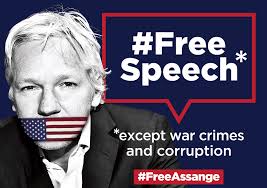 Assange hearing outcome could set an “alarming precedent” for free speech https://www.indexoncensorship.org/2020/12/assange-hearing-outcome-could-set-an-alarming-precedent-for-free-speech/ Benjamin Lynch Assange hearing outcome could set an “alarming precedent” for free speech https://www.indexoncensorship.org/2020/12/assange-hearing-outcome-could-set-an-alarming-precedent-for-free-speech/ Benjamin Lynch
People need to “forget what they think they know” about WikiLeaks founder Julian Assange and recognise that if he is extradited to the USA, it would set a worrying precedent for media freedom. We speak to his partner about the case. Assange’s partner, Stella Moris, is remaining resolute despite his extradition hearing decision being less than a month away and him being held in a prison that has recently had a Covid-19 outbreak.
Speaking over the phone to Index, Moris discusses the hearing’s details and what it could mean for the future of freedom of expression. And she talks about the deep implications it has had for her and her young family. “Obviously it is very difficult. I speak to Julian on a daily basis unless there is a problem. [But] he is in prison. Soon to be for two years. He has been there for longer than many violent prisoners who are serving sentences. All in all, he has been deprived of his liberty for ten years now,” she told Index. She adds: “The kids speak to their father every day; we try to normalise it as much as we can for them. But of course, this is not a normal situation and our lives are on hold. It is inhumane and shouldn’t be happening in the UK.” The current hearing – which will decide whether there are grounds for Assange to stand trial in the USA – should reach a conclusion on 4 January. A trial in the USA (should the decision go against Assange) will have major ramifications for free speech and whistleblower journalism. The WikiLeaks founder is charged with conspiring with US intelligence analyst Chelsea Manning and hackers from groups such as Anonymous and LulzSec to obtain and publish classified information. Each of the 18 charges laid by US authorities, if Assange is extradited and convicted, carry a maximum penalty of 10 years. The allegations brought forward under the 1917 Espionage Act, alongside one other under the Computer Fraud and Abuse Act, mean Assange could face up to 175 years in prison – effectively a life sentence. Manning was initially sentenced to 35 years, but under the Obama administration her sentence was commuted to less than seven years. It is easy to get sidetracked about the current extradition hearing and get into arguments about whether Assange is a journalist, whether he is guilty of other crimes or whether the publication of the documents brought harm to anyone involved. Instead people’s attentions should focus on the precedent that will be set should the case go to trial in the USA. As it stands the case is unprecedented. No publisher has ever been tried under the Espionage Act, which itself was essentially created for spies imparting official secrets either for profit or otherwise. This is perhaps a direct contradiction of rulings of the courts in the UK. In December 2017, the UK’s information tribunal recognised WikiLeaks as a media organisation, in direct contradiction to the view of the US State Department. Australia’s media union, the Media, Arts and Entertainment Alliance, also presented an honorary member card to Assange’s Melbourne-based lawyer. Amidst the noise of the separate matters around the case, Moris insists people need to “forget what they think they know” and assess the issues involved. “There are a lot of assumptions being made over what this case is really about. There are all these sideshows. It is not about people being harmed because the US has admitted it has no evidence to make this argument. It comes down to the fact that the material published was classified. People who care about free speech and press freedom need to forget what they think they know about this case and look at it afresh and understand Julian is in prison for publishing. This is not something that democracies do.” “Are they saying what he published was not in the public interest? They say that is irrelevant. They can’t deny [what he published] wasn’t in the public interest because he was publishing information and evidence of state crimes, of state abuse, torture, of rendition, blacksites and of illegal killings. What they are arguing is that Julian published information that was secret and therefore he can be prosecuted over it.” ournalists publishing secret information is not new (nor is pressure for them not to publish) and can often be key to upholding democracy and ensuring states act properly. The Watergate revelations relied heavily on news organisations pressing on with publication despite attempts by the USA to stop them, including the threat of jail time. It proved a significant victory for free speech. If Assange is extradited and tried the case will impact journalists and the media “for years to come”, says Rebecca Vincent, director of international campaigns at Reporters Without Borders (RSF). “It feels like many in the media do not see the implications of this case as something that will possibly affect them,” she told Index. “This case will have ramifications on the climates for journalism and press freedom internationally for years to come.” “This is the first time we have seen the US government prosecute anybody for publishing leaked information. If they are successful, they will not stop with Assange and WikiLeaks. This could be applied, in theory, to any media outlet.” It’s common for journalists and publishers to cite a public interest defence for disputed documents. It is a centrepiece of a defence case against libel, for instance. “The information published was certainly in the public interest; it served to inform extensive public interest reporting that exposed war crimes and other illegal actions by states,” said Vincent. “The Espionage Act lacks a public interest defence. He cannot use it if he is sent to the United States and tried.” Essentially, what this means is that Assange is being treated as a spy not a publisher. If Assange is extradited and loses his case against the US government, any time classified information is published by a journalist there will be a precedent set that they can be charged and tried as a spy in the same way. “These sorts of cases are really highlighting the need for more robust legislation that cannot be manipulated to be used against journalists, whistleblowers and other sources. Ultimately, it is the public’s right to access information that is being impacted,” Vincent added. “You can see this for what it is; this very much feels like a political prosecution by states that are not meant to engage in this behaviour. The reason our states can get away with this is because of a lack of public pressure. A lack of public sympathy has resulted in a lack of widespread public pressure to hold our governments to account.” |
|
Rupert Murdoch’s News Corpse rises in ABC Insiders !
 What’s happening with ABC ‘Insiders’? Independent Australia, By Alan Austin 2 January 2021 The capture of ABC Insiders by Murdoch’s minions was a topic of debate all year, with this April Alan Austin piece attracting in excess of 35,000 unique views.
…………Has the ABC’s Insiders program become a vehicle for the promotion of News Corp? Alan Austin has been watching with interest and alarm.
AN INTRIGUING development in Australia’s media landscape this year is that it appears ABC’s Insiders, a substantial television program paid for by taxpayers, has become a vehicle for the rehabilitation and promotion of Rupert Murdoch’s tawdry media empire.
The first 12 Insiders episodes since Speers’ arrival as host, have featured 36 guest appearances. Of these, 12 have been current News Corp employees and another four, recent departees. So 44 per cent of all guests from one stable.
There is no need for the ABC to reference anything from News Corp — certainly not as the key source of information. Australia has more than 30 important media organisations. It is itself a well-resourced generator of news and news analysis. Murdoch’s minions are entirely dispensable.
News Corp a legitimate news organisation?
News Corp is not a reliable source of information. It has long since abandoned any commitment to media codes of ethics. The Australian Press Council routinely finds News Corp outlets violate media codes of ethics. Fact-checkers in the UK and the USA have found the same.
Murdoch’s Fox News in the USA is the go-to outlet for President Donald Trump whenever he wishes to share his fabrications and falsehoods. According to the Washington Post, the U.S. President told 16,241 clearly identified lies in his first three years in office. Many of these were Fox exclusives.
In Australia, several senior Murdoch employees have been found guilty of serious falsehoods — and were then rewarded by their employer.
In the celebrated racial discrimination case Eatock v Bolt, Murdoch’s Andrew Bolt was found to have concocted at least 19 damaging false assertions against the Indigenous people he was attacking.
In the wrongful dismissal case of former editor Bruce Guthrie, the judge found two senior News Corp executives had been untruthful in their testimony before the court.
In Britain, Murdoch’s publications have lied, cheated, bribed police and engaged in an extensive range of criminal misconduct. A British Parliamentary Inquiry in 2012 found that Rupert Murdoch was ‘not a fit person’ to run a company in Britain.
As a result of police investigations into Britain’s phone-hacking scandal, a large number of News Corp personnel were arrested and convicted of criminal offences.
Political bias and the ABC
News Corp outlets spruik the commercial interests of the owners, which almost inevitably means supporting right-wing political parties. Normally this is not a great problem. Political biases are fine, provided they are balanced by other political biases. The issue with News Corp is much more insidious than just bias, as shown above.
Ruthless and remorseless
Among Australia’s most profound wrongdoings in recent times have been The Australian’s malicious condemnations of men and women who have served the nation well.
Professor Robert Manne of La Trobe University wrote this of the recent campaign against the Australian Human Rights Commission and its former president:
The attack launched by The Australian on Gillian Triggs and the Human Rights Commission has been obsessive, petty, relentless, remorseless and ruthless. In ‘Bad News‘ I documented similar campaigns – against Larissa Behrendt and Julie Posetti. But neither reached either the level of malevolence or the cultural significance of the current anti-Triggs campaign … What is happening to Gillian Triggs – a fine lawyer, a fine Australian, a fine human being – must be resisted with all the moral and rhetorical muscle liberal Australians can muster.
Other prominent people The Australian has sought to tear down with its frenzied campaigns of hate, include Carmen Lawrence, Joan Kirner, Wendy Bacon, Natasha Stott Despoja, Margaret Simons, Christine Nixon, Roz Ward, Clover Moore, Margo Kingston, Anna Bligh, Kristina Keneally, Julian Disney, Emma Husar, Yassmin Abdel-Magied, Julia Gillard and Jacinda Ardern. ……… https://independentaustralia.net/politics/politics-display/4-top-story-of-2020-whats-happening-with-abc-insiders,14657
Law and Disorder: The case of Julian Assange
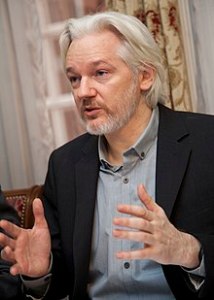 In the case of Julian Assange, what is on trial is nothing less than our right to know what is done by governments in our name, and our capacity to hold power to account.
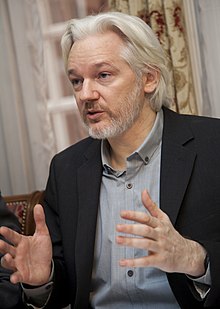
What kind of law allows pursuit of charges under the 1917 United States Espionage Act — for which there is no public interest defence — against a journalist who is a foreign national?
The closing argument of the defence in the extradition hearing of WikiLeaks founder and publisher Julian Assange has been filed. For this and other reasons it is apposite to consider the authority invested in the law before which, in democratic societies, we are ostensibly all equal.
In fact, notwithstanding the familiar claims of objectivity (and as `everybody knows’ in Leonard Cohen’s famous lyric) the reality is somewhat different. Jokes about the law attest to this:
‘One law for the rich…’
‘Everyone has the right to their day in court — if they can pay for it’
‘What’s the difference between a good lawyer and a great one? A good lawyer knows the law. A great lawyer knows the judge’
The term ‘legal fiction’ calls into question the relationship between law, objectivity, and truth. On the one hand, law is the essential pillar of a functioning society. On the other, it is replete with anomalies both in conception and execution. To what extent can these perspectives be reconciled? High stakes are attached to this question.
Questioning claims of objectivity in the context of law.
Malcolm Turnbull signs Kevin Rudd’s petition challenging News Corpse media dominance
Malcolm Turnbull signs Kevin Rudd’s petition challenging News Corp media dominanceFormer prime ministers urge others to join push for royal commission into lack of media diversity in Australia, Guardian, Calla Wahlquist, 30 Oct 20, Former Australian prime minister Malcolm Turnbull has signed Kevin Rudd’s petition calling for a royal commission into News Corp’s dominance of the Australian media.Rudd, also a former Australian prime minister, launched the petition to the Australian parliament earlier this month, saying the media company employed tactics that “chill free speech and undermine public debate,” and calling for a royal commission to ensure a strong and diverse news media in the face of “new business models that encourage deliberately polarising and politically manipulated news”.
Both Rudd and Turnbull faced negative campaigns from News Corp during their time in office.
On Sunday, Turnbull shared that he had signed the petition.
“Kevin has done well to get this petition going,” he said on Twitter. “I doubt it will result in a Royal Commission and Murdoch’s print monopoly (since 1987) is only part of the problem. But I have signed it and encourage others to do so.”
In Australia, there is no requirement for the parliament to respond to a petition once it reaches a certain number of signatures. Rudd told Guardian Australia that he knew it was unlikely the current federal government would respond.
“Obviously, the beneficiaries of the Murdoch protection racket, the Liberal National party, will not do that [act],” he said. “It will take some time to convince the Labor party that it’s in their interest as well. That will be influenced directly by the volume of public support.”………. Rudd said News Corp’s owner, Rupert Murdoch, was a “virtual monopoly player” in Australia. In his home state of Queensland, which is currently in a state election campaign, every newspaper is owned by NewsCorp.
“This is a one-newspaper state, not just a one-newspaper town,” he said “And anyone who thinks that’s fair in terms of every side of politics having a fair go has got rocks in their head.”…….https://www.theguardian.com/media/2020/oct/25/malcolm-turnbull-signs-kevin-rudds-petition-challenging-news-corp-media-dominance?CMP=Share_iOSApp_Other
The Guardian was grossly unfair to Julian Assange. They could still make up for this.
The Guardian’s Silence Let UK Trample on Assange’s Rights in Effective Darkness https://consortiumnews.com/2020/10/21/the-guardians-silence-let-uk-trample-on-assanges-rights-in-effective-darkness/?fbclid=IwAR16w5kNgLGJ3jyFI6QvKZmxJ5tn_LjZcD90a7FOG-ZQ8jaGzUYKlhnRT8M
Jonathan-Cook.net WISE Up, a solidarity group for Julian Assange and whistleblower Chelsea Manning, is due to stage a demonstration outside The Guardian offices on Oct. 22 to protest the paper’s failure to support Assange as the U.S. seeks his extradition in an unprecedented assault on press freedom.
The date chosen for the protest marks the 10th anniversary of The Guardian’s publication of the Iraq war logs, leaked by Manning to Assange and which lie at the heart of the U.S. case to reclassify journalism exposing crimes against humanity as “espionage.”
Here is my full statement, part of which is due to be read out, in support of Assange and castigating The Guardian for its craven failure to speak up in solidarity with its former media partner:
Julian Assange has been hounded out of public life and public view by the U.K. and U.S. governments for the best part of a decade.
Now he languishes in a small, airless cell in Belmarsh high-security prison in London — a victim of arbitrary detention, according to a UN working group, and a victim of psychological torture, according to Nils Melzer, the UN’s expert on torture.
If Judge Vanessa Baraitser, presiding in the Central Criminal Court in London, agrees to extradition, as she gives every appearance of preparing to do, Assange will be the first journalist to face a terrifying new ordeal — a form of extraordinary rendition to the United States for “espionage” — for having the courage to publish documents that exposed U.S. war crimes and crimes against humanity.
The Guardian worked with Assange and WikiLeaks on vitally important documents – now at the heart of the U.S. case against Assange – known as the Afghanistan and Iraq war logs. The latter were published exactly a decade ago today. They were a journalistic coup of global significance, and the paper ought to be profoundly proud of its role in bringing them to public attention.
During Assange’s extradition hearing, however, The Guardian treated the logs and its past association with Assange and WikiLeaks more like a dirty secret it hoped to keep out of sight. Those scoops furnished by Assange and whistleblower Chelsea Manning enriched the paper financially, and bolstered its standing internationally. They also helped to pave its path into the lucrative U.S. market.
Unlike Assange and Manning, The Guardian has suffered no consequences for publishing the logs. Unlike Assange and Manning, the paper has faced no retribution. While it profited, Assange continues to be made an example of — to deter other journalists from contemplating following in his footsteps.
The Guardian owes Assange.
- It owes him a huge debt for allowing it to share in the journalistic glory of WikiLeaks’ revelations.
- It owes him a duty of care as its partner in publishing the logs.
- It owes him its voice loudly denouncing the abuse of a fellow journalist for doing the essence of journalism — holding the powerful to account.
- It owes him and its own staff, and the young journalists who will one day take their place, its muscle in vigorously defending the principle of a strong and free press.
- It owes him, and the rest of us, a clear profession of its outrage as the U.S. conducts an unprecedented assault on free speech, the foundation of a democratic society.
And yet The Guardian has barely raised its voice above a whisper as the noose has tightened around Assange’s — and by extension, our — neck. It has barely bothered to cover the dramatic and deeply disturbing developments of last month’s extradition hearing, or the blatant abuses of legal process overseen by Baraitser.
The Guardian has failed to raise its editorial voice in condemnation either of the patently dishonest U.S. case for extradition or of the undisguised mistreatment of Assange by Britain’s legal and judicial authorities.
The paper’s many columnists ignored the proceedings too, except for those who contributed yet more snide and personal attacks of the kind that have typified The Guardian’s coverage of Assange for many years.
It is not too late for the paper to act in defence of Assange and journalism.
Assange’s rights are being trampled under foot close by The Guardian’s offices in London because the British establishment knows that these abuses are taking place effectively in darkness. It has nothing to fear as long as the media abdicates its responsibility to scrutinize what amounts to the biggest attack on journalism in living memory.
Were The Guardian to shine a light on Assange’s case — as it is morally obligated to do — the pressure would build on other media organizations, not least the BBC, to do their job properly too. The British establishment would finally face a countervailing pressure to the one being exerted so forcefully by the U.S.
The Guardian should have stood up for Assange long ago, when the threats he and investigative journalism faced became unmistakable. It missed that opportunity. But the threats to Assange — and the causes of transparency and accountability he champions — have not gone away. They have only intensified. Assange needs the Guardian’s support more urgently, more desperately than ever before.
Jonathan Cook is a former Guardian journalist (1994-2001) and winner of the Martha Gellhorn Special Prize for Journalism. He is a freelance journalist based in Nazareth. If you appreciate his articles, please consider offering your financial support.
This article is from his blog Jonathan Cook.net.
New government Bill could target journalists, environmental and human rights groups
|
Tue 20 Oct 2020 Journalists and advocacy groups could face compulsory questioning by Asio as part of a proposed expansion of the spy agency’s powers, according to external legal advice prepared by leading barristers.With senior officials of Asio due to give evidence to Senate estimates hearings on Tuesday, the new advice seen by Guardian Australia argues a bill before parliament to extend the reach of questioning powers could have a “chilling effect” on the willingness of people to speak to journalists. It also argues some of the work of civil society organisations – especially those involved in environmental and human rights advocacy – may be caught by the broad definition of “acts of foreign interference” because it includes clandestine acts that “are otherwise detrimental to the interests of Australia”. Members of civil society groups could face potential questioning and the use of tracking devices, according to the advice commissioned by progressive group GetUp and prepared by Sydney-based barrister Dominic Villa SC – an expert in public and administrative law – and fellow barrister Diana Tang, both of New Chambers. The government’s bill – which is currently being scrutinised by parliament’s intelligence committee – would expand the range of matters that are subject to compulsory questioning powers beyond terrorism-related matters. The changes would allow the agency to question adults over espionage and foreign interference, amid warnings from Asio that there are now mores spies and proxies operating in Australia than at the height of the cold war……… “Despite well-recognised professional and ethical obligations of a journalist to maintain anonymity and confidentiality of a source, if so questioned under a warrant, a journalist would be required to disclose the identity of a confidential source.” The advice says there is no exception or exclusion provided for in the bill that would enable a journalist to refuse to answer a question on the basis it would reveal a confidential source. “There may therefore be a chilling effect on the willingness of people to speak to journalists about issues of political significance, including security matters and foreign relations.” Villa and Tang argue the proposed laws may also “undermine the important role played by civil society organisations in holding government to account”, partly because a “foreign power” is defined to include “a foreign political organisation”. The advice argues civil society organisations operating in Australia may “collaborate with or receive support from a foreign political organisation that shares a common interest or objective, in their advocacy campaigns”……… https://www.theguardian.com/media/2020/oct/20/chilling-attack-on-democracy-proposed-asio-powers-could-be-used-against-journalists |
|
Persecuting Assange Is a Real Blow to Reporting and Human Rights Advocacy’
Persecuting Assange Is a Real Blow to Reporting and Human Rights Advocacy’
CounterSpin interview with Chip Gibbons on Assange extradition Fair, 15 Oct 20,
Assange’s case, the unprecedented use of the Espionage Act to go after a journalist, has dire implications for all reporters. But this country’s elite press corps have evidently decided they can simply whistle past it, perhaps hoping that if and when the state comes after them, they’ll make a more sympathetic victim.
Joining us now to discuss the case is Chip Gibbons. He’s policy director at Defending Rights & Dissent. He joins us now by phone from Washington, DC………..
CG: Sure. So the US has indicted Julian Assange with 17 counts under the Espionage Act, as well as a count under the Computer Fraud and Abuse Act.
Assange is not a US person; he’s an Australian national. He was inside the Ecuadorian embassy for a number of years, as Ecuador had granted him asylum, and the UK had refused to basically recognize that and let him leave the country, so he was de facto imprisoned inside the embassy. And after the indictment the US issued, the new government of Ecuador—which is much less sympathetic to Assange than the previous Correa government—let the US come in the embassy and seize him.
And the US is seeking Assange’s extradition to the US from the UK. I guess it’s, probably, technically a hearing, but Kevin’s point was that it’s more like what we would think of as a trial, in that there’s different witnesses, there’s expert testimony, there’s different legal arguments at stake.
The defense, the witness portion of it, has closed; it ended last week. And there’s going to be closing arguments submitted in writing, and then the judge will render a decision, and that decision will be appealable by either side. So regardless of the outcome, we can expect appeals. So it does very closely mirror what we would think of more like a trial than a hearing in the US court context.
It’s important to really understand what’s at stake with Assange’s extradition. He is the first person ever indicted by the US government under the Espionage Act for publishing truthful information.
The US government has considered indicting journalists before: They considered indicting Seymour Hersh, a very famous investigative reporter. They considered indicting James Bamford, because he had the audacity to try to write a book on the National Security Agency. But they’ve never done that.
And Obama’s administration looked at the idea of indicting Assange and said, “No, this would violate the First Amendment, and it would open the door to all kinds of other bad things.” But the Trump administration clearly doesn’t have those qualms……..
It is very interesting to see how this plays out in a US court in the current environment. If whoever—Trump or Biden, whoever is president, when this finally comes to the US—actually pursues this, and they actually are allowing the persecution of journalists, that’s going to be a really dark, dark assault on free expression rights.
And it’s worth remembering—and Julian Assange is clearly very reviled in the corporate media and the political establishment right now—but the information he leaked came from Chelsea Manning, it dealt with US war crimes; and he worked with the New York Times, the Guardian, Der Spiegel, Le Monde, Al Jazeera, to publish this information. So if he can go to jail for publishing this, why can’t the New York Times? And is that a door anyone wants to open? There is a big press freedom angle here.
I also want to talk about the facts, though: What did Julian Assange publish, and why did it matter? ………..
Julian Assange is accused of publishing information about war crimes, about human rights abuses and about abuses of power, that have been tremendously important, not just for the public’s right to know, but also have made a real difference in advocacy around those issues. People were able to go and get justice for victims of rendition, or able to go and get court rulings in other countries about US drone strikes, because of this information being in the public domain. So attacking Assange, persecuting Assange, disappearing him into a supermax prison, this is a real blow to reporting and human rights advocacy. ………
JJ: Right. And, finally, the journalists who are holding their nose right now on covering it aren’t offering to give back the awards that they won based on reporting relying on WikiLeaks revelations. And James Risen had an op-ed in the New York Times a while back, in which he was talking about Glenn Greenwald, but also about Julian Assange, and he said that he thought that governments—he was talking about Bolsonaro in Brazil, as well as Donald Trump—that they’re trying out these anti-press measures and, he said, they “seem to have decided to experiment with such draconian anti- press tactics by trying them out first on aggressive and disagreeable figures.”………. https://fair.org/home/persecuting-assange-is-a-real-blow-to-reporting-and-human-rights-advocacy/
Assange extradition case could esrablish a dangerous legal precedent
Crumbling Case Against Assange Shows Weakness of “Hacking” Charges Related to Whistleblowing
The charge against Assange is about establishing legal precedent to charge publishers with conspiring with their sources, something that so far the U.S. government has failed to do because of the First Amendment.
Five years later, in 2018, the Trump Administration indicted Assange anyway. But, rather than charging him with espionage for publishing classified information, they charged him with a computer crime, later adding 17 counts of espionage in a superseding May 2019 indictment.
The computer charges claimed that, in 2010, Assange conspired with his source, Chelsea Manning, to crack an account on a Windows computer in her military base, and that the “primary purpose of the conspiracy was to facilitate Manning’s acquisition and transmission of classified information.” The account enabled internet file transfers using a protocol known as FTP.
New testimony from the third week of Assange’s extradition trial makes it increasingly clear that this hacking charge is incredibly flimsy. The alleged hacking not only didn’t happen, according to expert testimony at Manning’s court martial hearing in 2013 and again at Assange’s extradition trial last week, but it also couldn’t have happened.
The new testimony, reported earlier this week by investigative news site Shadowproof, also shows that Manning already had authorized access to, and the ability to exfiltrate, all of the documents that she was accused of leaking — without receiving any technical help from WikiLeaks. …….
the charge is not actually about hacking — it’s about establishing legal precedent to charge publishers with conspiring with their sources, something that so far the U.S. government has failed to do because of the First Amendment………
Whether or not you believe Assange is a journalist is beside the point. The New York Times just published groundbreaking revelations from two decades of Donald Trump’s taxes showing obscene tax avoidance, massive fraud, and hundreds of millions of dollars of debt.
Trump would like nothing more than to charge the New York Times itself, and individual journalists that reported that story, with felonies for conspiring with their source. This is why the precedent in Assange’s case is so important: If Assange loses, the Justice Department will have established new legal tactics with which to go after publishers for conspiring with their sources. https://portside.org/2020-10-10/crumbling-case-against-assange-shows-weakness-hacking-charges-related-whistleblowing
As Julian Assange faces extradition to USA, global press freedom is endangered
|
Assange Faces Extradition for Exposing US War Crimes, BY Marjorie Cohn, Truthout, October 11, 2020 Three weeks of testimony in Julian Assange’s extradition hearing in London underscored WikiLeaks’s extraordinary revelation of U.S. war crimes in Iraq, Afghanistan and Guantánamo Bay. But the Trump administration is seeking to extradite Assange to the United States to stand trial for charges under the Espionage Act that could cause him to spend 175 years in prison.
Assange founded WikiLeaks during the Bush administration’s “war on terror,” which was used as a pretext to start two illegal wars and carry out a widespread program of torture and abuse of prisoners at Guantánamo and the CIA black sites. On October 8, 2011, Assange told a Stop the War Coalition rally in London’s Trafalgar Square, “If wars can be started by lies, peace can be started by truth.” In 2010 and 2011, WikiLeaks published classified material that Army intelligence analyst Chelsea Manning had provided to the organization. Manning was prosecuted, convicted and sentenced to 35 years in prison for leaking the documents. As he left office, Barack Obama commuted her sentence to the seven years she had already served. That commutation provoked “tremendous anger” in the Trump administration and drew Trump’s attention to Assange, Eric Lewis testified. Lewis, chairman of the board of Reprieve U.S. and lawyer for Guantánamo and Afghan detainees, called this “a politically motivated prosecution.” The files that WikiLeaks published contained 90,000 reports about the war in Afghanistan, including the Afghan War Logs, which documented a greater number of civilian casualties by coalition forces than the U.S. military had reported. In addition, WikiLeaks published nearly 400,000 field reports about the Iraq War, more than 15,000 unreported deaths of Iraqi civilians, and the systematic murder, torture and rape by the Iraqi army and authorities that were ignored by U.S. forces. WikiLeaks also published the Guantánamo Files, 779 secret reports constituting evidence of the U.S. government’s abuse of approximately 800 men and boys, ages 14 to 89. That abuse violated the Geneva Conventions and the Convention Against Torture and Other Cruel, Inhuman or Degrading Treatment or Punishment. Perhaps the most notorious release by WikiLeaks was the 2007 “Collateral Murder” video, which depicts a U.S. Army Apache helicopter target and fire on unarmed civilians in Baghdad. At least 18 civilians were killed, including two Reuters reporters and a man who came to rescue the wounded. Two children were injured. A U.S. Army tank drove over one of the bodies, cutting it in half. The video contained evidence of three separate war crimes prohibited by the Geneva Conventions and the U.S. Army Field Manual. As they are firing on the civilians, U.S. gunmen can be heard saying, “Look at those dead bastards.” In his written testimony, investigative journalist Nicky Hager drew a parallel between the Collateral Murder video and the television image of George Floyd screaming “I can’t breathe.” Assange Cannot Be Extradited for a Political OffenseThe 2003 U.S.-U.K. Extradition Treaty forbids extradition for a political offense. Although the treaty doesn’t define “political offense,” it generally includes espionage, treason, sedition and crimes against state power. Trump is asking the U.K. to extradite Assange for exposing war crimes. This is a classic political offense. Assange is charged under the Espionage Act and espionage constitutes a political offense as well……….. Assange’s Prosecution Violates Freedom of PressWhile the Obama administration declined to file criminal charges against Assange for fear of setting a dangerous precedent, Team Trump demonstrated no such forbearance. By charging Assange under the Espionage Act, Trump is making him a poster boy for its full court press against the media, which he calls “the enemy of the people.” Assange’s prosecution would send an ominous message to all journalists: report the unvarnished truth at your peril. No media outlet or journalist has ever been prosecuted under the Espionage Act for publishing truthful information, which is protected First Amendment activity. Journalists are permitted to publish material that was illegally obtained by a third person and is a matter of public concern. The U.S. government has never prosecuted a journalist or newspaper for publishing classified information, an essential tool of journalism. Information-gathering, reporting and disclosure fit the classic definition of activity protected by the First Amendment’s guarantee of freedom of the press. There is no distinction between what WikiLeaks did and what The New York Times, Der Spiegel, Le Monde, El País and The Guardian did as well. They all published articles based on documents WikiLeaks released. This is the reason Obama administration — which prosecuted an enormous number of whistleblowers — considered, but refrained from, indicting Assange. ……… WikiLeaks Didn’t Endanger Informants and Saved LivesAlthough the U.S. government claims that Assange endangered informants named in the published documents, John Goetz, an investigative reporter who worked for Germany’s Der Spiegel, testified that Assange took pains to ensure that the names of U.S. informants in Iraq and Afghanistan were redacted to protect their identities. …….. Moreover, WikiLeaks’s revelations actually saved lives. After WikiLeaks published evidence of Iraqi torture centers the U.S. had established, the Iraqi government refused Obama’s request to extend immunity to U.S. soldiers who commit criminal and civil offenses there. As a result, Obama had to withdraw U.S. troops from Iraq. WikiLeaks also revealed evidence of wrongdoing by other countries besides the United States. The organization uncovered Russian surveillance, published exposés of Bashar al-Assad in Syria, and some say WikiLeaks’s exposure of corruption in Tunisia and torture in Egypt helped catalyze the Arab Spring………… Assange’s Prosecution Will Chill JournalismOstensibly to get around allegations that it is prosecuting Assange for conducting journalism, the Trump administration is trying to paint him as a hacker by accusing him of conspiring with Manning to break into a government computer to steal government documents, in violation of the Computer Fraud and Abuse Act. But, as Patrick Eller, a digital forensic expert, testified, the attempted cracking of the password hash was not technologically possible in 2010, when the conversation between Assange and Manning occurred. Even if it were feasible, the purpose would not have been to conceal Manning’s identity and it would not have given Manning any increased access to government databases. The prosecution of Assange would set a disturbing example for journalists and media outlets that publish information critical of the government. Team Trump singled out Assange to deter journalists from publishing material that criticizes U.S. policy. If Assange is extradited to the United States and convicted of the charges against him, it would chill journalists from reporting the facts for fear they could be indicted under the Espionage Act………. When she set the November 16 date for the defense to submit closing arguments, Judge Vanessa Baraitser asked the defense how the U.S. presidential election would affect its case and declared that her decision on extradition would come after that election, stating, “That’s one of the factors going into my decision.” Kristinn Hrafnsson, editor-in-chief of WikiLeaks, said that the judge “acknowledged what has been clear since even before the first indictment against Julian Assange was unsealed — that this is a politically motivated prosecution.” Baraitser, who has granted extradition in 96 percent of the cases that have come before her, plans to issue her ruling on January 4. If she grants extradition, there will be several levels of appeals, including to the European Court of Human Rights. The stakes could not be higher. https://truthout.org/articles/assange-faces-extradition-for-exposing-us-war-crimes/?eType=EmailBlastContent&eId=614ce999-9844-4d61-a600-169db0c99052 |
Murdoch media monopoly – an ‘arrogant cancer on our democracy’
|
Australia’s high concentration of media ownership is eroding its democracy, getting in the way of critical action on issues like climate change and limiting what stories get told, media experts have warned.
The warning comes as former prime minister Kevin Rudd called for a royal commission into media concentration on Saturday, launching a petition to Parliament that amassed thousands of signatures within hours of going live. Australia’s media landscape is dominated by two players – Nine Entertainment, which owns the The Age and The Sydney Morning Herald mastheads among others, and News Corp, owned by former Australian Rupert Murdoch, which controls between 60 and 70 per cent of the metropolitan market. Mr Rudd decried the sheer concentration of the Murdoch empire, and pointed to News Corp mastheads’ support for the Liberal Party in the past 18 elections. Murdoch has become a cancer, an arrogant cancer, on our democracy,” Mr Rudd said. “I’m calling on the Parliament to establish a royal commission into the abuse of media monopoly in Australia, and particularly by the Murdoch media, to make recommendations to maximise media diversity ownership for the future lifeblood of our democratic system.” Mr Rudd has had a long-running feud with News Corp, which used its mastheads to hound him during his tenure as prime minister. A petition to Parliament is essentially a request for action, but it does not mean the sitting government has to implement its requests…….. Mr Murdoch’s influential newspapers and television stations have been widely criticised for spreading misinformation about climate change during Australia’s out-of-control bushfires. The Australian has repeatedly argued that this year’s fires are no worse than those of the past – a claim that scientists have dismissed as untrue…….. “We see story after story in the Murdoch papers saying there is no such thing as climate change, then that arsonists were responsible. “There’s never any apology or correcting the record.” News Corp has also been pursuing Victorian Premier Daniel Andrews over the issue of the state’s coronavirus lockdowns, she said. “Every story in The Australian is about ‘Dictator Dan’, it would be like the NZ publications going after ‘General Jacinda’, but there the coverage has been more considered,” Dr Price said. Her dream royal commission on media ownership would also focus on tabloid commentators and the ways in which they target and bully individuals they dislike. “I want a royal commission into the stream of columnists who should have to make amends for their fact-less columns,” Dr Price said………. Dr Muller said the Murdoch influence was not just apparent in Australia. “If you look at the two democracies in the most trouble, the UK and the US, in both the Murdoch empire is dominant and has been an active player in preferring right-wing governments,” he said. “When you have power like that which is not accountable you impair your democracy.”…….. https://thenewdaily.com.au/news/politics/2020/10/11/kevin-rudd-murdoch-royal-commission/ |
|
Julian Assange could face life in America’s most dreaded ‘Supermax’ prison
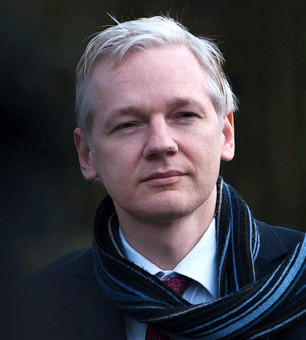  Julian Assange ‘faces fate worse than death’ in US: WikiLeaks founder could serve life in isolation at dreaded ‘Supermax’ prison that’s home to America’s most violent terrorists and drug lords if extradited, court hears Daily Mail, 30 Sept 20, Julian Assange ‘faces fate worse than death’ in US: WikiLeaks founder could serve life in isolation at dreaded ‘Supermax’ prison that’s home to America’s most violent terrorists and drug lords if extradited, court hears Daily Mail, 30 Sept 20,
Julian Assange ‘faces a fate worse than death’ in a lifetime of isolation at the ‘Supermax’ prison currently home to America’s most violent terrorists and drug lords if he is extradited, a court has heard. The Wikileaks founder, 49, could live out his years alone at maximum security ADX Colorado jail where he would spend 23 hours in a cell if he is convicted of espionage offences in the US. Assange is wanted in the US for allegedly conspiring with army intelligence analyst Chelsea Manning to expose military secrets between January and May 2010 Prison expert Joel Sickler said the US government had ‘raised the possibility of sending Mr Assange to ADX’. ……… I believe, based on my understanding of the case, that this is a not unlikely proposition.’ He said Supermax was the only prison criticised as inhumane by its own staff, adding: ‘Robert Hood, the Warden says, “this is not built for humanity. I think that being there day by day, it’s worse than death”.’…….. The WikiLeaks founder could be placed on a prison regime called Special Administrative Measures (SAMS). This means he could be deprived of meals, phone calls, visits or interaction with other inmates. Mr Sickler, who advises federal prison defence attorneys, said: ‘Based on decades of experience, over a dozen of my clients committed suicide, it can be done. ‘I think he is only going to go there if he is a SAMS inmate. There is an outside chance he will go there on other grounds. ‘SAMS will seal his fate. If he is given a life sentence he must start at a United State Penitentiary. ‘He is someone our government alleges has knowledge of certain highly qualified information.’……… ‘Officially known as Administrative Maximum-Security United States Penitentiary (“ADX”); it is most known by its shorthand name, “Supermax”,’ Mr Sickler added. ‘This is a facility is the most feared by inmates and is where the most violent offenders in the nation are sent. ‘And this is where the Government, according to its own affidavit, sees as a potential prison placement for Mr Assange. He said it was the solitary nature of the ADX that made it so difficult for its inmates to bear. ‘Should Mr Assange be sent to ADX he will almost certainly spend all his time in ADX in solitary,’ he added……….. https://www.dailymail.co.uk/news/article-8781275/Julian-Assange-faces-fate-worse-death-WikiLeaks-founder-serve-life-isolation.html?fbclid=IwAR21x4PeHIIn2pjMDgqjBSqfqA2pK5YPTZ9Q4q4SOG066tGN_aKkZj91ROE |
|
Australia’s media disgrace – the deliberate neglect of the Julian Assange extradition hearing
 ”Fair” castigates the international media for ignoring the Assange case – the “Media Trial of the Century”. But hey ! What about the Australian media? Julian Assange is an
 Australian. When our citizens overseas commit murders and drug trafficking, it is all over our media, about their plight in the overseas justice system – pages and pages, TV and radio broadcasts. Then the benevolent Australian government bends over backwards to save their bacon. But when it comes to Julian Assange – only courageous mentions by the soon to be demolished ABC .
Our whole media – News Corpse and the ABC ran a big campaign on “Press Freedom” – Assange didn’t get a mention. Why should I expect them to? Decades ago they pillories Wilfred Burchett for reporting on Hiroshima bombing victims. Kowtowing to USA is the system here.
The media ignores Julian Assange and the Media ‘Trial of Century’
The United Nations has condemned his persecution, with Amnesty International describing the case as a “full-scale assault on the right to freedom of expression.” Virtually every story of national significance includes secret or leaked material; they could all be in jeopardy under this new prosecutorial theory.
President Donald Trump has continually fanned the flames, demonizing the media as the “enemy of the people.” Already 26% of the country (including 43% of Republicans) believe the president should have the power to shut down outlets engaging in “bad behavior.” A successful Assange prosecution could be the legal spark for future anti-journalistic actions.
Yet the case has been met with indifference from the corporate press. Even as their house is burning down, media are insisting it is just the Northern Lights.
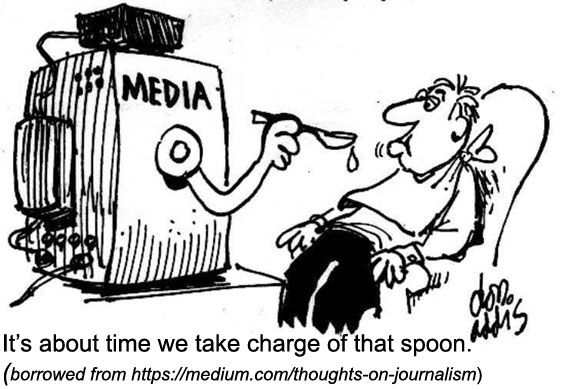 Julian Assange: Press Shows Little Interest in Media ‘Trial of Century’ https://fair.org/home/julian-assange-press-shows-little-interest-in-media-trial-of-century/, ALAN MACLEOD 25 Sept 20,
Labeled the media “trial of the century,” WikiLeaks founder Julian Assange’s extradition hearing is currently taking place in London—although you might not have heard if you’re relying solely on corporate media for news. If extradited, Assange faces 175 years in a Colorado supermax prison, often described as a “black site” on US soil.
The United States government is asking Britain to send the Australian publisher to the US to face charges under the 1917 Espionage Act. He is accused of aiding and encouraging Chelsea Manning to hack a US government computer in order to publish hundreds of thousands of documents detailing American war crimes, particularly in Afghanistan and Iraq. The extradition, widely viewed as politically motivated, has profound consequences for journalists worldwide, as the ruling could effectively criminalize the possession of leaked documents, which are an indispensable part of investigative reporting.
WikiLeaks has entered into partnership with five high-profile outlets around the world: the New York Times, Guardian (UK), Le Monde (France), Der Spiegel (Germany) and El País (Spain). Yet those publications have provided relatively little coverage of the hearing.
Since the hearing began on September 7, the Times, for instance, has published only two bland news articles (9/7/20, 9/16/20)—one of them purely about the technical difficulties in the courtroom—along with a short rehosted AP video (9/7/20). There have been no editorials and no commentary on what the case means for journalism. The Times also appears to be distancing itself from Assange, with neither article noting that it was one of WikiLeaks’ five major partners in leaking information that became known as the CableGate scandal.
The Guardian, whose headquarters are less than two miles from the Old Bailey courthouse where Assange’s hearing is being held, fared slightly better in terms of quantity, publishing eight articles since September 7. Continue reading
News Corp, Facebook and disinformation about climate and pandemic

With its stranglehold on daily newspapers and online news, News Corp in Australia has created the most rightwing media culture in the English speaking world, and they aren’t really accountable to anyone.
Facebook is also the place where we see the two disinformation crises overlap.
Just like Australia, disinformation is thriving during the US fire crisis https://www.theguardian.com/commentisfree/2020/sep/19/just-like-australia-disinformation-is-thriving-during-the-us-fire-crisis
Jason Wilson 20 Sept 20 In both countries, fake news about arson proliferated while the role of climate change was obscured.
isinformation successfully obscured the real causes of Australia’s catastrophic bushfire season. Now the same thing is happening around me, as I report on a disastrous wildfire season in the American west.
In both countries, the response to a pandemic is also being complicated by disinformation, as conspiracy theorists refuse isolation, refuse masks, and ready themselves to refuse vaccines.
A lot of the fundamental problems are the same, but there are differences in detail.
In the western United States in recent days, backroads vigilantism has seen civilians set up armed road blocks, and journalists held at the point of loaded assault rifles.
Australia does not have the complication of American gun culture, which is itself one marker of the clash of ideologies and identities in a deeply divided nation, and also raises the stakes on every other social conflict.
That may be, but it’s easy to forget that one of the major stumbling blocks to stricter gun laws in the United States is a bill of rights.
We can argue whether the right to bear arms is a sensible thing to constitutionally enshrine, but Australia has no such constitutionally defined individual rights, beyond those that the high court has seen fit to torture from the document.
The absence of such rights also contains the real world effects of conspiracy theories – the people recently arrested for incitement in Victoria over the promotion of Covid conspiracy theories and anti-lockdown protests would likely enjoy first amendment protections in the US. Whether or not people ought to have the liberty to promote ideas which are, frankly, insane, and a threat to public order, is beyond the scope of this article.
In other ways, Australia is worse off. It is easy to make the mistake of thinking that Fox News, or other skewed or tabloid media, is representative of US media as a whole. Continue reading
1 This month

of the week – Australians for War Powers Reform (AWPR)
To see nuclear-related stories in greater depth and intensity
 Antinuclear