Queensland Liberal National Party opposes nuclear power
Queensland LNP breaks with federal branch to oppose nuclear power, Amy Remeikis, 3 Oct 2019 Queensland LNP says it supports a greater focus on energy efficiency measures
One of the biggest detractors of the federal Queensland Liberal National party’s push to investigate nuclear energy as a potential power source for Australia has come from within its own house.
The state LNP opposition has publicly declared its opposition to making any changes to the current bipartisan ban on nuclear energy generation, declaring the government would be better served in its goals by focusing on renewable energy sources, in a marked split from their federal state colleagues.
Australia is once again looking at nuclear energy as a potential solution to its power woes, after a group of Coalition MPs, led by a cohort from Queensland, pushed the federal party room into investigating the prospect, through a parliamentary inquiry.
But in a move which has surprised their federal counterparts, the Queensland state LNP spokesman for energy, Michael Hart, made a written submission to the inquiry, announcing his arm of the party’s opposition to any attempt to allow nuclear energy generation, citing the risks to the communities and the environment.
Instead, Hart said the Queensland LNP supports “greater focus” on “energy efficiency measures, along with encouraging investment in renewable energy options like wind and solar, in combination with battery storage when it is technologically and economically feasible to do so”.
“It is considered that Australia’s rich renewable energy resources are more affordable and bring less risk than the elevated cost and risk associated with nuclear energy,” Hart submitted.
“The LNP encourages additional jobs and investment in Queensland’s renewable energy industry, while also supporting resource jobs and exploration which provides baseload power and employment for thousands of Queenslanders.
“In addition to the possibility of accidents and operational failure, nuclear facilities can be a potential target for terrorists. Securing insurance around such possibilities would be virtually impossible.
“In conclusion, the commercial, as well as the political risks, associated with nuclear energy are substantial. To this end, the LNP is strongly committed to an energy policy that delivers safe, affordable and reliable energy to consumers, while fulfilling Australia’s international emissions reduction obligations.
“We believe this can be achieved without lifting the moratorium on nuclear energy generation. Accordingly, we would encourage the committee to ensure an increased emphasis is placed on measures to encourage investment in renewable energy that creates green jobs and lowers electricity bills, for both consumers and industry, which does not (underlined) include nuclear energy”.
The state Labor government established a 50% renewable energy target by 2030 upon winning power in 2015.
The federal inquiry was established after a group of Coalition MPs, led by Hinkler LNP member Keith Pitt and Queensland LNP senator James McGrath, pushed for an investigation into whether nuclear power should be considered as part of the mix, as the government hunts for a long term solution to Australia’s surging energy prices.
Not wanting to reignite the war that led to the downfall of the national energy guarantee, and ultimately, Malcolm Turnbull’s leadership, the government acquiesced to calls for an investigation, which was established after a recommendation from Angus Taylor.
The state LNP position stands in stark contrast to their federal colleagues, including conservative senator Amanda Stoker, who said that “Australia must develop a nuclear energy industry”, as well as her Queensland colleague Gerard Rennick.
McGrath has publicly pushed for the nuclear discussion in numerous interviews and his own social media, as well as within the party room. Pitt, who describes himself as “technologically agnostic”, said the discussion had to be had.
“The first priority for the nations future energy needs will always be reliability and affordability,” he said. “As technology changes I expect our energy mix will also change over a period of time. I am completely technology agnostic in terms of the fuel types that might be utilised. Currently Queensland has the country’s youngest fleet of coal fired generators and I expect they will continue to be a critical part of Queensland’s energy mix into the future.”
He demurred from any questions on the split between state and federal lines, saying the state arm could “speak for themselves”, but attacked the state Labor government for its price management of the state owned power assets.
But the submission did give Queensland Labor senator, Murray Watt, a late week boost.
“This submission shows the LNP’s state MPs have had enough of their federal counterparts’ pointless culture war against renewable power,” he said. “Even the LNP’s state MPs acknowledge that renewables are a cheaper and safer way of meeting our future energy needs.
“They have also slammed their federal counterparts’ pursuit of nuclear power as a massive waste of time and resources.
“The Queensland LNP’s federal representatives should stop wasting everyone’s time by pursuing their obsession with nuclear power and get behind cheaper and safer means of meeting our energy needs.”
Found – historic film of Aboriginal resistance to uranium mining
Kakadu uranium protest documentary Dirt Cheap unearthed by Northern Territory Library, ABC News By Matt Garrick 18 Sept 19 The rediscovery of an old VHS tape, left forgotten on the shelves of the Northern Territory Library, has unearthed a tense and important piece of Australian history.
Key points:
- The 1980 documentary Dirt Cheap showcased the Mirarr people’s fight against uranium mining
- The Northern Territory Library recently hunted down the only digital copy of the documentary so it could be shown at a film festival
- Filmmaker Ned Lander says the movie created a stir at the time of its release
The rare copy of the nearly 40-year-old documentary Dirt Cheap, which details the early pushback against uranium mining in Kakadu National Park, was practically unwatchable due to its age……..
The film documented the concerns of the Mirarr people during what was a tense period of negotiation in the lead-up to the 1979 Ranger Uranium Mining Agreement.
It also showcased the pressures and broken promises the traditional owners faced. “It was very, very apparent to us that people were not ready to sign the agreement in relation to mining, and this was being done under pressure.
Mirarr resistance inspires protests around nation
Against the push of government and business interests, the Mirarr stood resolute in their bid to protect their land.
“As a child growing up I saw the struggle of my family, including my grandfather — they [had] been struggling,” traditional owner Jimmy Nabanardi-Mudjandi said.
I’m really proud of them, but it’s sad because they’re not here to see what the new future of Jabiru’s gonna be.”
The resistance from the Mirarr had a flow-on effect around the nation.
Banner-waving protesters took to the streets in Melbourne and Sydney in great numbers, scenes which Dirt Cheap captures in vivid detail.
“Mirarr people got major support from around Australia, from around the whole nation,” Mr Nabanardi-Mudjandi said.
Next stage of uranium mining looms
In the decades since the film’s release, uranium has been mined at Kakadu, but the Ranger mine is now expected to wind up in 2021.
Mr Nabanardi-Mudjandi said it was vital the land was protected during its rehabilitation.
“We are watching them, what they’re doing,” he said.
Mr Nabanardi-Mudjandi will be a special guest when Dirt Cheap screens as part of the Darwin International Film Festival at the Northern Territory Library at 5:30pm on Wednesday. Contact Matt Garrick https://www.abc.net.au/news/2019-09-18/northern-territory-film-uranium-protests-unearthed-for-festival/11519914
Jervis Bay and previous governments’ secret plans for nuclear weapons

|
Nuclear reactor and steelworks plan once considered for pristine beaches of Jervis Bay Key points:
A steelworks, petrochemical plant and an oil refinery were also slated for the site at Jervis Bay, but what was not announced was a plan to generate weapons-grade plutonium that could have seen Australia become a nuclear power. Fifty years later, Australia is again mulling over the question of nuclear energy with two separate inquiries underway. A federal parliamentary committee is investigating the economic, environmental and safety implications of nuclear power in Australia. In NSW, meanwhile, a committee is looking into overturning a ban on uranium mining and nuclear facilities. While neither is talking specifics in terms of where nuclear enrichment technology or modern-day facilities like small modular reactors (SMRs) could be located, it has brought to the forefront questions of geography. Jervis Bay is a Commonwealth territory, located within NSW, but the laws of the Australian Capital Territory apply. Potential reactor sitesIn 2007, in the wake of the Switkowski nuclear energy review under the Howard government, the Australia Institute published a research paper identifying 19 of the most likely reactor sites. The sites were located across Queensland, Victoria, South Australia, NSW, and the ACT. It found the most suitable sites were close to major centres of demand and preferably in coastal areas to ensure easy access to water. Jervis Bay inevitably comes up as a potential reactor location due to its history as the only nuclear power plant to have received serious consideration in Australia. At the time it was promoted as the first of many. In February 1970, the Illawarra Mercury proclaimed:
That was the blueprint that nearly became a reality. Shrouded in secrecyThere was a darker side to the Jervis Bay reactor too, with evidence revealed in a 2002 ABC documentary, Fortress Australia, that the 500-megawatt fast breeder reactor was chosen due to its ability to generate weapons-grade plutonium for use in an Australian nuclear weapon Fortress Australia uncovered secret documents showing how the chairman of the Australian Atomic Energy Commission (AAEC), Phillip Baxter, influenced three Liberal prime ministers (Menzies, Holt and Gorton) to support the project. ….. Associate Professor Wayne Reynolds from the University of Newcastle told ABC podcast The Signal how Gorton pushed for the nuclear power station at Jervis Bay…….”They did the study, they worked out the capability, they had to go negotiate with the British about the technology, then they actually started to build this reactor at Jervis Bay.” The project was first delayed after William McMahon became prime minister in 1971 and was later put on hold indefinitely, despite efforts to keep the project alive. As late as March 1975, the Illawarra Mercury was reporting:
But the horse had bolted. Any hopes of a nuclear power industry in Australia effectively ended when McMahon lost government to Gough Whitlam’s Labor in December 1972. Whitlam’s signing of the Non-Proliferation of Nuclear Weapons Treaty in 1973 also ended any plans by the AAEC to provide Australia with the capacity to manufacture atomic weapons……. The Booderee National Park, meaning “bay of plenty” in the Dhurga language, was created out of the Jervis Bay National Park in 1992, which underlined the cultural significance of the lands and surrounding ocean. https://www.abc.net.au/news/2019-08-12/jervis-bay-once-site-for-nuclear-proposal/11371296?fbclid=IwAR16IqfL2gPD9lS6u9xoMkedjYNqJ1TKT_MoGww_5iwNVfq-vqYjfOrz3S4
|
|
How the Mirrar Aboriginal people, helped by environmentalists stopped uranium mining at Jabiluka

Leave it in the ground: stopping the Jabiluka mine, Red Flag Fleur Taylor, 15 July 2019 “…… The election of John Howard in March 1996 marked the end of 13 years of ALP government…..
Campaigners vow to continue the fight to stop Canberra dumping nuclear waste in South Australia
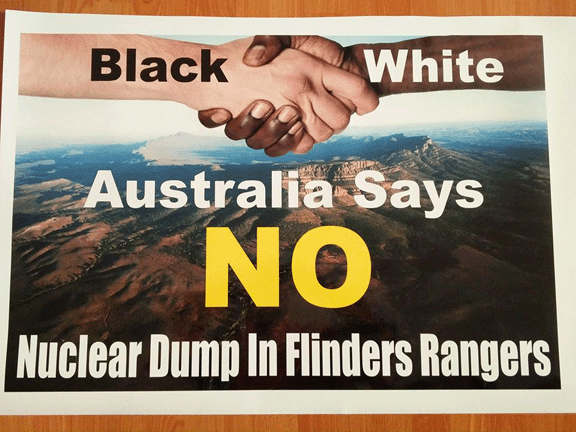
12 July 2019, Civil society groups and members of the communities affected by the federal government’s proposed National Radioactive Waste Management Facility (NRWMF) are deeply disappointed with Justice White’s ruling that the exclusion of Barngarla Traditional Owners from a ballot intended to gauge community support was not a breach of the Racial Discrimination Act.
Ballots were to be held in the Flinders Ranges and Kimba districts in August 2018. Eligibility to participate was severely restricted and while non-resident rate-payers were included, Traditional Owners who live outside the small geographic areas were excluded.
The Barngarla Determination Aboriginal Corporation, Native Title Holders for the Kimba District, sought an injunction in the Supreme Court, asserting that their exclusion breached the Racial Discrimination Act. This effectively put the site selection on hold.
In December 2018, the Adnyamathanha Traditional Lands Association (ATLA) lodged a formal complaint with the Human Rights Commission based on poor treatment and consultation with Traditional Owners throughout the divisive site selection process. This case is ongoing.
Mara Bonacci, Nuclear Free Campaigner for Friends of the Earth Australia said: “Today’s announcement is very disappointing, but not surprising. The federal legislation governing the nuclear waste management process, the National Radioactive Waste Management Act 2012, is undemocratic and systematically disadvantages Aboriginal people. The Act gives the federal government the power to extinguish rights and interests in land targeted for a radioactive waste facility. The Act allows the Minister to proceed with a nuclear waste dump without securing the consent of Traditional Owners. Traditional Owners, local communities, pastoralists, business owners, local councils and State/Territory Governments are all disadvantaged and disempowered by the NRWMA.
“It is important to note that today’s ruling is not a vindication of the federal site selection process, only finding that it is not a breach of the Racial Discrimination Act. The lack of inclusion of Aboriginal people is inconsistent with community expectation, best practise and Australia’s international obligations under the UN Declaration on the Rights of Indigenous Peoples. It is galling that Justice White’s ruling was delivered in NAIDOC week.
“The Federal government process has also denied a voice to many Australians concerned about this issue and about responsible radioactive waste management – this is a national issue and national responsibility, the burden of which should not be placed on regional and remote communities.
“It is appalling that federal resources Minister Matt Canavan is contemplating proceeding with a nuclear waste dump on Barngarla land despite the clear opposition of Traditional Owners. The SA Marshall Government also needs to voice its clear opposition to the imposition of a nuclear waste dump.”
“This Sunday marks the 15th anniversary of a famous day in South Australia’s history. On July 14, 2004, a campaign led by an Aboriginal Women’s Council, the Kupa Piti Kungka Tjuta, finally persuaded the Howard Government to abandon its plan to impose a national nuclear waste dump on SA. It seems nothing was learnt from that experience.
“Despite today’s ruling, community members, civil society groups and many others will continue to fight to protect South Australia from becoming home to Australia’s radioactive waste and for a fair and transparent site selection process based on responsible radioactive radioactive waste management”, Ms Bonacci concluded.
Union push to union trustees to formally exclude nuclear energy from industry super investments
ETU pushes union trustees to block nuclear AFR, 10 July 19 The Electrical Trades Union is leading a push for union trustees to formally commit to excluding nuclear energy from industry super investments in favour of bolstering renewables. ETU national secretary Allen Hicks will propose an anti-nuclear investment motion at the Australian Council of Trade Union’s national executive later this year and use the ACTU’s Super Trustees Forum to “build and leverage support among my union director colleagues on this”.
“I want to pass a motion committing union directors in the industry super sector to focus on backing investment in renewable tech,” he will tell the union’s national conference on Wednesday afternoon.
“To focus on backing that investment instead of propping up the misguided imaginings of those who long for an Australian nuclear sector.”
The motion follows the ETU’s attack last week on an energy paper released by industry fund peak body Industry Super Australia (ISA), chaired by former ACTU secretary Greg Combet…….
Mr Hicks will attack the paper as a “disgrace” in his speech and question industry funds diverting money to ISA to produce it.
“It’s a disgrace that this body – this body that unions created – could be used as part of a push to expose workers and their communities to the catastrophic dangers that nuclear power plants present,” the speech says.
He will advocate industry super funds commit to a “war-like mobilisation” to battle climate change and “become the ultimate weapon in Australia’s fight for a clean, renewable energy sector”.
“The retirement savings of Australian workers could be deployed to invest in smart, new, renewable technology – including battery tech – that could set us on the path to zero carbon emissions.”
The ETU’s anti-nuclear position is supported by the $50 billion building industry super fund Cbus, which includes the CFMEU on its board of trustees………
Mr Hicks will argue the economics around nuclear power don’t stack up due to the costs and time taken for construction.
“But even if they did, our union would oppose it,” he will say, arguing nuclear puts workers in unsafe conditions.
“No responsible Australian trade union … no organisation that claims to represent the interests of Australian workers … could possibly endorse putting Australians into that line of potential fire.”…..
Energy Super, whose board includes ETU representatives, stressed it was “focused on maximising members’ hard-earned retirement savings”.
“We have a transparent investment process which considers many factors including environmental, social and governance criteria to ensure the sustainability of the fund over the longer term,” chief executive Robyn Petrou said.
“We are increasing our investments in renewables, such as wind farms and solar energy.” https://www.afr.com/leadership/workplace/etu-pushes-union-trustees-to-block-nuclear-20190710-p525sj
Energy Users Association of Australia opposes nuclear power: it’s ‘not the answer’
 Nuclear energy ‘not the answer’ to Australia’s power price hikes https://thenewdaily.com.au/money/finance-news/2019/06/26/nuclear-power-not-the-answer/ Rod Myer 26 June 19, Nuclear energy is unlikely to fill the growing void in Australia’s energy system caused by the closure of old power stations and spiking electricity prices, industry insiders say.
Australians are paying about 120 per cent more for electricity than in 2008 after the closure of major coal-fired power stations and spikes in gas prices.
Fears that things could get worse were raised this week with news that Victoria’s Yallourn power station could close before the scheduled date of 2032, if market conditions changed.
Deja vu
Despite recent claims that nuclear could be the answer to power problems, major energy users say that is highly unlikely.
“We’ve been down the nuclear path before with Ziggy Switkowski’s report to the Howard government, which showed it would take at least 10 years to get a project up,” said Andrew Richards, CEO of the Energy Users Association of Australia.
Nuclear energy would not be suited to the developing Australian power system.
“We are getting a lot more increasingly variable, renewable energy coming into the system. To firm that, we need generation that can turn on and off quickly,” Mr Richards said.
“Nuclear power plants operate best when you turn the power on and let it run.”
Nuclear is also an increasingly expensive option, with research from the OECD finding that a high-cost nuclear plant would be 118 per cent more expensive than high-cost solar and 128 per cent dearer than high-cost wind.
That gap is opening up, with Dr Switkowski saying last year “the window for gigawatt-scale nuclear has closed” and that nuclear power is no longer cheaper than renewables, with costs rapidly shifting in favour of renewables.
Mr Richards said the costs of nuclear power are far greater than simply the design, construction and maintenance of power stations, and governments would need to back the technology financially.
“Governments would need to support insurance, dismantling and disposal costs for nuclear power stations, as the private sector won’t take on those risks,” Mr Richards said.
Nuclear costs skyrocket
While renewable-energy generation costs have been falling in recent years, nuclear power prices are skyrocketing.
In 2009, Dr Switkowski said that the construction cost of a 1000MW power reactor Australia would be $4 billion to $6 billion.
However, real-world experience has shown costs are four times that, Renew Economy reported last week.
Costs of plant construction in Europe and North America in recent years for similar generation capacity have been between $14 billion and $24 billion.
Nukes in the mix?
A report from Industry Super Australia into the power sector released on Wednesday said nuclear energy should be considered as part of Australia’s energy mix.
“If you look at the output of the nuclear industry, and if you consider its future relative to other technologies, it looks awfully good, relative to some of the other potential technologies and, therefore, it shouldn’t be excluded from consideration,” ISA’s chief economist Stephen Anthony told ABC radio.
Mr Richards said the possibility of using nuclear power should not be totally discounted.
“Every generation technology should be considered. Maybe nuclear could play a role, but there are significant market and financial problems to overcome,” he said.
The best way to balance the growing renewable generation was likely to be gas generation if governments can set aside gas for the local market at a fair price.
“We need to have gas at below $8 per gigajoule to solve our problems in energy supply and manufacturing,” Mr Richards said.
Currently the price is $10 per gigajoule, he said.The New Daily is owned by Industry Super Holdings
Traditional owners and Western Australia’s Conservation Council continue legal action, to uphold environmental law
 WA are continuing their fight against a proposed uranium mine, fearing unique subterranean fauna in the project area will be made extinct if it proceeds.
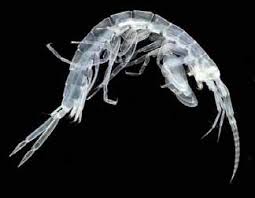 “Stygofauna might be a relatively obscure species. In fact, these particular species of stygofauna were not known to science until the proponent started exploring for uranium in that area,” Mr Verstegen said on Tuesday.
“But the legal precedent here has much broader implications.
“We’re certainly very keen to be upholding environmental laws … which were never intended to be used by a minister or a government to approve the extinction of species.”
The matter was heard on Tuesday and a decision will be handed down at a later date.
Conservation Council of Western Australia (CCWA) and three Tjiwarl Traditional Owners in court battle against uranium mining
WILDLIFE AND TRADITIONAL OWNERS REPRESENTED IN LANDMARK LEGAL CHALLENGE http://www.ccwa.org.au/landmark_legal_challenge?utm_campaign=nuclear_news68&utm_medium=email&utm_source=ccwa
The Conservation Council of Western Australia (CCWA) and three Tjiwarl Traditional Owners have continued their landmark legal bid to prevent the extinction of multiple species and protect Aboriginal lands from uranium mining at Yeelirrie, with a hearing in the WA Court of Appeal today.
The Yeelirrie mine proposal by uranium miner Cameco in the Northern Goldfields on Tjiwarl Native Title land was approved by the Minister for the Environment in the final days of the Barnett Government, against the advice of the Environmental Protection Authority (EPA), and against the outcome of an appeals process.
The EPA found that the proposal would cause the extinction of multiple species of subterranean fauna.
Bret Walker SC, Dr Hannes Schoombee, and the Environmental Defenders Office WA (EDOWA) represented Traditional Owners and CCWA in the legal challenge to the environmental approval for the Yeelirrie uranium mine.
CCWA Director Piers Verstegen said, “This important case is seeking to prevent the extinction of multiple species at Yeelirrie, and uphold the rights of Traditional Owners to protect sacred country from uranium mining.
“Mr Walker is one of Australia’s most eminent legal minds and his involvement with this case is an indication of its national legal significance.
“The approval of extinction at Yeelirrie at the stroke of a Minister’s pen cannot go unchallenged because it sets a dangerous precedent for all wildlife across Western Australia.
“We are proud to stand with three members of the Tjiwarl Native Title Group, Shirley and Elizabeth Wonyabong and Vicky Abdullah, who have been fighting to protect their country from uranium mining for many years.
“As well as the threat of extinction, Cameco’s uranium project would have a major impact on the landscape and ecosystems at Yeelirrie. It would involve a 9km open mine pit and processing plant, clearing 2421 hectares of native vegetation, and generating 36 million tonnes of radioactive mine waste to be stored in open pits.”
EDOWA Principal Solicitor Declan Doherty said, “This is a landmark case to test how Western Australia’s primary environmental law should be applied.
We argued that in approving the Yeelirrie uranium mine, Minister Albert Jacob failed to correctly follow the process set out in the relevant legislation.
“It will be an important test for how the legislation should be applied, which could have significant implications for future decisions of this kind.”
Dave Sweeney reflects on the achievements of Australia’s nuclear-free movement in 2018
 The days roll on and 2018 is about to be in the past tense.
As ever the year saw highs, lows and flatlines. It also saw sustained and successful resistance to the nuclear industry in Australia.
This note is a snapshot, not a definitive list, but I wanted to capture some of our collective efforts and achievements so in a quiet moment we can reflect and recharge – and know that we are making a real difference.
Thanks and solidarity to all – and best wishes for a good break and time with people and in places that freshen the spirit. I look forward to working with you all in season 2019.
Uranium: Less is being ripped and shipped
- Kakadu: the clean-up of the Ranger site is underway – Mirarr native title of the region was formally recognised – Rio Tinto have accepted their responsibility to clean up – there was a calendar and a series of events around the country to mark twenty years since the Jabiluka blockade
- uranium remains stalled and actively contested in WA: 2018 saw a decade since then Premier Barnett announced a fast tracked uranium sector that would be “iron ore on steroids” – there are no mines but there is a major legal challenge to the Yeelirrie project, procedural challenge to Mulga Rock and community resistance to the four proposed projects with actions at AgMs, project critiques, Walkatjurra Walkabout and more
- Qld Labor reaffirmed its opposition to uranium mining at its state conference
Radioactive waste: Under pressure and delayed
the federal plan for a national waste facility in regional SA is highly contested, behind schedule and increasingly uncertain
- the issue was pushed ahead of the state election and SA Labor has subsequently adopted a good policy position
- there is growing civil society awareness and engagement with the issue – especially through our trade union partners
- the Barngarla people were formally awarded native title over the Kimba sites in June and have taken legal action over deficiencies in the Feds consultation processes
- Adnyamathanha resistance to the proposed Flinders Ranges site is strong and they have lodged a complaint on the plan with the Australian Human Rights Commission
- community resistance at both sites is sustained and strong with high levels of engagement and regular actions, events and media profile
- Federal Labor policy has a long way to go but at its national conference in December Labor moved from a policy position dominated by sites and place to one of standards and process
- Standing Strong – the story of the successful community fight against the earlier plan for an international radioactive waste dump in SA was launched and learned from
- there was early and strong opposition to chatter around other potential radioactive waste sites – especially at Brewarrina (NSW) and Leonora (WA)
Nuclear weapons: the cold war is reheating and support for a weapons ban grows
ICAN – the International Campaign to Abolish Nuclear Weapons – has continued to build on its 2017 Nobel Peace Prize profile
- there was sustained outreach and awareness initiatives, including a bike ride from Melbourne to Canberra
- there is growing international support for the Treaty on the Prohibition of Nuclear Weapons with more nations signing and ratifying the ban
- federal Labor committed to sign and ratify the ban treaty at its national conference in Adelaide in December – a major step forward
- the Peace Boat visited Australian waters and cities in January/February and the Black Mist, Burnt Country Maralinga exhibition continued touring
Broader nuclear free efforts
ANFA – the Australian Nuclear Free Alliance – had a good gathering in the Adelaide Hills in October and there was clear recognition of the role of First Nation people in the atomic resistance with awards to crew in WA, Aunty Sue in SA and Jeffrey Lee gaining the German based Nuclear Free Future award in the global Resistance category
- anniversaries were marked with actions, events and reflection – including Fukushima, Chernobyl, Hiroshima and Maralinga
- people engaged in state and federal processes including Senate Estimates, Senate Inquiries into radioactive waste siting and mine rehabilitation, ARPANSA Codes of Practice and more
- folks engaged with ALP state and federal conferences, the ACTU Congress, many union forums, SoS, the Sustainable Living Festival and more
- we remained connected and updated via the efforts of Christina Macpherson, Maelor at ACF, Jim Green at WISE, KA at CCWA and Walkatjurra, WGAR news, 3CR’s Radioactive Show, Understory and more
Looking ahead to 2019 – Another big year ahead folks – and one where we consolidate, defend and grow
- Challenges include:
- the forever struggle of resourcing and capacity
- pro-nuke voices pushing small modular reactors (SMRs) and seeking to overturn the ban on domestic nuclear power
- Mineral Council of Australia and others seeking the removal of uranium mining as a ‘trigger’ action in the federal EPBC Act
- We need to:
- better braid the uranium story and struggle into the wider dirty energy-fracking- fossil fuel narrative
- keep Rio Tinto and the regulators focussed and genuine re the best possible rehab outcomes at Ranger and keep the door shut to the uranium sector in WA
- support affected communities facing radioactive waste dump plans and push federal Labor to adopt a different approach
- pressure and support federal Labor to follow through on its commitment to sign and ratify the nuclear weapons ban
- make Australian uranium companies operating overseas – often in jurisdictions with low governance – accountable for their impacts
Traditional owners steadfast in 40-years opposition to uranium mining
Fighting for life in the “place of death”https://beyondnuclearinternational.org/2018/08/27/fighting-for-life-in-the-place-of-death/ August 27, 2018
Traditional owners won’t give up 40-year opposition to Yeelirrie uranium mine, By Linda Pentz Gunter
In the local Aboriginal language, the name Yeelirrie means to weep or mourn. It is referred to as a “place of death.” Yeelirrie is on Tjiwarl Native Title lands in Western Australia, where it has long been faithfully protected by Aboriginal traditional owners. The Seven Sisters Dreaming songline is there. It is home to many important cultural sites. And for 40 years, due to resolute indigenous opposition, and thousands of community submissions of protest, it had been spared plans by the Canadian mining company, Cameco, to plunder it for uranium.
The earth guardians know that such a desecration would cause the extinction of multiple species of subterranean fauna. It would release death. It would destroy Yeelirrie.
Now the fate of those tiny creatures hangs in the balance, their future in the hands of three brave women, backed by environmental organizations, after the outgoing Western Australian government decided to allow the Yeelirrie uranium mine project to go forward.
That decision was made in January 2017, despite the fact that, in August 2016, the Western Australia Environmental Protection Agency (WAEPA) had recommended that the Yeelirrie project be rejected.
The Conservation Council of Western Australia (CCWA), which is engaged in contesting the uranium mining permit for Yeelirrie, said the WAEPA had rejected the Yeelirrie mine plan “on the grounds that the project is inconsistent with three of the objectives of the Environmental Protection Act — the Precautionary Principle, the Principle of conservation of biological diversity, and the Principle of intergenerational equity. The EPA decision was based on the overwhelming evidence that the project would make several species of subterranean fauna extinct.”
But former Minister for Environment, Albert Jacob, threw all that aside to approve the Yeelirrie mine in the waning days of Western Australia’s Liberal government, now replaced by Labor, which came in on a mandate to end uranium mining that it now may not be able to enforce.
In February 2018, CCWA and three members of the Tjiwarl community initiated proceedings in the Western Australia Supreme Court in an attempt to invalidate the approval decision made by Jacob. The case was dismissed by the court, a decision said CCWA executive director, Piers Verstegen, that shows that “our environmental laws are deeply inadequate,” and “confines species to extinction with the stroke of a pen.”
However, while the decision was a set-back, Verstegen said, “it’s absolutely not the end of the road for Yeelirrie or the other uranium mines that are being strongly contested here in Western Australia.”
Accordingly, CCWA and the three Tjiwarl women — Shirley Wonyabong, Elizabeth Wonyabong, and Vicky Abdullah (pictured left to right above the headline) vow to fight on, and have begun proceedings in the WA Court of Appeal to review the Supreme Court decision.
“I grew up here, my ancestors were Traditional Owners of country, and I don’t want a toxic legacy here for my grandchildren,” Abdullah told Western Australia Today in an August 2017 article.
“We have no choice but to defend our country, our culture, and the environment from the threat of uranium mining — not just for us but for everyone.”
Yeelirrie is one of four uranium mines proposed for Western Australia. The other three are Vimy’s Mulga Rock project, Toro Energy’s Wiluna project, and Cameco’s and Mitsubishi’s Kintyre project. Each of them is home to precious species, but Yeelirrie got special attention from the WAEPA because the proposed mine there would cause actual extinctions of 11 species, mostly tiny underground creatures that few people ever see.
According to a new animated short film, produced by the Western Australia Nuclear-Free Alliance, all four of these proposed mines could irreparably damage wildlife, habitat and the health of the landscape and the people and animals who depend on it. The film highlights Yeelirrie, but also describes the other three proposed uranium mines and the threats they pose.
At Mulga Rock, in the Queen Victoria Desert, the site is home to the Sandhill Dunnart, the Marsupial Mole, the Mulgara and the Rainbow Bee Eater, according to the film.
Wiluna, a unique desert lake system, could see uranium mining across two salt lakes that would leave 50 million tonnes of radioactive mine waste on the shores of Lake Way, which is prone to flooding.
The Kintyre uranium deposit was excluded from the protection of the Karlamilyi National Park within which it sits so that uranium could be mined there. It is a fragile desert ecosystem where 28 threatened species would be put at risk, including the Northern Quoll, Greater Bilby, Crest Tailed Mulgara, Marsupial Mole and Rock Wallaby.
At Yeelirrie, says the CCWA, “Cameco plans to construct a 9km open mine pit and uranium processing plant. The project would destroy 2,421 hectares of native vegetation and generate 36 million tonnes of radioactive mine waste to be stored in open pits.”
The mine would likely operate for 22 years and use 8.7 million litres of water a day.
Under Australian laws, ‘nuclear actions’ like the Yeelirrie proposal also require approval by the Federal Environment Minister. CCWA and Nuclear-Free Western Australia, have launched a campaign directed at Federal Environment Minister, Josh Frydenberg, calling for a halt to the Yeelirrie mine, given the immense risk it poses to “unique subterranean fauna that have been found nowhere else on the planet.” They point out that the Minister has the opportunity to “protect these unique species from becoming extinct.
“Species have a right to life no matter how great or small,” they wrote. “One extinction can massively disrupt an entire ecosystem. No one should have the right to knowingly eliminate an entire species from our planet forever.”
Western Australia: Aboriginal Elders take action against uranium mining

 Aboriginal Elders Face Off with Uranium Mining Co. in the Australian Outback, Earth Island Journal , BY ELIZABETH MURRAY – AUGUST 27, 2018
With four new mines approved in the Western Desert, the Tjiwarl turn to courts for help
Members of one of Australia’s most remote Aboriginal nations, the Tjiwarl, who live in the red heart of the Western Desert lands, are embroiled in a long running battle to protect their ancestral home from mining interests.
Last year, the government of Western Australia approved four new uranium projects in the state, despite warnings issued by the Western Australian Environmental Protection Authority, and a global slump in the price of uranium.
Two of the projects, in Yeelirrie and Kintyre, belong to the Canadian mining giant Cameco. The other two are by Australia-based companies, Vimy Resources and Toro Energy.
While uranium use is banned in Australia it holds 33 percent of the world’s uranium deposits, and, it is the world’s third-largest producer of the mineral after Kazakhstan and Canada. Seen as controversial among Australian politicians and unpopular with electorates, uranium operations have drawn both federal and state government bans at various times.
In February this year, the Supreme Court of Western Australia backed the expedited approval of the Yeelirrie uranium project granted by the previous state government in January 2017, but recognized the duty of the Tjiwarl applicants as cultural custodians of Yeelirrie, to preserve those lands. Tjiwarl Elders, Elizabeth and Shirley Wonyabong, and Tjiwarl Traditional Owner Vicky Abdullah, are now appealing that Supreme Court decision, with the support of the Conservation Council of WA.
Western Desert Aboriginal nations have battled against uranium mining on their lands for forty years. It is just one of the many struggles they have faced to preserve their 40,000 year-old culture and spiritual connections to the land in the face of contemporary society’s competing priorities…….
Conservation Council of Western Australia Director, Piers Verstegen, said that the Yeelirrie approval had undermined the existing environmental protection framework. He said the approval “knowingly allows the extinction of multiple species” in Yeelirrie and “treats the EPA and its environmental assessment as something to be casually dismissed.”…….
If the Tjiwarl appeal was successful, it would restore the normal approval process and protect it from political influence, he said. Conversely, if it fails, governments in Western Australia will forever be able to use ministerial oversight to override the independent authority of the Environmental Protection Agency.
The council has previously expressed alarm over the Yeelirrie project’s proposal to clear 2421 hectares of native vegetation for a 9 km-open-pit mine, which they estimate could generate 36 million tons of radioactive waste.
Dr. Euan Ritchie, Associate Professor in Wildlife Ecology and Conservation at Deakin University, independent of the proceedings, said some remote regions are under-surveyed and Yeelirrie may fit that category. In such a circumstance, “where the fauna is unique…species that are not found in other areas, and/or it is in an area that is under-surveyed…there’s a risk of inadvertently having a negative effect on species because of our lack of understanding of what species are there.”
He said important research is developing in relation to cryptic species (species that are morphologically similar but genetically different, and unable to interbreed).
Thorough surveys of plant, animal and other organisms in the area of potential developments were vital, above and below ground, he stressed. The impact of uranium on water resources can be critical for many species in the food chain over a wide expanse, he added, and could extend well beyond the boundaries of a project.
Apart from the delicate, unique ecology of Yeelirrie, the area also includes multiple ancient Aboriginal spiritual sites there are so sacred that they cannot even be discussed or explained in open court or media……..
Cameco Australia has decided not to proceed with the Yeelirrie project until there’s renewed market demand for uranium. Additionally, in Cameco’s 2017 third-quarter report, the company’s global chief Tim Gitzel said “difficult conditions” were continuing and there had been “little change in the market.” In fact, earlier this year, just a week before the Tjiwarl filed their appeal against the project, Cameco suspended two more of its key mines in Canada, citing the global glut and the company’s own large inventory. ……
Financial pundits have also questioned if uranium prices can ever make a comeback with the growing strength of renewables on the market. http://www.earthisland.org/journal/index.php/elist/eListRead/aboriginal_elders_face_off_with_uranium_mining_co._in_the_australian_outbac/
Last week of the Walkatjurra Walkabout
Nuclear Free WA, K-A Garlick, 29 Aug 18 It’s the last week of the Walkatjurra Walkabout! Over 60 people have walked through awesome country in support and solidarity with Traditional Owners to stop uranium mine projects on their country. From Lake Way in Wiluna to the gates of Yeelirrie and finally finishing in Leonora this week they have walked over 250kms to raise awareness about this toxic industry that would destroy beautiful land, water and communities. The walk will finish with a public meeting in Leonora to share messages from the Walkatjurra Walkabout and to give updates on the Yeelirrie court challenge and the proposed national radioactive waste dump. You can see photos and read about their adventures here.
We welcome the new Federal Environment Minister, Melissa Price, Member for Durak, WA that includes Wiluna and Yeelirrie in her electorate not to Federally approve the Yeelirrrie uranium project and look forward to working with her on this issue.
Looking forward to seeing you all at the Projections at Parliament event on the 11th September to send a clear and important message to the WA Government to ban uranium mining permanently. See below for further details.
If you haven’t seen it … please watch and share the short 2 min video Uranium: West Australia under threat to make uranium mining extinct – not WAs unique species.
The Maritime Union of Australia (MUA) Says No To Nuclear Ports In South Australia
 MUA Says No To Nuclear Ports In South Australia https://www.miragenews.com/mua-says-no-to-nuclear-ports-in-south-australia/ 8 Aug 18
The Maritime Union of Australia (MUA) is continuing its long-running stance against the shipping of any nuclear material in or out of South Australia.
The Turnbull Government has shortlisted three sites in South Australia that could be used to permanently hold low-level nuclear waste and temporarily store intermediate-level waste.
Two of these sites are at Kimba, on the Eyre Peninsula, while a third is near Hawker, in the northern Flinders Ranges.
Whyalla, Port Lincoln and Port Pirie were named as potential nuclear waste ports in three “Site Characterisation, Technical Reports” released by the Federal Department of Industry in July.
MUA South Australian Branch Secretary Jamie Newlyn said MUA members are long time opponents of Nuclear Waste Storage in Australia and led the charge against the former SA Government’s International Waste Dump Royal Commission and consequent citizens’ jury.
“The Turnbull Government’s recent declaration that sites in Kimba and Flinders Ranges could be used to store intermediate-level nuclear waste is incredibly concerning,” Newlyn said.
“The MUA is further alarmed that the Federal Department of Industry has identified Whyalla and Port Pirie – where our members currently work – as potential ports to unload this toxic and unsafe material.
“The MUA, along with the mayors of Port Pirie and Whyalla, have been blindsided by this announcement yet the safety of port workers and the communities through which this hazardous material is transported is critical.
A postal ballot will begin in Kimba and Hawker on August 20 to determine public support.
Federal Minister for Resources Matt Canavan has said the facility would need “broad community support” to go ahead, noting that he will take into account the views of neighbouring landholders and the Adnyamathanha Traditional Lands Association (ATLA).
Before the ballot, a Senate inquiry into the site selection process, which includes the impact a community benefits program is having on support, will hand down its findings.
“The Turnbull Government is dividing communities, dividing families and dividing friendships over this decision and are trying to ruin the fabric of these country areas,” Newlyn said.
“The MUA will be discussing this with our members in the region to explain the dangers and we are confident that our decisions will again be on the right side of history.
“The MUA is well-known for taking a strong stand against South Africa’s apartheid regime, supporting Indonesian independence, demonstrating against the Vietnam War and refusing to load pig iron to Japan in the lead-up to World War II.”
Anti nuclear protests at South Australia Liberal headquarters
Anti-nuclear protests at SA Liberal HQ https://www.eyretribune.com.au/story/5395082/anti-nuclear-protests-at-sa-liberal-hq/?cs=1825 MAY 11 2018
South Australians concerned about the prospect of a radioactive waste facility in the state protested outside of the Liberal Party headquarters in Adelaide this morning to oppose the proposal to both state and federal Liberals with a giant inflatable radioactive waste barrel drawing the attention of peak hour traffic.
The protesters were calling for Premier Steven Marshall and the Liberal government to oppose the federal government’s plan to establish a nuclear waste facility in Kimba or near Hawker.
“We want Premier Marshall to defend our state against the prospect of the federal proposal, just like he defended South Australia against the proposal for an international high level radioactive waste facility,” Mr Porter said.
“We call on the federal government to stop this process, stop dividing communities and take a responsible approach to the management of Australia’s nuclear waste.”
1 This month


Help Aunty Sue Protect Her Land and Sacred Sites From Destructive Rocket Testing.
.

Australians deserve the truth
about
AUKUS – https://aukuspublicinquiry.com/

PETITION – To: Prime Minister Anthony Albanese and the Australian Labor Government

of the week – Australians for War Powers Reform (AWPR)
To see nuclear-related stories in greater depth and intensity

