Nuclear power costs prohibitive
Michael Chamley, The Entrance MARCH 21, 2023 https://coastcommunitynews.com.au/central-coast/news/2023/03/nuclear-power-costs-prohibitive/
It seems any mention of cheap, clean renewables gets the dander up some areas, whether they be advocates for more coal and gas burning or, over the past two Forums, nuclear power plants.
Had Blind Freddy (hereafter “Fred”) been able to see, he could have referred his fellow acolytes to the failure of nuclear power plants at Three Mile Island in the USA, Chernobyl in the Ukraine and Fukushima in Japan, all frightful results.
However, almost as frightening is the misinformation these Forum inputs contained about the general use of nuclear power.
Firstly, generating costs: The UK has nine operational nuclear power plants, and 11,000 offshore wind turbines (not a reliable comparison place for solar).
In 2021 the cost per MW hour for wind generation was 37 pounds (A$67); the cost to generate a MW hour of electricity using nuclear was 100 pounds (A$181).
Cost to build: The UK’s latest nuclear power plant; Hinkley Point C; remains incomplete having started construction in 2017, with completion expected (after delays) in 2028.
The cost to date has been 32.7 billion pounds (A$67B), with costs having risen from the initial cost of 22 billion pounds (A$40B).
In the UK experts on energy are saying this station will produce the most expensive UK electricity ever.
Further, there is the added necessity for the power plants to be shut down for maintenance for extended periods. sometimes one-two weeks or more, when their generating capacity is offline, much like coal and gas generators now.
Of course the letters did not include this in their analysis of “intermittency”.
Large wind/solar farms are constructed in two-three years and wind farms cost $2-4M per MW hours.
I also refer Fred to the 2021-2022 Gencost report completed by the CSIRO and AEMO.
In it they stated that wind and solar was the cheapest form of electricity generation (as anyone with rooftop PV will attest), even when taking into account costs associated with storage (batteries or pumped hydro) and related transmission upgrade costs.
The cost of nuclear power would be the most expensive form of power at $16,000 per KwH to produce (Small modular reactors SMR’s Gencost report), with wind and solar under $2000 per KwH.
One of the parties at the coming election is advocating SMR’s for a street near you.
Gencost stated of SMR’s: “Following extensive consultation with the Australian electricity industry, report findings do not see any prospect of domestic projects this decade, given the technology’s commercial immaturity and high cost.
“Future cost reductions are possible but depend on its successful commercial deployment overseas.”
By that time, Australia will be powered by renewables by a mixture of wind, solar, pumped hydro/storage, hydro electric and battery storage – all clean, all sustainable and no radioactive byproducts to dispose of.
Judy Schneider Submission – keep Australia’s nuclear bans, use renewables, including tidal energy

Environment and Other Legislation Amendment (Removing Nuclear Energy Prohibitions) Bill 2022
Submission 70
I wish to make a submission re lifting the ban on creating energy from nuclear sources.
Fortunately, we have not had a long history of nuclear production or disasters.
The ban on nuclear energy production was a great step forward in making Australia safe from impacts of another disaster.
Sure, we need more renewable energy resources and speed up our transition to less climate destroying fossil fuels. Some countries use biomass energy, but that creates pollution too.
Why don’t we use water – “our home is girt by sea”.
Tidal energy is a renewable energy powered by the natural rise and fall of ocean tides and currents. Some of these technologies include turbines and paddles. Tidal energy is produced by the surge of ocean waters during the rise and fall of tides. Tidal energy is a renewable source of energy.
Of course, such tidal plants would need to be constructed away from marine migration areas.
Australia has had problems in the past, e.g. Maralinga and where to dispose of https://www.aph.gov.au/Parliamentary_Business/Committees/Senate/Environment_and_Communications/Nuclearprohibitions/Submission
$18 million a job? The AUKUS subs plan will cost Australia way more than that
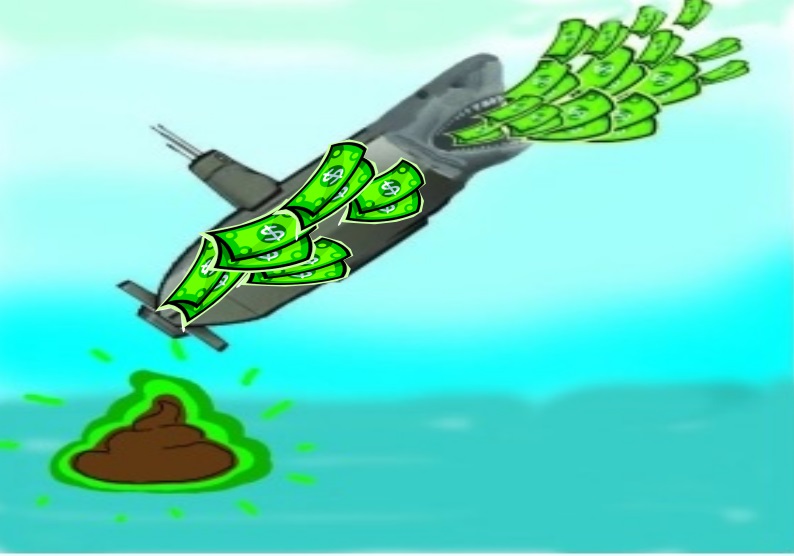
The cost could come in below $300 billion, or easily approach $500 billion.
a large element of old-fashioned pork-barrelling involved.
war with China in the next few years (over Taiwan) isn’t a persuasive argument for submarines that won’t be delivered until the 2030s.
March 17, 2023, John Quiggin, Professor, School of Economics, The University of Queensland https://theconversation.com/18-million-a-job-the-aukus-subs-plan-will-cost-australia-way-more-than-that-202026?utm_source=substack&utm_medium=email
Australian governments have a long and generally dismal history of using defence procurement, and particularly naval procurement, as a form of industry policy.
Examples including the Collins-class submarines, Hobart-class air warfare destroyers and, most recently, the Hunter-class “Future Frigates”.
The stated goal is to build a defence-based manufacturing industry. But there is also a large element of old-fashioned pork-barrelling involved.
In particular, South Australia has nursed grievances over the shutdown of local car making, centred in the state, following the withdrawal of federal government subsidies. The closure of the Osborne Naval Shipyard in north Adelaide would be politically “courageous” for any government.
So the projects roll on, despite technical problems (the six Collins-class subs were plagued by problems with their noise signature, propulsion and combat systems) and cost overruns (the three Hobart destroyers cost $1.4 billion more than the $8 billion budgeted). The $35 billion plan for nine Hunter-class frigates may yet be abandoned given budget constraints.
All these previous ventures are dwarfed by the AUKUS agreement, which involves projected expenditure of up to $368 billion.
As Richard Denniss of The Australia Institute has noted, the precision implied by this number is spurious. The cost could come in below $300 billion, or easily approach $500 billion.
Military case lacking
The case for such a massive investment in submarines has proved hard to make in a simple and convincing way. The “Red Alert” articles published this month by The Sydney Morning Herald and The Age has helped to raise alarm about China. But the warning Australia could find itself at war with China in the next few years (over Taiwan) isn’t a persuasive argument for submarines that won’t be delivered until the 2030s.
Other questions have emerged.
In different ways, former prime ministers Paul Keating and Malcolm Turnbull have questioned the sense of a renewed alliance with the United Kingdom. The UK in a state of obvious decline, and Labour leader Keir Starmer, likely to be Britain’s next prime minister, has been noticeably lukewarm in his support for AUKUS, saying: “Whatever the merits of an Indo-Pacific tilt, maintaining security in Europe must remain our primary objective.”
Then there’s the view, held by many experts, that what has made submarines such potent weapons in the past – stealth – is unlikely to endure. Underwater drones and improved satellite technology could make our subs obsolete even before they are launched.
What about the jobs?
In these circumstances, the easiest political strategy to sell the AUKUS package is to present it as a job-creation program.
This is an appealing path for the federal government, given Prime Minister Anthony Albanese’s yearning for “an Australia that make things”. Albanese’s Twitter account has published tweets extolling the economic benefits of the deal, but none about what the submarines will actually do to make Australians safer.
The obvious response is that the 20,000 jobs the government says the program will directly create over the next 30 years will cost more than $18 million apiece.
But that actually understates how bad the case is.
Where will we find the skilled workers?
Australia already has a shortage of the type of skilled workers required to build the nuclear-powered subs: scientists, technicians and trade workers. Our existing training programs are unlikely to fill the gap. So, the new jobs will mostly be filled either by diverting skilled workers from other industries or by additional immigrants.
The government is grappling with the policies that can meet this existing shortage. Our migration program, for example, allocates extra points for technical skills in short supply, putting skilled workers ahead of people whose motive for migration is to be with their families and friends.
The “Job Ready Graduates” policy introduced by the Morrison government subsidises science, technology, engineering and mathematics degrees, at the expense of humanities and social sciences. This policy is now under review, but may well be maintained in some form.
Such is the scale of the problem that the government’s pre-election commitment to deliver a White Paper on Full Employment (inspired the Chifley government’s 1945 White Paper) has been sidelined by a focus on how to increase the supply of skilled labour, through vocational education, immigration and delayed retirement. Hence the title of the “Jobs and Skills Summit” in September 2022.
There is no indication the shortage of skilled tech workers is going to be resolved any time soon. It is, then, a mistake to boast about the number of technical jobs that will be created by AUKUS.
It would be more accurate to say that, just as the massive financial cost of the submarines will come at the expense of spending on social needs, the workers required to build them will divert skills from addressing needs such as decarbonising the economy.
Perhaps, like previous submarine deals, this plan will be scrapped before consuming the stupendous sums of money now projected. But in the meantime it will divert the Australia’s government from addressing urgent domestic problems.
Jessica Wysser- Submission to Senate – Nuclear power a dangerous distraction from real climate action

To SenateCommittee on Environment and Other Legislation Amendment (Removing Nuclear Energy Prohibitions) Bill 2022 Submission 65
The ban on nuclear power in Australia must remain in place. I support the ban and ask the Senate
Standing Committees to support the continuation of this ban. I am concerned that further nuclear promotion risks delaying the action Australia needs to address the challenges, and maximise the opportunities, of meaningful climate action.
Nuclear power plants are vulnerable to threats which are being exacerbated by climate
change. These include dwindling and warming water sources, sea-level rise, storm damage,
drought, and jelly-fish swarms. Nuclear engineer David Lochbaum states: “You need to solve
global warming for nuclear plants to survive.” Australia does not want or need a nuclear
reactor under these conditions as the country is already affected by climate change and we
can see that it is progressively worsening.
Nuclear power programs have provided cover for numerous weapons programs and an
expansion of nuclear power would worsen the situation. Former US Vice President Al Gore
neatly summarised the problem: “For eight years in the White House, every weaponsproliferation problem we dealt with was connected to a civilian reactor program.
And if we ever got to the point where we wanted to use nuclear reactors to back out a lot of coal … then
we’d have to put them in so many places we’d run that proliferation risk right off the
reasonability scale.”
Nuclear reactors are pre-deployed military or terrorist targets. The
current situation in Ukraine illustrates the risks: electricity supply necessary for reactor
cooling has been repeatedly disrupted by military strikes, posing serious risks of nuclear core
meltdowns. Prior to Russia’s recent attack on Ukraine, there have been numerous military
attacks on nuclear plants. Examples include Israel’s destruction of a research reactor in Iraq in
1981; the United States’ destruction of two smaller research reactors in Iraq in 1991;
attempted military strikes by Iraq and Iran on each other’s nuclear facilities during the 1980 –
88 war; Iraq’s attempted missile strikes on Israel’s nuclear facilities in 1991; and Israel’s
bombing of a suspected nuclear reactor in Syria in 2007.
Having a nuclear reactor opens the country up to the possibility of making Australia a target. Australians would never want or desire this.
Australia needs effective climate action now but nuclear power would slow the transition to a
low-carbon economy. It would increase electricity costs and unnecessarily introduce the
challenges and risks associated with high-level nuclear waste management and the potential
for catastrophic accidents, with profound intergenerational implications for Australians.
Nuclear power is dangerous, expensive, slow and unwanted. Our energy future is renewable
not radioactive.
Thank you for this opportunity to comment.
For the only planet we have https://www.aph.gov.au/Parliamentary_Business/Committees/Senate/Environment_and_Communications/Nuclearprohibitions/Submission
Productivity Commission casts doubt on the federal government’s decision to build nuclear-powered submarines
The Productivity Commission noted that for many years, the defence sector had received effective subsidy rates for domestic production of up to 300 per cent, compared to zero for most other parts of the economy.
It said that given the large sums of money involved in defence, more scrutiny from outside the sector was needed.
Australia should reconsider building its own defence equipment, review finds https://www.theage.com.au/politics/federal/australia-should-reconsider-building-its-own-defence-equipment-review-finds-20230319-p5ctbc.html By Shane Wright, March 19, 2023,
The Productivity Commission has cast doubt over the federal government’s decision to build nuclear-powered submarines in Australia, using its major report into the nation’s economy to argue for a complete re-appraisal of how the country meets its defence needs.
In the same week Prime Minister Anthony Albanese signed off on the AUKUS submarine project with the United States and Britain, at a cost of between $268 billion and $368 billion, the commission’s five-year review of productivity found that in most cases Australia was better off not developing its own defence production capability.
The commission’s report, Advancing Prosperity, made 71 recommendations across more than 1000 pages of analysis. It follows a long-term decline in Australia’s productivity growth rate, which over the past decade has slipped to its lowest level since the 1950s.
Part of the report focused on government infrastructure spending and procurement, particularly around defence, which it noted had for years suffered from “imperfect processes” and huge cost overruns.
It found there were problems in defence spending due to the complexity of much of the equipment, the need for a high-skilled workforce and the costs associated with integrating new technologies with old. This meant in almost all cases, Australia should avoid building its own defence equipment.
“Depending on the context, buying an already proven technology from overseas and not quickly, if ever, developing a domestic production capability is likely to be optimal in many contexts,” it found.
“A sophisticated domestic capability to use, store and maintain equipment would still be required regardless of where it was sourced from but would involve lower costs than domestic production and assembly.”
Under the AUKUS deal, Australia will obtain three Virginia-class submarines from the United States – to arrive in 2033, 2036 and 2039.
In the 2040s, Australia will build a new type of submarine, the SSN AUKUS, based on an updated version of the current British Astute-class submarine and featuring American parts.
The Productivity Commission noted that for many years, the defence sector had received effective subsidy rates for domestic production of up to 300 per cent, compared to zero for most other parts of the economy.
There was also less transparency around projects as governments cited national security grounds. But the commission said these reasons did not justify “the present level of opacity”.
On Sunday, Defence Minister Richard Marles refused to be drawn on the individual cost of the submarines to be supplied under the AUKUS agreement.
Since announcing the project, the government has been at pains to talk up its benefits to the Australian economy, particularly in South Australia and Western Australia.
Last Friday, Albanese said the submarines would create 20,000 jobs directly in Australia and “many tens of thousands” more through the broader economic impact of the project.
“What this will do is highly sophisticated manufacturing will lead to a renaissance of high-value manufacturing in Australia. That money, that economic activity stays right here,” he told ABC radio.
The Productivity Commission said the focus on local industry needs had added to the cost problems around many defence projects. It said that given the large sums of money involved in defence, more scrutiny from outside the sector was needed.
“Defence procurement is ripe for deep and disinterested scrutiny of its processes. There are strong grounds for re-thinking defence procurement, drawing on advice from those outside Defence,” it found.
“The productivity and efficiency benefits of better practices are large given the $270 billion of anticipated defence spending over the next decade.”
Apart from an outside examination of defence spending, the commission also argued all government spending needed closer inspection. It backed the public release of cost-benefit analyses of public projects.
The Grattan Institute’s transport and cities program director, Marion Terrill, said the growth in the number of “mega-projects” demanded more scrutiny.
She said two-thirds of the current major infrastructure projects under way across Australia are worth more than $5 billion, which meant the potential for cost blow-outs was increasing.
The $100 billion cost range for the submarine project meant it faced the same problems as a major infrastructure project.
“The larger the projects, the bigger the contracts, the greater the chance of a cost overrun and the size of that cost overrun being larger. We’ve got to the point where a $100 million project is little more than a rounding error,” she said.
Terrill said she backed the commission’s call for more transparency around public projects.
“We need to look at these projects in terms of taxpayers being shareholders, so it’s only fair that they understand why a decision has been made on their behalf but also the underlying assumptions around the costs and benefits.”
Marles on Sunday rejected suggestions that Australia had given the United States a commitment to assist in a war over Taiwan in return for the purchase of its Virginia-class submarines.
“The answer to that is, of course not. Of course not. And nor was one sought. I’ve listened to that conjecture from a number of commentators. It is plain wrong,” he said.
“What Australia would do or not in respect of any future conflict will be a matter to be considered at that time by the government of the day.”
The AUKUS nuclear deal “stinks” – former environment minister Peter Garret
Former Labor environment minister Peter Garrett has lashed the Aukus
nuclear submarine deal, calling the former Coalition administration’s
decision “the most costly and risky action ever taken by any Australian
government” and saying Anthony Albanese’s decision to back it was a
departure from established ALP policy.
The Midnight Oil frontman and longtime nuclear disarmament activist claimed the $368 billion deal
“stinks”, suggesting the money could be better spent and raising
concerns about how Australia will dispose of nuclear waste from the boats.
Guardian 17th March 2023
Australia needs to rethink plan to buy nuclear submarines
If the sale goes ahead, this would be a clear violation of the Treaty on the Non-Proliferation of Nuclear Weapons, and open up a Pandora’s box
SCMP Editorial, 20 Mar, 2023
The Aukus alliance powers – Australia, the United Kingdom and the United States – have revealed details of the controversial plan to equip Australia with eight nuclear-powered submarines in coming years. This does nothing to ease growing concerns about an arms race and a threat to peace and security in the region. The three countries are parties to the Treaty on the Non-Proliferation of Nuclear Weapons (NPT).
But the plan amounts to nuclear proliferation because, unlike the other two, Australia is not presently a nuclear power and will become the first to acquire nuclear-powered submarines. The US is willing to share nuclear technology with a Pacific ally as part of its containment policy towards China.
No matter how the narrative is shaped around the defence needs of a security partner, this is proliferation. Where is the line to be drawn now? How are other nuclear powers to be restrained when it suits their geopolitical interests to export nuclear technology and weapons potential to other, non-nuclear countries?
Consider the real potential for nuclear proliferation through a loophole in the NPT that exempts fissile material for military use such as naval propulsion from scrutiny by the International Atomic Energy Agency. This raises concerns among proliferation experts about the future diversion of exempt fissile materials to weapons production. This would make it difficult to avoid a nuclear arms race in the region……….. more https://www.scmp.com/comment/opinion/article/3214086/australia-needs-rethink-plan-buy-nuclear-submarines
Spent Matters: The AUKUS Nuclear Waste Problem
March 19, 2023, Dr Binoy Kampmark https://theaimn.com/spent-matters-the-aukus-nuclear-waste-problem/
When Australia – vassal be thy name – assumed responsibilities for not only throwing money at both US and British shipbuilders, lending up territory and naval facilities for war like a gambling drunk, and essentially asking its officials to commit seppuku for the Imperium, another task was given. While the ditzy and dunderheaded wonders in Canberra would be acquiring submarines with nuclear propulsion technology, there would be that rather problematic issue of what to do with the waste. “Yes,” said the obliging Australians, “we will deal with it.”
The Australian Defence Department has published a fact sheet on the matter, which, as all such fact sheets go, fudges the facts and sports a degree of misplaced optimism. It promises a “sophisticated security and safety architecture” around the nuclear-powered submarine program, “building on our 70-year unblemished track record of operating nuclear facilities and conducting nuclear science activities.”
This record, which is rather more blemished than officials would care to admit, does not extend to the specific issues arising from maintaining a nuclear-powered submarine fleet and the high-level waste that would require shielding and cooling. In the context of such a vessel, this would entail pulling out and disposing of the reactor once the submarine is decommissioned.
Australia’s experience, to date, only extends to the storage of low-level waste and intermediate-level waste arising from nuclear medicine and laboratory research, with the low-level variant being stored at over a hundred sites in the country. That situation has been regarded as unsustainable and politically contentious.
The department admits that the storage and disposal of such waste and spent fuel will require necessary facilities and trained personnel, appropriate transport, interim and permanent storage facilities and “social license earned and sustained with local and regional communities.” But it also notes that the UK and the US “will assist Australia in developing this capability, leveraging Australia’s decades of safely and securely managing radioactive waste domestically”.
That’s mighty good of them to do so, given that both countries have failed to move beyond the problem of temporary storage. In the UK, the issue of disposing waste from decommissioned nuclear submarines remains stuck in community consultation. In the US, no option has emerged after the Obama administration killed off a repository program to store waste underneath Nevada’s Yucca Mountain. The reasons for doing so, sulked Republicans at the time, were political rather than technical.
Where, then, will the facilities to store and dispose of such waste be located? “Defence – working with relevant agencies including the Australian Radioactive Waste Agency – will undertake a review in 2023 to identify locations in the current or future Defence estate that could be suitable to store and dispose of intermediate-level waste and high-level waste, including spent fuel.”
The various state premiers are already suggesting that finding a site will be problematic. Both Victoria and Western Australia are pointing fingers at South Australia as the logical option, while Queensland has declared that “under no circumstances” would it permit nuclear waste to be stored. “I think the waste can go where all the jobs are going,” remarked Victorian Premier Daniel Andrews. “I don’t think that’s unreasonable, is it?”
-ADVERTISEMENT-
Western Australia’s Mark McGowan, in furious agreement, suggested that a site “somewhere remote, somewhere with very good long-term geological structure that doesn’t change or move and somewhere that is defence lands” narrowed down the options. “[T]hat’s why Woomera springs to mind.”
South Australia’s Premier, Peter Malinauskas, insists that the waste should go “where it is in the nation’s interest to put it” and not be a matter of “some domestic political tit-for-tat, or some state-based parochial thing.”
When it comes to storing nuclear waste, parochialism is all but guaranteed. The Australian government is already facing a legal challenge from traditional owners regarding a 2021 decision to locate a nuclear waste site at Kimba in South Australia. The effort to find a site for the National Radioactive Waste Management Facility intended for low and intermediate radioactive waste produced by the Australian Nuclear Science and Technology Organisation at Lucas Heights, New South Wales, took three decades.
According to members of the First Nations group opposing the decision, the proposed facility risks interfering with a sacred site for women. Dawn Taylor, a Barngarla woman and Kimba resident, told the ABC that, “The Seven Sisters is through that area.” She feared that the waste facility would end up “destroying” the stories associated with the dreaming.
The federal resources minister, Madeleine King, has stated with little conviction that a cultural heritage management plan “informed by the research of the Barngarla people” is in place. “There are strict protocols around the work that is going on right now to make sure there is no disturbance of cultural heritage.”
Local farmers, including the consistently vocal Peter Woolford, are also opposed to the project. “We just can’t understand why you would expose this great agricultural industry we have here in grain production to any potential risk at all by having a nuclear waste dump here.”
The Australian security establishment may well be glorifying in the moment of AUKUS, itself an insensibly parochial gesture of provocation and regional destabilisation, but agitated residents and irate state politicians are promising a good deal of sensible mischief.
Why is the Labor government determined to silence the Barngarla people, at the same time as Labor promotes the indigenous Voice to Parliament ?
‘While appreciating the Labor government’s strong commitment to the Voice, the question remains as to why, at the same time, federal Labor are doing so much to continue the Coalition’s determination to silence the voice of the Barngarla.’
Nuclear waste controversy continues in Federal Court Michele Madigan, 16 March 2023, https://www.eurekastreet.com.au/nuclear-waste-controversy-continues-in-federal-court
On Monday 6 March, the Barngarla Determination Aboriginal Corporation (BDAC) began action in the Federal Court in Adelaide to overturn the federal Ministerial declaration to selecting Napandee near Kimba as the proposed site for a national nuclear waste facility.
The Barngarla people, the Traditional Owners of Kimba, have consistently opposed the controversial nuclear waste plan. The federal government has spent millions of dollars fighting the Barngarla in court, despite the continued efforts of the Barngarla people who do not want their sites and stories disturbed by a nuclear waste facility.
This fourth manifestation of federal governments of either persuasion to impose a national radioactive waste dump continues to be one of the best kept environment secrets in the country on all levels. There are still unanswered questions regarding the project itself, the actual necessity for it, and the risks involved.
Capitalising on the small amount of coverage South Australian affairs have in the media in general outside our own state, three out of the four chosen sites in this serial campaign since 1998 have been in South Australia. No coincidence either that the precedent seemed to be long set by SA being the main place of choice for the British nuclear explosions and the following so called ‘minor trials’ of the 1950s and 1960s.
It may be worth again touching on the risks involved. Recently, a WA mining company lost a tiny radioactive capsule on the long southward trek down to Perth. Eureka Street readers may have heard as the story became international news. The authorities were certainly anxious that it be found, warning in the meantime how dangerous it would be to touch.
It seemed amazing that such a tiny entity could later be found in such vast territory of 1400 kms. Finding it was surely a classic triumph of the needle in the haystack success story. However, though certainly difficult, it was not impossible because of the radioactive rays it was emitting. Those of us concerned about the previous federal government‘s campaign to regularly transport, not a tiny capsule with a half life of 30 years, but long lived Intermediate Level radioactive waste — toxic for 10,000 years — have been regularly and understandably puzzled by the almost absent media coverage about this far more dangerous waste in the proposed regular 1700 km monthly transports from ANSTO Lucas Heights.
Regarding the actual necessity for the dump, the Coalition government has repeated the mantra about the ‘100 hospitals and universities throughout the nation housing radioactive waste’ as a prime reason for needing the national facility. Even normally reputable news outlets like the Guardian have been known to fall back on these easily-accessible Resource Ministers’ media statements providing inaccurate information.
The reality is in huge contrast to these claims. In October of last year, SA environmental expert David Noonan discovered, through reading the Australian Radioactive Waste Agency’s own detailed information, compelling evidence that directly contradicted the claims of multiple government officials, department personnel, and ARWA staff.
Far from the claims that the proposed facility is ‘essential’ to prevent the nationwide ‘100 hospitals and universities’ being overwhelmed by the storage of nuclear medical waste products, Noonan’s research revealed the reality. Total Hospital existing and future LLW [low -level waste] is reported at only 3 m3 [three cubic metres]. Based on ARWA’s Report, all non-ANSTO sources produce on average only approx. 1.3 m3 per year of LLW over the next 100 years and produce approx. 1.34 m3 per year of Intermediate level waste ILW over the next 50 years.’ Not enough to necessitate the creation of a waste dump in Kimbra. In the words of environmentalists, ‘it’s ANSTO’s dump.’
Ignorance, (wilful or otherwise), by Parliamentarians about the matters of nuclear medicine is not confined to the Coalition. NSW Senator the Hon Tim Ayres was the presiding member for the absent Resources Minister, Madeleine King in the recent February Senate Estimates on these matters. Ayres’ comments to SA Senator Barbara Pocock said it all: ‘But South Australians use X-rays. They use nuclear medicine. They use it for cancer treatments. They use it for all sorts of medical purposes’. When later conveyed to her, this statement drew the incredulity of Dr Margaret Beavis, GP and Co-Chair of ICAN Australia, and Vice-President Medical Association for Prevention of War. As Dr Beavis explains: ‘Nuclear medicine is used for medical imaging and to treat some cancers. Nuclear medicine should not be confused with X-rays, CT scans, MRIs, radiotherapy or chemotherapy, which are much more commonly used.’
The previous November Senate Estimates seemed to give Shaun Jenkinson CEO of Australian Nuclear Scientific and Technology Organisation (ANSTO) an almost uncritical forum for propagating ANSTO’s claims of the Kimba dump being essential for the survival of Australia’s nuclear medicine, even when challenged by the new SA Senator, economist Professor Barbara Pocock. In February’s recent Senate Estimates, Senator Barbara Pocock asked what contingency plans were in place to produce and store nuclear medicine if the facility didn’t go ahead at Kimba. Jenkinson’s response was measured, admitting that there is room at ANSTO. ‘We continually look at the storage capacity on site, and we of course look at the projected time for the national radioactive waste management facility. We work closely with ARWA, and, if there was to be a delay in that, we would be seeking approval for additional onsite storage until such time as a national radioactive waste management facility was ready.’
Cost has been, and is, no obstacle to either federal government to ensure their project goes ahead. As the recent BDAC briefing paper reveals, ‘since 1 January 2017, the Commonwealth Government has spent close to $10 million on legal work for the nuclear waste dump and the AWRA (Australian Radioactive Waste Agency).’ In the last year alone, the Commonwealth Government spent around $2 million, or approximately $40,000 every week, on a team of 14 lawyers to fight the Barngarla in court. Norman Waterhouse, the legal firm representing the Barngarla people, and the legal team working with Norman Waterhouse have endured all of the Commonwealth’s litigation for fees of $500K in 2022. The Barngarla’s legal team has withstood tremendous pressure from the Commonwealth lawyers for a quarter of the cost to take the case.
While appreciating the Labor government’s strong commitment to the Voice, the question remains as to why, at the same time, federal Labor are doing so much to continue the Coalition’s determination to silence the voice of the Barngarla.
Aukus nuclear submarine deal will be ‘too big to fail’, Richard Marles says

Australia’s defence minister plays down concerns multi-decade plan could be vulnerable to political changes in the US and UK
Daniel Hurst, Guardian, 17 Mar 23
Australia’s nuclear-powered submarine deal with the US and the UK will rapidly become “too big to fail”, the deputy prime minister has said.
Richard Marles made the comment in an interview with Guardian Australia’s politics podcast, pushing back at the idea the multidecade Aukus plan could be vulnerable to political changes in both the US and the UK.
He also predicted that broader diplomatic efforts to stabilise the relationship between Australia and China would “continue largely unaffected by what has been announced during the course of this week”.
As the minister for defence, Marles has been at the centre of the Aukus planning. He said he had felt the “gravity” and “responsibility” of this week’s announcement of sweeping, staged plans that involve Australian spending of up to $368bn by the mid-2050s.
One point of contention has been the Australian promise to provide $3bn in funding over the next four years to subsidise the submarine production base in the other two countries, mostly the US, and what guarantees there were that the US would actually proceed with selling three to five Virginia-class submarines to Australia in the 2030s.
Asked what contracts or agreements sat underneath the high-level political commitment announced in San Diego this week, Marles said the project was “a shared endeavour of the three countries”.
“There is going to be a legal underpinning to this … and there is going to need to be a treaty-level document between our three countries, so there is a whole lot of legality which will be worked through,” Marles said.
“But in so many ways this transcends that [given] the sheer size of the decision to share this capability with Australia. And having taken the step of doing that, which we’ve done, puts all three countries in a position where it’s too big for it to fail on the part of any of those countries.”
Marles said all three countries were “deeply committed to each other’s success in this project” and that was what gave him “a sense of assurance that this is going to play out in the way that we want it to play out”.
“This must work for the US, this must work for the UK, as much as it must work for Australia,” he said……………….
Marles also addressed questions about whether the submarines could become obsolete, given that an Australian National University report, Transparent Oceans?, found that scientific and technological advancements predicted oceans were “likely” or “very likely” to become transparent by the 2050s.
“Just as there is a lot of effort going into illuminating the seas, there is a lot of effort going into creating more stealth around a submarine,” Marles said……………………..
The International Campaign to Abolish Nuclear Weapons said this week that the best way for Australia to reassure the region about the submarine plan would be to sign and ratify the UN Treaty on the Prohibition of Nuclear Weapons.
It is Labor party policy to do so, but only “after taking account” of several factors, including the need for an effective verification and enforcement architecture and work to achieve universal support from other nations. The nuclear weapons states including the US have opposed the treaty, arguing it is out of step with the current security environment.
Marles said Australia wanted “a world where there are no nuclear weapons”, and had sent observers to the first meeting in Vienna last year………… https://www.theguardian.com/australia-news/2023/mar/17/aukus-nuclear-submarine-deal-will-be-too-big-to-fail-richard-marles-says?CMP=share_btn_tw
Labor Premiers’ dispute over location for AUKUS nuclear wastes, – but planned Kimba waste dump is”now dead in the water”?

Mr Wilkins told ABC Radio Adelaide that the proposed Kimba nuclear waste dump no longer made sense, and that any future site to store submarine reactor spent fuel should also accept waste that would have gone to Kimba.
“The proposed Kimba nuclear waste dump must now be dead in the water,” he said
Nuclear waste divisions intensify between Labor premiers over AUKUS submarine deal
ABC, 18 Mar 23
South Australia’s premier has hit back at suggestions from Labor counterparts that his state should take nuclear waste from the future AUKUS fleet, saying the decision on where the waste goes should be based on the “nation’s interests”…………….
Divisions within Labor ranks over AUKUS — including over its $368 billion cost, and its strategic aims and consequences — have become increasingly apparent since Paul Keating’s blistering attack on what he described as the “worst international decision” by a Labor government since conscription.
While Prime Minister Anthony Albanese yesterday rebuked Mr Keating, Labor premiers have since voiced opposition to accepting nuclear waste from the AUKUS subs in their states.
Victorian Premier Daniel Andrews said yesterday it was not “unreasonable” to suggest that, since South Australia is gaining jobs, it should also accept the spent fuel rods when the submarines reach the end of their service.
“I think the waste can go where all the jobs are going,” he said.
West Australian Premier Mark McGowan voiced similar sentiment, suggesting South Australia take on a nuclear waste facility.
But while Mr Malinauskas said that the possibility of SA taking waste could not be ruled out, he rejected Mr Andrews’s claim that SA had a responsibility to take the waste because it was taking the jobs.
“No, because that implies that somehow that this isn’t a national endeavour,” he said……………………
Conservation Council of SA chief executive Craig Wilkins said discussion of a “short-term political stoush between state premiers” overlooked the major challenges involved in storing nuclear waste.
“We’re talking about waste that needs to be kept safe from humans for tens of thousands of years, basically beyond our civilisation, so this needs to be an incredibly well-considered decision,” he said.
“[There] needs to be a multi-billion-dollar project to house the waste.”
Mr Wilkins told ABC Radio Adelaide that the proposed Kimba nuclear waste dump no longer made sense, and that any future site to store submarine reactor spent fuel should also accept waste that would have gone to Kimba.
“The proposed Kimba nuclear waste dump must now be dead in the water,” he said………………………. https://www.abc.net.au/news/2023-03-17/sa-premier-hits-back-at-nuclear-waste-claims/102109026
Uncle Sam, can you target my Tomahawk, please?

“Will Australian air warfare destroyers serve simply as a transport means and launch platform for the United States, receiving targeting data only with their agreement? Or will we have full targeting control over our Tomahawks?
by Rex Patrick | Mar 18, 2023 https://michaelwest.com.au/uncle-sam-can-you-target-my-tomahawk-please/
Who will control the Tomahawk Missiles? News that Australia will purchase up to 220 Tomahawk Land Attack Missiles might seem like just another Defence purchase, but there’s a hidden sovereignty issue that needs to be examined. And that’s what Rex Patrick is here to do.
The United States Congress has just approved the sale of as many as 20 Block IV Tomahawks and 200 Block V Tomahawks for $1.3 billion dollars. The US will provide support consisting of unscheduled missile maintenance, spares; procurement, training, in-service support, software, hardware, communication equipment, operational flight test, engineering, and technical expertise.
Tomahawk missiles are a long range, all weather, subsonic cruise missile used to attack land targets. The intention is for these proven and highly effective missiles to be fitted to our navy’s three Air Warfare Destroyers. But while these missiles will be fitted to our ships and be under Australian command, the ability to target them properly may be constrained by the US.
The purchase raises a sovereignty issue which must be bought out in the open and discussed.
We’re going to war tomorrow
I was in the United States in October 2001, just after 9/11. America was in shock. On the evening of October 5th, I was in a US Defence establishment working back late, hoping to be able to complete the task I was there to do so that I could return home to Australia.
My American host, sitting in front of his classified computer system, looked up at me and said, “America’s going to attack someone this weekend.”
I looked back at him and asked, ”You’ve got a classified email message telling you that?”
“No,” he replied, pointing out the window, “See that building over there. That’s where they program the Tomahawk missiles. It’s 6pm on a Friday night, and the car park’s full.”
Less than 48 hours later, the US launched Operation Enduring Freedom with a series of, amongst other things, Tomahawk missile strikes.
Guidance required
Tomahawks are used to attack land targets to incapacitate enemy command & control facilities, strategic air defences, intelligence systems, infrastructure, key production facilities and military forces.
They are normally fired as part of a joint operation with targeting information provided by strategic commanders onshore and coordinated in time and space to produce a synergistic attack.
The missiles use GPS and terrain contour matching to navigate to the target, and a ‘Digital Scene Matching Area Correlation’ to improve navigation in the terminal stages leading to accuracies of the order of ten metres.
Two stages of planning are conducted for the Tomahawk. Planning for the maritime cruise (overwater) phase is normally carried out by the launch platform, our air warfare destroyers’ crew, cognisant of the current surface and air picture.
Programming of the land cruise (overland) phase and target selection is normally carried out by a ‘Theatre Mission Planning Centre’ (TMPC) ashore (like the one my US colleague and I were looking through the window at) or a shipboard Tactical Tomahawk Weapon Control System (TTWCS). Australia is receiving both from the US.
The onshore centre and shipboard TTWCS also provide for post launch control of the weapons.
The US TMPC has a worldwide geospatial database that allows for them to plan strikes. Whether Australia has unfettered and unblockable access to this, or an indigenous alternative, is not known.
Whether we do or don’t is the answer to whether we will have full sovereign control over targeting.
“Will Australian air warfare destroyers serve simply as a transport means and launch platform for the United States, receiving targeting data only with their agreement? Or will we have full targeting control over our Tomahawks?
Sovereign capability
The first priority of the Australian Defence Force (ADF) is defence of Australia. Every capability we acquire should come with the keys to allow ADF commanders to use capabilities in their possession as they see fit.
Questions of sovereignty are swirling around the entire AUKUS program; submarines, and now missiles. I hope my former colleagues in the Senate will ask the right questions.
Deborah Pergolotti – Submission to Senate refutes Senator Canavan’s introductory speech.

Re Environment and Other Legislation Amendment (Removing Nuclear Energy Prohibitions) Bill 2022
Submission 56
Senator Canavan and sponsors to the following bill:
Environment and Other Legislation Amendment (Removing Nuclear Energy Prohibitions) Bill 2022
Firstly, I need to confirm this is a personal communication and not on behalf of any organisation.
On the one hand, I need to congratulate you for recognising that this current overwhelming push for
renewables is ill-conceived, problematic, and will only hurt Australia’s future as well as worsen the situation
for biodiversity losses
On the other hand, nuclear power is NOT a desirable alternative to head towards. I would like to address
some of the components in the bill’s introductory speech by Senator Canavan. The statements in italics are
taken from the Senator’s speech.
“Of the 20 richest nations in the world only three do not have nuclear power: Australia, Saudi Arabia and
Italy. Saudi Arabia is building a nuclear power station and Italy gets much of its imported electricity from
France, where three quarters of the electricity is produced by nuclear.”
Italy has a very good reason for not building nuclear power: they have a major fault line running up the
center of the country (and the Saudi’s should be cautious as well since they are sitting on top of a subduction
zone). Anyone who builds a nuclear facility close to an active fault line is negligent, reckless or at minimum
ignorant. This will become very apparent in the US once their Cascadia, San Andreas and New Madrid fault
zones next adjust (expected soon) as they have built dozens of plants in fault zones.
“Nuclear plants are generally characterised by large capacity and output, high capital cost, and long
construction times, but relatively low operating costs and almost zero emissions to air from their operation.”
Unless there is an accident and then they pose a threat to all living things downwind for hundreds of years.
‘Accidents’ can be defined in many ways such as human error, seismic activity, tsunami’s (Fukushima),
design flaws (Chernobyl), poor maintenance issues (Three Mile Island), the modern scourge of hackers – or
the provocations of a hostile actor (such as what nearly happened in Ukraine at the Zaporizhzhia facility). In
our current hostile world where we are very close to a full-blown third world war, any country with a nuclear
power plant becomes an easy target for any aggressor who doesn’t even need to possess nuclear weapons of
their own. All they need a is a simple device directed at a plant and a major disaster results. Perhaps nuclear
might have been a reasonable option back in the 60’s but the current hostile and deceptive actors ‘running
things’ now makes nuclear a huge liability. Australia has been smart to avoid this scenario thus far,
regardless of the uranium resources we possess.
“Nuclear energy is used to produce electricity in 31 countries from some 450 nuclear reactors, providing
around 10 per cent of global electricity. Many nations are building new nuclear power plants because they
provide reliable, emission free power.”
There is a misguided focus on emissions but the focus is on the WRONG emissions. Carbon is not the
enemy and is needed by all vegetation on the planet. So focusing on nuclear as way to reduce emissions is
irrelevant. This fixation on carbon driven by deleterious wealthy influences overseas that Australia should
NOT be paying attention to is only meant to transfer wealth – not save the planet (you can tax carbon but you
can’t tax the cold or solar output). I recognise that at least some of you have come to acknowledge that the
‘health crisis’ thrust upon us the past two years was a planned deception. Rest assured this AGW is another
distraction and will result not only in wealth transfer but the diminishing of Australia to that of a ‘banana
republic’. Coal has its problems but the emissions that need to be controlled from coal are the dusts and heavy metals that are dispursed such as mercury and arsenic. Are you aware that bioaccumulative fish from
around the supposedly ‘clean’ waters of Qld’s barrier reef are loaded with mercury which would have come
from power plants further down the coast? Until the poor performance problems of renewables can be
solved (if ever), we are safer sticking with coal and focusing our efforts into filtering out the heavy metals
from their exhausts. At least if some foreign actor decides to target them, the plant will be damaged but it
won’t be spreading clouds of radiation throughout the southern hemisphere. (Please note I have not argued
about gas – this is not our saviour either with its high levels of methane leaching, explosive nature and
induced seismicity – refer to current quake swarm in Texas.) While the demand for electricity just continues
to skyrocket (insert electric cars here), we can’t be eliminating the only generators that will produce enough
to satisfy an ever increasing demand.
“Nuclear power is safe.”
Only when all conditions with the facility are perfect and no outside factors interfere with its operation. It
doesn’t take all that much to turn it from stable to meltdown. The more complicated the system, the easier it
is to make it fail. The Three Mile Island meltdown was caused by a faulty relief valve. The explosion of the
NASA Challenger mission was caused by a faulty O-ring (a little ring of rubber on a cylinder).
“Nuclear does less damage to the natural environment than other energy options. Wind energy takes up 250
times more land than nuclear power and solar takes up 150 times more land.”
I agree that renewables should NOT be rolled out until the problems they create are fixed. There seems to be
no due diligence being included in the rush to deliberately de-energise our power generation. But incidents
with nuclear radiation can be unfixable. We have not yet invented a means of removing radiation from the
atmosphere.
Also, what you have left out of your speech is the disposal issue. Where is all this radioactive waste
supposed to be disposed of and how is it to be contained so that unforseen factors (earthquakes, hostile
attacks) don’t disturb it? You have focused on the operation only of a nuclear power plant but not the
consequences of accidents and disposal of waste. These need to be part of the evaluation and due diligence.
“The ARPANS Act regulates activities undertaken by Commonwealth entities affecting radiation, to ensure
that the health and safety of people, and the environment, are protected from the harmful effects of
radiation.”
The only way any authority in this country can protect the people and environment from radiation that would
result from a ‘disturbance’ to the plant is to not have nuclear power at all. https://www.aph.gov.au/Parliamentary_Business/Committees/Senate/Environment_and_Communications/Nuclearprohibitions/Submissions
Nuclear dump to be built on Defence land

14 March, 2023, Judy Skatssoon
The government has confirmed it will build a high level nuclear dump to deal with waste from its nuclear powered submarine program but says the location is yet to be decided.
Dealing with high level waste on Australian soil is part of the $368 billion AUKUS deal announced on Tuesday, which will see Australia build and operate eight nuclear powered submarines over the next 30 years.
Defence Minister Richard Marles said during a press conference on Tuesday that a purpose-built facility will have to be built to deal with waste generated by the submarines.
He admitted the government is yet to decide where the dump will be located but said it would be ‘quite some time’ before that bridge is crossed.
“There will be a process that we will determine within the next 12 months for how the site will be identified,” Mr Marles said.
“That’s to say we won’t identify the facility in twelve months’ time, but we will set up a process within the next twelve months for how that will be identified. But we’ve got time. We’ve got time to get this right, we’ve got time to identify the facility.”
30-year timeframe for decisions
It would be about 30 years before the first of the nuclear reactors that will power the subs will have to be disposed of, he said.
“So that is the timeframe. We will, in the course of the next year, announce a process by which that site will be identified. We’re not about to identify right now. And there is plenty of time in which to identify.”
He declined to say whether South Australia, where the SSN-AUKUS submarines will be built, or WA, which will eventually be home to the nuclear powered fleet, would be the site of a dump.
However, he indicated it will be on Defence land.
“We are committing to the fact that it will happen on Defence land, be it current Defence land or future Defence land,” the minister said.
He told the ABC the location would need to be remote from populations and geologically stable.
“We’re actually blessed with large parts of the country where that’s possible,” he said.
Spent nuclear reactors
Spent nuclear reactors will produce the highest level of nuclear waste, but this won’t need to be disposed of until after 2050, he said.
The first of those will be from the Virginia Class submarines being procured from the US, which will start operating in the early 2030s, Mr Marles said.
“It’s a significant undertaking to deal with the reactors at the end of their life, and this will require a purpose built facility in order to do that,” he said.
“So that people are clear, we’re talking about the first reactor needing to be dealt with in the 2050s, so this is a long way into the future.
“But we need to be planning for that, and what we’ve made clear today is that within the year we will announce a process by which that place will be identified – so we won’t identify the place in a year, but we’ll announce the process for that and what that facility would look like.”
Mr Marles did not answer questions about how many kilos of highly enriched uranium would need to be disposed of, telling the ABC that information was classified.
Australia was focused on dealing only with it’s own nuclear waste, and not that of its AUKUS partners the US and UK, the minister said.
What the nuclear-powered submarine deal really means

Australia has made a very poor deal with its great power ally and has once again demonstrated that the framing of its Defence policy has little to do with national security and everything to do with burnishing Australia’s faithfulness to the US and the ANZUS alliance.
In this instance, the US has schooled Australia in the conduct of foreign policy – states advance their own interests, even at the expense of their friends. Well done, President Biden!
Australia has made a very poor deal with its great power ally and has once again demonstrated that the framing of its Defence policy has little to do with national security and everything to do with burnishing Australia’s faithfulness to the US and the ANZUS alliance.
The Saturday Paper, Albert Palazzo Adjunct professor at UNSW Canberra. He was a former director of war studies for the Australian Army. 18 Mar 23,
The deal is done. On Monday morning in San Diego, the leaders of the United States, Australia and Britain jointly revealed the key details of Australia’s road to becoming a nuclear power – of sorts. President Joe Biden announced that the US will sell Australia three to five used Virginia-class nuclear-powered submarines sometime in the 2030s. The three countries will also design a future boat, the tri-flavour SSN-AUKUS class, which will enter service from some time in the 2040s and extend into the 2050s. Australia will receive about five AUKUS boats by about 2055.
Prime Minister Anthony Albanese thanked President Biden for his administration’s willingness to share its nuclear propulsion technology, before – perhaps inevitably – spruiking the jobs that the program will create across the nation. Both leaders stressed that Australia’s submarines will be nuclear-powered, not nuclear-armed. The cost is an estimated $368 billion for an uncertain number of warships whose final arrival may be as long as four decades away.
What Albanese neglected to mention is that the deal effectively makes a massive shift to the foundation of Australia’s long-established Defence policy. …………………………
in this instance the submarine pact creates risks that, when combined, will actually make Australia less safe.
The government has been very clear that the target of the submarine acquisition is an increasingly assertive China. However, China is also Australia’s largest economic partner and responsible for much of the nation’s present wealth. In acquiring these weapons, Australia has sent an unmistakable message to its biggest customer. One risk Australia has accepted is that the submarine deal creates enough jobs in the shipbuilding sector to offset possible losses in mining, agriculture, education and tourism if China decides to spend elsewhere.
“Monday’s announcement brings an end to 70 years of a highly effective Defence policy, without any discussion with the Australian public or seemingly any awareness within the government … The submarine pact creates risks that, when combined, will actually make Australia less safe.”
Further, the pact is unlikely to result in greater physical security for Australia. Several more Australian communities, in addition to those in Pine Gap, Exmouth and Darwin, will find themselves on a Chinese target list. The government is yet to announce the home of these submarines, but wherever that is will become a legitimate target, as will support facilities.
Of greater significance to Australia’s security is the false claim that these submarines will enable us to deter China from taking actions that are not in our interest. Unfortunately, capability does not equate to deterrence. Rather it is perception of deterrence by the adversary that matters most. If at some point in the early 2040s Australia has all five of its Virginia-class boats within striking distance of Chinese targets, combined they will be able to launch – at most – 60 Tomahawk missiles. Australia may succeed in blowing up some Chinese missile launchers, cratering a runway or two, or even collapsing a few bridges or power plants, but this is a country with thousands of targets and plenty of physical redundancy. Psychologically, the Chinese people are strong: they endured the Great Leap Forward and the Cultural Revolution without cracking. For China, 60 missiles will barely be felt. These submarines may awe Australia’s leaders and national security commentators but they are not a credible deterrent against a power as large as China.
And though the missiles may not be felt, they will unfortunately be noticed. China will respond to Australia’s piffling attempt at deterrence with a larger number of missiles against our much smaller number of critical targets. We’ll feel it, alright.
In their glee to get these weapons, commentators seem to skate over the immensity of the nuclear submarine project’s cost. Admittedly, they are highly capable and powerful weapons, but $368 billion, even spread over decades, will reverberate through the Defence budget and beyond. The government will either have to massively increase expenditure from the present $48 billion (in this financial year), reduce expenditure on other projects or eliminate them entirely. The result will be that the ADF will remain a boutique force, but one now dominated by the nuclear-powered submarine niche, while the land and air forces will see reductions.
The acquisition of nuclear-powered submarines poses a risk to Australia’s sovereignty, too. ………………..
To succeed, Australia will need to rely on the US and Britain to assist in developing a usable and safe capability. Instead of increasing self-reliance, these ships will actually magnify dependence on Australia’s allies. ….
If this decision were to result in a larger allied submarine fleet, then the change in Defence policy and the taking of so many risks might be worthwhile. But it won’t. When Australia buys its three to five Virginias, it will simply reduce the US inventory. There is no fleet increase. It is simply a change-of-flag deal in which a highly experienced operator of nuclear submarines sells a part of its fleet to an L-plater. ………..
…….. Australia will also contribute $3 billion to improvements at US shipyards – again, increasing its commitment to the alliance.
……….Australia has made a very poor deal with its great power ally and has once again demonstrated that the framing of its Defence policy has little to do with national security and everything to do with burnishing Australia’s faithfulness to the US and the ANZUS alliance.
The submarine deal is more than just a function of Australia’s need to be seen to support the alliance, however. It is also because the US visualises security challenges only in military terms. Both the US and Australia are bypassing other levers of government power, such as trade and diplomacy, in the rush to solve a problem by force of arms alone. Until both governments broaden their definitions of national security strategy to include more than military affairs, this will no doubt continue.
Australia’s journey to nuclear-powered submarines will take a risk-filled route that will reshape our traditional Defence policy into one that increases alliance commitments yet offers less security. In this instance, the US has schooled Australia in the conduct of foreign policy – states advance their own interests, even at the expense of their friends. Well done, President Biden! https://www.thesaturdaypaper.com.au/opinion/topic/2023/03/18/what-the-nuclear-powered-subs-deal-really-means
1 This month

of the week – Australians for War Powers Reform (AWPR)
To see nuclear-related stories in greater depth and intensity
 Antinuclear