Dumb Ways to Buy: Defence “shambles” unveiled – former submariner and senator Rex Patrick.
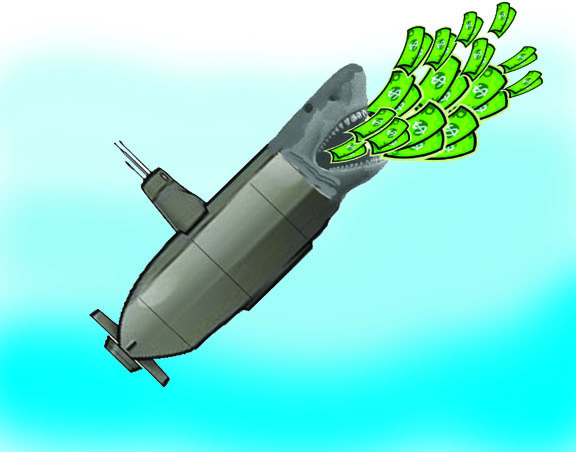
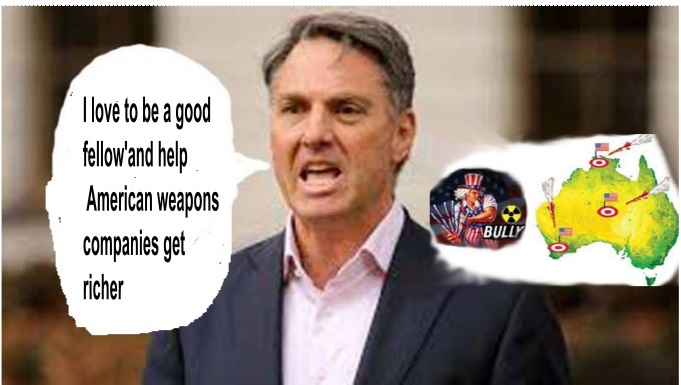
massive over-investment in one project with a delivery date close to two decades away. This will unquestionably jeopardise our national security.
Sadly, Defence Minister Richard Marles is out of his depth and drinking the Defence Department’s Kool Aid.
Michael West Media by Rex Patrick | Dec 18, 2022
“The AUKUS nuclear submarine project will bleed the Australian Defence Force white”, topping the billions in Defence spending waste each year. And there’s no one watching anymore, reports former serviceman and senator Rex Patrick.
Anyone with kids will know the song, ‘Dumb Ways to Die’.
Set fire to your hair
Poke a stick at a grizzly bear
Eat medicine that’s out of date
Use your private parts as piranha bait
Dumb ways to die
So many dumb ways to die
With 300 million views, it’s the world’s most shared Public Service Announcement. Launched in November 2012 by Metro Trains Melbourne to promote rail safety, it went viral through YouTube, quickly being shared all over social media.
Like many parents, I’ve suffered relentless annoying renditions of the song courtesy of my two, otherwise wonderful, daughters.
But that suffering is nothing like the suffering inflicted on Australian taxpayers and our national security by the Department of Defence as it has repeatedly bungled major Defence procurements. I’m not a songwriter, but what follows are all the elements needed for someone more creative than I to write a Defence procurement ‘Dumb Ways to Buy’ jingle.
Costly failure after failure
Defence procurement is a shambles and national expenditure disgrace. Project after project blows out in cost and schedule, with some projects being cancelled all together.
Every year the Auditor-General releases a Major Projects Report into Defence’s major projects. The most recent report covered 21 projects worth $58 billion dollars. Across those 21 projects, there had been $18.5 billion in cost increases – that’s 18,500 million dollars for those that can’t easily grapple with the large amounts of money with which Defence plays.
Across those 21 projects the schedule slippage was 405 months – 34 years. A number of projects, excluding the future submarine project for the moment, have either been binned or did not meet capability requirements. They are:…………………………………
That’s eight and a half billion dollars of taxpayers’ money just thrown away. That’s eight billion dollars of new capability our brave front-line Defence Force members don’t have.
What’s worse, there’s no-one watching Defence anymore. The Labor Party aren’t too interested in shining a light on Defence’s failures now they’re in Government. And the Liberal Party, having just left Government, are to blame for many of the programs. They’re happy to stay silent too.
And that leads us to the Future Submarine Program. It’s been in the news a bit last week after the United States offered, without any detail, to plug the capability gap that will be left by a first nuclear submarine only being delivered until in 2040 – the gap that the Rudd/Gillard/Rudd and Abbott/Turnbull/Morrison governments all pledged wouldn’t happen.
The Future Submarine project is the quintessential example of how not to buy a capability for the Australian Defence Force. Let’s examine that purchasing disaster.
Dumb ways to buy – delay the start
Sensibly, the future submarine project was first stood up in 2009. The plan was to work through the purchase options and commence construction of the first futures submarine in 2016, with the first boat hitting the water well before 2025, when the first of the ageing Collins Class submarines was due to retire.
Dumb ways to buy – pick partners using their views of themselves
In February 2015, the Government commenced a Competitive Evaluation Process, not to select a submarine, but to select an international partner to design and build our future submarines. The taxpayers forked out $8 million to each of France’s Naval Group, Germany’s TKMS and Japanese Industry: $24 million to listen to each potential partner tell Defence how good they thought they were.
At the time I was writing extensively on submarines for a Defence magazine. My business experience made me take a different approach to Defence. I jumped on a plane and went to talk to other navies, not about their submarines, but about their experience with their French and German suppliers.
The Chileans had had a good experience with the French. So too had the Portuguese…….
We proceeded to select the French as a partner, in taboo circumstances, where we didn’t have a comprehensively articulated contract.
After the partnership selection, Defence spent two and a half years trying to put in place a Strategic Partnering Agreement with the French, an agreement that was originally schedule to take 13 months; a first sign of trouble…………..
Dumb ways to buy – sign before you know what you’re buying
………… But that’s exactly what Defence did. Unsurprisingly, they copped severe criticism from the Auditor-General in his 2017 first program audit………..
Dumb ways to buy – risk it up………………………………………………….
Underlying this is the embarrassing fact that Defence employs Admirals, Generals and Air Marshals and senior Defence bureaucrats, with very little practical knowledge of project risk, to make procurement recommendations to Cabinet members who have no knowledge of project risk………………………………………………
Dumb ways to buy – switch to a costlier solution
When Prime Minister Scott Morrison announced on September 16, 2021 that the Government was walking away from the French solution, he did so with great fanfare and gusto, announcing we were purchasing a nuclear-powered submarine solution. He made no mention of cost, or schedule. Irresponsibly, those details were not known at the time.
And then opposition leader Anthony Albanese irresponsibly signed up to the solution with 24 hours’ notice, principally because he and his shadow ministry were politically too scared to have a fight about Defence policy in the countdown to the 2022 federal election.
Our political leaders would have us think that we are special because the US has agreed to share its nuclear technology with us. But that’s simply incorrect………….
t’s like we’re hunting for the most expensive and best football team, but planning for it to arrive after the grand final has been played.
The AUKUS nuclear submarine program will bleed the Australian Defence Force white. The opportunity costs are huge in terms of other capabilities, for the Air Force, for the Army and indeed for the Navy, that won’t be affordable because of massive over-investment in one project with a delivery date close to two decades away. This will unquestionably jeopardise our national security. Sadly, Defence Minister Richard Marles is out of his depth and drinking the Defence Department’s Kool Aid.
The revolving door: Kim Beazley, former WA governor, ex Labor defence minister moves quickly on to a Defence industry board
Revolving doors and undue influence
The ‘revolving door’ is a term used to describe the movement of individuals from public roles into related private industry roles and vice versa. Such moves are not illegal and not necessarily problematic. Declassified Australia is not alleging any illegal activity by Kim Beazley. However, given the potential for undue influence and conflicts of interest, global integrity bodies recommend clear guidelines and a transparent process of scrutiny and approval before such appointments take place.
Unfortunately, Australia’s guidelines for managing revolving door appointments are weak and largely unenforced. It is also unclear whether they exist for certain positions, such as state governors.
Bomber’s revolving doorway, By Michelle Fahy Dec 16, 2022
There is a never-ending conga line of politicians, intelligence, military and defence officials quick-stepping through revolving doorways onto the boards of lucrative military weapons companies.
Kim Beazley, former WA governor, ex Labor defence minister, two-time federal opposition leader, and former ambassador to the USA, was known, because of his enthusiasm for all things military, as ‘Bomber Beazley’ during his Defence ministership.
Just two months after his vice-regal role ended on 30 June this year, he joined the board of defence contractor Luerssen Australia. The move is another example in the long list of Australia’s revolving door appointments in the military-industrial sector.
In 2018 the federal government awarded Luerssen Australia, the WA-based subsidiary of the German naval shipbuilder Lürssen, a contract to supply twelve Offshore Patrol Vessels to the navy. The $3.7 billion contract was one of 28 projects listed as a concern in October by new defence minister Richard Marles, and was said to be running a year behind schedule.
Quality issues with the hull of the third vessel, being built by Luerssen’s WA project partner, the engineering firm Civmec, were revealed last month by unnamed defence sources to the Australian Financial Review. The first two vessels were built by Luerssen’s South Australian partner, ASC, at Osborne near Adelaide.
In February this year, Beazley, then WA state governor, made an official visit to Luerssen at Civmec’s facility in the Australian Marine Complex at Henderson, 35 kilometres south of Perth, where the remaining ten vessels are planned to be built.
The Morrison Government invested around $1.5 billion in infrastructure at both the marine complex at Henderson and at Fleet Base West at HMAS Stirling. Just across the waters of Cockburn Sound from Henderson, Stirling, Australia’s largest naval base, has long been coveted by the US military as an Indian Ocean base for its nuclear submarines and other naval ships.
Photos and a story of Beazley’s visit to Henderson were posted on the WA Government House website, including his description of the Luerssen vessel as ‘the ship of the future’.
Then, in early May this year, Governor Beazley met with a delegation of Luerssen executives at WA’s Government House. Present at this meeting were two Australian executives, Jens Nielsen, Luerssen Australia’s chief executive, and Matt Moran, its strategy and government relations executive. More significantly, however, there was also Tim Wagner, the chief executive of Naval Vessels Lürssen (NVL) Group, the German multinational conglomerate that owns Luerssen Australia. Government House downplayed Wagner’s presence, describing him only as the chairman of Luerssen Australia.
The Government House webpage says the Luerssen executives updated the Governor on the offshore patrol vessel program and that discussion then turned to ‘the possibilities of relocating further defence industry works to Western Australia to bolster our sovereign shipbuilding capabilities’. No further details are provided.
There is a wider context that raises questions about what was discussed at this meeting, which took place less than three weeks before the federal election and just four months before Beazley joined Luerssen’s board. In response to a request from Declassified Australia for more details, Beazley said only that, “Discussions centred on the subject on the website”, the subject being the sentence quoted above.
What is Lürssen seeking?
The possibility of a multinational naval shipbuilder relocating potentially billions of dollars of additional works to Henderson is significant. It could become more so if reports in international media of potential consolidation in the German naval shipbuilding industry, including speculation about a possible merger between ThyssenKrupp Marine Systems (TKMS) and Lürssen, prove accurate. TKMS is the large naval shipbuilding subsidiary of German industrial giant ThyssenKrupp. It was one of the three firms shortlisted for Australia’s ill-fated submarine contract, losing out to France’s Naval Group.
Lürssen launched its new NVL Group entity, which Wagner leads, in October 2021 to house its naval shipbuilding businesses, separating them from its super yacht division, a move that indicates it may be positioning itself for future industry consolidation.
In November, executives from TKMS were in Canberra seeking meetings with Australian Navy officials to discuss a potential new shipbuilding project, which the Financial Review said could lead to the Navy scrapping the offshore patrol vessels and replacing them with more heavily armed corvettes.
This may be significant because Lürssen and TKMS are already working in partnership (also see here) supplying the German navy with corvettes. No formal Australian corvette project yet exists, but it’s reported that it is being considered as an option by the Albanese government’s Defence Strategic Review.
Beazley’s term as WA Governor ended on 30 June 2022. Luerssen Australia announced his appointment to its board on 30 August 2022.
Beazley has joined the former chief of navy, Christopher Ritchie, and former Howard government cabinet minister John Sharp on the Luerssen Australia board. Both Ritchie and Sharp have also accepted other board positions with foreign arms manufacturers.
Sharp was with European group Airbus, a significant federal defence contractor, from 2002–2015, prior to joining Luerssen in 2017. Ritchie was a director of Lockheed Martin Australia, local subsidiary of the world’s largest arms manufacturer, from 2013–2020, adding the Luerssen board in 2017.
Ritchie is also chair of the AMDA Foundation, curiously a registered charity, that organises arms industry expos around Australia for local and international defence officials, military representatives, and arms corporations to network and do business.
The Luerssen board appointment is not Beazley’s first move through the revolving door. After returning from Washington DC, where he had been ambassador from 2010 to 2016, he joined Chris Ritchie on the board of Lockheed Martin Australia.
Around this time, Beazley was appointed as co-chairman of the Australian American Leadership Dialogue, a Director and Distinguished Fellow at the Perth USAsia Centre, and president of the Australian Institute for International Affairs
Beazley was also appointed a Distinguished Fellow at the Australian Strategic Policy Institute (ASPI), for whom he wrote and spoke regularly. ASPI is designed to be the federal government’s ‘independent’ primary source of external advice on defence and national security matters, though there are serious questions over its independence, as shown previously by Declassified Australia.
Beazley left Lockheed’s board in April 2018 ahead of taking up the WA governorship. Since resigning as governor, he has taken up the role of chairperson of the Australian War Memorial, which has been sponsored by weapons manufacturers Lockheed Martin, Thales, BAE, and Boeing.
Defending the state
Two months after the Turnbull government signed the offshore patrol vessel contract with Luerssen Australia in late January 2018, WA Labor Premier Mark McGowan visited Lürssen’s Bremen headquarters in Germany. There he discussed the program and Western Australia’s potential as a base for defence exports into the Asia-Pacific region.
McGowan said his government had “identified defence as a key pillar for diversifying Western Australia’s economy, creating more jobs for Western Australians”.
Within days of returning to Australia, McGowan announced Kim Beazley’s appointment as governor. “[He is] a great West Australian, a great advocate for our state, someone respected across the political divide, someone that can represent our state overseas… someone that can represent us interstate and be an advocate for WA in a unique way.” Beazley commenced in the vice-regal role on May 1.
The following year, Governor Beazley undertook his first official visit, to the United Kingdom and Germany, from 25 March–2 April 2019. While in Germany, his official engagements included a site visit to the Lürssen corporation. Beazley and WA Government House both declined to respond to Declassified Australia about the purpose of this visit.
While in London, in addition to meeting with Queen Elizabeth II, some of Governor Beazley’s engagements were specifically defence industry related. He met with Sir Roger Carr, the chair of BAE Systems, the UK’s and Europe’s largest arms manufacturer, and sixth largest globally. He made a site visit to Airbus, a global top 15 arms multinational, which has established a drone launch site in WA. He also gave a keynote address to a gathering at the King’s College London’s Menzies Australia Institute event, Contemporary thinking in Australian defence policy.
Expanding the role of governor into ‘strategic’ advocacy
In May 2019, WA Today reported that Governor Beazley had won an additional $1.4 million in the McGowan government’s 2019 Budget. The budget on page 85 revealed that the extra funding covered the new Governor’s ‘expanded role of advocacy and representation’.
WA Treasurer Ben Wyatt told Perth radio the budget increase was because the Governor would help attract a bigger share of Australia’s defence industry to WA in addition to performing his job under the constitution, the report said. It quoted Wyatt:
The deal is that the Governor is uniquely placed to advocate for WA in respect of doing what we’ve been trying to be doing… in attracting more defence investment into Western Australia…
As a result of that, that’s why three extra staff have been allocated to the Governor.
This is unique, there’s no question about that in respect of roles the Governor has traditionally played. But, because we’re very fortunate to have a Governor that has quite a global background… we want to attract more jobs.
Wyatt said while advocacy was not the Governor’s formal role, the Governor’s expanded responsibilities were ‘not political’: “Under the constitution, this is a broader remit that has been asked of him and it’s one that I think is not in conflict with the constitution.”
The WA Government House website entry for ‘Role of the Governor’ was updated to read: ‘The Governor advocates for the State’s strategic interests and capabilities’, and ‘The Governor has a key role in… promoting the strategic interests and capabilities of the State’.
Premier McGowan said the inclusion of advocacy by Beazley had ‘modernised’ the role of governor.
Revolving doors and undue influence
The ‘revolving door’ is a term used to describe the movement of individuals from public roles into related private industry roles and vice versa. Such moves are not illegal and not necessarily problematic. Declassified Australia is not alleging any illegal activity by Kim Beazley. However, given the potential for undue influence and conflicts of interest, global integrity bodies recommend clear guidelines and a transparent process of scrutiny and approval before such appointments take place.
Unfortunately, Australia’s guidelines for managing revolving door appointments are weak and largely unenforced. It is also unclear whether they exist for certain positions, such as state governors.
The WA Public Sector Commission has developed an integrity strategy for public authorities. It has however advised Declassified Australia it doesn’t issue a code of conduct for the WA Governor. WA Government House declined to respond to questions from Declassified Australia about whether any such guidelines exist for the role of governor.
In 2018, the Grattan Institute produced a report – Who’s in the room? – which notes that Australia is vulnerable to policy capture by vested interests and that a key risk factor is Australia’s “lax revolving door rules [which] permit ‘cosiness’ between politicians and influence-seekers”.
Transparency International advises as follows for revolving door appointments:
Reasonable minimum cooling-off periods (12-18 months) should be adopted by governments to mitigate the risk of conflicts of interest. They should accompany a comprehensive, transparent and formal assessment procedure which assesses whether post-public office employment is compatible with former duties.
In response to Declassified Australia’s questions, Kim Beazley said: “Whilst Governor I visited many industries involved in Defence in Western Australia and industries in other sectors. All were aimed at encouraging investment in WA. With none of them at any stage did I discuss a role with them after my time as Governor.”
Luerssen Australia declined to respond to questions, instead pointing to its August media release announcing Beazley’s appointment to its board.
Australia’s Prime Minister’s words offer hope to Assange faithful
https://independentaustralia.net/politics/politics-display/pms-words-offer-hope-to-assange-faithful,17072, By John Jiggens | 15 December 2022,
In Parliament recently, Prime Minister Anthony Albanese gave his most powerful statement yet in response to a question about Julian Assange’s persecution, writes Dr John Jiggens.
ON 30 NOVEMBER in Parliament, Independent “Teal” member for Kooyong Monique Ryan asked Prime Minister Anthony Albanese what his Government was doing to support Julian Assange.
Ryan stated:
“Journalists obtaining and publishing sensitive information is in the public interest and essential to democracy. Julian Assange is still detained in Belmarsh prison, charged by a foreign government with acts of journalism.”
She asked the Prime Minister bluntly:
“Will the government intervene to bring Mr Assange home?”
Prime Minister Anthony Albanese responded with his most powerful statement yet on the Assange question:
Some time ago, I made my point that enough is enough. It is time for this matter to be brought to a conclusion. The Government will continue to act in a diplomatic way. But can I assure the member for Kooyong that I have raised this personally with representatives of the United States Government.
My position is clear and has been made clear to the U.S. Administration. I will continue to advocate as I did recently in meetings that I have held. I thank the member for her question and for her genuine interest in this, along with so many Australian citizens.
Albanese questions pointless legal action against Assange
I asked John Shipton, Julian Assange’s father – who recently spoke in Brisbane – what he thought of Anthony Albanese’s comments.
He replied in his characteristic generous way by first praising Monique Ryan for her question — adding he thought she would make a magnificent contribution to parliament as she had done in her previous medical career.
Shipton said:
“As for Anthony Albanese, he stands firmly alongside 88 per cent [referring to a recent poll] of the Australian population in firmly requesting that Julian be returned home to Australia to his family and home, and for this, we give our very warm support.”
Monique Ryan’s question came just days after five leading media outlets released an open letter denouncing the U.S. prosecution of Julian Assange.
The letter, from editors and publishers of The New York Times, The Guardian, Le Monde, Der Spiegel and El País, which had been media partners with WikiLeaks in publicising the Chelsea Manning material, warned that the Assange indictment sets a dangerous precedent and threatens to undermine America’s First Amendment and the freedom of the press.
The letter declared:
‘Publishing is not a crime.’
John Shipton was pleased with this development too. For many years, he said, the most important institutions in legacy media have abandoned Julian — in fact, assisted in bringing about the decline in Julian’s public persona.
Said Shipton:
Legacy media, making such an important statement from the most important media outlets in the Western world — particularly ‘The New York Times’ which seem to be very close to the White House and to the Democratic Party – coming from ‘The New York Times’, this is vital assistance in bringing Julian home to Australia. The persecution of Julian Assange by the United Kingdom and the United States must stop.
Others central to the Assange campaign also commented on Albanese’s response to Ryan’s question.
Said Gabriel Shipton, brother of Julian Assange:
“Finally the Prime Minister has publicly called for this endless persecution of Australian publisher Julian Assange to be brought to an end. Australians will be keenly watching to see how the U.S. reacts and if it will respect the calls of the Australian public and Government to show mercy to Australian citizen Julian Assange.”
Assange campaign legal advisor Greg Barns SC declared:
When an Australian prime minister raises concerns about an Australian citizen’s treatment by the U.S., it is a serious matter, given the strength of the alliance between the two countries. It is clear that Mr Albanese understands the injustice of the Assange case. Australians rightly expect their government to intervene in cases where Australians are detained overseas in unjust circumstances.
Said Assange campaign solicitor Stephen Kenny:
It was reassuring to hear the words of the Prime Minister. However, words need to be backed by action and we would hope that the Prime Minister’s representation has been heard in the United States. Action from the United States will determine if our Prime Minister has any influence in our relationship with the United States. For Julian’s sake, I sincerely hope he does.
Nuclear fusion ambitions in Australia from a coalition of technology companies – a dodgy dream?

Tech coalition aiming to create Australian high-powered laser industry with nuclear fusion ambitions.
Proponents say lasers can be used to generate energy but others say fusion power unlikely to ‘save us from climate change’
Donna Lu, 15 Dec 22,
A coalition of technology companies intend to create a high-intensity laser industry in Australia, with potential applications including nuclear fusion.
It follows reports of an expected announcement from the National Ignition Facility at Lawrence Livermore National Laboratory in California that researchers have managed to get more energy out of a nuclear fusion reaction than they put in.
The coalition, led by the Australian laser fusion company HB11 Energy, also includes the University of Adelaide, the Institute of Laser Engineering at Osaka University, the Japanese laser fusion firm EX-Fusion, and the French engineering multinational Thales Group………..
“The same lasers can be used, for instance, for the transmutation of fission radioactive waste – essentially reducing the half-life of radioactive waste from hundreds or thousands of years to tens of years,” – Dr Warren McKenzie, founder and managing director of HB11 Energy………………….
Prof Ken Baldwin of the Australian National University described the NIF’s apparent advancement as “a truly groundbreaking achievement”, but said it was unlikely fusion power would “save us from climate change”.
All the heavy lifting for the energy transition will be done by renewable energy and nuclear fission (existing nuclear power) – with nuclear fusion at commercial scale unlikely to be available until later this century, well after the 2050 deadline needed to keep global warming below two degrees. But beyond that, fusion might provide limitless energy for centuries to come,” Baldwin said in a statement.
Mark Diesendorf, an associate professor and deputy director of the Institute of Environmental Studies at the University of New South Wales, agreed that fusion was “decades away from any possibility of commercial electricity generation”.
“There’s a huge gap between this experiment – which I really would hesitate to call a breakthrough – and what has to be done to get commercial electricity out,” he said.
“There’s an intense pulse of laser radiation for a tiny fraction of a second. Then the question is: during that tiny fraction of second, did they get more fusion energy out than they put in?” Diesendorf said. “To generate electricity, what you’ve got to do is to have thousands and thousands … perhaps millions of these pulses a day successfully getting more energy out. And then you’ve got to capture that energy.”
Diesendorf also warned of the risk of nuclear proliferation, pointing out that the Lawrence Livermore National Laboratory, where the fusion breakthrough was made, is a nuclear weapons research facility.
“Fusion produces neutrons and neutrons can be used to transmute elements – so you can get nuclear explosives such as plutonium-239 and uranium-233 and uranium-235,” Diesendorf said. “You can also produce lots of tritium … an essential component of nuclear bombs in missiles.”…………………….. https://www.theguardian.com/australia-news/2022/dec/14/tech-coalition-aiming-to-create-australian-high-powered-laser-industry-with-nuclear-fusion-ambitions
The War Memorial plays along with Lockheed Martin

https://johnmenadue.com/the-war-memorial-plays-along-with-lockheed-martin/ By David Stephens, Dec 13, 2022
Senator David Shoebridge, a new Green from New South Wales, tabled a document in Senate Estimates on 8 November which showed just how keen the Australian War Memorial has been to oblige its corporate donors.
The donor here was Lockheed Martin, in 2020 the world’s largest arms manufacturer by value of sales ($US58.2 billion), but which picks up “corporate responsibility” brownie points by donating small change to the Memorial ($727,000 from 2013-14 to 2019-20: Question on Notice No. 42, 2019-20 Supplementary Estimates, Foreign Affairs, Defence and Trade Committee).
Formally, the document (dated 2018) the Senator waved around was Lockheed Martin’s, obtained from the Memorial under FOI. Signed by the Memorial’s representative, it enables Lockheed Martin to say it is not making donations to a government body to influence its arms contracts with the Australian government – which are worth squillions. (Lockheed is competing, for example, with Northrop Grumman at present for a contract worth $2.7 billion, and that’s just one of many.)
As the Senator said, “The purpose of having this limitation on behalf of Lockheed Martin is so that Lockheed Martin is not seen to be making financial contributions to governments, or any agency or association associated with a government, that it’s also selling weapons to. It’s an integrity measure.”
What the Memorial’s officer signed was an “international contributions compliance certification form” – provided by Lockheed Martin – that said:
[t]he Recipient Organisation [the Memorial] is not an agency, organisation, association, or instrumentality of the Australian government, any political party in Australia or a public international organisation, and is not otherwise owned, in whole or in part, or controlled by the Australian government or any Australian political party or government official, or an official of a public international organisation. [Spelling slightly revised from the Hansard to match the original.]
There was more in the form about not using Lockheed’s donated money to “improperly influence” Australian officials or obtain an “improper advantage”.
Senator Shoebridge asked War Memorial Director Anderson to admit that the statement signed off by the Memorial officer was “plainly wrong”, in that the Memorial clearly was “an agency, organisation, association or instrumentality of the Australian government”. The Director pointed out instead that the Memorial had inserted words (in red, indeed) in the form: “The Memorial is a statutory authority of the Australian government, with an independent governing council”.
The Department of Finance two page “Flipchart of PGPA Act [Public Governance, Performance and Accountability Act 2013] Commonwealth entities and companies”, dated 15 November 2022, shows lots of statutory authorities, but the term “statutory authority” simply means “an Australian Government body established through legislation for a public purpose“. It is not defined in the relevant current legislation, the PGPA Act, which is written in terms of “Commonwealth entities” and divides all except 17 of the 190 entities listed into “corporate” or “non-corporate”. (The other 17 are companies under the Corporations Act.)
The Flipchart classifies the Memorial as a “Corporate Commonwealth entity”, one of 72 in that category. The category also includes the Australian National University, the ABC, the National Gallery, the National Library, and the National Museum, each of them with its own Act and similar words about the powers and functions of their governing Boards or Councils as are found in the Australian War Memorial Act 1980.
In essence, the Memorial representative who signed the form – and Director Anderson at Estimates – were using the generic but legally meaningless category “statutory authority” as a fig leaf to cover the Memorial’s paving the way for Lockheed. The fact that the Memorial can be called a statutory authority does not mean it is not at the same time a “Commonwealth entity” as on the PGPA Flipchart or, in Lockheed’s terms, “an agency, organisation, association or instrumentality of the Australian government”.
What fibs bureaucrats have to tell to cadge a dribble of funds out of donors. To complete the story, though, we need to mention that other evidence we have seen, dated 4 October 2022, is a letter where a Memorial officer admits (to someone not Lockheed but in reference to this case), “The ongoing relationship the Memorial has with Lockheed Martin would lead a reasonable person to understand the Memorial is funded by and a part of the Australian Government”.
So, what the Memorial says depends upon to whom it is writing – sometimes it’s not Australian, sometimes it is. By the way, Kim Beazley, newly elected and appointed as the Chair of the War Memorial Council, former Defence Minister, former Ambassador to the United States, former Governor of Western Australia and promoter of its defence industries, was also from 2016 to 2018 a member of the Board of Lockheed Martin Australia. Another example of what has been called “the military-industrial-commemorative complex” or simply “the revolving door”.
Call for Parliamentary vote required before Australia goes to war.
https://au.news.yahoo.com/call-vote-aussies-sent-war-051054745.html 10 Dec 22, Top secret information wouldn’t be compromised if Australia opened up debate on sending troops to war, a parliamentary inquiry has been told.
Giving evidence before a committee into international armed conflict decision-making, former diplomat Dr Alison Broinowski said the decision to go to war should be more transparent and be voted on by the lower and upper houses of parliament.
The prime minister and cabinet decide when the country should go to war, without the approval of the parliament.
The president of the Australians for War Powers Reform organisation said highly classified information, which might relate to military strategy, would not need to be disclosed to all parliamentarians during a debate on making the decision to join a conflict.
“What we seek is for Australia not to repeat the mistakes that we have made in the past when troops were sent to war, without any clear understanding of why,” Dr Broinowski said.
“The process should be open, transparent and public, not private.
“The national security committee of cabinet and the prime minister can discuss it, but it needs to be brought to the parliament for a debate and a vote before the commitment to war is made.”
In a submission, the Defence Department has argued against making any changes to the decision-making process, warning a shift would “risk significant adverse consequences for Australia’s national security interests”.
The Greens remain committed to introducing war powers legislation, which would require the upper and lower houses of parliament to vote in favour of deploying defence force personnel overseas.
Dangerous radiation mishaps surge across NSW hospitals and medical centres
SMH Carrie Fellner, December 12, 2022 ,
Radiation accidents have surged across NSW hospitals and medical diagnostic imaging centres as the state records a dangerous upswing in rates of equipment malfunctions and human errors.
In one incident, which has been referred to the healthcare watchdog, a cancer patient’s radiation treatment was bungled, resulting in their healthy tissue being dosed with radiation four times instead of their tumour.
In the past financial year, there were 263 accidents across the state, or an average of five a week, according to the annual report of the NSW EPA’s Radiation Advisory Council.
“This total represents a 26 per cent increase on the total accidents reported in the previous year (209) and reaffirms the strong year-on-year upward trend in reporting,” said the report, published without fanfare last week.
“Human error is the primary cause of reported accidents, with the majority due to failure to follow procedures and protocols or incorrect interpretation of patient information,” it said.
Equipment failures had also “increased substantially” on previous years, the report noted.
The council requested “a further breakdown of equipment failures to establish if the same brand of equipment has the same errors across different sites”.
The council also recommended the EPA raise the increase in preventable accidents with health authorities in NSW and emphasise the appropriate ordering of medical imaging procedures.
In response to questions on Sunday, an EPA spokeswoman attributed the rise in accidents to increased reporting……………………..
“The EPA is investigating reports of equipment and software malfunctions, and is contacting manufacturers.”
Of the total number of incidents, 172 involved exposure to more than one millisievert of radiation.
The average person in Australia is exposed to about 1.7 millisieverts of radiation a year from natural sources, according to the Australian Radiation Protection and Nuclear Safety Agency……….
The accidents fell into three categories: medical imaging procedures such as X-rays and CT scans, radiation treatments in hospital oncology wards and nuclear medicine procedures such as PET scans.
There was a steep rise in the number of accidents reported involving radiation oncology, which jumped from three in 2017-18 to 57 logged last financial year.
Equipment failures accounted for 30 per cent of all accidents last financial year, up from 20 per cent in the previous financial year.
The second most common cause was a patient’s paperwork not being interpreted or read correctly by staff, with 49 people affected.
……………. “These incidents are rare in the context of the number of procedures performed in public and private facilities, but it is important that any incident is reviewed through appropriate channels, including the Radiation Advisory Council,” the spokesperson said.
A spokeswoman for Environment Minister James Griffin said he was pleased to see increased reports to the regulator by radiation oncology workers….. https://www.smh.com.au/national/nsw/dangerous-radiation-mishaps-surge-across-nsw-hospitals-and-medical-centres-20221211-p5c5eo.html
Undue influence of the arms industry
Michelle Fahy, IPAN National Conference, 23 November 2022
Undue influence of the arms industry in Australia
Most stories I do end up being about two things: transparency and accountability. More accurately, the lack thereof, in this industry.
Today I’ll give you a snapshot of the intersection between the arms industry and the Australian government – the power and influence on one hand, and the secrecy and lack of accountability on the other. It’s hard to do simply and in a short space of time, so I have chosen a particular example from my work so far – as a case study which typifies how it works – to shine a spotlight on the undue influence of this industry. It’s by no means the only example, but it’s a really good one for illustrating how this industry can manipulate and control government decision-making to undermine the public interest to serve its own private interests. We know a fair bit about this one thanks to the Australian National Audit Office and its report.
This undermining of the public interest to serve private interests, when it becomes entrenched, is called state capture. The World Bank describes it like this: “State capture is the exercise of power by private actors — through control over resources, threat of violence, or other forms of influence — to shape policies or implementation in service of their narrow interest.”
First, a bit of context showing how the arms industry here fits in with the global arms industry.
You don’t need to read the chart. The simple point I’m making is the number of names in red – on both sides.

At left is a list of the top 15 global arms manufacturers. At right is a list of the top 15 contractors to Defence in Australia. The names in red are those that appear in both lists – showing a large amount of crossover. This is not surprising, but it’s useful to get a visual sense of the overlap.
The left column shows where those foreign companies rank globally. All of Australia’s 11 foreign-owned top defence contractors are global top 40-ish companies (KBR = 43rd), seven of them are in the global top 15.
I’m making this point, using the top 15 in particular, because the Australian Strategic Policy Institute (ASPI) did a study in 2017 that found, on average, in the 20 years to 2015, the top 15 contractors in Australia took 91% of the revenue.
Along with this quick look at the extensive presence of the global arms industry here, I’ll mention a 2020 report from SIPRI (the respected Stockholm International Peace Research Institute which tracks global arms sales and military expenditure). The report is called Mapping the international presence of the world’s largest arms companies.
The report took the world’s top 15 arms manufacturers and systematically investigated how many subsidiaries and joint ventures they had dotted around the globe. To be included, the subsidiaries had to be involved in arms production and military services activities and they had to be selling their products or services to military clients. They couldn’t just be sales or marketing shopfronts, or shell companies: those types of entities were excluded.
SIPRI found 400 subsidiaries of these 15 companies spread across at least 49 countries. They are mostly in countries that have two features:
1. the country is a large arms importer
2. it’s trying to establish a local arms industry.
Makes sense, right? You can see why a foreign arms-maker would move in.
And – you guessed it – Australia ticks both those boxes. Australia is currently the world’s 4th largest arms importer, and we are one of America’s biggest clients. In the five years from 2016-20 Australia was the United States’ second biggest arms customer, after Saudi Arabia. Even before that, we have been a top 5 US arms industry customer for a long time. It’s worth bearing that in mind when the US calls us its very good friend.
We are also BAE Systems’ (UK) fourth largest market. After the Turnbull government announced its massive planned spend on weaponry, BAE’s director of international markets said in 2017: “We are really in … exciting times in the Australian market. The government procurement plans are hugely ambitious. There aren’t too many countries who have that scale of defence procurement ambition in the next 15 years.”
And that was before AUKUS came along!
This is the Australian summary from SIPRI’s report:
1. Australia is now the largest military manufacturing hub outside the two major hubs of North America and Western Europe.
2. Australia ranks second in the world for the number of foreign subsidiaries of the top 15: we have 38 subsidiaries of those 15 companies here. The UK has most with 56, Saudi Arabia is third with 24.
So, that sets the scene. It’s obvious there’s a significant presence in Australia of the topmost echelons of the global arms industry: a lot of power and influence.
The Thales Hawkei vehicle procurement is a strong example of undue influence. How the company came from nowhere to win this $1.3 billion contract is a complex and highly political story that beggars belief, frankly. It contains many elements of undue influence that pop up across other procurements, yet here they are all in one story, so it’s a great example.
It also shows, starkly, how industry bent both sides of politics to its will – that’s state capture……………………………………
The Thales Hawkei vehicle procurement is a strong example of undue influence. How the company came from nowhere to win this $1.3 billion contract is a complex and highly political story that beggars belief, frankly. It contains many elements of undue influence that pop up across other procurements, yet here they are all in one story, so it’s a great example.
It also shows, starkly, how industry bent both sides of politics to its will – that’s state capture.
So – there you have it – it’s a big story and a great example of the undue influence of the arms industry in Australia, bending both political parties to its will, against the public interest, which fits in with the World Bank’s definition of state capture – not as the only example of course. If you Google “Confronting State Capture” you will see the report I contributed to, which includes this story and a lot of other examples, alongside similar material from the fossil fuels industry. It was published earlier this year by the Australian Democracy Network.
Further reading: my November 2020 series (Part 1 and Part 2) contains additional disturbing details about the Thales Hawkei procurement. https://undueinfluence.substack.com/p/speech-undue-influence-of-the-arms?utm_source=post-email-title&publication_id=297295&post_id=89729647&isFreemail=true&utm_medium=email
Nuclear power does not stack up for Australia – PM Albanese
Australian Prime Minister Anthony Albanese has shut down calls for the
country to consider nuclear power options despite rising electricity
prices.
The prime minister recently declared that proponents of nuclear as
a carbon-neutral energy source in Australia are wrong. His comments came
after Peter Malinauskas, the premier of South Australia, urged both sides
of politics to be more mature on the nuclear question, saying the debate
has become “consumed by culture wars” rather than based on evidence.
In response, Albanese told radio station FIVEaa on Monday that the case for
nuclear power in Australia does not stack up, citing waste storage as a key
problem.
Xinhua 6th Dec 2022
https://english.news.cn/20221206/e6558b077e90438e977ac388f850f859/c.html
War veterans call for Parliamentary vote on going to war, but most politicians OK with Prime Minister’s power to alone make that decision
Reform, say vets who know the horrors of war, yet most politicians say status quo
Michael West Media, by Zacharias Szumer | Dec 9, 2022
The senate hearing on War Powers Reform starts today. Of the over 100 submissions made to the government’s “Inquiry into international armed conflict decision making”, the most compelling come from Australian veterans themselves. Zacharias Szumer reports.
As far as can be surmised from the submissions, those who have experienced the horrors of war generally support war powers reform. However, some veterans in parliament remain opponents of major changes to the status quo.
Two Vietnam War veterans have called for further democratisation of the way Australia goes to war, saying that the “poor decisions and dire unintended consequences” of Australia’s involvement in foreign wars have led to “many veterans suffering moral injury” and a wider “loss of faith in the integrity of Government”. In their submission to the inquiry, John Phillips and Noel Turnbull state:
“Australia’s involvement in Vietnam, Iraq and Afghanistan was based on justifications which were expedient politically rather than militarily necessary” and in all three conflicts “the commitment, loss of life, ongoing costs and economic and social impacts far outweighed any perceived benefits.”
All commitments were the result of a Prime Minister alone making a decision – a captain’s call in effect – without proper reflection, debate or analysis of consequences,” say Phillips and Turnbull, who were both deployed to Vietnam. Turnbull was conscripted and served as an artillery officer and Phillips was a career infantry officer.
The two veterans said that “the direct and indirect impacts of moral injury on veterans are ultimately a significant cause of veterans’ mental health”, which had led to the “the enormous cost of treating and supporting veterans and their families”. This moral injury, Phillips and Turnbull write, had led to “profound feelings of guilt or shame —and in some cases a profound sense of betrayal and anger…” among some veterans.
They join other former servicemen and MPs Rex Patrick, Andrew Wilkie and Bob Katter in calling for reform to war powers, where one person decides to take Australians to war.
Phillips and Turnbull recommend that a parliamentary vote on military deployments should be required, with limited powers remaining “with the Prime Minister and the Executive only in national emergencies where there is a direct threat to Australia”. According to the two, there hasn’t been any direct threat to the nation in any of the wars we have been involved in since the Korean War in the early 1950s.
Other veterans have also made submissions to the inquiry supporting war powers reform. Richard Jones, who served 20 years in the Royal Australian Navy, writes:
“Those sent to war, and their loved ones, should be able to do so in the knowledge that this action has the backing of the majority of the Parliament, and that there are clear political and diplomatic goals.”
……… A submission made by Retired Major Cameron Leckie similarly argues that “Australia’s long-term best interests are best served by a legislative requirement for both houses of the Parliament to vote on the decision to commit to armed conflict overseas prior to any deployment of troops.”
…….. People who went to Iraq are still suffering the ill-effects of that and will probably continue to do so for the rest of their lives, so at the very least the parliament should be making those decisions,” said Leckie in a recent radio interview.
Other veterans support reform
Leckie’s name was among 158 other veterans who signed an open letter to the parliament on ANZAC Day this year, urging politicians to “change Australian law so that our armed forces cannot be sent to an overseas conflict without the approval of our parliament.”
………That letter also had the backing of former Navy Admiral Chris Barrie, who served as Defence Force Chief between 1998 and 2002. Barrie recently reiterated his support on ABC radio, saying that he supports “the basic notion of having the parliament decide to send Australian troops to a war or conflict in other countries.”
………………………………….. Parliamentary veterans divided
Three other servicemen and current or former federal parliamentarians—Bob Katter, Rex Patrick and Andrew Wilkie—are also supportive of a greater role for the parliament. Wilkie, who served in the ADF for 21 years, has also made a submission to the inquiry, reiterating his support for war powers reform.
However, some veterans in the parliament are staunchly opposed to parliamentary war powers. They include Liberal party Senators Jim Molan, Linda Reynolds and David Fawcett, who are all members of the defence subcommittee handling the Inquiry into international armed conflict decision making…………………………..more https://michaelwest.com.au/reform-say-vets-who-know-the-horrors-of-war-yet-most-politicians-say-status-quo/
Pursuing Assange in a US court could cause even more embarrassment than the WikiLeaks’ publications.
It’s possible that pursuing Assange in a US court could cause even more embarrassment than the WikiLeaks’ publications. As the years have passed, we have learned that a Spanish security firm recorded his every move and those of his visitors and legal counsel in the Embassy of Ecuador. This was passed to the CIA, and was used in the US case for his extradition. The trial of Daniel Ellsberg for leaking the Pentagon Papers failed because his psychiatrist’s records were stolen by investigators, and this should set a precedent for Assange.
Enough is enough for Albanese on Assange: our allies may respect us if we say this more. https://johnmenadue.com/enough-is-enough-for-albanese-on-assange-our-allies-may-respect-us-if-we-say-this-more/ By Alison Broinowski, Dec 2, 2022
The Prime Minister’s surprise revelation that he has raised the case against Julian Assange with US officials and urged that charges of espionage and conspiracy be dropped opens up many questions.
Mr Albanese thanked Dr Monique Ryan for her question on Wednesday 31 November, giving what appeared to be a carefully prepared and timed answer. The Independent MP for Kooyong sought to know what political intervention the government would make in the case, observing that public interest journalism is essential in a democracy.
The news flashed around between Assange supporters in and outside Parliament, and reached the Guardian, the Australian, SBS, and Monthly online. Neither the ABC nor the Sydney Morning Herald carried the story, even the next day. SBS reported that Brazil’s president-elect Luiz Inacio Lula da Silva expressed support for the campaign to free Assange.
But two days earlier, on Monday 29 November, the New York Times and four major European papers had printed an open letter to the US Attorney-General Merrick Garland, deploring the assault on media freedom which the pursuit of Assange represented.
The NYT, the Guardian, Le Monde, Der Spiegel and El Pais were the papers which in 2010 received and published some of the 251,000 classified US documents provided by Assange, many revealing American atrocities in Afghanistan and Iraq.
US Army intelligence analyst Chelsea Manning gave them to Assange, who redacted names of people he considered could be harmed by publication. A senior Pentagon serving officer later confirmed that no-one had died as a result. Manning was imprisoned, and then pardoned by Obama. Assange spent seven years in diplomatic asylum in the Embassy of Ecuador in London before British police removed him and he was imprisoned for breach of bail condition.
Assange has been in Belmarsh high security prison for three years, in poor physical and mental health. Court proceedings against him over extradition to face trial in the US have been farcical, biased, oppressive, and excessively prolonged.
In Opposition, Albanese said ‘Enough is enough’ for Assange, and he has at last done something about it in Government. What exactly, with whom, and why now, we don’t yet know. The PM’s hand may have been forced by the major dailies’ letter to Attorney-General Garland, which made Australian politicians and media appear to be doing nothing. Or he may have raised the Assange case in his recent meetings with Biden, at the G20 for example.
Another possibility is that he was talked into it by Assange’s barrister, Jennifer Robinson, who met with him in mid-November and spoke about the case at the National Press Club. When I asked if she could say if she and Albanese discussed Assange, she smiled and said ‘No’ – meaning she couldn’t, not that they didn’t.
Monique Ryan made the point that this is a political situation, requiring political action. By raising it with US officials, Albanese has moved away from the previous government’s position that Australia couldn’t interfere in British or American legal processes, and that ‘justice must take its course’. That wasn’t the approach Australia took to secure the freedom of Dr Kylie Moore-Gilbert, imprisoned for espionage in Iran, or of Dr Sean Turnell from jail in Myanmar. It isn’t Australia’s approach in China either, where a journalist and an academic remain in detention.
By taking up Assange’s case, Albanese is doing nothing more than the US always does when one of its citizens is detained anywhere, or than the UK and Canada quickly did when their nationals were imprisoned in Guantanamo Bay. Australia allowed Mamdouh Habib and David Hicks to spend much longer in US custody before negotiating their release. We might gain more respect from our allies if we adopted their speedy approach to these cases, than we do by subservience to British and American justice.
It’s possible that pursuing Assange in a US court could cause even more embarrassment than the WikiLeaks’ publications. As the years have passed, we have learned that a Spanish security firm recorded his every move and those of his visitors and legal counsel in the Embassy of Ecuador. This was passed to the CIA, and was used in the US case for his extradition. The trial of Daniel Ellsberg for leaking the Pentagon Papers failed because his psychiatrist’s records were stolen by investigators, and this should set a precedent for Assange.
Even though Biden once called Assange a ‘hi-tech terrorist’, as President he is now an advocate of human rights and democratic freedoms. This might be a good time for him to put them into practice. Doing so would make both Biden and Albanese look better than their predecessors.
Nuclear submarines will be ‘massively expensive’ – (even Australia’s right-wing is waking up to this!)
Nuclear submarines will be ‘massively expensive’ https://www.skynews.com.au/opinion/peta-credlin/nuclear-submarines-will-be-massively-expensive/video/0cd71d146d5b824255a40e9a2ce6c56b
Former ASPI Executive Director Peter Jennings says Australia’s nuclear submarines will be “massively expensive”.
“I’ve said for the whole thing including training and bases and weapons, as well as the submarine itself, think of about one per cent of gross national product, so something like AU$20 billion a year forever,” he told Sky News host Peta Credlin.
South Australia’s premier, Peter Malinauskas, is in ‘furious agreement’ with PM that nuclear power would not work for Australia

https://www.abc.net.au/news/2022-12-06/peter-malinauskas-says-hes-in-agreement-with-pm-on-nuclear-power/101740942?fbclid=IwAR2AajPe6nGkHskgd0XWzR84heLMYylh1VFQGmOxmtPE5ZkoZthzzhIpw5w 7.30 / By James Elton, Tue 6 Dec 2022
South Australia’s premier has comprehensively rejected the future use of nuclear power generators in Australia, saying the “completely uneconomic” technology had already been thoroughly investigated and dismissed.
Key points:
- Peter Malinauskas says he did not “seek to suggest that nuclear power should be part of the mix in our nation”
- He says nuclear power is not a viable option because it would make energy more expensive
- Mr Malinauskas says price caps on gas and coal are “worthy of consideration”
In an interview with ABC’s 7.30, Peter Malinauskas recast comments he made earlier in the week in a News Corp interview, that were widely interpreted as pro-nuclear energy and were labelled a mistake by the Prime Minister.
“I didn’t seek to suggest that nuclear power should be part of the mix in our nation,” the South Australian premier told ABC’s 7.30 host, Sarah Ferguson.
“I think we should acknowledge that nuclear power would make energy more expensive in our nation and [we should] put it to one side, rather than having a culture war debate around nuclear power.”
In his earlier remarks, Mr Malinauskas reportedly said he “always thought the ideological opposition that exists in some quarters to nuclear power is ill-founded”. He said people should be “open-minded” about the technology.
Prime Minister Anthony Albanese responded by telling an Adelaide radio station he had a “great deal of respect for Mali, but everyone’s entitled to get one or two things wrong”.
However, in his ABC’s 7.30 interview, the South Australian premier said his only intention had been to say the nuclear power debate should be contested solely on the evidence.
“I was simply saying: ‘We’ve got people who are advocating that position without any reference to what the implications would be of the price on energy in our nation at the moment’. And that strikes me as being rather foolhardy,” he explained.
He said he had spoken with the Prime Minister on Monday evening and said they were in “furious agreement” on nuclear energy.
Nuclear off table as states seek power fix
Alex Mitchel, AAP December 5, 2022 https://www.perthnow.com.au/news/world/nuclear-off-table-as-states-seek-power-fix-c-9061484 Prime Minister Anthony Albanese and Environment Minister Tanya Plibersek were quick to shoot their Labor colleague down, each pointing out nuclear energy wouldn’t work out financially.
The discussion comes as Australia desperately seeks a fix for soaring power bills, the PM labelling talk around nuclear energy as a distraction.
“I have a great deal of respect for ‘Mali’, but everyone’s entitled to get things wrong,” he told FiveAA radio.
“Every five years or so we have economic analysis of whether nuclear power stacks up and every time it’s rejected.”
Ms Plibersek was similarly strong, saying nuclear power was “slow to build and really expensive”.
“All this nonsense about small-scale nuclear reactors in every suburb, I don’t know if there’s people up your street who want a nuclear reactor in the local park … I really don’t think that’s the case,” she told Seven.
Adelaide is expected to build at least eight submarines under the AUKUS arrangement, which Mr Malinauskas said would show safety concerns around nuclear energy were misplaced.
“In respect of my position on nuclear power for civil consumption, or use, I’ve always thought the ideological opposition that exists in some quarters to nuclear power is ill-founded,” he told News Corp.
“Nuclear power is a source of baseload energy with zero carbon emissions. For someone like myself, who is dedicated to a decarbonisation effort, we should be open-minded to those technologies and it would be foolhardy to have a different approach.”
The PM will meet with state premiers at national cabinet on Wednesday, with a cap on coal and gas prices expected to be a priority agenda item in an attempt to get power bills down.
It is important that the price of gas is reasonable and can make a profit, but the idea that you have super profits being made at the same time as businesses going out of business … is not on,” Mr Albanese said.
“We will act before Christmas and I don’t think there is a premier or chief minister who will sit back and say ‘yep this is all ok’ as prices continue to rise.”
Deputy Liberal leader Sussan Ley said Labor’s “messy” power fix was coming too late.
You can’t just clumsily wade in and put price caps in place when you don’t understand the commercial realities, the investment horizons of the companies that are onshore producing the gas, as well as the international agreements they’ve made,” she told 2GB.
“We have the state governments saying, ‘well this looks like a good idea, but the Commonwealth, you will have to stump up billions of dollars in compensation because we’re certainly not going to’.”
Parking Lot B-52: does the escalation of US troops and installations make Australia a bigger target?
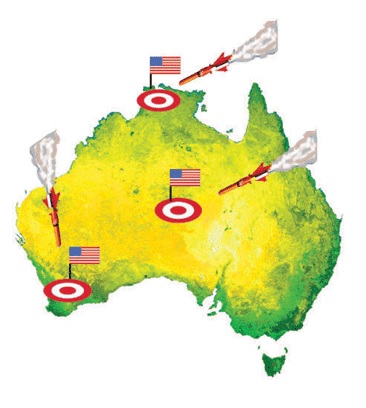
we are particularly concerned about what’s going on now and the speed with what’s going on now. As well as about how little we know or are being told.”
Then there is the matter of what is a base, when is a base a base, and whether Australian authorities are kept in the dark about what their US allies are doing.
“If our objective is to be a deputy sheriff to the US, as the 51st state of the Union, then eight nuclear submarines is the answer.”
Michael West Media, by Callum Foote | Dec 5, 2022
The Department of Defence is refusing to confirm how many American troops are stationed in Australia, who pays for it, or even why. The rising deployment of troops and B-52 bombers however, and Pine Gap, make Australia a target in event of war between China and the US. Callum Foote reports.
The Department of Defence has refused to reply to inquiries into how many US military personnel are currently stationed in Australia. It’s not just soldiers, it’s weapons too.
An ABC Four Corners investigation recently revealed that the US is preparing to develop the Tindal air base near Katherine, 320kms south of Darwin, to host up to six nuclear-capable B-52 bombers. Today it was revealed the US is trying to sell Australia the latest American bomber, the B-21 Raider, and rotate the aircraft through Australia.
Experts fear that the stockpiling of US weaponry in the Northern Territory would make Australia a target in the event of war between China and the US.
Despite the escalating presence of US troops and military hardware on Australian soil however, the Department of Defence has refused to reply to inquiries into how many US military personnel are currently stationed in Australia. Refused to reply full-stop.
We don’t even know who is funding it.
And as Chinese satellites could pick up the deployment of troops and US military installations, the secrecy is unwarranted.
B-52s here for the long haul
According to independent think tank Lowy Institute, B-52s have been deployed in the Northern Territory since at least the 1970s and military personnel training regularly in Australia since 2005.
The federal government has yet been unclear about the purpose of the deployment of the bombers in Australia. However, experts believe that the rising tensions between China and the US in the South China Sea is cause for alarm.
Alison Broinowski, the president of Australians for War Powers Reform, an anti-war advocacy group, says her network is concerned about the rising militarisation of the Northern Territory.
“We’re all very concerned about this,’’ Broinowski told MWM. ‘’It’s not new of course – the signs of it being planned go back for years. But we are particularly concerned about what’s going on now and the speed with what’s going on now. As well as about how little we know or are being told.”
Broinowski is a former diplomat, academic and author. A significant amount of her opposition to the militarisation of the NT comes down to secrecy.
“The very fact that it was undertaken in secret and would remain secret were it not for revelations from journalists we still wouldn’t know because they are doing this in secret,’’ Broinowski said.
Political commentator and former diplomat Bruce Haigh suspects the oft-cited number of 2500 rotating US troops stationed in Australia doesn’t paint the full picture.
“They give the official figure at 2500 and say that they rotate but I understood that those troops are becoming more permanent.”
To the purpose of the thousands of US marines stationed in Darwin, Haigh says, officially, it’s for joint training exercises with the Australian Defence Force but we don’t know”.
“A lot of money being spent on upgrading these bases hasn’t yet gone through the parliamentary committee system so we don’t know where in the Defence budget this money is coming from.”
Between Pine Gap, Tindal Air Force Base and thousands of US marines deployed in Darwin the exact figure is unknown. The US also has access to almost all Australian military bases with US naval personnel also coming in and out of the Stirling Naval Base in Fremantle, according to Haigh.
Then there is the matter of what is a base, when is a base a base, and whether Australian authorities are kept in the dark about what their US allies are doing.
Broinowski says the government has little oversight of many of the facilities that the US has interested in “although we call them Australia joint facilities they are for all intents and purposes American bases. About which our government knows as little as it used to know in the olden days about Pine Gap”……………………………
According to former submariner and senator, Rex Patrick, government is captured by the Defence Department which is in turn captured by the US. The post-AUKUS treaty decision to jettison the French submarine deal and agree to a bigger program to buy submarines from the US or UK reflects an Australian subsidy for the struggling submarine industries in those countries.
“If our objective is to be a deputy sheriff to the US, as the 51st state of the Union, then eight nuclear submarines is the answer. “If our objective is ‘‘defence of Australia’’, with the ability to forward deploy boats to operating bases in Singapore, Malaysia, Guam or Japan, in support of our allies and friends, then 20 AIP boats is the answer.” https://michaelwest.com.au/b-52s-in-australia-unknown-american-troops/
1 This month
7 April – WEBINAR – Australia and the Doomsday Clock – Preventing nuclear war through NoFirstUse and other policies
Online | Tuesday April 7, 4:00-5:30pm, Australian Eastern Time / 8:00-9:30am Central Europe Time
– Access the registration link
15 April – Zoom –Nuclear Power is Not the Solution
Apr 15, 2026 01:00 AM in Canberra, Melbourne, Sydney

Join the International Physicians for the Prevention of Nuclear War (IPPNW) on Tuesday, April 14th for a timely webinar exploring the risks associated with nuclear power and challenging the myth that it offers a simple, safe, carbon-free solution to the climate crisis

21 April Webinar: No Nuclear Weapons in Australia
Start: 2026-04-21 18:00:00 UTC Canberra, Melbourne, Sydney (GMT+10:00)
End: 2026-04-21 19:30:00 UTC Canberra, Melbourne, Sydney (GMT+10:00)
Event Type: Virtual
A virtual link will be communicated before the event.
Host Contact Info: australia@icanw.org

of the week – Australians for War Powers Reform (AWPR)
To see nuclear-related stories in greater depth and intensity
 Antinuclear