Greg Barns: Julian Assange and the Albanese Government – Enough is enough!
https://johnmenadue.com/julian-assange-albanese-government-enough-is-enough/, By Greg Barns, Jun 20, 2022,
Now is the time to end a dangerous threat to basic freedoms and the rule of law. The Albanese government has a critical role to play in ensuring that outcome.
The decision on Friday of UK Home Secretary Priti Patel to approve the extradition to the US of Australian citizen and WikiLeaks founder Julian Assange is not surprising in some ways. Ms Patel has swallowed the ‘assurances’ of lawyers acting for the US that Assange would get a fair trial in an Eastern Virginia court on charges relating to his publication in 2010 and 2011 of shocking revelations about the war crimes and other serious misconduct perpetrated by the US and its allies in the Iraq and Afghanistan wars. But Ms Patel’s decision drives home the need for the Albanese government to roll up its sleeves and ensure this Australian citizen does not face an effective death penalty of over 170 years in an US prison.
Unlike his Labor predecessor Julia Gillard and subsequent Liberal Prime Ministers Mr Albanese has rightly expressed genuine concern over the treatment of Assange. He is on the record, on a number of occasions as saying that he does “not see what purpose is served by the ongoing pursuit of Mr Assange” and, as importantly, “enough is enough”. In a statement released by Foreign Minister Penny Wong on Friday night in response to the Patel decision, she also repeated the Prime Minister’s words.
More recently, in the context of a recent media conference, Mr Albanese indicated the Assange case was not one to be pursued by megaphone diplomacy. An interesting comment clearly implying he is prepared to speak with US President Joe Biden about the matter, but in a closed door fashion.
The change in rhetoric and the sense that the Australian government might actually work assiduously to ensure that Assange, languishing with declining health in the notoriously harsh Belmarsh prison outside of London, is released and allowed to re-join his family, is a welcome development. Rome wasn’t built in a day and while there are many who understandably would like to see Mr Albanese dial the White House today, it is important to quickly get the approach right before that conversation, or conversations, are had.
The Assange case will drag on in the UK courts now given the inevitability of appeals against the Patel decision and a cross appeal against rulings in the original extradition case in 2021. Meanwhile the threat to freedom of the press and the rule of law which this case poses remains potent.
Eminent Australian journalists such as the former Financial Times and Fairfax foreign correspondent Tony Walker, the ABC’s Kerry O’Brien and Andrew Fowler and the former SBS’ presenter Mary Kostakidis have been rightly warning about how serious a threat to journalists and publishers this case really is. If the US is successful in prosecuting an Australian journalist and publisher for letting the world know the dirty secrets of the US military machine then this will have a chilling effect on press freedom. And it will embolden other nations to follow suit. If the US can seek the arrest of a journalist who is not a citizen of that country and who has not set foot in the US, then how can it, and nations such as Australia, criticise China for enacting a law last year which allows for critics of that regime to be hunted down irrespective of where they are in the world.
From the perspective of the rule of law the Assange case should trouble new Attorney-General Mark Dreyfus. Extra-territorial reach of laws is generally thought to be stretching the idea that the law of a nation only applies to those who are its citizens or who allegedly commit crimes in territory that is governed by that nation’s laws. To seek to extend the reach of domestic laws to those who have no legal connection to it by way of citizenship, residence or other ties to the jurisdiction, is anathema to the rule of law. That is the danger presented by the Assange case.
Of course, some say the Assange case must be allowed to take its course via the courts because extradition is a legal process. While that is true in the vast majority of cases this is an exceptional set of circumstances. In that sense it is like the case of David Hicks, the Australian who found himself in the torture chamber that is Guantanamo Bay facing trumped up terrorism charges. Rightly that case was resolved via the political relationship between the Howard government here and the Bush Administration because it too was a case infused with a political overlay.
Now is the time to end a dangerous threat to basic freedoms and the rule of law. The Albanese government has a critical role to play in ensuring that outcome.
Greg Barns SC is an Adviser to the Australian Assange Campaign
Largest Ever US Naval War Drills in Pacific a Threat to Both Peace and Marine Life
Military posturing in the Asia-Pacific also risks nuclear war and the potential extinction of the human species. ANN WRIGHT, June 20, 2022. While the world’s attention is focused on the brutal Russia-Ukraine conflict, half-way around the world, in the Pacific Ocean, competition/confrontation of the U.S. and NATO toward China and North Korea is taking an increasingly military turn.
The US military’s Indo-Pacific command headquartered in Honolulu, Hawai’i, Rim of the Pacific or RIMPAC 2022, military war games, will have 38 ships from 26 countries, 4 submarines, 170 aircraft and 25,000 military personnel practicing naval war maneuvers in the Hawaiian waters from June 29-August 4, 2022. Additionally, ground units from 9 countries will come ashore on the islands of Hawai’i in amphibious landings.
Citizen Opposition to RIMPAC
Many citizens of the 26 RIMPAC countries do not agree with their country’s participation in the RIMPAC war games, calling them provocative and dangerous for the region.
The Pacific Peace Network, with members from countries/islands across the Pacific including Guåhan, Jeju Island, South Korea, Okinawa, Japan, Philippines, Northern Mariana Islands, Aotearoa (New Zealand), Australia, Hawai’i and the United States, demand that RIMPAC be cancelled, calling the naval armada “dangerous, provocative and destructive.”
The Network’s petition for cancellation of RIMPAC states that “RIMPAC dramatically contributes to the destruction of the ecology system and aggravation of the climate crisis in the Pacific region. RIMPAC war forces will blow up decommissioned ships with missiles endangering marine mammals such as humpback whales, dolphins and Hawaiian monk seals and polluting the ocean with contaminates from the vessels. Land forces will conduct ground assaults that will tear up beaches where green sea turtles come to breed.”
The petition rejects “the massive expenditure of funds on war-making when humanity is suffering from lack of food, water and other life-sustaining elements. Human security is not based on military war drills, but on care for the planet and its inhabitants.”
Other citizen groups in the Pacific region are adding their voices to the call to cancel RIMPAC.
In its statement about RIMPAC, the Hawaii-based Women’s Voices, Women Speak declared that “RIMPAC causes ecological devastation, colonial violence and gun worship. RIMPAC’s ship sinking, missile testing, and torpedo blasting have destroyed island ecosystems and disturbed sea creatures’ wellbeing. This convening of military personnel promotes toxic masculinity; sex trafficking and violence against local populations.”
In a June 14, 2022 opinion piece in the Honolulu Star Advertiser, the only state-wide newspaper in Hawai’i, three local activists with the Hawai’i Committee for Human Rights in the Philippines wrote: “We are one with the people of Hawaii in opposing the U.S.-led wars, for which Balikatan (US-Philippine ground war maneuvers) and RIMPAC are warmups. As it is, our governments bring together the people of Hawaii and the people of the Philippines to prepare for war, death and destruction.
Military posturing in the Asia-Pacific also risks nuclear war and the potential extinction of the human species. We must instead work toward global cooperation to address the threats of climate change and biodiversity loss; to build toward peace, life and coexistence.”
The citizen’s petition to Cancel RIMPAC has individual signatures and organizational endorsers from around the world.
NATO Is Becoming a Pacific Military Force
2022 RIMPAC includes military forces from Australia, Brunei, Canada, Chile, Colombia, Denmark, Ecuador, France, Germany, India, Indonesia, Israel, Japan, Malaysia, Mexico, Netherlands, New Zealand, Peru, the Republic of Korea, the Republic of the Philippines, Singapore, Sri Lanka, Thailand, Tonga, the United Kingdom and the United States.
40% of RIMPAC participants are either in NATO or have NATO ties. Six of the 26 RIMPAC countries are members of the North ATLANTIC Treaty Organization (NATO) –Canada, Denmark, France, Germany, the United Kingdom and the United States, while 4 other participating countries are Asia-Pacific “partners” of NATO-Australia, Japan, South Korea and New Zealand.
NATO military exercises throughout Europe, particularly on the border with Russia and the U.S. never-ending discussion about Ukraine’s possible membership in NATO (the door is never closed) were two major red lines the Russian government used to justify its war on Ukraine.
In the Pacific, NATO forces coming into the region greatly increase the tension with China and North Korea.
Marine Mammals Endangered by Military Operations
Military naval events both in practice and in war are dangerous for humans… and for marine mammals. The Russian-Ukrainian war is the most recent example. Scores of dolphins have turned up dead on the coasts of the Black Sea from that war.
Research scientists suggest that dolphins may be dying in Black Sea due to a large presence of Russian warships and Ukrainian responses to those ships disrupting the dolphins’ communication pattern. The “intense ship noise and low-frequency sonars” interfere with the dolphins’ main means of communication. Disruptive underwater noises may either have them end up losing their way in large fishing nets or around the Black Sea shores.”
According to a report by the UK Guardian, researchers believe that heightened noise pollution in the northern Black Sea caused by around 20 Russian navy vessels and ongoing military activities might have driven the dolphins south to the Turkish and Bulgarian coasts.
The Turkish Marine Research Foundation (TÜDAV) announced recently that more than 80 dolphins were found dead across the country’s western Black Sea coast, “an extraordinary increase” in the number of marine mammals found dead in a typical year. A recent video from the Black Sea documents some of the 80 dead dolphins.
Several studies in the past have confirmed that military sonars are harmful to marine life and many militaries have adopted mitigating measures to protect wildlife. Whales and dolphins have been killed in US military war exercises by sonar and bombs.
In March 2000, the US Navy admitted that its use of a high-intensity sonar system caused sixteen beaked and minke whales to be stranded on beaches in the Bahamas shortly after US Navy ships using high-intensity sonar had passed by. Six of the whales died and autopsies on the mammals revealed bleeding around the whales’ inner ears and in one instance in the brain.
Ten whales were pushed back into the sea but a decline in sightings of beaked whales led researchers working in the area to believe that many more may have died.
The Navy and the National Marine Fisheries Service (NMFS) launched a series of investigations with the interim synopsis of the reports concluding that the bleeding was caused by sound waves produced by the high-intensity sonar.
With almost twice as many military ships (38) arriving in the Hawaiian waters than the Russian navy has in the Black Sea (20), the dangerous effects of the RIMPAC war maneuvers on dolphins, whales and fishes will be substantial.
RIMPAC War Practice Increase Military Confrontation Instead of Dialogue
The effect of the RIMPAC military war exercises on international relations in the Pacific region may also have dangerous, intended or unintended, consequences that could put the region into ever increasing military confrontation instead of dialogue.
We need only look to the horrific loss of life and destruction of cities, farms and infrastructure in Ukraine to imagine what would happen should an incident, accident or purposeful, trigger military responses in Asia.
Major cities in Asia—Beijing, Shanghai, Hong Kong, Seoul, Tokyo, Pyongyang and Moscow—could be targeted and destroyed by ballistic missiles from the US and NATO.
In the United States-Honolulu, Hagatna-Guam, Washington, DC, New York, San Francisco, Los Angeles, San Diego, Seattle, Houston—could be targeted and destroyed by missiles from China, Russia and North Korea.
Cities in Europe—London, Paris, Rome, Madrid, Amsterdam—could be damaged or destroyed.
No More Wars For “Peace”
Military responses to perceived national security issues by any of the countries in the region whether it be North Korea, China, Russia or the United States will be disastrous for peoples over the entire planet.
We citizens must not let our governments continue confrontation instead of dialogue to resolve national security issues. The lives of people around the world are at stake. We must not let those who make money and political status out of war win…AGAIN…and start another horrific war for “peace.”
ICAN Australia welcomes government decision to attend the first Meeting of States Parties to the Treaty on the Prohibition of Nuclear Weapons as an observer

Gem Romuld, ICAN Australia, 20 June 22,
We are delighted to share the news that Australia will attend the first Meeting of States Parties to the Treaty on the Prohibition of Nuclear Weapons as an observer. We welcome the government’s decision to engage with this critical meeting as a step towards signature and ratification.
The federal member for Macquarie, Susan Templeman MP, will head up Australia’s delegation. Templeman stated to ICAN in 2022, “I’ve been personally committed to this for as long as I can remember”. We look forward to Australia playing a positive and productive role at this historic first meeting for the TPNW.
This morning we are excited to publicly release an open letter to Prime Minister Albanese calling on him to join the TPNW, signed by 55 former Australian Ambassadors and High Commissioners.
It says “we warmly welcome your pre-election commitment to sign and ratify the Treaty on the Prohibition of Nuclear Weapons (TPNW), which we regard as essential for bringing the current nuclear arms race to an end and for establishing the kind of truly representative multilateral framework that might be expected to usher in and support a new era of genuine disarmament.”
The letter’s signatories include former diplomatic representatives to the US, United Kingdom, China, Indonesia, Japan and the United Nations. Several are experts in the field of disarmament.
They expressed hope that under Mr Albanese’s leadership the goal of a nuclear-weapon-free world would be reinstated as “an Australian foreign policy priority” and Labor’s commitment to the TPNW would be “swiftly realised”.
Last night we hosted a special community meeting in Port Augusta before Mia Haseldine, Aunty Sue Coleman-Haseldine and Karina Lester (pictured below) crossed live to the Nuclear Ban Forum in Vienna. They shared their personal stories of the impacts of nuclear weapons testing in Australia and their perspectives on the TPNW and what it can do to assist survivors. It was a profound conversation, with a very clear call for Australia to join the treaty as a key step on the path to nuclear justice. The recording is coming soon, if you missed it.
Tonight the second Nuclear Ban Hub kicks off in Fremantle and online, all the registration details are here. For written analysis of each day this week, keep your eye on the Vienna Blog “Sacher-Torte: a slice of the nuclear ban action in Vienna” here!
If Albanese asks for Assange’s freedom, Biden has every reason to agree: Bob Carr
The Age, 20 June 22, “…………………….. It was the Trump administration – probably at the insistence of then-CIA chief Mike Pompeo – that pursued Assange’s extradition. The Morrison government declined even the faintest whinny of protest. It was as if we were not a sovereign government but some category of US territory like Puerto Rico and an Australian passport holder didn’t rate protection from the vengeful anger of one corner of the American security apparatus. A France or Germany – a New Zealand – would not have been as craven.
Here lies Prime Minister Anthony Albanese’s most potent argument as he proceeds to winkle out of the Biden administration a decision to quietly drop its pursuit of Assange, even after Britain announced on Friday that it had approved his extradition to the US. Albanese can say that, to Australian public opinion, it looks like one rule for Americans, another for citizens of its ally.
Albanese can gently remind Washington that President Barack Obama commuted the sentence of Chelsea Manning. That is, he lifted her sentence for gifting to Assange the material that he published on Wikileaks in 2010. This was the collateral murder video that showed soldiers in a US Apache helicopter mowing down civilians with their automatic weapons in Iraq in 2007. The video exposed America’s lack of rules of engagement but, more than that, tore away the justification for the neocon high adventure of the Iraq war.
Manning, the American who slipped the material to Assange, goes free while the Australian who published it faces extradition, trial in Virginia and the rest of his life in cruel confinement in a high-security prison, likely on the plains of Oklahoma.
Albanese doesn’t have to state – because the Americans know it – that we are a darn good partner. A request on Assange is small change in such an alliance relationship. We host vital US communication facilities that likely make Australia a nuclear target. We host ship visits, planes and marines, about which the same baleful point could be made. And, as the capstone, we are spending about $150 billion purchasing US nuclear submarines……………..
In the context of Australia’s role as an ally – the heft we deliver for the US empire – a decision to let Assange walk free rates about five minutes of President Biden’s Oval Office attention. ………………….
The military in the US and Australia have had to admit no lives were lost because of Assange. But we wouldn’t have heard of serious war crimes in a counterproductive war were it not for the haggard prisoner in Belmarsh.
Our new prime minister can say: “We’re not fans of the guy either, Mr President, but it’s gone on long enough. We’re good allies. Let this one drop.“
And if Albanese asks, my guess is America will agree. https://www.theage.com.au/national/if-albanese-asks-for-assange-s-freedom-biden-has-every-reason-to-agree-bob-carr-20220619-p5autd.html
Predictable monstrosity: UK approves Assange extradition
https://independentaustralia.net/life/life-display/predictable-monstrosity-uk-approves-assange-extradition,16482, By Binoy Kampmark | 20 June 2022,
The only shock about the UK Home Secretary Priti Patel’s decision regarding Julian Assange was that it did not come sooner.
In April, Chief Magistrate Senior District Judge Paul Goldspring expressed the view that he was ‘duty-bound‘ to send the case to Priti Patel to decide on whether to extradite the WikiLeaks founder to the United States to face 18 charges, 17 grafted from the U.S. Espionage Act of 1917.
Patel, for her part, was never exercised by the more sordid details of the case. Her approach to matters of justice is one of premature adjudication: the guilty are everywhere and only multiply. When it came to WikiLeaks, such fine points of law and fact as a shaky indictment based on fabricated evidence, meditations on assassination, and a genuine, diagnosed risk of self-harm were piffling distractions.
The U.S. Department of Justice would not be denied.
Under the Extradition Act 2003,’ a nameless spokesman for the Home Office stated, ‘the Secretary of State must sign an extradition order if there are no grounds to prohibit the order being made. Extradition requests are only sent to the Home Secretary once a judge decides it can proceed after considering various aspects of the case.’
Evidently, overt politicisation, bad faith, and flimsy reassurances from the U.S. Department of Justice on how Assange will be detained, do not constitute sufficient grounds.
But the cue came from the courts themselves, which have done a fabulous job of covering the U.S. justice system with tinsel in actually believing assurances that Assange would not be facing special administrative detention measures (SAMs) or permanent captivity in the ADX Florence supermax in Colorado.
The statement read:
‘In this case, the UK courts have not found that it would be oppressive, unjust or an abuse of process to extradite Mr Assange.’
In such a scatterbrained and amoral cosmos that marks decision-making in the Home Office, no mention has been made of the surveillance operation against the publisher in the Ecuadorian embassy, orchestrated at the behest of the Central Intelligence Agency (CIA). None, either, of contemplated abduction or assassination, or the frail mental health Assange finds himself.
As late as 10 June, a letter from the group Doctors for Assange, comprising 300 doctors, psychiatrists and psychologists, noted that the Home Secretary’s ‘denial of the cruel, inhuman treatment inflicted upon Assange was then, and is even more so now, irreconcilable with the reality of the situation’.
In April, an umbrella grouping of 19 organisations dedicated to press freedom and free speech urged Patel, in reviewing the case, to appreciate that Assange would “highly likely” face isolation or solitary confinement in the U.S. ‘despite the U.S. Government’s assurances, which would severely exacerbate the risk of suicide’.
The co-chairs of the Courage Foundation’s Assange Defense Committee, Noam Chomsky, Daniel Ellsberg and Alice Walker, reflected on the depravity of the order in a statement.
They wrote:
‘It is a sad day for western democracy. The UK’s decision to extradite Julian Assange to the nation that plotted to assassinate him – the nation that wants to imprison him for 175 years for publishing truthful information in the public interest – is an abomination.’
As for the UK, it had:
‘… shown its complicity in this farce, by agreeing to extradite a foreigner based on politically motivated charges that collapse under the slightest scrutiny.’
Amnesty International expressed similar views, as did Reporters Without Borders. There was even concern from Conservative MP David Davis, who expressed his belief that Assange would not “get a fair trial.” The extradition law was, as matters stood, lopsided in favour of U.S. citizens.
Under the arrangement, individuals crossing the channel will receive one-way tickets to Rwanda to have their claims processed without the prospect of settling in the UK. The Rwandan Government, hostile to contrarians, the rule of law and refugees, will be subsidised for their pain and labour.
To this sadistic streak can be added her admiration for the Espionage Act being used to prosecute Assange. This fact should have disqualified her in any country operating under the rule of law. Even as Prime Minister Boris Johnson faced a Conservative no-confidence vote this month, Patel’s National Security Bill passed its second reading in Parliament.
The bill articulates an offence of ‘obtaining or disclosing protected information’ that includes ‘any information… which either is, or could reasonably be expected to be, subject to any type of restrictions of access for protecting the safety and interests of the UK’.
In a polite nod of deference to U.S. law, the proposed law states that an offence is committed when a person ‘obtains, copies, records or retains protected information, or discloses or provides access to protected information’ for a purpose ‘that they know, or ought reasonably to know, is prejudicial to the safety or interests of the United Kingdom’ and if ‘the foreign power condition is met’.
The requirement is that the act is ‘carried out for or on behalf of a foreign power’, including instances where ‘an indirect relationship’ exists.
Assange has 14 days to appeal this insidious rubber-stamping of judicially sanctioned brutality. His legal team are hoping to use the High Court as the route to highlight the political dimension of the case and draw attention back to the way the extradition law was read.
If the defence fails, Assange will be sent across the Atlantic, entrusted to officials, some of whom considered murdering him, to be made an example of.
It will be the clarion call to regimes across the world that punishing a publisher is something supposed liberal democracies can do as well, and as deviously, as anybody else.
D’oh! David Littleproud’s nuclear comments insult our intelligence

D’oh! David Littleproud’s nuclear comments insult our intelligence https://www.smh.com.au/national/d-oh-david-littleproud-s-nuclear-comments-insult-our-intelligence-20220615-p5atyi.html. Mia Pepper. CCWA Nuclear Free campaign coordinator.
New federal Nationals leader David Littleproud made headlines this month when he suggested Australians’ collective aversion to nuclear power could be explained by its portrayal in The Simpsons.
“There’s this perception that’s been put around nuclear … etched into folklore from cartoons,” he said.
Perhaps Mr Littleproud would like to calm Australian nerves over rogue coyotes with boxes of TNT or bears swiping picnic baskets from unsuspecting members of the public.
Mr Littleproud’s comments were described as “bizarre” in the media. While he did also attribute nuclear’s image problem to concerns over Chernobyl and Fukushima, it is his comparison to Springfield’s crumbling and dangerous nuclear plant that drew the most ire.
To suggest Australians get their information on subjects like nuclear power from cartoons is to insult our collective intelligence. It might be more plausible to say – as Mr Littleproud did – that opinions have been formed around films and TV series like 2019’s Chernobyl.
However, if we were to follow that trail of thought to its natural conclusion, the only response to Mr Littleproud’s comments is, so what? Film and television comedy and drama enable exploration of many serious, complex topics without being mistaken for news or documentaries – though the creators of the Chernobyl miniseries did receive acclaim for their attention to detail, exhaustive research and stringent adherence to history.
The problem with Mr Littleproud’s points of reference – with the exception of The Simpsons, which is only a cutting parody of real-life incompetency in the nuclear energy industry – is that they are based in fact. Chernobyl and Fukushima really happened and really were as bad as their various dramatisations suggest – it could hardly be otherwise. Perhaps Mr. Littleproud would have been happier if, at the critical moment of the Reactor 4 meltdown, one of the Chernobyl workers had turned to another and declared, “not to worry, I’ll get this cleaned up in no time”?
Behind every dramatic interpretation of a nuclear disaster or depiction of incompetence in nuclear energy and uranium mining is a litany of real-life incidents that has created an enduring global movement against nuclear power. There have been more than 200 recorded nuclear accidents and events worldwide and with nuclear power plants vulnerable to threats exacerbated by climate change, similar incidents are a very real possibility. Climate-related shutdowns have been reported in France, Germany, California and Texas, leading the now-retired nuclear engineer David Lochbaum to state: “You need to solve global warming for nuclear plants to survive.”
Ahead of the 2021 United Nations Climate Change Conference, more than 300 organisations from 40 countries signed a joint declaration against nuclear power. Among them were 49 separate bodies from Australia, including unions, faith groups, environment and conservation bodies, Indigenous groups and health sector organisations representing millions of Australians.
Nuclear has been consistently proven deeply unpopular, ruinously expensive and too slow to implement to provide a serious solution to energy and decarbonisation needs.
By the time the legislation has passed, facilities have been built and workforces trained, 30 to 40 years will have passed along with the window of opportunity to prevent irreversible climate damage. Professor John Quiggin, an Australian laureate fellow in economics at the University of Queensland, has said the idea of producing nuclear power in Australia before 2040 is absurd.
The Australian Radiation Protection and Nuclear Safety Agency told a 2019 Senate inquiry into nuclear power that “Australia could not take much less than 15 years from the time a decision is taken to move in this direction; it is not unlikely that it would take longer.”
Even if it were possible to implement nuclear faster, the costs involved in delivering the energy into Australian homes and businesses would be utterly impractical, given the alternatives. In 2016, the South Australian Royal Commission into the Nuclear Fuel Cycle found “it would not be commercially viable to develop a nuclear power plant in South Australia beyond 2030.” In 2019, the Senate inquiry acknowledged “Over the past decade, levelised cost estimates for utility-scale solar dropped by 88 per cent, wind by 69 per cent, while nuclear increased by 23 per cent.”
Only this week, the new federal Minister for Energy Chris Bowen told the media that nuclear power is “the most expensive form of energy” – especially so given the current cost of living crisis.
Furthermore, every review into nuclear over the past two decades has acknowledged there is no bipartisan support for nuclear and strong public opposition. Doctor Ziggy Switkowski made this clear in his comments to the 2019 Senate inquiry, saying “there is no social licence at this time.”
No decision yet on choosing USA or UK nuclear submarines, but a USA Bill to train Australian submariners!
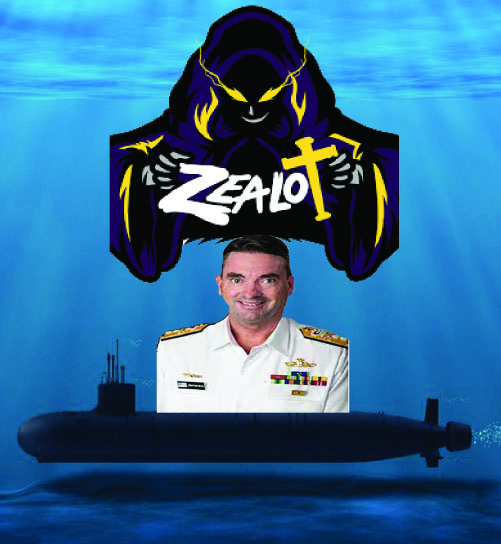
Ed. note: But Australian nuclear zealot Jonathon Mead (left) and nuclear enthusiast Peter Dutton are on the job, in lockstep with the Americans.
Booster For AUKUS: US Could Train Australian Navy On Its Nuclear Subs While Canberra Decides Between US, UK Submarines
Eurasian Times, By Sakshi Tiwari, June 18, 2022 The Australian nuclear submarine project, assisted by the US and the UK under the AUKUS agreement, has faced several controversies. Recently, the former Australian Defense Minister Peter Dutton made startling revelations about his government’s plan to buy American Virginia-class nuclear submarines.
Even though the claims enthused observers about a possible purchase by Australia, the officials have maintained that the decision has not been reached. Canberra is expected to choose between the US Virginia-class submarine or British Astute-class submarines.
In an all-new development, the US lawmakers have introduced a bill called ‘Australia-US Submarine Officer Pipeline Act’ to train Royal Australian Navy officers in the operation of nuclear submarines. The bill was moved into Congress even as doubts remain over the Virginia-class submarine purchase.
The ‘Australia-United States Submarine Officer Pipeline Act’ would allow Australian naval officers to begin training in the United States to operate and maintain nuclear-powered submarines before eventually commanding the future boats.
“The new bipartisan bill will establish a joint training pipeline between the US Navy and the Royal Australian Navy and enable the start of US-based training of Commanding Officers for Australia’s future fleet of nuclear-powered submarines under the AUKUS alliance,” the AUKUS working group said in a news release.
The bill requires the Secretary of Defense and Secretary of Energy to begin a training exchange in 2023 and continue it in subsequent years. It is the result of Congress’ AUKUS working group, formed in April to help develop the United States, United Kingdom, and Australia’s new cooperation.
In November 2021, Australia inked a nuclear submarine technology-sharing deal with the United States and the United Kingdom as part of the AUKUS defense agreement. Australia is only the second country after the United Kingdom to secure a transfer of nuclear propulsion technology from the US.
Currently, the AUKUS partners are pursuing an 18-month study period to assess the requirements of Canberra’s nuclear submarine project, as previously reported by EurAsian Times. In September 2021, it abandoned a deal with the Naval Group of France for diesel-electric submarines and signed the AUKUS pact in favor of nuclear submarines.
Training Before Manufacturing
Nuclear-powered submarines are more expensive, but they are quieter and harder to detect, and they can stay submerged longer since they don’t need to surface to refuel.
With Australia, the US plans to begin training a cadre of young officers now to be ready to command the country’s submarines when the time comes, noted Defense News.
“The AUKUS alliance is the most important national security partnership that America has entered into in decades,” Rep. Joe Courtney, D-Conn., said in a news release. “While [design] work is ongoing, it makes sense to open the US Navy’s nuclear training programs to Australia’s naval officers to acquire proficiency in the operation of nuclear submarines.”
The Chief of the Royal Australian Navy’s nuclear-powered submarine task force, Vice Admiral Jonathan Mead, previously told The Strategist that Australians co-crewing with American and British submarines are likely to be part of an interim submarine capability.
“To train personnel,” Mead said, “We could embed sailors and officers in a US or UK boat to the point where we may have a 50% UK or US crew and a 50% Australian crew.”
When the first submarine is launched in South Australia, the goal is to have the crew trained, the industrial base ready to maintain it, and the regulatory system set up. “We have exchange officers on board our submarines and ships all the time.”
Mead also toured training schools in the United Kingdom and the United States to assess their systems. Many crew members receive reactor training and study nuclear physics concepts, but they are not nuclear physicists.
“‘They’ve been given a six-month course, and then they go to sea and become competent and current on their tradecraft at sea in a submarine,’ he explained.
“So we need to set up a system supported by the US and UK to provide our people with reactor training. If you’re an engineer, you may be a nuclear physicist. If you’re working at the front end of the boat, you require some knowledge of the reactor in case there’s an emergency, but not to the same level.”
The sentiment in Australia, [i.e in Jonathon Mead] thus, seems to align with American plans to start training Australian sailors and Naval officers. However, the exact nature and specifics of the training module are not yet known……………………….
Australia does not have sufficient nuclear infrastructure or advanced industrial capacity to build nuclear submarines. The shortcomings in nuclear infrastructure have had many experts suggest purchasing subs from the two AUKUS partners or building Australian submarines overseas.
Building nuclear-powered submarines would cost Australia billions of dollars and years of infrastructure construction. However, for the project to become a reality and for Australia’s crew to operate nuclear subs perfectly, training is one of the top priorities for AUKUS.
Even though Australia sells some nuclear fuel and has a single nuclear reactor for scientific study, the country does not have a substantial civil or military nuclear program. To get a head start, Australia could first start training on American or British nuclear submarines or lease older retired American submarines until they can deploy their indigenous designs, according to a National Interest report.
The Urgency For AUKUS
Australia’s nuclear submarines are expected to be operational no sooner than the end of the next decade. Consequently, the former Defense Minister Dutton had indicated that his government wanted to purchase two US submarines “this decade” to avoid a gap in replacing the country’s outdated Collins-class submarine fleet, with another eight US submarines under development in South Australia as part of the project.
This plan, he claims, would have eliminated the need to wait until 2038 for the first submarines designed in the United States to be built in Australia. The Royal Australian Navy currently operates six diesel-electric guided-missile submarines.
……………… While a decision regarding purchasing a nuke sub from the UK or the US hangs in the balance, training to use a nuclear submarine could be an easier way forward…….. https://eurasiantimes.com/booster-for-aukus-us-to-train-australian-navy-on-its-nuclear-subs/
Australia’s Opposition Leader Dutton Says US Can Provide Two Nuclear Subs by 2030

- No confirmation of any such deal from US, despite claims
- US, UK are ‘incredibly willing partners’: opposition leader
- BySybilla Gross19 June 2022, Australian opposition leader Peter Dutton reiterated his earlier claims that the US could provide Australia with two nuclear submarines by 2030, without providing material evidence that such a deal would occur.
- Speaking on the national broadcaster’s “Insiders” program Sunday, Dutton said he had visited counterparts in Connecticut and “spoken with them there” about acquiring the equipment, even though the proposition has attracted skepticism, given there’s been no indication from the US that it agreed to enter a sale.
- The US is “very keen to see the reality in the Indo-Pacific addressed and so I think that they would pull out every stop to support Australia acquiring the capability as quickly as possible,” he said.
Australia joined an Indo-Pacific security partnership with the U.S. and U.K. in September last year, allowing it to acquire nuclear-powered submarines. The move sparked a rift with France, which said the agreement scuppers an earlier deal Australia made in 2016 with a French shipbuilder to build up to 12 submarines.
Dutton, the former defense minister, wrote earlier this month that he believed it possible to acquire “the first two submarines off the production line out of Connecticut” this decade as an alternative to waiting until 2038 for domestic manufacturing to produce the first Australian-made submarine.
When asked on Sunday what information he had based his claims on, Dutton said, “I’m not going into conversations, but I formed a judgment that we could acquire two submarines quickly and I think it’s necessary that we do so.”
The US and the UK are “incredibly willing partners,” he said.
The comments come as current Prime Minister Anthony Albanese prepares to depart for Europe later this month to attend a NATO meeting to discuss the war in Ukraine. The trip may also involve a visit to Paris to see President Emmanuel Macron, after Albanese said earlier in June he was looking forward to accepting an invitation from the French leader and that it was “absolutely vital” to reset the relationship between the two countries.
Australia yet to sign up to treaty banning nuclear weapons but will attend UN meeting as observer
With nuclear weapons states modernising, and in some cases increasing their arsenals instead of dismantling them, more states are becoming disenchanted with the nuclear non-proliferation treaty, and are lending their support to an outright ban.
Australia yet to sign up to treaty banning nuclear weapons but will attend UN meeting as observer
Anthony Albanese committed Labor to signing the treaty on the prohibition https://www.theguardian.com/australia-news/2022/jun/20/australia-yet-to-sign-up-to-treaty-banning-nuclear-weapons-but-will-attend-un-meeting-as-observer of nuclear weapons while in opposition Ben Doherty, Mon 20 Jun 2022
Australia will attend – as an observer – a UN meeting of countries that have outlawed nuclear weapons, parties to a treaty Anthony Albanese championed in opposition and committed Labor to ratifying in government.
Government backbencher Susan Templeman’s attendance at the meeting in Vienna on Tuesday comes as a group of 55 former Australian ambassadors and high commissioners have written an open letter to the prime minister urging the government to sign up to the treaty, which outright prohibits the development, testing, production and use of nuclear weapons.
We hope … that Labor’s commitment to the Treaty on the Prohibition of Nuclear Weapons will be swiftly realised. Making meaningful gains in eliminating the most destructive weapons ever invented is as crucial for Australia’s security as it is for the security of people everywhere,” said the letter, signed by the former diplomats including Stephen FitzGerald, John McCarthy, Neal Blewett and Natasha Stott Despoja.
The treaty on the prohibition of nuclear weapons (TPNW) came into force in January last year: it has been ratified by 62 states, though not by any nuclear weapons powers.
The former Coalition government consistently rejected the nuclear weapons ban treaty, saying it would not reduce nuclear arsenals or increase security and would undermine existing disarmament efforts.
But Anthony Albanese, now prime minister, has been a longstanding and public supporter of a Labor government signing and ratifying the new treaty.
At the 2018 ALP conference, he proposed the resolution that committed the party to sign and ratify the treaty in government.
“Nuclear disarmament is core business for any Labor government worth the name,” Albanese said. “Labor in government will sign and ratify the UN treaty on the prohibition of nuclear weapons.
“I don’t argue that this is easy. I don’t argue that it’s simple. But I do argue that it’s just.”
The motion was passed, and the ALP’s formal party platform states: “Labor in government will sign and ratify the ban treaty”, contingent on ensuring an effective verification and enforcement architecture, and the ban treaty’s compatibility with the existing nuclear non-proliferation treaty.
Templeman, the Labor member for Macquarie, will attend the UN meeting of states parties to the treaty as an observer only. Australia has neither signed nor ratified the TPNW: that position has not changed with the change of government.
The Guardian understands the new government wants to assess the adequacy of the TPNW’s verification and enforcement regime; its interaction with the treaty on the nuclear non-proliferation treaty (that Australia is a party to); and how countries that have joined the new treaty intend to attract universal support for the outright ban.
The government will need to be satisfied on those questions before it decides to sign and ratify the treaty.
The Australian-founded International Campaign to Abolish Nuclear Weapons, which won the Nobel Peace Prize in 2017 for its work on the TPNW, said the diplomats’ open letter “demonstrates the broad support for the treaty among Australia’s foreign policy establishment”.
“It was a mistake for the previous government to abstain from the negotiations on this crucial treaty,” Gem Romuld, Ican’s Australian director, said this week.
“But it isn’t too late to join – and we expect the new government to follow through with its promise to do so.”
The diplomats’ letter argued it is unacceptable that nearly 13,000 nuclear weapons remain in the world today, more than half a century after the nuclear non-proliferation treaty came into force.
“These weapons pose an existential threat to human life.
“That threat is again underlined now by Russia’s nuclear sabre-rattling over Ukraine and, more generally, by the abysmal state of relations between the United States and its two most powerful nuclear-armed rivals. Unless we chart a new course, nuclear weapons will almost certainly be used again, with predictably catastrophic consequences.”
The diplomats argued that, by becoming a state party to the ban treaty, Australia “can work with like-minded states to help avert such a calamity – and at the same time restore its reputation as a champion of multilateral disarmament”.
“In the course of our careers, we have seen first-hand what our country can achieve on the world stage and know that Australia is at its best when it pursues a principled foreign policy – one that advances the global common good. This is a sensible and overdue step. We urge you to take it without delay.”
The TPNW is international law – it came into effect for those states that have ratified it, in January 2021. But the efficacy of a ban treaty remains contested.
Without the participation of the states that actually possess nuclear weapons, critics argue it cannot succeed.
But proponents say a nuclear weapons ban will create moral suasion – in the vein of the cluster and landmine conventions – for nuclear weapons states to disarm, and establish an international norm prohibiting nuclear weapons’ development, possession and use.
Non-nuclear states have expressed increasing frustration with the current nuclear regime and the sclerotic movement towards disarmament.
With nuclear weapons states modernising, and in some cases increasing their arsenals instead of dismantling them, more states are becoming disenchanted with the nuclear non-proliferation treaty, and are lending their support to an outright ban.
Federal government lobbying behind the scenes for Assange’s freedom.
“in the end the Americans can’t say no [to his release], given that President Obama commuted the sentence of Chelsea Manning for exposing the very war crime that Assange went on to publicise worldwide”.
“It was in Priti Patel’s power to do the right thing,” she said in a statement. “Instead, she will forever be remembered as an accomplice of the United States in its agenda to turn investigative journalism into a criminal enterprise.”
further appeals in British courts could rely on media reports last year that the CIA had planned to assassinate the Wikileaks founder. “There’s absolute validity to these matters .
https://www.theage.com.au/politics/federal/federal-government-lobbying-behind-the-scenes-for-assange-s-freedom-20220618-p5auq3.html By James Massola and Latika Bourke, June 19, 2022 —
The federal government is lobbying US counterparts behind the scenes to secure the freedom of Wikileaks founder Julian Assange, after the United Kingdom’s decision to approve his extradition to the United States.
The Trump administration brought charges against Assange under the Espionage Act relating to the leaking and publication of the WikiLeaks cables a decade ago.
The UK Home Office announced late on Friday (AEST) that “after consideration by both the Magistrates Court and High Court, the extradition of Julian Assange to the US was ordered”.
“In this case, the UK courts have not found that it would be oppressive, unjust or an abuse of process to extradite Mr Assange.
“Nor have they found that extradition would be incompatible with his human rights, including his right to a fair trial and to freedom of expression, and that whilst in the US he will be treated appropriately, including in relation to his health.”
Assange’s legal team has 14 days to appeal the decision to the High Court and will do so while he remains in Belmarsh prison.
Prime Minister Anthony Albanese, while still opposition leader in December, said “enough is enough” and that it was time for Assange to be returned to Australia.
Asked about Assange’s extradition on Saturday, he told The Sun-Herald and The Sunday Age that he stood by the comments he made in December.
At the time, Albanese said “he [Assange] has paid a big price for the publication of that information already. And I do not see what purpose is served by the ongoing pursuit of Mr Assange”.
Albanese met US President Joe Biden at the Quad meeting in Tokyo in late May, days after the federal election, but there has been no indication that he raised the Assange matter with him during their meeting.
A source in the federal government, who asked not to be named so they could discuss the matter, has confirmed to The Sun-Herald and The Sunday Age that Assange’s case has been raised with senior US officials.
Former foreign minister Bob Carr said the discussions over Assange’s release would be “governed by sensitive, nuanced alliance diplomacy appropriate between partners”.
“I trust the judgment of Prime Minister Albanese on this, given his recent statement cautioning against megaphone diplomacy and his comments last December,” he said.
But Carr predicted that “in the end the Americans can’t say no [to his release], given that President Obama commuted the sentence of Chelsea Manning for exposing the very war crime that Assange went on to publicise worldwide”.
“The Yank has had her sentence commuted; the Aussie faces an extradition and a cruel sentencing.”
Foreign Minister Penny Wong said on Friday that “Assange’s case has dragged on for too long and that it should be brought to a close. We will continue to express this view to the governments of the United Kingdom and United States”.
Albanese is due to attend the NATO summit in Madrid at the end of the month, which US President Joe Biden will also attend, though it is not clear if he will raise the matter there.
Assange’s wife, Stella Moris, hit out at UK Home Secretary Priti Patel for approving the extradition.
“It was in Priti Patel’s power to do the right thing,” she said in a statement. “Instead, she will forever be remembered as an accomplice of the United States in its agenda to turn investigative journalism into a criminal enterprise.”
Former prime minister Kevin Rudd tweeted that he disagreed with the decision to approve the extradition, even though he did not support Assange’s actions and “his reckless disregard for classified security information”.
“But if Assange is guilty, then so too are the dozens of newspaper editors who happily published his material.”
Labor MP Julian Hill said there could never be a legal solution to the case as it was inherently political and that “we should speak up for our fellow Australian and request that these charges be dropped and he not be extradited”.
Greens senator Jordon Steele-John said the extradition to the United States would set a dangerous precedent for press freedom and called on the prime minister to pick up the phone to his British and American counterparts.
Independent MP Andrew Wilkie, the chair of the Bring Julian Assange Home Parliamentary Group, has called Britain’s decision an outrageous betrayal of the rule of law, media freedom and human rights.
“This matter is so deeply wrong on so many levels … time’s up for the new federal government hinting at caring and then doing nothing,” he said.
“The new Australian government is now to be condemned for abandoning an Australian hero journalist facing the very real prospect of spending the rest of his life rotting in a US prison.”
Amnesty International is urging the UK to refrain from extradition and the US to drop all charges.
The secretary-general of the human rights organisation, Agnes Callamard, says allowing the Australian to be sent to the US for trial would put him at great risk.
“Assange faces a high risk of prolonged solitary confinement, which would violate the prohibition on torture or other ill treatment,” Callamard said.
“Diplomatic assurances provided by the US that Assange will not be kept in solitary confinement cannot be taken on face value given previous history.”
Adviser to the Australian campaign to free Mr Assange, Greg Barns SC, says Britain’s decision is unsurprising given past approaches.
“The UK does not regard the extradition as being political when it clearly is,” he told ABC News on Saturday.
He says further appeals in British courts could rely on media reports last year that the CIA had planned to assassinate the Wikileaks founder.
“There’s absolute validity to these matters … the real issue is do we let this matter go back into the court system for another couple of years or do we say there are important principles here.”
There had been a change in rhetoric on the matter from the new government and statements from Prime Minister Anthony Albanese and Ms Wong had heartened the campaign, Mr Barns said.
“We’re certainly urging and hoping that now is the time for Australia to get involved with its key allies in London and Washington and bring this matter to an end.”
Assange Is Doing His Most Important Work Yet
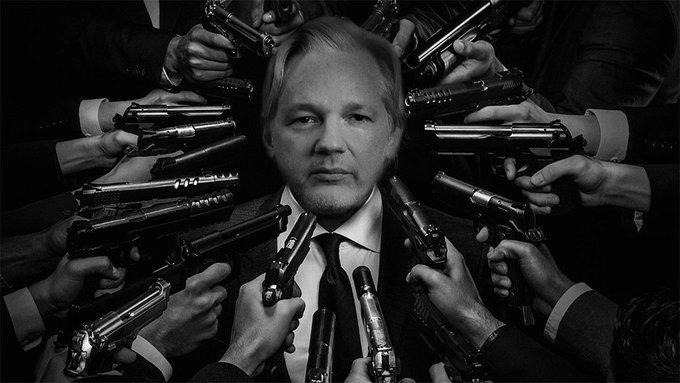
https://caityjohnstone.medium.com/assange-is-doing-his-most-important-work-yet-7b3ba4f3bea3 Caitlin Johnstone, 18 June 22, British Home Secretary Priti Patel has authorized the extradition of WikiLeaks founder Julian Assange to the United States to be tried under the Espionage Act in a case which seeks to set a legal precedent for the prosecution of any publisher or journalist, anywhere in the world, who reports inconvenient truths about the US empire.
Assange’s legal team will appeal the decision, reportedly with arguments that will include the fact that the CIA spied on him and plotted his assassination.
“It will likely be a few days before the (14-day appeal) deadline and the appeal will include new information that we weren’t able to bring before the courts previously. Information on how Julian lawyers were spied on, and how there were plots to kidnap and kill Julian from within the CIA,” Assange’s brother Gabriel Shipton told Reuters on Friday.
And thank goodness. Assange’s willingness to resist Washington’s extradition attempts benefit us all, from his taking political asylum in the Ecuadorian embassy in 2012 until British police forcibly dragged him out in 2019, to his fighting US prosecutors in the courtroom tooth and claw during his incarceration in Belmarsh Prison.
Assange’s fight against US extradition benefits us not just because the empire’s war against truth harms our entire species and not just because he cannot receive a fair trial under the Espionage Act, but because his refusal to bow down and submit forces the empire to overextend itself into the light and show us all what it’s really made of.
Washington, London and Canberra are colluding to imprison a journalist for telling the truth: the first with its active extradition attempts, the second with its loyal facilitation of those attempts, and the third with its silent complicity in allowing an Australian journalist to be locked up and persecuted for engaging in the practice of journalism. By refusing to lie down and forcing them to come after him, Assange has exposed some harsh realities of which the public has largely been kept unaware.
The fact that London and Canberra are complying so obsequiously with Washington’s agendas, even while their own mainstream media outlets decry the extradition and even while all major human rights and press freedom watchdog groups in the western world say Assange must go free, shows that these are not separate sovereign nations but member states of a single globe-spanning empire centralized around the US government. Because Assange stood his ground and fought them, more attention is being brought to this reality.
By standing his ground and fighting them, Assange has also exposed the lie that the so-called free democracies of the western world support the free press and defend human rights. The US, UK and Australia are colluding to extradite a journalist for exposing the truth even as they claim to oppose tyranny and autocracy, even as they claim to support world press freedoms, and even as they loudly decry the dangers of government-sponsored disinformation.
Because Assange stood his ground and fought them, it will always reek of hypocrisy when US presidents like Joe Biden say things like, “The free press is not the enemy of the people — far from it. At your best, you’re guardians of the truth.”
Because Assange stood his ground and fought them, people will always know British prime ministers like Boris Johnson are lying when they say things like, “Media organisations should feel free to bring important facts into the public domain.”
Because Assange stood his ground and fought them, more of us will understand that they are being deceived and manipulated when Australian prime ministers like Anthony Albanese say things like “We need to protect press freedom in law and ensure every Australian can have their voice heard,” and “Don’t prosecute journalists for just doing their jobs.”
Because Assange stood his ground and fought them, US secretaries of state like Antony Blinken will have a much harder time selling their schtick when they say things like “On World Press Freedom Day, the United States continues to advocate for press freedom, the safety of journalists worldwide, and access to information on and offline. A free and independent press ensures the public has access to information. Knowledge is power.”
Because Assange stood his ground and fought them, UK home secretaries like Priti Patel will be seen for the frauds they are when they say things like “The safety of journalists is fundamental to our democracy.”
Extraditing a foreign journalist for exposing your war crimes is as tyrannical an agenda as you could possibly come up with. The US, UK and Australia colluding toward this end shows us that these are member states of a single empire whose only values are domination and control, and that all its posturing about human rights is pure facade. Assange keeps exposing the true face of power.
There is in fact a strong argument to be made that even all these years after the 2010 leaks for which he is currently being prosecuted, Assange is doing his most important work yet. As important as his WikiLeaks publications were and are, none of them exposed the depravity of the empire as much as forcing them to look us in the eye and tell us they’ll extradite a journalist for telling the truth.
Assange accomplished this by planting his feet and saying “No,” even when every other possible option would have been easier and more pleasant. Even when it was hard. Even when it was terrifying. Even when it meant being locked away, silenced, smeared, hated, unable to fight back against his detractors, unable to live a normal life, unable to hold his children, unable even to feel sunlight on his face.
His very life casts light on all the areas where it is most sorely needed. We all owe this man a tremendous debt. The least we can do is try our best to get him free.
Why nuclear energy won’t work in Australia
Scott Ludlam, https://www.thesaturdaypaper.com.au/opinion/topic/2022/06/18/why-nuclear-energy-wont-work-australia#mtr Scott Ludlam is a writer and activist, and a former Greens senator. 18 June 22, There is something almost comical about the Liberals and Nationals throwing the forlorn spectre of nuclear power back into national energy debates, right after their loss in the 2022 “climate election”.
The incoming Energy minister, Chris Bowen, immediately slapped down the idea, calling it a “complete joke” and noting that nuclear is the most expensive form of energy. He’s right, and that should be the end of the argument, but we know it won’t be, because Peter Dutton and his colleagues are not engaged in a good faith debate about Australia’s future energy mix. For them, this is about something else entirely.
Not everyone who invites discussion on nuclear power acts in bad faith. In a climate emergency, it’s essential to have all viable, low-carbon energy sources on the table, which does entail a periodic assessment of where the nuclear industry actually stands. Has any progress been made on the intractable question of nuclear waste? How permeable is the barrier between civil and military applications? How are safety concerns over the world’s ageing reactor fleet being managed? How is the industry planning to clean up the enormous volumes of radioactive wastes left behind at uranium mines?
Can this technology compete against low-cost renewables?

It’s tempting to imagine the nuclear industry stumbling around like the Black Knight in Monty Python and the Holy Grail, bleeding freely, mortally wounded and yet stubbornly defiant and refusing to die.
The best independent analysis of the state of the industry is provided by the World Nuclear Industry Status Report. Since 2007, these reports have provided an annual, country-by-country snapshot of nuclear plant construction, start-ups, accidents and closures.
They make for forbidding reading, painting a picture of an industry in deep trouble. The number of reactors in operation has declined by two dozen since 2002, as the share of global electricity generation provided by nuclear power fell from about 17 per cent in 1996 to just above 10 per cent in 2020. Part of the problem is that the age of the industry is catching up with it. In the two decades to 2020, there were 95 new nuclear plant start-ups and 98 closures. As plants built in the 1970s and ’80s reach the end of their design life, and construction dries up nearly everywhere other than China, there is no real prospect of them being replaced at anything like the rate of closure. This decline is structural and inexorable.
There is an additional wildcard, which the industry refuses to acknowledge: the risk of future catastrophic reactor accidents. The industry insists it has learnt the lessons of Three Mile Island, Chernobyl and Fukushima, and it is true that plant redesigns and additional safety systems are a major factor driving up the costs of new reactors. But despite this, any accident, disaster or attack that shuts down the cooling system inside a nuclear power plant runs the risk of a meltdown. One study from 2017 analysed the frequency and intensity of 216 nuclear accidents between 1950 and 2014, estimating that “there is presently a 50 per cent chance that a Fukushima event (or larger) occurs every 60-150 years, and a Three Mile Island event (or larger) occurs every 10-20 years”.
These are shocking odds, both for host communities and for energy planners trying to manage the transition to zero-carbon electricity supply. People organising against nuclear power stations, waste dumps and uranium mines are commonly accused of being emotional, hysterical or delusional, when in fact these actions are usually informed by a willingness to look honestly at the difficult truths of this industry.
Someone who has seen those truths close up is Naoto Kan, who was prime minister of Japan at the time of the Fukushima disaster in 2011. In his introduction to the 2021 World Nuclear Industry Status Report, he writes: “The reactors in Units 1 to 3 suffered not only meltdowns, but also melt-through of the nuclear fuel, while the spent fuel pool at Unit 4 came close to evaporating entirely. Had this come to pass, it would have necessitated the evacuation of all residents within a radius of 250 kilometres – an area including the metropolis of Tokyo, the consequences of which would have been unimaginable.”
On the awful day we learn the name of the next Fukushima, whether it be in France, China, the United States or Russia, neither the industry nor its investors will be able to say they weren’t warned.
Surprisingly, it turns out these arguments are now accepted by a growing number of pro-nuclear advocates. Many of them tacitly or openly acknowledge that the technology they’ve been promoting for decades has no future. They have ceased arguing for the giant, water-cooled fission reactors that have been the backbone of the commercial nuclear energy sector since the 1960s.

Instead, they now advocate for a bewildering variety of experimental reactor types, fuelled by uranium or thorium or plutonium, cooled with helium or molten salt or liquid metal. These designs are proclaimed to be simultaneously cheap, safe and efficient, free of proliferation, waste and accident risks, and ready for commercial deployment any decade now.
What unifies many of them is not so much the technology type, but the smaller scale and the fact that they don’t really exist.
A pilot plant of one such small modular reactor (SMR) went into operation at Shidao Bay in China late in 2021, but outside the Chinese nuclear establishment, nobody knows how much it cost to build. According to the World Nuclear Industry Status Report, “There appear to be no plans to construct more reactors of the same design.” These plants are not an answer to climate change. Even the most ambitious estimates for commercial deployment of SMRs stretch into the 2030s and 2040s, long after the heavy lifting of global decarbonisation needs to have been done. Allison Macfarlane, the former chair of the US Nuclear Regulatory Commission, stated in 2021: “When it comes to averting the imminent effects of climate change, even the cutting edge of nuclear technology will prove to be too little, too late.”
This is where what Peter Dutton and his colleagues are really up to comes into sharper focus.
The speed and scale of low-cost solar and wind energy backed up by batteries and hydro power has hit critical mass worldwide. According to the International Renewable Energy Agency, 2015 was the first year that more renewable energy capacity was added to the grid than non-renewable, including fossil and nuclear. By 2021, clean energy technologies accounted for 81 per cent of new generation capacity globally. Closer to home, the signs are everywhere, from the early closure of AGL’s coal-fired power stations to the announcement of huge new renewable energy zones across multiple Australian states.
Into this fast-closing gap, the nuclear industry is making its final pitch before obsolescence: enormous public subsidies in exchange for an imaginary generation of small, cheap, safe reactors that exist nowhere but on paper. Complicating the message for those who still insist that there is no connection between nuclear weapons and nuclear power, the Morrison government’s reckless entry into the AUKUS agreement threatens to enmesh Australia in the trafficking and disposal of high-level spent nuclear fuel from submarine reactors, with all the public health, national security and proliferation risks this entails.
Importing this staggering debacle into Australian energy markets would be much more than just financially irresponsible: it would lock us into a high-risk dead end just as the clean energy revolution is finally under way at scale. But unlike the Black Knight, nuclear technology still retains the capacity to do enormous harm, even in its present enfeebled state. The UN Secretary-General’s special adviser on climate change, Selwin Hart, put it like this in a statement last year: “Where countries are depending on technologies that have not yet been developed, or indicating they intend to cut in the 2030 and 2040s, quite frankly, that’s reckless and irresponsible.”
The foundation of the global anti-nuclear movement has always been in the frontline communities that have suffered the harshest impacts of this technology. Whether it be the First Nations communities in Central and Western Australia, whose lands and health were sacrificed for nuclear weapons testing decades ago, or those who won an end to uranium mining in Kakadu or nuclear waste dumping in Central and South Australia: these debates are won and lost on Country, not in op-ed pages or analysts’ spreadsheets. So, while a combination of lived experience, mockery and hard data may be enough to put Dutton and his colleagues’ latest deranged foray to rest for the time being, the “debate” over nuclear power seems likely to hang around until the solar age puts it to the sword once and for all.
Julian Assange and family suffer as unjust detention continues.
Independent Australia By Binoy Kampmark | 16 June 2022,
The documentary Ithaka powerfully depicts the fight Julian Assange’s family is putting up for him, writes Dr Binoy Kampmark.
JOHN Shipton, despite his size, glides with insect-like grace across surfaces. He moves with a hovering sense, a holy man with message and meaning. As Julian Assange’s father, he has found himself a bearer of messages and meaning, attempting to convince those in power that good sense and justice should prevail over brute stupidity and callousness.
His one object: release Julian………………………..
The documentary Ithaka powerfully depicts the fight Julian Assange’s family is putting up for him, writes Dr Binoy Kampmark.
JOHN Shipton, despite his size, glides with insect-like grace across surfaces. He moves with a hovering sense, a holy man with message and meaning. As Julian Assange’s father, he has found himself a bearer of messages and meaning, attempting to convince those in power that good sense and justice should prevail over brute stupidity and callousness.
His one object: release Julian…………………..
The documentary Ithaka powerfully depicts the fight Julian Assange’s family is putting up for him, writes Dr Binoy Kampmark.
JOHN Shipton, despite his size, glides with insect-like grace across surfaces. He moves with a hovering sense, a holy man with message and meaning. As Julian Assange’s father, he has found himself a bearer of messages and meaning, attempting to convince those in power that good sense and justice should prevail over brute stupidity and callousness.
His one object: release Julian……………………………….
Soft, a voice of reed and bird song, Shipton urged activists and citizens to join the fray, to save his son, to battle for a cause imperishably golden and pure. From this summit, power would be held accountable, institutions would function with sublime transparency, and citizens could be assured that their privacy would be protected.
In the documentary Ithaka, directed by Ben Lawrence, we see Shipton, Assange’s partner, Stella Moris, the two children, the cat and glimpses of brother Gabriel, all pointing to the common cause that rises to the summit of purpose. The central figure, who only ever manifests in spectral form – on-screen via phone or fleeting footage – is one of moral reminder, the purpose that supplies blood for all these figures.
Assange is being held at Belmarsh, Britain’s most secure and infamous of prisons, denied bail and being crushed by judicial procedure. But in these supporters, he has some vestigial reminders of a life outside.
The film’s promotion site describes the subject as ‘the world’s most famous political prisoner, WikiLeaks founder Julian Assange’ a figure who has ‘become an emblem of an international arm wrestle over freedom of journalism, government corruption and unpunished war crimes’. ………..
suffer he shall, if the UK Home Secretary Priti Patel decides to agree to the wishes of the U.S. Department of Justice (DOJ).
The DOJ insists that their man face 17 charges framed, disgracefully and archaically, from a U.S. law passed during World War I and inimical to free press protections. The Espionage Act of 1917 has become the crutch and support for prosecutors who see, in Assange, less a journalist than an opportunistic hacker who outed informants and betrayed confidences. ……………………..
Through the film, the exhausting sense of media, that estate ever-present but not always listening, comes through. This point is significant enough; the media – at least in terms of the traditional fourth estate – put huge stock in the release of material from WikiLeaks in 2010, hailing the effort and praising the man behind it.
But relations soured, and tabloid nastiness set in. The Left found tell-all information and tales of Hillary Clinton too much to handle while the Right, having initially revelled in the revelations of WikiLeaks in 2016, took to demonising the herald. Perversely, in the United States, accord was reached across a good number of political denizens: Assange had to go, and to go, he had to be prosecuted in the United Kingdom and extradited to the United States.
The documentary covers the usual highlights without overly pressing the viewer. A decent run-up is given to the Ecuadorian stint lasting seven years, with Assange’s bundling out, and the Old Bailey proceedings covering extradition. But Shipton and Moris are the ones who provide the balancing acts in this mission to aid the man they both love……….
The film has faced, as with its subject, the usual problems of distribution and discussion. When Assange is mentioned, the dull-minded exit for fear of reputation, and the hysterical pronounce and pounce.
In Gabriel Shipton’s words:
“All of the negative propaganda and character assassination is so pervasive that many people in the sector and the traditional distribution outlets don’t want to be seen as engaging in advocacy for Julian.”
Where Assange goes, the power monopolies recoil. Distribution and the review of a documentary such as Ithaka is bound to face problems in the face of such a compromised, potted media terrain. Assange is a reminder of the plague in the patient of democracy, a pox on the body politic. ……….. https://independentaustralia.net/life/life-display/julian-assange-and-family-suffer-as-unjust-detention-continues,16470#.YqqqxM6TP0M.twitter
Earthworks approved for nuclear waste dump despite opposition from traditional owners, court hears

Barngarla traditional owners vie to overturn federal government’s decision to develop site near Kimba in South Australia
Australian Associated Press, Wed 15 Jun 2022
Traditional owners attempting to block the construction of a nuclear waste dump in South Australia have told a court the federal government has already approved plans to begin earthworks, despite an active legal challenge.
The Barngarla Determination Aboriginal Corporation applied for a judicial review of the project in December, and a directions hearing was held in the federal court in Adelaide on Wednesday.
Legal argument will be heard in July ahead of a substantive hearing, most likely before the end of this year. The court was told that there were plans to begin earthworks at the Napandee site, near Kimba on SA’s Eyre Peninsula, before September…….
Justice Natalie Charlesworth asked that sufficient notice be provided to allow time for the court to hear applications to halt the works. Charlesworth said such notice would avoid the need for an urgent hearing.
“What I would like to avoid is what I might call a pyjama hearing where it’s called at midnight and we all come in here in our pyjamas and we have an unnecessarily urgent argument,” she said.
The Barngarla are seeking to overturn the Coalition government’s decision to develop the site by quashing the declaration of former resources minister Keith Pitt.
The corporation also wrote to the prime minister, Anthony Albanese, and the resources minister, Madeleine King, a week after the federal election, urging them to scrap plans for the dump.
It said the previous federal government had tried to silence the traditional owners at every turn, denying their right to participate in a community ballot to gauge local support for the site.
The corporation said the Coalition also refused access to the land to undertake a proper heritage survey and tried to remove its right to judicial review.
“Although we appreciate all that Labor have done in opposition, the Barngarla people unequivocally make it clear that we request that the new Labor minister revoke the declaration or consent to the orders quashing the declaration,” it wrote in its letter to Albanese.
The Labor government has given no indication that it would take a different view on the matter than the previous administration. https://www.theguardian.com/australia-news/2022/jun/15/earthworks-approved-for-nuclear-waste-dump-despite-opposition-from-traditional-owners-court-hears
Nuclear Waste Dispute in Court Wednesday 15 June
Kimba Radioactive Waste Facility Judicial Review in Federal Court. Wednesday 15 June 2022:
initial directions hearing and hearing on discovery
Barngarla Determination Aboriginal Corporation RNTBC ICN 8603
• The first directions hearing will occur in the Federal Court of Australia this Wednesday at
9:00am in Adelaide, with some solicitors and counsel attending by MS Teams.
• The directions hearing will start off the long process of judicial review on the facility.
• An immediate issue is that the former Minister Pitt would not provide the Barngarla
documents Barngarla needed for the judicial review. It is not clear what the new Labor
Minister’s position is now that they have won Government.
• The dispute on discovery includes records of all of the commitments Minister Pitt and
Minister Canavan made that a facility would not be placed on an unwilling community.
Minister Pitt abandoned this requirement in his reasons when he made the declaration to
select Napandee.
The Government is refusing to provide these records and the matter may now need to be
argued as a contested discovery application.
• Any dispute on discovery is likely to take several months.
• Barngarla, Indigenous leaders around Australia, and the environmental movement have all
called for the declaration to be withdrawn now that Labor has won Government.
Barngarla spokesperson quote:
“There were serious failings when the National Party selected Napandee, too many to outline of the area, trying to legislate away judicial review, breaching UNDRIP and abandoning the test ofbroad community support at the last minute without any warning to anyone. The former Ministerwouldn’t provide us the material we need to run our case. Leaving aside these tricks and theseefforts to exhaust us, we remain confident that we will win this if we have to go to Court. However,because of the terrible mishandling by the National Party, we again call upon the new Labor Ministerto quash the declaration. We do not want to spend the next two years in Court against the LaborGovernment. They know what the National Party did and they should do the right thing andwithdraw the declaration.”
For further comment, please contact: barngarlamedia@gmail.comhere.They included, denying the First Peoples the right to vote, not conducting a proper heritage survey
1 This month
7 April – WEBINAR – Australia and the Doomsday Clock – Preventing nuclear war through NoFirstUse and other policies
Online | Tuesday April 7, 4:00-5:30pm, Australian Eastern Time / 8:00-9:30am Central Europe Time
– Access the registration link
15 April – Zoom –Nuclear Power is Not the Solution
Apr 15, 2026 01:00 AM in Canberra, Melbourne, Sydney

Join the International Physicians for the Prevention of Nuclear War (IPPNW) on Tuesday, April 14th for a timely webinar exploring the risks associated with nuclear power and challenging the myth that it offers a simple, safe, carbon-free solution to the climate crisis

21 April Webinar: No Nuclear Weapons in Australia
Start: 2026-04-21 18:00:00 UTC Canberra, Melbourne, Sydney (GMT+10:00)
End: 2026-04-21 19:30:00 UTC Canberra, Melbourne, Sydney (GMT+10:00)
Event Type: Virtual
A virtual link will be communicated before the event.
Host Contact Info: australia@icanw.org

of the week – Australians for War Powers Reform (AWPR)
To see nuclear-related stories in greater depth and intensity
 Antinuclear