The National Radioactive Waste Management Act is racist and the Act must be amended or repealed and replaced.
Submission to Legal & Constitutional Affairs References Committee
Inquiry into the application of the United Nations Declaration on the Rights of Indigenous Peoples in Australia Friends of the Earth Australia nuclear.foe.org.au/racism nuclear.foe.org.au/waste
June 2022
Article 29 of the UN Declaration on the Rights of Indigenous Peoples:
- Indigenous peoples have the right to the conservation and protection of the environment and the productive capacity of their lands or territories and resources. States shall establish and implement assistance programmes for indigenous peoples for such conservation and protection, without discrimination.
- States shall take effective measures to ensure that no storage or disposal of hazardous materials shall take place in the lands or territories of indigenous peoples without their free, prior and informed consent.
- States shall also take effective measures to ensure, as needed, that programmes for monitoring, maintaining and restoring the health of indigenous peoples, as developed and implemented by the peoples affected by such materials, are duly implemented.
https://www.un.org/development/desa/indigenouspeoples/wp-
- SUMMARY SUMMARY & RECOMMENDATIONS
- Friends of the Earth Australia welcomes the opportunity to provide a submission to this inquiry and would be happy to appear at a public hearing.
- This submission argues that successive Australian federal governments have repeatedly breached the UN Declaration on the Rights of Indigenous Peoples (UNDRIP) in relation to nuclear waste management plans, and that the National Radioactive Waste Management Act contains multiple indefensible clauses designed to disempower Aboriginal Traditional Owners
The recommendations are as follows:
- The Committee should recommend revocation of the Morrison Coalition Government’s declaration of a site near Kimba in SA for a national nuclear waste dump. The opposition of Barngarla Traditional Owners is unanimous. It would be unconscionable for the Labor Government to do anything other than to revoke the declaration and abandon the former government’s plan for a nuclear dump on Barngarla Country.
- The Committee should recommend that the federal Albanese Labor Government adopt South Australian Labor policy whereby traditional owners have a right of veto over any nuclear waste sites.
- The National Radioactive Waste Management Act is racist through and through, it breaches the UNDRIP on multiple counts, and the Act must be amended or repealed and replaced.
- THE PROPOSED NATIONAL NUCLEAR WASTE DUMP ON BARNGARLA COUNTRY IN SA
The Morrison Coalition Government’s plan to establish a national nuclear waste dump on Barngarla Country on SA’s Eyre Peninsula ‒ despite the unanimous opposition of Barngarla Traditional Owners ‒ clearly violates Article 29 of the UNDRIP:
“States shall take effective measures to ensure that no storage or disposal of hazardous materials shall take place in the lands or territories of indigenous peoples without their free, prior and informed consent”.
In a 2018 submission to the UN OHCHR United Nations Expert Mechanism on the Rights of Indigenous Peoples, the Morrison Coalition Government claimed that “the [radioactive waste] facility will not be forced on an unwilling community, in line with Article 29(2) of the Declaration [on the Rights of Indigenous Peoples].”
Article 29(2) of the UN Declaration stresses free, prior and informed consent:
“States shall take effective measures to ensure that no storage or disposal of hazardous materials shall take place in the lands or territories of indigenous peoples without their free, prior and informed consent.”
The proposed Kimba dump does not have the “free, prior and informed consent” of Barngarla Traditional Owners. They are unanimous in their opposition. There is no consent.
The Morrison Government excluded Barngarla Traditional Owners from a sham ‘community ballot’. So the Barngarla Determination Aboriginal Corporation (BDAC) engaged the Australian Election Company to conduct an independent ballot which revealed unanimous opposition among Traditional Owners. The ballot was ignored by the federal government.
Jason Bilney, Chair of BDAC, noted:
“It is a simple truth that had we, as the first people for the area, been included in the Kimba community ballot rather than unfairly denied the right to vote, then the community ballot would never have returned a yes vote.”
In April 2020, federal parliament’s Joint Committee on Human Rights Committee concluded that the Morrison government was violating the human rights of Barngarla people. The Committee noted the unanimous opposition of the Barngarla Traditional Owners to the proposed nuclear dump and it concluded that the National Radioactive Waste Management Amendment Bill did not sufficiently protect the rights and interests of Traditional Owners and that “there is a significant risk that the specification of this site will not fully protect the right to culture and self-determination.”
Importantly, the Human Rights Committee’s report was unanimous and was endorsed by Liberal and National Party members as well as Labor members. However the Morrison Coalition Government ignored the Human Rights Committee’s report and continued in its efforts to dispossess and disempower Barngarla Traditional Owners.
The National Radioactive Waste Management Amendment Bill was the Morrison Government’s attempt to amend federal legislation to prevent Barngarla Traditional Owners from launching a legal challenge against the nomination of the dump site. Thankfully, the attempt to prevent a legal challenge failed due to opposition from Labor and cross-bench Senators.
Barngarla Traditional Owners have launched a legal challenge in the Federal Court against the Morrison Government’s declaration of the Napandee site, near Kimba, for a national nuclear waste dump. It would be unconscionable for the incoming Labor Government to engage in a legal fight in order to allow the government to ignore and override the unanimous opposition of Barngarla Traditional Owners to the proposed nuclear dump.
The Barngarla Determination Aboriginal Corporation states:
“It remains shocking and saddening that in the 21st Century, First Nations people would have to fight for the right to vote in Australia and that the Federal Government would deliberately remove judicial oversight of its actions in circumstances where the Human Rights Committee, a bipartisan committee no less, has considered the process to locate the NRWMF flawed.”
A 22 June 2021 joint statement by Barngarla Determination Aboriginal Corporation and No Radioactive Waste on Agricultural Land in Kimba or SA group states:2
“The Government has completely and utterly miscarried the site selection process. There are many examples of this. No proper heritage assessment of the site was ever undertaken, and they have marginalised the voices of the farming community throughout the entire process. However, the most obvious and appalling example of this failed process was when the Government allowed the gerrymandering of the Kimba “community ballot”, in order to manipulate the vote. The simple fact remains that even though the Barngarla hold native title land closer to the proposed facility than the town of Kimba, the First Peoples for the area were not allowed to vote. They prevented Barngarla persons from voting, because native title land is not rateable. Further, they did not allow many farmers to vote, even
though they were within 50km of the proposed facility, because they were not in the Council area. They targeted us, because they knew that if they had a fair vote which included us, then the vote would return a “no” from the community.”
BDAC has written to Prime Minister Albanese calling on the Labor government to scrap Morrison’s plans for a nuclear waste dump in SA.3 The letter states:
“Although we appreciate all that Labor have done in opposition, the Barngarla people unequivocally make it clear that we request that the new Labor minister revoke the declaration or consent to the orders quashing the declaration. We call for this to occur at the earliest opportunity possible.”
The BDAC letter further states:
“Sadly, the former Government at every turn tried to silence us in this process, as the Government did not allow us access to the land to undertake a proper heritage survey, tried to remove our right to judicial review, sought to legislate the location directly, abandoned their commitment to ensure that the facility had broad community support, altered the proposal to include military waste inconsistently with the treaty and tried, through various affiliated organisations, to interfere with our ability to bring judicial review including having parties costs orders against us as a means to blocking the Barngarla people from going to Court.
“Despite this, we stood tall, and we have brought these legal proceedings. They were brought against Minister Pitt, but because you have won the election, the matter now becomes your Governments to deal with.
“Although we appreciate the right to bring these proceedings and all that Labor have done in Opposition, the Barngarla people unequivocally make it clear that we request that the new Labor Minister revoke the declaration or consent to the orders quashing the declaration. We call for this to occur at the earliest opportunity possible in the new Labor Government, because we do not want to fight against your Government in Court which would not only take a number of years, but result in spending our vulnerable community’s resources protecting our people against the contemptuous behaviour of the last Government; nor do we want your Government to be tarnished by these horrible failures of the former Government. …
“The Uluru Statement from the Heart makes clear that our “sovereignty is a spiritual notion: the ancestral tie between the land, or ‘mother nature’, and the Aboriginal and Torres Strait Islander peoples who were born therefrom, remain attached thereto, and must one day return thither to be united with our ancestors. This link is the basis of the ownership of the soil, or better, of sovereignty. It has never been ceded or extinguished, and co-exists with the sovereignty of the Crown”. Again, as we said to the new Minister, our spiritual sovereignty has been violated by the former Government, and we hope and believe in your Government that you will not violate it further.”
Right of Veto
The Albanese Labor Government should adopt South Australian Labor’s policy whereby traditional owners have a right of veto over any nuclear waste sites. This is of course consistent with UNDRIP principles regarding free, prior and informed consent.
Susan Close, now Deputy Premier of South Australia, noted in a September 2020 media statement:
“This was a dreadful process from start to finish, resulting in fractures within the local community over the dump. The SA ALP has committed to traditional owners having a right of veto over any nuclear waste sites, yet the federal government has shown no respect to the local Aboriginal people.”
Likewise, in October 2021 SA Labor supported a parliamentary motion stating that in light of the opposition of the Barngarla Traditional Owners, the (since defeated) Marshall Government should oppose the federal government’s attempt to impose a national nuclear waste dump in SA and stands condemned for its failure to do so.4
Labor’s Kyam Maher spoke in favour of the parliamentary motion:5
“We have had since before the last election, and maintained the view since the election, that for a nuclear radioactive storage facility it is fundamental that traditional owners’ views are taken into account. Since Jay Weatherill was Premier we have taken the view ‒ and that has continued in this term while we are in opposition ‒ that for a nuclear radioactive dump or storage facility the traditional owners should have a right of veto, a right of refusal of such a thing on their land. That has not changed and that is why we support this motion, from that one very simple principle which we have had and which remains unchanged.”
The Albanese Labor Government should respect SA legislation banning the import, transport, storage and disposal of nuclear wastes ‒ the SA Nuclear Waste Storage (Prohibition) Act 2000. The Act states:
“The Objects of this Act are to protect the health, safety and welfare of the people of South Australia and to protect the environment in which they live by prohibiting the establishment of certain nuclear waste storage facilities in this State.”
The Nuclear Waste Storage (Prohibition) Act is supported by South Australians; the proposed nuclear waste dump is not. A 2018 poll found that 55% agreed that SA should stop the federal government from building a national nuclear dump in SA while 35% disagreed. A 2016 Sunday Mail-commissioned poll found that support in SA for a national dump (39.8%) was well short of a 50% majority and even further short of the Morrison Coalition Government’s own benchmark of 65% to demonstrate ‘broad community support’. A 2015 Advertiser-commissioned poll found just 15.7% support for a nuclear waste dump in SA.
SA Unions, the peak body representing trade unionists in South Australia, unanimously passed a resolution in March 2022 supporting Barngarla Traditional Owners in their struggle
against the Morrison government’s proposed nuclear dump.6 SA Unions Secretary Dale Beasley said the that South Australian labour movement stood shoulder to shoulder with the Barngarla Traditional Owners:
“South Australian unions are completely united in their support of the Barngarla Traditional Owners and their opposition to the proposed nuclear waste site at Kimba. … We have in South Australia a shameful legacy of imposing the impact of nuclear technology on aboriginal communities. Decades after the end of British nuclear tests around Maralinga, radioactive particles containing plutonium and uranium still contaminate the landscape. Given that history, we would have expected Steven Marshall to stand up for the Barngarla Traditional Owners. … South Australian unions join with the Traditional Owners and the South Australian Community in complete opposition to the dangerous proposal.”
Recommendations:
- The Committee should recommend revocation of the Morrison Coalition Government’s declaration of a site near Kimba in SA for a national nuclear waste dump. The opposition of Barngarla Traditional Owners is unanimous. It would be unconscionable for the Labor Government to do anything other than to revoke the declaration and abandon the former government’s plan for a nuclear dump on Barngarla Country.
- The Committee should recommend that the federal Albanese Labor Government adopt South Australian Labor policy whereby traditional owners have a right of veto over any nuclear waste sites.
- THE NATIONAL RADIOACTIVE WASTE MANAGEMENT ACT
The National Radioactive Waste Management Act (NRWMA) is wildly inconsistent with UNDRIP principles.
The NRWMA gives the federal government the power to extinguish rights and interests in land targeted for a radioactive waste facility.7 In so doing the relevant Minister must “take into account any relevant comments by persons with a right or interest in the land” but there is no requirement to secure consent ‒ or to back off if consent is not forthcoming.
Aboriginal Traditional Owners, local communities, pastoralists, business owners, local councils and State/Territory Governments are all disadvantaged and disempowered by the NRWMA.
The NRWMA goes to particular lengths to disempower Traditional Owners. The nomination of a site for a radioactive waste facility is valid even if Aboriginal owners were not consulted and did not give consent. The NRWMA states that consultation should be conducted with
Traditional Owners and consent should be secured ‒ but that the nomination of a site for a radioactive waste facility is valid even in the absence of consultation or consent.
Needless to say, that is in no way, shape or form compliant with UNDRIP clauses regarding free, prior and informed consent.
The NRWMA has sections which nullify State or Territory laws that protect the archaeological or heritage values of land or objects, including those which relate to Indigenous traditions.
The Act curtails the application of Commonwealth laws including the Aboriginal and Torres Strait Islander Heritage Protection Act 1984 and the Native Title Act 1993 in the important site-selection stage. The Native Title Act 1993 is expressly overridden in relation to land acquisition for a radioactive waste facility.
The NRWMA has been criticised in both Senate Inquiries and a Federal Court challenge to an earlier federal government attempt to impose a national radioactive waste facility at Muckaty in the Northern Territory.
The NRWMA needs to be radically amended or replaced with legislation that gives local communities and Traditional Owners the right to say ‘no’ to nuclear waste dumps.
Sadly, the only recent attempt to amend the NRWMA was the Morrison Coalition Government’s attempt to strip ever more rights from Traditional Owners, by removing the right for judicial review. Thankfully, that attempt to further weaken the legislation failed.
Recommendation:
- The National Radioactive Waste Management Act is racist through and through, it breaches the UNDRIP on multiple counts, and the Act must be amended or repealed and replaced.
Has the Coalition gone cold on nuclear power?

New Nationals leader David Littleproud is keeping up the party’s support for nuclear power in Australia, but is the debate dead in the political water? The post Has the Coalition gone cold on nuclear power? appeared first on RenewEconomy.
Has the Coalition gone cold on nuclear power? — RenewEconomy New Nationals leader David Littleproud says he will push for a debate on lifting legal bans which prohibit nuclear power plants in Australia, and that he plans to raise the issue with Prime Minister Anthony Albanese.
Littleproud complained about the “demonisation” of nuclear power “without even putting the lens over new nuclear technology like small-scale modular.”
Has the Coalition gone cold on nuclear power?
Dr. Jim Green 1 June 2022 51

11
Shares
New Nationals leader David Littleproud says he will push for a debate on lifting legal bans which prohibit nuclear power plants in Australia, and that he plans to raise the issue with Prime Minister Anthony Albanese.
Littleproud complained about the “demonisation” of nuclear power “without even putting the lens over new nuclear technology like small-scale modular.”
“Our party room will come to a position on that and it’s one that obviously we’re very passionate about,” Littleproud said. “We should back ourselves as Australians to do it better and safer than anyone else. But we need to educate before we legislate.”
Former Nationals leader Barnaby Joyce has also voiced support for nuclear power in recent days. Australia should embrace nuclear power to address climate change, Joyce said at a May 31 press conference, and Australia should be building small modular reactors.
Joyce also said at his press conference that he wouldn’t support a conversation within his party-room about the need to transition away from coal. So Joyce isn’t getting serious about climate
change – he’s playing politics.
Wedging the Labor Party on nuclear power is an old playbook that has never worked. John Howard supported nuclear power in his final years in office, swept up by President George Bush’s plans for a Global Nuclear Energy Partnership.
Has the Coalition gone cold on nuclear power?
Dr. Jim Green 1 June 2022 51
11
Shares
New Nationals leader David Littleproud says he will push for a debate on lifting legal bans which prohibit nuclear power plants in Australia, and that he plans to raise the issue with Prime Minister Anthony Albanese.
Littleproud complained about the “demonisation” of nuclear power “without even putting the lens over new nuclear technology like small-scale modular.”
“Our party room will come to a position on that and it’s one that obviously we’re very passionate about,” Littleproud said. “We should back ourselves as Australians to do it better and safer than anyone else. But we need to educate before we legislate.”
Former Nationals leader Barnaby Joyce has also voiced support for nuclear power in recent days. Australia should embrace nuclear power to address climate change, Joyce said at a May 31 press conference, and Australia should be building small modular reactors.
Joyce also said at his press conference that he wouldn’t support a conversation within his party-room about the need to transition away from coal. So Joyce isn’t getting serious about climate change – he’s playing politics.
Wedging the Labor Party on nuclear power is an old playbook that has never worked. John Howard supported nuclear power in his final years in office, swept up by President George Bush’s plans for a Global Nuclear Energy Partnership.
The Labor Party wasn’t wedged, but the Coalition was. At least 22 Coalition candidates publicly distanced themselves from the government’s pro-nuclear policy during the 2007 election campaign and the policy was ditched immediately after the election was lost.
Economist Professor John Quiggin notes that, in practice, support for nuclear power in Australia is support for coal. It’s a safe bet that Joyce hopes that promoting nuclear power will slow the transition from fossil fuels to renewables, even if a reactor is never built.
Coalition culture warriors should take another look at the November 2021 article by veteran Murdoch columnist Paul Kelly.
Kelly pointed to the “popular pull of renewables” and their falling costs. He noted that “nuclear plant construction remains poor in advanced OECD nations, the main reason being not safety but its weak business case”. Kelly also questioned the rhetoric around small modular reactors given that “none has so far been built in developed nations”.
On the politics, Kelly wrote:
“The populist conservatives have form. Before the 2019 poll, they campaigned on the mad idea that Morrison follow Donald Trump and quit the Paris Agreement. Now they campaign on the equally mad but more dangerous idea that he seek to split the country by running on nuclear power… As for those conservatives who say Morrison’s job is to fight Labor, the answer is simple. His job is to beat Labor. That’s hard enough now; vesting the Coalition with an unnecessary ideological crusade that will crash and burn only means he would have no chance.”
The Coalition cools on nuclear
Joyce said he “would love to see the Labor party come onboard” with his nuclear push. But nuclear power doesn’t enjoy support within the Coalition and there is zero chance of Labor coming onboard.
It was John Howard’s Coalition government that banned nuclear power in Australia. That ban has been retained by every subsequent government including the Coalition governments led by Abbott, Turnbull and Morrison.
New Liberal leader Peter Dutton said on May 31 that nuclear power is currently “not on the table” for policy consideration and that he wants to reduce power prices, not increase them.
Nationals Senator Matt Canavan supports nuclear power even though he has himself noted that nuclear power would increase power bills.
State coalition parties
An interesting feature of the 2019 federal parliamentary nuclear inquiry was that a number of state Coalition governments and parties made submissions opposing nuclear power while none made submissions supporting it.
The South Australian Liberal government’s submission said that “nuclear power remains unviable now and into the foreseeable future”.
The Tasmanian Liberal government’s submission said that “Tasmania will not pursue nuclear energy … and considers that Australia’s energy needs are best met by pursuing renewable energy options, such as pumped hydro, with additional firming capacity supported through greater grid
interconnection.”
Even the Queensland Liberal-National Party’s submission said that “the LNP does not support lifting the bipartisan ban on nuclear energy generation”, citing “unacceptably high health and safety risks” and “significant negative consequences for the environment”. The submission said that “Australia’s rich renewable energy resources are more affordable and bring less risk than the elevated cost and risk associated with nuclear energy”.
Likewise, the NSW Coalition government isn’t interested in nuclear power. Treasurer Matt Kean said that nuclear power was like “chasing a unicorn” and “doesn’t stack up at the moment on practical grounds or on economic grounds”. Kean said that nuclear is several times more expensive than renewables backed up with energy storage — a claim supported by CSIRO research.
Former prime minister Malcolm Turnbull described nuclear power as the “loopy current fad … which is the current weapon of mass distraction for the backbench.”
Teal independents
Perhaps the nuclear advocates within the Coalition think they might be able to win support from teal community independents elected to parliament at the May 21 election?
Indigenous owners call on the Labor government to scrap the nuclear waste dump plan
Bega District News, By Tim Dornin, June 1 2022 Traditional owners have called on the new federal Labor government to scrap plans for a nuclear waste dump in South Australia.
In December the Barngarla Determination Aboriginal Corporation launched legal action in the Federal Court to block the dump planned for Napandee, near Kimba.
It was seeking to overturn the Coalition government’s decision to develop the site by quashing the declaration of former resources minister Keith Pitt.
On Wednesday the corporation wrote to Prime Minister Anthony Albanese urging him to step in.
It said the previous government had tried to silence the traditional owners at every turn, denying their right to participate in a community ballot to gauge local support for the site.
The corporation said the coalition also refused access to the land to undertake a proper heritage survey and tried to remove its right to judicial review.
“Although we appreciate all that Labor have done in opposition, the Barngarla people unequivocally make it clear that we request that the new Labor minister revoke the declaration or consent to the orders quashing the declaration,” it wrote in its letter to the PM.
“We call for this to occur at the earliest opportunity possible.”
The Barngarla said if the facility was built it would forever be located on a site where the First People did not get the right to vote.
“For these reasons we think that the government and country that you now lead needs to withdraw the declaration or consent to it being quashed,” the group told Mr Albanese.
“We see no other way.
“These are clearly not your failings or the failings of your government. You inherited them like we did.”
The Barngarla’s action is due to resume in the Federal Court on June 15.
In November last year, the previous government announced it had acquired 211 hectares at Napandee with the proposed facility subject to heritage, design and technical studies……..https://www.begadistrictnews.com.au/story/7763627/labor-urged-to-scrap-nuclear-dump/
Book. Fact or Fission? The truth about Australia’s nuclear ambitions.
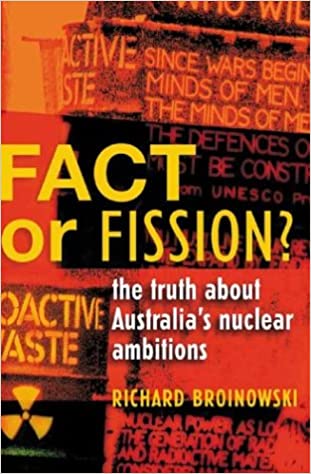
Scribe Publications has published a second, updated edition of former Australian Ambassador Prof. Richard Broinowski’s 2003 book Fact or Fission? The truth about Australia’s nuclear ambitions.
The book has just been published with two new chapters addressing the implications of the AUKUS announcement that Australia would purchase nuclear-powered submarines fuelled on highly-enriched uranium — see https://scribepublications.com.au/books-authors/books/fact-or-fission-9781922585745
Richard is planning to launch the updated Fact or Fission? at bookshops in Sydney, Canberra and Melbourne. The Sydney launch will be at Gleebooks, Glebe Point Rd, on Tuesday 14 June at 6 pm for 6:30 pm — see https://www.gleebooks.com.au/event/richard-broinowski-fact-or-fission/. The other launches are still to be finalised. The launches offer the opportunity for discussion about Australia’s potential role in nuclear proliferation and Australia’s capture by the US military and the US armaments industry.
Richard Broinowski – Fact or Fission – Gleebooks.com.auThis book examines Australia’s chequered nuclear history – from assisting the United States develop the first atomic bomb in the 1940s, wanting its own nuclear weapons in the 1960s, and then, in sudden reversal, being at the active forefront of international non-proliferation activities in the 1970s and 1980s.www.gleebooks.com.au |
New opposition leader Peter Dutton says that nuclear energy is not Liberal Party policy
Nuclear energy ‘not on the table’: Dutton, 31 May 22,
Opposition Leader Peter Dutton says nuclear energy is currently ‘not on the table’ for Liberal Party policy consideration. ”If that’s to change then that would be the decision of the shadow cabinet and the party room,” Mr Dutton told Sky News Australia. https://www.skynews.com.au/australia-news/politics/nuclear-energy-not-on-the-table-dutton/video/66c6a997343fa7c41b7a2e5fb54c0605
Barnaby Joyce removed as leader of the National Party, goes out spruiking for the nuclear industry
Barnaby Joyce says he will accept frontbench position from David Littleproud, calls for nuclear energy, Canberra Times, Finn McHugh, May 31 2022 Barnaby Joyce has declared he’s not going anywhere before the next election, and would accept a frontbench position from the man who deposed him……….
Speaking for the first time since Monday’s leadership spill, Mr Joyce also backed David Littleproud’s calls to shift to nuclear energy.
“Let’s be brave enough and start saying things like nuclear energy……….
Within hours of becoming Nationals leader, Mr Littleproud declared it was time for Australia to hold a “mature” conversation on nuclear energy – the subject of a bipartisan moratorium…………….. https://www.canberratimes.com.au/story/7760371/im-going-nowhere-lets-talk-nuclear-joyce/
New National Party leader pushes for small nuclear reactors
New Nationals leader David Littleproud lays down challenge to Anthony Albanese, Canberra Times, 30 May 22, ”………………………………………. Mr Littleproud will push for a debate on lifting the moratorium on nuclear energy in Australia, revealing he’s already planning to raise the issue with the new Prime Minister.
“Unfortunately, in the past, there has been this demonisation … without even putting the lens over new nuclear technology like small-scale modular,” he said.
| “Our party room will come to a position on that and it’s one [issue] that obviously we’re very passionate about.”We should back ourselves as Australians to do it better and safer than anyone else. But we need to educate before we legislate.” One of a small number of federal parliamentarians who doesn’t hold a university degree, Mr Littleproud hoped his rise to the Nationals leadership would inspire young people to pursue their dreams.”This reaffirms we live in the greatest country in the planet,” he said. https://www.canberratimes.com.au/story/7760371/im-going-nowhere-lets-talk-nuclear-joyce/ |
Australia’s nuclear submarines and nuclear proliferation obligations – how many angels can dance on a periscope?
Ensuring the right safeguards are in place for Australia’s nuclear-powered submarines The Strategist, 30 May 2022, Anastasia Kapetas ”……………………………….. can the submarines be safeguarded? And do they actually need to be under the Treaty on the Non-Proliferation of Nuclear Weapons (NPT)?
As AUKUS was being negotiated, the Biden administration reportedly had serious concerns about the non-proliferation impacts of the deal, given that this would be the first time that a nuclear-weapon state has undertaken to transfer highly enriched uranium (HEU) to a non-nuclear-weapon state.
But experts on the NPT assured the US administration that everyone would meet their obligations under the treaty if Australia were barred from accessing the reactors inside its submarines.
So, the naval reactors would have to be sealed by the US or UK inside the submarine hulls before they came to Australia, remain sealed throughout the 30-year life of the submarine and be removed by the US or UK at the end of that life. That means if the submarines are to be built here, a section of the hull and reactor would need to be built in the US or UK and then moved to Australia. Or, if that is not feasible, then a reactor could possibly be imported into Australia, but with no Australian personnel having access to it at any time, something which would presumably need to be verified by the IAEA in some way that would also not give inspectors access to the reactor.
This means that, in theory, Australia’s naval reactors would not have to be safeguarded because the HEU contained in them would never be accessed by any country that is not a nuclear-weapon state.
Under the NPT, the five accredited nuclear-weapon states, China, Russia, the US, the UK and France, do not have to put their nuclear-weapons-related material under IAEA safeguards, although they all have voluntary safeguards agreements with the IAEA covering their civil nuclear programs.
The NPT doesn’t cover naval reactors. But because the deal involves the transfer of HEU to a non-nuclear-weapon state, Australia is not off the safeguards hook. Not safeguarding this would create a precedent for HEU transfer through naval reactors. So Australia needs not an exemption, as has sometimes been reported, but a new type of safeguard.
John Carlson, former director general of the Australian Safeguards and Non-Proliferation Office (ASNO), who currently advises non-proliferation bodies internationally, and has written extensively on the issue, says standard safeguards can’t apply here.
He gives two reasons. The first is that nuclear-weapon states like the US and UK don’t want to reveal secret information on fuel and rector design to IAEA inspectors.
The other issue is that under a standard IAEA safeguard, inspections must take place regularly. For the irradiated HEU in Australia’s submarines, that would require inspections every three months. But given the nature of submarine deployments, Australia wouldn’t be able to ensure that they would be in port to be inspected at the proper time.
But, says Carlson, ‘Australia has an obligation to demonstrate to the international community that we haven’t simply diverted the fuel, and used it to produce nuclear weapons. This is why we need to develop a verification arrangement with the supplier and the IAEA.’
While it wouldn’t be a standard safeguard, it must be ‘sufficient to demonstrate to the international community, in a credible way, that the fuel is still in the submarines at any point in time’.
But what might some kind of alternative verification mechanism look like?
Given that the naval rectors will be built into the hulls of Australia’s submarines, they could not be accessed without cutting into the hull…………….
| there’s one other scenario that an Australia-specific safeguard would have to cover. And that is in the event of an accident where Australia would need to gain access to the reactor.‘We could claim that that the reactor needed urgent attention, and this would actually be a way to get our hands on the fuel.’This would be a major undertaking. It would require Australia to be equipped with all the equipment necessary to handle the fuel safely, as well as help from the US or UK…………………. The final piece of the safeguard puzzle is the politics. The member states of the IAEA would need to be comfortable with creating a special safeguard for Australia…………….. Carlson thinks IAEA approval is likely, but it will need careful, steady diplomacy. https://www.aspistrategist.org.au/ensuring-the-right-safeguards-are-in-place-for-australias-nuclear-powered-submarines/ |
Australia’s weapons-buying binge from USA continues ..
Australia Wins U.S. Approval to Buy Rocket Launchers
US News, By Reuters Wire Service Content • May 26, 2022, By Katharine Jackson and Mike Stone
WASHINGTON (Reuters) -The U.S. State Department has approved the sale of mobile rocket launchers to Australia, as the country seeks to boost its military presence in the Indo-Pacific region.
The U.S. approved several weapons sales worth as much as $3.1 billion to allies, the Pentagon said on Tuesday, including helicopters to Egypt and missiles to the Netherlands.
Australia has been boosting its defense spending over the past few years as China looks to step up its presence in the Indo-Pacific region. Last year, Australia entered into a deal to buy nuclear submarines from the United States and Britain………….. https://www.usnews.com/news/world/articles/2022-05-26/u-s-oks-potential-sale-of-himars-launchers-to-australia-pentagon-says?context=amp&fbclid=IwAR0V2PJAt2NWed8nKIFzwlN8Lt9d26CrLz_iqf5yCjUhkDisSUxOYm3pBCA
Sydney University radiation case shows the need for stronger environmental laws, with wider scope
The fallout of the University’s radiation case, To see real environmental progress, it is not enough to rely on corporate responsibility; we need a body of enforceable restrictions on corporate and institutional consumption. Honi Soit by Bella Gerardi, May 2, 2022,
Last week, the University of Sydney was fined $61,000 for failing to properly dispose of a radioactive source belonging to a decommissioned medical imaging machine. For an institution that claims to have a strong commitment to the environment, conviction of a criminal environmental offence appears at odds with its sustainability strategy.
The source, which contained a sealed radioactive isotope, was found when a truck delivering scrap metals to a recycling yard set off alarms during a routine radiation check.
Identified as belonging to a PET scanner owned by the University, the Environmental Protection Agency (EPA) charged the University with four individual breaches of the Radiation Control Act. The case didn’t go to court as the University pled guilty, and in exchange the EPA dropped two of the four charges.
………. Last week, the University of Sydney was fined $61,000 for failing to properly dispose of a radioactive source belonging to a decommissioned medical imaging machine. For an institution that claims to have a strong commitment to the environment, conviction of a criminal environmental offence appears at odds with its sustainability strategy.
The source, which contained a sealed radioactive isotope, was found when a truck delivering scrap metals to a recycling yard set off alarms during a routine radiation check.
Identified as belonging to a PET scanner owned by the University, the Environmental Protection Agency (EPA) charged the University with four individual breaches of the Radiation Control Act. The case didn’t go to court as the University pled guilty, and in exchange the EPA dropped two of the four charges.
…………… It is disappointing, but not surprising, that it took a criminal conviction to reach the safeguards imposed today. Unfortunately, the University’s prior lack of clear procedure is indicative of the broader attitude institutions and corporations hold toward environmental crimes. Environmental crimes are often entangled with accidents, negligence, or oversight, and are often not viewed as holding the same gravity as other offences.
Corporations and institutions are responsible for the majority of environmental harm, yet complex corporate hierarchies make it uncommon for individuals to face repercussions for offences, which in turn promotes a lax attitude toward environmental damage.
Is anything changing?
The NSW Government passed the Environment Legislation Amendment Act 2022 (NSW) last month, which broadened the personal liability that executives face if their corporation breaches environmental legislation. If directors financially benefit from a breach of environmental law, they can be criminally prosecuted for that offence, regardless of whether they were personally aware of or involved in the breach.
In bringing a greater threat of personal liability, the new laws will hopefully incentivise directors to take greater care in ensuring company policies uphold environmental laws.
Despite all this, the scope of environmental law as it stands is limited, as most environmental offences relate to waste management or water and air pollution. ………. https://honisoit.com/2022/05/the-fallout-of-the-universitys-radiation-case/
Labor urged to act to prevent Julian Assange extradition
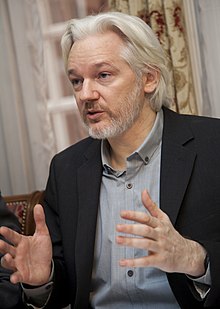
https://www.thesaturdaypaper.com.au/news/politics/2022/05/28/labor-urged-act-prevent-julian-assange-extradition#mtr, 28 May 22, The legal case against Julian Assange is a game of luck and whim. Any day now, the British home secretary, Priti Patel, is expected to rubber stamp his extradition to the United States. What will happen to him there is uncertain.
The Westminster Magistrates’ Court formally approved his extradition on April 20 and Patel has until May 31 to announce whether it will happen. If convicted of espionage in the US, Assange could be sentenced to 175 years in prison. His legal team argue he would likely kill himself.
There is one glimmer of hope for the WikiLeaks founder, however, bound up in last weekend’s Australian election result. The victory of Anthony Albanese, a supporter of the journalist, has reignited calls to halt the extradition.
Albanese has said that while he didn’t sympathise with Assange for some of his actions, he could not see any purpose to keeping him in jail.“Assange’s appeal is like a game of extradition snakes and ladders. He managed to take his argument about US prison conditions all the way to the door of the Supreme Court, but they rejected it, so he slid back down to the magistrates’ court where he started.”
“The prime minister, Mr Albanese, has previously said ‘enough is enough’. [Then shadow] Attorney-General Mark Dreyfus issued a statement last year confirming that Labor wanted the matter ‘brought to an end’,” says lawyer and human rights activist Kellie Tranter, who is a former WikiLeaks Party senate candidate. “So it remains to be seen whether such statements will result in the new government requesting that the US drop the case.”
She was “cautiously optimistic” about the case of Assange, who faces 17 charges under the US Espionage Act relating to the publication of classified documents and information related to US war crimes.
“It is helpful that the Greens – who have been calling for the Australian government to take action in the Assange case for some time – may hold the balance of power in the senate,” Tranter added.
Earlier this week, Albanese travelled to Japan for a meeting of the Quad leaders – from India, Japan, the US and Australia – to deliver a message about Australia’s policy changes.
Supporters including Tranter had urged the Department of Foreign Affairs and Trade (DFAT) and the Department of the Prime Minister and Cabinet to include the whistleblower on the agenda, and not just as a sideline issue.
The meeting was the “ideal opportunity” for Albanese to speak with US President Joe Biden and British Prime Minister Boris Johnson to request that Assange be allowed to come home, said Greg Barns SC, an adviser to the Australian Assange campaign.
A spokesperson for the Department of the Prime Minister and Cabinet said they were unable to provide comment on Quad agenda items. Comment was being sought from DFAT.
Stella Assange, who married the WikiLeaks founder in Belmarsh prison this year and is the mother of their two children, told The Saturday Paper the case had become political. She insisted the government had a duty to protect its citizens.
“By failing to act, it’s not just negligent; it shows that whoever is in office that isn’t acting is not fit for office,” the human rights lawyer said. “This can end today if the Australian government decides to do something about it.”
Every human rights organisation in the world had said the extradition of the Townsville-born computer hacker, editor and publisher should be stopped, she said. The latest to speak out is the Council of Europe.
Earlier this month, then Foreign Affairs minister Marise Payne and her Labor shadow, Penny Wong, claimed Australia couldn’t intervene, as the matter was before the courts.
But former British Labour Party leader Jeremy Corbyn, speaking to The Saturday Paper, rubbished the claim. The MP pleaded to Australia to “speak up for your own”.
“Whilst in Britain there are – for good reason – constraints about raising [it] in parliament because it’s a sub judice matter, that does not apply in Australia,” Corbyn said.
“There is no legal case in Australia. So there’s nothing to stop every Australian politician speaking up with Julian Assange, and I think they should. Please do, because it will help the freedom for journalists everywhere.”
Barns said there was “plenty of political support” for Albanese to ensure the whistleblower does not face an effective death penalty in the US. He pointed out that the Bring Julian Assange Home Parliamentary Group had 30 members from every party before the election. This is expected to increase, Assange’s brother, Gabriel Shipton, said.
“Ultimately I don’t think Albo wants to become another Australian prime minister who is complicit in Julian’s persecution and more broadly the Western descent into barbarity that has been taking place ever since the Iraq invasion,” he said. “Whether he has the power to resist that is up to us.”
A spokesperson for DFAT said the government had “consistently raised the situation of Mr Assange with the United States and the United Kingdom”. The spokesperson said the government “conveyed our expectations that Mr Assange is entitled to due process, humane and fair treatment, access to proper medical and other care, and access to his legal team”. However, “The extradition case regarding Julian Assange is between the United States and the United Kingdom; Australia is not a party to this case.”
US–Australian relations are one of many matters that will test Albanese’s leadership. According to Tranter, freedom of information requests show “that consecutive governments have long held the view that the Assange case has strategic implications for the alliance”. She says this is why no Australian government had spoken out in support of his human rights or provided diplomatic assistance to him.
“Mr Albanese should take a stand consistent with his stated ethos of protecting the persecuted and not forsake any Australian citizen to personal abuse for political purposes,” Tranter said.
As he awaits his fate, Assange is incarcerated in London’s maximum security Belmarsh prison. He was taken there after seven years in the Ecuador embassy in London, where he sought asylum to prevent extradition to Sweden over now-abandoned sexual assault charges.
“Assange’s appeal is like a game of extradition snakes and ladders,” says Nick Vamos, the former head of extradition at Britain’s Crown Prosecution Service. “He managed to take his argument about US prison conditions all the way to the door of the Supreme Court, but they rejected it, so he slid back down to the magistrates’ court where he started.”
Assange “can’t climb that particular ladder again”, Vamos says. “But he can still appeal on the other grounds that he lost originally, so there are likely to be a few more ups and downs before this process is finally over.”
The partner and head of business crime at London firm Peters & Peters said the attempts to persuade Home Secretary Patel not to order the extradition would not be successful – “not in a million years”.
Vamos says that if there is another appeal in Britain it could take another six months to be heard. If it is denied, another avenue is the European Court of Human Rights, in Strasbourg, France, which could issue an order directing Britain not to extradite Assange until its case is heard.
Jennifer Robinson, part of Assange’s legal team, has confirmed this is a path being considered.
“This case is too important from a free speech point of view, but also from a humanitarian point of view,” she said.
“We know what the medical evidence is about Julian’s mental health, and that he will find a way to commit suicide if he’s extradited.”
In all, Vamos says, these appeals could take another two years. But once Assange’s extradition has been signed off, he says, US Marshals are free to fly to Britain to arrest Assange: “It will normally happen within a couple of weeks of Patel making the order.”
At an EU Free Assange rally in Brussels, on April 23, Assange’s wife wiped away tears as she spoke to the crowd. The event was aimed at targeting European leaders, with speeches by politicians from various countries. “In the end this will end up in Europe,” Stella Assange said. “Europe can free Julian. Europe must free Julian.”
She recalled that 15 years into his 27-year imprisonment, people thought Nelson Mandela would never be liberated. “But he was, because decent people in that case came out and they shouted for his freedom, even if they were the only person in the square to shout,” she said.
“The fact is, it takes a few decent people to show the way and what we stand for, because we create the reality around us.”
Activists were defending “not just decency and the memory” of all the tens of thousands of victims of the Iraq and Afghan war, caught up in the crimes that WikiLeaks exposed; they were also standing up for the right to a free future.
“What has been done to Julian is a crime,” Stella Assange said. “The law is being abused in order to keep him incarcerated, year after year, for doing the right thing … When will it end? Will it end?”
Stop Deep Yellow: No uranium mining on Upurli Upurli Nguratja country

https://www.ccwa.org.au/mulga_rock The Mulga Rock uranium project is the only uranium proposal being advanced in WA. The project is uneconomic, unwanted and unnecessary.
Mulga Rock is on Upurli Upurli Nguratja country in the Yellow Sandplain Priority Ecological community in the Great Victoria Desert (GVD) and home to the endangered Sandhill Dunnart – one of three remaining areas where the species is found in Australia. The area is also home to the endangered Southern Marsupial Mole the vulnerable Crest Tailed Mulgara and Desert Skink, the migratory Rainbow Bee-Eater and many other priority species.
Vimy Resources are seeking to merge with uranium miner Deep Yellow. Deep Yellow’s leadership is a cause for Deep concern. Their Chairperson Chris Salisbury was the Iron Ore boss at Rio Tinto during the Juukan Gorge destruction. Deep Yellow’s Managing Director John Borshoff was the Director of uranium company Paladin. During his leadership there were ongoing reports of industrial disputes worker fatalities and environmental concerns.
“I worry about that country and what effect uranium mining would have on it, there is no other area like it. Once that’s destroyed and poisoned well how can you replace all that. It’ll be gone forever.” Janice Scott – Nangaanya-ku
There is a registered Native Title Claim over the area – Upurli Upurli Nguratja. Vimy have routinely undermined Native Title interests in the area and have failed to meet the claim group. The Spinifex people who are descendants of some of Australia’s first environmental refugees who fled South Australia during the British atomic weapons tests between 1956 and 1963 and settled near Mulga Rock first at Cundallee then Coonana and then Tjutjuntjarra. There are strong connections to the area and a strong history of impact and resistance to the nuclear industry.
“We don’t want uranium mining. We’ve written to government to let them know we the Traditional Owners have not been consulted. The current clearing at the site is disrespectful and shows a total lack of social value, moral and ethical leadership.” Debbie Carmody – Upurli Upurli Nguratja
The Proposal:
- Four open pits, strip mined and backfilled
- Licensed to take 15 million litres of water per day
- Would produce 32 million tonnes of radioactive mine waste
- Would clear 3,709 ha of native vegetation
- Located in the Yellow Sandplain Priority Ecological Community, known as one of the most pristine areas in the Great Victoria Desert.
- Home to the endangered Sandhill Dunnart
- Upstream from the Queen Victoria A Class Nature Reserve
Julian Assange’s family says federal election result brings renewed hope for WikiLeaks founder’s release
https://www.abc.net.au/news/2022-05-27/julian-assange-release-family-election-result-brings-hope/101100860, By Brendan Mounter and Adam Stephen, 27 May 22,
Key points:
- The family and supporters of Julian Assange are hopeful of securing his release following a change of government
- Prime Minister Anthony Albanese has previously expressed support for efforts to secure the WikiLeaks founder’s return to Australia
- Mr Assange has spent the past three years in the UK’s Belmarsh Prison
The family of Julian Assange is hopeful the election of a federal Labor government will pave the way for the WikiLeaks founder’s eventual release and a return to Australia.
It has been almost a decade since Mr Assange, who originally hails from Townsville in north Queensland, has been a free man.
For the past three years, he has been in high security detention at Belmarsh Prison in the United Kingdom, after seven years of asylum within London’s Ecuadorian embassy in a bid to avoid arrest.
United States authorities have sought Mr Assange’s extradition from the UK so he can stand trial on charges of espionage and computer misuse relating to hundreds of thousands of leaked cables from the wars in Iraq and Afghanistan.
His brother, film producer Gabriel Shipton, said Mr Assange had been persecuted for publishing the ugly truths of war.
“Julian is accused of what investigative journalists do all the time, which is sourcing and publishing materials from a source, Chelsea Manning,” Mr Shipton said.
“Those releases exposed war crimes in Iraq, undocumented civilian deaths in Iraq, corruption, government malfeasance … all sorts of things.”
American prosecutors allege Mr Assange unlawfully helped US Army intelligence analyst Chelsea Manning steal classified diplomatic cables and military files that WikiLeaks later published, putting lives at risk.
Family urges incoming government to act
Lawyers for Mr Assange fear he could face up to 175 years in jail if he is extradited to the US and convicted.
But the weekend’s election result has buoyed his supporters, with the hope that the new Labor government will intervene and help secure his release.
While in Opposition, newly elected Prime Minister Anthony Albanese is reported to have told a February 2021 caucus meeting that “enough was enough” and he “can’t see what’s served by keeping [Assange] incarcerated”.
Mr Albanese is also a signatory to the Bring Julian Assange Home Campaign petition.
Senior Labor MP Mark Dreyfus, who is expected to be appointed Attorney-General, has also expressed a need to “bring the matter to a close”.
Mr Shipton is calling on the new government to turn those words into action.
“That was the Labor position before the election so we’re very hopeful when there’s a new administration, a new government coming in there’s always a lot of hope that they will live up to their promises,” he said.
Australia’s new Prime Minister backs the UN Nuclear Weapons Ban Treaty
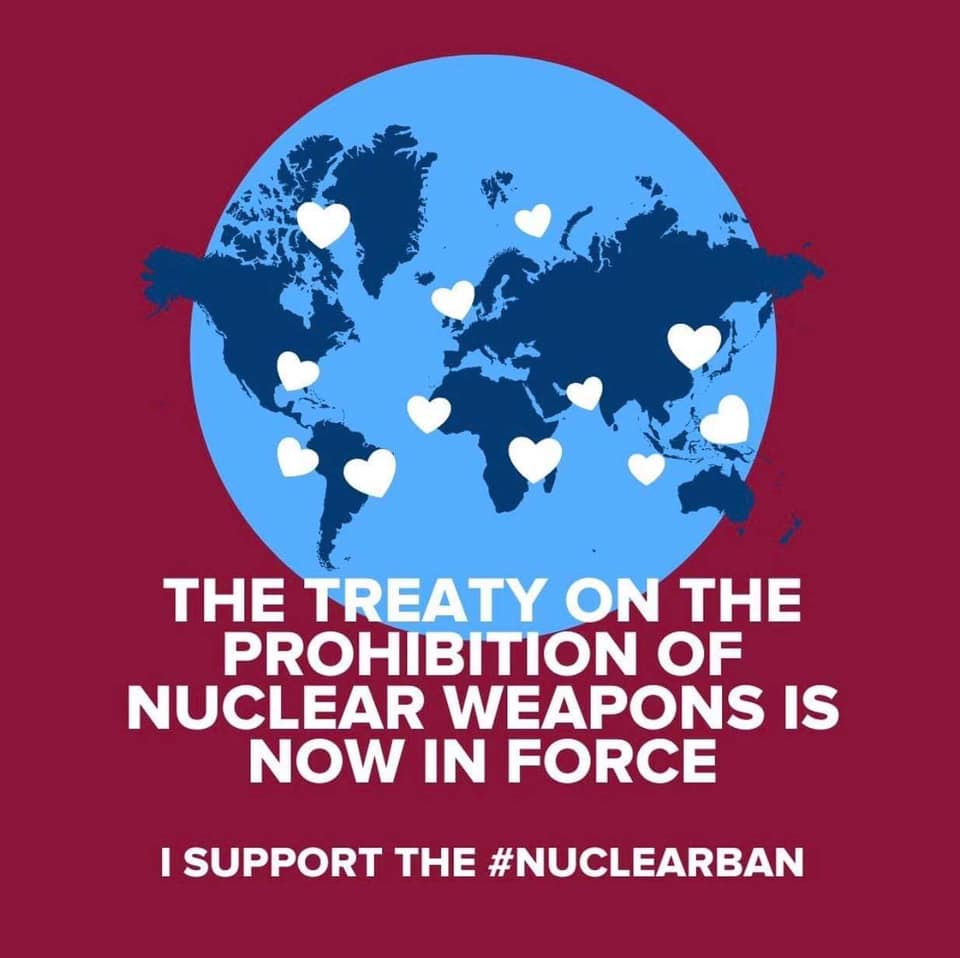
https://icanw.org.au/new-prime-minister-backs-the-ban/?fbclid=IwAR0PloEtGAvJE3z3fK3Lvb01JmlIbIJ2MXeAoT4KBjIBe3AMTGretVOISV8 24 May 22, The election of the Albanese Labor Government heralds a new era in Australia’s approach to nuclear disarmament and non-proliferation. While the previous government shunned the UN Treaty on the Prohibition of Nuclear Weapons, the Australian Labor Party has committed to sign and ratify it in government. Recent polling demonstrates ¾ of the Australian public support this action.
Prime Minister Anthony Albanese is a long-term champion of nuclear disarmament and non-proliferation, inspired by his late mentor Tom Uren, a former Labor Minister who witnessed the atomic bombing of Nagasaki as a prisoner of war. In proposing the resolution committing to the treaty in 2018, he said the new policy is “Labor at its best” and that “nuclear disarmament is core business for any Labor government worth its name”. In 2016 Albanese launched the Tom Uren Memorial Fund with ICAN, and has spoken out in support of the treaty in parliament, at public events and demonstrations since its negotiation in 2017.
A majority of the new government members have signed the ICAN Parliamentary Pledge to work for Australia to sign and ratify the Treaty. It has been backed by two dozen unions, including the national peak body, the Australian Council of Trade Unions. The Victorian, Tasmanian, Australian Capital Territory, South Australian, Northern Territory and Western Australian Labor branches, as well as over 50 local branches have passed motions declaring their support and calling upon Australia to join the ban without delay. Many have called for signature and ratification to be completed in the first term of the new government.
Following a decision of the Australian Parliament, signature and ratification of the Treaty on the Prohibition of Nuclear Weapons can now proceed under the Albanese Labor Government.
In addition to the incumbent signatories of the ICAN Parliamentary Pledge, we are delighted to welcome the following new parliamentarians that have committed to work for Australia to sign and ratify the Treaty on the Prohibition of Nuclear Weapons:
Boothby, SA Louise Miller-Frost, Labor
Bennelong, NSW Jerome Laxale, Labor
Chisholm, VIC Carina Garland, Labor
Cunningham, NSW Alison Byrnes, Labor
Goldstein, VIC Zoe Daniel, Independent
Higgins, VIC Dr Michelle Ananda-Rajah, Labor
Hunter, NSW Daniel Repacholi, Labor
Kooyong, VIC Dr Monique Ryan, Independent
North Sydney, NSW Kylea Tink, Independent
Pearce, WA Tracey Roberts, Labor
Robertson, NSW Gordon Reid, Labor
Wentworth, NSW Allegra Spender, Independent
ENATE, ACT David Pocock, Independent
SENATE, QLD Penny Allman-Payne, Greens
SENATE, NSW David Shoebridge, Greens
SENATE, SA Barbara Pocock, Greens
SENATE, VIC Linda White, Labor
Pressure Mounts on British Home Secretary Patel Over Assange Decision
New Australian Government
The election on Friday of just the fourth Labor government in Australia since the Second World War may bode well for Assange. The new prime minister, Anthony Albanese, has said publicly that Assange should be returned to his native Australia.
Pressure Mounts on Patel Over Assange Decision, https://consortiumnews.com/2022/05/22/pressure-mounts-on-patel-over-assange-decision/—
The British home secretary is under pressure as she’s about to decide whether to extradite WikiLeaks publisher Julian Assange. By Joe Lauria
in London
Special to Consortium News, 23 May 22,
At some point during the next nine days, British Home Secretary Priti Patel will decide whether or not to extradite imprisoned WikiLeaks publisher Julian Assange to the United States to face espionage charges for publishing accurate information revealing U.S. war crimes.
Pressure is building from both sides on the home secretary. Press freedom and human rights organizations, a Nobel laureate, the Council of Europe’s human rights commissioner, journalists and Assange supporters have appealed to Patel to let Assange go.
While it would be deemed improper for outside influence to be brought on judges, it would not be fanciful to imagine that behind the scenes Patel is getting the message from the U.S. Department of Justice and possibly from U.S. and U.K. intelligence services about what is expected of her.
The home secretary should know without prodding what the U.S. and British governments want her to do. Patel is a highly-ambitious politician who no doubt will calculate how her decision will impact her career.
“Politicians think about their next election, they think about their voters … that’s what makes them tick,” Kristinn Hrafnnson, WikiLeaks editor-in-chief, told Consortium News at a protest outside the Home Office in London last Wednesday. “For the first time it’s in the hands of a politician, and Priti Patel, if she wants to think about her legacy … she should do the right thing.”
“Politics is a strange beast,” Hrafnsson said. “Anything can happen. I’m hoping this is something that will be taken up in the Cabinet here. Let’s not forget that Boris Johnson was a journalist. He was part of the media community and should have better understanding of this case than many others.”
Patel is acting after the U.K. Supreme Court refused to hear Assange’s appeal of a High Court decision to overturn a lower court ruling barring Assange’s extradition on health grounds and the danger of U.S. prisons. The High Court decided solely on conditional U.S. promises that Assange would be well treated in custody.
With the courts no longer involved and the decision solely in Patel’s hands, the case now is purely political, meaning political pressure can be brought to bear on the home secretary.
“The home secretary has the discretion to block this extradition, and there is a lot of pressure from civil society and press freedom groups for her to do so,” said Stella Assange at a film screening on Thursday.
She said the “heaviest” pressure had come from Dunja Mijatovic, the human rights commissioner for the Council of Europe, “urging Patel to block it.” Mijatovic wrote to Patel on May 10, saying:
“I have been following the developments in Mr Assange’s case with great attention. In the judicial proceedings so far, the focus has mainly been on Mr Assange’s personal circumstances upon his possible extradition to the United States. While a very important matter, this also means, in my opinion, that the wider human rights implications of Mr Assange’s possible extradition, which reach far beyond his individual case, have not been adequately considered so far.
In particular, it is my view that the indictment by the United States against Mr Assange raises important questions about the protection of those that publish classified information in the public interest, including information that exposes human rights violations. The broad and vague nature of the allegations against Mr Assange, and of the offences listed in the indictment, are troubling as many of them concern activities at the core of investigative journalism in Europe and beyond.
Consequently, allowing Mr Assange’s extradition on this basis would have a chilling effect on media freedom, and could ultimately hamper the press in performing its task as purveyor of information and public watchdog in democratic societies.”
Nobel Peace Prize laureate Adolfo Pérez Esquive has also written to Patel. “I join the growing collective concern about the violations of the human, civil and political rights of Mr. Julian Assange,” the Argentine wrote. He called the extradition request “illegal and abusive” and said it imperiled press freedom and could bring “potentially fatal consequences” to Assange.
Amnesty International released a statement at the end of April calling on Patel to deny extradition. “If the Home Secretary certifies the US request to extradite Julian Assange it will violate the prohibition against torture and set an alarming precedent for publishers and journalists around the world,” Amnesty said. It went on:
“Prolonged solitary confinement is a regular occurrence in the USA’s maximum-security prisons. The practice amounts to torture or other ill-treatment, which is prohibited under international law. The assurances of fair treatment offered by the USA in Julian Assange’s case are deeply flawed and could be revoked at any time. Extradition to the USA would put Assange at risk of serious human rights violations, and hollow diplomatic assurances cannot protect him from such abuse.
If the UK government allows a foreign country to exercise extraterritorial criminal jurisdiction to prosecute a person publishing from the UK, other governments could use the same legal apparatus to imprison journalists and silence the press far beyond the borders of their own countries.”
“There has been a huge mobilization all over Europe in many countries and 1,800 journalists have written an open letter to Priti Patel saying that this case should be blocked because it affects their safety because of the implications for global press freedom,” Stella Assange said.
Reporters Without Borders submitted a petition to Patel on Thursday with 65,000 signatures. It was delivered to British embassies in eight countries, Assange said. More than 700,000 Australians have also signed a petition.
New Australian Government
The election on Friday of just the fourth Labor government in Australia since the Second World War may bode well for Assange. The new prime minister, Anthony Albanese, has said publicly that Assange should be returned to his native Australia.
1 This month
7 April – WEBINAR – Australia and the Doomsday Clock – Preventing nuclear war through NoFirstUse and other policies
Online | Tuesday April 7, 4:00-5:30pm, Australian Eastern Time / 8:00-9:30am Central Europe Time
– Access the registration link
15 April – Zoom –Nuclear Power is Not the Solution
Apr 15, 2026 01:00 AM in Canberra, Melbourne, Sydney

Join the International Physicians for the Prevention of Nuclear War (IPPNW) on Tuesday, April 14th for a timely webinar exploring the risks associated with nuclear power and challenging the myth that it offers a simple, safe, carbon-free solution to the climate crisis

21 April Webinar: No Nuclear Weapons in Australia
Start: 2026-04-21 18:00:00 UTC Canberra, Melbourne, Sydney (GMT+10:00)
End: 2026-04-21 19:30:00 UTC Canberra, Melbourne, Sydney (GMT+10:00)
Event Type: Virtual
A virtual link will be communicated before the event.
Host Contact Info: australia@icanw.org

of the week – Australians for War Powers Reform (AWPR)
To see nuclear-related stories in greater depth and intensity
 Antinuclear