Labor urged to act to prevent Julian Assange extradition
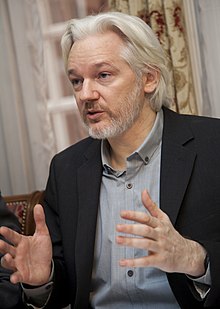
https://www.thesaturdaypaper.com.au/news/politics/2022/05/28/labor-urged-act-prevent-julian-assange-extradition#mtr, 28 May 22, The legal case against Julian Assange is a game of luck and whim. Any day now, the British home secretary, Priti Patel, is expected to rubber stamp his extradition to the United States. What will happen to him there is uncertain.
The Westminster Magistrates’ Court formally approved his extradition on April 20 and Patel has until May 31 to announce whether it will happen. If convicted of espionage in the US, Assange could be sentenced to 175 years in prison. His legal team argue he would likely kill himself.
There is one glimmer of hope for the WikiLeaks founder, however, bound up in last weekend’s Australian election result. The victory of Anthony Albanese, a supporter of the journalist, has reignited calls to halt the extradition.
Albanese has said that while he didn’t sympathise with Assange for some of his actions, he could not see any purpose to keeping him in jail.“Assange’s appeal is like a game of extradition snakes and ladders. He managed to take his argument about US prison conditions all the way to the door of the Supreme Court, but they rejected it, so he slid back down to the magistrates’ court where he started.”
“The prime minister, Mr Albanese, has previously said ‘enough is enough’. [Then shadow] Attorney-General Mark Dreyfus issued a statement last year confirming that Labor wanted the matter ‘brought to an end’,” says lawyer and human rights activist Kellie Tranter, who is a former WikiLeaks Party senate candidate. “So it remains to be seen whether such statements will result in the new government requesting that the US drop the case.”
She was “cautiously optimistic” about the case of Assange, who faces 17 charges under the US Espionage Act relating to the publication of classified documents and information related to US war crimes.
“It is helpful that the Greens – who have been calling for the Australian government to take action in the Assange case for some time – may hold the balance of power in the senate,” Tranter added.
Earlier this week, Albanese travelled to Japan for a meeting of the Quad leaders – from India, Japan, the US and Australia – to deliver a message about Australia’s policy changes.
Supporters including Tranter had urged the Department of Foreign Affairs and Trade (DFAT) and the Department of the Prime Minister and Cabinet to include the whistleblower on the agenda, and not just as a sideline issue.
The meeting was the “ideal opportunity” for Albanese to speak with US President Joe Biden and British Prime Minister Boris Johnson to request that Assange be allowed to come home, said Greg Barns SC, an adviser to the Australian Assange campaign.
A spokesperson for the Department of the Prime Minister and Cabinet said they were unable to provide comment on Quad agenda items. Comment was being sought from DFAT.
Stella Assange, who married the WikiLeaks founder in Belmarsh prison this year and is the mother of their two children, told The Saturday Paper the case had become political. She insisted the government had a duty to protect its citizens.
“By failing to act, it’s not just negligent; it shows that whoever is in office that isn’t acting is not fit for office,” the human rights lawyer said. “This can end today if the Australian government decides to do something about it.”
Every human rights organisation in the world had said the extradition of the Townsville-born computer hacker, editor and publisher should be stopped, she said. The latest to speak out is the Council of Europe.
Earlier this month, then Foreign Affairs minister Marise Payne and her Labor shadow, Penny Wong, claimed Australia couldn’t intervene, as the matter was before the courts.
But former British Labour Party leader Jeremy Corbyn, speaking to The Saturday Paper, rubbished the claim. The MP pleaded to Australia to “speak up for your own”.
“Whilst in Britain there are – for good reason – constraints about raising [it] in parliament because it’s a sub judice matter, that does not apply in Australia,” Corbyn said.
“There is no legal case in Australia. So there’s nothing to stop every Australian politician speaking up with Julian Assange, and I think they should. Please do, because it will help the freedom for journalists everywhere.”
Barns said there was “plenty of political support” for Albanese to ensure the whistleblower does not face an effective death penalty in the US. He pointed out that the Bring Julian Assange Home Parliamentary Group had 30 members from every party before the election. This is expected to increase, Assange’s brother, Gabriel Shipton, said.
“Ultimately I don’t think Albo wants to become another Australian prime minister who is complicit in Julian’s persecution and more broadly the Western descent into barbarity that has been taking place ever since the Iraq invasion,” he said. “Whether he has the power to resist that is up to us.”
A spokesperson for DFAT said the government had “consistently raised the situation of Mr Assange with the United States and the United Kingdom”. The spokesperson said the government “conveyed our expectations that Mr Assange is entitled to due process, humane and fair treatment, access to proper medical and other care, and access to his legal team”. However, “The extradition case regarding Julian Assange is between the United States and the United Kingdom; Australia is not a party to this case.”
US–Australian relations are one of many matters that will test Albanese’s leadership. According to Tranter, freedom of information requests show “that consecutive governments have long held the view that the Assange case has strategic implications for the alliance”. She says this is why no Australian government had spoken out in support of his human rights or provided diplomatic assistance to him.
“Mr Albanese should take a stand consistent with his stated ethos of protecting the persecuted and not forsake any Australian citizen to personal abuse for political purposes,” Tranter said.
As he awaits his fate, Assange is incarcerated in London’s maximum security Belmarsh prison. He was taken there after seven years in the Ecuador embassy in London, where he sought asylum to prevent extradition to Sweden over now-abandoned sexual assault charges.
“Assange’s appeal is like a game of extradition snakes and ladders,” says Nick Vamos, the former head of extradition at Britain’s Crown Prosecution Service. “He managed to take his argument about US prison conditions all the way to the door of the Supreme Court, but they rejected it, so he slid back down to the magistrates’ court where he started.”
Assange “can’t climb that particular ladder again”, Vamos says. “But he can still appeal on the other grounds that he lost originally, so there are likely to be a few more ups and downs before this process is finally over.”
The partner and head of business crime at London firm Peters & Peters said the attempts to persuade Home Secretary Patel not to order the extradition would not be successful – “not in a million years”.
Vamos says that if there is another appeal in Britain it could take another six months to be heard. If it is denied, another avenue is the European Court of Human Rights, in Strasbourg, France, which could issue an order directing Britain not to extradite Assange until its case is heard.
Jennifer Robinson, part of Assange’s legal team, has confirmed this is a path being considered.
“This case is too important from a free speech point of view, but also from a humanitarian point of view,” she said.
“We know what the medical evidence is about Julian’s mental health, and that he will find a way to commit suicide if he’s extradited.”
In all, Vamos says, these appeals could take another two years. But once Assange’s extradition has been signed off, he says, US Marshals are free to fly to Britain to arrest Assange: “It will normally happen within a couple of weeks of Patel making the order.”
At an EU Free Assange rally in Brussels, on April 23, Assange’s wife wiped away tears as she spoke to the crowd. The event was aimed at targeting European leaders, with speeches by politicians from various countries. “In the end this will end up in Europe,” Stella Assange said. “Europe can free Julian. Europe must free Julian.”
She recalled that 15 years into his 27-year imprisonment, people thought Nelson Mandela would never be liberated. “But he was, because decent people in that case came out and they shouted for his freedom, even if they were the only person in the square to shout,” she said.
“The fact is, it takes a few decent people to show the way and what we stand for, because we create the reality around us.”
Activists were defending “not just decency and the memory” of all the tens of thousands of victims of the Iraq and Afghan war, caught up in the crimes that WikiLeaks exposed; they were also standing up for the right to a free future.
“What has been done to Julian is a crime,” Stella Assange said. “The law is being abused in order to keep him incarcerated, year after year, for doing the right thing … When will it end? Will it end?”
Stop Deep Yellow: No uranium mining on Upurli Upurli Nguratja country

https://www.ccwa.org.au/mulga_rock The Mulga Rock uranium project is the only uranium proposal being advanced in WA. The project is uneconomic, unwanted and unnecessary.
Mulga Rock is on Upurli Upurli Nguratja country in the Yellow Sandplain Priority Ecological community in the Great Victoria Desert (GVD) and home to the endangered Sandhill Dunnart – one of three remaining areas where the species is found in Australia. The area is also home to the endangered Southern Marsupial Mole the vulnerable Crest Tailed Mulgara and Desert Skink, the migratory Rainbow Bee-Eater and many other priority species.
Vimy Resources are seeking to merge with uranium miner Deep Yellow. Deep Yellow’s leadership is a cause for Deep concern. Their Chairperson Chris Salisbury was the Iron Ore boss at Rio Tinto during the Juukan Gorge destruction. Deep Yellow’s Managing Director John Borshoff was the Director of uranium company Paladin. During his leadership there were ongoing reports of industrial disputes worker fatalities and environmental concerns.
“I worry about that country and what effect uranium mining would have on it, there is no other area like it. Once that’s destroyed and poisoned well how can you replace all that. It’ll be gone forever.” Janice Scott – Nangaanya-ku
There is a registered Native Title Claim over the area – Upurli Upurli Nguratja. Vimy have routinely undermined Native Title interests in the area and have failed to meet the claim group. The Spinifex people who are descendants of some of Australia’s first environmental refugees who fled South Australia during the British atomic weapons tests between 1956 and 1963 and settled near Mulga Rock first at Cundallee then Coonana and then Tjutjuntjarra. There are strong connections to the area and a strong history of impact and resistance to the nuclear industry.
“We don’t want uranium mining. We’ve written to government to let them know we the Traditional Owners have not been consulted. The current clearing at the site is disrespectful and shows a total lack of social value, moral and ethical leadership.” Debbie Carmody – Upurli Upurli Nguratja
The Proposal:
- Four open pits, strip mined and backfilled
- Licensed to take 15 million litres of water per day
- Would produce 32 million tonnes of radioactive mine waste
- Would clear 3,709 ha of native vegetation
- Located in the Yellow Sandplain Priority Ecological Community, known as one of the most pristine areas in the Great Victoria Desert.
- Home to the endangered Sandhill Dunnart
- Upstream from the Queen Victoria A Class Nature Reserve
Julian Assange’s family says federal election result brings renewed hope for WikiLeaks founder’s release
https://www.abc.net.au/news/2022-05-27/julian-assange-release-family-election-result-brings-hope/101100860, By Brendan Mounter and Adam Stephen, 27 May 22,
Key points:
- The family and supporters of Julian Assange are hopeful of securing his release following a change of government
- Prime Minister Anthony Albanese has previously expressed support for efforts to secure the WikiLeaks founder’s return to Australia
- Mr Assange has spent the past three years in the UK’s Belmarsh Prison
The family of Julian Assange is hopeful the election of a federal Labor government will pave the way for the WikiLeaks founder’s eventual release and a return to Australia.
It has been almost a decade since Mr Assange, who originally hails from Townsville in north Queensland, has been a free man.
For the past three years, he has been in high security detention at Belmarsh Prison in the United Kingdom, after seven years of asylum within London’s Ecuadorian embassy in a bid to avoid arrest.
United States authorities have sought Mr Assange’s extradition from the UK so he can stand trial on charges of espionage and computer misuse relating to hundreds of thousands of leaked cables from the wars in Iraq and Afghanistan.
His brother, film producer Gabriel Shipton, said Mr Assange had been persecuted for publishing the ugly truths of war.
“Julian is accused of what investigative journalists do all the time, which is sourcing and publishing materials from a source, Chelsea Manning,” Mr Shipton said.
“Those releases exposed war crimes in Iraq, undocumented civilian deaths in Iraq, corruption, government malfeasance … all sorts of things.”
American prosecutors allege Mr Assange unlawfully helped US Army intelligence analyst Chelsea Manning steal classified diplomatic cables and military files that WikiLeaks later published, putting lives at risk.
Family urges incoming government to act
Lawyers for Mr Assange fear he could face up to 175 years in jail if he is extradited to the US and convicted.
But the weekend’s election result has buoyed his supporters, with the hope that the new Labor government will intervene and help secure his release.
While in Opposition, newly elected Prime Minister Anthony Albanese is reported to have told a February 2021 caucus meeting that “enough was enough” and he “can’t see what’s served by keeping [Assange] incarcerated”.
Mr Albanese is also a signatory to the Bring Julian Assange Home Campaign petition.
Senior Labor MP Mark Dreyfus, who is expected to be appointed Attorney-General, has also expressed a need to “bring the matter to a close”.
Mr Shipton is calling on the new government to turn those words into action.
“That was the Labor position before the election so we’re very hopeful when there’s a new administration, a new government coming in there’s always a lot of hope that they will live up to their promises,” he said.
Australia’s new Prime Minister backs the UN Nuclear Weapons Ban Treaty
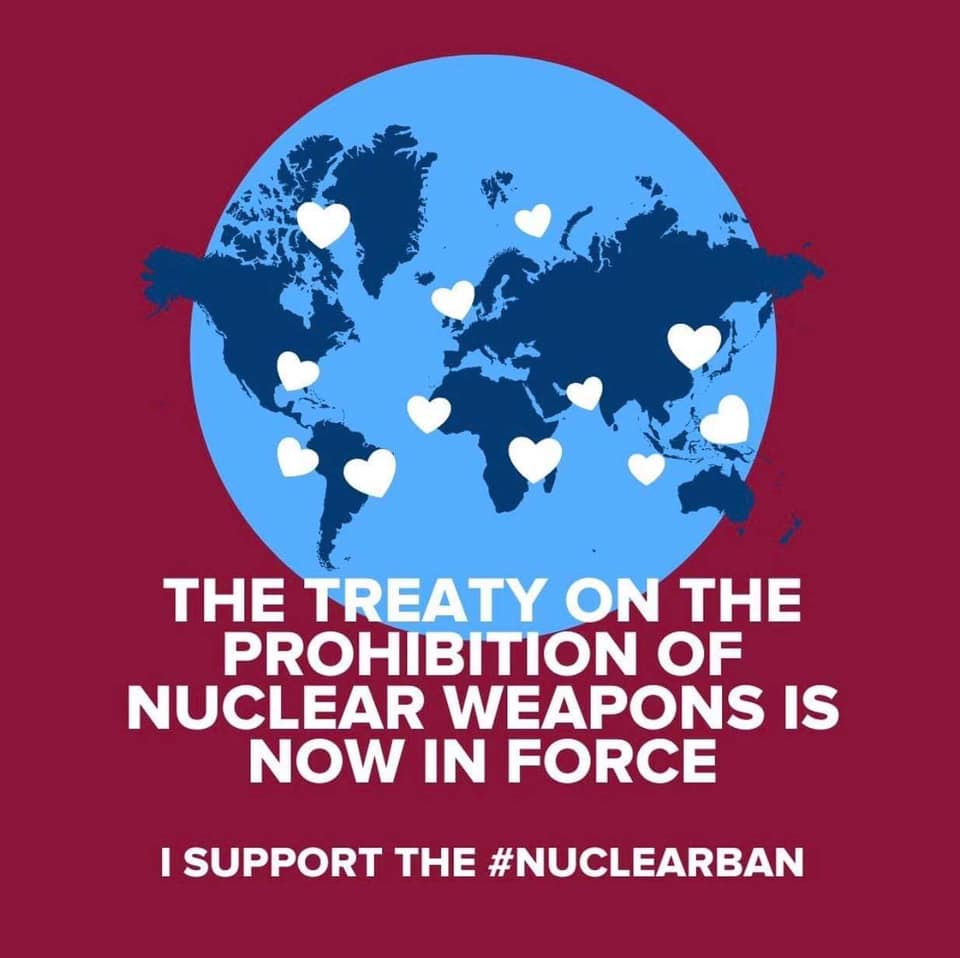
https://icanw.org.au/new-prime-minister-backs-the-ban/?fbclid=IwAR0PloEtGAvJE3z3fK3Lvb01JmlIbIJ2MXeAoT4KBjIBe3AMTGretVOISV8 24 May 22, The election of the Albanese Labor Government heralds a new era in Australia’s approach to nuclear disarmament and non-proliferation. While the previous government shunned the UN Treaty on the Prohibition of Nuclear Weapons, the Australian Labor Party has committed to sign and ratify it in government. Recent polling demonstrates ¾ of the Australian public support this action.
Prime Minister Anthony Albanese is a long-term champion of nuclear disarmament and non-proliferation, inspired by his late mentor Tom Uren, a former Labor Minister who witnessed the atomic bombing of Nagasaki as a prisoner of war. In proposing the resolution committing to the treaty in 2018, he said the new policy is “Labor at its best” and that “nuclear disarmament is core business for any Labor government worth its name”. In 2016 Albanese launched the Tom Uren Memorial Fund with ICAN, and has spoken out in support of the treaty in parliament, at public events and demonstrations since its negotiation in 2017.
A majority of the new government members have signed the ICAN Parliamentary Pledge to work for Australia to sign and ratify the Treaty. It has been backed by two dozen unions, including the national peak body, the Australian Council of Trade Unions. The Victorian, Tasmanian, Australian Capital Territory, South Australian, Northern Territory and Western Australian Labor branches, as well as over 50 local branches have passed motions declaring their support and calling upon Australia to join the ban without delay. Many have called for signature and ratification to be completed in the first term of the new government.
Following a decision of the Australian Parliament, signature and ratification of the Treaty on the Prohibition of Nuclear Weapons can now proceed under the Albanese Labor Government.
In addition to the incumbent signatories of the ICAN Parliamentary Pledge, we are delighted to welcome the following new parliamentarians that have committed to work for Australia to sign and ratify the Treaty on the Prohibition of Nuclear Weapons:
Boothby, SA Louise Miller-Frost, Labor
Bennelong, NSW Jerome Laxale, Labor
Chisholm, VIC Carina Garland, Labor
Cunningham, NSW Alison Byrnes, Labor
Goldstein, VIC Zoe Daniel, Independent
Higgins, VIC Dr Michelle Ananda-Rajah, Labor
Hunter, NSW Daniel Repacholi, Labor
Kooyong, VIC Dr Monique Ryan, Independent
North Sydney, NSW Kylea Tink, Independent
Pearce, WA Tracey Roberts, Labor
Robertson, NSW Gordon Reid, Labor
Wentworth, NSW Allegra Spender, Independent
ENATE, ACT David Pocock, Independent
SENATE, QLD Penny Allman-Payne, Greens
SENATE, NSW David Shoebridge, Greens
SENATE, SA Barbara Pocock, Greens
SENATE, VIC Linda White, Labor
Pressure Mounts on British Home Secretary Patel Over Assange Decision
New Australian Government
The election on Friday of just the fourth Labor government in Australia since the Second World War may bode well for Assange. The new prime minister, Anthony Albanese, has said publicly that Assange should be returned to his native Australia.
Pressure Mounts on Patel Over Assange Decision, https://consortiumnews.com/2022/05/22/pressure-mounts-on-patel-over-assange-decision/—
The British home secretary is under pressure as she’s about to decide whether to extradite WikiLeaks publisher Julian Assange. By Joe Lauria
in London
Special to Consortium News, 23 May 22,
At some point during the next nine days, British Home Secretary Priti Patel will decide whether or not to extradite imprisoned WikiLeaks publisher Julian Assange to the United States to face espionage charges for publishing accurate information revealing U.S. war crimes.
Pressure is building from both sides on the home secretary. Press freedom and human rights organizations, a Nobel laureate, the Council of Europe’s human rights commissioner, journalists and Assange supporters have appealed to Patel to let Assange go.
While it would be deemed improper for outside influence to be brought on judges, it would not be fanciful to imagine that behind the scenes Patel is getting the message from the U.S. Department of Justice and possibly from U.S. and U.K. intelligence services about what is expected of her.
The home secretary should know without prodding what the U.S. and British governments want her to do. Patel is a highly-ambitious politician who no doubt will calculate how her decision will impact her career.
“Politicians think about their next election, they think about their voters … that’s what makes them tick,” Kristinn Hrafnnson, WikiLeaks editor-in-chief, told Consortium News at a protest outside the Home Office in London last Wednesday. “For the first time it’s in the hands of a politician, and Priti Patel, if she wants to think about her legacy … she should do the right thing.”
“Politics is a strange beast,” Hrafnsson said. “Anything can happen. I’m hoping this is something that will be taken up in the Cabinet here. Let’s not forget that Boris Johnson was a journalist. He was part of the media community and should have better understanding of this case than many others.”
Patel is acting after the U.K. Supreme Court refused to hear Assange’s appeal of a High Court decision to overturn a lower court ruling barring Assange’s extradition on health grounds and the danger of U.S. prisons. The High Court decided solely on conditional U.S. promises that Assange would be well treated in custody.
With the courts no longer involved and the decision solely in Patel’s hands, the case now is purely political, meaning political pressure can be brought to bear on the home secretary.
“The home secretary has the discretion to block this extradition, and there is a lot of pressure from civil society and press freedom groups for her to do so,” said Stella Assange at a film screening on Thursday.
She said the “heaviest” pressure had come from Dunja Mijatovic, the human rights commissioner for the Council of Europe, “urging Patel to block it.” Mijatovic wrote to Patel on May 10, saying:
“I have been following the developments in Mr Assange’s case with great attention. In the judicial proceedings so far, the focus has mainly been on Mr Assange’s personal circumstances upon his possible extradition to the United States. While a very important matter, this also means, in my opinion, that the wider human rights implications of Mr Assange’s possible extradition, which reach far beyond his individual case, have not been adequately considered so far.
In particular, it is my view that the indictment by the United States against Mr Assange raises important questions about the protection of those that publish classified information in the public interest, including information that exposes human rights violations. The broad and vague nature of the allegations against Mr Assange, and of the offences listed in the indictment, are troubling as many of them concern activities at the core of investigative journalism in Europe and beyond.
Consequently, allowing Mr Assange’s extradition on this basis would have a chilling effect on media freedom, and could ultimately hamper the press in performing its task as purveyor of information and public watchdog in democratic societies.”
Nobel Peace Prize laureate Adolfo Pérez Esquive has also written to Patel. “I join the growing collective concern about the violations of the human, civil and political rights of Mr. Julian Assange,” the Argentine wrote. He called the extradition request “illegal and abusive” and said it imperiled press freedom and could bring “potentially fatal consequences” to Assange.
Amnesty International released a statement at the end of April calling on Patel to deny extradition. “If the Home Secretary certifies the US request to extradite Julian Assange it will violate the prohibition against torture and set an alarming precedent for publishers and journalists around the world,” Amnesty said. It went on:
“Prolonged solitary confinement is a regular occurrence in the USA’s maximum-security prisons. The practice amounts to torture or other ill-treatment, which is prohibited under international law. The assurances of fair treatment offered by the USA in Julian Assange’s case are deeply flawed and could be revoked at any time. Extradition to the USA would put Assange at risk of serious human rights violations, and hollow diplomatic assurances cannot protect him from such abuse.
If the UK government allows a foreign country to exercise extraterritorial criminal jurisdiction to prosecute a person publishing from the UK, other governments could use the same legal apparatus to imprison journalists and silence the press far beyond the borders of their own countries.”
“There has been a huge mobilization all over Europe in many countries and 1,800 journalists have written an open letter to Priti Patel saying that this case should be blocked because it affects their safety because of the implications for global press freedom,” Stella Assange said.
Reporters Without Borders submitted a petition to Patel on Thursday with 65,000 signatures. It was delivered to British embassies in eight countries, Assange said. More than 700,000 Australians have also signed a petition.
New Australian Government
The election on Friday of just the fourth Labor government in Australia since the Second World War may bode well for Assange. The new prime minister, Anthony Albanese, has said publicly that Assange should be returned to his native Australia.
Extraditing Julian Assange would be a gift to secretive, oppressive regimes
Handing over the WikiLeaks founder to the US will benefit those around the world who want to evade scrutiny

Peter Oborne 22 May 22, more https://www.theguardian.com/commentisfree/2022/may/20/extradite-julian-assange-investigative-journalism-wikileaks
In the course of the next few days, Priti Patel will make the most important ruling on free speech made by any home secretary in recent memory. She must resolve whether to comply with a US request to extradite Julian Assange on espionage charges.
The consequences for Assange will be profound. Once in the US he will almost certainly be sent to a maximum-security prison for the rest of his life. He will die in jail.
The impact on British journalism will also be profound. It will become lethally dangerous to handle, let alone publish, documents from US government sources. Reporters who do so, and their editors, will risk the same fate as Assange and become subject to extradition followed by lifelong incarceration.
For this reason Daniel Ellsberg, the 91-year-old US whistleblower who was prosecuted for his role in the Pentagon Papers revelations, which exposed the covert bombing of Laos and Cambodia and thus helped end the Vietnam war, has given eloquent testimony in Assange’s defence.
He told an extradition hearing two years ago that he felt a “great identification” with Assange, adding that his revelations were among the most important in the history of the US.
The US government does not agree. It maintains that Assange was effectively a spy and not a reporter, and should be punished accordingly.
Up to a point this position is understandable. Assange was anything but an ordinary journalist. His deep understanding of computers and how they could be hacked singled him out from the professionally shambolic arts graduates who normally rise to eminence in newspapers.
The ultimate creature of the internet age, in 2006 he helped found WikiLeaks, an organisation that specialises in obtaining and releasing classified or secret documents, infuriating governments and corporations around the world.
The clash with the US came in 2010, when (in collaboration with the Guardian, Der Spiegel, Le Monde, the New York Times and other international news organisations) WikiLeaks entered into one of the great partnerships of the modern era in any field. It started publishing documents supplied by the US army intelligence analyst Chelsea Manning.
Between them, WikiLeaks and Manning were responsible for a series of first-class scoops that any self-respecting reporter would die for. And these scoops were not the tittle-tattle that comprises the daily fodder of most journalism. They were of overwhelming global importance, reshaping our understanding of the Iraq war and the “war on terror”.
To give one example among thousands, WikiLeaks published a video of soldiers in a US helicopter laughing as they shot and killed unarmed civilians in Iraq – including a Reuters photographer and his assistant. (The US military refused to discipline the perpetrators.)
To the intense embarrassment of the US, WikiLeaks revealed that the total number of civilian casualties in Iraq was 66,000 – far more than the US had acknowledged.
It shone an appalling new light on the abuse meted out to the Muslim inmates at Guantánamo Bay, including the revelation that 150 innocent people were held for years without charge.
Clive Stafford Smith, the then chairman of the human rights charity Reprieve who represented 84 Guantánamo prisoners, praised the way WikiLeaks helped him to establish that charges against his clients were fabricated.
It’s easy to see why the US launched a criminal investigation. Then events took an unexpected turn in November 2010 when Sweden issued an arrest warrant against Assange following allegations of sexual misconduct. Assange refused to go to Sweden, apparently on the grounds that this was a pretext for his extradition to the United States and took refuge in the Ecuadorian embassy in London. Sweden never charged Assange with an offence, and dropped its investigation in 2019.
This was an eventful year in the Assange story. Ecuador kicked him out of the embassy and he was promptly arrested for breaching bail: he’s languished for the past three years in Belmarsh prison. Meanwhile the US pursues him using the same 1917 Espionage Act under which Ellsberg was unsuccessfully prosecuted. Assange’s defence, led by the solicitor Gareth Peirce and Edward Fitzgerald QC, has argued that his only crime was the crime of investigative journalism.
They point out that the indictment charges Assange with actions, such as protecting sources, that are basic journalistic practice: the US alleges that “Assange and Manning took measures to conceal Manning as the source of the disclosure of classified records”. Any journalist who failed to take this elementary precaution when supplied with information by a source would be sacked.
The US stated that Assange “actively encouraged Manning” to provide the information. How disgraceful! No wonder Kenneth Roth, the executive director of Human Rights Watch, has warned that: “It is dangerous to suggest that these actions are somehow criminal rather than steps routinely taken by investigative journalists who communicate with confidential sources to receive classified information of public importance.”
Despite all this, there’s no reason to suppose that Patel will come to Assange’s rescue – though there may yet be further legal ways to fight extradition.
Even if Patel wasn’t already on the way to winning the all-corners record as the most repressive home secretary in modern history, the Johnson government, already in Joe Biden’s bad books, has no incentive to further alienate the US president.
If and when Assange is put on a plane to the US, investigative journalism will suffer a permanent and deadening blow.
And the message will be sent to war criminals not just in the US but in every country round the globe that they can commit their crimes with impunity.
Painful defeat of Australia’s right-wing Morrison government, as new Labor government vows action on climate change.
Anthony Albanese, Australia’s new Labor prime minister, vowed to end the
country’s “climate wars” after he ousted Scott Morrison’s conservative
government on Saturday night. For the first time in nearly a decade, the
Labor party will lead Australia after a general election that delivered a
bruising defeat to Mr Morrison’s Liberal-National coalition.
At the latest count on Sunday afternoon, Labor had won 72 seats – just four short of the
half-way mark required to form a majority government in the 151-seat lower
house. It is likely that they will have to go into coalition with
independents – who performed particularly well – or the Greens Party to get
over the line. Morrison suffered the most painful defeat at the hands of
climate-focused independent candidates in a string of once ultra-safe
conservative urban constituencies including
Josh Frydenberg, the deputy leader of the Liberal Party,
. So-called “teal independents”, campaigned on
demands for tougher action on climate change, a major political issue in
Australia, which has suffered severe drought, catastrophic bushfires and
major flooding in recent years. Labor intends to cut its emissions by 43
per cent within the decade, well in excess of the Liberal Party’s goal.
Telegraph 22nd May 2022
National Party set to dictate coalition policies on climate

Nats set to dictate Coalition policies
Senior Liberal and Nationals frontbenchers have acknowledged growing differences between urban and regional communities, as well as ongoing conflicts over climate change.
Clive Palmer and his United Australia Party guarantee a nuclear reactor for South Australia if they hold the balance of power.

Clive Palmer’s UAP backs SA nuclear energy, The United Australia Party is backing nuclear energy for South Australia, pledging to build a reactor if the party gains the balance of power……………..
Clive Palmer’s UAP backs SA nuclear energy, The United Australia Party is backing nuclear energy for South Australia, pledging to build a reactor if the party gains the balance of power……………..
Mr Palmer believed his party would hold the balance of power in the Senate and guaranteed the project would be carried out if so…………
But Mr Palmer said the federal government should fund the power plant. https://www.sbs.com.au/news/article/clive-palmers-uap-backs-sa-nuclear-energy/l9fo4wt7n?fbclid=IwAR257bldPcPrYu8jc3uMqAPliJbvGFzuytaK9WOvkYaORWScMIW_FvAmriA—
More scathing comments from readers, about Scott Morrison’s foolish nuclear submarine deal
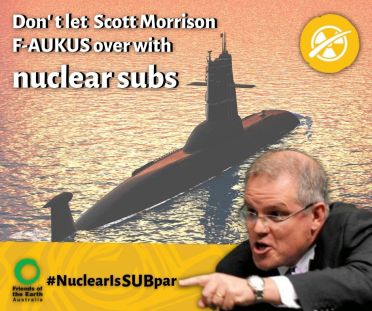
Here is another bunch of the many comments from readers, in reaction to Peter Harcher’s article https://www.smh.com.au/national/aukus-fallout-double-dealing-and-deception-came-at-a-diplomatic-cost-20220513-p5al95.html
Lorenzo the Mag That’s what you get when you hire a marketing person.
KEEPITREAL Australia is facing an unprecedented debt disaster. Already $1.2 Trillion dollars in Sovereign debt the LNP want to add to that with perpetual weapons acquisitions that will cost hundreds of billions of dollars and lock Australia into agreements spanning many decades with evermore additional associated expenses. The 2024 Stage 3 tax cuts / vote buy will cost $20 billion / year in lost budget revenue whilst entrenching poverty.
This LNP insanity has to stop, their debt consolidation would only make sense if their plan is for Australia to become the North Korea of the South Pacific
Kim Australia is committed to paying whatever the US military complex want to charge, not just for the submarines but all the add ons as well. A blank cheque for the US to fill in the figures. No wonder the US official asked if Australian taxpayers can sustain the cost. How stupid is this government?
David AUKUS or in order of importance USUKA (you sucker) will cost us mega billions, only to see the subs never delivered because they will be yesterday”s technology by the time they are delivered.
MM55 Sooner or later nuclear subs have to return to base. They could be destroyed by hypersonic missiles sent from China direct. In 10 years they will be obsolete. Technology will see to that. In the meantime we keep the workers in the US submarine industry in a job.
Tahoe Why the need for absolute secrecy? Such strategic decisions need proper analysis.
The thing that Labor failed to understand is that the American subs use weapons grade uranium. It was never going to get past Nuclear Non-Proliferation Treaty, not as far as Iran was concerned. The French *nuclear* subs used non-weapons grade uranium.
These US submarines ain’t never going to be actually delivered.
Terryroger#2 Last year, Morrison and Dutton effectively shunned and insulted France the only European power and the only nuclear power with territory and military and naval bases in the South Pacific. We’re now on the hook to buy nuclear submarines that were intended to be integrated into the US Navy to blockade China’s sea lanes. As a result China is building the capacity to block our sea lanes to the US. .
The French Barracuda subs would be far more suitable for defending and monitoring the maritime approaches to Australia, which is what our defence priority should be – independent self-defence.
Morrison and Dutton have shown themselves to be nothing more than ventriloquist dolls for Uncle Sam for it was they who were ‘conned’ by Trump and Bannon and Pompeo in to leading the way in the call for a Covid inquiry – well ahead of the rest of the world and of course the results were that Australia lost trade with China while the US gained those lost markets – some ally!
If Labor win the election, they could do worse than prepare a current Defence White Paper, based on the circumstances we now face and on our own interests rather than those of the US, and tell Macron that we may yet take the more useful, appropriate and delivered-on-time French subs.
fizzybeer…. anti lies and rorts, pro ICAC I would have expected a thousand comments on this series of revelations about the Morrison lies and incompetence with defence purchases and national security, are we becoming used to the lies or too tired of Morrison to take an interest?
EVAN SMITH Thanks Peter,
As if more proof was required about the PM’s unfitness for office, then this article by Peter Hartcher exposes it concisely and succinctly in this article.
The duplicitous conduct and lack of decency and respect that the Pm has for others, is laid bare by Peter Hartcher!
Vote this useless LNP mob out and restore Australia’s tattered reputation as a trusted ally!
@therealmclovin Another really important aspect to all of this, which I’m surprised isn’t even alluded to given what has been happening in our region in the last few weeks, is that France has a significant regional presence. New Caledonia and French Polynesia are both French territories. Setting aside which boats we needed to buy, if putting a regional partner offside seemed like a bad idea last year, it seems spectacularly idiotic now. Surely there could have been another way of handling this. We’ve created significant rifts within our region, this being just another example, that are being exploited and will continue to be exploited and we won’t even see these boats for 15 -18 years or more!
Even if the idea and technologies aren’t obsolete in two decades (and I’m not opposed to nuclear subs), given the amount of coastline we have (or the amount of area of the SW Pacific we operate in), we may in retrospect conclude we would have been much better off with 20 French subs for the price of 8 US/UK ones and in a conflict continue to be able to build and importantly fuel them ourselves.
Lorne Green As we have seen its not only the French who have been deceived but possibly the whole of the South Pacific region, not to mention a large chunk of the Australian population.
Well detailed analysis of the level of underhandedness our government went to in this affair – sounds like a masterstroke of deception worthy of intelligent services in WW2.
Is this a forewarning of the way we will be treated by the LNP, when they decide there is something we don’t need to know – there is a danger that we end becoming like our worst enemy.
No vision- No policies- No direction – How good is that! This confirms it – we have to get rid of this LNP rabble.😠
They can’t be trusted are underhanded and make terrible decisions that we will live with for the next decades.
Australian readers condemn the Morrison government’s AUKUS deal
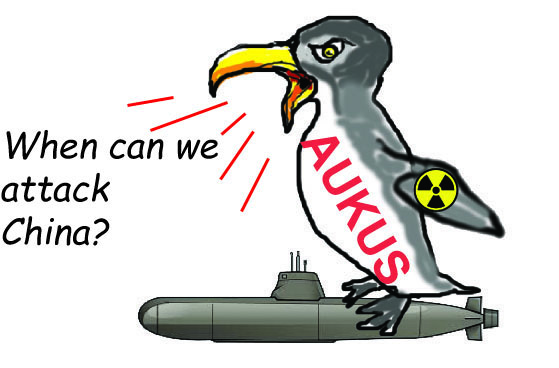
Below are just a few of the many comments that readers made, on the article about Australia’s devious nuclear submarine diplomacy.
My own comment – going to the issue of whether the nuclear submarines would be obsolete before ever in use, was not published.
Still, the overwhelming content of the published comments was condemnation of the AUKUS deal. (I’ll publish more comments later, on this page)
KEEPITREAL Super power toys and massive debt.
Social D-Greaser benefit of the termination of the contract with the French will flow to the UK or US or both. Naturally, they both will be happy.
The new nuclear sub contract either with the US or UK, could cost Australia hundreds of billion dollars more than than that with the French.
In thirty/forty years time when we could expect the delivery of these nuclear subs, the technology could already be obsolete. China could operate their subs from the moon by that time, because they make things themselves.
All these maneuvering (changing the diesel propulsion to nuclear) is aimed to scare China. Does Australia think that it will have to face China in a war really? Why are we then, unnecessarily annoying the Chinese where our business interest heavily lies. Therefore AUKUS is all loss – loss for Australia.
Trim the cat The whole world now knows you can’t trust the duplicitous Australian government.
KEEPITREAL. Just get one thing straight, me may get into a hard and bloody conflict with China , however our Trade Minister is sure that our major exports of Coal and Iron ore to China will not be affected
Petra665 Way to go Mr Morrison. You’re duplicitous handling of this I suspect is related to your quest for your own power ambitions and hanging with the “big boys”.
You managed to put a key strategic partner in an embarrassing situation damaging their diplomatic relations with a key NATO member which Biden was keen to repair. Particularly as one of his key promises to the US electorate was that he would seek to mend the US relationship with NATO after Trump had trampled all over it. Well Done clap….clap…..
No vision- No policies- No direction – How good is that! This is Morrisons $5 billion lie.
He doesn’t care as it is not his money.
Figment. Anyone who is considering employing Morrison after 22 May should think again after reading this article.
Sir Rex So the short version is… the Morrison government was willing damage a range of long-standing and critical international relationships to play wedge politics for personal advantage on the home-front.
Gee Scotty, I hope those triumphant headlines uncle Rupert gave you were worth selling-out your country for…
Social D-Greaser Remember, the Chinese will be on Solomon Island now. If they have a military base in Solomon Island with 300 fighter planes, 20-30 nuclear propelled subs fitted with nuclear missiles, will we think of fighting with China. The US has a power rivalry. The US would want to dominate in the South China sea, China is aware of it. China is unstoppable, it will find its way out to reach its goal.
Australia joined the US in Vietnam, Iraq, Syria, Yemen, Afghanistan and any other wars the US asked for, led the Covid -19 investigation on its origin (thereby annoying China), terminated the 90 billion dollar sub contract with the French (only to please the US and UK) etc, still the US Secretary of State failed acknowledge the Australia’s contribution in the Afghanistan war.
Every time the US asked Australia to jump, Australia did not ask why but asked how high. That’s a bit shame. Nobody will give you respect, you have to earn it. The US would, probably, respect NZ more than Australia. Late NZ prime Minister David Lange (rest in peace David) resolutely opposed the entry of US nuclear arm ships in NZ port and still a good friend to the US. The US now , probably, considers NZ, a country with some backbone.
Question: Do you do anything that doesn’t involve how it can benefit yourself?
Alan This is a decision that needs to go to the Australian people, as the country’s political class in particular Morrison and Dutton who have shown the contempt they hold us in given the lies Morrison told the French in backing away from the conventional sub deal last year leaving us with a $5 billion compensation bill all for Morrison to be seen as a winner on a tiny world stage.
This is one decision that should never have been made by the partisan Morrison who has made the play just to further his time as prime minister which has only made us a target of the Chinese, has pissed off most of our Asia Pacific neighbours including France and has the potential to contaminate and make an Australian city off limits for decades if there is a operational or maintenance accident with the submarines – all of this because the erstwhile prime minister decided that it will help him remain the favoured incumbent after this election.
Morrison’s wedge tactic over the nuke sub deal failed with the small target stance of Labor, but it leaves the country in a horrible scenario, one that should never have been allowed to happen without every voter being consulted over.
Morrison has saddled the country with a ticking time bomb likely to blow up in 2040, long after he is booted in 7 days time.
Relotra No matter how you look at it, it was poorly done by the ‘only-ever-announcements, no-substance-ever’ incompetents of the Coalition led by a man who cannot apologise for his mistakes even in the face of his own unrelenting incompetence.
The Coalition’s eternal claim to be the masters of national security (& the economy) has been shown quite substantially to NOT be the case whatsoever. And when has it? Only ever in their own opinion.
And for the PM of Australia to be called a liar by another country’s leader is just extraordinary. Unheard of in public & the point made most clearly to the press. What an embarrassment for Australia.
It’s Time!!!!!!!!
Misnomer ”they could allow Australia to pose a direct threat to the Chinese mainland”
Exactly. Our war mongers in Canberra aren’t interested in defence, they want war with China. They have written a $100+ billion blank cheque for the “crown jewels” (seriously?), leaving us without subs and defence for decades so hairy-chested Morrison and Dutton can bang the defence drums for an election.
The subs are a political play from a reckless, spendthrift government beholden to the US, which is happy to take a huge chunk of our debt-fuelled cash and let us fight their war against China.
Ditch the subs. They are a folly from an out-of-control government and should be the first thing Labor axes in the name of debt repair.
Inner West Andrew…. The French option should not have been discarded so readily on what appears to be a political process instigated by scotty from marketing in secret and using notes on the back of a beer coaster. The lack of proper policy development on the AUKUS deal is truly astonishing. Neither Britain or America are likely to have the spare capacity to help us obtain a fleet of even just 3 nuclear submarines for decades. meanwhile we have a massive capability gaps, just as Dutton appears determined to start a war.
Budawang The momentous decision to bankroll the US projection of power against China in the Western Pacific for decades to come was made without any public debate and without even consulting with Labor. This is not the sign of a well-functioning democracy.
lets be frank. Since ScoMo didn’t talk to Albo . Albo as PM should bite the bullet and CANCEL THE NUCLEAR DEAL . Its too far above our budget and capability. It will bankrupt us . Scomo has shown himself to be the most incompetent reactive idiot in a conga line of LNP incompetent reactive idiots. This is what happens when you have amateurs in the Lodge
Inner West Andrew…. The French option should not have been discarded so readily on what appears to be a political process instigated by scotty from marketing in secret and using notes on the back of a beer coaster. The lack of proper policy development on the AUKUS deal is truly astonishing. Neither Britain or America are likely to have the spare capacity to help us obtain a fleet of even just 3 nuclear submarines for decades. meanwhile we have a massive capability gaps, just as Dutton appears determined to start a war.
Budawang The momentous decision to bankroll the US projection of power against China in the Western Pacific for decades to come was made without any public debate and without even consulting with Labor. This is not the sign of a well-functioning democracy.
lets be frank. Since ScoMo didn’t talk to Albo . Albo as PM should bite the bullet and CANCEL THE NUCLEAR DEAL . Its too far above our budget and capability. It will bankrupt us . Scomo has shown himself to be the most incompetent reactive idiot in a conga line of LNP incompetent reactive idiots. This is what happens when you have amateurs in the Lodge
Phil 1943 Why wouldn’t the US and UK rush to accept the offer of a base – or bases, for their naval assets in Australia without the inconvenience of having to pay for them? If all goes as vaguely announced by the LNP, Australia will fork out big bucks for a smallish fleet of nuclear subs that will be serviced here in ‘joint’ facilities that will be shared with those two nuclear-experienced nations while we learn how to operate our submersible purchases.
During the twenty or so years while we wait for this questionable deal to coalesce, our allies will have new Australian bases to show on the maps of their global military facilities. And it’s going to cost us billions of dollars in the interim. We can only hope Albo says ‘no’.
mmanuel Can. The fact it makes us more of a target doesnt seem to have been given too much weight.
Allan Woodley. I guess that’s what he was doing in Hawaii during the bushfires
Southerner. So this puts into perspective China’s reaction to Australia, the trade bans and the Solomons and China’s spy ships cruising in international waters off Australia’s coast. Why does Australia need an attack capacity? Why would a nation of 25 million seek to be a protagonist? Why didn’t Morrison and Co spend the time building constructive, healthy relationships with the Pacific, our SE Asian neighbours and all our trading partners including China? Once again Morrison was playing domestic politics, keeping Albanese out of the picture, pursuing a fait accompli to reap what he saw as glory. Has Morrison made Australians safer? That is uncertain. Hopefully, this very dangerous man and his very bad government will be gone in 7 days time
AUKUS nuclear submarine fallout: double-dealing and deception came at a diplomatic cost

When this masthead’s then Europe correspondent Bevan Shields asked Macron if he thought Morrison had lied to him, the French leader replied: “I don’t think, I know.”
In the White House, everyone who’d worked on the deal felt let down by the Australians. Biden felt blindsided
AUKUS fallout: double-dealing and deception came at a diplomatic cost, Scott Morrison’s efforts by stealth to secure the AUKUS deal had global ramifications, with the French president enraged and the US president blindsided. SMH, By Peter Hartcher, MAY 15, 2022
While Scott Morrison was secretly pursuing the AUKUS deal with Washington and London, the French ambassador in Canberra was starting to fret. President Emmanuel Macron had charged him to act with “ambition” in expanding the relationship with Australia, yet Jean-Pierre Thebault was finding it impossible to get access to cabinet ministers except for fleeting handshakes and “how-do-you-dos” at cocktail parties.
Foreign Affairs Minister Marise Payne would not agree to see him, nor would then defence minister Linda Reynolds. Yet the nations were supposed to be strategic partners on a high-stakes, $90 billion “Future Submarine” project. As 2020 became 2021, Thebault was feeling stonewalled. What was going on?
Morrison was confidentially exploring the prospect of nuclear-propelled submarines with the US and Britain. Yet a Defence Department official says: “The PM was still telling us, ‘I’m not cancelling anything ……… The Defence Department handled the duality – or perhaps duplicity – of the two projects by setting up compartmentalised working groups.
One, led by former submarine skipper Rear-Admiral Greg Sammut, continued working with the French towards the delivery of 12 French “Shortfin Barracuda” subs.
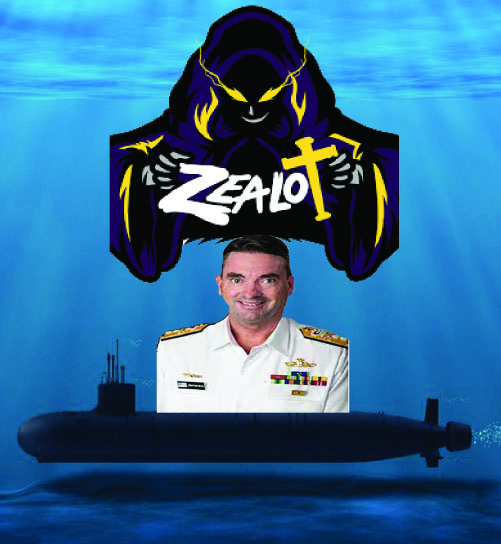
Sammut had no knowledge of the other project, led by one-time clearance diver Rear-Admiral Jonathan Mead, who was pursuing the idea of nuclear-powered subs with the Americans and the British.
The two were kept in strict separation. Both reported to defence secretary Greg Moriarty and the Chief of the Defence Force, General Angus Campbell…………..
Morrison saw an opportunity. US President Joe Biden and British Prime Minister Boris Johnson would be at a G7 summit in the quaint English seaside resort of Carbis Bay in Cornwall in June. Australia, not a member of the G7, was invited as a guest, along with India and South Korea.
Morrison used the meeting of 10 democracies to highlight the China threat………..
Morrison organised a smaller meeting with Biden and Johnson to drive his submarine ambition. Biden and Johnson had been briefed.
Morrison pitched two ideas. One was the request for the two countries to help Australia get nuclear-propelled subs. The other was a wider project for the three nations to develop other, cutting-edge technologies crucial to future warfare, such as quantum computing, artificial intelligence and other undersea capabilities…..
Morrison wanted a commitment; he didn’t get it. Biden’s big concerns remained. He said that he needed to be satisfied that the three countries would meet their obligations under the Nuclear Non-Proliferation Treaty. He wanted more work done on this in the White House.
The British were keen to proceed. Johnson even told Morrison that the UK would be prepared to build nuclear-propelled subs for Australia….. Johnson also saw it as an opportunity for British industry.
Morrison started to think of a British sub – smaller than the American nuclear-powered subs (SSNs) – as the working model for Australia’s fleet………
But the nuclear-propulsion technology was American and veto power rested with Washington…………
After Carbis Bay, Morrison had a dinner date with Macron at the Elysee Palace in Paris. ……… he might have been honest, but not fully so…………….. He left open the prospect of walking away. Deliberately.
That gate was three months away. Morrison pushed hard to get the assurances Biden needed. He had a vital friend at court: Kurt Campbell, the White House’s Indo-Pacific Co-ordinator and the man the Lowy Institute’s head, Michael Fullilove, calls “Mr Australia in Washington”.
Agreement had to be reached between the three countries, but, just as importantly, within the US group. The director of the US Naval Nuclear Propulsion Program, Admiral Frank Caldwell, custodian of the late Hyman Rickover’s crown jewels, had to be thoroughly satisfied. It took four consecutive full-day sessions to complete the work.
The nuclear Navy, once committed, committed fully………
Each government sent a team of 15 to 20 people drawn from multiple agencies. They were told to set aside eight to 10 business days.
Secrecy was paramount. The naval officers, led by Mead in Australia’s case, were told to wear civilian clothes so as not to draw attention to themselves in the streets of Washington.
………..They met at the Pentagon in August………………
The delegations initially sat in national groups around the room, co-chaired by Campbell, Mead and Vanessa Nicholls, the British government’s Director General Nuclear.
One by one, Biden’s four big concerns were met. Experts on the Nuclear Non-Proliferation Treaty were consulted. They agreed that if the reactors on the submarines were run as sealed units, installed and later removed by the US or UK at the end of their 30-year life, then the treaty would not be breached. Australia may have use of, but not access to, the nuclear technology and materials. “The Australians will never have to handle any of this material, it can’t be lost or stolen,” a US official explained…………..
The second concern was China’s reaction. “We assessed with our intelligence community that blowback from China would be manageable,” says a White House official……..
Third was Australia’s capacity. There were questions about Australia’s ability to recruit, train and retain the talent needed to maintain SSNs. However, the Americans’ biggest reservations were over Australia’s finances and politics.
The US wanted to avoid being entangled in any local budgetary disasters. A preliminary guess at the price of acquiring the nuclear subs ranges from $116 billion to $171 billion, including anticipated inflation, according to the Australian Strategic Policy Institute. Incidental extras would include the $10 billion cost of a new subs base on the east coast, as flagged by Morrison in March. The cost of training, crewing, operating and maintaining the boats would not be small
………. Ultimately, Washington decided that Australia could manage the cost, but it was an act of faith in Australia’s future economic strength.
Of the hot potatoes tossed around by the US administration, Australia’s political commitment was the hottest of all. The Americans had tested their own political support. The White House confidentially consulted Trump-aligned Republican senators. They found them supportive, even enthusiastic.
But Biden’s people had reservations about Australia’s political stability. There were concerns about the Labor Party, about the churn of prime ministers in both parties in the last decade, and about the Coalition’s serial dumping of submarine agreements, first with Japan and now with France.
The cone of silence prevented direct US contact with Labor. They called on a National Security Council staffer who’d been posted to Australia, Edgard Kagan, for his view. He consulted the US embassy in Canberra and observed that the Australian government seemed confident that Labor would support such a deal when they were eventually informed.
The Americans could see that if Labor baulked, Morrison would use it as a wedge against opposition leader Anthony Albanese in the approach to an election, to frame him as weak on national security……………
That just left Paris. The White House had pressed the Australians on the need to consult closely with the French. To satisfy the Americans, Canberra went so far as to give the NSC a list of all dealings the Australian government had had with the French on the submarines.
In the end, France’s Naval Group gave Morrison no excuse for detonating the deal. It delivered all its contracted work on time. Australia’s Admiral “Greg Sammut reported that we’d received the report from the French and it met our requirements,” a department official said. “The reply was, ‘very good, the government will be advised’.”
……….. Macron felt set up nonetheless. Payne and new Defence Minister Peter Dutton had met their French counterparts just two weeks earlier and given no sign of what was to come. Admiral Morio de l’Isle had been in Canberra just a week earlier to make sure that Naval Group was delivering as agreed, and the Australians had certified that they were. It was scant comfort that Moriarty confirmed that “the program was terminated for convenience, not for fault”.
It was a harsh blow to French pride and to Macron personally. He felt the US had connived with Australia against France. He withdrew his ambassadors from both countries in protest. When this masthead’s then Europe correspondent Bevan Shields asked Macron if he thought Morrison had lied to him, the French leader replied: “I don’t think, I know.”
In the White House, everyone who’d worked on the deal felt let down by the Australians. Biden felt blindsided. He mollified Macron. It was “clumsy, it was not done with a lot of grace,” Biden said. “I was under the impression that France had been informed long before that the [French] deal was not going through.”
Macron relented with the Americans. Morrison could not bring himself to show remorse. Macron has not yet forgiven him……. https://www.smh.com.au/national/aukus-fallout-double-dealing-and-deception-came-at-a-diplomatic-cost-20220513-p5al95.html
DEMOCRACY IN DANGER — Declassified Australia

Upon leaving parliament, former Liberal party Defence Minister Christopher Pyne was immediately employed with corporate consultants EY Defence (Ernst & Young) to help them grow their defence business, and Adelaide-based arms industry lobbyists GC Advisory.
Brendan Nelson, former Liberal Party leader, Defence Minister, and director of the Australian War Memorial, is now president of Boeing Australia, New Zealand and South Pacific, a top five contractor to Defence. Nelson is also on the board of defence advisory and weapons lobbyist Australian Strategic Policy Institute (ASPI).
Former Labor senator and chair of the Joint Standing Committee on Foreign Affairs, Defence and Trade, Stephen Loosley joined the board of French arms multinational Thales Australia.
Former Liberal defence minister Robert Hill is on the board of German weapons-maker Rheinmetall’s Australian subsidiary, which is supplying Defence’s $5 billion of Boxer combat reconnaissance vehicles.
Former Labor defence minister and Labor leader Kim ‘Bomber’ Beazley joined the board of Lockheed Martin Australia and was the chair of EY Defence lobby group
State capture’ by private interests explains why, no matter which major party forms government in Australia, powerful and well-connected industries always seem to win.
FELICITY RUBY and SCOTT LUDLAM16 MAY 2022 ‘State capture’ by powerful corporate and political players is a major existential threat to democracy and communities across the world. It is fast becoming […]
DEMOCRACY IN DANGER — Declassified Australia
State capture’ by fossil fuel, defence and other powerful industries is more systematic and entrenched than corruption but falls short of the definition of oligarchy, or corporate dictatorship. It exists in a distinct place in the middle, where private sector actors get hold of democratic levers to shape policy in their interest, no matter the outcome of elections.
The World Bank coined the ‘state capture’ phrase when observing private sector actors in former eastern bloc states shaping policies to serve their narrow interests. The power comes through control over resources, the threat of state violence, or other forms of influence on the judiciary, bureaucracies and government.
In Australia, state capture explains why no matter which major party forms government, powerful industries always seem to win.
Fighting state capture at election time means voting for people who don’t bank cheques from the huge companies, and who are not part of the revolving door between industry and politics.
Opinion polling and the surge in volunteers working to elect independents and Greens indicate that more Australians understand that a big, uncaptured and raucous crossbench can restore some integrity to parliament and fight corporations undermining democracy.
Early in 2022, the Australian Democracy Network published a report titled ‘Confronting State Capture’ which outlined six channels of state capture: financial, lobbying, revolving doors, institutional repurposing, research and policymaking, and public influence campaigns.
The foundation of state capture is money: using it to fund political parties, buy access to decision makers and wage third party attack campaigns. Lobbying is then used to build relationships, either through consultancies, direct CEO-Minister contact, or peak bodies.
Revolving doors, the great merry-go-round or golden escalator, sees people working as Ministers or advisers one day and company directors or lobbyists the next, providing familiarity with process and people in decision making roles.
The mostly observable work of policy and research involves the think tanks, the ‘Big 4’ professional services consultancies, and industry peak bodies. They allow these companies to cover every Senate inquiry, every piece of legislation, and infiltrate every regulatory body – unlike affected populations, community groups or social movements.
Institutional repurposing occurs when public authorities like the CSIRO or Bureau of Meteorology, or environmental protection authorities or universities are hollowed out through placing industry people on the board, changing underpinning legislation, gradually diverting them from the public interest to serving private industry. Finally, there are the public influence campaigns that are run on traditional media platforms and social media.
Revolving doors and golden escalators
When senior public officials and politicians ‘retire’ from public service and move into lobbyist roles in industry, they take with them an extensive contact network, deep institutional knowledge, and rare and privileged personal access to people at the highest levels of government.
Their presence in the private sector entrenches the influence of industry over policymaking and government procurement decisions – decisions that should be entirely unmoved by commercial imperatives.
The ministerial code supposedly requires ministers to not lobby government for industries connected to their portfolio for a period of 18 months, and yet some politicians don’t even wait before they have left office.
In defence of the realm
- Former Liberal Trade and Investment Minister Andrew Robb on the day before his resignation, took up a job with Chinese-owned developer Landbridge, the leaseholder of the strategically important Port of Darwin.
- Upon leaving parliament, former Liberal party Defence Minister Christopher Pyne was immediately employed with corporate consultants EY Defence (Ernst & Young) to help them grow their defence business, and Adelaide-based arms industry lobbyists GC Advisory.
- Former Liberal Foreign Affairs Minister Julie Bishop overseeing the Australian Aid agency, became a director with private aid contractor Palladium.
- Labor MP Mike Kelly went in 2020 directly from the powerful Parliamentary Joint Committee on Intelligence and Security into the arms of Palantir, a creepy US global surveillance consultancy.
- Brendan Nelson, former Liberal Party leader, Defence Minister, and director of the Australian War Memorial, is now president of Boeing Australia, New Zealand and South Pacific, a top five contractor to Defence. Nelson is also on the board of defence advisory and weapons lobbyist Australian Strategic Policy Institute (ASPI).
- The former Labor defence minister Stephen Smith, chairs the Perth-based cybersecurity company Sapien Cyber.
- Former Labor senator and chair of the Joint Standing Committee on Foreign Affairs, Defence and Trade, Stephen Loosley joined the board of French arms multinational Thales Australia.
- Former Liberal defence minister Robert Hill is on the board of German weapons-maker Rheinmetall’s Australian subsidiary, which is supplying Defence’s $5 billion of Boxer combat reconnaissance vehicles.
- Former Labor defence minister and Labor leader Kim ‘Bomber’ Beazley joined the board of Lockheed Martin Australia and was the chair of EY Defence lobby group.
- Former Foreign Minister Alexander Downer had been closely involved in negotiations on the Timor Sea boundary, to the ultimate advantage of Woodside Petroleum. As an ex-MP, he established a political advisory consultancy, Bespoke Approach, which was contracted by Woodside to lobby the East Timorese government to accept the basing of Timor’s LNG processing in Darwin rather than in Timor. Downer’s former departmental head also retired and joined the board of Woodside.
It’s not just ministers who seem to struggle on the Commonwealth pension, but also senior military and intelligence heads who pick up work with their former clients.
Former Chief of the Defence Force Mark Binskin, exactly a year after he retired as Defence Force Chief, was appointed as ‘non-executive director, defence and national security policy’ at BAE Systems Australia, one of Australia’s top three defence contractors. BAE Systems is in the running to provide Australia’s planned nuclear-powered submarines under the AUKUS military pact.
- Five months after leaving his post as ASIO chief, Duncan Lewis joined the Australian board of Thales, a French arms and security multinational and a top three Australian defence contractor.
- Former defence secretary, head of the Office of National Intelligence (ONI) and director general of the Australian Secret Intelligence Service (ASIS), Nick Warner, joined the board of defence lobbying firm Dragoman Global, whose clients include French submarine company, Naval Group Australia.
- Former defence secretary and ASIO boss, Dennis Richardson, joined the board of Vault Cloud, which provides high-security cloud infrastructure for government and critical industries.
- Former chief of army, Lt Gen Ken Gillespie, chairperson of ASPI’s council, has joined the boards of Naval Group Australia and cybersecurity firm Senetas Corporation.
- Retired Air Vice-Marshal Margaret Staib joined the board of QinetiQ, a British defence multinational that is deeply embedded with Defence’s weapons arm, Defence Science and Technology.
- Former defence secretary Allan Hawke joined the Lockheed Martin Australia board as well as the military advisory and lobbyist group, ASPI.
- Chief of Army Peter Leahy soon joined the boards of Codan, manufacturer of military communications equipment, and Electro Optic Systems, manufacturer of machine guns exported to UAE and Saudi Arabia, both at war against Yemen.
Fossil fuelled influence
key weakness in the Lobbying Code is that it only applies to ministers, and has no application to senior public servants, nor to MPs who have spent years on relevant committees.
While the defence and intelligence industries are renowned for making astute appointments of former ministers and senior bureaucrats, the fossil-fuel industries are also keen to exchange personnel with governments to share the knowledge and contacts that secure their deep influence…………………………..
The use of ‘institutional repurposing’
One of the most threatening aspects of state capture is the manipulation or ‘repurposing’ of government agencies set up to serve the public interest, through a process of board appointments, legislative amendments or cultural drift.
The Australian Renewable Energy Agency (ARENA) and the Clean Energy Finance Corporation (CEFC) have been persistent targets for repurposing by fossil industries……………….
Radioactive: Inside the top-secret AUKUS nuclear submarines deal
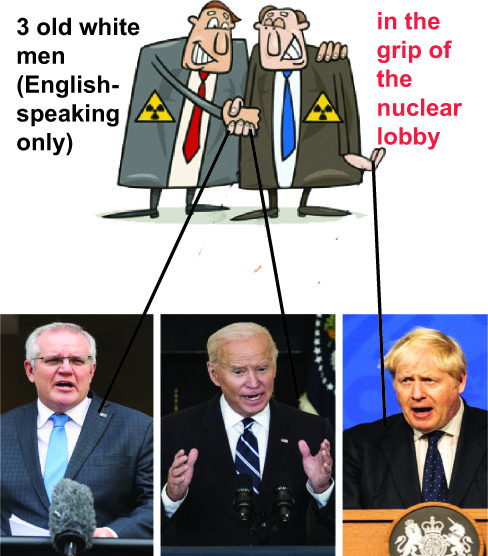
A nuclear subs deal would lock Australia more tightly into the US bloc.
. Shearer managed to sidestep the Russian roulette of Australia’s vaccine rollout with the help of doctors at the Department of Foreign Affairs and Trade.……….
My sources didn’t put it quite this bluntly, but everyone in the room understood that this was about Australia acquiring the power to pose a direct threat to China’s forces and the Chinese mainland.
Campbell made a crucial choice by appointing Rear Admiral Jonathan Mead…...
…
Secret meetings and subterfuge over many months shored up Australia’s “40-year fantasy” of a mighty nuclear marriage with the US and the UK.
SMH, By Peter Hartcher MAY 14, 2022 When Joe Biden was first briefed on Australia’s request for nuclear-powered submarines, he did not say “yes”. He was cautious, even sceptical. Among his doubts was whether Australia was up to it………….
The Australians were asking for the crown jewels in the national security vault. one of America’s remaining decisive advantages over China. The US had shared its nuclear sub secrets with only one nation, Britain, in 1958. Much had changed since.
The transformational power of nuclear-propelled subs is that they could allow Australia to pose a direct threat to the Chinese mainland. For the first time. It had come to that.
With unlimited range because they never need to refuel, and with vertical launch tubes for firing missiles, a nuclear-propelled submarine could stand off China’s coast and threaten it with cruise missiles.
Australia’s existing fleet of submarines, the six diesel-powered Collins class, is equipped with torpedo tubes only. Which means it can fire torpedoes at targets in the water but not missiles at targets on land.
But it had been a 40-year fantasy of Australian governments to get American nuclear propulsion. Canberra had been turned down every time. Indeed, no earlier request had even reached the president’s desk. The US Nuclear Navy, guardians of the technology, had ruled it out of the question.
Now the Australian appeal had the president’s full attention. The briefing paper in front of him ran through the positives and negatives of such an arrangement –it did not contain a recommendation.
On the positive side of the ledger, the top consideration was that it would help counter China. The People’s Liberation Army Navy has the advantage over the US in warfighting on and above the ocean. Arming an ally with nuclear-powered subs would help blunt China’s edge.
Nuclear-propelled submarines “are fast, they have stamina, they bring a whole spectrum of weapons, and if you are China, how are Australian and US forces working together?” poses the former chief of US Naval Operations, retired Admiral Jonathan Greenert.
“You don’t know their sovereign decisions. Your imagination is your biggest nightmare – what could they be doing? They can reposition fast, 25 knots [46km/h] for a full day. If an adversary says, ‘I’ve got a detection of a nuclear sub’, great – when? Two days ago. Then you draw a circle on the map and see where it might be. It’s a big circle.”
The US today has 68 submarines, all nuclear-powered. China has an estimated 76 subs, of which 12 are nuclear-powered. But the US fleet is shrinking as it retires older subs faster than it can build new ones. China’s nuclear-powered fleet is expanding. The AUKUS agreement aims to help Australia acquire eight.
Second, it would cement the alliance with Australia. Just a few years earlier, many in the US foreign policy community including Campbell had tipped Australia to be the ally most vulnerable to China’s influence, that it would “flip” and align with Beijing.
Instead, Australia had “set an incredibly powerful example” for the world in standing up to China, as Secretary of State Antony Blinken said in an interview this year. A nuclear subs deal would lock Australia more tightly into the US bloc.
Third, it would help the US to deter China’s expansion through the Indo-Pacific. It would signal US commitment to the region and to US allies, reassuring other Indo-Pacific nations who might be doubting American staying power. “The president said, ‘this could be quite powerful’,” according to an official who was present.
But on the other side of the ledger, Biden himself raised four big concerns with the Australian request. First was nuclear proliferation. Since the deal with Britain in 1958, Washington, London and Canberra, among others, had signed the Nuclear Non-Proliferation Treaty. If we give the Australians this technology, won’t we be in breach of the treaty, Biden wanted to know?
Second was the response from China. How will Beijing react if we agree to this? Will it provoke Xi Jinping into accelerating his own naval build-up, into getting more aggressive?
Third was Australia’s capability. Would the Australian political system be capable of bipartisan commitment for the decades required? Is Australian politics stable enough? Could Australia afford the price tag?
Fourth, would the US Nuclear Navy be prepared to deliver? This had been the obstacle to every other Australian inquiry. This elite priesthood is the guardian of the fast, stealthy, underwater Doomsday machines that are America’s last line of defence.
America’s nuclear warfighting is structured on a “triad” – ground-based, airborne and undersea forces. The ground-based and airborne forces are the most vulnerable to enemy attack. But even if these are destroyed in a surprise first strike by an enemy, its nuclear-powered, nuclear-armed subs are designed to survive, undetected in the dark depths, to deliver annihilation to the enemy. By guaranteeing “second strike” capability, they deter any adversary from even thinking about launching a first.
Australia was not asking for nuclear weapons; it was content to arm its subs with conventional missiles. And Canberra was not so much concerned about nuclear Armageddon. Australia has entrusted that responsibility to the US, sheltering under America’s nuclear “umbrella”. Australia was feeling threatened by China and wanted the capacity to threaten it in return.
As the discussion around the White House table unfolded last year, other concerns emerged. The group included Secretary of State Blinken, Defence Secretary Lloyd Austin, National Security Adviser Jake Sullivan, and the chairman of the Joint Chiefs, General Mark Milley.
What if we attempt this three-way agreement with Australia and Britain and it fails? The credibility of all three nations would be damaged. Have the Australians consulted fully with the French about their contract? Do we risk alienating one ally to gratify another?
The meeting broke up without a decision and with big questions needing to be answered. In the meantime, Australia had a contract with Paris – and French President Emmanuel Macron was deeply invested in it………..
In France, national pride and national honour were engaged, not to mention French economics – it was the biggest defence export contract France had signed, and the biggest Australian acquisition. The contract value was $50 billion but adjustments for inflation and extras took the total deal to at least $90 billion.
………………………………… Towards the end of 2019, Morrison started to ask his closest advisers about fallback options, including nuclear-propelled ones. They told him of the joyless history of Australian requests for nuclear propulsion and that the likelihood of getting the technology from the US or Britain was “very, very low”. And they warned him that Australia would need a civil nuclear industry. Without one, it couldn’t maintain the nuclear reactors that drive the boats. On March 19, 2020, two months after the Audit Office report, the prime minister took the first formal step towards exploring contingencies.
……. Secretly, he asked the secretary of the Defence Department, Greg Moriarty, for a discussion paper about all the options, including nuclear-propelled ones. He had the result within a fortnight……
Morrison decided to take the next step regardless. In May, 2020, he asked Moriarty and the military co-leader of the Defence Department, Chief of the Defence Force, General Angus Campbell, to form a small, expert group to see whether it was feasible for Australia to acquire and operate nuclear-powered subs. The top-secret exercise was led by the Chief of Navy, Vice Admiral Michael Noonan.
It came back with the conclusion that it was potentially feasible, but on two conditions. One, it was only possible with the help of the US, Britain or both. This was the only way Australia could operate nuclear-powered subs without setting up a civil nuclear industry to support them.
America and Britain use highly enriched, weapons-grade uranium to run their subs’ reactors. That means the reactors don’t need refuelling for the life of the boat itself, some 30 years.
Two, the same consideration ruled out the French nuclear-propelled sub, the big Barracudas Macron had launched so proudly, as an option. The French use low-enriched uranium, meaning their reactors need to be refuelled every decade or so in a lengthy process called full-cycle docking. This would keep the Australian fleet permanently dependent on Paris.
Moriarty’s opinion was that this would not be a sovereign Australian capability. Unless Australia started its own civil nuclear industry to refuel and maintain the reactors, something which Morrison would not countenance.
Tantalised, Morrison immediately asked Defence to contact the Pentagon to test its assumptions. Through a series of secure video conferences between the Pentagon and Defence’s headquarters on Russell Hill, the US Navy gave a guarded endorsement, summarised by an Australian official: “There’s nothing in your thinking that’s completely implausible”. But there was no enthusiasm from the Americans and certainly no commitment to help.
For the prime minister, this was a “game changer” nonetheless, as he’s described it to colleagues. The revelation: It was possible to have a nuclear-powered attack submarine, or SSN as navies call it, without needing to service the reactor.
To now, Morrison had briefed only two members of his cabinet, Linda Reynolds and the Foreign Affairs Minister, Marise Payne. But now that he envisaged raising the idea with the American president and British Prime Minister Boris Johnson, he decided to widen the circle.
When he briefed Treasurer Josh Frydenberg, he met an enthusiastic response. He remarked that the politics in the three capitals of Washington, London and Canberra seemed to be in alignment. “You could never do this deal with (the former leader of British Labour) Jeremy Corbyn,” said Frydenberg. “When a gate like this opens, you go through it.”
But what of the multibillion-dollar cost of cancelling the French deal and the far greater cost of building SSNs? “Everything is affordable if it’s a priority,” was the treasurer’s attitude. “This is a priority.”
Morrison then took it to the National Security Committee of his cabinet. This is the overarching mechanism for co-ordinating defence and security and includes top officials and ministers responsible for defence, foreign affairs, home affairs and intelligence. It gave Morrison the green light to take it further. “It was a high level of secrecy because there was no guarantee we could pull it off,” Morrison told colleagues. He didn’t want to disrupt progress with the French toward a conventional sub in case he failed with the Anglo American nuclear option, and end up with neither.
Morrison kept it so tight that the PM’s personal permission was required before any official could be brought into the charmed circle, a top civil servant explained. “So if anything leaked, you knew you’d be personally accountable to the PM himself,” said the official.
…………. Australia then, and now, had no long-range strike capability whatsoever. None on land, none in the air force, none in the navy. The ADF was set up for counterinsurgency wars as part of a US alliance like those in Afghanistan and Iraq, and low-level conflict in the Pacific Islands like the missions in East Timor and the Solomons, but was unprepared for high-intensity warfighting with a capable nation state.
Reynolds tasked the Capability Enhancement Review with recommending the strike power Australia needed. One part was to be the nuclear subs project. Campbell made a crucial choice by appointing Rear Admiral Jonathan Mead………
Eventually, the moment arrived for Australia’s first approach to the Biden White House. ……
In May 2021, the moment came. The director-general of Australia’s peak intelligence assessment agency, the Office of National Intelligence, Andrew Shearer, was planning a routine visit to Washington to consult with his US counterparts. He’d been briefed on the nuclear subs project. Would you like me to broach it with the White House, he asked the prime minister? Morrison agreed. Shearer managed to sidestep the Russian roulette of Australia’s vaccine rollout with the help of doctors at the Department of Foreign Affairs and Trade………..
Shearer and Campbell had known each other for decades. He explained what Australia wanted. “As China’s capability advances, we need to have submarines capable of meeting it. We need to be able to operate without the risk of easy detection by the Chinese,” Shearer said, according to the participants.
………….. My sources didn’t put it quite this bluntly, but everyone in the room understood that this was about Australia acquiring the power to pose a direct threat to China’s forces and the Chinese mainland.
Sullivan and Campbell immediately were interested. Biden has described the US rivalry with China as “the competition for the 21st century”. With this request, Australia was choosing sides emphatically.
…………… Shearer emphasised that Australia had no intention of developing a civil nuclear industry or developing nuclear weapons. He said that Canberra was satisfied it could operate the subs while preserving Australia’s strong record on nuclear non-proliferation.
Sullivan and Campbell had lots of questions about Australian technological, personnel and financial capacity but the potential killer at this threshold meeting was Australian politics. “We asked lots of questions about politics,” said Campbell. “Would this be contentious? Would this hold?”
Bipartisan political commitment, Labor and Liberal, was a prerequisite, the Americans said. “This would be a military marriage. It would have to hold over decades.”
…………. when Shearer returned to Canberra he made clear to Morrison and his other colleagues that the White House had set political bipartisanship as a non-negotiable condition. “If Albo says ‘no’, the deal will be dead,” as Australia’s ambassador to Washington, Arthur Sinodinos, put it to colleagues.
…….. the prime minister decided not to brief Labor leader Anthony Albanese for five months. He briefed him on the day before the deal was to be announced in a three-way piece of theatre with Morrison, Prime Minister Johnson and President Biden. It was high stakes on a very tight deadline.
This is part one of a two-part series by Peter Hartcher examining the AUKUS deal. The series concludes on Sunday, May 15. https://www.smh.com.au/politics/federal/radioactive-inside-the-top-secret-aukus-subs-deal-20220510-p5ak7g.html
Biden demanded bipartisan support before signing AUKUS. Labor was not told for months
By Peter Hartcher, May 14, 2022 The Biden administration insisted from the outset that it would only consider pursuing the landmark AUKUS project if it had solid support from both major Australian political parties, yet Prime Minister Scott Morrison chose not to consult Labor until the day before its announcement.
By waiting four-and-a-half months, the prime minister made AUKUS into a high-stakes, last-minute political gambit.
And, when Morrison later challenged Labor publicly over whether it fully supported the deal, he seemed to be looking for a way to politicise the security partnership.
White House officials emphasised the point as a deal-breaker in the very first discussion on Australia’s request for nuclear-propelled submarines.
The prime minister sent a special emissary, Australia’s spy chief Andrew Shearer, to broach the topic with two senior officials, US National Security Adviser Jake Sullivan and the White House US Indo-Pacific Co-Ordinator, Kurt Campbell on May 1 last year………….
The Democratic White House were frustrated at the lack of clarity from Australia. They called on a special assistant to the President who had been posted to Australia, Edgard Kagan, for his view.
They called on a special assistant to the President who had been posted to Australia, Edgard Kagan, for his view.
He observed that the Australian government seemed confident that Labor would support such a deal when they were eventually informed.
The Americans could see that if Labor baulked, Morrison would use it as a wedge against Opposition Leader Anthony Albanese in the approach to an election.
They would frame him as weak on national security.,……………………….. https://www.smh.com.au/national/biden-demanded-bipartisan-support-before-signing-aukus-labor-was-not-told-for-months-20220513-p5al9d.html—
1 This month
Chernobyl: The Lost Tapes – A good documentary on Chernobyl on SBS available On Demand for the next 3 weeks– https://www.sbs.com.au/ondemand/tv-program/chernobyl-the-lost-tapes/2352741955560
15 April – Zoom –Nuclear Power is Not the Solution
Apr 15, 2026 01:00 AM in Canberra, Melbourne, Sydney

Join the International Physicians for the Prevention of Nuclear War (IPPNW) on Tuesday, April 14th for a timely webinar exploring the risks associated with nuclear power and challenging the myth that it offers a simple, safe, carbon-free solution to the climate crisis

21 April Webinar: No Nuclear Weapons in Australia
Start: 2026-04-21 18:00:00 UTC Canberra, Melbourne, Sydney (GMT+10:00)
End: 2026-04-21 19:30:00 UTC Canberra, Melbourne, Sydney (GMT+10:00)
Event Type: Virtual
A virtual link will be communicated before the event.
Host Contact Info: australia@icanw.org

of the week – Australians for War Powers Reform (AWPR)
To see nuclear-related stories in greater depth and intensity
 Antinuclear