Australia’s Energy Minister rejects nuclear power push
Hawkesbury Gazette By Paul Osborne and Dominic Giannini June 9 2022
Energy Minister Chris Bowen has attacked the Nationals for suggesting nuclear power be considered in Australia’s energy mix, saying the party had no credibility after nine years in government.
Mr Bowen says nuclear would be the most expensive form of energy when Australians are already facing rising costs and inflationary pressures.
“Seriously? Nine years in office and then coming up with bright ideas on the other side of the election is point one. No credibility,” he said on Thursday.
“Nuclear is the most expensive form of energy. We have a cost of living crisis, energy prices going through the roof and what’s their big bright idea? Let’s have the most expensive form of energy we can possibly think of.”
………………….. Labor has rejected the technology as too expensive and not a serious solution to reducing power costs or cutting emissions. https://www.hawkesburygazette.com.au/story/7773300/energy-minister-rejects-nuclear-power-push/
Disgraced Victorian Liberal MP Tim Smith – quitting politics – backs Dutton’s call for nuclear power
Smith backs Dutton’s nuclear push as colleagues dodge debate, By Annika Smethurst, The Age June 12, 2022 Victorian Coalition leaders won’t endorse calls from their federal counterparts to consider nuclear energy generation, despite the plan having the support of several state MPs.
Following the federal election loss, newly installed Liberal leader Peter Dutton and Nationals leader David Littleproud have both hinted that nuclear energy could be part of the Coalition’s future policy platform…………….
While nuclear power has some support among Victorian Coalition MPs, the state opposition has attempted to distance itself from the federal push, repeatedly refusing to endorse or reject nuclear energy when approached by The Age.
In response to individual questions on the policy, Opposition Leader Matthew Guy, Victorian Nationals’ leader Peter Walsh and shadow minister for energy and renewables Craig Ondarchie issued a joint statement claiming nuclear energy in Australia is regulated by the Commonwealth, and therefore not a state issue.
“As such any move would need to be taken at a federal level,” the Coalition spokesman said.
The statement was slammed by outgoing Liberal MP and former shadow attorney-general Tim Smith, who said: “Any serious opposition or government must at the very least put nuclear energy on the table.”
There is currently a federal ban prohibiting the use of nuclear materials for energy production, while Victorian legislation prohibits uranium and thorium mining and exploration………………………..
Another backbencher told The Age there should be an open conversation about the use of nuclear technologies given soaring energy costs.
Smith, who is quitting politics in November after crashing his car while drink-driving last year, agreed, saying the federal debate was both “timely and welcome” given the state’s baseload energy requirements…………………… https://www.theage.com.au/national/victoria/smith-backs-dutton-s-nuclear-push-as-colleagues-dodge-debate-20220612-p5at31.html
Another episode in the unlawful spying and harassment of Julian Assange and his legal team, by the UK and USA governments
Julian Assange’s Australian lawyer who counts Amal Clooney and Amber Heard as friends says she has reached settlement with government ‘over breach of her human rights after it admitted she was likely put under covert surveillance’
- Jennifer Robinson has reached settlement with Government over surveillance
- She said it accepted covert surveillance of her ‘likely breached her human rights’
- She was one of the three lead claimants in a complaint against the Government
- She said it raises ‘grave concerns’ over interference with ‘journalistic material
By JESSICA WARREN FOR MAILONLINE, DAILY MAIL, 10 June 2022
One of WikiLeaks founder Julian Assange‘s lawyers has reached a settlement with the Government after it accepted it was likely she was the subject of ‘covert surveillance which breached her human rights’, she said.
Jennifer Robinson welcomed a statement by the European Court of Human Rights which she said meant the UK Government has ‘accepted her rights were breached by surveillance’.
She was one of the three lead claimants in a complaint against the UK Government which went to the court.
Ms Robinson said the UK Government has reached a ‘friendly settlement’, admitting there was reasonable cause to believe she was the subject of surveillance.
She said: ‘The UK Government has now admitted that its surveillance and information-sharing arrangements with the US violated my rights. That includes in relation to the protection of confidential journalistic material.
‘This follows a pattern of unlawful spying on Julian Assange and his legal team, and it raises grave concerns about government interference with journalistic material and privilege.
‘It also raises serious questions about what information the UK and US governments have been sharing about Mr Assange’s case against extradition to the US.’
The development came as Mr Assange awaits a decision by Home Secretary Priti Patel on whether he should be extradited to the United States.
Ms Robinson, who works from the respected Doughty Chambers in London, has represented Assange for some 12 years.
She is the go-to barrister for the rich and famous, and counts the Hollywood elite among her inner circle, travelling to George and Amal Clooney’s wedding on a speedboat with actor Bill Murray.
In 2019, she was named international pro bono barrister of the year and prior to lockdown, was pictured at events with Prince Charles and Cherie Blair.
She has also appeared on BBC Question Time and supported Amber Heard during the Johnny Depp’s libel case against The Sun newspaper in 2020…………………. https://www.dailymail.co.uk/news/article-10901023/Julian-Assanges-lawyer-reached-settlement-government-breach-human-rights.html
Peter Dutton’s claim he planned to buy US nuclear subs is ‘political point-scoring’, defence experts say
These are sensitive negotiations and I think the great concern here is that Peter Dutton has basically worked against the national interest in an attempt for some domestic political point-scoring.”
Liberal leader is in damage control after his comments raised eyebrows, one analyst saying ‘there’s no way this is a plan’ Guardian. Paul Karp @Paul_Karp Fri 10 Jun 2022
Experts are critical of Peter Dutton’s claim he planned to buy two US nuclear submarines to plug a looming capability gap, as the Liberal leader goes into damage control over the disclosure.
Dutton has been accused of “political point-scoring” and being “unhelpful” in a campaign to pressure Labor’s Richard Marles to rule out other options to plug the gap between the retirement of Collins class submarines and Australia’s plan to build a nuclear fleet.
On Thursday Dutton, the former defence minister, revealed a plan he devised before the election to buy two Virginia-class submarines by 2030, claiming he had “formed a judgment the Americans would have facilitated exactly that”.
The comments raised eyebrows, both because Australia had not formally decided whether to opt for US or UK nuclear submarines and because experts have suggested it is unlikely the US would give up two of its own submarines by 2030.
Marles labelled the intervention “rank politics” and “completely inconsistent with everything Peter Dutton was doing and saying in government”…………….
Marcus Hellyer, a senior analyst at the Australian Strategic Policy Institute, told Guardian Australia Dutton had “put out an idea or concept”.
There’s no way this is a plan, it hasn’t been agreed by the US government, nor Australia, nobody has actually agreed to it.”
“If it were a plan it would be a pretty serious kind of breach or leak [to disclose it].”…….,
“No boats are available before 2030 unless the US gives up its own – that would be quite remarkable – the US has been clear there is no way they can build additional submarines.”
The chair of defence studies at the University of Western Australia, Dr Peter Dean, also expressed concerns about Dutton’s intervention.
“I’m sure that the UK wouldn’t be happy to learn from a newspaper article that, potentially, their submarine is not an option and I’m sure there’s plenty of people in the US Congress, the Pentagon and other parts of the US who were very interested to read these possible developments,” Dean reportedly told the ABC
These are sensitive negotiations and I think the great concern here is that Peter Dutton has basically worked against the national interest in an attempt for some domestic political point-scoring.”……………. https://www.theguardian.com/australia-news/2022/jun/10/peter-duttons-claim-he-planned-to-buy-us-nuclear-subs-political-point-scoring-defence-experts-say
Kerry Schott: why new coal or nuclear plants are a dumb idea
Mark Ludlow AFR, 7 June 22, ”…………………………………………It seems whenever there is an energy crunch or crisis, supporters of a nuclear industry say it would be the solution to Australia’s energy woes? Do you think nuclear will ever be an option in Australia?
My view of it, at the moment, is it’s a price thing. The last plant the English built cost an enormous amount of money. It’s much more expensive than coal.
It’s the cost of building the plant and dealing with the waste. Once up and running it’s not too bad, but the capital costs and the operating cost of dealing with the radioactive waste is a problem.
If you’re in the UK or France you have a population of 50 million. We don’t have that many people.
And the small-size modular plants they talk about are not being built because they are expensive.
Having gas as a standby is far cheaper. And nuclear, like coal, has to run all the time.
You still have the problem that it’s producing radioactive waste and not being dispatched.
Any other solutions to smooth out the bumps in the transition to a low-emissions economy?
The other thing we need is more transmission. To get prices down you need more zero-cost power, which is the wind and the sun. So, you need more of that in and need more transition.
Yes, there is a cost of transmission, but it’s bringing in many gigawatts of renewable energy at zero cost. So net-net, it’s a benefit.
The danger of building too much transmission is very slim because it takes ages to build it for starters. If anything, we’re lagging in the race rather than getting ahead of it…………………………… https://www.afr.com/companies/energy/kerry-schott-why-new-coal-or-nuclear-plants-are-a-dumb-idea-20220607-p5arru
Nuclear energy does not stack up economically- Labor Senator Tony Sheldon
Nuclear energy ‘doesn’t stack up’ economically, https://www.skynews.com.au/opinion/chris-kenny/nuclear-energy-doesnt-stack-up-economically/video/3e02c64737aafec67a9c82349c30c4db Labor Senator Tony Sheldon says nuclear energy does not “stack up economically”.
“If it was going to work … the market would be jumping up and down and knocking over our doors right now, right at this minute, to put nuclear energy in place,” he told Sky News Australia.
“The reality is, the energy market itself is saying that is not the best option.
“It is cheaper to have renewables, it’s cheaper to have eventually hydrogen and we have to make sure we have the coal and gas mix.”
Forgotten fuel: Australia’s failure on energy efficiency is a global embarrassment

In Europe, the mantra is “energy efficiency first” and the IEA calls energy efficiency the “first fuel.” In Australia, it is the “forgotten fuel” – to our great cost. The post Forgotten fuel: Australia’s failure on energy efficiency is a global embarrassment appeared first on RenewEconomy.
Forgotten fuel: Australia’s failure on energy efficiency is a global embarrassment — RenewEconomy
Assange is still in jail – what can the new government do?
https://michaelwest.com.au/assange-is-still-in-jail-what-can-the-new-government-do/ by Greg Barns | Jun 7, 2022
There are signs that Prime Minister Anthony Albanese seems more interested in dealing with the plight of Julian Assange than was the Morrison government. UK Home Secretary Priti Patel has to decide whether or not to sign off on Assange’s extradition to the US by the middle of this month. Albanese must act now, writes Greg Barns.
Julian Assange is an Australian citizen facing over 170 years in a US prison for revealing the truth about US war crimes in Iraq and Afghanistan. His case is important for a number of reasons, including the inhumanity of keeping him locked up in the notorious Belmarsh prison in the UK as his mental and physical health declines. Assange’s case is an attack on freedom of speech. It also represents a dangerous development for citizens, journalists and publishers around the world because the United States is using its domestic laws to snare an individual who has no connection to the jurisdiction. This is the sort of law which Australia has condemned in the context of Beijing imposed laws on Hong Kong.
Tonight, the ABC broadcasts a documentary Ithaka, a film by Julian’s brother Gabriel Shipton which follows their father John Shipton across the world as he campaigns for his son. The broadcast is a milestone in the Australian campaign to free Assange from the shackles that the US and UK have bound him since 2012, when he sought asylum in the Ecuadorean embassy in London, fearing, rightly, that he would extradited to the US.
Anthony Albanese is taking an interest in this case, in contrast to Scott Morrison’s government that showed little interest in pushing Washington on behalf of an Australian citizen facing cruel and unusual punishment in the US It was manifested in an answer he gave last week in a media conference and was confirmed by his Foreign Minister Penny Wong in an interview on the ABC last Friday.
Asked whether he would intervene with the US to save Assange, Albanese replied that his “position is that not all foreign affairs is best done with the loudhailer.” In other words, as one foreign affairs expert told this writer, Albanese is rightly respecting the US-Australia relationship by raising the Assange issue in private with the White House.
Wong’s comments last week should also be seen as a positive sign that, at last, some action will be taken to stand up for freedom of speech by ending the Assange case. Speaking on Radio National last Friday, Wong said:
The Prime Minister has expressed that it’s hard to see what is served by keeping Mr Assange incarcerated and expressed a view that it’s time for the case to be brought to an end.
As former Labor foreign minister Bob Carr has written, it is perfectly legitimate for Australia to ask the US to withdraw its case against Assange. Carr has also pointed to the dangerous precedent set by the case – the extraterritorial reach of the US to seize anyone anywhere in the world who exposes something which embarrasses Washington. On September 8, 2020 Carr told The Sydney Morning Herald:
If America can get away with this — that is digging up an Australian in London and putting him on trial for breaching their laws — why can’t another government do the same thing? For example, an Australian campaigning for human rights in Myanmar, that Australian in theory could be sought by the government of Myanmar and brought back to Myanmar from London and put on trial there for breach of their national security laws.
Ironically the Morrison government opposed the security law that China imposed on Hong Kong in 2020 in part because it includes a provision which catches foreign citizens who criticise Beijing’s rule in Hong Kong.
The case of Assange cannot be allowed to continue. It represents an affront to fundamental democratic values and it shows Washington to be no better than authoritarian regimes that hunt down critics the world over. The early signs are the Albanese government is uncomfortable about the case, which is a welcome development, but there is little time to do so.
Defence faces budget blowout with Aukus nuclear submarines to cost more than scrapped French project

New analysis says ‘megaprojects’ often end up costing more than projected and predicts inflation will impact on defence budgets, Daniel Hurst Foreign affairs and defence correspondent https://www.theguardian.com/australia-news/2022/jun/08/defence-faces-budget-blowout-with-aukus-nuclear-submarines-to-cost-more-than-failed-french-project@danielhurstbne Wed 8 Jun 2022
The Albanese government faces the prospect of a blowout in defence spending, with analysts warning that the nuclear-powered submarines will cost “significantly more” than the cancelled $90bn French project.
A new report has also questioned whether the Australian defence force would be able to meet a target to increase the number of uniformed personnel by 20,000 over the next 20 years, given that it is averaging net annual growth of only 300.
Australia’s total defence funding stood at $48.6bn this financial year, or 2.11% of GDP.
That figure – which included the Department of Defence and the Australian Signals Directorate – worked out to be $133,191,781 a day, according to the Australian Strategic Policy Institute’s annual report on the defence budget.
The report’s author, senior analyst Dr Marcus Hellyer, said there was “no doubt that the ADF was getting better” but he also warned of risks inherent in an acquisition program built around “megaprojects”.
“Such projects take years or decades to design and deliver, while spending huge sums for little benefit in the short term,” Hellyer wrote.
“When they encounter problems, those problems are big.”
The report noted that the now-abandoned French Attack-class submarine program had “cost over $4bn and delivered nothing”, while the Hunter frigate program continued to experience delays “and won’t get a vessel into service for over a decade”.
It said even though the nuclear-powered submarine program envisaged under the Aukus deal had “the potential to deliver a huge step-up in undersea warfare capability”, it was “the mother of all megaprojects” with a risk profile to match.
Continue readingThe Liberal National Coalition’s flirtation with nuclear energy will not be well received by the electorate, especially in Gilmore on the NSW South Coast.
Nuclear option might trigger an electoral meltdown, The Echidna, John Hanscombe, Tuesday June 7, 2022,
The Coalition is flirting with nuclear energy. The public musings started when David Littleproud won the Nationals leadership last week. He said nuclear power was a clean energy option that ought to be discussed. Outgoing Barnaby Joyce echoed the sentiment. Peter Dutton did the same yesterday.
There’s been a chain reaction of sorts in the conservative camp, which is a major turnaround, given it was only last September when Scott Morrison ruled out nuclear energy. His proscription came just after he announced the landmark AUKUS deal with the United Kingdom and the United States to acquire a fleet of nuclear powered submarines………..
As the next election approaches, such talk is likely to become muted or disappear altogether because it will indeed lead to a scare campaign, especially in the ultra marginal seat of Gilmore on the NSW South Coast. Jervis Bay sits in the middle of the electorate and in the 1960s was slated as the site of a nuclear reactor. There was even talk of producing weapons grade plutonium there – of Australia arming itself with nukes. The idea was shelved after Australia signed the Non-Proliferation of Nuclear Weapons Treaty in 1973. A reminder of how close the plans came to fruition can be found at Murrays Beach, where concrete footings for the reactor are still visible under the water. Every time nuclear energy is mentioned by either party, people who love Jervis Bay for its natural beauty go into meltdown. The very idea is toxic.
Talk is cheap when you’re newly in opposition – and likely to remain there for the next six years – but the electorate’s reluctance to embrace nuclear energy will quickly lay the Coalition’s newfound enthusiasm for it to rest…………………………….. for all the buzz around small modular reactors, which are touted as lessening the likelihood of accidents, that technology is still in development. Not even the International Atomic Energy Agency is prepared to say whether it will be cost effective………….. https://view.mc.austcommunitymedia.com.au/?qs=2bef209076d2e92cad0ffbe50cfe6117f6de9b563c7f216a55f25b25a465ef4053920d84e8c319c1ee827faf2abd014eaf6af926304d34acbc4913de77c01ab76b3971c3c352c700fbcb032e2a19e72e
Opposition leader Peter Dutton hints at controversial shift towards nuclear power
New Daily, James Robertson. 6 June22, New Opposition Leader Peter Dutton appears set to bring a debate about nuclear power back to the centre of Australian politics.
Mr Dutton’s shadow front bench, unveiled on Sunday, included two proponents of nuclear energy in key roles:
Ted O’Brien, the spokesman on climate and energy, and Hollie Hughes, the junior spokeswoman on climate.
The appointments signal an intent to take an aggressive tack on emissions as well as Mr Dutton’s seemingly new willingness to flirt with nuclear power as a means of bridging Liberal climate divisions (and perhaps stoking others).
Mr Dutton said on Monday he was “not afraid to have a discussion on nuclear”; it was only a week prior that he declared nuclear energy was “not on the table”.
Mr O’Brien chaired a parliamentary inquiry that recommended provisionally lifting a ban on generating power from nuclear material and considering its future use.
Meanwhile, Senator Hughes also backs dropping the ban.
The regular Sky News panellist told The New Daily on Monday that “we absolutely should be having the discussion”.
The new leader of the Nationals, David Littleproud, is also on board with calls to kickstart a nuclear debate.
Advocacy of nuclear power has advanced much further in that party room; several MPs backed a nuclear push last Parliament.
The balance of opinion among Liberal MPs has been tilted in favour of nuclear power for some time, a party source said, but had been deemed a nonstarter because of deep fears of an electoral backlash.
Former prime minister Scott Morrison noted that a change of direction on an issue needing such long-term investment could only come with bipartisan support…………………………………..https://thenewdaily.com.au/news/politics/2022/06/06/peter-dutton-nuclear-power/
The National Party is getting whackier and whackier in pushing for nuclear power

- Bizarre Simpsons link to controversial issue in Australian politics, COURTNEY GOULD
, NCA NEWSWIRE JUNE 6, 2022, Nationals leader David Littleproud has blamed misinformation fuelled by The Simpsons and Chernobyl as the reason behind Australia’s reluctance to adopt nuclear energy.
The opposition is squaring up for a fight with the government on nuclear power as it seeks to switch up its energy policy. “There needs now to be a conversation about nuclear,” Mr Littleproud said on Sky News………….
While nuclear power is not included in the new Coalition agreement, Mr Littleproud said there was a clear understanding between himself and new Liberal leader Peter Dutton on the issue.
On Sunday, Mr Dutton appointed pro-nuclear MP Ted O’Brien to the climate change and energy portfolio.
Speaking with ABC RN, Mr Dutton said nuclear energy would keep power prices down.
“I’m not afraid to have a discussion on nuclear if we want to have legitimate emission reductions,” Mr Dutton said on Monday………. . I don’t think we should rule things out simply because it’s unfashionable to talk about them.”
“There’s this perception that’s been put around nuclear … etched into folklore from cartoons.”
Bizarre Simpsons link to controversial issue
A huge Atlantic current is slowing down. If it collapses, La Niña could become the norm for Australia
 | |||
|
La Niña could become the norm for Australia https://www.abc.net.au/news/2022-06-07/la-ni%C3%B1a-could-become-the-norm-australia-ocean-current/101129980?sf257069088=1
Matthew England, Andréa S. Taschetto, and Bryam Orihuela-Pinto Climate change is slowing down the conveyor belt of ocean currents that brings warm water from the tropics up to the North Atlantic.
Our research, published today in Nature Climate Change, looks at the profound consequences to global climate if this Atlantic conveyor collapses entirely.
We found the collapse of this system — called the Atlantic meridional overturning circulation — would shift the Earth’s climate to a more La Niña-like state. This would mean more flooding rains over eastern Australia and worse droughts and bushfire seasons over southwest United States.
East-coast Australians know what unrelenting La Niña feels like. Climate change has loaded our atmosphere with moister air, while two summers of La Niña warmed the ocean north of Australia. Both contributed to some of the wettest conditions ever experienced, with record-breaking floods in New South Wales and Queensland.
Meanwhile, over the southwest of North America, a record drought and severe bushfires have put a huge strain on emergency services and agriculture, with the 2021 fires alone estimated to have cost at least $US70 billion.
Earth’s climate is dynamic, variable, and ever-changing. But our current trajectory of unabated greenhouse gas emissions is giving the whole system a giant kick that’ll have uncertain consequences — consequences that’ll rewrite our textbook
What is the Atlantic overturning meridional circulation?
The Atlantic overturning circulation comprises a massive flow of warm tropical water to the North Atlantic that helps keep European climates mild, while allowing the tropics a chance to lose excess heat. An equivalent overturning of Antarctic waters can be found in the Southern Hemisphere.
Climate records reaching back 120,000 years reveal the Atlantic overturning circulation has switched off, or dramatically slowed, during ice ages. It switches on and placates the European climate during so-called “interglacial periods”, when the Earth’s climate is warmer.
Since human civilisation began around 5,000 years ago, the Atlantic overturning has been relatively stable. But over the past few decades a slowdown has been detected and this has scientists worried.
Why the slowdown? One unambiguous consequence of global warming is the melting of polar ice caps in Greenland and Antarctica. When these icecaps melt they dump massive amounts of freshwater into the oceans, making water more buoyant and reducing the sinking of dense water at high latitudes.
Around Greenland alone, a massive 5 trillion tonnes of ice has melted in the past 20 years. That’s equivalent to 10,000 Sydney Harbours worth of freshwater. This melt rate is set to increase over the coming decades if global warming continues unabated.
A collapse of the North Atlantic and Antarctic overturning circulations would profoundly alter the anatomy of the world’s oceans. It would make them fresher at depth, deplete them of oxygen, and starve the upper ocean of the upwelling of nutrients provided when deep waters resurface from the ocean abyss. The implications for marine ecosystems would be profound.
With Greenland ice melt already well underway, scientists estimate the Atlantic overturning is at its weakest for at least the last millennium, with predictions of a future collapse on the cards in coming centuries if greenhouse gas emissions go unchecked.
The ramifications of a slowdown
In our study, we used a comprehensive global model to examine what Earth’s climate would look like under such a collapse. We switched the Atlantic overturning off by applying a massive meltwater anomaly to the North Atlantic, and then compared this to an equivalent run with no meltwater applied.
Our focus was to look beyond the well-known regional impacts around Europe and North America, and to check how Earth’s climate would change in remote locations, as far south as Antarctica.
The first thing the model simulations revealed was that without the Atlantic overturning, a massive pile-up of heat builds up just south of the Equator.
This excess of tropical Atlantic heat pushes more warm moist air into the upper troposphere (around 10 kilometres into the atmosphere), causing dry air to descend over the east Pacific.
The descending air then strengthens trade winds, which pushes warm water towards the Indonesian seas. And this helps put the tropical Pacific into a La Niña-like state.
The first thing the model simulations revealed was that without the Atlantic overturning, a massive pile-up of heat builds up just south of the Equator.
This excess of tropical Atlantic heat pushes more warm moist air into the upper troposphere (around 10 kilometres into the atmosphere), causing dry air to descend over the east Pacific.
The first thing the model simulations revealed was that without the Atlantic overturning, a massive pile-up of heat builds up just south of the Equator.
This excess of tropical Atlantic heat pushes more warm moist air into the upper troposphere (around 10 kilometres into the atmosphere), causing dry air to descend over the east Pacific.
The descending air then strengthens trade winds, which pushes warm water towards the Indonesian seas. And this helps put the tropical Pacific into a La Niña-like state.
The first thing the model simulations revealed was that without the Atlantic overturning, a massive pile-up of heat builds up just south of the Equator.
This excess of tropical Atlantic heat pushes more warm moist air into the upper troposphere (around 10 kilometres into the atmosphere), causing dry air to descend over the east Pacific.
At no time in Earth’s history, giant meteorites and super-volcanos aside, has our climate system been jolted by changes in atmospheric gas composition like what we are imposing today by our unabated burning of fossil fuels.
The oceans are the flywheel of Earth’s climate, slowing the pace of change by absorbing heat and carbon in vast quantities. But there is payback, with sea level rise, ice melt, and a significant slowdown of the Atlantic overturning circulation projected for this century.
Now we know this slowdown will not just affect the North Atlantic region, but as far away as Australia and Antarctica.
We can prevent these changes from happening by growing a new low-carbon economy. Doing so will change, for the second time in less than a century, the course of Earth’s climate history — this time for the better.
Matthew England is an Australian Research Council Laureate Fellow, Deputy Director of the Climate Change Resource Centre, and Chief Investigator in the ARC Centre of Excellence in Climate System Science at UNSW Sydney. Andréa S. Taschetto is an Associate Professor at UNSW Sydney and Bryam Orihuela-Pinto is a PhD candidate at UNSW Sydney. This piece first appeared on The Conversation.
Despite the evidence that nuclear power is failing, and small nuclear reactors don’t exist, Australia’s right-wing parties cling to their dream
The most comprehensive analysis of the global nuclear industry is the annual World Nuclear Industry Status Report. The most recent, published before the Russian invasion of Ukraine, shows that despite a surge in activity in China, the global industry remains in decline.
Old and costly, nuclear energy has reliable friends , SMH, Nick O’Malley, Environment and Climate Editor, 5 June 22,
The conversation always starts the same way. Someone pops up in an opinion piece or during a political interview and asks why Australia can’t have rational discussions about nuclear power.
Boundless, cheap, emissions-free baseload power is there for the taking if an Australian government just had the intestinal fortitude to face down an unfeasibly powerful cabal of ideological greenies, we’re told.
The call is echoed around the country by a handful of enthusiastic advocates and resonates in conservative political circles before fading out, sometimes after seeding the ground for yet another parliamentary inquiry on the issue.
With the Coalition’s election loss the issue has erupted again. Victorian Liberal greybeard Michael Kroger lamented the lack of visionary policy. Asked by this newspaper what one might be, he proposed a nuclear energy program.
In a piece for The Spectator entitled “The Teals: loud, entitled and Rich” and subtitled, ”Why we lost Kooyong”, conservative commentator Tim Smith also cites the lack of a nuclear energy plan, as though the raft of inner-city voters who abandoned his party for climate candidates might have been won over with nuclear power plants rather than phantom car parks.
Both the former and new Nationals leaders have advocated for nuclear power since the loss. “Our party room will come to a position on that and it’s one that obviously we’re very passionate about,” said David Littleproud. In these pages last week, Jake Thrupp, writing on how the Liberals might win the next election, declared nuclear power was supported by “most of the [Liberal] party room”, by “fair-minded Australians” and is embraced around the world.
It isn’t. The most comprehensive analysis of the global nuclear industry is the annual World Nuclear Industry Status Report. The most recent, published before the Russian invasion of Ukraine, shows that despite a surge in activity in China, the global industry remains in decline. As of mid-2021, 33 countries operated 415 nuclear reactors, up seven units compared with mid-2020 – but still below mid-2019 and 23 fewer than the 2002 peak of 438.
In 2020, globally, five reactors started up, which was six fewer than scheduled as of mid-2019. Six units closed over the same period. There are now 414 reactors in operation and 93 that were abandoned during construction. Another 53 are closed for maintenance, 25 of which have had construction suspended and 204 permanently closed.
Excluding China, nuclear power generation dropped to the lowest level since 1995. The nuclear share in the electricity mix in France dropped to the lowest level since 1985, says the report. ………………..
The global energy crisis prompted by Russia’s war has reignited at least rhetorical enthusiasm for nuclear power in some quarters. Boris Johnson voiced his view recently that Britain should be building a new plant every year rather than every decade.
The market is so far unconvinced. The only major plant under construction in Britain is currently two years overdue and projected to cost about $45 billion, compared with an early estimate of $30 billion. In March this year, Finland’s first new plant in 15 years went online, 11 years late and at a cost $20 billion, three times over budget.
Meanwhile, the cost of renewable alternatives and batteries continues to fall, along with construction times. The latest CSIRO report on the cost of energy in Australia again found solar and wind to be the cheapest, and nuclear – though hard to estimate – the most
expensive. This echoes the International Energy Agency which in 2020 judged solar power to provide the cheapest electricity in history.
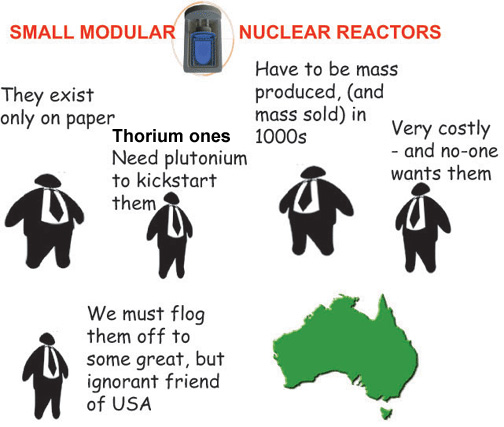
Nuclear advocates tend to respond to sceptics by citing the benefits of small modular reactors – the safe ones that can be constructed in factories for quick and cheap deployment. And it’s true, SMRs sound great.
Their only shortcoming is that they don’t yet exist
The National Radioactive Waste Management Act is racist and the Act must be amended or repealed and replaced.
Submission to Legal & Constitutional Affairs References Committee
Inquiry into the application of the United Nations Declaration on the Rights of Indigenous Peoples in Australia Friends of the Earth Australia nuclear.foe.org.au/racism nuclear.foe.org.au/waste
June 2022
Article 29 of the UN Declaration on the Rights of Indigenous Peoples:
- Indigenous peoples have the right to the conservation and protection of the environment and the productive capacity of their lands or territories and resources. States shall establish and implement assistance programmes for indigenous peoples for such conservation and protection, without discrimination.
- States shall take effective measures to ensure that no storage or disposal of hazardous materials shall take place in the lands or territories of indigenous peoples without their free, prior and informed consent.
- States shall also take effective measures to ensure, as needed, that programmes for monitoring, maintaining and restoring the health of indigenous peoples, as developed and implemented by the peoples affected by such materials, are duly implemented.
https://www.un.org/development/desa/indigenouspeoples/wp-
- SUMMARY SUMMARY & RECOMMENDATIONS
- Friends of the Earth Australia welcomes the opportunity to provide a submission to this inquiry and would be happy to appear at a public hearing.
- This submission argues that successive Australian federal governments have repeatedly breached the UN Declaration on the Rights of Indigenous Peoples (UNDRIP) in relation to nuclear waste management plans, and that the National Radioactive Waste Management Act contains multiple indefensible clauses designed to disempower Aboriginal Traditional Owners
The recommendations are as follows:
- The Committee should recommend revocation of the Morrison Coalition Government’s declaration of a site near Kimba in SA for a national nuclear waste dump. The opposition of Barngarla Traditional Owners is unanimous. It would be unconscionable for the Labor Government to do anything other than to revoke the declaration and abandon the former government’s plan for a nuclear dump on Barngarla Country.
- The Committee should recommend that the federal Albanese Labor Government adopt South Australian Labor policy whereby traditional owners have a right of veto over any nuclear waste sites.
- The National Radioactive Waste Management Act is racist through and through, it breaches the UNDRIP on multiple counts, and the Act must be amended or repealed and replaced.
- THE PROPOSED NATIONAL NUCLEAR WASTE DUMP ON BARNGARLA COUNTRY IN SA
The Morrison Coalition Government’s plan to establish a national nuclear waste dump on Barngarla Country on SA’s Eyre Peninsula ‒ despite the unanimous opposition of Barngarla Traditional Owners ‒ clearly violates Article 29 of the UNDRIP:
“States shall take effective measures to ensure that no storage or disposal of hazardous materials shall take place in the lands or territories of indigenous peoples without their free, prior and informed consent”.
In a 2018 submission to the UN OHCHR United Nations Expert Mechanism on the Rights of Indigenous Peoples, the Morrison Coalition Government claimed that “the [radioactive waste] facility will not be forced on an unwilling community, in line with Article 29(2) of the Declaration [on the Rights of Indigenous Peoples].”
Article 29(2) of the UN Declaration stresses free, prior and informed consent:
“States shall take effective measures to ensure that no storage or disposal of hazardous materials shall take place in the lands or territories of indigenous peoples without their free, prior and informed consent.”
The proposed Kimba dump does not have the “free, prior and informed consent” of Barngarla Traditional Owners. They are unanimous in their opposition. There is no consent.
The Morrison Government excluded Barngarla Traditional Owners from a sham ‘community ballot’. So the Barngarla Determination Aboriginal Corporation (BDAC) engaged the Australian Election Company to conduct an independent ballot which revealed unanimous opposition among Traditional Owners. The ballot was ignored by the federal government.
Jason Bilney, Chair of BDAC, noted:
“It is a simple truth that had we, as the first people for the area, been included in the Kimba community ballot rather than unfairly denied the right to vote, then the community ballot would never have returned a yes vote.”
In April 2020, federal parliament’s Joint Committee on Human Rights Committee concluded that the Morrison government was violating the human rights of Barngarla people. The Committee noted the unanimous opposition of the Barngarla Traditional Owners to the proposed nuclear dump and it concluded that the National Radioactive Waste Management Amendment Bill did not sufficiently protect the rights and interests of Traditional Owners and that “there is a significant risk that the specification of this site will not fully protect the right to culture and self-determination.”
Importantly, the Human Rights Committee’s report was unanimous and was endorsed by Liberal and National Party members as well as Labor members. However the Morrison Coalition Government ignored the Human Rights Committee’s report and continued in its efforts to dispossess and disempower Barngarla Traditional Owners.
The National Radioactive Waste Management Amendment Bill was the Morrison Government’s attempt to amend federal legislation to prevent Barngarla Traditional Owners from launching a legal challenge against the nomination of the dump site. Thankfully, the attempt to prevent a legal challenge failed due to opposition from Labor and cross-bench Senators.
Barngarla Traditional Owners have launched a legal challenge in the Federal Court against the Morrison Government’s declaration of the Napandee site, near Kimba, for a national nuclear waste dump. It would be unconscionable for the incoming Labor Government to engage in a legal fight in order to allow the government to ignore and override the unanimous opposition of Barngarla Traditional Owners to the proposed nuclear dump.
The Barngarla Determination Aboriginal Corporation states:
“It remains shocking and saddening that in the 21st Century, First Nations people would have to fight for the right to vote in Australia and that the Federal Government would deliberately remove judicial oversight of its actions in circumstances where the Human Rights Committee, a bipartisan committee no less, has considered the process to locate the NRWMF flawed.”
A 22 June 2021 joint statement by Barngarla Determination Aboriginal Corporation and No Radioactive Waste on Agricultural Land in Kimba or SA group states:2
“The Government has completely and utterly miscarried the site selection process. There are many examples of this. No proper heritage assessment of the site was ever undertaken, and they have marginalised the voices of the farming community throughout the entire process. However, the most obvious and appalling example of this failed process was when the Government allowed the gerrymandering of the Kimba “community ballot”, in order to manipulate the vote. The simple fact remains that even though the Barngarla hold native title land closer to the proposed facility than the town of Kimba, the First Peoples for the area were not allowed to vote. They prevented Barngarla persons from voting, because native title land is not rateable. Further, they did not allow many farmers to vote, even
though they were within 50km of the proposed facility, because they were not in the Council area. They targeted us, because they knew that if they had a fair vote which included us, then the vote would return a “no” from the community.”
BDAC has written to Prime Minister Albanese calling on the Labor government to scrap Morrison’s plans for a nuclear waste dump in SA.3 The letter states:
“Although we appreciate all that Labor have done in opposition, the Barngarla people unequivocally make it clear that we request that the new Labor minister revoke the declaration or consent to the orders quashing the declaration. We call for this to occur at the earliest opportunity possible.”
The BDAC letter further states:
“Sadly, the former Government at every turn tried to silence us in this process, as the Government did not allow us access to the land to undertake a proper heritage survey, tried to remove our right to judicial review, sought to legislate the location directly, abandoned their commitment to ensure that the facility had broad community support, altered the proposal to include military waste inconsistently with the treaty and tried, through various affiliated organisations, to interfere with our ability to bring judicial review including having parties costs orders against us as a means to blocking the Barngarla people from going to Court.
“Despite this, we stood tall, and we have brought these legal proceedings. They were brought against Minister Pitt, but because you have won the election, the matter now becomes your Governments to deal with.
“Although we appreciate the right to bring these proceedings and all that Labor have done in Opposition, the Barngarla people unequivocally make it clear that we request that the new Labor Minister revoke the declaration or consent to the orders quashing the declaration. We call for this to occur at the earliest opportunity possible in the new Labor Government, because we do not want to fight against your Government in Court which would not only take a number of years, but result in spending our vulnerable community’s resources protecting our people against the contemptuous behaviour of the last Government; nor do we want your Government to be tarnished by these horrible failures of the former Government. …
“The Uluru Statement from the Heart makes clear that our “sovereignty is a spiritual notion: the ancestral tie between the land, or ‘mother nature’, and the Aboriginal and Torres Strait Islander peoples who were born therefrom, remain attached thereto, and must one day return thither to be united with our ancestors. This link is the basis of the ownership of the soil, or better, of sovereignty. It has never been ceded or extinguished, and co-exists with the sovereignty of the Crown”. Again, as we said to the new Minister, our spiritual sovereignty has been violated by the former Government, and we hope and believe in your Government that you will not violate it further.”
Right of Veto
The Albanese Labor Government should adopt South Australian Labor’s policy whereby traditional owners have a right of veto over any nuclear waste sites. This is of course consistent with UNDRIP principles regarding free, prior and informed consent.
Susan Close, now Deputy Premier of South Australia, noted in a September 2020 media statement:
“This was a dreadful process from start to finish, resulting in fractures within the local community over the dump. The SA ALP has committed to traditional owners having a right of veto over any nuclear waste sites, yet the federal government has shown no respect to the local Aboriginal people.”
Likewise, in October 2021 SA Labor supported a parliamentary motion stating that in light of the opposition of the Barngarla Traditional Owners, the (since defeated) Marshall Government should oppose the federal government’s attempt to impose a national nuclear waste dump in SA and stands condemned for its failure to do so.4
Labor’s Kyam Maher spoke in favour of the parliamentary motion:5
“We have had since before the last election, and maintained the view since the election, that for a nuclear radioactive storage facility it is fundamental that traditional owners’ views are taken into account. Since Jay Weatherill was Premier we have taken the view ‒ and that has continued in this term while we are in opposition ‒ that for a nuclear radioactive dump or storage facility the traditional owners should have a right of veto, a right of refusal of such a thing on their land. That has not changed and that is why we support this motion, from that one very simple principle which we have had and which remains unchanged.”
The Albanese Labor Government should respect SA legislation banning the import, transport, storage and disposal of nuclear wastes ‒ the SA Nuclear Waste Storage (Prohibition) Act 2000. The Act states:
“The Objects of this Act are to protect the health, safety and welfare of the people of South Australia and to protect the environment in which they live by prohibiting the establishment of certain nuclear waste storage facilities in this State.”
The Nuclear Waste Storage (Prohibition) Act is supported by South Australians; the proposed nuclear waste dump is not. A 2018 poll found that 55% agreed that SA should stop the federal government from building a national nuclear dump in SA while 35% disagreed. A 2016 Sunday Mail-commissioned poll found that support in SA for a national dump (39.8%) was well short of a 50% majority and even further short of the Morrison Coalition Government’s own benchmark of 65% to demonstrate ‘broad community support’. A 2015 Advertiser-commissioned poll found just 15.7% support for a nuclear waste dump in SA.
SA Unions, the peak body representing trade unionists in South Australia, unanimously passed a resolution in March 2022 supporting Barngarla Traditional Owners in their struggle
against the Morrison government’s proposed nuclear dump.6 SA Unions Secretary Dale Beasley said the that South Australian labour movement stood shoulder to shoulder with the Barngarla Traditional Owners:
“South Australian unions are completely united in their support of the Barngarla Traditional Owners and their opposition to the proposed nuclear waste site at Kimba. … We have in South Australia a shameful legacy of imposing the impact of nuclear technology on aboriginal communities. Decades after the end of British nuclear tests around Maralinga, radioactive particles containing plutonium and uranium still contaminate the landscape. Given that history, we would have expected Steven Marshall to stand up for the Barngarla Traditional Owners. … South Australian unions join with the Traditional Owners and the South Australian Community in complete opposition to the dangerous proposal.”
Recommendations:
- The Committee should recommend revocation of the Morrison Coalition Government’s declaration of a site near Kimba in SA for a national nuclear waste dump. The opposition of Barngarla Traditional Owners is unanimous. It would be unconscionable for the Labor Government to do anything other than to revoke the declaration and abandon the former government’s plan for a nuclear dump on Barngarla Country.
- The Committee should recommend that the federal Albanese Labor Government adopt South Australian Labor policy whereby traditional owners have a right of veto over any nuclear waste sites.
- THE NATIONAL RADIOACTIVE WASTE MANAGEMENT ACT
The National Radioactive Waste Management Act (NRWMA) is wildly inconsistent with UNDRIP principles.
The NRWMA gives the federal government the power to extinguish rights and interests in land targeted for a radioactive waste facility.7 In so doing the relevant Minister must “take into account any relevant comments by persons with a right or interest in the land” but there is no requirement to secure consent ‒ or to back off if consent is not forthcoming.
Aboriginal Traditional Owners, local communities, pastoralists, business owners, local councils and State/Territory Governments are all disadvantaged and disempowered by the NRWMA.
The NRWMA goes to particular lengths to disempower Traditional Owners. The nomination of a site for a radioactive waste facility is valid even if Aboriginal owners were not consulted and did not give consent. The NRWMA states that consultation should be conducted with
Traditional Owners and consent should be secured ‒ but that the nomination of a site for a radioactive waste facility is valid even in the absence of consultation or consent.
Needless to say, that is in no way, shape or form compliant with UNDRIP clauses regarding free, prior and informed consent.
The NRWMA has sections which nullify State or Territory laws that protect the archaeological or heritage values of land or objects, including those which relate to Indigenous traditions.
The Act curtails the application of Commonwealth laws including the Aboriginal and Torres Strait Islander Heritage Protection Act 1984 and the Native Title Act 1993 in the important site-selection stage. The Native Title Act 1993 is expressly overridden in relation to land acquisition for a radioactive waste facility.
The NRWMA has been criticised in both Senate Inquiries and a Federal Court challenge to an earlier federal government attempt to impose a national radioactive waste facility at Muckaty in the Northern Territory.
The NRWMA needs to be radically amended or replaced with legislation that gives local communities and Traditional Owners the right to say ‘no’ to nuclear waste dumps.
Sadly, the only recent attempt to amend the NRWMA was the Morrison Coalition Government’s attempt to strip ever more rights from Traditional Owners, by removing the right for judicial review. Thankfully, that attempt to further weaken the legislation failed.
Recommendation:
- The National Radioactive Waste Management Act is racist through and through, it breaches the UNDRIP on multiple counts, and the Act must be amended or repealed and replaced.
1 This month.

Australians deserve the truth
about
AUKUS – https://aukuspublicinquiry.com/

PETITION – To: Prime Minister Anthony Albanese and the Australian Labor Government

of the week – Australians for War Powers Reform (AWPR)
To see nuclear-related stories in greater depth and intensity
 Antinuclear