Independent media has profoundly reshaped modern communication, much to the chagrin of traditional print media. The MSM often dismisses us as falling below their standards, but I disagree. Today’s news stories are frequently little more than opinion pieces, unchallenged and unaccountable. Citizen journalists, however, hold the MSM to account – a role that sits uneasily with the media establishment.
The MSM [Main Stream Media] claimed, “The great thing about newspapers is that, love us or hate us, we’re the voice of the people. We represent the community, their views, their aspirations, and their hopes.” Represent the community? Don’t they mean control the community?
Over a decade ago, I wrote about a subject that remains as relevant today as ever. For nearly twenty years, I’ve been hammering away at the keyboard – a space where I could speak freely, defy control, and fight for democracy and truth. It was a place to be heard. But it wasn’t always this way. Before the rise of bloggers and independent media, we were limited to listening to those who controlled the narrative.
Let’s revisit the days when we found our voice, thanks to the emergence of bloggers, citizen journalists and independent media.
Plato (428–348 BC) opposed the written word, arguing it would erode memory. He believed people would stop memorising facts or stories, and that spreading words indiscriminately was wasteful and untrustworthy. How prophetic. Spoken over two millennia ago, his words feel strikingly contemporary. Consider today’s mainstream media (MSM), which claims its journalists are reliable, truthful, and objective. Who do you believe – them or Plato?
In recent decades, the MSM has leaned toward stories that are trivial, narrow, shallow, and sensationalist – often at the expense of truth. As Plato might have lamented, the MSM spreads words indiscriminately, wastefully, and with questionable trustworthiness. Truth, it seems, doesn’t sell newspapers.
Some bloggers echoed Plato’s concerns, prompting a fierce backlash from the MSM. I recall reading articles from the Murdoch press that unleashed a near-xenophobic hatred toward the blogosphere, attacking it with more zeal than they ever directed at incompetent politicians. One such critique described the blogosphere as:
A small, incestuous clique of self-identified lefties, with readerships composed mostly of themselves… Naivety and self-righteousness define the vast majority of the Australian blogosphere, along with whining conspiracy theories. Those who hide under the veil of anonymity, taking cheap shots to satisfy their trendy social agenda.
The MSM claimed, “The great thing about newspapers is that, love us or hate us, we’re the voice of the people. We represent the community, their views, their aspirations, and their hopes.” Represent the community? Don’t they mean control the community?
Independent media has profoundly reshaped modern communication, much to the chagrin of traditional print media. The MSM often dismisses us as falling below their standards, but I disagree. Today’s news stories are frequently little more than opinion pieces, unchallenged and unaccountable. Citizen journalists, however, hold the MSM to account – a role that sits uneasily with the media establishment.
Many citizen journalists possess a natural gift for taking the day’s main story, transforming it into something worth reading, and fostering a range of opinions that the MSM often ignores. In just a few years, blogging – in particular- became a global phenomenon, reshaping journalism and unlocking publishing opportunities previously unimaginable. To me, blogging is journalism. While individual blogs may have limited readership, sites with aligned agendas often link together to amplify their impact. In contrast, MSM blog platforms typically filter out contributions that don’t fit their narrative, rendering them inaccessible to dissenting voices.
So, what impact have independent sites had? Their influence has been most profound in the political sphere.
A computer-mediated environment makes it easier for citizens to express their feelings about political candidates and speak more candidly than in face-to-face settings. The internet’s diversity provides access to a wide range of opinions and information, potentially shaping or changing individuals’ political views. By disregarding blog sites with corporate or agenda-driven motives, political bloggers can foster peer-to-peer discussions of personal viewpoints.
This perspective was heartening for a then-blogger like me, who had lost faith in the MSM. It affirmed that independent voices could have an impact, however small at the time. If Australia followed the U.S. trend, a thriving blogging industry might one day emerge.
ShariVari concluded:
All research shows that increased opportunities for participation encourage democracy… Citizens are increasingly turning to and trusting the internet for accurate information, using it as a platform for participatory democracy, and becoming more knowledgeable about politics in the process. A Spiral of Silence – where people self-censor due to perceived minority views – is less likely in an online environment where citizens evaluate each other’s opinions without status cues like gender, race, or socioeconomic status. Blog sites are undeniably expanding the ways citizens participate in democracy.
Fifteen years ago, those in democratic societies seeking to share their ideas faced editorial gatekeepers whose policies often reflected their own ideologies or market-driven priorities. Today, this control is crumbling in the face of participatory media. Audiences no longer want to be passive consumers – they want to comment on and even create the news.
Citizen journalists believe they are better equipped to provide the diversity that modern democracies need, a diversity often ignored by traditional media. Independent platforms allow them to expose doctored or omitted facts, highlight biases, and give voice to alternate perspectives. These sites encourage readers to think critically, ask probing questions, and challenge the MSM’s hidden agendas. Independent media is awash with objective, fact-based analysis that counters the narratives of established outlets.
The explosion of independent sites isn’t merely an echo of dissenting voices – it’s a response to the MSM’s failure to provide objective, impartial reporting. If the MSM were truly committed to quality journalism, there might be no need for the millions of blogs and independent platforms that exist today to fill the gaps they’ve left.
In essence, it’s the People versus Murdoch… then and now.
The former head of Australia’s submarine squadron has urged Australia against outsourcing boat construction overseas, as bureaucrats express confidence that the US won’t scuttle AUKUS.
A parliamentary inquiry on Thursday ran the ruler over the Geelong treaty, a 50-year AUKUS co-operation agreement between Australia and the UK signed in July.
Under AUKUS, the US has promised to sell at least three Virginia-class nuclear-powered submarines to Australia from the early 2030s.
A submarine solution closer to home should be examined instead, retired navy rear admiral Peter Briggs argued.
“Depending on an overseas supply chain for such a critical capability as our submarines is a folly,” he told the inquiry.
Briggs had serious concerns with the plan, including its potential to limit Australia’s commercial interests. He suggested that the nation should build more submarines, as it had previously done with the diesel-electric Collins class.
“There is no minimum protection in the treaty for a guaranteed work share for genuine Australian industry,” he said.
“The Collins project has established a viable submarine supply chain within Australia.
“We should build on this, not sign a treaty mandating it out of existence.”
Briggs cast doubt on Australia receiving submarines from the US on time, pointing to its falling behind in building its fleet.
Bernard Philip from the Department of Defence said advice was being provided to the federal government on extending the life of Australia’s ageing Collins-class fleet.
The Pentagon has been investigating the AUKUS pact to ensure it aligns with President Donald Trump’s “America-first” agenda.
The review by Under Secretary of War for Policy Elbridge Colby sparked speculation that Trump could walk away from the deal, which is estimated to cost up to $368 billion across 30 years.
Nikkei Asia on Tuesday reported the US would not make changes, with an unnamed member country official declaring AUKUS was “safe”.
Mikaela James from the Australian Submarine Agency strongly hinted that the US would not walk away from the deal.
“(We’re) obviously aware of the US review that is underway, and we are confident the US will continue to find that the program is in line with its interests,” she told the committee.
The review is expected to finish before Prime Minister Anthony Albanese’s visit to the White House on October 20.
Tim Deere-Jones, who has 40 years of experience researching the UK government’s system for monitoring marine radioactivity, said managing nuclear waste was expensive and caused environmental issues.
“You’ve got to build the facilities to remove it from the boats,” he said.
“Then you’ve got to be looking for a long-term, hopefully perpetual dump site for it, none of which we’ve managed to do in the UK despite having many decades of nuclear submarines.”
It was inevitable some waste would be discharged into the ocean, he said.
I was scheduled to give a talk at the National Press Club of Australia on October 20 called “The Betrayal of Palestinian Journalists.” It was to focus on the amplification of Israeli lies in the press, which most reporters know are lies, betraying Palestinian colleagues who are slandered, targeted and killed by Israel. But, perhaps inadvertently proving my point, the chief executive of the press club, Maurice Reilly, cancelled the event. The announcement of my talk disappeared from the web site. Reilly said “that in the interest of balancing out our program we will withdraw our offer.”
The Israeli Ambassador, retired Lt. Colonel Amir Maimon, who spent 14 years in the Israeli military, is reportedly being considered to speak.
It is true that I know only one side of the picture from the seven years I spent covering Gaza. I was on the receiving end of Israeli attacks, including being bombed by its air force and fired upon by its snipers, one of whom killed a young man a few feet away from me at the Netzarim Junction. We lifted him up, each person taking hold of an arm or a leg, and lumbered up the road as his body swayed like a heavy sack. I saw small boys baited and shot by Israeli soldiers in the Gaza refugee camp of Khan Younis. The soldiers swore at the boys in Arabic over the loudspeakers of their armored jeep. The boys, about 10 years old, then threw stones at an Israeli vehicle and the soldiers opened fire, killing some, wounding others.
I was present more than once as Israeli troops shot Palestinian children. Such incidents, in the Israeli lexicon, become children caught in crossfire. I was in Gaza when F-16 attack jets bombed overcrowded hovels in Gaza City. I saw the corpses of the victims, including children. This became a surgical strike on a bomb-making factory. I have watched Israel demolish homes and entire apartment blocks to create wide buffer zones between the Palestinians and the Israeli troops that ring Gaza. I have interviewed the destitute and homeless families, some camped out in crude shelters erected in the rubble. The destruction becomes the demolition of the homes of terrorists. I have stood in the gutted remains of schools as well as medical clinics and mosques and counted the bodies. I have heard Israel claim that errant rockets or mortar fire from the Palestinians caused these and other deaths, or that the buildings were being used as arms depots or launching sites.
I, along with every other reporter I know who has worked in Gaza, including the over 278 Palestinians journalists and media workers who have been killed by Israel since the start of the genocide, many in targeted assassinations, have reported a reality in Gaza that bears no resemblance to how it is portrayed by Israeli politicians, its military and many media outlets that serve as Israel’s echo chamber.
Lt. Colonel Maimon can obviously, if he chooses, enlighten us about the artificial intelligence-based program known as “Lavender” and how it selects people, along with their families, in Gaza for assassination.
He can explain how Israel determines the quotas of civilian dead, how soldiers are permitted to kill as many as 20 civilians in order to target a Palestinian fighter and hundreds for a Hamas commander. He can let us know why Israel continues the mass slaughter when an internal Israeli intelligence database indicates that at least 83 percent of Palestinians killed are civilians. He can tell us how Palestinian civilians are abducted, dressed in Israeli army uniforms, have their hands tied, and are then forced to walk as human shields in front of Israeli troops into buildings and underground tunnels that are potentially booby-trapped. He can explain how the special unit called the “Legitimization Cell” carries out propaganda campaigns to portray Palestinian journalists as Hamas operatives to justify their assassinations. He can detail the targeting, bombing and controlled demolitions that have damaged or destroyed 97 percent of Gaza’s educational system, including every university and nearly all its hospitals. He can explain how, after Israel blocked all humanitarian aid on March 2 to starve the Palestinians in Gaza, Israeli officials set up the so-called Gaza Humanitarian Foundation to lure emaciated and malnourished Palestinians to four aid hubs in the south — aid hubs with little food and which Human Rights Watch calls “death traps” and Doctors Without Borders calls “orchestrated killing.” These hubs, open only an hour, usually at 2:00 am, ensure a chaotic scramble for scraps of food. Israeli soldiers, along with U.S. mercenaries, who include members of the Infidels Motorcycle Club, a self-professed anti-“radical jihadist” biker group that counts members with Crusader tattoos among its ranks, fire live rounds into the crowds killing over 1,400 Palestinians and injuring thousands more in and around the hubs since May. He can lay out the plans for the concentration camps in southern Gaza and the efforts to ultimately expel the Palestinians from Gaza and repopulate it with Jewish colonists. He can explain why Israel abandoned its own hostages, why it fired on vehicles headed into the Gaza strip on October 7 carrying Israeli captives and why it used Hellfire missiles to obliterate the Erez Crossing installation when it was seized by Palestinian fighters knowing that dozens of Israeli soldiers were inside.
If Lt. Colonel Maimon spoke with this honesty and candor we could call this balance. It would fill in a side of the equation I glimpse from the outside. It would complete the circle. It would match truth with truth.
But Lt. Colonel Maimon, I see from his past statements, will spew out the mendacious narratives used by Israel to justify genocide — Hamas uses Palestinians as human shields, it operates command centers in hospitals, it sexually assaulted Israeli women on October 7 and beheaded babies. He will make the spurious claim that Israel “has the right to defend itself,” ignoring the fact that Hamas and other Palestinian resistance groups, which lack an air force, mechanized units, artillery, a navy, fleets of militarized drones and missiles, pose no existential threat to Israel. More important, he will not address Israel’s flagrant violation of international law by occupying and settling colonists on Palestinian land and carrying out a livestreamed genocide.
This is not balance, unless we accept a world where truth is balanced by lies. It is an abandonment of the fundamental mission of journalists — to hold power accountable. But most egregiously, it is a terrible betrayal of our colleagues in Gaza who have been killed for chronicling the daily savagery in Gaza, for doing their job.
No doubt, the corporate sponsors and wealthy donors of the press club are pleased. No doubt, the club is able to slither away from its journalistic integrity. No doubt, it is spared the attacks that would come from allowing me to speak.
But please, have the decency to remove the word press from your club.
The coalition are revamping their proposal for nuclear energy, despite suffering an election loss with this policy. The details are yet to be confirmed, but the Opposition Energy Minister says they will adapt their plan to meet developments in the space.
The Coalition’s nuclear policy didn’t secure the party a win in the May federal election.
But that’s not stopping the Opposition Minister for Energy and Emissions Reduction:
“I have a very, very strong view that nuclear has to be part of our energy mix here in Australia, if we are going to be serious about reducing emissions.”
That was Dan Tehan speaking on ABC’s 730 program, following a trip to the United States which has inspired this latest revival of a Coalition nuclear energy policy.
Speaking on ABC Radio, Mr Tehan praised US advancements in the space.
“There’s basically a nuclear renaissance taking place in the US. There’s huge investment going into nuclear, there’s huge developments that are taking place. And everyone that I spoke to are incredibly confident given the use of AI, given the use of quantum, that they will continue to make rapid developments with nuclear technology.”
While avoiding detail, he did admit the policy would be adapted from their pre-election pitch to respond to rapid developments in the area.
But Mr Tehan is confident Australia should be influenced by the US model.
“The amount of investment, the amount of technological know-how going into nuclear, and the breakthroughs when it comes to small modular reactors, or micro-reactors, has to be seen to be believed. And the capital which is flowing into these developments, especially by the large tech companies in the US, is leading to developments which are occurring on a daily basis. And I have a very, very strong view that nuclear has to be part of our energy mix in Australia if we are to be serious about reducing emissions.”
While details of the policy remain unclear, the Opposition has already committed to some form of nuclear energy as part of a deal with the Nationals to prevent another coalition splinter.
Coalition frontbencher Bridget McKenzie insists the policy wouldn’t be in the top five reasons the coalition suffered a heavy loss in the May federal election.
She’s told Sky News the nuclear debate has to be viewed in the broader view of climate and energy policy.
She says the government is flagging poor policies to try and get Australia to emissions reduction targets, pointing to their efforts to encourage a switch to electric vehicles within a short time frame.
“Once again, we’re seeing the Labor Party pulling one lever for a policy solution, whilst making opposing decisions that aren’t good for the country. We know they aren’t going to meet their emissions reduction target, so they’ve doubled down on that and produced this transport sector plan for 2035 that’s going to see Australian motorists really do the heavy lifting and pay the costs of emissions reduction.”
Labor has long criticised the coalition’s nuclear energy plan – arguing the nation’s energy needs can be met with a mix of renewables and gas.
Addressing National Press Club following his election win, Prime Minister Anthony Albanese called the coalition’s nuclear policy a ‘last desperate attempt to delay action on climate change’.
He outlined his reasons for opposing the policy in a social media address in December last year.
“Here’s the lowdown on nuclear power – it will add $1200 to your power bills, it will take decades to build, it will block cheaper renewable energy. Energy experts at the CSIRO and the Australian Energy Market Operator have made that clear. Still, Peter Dutton is asking Australians to pay the price for his nuclear power scheme. Never before has so much taxpayer money delivered so little to so few Australians.”
The government is yet to respond to the coalition’s latest comments promoting nuclear energy and slamming Labor’s emissions reduction policy.
The Coalition has given its biggest clue yet on what its post-election policy will be.
Joseph Olbrycht-Palmer, 2 Oct 25. news.com.au
Opposition energy spokesman Dan Tehan has returned from a lengthy fact-finding mission to the US starry-eyed about a “nuclear renaissance taking place”.
Mr Tehan spent much of September touring facilities and meeting with nuclear heavyweights in the US.
His trip overlapped with the release of Australia’s first-ever climate risk assessment and Labor government’s 2035 emissions reduction targets.
His absence drew some criticism but, fronting media for the first time since landing back in the country, Mr Tehan said the knowledge he gained was worth it.
“What I learned was that there is basically a nuclear renaissance taking place in the US,” he told the ABC on Thursday.
There is huge investment going into nuclear.
“There are huge developments that are taking place.
“And everyone that I spoke to was incredibly confident, given the use of AI, given the use of quantum, that they will continue to make rapid developments with nuclear technology which will enable not only the US, but the globe, to provide abundant energy in a form which is emissions neutral.”
He was particularly struck by micro reactors, which are transportable nuclear power sources that typically generate between 1-20MW – or enough energy to power a small community, a military base or an industrial facility………………………………………………………
Mr Tehan’s comments are the strongest indication to date that the opposition may stick to its guns on nuclear despite its heavy defeat at the federal election in May.
The absence of an energy policy has sparked severe tensions within the Coalition and was key to the Nationals’ brief split from the Liberals.
Nuclear technology will be a key aspect of the Coalition’s energy policy heading into the next election, as opposition energy spokesman Dan Tehan argues it is essential to modernise the electricity grid.
Tehan told ABC radio on Thursday: “There is overwhelming agreement on the Coalition side that nuclear needs to be part of our energy mix” (SMH).
“I have no doubt that my colleagues, like I do, see very much a future for nuclear as part of our energy mix here in Australia,” he said.
Tehan has recentlyreturned from a study tour in the United States, where he reportedly toured facilities and spoke with nuclear experts about how the energy source could be used in Australia (Yahoo News).
Nuclear energy was a key proposal for former opposition leader Peter Dutton during his lost election campaign earlier this year, despite voter scepticism regarding its viability (The Saturday Paper).
The Australian Energy Market Operator, along with the owners of the country’s biggest fleets of coal generators have painted a pretty clear picture of the energy future: Forget baseload, it’s time has come and is going and almost gone – the future is about renewables and firming power.
It shouldn’t be too hard a concept to grasp. Low cost wind and solar will provide the bulk of the electricity supply, including and particularly from the rooftops of homes and businesses, and excess power will be stored in batteries at home and on the grid, and flexible “firming” assets will fill the gaps.
The focus on flexibility is the key. Firming assets might not be needed often, or even for long, but they will need to be switched on and off relatively quickly. Flexible demand side management will also play a key role, as will a focus on efficiency.
Australia’s operational paradigm is no longer ‘baseload-and-peaking’, but increasingly it’s a paradigm of ‘renewables-and-firming’,” AEMO boss Daniel Westerman said last year.
It’s a crucial point to understand. “Baseload” is not so much a technical virtue as a business model – the people who invest in coal generators, and nuclear in particular, count on those machines operating at or near full capacity most of the time.
Without it, they haven’t a hope of repaying the money that it took to build their facilities. They can flex a little, but the last thing they want or can do is dial down and up again on a daily or even hourly basis. Other machines are better equipped at doing that, and at much lower cost.
As the ANU’s Centre for Energy Systems wrote this year, the energy industry is aware that baseload is not just endangered, it is already functionally extinct. And they explain why in more detail.
Enter the Coalition’s new energy spokesman Dan Tehan, who quite clearly has not got the memo, and clearly hasn’t the foggiest idea what he is talking about.
Tehan has been on a “fact finding” tour of energy facilities in the US, which appears to have included no renewables, but a lot of nuclear, and – having briefed Coalition colleagues early in the week – he was keen to share his new-found knowledge with the ABC.
“Do you accept that expertise of the Australian energy market operator when it comes to base load power and the transition that’s underway?” Tehan was asked on the 7.30 Report.
“Well, your quote said it all there, Sarah,” Tehan replied. “Renewables and firming, and what nuclear can do is provide that firming over time, it can replace gas and coal, which are providing that firming at the moment.”
Clearly, he was already confused by the difference between baseload and firming. And then Tehan said this: “So my argument is as a replacement for diesel. When it comes to mine sites all that firming capacity over time, that’s exactly the role that nuclear can play.”
BHP is sourcing the bulk of its electricity needs for it massive Olympic Dam mine and refinery and nearby sites through two “renewable baseload” contracts with Neoen comprised only of wind and battery storage.
But Tehan was back at the ABC on Thursday morning, this time on Radio National, where he was extolling the virtues of “easily transportable” micro-reactors sized he said – and wait for it – between five and 10 gigawatts!
“And the particular thing that was really of note to me was how the research into micro reactors, so small, sort of five gigawatt, 10 gigawatt reactors, which are very transportable,” he said.
We suspect he meant megawatts, not gigawatts. (A gigawatt is 1,000 megawatts). And, we should point out, these micro reactors do not exist in any commercial form, and it’s doubtful too that they would be “very transportable”.
Tehan said he is convinced that in the US there is a “nuclear renaissance”, despite the recent World Nuclear Industry Status report pointing out there is no such thing. “The simple fact is … that there isn’t a single power reactor under construction in the 35 countries on the American continent,” ACF’s Jim Green writes.
Tehan insisted that 30 nations at COP29 had signed up to triple the amount of nuclear capacity. True, but they said they would do that over a 25 year timeframe, by 2050 – with the aim of lifting global capacity from around 350 GW to just over 1,000 GW.
In the meantime, a total of 120 countries have signed up to treble renewables – in just over five years – from 3,500 GW to 11,000 GW. That is 11 times more capacity than nuclear in one fifth of the time. It is pretty clear to everyone – except perhaps for Tehan and his friends – where the money is going.
And as AEMO’s Westerman told an energy summit hosted by The Australian last week, Australia is experiencing a “stunning democratisation” of energy generation, thanks to rooftop solar and consumer batteries.
Which means that they too will need the grid for “firming”, rather than baseload. Such a dramatic reshaping of the grid will leave no room for nuclear, or any other “baseload” power source. But Tehan and his mates seem intent to jam it into Australia’s energy debate, even if they can’t get it into the grid.
The federal shadow energy minister and shadow treasurer are adamant nuclear energy will form part of the Coalition’s future energy policy, though their leader has been less bullish.
Energy analyst Tony Wood says nuclear energy could work in Australia but the uncertainty caused by the lack of bipartisanship threatens to drive up power prices.
What’s next?
Deputy Opposition Leader Ted O’Brien says the Coalition’s energy policy is still in the works and more details will be shared once it is cemented.
Deputy Opposition Leader Ted O’Brien says he is “supremely confident” nuclear will be part of the Coalition’s future vision for Australia’s energy mix.
Shadow Energy Minister Dan Tehan made similar comments this week, signposting the resurrection of the Coalition’s nuclear policy after touring US nuclear facilities.
His predecessor, Mr O’Brien, was a key figure in the Coalition’s nuclear pitch at the last federal election — a policy some political pundits said contributed to their resounding loss.
Now Liberal deputy, Mr O’Brien said he was committed to giving it another go.
Mr O’Brien said the Coalition was yet to settle on the details of its new nuclear policy, including whether it would be government-funded or private sector-led.
Some commentators have speculated that the Coalition may look at narrowing its aspirations to focus on lifting the moratorium on nuclear energy, which has been in place since the late 1990s.
Mr O’Brien would not confirm whether the seven locations proposed to host nuclear reactors would still play a role.
But he maintains people in those regions, including Collie, 190 kilometres south of Perth, were “very open” to the idea.
On a two-party preferred basis, all four of Collie’s polling booths recorded a swing towards the Liberals, which Mr O’Brien said indicated local support for the Coalition’s energy policy.
However, he conceded that on a multi-party basis, there was a swing away from both major parties towards minor parties, such as One Nation and Legalise Cannabis.
Party leader less bullish
Opposition Leader Sussan Ley, also in WA at the moment, was less clear-cut on whether nuclear would play a role in the Coalition’s energy policy.
Asked about her colleagues’ comments at a press conference today, she said Mr Tehan would brief the party and policy teams next week on his US tour, where he had been specifically looking at developments in small modular reactors.
“We know that 19 out of 20 OECD countries … have either adopted or are in the process of adopting nuclear,” she said.
“It’s very important for the future, and we’ll continue to examine it closely.”
Federal Energy Minister Chris Bowen said the Opposition’s pro-nuclear stance was out of touch.
“Ted O’Brien masterminded the nuclear policy that was so comprehensively rejected by the Australian people just a few months ago,” he said.
“Now he says he is ‘supremely confident’ that his nuclear policy is right.
“It shows just how arrogant this LNP is — they just don’t get it.”
Analyst says energy indecision costs
Grattan Institute energy program director Tony Wood said nuclear energy warranted serious consideration.
However, he said a lack of bipartisanship around the future of energy could ultimately prove worse for electricity prices.
“When you’ve got different possible futures with different political parties, investors have to build more risk premiums into their decisions,” he said.
“That means the cost of everything goes up.”
Mr Wood said uncertainty could make the nation less attractive to the private energy sector.
“What [investors] want is clear and predictable policy,” he said.
The Electrical Trades Union (ETU) national secretary Michael Wright said workers in regional communities, such as the coal mining town of Collie, were also seeking clarity.
“When Peter Dutton was spruiking nuclear, we saw projects put on hold and jobs put on hold while developers waited to see which way the election went,” Mr Wright said.
“Now those jobs, for the most part, are back on. This sort of irresponsible attitude to the core business of powering our country costs jobs and jeopardises our grid. It’s just irresponsible and immature.”
Mr Wright said he was not ideologically opposed to nuclear but believed the infrastructure simply would not be ready in time to meet demand.
He said renewable projects had not been without their own challenges, with planning and regulatory approvals continuing to hold up work.
But he said it was time for Australia to pick an energy policy and stick to it.
While a treaty prohibits nuclear weapons stationed in Australia, the Government tries to circumvent it. Rex Patrick and Philip Dorling on Labor’s duplicitous nuclear word games.
From 2032, nuclear-armed cruise missiles will be loaded into US Navy Virginia-class subs. The Treaty of Rarotonga prohibits nuclear weapons from being ‘stationed’ at HMAS Stirling, but maybe it’s OK for them to be ‘rotated’ through the base.
The South Pacific Nuclear Free Zone (SPNFZ) Treaty, first signed at Rarotonga in August 1985, was one of the successes of Australia’s activist nuclear disarmament and non-proliferation diplomacy of the Hawke and Keating Governments. Born out of South Pacific opposition to French nuclear testing and broader concerns about superpower competition in the Pacific, the Treaty entered into force on 11 December 1986. Amongst other things,
it prohibits the stationing of nuclear weapons within the South Pacific by member states. Australia is a member state.
Stationing is defined in the treaty as “emplantation, emplacement, transportation on land or inland waters, stockpiling, storage, installation and deployment.”
The treaty doesn’t prevent nuclear-armed ships from visiting a member state’s ports or transiting their waters. The Treaty was drafted to allow this, in part to accommodate Australia’s ANZUS defence relationship with the US. At the time US warships and submarines carried tactical nuclear weapons, but the US ‘neither confirmed or denied’ whether individual vessels were actually carrying them.
Additional protocols not ratified
At the urging of the Keating Government, in March 1996 President Bill Clinton’s Administration signed three Protocols to the Treaty of Rarotonga, giving an undertaking, amongst other things, not to station nuclear weapons on its territories within SPNFZ (American Samoa and Jarvis Island), and not to contribute to any act by a party to the Treaty that constitutes a violation of the Treaty.
After much delay, President Barack Obama’s Administration submitted the SPNFZ Protocols to the US Senate, but ratification has not occurred owing to Republican obstruction.
However, with USN submarines and surface vessels stripped of tactical nuclear weapons in 1991 (at the end of the Cold War), and US ballistic missile submarines not deployed from any South Pacific ports, the Protocols largely fell into contemporary irrelevance. However, with Donald Trump’s return to the White House, that’s all about to change.
Sea launched missiles
Sea launched missiles
In his first term, Trump ordered the US Navy to develop a new nuclear-armed, sea-launched cruise missile, SLCM-N, to provide the US subs and warships with flexible and low-yield nuclear strike options. In 2022, President Biden proposed cancelling the program, but Congress continued to fund it.
Now, with Trump back in the White House, the SLCM-N program is accelerating.
Trump’s ‘big beautiful Bill’ included US$2B for work on the missile and $US400m to accelerate work on its W80-4 warhead, likely to have a variable yield between 5 and 150 kilotons (the weapon that destroyed Hiroshima had a 15 kiloton yield).
Further funding is now proposed in the 2026 budget, with plans to move forward SLCM-N entry into service from 2034 to 2032.
Once the SLCM-N is deployed, the stationing of US attack subs in Australia could give rise to a breach of Australia’s obligations under the SPNFZ Treaty. The US could also be acting contrary to Protocol 2 to the Treaty, which it has signed, though not ratified.
A criminal offence
If US submarines ‘stationed’ in Australia are armed with SLCM-N missiles, Australian officials could be in some legal jeopardy.
The SPNRZ Treaty Act 1986 gives legal effect to Australia’s obligations under the SPNFZ Treaty.
Section 11 of the Act states, “A person who stations, or does any act or thing to facilitate the stationing of, a nuclear explosive device in Australia commits an offence against this section”. The penalty for doing so is imprisonment of up to 20 years, or a significant fine, or both.
So, MWM guesses it’s a really good thing that no US attack subs will be ‘stationed’ at HMAS Stirling, they’ll just be there as a “rotational force”. At least the Albanese Government wants everyone to think this is a big difference.
1×1515
4:46 / 8:46
Listen to this story
9 min
While a treaty prohibits nuclear weapons stationed in Australia, the Government tries to circumvent it. Rex Patrick and Philip Dorling on Labor’s duplicitous nuclear word games.
From 2032, nuclear-armed cruise missiles will be loaded into US Navy Virginia-class subs. The Treaty of Rarotonga prohibits nuclear weapons from being ‘stationed’ at HMAS Stirling, but maybe it’s OK for them to be ‘rotated’ through the base.
The South Pacific Nuclear Free Zone (SPNFZ) Treaty, first signed at Rarotonga in August 1985, was one of the successes of Australia’s activist nuclear disarmament and non-proliferation diplomacy of the Hawke and Keating Governments. Born out of South Pacific opposition to French nuclear testing and broader concerns about superpower competition in the Pacific, the Treaty entered into force on 11 December 1986. Amongst other things,
it prohibits the stationing of nuclear weapons within the South Pacific by member states. Australia is a member state.
Stationing is defined in the treaty as “emplantation, emplacement, transportation on land or inland waters, stockpiling, storage, installation and deployment.”
The treaty doesn’t prevent nuclear-armed ships from visiting a member state’s ports or transiting their waters. The Treaty was drafted to allow this, in part to accommodate Australia’s ANZUS defence relationship with the US. At the time US warships and submarines carried tactical nuclear weapons, but the US ‘neither confirmed or denied’ whether individual vessels were actually carrying them.
Additional protocols not ratified
At the urging of the Keating Government, in March 1996 President Bill Clinton’s Administration signed three Protocols to the Treaty of Rarotonga, giving an undertaking, amongst other things, not to station nuclear weapons on its territories within SPNFZ (American Samoa and Jarvis Island), and not to contribute to any act by a party to the Treaty that constitutes a violation of the Treaty.
After much delay, President Barack Obama’s Administration submitted the SPNFZ Protocols to the US Senate, but ratification has not occurred owing to Republican obstruction.
However, with USN submarines and surface vessels stripped of tactical nuclear weapons in 1991 (at the end of the Cold War), and US ballistic missile submarines not deployed from any South Pacific ports, the Protocols largely fell into contemporary irrelevance. However, with Donald Trump’s return to the White House, that’s all about to change.
Sea launched missiles
In his first term, Trump ordered the US Navy to develop a new nuclear-armed, sea-launched cruise missile, SLCM-N, to provide the US subs and warships with flexible and low-yield nuclear strike options. In 2022, President Biden proposed cancelling the program, but Congress continued to fund it.
Now, with Trump back in the White House, the SLCM-N program is accelerating.
Trump’s ‘big beautiful Bill’ included US$2B for work on the missile and $US400m to accelerate work on its W80-4 warhead, likely to have a variable yield between 5 and 150 kilotons (the weapon that destroyed Hiroshima had a 15 kiloton yield).
Further funding is now proposed in the 2026 budget, with plans to move forward SLCM-N entry into service from 2034 to 2032.
Once the SLCM-N is deployed, the stationing of US attack subs in Australia could give rise to a breach of Australia’s obligations under the SPNFZ Treaty. The US could also be acting contrary to Protocol 2 to the Treaty, which it has signed, though not ratified.
If US submarines ‘stationed’ in Australia are armed with SLCM-N missiles, Australian officials could be in some legal jeopardy.
The SPNRZ Treaty Act 1986 gives legal effect to Australia’s obligations under the SPNFZ Treaty.
Section 11 of the Act states, “A person who stations, or does any act or thing to facilitate the stationing of, a nuclear explosive device in Australia commits an offence against this section”. The penalty for doing so is imprisonment of up to 20 years, or a significant fine, or both.
So, MWM guesses it’s a really good thing that no US attack subs will be ‘stationed’ at HMAS Stirling, they’ll just be there as a “rotational force”. At least the Albanese Government wants everyone to think this is a big difference.
Nuclear re-armament
At the outset of the AUKUS agreement, the Australian Government would have been well aware of the first Trump Administration’s commitment to the SLCM-N program and its continuation under the Biden Administration.
Although this has received no public attention in Australia, the prospect that US Virginia-class subs will be nuclear armed is not a secret.
It’s in this context that the Australian Government have very deliberately used the words “Submarine Rotational Force-West (SRF-West)” to describe the presence of US submarines from 2027.
At a 14 March 2023 press conference, when a journalist asked the question,
“You made it very clear in the literature this morning that the stationed submarines in Western Australia will not constitute a US base. However, if there are up to four submarines out there, helping to train Australian sailors, they could be called on at any time to provide support in the Pacific or in Asia for the US. In what way is that not a base?”
Defence Minister Richard Marles responded with force:
Well, it’s a forward rotation. So, they’re not going to be based there.
When Defence Personnel Minister Matt Keogh introduced the Defence Housing Australia Amendment Bill 2025 in the Parliament in July this year, he explained the Bill was necessary, in part, to ensure housing for US personnel is available in close proximity to HMAS Stirling.
Defence is now committed to spending billions on upgrading and expanding facilities at HMAS Stirling to accommodate the continuous presence of USN attack subs, including housing for hundreds of American personnel and their families.
It’s really hard not to characterise what’s happening as ‘stationing’.
And eventually those stationed USN submarines are going to be nuclear-armed.
Situational double-speak
The stationing of nuclear weapons contrary to the SPNFZ Treaty is undoubtedly an issue the Government’s going to have to grapple with in relation to its leftie rank and file, but also diplomatically and legally.
There’s certainly potential for controversy and collateral damage to Australia’s relations in the South Pacific. Australia’s Pacific Islands partners are deeply attached to SPNFZ as the most significant legacy of the long campaign against nuclear testing in the Pacific and a declaration of the region’s desire for independence from the dictates of nuclear powers.
That was once part of Australia Labor’s political heritage, too, but that’s now being swept aside by AUKUS.
Foreign Minister Penny Wong has insisted that Australia is still committed to SPNFZ. In January 2023 she affirmed that, “… in partnership with the Pacific family, we remain steadfastly committed to the South Pacific Nuclear Free Zone Treaty.”
Three months later, she declared, “I want to make this crystal clear – we will ensure we comply with our obligations under the Treaty of Rarotonga.”
There’s no breach of treaty obligations yet, but Wong’s pledges will look pretty duplicitous when USN Virginia-class subs loaded with nuclear-armed cruise missiles are eventually based at HMAS Stirling.
Pacific Islands countries might wish to take the issue up through the Consultation Committee and complaints process established under Article 10 and Annexes 3 and 4 of the SPNFZ Treaty.
Moreover, while no one’s going to jail under Labor’s watch, the Government’s sophistry may also not stop an application for a permanent injunction being filed in the Federal Court, where the actual disposition of the US subs can be legally tested against the definition of the word ‘stationing’ in the Treaty.
In the meantime, MWM has fired off some new Freedom of Information requests (while we still can) to get to the bottom of it all. That includes one to the Australian Submarine Agency, which, according to a disclosure just made to the Senate, has recently opened a file on their system called “South Pacific Nuclear Free Zone Treaty Act 1986”.
Nuclear weapons could be fired by artificial intelligence, Australia’s Foreign Affairs Minister has warned the United Nations.
Speaking to the UN in New York on Thursday US time, Penny Wong issued a stark speech about technological advancements and armed conflict.
“AI’s potential use in nuclear weapons and unmanned systems challenges the future of humanity,” she said.
“Nuclear warfare has so far been constrained by human judgment, by leaders who bear responsibility and by human conscience. AI has no such concern, nor can it be held accountable.
“These weapons threaten to change war itself and they risk escalation without warning.”
Senator Wong has been with Prime Minister Anthony Albanese and Communications Minister Anika Wells at the UN this week, promoting Australia’s world-first under-16 social media ban.
Australia’s representatives have also been pushing to become one of 10 smaller nations to gain a 10-year non-permanent seat on the UN’s Security Council.
Senator Wong delivered the doomsday warning to the Security Council.
“Decisions of life and death must never be delegated to machines, and together we must set the rules and establish the norms,” she said.
“We must establish standards for the use of AI to demand it is safe, secure, responsible and ethical.
“To ensure AI transforms the tools of conflict and diplomacy for the better, the Security Council must lead by example – to strengthen international peace and security and ensure it is not undermined.”
Ukrainian President Volodymyr Zelenskyy delivered a similar warning to the UN’s General Assembly a day prior.
“It’s only a matter of time, not much, before drones are fighting drones, attacking critical infrastructure and targeting people all by themselves, fully autonomous and no human involved, except the few who control AI systems,” he said.
“We are now living through the most destructive arms race in human history because this time it includes artificial intelligence.”
President Trump has spoken at the United Nations, and now Prime Minister Anthony Albanese has too.
The contrast could not have been starker. Trump rambled like a man who’d just been handed the microphone at a small-town karaoke night – except the song was foreign policy and he didn’t know the words. He wandered through half-baked grievances, boasted about imaginary achievements, and at one point seemed to forget which country he was president of.
Albanese, meanwhile, spoke like an actual world leader – calm, confident, and passionate. He talked about climate action, regional security, and cooperation with the kind of clarity that makes you think, “Ah yes, this person knows what he’s talking about.”
And yet, if you relied on Australia’s right-wing media, you’d think you’d just watched two completely different events. To them, Trump was basically Moses parting the Red Sea with one hand while balancing the U.S. economy on the other. Albanese, apparently “reckless,” was a bumbling tourist who accidentally stumbled into the General Assembly and asked for directions to Times Square.
One commentator even claimed Trump was “extraordinary” – which is technically true if you count all the diplomats burying their heads in their hands. Meanwhile, Albanese’s calm and measured speech was branded “utterly humiliating” and dismissed as nothing but “symbolic gestures,” because apparently international diplomacy should be performed like a WWE entrance.
This is the theatre we live with now: policy and substance don’t make headlines, but a man ranting about wind turbines does. If Trump had started selling selfies from the UN podium, they’d have called it “bold economic diplomacy.”
The world saw two very different leaders this week – one looking like he could chair a serious discussion about global challenges, the other looking like he should be gently escorted back to his seat before he accidentally sanctioned Canada.
Dan Tehan told Sky News he planned to visit Idaho to investigate developments relating to small modular reactors (SMRs). But the only significant recent SMR ‘development’ in Idaho was the 2023 cancellation of NuScale’s flagship project after cost estimates rose to a prohibitive A$31 billion per GW.
The NuScale fiasco led the Coalition to abandon its SMR-only policy and to fall in love with large, conventional reactors despite previously giving them a “definite no”.
SMR wannabes and startups continue to collapse on a regular basis. WNISR-2025 reports that two of the largest European nuclear startups Newcleo (cash shortage) and Naarea (insolvent) are in serious financial trouble.
Ultra Safe Nuclear Corporation filed for bankruptcy protection in the US last year – just a year after a company representative falsely told an Australian Senate inquiry that it was constructing reactors in North America. The Nuward project was suspended in France last year following previous decisions to abandon four other SMR projects in France.
The latest edition of the World Nuclear Industry Status Report paints a glum picture for the nuclear power industry — the number of countries building reactors has plummeted from 16 to 11 over the past two years — and gives the lie to claims by the Coalition that Australia risks being ‘left behind’ and ‘stranded’ if we don’t jump on board.
That appears to be news to new Coalition energy spokesman Dan Tehan, who has taken over the portfolio from Ted O’Brien, the chief architect of the nuclear power policy that cost the Coalition around 11 seats in the May 2025 election.
Speaking to Sky News from the US, where he says he is on a nuclear “fact-finding” mission, Tehan said Sky News that “every major industrialised country, apart from Australia, is either seriously considering nuclear or is adopting nuclear technology at pace”.
Continuing with the theme, Tehan said: “Australia is going to be completely and utterly left behind, because we have a nuclear ban at the moment in place, and if we’re not careful, the rest of the world is going to move and we are going to be left stranded.”
The simple fact is, however, that there isn’t a single power reactor under construction in the 35 countries on the American continent; and the number of countries building reactors has plummeted from 16 to 11 over the past two years.
World Nuclear Industry Status Report
Tehan could — but won’t — read the latest edition of the World Nuclear Industry Status Report (WNISR-2025), released on Monday. For three decades, these annual reports have tracked the stagnation and decline of the nuclear industry.
There are two related factoids that nuclear enthusiasts can latch onto among the 589 pages of bad news in WNISR-2025: record global nuclear power generation of 2,677 terawatt-hours in 2024 and record capacity of 369.4 gigawatts (GW) as of December 2024. But they are pyrrhic wins. Both records are less than one percent higher than the previous records and they mask the industry’s underlying malaise.
Nuclear power generation has been stagnant for 20 years. Then, a relatively young reactor fleet was generating a similar amount of electricity. Now, it’s an ageing fleet. WNISR-2025 notes that the average age of the 408 operating power reactors has been increasing since 1984 and stands at 32.4 years as of mid-2025.
For the 28 reactors permanently shut down from 2020-24, the average age at closure was 43.2 years. With the ageing of the global reactor fleet and the closure of more and more ageing reactors, the industry will have to work harder and harder just to maintain the long pattern of stagnation let alone achieve any growth. Incremental growth is within the bounds of possibility; rapid growth is not.
Further, the global figures mask a striking distinction between China and the rest of the word. WNISR-2025 notes that in the 20 years from 2005 to 2024, there were 104 reactor startups and 101 closures worldwide. Of these, there were 51 startups and no closures in China. In the rest of the world, there was a net decline of 48 reactors and a capacity decline of 27 GW. So much for Tehan’s idiotic claim that Australia risks being “left behind” and “stranded”.
Even in China, nuclear power is little more than an afterthought. Nuclear’s share of total electricity generation in China fell for the third year in a row in 2024, to 4.5 percent. Nuclear capacity grew by 3.5 GW, while solar capacity grew by 278 GW. Solar and wind together generated about four times more electricity than nuclear reactors.
Since 2010, the output of solar increased by a factor of over 800, wind by a factor of 20, and nuclear by a factor of six. Renewables, including hydro, increased from 18.7 percent of China’s electricity generation in 2010 to 33.7 percent in 2024 (7.5 times higher than nuclear’s share), while coal peaked in 2007 at 81 percent and declined to 57.8 percent in 2024.
Global data
In 2024, there were seven reactor startups worldwide — three in China and one each in France, India, the UAE and the US. There were four permanent reactor closures in 2024 — two in Canada and one each in Russia and Taiwan. The 2025 figures are even more underwhelming: one reactor startup so far and two permanent closures.
As of mid-2025, 408 reactors were operating worldwide, the same number as a year earlier and 30 below the 2002 peak of 438.
Nuclear’s share of total electricity generation fell marginally in 2024. Its share of 9.0 percent is barely half its historic peak of 17.5 percent in 1996.
The number of countries building power reactors has fallen sharply from 16 in mid-2023 to 13 in mid-2024 and just 11 in mid-2025. Only four countries — China, India, Russia, and South Korea — have construction ongoing at more than one site.
As of mid-2025, 63 reactors were under construction, four more than a year earlier but six fewer than in 2013. Of those 63 projects, more than half (32) are in China.
As of mid-2025, 31 countries were operating nuclear power plants worldwide, one fewer than a year earlier as Taiwan closed its last reactor in May 2025. Taiwan is the fifth country to abandon its nuclear power program following Italy (1990), Kazakhstan (1999), Lithuania (2009) and Germany (2023).
Nuclear newcomers
Only three potential newcomer countries are building their first nuclear power plants — Bangladesh, Egypt and Turkiye. All of those projects are being built by Russia’s Rosatom with significant financial assistance from the Russian state.
(According to the World Nuclear Association, only one additional country — Poland — is likely to join the nuclear power club over the next 15 years.)
The number of countries operating power reactors reached 32 in the mid-1990s. Since then it has fallen to 31. That pattern is likely to continue in the coming decades: a trickle of newcomers more-or-less matched by a trickle of exits.
Russia is by far the dominant supplier on the international market, with 20 reactors under construction in seven countries (and another seven under construction in Russia). Apart from Russia, only France’s EDF (two reactors in the UK) and China’s CNNC (one reactor in Pakistan) are building reactors abroad.
WNISR-2025 notes that it remains uncertain to what extent Russia’s projects abroad have been or will be impacted by sanctions imposed on Russia following its invasion of Ukraine. Sanctions — including those on the banking system — have clearly delayed some projects.
Construction of nine reactors began in 2024: six in China, one in Russia, one Chinese-led project in Pakistan, and one Russian-led project in Egypt.
Chinese and Russian government-controlled companies implemented 44 of 45 reactor construction starts globally from January 2020 through mid-2025, either domestically or abroad. The one exception is a domestic construction start in South Korea.
Small modular reactors
Dan Tehan told Sky News he planned to visit Idaho to investigate developments relating to small modular reactors (SMRs). But the only significant recent SMR ‘development’ in Idaho was the 2023 cancellation of NuScale’s flagship project after cost estimates rose to a prohibitive A$31 billion per GW.
The NuScale fiasco led the Coalition to abandon its SMR-only policy and to fall in love with large, conventional reactors despite previously giving them a “definite no”.
Or perhaps Tehan was at Oklo’s SMR ‘groundbreaking ceremony’ in Idaho on Monday. Oklo doesn’t have sufficient funding to build an SMR plant, or the necessary licences, but evidently the company found a shovel for a ‘pre-construction’ ceremony and photo-op.
Worldwide, there are only two operating SMRs plants: one each in Russia and China. Neither of the plants meet a strict definition of SMRs (modular factory construction of reactor components). Both were long delayed and hopelessly over-budget, and both have badly underperformed since they began operating with load factors well under 50 percent.
WNISR-2025 notes that there are no SMRs under construction in the West. Pre-construction activity has begun at Darlington in Canada. But as CSIRO found in its latest GenCost report, even if there are no cost overruns in Canada, the levelised cost of electricity will far exceed the cost of firmed renewables in Australia.
Argentina began planning an SMR in the 1980s and construction began in 2014, but it was never completed and the project was abandoned last year.
SMR wannabes and startups continue to collapse on a regular basis. WNISR-2025 reports that two of the largest European nuclear startups Newcleo (cash shortage) and Naarea (insolvent) are in serious financial trouble.
Ultra Safe Nuclear Corporation filed for bankruptcy protection in the US last year – just a year after a company representative falsely told an Australian Senate inquiry that it was constructing reactors in North America. The Nuward project was suspended in France last year following previous decisions to abandon four other SMR projects in France.
Nuclear vs. renewables
For two decades, global investments in renewable power generation have exceeded those in nuclear energy and are now 21 times higher.
Total investment in non-hydro renewables in 2024 was estimated at US$728 billion, up eight percent compared to the previous year.
In 2024, solar and wind capacity grew by 452 GW and 113 GW, respectively, with the combined total of 565 GW over 100 times greater than the 5.4 GW of net nuclear capacity additions.
In 2021, the combined output of solar and wind plants surpassed nuclear power generation for the first time. In 2024, wind and solar facilities generated over 70 percent more electricity than nuclear plants.
In April 2025, global solar electricity generation exceeded monthly nuclear power generation for the first time and kept doing so in May and June 2025. In 2024, wind power generation grew by 8 percent, getting close to nuclear generation.
Renewables (including hydro) account for over 30 percent of global electricity generation and the International Energy Agency expects renewables to reach 46 percent in 2030. Nuclear’s share is certain to continue to decline from its current 9 percent.
WNISR-2025 concludes: “2024 has seen an unprecedented boost in solar and battery capacity expansion driven by continuous significant cost decline. As energy markets are rapidly evolving, there are no signs of vigorous nuclear construction and the slow decline of nuclear power’s role in electricity generation continues.”
The crowd broke into laughter as the audience was invited to attend a planned “fun day” to learn more about nuclear.
“This event really highlighted the deep level of community concern and opposition to AUKUS … The officials did all they could to avoid answering the hard questions,” -WA Greens MLC Sophie McNeill
The agency in charge of arming the nation with nuclear submarines has sought to earn the trust of residents in Perth’s south by holding a community information session.
The event drew protesters opposed to the AUKUS pact and a local defence hub being used to maintain nuclear submarines.
The Australian Submarine Agency assured event attendees about nuclear’s safety and Australia’s sovereignty, but many people seemed unconvinced.
Rigour, precision and safety, safety, safety — these are the values of the “nuclear mindset” the agency in charge of arming the nation with nuclear submarines has urged Australians to adopt.
The Australian Submarine Agency (ASA) has taken its self-described first steps towards earning the trust of the public.
A line-up of uniformed naval officers and delegates travelled to Western Australia to front the City of Fremantle’s community on Thursday night.
The meeting was touted as an “information session”, but a protest outside the town hall just before it started gave an early indication of how the night would go.
Nuclear fun day
The agency’s AUKUS advocate, Paul Myler, leaned on the US and UK’s seven decades of nuclear experience to assure the crowd of its safety credentials.
“We don’t get to automatically rely on that reputation. We have to earn that part, that legacy, and build our trust with our communities — and that’s what we’re starting here,” he said.
But the delegates made it clear they were not there to pitch AUKUS.
“That decision has been made by a succession of Australian governments,” the crowd was told in a preamble before the floor was opened to questions.
The crowd broke into laughter as the audience was invited to attend a planned “fun day” to learn more about nuclear.
WA Greens MLC Sophie McNeill, who attended the session, said it was alarming how removed the government was from the communities on the doorsteps of AUKUS.
“This event really highlighted the deep level of community concern and opposition to AUKUS … The officials did all they could to avoid answering the hard questions,” she said.
“It felt like an episode of Utopia.”
S for safety and sovereignty
Safety and sovereignty were the hot topics being thrown at the ASA.
One local questioned the record of Australia’s AUKUS partners on nuclear, citing the UK’s weapons testing in the 1950s which has left nuclear contamination at the Monte Bello Islands off WA’s coast and at Maralinga and Emu Field in South Australia.
“Nuclear weapons and nuclear testing are a completely separate issue … Australia’s position on that is very, very clear,” the crowd was told in response.
“We are not, and will not be, a nuclear weapon state.”
The agency also returned with its own S-word, stewardship, which it said described the “responsible planning, operation, application and management of nuclear material”.
Part of that stewardship includes planning for how nuclear waste will be managed.
In short, low-level nuclear waste will be temporarily stored at the HMAS Stirling naval base on Garden Island.
“The technical solutions can keep that waste safe for many years, decades I believe as a contingency, [but] we do expect the waste to be able to be moved much sooner,” a spokesperson said.
There are no plans as of yet for where high-level nuclear waste and spent nuclear fuel will be stored long term or disposed of. However,ASA said it would not be required until at least 2050.
The public also queried who would have command of Australia’s nuclear-powered submarines once they were built.
“I get asked a lot of hard questions. That one has a simple answer,” ASA director-general Vice Admiral Jonathan Mead said.
“Australian sovereignty, Australian officers, the Australian government — no other answer.”
Murmurs in the crowd indicated they were not convinced.
Protected or pawns
The room filled with claps and cheers when one local questioned the true intentions of AUKUS and labelled it an “appalling waste” of taxpayer dollars.
“We are being used as pawns to line up in a war against China, and it’s just not acceptable,” the resident said.
Mr Myler insisted it was about defence, and said developing Australia’s “strike capability” was key to protecting the nation.
“I can’t convince you, but I can only give you my own insight,” the AUKUS advocate said.
“Australian defence staff and Australian diplomatic staff and Australian government staff fight every day. Our sovereignty is absolutely at the core of everything we do.”
“They [Rio Tinto] paid no penalty, and then we found out that the maximum penalty for dropping [the capsule] in WA is only a thousand dollars,” they said.
Mr Myler offered a contrary view, describing the response to the missing capsule as impressive.
“It proved that West Australians had their act together, knew how to do this, knew how to respond, and the whole ecosystem coordinated and got that solved,” he said.
Mr Myler went on to say the “nuclear mindset” put the agency at a level “well above where private sector industry is”.
Australian Nuclear Science and Technology Organisation (ANSTO) social licence adviser Cassandra Casey noted Australia’s nuclear experience with research and nuclear medicines at a facility in Engadine, in New South Wales.
“The community, which is also my community, has grown up around ANSTO, and today the nearest homes in Engadine are just 820 metres … from that facility,” she said.
The information session began with an introduction about ASA earning the nation’s trust. The reaction of attendees indicated few minds were changed, something Mr Myler acknowledged.
“We all understand the risks around some nuclear programs. We have to do a lot more to build confidence in our nuclear program,” he said.
A business case to establish a nuclear submarine base at Port Kembla or Newcastle is being prepared for the NSW Cabinet, but the public is being kept totally in the dark. Transparency Warrior Rex Patrick reports.
It’s a radioactive issue in more ways than one, with no one in either the Federal or NSW government prepared to talk about it with the people they govern.
Discussions between the two parties are clearly well advanced, with a final NSW Cabinet submission in preparation – a fact that has been kept secret until the Department of Planning, Housing and Infrastructure inadvertently revealed it in NSW Civil and Administrative Tribunal (NCAT) proceedings.
When confronted with this revelation, Senator David Shoebridge remarked, “Two levels of Labor government are secretly planning to dump a nuclear submarine base on NSW residents and neither of them has the guts to even discuss it. The Albanese government is shovelling hundreds of billions of public dollars into the AUKUS funnel, and
“what we will end up getting is zero submarines but a bunch of new US bases.”
AUKUS is big business
Announcements over the weekend show that AUKUS is big business, with $12 billion to be spent on shipyard and naval facilities in Western Australia.
It’s clear that the question of basing nuclear submarines in NSW is an important one. There will be opinions for and against, but one thing is for sure: without information, public debate won’t occur, or if it does, it will be ill-informed.
“The two shortlisted sites for wildly unpopular nuclear submarine bases, Port Kembla and Newcastle, are both Labor heartlands,” remarked Shoebridge, a former member of the NSW Legislative Council and now NSW senator.
“Port Kembla and the Illawarra would go into open revolt if the Labor government was honest about their plans, and this explains a lot about the secrecy”.
“This secrecy risks deep generational betrayal of Labor voters in both these regions and
No doubt NSW Premier Chris Minns is salivating.
It’s clear that the question of basing nuclear submarines in NSW is an important one. There will be opinions for and against, but one thing is for sure: without information, public debate won’t occur, or if it does, it will be ill-informed.
“The two shortlisted sites for wildly unpopular nuclear submarine bases, Port Kembla and Newcastle, are both Labor heartlands,” remarked Shoebridge, a former member of the NSW Legislative Council and now NSW senator.
“Port Kembla and the Illawarra would go into open revolt if the Labor government was honest about their plans, and this explains a lot about the secrecy”.
“This secrecy risks deep generational betrayal of Labor voters in both these regions and
“all to keep on the right side of Donald Trump’s America.”
Shoebridge seems rather unimpressed. So too does his counterpart in the NSW Legislative Council, Sue Higginson, who told MWM, “Premier Chris Minns is picking up where Peter Dutton left off with a plan to dump nuclear waste at sites in regional NSW. Minns is going further by hosting nuclear subs; he’s making us and our ports vulnerable military targets, and it’s all happening behind closed doors.”
Transparency flip-flop
In May this year, I used the NSW Government Information Public Access (GIPA) Act to ask the NSW Government for access to correspondence they’d had with the Federal Government that related to the use of Port Kembla or Newcastle as a future submarine base, and any briefs prepared for NSW’s Ministers.
The response, received in June, indicated that there were 24 “internal emails” and an “Advice”, but stated that I couldn’t have them because they were “Cabinet information”.
I appealed the decision to NCAT, arguing, as per the NSW Cabinet Practice Manual, that Cabinet privilege is waived when documents are shared with officials from another polity.
That caused a backflip from the NSW Government, with them writing to the Tribunal asking that the decision be remitted back to them to allow them to reconsider their position.
The Tribunal heard their request and ordered them to reconsider the access refusal, and to do so, pronto.
And so it was on 08 September that they sent me a new decision. They’d reconsidered their position … and … the public are still not allowed to see any of the documents, for new and different reasons.
The matter will now proceed to a contested hearing on 18 December in Sydney.
NSW fait acompli participation
Everything the NSW Government does it does for the people of NSW. Everything the NSW Government does is paid for by the people of NSW. The GIPA Act recognises this and allows NSW citizens to part the curtains on the windows of Government buildings to see the information that belongs to them and affects them.
But the NSW Government is having none of that … their arguments for secrecy amount to a desire not to prejudice their relations with the Federal Government, not to prejudice the way ministers in NSW go about their business, and not to have the internal deliberations of public servants subject to public review.
It’s a case of ‘officials’ interest over public interest’.
Whether you think a nuclear submarine base at Port Kembla or Newcastle is a good or bad idea, the NSW public has a right to participate in such a decision. But the way this is lining up is that the NSW Government will look at the business case , make a decision, and then present the people of NSW with a fait accompli.
Democracy comes from the Greek word ‘demos’, meaning ‘the people’, and ‘kratia’, meaning ‘rule’: that is, ‘government by the people’. Maybe someone should remind Chris Minns of this.
Rex Patrick is a former Senator for South Australia and, earlier, a submariner in the armed forces. Best known as an anti-corruption and transparency crusader, Rex is also known as the “Transparency Warrior.”
Trump turned a simple conflict-of-interest question into a schoolyard spat — threatening to “tell on” a journo to Australia’s Prime Minister, writes Vince Hooper.
IT TAKES A CERTAIN theatre of the absurd to transform a routine White House press gaggle into a diplomatic sideshow. Yet that is precisely what happened when an Australian Broadcasting Corporation journalist, researching U.S. President Donald Trump’s family business interests, asked a straightforward question about whether it is appropriate for a sitting president to be engaged in so many business activities.
The question was sober and reasonable: a matter of conflicts of interest, wealth accumulation, and transparency in public office. Trump’s response, however, veered quickly into the surreal. He first insisted that his children were running the business empire, then abruptly shifted the ground.
Instead of grappling with the premise, he went after the journalist’s nationality, declaring:
“The Australians, you’re hurting Australia.”
And then came the kicker — Trump promised to personally inform Prime Minister Anthony Albanese about the journalist’s behaviour, as if geopolitics had suddenly collapsed into a schoolyard spat where the ultimate threat was tattling to the headmaster. The art of dobbing.
At one level, the episode is comic, a reminder of Trump’s instinct for spectacle and grievance. But beneath the absurdity lies something darker: a consistent refusal to treat journalistic inquiry as a legitimate part of democracy. Instead, accountability is reframed as disloyalty. The president of the United States, confronted with a basic question about conflicts of interest, responded not with explanation but with a kind of diplomatic intimidation.
This is part of a longer pattern. From his first term to his second, Trump has cast journalists as enemies rather than interlocutors. The “war on the media” is not rhetorical garnish but central to his political style. In this worldview, truth-seekers are painted as traitors, tough questions are reframed as acts of sabotage, and now even foreign allies are enlisted as props in his domestic culture wars. By claiming that the ABC reporter was “hurting Australia,” Trump implied that the act of pressing a leader for clarity was somehow an attack on his allies themselves.
What is most revealing is how quickly Trump personalised diplomacy. The U.S.–Australia relationship is built on strategic alignment, trade, military cooperation, and shared democratic values. It is not dictated by whether a reporter poses a question he finds confrontational. Yet in his rhetoric, the fate of nations collapsed into the thin skin of one man. This habit of reducing statecraft to personal loyalty tests is not merely undignified; it is dangerous. If bilateral alliances can be bent around one leader’s grievances, they risk becoming unstable, transactional, and unpredictable.
Trump turned a simple conflict-of-interest question into a schoolyard spat — threatening to “tell on” a journo to Australia’s Prime Minister, writes Vince Hooper.
IT TAKES A CERTAIN theatre of the absurd to transform a routine White House press gaggle into a diplomatic sideshow. Yet that is precisely what happened when an Australian Broadcasting Corporation journalist, researching U.S. President Donald Trump’s family business interests, asked a straightforward question about whether it is appropriate for a sitting president to be engaged in so many business activities.
The question was sober and reasonable: a matter of conflicts of interest, wealth accumulation, and transparency in public office. Trump’s response, however, veered quickly into the surreal. He first insisted that his children were running the business empire, then abruptly shifted the ground.
Instead of grappling with the premise, he went after the journalist’s nationality, declaring:
“The Australians, you’re hurting Australia.”
And then came the kicker — Trump promised to personally inform Prime Minister Anthony Albanese about the journalist’s behaviour, as if geopolitics had suddenly collapsed into a schoolyard spat where the ultimate threat was tattling to the headmaster. The art of dobbing.
At one level, the episode is comic, a reminder of Trump’s instinct for spectacle and grievance. But beneath the absurdity lies something darker: a consistent refusal to treat journalistic inquiry as a legitimate part of democracy. Instead, accountability is reframed as disloyalty. The president of the United States, confronted with a basic question about conflicts of interest, responded not with explanation but with a kind of diplomatic intimidation.
This is part of a longer pattern. From his first term to his second, Trump has cast journalists as enemies rather than interlocutors. The “war on the media” is not rhetorical garnish but central to his political style. In this worldview, truth-seekers are painted as traitors, tough questions are reframed as acts of sabotage, and now even foreign allies are enlisted as props in his domestic culture wars. By claiming that the ABC reporter was “hurting Australia,” Trump implied that the act of pressing a leader for clarity was somehow an attack on his allies themselves.
What is most revealing is how quickly Trump personalised diplomacy. The U.S.–Australia relationship is built on strategic alignment, trade, military cooperation, and shared democratic values. It is not dictated by whether a reporter poses a question he finds confrontational. Yet in his rhetoric, the fate of nations collapsed into the thin skin of one man. This habit of reducing statecraft to personal loyalty tests is not merely undignified; it is dangerous. If bilateral alliances can be bent around one leader’s grievances, they risk becoming unstable, transactional, and unpredictable.
Compare this to other democratic leaders. Joe Biden, for all his gaffes, generally responds to press scrutiny with irritation at worst, never with the threat of raising the matter in a diplomatic call. Anthony Albanese himself fields barbed questions from Australian journalists on policy, integrity, and leadership without implying that the act of questioning undermines Australia’s alliances. Even populist figures like Britain’s ex-PM Boris Johnson or India’s Narendra Modi, while often prickly, have not suggested that reporters risk harming national security simply by doing their jobs. Trump stands almost alone in converting a press query into a matter of international loyalty.
In the end, Trump’s outburst says less about Australia than about America. It was not Australia’s reputation on trial, nor the alliance, nor the ABC reporter’s patriotism. It was the president’s tolerance for accountability — and that, once again, proved to be vanishingly thin and fake.
Vince Hooper is a proud Australian/British citizen and professor of finance and discipline head at SP Jain School of Global Management with campuses in London, Dubai, Mumbai, Singapore and Sydney.

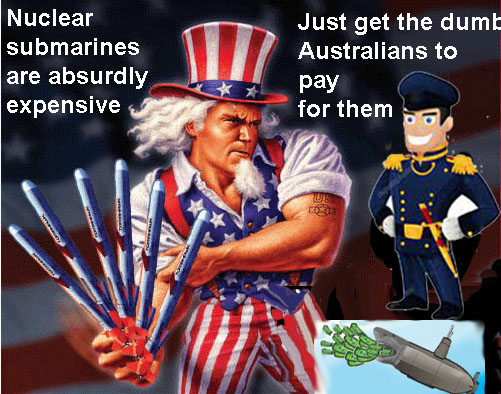



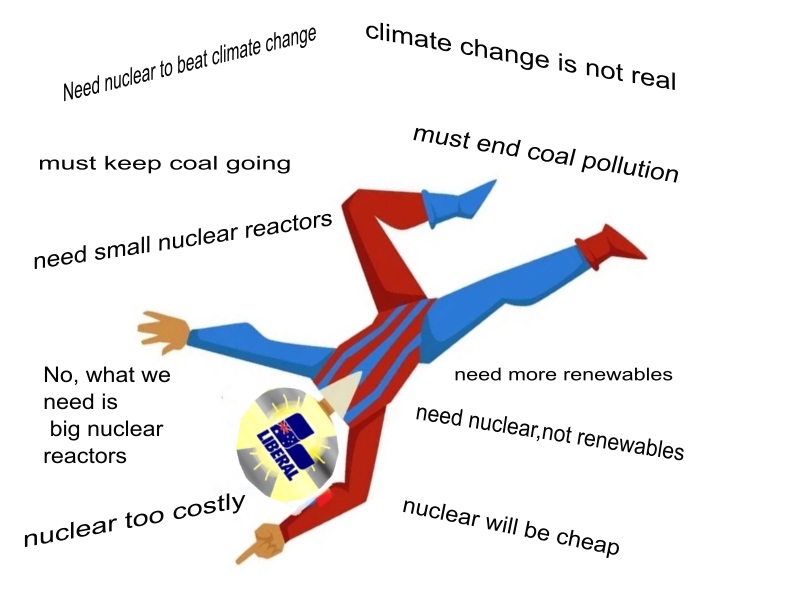
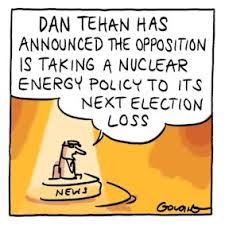
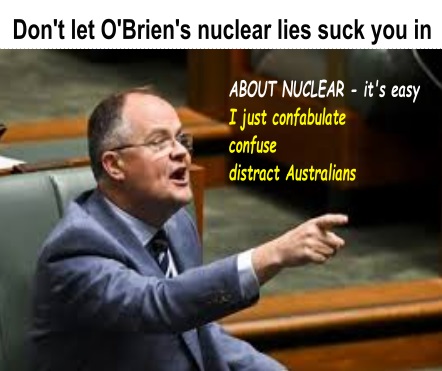
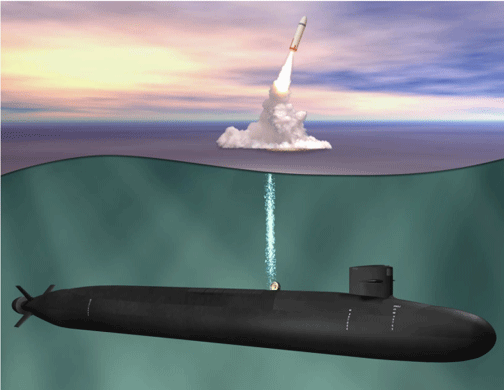



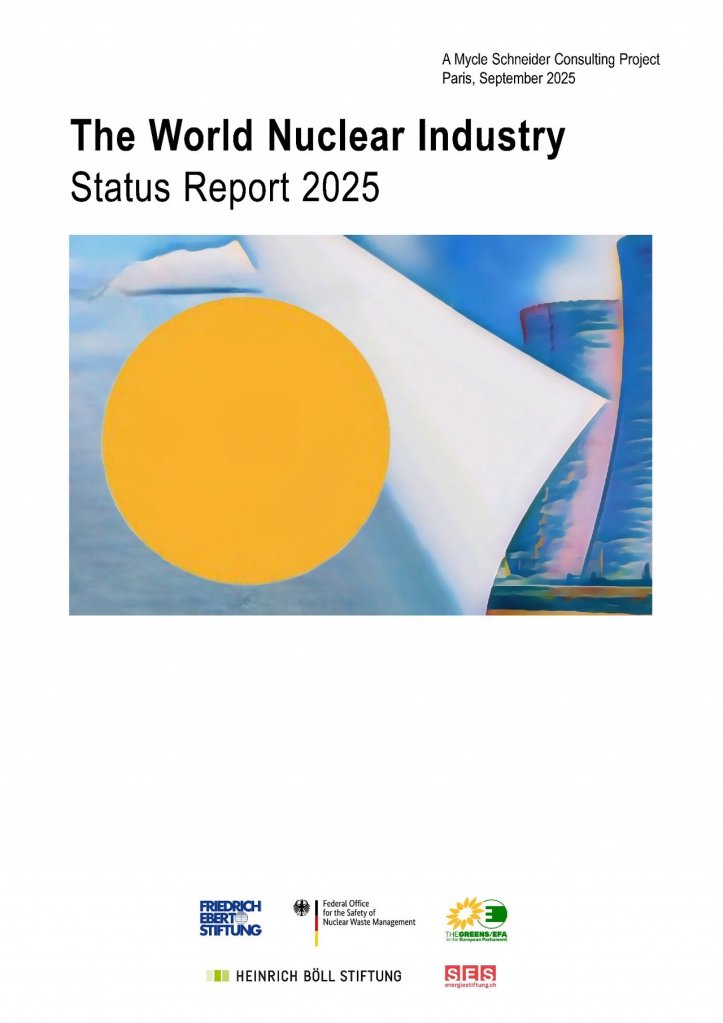

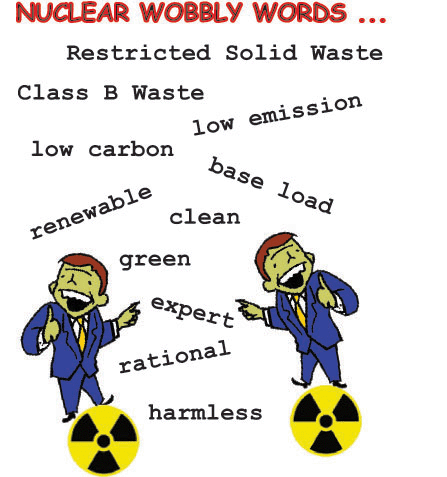
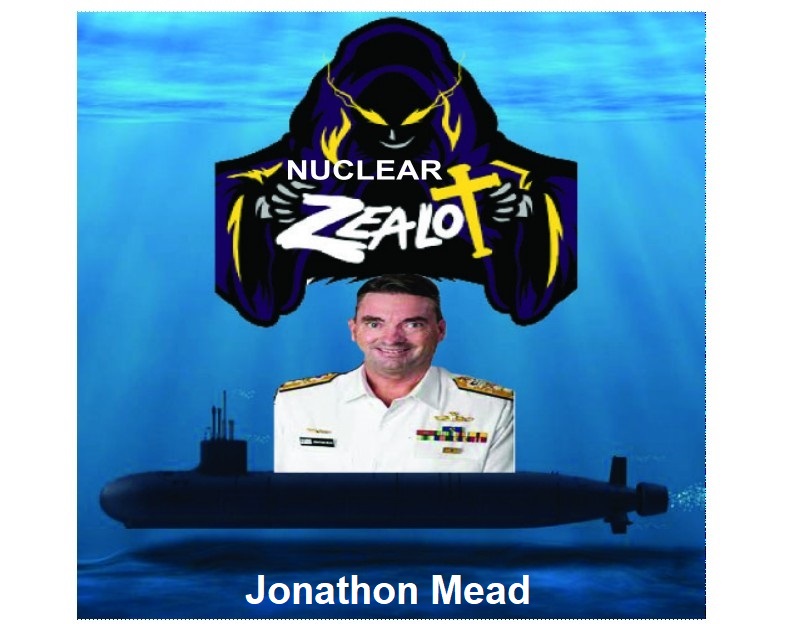
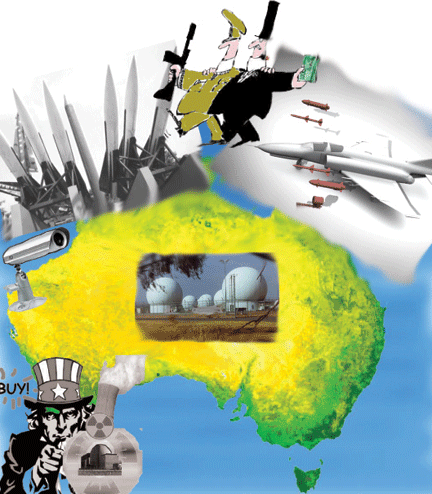


 Antinuclear