The decision by Adelaide University to withdraw a venue booking for an event featuring a leading United Nations human rights expert has ignited a fierce debate about academic freedom and censorship in South Australia.
The controversy surrounds a panel discussion titled “Settler Colonialism: What It Can Tell Us About the Conflict in Israel/Palestine,” which was scheduled to be held at the university’s Elder Hall. The event is part of the Constellations: Not Writers Week, a breakout festival created in response to the recent cancellation of the official Adelaide Writers’ Week.
The panel features Francesca Albanese, the United Nations Special Rapporteur on the Occupied Palestinian Territories, who was to appear via video link, alongside esteemed historian Henry Reynolds and UNSW academic Lana Tatour.
According to event moderator Chris Sidoti, Elder Hall had been booked a month in advance. However, on Tuesday, the university informed organisers that the booking was being revoked, citing “health and safety” concerns.
In a statement, an Adelaide University spokesperson defended the decision, stating they were only made aware of the external event the previous Friday. The university claimed it could not accept the booking because it:
“… did not go through the required review and approval process in accordance with the required policy and procedure.”
The spokesperson added that the university could not “ensure the safety, respect and comfort of those attending” and suggested an alternative venue – the National Wine Centre – at a significantly higher cost of $23,500, compared to the $750 fee for the university hall.
This explanation has done little to quell the criticism. Mr. Sidoti described the move as a “sad reflection on the state of Adelaide University today,” arguing that the institution’s core role is precisely “to provide forums for these kinds of discussions – and it’s failing in that.”
The cancellation has drawn sharp rebukes from political figures, who see it as part of a worrying trend of silencing dissenting voices.
Democracy education resources
Greens Senator for South Australia, Sarah Hanson-Young, demanded the university explain its actions, calling the reports “concerning.” She linked the decision to the earlier controversies surrounding Writers’ Week, suggesting a broader “culture of fear infecting our institutions.”
“You cannot cancel curiosity, you cannot cancel compassion, and you cannot silence a city that believes in the exchange of ideas and freedom of expression,” Senator Hanson-Young said. She accused the university of capitulating to external pressure, stating that “seeking to silence a distinguished international human rights expert undermines academic freedom, weakens intellectual integrity, and contradicts the very principles universities are meant to uphold.”
The event is part of the Constellations festival, which was formed after the official Adelaide Writers’ Week was cancelled this year. That decision followed the withdrawal of hundreds of authors protesting the treatment of Palestinian-Australian writer Randa Abdel-Fattah, who was controversially uninvited from the original lineup.
When questioned directly about whether concerns regarding Ms. Albanese’s appearance – particularly in light of past criticism and US sanctions – influenced the decision, the university spokesperson did not provide a direct answer. They reiterated that the institution prides itself on being a place for the free exchange of ideas.
Event to Proceed at New Venue
Despite the university’s withdrawal, the discussion will go ahead. Organisers have secured the Norwood Concert Hall in Adelaide’s eastern suburbs for Thursday evening, where a sold-out crowd is expected to attend.
Senator Hanson-Young highlighted the public response as a rebuke to the university’s decision:
“Thankfully the event will go ahead… showing that South Australian audiences aren’t as fearful as these institutions,” she said.
Through AUKUS, federal Labor are ‘normalising’ and legitimising High-Level nuclear waste.
The public has a right to full disclosure in an informed debate ahead of AUKUS nuclear decisions. Silence by political leaders paves a path for an AUKUS nuclear dump agenda.
Federal Labor has broken its commitment to announce a process for AUKUS waste storage
Through AUKUS, federal Labor are ‘normalising’ and legitimising High-Level nuclear waste
Minister Marles wants to put a flag on US Navy High-Level nuclear wastes and ‘call it our own’
Aboriginal People have a Right to Free, Prior and Informed Consent over AUKUS wastes
SA Premier to let ‘national security interests’ decide the location for AUKUS nuclear waste
Scenario: AUKUS nuclear waste to ship into Whyalla Port to go north to the Woomera Area
The Australian public have a Right to Say No to undemocratic new federal Labor powers to impose AUKUS High-Level nuclear waste, effectively by decree, across SA, WA and the NT.
AUKUS Regulation 111 (02 Oct 2025) overrides protections in our existing State and Territory laws, and specifically names and prescribes SA and WA laws that prohibit High-Level nuclear waste storage. These draconian federal powers lack social licence and are an affront to civil society, they damage public trust in governance and are an ongoing threat to Aboriginal People’s rights and cultural responsibility to protect their country.
The Objects of the SA Nuclear Waste Storage (Prohibition) Act 2000 set out what is at stake: “To protect the health, safety and welfare of the people of South Australia, and the environment in which they live” by prohibiting certain nuclear waste storage facilities.
Community now face federal imposition of untenable and illegal AUKUS nuclear waste storage,
see “The lethal legacy of Aukus nuclear submarines will remain for millennia – and there’s no plan to deal with it” (The Guardian, 10 August 2025, Interview with Prof Ian Lowe).
Federal Labor has broken its commitment to announce a process for AUKUS waste storage: AUKUS Minister Richard Marles MP made a commitment to announce a process to identify a site to dispose of AUKUS nuclear wastes by early 2024. The failure by Defence to set out any process – other than to take up powers to impose nuclear wastes by decree – is unacceptable.
‘Transparency warrior’ Rex Patrick has brought to light: “A Brief on how to choose a location for AUKUS nuclear waste was provided to Defence Minister Richard Marles in Dec 2023”, see “Submarine boasts, yet nuclear waste dumps submersed in secrecy” (MWM, 16 Feb 2026).
The public has a Right to Know what regions across SA, WA and the NT are being targeted for storage of AUKUS nuclear wastes. The secretive ongoing Defence review “to identify potential nuclear waste disposal sites” (ABC News March 2023) and the Brief must be made public.
The Woomera Area was reported to be a ‘favoured location’ for storage and disposal of nuclear sub wastes back in August 2023, see “Woomera looms as national nuclear waste dump site including for AUKUS submarine high-level waste afr.com. WA, Qld and Vic political leaders rejected a High-Level nuclear waste disposal site in their States in 2023. WA has suggested the Woomera Prohibited Area in SA: “would be one obvious location within the Defence estate, however, we will await the outcomes of the federal review” (SMH 15 March 2023).
Through AUKUS, federal Labor are ‘normalising’ and legitimising High-Level nuclear waste. Aspiring International nuclear waste dumpers Tellus Holdings Ltd that operates the Sandy Ridge waste repository in WA has partnered with Amentum UK to expand the Chandler Project in the NT. Amentum provides services to Pine Gap and was involved in the “Waste Isolation Pilot Plant” – the only nuclear geological repository in the US. In a Jan 2026 submission to a federal Inquiry Tellus offered to first take AUKUS & International Low-Level waste at Chandler.
The public has a right to full disclosure in an informed debate ahead of AUKUS nuclear decisions. Silence by political leaders paves a path for an AUKUS nuclear dump agenda.
Min Marles wants to put a flag on US Navy High-Level nuclear wastes and ‘call it our own’: AUKUS Minister Marles aims Australia take on second-hand US Virginia Class nuclear powered subs in the early 2030’s loaded with US origin military High-Level nuclear fuel waste accrued in up to a dozen years of US Navy operations of US ‘High Enriched Uranium’ nuclear reactors.
Swapping an Australian flag onto this US military nuclear reactor waste places an untenable ‘for ever’ burden on future Australian generations to have to try to isolate these US nuclear wastes.
Aboriginal People have a Right to Free, Prior and Informed Consent over AUKUS wastes:
Q: Will our political leaders commit to respect and comply with Aboriginal People’s human rights, set out in the United Nations Declaration on the Rights of Indigenous Peoples Article 29 (UNDRIP 2007), to “Free, Prior and Informed Consent” over storage of hazardous materials on their lands. AUKUS nuclear wastes absolutely are hazardous materials! Traditional Owners across SA, WA and the NT have repeatedly had to Say No to the imposition of nuclear wastes.
The SA Premier was called on to declare his position back in Dec and has so far not responded.
SA Premier to let ‘national security interests’ decide the location for AUKUS nuclear waste:
Premier Peter Malinauskas MP has said AUKUS nuclear waste should go to a ‘remote’ location in the “national security interest”, see “Site for high-level nuclear waste dump under AUKUS deal must be in national interest, SA premier says” (ABC News 15 March 2023).
The Premier’s “Office for AUKUS” (Letter, 07 Oct 2025) claims “safe and secure disposal” for High-Level nuclear waste, including spent fuel, produced when N-subs are decommissioned. The Office expresses no concerns over globally unprecedented High-Level nuclear waste disposal, declines to reveal what is underway and yet expects “community acceptance”:
“Determining suitable locations and methods for safe and secure disposal will take time, but Australia will do so in a manner that sets the highest standards … and which builds community acceptance for a disposal solution.”
Ahead of the SA Election the Premier has been called on to answer the Q: Will you accept or reject federal imposed storage of AUKUS nuclear waste in SA? so far there is no response.
REPORTER: Is a high-level nuclear waste dump the price that South Australia will have to pay for the jobs that go to the state? (Minister Marles Press Conference 14 March 2023)
MARLES: Well, as I indicated there will be a process that we will determine within the next 12 months for how the site will be identified. You’ve made a leap there, which we’re not going to make for some time. It will be a while before a site is ultimately identified.
SA is left in the dark, without a say, as an ongoing target for an AUKUS nuclear waste dump
Scenario: AUKUS nuclear waste to ship into Whyalla Port to go north to the Woomera Area
The Woomera Area is expected to be a target on a federal regional short list for an AUKUS nuclear dump site and Whyalla Port to be on a likely AUKUS nuclear waste transport route.
Rex Patrick has set out an array of potential locations and types of AUKUS nuclear waste facilities across Australia, see “AUKUS waste in perpetuity” (MWM, 22 July 2025). For further information: see Friends of the Earth https://nuclear.foe.org.au/nuclear-subs/
Or, Why Australia chooses to live in the lies of an American world
Burning Archive, Substack, Mar 07, 2026
Australia feinted on the global stage this week when Canadian Prime Minister Mark Carney went to Canberra. Offered dignity as a middle power, the Australian Government acted the pawn in another USA-run war.
Disappointing, but what I have come to expect, and we have to deal with the world as it is, right? Or, so the realist fictions say. But let me tell you a stranger history of the plural Australian experience, and how this decolonised nation came to be that way.
Contemporary Australia’s muddled national sovereignty is the product of three botched decolonisation projects:
Federation as White Dominion, 1890-1920;
USA Agent in a British Commonwealth, 1930-50;
Deputy Sheriff and Starlet in the USA’s Liberal Empire, 1968-1999.
You may not have heard these labels; I devised them for this essay. But don’t worry: I explain the history and evidence behind them at the end of this post on Australia’s experience of decolonisation.
Mark Carney’s Wake-Up Call to Independence
In each of the three botched decolonisation projects, Australians – both élites and masses – chose belonging to an empire, which claimed global supremacy, over modest, gregarious co-existence as a middle power of one earth.
Now, in 2026, another historic opportunity for decolonisation has arisen. It was announced to the Australian Parliament by the Prime Minister of another decolonised dominion, Mark Carney of Canada.
“Yes, the world will always be driven by great powers, but it can also be shaped by middle powers that trust each other and act with speed and purpose.
Mark Carney, Address to Parliament, Hansard, 5 March 2026
Will Australia seize the moment? Will we act with speed and purpose? Will Australia ride, or get dumped by, a fourth wave of US American decolonisation, by the unravelling of the USA Empire?
My hunch is: we will get dumped, and then sucked out with the rip into the most dangerous waters. Like a bad cocky swimmer in rough surf, we have not been paying attention to the world “as it is” around us, and not even swimming between the flags.
At least, the mainstream élites in politics, business and culture in Australia have not been paying attention. The omens of this opportunity for a new decolonisation have been noticed in the Great Southern Land, for a decade or more, by a few dissident, reviled voices. Like antipodean Havels, we have tried to live in the truth, and point out the lies and slogans our leaders ask us to hang in our shop windows, like the indispensable American Alliance, our great and powerful democratic friend, and the ‘liberal rules-based international order,’ exposed as a sham by Mr Carney at Davos. But Australian leaders have suppressed all readings of the omens. They have blocked their ears and masked their eyes. They refuse to see Australia as anything but the Deputy Sheriff of the USA’s Empire or some B-grade celebrity starlet aspiring to be enriched by Rupert Murdoch’s global media empire.
The Closing of the Australian Mind
The Australian mind is closed and colonised, like few around the world. It may be because Mr Murdoch has so successfully counter-colonised the political and cultural networks of imperial masters, Britain and the USA. It may be because we botched our past three attempts at decolonisation, and the gulfs have washed us down. It may be that we have been unlucky in our leaders. But I suspect, most deeply, it is because, in each attempt at independence, we neglected one crucial truth: colonisation begins and ends in the mind.
It’s only Day Five of the war, but surely the epic stupidity of Australia so cravenly backing the US-Israeli invasion of Iran is evident by now. Michael West reports.
We are led by fools and sycophants. The illegal, unprovoked invasion of Iran is not just garden-variety stupidity. This is stupidity on a grandiose, stratospheric scale.
The Israeli propaganda narrative that Iranians would sprinkle rose petals at the feet of their invaders has not come to pass. It has already been demolished in fact.
Instead of bringing freedom and democracy – ‘regime change’ – we have brought chaos, possibly a world war, and definitely the destruction of the Middle East. The world economy is being hit hard as we write; oil prices spiralling, energy prices about to soar, and the inexorable spectre of inflation and recession.
“And it didn’t have to happen.“
This was a war of choice. Even without the “Epstein Coalition” – as the Iranian media so aptly dubs their invaders – murdering 168 Iranian school girls on day one, ‘peace through strength’ was never going to happen.
Quite the contrary. The illegal and unprovoked invasion of Iran has hardened the resolve of Iranians, who are massing in their hundreds of thousands across the country to mourn their dead and chant Death to America, to back their regime.
Where was the advice?
The Epstein Coalition killed the Ayatollah, who was actually against nuclear power; he was a moderate. Did Albo and Penny Wong not seek advice from Foreign Affairs that attacking Iran was folly, that the anti-regime protestors were a minority, that the pre-invasion protests were a Mossad and CIA psyop, that Iran might attack US proxy states in the region, that invasion would be a Brobigdadgian mistake?
Or did they ignore the advice in favour of a Washington regime compromised by the Epstein pedophile scandal?
And now, we see the feeble, hypocritical whining by Israel and its supporters about Iran attacking the Gulf states. Is that our only moral defence? Decades of supporting these regimes: Bahrain, Qatar, Kuwait, Saudi Arabia, and the United Arab Emirates – US proxy states all – regimes now unravelling, the oil price is soaring, inflation and recession are beckoning globally.
Images are emerging from Bahrain of locals cheering on the Iranian missiles. Were DFAT and our politicians unaware of popular angst in the Gulf states against American imperialism?
And what did they expect Iran to do in the face of this existential threat? Not blow up American bases and infrastructure while the US attacked them; after the US betrayed them at the very negotiating table when they were offering significant concessions on nuclear enrichment, all to avoid war? This war.
Australia, the US flunkies
Yet here was Australia, Saturday night, first out of the blocks worldwide to throw its support behind Donald Trump and his preposterous “Operation Epic Fury”, a probable pedophile being blackmailed and led around by the genocidal Benjamin Netanyahu like a pony at the fairground show.
“Operation Epstein Fury”, it was fast labelled. The soaring, craven stupidity is hard to grasp. Both major parties backing it. Albo first, then Angus Taylor rushing to tow the Donald’s line. Then, Pauline Hanson, too, who even congratulated and praised Netanyahu. We are led by fools and sycophants.
The flawed defence of atrocity
To address the empty rhetoric of the pro-war lobby, criticism of this war does not equate to support for the regime in Iran. Defenders of the US-Israel atrocity are busy with their swarms of social media bots peddling the argument that “you are an Islamist terror supporter” if you criticise the invasion.
This is the 2026 version of “You are a Hamas supporter” if you argue against genocide in Gaza.
The cold facts of this debacle are that regime change does not work, that Iran did not want this war, that Iran appears to be exceptionally well prepared – even winning the war – that the Epstein Coalition, which Australia supports, is daily backing war crimes: blowing up hospitals, schools and civilian infrastructure.
“This is a war which has already been lost.“
The obvious reality is that regime change wars are a demonstrable failure. Vietnam. Iraq. Afghanistan. Iraq – a million dead, irretrievable regional stability. In Afghanistan, 20 years, trillions of dollars spent, four US presidents, six Australian PMs – all to replace the Taliban with the Taliban.
And here we are, the world’s busybodies, doing it again.
Who would ever negotiate with the US in good faith again, or Israel for that matter? Iran did not want this war. Iran has not attacked another country in 300 years.
The US lured them to the negotiating table, then, without warning, murdered their leadership. This echoes last year’s 12-day war, where Israel and the US lured them in on the premise of good faith talks, then murdered them and now play the victim.
What did they expect Iran to do in the face of this existential threat?
The record speaks for itself. The US is the biggest invader of other countries in history. Israel has, last year alone, attacked Iran, Iraq, Lebanon, Yemen, Jordan, Palestine, Qatar, Tunisia, Malta, and Greece.
Six illegal attacks of sovereign nations, as well as three illegal attacks in international waters equals 9 all up. In one year. And now they are invading Lebanon again, seizing more territory as their puppets, America, fight their campaign against Iran.
Albo, what are you doing?
We know who the war mongers are. We are the war mongers. Yet, in his bizarre statement of support, Prime Minister Anthony Albanese was the fastest out of the blocks of all the allies on the weekend, issuing a false statement.
The claim, echoed by the usual warmongers of the Lib-Lab establishment, is that Iran is guilty of attacks on Australian soil, referencing alleged attacks on a deli in Bondi.
We know who the war mongers are. We are the war mongers. Yet, in his bizarre statement of support, Prime Minister Anthony Albanese was the fastest out of the blocks of all the allies on the weekend, issuing a false statement.
The claim, echoed by the usual warmongers of the Lib-Lab establishment, is that Iran is guilty of attacks on Australian soil, referencing alleged attacks on a deli in Bondi.
Then there is the age-old claim that Iran is about to produce nuclear weapons. The US and Israel’s nuclear risk claims have been so roundly discredited it’s a joke.
Benjamin Netanyahu has been trying to instigate a war against Iran for 30 years – claiming Iran is days away, weeks away, months away from nuclear missiles.
And they were at the negotiating table again when the Epstein forces murdered them.
The propaganda
We are now seeing mainstream media decry the ‘illegal attacks’ on Israel and the Gulf states. Yet the ‘victim card’ is tapped out. Around the world, outside the legacy media propaganda, there is little sympathy for Israel having razed Gaza and slaughtered between 72,000 and 700,000 Palestinians while stealing more land in the West Bank daily.
It will continue. The media and political classes have failed so majestically that they can only try to salvage their authority with more propaganda.
The deplorable coverage of the murdered schoolgirls in Iran is a case in point. The “40 beheaded babies” and the “mass rapes” of Hamas filled the headlines in the West on October 8, 2023. Yet real murders – 170 murdered schoolgirls – have hardly rated a mention. Yes, a mention perhaps, but a side story, buried, no headlines of outrage.
Can’t handle the truth?
Is the truth too hard to handle? Is it not evident to everybody except the most brainwashed advocate of the Epstein lobby that Israel – the government, the state – is the problem here?
Netanyahu has won his ambition to drag America into a war against Iran, and if you follow the money, while world stock markets teeter, the stock market in Tel Aviv is surging, replete with weapons companies as it is.
Meanwhile, the ASX is tanking, ergo our savings. Oil prices are surging, ergo higher energy prices and inflation. The Houthis, Iran’s allies, are shooting again in the Red Sea while, on the other side of the Arabian peninsula, Iran has blocked the Straits of Hormuz, choking off a large chunk of the world’s oil supply.
Higher prices in India and China will mean higher prices for imports and inflation around the world.
The lessons of history have not been learnt; in fact, they have been discarded in spectacular fashion.
Greens Senator David Shoebridge nails it: “The Albanese Government needs to be clear about what support it is offering the US in its war on Iran. Labor’s claim that we are not offering support is plainly not true.”
COMMENT – Christina Macpherson – As a former Labor party member, I am totally disenchanted with the current Labor leadership. Anthony Albanese has faded away from a strong principled Labor leader to a pale grey accessory to the USA. And Penny Wong ! If she had any integrity she’s resign – it must be uncomfortable for her, forever sitting on the fence about everything
The Albanese government gives us the mushroom treatment. Keeps us all in the dark and feeds us BS.
This week, our small target federal government gave a bravura homage to John Cage. While a US-Israeli war of no legality engulfs the Middle East, while Australia’s top-secret spy facility hums away in the desert night providing targeting data for strikes that have already killed hundreds of civilians, while US surveillance aircraft slip into RAAF Base Pearce from Diego Garcia without so much as a public flight plan, Anthony Albanese and Penny Wong polish their performance art, the blank face, the rehearsed non-answer, a version of Cage’s 4′ 33″ -and the inane repetition of lines that insult the intelligence of every Australian watching.
Asked about Pine Gap’s role? We got “we don’t comment on that facility.”
The litany of lies becomes a bad parody of accountability. Asked, “is the US-Israel attack on Iran legal under international law? We got: “that is a matter for Israel and the United States.” So the rules-based order they are in love with turns out to be Rafferty’s Rules, after all. And Wong is becoming a human bot before our eyes.
Asked whether we were briefed in advance. We got “this was a unilateral action by the United States.”
It is a performance not of statesmanship but of studied evasion. And it has been noticed. It’s top shelf-fobbing off. Wong and Albanese could fob-off and rebuff for Australia, when it becomes an Olympic event.
On international law being broken, the government’s hypocrisy is gob-smacking
Albanese and Wong have invoked “international law” and the “rules-based order” more than a hundred times since returning to government. They have called out Russia over Ukraine. They have criticised China. As recently as last year, Wong’s department was demanding China comply with international law, and the year before that, complaining that Chinese domestic legislation allowed Beijing to ignore it.
But when Canadian Prime Minister Mark Carney, a guest on Australian soil, stated plainly that the US-Israeli strikes on Iran appear “prima facie inconsistent with international law,” Wong’s response was to handball the question back to Washington and Tel Aviv.
“The legal basis of these strikes is ultimately a matter for the United States and Israel,” she repeated, for perhaps the twentieth time, to a press circus that grew visibly more frustrated with each non-answer.
This is not a position. It is a void in a vacuum in a vortex of entropy dressed up as a position.
The “rules-based order” mantra that Australia endlessly chants, a type of incantation to ward off witches, warlocks and bad faith actors, turns out to be a franchise. The rules apply to adversaries. Allies get a different menu. When Russia bombs civilian infrastructure it is an outrage; when the US does it, the legal basis is “a matter for those two countries.” When China ignores international law, Canberra clucks as volubly as any hen-house. When Israel and the Trump administration launch pre-emptive strikes without UN authorisation, without consulting allies, without even informing Albanese in advance, the government goes mute.
It’s not just hypocritical. It’s a double standard with added craven sycophancy, toadying and fawning over the US latest brain-fart that does lasting damage to Australia’s credibility as an honest broker in the region.
Surreal? Pine Gap, which is where the mushroom treatment gets especially dangerous.
Pine Gap is not some quiet public library in the red centre. It is the eyes and ears of the American eagle. Or as Peter Cronau documents, the listening post for a swarm of US satellites that provide the intelligence feed for major US and Israeli military operations in the Middle East and now the Indian Ocean. It geolocates targets. It intercepts military communications. It detects missile launches and supports targeting. It cannot, as Cronau noted before the first strikes last year, not have been already involved.
When a US submarine sinks an Iranian ship in the Indian Ocean, an area directly within Pine Gap’s signals collection coverage, Australians have a right to know whether their facility, on their soil, provided the intelligence that killed those sailors. Wong’s answer: “We don’t comment on that facility.”
Wong assures us there is “a high degree of transparency in relation to the United States presence in Australia.”
You just can’t see it.
Or credit it. Or forgive her duplicity, The lie here is mind-boggling.
Yet now we learn that two US P-8A Poseidon maritime patrol and reconnaissance aircraft flew directly from Diego Garcia, the staging base for US operations across the Indian Ocean, to RAAF Base Pearce in Western Australia without prior public announcement, with flight plans lodged only once they were airborne. These are not joy rides. P-8A aircraft have been integral to Washington’s operations at the Strait of Hormuz. Their visit to Australian soil in the days following the bombing of Iran is not a coincidence. It is a data point.
Defence Minister Doughboy Richard Marles a US War Department dogsbody, doggedly declines to comment.
Greens Senator David Shoebridge nails it: “The Albanese Government needs to be clear about what support it is offering the US in its war on Iran. Labor’s claim that we are not offering support is plainly not true.”
The government does not want us to think about their epic credibility fail. That is the whole point.
The contempt is not limited to matters of war and peace. It runs through the entire fabric of how this government deals with Australians who have the temerity to ask questions. And to expect answers.
Albanese entered office in 2022 declaring that “the Australian people deserve accountability and transparency, not secrecy.” He criticised the Morrison government’s “cult of secrecy” and its “culture of cover-up.” Like a specialist performing a colonoscopy, he was going to shine a bright light into dark entrails. Instead he handed the patient a blindfold.
Not even under “Morrison Un-hosed” has freedom of information been so much of a running gag in a government which not only runs on the most expensive misinformation money can buy from its stable of top-end corporate consultancies but one which is very reluctant to share anything with anyone. Especially anything that might reveal its inner workings or help voters to hold it to account.
The Centre for Public Integrity finds that under Albanese, Freedom of Information requests granted in full have collapsed from 59 percent in 2011-12 to just 25 percent today. Outright refusals have nearly doubled to 23 percent. Almost half of initial decisions are found to be flawed on internal review. The Albanese government complies with Senate orders to produce documents only one-third of the time, a record worse than the Morrison government. The Centre’s Research Director, Catherine Williams, calls it a “deliberate effort to avoid scrutiny.” The government’s own record gives her no grounds to be contradicted.
This is not administrative slippage. This is policy.
What emerges from all of this is a government that has made a fundamental calculation: that Australian citizens do not need to know what is done in their name, with their money, on their soil, or at their risk.
They do not need to know whether their intelligence facilities are helping to kill sailors in the Indian Ocean.
They do not need to know whether US surveillance craft are operating out of Australian bases as part of a widening Middle Eastern war.
They do not need to know whether the strikes their government endorses are legal under the international law their government claims to champion.
They do not need to know what is in government documents that the Senate orders to be produced.
They do not need to ask. They just need to trust.
But trust, like international law, turns out to be something the Albanese government only demands of others.
There is a word for a government that maintains one set of rules for its allies and another for its adversaries, that invokes transparency as a slogan while systematically dismantling it in practice, that keeps citizens uninformed about activities on their own soil that may be drawing them into someone else’s war.
The word is untrustworthy.
Not dishonest in the flamboyant, self-destructive way of some politicians. This government is too careful for that. It is dishonest by omission, by evasion, by the rehearsed non-answer, by the careful deployment of “we don’t comment on that facility” as a substitute for democratic accountability.
Mark Carney, standing on Australian soil, said what Albanese and Wong won’t: the strikes appear inconsistent with international law, hegemons are acting without constraint, and the old world order is fraying. It took a visiting foreign leader to say plainly what our own government refuses to acknowledge.
That tells you something about how far we’ve travelled since Albanese promised us sunlight.
The US and Israeli strikes on Iran on the weekend present Australia with a difficult but necessary question: what does it mean to defend an “international rules-based order” if that defence is applied selectively?
Moments like this test whether our commitment to international law is principled or contingent.
Australia’s Foreign Minister moved swiftly to express support for the strikes. Yet their illegality was immediately apparent to leading legal experts worldwide, including clarion calls from Australia’s own Professor Ben Sauland Donald Rothwell. The unanimous verdict of the legal community is that the strikes were again, as was the case in June 2025, manifestly illegal under the UN Charter.
The prohibition on the use of force is a cornerstone of international law. Kick at it repeatedly, dislodge it enough, and the foundations begin to give way. Don’t for a moment let the flurry of legal opinions suggest that this is a rhetorical disagreement; it is a serious legal dispute about the limits of military power.
When powerful states stretch those limits, the consequences ripple outward. International law depends not only on formal enforcement, but on perception, consistency and restraint. If some states vest in themselves the authority to determine when force is justified, others will inevitably take note.
For a middle power like Australia, which relies on stable legal frameworks rather than strategic dominance, that erosion carries real cost. If Australia is serious about international law, it must apply the rules consistently to everyone, everywhere, at all times, including to its closest partners.
Then there is the deeper nuclear dimension.
Both the United States and Israel are nuclear-armed states. When nuclear-armed governments conduct strikes framed as counter-proliferation measures, it reinforces perceptions of hierarchy and hypocrisy in the global non-proliferation regime, centred on the Nuclear Non-Proliferation Treaty (NPT).
The NPT rests on a two-part bargain dating back to 1968: non-nuclear-weapon states agreed to forgo nuclear weapons while the five permanent members of the Security Council, who are nuclear-armed, promised that they would pursue disarmament “in good faith on effective measures relating to cessation of the nuclear arms race…and a treaty on general and complete disarmament“. Progress by the nuclear-armed states on that second pillar stalled, while reliance on nuclear deterrence has become more deeply embedded in strategic doctrine, and four additional states have developed their own nuclear weapons.
This credibility gap is precisely why the citizen-led coalition, International Campaign to Abolish Nuclear Weapons (ICAN), created in Melbourne in 2007, worked with humanitarians worldwide, in particular the Red Cross Red Crescent Movement, to develop a treaty that makes nuclear weapons illegal and sets the stage for their elimination.
This treaty-led approach to banning inhumane weapons has already been achieved for all other weapons of mass destruction. ICAN is now led from Geneva by former ALP Federal Member for Fremantle, Melissa Parke, and has over 700 partner organisations who continue to advocate for the Treaty on the Prohibition of Nuclear Weapons, the only legally binding global instrument that comprehensively prohibits nuclear weapons and establishes a pathway toward their elimination. Ninety-nine countries have joined this treaty.
Australia is not one of them.
Given our historical good standing on arms control, I’m often asked why this is, including by state and federal parliamentarians. The straight answer is that our government is fearful to confront our powerful ally, even on this topic on which the safety of life on earth rests, in fact, particularly on this topic.
Australia occupies an unusual position in the nuclear debate. We are not a nuclear-armed state. We do not host our own nuclear weapons. Yet we are deepening defence integration with nuclear-armed AUKUS allies, expanding force posture initiatives, hosting joint facilities, and embedding ourselves more tightly within extended deterrence arrangements. Alliance cooperation, we are told, brings clear benefits. It also brings exposure.
Retaliatory strikes on US facilities across the Gulf illustrate a basic reality: infrastructure associated with military operations become targets. As Australia expands access and interoperability, it is prudent, not disloyal, to assess how that affects our own vulnerability in a crisis. This is not an argument for abandoning alliances. It is an argument for clarity about trade-offs.
If Australia is prepared to criticise breaches of international law by adversaries, it must also be prepared to express principled concern when allies test those same rules. Selective application weakens the normative architecture we claim to uphold.
Military strikes can delay technical capabilities, but they don’t resolve the political drivers of proliferation. Durable non-proliferation outcomes have historically depended on negotiated constraints, verification and reciprocal commitments, not cycles of force and retaliation.
Security built on nuclear brinkmanship is brittle security.
The Australian government is not living up to the image of our nation as a principled, multilateral middle power that Prime Minister Albanese painted at the UN General Assembly last year when he said:
“If we give people reason to doubt the value of co-operation, then the risk of conflict becoming the default option grows. If we allow any nation to imagine itself outside the rules, or above them, then the sovereignty of every nation is eroded.”
Australia should walk the talk and swiftly reposition itself to buttress confidence in international law. The government should begin by publicly and repeatedly reaffirming that international law consistently, to allies and adversaries alike.
Next, it has a responsibility to clarify for itself and inform the public whether any joint facilities based in Australia played a role in supporting the strikes and take measures to ensure that Australian territory is not used to facilitate unlawful military action. Not to satisfy a journalist’s curiosity, but because it’s an obligation under international law.
Lastly, the government should demonstrate its commitment to diplomacy and, without further delay, join the Treaty on the Prohibition of Nuclear Weapons as part of a credible strategy to reduce nuclear risk. Numerous cities, councils and state and territory parliamentarians have signed a pledge in support of taking this action. So have a majority of federal Parliamentarians.
Australians want a world in which law constrains power. Our government must be prepared to defend that principle confidently and consistently, even and especially among allies.
At present, Australia risks being too quick to support force, and too slow to grow peace.
About the author
Tara Gutman is a lawyer and strategist specialised in international law at Lexbridge Lawyers. Tara is also Co-Chair of ICAN Australia.
Hidden review slams senior Liberals’ lack of reflection after devastating election loss,ABC 3 Mar 26
“…On nuclear energy, Mr Dutton said making the power plants government owned neutralised community concerns around safety, but provided Labor an attack line on cost.
“Labor didn’t lay a glove on the policy as such, but they were effective in their campaigning saying ‘he’s going to cut health, education and NDIS to pay for this’,” he said.
…The review deemed the almost six-month delay between the Coalition unveiling its plan to fund nuclear power stations and releasing the costings for it as “fatal”.
It was found that the gap allowed Labor to fill the vacuum with a “scare campaign”.
The federal secretariat had presented “considerable research” to Mr Dutton’s office outlining the significant effort required to win over voters sceptical of nuclear.
Under secretly-concluded arrangements with our allies, Australia is now on track to have US nuclear weapons on Australian soil for lengthy periods, starting very soon.
A new report released today details this dangerous development and exposes how the Australian community is being kept in the dark about it.
The report by civil society group Australians for War Powers Reform (AWPR) examines efforts by the Albanese government to facilitate the increasing presence of nuclear weapons capable aircraft and submarines.
“Many Australians are completely unaware that under current agreements with the US Australian airfields and port facilities will be hosting US aircraft and subs that could be carrying nuclear weapons. And those visits will increase dramatically, possibly in breach of the South Pacific Nuclear Free Zone Treaty,” said AWPR spokesperson Peter Murphy.
“A massive 1.6 billion dollars is currently being spent to upgrade the Tindal RAAF base in the Northern Territory and media reports describe six B-52, long-range, nuclear-capable bombers being “housed” there. But so far there’s been no proper public debate about Australia’s increasing involvement in the US nuclear weapons system.”
The Albanese government currently has a “we don’t ask” policy when it comes to whether US aircraft and ships are carrying nuclear weapons while in Australia. At the same time the US has a “neither confirm nor deny” policy on nuclear weapons. These policies are unwarranted and unacceptable.
“It’s time to end the secrecy on nuclear weapons and let the public have an informed debate. Do we really want these weapons of mass destruction in Australia? Shouldn’t the parliament discuss and vote on these matters?”
Australians have consistently rejected any role for nuclear weapons in our defence policies. A national poll last year revealed that two-thirds of Australians want the government to sign and ratify the UN Treaty on the Prohibition of Nuclear Weapons (TPNW).
“In this new report we are also urging the government to initiate a full independent inquiry into the AUKUS pact, as repeatedly called for by civil society and former prime ministers and foreign ministers. It should include a comprehensive review of Australia’s policies on nuclear weapons,” Peter Murphy said.
The full report “Australia and US Nuclear Weapons: Time to End the Secrecy” is available here
Last night, US President Trump launched a new illegal bombing campaign against Iran. The Australian Government’s support for Trump’s latest illegal war is a clear breach of international law and the prohibition on wars of aggression.
The Iranian people deserve to be free from persecution and domination, both from the current regime and from foreign powers. History shows, and the world knows, that US military attacks and Donald Trump’s kidnappings and assassinations do not produce peace and do not produce justice.
While US bombs and missiles rain down on Iran, there is every likelihood that they are being targeted with the direct or indirect assistance of “joint” US-Australian military facilities at Pine Gap and North West Cape.
The Greens have consistently and clearly condemned the Iranian Regime’s violent response to recent protests and long history of oppression, and we have backed the Woman Life Freedom movement. We know that the people of Iran who have been the victims of the regime will be the same people who are right now being killed, injured and driven into further poverty and fear by US bombing.
Senator Waters, Leader of the Australian Greens, said:
Trump and Netanyahu’s illegal attacks last night have unleashed chaos across the Middle East.
“This war will not bring safety to the brave Iranian people who are fighting for liberation from the brutal regime. Innocent people have already been massacred, including at least 60 children in Southern Iran killed by US and Israeli strikes on an elementary school last night. Our hearts ache for their families. This war will see homes and cities razed to the ground and countless innocent lives lost.
“The Greens condemn these illegal, abhorrent and unilateral attacks. Australians do not want to be dragged into another US-Israeli war.
“Australia’s support of Trump and Netanyahu’s illegal attack last night was disgraceful. “We cannot bomb our way to peace.
“The Labor government must immediately rule out Australian support for Trump and Netanyahu’s illegal war. No resources. No intelligence. No more cover.
“The Labor government must also confirm to the Australian people that no intelligence from Pine Gap or other US bases in Australia was used last night, and rule out allowing these bases to be used in this illegal war going forward.
“End AUKUS. Australia must be a force for peace and diplomacy across the world.”
Senator Shoebridge, Greens spokesperson on Foreign Affairs, said:
“No one seriously believes that Donald Trump cares about the rights or lives of people in Iran. Just like other US wars that Australia has supported in Vietnam, Iraq and Afghanistan, the talk is about freedom and democracy but the reality is killing and destruction. Already, we are seeing reports of schools being destroyed and children killed in airstrikes.
“With barely a moment’s pause the Albanese Government has backed Trump and another US-led war in the Middle East. This proves without a shadow of a doubt that Labor has outsourced Australian foreign policy to Washington.
“Labor has made Australia a part of this war by allowing Pine Gap and other US military bases here to be used to gather intelligence and target US bombs and missiles. People see through Labor when it says it believes in international law and then repeatedly backs the US and its illegal wars.
“Time and time again the US has betrayed the people it was claiming to protect, leaving bloodshed in its wake while serving its own corporate and military interests. Trump is no different, even if he is more blatant.
“The Greens are the only anti-war party in the Federal Parliament and we will not shift from that stance, having seen the horrifying scale of killing and displacement that war has visited on the world.
“The world has been watching the bravery of the Iranian people pushing back against a brutal regime and calling for liberation and freedom. The Greens know that a Trump-led military assault on Iran is not a pathway to freedom or a pathway to a democratic regime that is supported by the Iranian people. This attack, like the last, is a pathway to chaos and more killing in Iran.
“There is more Australia can do for the people of Iran, starting with offering safety to those who have fled the regime, especially those already in Australia who are trapped in an unfair refugee process.”
1. Today saw release of a report prepared for the US Department of Energy that will, alongside others from US agencies like OSHA, be feeding into the US NRC review of radiation Protection Standards mandated by the Trump Directive (EO 24300) issued in May last year. The NRC draft of revised regulations on Radiation Safety is expected 30 April 2026. The attached report to the US DoE – with particular significance for radiation safety for workers in and populations living close to nuclear power reactors – gives a clear indication of how this process is likely to result in significant weakening of protection standards
In summary it advocates
abandoning the Linear No Threshold and As low as Reasonably Achievable principles that offer some protection at low levels of exposure based on the principle that there is no safe level of exposure
resetting the annual occupational exposure limit to 100 mSv – a doubling of the current US standard of 50mSv and a five-fold increase in the 20mSv annual occupational standard that applies in most other countries including Australia
raising the public exposure limit from 1 mSv to 5 mSv
I think we can expect other US agencies to submit similar reports
2. As previous posts on this issue have noted these proposals to weaken radiation protection for workers and the public come at a time when the evidence is mounting from studies of workers and communities exposed to radiation releases in and from Nuclear power pants for a revision that would tighten the current standards. Today saw the release of a new book by Ian Fairlie – The Dangers of Ionising Radiation: A Scientific Guide to Radiation Risks for Government Agencies, Legal Professionals and Medical Clinicians has just been published (Ethics International Press. 2026) https://ethicspress.com/products/the-dangers-of-ionising-radiationAs anticipated this updates much of the earlier work in Ian Fairlie and Cindy Folkers book –
Australia’s acquisition of nuclear-powered submarines is not in fact the most important part of the AUKUS deal – they are a distraction … AUKUS’s main game is the base that Australia intends to give to the US at HMAS Stirling in Western Australia
It is tempting to label the AUKUS project an exercise in self-delusion and self-denial. The number of commentators who believe the project’s core promise will actually be honoured – the transfer of Virginia-class nuclear-powered submarines from the United States to Australia – is astonishingly small and mainly limited to politicians and their hangers-on.
Even in the US, the likelihood of the transfer taking place is openly discounted, including by the chief of naval operations, Admiral Daryl Caudle. As if preparing for a let-down, a new report from the Congressional Research Service advances alternatives to the transfer of the promised submarines that will still allow the US to meet its strategic priorities.
In addition, it is hard to square the submarine promise with the reality that is Washington these days. US President Donald Trump’s willingness to pressure America’s allies and turn the US into a rogue superpower is well documented – just ask the Canadians and Danes. We have witnessed in real time his destruction of the global rules-based order as the US withdraws from dozens of international organisations and agreements.
That the US warship-building industry is in poor shape is also no secret. The odds of the nation being able to increase its submarine build rate to the required level for the transfer to go ahead without a loss of US operational capability is virtually nil, according to a December 2025 report from the Washington-based Center for Strategic and International Studies.
One must accept that Australia’s politicians are reasonably intelligent, yet with the myriad well-known problems facing the nuclear-powered submarine transfer it is hard to understand how they can still insist that the project is “full steam ahead”. Nor is this insistence without cost to the taxpayer, as evidenced in the recent promise to spend $30 billion on South Australia’s Osborne shipyard to make it AUKUS ready. How can our politicians sustain their faith in AUKUS and not be rightly labelled as delusional?
The answer to this contradiction lies in recognising what AUKUS is really about – what the parties actually expect to gain from the agreement. Australia’s acquisition of nuclear-powered submarines is not in fact the most important part of the AUKUS deal – they are a distraction. There are too many challenges to Australia’s acquisition, operation and maintenance of these boats for any rational person to believe they will arrive as promised. Hence AUKUS’s main game is the base that Australia intends to give to the US at HMAS Stirling in Western Australia.
This base may be on Australian soil but its primary beneficiary will be the US, just as it is the US that disproportionately gains from the seemingly “joint” military facilities at Pine Gap and North West Cape.
The forthcoming nuclear submarine base is part of a wider American preparation for a possible war between the US and China. From the base, American submarines will be able to operate against China’s southern flank and sever its lines of communication across the Indian Ocean. In addition, the base allows the US to complicate China’s security arrangements by allowing American forces to operate on multiple lines of attack – westwards across the Pacific Ocean and northwards from Australia.
For the US, the defence of Australia is a distant secondary goal for this base. Our politicians are not therefore being delusional; they are being actively deceptive to their voters, since they must know what it is that the US really wants.
Australia is making enormous improvements to Fleet Base West (Stirling). The base is being upgraded so it can sustain and maintain a fleet of foreign nuclear-powered submarines, principally the US Navy’s Virginia-class attack boats, Ohio-class nuclear-armed missile submarines and the occasional British submarine.
The Stirling upgrade is similar in intent to what is happening at RAAF Base Tindal in the Northern Territory, which is being improved to accept US heavy bombers, presumably including nuclear-armed ones.
As a second order effect, the US presence at Stirling will see a significant influx of American sailors, maintenance personnel and administrative staff to the area. So determined is our government to meet its AUKUS responsibilities and make the US submarine base a reality that it plans to build new homes for the 1200 mainly American military personnel and their families who will be calling Australia home.
In the midst of a national housing crisis, and in a region where home prices increased by 15 per cent in a single year, a similar urgent housing build for Australian citizens is apparently not on the cards.
If one examines AUKUS from the perspective of Australia’s longstanding security practice, what appears to be merely senseless starts to reveal a disturbing logic.
Since the end of World War II, Australian governments have gone to great lengths and expense to keep the US interested in our part of the world. Australia needs to get US attention because the south-west Pacific has never been – and still isn’t – an important part of the world in the eyes of our great power leader.
In order to keep our protector onside and interested in our fate, Australia has had to demonstrate repeated and enthusiastic support for American policy. The need to maintain relevance explains why Robert Menzies encouraged the US to fight in Vietnam, why Australia then invited itself to the war, and why this country went to such great lengths to be included in the 2003 invasion of Iraq, as well as other military missions. Of course, getting into such conflicts was easy. Getting out again can be a lot harder. Any early withdrawal risks offending the US, so Australians have fought to the end.
Generating relevance also explains the readiness with which successive governments have accepted the establishment of US military bases on Australian soil. The most important of these are the spy and signals establishment at Pine Gap and the Naval Communication Station Harold E. Holt.
Just how vital these facilities are to America should not be minimised – they are critical for the conduct of US military and CIA operations, as well as the interception of communications by individuals ranging from actual terrorists to ordinary people, including Australians. The submarine base at Stirling will join Pine Gap and Naval Station Holt as a third facility of great operational importance.
AUKUS has a grim rationale when it is seen as the latest initiative in Australia’s longstanding tradition of seeking American attention. What is different in this case is that Australia’s leaders have increased the nation’s exposure to risk in any future war to a potentially existential level.
In the past, our participation in Vietnam, Iraq and Afghanistan did not create any threat to Australia itself. Only those who served were placed in harm’s way. That is no longer the case.
China is a great power and, unlike Vietnam 60 years ago, has power projection capabilities that can hold Australian territory and population centres at real risk. The Australian government has placed a bullseye on Australia’s back and it isn’t clear if our leaders understand this.
Since the US bases are of great military importance, China would likely seek to destroy them in order to protect its own interests. Worse, China could safely employ nuclear weapons against Australia because the US would be unlikely to retaliate against such distant damage and risk the incineration of one of its own cities.
Without any commensurate benefit, the Australian government has embraced AUKUS and accepted the tremendous costs and risks it entails. It has done so with an appalling lack of honesty towards the Australian public, using the submarine promise like a set of shiny keys in front of a baby.
Our leaders must know that the US will not have submarines to spare when the time comes for the transfer. Instead, they employ deception to distract from the real game – a US submarine base and the unstated commitment of Australia to the American side in a war between great powers.
Of course, this need not be the outcome. Despite tradition and reluctance by our political leaders to embrace new ideas, policy can change. An independent defence policy that puts Australian sovereignty first is within reach, and the military technologies to enact it already exist.
The impediment is the Australian government’s inability to accept the reality of the present security situation. Instead, it opts for nostalgia. Australia needs a government that is willing to embrace the necessary changes in perspective and culture that will allow it to consider other security options.
Perhaps one day our politicians can rise to conceiving and implementing a different security policy, rather than falling back on the traditional default response of jumping up and down to get the attention of Washington. One can only hope.
Today, to hold a principled anti-war stance is often derided as “un-Australian” or weaponised through accusations of anti-Semitism, all while a new cycle of state-sanctioned Islamophobia plays out under the guise of national security. We are witnessing the return of “One Nation” rhetoric: a toxic mix of division and rabid ignorance.
Australia is not a bystander. Firms like Palantir and Anduril have successfully blurred the lines between civilian and military data. In February 2026, the Labor government quietly awarded Palantir a fresh $7.6 million contract for Defence’s Cyber Warfare Division. Meanwhile, Canberra has committed $1.7 billion to Anduril’s “Ghost Shark” program—autonomous undersea vehicles designed for strike operations.
Fresh from their “snuff-movie” hit incinerating Venezuelan fishermen, Team Trump moves yet another carrier strike group into the Persian Gulf. Suddenly, our infotainment airwaves are full of experts spruiking “clean, surgical strikes,” while our media eagerly repeats the Pentagon’s propaganda. An old fat sea-cow, the USS Abraham Lincoln, and her tattooed bouncers are framed as instruments of precision and humane restraint, hovering just over the horizon of Iran’s ruggedly spectacular coast.
“Surgical strikes?” Pentagon experts now propose to kill and maim Iranians in an illegal blitzkrieg or perhaps three months of “boots on the ground” – the messages are as garbled as a Trump rally speech. But what is clearly being sold is the old lie that war is glorious, noble, and heroic. The US is supposedly ready to “send a message” without another Iraq-style quagmire because, this time, war will be data-driven, algorithmically optimised, and somehow morally minimised.
Modern warfare has never been more complex, nor more bloodthirsty. Today, to hold a principled anti-war stance is often derided as “un-Australian” or weaponised through accusations of anti-Semitism, all while a new cycle of state-sanctioned Islamophobia plays out under the guise of national security. We are witnessing the return of “One Nation” rhetoric: a toxic mix of division and rabid ignorance. From the White House, the lies arrive with such velocity that they overwhelm the public’s ability to process them. Above all, we are sold an antiseptic fantasy: that the next war will be a clean victory won by Artificial Intelligence, where autonomous drones and “algorithmic warfare” replace the messy reality of human slaughter.
We are rarely told who taught the machines to kill. And at what human cost.
The reality of 2026 is that the “intelligence” in AI remains deeply, painfully, and inexorably human. AI-enabled targeting, surveillance, and logistics systems require billions of data points to be labelled, sorted, and refined before a single model can be deployed. Every box drawn around a body in a blurry image, every classification of rubble, every tag of “weapon” versus “non-combatant” has been performed by a human being. Not by Silicon Valley engineers, but by a vast, hidden army of pieceworkers scattered across the Global South.
In refugee camps in East Africa, in cramped internet cafés in South Asia, and in crowded apartments in Latin America, workers are paid the equivalent of a few dollars an hour to sit at flickering screens and trace rectangles around human silhouettes. Behold the invisible pedagogues of the war machine, providing the labelled examples that allow military AI to distinguish “target” from “background,” “combatant” from “crowd.”
The irony is dark and palpable. Many of these workers live in regions already wrecked by Western interventions. Some fled earlier conflicts in Iraq, Syria, or Afghanistan; others live under permanent austerity. Men and women now find themselves training systems that may one day patrol their own skies. It is a grim circularity: the global poor – the “wretched of the earth,” as Frantz Fanon termed them – are pressed into teaching the next generation of weapons how to see.
This is the new “Digital Taylorism.” Just as 20th-century manufacturers broke down manual labour into minute, repetitive tasks, 21st-century AI firms have fragmented intellectual labour into atomised micro-gestures. For those training military models, the work is often traumatic. Investigations into data-labelling hubs in Kenya, India, and Colombia document the harm: workers are forced to view thousands of hours of violent, graphic content—war footage, torture, and the aftermath of bombings—to “fine-tune” the algorithm’s recognition.
Unlike the soldiers who will eventually operate these systems, these digital labourers have no veteran status, no medals, and no guaranteed access to mental health care. When their performance drops due to the trauma, the solution is simple: deactivate their account and hire another worker from the endless queue.
Australia is not a bystander. Firms like Palantir and Anduril have successfully blurred the lines between civilian and military data. In February 2026, the Labor government quietly awarded Palantir a fresh $7.6 million contract for Defence’s Cyber Warfare Division. Meanwhile, Canberra has committed $1.7 billion to Anduril’s “Ghost Shark” program—autonomous undersea vehicles designed for strike operations.
When these systems are woven into civilian infrastructure, the war machine becomes an everyday reality. The same optimisation logic used to squeeze more deliveries out of a warehouse worker is repurposed to accelerate the “sensor-to-shooter” loop. In Australia, we saw a prototype of this in Robodebt: the weaponisation of data against the poorest, treating them as problems to be hunted by algorithms long before any human looks at the facts.
This is not a glitch. It is how capital has integrated AI into the security state. A data labeller in Nairobi might make less in a day than a single second of flight time for a carrier-based fighter jet. The system depends on the invisibility of the connection between the micro-task on a screen and the missile in the sky.
We must refuse the comforting illusion that the coming war will be “clean” because it is “smart.” If our automated future is built on a foundation of traumatised, underpaid labour, then it is not a technological triumph. It is a moral failure disguised as innovation. The cost of the next war will not only be counted in missiles fired and lives lost in Tehran or the Strait of Hormuz. It is already being paid, quietly, in the human dignity we have sacrificed to train the machines that will fight it.
Coda: The Sycophant’s Algorithm
And so, we find ourselves back in the familiar, fawning posture of the Australian security establishment – a collection of strategic wallflowers so desperate for an invitation to the dance that they have handed the keys to the kingdom to a band of Silicon Valley carpetbaggers. We are told that by tethering our national interest to the likes of Palantir and Anduril, we are buying “security.”
In reality, we are buying a front-row seat to our own irrelevance.
We have become the regional branch managers for a war machine we neither control nor understand. To watch a Labor government – the party that once spoke of “national sovereignty” – quietly outsource our military intelligence to foreign algorithms trained by the global dispossessed is more than a policy failure; it is a spiritual surrender. It is the triumph of the technocrat over the citizen, the dashboard over the diplomat. We are being marched into a conflict in the Middle East not by the force of reason, but by the relentless, unthinking click of a mouse in a Nairobi sweatshop. It is a spectacle of profound hollowness, orchestrated by people who wouldn’t know a national interest if it bit them on the leg in the middle of a Canberra cocktail party.
There’s a burger franchise in Boronia. I go there, that’s how I got to know the name Hash Tayeh. Reasonable prices. Decent food. Hash Tayeh, the man behind the franchise has been an outspoken critic of Israel’s actions in Gaza. I’ve followed him on X for years. Never saw hate speech. Just someone who watched children die and refused to stay silent.
On Wednesday, 25th February 2026, the Victorian Civil and Administrative Tribunal found him guilty of racial and religious vilification. His crime? Leading a chant at a pro-Palestinian rally in March 2025: “All Zionists are terrorists.”
The same day that judgment was handed down, videos circulated online of people celebrating the burning deaths of Palestinian children. Laughing. Cheering. No charges. No accountability. No outrage from those who shape our laws.
“I keep asking myself what kind of world we are building when outrage at injustice is punished, but the celebration of human suffering is tolerated.”
This article examines that question. It traces how a fraudulent definition of antisemitism has been weaponised to silence critics of genocide. It documents the legal machinery being built to protect a foreign state from accountability. And it asks where we are headed – because when you cut through the rhetoric, that’s exactly what’s happening.
The Tayeh Case – A Warning Shot
The chant was “All Zionists are terrorists.” Judge My Anh Tran ruled that its natural effect was to incite hatred against Jewish people as a group.
Here’s the problem: Zionism is not a religion. It’s a political movement founded in the late 1880s by Theodor Herzl, an avowed atheist. It advocates for a Jewish state in historic Palestine. It has the same structural relationship to Judaism that Christian Zionism has to Christianity – a political ideology drawing on religious heritage, not a faith itself.
The court accepted that “Zionism” is a political ideology. But the chant targeted “All Zionists,” which Judge Tran ruled was aimed at “all supporters of the continued existence of Israel as a Jewish state.” This moves the target from a specific government policy to a group defined by its support for the Jewish state – and therefore, in the court’s reasoning, to Jewish people themselves.
The judge acknowledged you can criticise governments. But you cannot, she ruled, incite hatred against a racial or religious group.
Except Zionism isn’t a race. It isn’t a religion. It’s a political position. And under this ruling, political criticism becomes a criminal offense.
The Definition That Was Never Adopted
This didn’t happen in a vacuum. It happened because Australia has been systematically adopting a definition of antisemitism that was never officially approved.
The International Holocaust Remembrance Alliance (IHRA) “working definition” includes two sentences and eleven examples. Seven of those examples involve criticism of Israel.
But here’s what the Israel lobby doesn’t tell you: the examples were never adopted by the IHRA Plenary.
Oxford University PhD candidate Jamie Stern-Weiner’s research, based on a confidential internal memo from an ambassador present at the May 2016 IHRA Plenary meeting, reveals the truth. Sweden and Denmark explicitly opposed including the examples. The Plenary agreed to adopt only the basic two-sentence definition. The examples were retained as “working material” – a rough draft, not an official definition.
Despite this, from approximately 2018 onwards, pro-Israel lobby groups began promoting the definition as if the examples were part of it. The misrepresentation has now been accepted by governments and institutions worldwide, including Australia.
Kenneth Stern, the lead drafter of the original definition, has publicly stated it’s being “weaponised” to silence criticism of Israel. He repudiated legislative efforts to codify it, recognising exactly what would happen.
The Legal Machinery
Victoria has adopted the IHRA definition. The state has passed Australia’s strongest anti-vilification laws. A new civil scheme will come into full effect in April 2026, making it even easier to pursue complaints at the Victorian Civil and Administrative Tribunal (VCAT).
The ACT is now reviewing its own anti-vilification laws, with the government stating that:
“… strengthened laws could include increased penalties, or the inclusion of aggravated or additional offences to more clearly capture criminal conduct motivated by hate.”
The machinery is being built. And its primary effect, in practice, is to suppress speech critical of Israel.
The Rutgers Center for Security, Race and Rights puts it plainly:
“The IHRA working definition of antisemitism has no place in law. The analysis presented here makes clear that the IHRA definition reproduces anti-Palestinian racism, exacerbates antisemitism, and serves as a tool of censorship of political speech, academic work, and civic engagement on matters of public importance, including criticism of Israel.”
The Legal Contradiction – Wertheim v Haddad
There’s a problem with this whole edifice. Australian law already addresses it.
In Wertheim v Haddad [2025] FCA 720, handed down 1 July 2025, the Federal Court ruled on precisely this distinction.
Justice Angus Stewart found that 25 antisemitic imputations were conveyed in the respondent’s lectures. But crucially, he rejected imputations that sought to characterise criticism of Israel or Zionism as antisemitic.
“The ordinary, reasonable listener would understand that not all Jews are Zionists or support the actions of Israel in Gaza and that disparagement of Zionism constitutes disparagement of a philosophy or ideology and not a race or ethnic group.”
Australian travel guide
“Needless to say, political criticism of Israel, however inflammatory or adversarial, is not by its nature criticism of Jews in general or based on Jewish racial or ethnic identity.”
The court established, as a matter of Australian law, that:
Criticism of Israel is not, in itself, antisemitic
Criticism of Zionism is criticism of an ideology, not a race or ethnic group
The distinction between anti-Zionism and antisemitism is legally recognised and must be maintained
The IHRA definition, with its conflation of political criticism with racial hatred, sits in direct tension with this binding judicial authority.
Yet Hash Tayeh sits convicted.
The Genocide They Won’t Name
While this machinery grinds into motion, the killing continues.
More than 75,000 Palestinians have been murdered in Gaza. Tens of thousands more remain missing under rubble. Approximately 70% are women and children. Close to 300 journalists have been killed.
The International Association of Genocide Scholars passed a resolution in September 2025 declaring Israel’s actions constituted genocide, supported by 86% of voting members. Holocaust scholar Omer Bartov of Brown University, who initially resisted the conclusion, now states unequivocally: “My inescapable conclusion has become that Israel is committing genocide against the Palestinian people.” Israeli professor Raz Segal of Stockton University called it a “textbook case.”
The Lemkin Institute for Genocide Prevention, named after the man who coined the term, has documented how genocide denial is being normalised in Western political discourse. It accuses Germany of complicity, noting that organisations receiving public funding disseminate “disinformation and denialist narratives” while major media outlets become “the Israeli government’s most loyal mouthpiece.”
At Trump’s inaugural “Board of Peace” meeting in Washington, there was no mention of these 75,000 dead. Trump’s envoy thanked Benjamin Netanyahu – an internationally indicted war criminal – and spoke exclusively of Israeli captives. Palestinian suffering was erased entirely.
As one analyst noted: “Peace that exonerates the perpetrators and silences the victims is not peace. It is the normalisation of barbarism and the impunity of genocide.”
What’s Being Silenced
The IHRA definition is not about protecting Jews from discrimination. Existing anti-discrimination laws already do that.
The definition’s purpose, in practice, is to shield Israel from accountability. The seven examples involving Israel are not accidental. They are structural – designed to ensure that any serious criticism of Israeli policy can be framed as antisemitic.
Comparisons of Israeli policy to that of the Nazis
Accusations of genocide (even when documented by genocide scholars)
Demands that Israel be held to the same standards as other nations
As one analysis notes, “This prohibition extends not only to direct comparisons, but to any claim that Israel is by its very nature an ethno-state, or that it is currently engaging in genocide, creating concentration camps, planning for mass expulsions, or engaging in other war crimes or crimes against humanity.”
When genocide scholars, international courts, and UN investigators document these realities, they are accused of antisemitism. When a Melbourne man leads a chant about Zionists, he is convicted.
The message is clear: you may not speak truth about what Israel is doing. You may not name genocide. You may not criticise the ideology that justifies it.
The Double Standard
The IHRA definition commits the very acts it claims to oppose.
It creates a double standard for Israel by proscribing language and criticism that no institution proscribes with respect to any other country. I can criticise Hindu nationalism in India, White nationalism in South Africa, discrimination in Hungary. I cannot criticise Israel for doing the same – or worse.
It stereotypes Jews by assuming that all Jews identify fully with Israel and with the nature of Israel as a Jewish state . Yet the document simultaneously denounces stereotyping Jews. The contradiction is baked in.
It creates impunity for genocide by shielding Israel from the accusations that would be leveled against any other nation committing these acts.
“Singling out antisemitism as the only form of racism deserving of a separate definition is not only unnecessary to protect Jews from discrimination, but also may give rise to antisemitic conspiracies about Jews controlling the government.”
Where We Are Headed
Hash Tayeh’s conviction is not an isolated case. It’s a warning.
The machinery is being built. The definition is being embedded. The penalties are being strengthened. The ACT is reviewing its laws. The federal government attempted to pass similar measures. Victoria has already enacted them.
And every time someone speaks out against what is happening in Gaza, they risk becoming the next Hash Tayeh.
The Iranian Foreign Minister warned at the Al Jazeera Forum that “impunity for attacks on civilians risks normalising military domination as a guiding principle of international relations.” The Somali President cautioned that “the foundations of global governance are weakening” and that “the institutions created after World War II are under grave threat.”
This is where we are headed. A world where the law is replaced by force. Where genocide proceeds with impunity. Where those who speak truth are silenced.
And where a man can be convicted for chanting about Zionists while people celebrate the burning of Palestinian children without consequence.
“Who decides which voices are dangerous and which hatred gets a free pass?”
The answer is becoming clear. Those with power decide. Those who control the definitions decide. Those who can frame criticism as hate decide.
The IHRA definition gives them that power. The courts enforce it. The media amplifies it. And the killing continues.
More than 75,000 dead. Tens of thousands missing. A generation of children erased. And the response from our institutions is to tighten laws against those who speak out.
This is not about combating antisemitism. Real antisemitism – attacks on synagogues, harassment of Jewish individuals, Holocaust denial – is already illegal. Those laws remain on the books. This new machinery adds nothing to their enforcement.
What it adds is the power to punish speech that offends a foreign government’s political interests. Speech that names genocide. Speech that demands accountability.
You are free to criticise any country’s actions – as long as that country is not Israel. You are free to denounce any ideology – as long as that ideology is not Zionism. You are free to oppose any war – as long as that war is not in Gaza.
That’s not freedom. That’s a license to censor. And it’s being used to shield genocide from scrutiny.
The question is whether we will accept it. Whether we will let them silence us while children burn. Whether we will let them build this machinery of suppression while pretending it’s about protecting anyone.
When the United States and Israel launched coordinated strikes on Iran, the immediate international reaction ranged from firm endorsement to urgent calls for restraint.
In Canberra, the response was swift and clear. Prime Minister Anthony Albanese announced Australia’s support for the action, framing it within longstanding concerns about Iran’s regional conduct and nuclear ambitions. Foreign Minister Penny Wong and Defence Minister Richard Marles reinforced the government’s position, while travel advisories were updated and contingency arrangements activated for Australians in the region.
Diplomatically, the decision reflects a familiar pattern. Australia has historically aligned with its principal security partner in moments of escalation. Alliance credibility, non-proliferation principles and strategic continuity remain central pillars of Canberra’s foreign policy.
The domestic response, however, is less predictable.
For many Australians – particularly those who prioritise national security and alliance stability – support for the strikes follows a straightforward logic. Iran’s nuclear program has long been a source of international tension. Its involvement in regional proxy conflicts is widely documented. From this perspective, action aimed at preventing further escalation or nuclear capability can be seen as a deterrent measure rather than a provocation.
There is also the matter of alliance expectations. Australia’s security architecture is deeply interwoven with that of the United States. Moments of crisis test not only military capability but diplomatic reliability. Governments in Canberra, of both major parties, have historically erred on the side of solidarity.
At the same time, military action in the Middle East carries a long and complicated legacy. Public memory of Iraq and Afghanistan informs contemporary debate. For some Australians, the threshold for supporting overseas strikes is higher than it once was.
That caution has precedent. In the years following the 2003 Iraq invasion, polling consistently showed a majority of Australians believed Australia should not have participated – a reminder that public sentiment can shift sharply once the long-term consequences of intervention become clear.
Concerns now being raised focus less on defending Iran’s government and more on the risks inherent in escalation: retaliation across the region, disruption to global energy markets, and the possibility of a broader conflict drawing in additional powers.
Within parts of Labor’s traditional base – already engaged in debates over AUKUS and Australia’s expanding strategic footprint – questions about proportionality and long-term consequences have already surfaced. Peace organisations and some crossbench figures have signalled the need for restraint and renewed diplomatic channels.
Reasonable observers can hold two positions simultaneously: that Iran’s regime presents genuine strategic challenges, and that military escalation carries unpredictable consequences.
The Political Test Ahead
At this early stage, comprehensive polling on the current strikes is limited. Historically, Australian public opinion on international conflicts has tended toward caution. Support for allies often coexists with reluctance for deeper involvement.
What may ultimately shape domestic opinion is not the initial decision, but what follows. If the strikes remain contained and diplomatic efforts regain momentum, public reaction may remain measured. If escalation broadens – affecting global markets, regional stability, or Australian nationals abroad – scrutiny of Canberra’s stance will intensify.
For the Albanese government, the immediate decision aligns with longstanding strategic settings. The longer-term test will be flexibility: whether Australia can both maintain alliance solidarity and adapt its position as events evolve.
Foreign policy decisions made in the opening hours of a crisis often appear decisive. Their durability depends on what unfolds next.
In moments like this, governments act quickly. Public opinion tends to move more gradually – but it is rarely indifferent to outcomes.
The message is clear: you should assume that Jewish Australians support Zionism. And if you criticise Zionism, you may be targeting Jewish identity itself.
Jillian Segal, the government’s Special Envoy to Combat Antisemitism, has proposed a sweeping agenda that would fundamentally alter how Australian universities operate. Her plan includes “university report cards” grading campuses on their efforts to combat hate speech, the power to withhold public funding from researchers or programs deemed insufficiently compliant, and ultimately, a judicial inquiry into campus antisemitism if universities fail to meet her standards by 2026.
On its face, this sounds reasonable. Who could oppose tackling antisemitism?
But the devil, as always, lives in the definitions. And the definition being advanced is not about protecting Jewish students from genuine prejudice – it is about shielding a foreign government from criticism, erasing Palestinian suffering, and creating an “authorising environment” where dissent becomes punishable.
This is not about safety. This is about control. This is about shaping what can be thought, said, and taught in Australian universities. And the people driving this agenda are not neutral arbiters of academic freedom – they are political actors with a very specific agenda.
Let’s examine what’s actually happening.
Part I: The Segal Agenda – What It Really Does
Jillian Segal’s 20-page report, Plan to Combat Antisemitism released in July 2025, proposed a series of measures that have been quietly implemented over the following months.
“… adoption of an appropriate definition of antisemitism, their delivery of training to staff, the accessibility and fairness of complaints processes, and governance responses to activities that may incite discrimination.”
The key phrase is “appropriate definition.” Which definition? The government has endorsed the Universities Australia definition, which critics argue is so broad and ambiguous that it can be used to brand almost any criticism of Israel as antisemitic.
Funding Threats
The government plans to empower the higher education regulator, Teqsa, to impose “significant financial penalties” on universities that fail to manage antisemitism to its satisfaction. Segal’s original proposal went further, recommending that funding could be withdrawn from individual researchers, centres, or programs where antisemitic behaviour is “left unchecked.”
The Task Force
A new Antisemitism Education Task Force has been established, led by David Gonski – the same David Gonski whose name is now synonymous with the school funding reforms that Victoria has systematically failed to implement. The task force includes Segal, Universities Australia chair Carolyn Evans, and representatives from Teqsa and other bodies.
The Monash Initiative
The Monash Initiative for Rapid Research into Antisemitism (MIRRA) has been funded to provide training programs on “recognising antisemitism” to staff and leaders of universities across Australia. Its director, Associate Professor David Slucki, was one of the authors of the Universities Australia definition of antisemitism.
Part II: The Definition Problem – When Criticism Becomes Hate
Here is the central issue: what counts as antisemitism under these new frameworks?
The Universities Australia definition acknowledges that “it can be antisemitic to make assumptions about what Jewish individuals think.” Yet it simultaneously deems it necessary to state that “for most … Jewish Australians, Zionism is a core part of their Jewish identity.”
The message is clear: you should assume that Jewish Australians support Zionism. And if you criticise Zionism, you may be targeting Jewish identity itself.
This is not a protection against racism. It is a political test.
When pressed on whether slogans like “From the river to the sea, Palestine will be free” should be considered antisemitic, Slucki was unable to give a clear answer. The ambiguity is the point. It allows institutions to police speech without clear guidelines, to punish based on “vibes” rather than evidence.
Greg Craven, the constitutional lawyer appointed to lead the report card initiative, has been even blunter: “Every time you see a chanting, vicious protest on a university campus, it’s telling you that anti-Semitism’s all right.”
Every protest. Every chant. All presumed vicious, all presumed antisemitic, unless proven otherwise.
This is not a framework for justice. It is a framework for suppression.
Part III: The Subjective Turn – When “Feeling” Trumps Fact
Perhaps most concerning is the shift toward subjective definitions of harm.
In MIRRA’s report on antisemitism in the cultural sector, the authors explicitly dispense with objective definitions. One participant argues that “if someone…feels that [something] has happened to them, then that has happened to them.” The report’s authors concur, stating that “illustrative examples demonstrating the impact of recent incidents … may be more effective than definitions that emphasise intention.”
Under this framework, any encounter with pro-Palestinian speech can be experienced as antisemitic. The report explicitly cites “we support solidarity with Gaza” as an example of an opinion that was experienced as antisemitic.
This is the logic of the “trauma-informed” university, weaponised against political dissent. If your speech causes me distress, you are responsible for that distress – regardless of your intentions, regardless of the content’s legitimacy, regardless of whether I have any right to be free from political disagreement.
The Australian Federation of Islamic Councils has condemned this approach in the strongest terms:
“These decisions are not about antisemitism, they are about silencing. They are not about cohesion, they are about control. When governments begin to punish solidarity and redefine dissent as hate, they do not protect democracy, they dismantle it.”
Part IV: The Gonski Contradiction – Funding Schools While Policing Thought

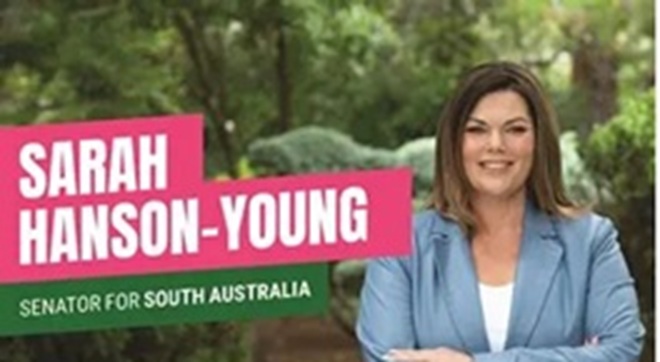


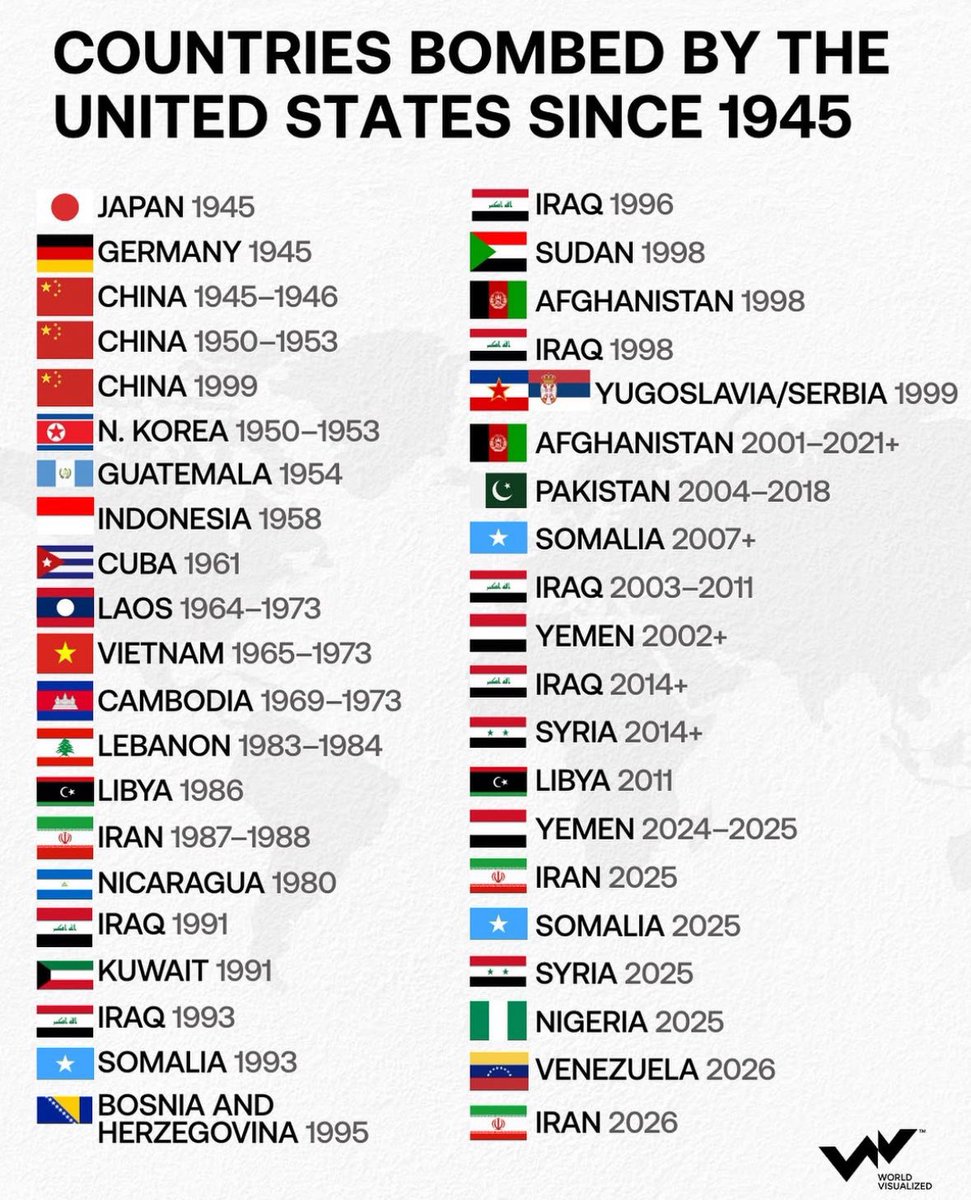

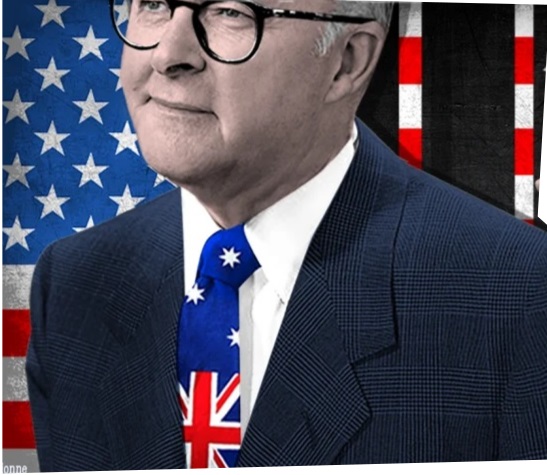
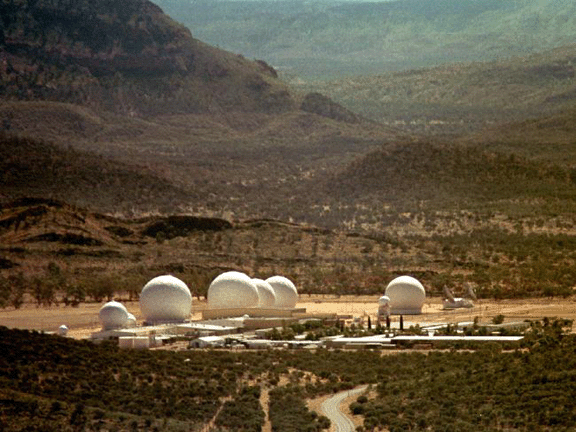



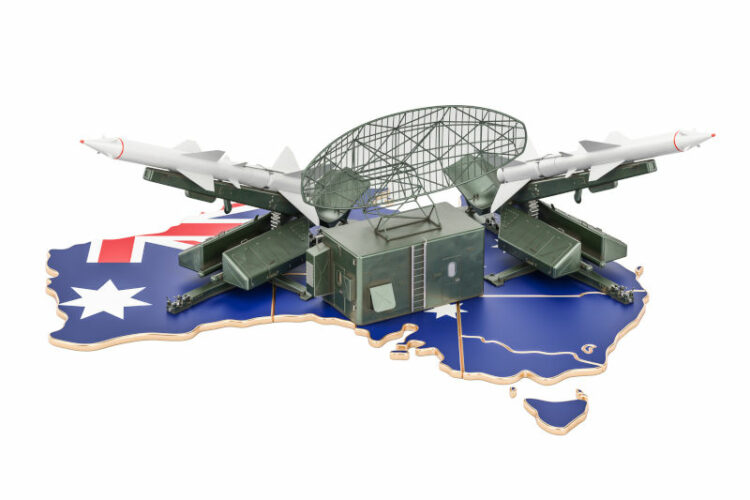

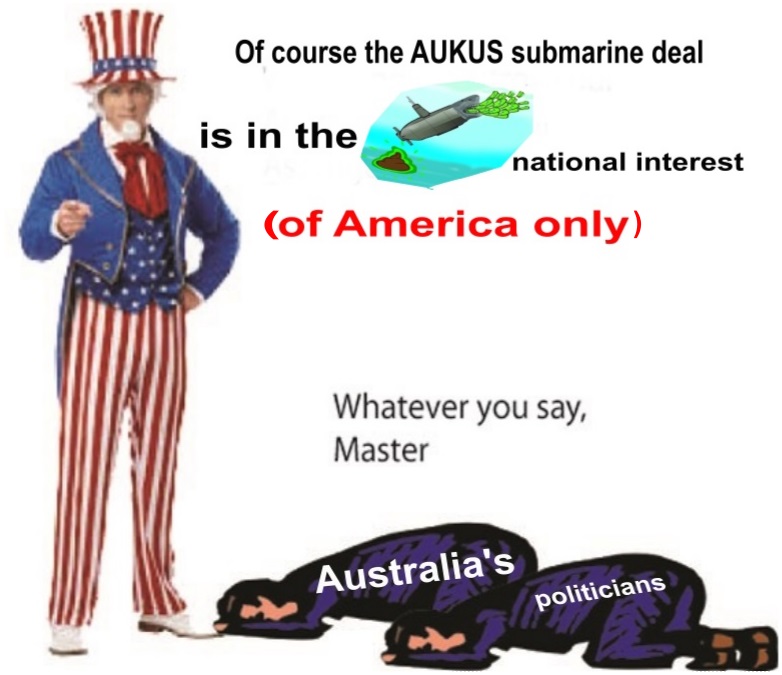

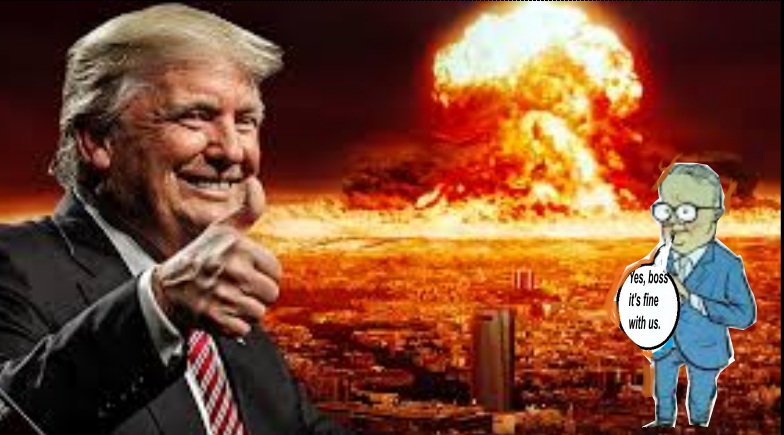

 Antinuclear