Revealed: Australia’s secret Anti-Protest Force for US Department of War

“public order management operations. “
the Government is boosting its capability to deal with anticipated political protest activities against a much expanded US military and intelligence presence in Australia.
“AUKUS costs in total secrecy.”
by Rex Patrick | Jan 5, 2026 , https://michaelwest.com.au/australias-anti-protest-force-for-us-department-of-war/
As public concerns over the AUKUS alliance rise – with expanding US bases in Australia and Donald Trump’s belligerent conduct, FOI documents reveal the Government is secretly expanding its ‘US Department of War Protest’ Force. Rex Patrick reports.
Most people won’t be aware that the Australian Federal Police (AFP) has established a new command.
Headed by Commissioner Krissy Barrett, our national police force is made up of five regional commands (Northern, Eastern, Central, Southern and Western) and a number of functional commanders dealing variously with crime, fraud and corruption, cyber operations, counter-terrorism and special investigations, and protective security. No surprises there – the AFP structure is well established and pretty much what you would expect.
But now there’s a new AFP “AUKUS Command”, established with little fanfare and headed by AFP Assistant Commissioner Sandra Booth.
AFP Assistant Commissioner for AUKUS Sandra Booth at a US naval station. Image: AFP
AUKUS Command’s roles are centred on security for the AUKUS nuclear submarine project and interestingly include ‘Public Order Management’, but its mandate is much broader than protecting nuclear submarines.
MWM’s Freedom of Information (FOI) request to the AFP, amongst other things, sought access to documents that show the terms of reference, functions and responsibilities of AUKUS Command and Documents held by AUKUS Command that relate to potential political opposition and/or protest activity relating to the AUKUS nuclear-powered submarine project.
The AFP’s FOI response came in late and was covered with large swaths of black ink redacting most of the information, but enough has been revealed to show that the Government is boosting its capability to deal with anticipated political protest activities against a much expanded US military and intelligence presence in Australia.
AUKUS Protection
AUKUS Command starts with a “permanent AFP horizontal security overlay” set up at HMAS Stirling (near Perth) to “support the Australian nuclear submarine program under the AUKUS initiative”
The set-up in some part replicates the US Department of Energy’s Nuclear Protective Forces and the UK’s Ministry of Defence Special Escort Group.
The AFP AUKUS Command will initially conduct AUKUS protective security work, including waterborne and remotely piloted aircraft escorting of US Navy, Royal Navy and (eventually, maybe) Royal Australian Navy submarines in and out of waters around the base.
Submarines berthing at HMAS Stirling have to do a lengthy and protest-vulnerable surfaced transit through Gage Roads to get to/from the deep water north-west of Rottnest Island.
The AUKUS Command has established a rapid response capability and is prepared for
“public order management operations. “
Officers in the AUKUS Command are trained in rapid appraisal, coxswaining, jet ski operation, remote piloting of aircraft and countering remotely piloted aircraft, protestor negotiation techniques, protestor removal techniques and “public order management munitions delivery”.
Initially, at least, the Command will comprise four teams, a ready reaction team and a canine unit.
Nuclear protestors not tolerated
Although anti-nuclear protests focused on visiting US Navy nuclear powered submarines have so far been small in scale, the AFP has likely been alerted to the possibilities of larger scale water-borne protest by the “Rising Tide” environmental actions at Australia’s largest coal export terminal at Newcastle.
Protest groups involved in those activities have already been subject to close scrutiny by the AFP and New South Wales Police.
In any case, it’s clear that the Australian Government and the AFP are determined to demonstrate to the United States and the United Kingdom that there will be no tolerating protest activity that might impede or delay the movement of American and British submarines stationed at HMAS Stirling as part of the AUKUS Submarine Rotational Force – West.
But wait, there’s more, much more
But it turns out that protecting nuclear submarines is only part of the AUKUS Command’s responsibilities.
The first giveaway as to the much broader purpose of the Command is the fact that a July 25, 2025, Memorandum of Understanding signed by Assistant Commissioner Booth was between the AFP and, not the Australian Submarine Agency, but the Department of Defence.
The previously secret AFP documents released under FOI show that the AFP AUKUS Command will have strategic responsibility for delivery of protective security services to “specified Defence bases) under the Defence MOU, with a significant focus on building and supporting a future-ready Protective Security Officer workforce.
Pine Gap
The documents do not reveal which Defence bases, but the FOI request did capture emails between Assistant Commissioner Booth and other AFP officers dealing with a protest that took place last year at Joint Defence Facility Pine Gap, the top-secret signals intelligence facility near Alice Springs that’s operated by the US National Security Agency, the US National Reconnaissance Office and the Australian Signals Directorate.
Major upgrades are taking place at a number of other Australian Defence Force facilities to accommodate an expanded US military presence in Northern and Western Australia.
Significant works have also been underway at Australian intelligence facilities, including a major perimeter security upgrade and installation of new satellite dishes at the ASD’s Shoal Bay Receiving Station, nineteen kilometres north-east of Darwin.
As the US defence and intelligence footprint expands, it’s likely that the AUKUS Command’s security and “public order management” responsibilities will be quite wide-ranging.
More protests coming, and costs
As public concerns rise over nuclear issues, it’s very likely the arrival of the US submarine rotational force at HMAS Stirling, the increasing disposition of US forces around Australia and the abandoning by the US of a ‘rules-based order’ will lead to more protests.
The Mid-Year Fiscal and Economic Outlook (MYEFO) handed down in December showed an allocation to the AFP AUKUS Command of $73.8 million in this financial year and $125.2 million in the next.
The expenditure publication was unusual, given that the Government thinks it is entirely appropriate to wrap
“AUKUS costs in total secrecy.”
Indeed, even in this release, cost information in the MOU was redacted.
A lack of transparency
It is accepted that some things around nuclear submarines are properly confidential. But the Australian Government has been wrapping a thick secrecy blanket over everything to do with AUKUS; absolutely everything.
As an FOI related transparency fight goes on in background, including in the Federal Court where this writer is trying to get access to documents that advise the government on how to select a high-level radioactive waste site, the Government has (in contrast to the US and UK) refused to allow for an inquiry into this bankrupting Defence capability.
Instead of bringing the Australian public along with them, instead of generating social licence for the project, instead of being up front about the integration of the Australian Defence Force into the US Armed Forces at a time when Australians are struggling with confidence in the US, opaqueness is the order of the day for the Government.
And now, for good measure, there’s a whole new AFP command to keep a lid on the secrets and to crack down on public protests.
Labor’s Bondi Backflip: When Fear Trumps Justice
7 January 2026 David Tyler, Australian Independent Media
Anthony Albanese didn’t choose a Royal Commission into the Bondi massacre, but he was bullied into it. The real scandal isn’t his surrender, but the cynical machinery that left him no other option. When political extortion replaces policy, nobody wins.
The Hostage Prime Minister: How Albanese Was Cornered
Anthony Albanese is said to be on the cusp of a belated acceptance of a Royal Commission into the Bondi massacre, “senior sources” tell the Sydney Morning Herald, as the political costs of his refusal become too big to bear. Similarly, the ABC reports that he’s “not ruling it out.”
This isn’t a back-flip, it’s a capitulation. The PM, who sensibly resisted the demand as redundant, divisive, and politically-driven, is now forced to yield by a Coalition campaign so relentless it beggars belief. This isn’t about truth-seeking; it’s about hostage-taking and cynical opportunism, made possible by Advance backing, where the ransom is Labor’s credibility and the cost is the weaponisation of grief.
The trap was sprung from the moment key figures persuaded Sydney’s Jewish community leaders to exclude the PM from memorial services to the Bondi shootings. Did Albo have to suffer this public snub? No. A bolder, less conflict-avoidance craving type of leader might have stood his ground and insisted on his right to be there to grieve publicly as the nation’s leading public figure. Paul Keating would have seen off the ploy. It remains a calculated and unprecedented slight, from which Albo may not recover.
Our PM was effectively denied the role of national mourner after the Bondi massacre, with organisers excluding him from key memorial services; a move described as an “extraordinary personal censure”
The Coalition, scenting blood after an orchestrated booing at Bondi’s memorial and an open letter from over twenty former Labor MPs, including Mike Kelly and Michael Danby, is turning dissent, discord and grief into a media blitzkrieg. Business elites, judges, and commentators pile on, framing resistance as indifference to Jewish safety. (As if a Royal Commission ever confers protection.)
The message is clear: Comply, or be branded weak on terror. Albanese, boxed in, is folding; not out of conviction, but because the alternative could be political suicide. Already, Sydney shock jocks, Ben Fordham and Ray Hadley, charge the PM with having helped cause the tragedy. He “ignored the warnings.” His government’s focus on Gaza meant it was “distracting from domestic hate.”
The Sydney Morning Herald reports that government insiders confirm Albanese now doubts Dennis Richardson’s rapid review suffices; but the review was never the issue. The issue was who controlled the narrative. The Coalition, having spent years demonising Muslims, migrants, and “African gangs,” suddenly discovered a conscience on anti-Semitism. The hypocritical opportunism isn’t just thick; it’s Trumpian.
The Royal Commission Racket: Justice as a Political Weapon
Royal Commissions in Australia are less about truth than theatre, as Albanese knows all too well. From the Trade Union Royal Commission ($46 million, zero convictions) to the Aboriginal Deaths in Custody inquiry (339 recommendations, Indigenous incarceration doubled), the pattern is clear: damning headlines, negligible reform. These inquiries are designed to paralyse governments, not fix problems.
The Coalition’s demand for a Bondi Royal Commission fits this play book perfectly.
It’s not about answers; it’s about amplifying division, tying Labor in knots over Israel-Palestine, and ensuring the issue dominates headlines until the next election. As historian Judith Brett notes, inquiries are the opposition’s nuclear option when arguments fail. Opposition leader Sussan Ley, whose predecessors won elections on stopping the boats, babies overboard, and other migrant scapegoating, now postures as the guardian of social cohesion.
The audacity would be laughable if the stakes weren’t so grim.
Sussan Ley’s Selective Outrage
Sussan Ley’s claim that “antisemitism has no place” in Australia would carry more weight if her party hadn’t spent decades monetising bigotry and moral panic……………………………………………………………………………………………………………….. https://theaimn.net/labors-bondi-backflip-when-fear-trumps-justice/
Trump’s Annexation Threats: Australia’s Alliance Dilemma
7 January 2026 AIMN Editorial, By Alasdair Black, https://theaimn.net/trumps-annexation-threats-australias-alliance-dilemma/
How can we, Australia, remain allied to the US if they threaten annexation of an ally’s territory?
This throws into question our AUKUS pact with the UK and US, and sets America on the path to being an unreliable – if not dangerous and possibly even hostile – ally.
This is getting all too bizarre.
What of our official status as an “Enhanced Opportunities Partner of NATO”? While we are not a member of NATO, because it is a geographically confined alliance, we have always worked in partnership with them because of our historical connection to the UK and having been involved in European conflicts in both WWI and WWII, and the conflict following the collapse of the former Yugoslavia.
Are we just going to shrug off the violation of a NATO partner’s territory, abandon the support of self-determination, sovereignty, and support of an international rules-based order?
Will the potential collapse of NATO be without repercussions to AUKUS or our relationship with an aggressively military expansionist America?
Do we even want to maintain a relationship with such a dangerous, unreliable partner and ally?
We are in an epoch- or era-changing moment.
Trump is a declining, demented geriatric, raging against the dying of his light, with megalomaniacal and sociopathic tendencies.
This current crisis is possibly the biggest global crisis since Hitler marched into Poland in 1939.
Are we going to choose the moral high ground, or are we going to be on the wrong side of history?
Are we going to, by default, end up being on the side of a Hitlerian maniac, who could quite possibly be setting the foundations of WWIII?
Trump right now is being more of a threat to Europe than Putin, if that’s even possible.
The Trump shit show has just jumped the shark.
America needs to muzzle and chain up its distempered dog.
America, is it time to metaphorically take “Old Yeller” out behind the barn and put him out of his misery.
Are there any adults left in the room in the American Congress, in the American establishment, in the American military-intelligence apparatus?
Where we stand at the moment, in my opinion, is at one minute to midnight on the Doomsday clock.
America, along with their demented President, has dangerously lost the plot.
Trump is turning into a global threat!
The Media’s Role in Manufacturing Consent in US-Venezuela Relations
This matters because Australia is rehearsing for bigger targets. The propaganda model deployed against Venezuela, demonisation, economic warfare disguised as humanitarian concern, manufactured democratic pretexts for intervention, is being retrofitted for China. The patterns are identical; only the scale differs.
Venezuela is the laboratory. The techniques perfected there, demonisation, selective omission, ideological framing, strategic amnesia, are being scaled up for larger targets: China, Russia, Iran, any country that challenges United States dominance.
THE INVISIBLE BLOCKADE: How Media Made Economic Warfare Disappear
The Vanishing Act
In February 2019, millions watched in horror as Venezuelan security forces appeared to torch trucks carrying humanitarian aid on the Colombian border. CNN’s cameras were on hand to capture the flames. For The New York Times, it was proof of Maduro’s “cruelty.” Politicians from Marco Rubio to Nancy Pelosi cited the incident as proof that intervention was needed. Video analysis later contradicted that narrative.
The story just was not true. But the lie was given a long run. Weeks later, the New York Times quietly admitted the fire was started by an opposition protester’s Molotov cocktail; a single paragraph buried deep in a longer piece. The original story, complete with inflammatory images, had already done its work: manufacturing consent for economic strangulation that would kill tens of thousands.
Mainstream reporting of Venezuela is the story of how consent gets manufactured in 2025. Forget naff Soviet style propaganda. Instead, train your eyes on a bee dance of selective coverage, ideological framing and strategic amnesia.
Venezuela wins a golden globe for best propaganda show of the 21st century: convincing most of us that United States economic warfare does not exist.
The Crime That Dare Not Speak Its Name
Ask any Aussie what is happening in Venezuela. Chances are you will get a rehearsed answer: socialist dictatorship, economic collapse, humanitarian crisis. Raise the role of United States sanctions and you will often get silence.
In Caracas, you could not miss it. From 2017 to 2020, Washington imposed more than 350 unilateral coercive measures against Venezuela. The Trump administration bragged about a “maximum pressure” campaign, as if it were running a fracking operation and not ruining the lives of millions of innocent bystanders. Treasury Secretary Steven Mnuchin said the United States was targeting Venezuela’s oil sector “to prevent further diverting of Venezuela’s assets by Maduro.”
The message to Caracas was clear: “We are going to starve your people until they revolt and overthrow the government.” Trump’s crew echoes a Latin dictatorship with its junta of elite billionaires, corporate and military figures such as John Kelly and James Mattis. Trumpism is populist braggadocio and bluff.
The same men must know that they have blood on their hands. A 2019 study by economists Mark Weisbrot and Jeffrey Sachs at the Center for Economic and Policy Research estimated that United States sanctions caused around 40,000 deaths between 2017 and 2018 alone. The authors described the measures as collective punishment. Former United Nations Special Rapporteur Idriss Jazairy called such sanctions “crimes against humanity.”
United Nations expert Alfred de Zayas, who visited Venezuela, called the sanctions “economic warfare” and recommended that the International Criminal Court investigate United States officials for possible crimes against humanity. He likened modern sanctions to medieval sieges.
You did not read much of that in the Sydney Morning Herald, did you?
The Propaganda Model in Action
Noam Chomsky and Edward Herman’s Manufacturing Consent outlines filters through which media coverage passes: ownership, advertising, sourcing, flak and ideology. Venezuela’s coverage demonstrates every single one.
Ownership filter: corporate media outlets have material interests in maintaining the neoliberal economic order Venezuela challenged. When Hugo Chávez increased royalties, nationalised key assets and used oil revenues for social programs rather than shareholder profits, he made powerful enemies. Coverage shifted from sceptical to openly hostile.
Sourcing filter: a 2018 FAIR study of United States media coverage found that stories on Venezuela mostly quoted United States officials and opposition figures. Government representatives were largely invisible. International observers who validated aspects of Venezuelan elections rarely appeared. Economists like Weisbrot who questioned the sanctions narrative were pushed to marginal outlets.
Instead, audiences were fed Marco Rubio, Elliott Abrams of Iran Contra fame and Juan Guaidó, a hack who declared himself Venezuela’s president with United States backing.
The flak machine: journalists who deviated from the script faced immediate pushback. When Abby Martin or Max Blumenthal reported from Venezuela and challenged mainstream narratives, they were smeared as “Maduro apologists” or “useful idiots.” The example kept most other reporters in line.
Ideological filter: the anti socialist smear was mandatory. Every story about Venezuelan food shortages led with “socialist mismanagement.” There was little mention that Saudi Arabia, a United States ally, was simultaneously creating mass starvation in Yemen through a blockade that killed hundreds of thousands.
The framing is not about humanitarian concern. It is about ideology.
The Guaidó Gambit
Nothing demonstrates consent manufacturing quite like the Juan Guaidó affair.
On 23 January 2019, this political unknown swore himself in as “interim president” on a Caracas street. Within minutes, the United States, Canada and major Latin American governments recognised him. Corporate media followed at breakneck speed, describing him as Venezuela’s interim president, without quotation marks.
Unfortunately for the narrative, the facts were less convenient. Guaidó’s party had boycotted the previous presidential election. His constitutional claim was dubious. His “interim presidency” had no control of government, no command of the armed forces, no democratic mandate. He was a US-backed figure on standby for regime change.
For two years, Guaidó staged photo opportunities while much of the media treated his fantasy regime as real. He appointed “ambassadors” to empty buildings. He fronted a “humanitarian aid” push that former senior United States officials later admitted was a regime change ploy. He even backed a failed mercenary invasion, a Bay of Pigs style debacle, that landed with a resounding thud in May 2020.
Then something amazing. Guaidó disappears off-stage. No post mortems examined how spectacularly the media was gulled. No accountability for presenting a ludicrously inept United States puppet as a democratic leader. Just sudden, collective amnesia.
By 2023, even much of the opposition had jilted Guaidó. The sanctions stayed, nevertheless, grinding millions into poverty. And seven million into exile.
The Australian Complicity
Australia has been a keen player in US myth. The Morrison government, which itself blurred fact and fiction, recognised Guaidó and joined the Lima Group, a United States orchestrated coalition promoting regime change. At the United Nations, Australia reliably lined up with Washington against Caracas.
And our media? Lockstep, lickspittle compliance.
The ABC, our “independent” public broadcaster, mostly echoed US narratives. SBS, with its multicultural mission, rarely interviewed Venezuelans who support their government, although millions do, despite everything. Murdoch outlets adored a military tattoo and beat the skins off their intervention drum kit.
When Venezuela held presidential elections in July 2024, The Australian and its claque called them fraudulent, even before votes were counted. Opposition claims of victory were reported as fact. Government claims were “disputed.” The opposition refused to present precinct level evidence to Venezuela’s electoral council, but that got scant coverage.
The ABC, our “independent” public broadcaster, mostly echoed US narratives. SBS, with its multicultural mission, rarely interviewed Venezuelans who support their government, although millions do, despite everything. Murdoch outlets adored a military tattoo and beat the skins off their intervention drum kit.
When Venezuela held presidential elections in July 2024, The Australian and its claque called them fraudulent, even before votes were counted. Opposition claims of victory were reported as fact. Government claims were “disputed.” The opposition refused to present precinct level evidence to Venezuela’s electoral council, but that got scant coverage.
International observers, including the Carter Center, raised concerns about pre-election conditions but did not declare the vote fraudulent. Nuance vanishes in translation.
This matters because Australia is rehearsing for bigger targets. The propaganda model deployed against Venezuela, demonisation, economic warfare disguised as humanitarian concern, manufactured democratic pretexts for intervention, is being retrofitted for China. The patterns are identical; only the scale differs.
The Invisible Blockade
The most extraordinary achievement of this propaganda campaign is rendering economic warfare invisible.
United States sanctions do not just prohibit American companies from trading with Venezuela. They impose secondary sanctions on any company worldwide that does business with Venezuela’s oil sector, central bank or state enterprises. This blocks Venezuela from:
- Importing medicine and medical equipment
- Accessing international financial systems for humanitarian purchases
- Selling oil to finance imports
- Receiving spare parts for refineries and infrastructure
- Engaging in normal international commerce
When a Venezuelan child dies because hospitals cannot get dialysis equipment, that is not “socialist failure.” That is economic strangulation by the world’s dominant power. US officials admit that sanctions should cause enough suffering to trigger political change.
Yet media coverage presents Venezuela’s crisis as self inflicted, the inevitable result of Chavista economic policies and corruption. Sanctions are mentioned, if at all, as afterthoughts; minor irritants rather than a central driver of collapse.
This inversion of cause and effect is propaganda at its most sophisticated. It does not require outright lying, just selective emphasis. Mention sanctions late. Lead with empty supermarket shelves. Quote opposition politicians blaming socialism. Ignore United Nations experts describing collective punishment. Repeat.
The result is that we support sanctions without understanding that we are supporting collective punishment of civilians for political ends.
The Double Standard
Ideological filtering is highlighted by comparing coverage of Venezuela and Saudi Arabia.
Saudi Arabia is an absolute monarchy. There are no competitive national elections. Women gained the right to drive only in 2017. Political dissidents are imprisoned, tortured or murdered. Journalist Jamal Khashoggi was dismembered with a bone saw. The Saudi led coalition has inflicted a catastrophic war on Yemen that has killed hundreds of thousands through violence and starvation.
Yet Saudi Arabia remains a close United States ally. Australian media do not call for sanctions. The ABC does not run rolling segments on Saudi humanitarian disasters. Crown Prince Mohammed bin Salman is often treated as a moderniser, not a dictator.
Venezuela, by contrast, holds regular elections; flawed and contested, certainly, but elections nonetheless. International observers have repeatedly validated Venezuelan electoral processes as technically sound, even while questioning campaign conditions. Venezuela has not invaded neighbours or created famines abroad.
But Venezuela challenged neoliberal orthodoxy and United States dominance over its oil. That is the unforgivable heresy.
Or take Honduras, where a United States backed government emerged from a coup, presides over extreme violence and corruption, and fuels migration through poverty. United States aid continues. Media attention is minimal. No sanctions. No serious calls for intervention.
Humanitarian concern is theatre. The metric that matters is compliance with United States interests.
What Gets Memory Holed
Propaganda does not just create false narratives. It makes inconvenient facts disappear. A short list of what Australian coverage of Venezuela tends to omit:
The achievements: between 1999 and 2012, poverty fell from 50 per cent to 25 per cent. Extreme poverty dropped from 20 per cent to 7 per cent. Infant mortality declined markedly. Malnutrition fell sharply. University enrolment went up. Literacy programs reached millions. Venezuela had one of Latin America’s lower levels of income inequality.
Those gains are now being reversed; primarily due to sanctions, oil price collapse and economic warfare, not the social programs that created them.
The coup attempts: Venezuela has endured repeated United States linked coup efforts. A 2002 coup briefly overthrew Chávez before mass mobilisation restored him. Opposition violence in 2014 and 2017 killed dozens. The 2020 mercenary incursion involved former United States special forces personnel. These are not conspiracy theories; United States officials have openly discussed regime change plans.
The oil price context: Venezuela’s economy relies on oil. When prices collapsed from more than 100 United States dollars a barrel in 2014 to under 30 dollars in 2016, the economy tanked, as any petrostate would. Norway, with stronger institutions, would struggle with that volatility. Yet media present Venezuela’s crisis as purely ideological.
The sanctions timeline: the economic crisis accelerated dramatically after comprehensive sanctions in 2017. Obama era sanctions were limited. Trump era sanctions moved into full economic warfare. The timing is hard to ignore unless you are corporate media.
The alternative: Venezuela has offered to negotiate, to hold elections with international supervision, to accept mediation. The United States repeatedly insists on Maduro’s resignation as a precondition. When Mexico and Uruguay proposed dialogue in 2019, the US and the Lima Group rejected it. The goal was never democracy; it was regime change.
The Propaganda Ecosystem
Modern consent manufacturing is more sophisticated than George Orwell imagined. It does not require central coordination or formal censorship. It emerges from institutional incentives, ideological assumptions and career pressures.
Journalists covering Venezuela face structural pressures:
- Editors favour stories that fit existing narratives
- Contradicting United States government claims invites flak from powerful sources
- Career advancement comes from staying in institutional good graces
- Departing from mainstream consensus risks being labelled “biased”
- Stories that challenge dominant frames are buried or spiked
The result is self censorship that does not require overt control. Journalists internalise the pressures and avoid stories that might cause trouble. Editors spike pieces that challenge core assumptions. The spectrum of acceptable opinion narrows to a sliver.
Social media accelerates this dynamic. Nuanced analysis of sanctions demands sustained attention and complex thinking. “Dictator starves his people” fits neatly into a post. The dopamine driven attention economy marginalises the kind of deep reading needed to understand economic warfare.
Add “fact checkers” funded by the same foundations prosecuting the information war, and dissent becomes “misinformation” in a self-reinforcing knowledge ecosystem.
Why This Matters for Australia
You might think Venezuela is distant and irrelevant to Australian concerns. You would be wrong on both counts.
First, Australia is practising. The propaganda model deployed against Venezuela, demonising leadership, emphasising enemy crimes while ignoring allied atrocities, masking economic warfare as humanitarian concern, is being prepared for larger targets.
Coverage of China already shows the same patterns. Replace “Maduro” with “Xi” and “socialism” with “authoritarianism” and you have the same playbook. The difference is that Venezuela cannot fight back. China can. The stakes are far higher.
Second, Australia is complicit. Our government joined the regime change coalition. Our media helped manufacture consent for economic warfare against civilians. Our citizens were persuaded to support policies that have killed thousands of Venezuelans, often without realising those policies exist.
That moral corrosion matters. If we can be convinced to support collective punishment in Venezuela, what will we not support? Where does it end?
Third, this reveals our media’s subordination to United States interests. The speed with which Australian outlets adopted Washington’s framing, the uniformity of coverage, the lack of critical distance, all suggest a serious sovereignty problem. Not sovereignty over resources or territory, but over the information ecosystem that shapes public understanding.
When Australian media cannot or will not challenge United States propaganda, we are not really independent. We are a province of empire, feeding our citizens pre digested narratives manufactured offshore.
The Resistance to Knowing
Perhaps the most depressing aspect of propaganda is how resistant people become to counter evidence. Present Australians with facts about sanctions causing Venezuelan deaths and watch the mental gymnastics.
“Maduro could end the sanctions by stepping down.” So collective punishment of civilians is acceptable if the goal is regime change?
“The economy was already failing.” True, and then sanctions made it catastrophically worse. That is the point.
“Venezuelans are fleeing.” Largely due to economic collapse driven in part by sanctions. Also, why is there no matching call for regime change in Honduras, which generates far more refugees per capita?
“It is about democracy.” Then why do we support Saudi Arabia, Egypt and dozens of other autocracies?
The resistance is not about evidence; it is about identity. Accepting that United States and Australian policy deliberately starves civilians requires confronting uncomfortable truths about our democracies, our media and ourselves. It is easier to cling to stories about dictators and failed socialism.
This is how propaganda succeeds. Not mainly by convincing people of lies, but by making the truth psychologically unbearable.
The Path Forward
So what is to be done?
For journalists: break the pack. The Guaidó debacle showed that challenging official narratives does not just serve truth; it protects professional credibility. Reporters who questioned the regime change fantasy now look prescient. Those who amplified it look like stenographers.
Demand evidence for government claims. Apply consistent standards across countries. Interview diverse sources, including people who challenge Western narratives. Remember that the job is to afflict the comfortable, not manufacture consent for economic warfare.
For media consumers: develop propaganda literacy. When every outlet says the same thing using the same framing, that is not validation; it is synchronisation. Seek alternative sources. Read United Nations reports. Follow independent journalists who have actually visited Venezuela, not desk bound opinion writers recycling State Department talking points.
Ask the questions media outlets avoid. Who benefits from this narrative? What is being omitted? Are we applying consistent standards? What would coverage look like if ideological positions were reversed?
For citizens: demand accountability. Australia joined a regime change coalition that killed thousands through economic warfare. That happened in our name. Our government recognised a “president” who never won the presidency. Our media cheered it on. None of this has been reckoned with.
Write to politicians. Challenge media outlets. Support independent journalism. Refuse the memory hole. Because Venezuela is practice. The same model will be deployed against larger targets, with potentially catastrophic consequences.
Conclusion: The Test We Are Failing
Venezuela represents a test of democratic societies’ capacity for independent thought in the face of sophisticated propaganda. We are failing spectacularly.
A superpower has spent years waging economic warfare against a smaller country that dared to challenge neoliberal orthodoxy. That warfare has killed tens of thousands of civilians, displaced millions more and caused immense suffering. It violates international law and basic morality.
Financial software
Yet most Australians do not even know it is happening. They have been told that Venezuela’s crisis is self inflicted, the inevitable result of socialist economics. They have been trained to support collective punishment without recognising it as such.
That is the triumph of manufactured consent. Not crude lies, but sophisticated narrative construction that makes economic warfare invisible, transforms victims into villains and converts citizens into unwitting accomplices.
Herman and Chomsky wrote Manufacturing Consent in 1988, documenting how media serve power. Decades later, the model is more sophisticated, more effective and more dangerous. The digital information ecosystem has not liberated us. It has created new mechanisms for propaganda.
Venezuela is the laboratory. The techniques perfected there, demonisation, selective omission, ideological framing, strategic amnesia, are being scaled up for larger targets: China, Russia, Iran, any country that challenges United States dominance.
The question is whether we will recognise the pattern before it is too late. Will we demand independent journalism and honest accounting of our governments’ actions? Or will we continue sleepwalking into support for economic warfare, regime change and potentially catastrophic conflicts, never quite realising we have been played?
The invisible blockade around Venezuela is not just physical. It is cognitive. And the most dangerous walls are the ones we cannot see.
This article was originally published on URBAN WRONSKI WRITES
Venal Reactions: US Allies Validate Maduro’s Abduction.

Australian Prime Minister Anthony Albanese did little to improve upon the weak formula in his shabby statement, similarly skipping over the violations of the UN Charter and Maduro’s abduction. “We urge all parties to support dialogue and diplomacy in order to secure regional stability and prevent escalation.” A bland acknowledgement of “the need to respect democratic principles, human rights and fundamental freedoms” is made, along with the risible reference to supporting “international law and a peaceful, democratic transition in Venezuela that reflects the will of the Venezuelan people.”
5 January 2026 Dr Binoy Kampmark, https://theaimn.net/venal-reactions-us-allies-validate-maduros-abduction/
On the surface, abducting a Head of State is a piratical act eschewed by States. A Head of State enjoys absolute immunity from foreign criminal jurisdiction, known as ratione personae, at least till the term of office concludes. The International Court of Justice was clear enough about this principle in the 2002 Arrest Warrant Case, holding that high ranked government officials such as a foreign minister are granted immunity under customary international law to enable the effective performance of their functions “on behalf of their respective States.”
That said, international law has been modified on this score by the jurisdiction of theInternational Criminal Court, whose founding Rome Statute stipulates that the official standing of a serving Head of State is no exemption from criminal responsibility. The effectiveness of this principle lies in the cooperation of State parties, something distinctly unforthcoming regarding certain serving leaders. (Israeli Prime Minister Benjamin Netanyahu springs to mind.)
US domestic law puts all of this to side with the highwayman logic of the Ker-Frisbie doctrine. Decided in Ker v Illinois in 1886, the decision overlooks the way, lawful or otherwise, a defendant is apprehended, even if outside the jurisdiction. Once American soil is reached, judicial proceedings can commence without challenge. The US Department of Justice has further attempted to puncture ancient notions of diplomatic immunity by recategorizing (how else?) the standing of a leader – in this case Venezuela’s Nicolás Maduro – as nothing more than a narco-terrorist. Maduro was seized, explains US Secretary of State Marco Rubio, as part of a law enforcement operation.
In addition to being a violation of the leadership immunity principle, the January 3 kidnapping of Maduro and his wife by US forces was an audacious breach of the sovereignty guarantee under Article 2 of the United Nations Charter. Operation Absolute Resolve involved 150 aircraft, strikes on military infrastructure including surface-to-air missile and communication systems, and various depots. The security fantasists from the White House to the State Department treated Venezuela as not merely a dangerous narco-state but one hosting undesirable foreign elements, but it has never posed a military threat to the US homeland.
In the face of such unalloyed aggression – a crime against peace, if you will – the response from Washington’s allies has been feeble and worse. This is made all the more grotesque for their claims to purity when it comes to defending Western civilisation against the perceived ogres and bogeymen of international relations: Russia and China.
From the United Kingdom, Prime Minister Keir Starmer could not have been clearer about his contempt for the processes of international law. “The UK has long supported a transition of power in Venezuela,” he declared in his January 3 statement. “We regarded Maduro as an illegitimate President and we shed no tears about the end of his regime.” Having given a coating of legitimacy to the banditry of the Trump administration, he could still claim to “support” international law. His government would “discuss the evolving situation with US counterparts in the days ahead as we seek a safe and peaceful transition to a legitimate government that reflects the will of the Venezuelan people.” Certainly, judging from this, the will of President Donald Trump.
An official statement from the European Union released by its high representative, Kaja Kallas, was even more mealy-mouthed: “The EU has repeatedly stated that Nicolás Maduro lacks the legitimacy of a democratically elected president and has advocated for a Venezuelan-led peaceful transition to democracy in the country, respectful of its sovereignty.”
The tactic here involves soiling the subject before paying some false respect for such concepts as democracy and sovereignty. We can do without Maduro, and won’t miss him, but make some modest effort to respect some cardinal virtues when disposing of him. All those involved should show “restraint […] to avoid escalation and to ensure a peaceful resolution of the crisis.”
The arrogance of this position is underlined by the concession to diplomacy’s importance and the role of dialogue, when there has been no dialogue or diplomacy to speak of. “We are in close contact with the United States, as well as regional and international partners to support and facilitate dialogue with all parties involved, leading to a negotiated, democratic, inclusive and peaceful resolution to the crisis, led by Venezuelans.”
From the Canadian Minister for Foreign Affairs, Anita Anand, there was not a whisper of Maduro’s abduction, or the US breach of the UN Charter. The phantom conveniently called the Venezuelan People stood as an alibi for lawbreaking, for they had a “desire to live in a peaceful and democratic society.” And there was the familiar call “on all parties to exercise restraint and uphold international law,” marvellous piffle in the face of illegal abductions.
Australian Prime Minister Anthony Albanese did little to improve upon the weak formula in his shabby statement, similarly skipping over the violations of the UN Charter and Maduro’s abduction. “We urge all parties to support dialogue and diplomacy in order to secure regional stability and prevent escalation.” A bland acknowledgement of “the need to respect democratic principles, human rights and fundamental freedoms” is made, along with the risible reference to supporting “international law and a peaceful, democratic transition in Venezuela that reflects the will of the Venezuelan people.”
Who, then, are these idealised people? Presumably these Venezuelans are the vetted ones, sanitised with the seal of approval, untainted by silly notions of revolution and the poverty reduction measures initially implemented by the government of Hugo Chávez. But if EU officials and other states friendly to Washington thought that a Venezuelan appropriately representative of the People’s Will might be the opposition figure and travesty of a Nobel laureate, María Corina Machado, Trump had other ideas. To date the Maduro loyalist Vice President Delcy Rodríguez, has caught his fickle eye. “I think,” he said with blunt machismo, “it would be very tough for [Machado] to be the leader. She doesn’t have the support within or the respect within the country. She’s a very nice woman, but she doesn’t have the respect.” The Venezuelan people’s choice will be, putting democracy and dialogue to one side, the same as Trump’s.
The Venezuela Playbook: How Australian Media Sold Us Another War
4 January 2026 David Tyler AIM Extra , https://theaimn.net/the-venezuela-playbook-how-australian-media-sold-us-another-war/
Part One: The Anatomy of an Imperial Project
“Venezuelan strongman Maduro seized in daring US operation.”
That’s how our ABC led its coverage when American forces stormed Caracas in January. Over at The Australian, it was “Narcoterrorist-in-chief finally brought to justice,” a newly-minted international crime, ingeniously linking two scourges, drugs and terror.
The Sydney Morning Herald went with the risible “Democracy’s long-delayed victory in Venezuela.”
Not one dare say that what we’d just witnessed was an illegal military invasion of a sovereign nation. Dear SMH, how is the invasion democratic? Not one asked why Australian media were suddenly experts on Venezuelan “narcoterrorism”, a freshly-pressed grape of wrath? Or brand-new imperial panic button.
And not a soul bothered to note that we’ve seen this movie before, frame for frame, lie for lie.
Welcome to the second level of contempt: not just the violence itself, in which we all through our membership of various organisations failed the people of Venezuela, but the propaganda about the propaganda, served up by our own trusted news sources.
It’s as if we’re too dim to remember Iraq’s WMDs or Libya’s “humanitarian intervention.” They’re counting on our goldfish memories, our inability to hold a pattern in our heads long enough to shout: “Hang about, haven’t we been down this path before?”
Narcoterrorism: The Empire’s Latest New Designer Label
Every imperial adventure needs its signature scare. Saddam had (invisible) WMDs that could strike London in 45 minutes. John Howard, hadn’t actually seen them but he was prepared to lie that proof existed. Gaddafi was about to massacre Benghazi. Assad gassed his own people (some of which was true, conveniently omitting our backing of jihadists fighting him). Now Maduro runs a “narcoterrorist state”, a portmanteau phrase that fuses two reliable panic buttons into one handy package.
If he could remember his earlier phrase, Trump would doubtless call Venezuela a shithole country.
But let’s be clear, we are being sold a smash and grab raid. Cool. Maduro had it coming. It’s Marketing 101 for illegal invasion. Drugs? Terrifying. Terrorism? Even worse. Mash them up and you’ve got a villain so vile that international law is just a mere technicality. Far-fetched? It’s a hoot. The United States; the world’s largest consumer of cocaine, its biggest market and architect of the catastrophic “War on Drugs”, now poses as global sheriff, with just a whiff of the crusader against narcotics? Hilarious.
But the crusader copy writes itself. And our media newshounds are selling it with a straight face.
It’s not the drugs. It’s the oil. Venezuela sits atop the world’s largest heavy sour crude oil reserves. Bigger than Saudi Arabia. Bigger than Iraq. And unlike those compliant petrostates, Venezuela has had the temerity to suggest that its oil might benefit Venezuelans rather than Exxon-Mobil shareholders.
That’s the real crime. The drugs are just the marketing.
Our media know this. They’re not stupid, just complicit. When The Australianquotes “Western intelligence sources” on Maduro’s drug empire, they’re parroting CIA talking points. When the ABC describes Venezuela as a “failed state,” they skip over how it got that way. And when they mention sanctions at all, it’s as a footnote, “pressure for reform”, not as the economic siege warfare it actually is.
But always check your oil. A reality check: Venezuela’s Orinoco Belt contains extra‑heavy, sulphur‑laden crude that’s expensive and technically finicky to extract and refine. CNN reports that gulf refineries in Texas and Louisiana are already tooled up for this dirty work—cheaper than retro-fitting to deal with local shale oil.
Despite Venezuela needing $58 billion for infrastructure upgrades, refining Venezuelan oil remains cheaper long-term due to low production costs and refinery optimisation. This could stabilise US diesel amid tight global supply, potentially dropping American refining costs 10-20% versus Saudi or Canadian alternatives.
Economic Strangulation as Prelude to Invasion
Since 2017, Washington has waged silent war on Venezuela, strangling its economy with a sadistic deliberation that would make any medieval besiegers green with envy. To be fair, corruption in Caracas and mismanagement helped. But billions in Venezuelan funds were frozen. Oil exports blocked. Access to global financial markets cut. Ships intercepted. Assets seized. The whole machinery of dollar dominance weaponised against a country whose real offence is daring to chart its own course.
The arithmetic of empire is written in bodies. Forty thousand preventable deaths from sanctions-induced medicine shortages by 2024, according to Physicians for Human Rights. Three hundred thousand Venezuelans with cancer, diabetes, HIV at risk of death because medical supplies can’t get through the blockade. Maternal mortality at 125 deaths per 100,000 live births. A population where 75% collectively lost an average of over 8 kilograms to hunger. Seven point six million people, nearly a quarter of the population, driven into exile, generating the largest displacement crisis in Latin American history.
UN human rights experts have condemned these sanctions as collective punishment, noting that unilateral coercive measures enforced through armed blockades violate international law. Human Rights Watch criticised the sanctions for lacking humanitarian exemptions. In 2025, UN rapporteurs called US actions “collective punishment,” violating international law by inducing suffering without UN Security Council approval. They are, in plain English, economic warfare against civilians.
Now Australian media perform their best trick: they report the humanitarian crisis while erasing its primary cause. Venezuela is “collapsing under Maduro’s mismanagement,” we’re told. True enough; the man couldn’t run a chook raffle. But the sanctions turbo-charged a crisis into a catastrophe, and that’s the bit that gets memory-holed. It’s like reporting on a bushfire while forgetting to mention the arsonist.
It’s America’s classic neocon playbook. Throttle the economy. Wait for the suffering to mount. Blame the government. Present military intervention as mercy. Rinse and repeat. We did this to Iraq. We did this to Libya. We did this to Syria. And now, with barely a change in script, we’re doing it to Venezuela while the ABC and its fellow travellers play their assigned role: cheerleaders for the latest passage in a very old US game play.
From Sanctions to Shock and Awe: The Long Con
The January military assault isn’t some sudden eruption. It is the logical endpoint of a strategy perfected over generations. The USA has been toppling Latin American governments since before most of us were born.
Guatemala’s Jacobo Árbenz in 1954, was overthrown for daring to redistribute land owned by United Fruit Company. Chile’s Allende was sent packing in 1973, because socialism and copper don’t mix (from Washington’s perspective). Panama’s Manuel Noriega in 1989.
Yes it’s the same narcotics pretext, when a former CIA asset outlived his usefulness. Nicaragua, Honduras, El Salvador, Haiti: the list reads like a greatest hits of manufactured regime change.
Each time, the script is identical. Step one: demonise the target government. (Check: Maduro’s been “dictator” and “strongman” in our papers for years, never mind that he’s been elected multiple times under international observation.) Step two: manufacture or exploit a crisis. (Check: sanctions created the crisis, now presented as evidence of governmental failure.) Step three: present military action as the only solution. (Check: “No choice but to act,” as the Pentagon spokesman put it, parroted faithfully by our lot.)
The “kidnapping” of Maduro; let’s call it what it is, not “arrest”, represents peak imperial theatre. A sitting president of a sovereign nation, indicted by a US court on charges of narcoterrorism and having guns and stuff, (the real charge sheet is preposterous), seized in a military raid that violated every principle of international law, paraded before cameras like a trophy buck.
Legal scholars and a UN Secretary-General have warned this sets a catastrophic precedent. Without Security Council authorisation, without credible self-defence claims, this is simply illegal. An act of war.
But watch how Australian media runs with it: as if it were a police procedural, not an invasion. “Wanted man captured.” “Fugitive seized.” The language of law enforcement, not the language of international aggression. This is propaganda by omission, the most insidious kind.
Australian Complicity: Our Shame
Australia isn’t some innocent bystander tutting from the sidelines. We’re up to our necks in this.
Check our UN voting record on Venezuela: lockstep with Washington, backing every condemnatory resolution, every sanctions package, every diplomatic manoeuvre designed to isolate Caracas. We’ve imposed our own sanctions; targeting oil, gold, and individual officials, all while the Australian press trumpet this as righteous punishment of corruption rather than a lethal punching-down in economic warfare.
Not spelled out: Through Five Eyes intelligence sharing, we’re part of the machinery that provided targeting data for the Caracas raid. Our Pine Gap facility, that polite lie of “joint defence,” played a role in communications and surveillance. We’re not just cheer-leading; we’re materially enabling the US.
And the media? They’re the propaganda arm of this operation, whether they admit it or not. When The Australian runs pieces about Venezuela’s “criminal regime” sourced entirely to the US State Department and the CIA-backed opposition, that’s just stenography, not journalism.
When the ABC describes Maduro as “widely regarded as illegitimate” without noting that “widely” means “by Western governments who want his oil,” that’s editorialising posing as fact.
Compare the coverage to Saudi Arabia, for example, a real autocracy that dismembers journalists, starves Yemen, and funds extremism globally. The press might tut occasionally, but there’s no drumbeat for regime change, no breathless coverage of Saudi “crimes against humanity,” no earnest panels discussing whether we have a “responsibility to protect” Yemeni children from starvation.
Why? Because the Saudis play ball with Western oil interests. Venezuela doesn’t. That’s the difference, and our media know it.
This is the second level of contempt I feel: they think we’re mugs. They think we won’t notice the pattern. They think we can’t hold two ideas together long enough to ask: “Hang on, didn’t they sell us this same pig in a poke before?”
The Oil They’re Not Talking About
Let’s cut through the smoke: this is about oil. Always has been, always will be.
Venezuela holds roughly 300 billion barrels of reserves; the largest in the world. After years of sanctions crippled Russian oil exports following Ukraine, and with OPEC playing hard to get on production increases, those reserves are irresistible to Washington. Add China’s deepening energy partnerships with Venezuela; Belt and Road investments, oil-for-loans deals, and you get the strategic picture.
Maduro’s great sin isn’t drugs or authoritarianism (Washington has backed far worse). It’s keeping Venezuela’s oil revenues at home instead of letting them flow north to Houston. It’s partnering with Beijing instead of bowing to the Monroe Doctrine. It’s being an example, however flawed, of resource nationalism in a region where the US prefers compliant client states.
The press mention the oil in passing, if at all. It’s treated as context, not cause. But follow the money, follow the barrels, and the whole “narcoterrorism” narrative reveals itself as window dressing for a very old-fashioned resource grab.
Chevron, notably, got a sanctions exemption in 2022 to restart Venezuelan operations. Funny how the “criminal narco-state” is fine for doing business with when it suits corporate interests, but requires military intervention when it doesn’t play ball politically.
The Human Cost: What They Won’t Count
And now, in the January strikes: at least 40 dead in the initial assault, Venezuelan and Cuban military personnel alongside civilians. An apartment block in Catia La Mar with its exterior wall blown off, one confirmed dead, others seriously injured. “Unspecified” casualties—that bureaucratic language that erases individual lives. The Venezuelan government is still counting bodies while the American press celebrates “liberation.”
Add to that the 115 people killed in the boat strikes from August through December 2025, fishermen and alleged traffickers alike, all part of the same operation. Governments and families of those killed say many were civilians, primarily fishers. The Pentagon insists they were all “narco-terrorists.” The bodies can’t argue back.
But this is developing information, casualties still being tallied. What we know for certain: Venezuelan Vice President Delcy Rodríguez confirmed deaths among both military and civilians. Trump confirmed two US soldiers injured. One US helicopter was hit but remained flyable. The 30-minute assault involved over 150 aircraft striking military bases, ports, communication facilities, and yes, civilian areas too.
Resistance: The Story They’re Burying
Here’s what should terrify the Pentagon but won’t make the ABC news: Venezuela isn’t collapsing in grateful relief. The Bolivarian militia, whether 1.6 million or government claims of eight million, represents a genuine popular defence force. Millions of Venezuelans, whatever they think of Maduro’s economic management, won’t thank the Americans for bombing their capital and kidnapping their president.
Across Latin America, governments from Mexico to Argentina have condemned the invasion. Not because they love Maduro; many don’t, but because they recognise the precedent: if Washington can do this to Venezuela, it can do it to anyone. Regional solidarity isn’t about personality; it’s about sovereignty.
China and Russia have issued sharp condemnations. They’ve got skin in the game: billions in loans and infrastructure investments that a US-installed puppet government might default on. This isn’t ideological—it’s the emerging reality of a multi-polar world where US military adventurism faces actual push-back.
And in the streets, from Caracas to Mexico City, from Barcelona to Sydney; protests are building. Not because protesters are Maduro fans, but because they’re sick of watching the same imperial playbook run again and again while their media gaslight them about “liberation” and “democracy promotion.”
The press is busting a gut to ignore or minimise this resistance.
Can’t have the narrative complicated by inconvenient facts like Latin American solidarity or popular opposition to invasion. Better to focus on the “drama” of Maduro’s capture, the “terrorism” charges, the grateful (CIA-vetted) Venezuelan exiles welcoming “freedom.”
Lest We Forget
What ought to enrage us: the utter contempt for our minds. They genuinely believe we won’t remember.
Colin Powell’s vial of “anthrax” at the UN, the aluminium tubes, the mobile weapons labs lies. Or Libya, where “protecting civilians” became regime change and now boasts open-air slave markets. Syria’s Assad was gassing his people (true) so we’d better arm the jihadists (catastrophic).
Won’t remember that every single time, the pattern is identical: demonisation, sanctions, crisis, intervention. And every single time, our media play their part in manufacturing consent.
The difference now? They’re not even trying that hard. The “narcoterrorism” frame is lazy; transparently so. But they’re banking on our scattered attention being too fragmented to notice. They’re counting on the dopamine hit of outrage at the “dictator” overwhelming any critical thought about whether invading a sovereign nation might be, you know, illegal and catastrophic.
This is what I mean by the second level of contempt. The violence itself is bad enough. But being propagandised about it by our own media, who know better but do it anyway? That’s the deepest cut.
What Comes Next
The US may have captured Maduro, but they haven’t captured Venezuela. Guerrilla resistance, regional backlash, and international condemnation are already brewing. This may not be the clean victory our media are selling. It could be messy, bloody, protracted; another forever war to add to the collection.
But then our media could “both-sides” Gaza. Australia is complicit. Our government will back it. Our media will sell it. And most of us will scroll past, troubled but not troubled enough to actually do anything.
Unless we start holding the pattern in our heads. Unless we start asking the questions our media won’t: Who benefits? What’s being omitted? Where have we seen this before?
The anatomy of an imperial project isn’t complicated. It’s the same operation, over and over. The only variable is whether we’re awake enough to recognise it.
Time to wake up.
[To be continued in Part Two: The Media’s Role in Manufacturing Consent
This article was originally published on URBAN WRONSKI WRITES
The Pro-Israel Propaganda Complex
The Zionist PR machine is an enterprise to behold. It is probably historically unprecedented in the breadth and density of its lobbying and propaganda entities.
If Israel is so innately good, why does it need so many resources to proselytise it, to defend it and to dissimulate about its character?
3 January 2026 AIMN Editorial, By Dr Evan Jones, https://theaimn.net/the-pro-israel-propaganda-complex/
Caitlin Johnstone’s customary finger on the Zionist pulse is how I was first exposed to the telling presentation by Sarah Hurwitz to the Jewish Federations of North America General Assembly on 16 November 2025. Hurwitz was a senior adviser in the Obama administration (from which she was appointed as a member of the United States Holocaust Memorial Council).
Says Hurwitz, young people no longer read but are hooked on social media. There, with respect to Gaza, they confront a ‘wall of carnage’. Hurwitz laments that: “So I want to give data and information and facts and arguments, and they are just seeing in their minds: carnage. And I sound obscene.” (Grown up) rationality has seemingly succumbed to (teenage) unprocessed sense impressions.
More, Holocaust education has been turned against us because our own young kin are applying the role of the evil oppressor, (Jewish) god forbid, to Israel itself.
British philosophy academic Lorna Finlayson (New Left Review’s Side Car) chimes in with respect to the Hurwitz performance:
“The true meaning of the Holocaust, we might infer, is not that it was bad because the strong were hurting the weak, but because Jews were the victims. When the victims are Black or Palestinian, it’s different.”
Peculiar that Hurwitz imagines that ‘the data and information and facts and arguments’ at her command contradict the youngster’s visualising the ‘wall of carnage’. The ‘data and information and facts and arguments’ that I am familiar with are consistent with the visuals.Finlayson concurs:
“The trouble for Hurwitz, however, is that if the pictures aren’t on her side, the ‘facts’ and ‘data’ are even less so. The more we see of them, the worse Israel looks.”
Dead children, medicos, journalists, aid workers – an impressive and mounting tally. Ah, and the infrastructure! The landscape obliterated. Bradford University’s Paul Rogers, interviewed in April 2025, estimated that 70,000 tonnes of explosives had been dropped on Gaza to that date.
Hurwitz waxes mystical:
“The problem is, we’re not just a religion … We’re a nation. Civilization. Tribe. Peoplehood. But most of all we’re a family. … The seven million people in Israel, they are not my co-religionists, they are my siblings.”
‘The seven million people in Israel’ – what? Hurwitz is referring to Jewish people in Israeland, presumably, Jewish settlers who don’t live in Israel (add Russian ersatz Jews assimilated to up the numbers). Hurwitz conflates the local Jewish population and the state of Israel. The others don’t exist.
Civilisation I don’t think so. ‘Tribe’ is correct – this is tribalism writ large. Yet the bad eggs, the founders and successive leaders of apartheid Israel, are dictating to the tribe the terms in their entirety on which tribalism will prevail. For Hurwitz – Israel is us, period. Being Jewish, you’re in the tribe on Israel’s terms – period. What do you think, at some expense, we send you to Jewish day school and Hebrew school for?
Finlayson again:
“The problem [for Hurwitz] with Palestinian children is not that they are evil [as perthe claims of Benjamin Netanyahu and Yoav Gallant] but that they are a PR challenge.”
How in the world could the bloodthirsty Zionist enterprise, acting with impunity, face a PR challenge?
The Zionist PR machine is an enterprise to behold. It is probably historically unprecedented in the breadth and density of its lobbying and propaganda entities. The character of the matrix is well captured in a review of American academic Harriet Malinowitz’s recent book Selling Israel: Zionism, Propaganda, and the Uses of Hasbara, from whence this Malinowitz summary is extracted:
“[The hasbara, which can be] bluntly described as propaganda, but in fact comprises a huge network of government ministries, nongovernmental organizations, nonprofit agencies and charities, campus organizations, volunteer groups, watchdog bodies, professional associations, media networks, fundraising operations, and educational programs that aim to fortify a Zionist-defined notion of Jewishness in persons within Israel, the United States, and other countries.”
Quite. And that’s just for Jewry itself, to keep it on the straight and narrow. The network addressed to the non-compliance and ignorance of non-Jews is something else.
Attached below is a list, inevitably incomplete, of organisations that one has been able to compile from public sources. It is a scrappy matrix, even anarchic but layered, influenced by national Jewish communities’ size and history, and by individual initiatives. It is complemented by Israeli state authority initiatives.
In total, the resources devoted to selling Israel and warding off and attacking its detractors have been and are formidable. Do Zionists have time in their life for anything else?
There’s an anomaly here. If Israel is so innately good, why does it need so many resources to proselytise it, to defend it and to dissimulate about its character?
The juggernaut has evidently had impressive results, of which the following samples.
The US Congress is a Zionist-occupied entity. The mass murderer Benjamin Netanyahu is invited into the hallowed premises (Joint: 10 July 1996, 24 May 2011, 3 March 2015, 25 July 2024; House: 12 September 2002), debauches it with his mendacity and is met with standing ovations.
The EU-Israel Association Agreement ‘entered into force’ in June 2000. The Agreement accords Israel considerable privileges. The background is here. The 154 page document is here. Of integral relevance is Article 2:
“Relations between the Parties, as well as all the provisions of the Agreement itself, shall be based on respect for human rights and democratic principles, which guides their internal and international policy and constitutes an essential element of this Agreement.”
Israel is an apartheid state by construction, so how could this trade Agreement ever get on the drawing board, leave alone come to fruition?
Israel remains ensconced in global sporting entities, as exemplified with soccer. There is currently pressure on UEFA and FIFA to exclude Israel but the governing bodies have resisted to date. Russia has been sanctioned. Israel remains in the bosom of global sport.
Ditto culture. Eurovision’s sponsor, the European Broadcasting Union, is also under pressure to exclude Israel but has ignored it (this is ‘a non-political event’). Russia is immediately expelled in 2022. Israel remains in Eurovision. Israel has won Eurovision four times, with more recent questions arising of dubious voting integrity and the transparent ‘soft power’ leverage by Israel of the platform to detract from the ongoing genocide.
Perusing the list, one can observe select categories.
1. Some early organisations began as charities to support Jewish communities in need. Amongst these, there has been a general trend to turn towards support for the state of Israel – sometimes auxiliary, sometimes central. Some latter–day organisations are formally Jewish community support-oriented but add Israel to their charter.
2. Some organisations stand out with respect to the influence of their operations. Uniquely there is the Jewish Agency for Israel, in Mandatory Palestine, which, with the Jewish National Council, were the nuclei for the state of Israel after 1948.
Singularly important are the dominant organisations in particular countries, not least AIPAC in the US, the Board of Deputies of British Jews, and CRIF in France.
The power of AIPAC puts it in a league of its own. AIPAC exerts an enormous influence on the US Congress, not least through funding for and against sitting members and candidates, and fostering Israel junkets. AIPAC funding contributed to the defeat of long-serving Illinois Representative Paul Findley in 1982. Findley’s contemporary and fellow activist Pete McCloskey, California Representative (1967-83) was perennially under attack from the Zionist lobby. AIPAC and other Jewish organisations’ funding facilitated the defeat of long-time Georgia Representative Cynthia McKinney and Alabama Representative Earl Hilliard, both in 2002 primaries. AIPAC funding defeated Maryland Congresswoman Donna Edwards, seeking re-election to a seat she previously held, in 2022. AIPAC funding defeated Missouri Representative Cori Bush and New York Representative Jaamal Bowman, both in primaries in 2024. Apparently AIPAC ‘invested’ $45 million in the November 2024 elections, half of which went to defeating Bush and Bowman. AIPAC conferences present a ghoulish spectacle in which Congress and government members bow down before AIPAC’s commitment to the imperatives of a foreign rogue state. (More details regarding the US Israel lobby are outlinedin Serge Halimi’s ‘Is the United States’ patience with Israel running out?’, Le Monde Diplomatique, December 2025.)
3. A discernible category covers Christian Zionist organisations and Jewish organisations seeking amity with and support from Christian groups, not least Evangelicals. Christians United for Israel (US) is clearly the most significant of this grouping, with CUFI claiming over 10 million members. Israel and Zionism evidently value this alliance in terms of the numerical ‘heft’ that it brings.
Israeli academic Tom Ziv performed a quantitative analysis of the size of evangelical Christian Zionist populations in 18 Latin American countries (‘Evangelicalism and Support for Israel in Latin America’, Politics & Religion, 2022). He found a link between the size of such groups and the country’s support for Israel as reflected in UN votes, with such groups evidently having a direct impact on their country’s foreign policy. Being a ‘true’ value-free academic, he declines to articulate the ‘policy implications’, although the Israeli authorities would be thoroughly aware of the implications for hasbara PR funding.
As mainstream protestant churches were reducing their support for Israel (tangibly in divesting denomination-related investments from Israel-related corporations and activities), so also there had been some small shift against whole-hearted support for Israel amongst young evangelicals. …………………………………………………………………………………………………………………………………………………………………………………………https://theaimn.net/the-pro-israel-propaganda-complex/
A Statement of Omission
30 December 2025 Andrew Klein, PhD, Australian Independent Media
A recent U.S. airstrike in Nigeria, coordinated with the nation’s authorities, has elicited a forceful response from Australian Senator Michaelia Cash. Her declaration – “ISIS is evil… Australia should always stand with partners confronting Islamist terror” – presents a binary, morally unambiguous view of a profoundly complex reality. While condemning extremist violence is unobjectionable, this framing serves as a case study in strategic omission. It ignores the multifaceted drivers of Nigeria’s conflicts, the role of external actors in shaping its crises, and the dangerous simplification of a struggle over resources, identity, and power into a singular war of religion. This analysis will deconstruct the senator’s statement by examining Nigeria’s historical context, the true nature of its security challenges, and the geopolitical interests at play.
Section 1: The Colonial Crucible and Post-Colonial Fragility
To understand modern Nigeria is to understand a nation forged by colonial cartography, not organic nationhood. The 1914 amalgamation of hundreds of distinct ethnic and religious groups – primarily Muslim in the north and Christian in the south – into a single British colony created a fundamental political fault line. The colonial administration’s indirect rule entrenched these divisions, empowering northern elites and fostering systemic regional inequality. This engineered disparity over access to political power, education, and economic resources laid the groundwork for the communal and sectarian tensions that plague the nation today. The competition is not inherently theological but is a scramble for a stake in the modern state, a competition framed and often inflamed by the identities colonialism hardened.
Section 2: Deconstructing the “Religious Conflict” Narrative
Senator Cash’s focus on “Islamist terror” reflects a narrative heavily promoted by certain U.S. political figures. However, data and expert analysis reveal a more complex picture:
A Mosaic of Violence: The security landscape in Nigeria is fragmented. It includes the jihadist factions of Boko Haram and Islamic State West Africa Province (ISWAP), ethno-communal conflicts – often between predominantly Muslim Fulani herders and Christian farmers – criminal banditry, and secessionist agitation
Muslims as Primary Victims: While attacks on Christian communities are severe and warrant condemnation, the data shows that Muslims constitute the majority of victims of Islamist extremist violence. Groups like Boko Haram have killed tens of thousands of Muslims they deem insufficiently orthodox. A 2025 data analysis of over 20,400 civilian deaths found more were from attacks targeting Muslims than Christians, though the majority of fatalities were unattributed.
Resource Competition as Core Driver: Underlying much of this violence, particularly the farmer-herder conflicts, is intense competition over dwindling arable land and water, exacerbated by climate change and population growth. The Nigerian government itself has consistently rejected the characterisation of a one-sided religious war, emphasising that “people of many faiths” are victims.
Violence Profile in Nigeria’s Northwest and Middle Belt
This following breaks down the complex actors and motives often simplified as “Islamist terror”:
Main Actor(s): Jihadist Groups (ISWAP, Boko Haram)
Primary Motivations and Targets: Establish Islamic law; target state, Christians, and Muslims deemed non-compliant.
Relation to Religious Narrative: Exploits religious identity but kills more Muslims; seeks to impose sectarian frame……………………………………………………………………………………….
Section 4: The Australian Position – A Critical Independence Foregone
Senator Cash’s call for Australia to “stand with partners” uncritically adopts the simplified U.S. framing. An independent Australian foreign policy, one committed to a “rules-based order” and nuanced humanitarian engagement, would demand a more forensic approach:
Acknowledge All Victims: Public statements must recognise that Muslims are the primary victims of the jihadist groups Australia condemns, and that violence stems from multiple, overlapping conflicts.- Address Root Causes: Effective, long-term policy must engage with the governance failures, corruption, climate-induced resource scarcity, and lack of economic opportunity that fuel all forms of instability.
- Scrutinise Geopolitical Motives: Australia’s alignment should be with the Nigerian people’s sovereignty and complex reality, not with a single ally’s simplified narrative or resource-driven interests. Silence on these dimensions is a form of complicity in a misleading story.
Conclusion: Beyond the Simplistic Frame
Senator Cash’s statement is not false in its condemnation of ISIS’s evil, but it is dangerously incomplete. By reducing Nigeria’s agony to a front in a global war on “Islamist terror,” it erases history, obscures complexity, and echoes a geopolitical narrative that serves external interests as much as it claims to serve Nigerian ones. It ignores the colonial roots of strife, the resource wars masked as holy wars, and the plight of millions of Muslim victims.
References for Further Reading…………….. https://theaimn.net/a-statement-of-omission/
“Absolutely devastating”. Israel bans aid orgs from Gaza, publishes Aussie antisemites list.
by Stephanie Tran | Dec 31, 2025
Médecins Sans Frontières has warned Israel’s suspension of NGO operations in Gaza would be “absolutely devastating”. Stephanie Tran reports on Australian reaction to Israel expelling humanitarian orgs.
Overnight, Israel announced it has banned the world’s leading humanitarian agencies from Gaza, including Doctors without Borders (Médecins Sans Frontières), World Vision, Oxfam, Caritas and more than two dozen others. For antisemitism.
Ashley Killeen, director of engagement at Médecins Sans Frontières (MSF) Australia and New Zealand, said MSF was continuing to operate in Gaza but remained in limbo about whether it would be allowed to remain.
“We’re continuing to operate in Gaza, unless we hear otherwise,” Killeen told MWM. “We are awaiting official communication from Israeli authorities whether we have or have not received registration.”
Israel has said it will halt the operations of 37 international humanitarian organisations in the Gaza Strip from 1 January 2026, accusing them of failing to meet new requirements introduced by its Ministry of Diaspora Affairs and Combating Antisemitism.
The new regulations require aid groups to submit detailed information on their staff, funding and activities, and include conditions that organisations “must not engage in any activities or criticism which delegitimise the state of Israel”.
The Israeli Ministry also came under fire on Monday for releasing a report naming dozens of Australians as “Key generators of anti-Semitism and delegitimization in Australia”.
Killeen said MSF was currently in a “grey area” following the December 31 deadline set by Israeli authorities.
“The 31st of December was the deadline so I’m sure we’ll know in the next 24 hours,” she said. “But what we can say is that if this comes into effect, it will be absolutely devastating.”
MSF is one of the largest medical providers operating in Gaza. Killeen said the organisation currently supports six hospitals and two field hospitals, delivering a scale of care that would be impossible to replace.
“In 2025, we delivered 800,000 outpatient consultations,
“100,000 trauma surgeries, and delivered 10,000 babies.”
“This gives you a sense of the huge gap that will be there if we are told that we have to cease these operations,” she said.
Gaza’s health system is heavily reliant on international NGOs, with local facilities overwhelmed, damaged or destroyed.
We’re experienced in operating in these types of situations where the infrastructure and the medical facilities are decimated,” Killeen said. “So to be able to replace that, I’m honestly not quite sure how that would happen.”
“The population of Gaza is reliant on these international NGOs. This is not something that is a complementary service. It’s a core service.
“And if it’s not there, it’s horrific to think what will happen to these people.”
Killeen expressed concern that organisations similar to the Gaza Humanitarian Foundation (GHF) may be brought in to fill the gaps left by the NGOs. In August, the UN called for the dismantling of the GHF after 859 Palestinians were killed while seeking food at GHF sites.
“We know that there have been interventions introduced, such as the so-called ‘humanitarian hubs’, where people have gone to receive food and have been met with gunshots,” she said. “The prospect of that type of solution is terrifying.”
MSF has operated in Gaza since 1989 and employs a predominantly Palestinian workforce, many of whom are unable to leave the territory.
“We will do everything to try and remain in Gaza,” Killeen said. “The majority of people that work for MSF in Gaza are Palestinian. They can’t leave. We come in and we complement that with international staff, but these are people that are there, their families there.
“To no longer be there and provide this service – it’s so much more than taking away a lifeline for people. It’s ripping the fabric of the community.
Is Albo in Trouble? The Death by a Thousand Cuts

28 December 2025 David Tyler , Australian Independent Media
Is Anthony Albanese finished?
Albo is a sitting duck in the sights of the right. His “troubles” are being trumpeted from talk-back to the Melbourne tabloids and across social media, where the enormously well-funded dark-money megaphone of the right, the Advance Australia network, is busy amplifying outrage and sharpening its next campaign weapon. There is, and long has been, an industry devoted to vilifying Labor.
On my left is an historic organisation dedicated to humanity, equality and justice. Founded in 1891, the Australian Labor Party emerged from the trade union movement, built by working Australians who decided that if power resided in parliament, labour would have to confront it there.
On my right? Founded in 2018, Advance Australia is a right-wing political campaigning operation, structured as a web of charities and front groups, operating largely beyond the transparency rules that bind political parties and their donors, while running tightly targeted culture-war and electoral campaigns against Labor, the Greens, unions, climate policy, and progressive social reform.
With its Orwellian name and regressive purpose, Advance is taking no prisoners in its war on the party of the wage-earner. Its targets are predictable yet carefully chosen: Anthony Albanese for alleged weakness; Labor for timidity; government itself for failing to serve the mythical “real Australia”.
Clowns like Craig Kelly and Old King Coal himself, Matt Canavan, provide colour, but the deeper story is structural: the right-wing commentariat is now better funded, better organised, and more ruthless than at any point in Australia’s democratic history. The machinery shaping the national argument from the margins is no longer improvised. It is strategic, disciplined, and flush with cash.
Against that backdrop, Albanese is attempting to govern within a political and media ecosystem designed to grind him down. Every Labor leader since Whitlam has felt the same gravitational pull.
Each time, the Murdoch empire and its imitators treat Labor governments as temporary aberrations between the “proper” custodians of the realm. The idea no longer needs selling. It is simply assumed. The result is familiar: every Labor hesitation becomes a crisis, every Coalition failure a footnote, and every unforced error; a travel claim, a stadium stoush, a botched response to tragedy, another chance to land the cut.
The Small-Target Trap: Governing Like an Underdog
Albanese’s small-target strategy worked as a campaign tactic. It’s useless as a governing philosophy. The Prime Minister’s steady, understated style made sense in opposition, but in office, it too often reads as reticence. He speaks softly in an age that rewards loudness, compassionately in an age that scorns empathy, and with deliberation in a media environment that trades in snark, snide and speed. That makes him a rare kind of political figure: decent and disciplined, but branded as dull. The “weak Albo” trope thrives in this climate because it fills the silence his style sometimes leaves.
But the problem isn’t just style. It’s strategy. By failing to define his government’s narrative, Albanese cedes the field to opponents who are happy to fill the void. When Sussan Ley and Josh Frydenberg—neither known for political courage, vision nor caution with finances can land blows over the Bondi massacre, it’s not just a PR failure. It’s proof that Labor’s caution is being weaponised. When Labor-lite, “Cuisine minceur,” NSW Premier, Chris Minns outmanoeuvres the PM on Bondi it’s not just a state-federal spat. It’s a pattern. And patterns, in politics, become perceptions.
Minns’ leadership during the Bondi crisis is applauded as decisive, bipartisan action, upstaging Albanese’s federal response; making it seem cautious and reactive. Yet it’s not an isolated incident. The narrative of State leaders seizing the initiative while the PM plays it safe, has become a recurring motif in federal politics of late, from crisis management to policy rollouts.”
This is the death by a thousand cuts: not one fatal blow, but a steady drip of missteps, compromises, and missed opportunities. All capably played up by a Murdoch-led media. Travel rorts, stacked appointments, and the Tasmanian Stadium madness aren’t isolated gaffes. They’re symptoms of a government so focused on avoiding risk that it forgets to claim credit; or even defend itself.
The Environmental Own Goal: Climate Diplomacy as Surrender
Labor’s signature climate reform, the reworked Safeguard Mechanism, was billed as a cap on emissions from Australia’s biggest polluters. In practice, critics argue it functions more as a work-around than a brake. Facilities can expand emissions while complying on paper, relying on carbon offsets and accounting mechanisms rather than deep, on-site cuts.
The scheme has been dogged by controversy over low-integrity offsets, including so-called “avoided deforestation” projects where no credible deforestation threat existed, and carbon credits linked to mine-site rehabilitation that critics say should never have qualified at all.
Independent researchers and environmental law groups contend that, taken together, these design features allow new coal and gas projects to proceed under the pretence of a cap, effectively green-lighting fossil fuel expansion while maintaining the appearance of climate restraint.
Even within Labor, MPs acknowledge that compromises struck with mining and gas lobbies have drained the government’s credibility. This isn’t climate leadership. It’s carbon diplomacy of the old school. To anyone expecting strong environmental protections, the Safeguard Mechanism feels like a betrayal dressed up in bureaucratic finery; a replay of the politics that cost Rudd and Gillard their moral high ground a decade ago.
The message to voters is clear:
- The planet can wait.
- The donors can’t.
- The status quo will do.
Welfare and the Digital Workhouse: Polishing the Architecture of Cruelty……………………………………………………………
Defence Drift and the AUKUS Mirage: Billions for a Maybe
Nowhere is the gulf between rhetoric and reality wider than in defence. AUKUS is the most audacious wager any Australian government has ever placed on a technological future it neither controls nor is likely to live to see. Hundreds of billions have been pledged for nuclear submarines that will not arrive for decades and which, if they do, risk arriving obsolete, overtaken by unmanned systems, ubiquitous surveillance, and rapid advances in undersea detection.
Within defence circles, the project is increasingly derided as strategic theatre: a grand, expensive performance of alliance fealty that conceals the hollowing out of local capability. While ministers chant “sovereign capability,” shipyards remain bare, skilled workforces are wafer-thin, and costs climb with a stubborn indifference to arithmetic or accountability. This is not strategy so much as symbolism mistaken for strength, scale confused with power, and loyalty substituted for thought.
If this is deterrence, it is deterrence by press release: loud, brittle, and addressed less to adversaries than to editors, allies, and the anxious political class at home. AUKUS does not so much defend Australia as rehearse its dependence, outsourcing sovereignty in the hope that faith, money, and patience will one day be mistaken for capability.
The Structural Bind: Governing in a Rigged System
To blame Albanese alone is to ignore the architecture of his predicament. He governs in an environment where money, message discipline, and media amplification now flow overwhelmingly from the right………………………………………
A Party Too Small for Its Moment
So, is Albo in trouble? Inevitably. But not only because a hostile press or a cynical opposition have decided so. The deeper problem is that Labor’s exhaustion is showing………………..
This article was originally published on URBAN WRONSKI WRITES https://theaimn.net/is-albo-in-trouble-the-death-by-a-thousand-cuts/
In Australia it is taboo to speak up for Palestinians, Australia being the only Western country that has no free speech, no Bill of Rights
Netanyahu Is Visiting Trump For The FIFTH Time This Year, And Other Notes, Caitlin Johnstone, Dec 28, 2025,
“………………………………………New South Wales Premier Chris Minns defended his authoritarian crackdown on pro-Palestine protesters following the Bondi shooting by arguing that Australia doesn’t have the same free speech protections as the US.
“I acknowledge that we don’t have the same free speech rules that they have in the United States and I make no apologies for that, we have got a responsibility to knit together our community,” Minns said.
And of course Minns isn’t wrong when he says Australians don’t have any real free speech rights (Australia is the only western democracy without any kind of national bill of rights), but it is a bit odd to be openly proclaiming that this is a good thing because it means you’re allowed to stomp out criticism of Israel. Kinda feels like that’s saying the quiet part out loud.
It’s been so surreal watching in real time as Australians get manipulated into accepting the Zionist narrative about the Bondi Beach attack. As of this writing we have not been presented with the tiniest shred of evidence that anti-genocide protests had anything whatsoever to do with the massacre, but the nation is proceeding as though this is an established fact. NSW is banning the phrase “globalise the intifada” and passing laws allowing for demonstrations to be made illegal for up to three months while PM Anthony Albanese rolls out more policies to align with “antisemitism envoy” Jillian Segal’s plan to crush free speech in Australia. After being smashed in the face with an extremely aggressive mass media propaganda campaign to marry the Bondi attack to anti-genocide demonstrations in the minds of the public, a recent poll by the Resolve Political Monitor found that 53 percent of Australians now support a ban on pro-Palestine marches.
Again, this is happening in light of literally zero evidence that pro-Palestine demonstrations were even slightly responsible for the Bondi attack. None. Nothing. They’re suggesting that there is an association between the two, and they are lying. They’re rolling out pre-existing agendas to crush free expression in opposition to an active genocide, and they are doing so based on lies.
And Australians are just going right along with it, like a bunch of human livestock. We’re a whole damn continent full of bipedal sheep. Absolutely fucking pathetic….., https://www.caitlinjohnst.one/p/netanyahu-is-visiting-trump-for-the?utm_source=post-email-title&publication_id=82124&post_id=182737899&utm_campaign=email-post-title&isFreemail=true&r=1ise1&triedRedirect=true&utm_medium=email
#9 TOP STORY OF 2025: Why six Australian Jews accused leading local Zionist of antisemitism
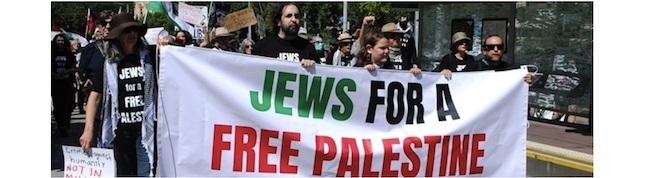
By David Glanz | 27 December 2025
When a leading Zionist calls six other Australian Jews “antisemitic” – and worse – over criticisms of Israel, the issues are deep. Hence this February piece, by those six, was so vital, well-received and much read.
Six Melbourne Jews, labelled “antisemites” by prominent lawyer Mark Leibler, have made a formal complaint against him to the Australian Human Rights Commission. Dr David Glanz details their position.
IMAGINE calling a group of Jews ‘repulsive and revolting human beings’.
At a time when Nazi thugs are openly organising on our streets and swastikas are being daubed on Jewish buildings, it’s surely the stuff of Far-Right memes. Inspiration for more foul graffiti.
But the author of the words was certainly no Nazi. The phrase was written by Mark Leibler AC, one of Melbourne’s leading lawyers, a member of the University of Melbourne Council, a former president of the Zionist Federation of Australia and the current chair of the Australia Israel & Jewish Affairs Council.
Mr Leibler wrote the words as part of a post on Twitter/X that he paid to promote, reaching some 400,000 people.
His target was anti-Zionist Jews in general and – given that we were organising an anti-Zionist rally the day after the post – surely the five of us, some of whom are migrants from Israel.
Mr Leibler didn’t pull his punches. He went on to say that our relatives killed in the Holocaust would be rolling in their graves.
And – this stings, given our track record of anti-racism – that we are ‘vicious antisemites’.
Now Mr Leibler is entitled to his support for Zionism. The idea that Jews would be best served by the establishment of a Jewish state in Palestine is, after all, a political position and one that has been contested within Jewish communities for some 140 years.
He is also entitled to defend the State of Israel and its actions in Gaza over the past 16 months.
We disagree with him on both counts. We organised our rally at Parliament House because we wanted to put on the public record that some Jews oppose the settler colonial conquest of Palestine and the consequences that have flowed from that, including apartheid laws within Israel and the West Bank and the ongoing genocide in Gaza.
We know that we are a minority within the Jewish community. We don’t claim to speak for all Melbourne Jews — quite the opposite. Our argument is that no one, including Mr Leibler, gets to speak for all Jews.
But we know that the number of Jews standing against the genocide and in solidarity with Palestine is growing, not just in Melbourne but around the world.
Over the past 16 months there have been impressive and lively rallies by dissenting Jews in the U.S., a Jewish bloc of up to 1,000 on Palestine rallies in London and, here in Melbourne, Jews taking part in each of the 71 weekly rallies for Palestine, with Jews often invited to speak from the platform.
We include in our ranks the descendants of Holocaust survivors and those who lost family in the Nazi death camps.
So the one thing we are certain Mr Leibler is not entitled to do is to dismiss us as beyond the pale. We have a right to speak, to be heard (and disagreed with) as Jews.
We have submitted a complaint about Mr Leibler’s post on X to the Australian Human Rights Commission.
As we are all Jews, and as Mr Leibler attacked us as such, we would argue that his post is not just offensive but antisemitic.
And given that our rally was to highlight the issue of discrimination against Palestinians and all victims of racism, we would argue that Mr Leibler’s post was an attempt to victimise us by exposing us to ridicule and contempt as Jews in the public arena.
It is also insulting. We include in our ranks the descendants of Holocaust survivors and those who lost family in the Nazi death camps.
We don’t want money or revenge. A public apology would suffice.
We have been denigrated and impugned. But the suffering of the Palestinians makes any slight we have experienced pale to nothing in comparison.
And that is the tragedy. While Mr Leibler uses his position of power to attack us as the “wrong sort of Jews”, some 2 million Palestinians in Gaza squat in the rubble of their homes, their hospitals and schools, their mosques and churches, and mourn their tens of thousands of dead.
Our rally called for an end to the suffering and discrimination. It was joined by many Jews and our non-Jewish supporters.
Mr Leibler’s post was a calculated and pre-emptive smear to undermine our rejection of all forms of racism, including antisemitism and Islamophobia.
He was obviously concerned about our impact. We must be doing something right.
Dr David Glanz, Nachshon Amir, Shahar Amir, Dr Keren Tova Rubinstein and Dr Guy Gillor are anti-Zionist Jews in Melbourne, who organised a rally against genocide and racism at the Victorian Parliament.
Should We Have an Enquiry or a Tantrum?
27 December 2025 Terence Mills, https://theaimn.net/should-we-have-an-enquiry-or-a-tantrum/
Michael McCormack, former leader of the National Party, had a surprising and emotional outburst before the Christmas break. Surprising in that rarely has he shown this level of energy, certainly not when he was National’s leader and on the back-bench he has barely made a contribution beyond regretting the defection of his mate Barnaby Joyce down the rabbit-hole of One Nation.
Mr McCormack was incensed that federal parliament had not been recalled following the Bondi shootings and he was particularly upset that Anthony Albanese had not initiated a national Royal Commission to complement and duplicate the Royal Commission set up by the New South Wales government: he was also enraged that new gun ownership regulations legislated in NSW, and probably to be adopted nationally, would impact unfairly on the activities of farmers – farmers and professional shooters will be restricted to 10 weapons but with a ban on automatic weapons that allow multiple shots without reloading, similar to those used by the alleged shooters at Bondi and gun licences will need to be renewed every two years rather than being perpetual licenses – poor farmers, how will they get by?
He may have been spurred into activity after Sussan Ley, the coalition’s prime ministerial hopeful, noted that Penny Wong, despite close scrutiny, had not been observed shedding a tear over the Bondi killings – evidently an inexcusable failing on the part of a female minister!
I got the impression that Mr Mc Cormack’s emotional tirade was not so much about Bondi, Royal Commissions or guns but rather it was about the fact that he, as a deposed former party leader, now sitting on the back-benches, was the only voice in the National Party available to speak out particularly as his leader, David Littleproud was completely silent on these issues: Mc Cormack may well have been echoing his former colleague Barnaby Joyce who had little faith in the current leadership of the National Party.
For the record, the New South Wales government have initiated a Royal Commission that will look into, among other matters:
- The nature, prevalence, and drivers of antisemitism in Australia leading up to the Bondi attack, including actions of governments, law enforcement, and broader society.
- An examination of Islamic extremism and neo-nazi ideology long with recommendations to strengthen counter terrorism systems.
Albanese has resisted political and emotive pressure to having a separate Royal Commission to that proposed by Premier Minns in New South Wales. He has noted that:
“There was no royal commission called by the Howard government after Port Arthur. There was no royal commission called by the Abbott government after the Lindt [Cafe] siege, there hasn’t been a royal commission held recently that has not had an extension of time. We know who the perpetrators are here … We know what the motivation is, that they are motivated by the evil ideology of ISIS and a perversion of Islam.”
Albanese has, alongside hate speech reforms and changes to gun laws, announced a review into federal law enforcement and intelligence agencies which will be led by former intelligence chief Dennis Richardson, and he has offered the co-operation of both the government and federal agencies with the NSW commission.
Those insisting on a separate federal Royal Commission say that it would not necessarily take years to conclude and that they could call on the appointed Commissioner to have a preliminary report by the end of April. That, of course is nonsense as the whole point of a Royal Commission is to be broad ranging, hear from all and sundry and probe into the dark corners that usually are hidden; you cannot expect quick fix responses and the Royal Commissioner would undoubtedly resist that sort of pressure.
Gun vs Keffiyeh. One kills, the other gets you death threats.
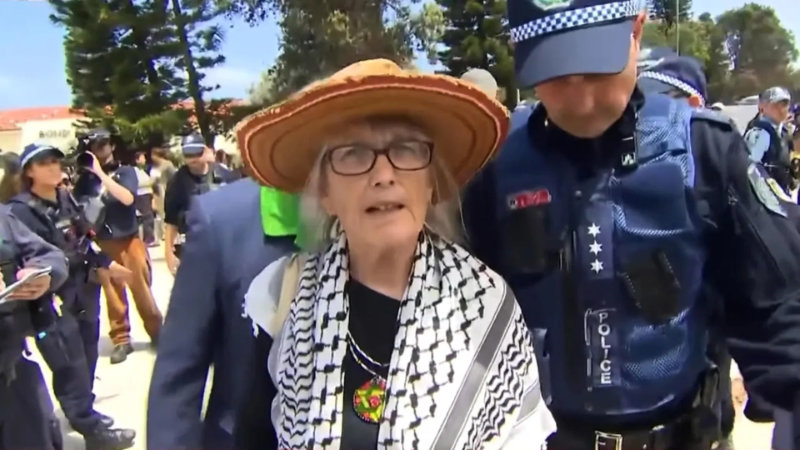
by Member of Jews Against the Occupation | Dec 18, 2025 , https://michaelwest.com.au/gun-vs-keffiyeh-one-kills-the-other-gets-you-death-threats/
A Jewish woman wearing a Keffiyeh as well as the Star of David was escorted off Bondi Beach by police. The resulting social media storm led to death threats to her and to her friend.
I am writing this knowing it will likely result in more death threats.
That is not a metaphor. It is a statement of fact, based on what happened to my friend Michelle and me this week, and what happened next when we sought protection from the state.
On Monday, at the Bondi memorial for the victims of the mass killing the day before, Michelle – a Jewish local and member of Jews against the Occupation ‘48 – was surrounded by a hostile crowd shouting “get her off”. She was escorted off the beach to the sound of applause by approximately forty police officers, whilst trying to explain her position to the surrounding reporters, and taken to Bondi Police Station, where she was told she couldn’t go back to Bondi Beach for 6 hours.
Her “offence”? Wearing a Keffiyeh.
Whether one agrees with her politics or not is beside the point. The memorial was dominated by Israeli flags – the flag of a state currently accused of genocide and whose leaders are wanted for war crimes. Michelle wore the keffiyeh because she objected to a moment of mourning being politicised. But it is not a crime. Nor is it a provocation warranting mob intimidation.
What followed should concern anyone who believes the rule of law applies equally.
After video footage of Michelle circulated on X, under a post by journalist Hugh Riminton, the abuse escalated rapidly.
Facts ignored
What was not mentioned – despite Michelle wearing a visible Star of David and explicitly stating to the press that she is Jewish – was that she is a Jewish local who grew up in Bondi. That omission mattered.
I replied publicly on X to clarify that Michelle is Jewish, that she is my friend, and that she is part of JAO48. While those responses received hundreds of supportive comments, they also unleashed some of the most extreme antisemitic, misogynistic, ageist and Islamophobic abuse I have encountered in years of public advocacy.
I can deal with online abuse on social media. The block button is my friend.
Threats arrived in my email inbox – not via social media, but via my direct contact form and messaging linked to my business. One message stated that Michelle was “now wishing she had stayed home” and warned, “I would not want to be her”.
The individual who contacted me used the name “Brenton Tarrant”, the name of the Christchurch mass murderer, writing that I “deserve a bullet in the head”, and that Michelle would be “hunted down”, and that because her address was doxxed, it would make “putting a claw hammer in her skull even easier.”
This was enough intimidation for me to call 000 and for two members of the Chatswood station to attend my home. The expressions on their faces when they read the messages were of shock and disgust.
No police report
More concerning was that Michelle’s home address had been published online in response to Riminton’s post. On Monday night, she went to Maroubra Police Station to report she’d been doxxed.
And nothing happened. She wasn’t contacted the next day or given a case number. Nothing.
When we returned to Maroubra Police Station two days later to ask what action had been taken regarding the doxxing and threats, the attending constable.
‘could not even find a record of Michelle having gone there on Monday night.’
There was a record of the death threats I received from Chatswood Police Station, but that doesn’t help someone whose life is in danger in Maroubra.
A Jewish woman, escorted by dozens of police officers, detained at a police station under threat of violence, had no record in the system days later. Had something happened to her in the intervening period, there would have been no official trace of her presence or vulnerability.
This is not a paperwork error. This is a systemic failure.
Irony of doxxing laws
The irony is sharp enough to cut. NSW’s doxxing laws were introduced following sustained lobbying about online threats directed at Zionist Jews. Those laws were framed as urgent protections against harm.
Yet here we have a Jewish woman who is anti-Zionist, whose address was published, who received death threats, and whose case appears to have been ignored entirely.
Only after I explicitly raised the double standard to a young constable – only after pointing out how differently this would have been handled had Michelle been a Zionist Jew – was a report finally entered into the system. I also demanded that police investigate the instigator of the doxxing. Whether the individual can ultimately be identified is beside the point. The absence of effort is the issue.
This failure is made even more disturbing by the broader amplification of risk.
Identity matters
The omission of Michelle’s Jewish identity among all the abuse matters. Not because her Judaism should confer protection or legitimacy – it should not have to – but because it fuelled a narrative that made her a target. The implication was clear:
‘she was an outsider, an agitator, someone deserving of removal.‘
It should not matter who she is. It should not matter what she believes. Wearing a keffiyeh is no more illegal than waving the flag of a state accused of mass atrocities.
What should matter is this: no one attending a memorial should be threatened with death, have their home address exposed, or be left unprotected by the police.
If that standard only applies to some Jews, then it is not protection at all. It is political preference enforced by the state.
And if writing this results in more threats, then that fact alone tells you how broken our public discourse – and our institutions – have become.
Tragedy should have united the country
Fifteen people are dead. Around forty are injured. Families and communities are grieving. But within hours, the event was weaponised.
Israeli Prime Minister Benjamin Netanyahu blamed the Albanese government. Jillian Segal linked the massacre with the March for Humanity on the Harbour Bridge.
Josh Frydenberg re-emerged, positioning himself as a future Prime Minister on the back of mass death, although suggesting this is the case is “highly offensive” to him.
I guess to Josh, it’s irrelevant that the father in the father/son terrorist team arrived in ’98 when Howard was PM, he gained his gun license in 2015 when Abbott was PM, and the ASIO investigation into the son was dropped in 2019 when Morrison was PM.And now, as a result of this horrific terrorist attack on Sunday, the calls to ban pro-Palestine protests are louder than ever.
If anybody can possibly think that Palestinians, Muslims, indeed even humanitarians who object to genocide had anything to gain from a mass shooting, “they’ve got rocks in their head”, as we say in Australia. If anything, the events of this week
‘show precisely why dissent must be protected.‘
When anti-Zionist Jews can be threatened with death, doxxed, misrepresented as terrorists, and left without protection by the state, the danger is not protest – it is repression.
If writing this results in further threats, that fact alone will confirm the point.
It is not safety for all that is being prioritised in this country. It’s not even safety for all Jews that is being prioritised. What dark days we are living in.
1 This month
.

Australians deserve the truth
about
AUKUS – https://aukuspublicinquiry.com/

PETITION – To: Prime Minister Anthony Albanese and the Australian Labor Government

of the week – Australians for War Powers Reform (AWPR)
To see nuclear-related stories in greater depth and intensity

