Antinuclear

Australian news, and some related international items

  • Home
  • 1 This month
  • Disclaimer
  • Kimba waste dump Submissions

Federal court rules against Aboriginal group who wanted inclusion in nuclear waste dump ballot

Federal Court dismisses bid to stop ballot on nuclear storage facility near Kimba, ABC,  By Candice Prosser, Claire Campbell and Sara Garcia  12 July 19, A South Australian Aboriginal group has lost a bid to stop a council ballot on whether a nuclear storage facility should be built on the Eyre Peninsula.

Key points:

  • The Kimba District Council planned to hold a vote to gauge support for the waste dump
  • Representatives of the Barngarla people were excluded from the ballot
  • They argued it contravened the Racial Discrimination Act, but the Federal Court dismissed the application

The Barngarla Determination Aboriginal Corporation launched legal action against the District Council of Kimba, arguing it contravened the Racial Discrimination Act by excluding native title holders from the ballot.

The council planned to hold a vote to gauge community support among its ratepayers for having radioactive waste stored in their area, after the Federal Government shortlisted two sites near Kimba as possible locations for the facility.

A third site in Hawker, near the Flinders Ranges, has also been shortlisted.

The native title holders won an injunction to halt the ballot last year, while the legal challenge was being heard.

Justice Richard White ruled that no contraventions of the Racial Discrimination Act had been established, and dismissed the application.

SA Greens leader Mark Parnell said he was disappointed with the court’s decision.

“Here we are in NAIDOC week, celebrating Aboriginal culture, and the court has determined it is not a breach of the Racial Discrimination Act to deny traditional owners a vote on whether a nuclear waste dump can be built on their land,” he said.

“Clearly in this country we have a very long way to go before we achieve anything like reconciliation.

“The Aboriginal traditional owners have legitimate rights over this country, yet they’ve been denied a right to vote on whether a nuclear waste dump can be built.

“The Federal Government is obviously keen to get their project up but they only want to ask people who are going to say yes.”

In a statement the Barngarla people said they respected the Federal Court’s decision, but said their lawyers were considering an appeal.

“The Barngarla respects the decision of the Federal Court, as the court has to interpret complicated legislation,” the statement read.

“However, more generally we consider it sad that in the 21st century we are required to take legal action to allow us to have the right to vote on the major decision of the day.

“This case has been about standing up for the right of Aboriginal people to vote on important issues which affect their rights.”……….


Landholder Jeff Baldock [at left] has volunteered a portion of his property in Kimba for the proposed facility and said he welcomed today’s decision.

“Now hopefully we get to have our democratic vote … if there’s nothing else that gets in the road,” he told ABC News………

The proposal has the community divided, with Kimba resident and former Liberal MP Barry Wakelin also opposing the facility. …….

The latest Federal Government proposal is to build a single facility in regional South Australia for all of the nation’s waste. https://www.abc.net.au/news/2019-07-12/bid-to-stop-ballot-on-nuclear-storage-facility-in-sa-dismissed/11302852

July 13, 2019 Posted by Christina Macpherson | AUSTRALIA - NATIONAL, Federal nuclear waste dump, legal | Leave a comment

Hasty, secretive federal approval of Yeelirriee uranium project shows contempt for the scientific environmental evidence

New light on WA uranium mine approval sparks call to put environment before economics,  WA Today. By Cameron Myles, July 10, 2019 — New light shed on the “clandestine” approval of a uranium mine in Western Australia’s outback has sparked calls to beef up the country’s environmental laws, amid concerns the minister responsible prioritised the economy over the environment.Then-environment minister Melissa Price signed off on Cameco’s Yeelirrie project near Wiluna on April 10 this year, the day before the federal government called the May 18 election.

News of the project’s approval did not emerge until around Anzac Day later that month, with no releases announcing the minister’s decision, prompting Australian Conservation Foundation (ACF) nuclear free campaigner Dave Sweeney’s call that it was a “clandestine approval under the cover of a national election”.

Yeelirrie, which sits within the boundaries of Ms Price’s vast federal electorate of Durack, had a long history of resistance.

It was previously rejected by the WA Environmental Protection Authority which flagged, among others, concerns about the project’s impact on 12 species living underground and in the water table.

Some species were only found in the area covered by the project and there were fears they could go extinct as the miner dug through groundwater to get to the uranium below.

It was later approved at a state level by the then-Barnett government, and several options on how to proceed were presented to Ms Price by the federal Department of the Environment and Energy on April 5 this year.

But the release last week of a statement of reasons from Ms Price – secured by the ACF – has revealed she signed off on the project with a less stringent set of environmental conditions than those recommended by the department, noting that if she attached the more onerous conditions “there is a real chance that the project could not go ahead”.

“I was satisfied that if the project did not go ahead and the social and economic benefits would not be realised, this would have an adverse effect on the region and the State as a whole,” Ms Price wrote.

The Wilderness Society WA state director Kit Sainsbury said the revelation meant the minister put economic and social conditions ahead of what should be her primary consideration – the environment.

“To see both at the state and federal level such contempt for the scientific evidence suggesting that this project is environmentally unsustainable – yet receiving approval – is galling and highly contentious,” he said.

“As the Yeelirrie decision proves, too often decisions affecting the environment are made behind closed doors … a national body with teeth can stand up for the communities which need it and their country they honour.”……….

Tjiwarl native title holders and conservationists are also appealing a Supreme Court decision against their challenge to the WA government’s approval of Yeelirrie, which Ms Price had previously told media she would wait for the outcome of before signing off on the approval. …….. https://www.watoday.com.au/national/western-australia/new-light-on-wa-uranium-mine-approval-sparks-call-to-put-environment-before-economics-20190709-p525mx.html

July 13, 2019 Posted by Christina Macpherson | AUSTRALIA - NATIONAL, environment, politics, uranium, Western Australia | Leave a comment

South Australian communities DID NOT voluntarily enter into process for hosting nuclear wastes

Katrina Bohr  No Nuclear Waste Dump Anywhere in South Australia, 12 July 19
The Department has made a predictable media statement in reference to the Federal Court’s ruling today.

However please take note of the wording at the finish:

‘The department will examine the decision in detail in the coming days, before advising the communities who voluntarily entered into the process, of the next steps.’

When did the communities Voluntarily enter into the process?

The landholders volunteered their land, but the communities didn’t voluntarily enter into the process. https://www.facebook.com/groups/1314655315214929/

July 13, 2019 Posted by Christina Macpherson | Federal nuclear waste dump, South Australia | Leave a comment

For Australia – the prohibitive cost and time involved in constructing new nuclear reactors

The nuclear cycle of destruction , RedFlag, James Plested, 12 July 2019   ” ……..Another downside to nuclear power is the cost and time involved in constructing new reactors. As Peter Farley of Engineers Australia wrote in RenewEconomy earlier this year, “The 2,200 MW Plant Vogtle [a new nuclear plant in the US] is costing US$25 billion plus financing costs, insurance and long term waste storage … For the full cost of US$30 billion, we could build 7,000 MW of wind, 7,000 MW of tracking solar, 10,000 MW of rooftop solar, 5,000 MW of pumped hydro and 5,000 MW of batteries”.

International financial advisory firm Lazard’s 2018 Levelized Cost of Energy Analysis found that nuclear power was significantly more expensive than gas, coal, or renewable energy sources like solar and wind. For new nuclear, it estimated the cost at US$112-189 per megawatt hour. The cost of power generation from coal was US$60-143. Wind and utility-scale solar were significantly cheaper, at US$29-56 and US$36-46 respectively.

The world’s 450 or so operative nuclear reactors produce only around 11 percent of the electricity supply. Any significant increase in this proportion would require a massive program of construction – on the order of 1,000 new plants over the next decade.

According to the most generous estimates, the cost of constructing a single new nuclear reactor is between US$5 and $10 billion (and the necessary decommissioning of the average reactor now costs an estimated US$500 million). So for the construction of 1,000, we would be looking at up to US$10 trillion. In addition, there is related infrastructure such as new uranium mines, enrichment and transportation facilities, waste storage facilities and so on. But if there are trillions of dollars available for nuclear, why not use that money to fund a global shift to a combination of wind, solar, tidal and other renewable sources that could much more cheaply and sustainably provide for the world’s energy needs? ….” . http://www.onlineopinion.com.au/view.asp?article=20398

July 13, 2019 Posted by Christina Macpherson | AUSTRALIA - NATIONAL, business | Leave a comment

BIRDS VS BHP: Evaporation ponds at BHP’s Olympic Dam mine are killing hundreds of birds

BIRDS VS BHP: Evaporation ponds at BHP’s Olympic Dam mine are killing hundreds of birds

Hundreds of birds are dying each year after mistaking Olympic Dam’s evaporation ponds for wetlands. Environment campaigners want the miner to stop using them. Clare Peddie, Science Reporter, The Advertiser, July 10, 2019   

Conservationists want BHP to stop using evaporation ponds at Olympic Dam that kill hundreds of birds, including threatened species.

They want BHP to cancel plans for a new pond and phase out 146ha of existing ponds, which are used for the disposal of acidic waste water………

Scientist and environment campaigner David Noonan says it’s shocking that birds are drowned, choked or scalded by BHP’s highly acidic, toxic wastewater.

“They see this as a wetland in an arid region as they’re travelling through,” he said. “They’re typically poisoned by contact, they die on site or they’re poisoned and die later.”

BHP found 224 dead birds during weekly monitoring in the 2017-18 financial year and that included 39 banded stilts, a vulnerable species in SA.  The number of dead birds found annually has hardly changed since 2011-12, when the banded stilt, red-necked avocet, whiskered tern, grey teal, black swan, hoary-headed grebe, …..

Plans for a huge open cut mine that were shelved in 2012 would have required a phase-out of evaporation ponds, but BHP says that condition is no longer relevant or applicable to current growth and expansion of the underground mine.

BHP is preparing to make a submission to both state and federal governments for a sixth evaporation pond.

A separate submission on a the new tailings storage facility – about the size of the Adelaide CBD and ten storeys high – has already been made, triggering an Environment Protection and Biodiversity Conservation Act referral, as in the case of the endangered bird in the path of the interconnector.  https://www.adelaidenow.com.au/news/south-australia/evaporation-ponds-at-bhps-olympic-dam-mine-are-killing-hundreds-of-birds/news-story/1b886e4946f87fb7a729e201282f5cfb

July 13, 2019 Posted by Christina Macpherson | environment, South Australia, uranium | Leave a comment

A warning to Australia on the nuclear cycle of destruction

The nuclear cycle of destruction , RedFlag, James Plested, 12 July 2019,  The hit HBO series Chernobyl portrays in chilling detail the horror of a serious nuclear accident and the scale of the destruction it can unleash. Predictably, the series has provoked a backlash from the nuclear lobby, which has sought to downplay the seriousness of the accident and spruik the potential of nuclear power as a “clean, green” alternative to fossil fuels.

Melbourne Herald Sun columnist and Sky News host Andrew Bolt has led the charge in Australia, questioning the results of research by the World Health Organisation and others about the scale of the Chernobyl casualties. According to the ABC’s Media Watch, in the first half of June more than a dozen articles in support of Australia developing nuclear power were published in the Murdoch press alone.

Bolt and Co. have some powerful backers. Writing at RenewEconomy, Jim Green points out that nuclear power has become something of a political talisman for those on the far right, with figures such as Clive Palmer, Tony Abbott, Cory Bernardi, Barnaby Joyce, Mark Latham, Jim Molan, Craig Kelly, Eric Abetz and David Leyonhjelm all expressing their support.

On one level, as Green argues, nuclear power is just another front in the broader “culture wars”, and as such is likely to remain marginal to the debate about Australia’s energy policy. But when you add the likes of the Minerals Council of Australia, the Business Council of Australia, the Institute of Public Affairs and conservative radio host Alan Jones – all strong advocates of nuclear power, and all closely linked to the recently re-elected Coalition government – the pro-nuclear club suddenly seems like a force to be reckoned with.

There is strong pressure coming from within the Coalition’s ranks to overturn the current ban on nuclear power. A group from Queensland, led by MP Keith Pitt and senator James McGrath, is pushing for a feasibility study of nuclear power in Australia, and environment minister Sussan Ley has said she’s open to reviewing the ban.

And nuclear power isn’t as unpopular as you might think. Recent polling by Essential found that 44 percent of Australians support it, an increase of 4 percent from their last survey in November 2015, while 40 percent oppose it (tellingly, however, only 28 percent report being “comfortable living close to a nuclear power plant”).

With any luck, the popularity of Chernobyl will help inoculate more people against the arguments of the nuclear lobby. But there can be no doubt that the push to develop nuclear power in Australia will continue. And there can equally be no doubt that nuclear power, far from being a clean, green alternative to fossil fuels, is an inherently dangerous and destructive technology that Australia, and the world, can do without.

The nuclear industry is like a crucible in which all the most destructive and irrational elements of capitalism have been melded into a single deadly alloy. It’s not just nuclear power itself that’s the source of the danger. It’s the whole nuclear cycle – from the mining of uranium, to the use of that uranium in nuclear power stations, the production of radioactive waste and, most threateningly, the production of nuclear weapons..……

Australian business heads and governments have long had an eye on further uranium mines. The anti-nuclear movements of the 1970s and early 1980s, as well as the later campaign against the proposed Jabiluka uranium mine (see article in this issue), kept this aspiration in check. In recent years, however, state and federal governments have renewed the push.

The South Australian government is supporting a proposal by BHP to expand massively the operations of its existing Olympic Dam mine – which contains the largest single uranium deposit in the world. And the day before the last election was called, the federal government abruptly announced its approval of a new uranium mine in Western Australia.

The next stage in the nuclear cycle is the use of enriched uranium in nuclear power plants. Supporters of nuclear power claim it’s the safest form of power generation. But this factors in only the most immediate and direct impacts. Take Chernobyl, for example. Andrew Bolt’s claim that fewer than 100 people died is based on the (by far) most conservative assessment – which focusses almost exclusively on deaths from radiation sickness in the first few months after the disaster – and massively downplays the long term increase in the rate of cancer among radiation-exposed populations.

A 2006 report by Greenpeace – involving 52 scientists using demographic data and cancer statistics from Belarus, Ukraine and Russia – found that total Chernobyl-related deaths are likely to reach into the hundreds of thousands.

And unlike other sorts of accidents, nuclear accidents have long-term effects, poisoning the earth and human health for decades afterwards and resulting in mass evacuations, with many people unable ever to return to their homes. ……… Continue reading →

July 13, 2019 Posted by Christina Macpherson | AUSTRALIA - NATIONAL, politics | Leave a comment

The cost if Australia were to get nuclear weapons – and it’s not only financial

Going Nuclear in the Antipodes: Australia’s megadeath complex, Online Opinion By Binoy Kampmark – , 10 July 2019   The antipodes has had a fraught relationship with the nuclear option. At the distant ends of the earth, New Zealand took a stand against the death complex, assuming the forefront of restricting the deployment of nuclear assets in its proximity. This drove Australia bonkers with moral envy and strategic fury. The New Zealand Nuclear Free Zone, Disarmament and Arms Control Act 1987 made the country a nuclear and biological weapons-free area. It was a thumbing, defiant gesture against the United States, but what is sometimes forgotten is that it was also a statement to other powers – including France – who might venture to experiment and test their weapons in the Pacific environs. ………

As Anglo-American retainer and policing authority of the Pacific, Australia has had sporadic flirts with the nuclear option, one shadowing the creation of the Australian National University, the Woomera Rocket Range and the Snowy Mountains hydro-electricity scheme. Australian territory had been used, and abused, by British forces keen to test Albion’s own acquisition of an atomic option. The Maralinga atomic weapons test range remains a poisoned reminder of that period, but was hoped to be a prelude to establishing an independent Australia nuclear force. Cooperation with Britain was to be key, and Australian defence spending, including the acquisition of 24 pricey F-111 fighter bombers from the US in the 1960s, was premised on a deliverable nuclear capability.

During John Gorton’s short stint as prime minister in the late 1960s, rudimentary efforts were made at Jervis Bay to develop what would have been a reactor capable of generating plutonium under the broad aegis of the Australian Atomic Energy Commission. Gorton’s premiership ended in 1971; Australia slid back into the sheltering comforts of Washington’s unverifiable nuclear umbrella.

The influential chairman of the AAEC, Philip Baxter, who held the reins between 1956 and 1972 with a passion for secrecy, never gave up his dream of encouraging the production of weapons grade plutonium. It led historian Ann Moyal to reflect on the “problems and danger of closed government”, with nuclear policy framed “through the influence of one powerful administrator surrounded by largely silent men”.
Nuclear weapons have a habit of inducing the worst of human traits. Envy, fear, and pride tend to coagulate, producing a nerdish disposition that tolerates mass murder in the name of faux strategy. With the boisterous emergence of China, Australian academics and security hacks have been bitten by the nuclear bug. In 2018, Stephan Frühling, Associate Dean of the College of Asia and the Pacific at the Australian National University fantasised about adorning the Australian coastline with tactical, short-range nuclear weapons.
……….Other authors who claim to be doyens of Australian strategic thinking also fear the seize-the-prize intentions of the Yellow Peril and a half-hearted Uncle Sam keen to look away from “the Indo-Pacific and its allies.” Paul Dibb, Richard Brabin-Smith and Brendan Sargeant, all with ANU affiliations, call for “a radically new defence policy,” which might be read as a terror of the US imperium in retreat. For Dibb, Australia “should aim for greater defence self-reliance.” This would involve “developing a Defence Force capable of denying our approaches to a well-armed adversary capable of engaging us in sustained high-intensity conflict.” ………
Not wishing to be left off the increasingly crowded nuclear wagon, Australia’s long standing commentator on China, Hugh White, has also put his oar in, building up the pro-nuclear argument in what he calls a “difficult and uncomfortable” question. ………

Then comes the issue of a nuclear capability, previously unneeded given the pillowing comforts of the US umbrella, underpinned by the assurance that Washington was “the primary power in Asia”. White shows more consideration than other nuclear groupies in acknowledging the existential dangers. Acquiring such weapons would come at a Mephistophelian cost. “It would make us less secure in some ways, that’s why in some ways I think it’s appalling.”

The nuclear call doing the rounds in Canberra is a bit of old man’s bravado, and a glowering approach to the non-proliferation thrust of the current international regime. Should Australia embark on a nuclear program, it is bound to coalescence a range of otherwise divided interests across the country. It will also thrill other nuclear aspirants excoriated for daring to obtain such an option. The mullahs in Iran will crow, North Korea will be reassured, and states in the Asian-Pacific may well reconsider their benign status. http://www.onlineopinion.com.au/view.asp?article=20398

July 13, 2019 Posted by Christina Macpherson | AUSTRALIA - NATIONAL, weapons and war | Leave a comment

Dr Jim Green analyses the Australian super funds’ views about nuclear power

Nuclear war between super funds Online Opinion,   Jim Green – , 11 July 2019 Industry Super Australia (ISA) – a research and advocacy body for Industry SuperFunds – has published a report promoting nuclear power, prompting a sceptical response from Industry Super Holdings, which is controlled by super funds including AustralianSuper, Cbus, Hostplus and HESTA. Most of those super funds are also involved in ISA, so the sector is at war with itself – or perhaps the sceptical response can be read as the sector’s response to the authors of the pro-nuclear report.

The context for this debate is welcome – super funds urging governments to speed up climate action, and considering using some part of their own vast wealth to make needed investments for climate change abatement.

But the ISA report – ‘Modernising Electricity Sectors: A guide to long-run investment decisions’, written by ISA Chief Economist Stephen Anthony and Emeritus Professor Alex Coram from the University of WA – misses the mark on nuclear power.

ISA gives itself some wriggle-room by noting that the views expressed in the report do not necessarily reflect those of ISA. And the authors give themselves some wriggle-room: for all their nuclear boosterism, they note that it ‘is unlikely that nuclear offers opportunities for investment in the short term’ and that it should be placed on a ‘watching brief’.

On the other hand, the authors argue that Australia’s lack of experience managing a nuclear power plant ‘pre-empts the ability to make decisions between all major options for emission reduction.’ So Australia should introduce nuclear power in order to make a decision as to whether or not to develop nuclear power? Insofar as there is any logic to that argument, it is dizzyingly circular.

The authors fret that Australia has no capacity to build or operate a nuclear facility and thus lags geographical neighbours such as Indonesia and Vietnam. That’s nonsense. All three countries are in the same position: operating research reactors, no capacity to build power reactors and no serious plans to acquire them from overseas vendors (Vietnam abandoned its quest for nuclear power in 2016, citing excessive costs).

The authors aim to ‘to provide the best analysis possible’ but there isn’t even passing mention of salient issues such as the proliferation and security issues associated with nuclear power, or the industry’s sickening record of mistreating indigenous peoples, or the nuclear waste legacy, or the occasional catastrophic accident costing hundreds of billions of dollars in addition to the human and environmental costs.

Nuclear economics

The authors state that levelised costs of energy are not a good basis for long-term investment or policy decisions, and they prefer grid-level cost estimates (which make allowance for such things as the cost of back-up power). Fine – but the inputs they choose undermine their work. Rubbish in, rubbish out……..

The report ignores the Hinkley Point construction project in the UK (two EPR reactors) as it ‘seems to be an outlier in terms of technology and financial arrangements’. So the authors use the ridiculous EIRP cost estimates for non-existent Generation IV reactors but ignore cost estimates for reactors that are actually under construction … go figure. Hinkley weighs in at a hefty US$10.5 billion per GW. And the ISA report ignores the Vogtle twin-AP1000 project in the US state of Georgia, which is even worse at US$12.3+ billion per GW.

There’s no mention of the V.C. Summer project in South Carolina (two AP1000 reactors), abandoned after the expenditure of at least A$12.9 billion, There’s no mention of the bankruptcy of industry giants Westinghouse and Areva.

The nuclear industry is in crisis – but you wouldn’t know it reading the ISA report. Nuclear lobbyists have themselves repeatedly acknowledged nuclear power’s ‘rapidly accelerating crisis‘, a ‘crisis that threatens the death of nuclear energy in the West‘, ‘the crisis that the nuclear industry is presently facing in developed countries‘, while noting that ‘the industry is on life support in the United States and other developed economies‘ and engaging each other in heated argumentsabout what if anything can be salvaged from the ‘ashes of today’s dying industry’.

Generation IV concepts

If the ISA report authors are entranced by Generation IV nuclear concepts, as their uncritical use of the EIRP report suggests, why not consider the estimated cost of prototypes under construction rather than ridiculous guestimates offered by nuclear companies? Argentina claims to be a world leader in the development of small modular reactors, but the estimated cost of the one SMR under construction in Argentina has ballooned to an absurd US$21.9 billion / GW. Likewise, estimated construction costs for Russia’s floating nuclear power plant increased more than four-fold and now amount to over US$10 billion / GW.

ISA’s chief economist and report co-author Stephen Anthony told the ABC that nuclear power ‘looks awfully good’. But the only figures in the ISA report that make nuclear look good are the ridiculous guestimates provided by companies involved in Generation IV R&D. Nuclear doesn’t look awfully good to the growing number of countries phasing out nuclear power ‒ a list that now includes Germany, Switzerland, Spain, Belgium, Taiwan and South Korea. And it doesn’t look awfully good to the nuclear lobbyists pondering what if anything can be salvaged from the ‘ashes of today’s dying industry’ … it looks awful, not awfully good.

A 2015 report by the International Energy Agency and the OECD’s Nuclear Energy Agency said that ‘generation IV technologies aim to be at least as competitive as generation III technologies … though the additional complexity of these designs, the need to develop a specific supply chain for these reactors and the development of the associated fuel cycles will make this a challenging task.’

The late Michael Mariotte commented on the IEA/OECD report: ‘So, at best the Generation IV reactors are aiming to be as competitive as the current − and economically failing − Generation III reactors. And even realizing that inadequate goal will be ‘challenging.’ The report might as well have recommended to Generation IV developers not to bother.’

Technological neutrality?

A single reactor would be a ‘relatively small investment’, the ISA report states. But cost estimates for all reactors under construction in north America and western Europe range from A$14-24 billion………..

The report discusses the plan for a twin-reactor nuclear plant at Wylfa in Wales, abandoned after the cost estimate increased from A$26.4 billion to A$39.7 billion. The project was abandoned by Hitachi, the ISA authors state, ‘because it was required to carry too much risk relative to the size of the company.’ But staggering British taxpayer subsidies were on offer for Hitachi to proceed with Wylfa. Business and Energy Secretary Greg Clark saidthe UK government offered a ‘significant and generous package of potential support that goes beyond what any government has been willing to consider in the past’ … which is really saying something since taxpayer subsidies for Hinkley Point are estimated at A$55–91 billion.

Evidently the ISA report authors believe that the subsidies on offer for Wylfa needed to be increased again and again until Hitachi finally agreed to go ahead with the project.

Sceptical responses

The New Daily, a publication of Industry Super Holdings, didn’t buy the ISA’s nuclear Kool-Aid. The New Daily article quotes Dr Ziggy Switkowski saying last year that ‘the window for gigawatt-scale nuclear has closed’ and that nuclear power is no longer cheaper than renewables, with costs rapidly shifting in favour of renewables.

The New Daily also quotes Andrew Richards, CEO of the Energy Users Association of Australia. Richards noted that it would take at least a decade to get a nuclear power plant up and running (20+ years according to economist Prof. John Quiggin) and that governments would need to support insurance, dismantling and disposal costs as the private sector won’t take on those risks.

The Electrical Trades Union condemned the ISA report. ETU National Secretary Allen Hicks said: ‘The ETU has very strong concerns about this ISA report that broadly spruiks nuclear power while using flawed assumptions and poor modelling to write down the capacity of renewables and battery technology.’

Hicks called on partners in the superannuation industry to join in the condemnation of the ISA report ‘that is not only full of holes but would put at risk the very people who industry super represents – union members.’

Hicks continued: ‘This report has been developed without consulting key industry stakeholders or actual members of Industry Super Australia that we have been in contact with. … With the Federal Liberal Government totally incapable of leading on energy policy, we think ISA should take a leading role in energy investment, but it must not try to put our members retirement savings into a deadly industry that does not exist in Australia and is fading around the globe and consistently leads to spiralling costs.’

ETU National Industry Coordinator Matthew Murphy accusedI SA of ‘fluffing up the benefits of nuclear power’ and said many of the report’s findings were based on assumptions or numbers with no basis in reality. ‘This report is biased toward nuclear power and against renewables and that clearly bares out in shoddy maths and assumptions like ‘a battery will only run for one hour’ or that the island nation of Australia is not suitable for off-shore wind and tidal power,’ Murphy said.   http://www.onlineopinion.com.au/view.asp?article=20399&page=1

July 13, 2019 Posted by Christina Macpherson | AUSTRALIA - NATIONAL, business, Opposition to nuclear | Leave a comment

Barnaby Joyce jumps on the Australian extreme right wing pro nuclear bandwagon

Barnaby Joyce to push for inquiry into nuclear power  https://www.theaustralian.com.au/nation/barnaby-joyce-to-push-for-inquiry-into-nuclear-power/news-story/eb626f6785e7ad90bbec9aa504615690Barnaby Joyce wants an inquiry into nuclear power. RICHARD FERGUSON, REPORTER, JULY 11, 2019

Former Nationals leader Barnaby Joyce will use his position as the chair of a parliamentary committee to push for an inquiry into nuclear power, saying it is the only way to get to zero emissions.

Mr Joyce is the chairman of the House of Representatives standing committee into industry, innovation, sciences and resources and says his committee is better placed to look into nuclear power than the Senate.

The Australian reveals today that Scott Morrison was sent a draft terms of reference into a nuclear power inquiry by Coalition MPs last month.

Mr Joyce said this morning that he will push for a nuclear power inquiry in his committee and that those who want zero emissions but no nuclear option should “shut up.” Continue reading →

July 13, 2019 Posted by Christina Macpherson | AUSTRALIA - NATIONAL, politics | Leave a comment

Australia’s security and self-reliance – there’s a better path than getting nuclear weapons

Defence: the appalling US corollary,  Crispin Hull, 12 July 19 The defence commentary that bloomed in the wake of the publication of Hugh White’s “How to Defend Australia” has largely failed to mention the appalling corollary to White’s wise assertion that Australia has to prepare itself for the possibility that the US would not come to Australia’s defence if attacked from without.The corollary is, of course, the question as to why, over the past decades, have we sucked up to the US, done all its bidding, and entered wars at its behest that really had nothing to do with us? Why did we expend so much blood and treasure when, now, at the critical juncture of the rise of an aggressive China we will not be able to expect the help we have relied upon from the US these past 75 years……..

the important point is what flows from that. White, one of Australia’s clearest statregic thinkers, says we should therefore be more self-reliant.

So far, so good. But his suggested options of meeting the challenge of being less reliant on the US displays a nation-state mentality which is quite outdated. ……

the question is not only how much money should be spent, but upon what it should be spent upon, to address our national security.

In the past two decades we have spent it in precisely the places which have reduced, not increased, our national security: Iraq and Afghanistan in particular. If we had stayed out, Australia would not have attracted the attention of jihadists and terrorists.

Spending money on a nuclear deterrent, which White does not rule out, did not help the US in its interventions in Afghanistan, Iraq, Syria, Libya, Lebanon etc……..

A better way is to make our forces responsive to Australian, not US, needs, as White suggests. But we do not have to spend a vast amount more. Rather than spend more on the military element of our national-security expenditure, we should spend more on the relationship-building expenditure – particularly foreign aid and the soft power of Australian TV and radio broadcasts into our region, and beyond – areas we have cut so stupidly against our national interest in the past two and half decades.

And surface ships which can respond to humanitarian crises, are critical. Submarines cannot do that.

The foreign-aid budget should be part of the defence budget. Australians have no idea how little we spend on foreign aid, so governments can get away with cutting it. The Lowy Institute (which, as it happens, I criticised last week on its inept polling on population) has done a first-rate job on exposing this. ……..

We can bluff our neighbours with a nuclear weapon that attacking Australia might or might not result in a painful rebuff. But the bluff might be called. On the other hand, if we build trade, educational and cultural exchanges and health, educational and economic aid with our neighbours they will never want to attack, and if they ever have totalitarian leaders those leaders will never be able to point to Australia as the wicked outsider deserving of attack.

To the extent we are no longer under the US nuclear umbrella, as White correctly points out, we should be grateful. The price has never been worth it. And Iran could well, one hopes not, prove the point yet again. ……..http://www.crispinhull.com.au/2019/07/12/defence-the-appalling-us-corollary/

July 13, 2019 Posted by Christina Macpherson | AUSTRALIA - NATIONAL, politics, safety | Leave a comment

Sydney Morning Herald article provokes Australian pro nuclear troll’s vicious attack on Dr Helen Caldicott.

It was remarkable that the Sydney Morning Herald finally had the courage to run an article by globally recognised writer on matters nuclear – Dr Helen Caldicott.  The Australian mainstream media generally runs pro nuclear articles, or, at best, steers clear of the nuclear topic altogether.


This was too much for Australia’s pro nuclear propagandist, Ben Heard. He prides himself on writing information – the facts – and claims to never use ‘ad hominem’ arguments against nuclear critics. But here’s what Ben tweeted yesterday:

“Outrageous that ⁦@smh⁩ published the conspiratorial, unscientific train-of-thought that is Helen Caldicott.  Next week, climatechange by Lord Christopher Moncton?

Any rational person need only spend 5 mins listening to her before feeling the need to back away slowly without making eye contact.”


July 13, 2019 Posted by Christina Macpherson | AUSTRALIA - NATIONAL, secrets and lies | 2 Comments

France’s latest nuclear-powered ‘Barracuda’ class submarine: why did Scott Morrison send Australian Defence Minister Linda Reynolds to France, for the launch.

French President Emmanuel Macron unveils France’s nuclear-powered ‘Barracuda’ submarine   By Euronews  with Reuters  12/07/2019  French President Emmanuel Macron unveiled France’s latest nuclear-powered ‘Barracuda’ class submarine on Friday, a €9 billion stealth vessel programme Paris says is key to maintaining its naval presence for decades to come…….

The French government has placed an order for six of the 5,000-tonne submarines made by Naval Group, in which defence company Thales has a 35 percent stake.

The Australian defence minister Linda Reynolds attended the ceremony unveiling the submarine. Australia recently ordered a non-nuclear attack class submarine fleet from the Naval Group……… https://www.euronews.com/2019/07/12/french-president-emmanuel-macron-to-unveil-france-s-nuclear-powered-barracuda-submarine

July 13, 2019 Posted by Christina Macpherson | AUSTRALIA - NATIONAL, politics international | Leave a comment

The unaffordable and extreme cost – if Australia opted for nuclear power

The nuclear cycle of destruction, Red Flag, James Plested, 12 July 2019   “……..Another downside to nuclear power is the cost and time involved in constructing new reactors. As Peter Farley of Engineers Australia wrote in RenewEconomy earlier this year, “The 2,200 MW Plant Vogtle [a new nuclear plant in the US] is costing US$25 billion plus financing costs, insurance and long term waste storage … For the full cost of US$30 billion, we could build 7,000 MW of wind, 7,000 MW of tracking solar, 10,000 MW of rooftop solar, 5,000 MW of pumped hydro and 5,000 MW of batteries”.

International financial advisory firm Lazard’s 2018 Levelized Cost of Energy Analysis found that nuclear power was significantly more expensive than gas, coal, or renewable energy sources like solar and wind. For new nuclear, it estimated the cost at US$112-189 per megawatt hour. The cost of power generation from coal was US$60-143. Wind and utility-scale solar were significantly cheaper, at US$29-56 and US$36-46 respectively.

The world’s 450 or so operative nuclear reactors produce only around 11 percent of the electricity supply. Any significant increase in this proportion would require a massive program of construction – on the order of 1,000 new plants over the next decade.

According to the most generous estimates, the cost of constructing a single new nuclear reactor is between US$5 and $10 billion (and the necessary decommissioning of the average reactor now costs an estimated US$500 million). So for the construction of 1,000, we would be looking at up to US$10 trillion. In addition, there is related infrastructure such as new uranium mines, enrichment and transportation facilities, waste storage facilities and so on. But if there are trillions of dollars available for nuclear, why not use that money to fund a global shift to a combination of wind, solar, tidal and other renewable sources that could much more cheaply and sustainably provide for the world’s energy needs? ……  https://redflag.org.au/node/6835

July 13, 2019 Posted by Christina Macpherson | AUSTRALIA - NATIONAL, business | Leave a comment

The unlikely and unwise process towards Australia getting nuclear weapons

Nuclear weapons? Australia has no way to build them, even if we wanted to  Heiko Timmers
https://theconversation.com/nuclear-weapons-australia-has-no-way-to-build-them-even-if-we-wanted-to-120075   Associate Professor of Physics, UNSWJuly 10, 2019  In his latest book, strategist and defence analyst Hugh White has gone nuclear, triggering a debate about whether Australia should develop and maintain its own nuclear arsenal.But developing and sustaining modern nuclear weapons requires a certain combination of technologies and industries that Australia simply does not have. In fact, it may be safely estimated on the basis of approval and construction times for nuclear power reactors in other western countries that it would take some 20 years to establish such capabilities in the present legal and economic environment.

Opting for nuclear weapons also fails to consider the global implications of Australia abandoning its almost 50-year stance against nuclear proliferation.

The first step: nuclear power generation

White argues quite rightly that China may eventually overtake the US in terms of its industrial production and military reach. Speculating that this could entail a strategic withdrawal of the US from the western Pacific, he suggests Australia might find itself without the American defence umbrella to deter Chinese influence, or worse.

But Australia would struggle to replace its long and successful alliance with the US with a limited nuclear deterrence capability. Even ignoring the issues generally involved in adopting new defence capabilities – evident in the many problems hindering Australia’s efforts to replace its ageing submarine fleet – the idea is fanciful given our current stance on nuclear energy.

Nuclear power reactors, uranium enrichment plants, missile technology and high-tech electronics manufacturing would all be essential to support truly independent efforts to develop a compact nuclear weapon that could be delivered by missile from a submarine and kept in a permanent state of readiness.

Neither power reactors nor enrichment facilities exist in Australia today, despite some pioneering research in both areas in the past.

Australia’s missile development and high-tech electronics sectors, meanwhile, are in catch-up mode or in their infancy due to years of economic reliance on mining, tourism and services. Advancing and establishing nuclear industries for the sole purpose of developing a nuclear weapons program would neither be practically nor economically viable.

Political will for nuclear energy?

The only way such industries could be developed realistically would be if Australia added nuclear power to its suite of power generation technologies.

Of course, Australia has large uranium deposits and a well-established uranium mining and export industry. And there appears to be increasing public support for nuclear power. A recent survey found that 44% of Australians support nuclear power plants, up four points since the question was last asked in 2015. Other polls indicate support might even be higher.

A well-developed nuclear power industry would eventually give Australia almost all the necessary technologies, personnel and materials to make and maintain a nuclear weapon. This includes, in particular, the ability to enrich uranium and breed plutonium.

But herein lies the problem. Even if the public did eventually support a nuclear energy program, it remains unclear whether the necessary political will would be there.

Legally, the Howard government banned domestic nuclear power plantsin the late 1990s – an act that would now need to be overturned by parliament.

In 2006, the federal government commissioned an inquiry led by Ziggy Switkowski into the future feasibility of nuclear power generation in Australia. The final report found that nuclear energy would be 20-50% more expensive than coal without carbon pricing. It also said a nuclear power industry would take between 10 and 15 years to establish.

Recently, Energy Minister Angus Taylor said the Morrison government was open to reversing the country’s nuclear energy ban, but only if there was a “clear business case” to do so. With the current widespread availability of cheaper, renewable energies in Australia, this makes the economics of nuclear power generation less convincing.

Lastly, in order to ensure true self-reliance, a delivery option for a nuclear weapon would have to be developed without purchasing technologies from other countries, such as the US. This would be incredibly costly and difficult to do.

When it comes to this sort of missile technology and high-tech electronics manufacturing, Australia is currently not leading in research and development.

Australia’s long-time stance against nuclear weapons

Even though Australia is not in a position to contemplate nuclear weapons due to its technological and industrial limitations, there are moral arguments against pursuing such a goal that should be considered carefully.

The country has been at the forefront of the international non-proliferation movement, ratifying both the UN Treaty on the Non-Proliferation of Nuclear Weapons in 1973 and the Nuclear Test Ban Treaty in 1998.

A 2018 poll also showed that 78.9% of Australians supported joining the UN Treaty on the Prohibition of Nuclear Weapons, while only 7.7% were opposed.

Australians should remind themselves that these treaties have greatly contributed to peace and security in the world. Abandoning such longstanding principles of its foreign policy, which are aimed at creating a better, more peaceful world, would be an implosion of Australian character of massive proportions.

July 11, 2019 Posted by Christina Macpherson | AUSTRALIA - NATIONAL, weapons and war | Leave a comment

Union push to union trustees to formally exclude nuclear energy from industry super investments

ETU pushes union trustees to block nuclear AFR, 10 July 19 The Electrical Trades Union is leading a push for union trustees to formally commit to excluding nuclear energy from industry super investments in favour of bolstering renewables.  ETU national secretary Allen Hicks will propose an anti-nuclear investment motion at the Australian Council of Trade Union’s national executive later this year and use the ACTU’s Super Trustees Forum to “build and leverage support among my union director colleagues on this”.

“I want to pass a motion committing union directors in the industry super sector to focus on backing investment in renewable tech,” he will tell the union’s national conference on Wednesday afternoon.

“To focus on backing that investment instead of propping up the misguided imaginings of those who long for an Australian nuclear sector.”

The motion follows the ETU’s attack last week on an energy paper released by industry fund peak body Industry Super Australia (ISA), chaired by former ACTU secretary Greg Combet…….

Mr Hicks will attack the paper as a “disgrace” in his speech and question industry funds diverting money to ISA to produce it.

“It’s a disgrace that this body – this body that unions created – could be used as part of a push to expose workers and their communities to the catastrophic dangers that nuclear power plants present,” the speech says.

He will advocate industry super funds commit to a “war-like mobilisation” to battle climate change and “become the ultimate weapon in Australia’s fight for a clean, renewable energy sector”.

“The retirement savings of Australian workers could be deployed to invest in smart, new, renewable technology – including battery tech – that could set us on the path to zero carbon emissions.”

The ETU’s anti-nuclear position is supported by the $50 billion building industry super fund Cbus, which includes the CFMEU on its board of trustees………

Mr Hicks will argue the economics around nuclear power don’t stack up due to the costs and time taken for construction.

“But even if they did, our union would oppose it,” he will say, arguing nuclear puts workers in unsafe conditions.

“No responsible Australian trade union … no organisation that claims to represent the interests of Australian workers … could possibly endorse putting Australians into that line of potential fire.”…..

Energy Super, whose board includes ETU representatives, stressed it was “focused on maximising members’ hard-earned retirement savings”.

“We have a transparent investment process which considers many factors including environmental, social and governance criteria to ensure the sustainability of the fund over the longer term,” chief executive Robyn Petrou said.

“We are increasing our investments in renewables, such as wind farms and solar  energy.” https://www.afr.com/leadership/workplace/etu-pushes-union-trustees-to-block-nuclear-20190710-p525sj

July 11, 2019 Posted by Christina Macpherson | AUSTRALIA - NATIONAL, employment, opposition to nuclear | Leave a comment

« Previous Entries     Next Entries »

1 This month

Chernobyl: The Lost Tapes – A good documentary on Chernobyl on SBS available On Demand for the next 3 weeks– https://www.sbs.com.au/ondemand/tv-program/chernobyl-the-lost-tapes/235274195556

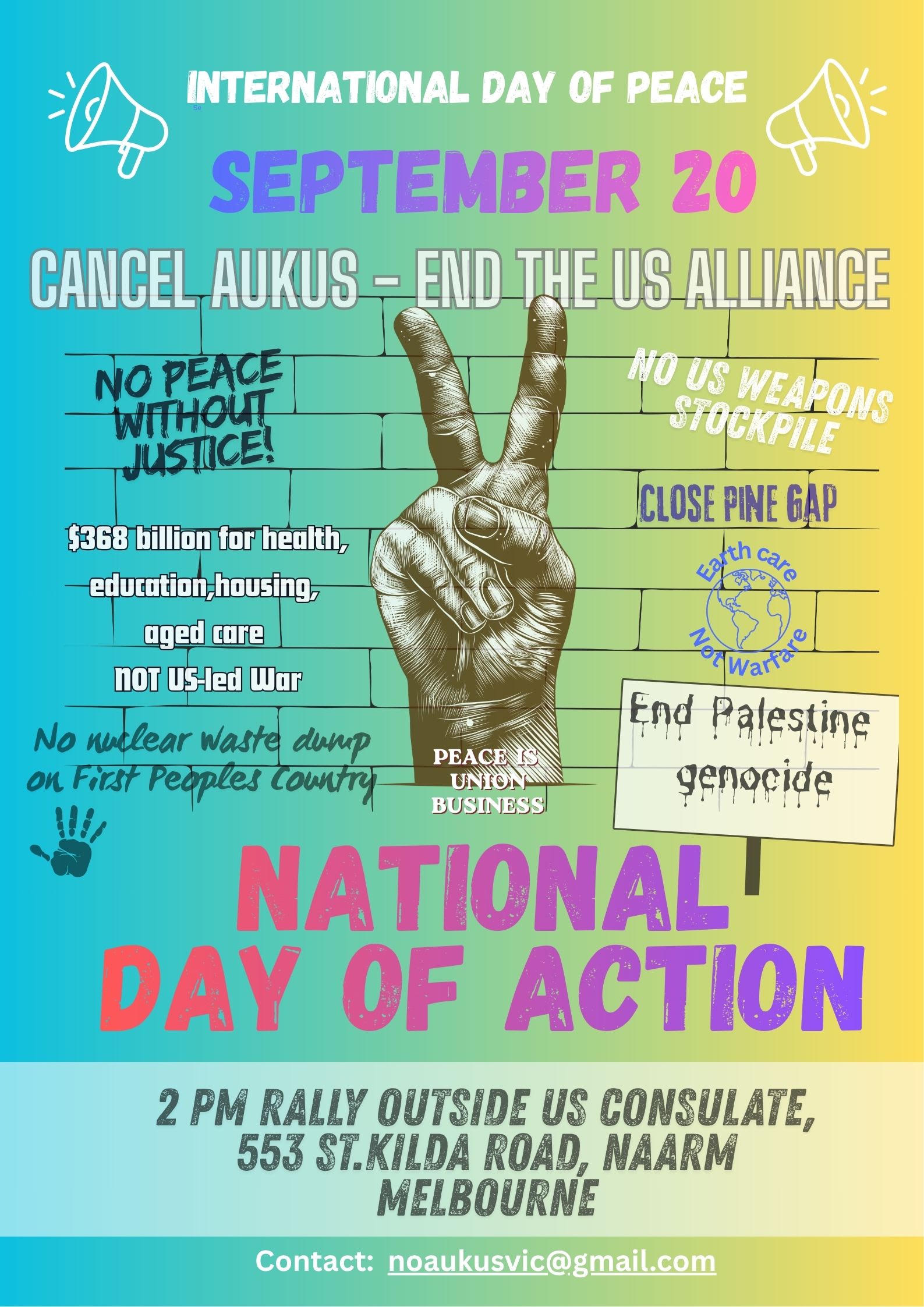
20 May – Webinar – The dangerous world of AUKUS, US, military occupation and suppression of dissent

National Webinar, 20th May, 2026, 6.30pm AEST. Confronting laws restricting/suppressing protest speech and action

Speakers: Former Sen. Rex Patrick, Lawyer Nick Hanna ,Arthur Rorris ,Jorgen Doyle, Sen David Shoebbridge,

Facilitator Kelley Tranter.

of the week – Australians for War Powers Reform (AWPR)

​To see nuclear-related stories in greater depth and intensity

– go to https://nuclearinformation.wordpress.com/

  • Pages

    • 1 This month
    • Disclaimer
    • Kimba waste dump Submissions
      • NUCLEAR ROYAL COMMISSION
      • Submissions on Radioactive Waste Code 2018
      • SUBMISSIONS TO SENATE INQUIRY 18
    • – Alternative media
    • – marketing nuclear power
    • business and costs
    • – Spinbuster 2011
    • Nuclear and Uranium Spinbuster – theme for June 2013
    • economics
    • health
    • radiation – ionising
    • safety
    • Aborigines
    • Audiovisual
    • Autralia’s Anti Nuclear Movement – Successes
    • climate change – global warming
    • energy
    • environment
    • Fukushima Facts
    • future Australia
    • HEALTH and ENVIRONMENT – post Fukushma
    • media Australia
    • Peace movement
    • politics
    • religion – Australia
    • religion and ethics
    • Religion and Ethics
    • secrets and lies
    • Spinbuster
    • spinbuster
    • wastes
    • ethics and nuclear power – Australia
    • nuclear medicine
    • politics – election 2010
    • secrecy – Australia
    • SUBMISSIONS to 2019 INQUIRIES
    • weapons and war
  • Follow Antinuclear on WordPress.com
  • Follow Antinuclear on WordPress.com
  • Blogroll

    • Anti-Nuclear and Clean Energy Campaign
    • Beyond Nuclear
    • Exposing the truth about thorium nuclear propaganda
    • NUCLEAR INFORMATION
    • nuclear news Australia
    • nuclear-news
  • Categories

    • 1
    • ACTION
    • Audiovisual
    • AUSTRALIA – NATIONAL
      • ACT
      • INTERNATIONAL
      • New South Wales
      • Northern Territory
      • Queensland
      • South Australia
        • NUCLEAR ROYAL COMMISSION 2016
          • Nuclear Citizens Jury
          • Submissions to Royal Commission S.A.
            • significant submissions to 6 May
      • Tasmania
      • Victoria
      • Western Australia
    • Christina reviews
    • Christina themes
    • Fukushima
    • Fukushima 2022
    • General News
    • Japan
    • Olympic Dam
    • Opposition to nuclear
    • reference
    • religion and ethics
    • Resources
    • TOPICS
      • aboriginal issues
      • art and culture
      • business
        • employment
        • marketing for nuclear
      • civil liberties
      • climate change – global warming
      • culture
      • energy
        • efficiency
        • solar
        • storage
        • wind
      • environment
      • health
      • history
      • legal
      • media
      • opposition to nuclear
      • people
      • personal stories
      • politics
        • election 2013
        • election 2016
        • election 2019
        • Submissions Federal 19
      • politics international
      • religion and ethics
      • safety
        • – incidents
      • secrets and lies
      • spinbuster
        • Education
      • technology
        • rare earths
        • thorium
      • uranium
      • wastes
        • Federal nuclear waste dump
      • weapons and war
    • water
    • Weekly Newsletter
    • Wikileaks
    • women

Site info

Antinuclear
Create a free website or blog at WordPress.com.
Privacy & Cookies: This site uses cookies. By continuing to use this website, you agree to their use.
To find out more, including how to control cookies, see here: Cookie Policy
  • Subscribe Subscribed
    • Antinuclear
    • Join 859 other subscribers
    • Already have a WordPress.com account? Log in now.
    • Antinuclear
    • Subscribe Subscribed
    • Sign up
    • Log in
    • Report this content
    • View site in Reader
    • Manage subscriptions
    • Collapse this bar

Loading Comments...