Australia to make next billion-dollar AUKUS payment ‘shortly’, says minister
By Reuters, October 14, 20252 –
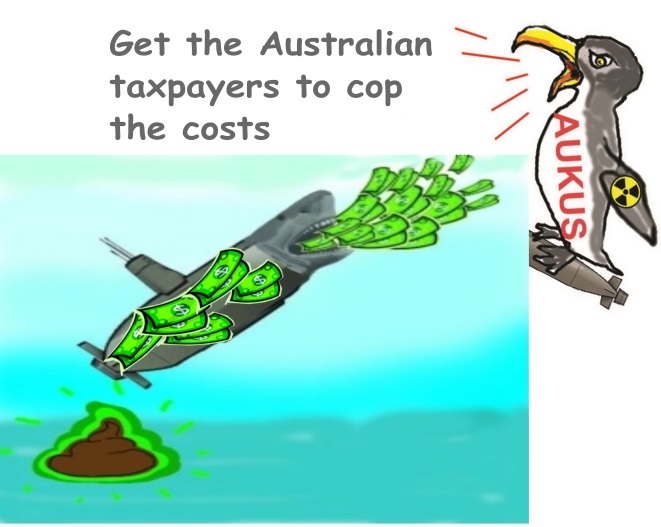
Australia will make a second billion-dollar payment to boost U.S. nuclear submarine shipyards soon, Defence Industry Minister Pat Conroy said in Washington on Tuesday, ahead of an official visit by Prime Minister Anthony Albanese next week.
The AUKUS agreement to transfer nuclear-powered submarines to Australia is being reviewed by the Pentagon, although Australia has expressed confidence the deal, which also includes Britain, will proceed.
In its first phase, Australia has pledged 3 billion U.S. dollars to boost U.S. submarine production rates, to later allow the sale of three Virginia submarines to Canberra, with a 2025 deadline for the first $2 billion.
Defence Minister Richard Marles told reporters in Canberra on Tuesday that Australia was contributing to a Pentagon review of AUKUS and had “a sense of when this will conclude”, without disclosing the timing. https://www.reuters.com/business/aerospace-defense/australia-make-next-billion-dollar-aukus-payment-shortly-says-minister-2025-10-14/
AUKUS proves why Australia is no longer a middle power with sovereignty and autonomy
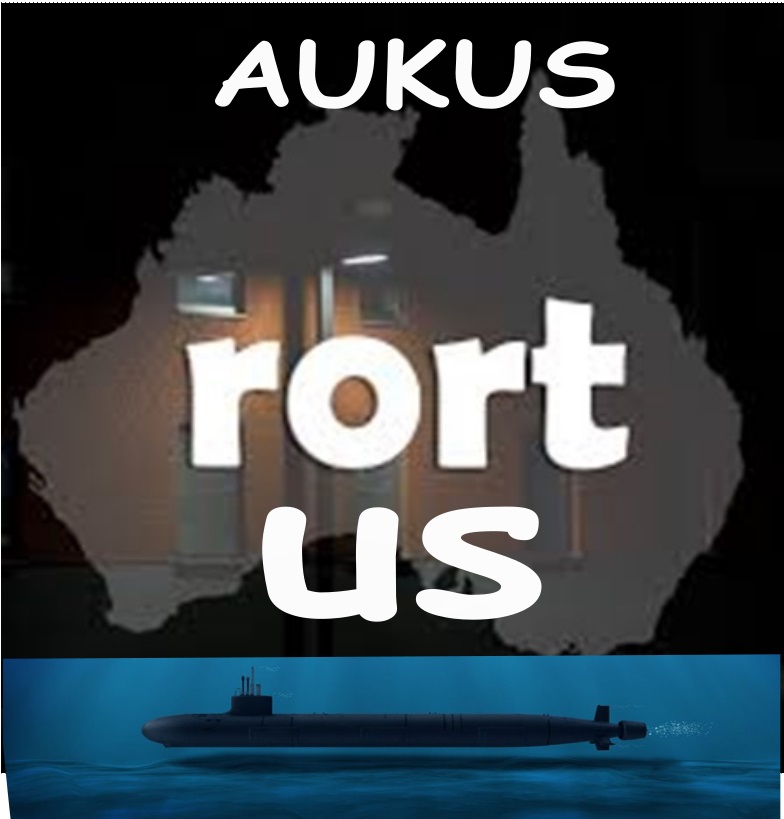
If AUKUS is such a good deal for the Americans, why did Albanese fall over himself to talk it up in DC? It points towards a crisis of control.
Wanning Sun, Oct 24, 2025, https://www.crikey.com.au/2025/10/24/aukus-deal-united-states-america-australia-anthony-albanese-defence/?utm_campaign=daily&utm_medium=email&utm_source=newsletter
Australian media coverage of Prime Minister Anthony Albanese’s meeting with US President Donald Trump was teetering on the brink of euphoria.
Emerging from the cabinet room where the meeting took place, the ABC’s reporter Jane Norman appeared breathless in her account of the big moment. Even Sally Sara, host of Radio National’s Breakfast, who is usually calm and is known to ask probing questions, seemed to have abandoned her cool. She pronounced: “Well, the bonds between the United States and Australia appear tighter than ever today.’
But our prime minister didn’t rest on his laurels, even after securing various assurances from Trump. Albanese seemed to feel he needed to further convince the Americans of our nation’s commitment to their nation. As he told a roomful of US Congress members: “We’ve already contributed a billion dollars to your industrial base; there’ll be a billion dollars on its way before Christmas.”
He went on to say there would be “a further billion dollars next year because … we want to uplift your industrial capacity. … We’ll be providing a capacity for maintenance of your subs from 2027 on top of the facilities that we have already in the West.” And just to ensure his audience understood his message, he added, “It will increase your capacity to forward project.”
In other words, he wanted to drive home that AU
When asked by Sara what securing a commitment from Trump meant, the ABC’s John Lyons said: “From America’s point of view, why wouldn’t you? When a country comes along and says we will pay you $380 billion to boost your manufacturing industry in America for submarines you may one day see, of course! America loves the deal.”
But Lyons didn’t mention that while the AUKUS contract commits the US to deliver eight nuclear-powered submarines to Australia by 2032, there’s a condition: under the US legislation, the president of the day can stop the transfer if the American government believes the sale could affect its undersea capabilities, thereby undermining the national interest. To put it plainly: Australia has no way of recovering its money, even if we end up with no submarines.
If AUKUS is such a good deal for the Americans, why does our prime minister feel the need to keep talking up AUKUS to them? KUS is really in America’s national interest.
Could the Albanese government be so desperate to secure a continuous commitment because it needs to convince Australian voters it is doing its utmost to persuade America to stay the course, so that their taxpayer money won’t go down the drain? Perhaps the government believes it can’t afford to let up on the PR surrounding AUKUS in both the US and Australia, even though it isn’t certain the submarines will eventually turn up, nor that they will deter Australia’s enemies?
Australia’s news media are prone to switch from pursuing a “public interest” mandate to a “national interest” mandate when covering foreign policy. For this reason, despite Trump’s assurances this week, they will doubtlessly continue to focus on the trope of “Is AUKUS on track or is it in trouble?” They are likely to keep ignoring or downplaying critical questions such as “What does Australia get out of the AUKUS deal?” and “Will the US submarines keep us safe?”
Both past and present Labor prime ministers, as well as foreign policymakers, like to describe Australia as a middle power. This self-description is consistent with our leaders’ rhetoric of what Australia does: that it is a good global citizen, that it seeks to maintain “the existing global rules-based order”, and that it believes in multilateralism.
Although middle powers have less global influence, they nevertheless exercise agency strategically in the emerging multipolar world as great powers contest the rules of order. They gain influence by mediating between great powers through what international relations theorists call “hedging”.
Such scholars believe that hedging enables middle powers to engage with competing great powers, while avoiding alignment that limits their autonomy. Through hedging, less powerful states preserve sovereignty in a context of uncertainty by balancing engagement and resistance. Our Asian neighbours, such as India, Indonesia and Singapore, do precisely that.
Despite our leaders’ rhetoric, signing up to AUKUS seems to signal that Australia has somewhat voluntarily relinquished its capacity as a middle power to practise effective hedging.
For instance, Sydney University’s James Curran believes AUKUS could mean the US would expect Australia to join them in a potential war with China over Taiwan:
Similarly, the Lowy Institute’s Sam Roggeveen argues that Australia’s deeper alignment with the US and the hosting of US bomber capabilities at Tindal and future nuclear-submarine infrastructure raises the likelihood of Australia becoming “an important target” in a conflict with China.
Neither of the major parties has ruled in or out the possibility that Australia would join the US in a potential war. But despite Defence Minister Richard Marles’ rebuttal of criticism from AUKUS critics over the issue of sovereignty, one thing is clear: unlike many Western European and Scandinavian middle powers, Australia’s constitution implies that decisions to engage in armed conflict are made by the executive government under prerogative powers, not by parliament as a whole.
In other words, the Parliament of Australia apparently has no power to stop Australia from going to war, even though it could be consulted.
It is for these reasons that Clinton Fernandes, in the Future Operations Research Group at UNSW Canberra, believes that “rules-based international order” is a “euphemism” for the US-led imperial order, and that Australia is really a “subimperial power upholding a US-led imperial order”.
Without giving a full account of the myriad concerns raised by critics of AUKUS, let’s just say here that with AUKUS, Australia’s capacity to function as a true middle power — one that is confident of its sovereignty, autonomy and capacity to exercise agency to influence superpowers — seems gravely in doubt. And signing up to AUKUS may be another case study that supports Fendandes’s argument.
Wanning Sun, Contributor
Wanning Sun is a professor of media and cultural studies at the University of Technology, Sydney. She also serves as the deputy director of the UTS Australia-China Relations Institute. She is a fellow of the Australian Academy of the Humanities and a member of the Australian Research Council’s College of Experts (2020-23). She is best known in the field of China studies for her ethnography of rural-to-urban migration and social inequality in contemporary China. She writes about Chinese diaspora, diasporic Chinese media, and Australia-China relations.
Desperately seeking submariners: why keeping nuclear-powered boats afloat will be Australia’s biggest Aukus challenge.
Ben Doherty, Guardian, 21 Oct 25
A vast and highly trained workforce is needed to command, crew, supply and maintain nuclear submarines. Some say that’s impossible for Australia.
“Vice-Admiral Mead, you’re free to go home … good to see you cracking a smile.”
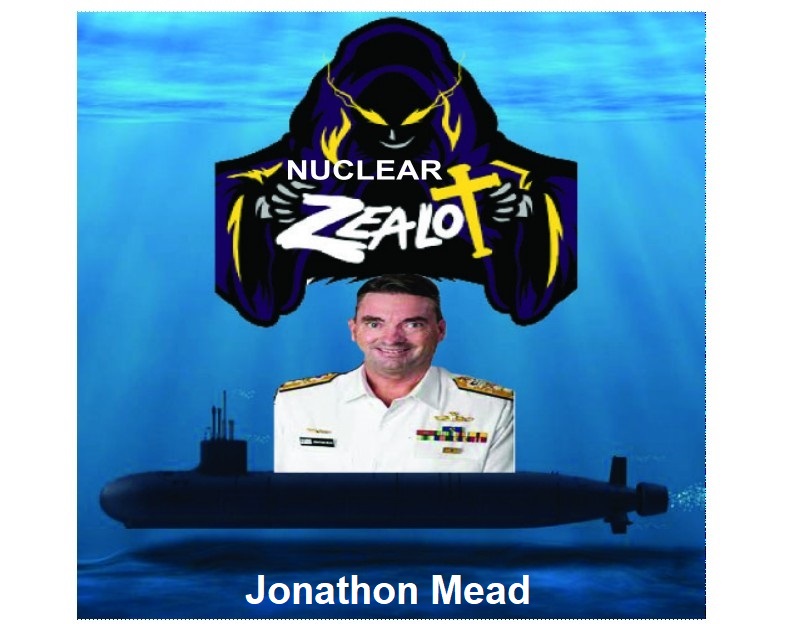
The head of the Australian Submarine Agency had spent a withering three hours before Senate estimates, parrying a barrage of questions about Australia’s ambitious Aukus nuclear submarine plan: interrogatives on consultants, on hundreds of millions of dollars sent to US and UK shipyards, on sclerotic boat-building on both sides of the Atlantic.
But while so much focus has been on Australia’s nuclear submarines’ arrival, their price tag and their “sovereign” status, the greatest challenge to the Aukus project, Mead told the Senate, would be finding the people to keep them afloat and at sea.
“Ensuring Australia has the workforce to deliver this program remains our biggest challenge,” he said.
If Australia’s nuclear submarines arrive on these shores – and that remains a contested question, with expert opinion ranging from an absolute yes to a certain no – will Australia be able to crew, supply and maintain them?
“It is a challenge we are continuing to meet,” Mead told senators. “Australian industry and navy personnel continue to build critical experience through targeted international placements.”
Others are less sanguine.
“The Aukus optimal pathway is a road to a quagmire,” says a former admiral and submarine commander, Peter Briggs, arguing that Australia’s small submarine arm can’t be upscaled quickly enough. “It’s not going anywhere. It will not work.”
Onshore trades, too, are perilously short. Without an additional 70,000 welders by 2030, that trade’s peak body says: “The Aukus submarine program is at serious risk of collapse.”
Mead was asked directly by senators: “Are you still confident of meeting the government’s agenda and timings?”
“Yes,” he replied, “I am.”
‘An eye-wateringly long process’
Briggs, a past president of the Submarine Institute of Australia, says the Aukus plan reads like one “designed by a political aide in a coffee shop”.
The navy’s submarine arm is approximately 850 sailors and officers (the defence department declined to give exact figures). The former chief of navy previously told parliament it needed to grow to 2,300 by the 2040s.
But Briggs estimates that to crew and support Australia’s Virginia-class, and later, Aukus-class submarines, the navy will need to more than treble its existing complement to about 2,700.
Virginias are massive submarines – nearly 8,000 tons – and carry a crew of 134, more than twice the existing Collins-class crew of 56. The Aukus submarines to be built in Adelaide will be bigger again. More tonnage, more people.
“That’s a huge increase in what is already in very scarce supply,” Briggs argues…………………………………………………………
The new generation of submariners is needed for between three and five Virginia-class submarines, then up to eight Australian-built Aukus boats.
“To get to be chief engineer of a nuclear submarine takes 16 to 18 years,” Briggs says. “It’s an eye-wateringly long process and of course you lose people along the way.
“That’s why you need a broad base, a critical mass, and Australia simply doesn’t have that right now. There is no way a navy the size of ours can manage this mix.”
Briggs does not believe the US will withdraw from Aukus: the presence of nuclear submarine bases on Australian soil is too great a prize for a superpower wanting to project power into the Pacific. But Australia’s unreadiness could lead to nuclear submarines under domestic command being delayed.
“We’ve got no warranty clause, no guarantee of anything. The cop-out could come in 2031, the US might say, ‘Look, you’re not quite ready yet, let’s push everything back three years, check in again in 2034.’ And it’s Australia that’s left exposed.”
‘Beyond frustrating, it’s dangerous’
Beyond the complexity of commanding and crewing a nuclear submarine, the vessels need a vast and highly trained workforce to keep them supplied, afloat and at sea………………………………………………………………………
“This is not just a workforce challenge,” its chief executive, Geoff Crittenden, said in a statement. “It’s a full-blown capability crisis … If we don’t address this issue now, Aukus will fail.”
Aukus represented a “perfect storm”, he said, and failure to address worker shortages was “beyond frustrating, it’s dangerous”.
“A once-in-a-generation opportunity like Aukus demands a long-term, strategic response, not just investment in ships and steel, but in people. We estimate that Australia will be at least 70,000 welders short by 2030. Without immediate action, the project is doomed to delays, cost blowouts, or worse.”…………………………………………………………………………
The first cohort won’t be Australian. “In the short term there will have to be an influx of international talent, as we train and upskill our own people.”
Tier two is a nuclearised workforce of skilled professionals – scientists, electrical and mechanical engineers, technical managers, reactor operators and health physicists – with advanced training and between seven and 10 years’ experience. The majority of a submarine crew would sit in this tier. Obbard estimates that about 5,000 tier-two workers will be needed.
Tier three is a further cohort of “nuclear-aware” workers – between 5,000 and 6,000 again – tradespeople including machinists, fitters and welders, who will require some nuclear training.
“The Aukus plan cannot work without building this workforce and the wider engineering community this workforce is drawn from.”
Does it make sense?’
Jack Dillich is uniquely placed to observe Australia’s transformation to a nuclear submarine power. A former submarine officer, he holds an advanced degree in nuclear engineering and served on the executive of the Australian Nuclear Science and Technology Organisation, where he was responsible for the country’s sole nuclear reactor, and as head of the regulatory branch at the Australian Radiation Protection and Nuclear Safety Agency. He now teaches a nuclear course at the Australian Defence Force Academy………………………………….
[Dillich says] Australia needs to be asking, ‘Does it make sense to try to build a tiny fleet here?’ Maybe 25 years from now, Australia could have eight nuclear-propelled submarines: they would be very, very expensive.”……………………………..https://www.theguardian.com/australia-news/2025/oct/20/aukus-submarine-workforce-nuclear-powered-boats-australia
Could Australia’s trash become Donald Trump’s treasure? Turning our waste into critical minerals

21 October 2025 AIMN Editorial, UNSW Sydney
UNSW Sydney Media Release
Key facts:
- Australians generate around 20kg of e-waste per person every year
- Some of the components inside this everyday waste include critical minerals, which can be reused and recycled
- At the National Press Club in Canberra today, Professor Veena Sahajwalla called on policymakers, industry and communities to embrace our waste.
As Donald Trump and Anthony Albanese announce a new, multi-billion-dollar critical minerals pact, UNSW Professor Veena Sahajwalla will tell the National Press Club in Canberra how onshore recycling technologies can recover these critical minerals from our waste stream – making the adoption of this cutting-edge technology a strategic, economic and environmental imperative.
At the National Press Club in Canberra today, UNSW Sydney’s Scientia Professor Veena Sahajwalla called on policymakers, industry and communities to embrace a new vision for Australia’s waste. Instead of relegating waste to landfills, incinerators or stockpiles, she argued it can drive innovation, support local industries, create jobs and deliver environmental and social benefits.
“True sustainability demands we harness this potential and transform waste into a resource stream for advanced manufacturing,” Prof. Sahajwalla said.
Australians generate around 20kg of e-waste per person every year, but many of the valuable minerals inside are never recovered. Some of the components inside this everyday waste include critical minerals, which can be reused and recycled, meaning there is both a strategic as well as an economic and environmental need to adopt this technology.
Using techniques Prof. Sahajwalla has designed, those waste resources can be reused and turned into new and valuable products.
E-waste is one aspect of a waste management crisis Prof. Sahajwalla’s work seeks to remedy.
In communities across Australia, her team’s pioneering MICROfactorieTM technologies are already showing what this future looks like. In Sydney’s south-west, discarded mattresses are being turned into green ceramic tiles, supporting local manufacturing jobs and helping councils reduce waste management costs. In Taree in regional NSW, reclaimed aluminium is being reformed into new aerosol cans. While in Sydney’s north, e-waste is being remanufactured into 3D printing filament.
“Using our waste resources as feedstock develops a circular economy where supply chains are linked up and local jobs are created, with significant environmental and social benefits,” she said.
Prof. Sahajwalla is Director of UNSW’s Sustainable Materials Research and Technology (SMaRT) Centre, which is internationally recognised for pioneering the concept of ‘MICROfactories’. The SMaRT Centre is home to MICROfactories technology, turning small, modular recycling systems that transform discarded products such as mattresses, glass, textiles, and electronic waste into valuable materials and products.
Her team’s work with councils and industry partners shows how this transformation is already taking shape:
Creating tiles from waste
In her address, Prof. Sahajwalla shared details of how the Liverpool City Council in Sydney’s south-west has turned a major waste problem into a circular economy success story. When the Council realised it was spending hundreds of thousands of dollars annually to dispose discarded mattresses it partnered with Prof. Sahajwalla’s SMaRT Centre to pilot a MICROfactorieTM to shred and re-manufacture the materials………………………………………………………………………………………………
She also outlined a vision in which MICROfactories could be established in cities, towns and regional communities across the country, each tailored to local waste streams and employment needs. In regional NSW, her team is working with the Aboriginal community in Wellington near Dubbo to use green ceramic tiles in sustainable housing projects, supported by the federal government’s Sustainable Communities and Waste Hub (SCaW).
Turning university research into real-world impact
Prof. Sahajwalla said Australia must do more to ensure university research translates into real-world impact. She called for governments to lead by example in adopting Australian-made sustainable technologies, and to reward companies that invest in local R&D.
“By and large, our professional incentives are not geared towards the long-hours it takes to actually build the machine that can make a world-saving idea a reality,” Prof. Sahajwalla said…………………………………………………………… https://theaimn.net/could-australias-trash-become-donald-trumps-treasure-turning-our-waste-into-critical-minerals/
AUKUS: Revolving door, spiralling down
Ahead of the launch of a new database on the Australian military-industrial complex, we document the farce that AUKUS has become
Michelle Fahy, Undue Influence, Oct 20, 2025
It is clear to many that AUKUS, in particular its early fulfilment stages, is becoming a debacle. In February, Defence Minister Richard Marles lauded as a ‘very unique’ arrangement Australia’s gift to the United States of $4.7 billion to bolster America’s struggling submarine output, highlighting that such an arrangement hasn’t been seen in other defence pacts globally.
Of course such an arrangement hasn’t been seen elsewhere! Most other countries wouldn’t agree to hand over this massive sum without ensuring there were provisions for a refund should the promised submarines fail to arrive.
In an inept performance in Senate Estimates in June 2024, Vice Admiral Jonathan Mead, head of the Australian Submarine Agency, woodenly refused to answer a straightforward question from Greens’ Senator David Shoebridge about whether the agreement Australia has struck with the US contains a clawback provision should the promised submarines fail to be supplied.
Mead’s performance, as recorded in Hansard, is mordantly comical:
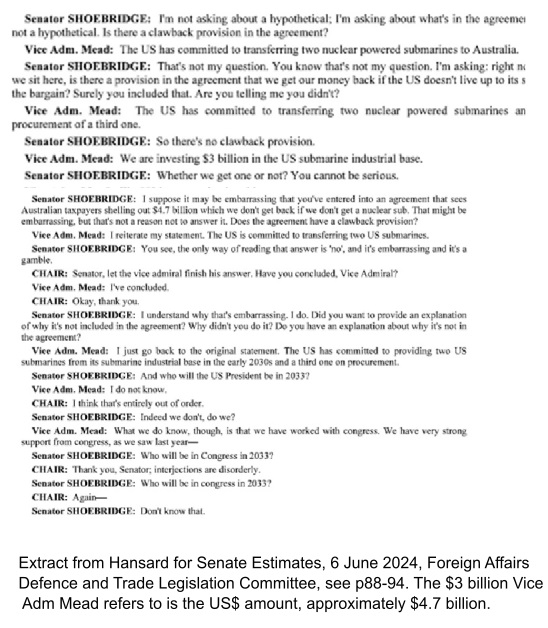
It is thus obvious that Australia has no contractual way of recovering its money should the current or a future US President block the transfer of the submarines, as the US President is entitled to do under US legislation.
Australia is certainly ‘very unique’ in its willingness to part with almost $10 billion (the UK is getting a similar amount) in public funds with no strings attached.
Australia made the first payment of $800 million to the US in February and quietly transferred the second payment, a further $800 million, in July. It has committed to paying a total of US$2 billion ($3 billion) by the end of 2025, with the remainder to be paid over the decade to 2035‒36.
Under the AUKUS deal, both major political parties have committed to spending vast public resources with no consultation and minimal transparency and accountability.
Even though the Australian National Audit Office has exposed, in report after report, serious probity breaches in defence procurement, including unethical conduct between global weapons companies and the Australian government, these transgressions are routinely ignored. The weapons deals continue regardless.
The big winners from AUKUS so far have been nuclear submarine manufacturers in the United States and the United Kingdom. Australia has committed to providing almost $10 billion to boost the output of these companies, helping secure jobs for workers in America and the United Kingdom.
As there are no clawback provisions in either of these agreements, should President Trump ditch AUKUS, or if the submarine manufacturing capacity in the US and UK doesn’t sufficiently increase, Australian taxpayers will be picking up another multibillion-dollar defence tab with nothing to show for it. We’ve already shelled out $3.4 billion for no submarines, following former PM Scott Morrison’s shredding of the pre-AUKUS French submarine contract.
This is far from the only example of waste, misdirection and incompetence in Australia’s dealings with the global arms industry. Take the Albanese government’s engagement with global arms giant Thales. In October last year, the government signed up Thales to a further munitions manufacturing contract and a ‘strategic partnership’ in the new domestic missile-making endeavour, the Guided Weapons and Explosive Ordnance (GWEO) enterprise.
The new deal with Thales was struck despite the fact that Thales is currently being investigated by four countries for widespread criminal activity in three separate corruption probes. …………………….https://undueinfluence.substack.com/p/nothing-to-see-here-says-australia………………………………………… The Thales example illustrates how a key democratic accountability mechanism, the National Audit Office and its reports, is routinely ignored.
…………………………………………………How is it that such imbroglios occur again and again? Australian governments are highly susceptible to the ‘revolving door’ process in which politicians, the military and public servants move effortlessly between government, lobbying and the industry itself.
In what follows, no suggestion is being made of unlawful activity by any person named, nor that any of the appointments noted was unlawful.
The problem for Australia is not one of legality but of the perfectly legal influence of industry insiders within government, the lack of transparency, and the absence of management of the ‘revolving door’.
The revolving door
The ‘revolving door’ describes the movement of public officials into related private roles, and industry executives into related public roles. It is a widespread problem that undermines democracy, yet in Australia it remains unmonitored and unpoliced.
A large number of Australia’s senior government ministers and their staffers, military officers, and defence department officials move through the revolving door into paid roles with the weapons industry. Such moves are not illegal but they require a robust management framework—with rules that are enforced—to mitigate the inherent conflicts of interest. Australia’s feeble attempts at managing the revolving door have been completely ineffective
……………………………………………………………………………………………………………..In the lobby
Numerous former senior politicians are now working as lobbyists for the weapons industry. Examples include: Liberals Christopher Pyne (Pyne and Partners), Joe Hockey (Bondi Partners), Arthur Sinodinos (The Asia Group) and David Johnston (TG Public Affairs); and Labor’s Kim Beazley (TG Public Affairs), Joel Fitzgibbon (CMAX Advisory), Stephen Conroy (TG Public Affairs) and Mark McGowan (Bondi Partners).
There are also plenty of former senior military officers pulling strings on behalf of weapons companies too. Examples are listed below.
The federal register of lobbyists provides some transparency, but does not cover the majority of people who lobby politicians. The register applies only to third-party lobbyists. These people operate as paid professionals, either individually or as an employee of a lobbying firm, on behalf of clients. Third party lobbyists make up just 20% of all lobbyists. The remaining 80% include, amongst others, company CEOs and people employed by corporations as ‘government relations’ advisers. This enables employees of major weapons companies to lobby politicians easily and legally, with zero transparency.
Reverse cycle: private to public
The government’s engagement with UK weapons giant BAE Systems’ local subsidiary best illustrates how this works.
The government gave former senior BAE Systems executives influential behind-the-scenes roles both before and during the tender process for Australia’s largest ever surface warship procurement, the $46 billion Hunter class frigates, a contract BAE went on to win. Few of these roles were publicly acknowledged. https://undueinfluence.substack.com/p/sinking-billions-revolving-doors
BAE Systems was awarded the frigates contract by the Turnbull government in mid-2018. The names of the people appointed to an expert advisory panel to oversee the tender evaluation process were not made public. Here’s why: serious conflicts of interest…………………………………………………………………………………………………..
Lockheed Martin locks on target
Israel’s genocidal war on Gaza has put the issue of the extensive influence on the Australian government of Lockheed Martin—the world’s largest arms manufacturer—under the spotlight…………https://undueinfluence.substack.com/p/buck-passing-inside-the-murky-arms
Lockheed Martin utilises the revolving door heavily in the US. Until recently, it had openly adopted the same strategy in Australia. From October 2013 until the end of 2021, the board of Lockheed Martin Australia boasted multiple former senior Australian public officials: at least two at any one time, more often three, and even four during one 20-month period.
They included a roll call of defence heavies from past decades,………………………………………………………………………………………
The UN Special Rapporteur on the occupied Palestinian territory, Francesca Albanese, released a report in July addressing the ‘economy of genocide’ in which she makes special note of Lockheed Martin’s F-35 program…………………………….
Australia’s refusal to cease the supply of parts and components into Lockheed Martin’s F-35 global supply chain places the nation at risk of being found complicit in Israel’s genocide.
Complicity in the world’s worst international crime is just one of the democracy-undermining consequences of Australia’s deep enmeshment in the US and broader Western military industrial complex.
This feature article started life as a talk to Australia’s Online Quaker Meeting mid-year. I later expanded it for ARENA Quarterly’s Spring 2025 issue, which was delivered to bookshops last week ($20). It is also online at Arena. https://undueinfluence.substack.com/p/aukus-revolving-door-spiralling-down?utm_source=post-email-title&publication_id=297295&post_id=176534719&utm_campaign=email-post-title&isFreemail=true&r=1ise1&triedRedirect=true&utm_medium=email
Trump’s Gaza peace move raises questions over AUKUS priorities

More to the point for an Australian audience, the nearly AU$80 billion price tag is less than a quarter of what our Government, with the enthusiastic support of the Opposition, is planning to spend on submarines that will likely never arrive, won’t work as advertised if they do and will cost much more than we were led to believe.
So, what we could do is to scrap AUKUS because it is increasingly seen as a pointless, unrealisable, ineffective waste of money
Independent Australia, By Mark Beeson | 16 October 2025
Trump’s unexpected diplomatic win has reignited debate over Australia’s defence spending and foreign policy priorities, writes Mark Beeson.
GOOD FOR U.S. President Donald Trump!
These are words I never thought I’d utter, but when good news is in short supply, take what you can get. Stopping the genocidal slaughter in Gaza is unambiguously a good outcome, no matter who managed to engineer it.
True, it does suggest that this outcome might have been achieved months ago – even by former President Joe Biden – and thousands of lives might have been saved, but who’s counting? The big question now, of course, is whether the peace will prove durable and, even more challengingly, who will pay for the reconstruction of Gaza?
There is some comparatively good news on this front, too. Remarkably enough, it may “only” take an estimated US$50billion (about AU$77billion) to lift Gaza from the rubble. Yes, that is a lot of money, but not compared to what the $US997 billion (AU$1.5 trillion) America spent on the military in 2024.
More to the point for an Australian audience, the nearly AU$80 billion price tag is less than a quarter of what our Government, with the enthusiastic support of the Opposition, is planning to spend on submarines that will likely never arrive, won’t work as advertised if they do and will cost much more than we were led to believe.
You may be able to guess where I’m going with this and your eyes are already rolling. But before I voluntarily shred what little credibility I may have as a “serious” analyst of security policy, let me remind you that President Trump isn’t exactly famous for his grasp of strategic (or economic) reality and look what he managed to do.
At least I don’t have an ulterior motive, unless trying to avoid watching Palestinians being blown to pieces on the news every night counts.
So, what we could do is to scrap AUKUS because it is increasingly seen as a pointless, unrealisable, ineffective waste of money – not just by ageing peaceniks, either – and put the money to an unambiguously more productive purpose: rebuilding Gaza. Not only would the Palestinians be delighted (and disbelieving, no doubt), but it would do wonders for Australia’s somewhat tarnished international reputation…………………………………………………………………………………………………………………….. https://independentaustralia.net/politics/politics-display/trumps-gaza-peace-move-raises-questions-over-aukus-priorities,20272
AUKUS Anxiety
“after wasting billions of dollars, Canberra could end up with shattered hopes of a defense industrial boom from production of a new class of submarines and no domestic submarine capability at all. Australia’s existing fleet of submarines is aging and requires costly, time-consuming refits to extend its service; only one of six vessels is currently operational. Replacing them will be no easier.”…………………… [Subscribers only] https://www.foreignaffairs.com/australia/aukus-anxiety
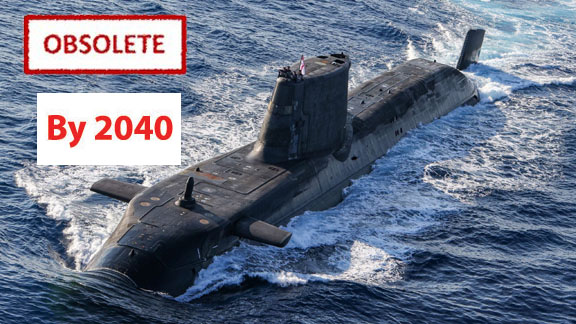
Unmet Expectations Could Fracture the U.S.-Australian Alliance
James Curran, Foreign Affairs, October 8, 2025
Australia, like many U.S. allies, is struggling to deal with President Donald Trump. At issue is the country’s national security. Although China is by far Australia’s most important trade partner, it is also the country that Australia’s national security establishment perceives as its greatest threat. Australia’s fear of China is more than a century old and runs deep through every defense strategy that Australia has developed since the signing of the Australia, New Zealand, United States Security Treaty (ANZUS) in 1951 and the resolution of its postwar relationship with Japan later that decade. The same fear ……………………………………………………………………………………………………………. [Subscribers only] https://www.foreignaffairs.com/australia/aukus-anxiety
Zionists v Keane, Riemer, Kostakidis. Australia’s massive test cases for free speech.

by Michael West | Oct 12, 2025, https://michaelwest.com.au/zionists-v-keane-riemer-kostakidis-australias-massive-test-cases-for-free-speech/?fbclid=IwY2xjawNZg3NleHRuA2FlbQIxMQBicmlkETFHazM4NnFGVW9VUEZ0S0xyAR7ySwD_jNr3_vorgPkT2cUqNmreGCAefd2xOE-r0WDxjuF9f0r3ZKf9jMf50A_aem_zu59pfZ3k4MYHUAsDOlS-Q
The Zionist lawsuit against Sydney Uni academics John Keane and Nick Riemer is – as is the suit against Mary Kostakidis – a mighty test case for free speech in Australia. Michael West reports.
Criticising Zionism and the state of Israel is *not* antisemitic. That is the guts of the defence in the case brought against two Sydney University academics in the Federal Court, which kicks off on Monday, 13 October.
This is a significant case for free speech in Australia. Critical even. The lawsuits, brought under Australia’s Racial Discrimination Act against academics Professor John Keane and Nick Riemer, are, in the opinion of this observer, lawfare; an attempt, as is the messy action against journalist Mary Kostakidis, to muzzle criticism of Israel and its atrocities against the Palestinians.
A mountain of costs
The interlocutory judgment in the Kostakidis trial foreshadows a long and difficult trial whose sheer costs may make it more of a contest of money than justice. More on this later.
The claim against Keane and Riemer is a similar story. It seeks to litigate the events and the myths of the Hamas attacks on Israel on October 7, 2023. And if the Judge rules that the examination of the events of October 7 is admissible, the case would have a global impact.
Clause 26 is unlikely to be true for a start.
Israel has never held an inquiry into October 7, and apparently for good reason. Wild Israeli claims of “40 babies beheaded” and “mass rapes” have been discredited – there is no forensic evidence of Israeli rape victims – and it is not known how many of the alleged “1,200 Israelis” mentioned in the claim were killed by the IDF.
Will this be tested in Court? If so, we are in for a long and expensive case.
It has been established in Israeli media and elsewhere that the Hannibal Directive was invoked that day. Under the Hannibal Directive, the IDF was ordered to prevent “at all costs” the abduction of Israeli civilians or soldiers, possibly leading to the death of a large number of Israeli civilians and IDF personnel in the area at the time.
Pictures of the carnage from that day prove the point that small arms fire from Hamas operatives could not have possibly caused so much destruction. Instead, by Apache helicopter gunships.
This is merely one disputed clause in the statement of claim and would prove costly for an Australian court to hear.
The “affected or aggrieved persons” making the Keane claim (it is not known who is funding it) – Zionist academics from Sydney University – assert they have been hurt by pro-Palestinian posts on social media; “offended, insulted, humiliated or intimidated by the posting”.
MWM does not doubt that their feelings have been hurt. Feelings have been hurt daily on both sides since the events of October 7 and during the ensuing American/Israeli genocide in Gaza. Yet, the question should be asked … is an expensive court case testing the infamous clause 18c clause in the Racial Discrimination Act in the public interest?
Should the aggrieved persons win the case, it will have a chilling effect on free speech in Australia. And in the Kostakidis case the stakes are arguably higher.
Mary Kostakidis
This week, Justice McDonald struck out parts of the statement of claim against Kostakidis while providing another opportunity for the applicants’ amended SOC to be amended again.
Taking to X, Mary Kostakidis tweeted that 18c was a “bad law, a lengthy and costly legal case can be brought against you by anyone who claims you are motivated by racism and are responsible for their feelings. And fair comment on a matter of public interest, and journalism, may be exceptions that can be pleaded, but that has to be proven at trial. Anyone involved in public discourse, including any journalist, must prove they are not motivated by racism.”
Proving that you are not a racist, proving intent, is a tough one. “It is not logically impossible that a particular news reporter, even when acting as a news reporter, might engage in particular acts because of people’s race or ethnic or national origin,” the Judge found. “Whether there is a basis to draw that conclusion in a particular case will depend on an assessment of the evidence in that particular case”.
Attempt to shut down genocide critics
Said Kostakidis, “The attempt to shut down criticism of a genocide is morally reprehensible and dangerous. Those trying to control the narrative will not prevail”. Her case is even more tricky than those engulfing Keane and Riemer, as the Zionist Federation of Australia has cherry-picked a lot of her social media activity for its claim, including tweets about Mossad and dead pedophile Jeffrey Epstein.
It’s a test case for social media too, as the claim against her includes retweets, posts by other people, which may or may not be deemed to be endorsing a particular view. As she told MWM, “If I retweet Smotrich (Israel’s extremist finance minister Bezalel Smotrich) does that amount to an endorsement?”
The opening round of hearings in the Keane and Riemer cases will take place before Justice Kennett in the Federal Court of Australia in Sydney on Monday and Tuesday.
A large number of Jewish colleagues have defended Keane and Riemer’s statements. They have said the complainants ‘do not speak for us as Jewish people’, and demanded that the complaint, which they describe as vexatious, be dropped.
The University of Sydney, too, is in the crosshairs, also being sued because the plaintiffs claim the Uni has ‘vicarious liability’ for the statements of the defendants Keane and Riemer, who claim that if Palestine supporters can’t say what they have said, then criticism of Israel will be outlawed under the law.
Free speech questioned as National Press Club cancels Gaza address

By Rosemary Sorensen | 13 October 2025, https://independentaustralia.net/politics/politics-display/free-speech-questioned-as-national-press-club-cancels-gaza-address,20262
The decision to cancel Chris Hedges’ address on Gaza has raised fresh questions about the Press Club’s commitment to free speech, writes Dr Rosemary Sorensen.
FROM AN OFFICE in the heart of Canberra – where the only danger to journalists is that they have to watch their feet lest they fall over a politician passed out on the footpath – the chief executive of the National Press Club cancelled an event called ‘The Betrayal of Palestinian Journalists’, as Dr Lee Duffield wrote in IA last week.
American journalist Chris Hedges, who was expecting to deliver this speech as part of a speaking tour this month, wrote in response to the shock cancellation that NPC’s Maurice Reilly had ‘perhaps inadvertently’ underlined his point. On his Substack, ‘The Chris Hedges Report’, he quoted Reilly’s explanation, “that in the interest of balancing out our program, we will withdraw our offer”.
Hedges’ response to the claim that the cancellation was ‘in the interest of’ balance is devastating:
‘It is true that I know only one side of the picture from the seven years I spent covering Gaza. I was on the receiving end of Israeli attacks, including being bombed by its air force and fired upon by its snipers, one of whom killed a young man a few feet away from me at the Netzarim Junction. We lifted him up, each person taking hold of an arm or a leg and lumbered up the road as his body swayed like a heavy sack.’
Speaking about the more than 278 journalists killed in Gaza by Israel as well as on behalf of all those who have ‘reported a reality in Gaza that bears no resemblance to how it is portrayed by Israeli politicians, its military and many media outlets that serve as Israel’s echo chamber’, Hedges calls out Reilly’s use of the term “balance” as ‘an abandonment of the fundamental mission of journalists — to hold power accountable’.
His suggestion that ‘the corporate sponsors and wealthy donors of the Press Club’ will be pleased that the cancellation averts ‘the attacks that would come from allowing me to speak’, stirred the National Press Club’s CEO not only to refute the idea that there had been pressure ‘outside of the board, either directly or indirectly’ but also to call out Chris Hedges’ claim as ‘false’ that the ‘proposed address’ was published on the NPC website.
That refutation notwithstanding and even if, as Reilly claims, the date for Hedges’ ‘The Betrayal of Palestinian Journalists’ address was only ‘tentatively agreed’, such a backflip at such a time from an organisation that puts out its media statements under the rubric “Freedom of the Press” is ugly.
Antoinette Lattouf, talking with Jan Fran on their We Used To Be Journos podcast through Ette Media, said that while outside pressure to cancel what is considered pro-Palestinian commentary has been called out over and over during the past two years, if this was an internal decision, it was “somehow worse”:
“I would argue pre-empting criticism and attacks from said lobby groups [is] self-censoring.”
Mary Kostakidis, who saw the page announcing the Hedges event on the NPC website before it was removed, wrote to Reilly to ask if, as Hedges had written, the event was reportedly to be replaced by an address by Israeli Ambassador retired Lt. Colonel Amir Maimon. The statement in response said that ‘inference… is also false and without basis’.
Like many an organisation before them, from libraries to orchestras, writers’ festivals to hospitals, what appears to be a hasty decision by the National Press Club is, at the very least, disrespectful to the proposed speaker.
The devil is, once again, in the detail: Reilly stated the club ‘is constantly reviewing its address schedule, and when more details of the address were made available we decided to pursue other speakers on the matter’.
Does Reilly mean the matter of the betrayal of Palestinian journalists? And while the statement on their website mentions Global Spokesperson UNICEF James Elder, who will speak at the NPC on ‘Children under siege’, and Judge Navi Pillay, who will speak about ‘Women, Peace and Justice’, which other speakers are they pursuing to talk about the murdered journalists?
To say the ‘proposed address was never published on our website’, to say that Hedges’ claim it was removed is false, is casuistry. According to Kostakidis, it appeared on the website, briefly, without a booking link, which suggests publication was prepared and imminent.
Late last month the National Media Section of the Media Entertainment and Arts Alliance put out a statement about the ‘rise in threats, harassment and intimidation of journalists who report and comment on Gaza’, citing Antoinette Lattouf, Peter Lalor and Mary Kostakidis as examples of those who have been the target of ‘powerful lobby groups’.
The statement read:
‘We stand with our colleagues in their workplaces, in the courtrooms and in their deaths to raise our voices against the silence.’
To fob off Chris Hedges, who has seen Israeli troops shoot Palestinian children, who was in Gaza when attack jets bombed Gaza City, who has ‘stood in the gutted remains of schools as well as medical clinics and mosques and counted the bodies’, with such a statement as the one published by Maurice Reilly on the National Press Club of Australia website is unfathomable.
‘We wish Chris Hedges well on his tour of Australia’ is the final sentence of that statement.
The final sentence of Hedges’ piece is:
‘Please, have the decency to remove the word press from your club.’
Today, at the Chatham House Restaurant in the National Press Club of Australia, members may choose to dine on barramundi, duck breast or lamb shank.
In Gaza, the hungry ghosts are served dust.
For those journalists and others who find the removal of an address by Pulitzer Prize-winning reporter Chris Hedges from the National Press Club program distressingly disappointing, you can hear him speak in person or livestreamed at the Allan Scott Auditorium, UniSA, Adelaide, 5:30 PM – 7 PM, Saturday 18 October, delivering the Edward Said Memorial Lecture. Tickets are available via the Australian Friends of Palestine Association website.
On Tuesday 21 October, 6:30 PM – 8:30 PM, at Pitt St Uniting Church in Sydney, Chris Hedges will be joined by Randa Abdel-Fattah and Antoinette Lattouf for a public meeting titled ‘All eyes on Gaza’, tickets via Humanitix.
Australia Peace and Neutrality: A Path to Regional Stability
The AUKUS cost is now estimated to exceed $368 billion, committing vast amounts of public money to nuclear-powered submarines that may arrive long after regional conditions have changed. Instead of strengthening security, this approach diverts resources that could serve a public purpose and deepens dependence on U.S. technology and strategy.
13 October 2025 AIMN Editorial, By Denis Hay
Australia peace and neutrality can strengthen diplomacy, use dollar sovereignty wisely, and build stability across the Indo-Pacific region.
Introduction
For decades, Australia has followed the United States into every major military venture, from Vietnam and Iraq to AUKUS. Yet as the Indo-Pacific becomes the world’s new power centre, a quiet question is growing louder: what if Australia charted its own path to peace and neutrality?
A truly independent Australia could use its dollar sovereignty, the power of its currency-issuing government, to build peace and prosperity across the region instead of fuelling an arms race. Australia’s peace and neutrality offer a strategy for stability, regional leadership, and national integrity.
This vision of Australia peace and neutrality challenges the assumption that our security must depend on foreign powers. Australia peace and neutrality could reshape our future security choices.
From Ally to Independent Actor
The Albanese government has signed a string of defence agreements across Asia and the Pacific – with Papua New Guinea, Fiji, Indonesia, and others. Publicly, these are framed as strengthening regional security. Privately, they reflect deep anxiety about China’s rise and U.S. expectations under the AUKUS pact.
But what if Australia could keep strong regional relationships without taking sides?
Neutrality would allow Canberra to cooperate economically with China, coordinate diplomatically with ASEAN, and collaborate militarily only for defence.
Neutrality does not mean isolation; it means freedom to choose peace. Embracing Australia peace and neutrality would allow our nation to build genuine independence through cooperation, not coercion.
Endless Alliances, Endless Dependence
Australia spends more than $50 billion annually on defence, with projections showing a surge to over $100 billion by 2034, much of it tied to AUKUS and U.S. systems.
According to the SIPRI Military Expenditure Database, global military spending reached a record US$2.44 trillion in 2024, with Australia following this trend.
The AUKUS cost is now estimated to exceed $368 billion, committing vast amounts of public money to nuclear-powered submarines that may arrive long after regional conditions have changed. Instead of strengthening security, this approach diverts resources that could serve a public purpose and deepens dependence on U.S. technology and strategy.
By investing in Australia peace and neutrality, defence spending could serve constructive goals that strengthen stability and mutual respect across the region. This imbalance weakens our sovereignty.
When defence procurement is outsourced and strategic thinking is imported, national independence becomes a slogan rather than a policy.
Redirecting spending toward Australia peace and neutrality would reflect our true interests.
Risking War by Proxy
By aligning too closely with Washington’s containment strategy, Australia risks becoming a proxy in a potential U.S.–China confrontation.
The Taiwan Strait and South China Sea remain volatile, and one miscalculation could drag us into a conflict far from our shores but devastating to our trade and security.
Meanwhile, China’s influence strategy, while assertive, relies more on infrastructure investment and trade than on military projection.
Unlike the U.S., China doesn’t keep hundreds of foreign bases or seek regime change. Its primary interest is economic stability, which is essential for its own growth. Through Australia peace and neutrality, we can maintain productive trade ties with both China and the U.S. without being drawn into military rivalry.
Australia’s uncritical alignment with the U.S. narrative feeds a false dichotomy: democracy versus authoritarianism. The real contest is between militarism and mutual benefit.
Pursuing Australia peace and neutrality keeps us clear of great-power rivalry.
Adopting a Neutral Foreign Policy
Neutrality is not new, it’s just forgotten…………..
A neutral foreign policy would reorient Australia’s military to genuine defence, protecting borders, sea lanes, and cyber networks, while withdrawing from power blocs that demand loyalty over logic.
Neutrality also aligns with public opinion: the 2025 Lowy Institute Poll shows 72% of Australians fear a major war in Asia, but only 35% believe military alliances make us safer.
Neutrality, therefore, is not weakness, it’s strategic independence. Australia’s peace and neutrality would enhance our reputation as a fair-minded, responsible regional actor. Australia peace and neutrality can become a defining national identity, proof that leadership in the Indo-Pacific can come through diplomacy rather than dominance.
Investing in Peace Through Dollar Sovereignty
Here lies Australia’s hidden strength: monetary sovereignty……………………………………………………………
Regional Partnerships for Stability
The Pacific doesn’t need more weapons; it requires trust and development. The Albanese government’s Pacific Engagement Visa and renewed aid to Fiji and PNG are steps forward. Still, Australia must go further, establishing joint renewable-energy zones, shared fisheries management, and infrastructure councils led by Pacific nations themselves.
Transparency, Public Mandate, and Trust
Defence and foreign policy have long run behind closed doors. Yet democracy demands sunlight.
To ensure neutrality reflects the national will, the government should:
- Hold annual Lowy-style peace polls to gauge public sentiment.
- Publish Defence Opportunity Cost Reports showing what alternative spending could deliver.
- Require parliamentary approval for overseas military commitments.
Transparency builds trust. Australians deserve to know whether each use of public money serves peace or perpetuates conflict.
Yet, transparency must also extend to media accountability. Australia’s mainstream outlets, dominated by right-wing interests, often frame militarism as inevitable and portray dissent as unpatriotic. This narrative undermines informed debate and limits the public’s understanding of real alternatives like neutrality or public-purpose spending.
To counter this, the government could:
- Strengthen media diversity laws and limit concentrated ownership.
- Increase funding for independent and public-interest journalism, including not only the ABC and SBS but also Michael West Media, Independent Australia, Pearls and Irritations, and The Australia Institute.
- Establish a Truth in Media Commission to hold broadcasters accountable for disinformation, particularly around war narratives and economic myths.
A healthy democracy depends on an informed public, not a manipulated one………………………………………………………………………………………………………………………… https://theaimn.net/australia-peace-and-neutrality-a-path-to-regional-stability/
Australian Politicians Ignore Israel’s Brutality Against Our Citizens
by Paul Gregoire, 10 Oct 2025, https://www.sydneycriminallawyers.com.au/blog/australian-politicians-ignore-israels-brutality-against-our-citizens/?fbclid=IwY2xjawNYYbpleHRuA2FlbQIxMQBicmlkETFvZW56NldIYVltV0JSQ1pBAR7k_Ehv4MPM4mBZcl8Ys4k5ckUYvmGHNzne6Ki56oAJjwRA-5TC1-qnzNMnJw_aem_5XDTJx0Kt9Abixs7ELefHA
The morning of Friday, 10 October 2025 saw the Australian Global Sumud Flotilla participants arrive back in our nation, after attempting to breach the Gaza blockade and then being illegally apprehended by Israel. A sizable crowd gathered on Gadigal land at Sydney Airport to welcome them back. However, another Australian flotilla participant has been in Israeli custody and again Australia’s top ministers are silent.
The Global Sumud Flotilla was part an ongoing campaign to breach the 18-year-long goods blockade on Gaza. Six Australians were taken into custody by Israel in international waters last week, amongst over 400 foreign nations, and they were then brutalised and mistreated in prison, while Australian woman Madeline Habib, a participant in a second flotilla, is likely in the hands of Tel Aviv now.
The participants themselves, as well as publics across the planet, have been shocked by the brutalisation and intimidation Israeli forces have subjected the more than 400 illegally detained foreign nationals to. And what’s resulted in equal dismay is the fact that our PM and foreign minister have failed to raise issue over the kidnapping of their fellow citizens, including the plight of Habib.
After focusing on the six Australians in Israeli custody that federal Labor publicly ignored, while the Department of Foreign Affairs and Trade sought to provide them with consular assistance, the mainstream media has failed to raise the alarm over Habib’s detention, even though the testimonies arising from the Sumud Flotilla mean she’s likely being abused by an allied nation as well.
And as Israel has been dealing with a further 145 foreign nationals it intercepted in international waters on Wednesday 8 September 2025, as part of another Freedom Flotilla Coalition (FFC) mission, what has been revealed to Australians is not only will our politicians look the other way on a genocide, but they’ll do the same if Israel gets the chance to brutalise any of our constiuency.
Shameful lack of support
“The Australian government is absolutely shameful in our extraction,” said Australian Global Sumud Flotilla participant Julie Lamont, speaking to the ABC from Jordan on Wednesday, after being released from Israel’s notorious Ktzi’ot prison. “It did not really support us at all. We were the last people out of 50 nationalities. We were left their probably because it was October 7.”
In response to an ABC question as to whether our government arranged the flight out of Israel to the Jordanian capital of Amman, Lamont said, “No. We were facilitated by other governments not the Australian government. And now we are here trying to find a way to come back to Australia, and we really are upset that the Australian government have been so shameful in support of their citizens.”
Lamont said Italy had risen to support flotilla participants, whereas her government hadn’t. The documentary filmmaker added that she’d thought they might be detained for months, while fellow local participant Surya McEwen was reportedly singled out for extra rough treatment by the Israeli military, which included beatings, dislocating his arm and slamming his head into a concrete floor.
Lamont and the other Australians were released by Israel on Wednesday. They were part of the final one-third of participants still detained in Ktzi’ot prison. The fact that the Australian government was less responsive to its own nationals would have compounded the hard time they were receiving at the hands of a rogue nation that’s developed diplomatic tensions with ours over recent months.
A spokesperson for foreign minister Penny Wong released a statement on Wednesday that suggested DFAT officials were working hard to assist detained Australians. The spokesperson for the minister said officials conducted welfare checks at the prison and liaised with Israeli officials to obtain their release. However, the statement failed to explain why Israel was illegally detaining these people.
Israeli immunity
The disturbing fact that Australia’s top ministers don’t appear to consider there is any reason to waste their breath while citizens who’d risked their lives to feed a group of people being purposefully starved to death are being illegally imprisoned and subjected to harsh conditions has been coupled by the reacquaintance with the realisation that Israel can harm foreign nationals with impunity.
The flotilla apprehended this week with Habib was the fourth such attempt to breach the Gaza blockade since June. Participants are aware they are risking their lives, because the six boats making up a 2010 FFC flotilla were boarded by Israeli soldiers in international waters, and then nine foreign nationals were shot dead on sight, with a tenth dying later in a coma.
Irish comedian Tadhg Hickey was also part of last week’s Global Sumud Flotilla. Following his release, Hickey told a reporter that he had considered that if he ended up in an Israeli prison, he wouldn’t be subjected to the levels of brutality and deprivation that he was subjected to at the hands of the Israeli Defence Forces, due to the fact that he is a westerner and a white person.
To face the level of sadism and inhumanity that they displayed was really quite shocking,” Hickey explained. “I mean in the five to six days that we were incarcerated, no access to doctors, no access to medicine, no contact with the outside world” and “no lawyers”. He then explained that one of his fellow participants, a 75-year-old, was deprived of his insulin, which could have killed him.
“In my opinion, they were very happy to let him die,” continued Hickey. “It’s not even a patch of what Palestinians are going through. That was on my mind the whole time. I was thinking, ‘If they’re treating me like this, with the passport I have and the privilege I have, imagine what they are doing to Palestinians in prison, many of whom are children.”
A dereliction of duty
The Gaza Freedom Flotilla Instagram page reported on Friday that the participants in the latest flotilla have begun appearing before an Israeli court. Several participants had already been deported. The detainees were also reporting that they had too been subjected to punishing treatment at the hands of the Israeli military, although there was no specific word on Australian citizen Habib.
A large sector of the Australian public that had been aware that foreign nationals would be subjected to human rights violations at the hands of the Israeli state have been given a quick starter course on how there is one nation on the planet that is provided such impunity that it can violate and breach international laws and standards in a completely unbridled manner.
The other lesson Australia learnt is that while Israel might illegally detain and brutalise Australians, this won’t be an issue officially addressed because it is permissible. And this week was really a confirmation after Israel killed Australian aid worker Zomi Frankcom and six others last year and all the foreign minister could do to respond was produce a declaration on the protection of aid workers.
Australian Capital Territory went first and fastest to 100 per cent renewables: It now looks like the smartest policy of all
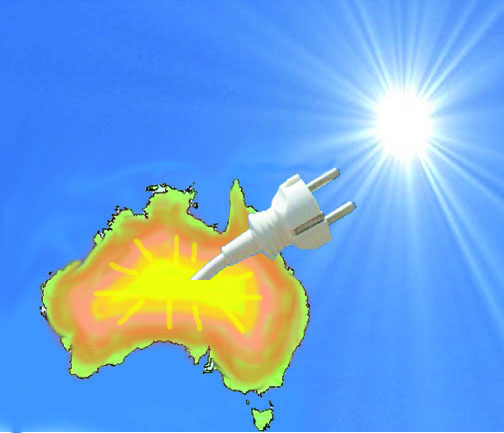
The ACT government continues to reap the rewards for its early and bold
push to 100 per cent renewables, which is now looking like the smartest
policy of all – shielding its residents from the ravages of largely
fossil-fuelled electricity price hikes.
The latest quarterly data assessing
the cost of the ACT government’s commitment to sourcing the equivalent of
its annual demand from wind and solar – which it met on schedule in 2020
– shows the additional cost of the policy in the latest quarter was just
$3 a megawatt hour. Indeed, three of the wind farms contracted by the ACT
government returned significant sums of money (a total of $4.4 million) to
the ACT because the contract prices they agreed to are significantly lower
than current wholesale electricity prices.
Renew Economy 8th Oct 2025, https://reneweconomy.com.au/act-went-first-and-fastest-to-100-per-cent-renewables-it-now-looks-like-the-smartest-policy-of-all/
South Australia unveils first auction as world’s most advanced renewables grid seeks long duration storage
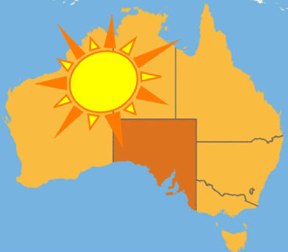
The South Australia state government has appointed ASL to run its first
auction for long duration storage, as the world’s most advanced wind and
solar grid seeks around 700 MW of new firm capacity over the next six
years.
South Australia leads the world in the uptake of wind and solar –
which together accounted for 75 per cent of its local electricity demand
over the last 12 months – and has set a world-leading target of reaching
100 per cent “net” renewables by the end of 2027. It already has seven
big battery projects operating in the state, and another dozen under
construction or contracted, but it is now seeking longer duration storage
through the Firm Energy Reliability Mechanism (FERM) that it announced
earlier this year.
Renew Economy 8th Oct 2025,
https://reneweconomy.com.au/south-australia-unveils-first-auction-as-worlds-most-advanced-renewables-grid-seeks-long-duration-storage/
A crack in the AUKUS public relations pressure hull!
by Rex Patrick | Oct 5, 2025 , https://michaelwest.com.au/a-crack-in-the-aukus-pr-pressure-hull/
AUKUS is a hugely expensive Defence project facing considerable and, many argue, insurmountable hurdles. But does Defence have a Plan B? Rex Patrick reveals a crack in Defence PR’s high tensile pressure hull steel.
There has to be an AUKUS Plan B, surely. So MWM FOI’ed the Australian Submarine Agency (ASA) to find out.
Hit ‘em with your Talking Points.
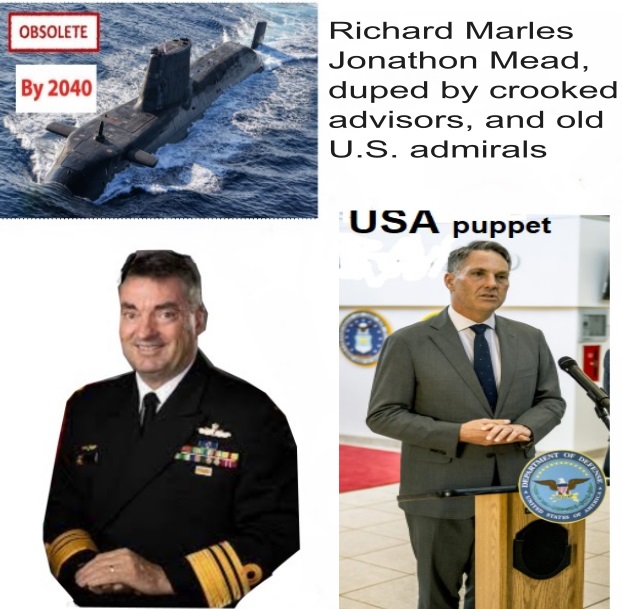
In response, the ASA partially released one document showing ‘talking points’ that had been given to the Project lead, Vice Admiral Jonathon Mead, in case he was asked about the US’s AUKUS review.
At first glance, MWM thought that the ASA’s back-up plan to defend the Nation was to
“roll out some talking points to fire at an approaching enemy.“
roll out some talking points to fire at an approaching enemy.
But a closer look revealed more.
A Crack in the Submarine Pressure Hull
The talking points weren’t the only documents.
Despite the public bravado, the FOI decision shows that there is some discussion going on behind the scenes.
There were three more documents that met the terms of MWM’s request. The decision letter reveals that the Government has been discussing with our AUKUS partners, and internally, on what to do if it all goes to hell in a nuclear handbasket.
Self-confidence Bluster Exposed
The ASA has claimed the documents are sensitive (something we’ll push back on with an appeal), and so we can’t see the exact details of what’s being said.
But we know there are conversations taking place.
“That’s a good thing.“
1×1515
1:36 / 2:23
Listen to this story
2 min
AUKUS is a hugely expensive Defence project facing considerable and, many argue, insurmountable hurdles. But does Defence have a Plan B? Rex Patrick reveals a crack in Defence PR’s high tensile pressure hull steel.
There has to be an AUKUS Plan B, surely. So MWM FOI’ed the Australian Submarine Agency (ASA) to find out.
FOI Asking about a Plan B
Hit ‘em with your Talking Points.
In response, the ASA partially released one document showing ‘talking points’ that had been given to the Project lead, Vice Admiral Jonathon Mead, in case he was asked about the US’s AUKUS review.
US AUKUS Review talking Points (Source: Defence)
At first glance, MWM thought that the ASA’s back-up plan to defend the Nation was to
roll out some talking points to fire at an approaching enemy.
But a closer look revealed more.
A Crack in the Submarine Pressure Hull
The talking points weren’t the only documents.
Despite the public bravado, the FOI decision shows that there is some discussion going on behind the scenes.
More Documents about Plan B (Source: Defence)
There were three more documents that met the terms of MWM’s request. The decision letter reveals that the Government has been discussing with our AUKUS partners, and internally, on what to do if it all goes to hell in a nuclear handbasket.
Plan B Talk Going On (Source: Defence)
Self-confidence Bluster Exposed
The ASA has claimed the documents are sensitive (something we’ll push back on with an appeal), and so we can’t see the exact details of what’s being said.
But we know there are conversations taking place.
That’s a good thing.
Greens Senator David Shoebridge, commenting on the FOI decision, said, “Labor has managed to combine two of their worst behaviours in one go here, using exemptions in FOI to refuse to release documents while secretly doubling down on a plan B for AUKUS. I don’t think treating the Australian public like mushrooms is a viable long-term political strategy for Albanese”.
It’s Senate Estimates this coming week. The Coalition is a unity cheer squad with Labor when it comes to AUKUS, so we won’t see them probing hard on a Plan B. Hopefully, Shoebridge will squeeze some more out of Defence, at least until MWM’s FOI appeal is finalised.
For now, at least, we now know the ASA’s public AUKUS bluster is a deception. They’re not so confident after all.
Rex PatrickRex Patrick is a former Senator for South Australia and, earlier, a submariner in the armed forces. Best known as an anti-corruption and transparency crusader, Rex is also known as the “Transparency Warrior.”
View from The Hill: Two years of a distant war have brought much damage to Australian society
The Conversation, October 7, 2025, Michelle Grattan, Professorial Fellow, University of Canberra
Two years ago, who would have imagined the police and the Palestine Action Group (PAG) would be fighting in court over whether demonstrators should be allowed to rally outside the Sydney Opera House?
Indeed, 24 months ago, who would have thought we’d have (or need) designated “envoys” to combat antisemitism and Islamophobia in Australia?
On Tuesday’s second anniversary of the Hamas atrocities in Israel, it is sobering to reflect how much damage this horrific Middle East conflict, which has cost tens of thousands of lives, most of them Palestinian, has done to Australia’s own society.
In Fitzroy in Melbourne, pro-Palestinian graffiti appeared to mark the anniversary: “Glory to Hamas”, “Oct 7, do it again”, “Glory to the martyrs”.
Prime Minister Anthony Albanese described this as “terrorist propaganda” that was “abhorrent,” saying those responsible “must face the full force of the law”.
On Wednesday, the issue of Sunday’s proposed protest outside the Opera House will be back in court. The police don’t want the protesters’ march to be allowed to end in the tight space at the Opera House, citing dangers to safety.
The lawyer for the PAG said on Tuesday: “If the police application is conceded to, the ramifications for the right to protest in Australia will not be confined to the Opera House, but for a wide variety of protest activities”. The group argues the issue is a constitutional one.
In the past two years, this faraway conflict has done substantial harm to Australia’s social cohesion, raised questions about the future of multiculturalism, and produced serious divisions about where lines should be drawn on limiting free speech and the right to protest. The response of institutions, universities in particular, has been tested and in some cases found wanting.
NSW Labor Premier Chris Minns gave a flavour of the cross pressures when speaking on Sydney radio on Tuesday.
“We’ve moved significant changes to hate speech laws in New South Wales and we’ve done it because we recognise we live in a multicultural community and yes, you’ve got a right to freedom of speech but someone else has a right not to be vilified or hated on the basis of their race or religion. All of those laws are currently being challenged in the High Court because of the implied freedom of political communication.”…………………………
The conflict has fractured the Australia-Israel relationship, with the Albanese government increasingly critical of Israel’s unrelenting prosecution of the war, and the Netanyahu government turning on Australia.
This culminated with Australia’s recognition of a Palestinian state at the United Nations during the prime minister’s recent trip. The recognition was the end of Labor’s internal journey, which commenced many years before this war began.
The Greens Party has been at the left edge of the political spectrum.
The Australian community was divided about Palestinian recognition: an Essential poll published in late September showed 34% in favour, and 30% against.
The conflict has shattered what used to be a bipartisan Middle East policy, when both main parties strongly supported Israel and also backed a two-state solution for a long-term Middle East settlement.
Over the past two years, the Coalition has been strongly pro-Israel, accusing the Labor government of deserting an ally and failing to deal robustly with antisemitism in this country.
Opposition leader Sussan Ley used her parliamentary speech on Tuesday’s anniversary to home in on the government’s policy towards Israel.
“To our great shame, under the leadership of the Albanese Labor government, Australia has not stood with the people of Israel, nor with the United States, as they have sought to dismantle Hamas and establish the conditions for peace”.
The local rifts that have come to the surface in Australia were there well before October 7 2023. The war caused them to widen dramatically and explode.
Even if, and when, this conflict subsides, it will leave fractures, anger, bitterness and fear within sections of the Australian community.
Whatever healing takes place almost certainly won’t be complete. For governments, federal and state, intractable policy challenges will remain. https://theconversation.com/view-from-the-hill-two-years-of-a-distant-war-have-brought-much-damage-to-australian-society-265858?utm_medium=email&utm_campaign=Latest%20from%20The%20Conversation%20for%20October%208%202025%20-%203541836106&utm_content=Latest%20from%20The%20Conversation%20for%20October%208%202025%20-%203541836106+CID_fb6124771c1b55570097f86c7e58b5ee&utm_source=campaign_monitor&utm_term=View%20from%20The%20Hill%20Two%20years%20of%20a%20distant%20war%20have%20brought%20much%20damage%20to%20Australian%20society
1 This month
.
Australians deserve the truth
about
AUKUS – https://aukuspublicinquiry.com/

PETITION – To: Prime Minister Anthony Albanese and the Australian Labor Government

of the week – Australians for War Powers Reform (AWPR)
To see nuclear-related stories in greater depth and intensity

