Unfinished business: a new report on the Ranger uranium mine: what its clean-up means for Kakadu National Park
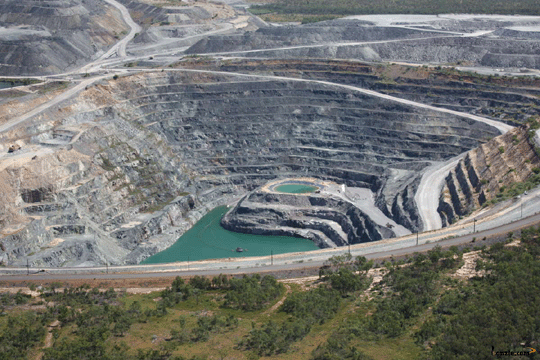
Unfinished business: Kakadu needs a new approach to cleaning up an old mine, https://www.acf.org.au/unfinished_business_kakadu_needs_a_new_approach 7 May 19, How well the Ranger uranium mine is cleaned up is key to the long-term health of Kakadu.
 A new report has found Australia’s largest national park is at long-term risk unless the clean-up of the Ranger uranium mine in Kakadu is done comprehensively and effectively.
Unfinished business, co-authored by the Sydney Environment Institute (SEI) at the University of Sydney and the Australian Conservation Foundation (ACF), identifies significant data deficiencies, a lack of clarity around regulatory and governance frameworks and uncertainty over the adequacy of current and future financing – especially in relation to future monitoring and mitigation works for the controversial mine site.
Mine operator Energy Resources of Australia (ERA) and parent company Rio Tinto are required to clean up the site to a standard suitable for inclusion in the surrounding Kakadu National Park, dual-listed on UNESCO’s World Heritage list.
“No mine in the world has ever successfully achieved this standard of clean up,” said report co-author Dr Rebecca Lawrence from SEI.
“Rehabilitating what is essentially a toxic waste dump is no easy task. Rio Tinto faces a complex and costly rehabilitation job.
“The challenge is not to simply scrape rocks into holes and plant trees, it is to make sure mine tailings, radioactive slurry and toxic by-products of mining are isolated from the surrounding environment for 10,000 years.
“To ensure this in a monsoonal environment, such as Kakadu, which is already being impacted by climate change, raises enormous environmental and governance challenges.
“For the rehabilitation process to even have a chance at success, the existing opaque and complex regulatory regime needs an urgent overhaul,” Dr Lawrence said.
Tailings, the waste material remaining after the processing of finely ground ore, are one of the serious environmental risks outlined in the report. The report examines how ERA and Rio Tinto intend to deliver on the federal government’s requirement to protect the Kakadu environment by isolating any tailings and making sure contaminants do not result in any detrimental environmental impacts for at least 10,000 years.
“Long after the miners have gone this waste remains a direct human and environmental challenge,” said report co-author Dave Sweeney from ACF.
“This issue is key to the long-term health of Kakadu but there is insufficient evidence and detail on how this work will be managed and assured in the future. Without this detail there will be a sleeping toxic time bomb deep inside Kakadu.
“At its London AGM last month Rio again committed to make sure ERA has the financial resources to deliver its rehabilitation obligations, however the financial mechanism to do so remains undisclosed.
“The community and environment of Kakadu need certainty and a comprehensive clean up.
“This work is a key test of the commitment and capacity of Northern Territory and Commonwealth regulators as well as the mining companies.”
The report makes recommendations to improve the chances of a successful clean-up at Ranger. It calls for increased transparency, public release of key project documents, a better alignment of research and operations and open review processes for key decision points.
The full report is here.
Zali Steggall, Independent candidate for Warringah, aims to tackle the health impacts of climate change

 Zali Steggall promises action to stem health impact of climate change https://www.theguardian.com/australia-news/2019/may/06/zali-steggall-promises-action-to-stem-health-impact-of-climate-change 6 May 19,
The Warringah independent signs up to strategy to tackle problems of increased asthma, mental illness and heat-related deaths
Independent candidate for Warringah, Zali Steggall, has pledged to address the health impacts of climate change if she wins Warringah as an independent.
Like her fellow independent, Kerryn Phelps in Wentworth, Steggall signed up on Monday to the strategy developed by the Climate Health Alliance, which has more than one million health professionals behind it through their representative groups. It is pushing governments to start factoring climate change into their thinking about health policy, warning that a rise of 3C in world temperatures would have catastrophic consequences for the health of Australians.
Among the health impacts of climate change are an expected jump in severe asthma attacks, more disease due to severe weather events such as flooding, increased mental illness due to prolonged droughts and higher death rates among the elderly and chronically ill due to more frequent very hot days.
On 21 November 2016 thousands of people were taken ill and 10 people died in Melbourne due to thunderstorm asthma. High temperatures, thunderstorms and windy conditions blew rye grass pollen into the city causing the mass incident.
Melbourne has now implemented an alert system for epidemic asthma which operates during October and December each year when pollen levels are at their highest.
Mary Chiarella, professor of nursing at Sydney university, said increasingly warm weather meant there would be more out-of-season pollen that would extend the asthma risk season.
More hot days would drive hospital admissions putting additional stress – and costs – on the health system.
“[Economist] Warwick McKibbon says no action is not a zero sum game. Just because you don’t spend the money taking action, doesn’t mean it will deliver a zero cost,” said Steggall.
“We are in one of the most exposed regions to climate change,” she said.
Steggall said she would be pushing for the expert panel to look into the climate change impacts on health outcomes and to advise the government on its response.
“My point of difference [with Tony Abbott] is I do like facts and data,” she said, a reference to the criticism that Abbott has made of her expert panel proposal.
At a debate last week, Abbott said Steggall would be shirking her responsibilities as a parliamentarian when she said she would be “led by experts” on climate change policy and what emissions cuts the nation should commit to.
She also criticised Abbott’s focus on power costs due to measures to address climate change.
“The more people understand the other impacts on them personally, the more the case for action,” she said.
UN Report – One million species at risk of extinction – Australia not interested?
|
|
|

Australian rare earths company Lynas is determined to keep its radioactive trash in Malaysia
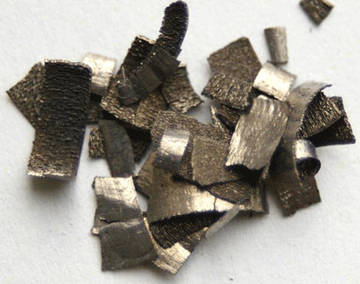 Lynas backs Malaysian waste solution despite removal order, Fin Rev Brad Thompson 6 May 19, Lynas Corporation is pushing ahead with plans to build a permanent disposal facility for low-level radioactive waste in Malaysia despite a contested ultimatum to export about 450,000 tonnes of residue already stockpiled by September.
The Wesfarmers takeover target said on Monday it was confident of meeting conditions outlined by Malaysian prime minister Mahathir Mohamad to ….. (subscribers only) ..https://www.afr.com/business/mining/rare-earths/lynas-backs-malaysian-waste-solution-despite-removal-order-20190506-p51kh2
Australian Greens will push Australian Parliament to declare a “climate emergency”, as Britain has done
 Greens urge climate emergency declaration, https://www.sbs.com.au/news/greens-urge-climate-emergency-declaration 4 May 19, The Greens will push the Australian parliament to declare a “climate emergency” after the federal election, party leader Richard Di Natale says.The federal Greens will push for Australia to declare a national “climate emergency”, following in the footsteps of the UK.
With Britain’s parliament becoming the first in the world to make such a declaration, federal Greens leader Richard Di Natale says it’s time to do the same at home.
With Britain’s parliament becoming the first in the world to make such a declaration, federal Greens leader Richard Di Natale says it’s time to do the same at home.
“We’ve put forward proposals to the parliament already. We’ll be doing that again when we return to the parliament,” he told AAP on Saturday.
“We’re calling on both the Liberal and the Labor party to support what the conservative party in the UK have now adopted.”
Senator Di Natale says the push isn’t a lost cause in Australia’s political environment because “the pressure (to act) is building and it’s building very fast”.
“The major parties ignore the community at their own peril.”
The Greens leader also said he wanted environmental laws to be changed so projects had to specifically take into account their effect on climate change.
Senator Di Natale also backed Labor’s $1 billion pledge for environmental initiatives, including a native species protection fund and protecting beaches from erosion.
But the Greens want a “climate trigger” put into environment laws.
“Quite simply when any proposal is being put forward and the environment impact is being considered, what we have to do is make sure climate change is the first thing that’s considered as part of environmental impact,” Senator Di Natale said.
Adani coal mine expansion is the critical test for Australia’s climate action. We must stop it – Bob Brown
 ‘It is up to us,’ to stop Adani: Bob Brown’s dire warning on coal mine, SBS, 5 May 19, The stop Adani convoy has ended its long j
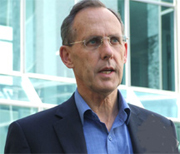 ourney in Canberra with a rally on the lawns of Parliament House where Paul Kelly performed.
Veteran environmental activist Bob Brown has told thousands of climate action supporters they can’t rely on divine intervention to prevent the Adani coal mine. “It is up to us”.
The former federal Greens leader led the stop-Adani convoy that began in Hobart just before Easter and travelled to Clermont in central Queensland before reaching its final destination in Canberra on Sunday where a rally was held on the lawns of Parliament House.
Organisers estimated there were 2,500 people at the rally – “a bigger crowd than Bill Shorten will face today and a bigger crowd than Scott Morrison will ever face”, Dr Brown said.
He told the crowd that neither of the big parties were willing to stop the Adani mine to secure the planet for Australia’s kids……..
Dr Brown told reporters the convoy had been peaceful and law abiding but participants had endured hardships along the route.
“We had rocks thrown at us, we had people spat on, some people were actually physically absued.”…..
Greens leader Richard Di Natale told reporters Australia was in the midst of a climate election.
“Right now the Adani coal mine is a test of whether Liberal or Labor are serious about stopping climate change and right now,” he said,
“Liberal and Labor have failed the test.”……. https://www.sbs.com.au/news/it-is-up-to-us-to-stop-adani-bob-brown-s-dire-warning-on-coal-mine
After a while, the planned South Australian would by more aptly called “A Nuclear Abandonment Site.”
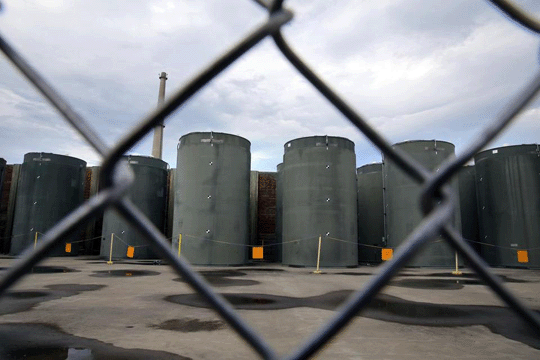 Paul Waldon Fight To Stop Nuclear Waste Dump In Flinders Ranges SA, 6 May 19,
Young climate activist’s letter to Australia
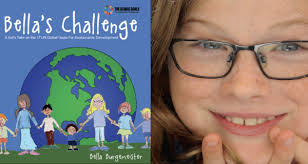
‘I want my childhood back’: young climate activist’s letter to Australia, SMH ,By Bella Burgemeister, May 4, 2019, My name is Bella, I’m 13 years old and I’m a climate change activist and organiser……
My book – Bella’s Challenge – was published in 2017 and now all the schools in the South West region of WA have a copy! But there’s so much more to be done.
For most of my life, the major parties have done as little as they can get away with when it comes to climate change. Are we really that greedy that we can’t see the bigger, global picture?
Young people like me are the ones who will live with the consequences of inaction on climate
change.
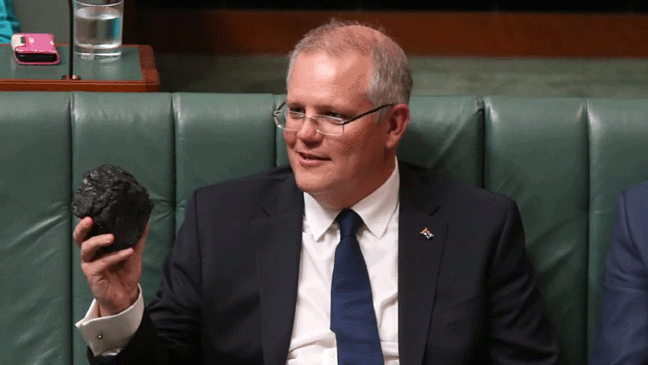
So, when I see our Prime Minister tossing around a lump of coal in the Parliament, I know I have to fight back. When I hear both future potential future prime ministers say they support the Adani coal mine, I know I have to fight back.
When the state government here in WA opens up an area two-thirds the size of Tasmania to gas fracking, I know that I have to fight back. And I’m not the only one.
I’m just one of tens of thousands of kids across Australiagiving up part of their childhood to fight for our future because we have so little time to turn around this human made disaster.
We’ve got until 2030 to get serious – that’s just three more elections – so we can’t waste another term of government.
The School Strike for Climate youth have three simple demands:
2. No new fossil fuel projects, especially drilling in the bight and fracking
3. 100 per cent renewable energy by 2030
The last action, which I was so proud to help organise, saw almost 200,000 young people around
Australia march in over 100 towns and cities.
The Prime Minister used the Parliament to tell us to stay in school, and the opposition leader told us we should have done it on the weekend – surely, he knows, as a former union boss, what the point of a strike is. This time we want to send an even bigger message!
This Friday, May 3, was a national day of action to remind the major parties that this is a climate change election.
Our demands aren’t radical, they’re the very least that needs to be done. They will take effort, but aren’t our futures worth it?
I want to stop worrying about my future and I want my childhood back.
Bella Burgemeister is a WA high school student and one of the key organisers of the WA ‘Schools Strike 4 Climate’ actions. https://www.smh.com.au/national/i-want-my-childhood-back-young-climate-activist-s-letter-to-australia-20190504-p51k2i.html
Schoolkids take their climate message to the politicians. Abbott pooh poohs it.
The earth has survived many things’, Abbott tells children protesting against climate change inaction, SMH, By Laura Chung and Jenny Noyes May 4, 2019 Dark clouds threatened rain as schoolkids gathered outside the Sydney electorate offices of both Labor and Liberal politicians on Friday, but it didn’t dampen their message on climate change.Prime Minister Scott Morrison, former prime minister Tony Abbott and Labor infrastructure spokesman Anthony Albanese were among those targeted as part of the nationwide protest against climate change inaction by federal MPs.
The protest held extra potency in Manly, where Mr Abbott’s 25-year grip on the seat of Warringah is under threat from independent candidate Zali Steggall in a campaign centred on climate change.
Armed with homemade signs, about a hundred students, parents and grandparents marched on Mr Abbott’s Manly office, chanting the slogan favoured by Steggall supporters: “Time’s up Tony”……..
A group of students tracked Mr Abbott down in a local cafe after the protest and voiced their concerns to him.
He also told them he didn’t believe the “environmental catastrophe” predicted by scientists would come about.
“I’m not saying that there isn’t going to be some time in the future when, for whatever reason, things come to an end, but I don’t believe that modest increases of atmospheric carbon dioxide concentrations over the next few decades are bound to bring about the kind of environmental catastrophe that you seem to fear.”……
Another protester dressed up in costume as Scott Morrison and a blackened piece of ‘coal’.
Another protester dressed up in costume as Scott Morrison and a blackened piece of ‘coal’.
Labor wasn’t let off the hook either.
Students also took their climate message to infrastructure spokesman Anthony Albanese’s Marrickville electorate office too, with a focus on urging Labor to pull the plug on the Adani coal mine. A Bill Shorten costume also made an appearance. https://www.smh.com.au/national/nsw/the-earth-has-survived-many-things-abbott-tells-children-protesting-against-climate-change-inaction-20190503-p51jts.html
Australia’s Liberal and Labor Parties on Climate Change – politics theme for May 2019
Federal Election: Whose climate change plan is better?
Shorten’s climate policy and why we don’t need to fear the Coalition’s ‘big scary numbers’ Guardian, Katharine Murphy, 2 May 2019
Scott Morrison wants voters to think that Bill Shorten is risky and reckless …
What’s the cost of not acting?
what Labor is saying is correct. It’s factual for this reason. Labor has set out the framework of its climate policies: the emissions reduction target, which is 45% (compared to the government’s 26%), and the various policy mechanisms to deliver that result.
But there is a fair bit of fine print missing because Labor wants to consult with stakeholders on final design before attempting to legislate the policy. …..
until we know the proportion of permits and a bunch of other things we don’t yet know – including what the Senate does to the policy if Labor wins – any number produced would be a guess. ….. https://www.theguardian.com/australia-news/2019/may/02/shortens-climate-policy-and-why-we-dont-need-to-fear-the-coalitions-big-scary-numbers
Climate change costings that don’t count the cost of inaction are worthless, Guardian, Greg Jericho 5 May 19 We must demand better of our political parties – and there is no excuse for the media either,Just seven months ago the United Nations told the world that we have 12 years to limit the climate change catastrophe. It means that to keep global warming to 1.5C above pre-industrial levels we need to cut carbon pollution by 45% by 2030 and down to zero by 2050. Twelve years. Actually scratch that – now it is 11 years.
 Now ask yourself how often that has been raised during this election campaign?
At the start of the 2019 federal election campaign Scott Morrison put out a video where he was all dewy-eyed about the future, saying “the next 10 years are important to everybody at every stage of life”.
And yet not once – NOT ONCE – did he mention that the UN has given us 11 years to do something about a global catastrophe.
No, instead it’s all standard of living and nothingness statements that would get shot down by any decent advertising firm 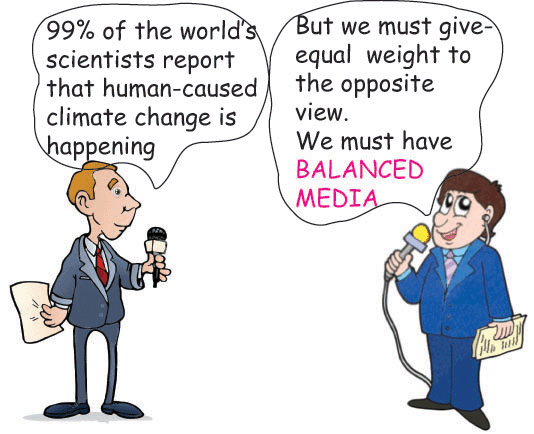 in the first meeting……..
Tony Abbott and his ilk – your time is done….
We need at a minimum a 45% reduction by 2030 and to get to zero net emission by 2050. So parties need to explain what they are going to do to get there and argue why their way is best.
It is left to rural South Australians to oppose the misguided national plan for nuclear waste dumping
 Dump opponents meet on ‘country in
 between’ https://www.eurekastreet.com.au/article/dump-opponents-meet-on–country-in-between Michele Madigan, 02 May 2019
We are the joy, the sadness, the anger and the peace.’ With these moving words, Adnyamathanha Elders Aunty Enice Marsh and Geraldine Anderson opened a significant gathering in Port Augusta last month. People from the Flinders Ranges and the Kimba farming region, still threatened by the federal government’s plans to deposit the nation’s radioactive waste, met again ‘on the country in between’.
Peter Woolford is the chairperson of the aptly named ‘It Goes Against the Grain’ group of farmers and townspeople of the Kimba region who oppose the dump and its threat to their international grain markets. From his long interview for the 7.30 Report on 28 March, only a few brief words survived the final cut, but he was pleased it was his main point: ‘We’re not activists — I’m a third generation farmer.’
His report to the Port Augusta gathering spoke of much activity, notably that the anti-dump farmers’ stand at the Cleve Field Days had attracted 1000 petitions. Meanwhile, farmer colleague Tom Harris, now on the Kimba Council, provides ‘some balance’ to the otherwise pro-dump farmers/townspeople councillors.
How can serious environmental matters in South Australia become as important in the national consciousness as those in the eastern states?”
Also in April, Friends of the Earth associates, Mara Bonacci and Dr Jim Green, travelled to Port Pirie, Port Augusta, Whyalla and Port Lincoln to meet with councils, election candidates for the Division of Grey, trade unions and Traditional Owners. Months after independent environmental expert David Noonan’s careful study of government documents revealed the ports named to possibly receive the nuclear waste, local people including council members of proposed port towns, still had no idea of this reality.
Younger members of the areas affected are speaking out. Adnyamathanha Candace Champion is standing for the Greens in the coming election. The Kimba young people are asking why they have been given no voice. As Adnyamathanha law student Dwayne Coulthard declares: ‘South Australia is being smashed right now — UCG [Underground Coal Gasification], the Bight and the Nuclear Waste Dump. How do we make this a reality for people?’
Good question! How can serious environmental matters in South Australia become as important in the national consciousness as those in the eastern states? Australia’s intermediate nuclear waste will be dangerous for 10,000 years. As Mara Bonacci explains, ‘It’s Australia’s waste, it’s a national issue, the burden of responsibility shouldn’t fall on two small regional communities.’
The SA Catholic Church recently suffered a great loss at the sudden passing of a key priest, Denis Edwards. Author of many internationally known books on a Christian response to the ecological crisis, Edwards had no hesitation in becoming a No Dump Alliance member: ‘I believe we are called by God to love and to respect this land as a gift, and to protect its integrity for future generations.’Good question! How can serious environmental matters in South Australia become as important in the national consciousness as those in the eastern states? Australia’s intermediate nuclear waste will be dangerous for 10,000 years. As Mara Bonacci explains, ‘It’s Australia’s waste, it’s a national issue, the burden of responsibility shouldn’t fall on two small regional communities.’
The SA Catholic Church recently suffered a great loss at the sudden passing of a key priest, Denis Edwards. Author of many internationally known books on a Christian response to the ecological crisis, Edwards had no hesitation in becoming a No Dump Alliance member: ‘I believe we are called by God to love and to respect this land as a gift, and to protect its integrity for future generations.’Good question! How can serious environmental matters in South Australia become as important in the national consciousness as those in the eastern states? Australia’s intermediate nuclear waste will be dangerous for 10,000 years. As Mara Bonacci explains, ‘It’s Australia’s waste, it’s a national issue, the burden of responsibility shouldn’t fall on two small regional communities.’
The SA Catholic Church recently suffered a great loss at the sudden passing of a key priest, Denis Edwards. Author of many internationally known books on a Christian response to the ecological crisis, Edwards had no hesitation in becoming a No Dump Alliance member: ‘I believe we are called by God to love and to respect this land as a gift, and to protect its integrity for future generations.’
No Dump Alliance is a broad grouping from the SA community, Aboriginal and agricultural representatives. On 29 April, the third anniversary of the day the federal government named Wallerbina, Flinders Ranges as the preferred site, the Alliance called for the scrapping of the present site selection process and the establishment of an independent inquiry to thoroughly explore all the scientifically safe options for management.
The next day, members presented hundreds of petitions to this end to federal member Rowan Ramsey. As Peter Woolford said, ‘Our homes, our communities, our jobs are at risk from this unpopular and unnecessary plan.’
Concerned Australians can offer solidarity by making an online submission here or by writing their own.
Michele Madigan is a Sister of St Joseph who has spent the past 38 years working with Aboriginal people in remote areas of SA, in Adelaide and in country SA. Her work has included advocacy and support for senior Aboriginal women of Coober Pedy in their campaign against the proposed national radioactive dump.
Clive Palmer enthuses about nuclear power for South Australia: Labor and Liberal do not agree
 Clive Palmer says SA needs nuclear to stop being a ‘backwater’ during federal election visit, ABC News, 3 May 19 Clive Palmer has described South Australia as a “backwater” which lacks “enterprise, energy and investment” during a campaign visit to Adelaide to spruik his party’s pro-nuclear policies. Key points:
The United Australia Party (UAP) leader wants nuclear reactors built in South Australia as a way of boosting investment and jobs. The State Government ruled out the nuclear option following a royal commission which concluded in 2016. A citizens’ jury also rejected a high-level waste dump “under any circumstances”. However, Mr Palmer said South Australia had the “world’s largest uranium deposits” and should embrace nuclear technology. “Australia has had nuclear reactors for 50 years at Lucas Heights in the middle of Sydney,” he said.
In 2018, an independent expert review found the Lucas Heights nuclear medicine lab failed modern nuclear safety standards and had a culture of “make-do and mend”. A contamination incident at the facility was deemed the most serious in the world in 2017 according to the International Nuclear Event Scale — the global grading system for nuclear incidents. Days after the review was released, another contamination scare at the reactor occurred, in which radiation levels rose “above allowable limits set by the regulator”. Mr Palmer said he hoped to secure the “balance of power” to work towards establishing “nuclear reactors and a vibrant manufacturing industry in South Australia”. He said any future reactor “may not be, or it may be, Australian-owned”……. Royal commission ruled out nuclear energyBoth the Liberals and Labor have hit back at Mr Palmer’s remarks, with Labor senator Penny Wong saying they prove “Clive would be devastating to South Australia…… Both the Liberal and Labor parties in South Australia rejected the royal commission’s suggestion that the state should pursue removal of federal prohibitions on nuclear power development. In a statement, SA Energy Minister Dan van Holst Pellekaan reaffirmed that commitment. “The State Government does not support the introduction of nuclear power in South Australia,” he said…….. https://www.abc.net.au/news/2019-05-02/clive-palmer-campaigns-for-federal-election-in-south-australia/11069286 |
|
|
Most people now realise that the Adani coal mine expansion is not likely to go ahead
 Adani plays a crucial symbolic role in all this. If the Carmichael project went ahead, it would open up the entire Galilee Basin, with catastrophic consequences for the global climate. Conversely, a clear-cut victory over Adani would signal the end of new thermal coalmines in Australia and, before too long, globally.
Yet a recent Newspoll conducted in Herbert estimates the two-party preferred vote unchanged from the knife-edge result of 50-50 in 2016, which saw Labor’s Cathy O’Toole returned with a margin of 37 votes. What is happening here?
The answer is that, whatever happens on 18 May, the Carmichael mine is unlikely to go ahead, and most people know this. Continue reading
A new political force in Australia- YOUNG PEOPLE WHO WANT ACTION ON CLIMATE CHANGE
Young people won’t accept inaction on climate change, and they’ll be voting in droves,
|
PhD Researcher in Science Communication, Australian National UniversityToday young Australians will hit the streets for the second Climate Strike of 2019. Youths are often brushed off as being politically disengaged, but the Australian Electoral Commission has reported record high numbers of youth enrolment, and climate change will be at the forefront of their minds when many take to the polls for the first time. Today young Australians will hit the streets for the second Climate Strike of 2019. Youths are often brushed off as being politically disengaged, but the Australian Electoral Commission has reported record high numbers of youth enrolment, and climate change will be at the forefront of their minds when many take to the polls for the first time……. While protests are an ancient tradition, Climate Strike is being led entirely by school students. Greta Thunberg, now aged 16, began the School Strike for Climate movement after attracting press to a then solitary protest at Swedish parliament in 2018. By March 15, 2019, the movement had grown to over 1.4 million studentsin more than 300 cities worldwide. This movement forces adults to acknowledge climate change is not only impacting the futures of an unknown, unborn generation, but also of those protesting here and now. Climate change, then, is not only an important issue for under 24-year-olds, but also a deeply personal one. Discussion of climate change often elicits intense emotions like fear and anxiety for their futures. In a speech earlier this year in Davos, Switzerland, Thunberg said:
 |
|
The black-throated finch – a species threatened with extinction, if Adani coal project goes ahead
Key points:
- The range of the black-throated finch has contracted by 80 per cent
- Birdlife Australia says it is already extinct in NSW
- The Carmichael mine proposal would consume one of the finch’s key habitats
Last night, the proposed coal mine was dealt a massive blow when the Queensland Department of Environment and Science (DES) rejected Adani’s current management plan for the southern black-throated finch.
It told the Indian miner the management plan “does not meet the requirements of the company’s environmental authority”.
The Carmichael mine would take up one of the last remaining healthy habitats for the black-throated finch.
A DES web page on the endangered bird explains that the black-throated finch (southern subspecies) once extended from Inverell in north-east New South Wales, through eastern Queensland, to the Atherton Tablelands and west to central Queensland.
It said the finch (southern subspecies) range had “contracted by approximately 80 per cent of its former extent over the last 20 years and is now restricted to the northern part of its former range”.
“The black-throated finch (southern subspecies) inhabits grassy woodland dominated by eucalypts, paperbarks or acacias where there is accessibility to seeding grasses,” DES said.
“Recent records from Queensland suggest that riparian habitat is particularly important as it seems to provide shelter within a highly fragmented and modified environment.”
Sean Dooley from Birdlife Australia said the finch was already extinct in New South Wales and that there were now only two small populations left in the world, both in Queensland.
There are believed to be fewer than 1,000 black-throated finches still alive.
There is a small population west of Townsville, but the main population is on the footprint of the Adani mine lease in the Galilee Basin. “Carmichael coal mine is ground zero for this bird,” Mr Dooley said………
Mr Dooley congratulated the Queensland Government for rejecting the company’s environmental management plan for the finch.
“Obviously the Queensland Government would have been under a lot of political pressure and pressure from interest groups to allow this to go through,” he said…….https://www.abc.net.au/news/2019-05-03/how-is-a-tiny-bird-such-a-big-problem-for-adani/11076386
1 This month
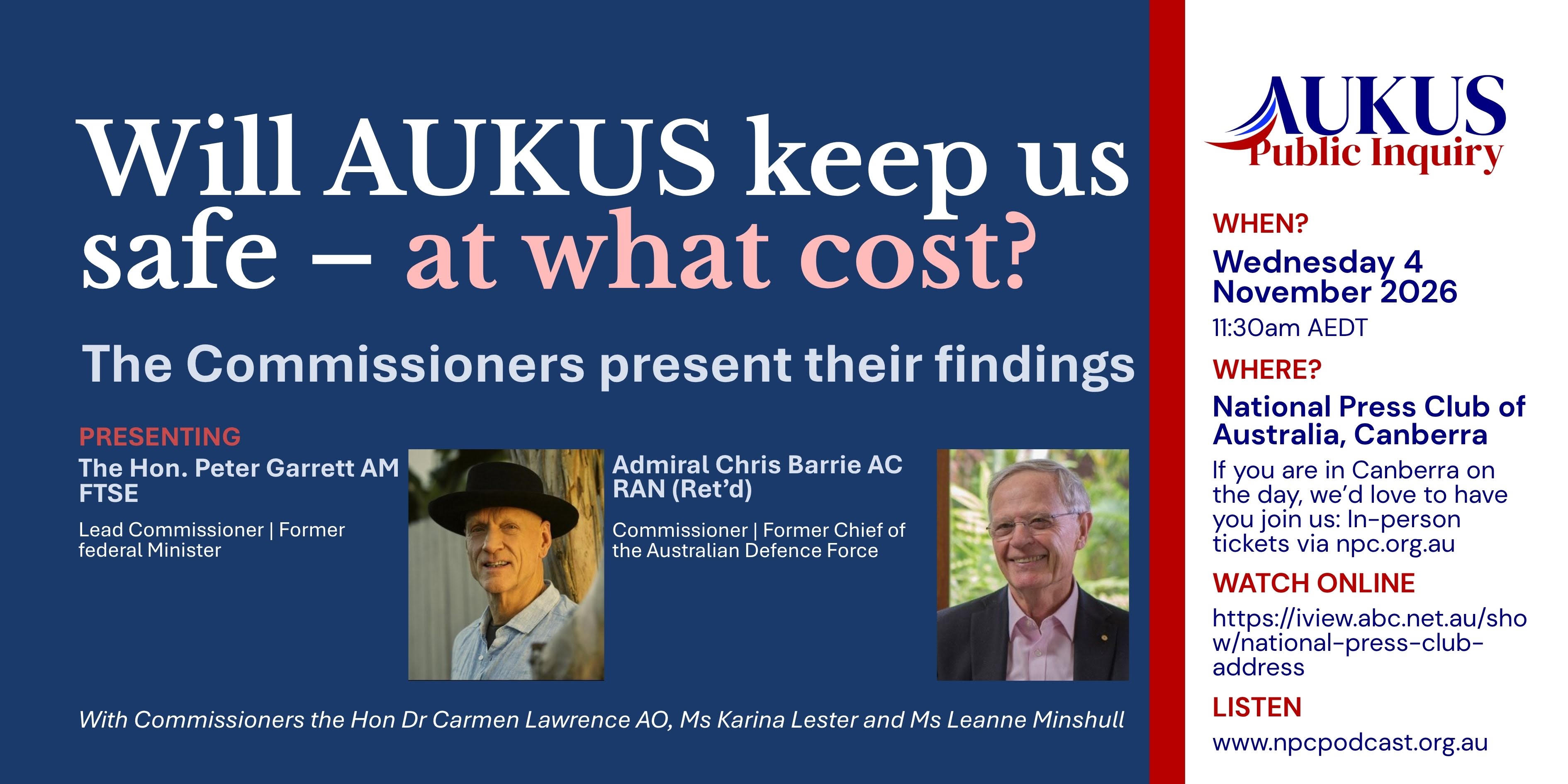
4 November – Will AUKUS keep us safe – at what cost?
the Commissioners of the AUKUS Public Inquiry present their findings at the National Press Club of Australia in Canberra. iview.abc.net.au/show/national-press-club-address
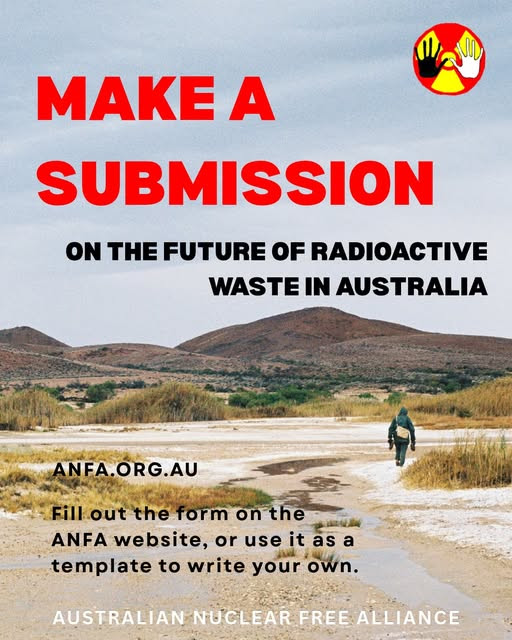
Submissions to the federal government’s new draft framework close on the 13th November 2026.
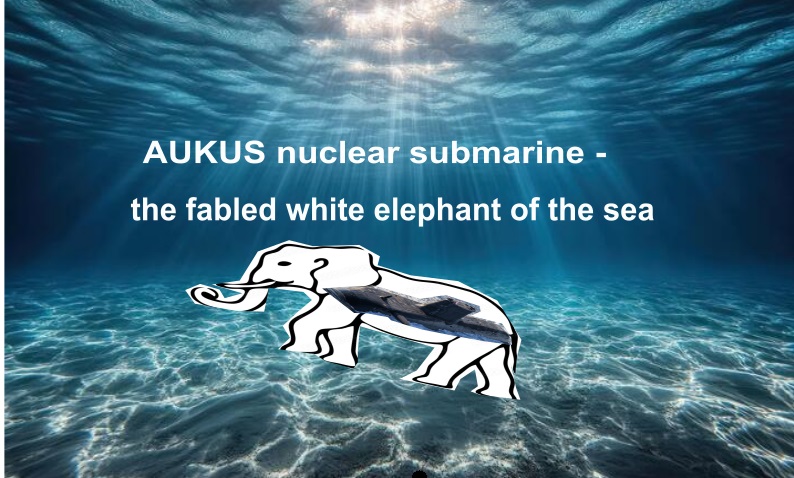
Australians deserve the truth
about
AUKUS – https://aukuspublicinquiry.com/

PETITION – To: Prime Minister Anthony Albanese and the Australian Labor Government

of the week – Australians for War Powers Reform (AWPR)
To see nuclear-related stories in greater depth and intensity

