Peter Dutton’s nuclear accounting trick #1: Assume you can halve the cost of nuclear power

they claim they will be ordering nuclear plants several years in the future after the nuclear industry has had the chance to improve on what have been some shocking project cost blow outs.
the nuclear industry in the western world has tended to experience escalating, not declining costs over time.
would have to commence the nuclear procurement process immediately.
Tristan Edis, Feb 19, 2025, https://reneweconomy.com.au/peter-duttons-nuclear-accounting-trick-1-assume-you-can-halve-the-cost-of-nuclear-power/
This is part 2 of a five part series of articles examining the four accounting tricks that the Liberal-National Party employed in the costing of its energy plan to slow the roll-out of renewables and rely instead on nuclear power. The first article, which provides the overarching context is published here.
These four accounting tricks act to mislead voters that the Liberal-National Party could lower energy bills through a shift to nuclear when in reality it is likely to increase power bills.
This article focuses on accounting trick one of four: Assume a cost for nuclear reactors which is around half what nuclear reactors have actually cost to build across Europe and North America.
The most important point you need to understand is that the unit cost of energy the Liberal-National Party claims its future nuclear-underpinned power system will deliver – about $80 per megawatt-hour – is unrealistically low.
More realistic cost assumptions for nuclear would inflate the modelled cost of their system per MWh to $141.50 per MWh which is two-thirds higher than what they’ve estimated for the Labor Party scenario.
The Liberal-National Party’s costing has assumed that a nuclear reactor built today in Australia would cost $10,000 per kilowatt of capacity and that cost would decline by 1% per annum. The costing also assumes the first reactors would commence operation in 2036 followed by a rapid scale-up from 2039.
This is far below the real-world construction cost experience of nuclear reactors across Europe and North America in the past 20 years. This experience is detailed in a report I co-authored with energy analyst Johanna Bowyer from the Institute for Energy Economics and Financial Analysis – Nuclear in Australia would increase household power bills.
The table below [on original] lists the costs per kilowatt of plants which have proceeded to construction or managed to get to the point of a contracted price. Importantly you need to consider both the actual price paid to construction contractors (known as the ‘overnight cost’ – the cost if the project could literally be built within a night), but also a range of costs incurred by the owner in building the plant such as financing, known as the ‘all-in costs’.
These owner-incurred costs are very large, mainly because construction takes a long time and leads to significant bank debt interest bill accumulating over this period. The Liberal-National’s costing report does not explain what construction period it assumes for nuclear plants, which is a major black hole in their costing.
For a nuclear reactor with an all in cost of almost $29,000 per kilowatt to recover a commercial financing cost of 6% it would need to capture an electricity price close to $260 per MWh, and that’s if it could operate close to its full capacity without ramping down around solar generation.
If we multiply that out by the amount of electricity nuclear is expected to generate under the Liberal-National Party scenario, that gives us an annualised cost just for the nuclear component of their power system of $27 billion in 2051. We then need to add on top of that the costs to provide the remaining 60% or so of electricity not provided by nuclear.
Unfortunately, the inadequate transparency of the consultant’s report makes it difficult to disentangle these costs. Using the limited data the consultant has provided these non-nuclear costs appear to roughly lie somewhere around $8 to $10 billion.
So, if we use more realistic nuclear costs and then take the mid point for the non-nuclear costs of $9 billion, we end up with a total annualised cost of $36 billion for the complete system in 2051.
This is $7.5 billion higher than what the consultant estimates for the Labor scenario in 2051. It gives us an averaged cost per MWh of around $141.50, which is around two-thirds higher cost per MWh than the Labor scenario.
The Coalition likes to claim that the costs from these real-world nuclear power plant projects are somehow not relevant. This is because they claim they will be ordering nuclear plants several years in the future after the nuclear industry has had the chance to improve on what have been some shocking project cost blow outs.
There are just two fundamental problems with this.
The first is that the nuclear industry in the western world has tended to experience escalating, not declining costs over time. UK’s next planned nuclear project Sizewell C will represent the fifth and sixth European Pressurised Reactor (EPR) design built by French corporate entities.
The latest cost reported by the UK’s Financial Times suggests it will cost around two and half times what the Coalition costing assumes at $24,540 per kW. That’s substantially more expensive than the first EPR they built in Finland – Olkiluoto 3.
The second problem is that for the Coalition to have any chance of meeting its time frame for the roll-out of nuclear it would have to commence the nuclear procurement process immediately. It won’t be able to wait for the nuclear industry to achieve what would amount to some incredible cost breakthroughs.
To explain why it is helpful to look at the Czech Republic experience, where they just very recently completed a nuclear tender process. The tender commenced in 2022 (preparation leading into the tender such as permitting and environmental impact assessments for the reactor site began several years before that but let’s leave that to one side).
Two years later they had selected the winner, being Korean Hydro and Nuclear Power. Yet Korean Hydro and Nuclear Power won’t be able to actually commence the real construction work until 2029. That’s because nuclear power plants are very complex, from both a physical and commercial perspective, and require considerable preparatory work. From there, they don’t expect the nuclear power plant to be fully operational until 2038. Note that this is for a site where preexisting nuclear power plants are already in place with all the associated supporting infrastructure that entails.
So, realistically, if the Coalition wanted to achieve the timelines outlined in its modelling, it really needed to commence the nuclear procurement tender process back several years ago when it was previously in government. It has no time available to wait around for the nuclear industry to come up with the cost breakthroughs its costing relies upon.
Tristan Edis is director of analysis and advisory at Green Energy Markets. Green Energy Markets provides analysis and advice to assist clients make better informed investment, trading and policy decisions in energy and carbon abatement markets.
Peter Dutton sidesteps questions on state-funded nuclear disaster insurance plan
Albanese government also asked if it has considered nuclear insurance pool in context of Aukus nuclear-powered submarines.
Dan Jervis-Bardy Guardian 18 Feb 25
Peter Dutton has sidestepped questions about the potential need for a government-backed insurance pool for nuclear disasters after the industry’s peak body exposed a possible missing piece in his flagship energy plan.
The Insurance Council of Australia on Monday suggested the commonwealth may need to underwrite a scheme to cover communities against nuclear accidents.
“Around the world, nuclear has a special [insurance] cover that is usually done by governments,” the council’s chief executive, Andrew Hall, told ABC RN Breakfast.
“So it’s a conversation: if Australia turns to a net zero nuclear future, then we’re going to need to have a conversation with the government about a pool that would cover communities in the extremely unlikely event something would happen.”
Hall indicated such a scheme would be needed even if the Coalition’s nuclear plans never eventuated, to cover residents living near naval bases for the Aukus nuclear-powered submarines.
Neither the US nor UK has ever experienced a nuclear reactor accident on their submarines.
The insurance question has been largely overlooked in the debate about Dutton’s proposal to build nuclear reactors at seven sites. Attention has focused instead on the cost and timeline for starting an Australian nuclear power industry from scratch.
Countries with established nuclear industries have longstanding insurance schemes to cover personal injury and damage caused by nuclear disaster.
In the US, operators of nuclear power plants pay an annual premium for US$500m (about A$786m) in private insurance for liability coverage for each reactor.
Asked on Monday if the Coalition had modelled the cost of a nuclear insurance scheme, Dutton did not respond to the question, instead reiterating the threat of market intervention if insurers did not lower premiums.
The Nationals leader, David Littleproud, struggled to answer similar questions when pressed repeatedly on ABC radio earlier in the day.
Insurance is not mentioned in either the Coalition’s six-page nuclear blueprint or in the Frontier Economics costings underpinning the proposal.
The Australia Institute thinktank in 2019 described nuclear power as “uninsurable”, warning that if operators were forced to cover the cost of accidents then the reactors would be “completely uncompetitive”.
In a statement to Guardian Australia, an Insurance Council of Australia spokesperson said it was common for insurance policies to exclude loss or damage caused by nuclear power.
“However, insurers in Europe, the US, and other countries where nuclear power generation is common have insurance mechanisms in place to cover liability concerns,” the spokesperson said.
“These include liability insurance pools, international agreements and conventions, and government programs to establish coverage and frameworks for nuclear liability insurance.”
Guardian Australia asked the defence minister, Richard Marles, if the government had considered a nuclear insurance pool in the context of Aukus.
In a statement, an Australian Submarine Agency spokesperson did not comment on the idea of an insurance pool……………………………………………….. more https://www.theguardian.com/australia-news/2025/feb/17/nuclear-disaster-insurance-pool-funding-peter-dutton-questioned-coalition-costing?fbclid=IwY2xjawIh-1VleHRuA2FlbQIxMQABHVTDHY1ZfGqoH8vCwqMsqPd2DFwsmd0_nUu-wn14Gnes6DAWgXMuUXO-ow_aem_JRtSrA2wjsbbfPQiwb-vqg
Where’s the policy?’: Coalition criticised over ‘pipedream’ nuclear plan

Sky News Australia, 19 Feb 25, https://www.msn.com/en-au/news/other/where-s-the-policy-coalition-criticised-over-pipedream-nuclear-plan/ar-AA1zjMZd
Sky News Political Editor Andrew Clennell believes the rate cut by the Reserve Bank “puts the focus” on Opposition Leader Peter Dutton.
The Reserve Bank has cut the official cash rate for the first time in more than four years, lowering it by 25 basis points, from 4.35 per cent to 4.10 per cent.
“I think this very much puts the focus on Peter Dutton now, I have to say,” Mr Clennell said.
“We’re at five minutes to midnight on an election now. Where’s the policy?
“They announced a nuclear policy – seven federal government-owned nuclear power plants, and then they kind of ran away from it.
“They’d have to convince a hostile Senate to end the moratorium.
“That looks like a pipedream.”
Dutton’s HALF-BAKED plans for dealing with global heating and Australia’s energy future.

Dr Tony Webb, 20 February 25
Coalition’s plans for our energy future including Nuclear power plants are based on:
Delivering half the electricity anticipated as needed to power homes and industry
and transition to zero carbon emissions.
Assuming cost of building nukes in Australia which has no experience of doing this
will be about half what the most nuke-favourable evidence world-wide from
countries that do have the experience suggests is needed.
Assuming these can be built in less than half the time evidence suggests they take to
build.
Ignoring the evidence that current official radiation-induced cancer-risk-estimates,
on which standards for worker OH&S are based, are less than half what the evidence
from nuclear power plant workers in Europe and North America suggests is the
inevitable and unavoidable reality. Also, ignoring that the cardio-vascular and heart
disease risk from such exposures is double that expected and the childhood
leukaemia risk in the community near these plants has been similarly under-
estimated.
Not to mention that the coalition’s costings ignore the long-term costs of
decommissioning these plants, the management, and (perhaps . . . . Dutton dream
on!) eventually finding a solution for long-term storage (never ‘disposal’) of the
highly radioactive wastes –
Nor to mention the fact that state and federal legislation currently prohibits such
nuclear power plants and is unlikely to be overturned any time in the near future.
And – despite this overwhelming evidence that the whole silly idea is half-baked – in
fact a smokescreen for continuing climate denial and extending use of polluting and
planet life-threatening fossil fuels, inface of this the Coalition doubles down on it
with backing from sections of the media and the fossil fuel lobby.
And finally, we are so far only half-baked. Global warming is passing the climate
catastrophe 1.5 degree centigrade target and now heading to at least 3 degrees and
possibly more.
Before we decide where to dump nuclear waste, let’s answer the bigger questions
February 19, 2025 AIMN Editorial, Australians for Affordable Energy, https://theaimn.net/before-we-decide-where-to-dump-nuclear-waste-lets-answer-the-bigger-questions/
Australians for Affordable Energy is urging caution following calls for South Australia to become a nuclear power hub and waste storage site, warning fundamental questions about nuclear remain unanswered.
Alexander Downer’s comments advocating for nuclear power plants in South Australia and positioning the state as a nuclear waste storage site are deeply concerning given there has been no comprehensive discussion around nuclear power.
The nuclear debate must go beyond location discussion and first address economic and logistic concerns, Australians for Affordable Energy spokesperson Jo Dodds said.
“Before we even talk about where to dump nuclear waste, we need to ask some hard questions. How much will nuclear really cost Australian taxpayers? What will it do to energy prices and the cost of living? How long will it take to build? Who funds insurance?” Ms Dodd said.
“There are global examples of nuclear projects that have blown out in cost and time frames and just fallen over, leaving consumers to foot the bill. Australians deserve transparency on these issues before any commitments are made.”
The practical implications of nuclear power for everyday Australians remain unclear. Australians deserve a full and open discussion of nuclear power’s real impacts rather than ideological endorsements from political figures.
“We know nuclear energy requires massive upfront investment, long construction times, intensive oversight, expensive insurance, and creates long-term waste management challenges. These factors could seriously impact affordability – for the country and individuals who will have to pay the bills since private investment won’t go near nuclear,” Ms Dodds said.
“We need an evidence-based national conversation about our energy future before committing to specific locations for waste storage. We can’t afford to let political enthusiasm override economic and practical considerations.
“If politicians are serious about nuclear, let’s see the full breakdown of costs, risks and alternatives before making any decisions.”
AFAE warns against locking into costly or uncertain energy options and calls for a transparent review of nuclear power in Australia before any site is considered for waste storage.
Nuclear Gamble is an Economic Wrecking Ball
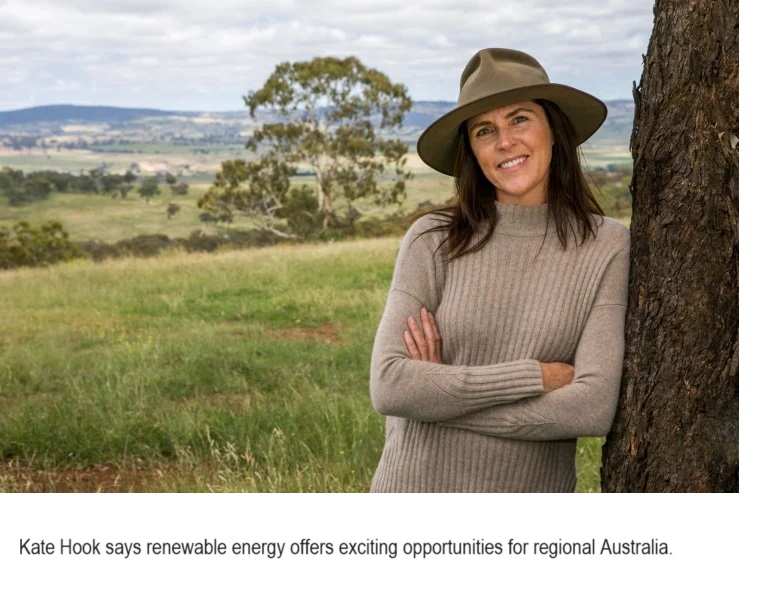
February 17, 2025 AIMN , Kate Hook
Nuclear gamble is an economic wrecking ball – Lithgow and the Central West deserve better
Independent candidate for Calare, Kate Hook, has slammed the Coalition’s nuclear proposal, calling it an economic wrecking ball that will waste billions, push up power prices, and stall job creation in regional Australia.
“Energy experts, market operators and Australia’s leading economists have been clear – Australia can achieve a secure, reliable, and affordable power system without nuclear power,” Ms. Hook said. “The Coalition’s plan is a costly distraction, and I will not support it.”
“The communities that will suffer most from this reckless policy are the very ones that need investment in real, job-creating industries right now – not in 15 or 20 years.”
Ms. Hook called out the nuclear plan for what it is – a stalling tactic to prop up fossil fuel operators, keep government subsidies flowing to outdated industries, and leave Australian taxpayers to foot the bill.
Nuclear reactors take decades to build and cost tens of billions of dollars – public money that could instead be spent on renewables, storage, and grid upgrades today. By the time nuclear power could even begin operating, Australia’s energy system will already be overwhelmingly powered by cheaper, cleaner alternatives.
“We are at 40% renewable energy now and in the last 6 years alone, we’ve already added over 46 TWh (Terra Watt hours) of annual renewable energy generation to the grid. This number might not mean much to most people but it’s huge! It’s the equivalent of six nuclear power stations. And we did it in six years – not 15 or 20 years,” Ms Hook said.
Renewables and Storage: Reliable, Affordable, and Ready Now
The Australian Energy Market Operator (AEMO) has mapped out the most efficient path forward—and nuclear isn’t part of it. The smart, cost-effective way to secure Australia’s energy future is through renewables, backed by battery storage, pumped hydro, and modern grid technology.
Big battery projects like South Australia’s Hornsdale Power Reserve are already proving their worth. Originally built with a capacity of 129 MWh – enough to power 30,000 homes for a day – it has since expanded to 194 MWh, providing power to 50,000 homes and stabilising the grid within milliseconds during sudden demand spikes.
“This fast response prevents blackouts and keeps energy prices stable—something nuclear power just can’t do,” Ms. Hook said.
Pumped hydro projects like Snowy 2.0 will ensure around-the-clock reliability. When completed, its 2.2 GW capacity will generate enough electricity to power three million homes during peak demand – like when air conditioning use surges on a hot summer evening.
With 350,000 MWh of storage, Snowy 2.0 could power 500,000 homes for an entire week or every home in Sydney for three days.
“We don’t need to waste time and money on nuclear power when we have already invested in proven, ready-to-go solutions that lower energy bills and create jobs right now,” Ms. Hook said.
Lithgow Needs Smart Investments, Not Costly Distractions
Kate Hook recognises that Lithgow has been at the heart of Australia’s energy production for generations. With coal mines closing and Mt Piper Power Station scheduled to shut in 2042, Lithgow needs a real plan for its future – not a decades-long delay.
“Lithgow deserves practical, affordable, and proven energy solutions – not a risky, drawn-out experiment that will leave taxpayers footing the bill for decades,” Ms. Hook said.
Beyond spiralling costs and construction delays, nuclear power comes with long-term risks that regional communities like Lithgow will be forced to bear. The Coalition has no plan for nuclear waste storage, no consultation with impacted communities, and no clear strategy for financing these massive projects.
……………………………………….“Nuclear is a dead-end policy – an economic wrecking ball that will drive up power prices and leave communities paying the price,” Ms. Hook said. “Instead of pouring billions into an outdated, high-risk technology, we should be investing in industries that will deliver affordable energy and secure jobs for Lithgow and all of Calare.”
A Clear Choice on Election Day
With voters in Calare facing a critical decision at the next election, Kate Hook urged the community to reject the Coalition’s nuclear “plan” and back a renewables-led future.
“This election is about who we trust to deliver cheaper energy, good jobs, and a secure future for our region,” Ms. Hook said. “Nuclear power in Australia is an expensive fantasy which is not backed by economic or energy experts – renewables are the real opportunity for Calare.”…………………………. https://theaimn.net/nuclear-gamble-is-an-economic-wrecking-ball/
The four accounting tricks behind Peter Dutton’s nuclear cost claims
So according to the data within the Liberal-National Party’s costing document, Dutton’s power system underpinned by nuclear will generate electricity at 6% lower cost than one that doesn’t rely on nuclear. It leads you to wonder – how on earth did Dutton come up with it being 44% cheaper?
There are four accounting tricks behind the 44% cheaper claim which mean that, in reality, Peter Dutton’s plan is not cheaper and is far more risky.
Tristan Edis, Feb 18, 2025, https://reneweconomy.com.au/the-four-accounting-tricks-behind-peter-duttons-nuclear-cost-claims/
The Liberal-National Coalition claims it has found the solution to bring down energy bills – slow the growth of renewable energy and roll-out nuclear power.
According to Liberal Leader Peter Dutton, their plan for a power system including a significant role for nuclear will be 44% cheaper than a system relying predominantly on renewables. This claim is based on energy market economic modelling it released just before Christmas, prepared by an economic consultant – Frontier Economics.
A range of energy analysts and economists have criticised the Coalition’s claims, finding an array of problems with how this number was derived (see the list at the bottom of this article for examples). Nonetheless this hasn’t made any difference to Peter Dutton’s claims, and earlier this month he was on ABC television telling viewers that he had a plan to deliver voters 44% cheaper power bills.
However, you don’t need to be any kind of expert analyst or economist to work out that the claim nuclear will deliver you 44% lower bills is a bit like a wrinkle cream claiming it will make you look 44% younger.
And in the end, though it might not be obvious, this is really about whether Liberal-National Party have discovered a miraculous cure for aging, and quite potentially the laws of physics. It isn’t really about nuclear.
To explain this you need to do a very simple calculation:
1) Get out a basic calculator.
2) Into this calculator type in the $20.5 billion dollars that the Liberal-National Party costing says will be the annual price of their power system once all the nuclear power plants are complete in 2051 (see Figure 12 on page 38 of the consultant’s report).
3) Then divide this cost by the total amount of electricity that system will deliver in 2051 after deducting generation from energy storage, which is roughly 255 million megawatt-hours (see table 8 on page 34).
That gives you the cost of energy under their system of around $80.30 per megawatt-hour.
Now do the same thing for the power system which Dutton claims to represent Labor’s policy (by the way it’s not really Labor’s policy, it’s the Australian Energy Market Operator’s Step Change modelling scenario). So divide $28.5 billion (Figure 12 on page 38 of consultant’s report) by 333 million megawatt-hours (table 5 on page 28).
That gives a cost of energy of close to $85.50 per megawatt-hour for the so called Labor system.
So according to the data within the Liberal-National Party’s costing document, Dutton’s power system underpinned by nuclear will generate electricity at 6% lower cost than one that doesn’t rely on nuclear. It leads you to wonder – how on earth did Dutton come up with it being 44% cheaper?
There are four accounting tricks behind the 44% cheaper claim which mean that, in reality, Peter Dutton’s plan is not cheaper and is far more risky. The four tricks involve the following:
1) It doesn’t reflect the real cost of building nuclear – the Liberal Party costing assumes a cost for nuclear power plants which is around half what nuclear reactors have actually cost to build. Once you use the average construction cost and construction time of real world nuclear plants, the cost per unit of energy for the Liberal-National Party’s power system is two thirds more expensive than what is estimated for Labor’s scenario, once the system is fully built.
2) Only considers electricity costs while ignoring the cost of petrol and gas – The costing omits much of the costs of energy to heat buildings, fuel vehicles and power industry in the Liberal-National party scenario because they seem to prefer that we continue to heavily rely on petrol to fuel our cars and gas instead of electricity to heat homes and run factories.
Meanwhile, a lot of these costs are included in the scenario for Labor, where electricity has largely replaced the use of petrol and gas for fuelling our vehicles and heating buildings and industrial processes. By just accounting for the 203 billion litres of extra petrol consumption in the Liberal-National scenario the claimed 44% saving evaporates and instead you find their energy system is $80 billion more expensive that what they claim is the cost for the Labor scenario.
3) Tries to hide the cost of replacing old coal power stations with nuclear to outside the time period covered by the costing. The costing only includes costs incurred between 2025 and 2051, anything beyond that point is ignored. Under the costing of the Liberal-National Party’s scenario they’ve pushed most of the costs of replacing old coal power stations to outside the 2025-2051 time period. Meanwhile, the costing ignores the risks and potential large costs associated with extended reliance on increasingly unreliable old power stations.
4) Assumes climate change isn’t an important and urgent problem – The modelling consultant has openly acknowledged the availability of economic data that would allow them to cost the damage from carbon emissions. But instead of using this data from the Australian Energy Regulator, they instead completely ignore the damage costs from the higher emissions under the Coalition’s preferred scenario of extended reliance on coal, petrol and gas.
If the consultant had adhered to the basics of first year economics based on work published back in 1920, and placed a cost on carbon in line with AER guidance, it would add $392 billion to the Liberal-National scenario compared to just $75 billion to the Labor scenario. If you add that to the extra cost of petrol then the Liberal-National scenario is almost $400 billion more expensive than the scenario claimed to be Labor’s across 2025 to 2051. That’s even if we ignore the extra costs associated with accounting tricks 1 and 3.
Over the next few days I’ll go into each one of these four accounting tricks in more detail with an article explaining how that trick acts to mislead voters and means that energy consumers would most likely face higher, not lower energy bills.
This isn’t intended to suggest that the Australian Energy Market Operator’s Step Change scenario (said to represent Labor policy) should go unquestioned. The future is full of uncertainties and we need to examine a range of options for how we can sensibly lower emissions while maintaining reliable and affordable energy suppliers.
Unfortunately, the suggestion that Nuclear Power is the easy fix simply ignores the incredible difficulties and costs Europe, North America and Japan have experienced with Nuclear Power.
Tristan Edis is director of analysis and advisory at Green Energy Markets. Green Energy Markets provides analysis and advice to assist clients make better informed investment, trading and policy decisions in energy and carbon abatement markets.
Dutton’s nuclear disaster: Cheap lies and a $20 billion deficit
By Steve Bishop | 17 February 2025, https://independentaustralia.net/politics/politics-display/duttons-nuclear-disaster-cheap-lies-and-a-20-billion-deficit,19447
The Coalition’s nuclear policy announcement comes with a massive price tag but is also built on disinformation, writes Steve Bishop.
A $20 BILLION deficit and cheap lies mean that Opposition Leader Peter Dutton‘s attempt to “extend the life” of coal-fired power plants with a nuclear “fix” has come spectacularly unstuck.
Dutton and the Coalition stand condemned for presenting the public with a shoddy, ill-prepared policy on a multi-billion dollar project that the Climate Council warns could risk power shortages in the 2030s.
On 13 December last year, Mr Dutton promised:
SEARCH
Daily Telegraph tries and fails to stage antisemitic incident
Share the love — Gift an IA Subscription!
Dutton isn’t just exploiting antisemitism — he’s driving it
Dutton’s vow to slash public servant numbers another Coalition disaster
The Apprentice tells Trump’s supervillain origin story
Daily Telegraph tries and fails to stage antisemitic incident
Share the love — Gift an IA Subscription!
Dutton isn’t just exploiting antisemitism — he’s driving it
Dutton’s vow to slash public servant numbers another Coalition disaster
The Apprentice tells Trump’s supervillain origin story
Politics Opinion
Dutton’s nuclear disaster: Cheap lies and a $20 billion deficit
By Steve Bishop | 17 February 2025, 3:00pm | 0 comments |

The Coalition’s nuclear policy announcement comes with a massive price tag but is also built on disinformation, writes Steve Bishop.
A $20 BILLION deficit and cheap lies mean that Opposition Leader Peter Dutton‘s attempt to “extend the life” of coal-fired power plants with a nuclear “fix” has come spectacularly unstuck.
Dutton and the Coalition stand condemned for presenting the public with a shoddy, ill-prepared policy on a multi-billion dollar project that the Climate Council warns could risk power shortages in the 2030s.
On 13 December last year, Mr Dutton promised:
‘By 2050, our plan will deliver up to 14 GW of nuclear energy, guaranteeing consistent and stable electricity for all Australians.’
Yet the Coalition’s costings report, released on the same day, repeatedly deals with only 13 GW.
That’s 1,000 MW short of the target.
Three small modular reactors (SMRs) producing 345 MW each would be needed to make up the shortfall at a cost of almost $20 billion based on the US$4 billion (AU$6.2 billion) price of Opposition energy spokesman Ted O’Brien‘s favoured Natrium reactor.
Just to put this critical mess in focus — that’s twenty thousand million dollars. It makes a mockery of Dutton’s claim that “the Liberal Party has always been a better economic manager…”
And then come the cheap lies.
Mr Dutton claims:
“…electricity is cheaper where there is a presence of nuclear energy. That is a fact.”
No, it’s not a fact. It is a lie.
Ted O’Brien has repeatedly talked about Ontario as having cheap power because it has nuclear reactors.
But Quebec’s electricity prices are far cheaper than Ontario’s. Quebec closed its only nuclear power plant in 2012.
Not only that, but Quebec’s power company paid the provincial government a dividend of $2.5 billion in 2023/24.
On the other hand, the Ontario Government pays subsidies of up to $720 a year to families of four earning less than $65,000 a year.
Coalition frontbencher Dan Tehan says nuclear power contributes to low power prices in Tennessee but Electric Choice shows that this month Idaho, Kentucky, Oklahoma and Utah all have lower power prices — and none of them has nuclear power,
Dutton claims “Australian families at the moment are paying some of the highest energy costs in the world” and they would enjoy ‘massive savings’ if we had nuclear power.
The Opposition Leader also says it’s a fact that countries such as the UK and France, with their nuclear power, have cheaper power prices than Australia.
Here’s the lie exposed again. It’s a complete meltdown. According to Statista, power prices in the UK and France are more expensive than in Australia.
Here’s another lie.
Mr Dutton asserts:
‘…nuclear energy… has proven to get electricity prices and emissions down all over the world…’
Slovenia has a nuclear power plant but is one of the most expensive providers in Europe with Switzerland‘s nuclear power prices not far behind.
Slovakia generates half its power from nuclear plants but power prices are more than twice what Norwegians, with no nuclear power, pay.
Then Dutton has the chutzpah to accuse the Government of lying when it points out that nuclear power is the most expensive type of energy.
In the 2021 edition of its annual cost report, Wall Street firm Lazard estimated that the levelised cost of electricity from new nuclear plants will be $131–204 per megawatt-hour (MWh), whereas newly constructed utility-scale solar and wind plants produce electricity at somewhere between $26–50MWh.
An independent report commissioned by the Clean Energy Council and conducted by Egis, a leading global consulting, construction and engineering firm, has confirmed that nuclear energy is up to six times more expensive than renewable energy.
The Institute for Energy Economics and Financial Analysis (IEEFA) found nuclear power in Australia could result in electricity bills rising by $665 a year on average
And the Commonwealth Scientific and Industrial Research Organisation (CSIRO) has found:
‘…building nuclear reactors in Australia would cost at least twice as much as renewable power…’
No wonder that Coalition whistleblower Senator Matt Canavan revealed the nuclear policy is no more than a fix. It doesn’t even deserve a half-life.
Taxpayers should not foot the bill for nuclear risk
Australians for Affordable Energy, 17 Feb 25, https://theaimn.net/taxpayers-should-not-foot-the-bill-for-nuclear-risk/
If private insurers refuse to cover nuclear reactors the financial risks will be shifted onto Australian taxpayers, meaning we are still unclear how much taxpayers will have to cover of the nuclear bill.
Australians for Affordable Energy has expressed deep concern over the revelation the private sector may not be able to insure nuclear reactors, following comments on Monday from the CEO of the Insurance Council of Australia.
Many of Australia’s leading insurance companies won’t cover damage from a nuclear disaster, leaving the government as the insurer. By shifting the financial burden of insuring nuclear facilities onto taxpayers, Australians could be exposed to potentially tens of billions of dollars in liabilities if a nuclear accident were to occur.
“We know that private investors won’t put money into building the industry, that we will need to create a massive new government agency to oversee it, and now we are hearing that we will need to pay for the insurance too? What’s next?”
“Advocates for nuclear energy need to say whether it can stand on its own, including paying their insurance. And they need to tell us what other costs we might be asked to carry. The fact is by the time the reactors are done it won’t be us paying the bills for the insurance, it’ll be our grandkids. I’d like to know what we’re signing them up for. ”
Australians for Affordable Energy spokesperson Jo Dodds, a bushfire survivor and advocate for evidence-based policy, said: “Australians are already struggling with rising energy costs, the last thing we need is a power source that could further inflate our electricity bills and our taxes.
“The high costs associated with uninsured nuclear power could be passed onto consumers, who are already looking at paying higher bills if we were to shift to nuclear power. This is money hardworking Australians simply can’t afford to pay.”
AFAE is warning against locking into costly or uncertain energy options and is calling for greater transparency on the long-term costs of competing energy plans.
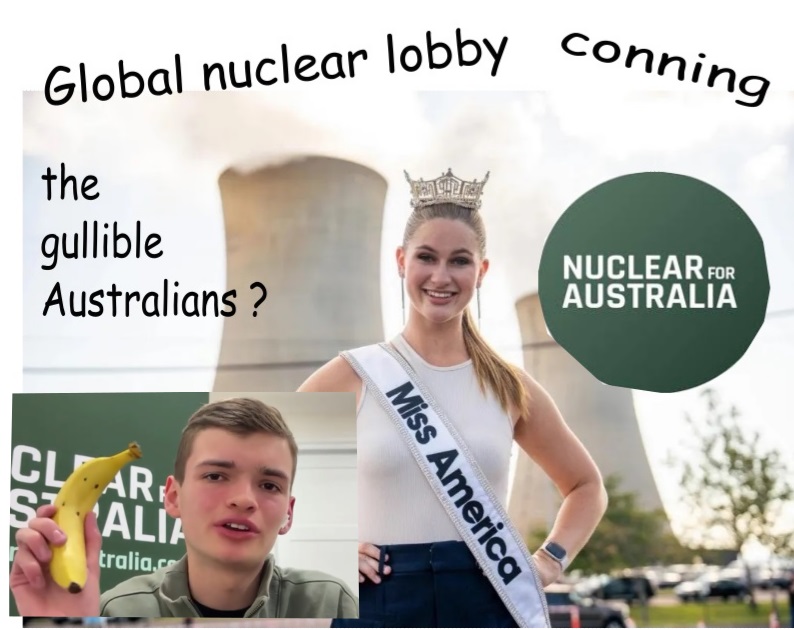
Why are young people like this 18-year-old fronting the pro-nuclear push in Australia?
SBS News, 13 February 2025
The regional sessions were not publicised beforehand on Nuclear for Australia’s social media accounts or the tour page on its website — you could only register for tickets if you knew the URL for the event’s webpage.
Campaigns director for the Conservation Council of Western Australia, Mia Pepper, said when she tried to get tickets for the Perth event online, she was denied. She said a colleague also failed to get tickets using their real name, but able to get in using an alias.
Shackel said Nuclear for Australia Googles people’s names beforehand to determine whether they are “likely going to cause a disruption or a threat”
Some polling suggests older Australians are more supportive of nuclear power than their younger counterparts. So why are young people fronting a pro-nuclear push?
SBS News, By Jennifer Luu, 13 February 2025
In a function room at Brisbane’s The Gabba sports ground, around 600 people have gathered to hear Miss America 2023 try to convince Australians nuclear power is a good idea.
Sporting a blue cocktail dress, blonde hair and a wide smile, 22-year-old Grace Stanke looks the part of a beauty pageant contestant.
She’s also a nuclear engineer touring the country with Nuclear for Australia: a pro-nuclear lobby group founded by teenager Will Shackel and funded by donors that include entrepreneur Dick Smith.
The event — billed as an information evening featuring a panel of experts — is off to a rocky start. A protester steps in front of the audience and speaks into a microphone.
“All of the organisers, presenters and sponsorship of this event tonight has a very deep vested interest — ” he says, before he’s drowned out in a chorus of boos and the mic is seized from his hand.
Audience members continue to disrupt last month’s event, raising their voices and speaking to the crowd before being herded out by security.
Among them is Di Tucker, a retired psychologist concerned about climate change. She said she became upset after submitting half a dozen questions online to be answered by the panel — and felt like they were being deliberately ignored.
“I felt so frustrated by the lack of factual information in that so-called information session forum on the safety, the timescale and the reality of nuclear energy,” Tucker told The Feed.
“I did stand up and I addressed the crowd, and I said something like: ‘You people need to go away and do your own research … it’s glossing over facts’.”
Nuclear for Australia founder Will Shackel, who was emceeing, estimated there were 20 to 30 protesters heckling the room.
He labelled their behaviour “simply unacceptable and … not in the interest of a fair discussion”.
“They were yelling abuse at us on stage. We had people come up to Grace at the end, call her a clown,” he claimed.
Shackel told The Feed: “We had people [who] had to be physically dragged out because they were resisting security … it was pretty ugly and pretty disturbing.”
Tucker disputes this: “Nobody I saw leave the room was hostile or aggressive, physically aggressive towards the security guards.”
“In fact, it was the opposite. The security guards were shoving the people outside.”
Outside, a separate group of protesters wields banners warning against the dangers of radioactive waste.
The words “Nuclear energy distracts from the climate emergency” are projected onto The Gabba over the image of a red herring.
The teen and the beauty queen
Tucker said the audience was mostly male and over 60. So why are two young people fronting the pro-nuclear movement in Australia?………………………….
As well as launching Nuclear for Australia — which describes itself as “the largest nuclear advocacy organisation in Australia” with over 80,000 supporters — he’s addressed a Senate committee and interviewed French President Emmanuel Macron for his organisation’s social media at the COP28 climate conference in Dubai in 2023.
Shackel first became fascinated with the nuclear debate while in high school in Brisbane.
“I’d just done a school assignment on nuclear energy when I realised it was banned. And that, as a 16-year-old kid, was pretty shocking to me,” he said.
Australia is one of the few countries where using nuclear energy to produce electricity is illegal. The ban was introduced in 1998, when the Howard government made a deal with the Greens in order to build a nuclear reactor in Sydney for research purposes.
At 16, Shackel launched a petition calling on Australia to lift its nuclear energy ban, garnering a flurry of media attention……….
As well as launching Nuclear for Australia — which describes itself as “the largest nuclear advocacy organisation in Australia” with over 80,000 supporters — he’s addressed a Senate committee and interviewed French President Emmanuel Macron for his organisation’s social media at the COP28 climate conference in Dubai in 2023……………………………
Nuclear power is still a contentious topic, but more Australians have become supportive of the idea over time.
A 2024 Lowy Institute poll of 2,028 Australians
indicates 61 per cent support Australia using nuclear power to generate electricity, while 37 per cent were opposed.
Among the 18- to 29-year-olds surveyed, 66 per cent supported nuclear power while 33 per cent were opposed.
In contrast,
a December 2024 poll of 6,709 people conducted for the Australian Conservation Foundation suggests young people were less likely to agree that nuclear is good for Australia, compared to older respondents. For example, 42 per cent of males aged 18-24 agreed, while 56 per cent of males over 54 agreed.
There’s also a gender gap — in the same poll, just over a quarter of women thought nuclear would be good for Australia, compared to half of men.
Nuclear for Australia hopes Grace Stanke can convince the sceptics. Dubbed “the real-life Barbenheimer”, she works for the operator of the largest fleet of nuclear power plants in the US, Constellation. (The company operates 21 of the US’s 94 nuclear reactors).
Now 18, Shackel suggests young Australians are more open-minded towards nuclear power than older generations and are more likely to support parties that are concerned about climate change……..
Physicist Ken Baldwin speculates the rise in support for nuclear power is due to shifting demographics.
He said older generations are more likely to have historical hangups around the dangers of nuclear power, having lived through the British and French weapons tests in the Pacific and nuclear catastrophes like the 1986 accident in Chernobyl and the 2011 accident in Fukushima. ……
“The younger generation … doesn’t have that particular historical baggage, and perhaps they’re more attuned to thinking about the need to do something about climate change,” he said.
Nuclear for Australia hopes Grace Stanke can convince the sceptics. Dubbed “the real-life Barbenheimer”, she works for the operator of the largest fleet of nuclear power plants in the US, Constellation. (The company operates 21 of the US’s 94 nuclear reactors)…………….
Nuclear for Australia has been drumming up public support for nuclear power over the past fortnight, touring every capital city (except Darwin) and holding a parliamentary briefing in Canberra.
It also targeted regional areas near the Coalition’s proposed sites for future nuclear power stations — including Morwell in Victoria, Collie WA, Port Augusta SA, Callide and Tarong in Queensland and Lithgow in NSW. The Coalition says its taxpayer-funded plan is for five large and two smaller reactors, with the smaller ones to come online in 2035 and the rest by 2037.
Nuclear for Australia was slow to reveal all the names for a total number of regional locations for the tour. During the first week of the tour, Nuclear for Australia told The Feed there would only be two regional stops.
The regional sessions were not publicised beforehand on Nuclear for Australia’s social media accounts or the tour page on its website — you could only register for tickets if you knew the URL for the event’s webpage.
Campaigns director for the Conservation Council of Western Australia, Mia Pepper, said when she tried to get tickets for the Perth event online, she was denied. She said a colleague also failed to get tickets using their real name, but able to get in using an alias.
She accused Nuclear for Australia of blacklisting known anti-nuclear activists and trying to avoid criticism by attempting to “creep around the country”.
“If they were really genuine about having a mature debate, they would do their best to invite some people like myself that have engaged really respectfully in the debate over many years to answer the tough questions,” she said.
Shackel said Nuclear for Australia Googles people’s names beforehand to determine whether they are “likely going to cause a disruption or a threat”, and that regional events aren’t publicised on social media because they are not relevant to city-based audiences.
“We care about the safety of our attendees, we care about the safety of our experts,” Shackel said.
“If we believe that someone is a known protester … someone who could cause a physical threat to people in there, we will not allow them in.”
Pepper said: “I have never been physically aggressive to anybody in my entire life.”
“The idea that because you are opposed to nuclear power, you somehow would be aggressive or violent is absolutely outrageous.”
Locals left with more questions than answers
South of Perth, around 100 of the 9,000 residents of the tiny coal mining town of Collie showed up to the Nuclear for Australia event, hoping to learn more about how living next to a nuclear reactor could affect them.
The Coalition has proposed converting Collie’s coal-powered station into a nuclear power plant. But the state government is vowing to phase out coal by 2030 and there’s little chance nuclear power could come online by then, leaving coal workers in limbo.
Resident Jayla Anne Parkin said the information session was “an utter waste of time”, and she came away with more questions than answers. “Their whole speech was very generic. They were probably using the same speech for every single area,” she said.
Parkin asked one of the experts where the water for a nuclear power plant would come from — with large amounts needed to cool the radioactive core.
“He gave a long-winded speech about how we can take any body of water, whether it be the ocean, the river, pool, sewage, and treat it and turn it into the water. But at the end of him answering it, he still didn’t tell me what source of water in Collie they were going to use,” she said.
“We’re very limited with water here as it is.”……………………………………………
there have been reports about Shackel’s alleged political ties.
A 2024 research report from progressive activist group GetUp on nuclear disinformation in Australia
analysed Shackel’s LinkedIn connections and reported that their political party affiliation leant heavily towards Liberal Party MPs, Senators and advisors.
GetUp reported at least 36 of Shackel’s connections, including 11 current or former politicians, were directly linked to the Liberal Party — with the party having the highest concentration of current employees from a single organisation in his network…………………………………..
Lobby groups are allowed to have political party affiliations. While registered charities can participate in campaigning and advocacy, they “cannot have a purpose of promoting or opposing a particular political party or candidate”, according to the Australian Charities and Not-for-profits Commission.
……………………………………………………… Professor Ken Baldwin said nuclear is “not really viable” as an option for decarbonising Australia by 2050, as it would take 15 years at the very minimum to develop the necessary regulations and build a nuclear power station.
“We will have, according to the current plans, converted our current energy system to almost an entirely renewable energy system by that time,” Baldwin said.
“Australia is at the leading edge of the renewable energy transition. We’re installing solar and wind at one of the fastest rates per capita of any country in the world.”…………… https://www.sbs.com.au/news/the-feed/article/will-shackel-australia-pro-nuclear-movement-young-people/gucu0iefz
Doctors fear health fallout from nuclear energy plans
Canberra Times, By Marion Rae, February 12 2025
Doctors have warned of no “safe” level of radiation from a proposed network of nuclear reactors as battlelines are drawn for the federal election.
Similar to other nuclear-powered nations, Australians living within a certain radius of a reactor would need to be issued potassium iodide tablets for use in a radiation emergency, a nuclear briefing has learned.
“The only reason that everyone in that radius is given that is because they might need it,” Assistant Minister for Climate Change and Energy Josh Wilson told a nuclear briefing on Tuesday.
If anyone comes to buy your house, the proximity of a reactor will be noted on the land titles register, and insurers will not cover nuclear accidents, he said.
The warning came as doctors fronted parliament to warn of long-term health risks for workers and surrounding communities, particularly children.
Evidence included a meta-data analysis of occupational and environmental exposure that accumulated data on more than seven million people.
It found living within 30km of a reactor increased overall cancer risk by five per cent, with thyroid cancer increasing by 14 per cent and leukaemia by nine per cent.
A separate study of workers in the nuclear industry in France, the United Kingdom and the United States analysed results from more than 300,000 people who were monitored for over 30 years.
Finding not only increased cancer rates but surprisingly increased rates of heart attacks and strokes, it found impacts at low doses were larger than previously thought.
“There is no ‘safe’ lower dose of radiation. The science is clear. All exposure adds to long-term health risks,” vice-president of the Medical Association for Prevention of War Dr Margaret Beavis said……………………………
Under the coalition’s nuclear energy blueprint, seven reactors would be built across five states to replace ageing coal-fired power plants with more gas-fired plants to provide baseload power in the interim.
“Zero-emissions nuclear plants” are a key part of the Nationals’ election pitch to regions where coal plants are already closing, while Labor is pressing ahead with the transition to renewable energy backed up by big batteries.
Public Health Association of Australia spokesman Dr Peter Tait said the idea that the nuclear industry was free of greenhouse gas emissions was a “furphy”, given the construction and uranium supply chain involved.
Emissions would rise threefold under the nuclear plan due to increased coal and gas use, he warned, with the first plant not due to come online until the late 2030s.
From a public health perspective, Australians can’t afford that delay, Dr Tait said.
Executive director of Doctors for the Environment Dr Kate Wylie said prolonging the dependency on fossil fuels would mean more Australians would be affected by their known health risks, including increased rates of asthma.
Nuclear energy would also put communities at risk during the next drought, when reactors would be first in line for scarce water, Dr Wylie said.
“The ethical thing to do is to choose the least water-intensive energy sources, which are wind and solar,” she said. https://www.canberratimes.com.au/story/8890265/doctors-fear-health-fallout-from-nuclear-energy-plans/?fbclid=IwY2xjawIan3hleHRuA2FlbQIxMQABHaAJ7wF9BUi9CgA1_tQDXS5gC2WCrX8HSFZUrOQPGgXABnNkhEvlgHKolQ_aem_OShH2FPpE3tO3RIv_gAgBg
Why the USA’s Endless Wars Harm Global Stability & Australia

February 12, 2025 AIMN Editorial, By Denis Hay
Discover how USA’s endless wars destabilise nations and why Australia’s alignment with the US military threatens its sovereignty and security.
Introduction
For over a century, the United States has engaged in military interventions worldwide, often framed as efforts to spread democracy and protect human rights. However, history shows these interventions have frequently served corporate interests, ideological dominance, and geopolitical strategies rather than humanitarian concerns.
From orchestrating coups to funding proxy wars and setting up military bases across the globe, US actions have led to mass displacement, economic turmoil, and loss of sovereignty in many nations. Australia’s increasing alignment with the US military brings significant risks, potentially compromising national security and financial independence.
This article examines the history of US interventions, their consequences, and why Australia must develop an independent foreign policy free from US influence.
The Foundation of US Imperialism
Colonial Expansion and the Displacement of Indigenous Peoples……………….
Military Interventions for Economic and Geopolitical Gain…………………………
US Corporate Interests and Nazi Germany……………….
The Korean War: US Expansion Beyond the 38th Parallel…………………..
Regime Change and Proxy Wars in the Cold War Era………………….
US-Backed Coups in Latin America……………………….
The Vietnam War: A 30-Year US Military Disaster……………
The Post-Cold War Era and US Hegemony……………….
The US Military Empire – 800 Bases Worldwide………………
The Dangers of Australia Aligning with the US Military
Loss of Australian Sovereignty
• The increasing military integration between Australia and the US, including bases and joint operations.
• The AUKUS agreement and its implications for Australian independence.
Increased Risk of Conflict
• Australia’s involvement in US-led wars in Iraq and Afghanistan, despite no direct national security threat.
• Potential entanglements in US-China tensions and future conflicts in the Indo-Pacific.
Economic and Social Costs
• Military spending redirected toward US-led initiatives rather than domestic priorities.
• The risk of Australia becoming a target in global conflicts due to its close military ties with the US.
Conclusion
…………………………………………….. For Australia, continued alignment with US military strategies poses significant risks. By participating in US-led wars, maintaining military bases, and deepening its commitment to the AUKUS agreement, Australia risks being drawn into unnecessary conflicts that do not serve its national interests. Moreover, prioritising militarism over diplomacy diminishes Australia’s ability to foster independent international relationships, negotiate trade agreements on its own terms, and establish a sovereign defence strategy that prioritises regional stability over foreign interventions.
To protect its sovereignty and long-term security, Australia must adopt a foreign policy that prioritises diplomacy, peace-building, and multilateral cooperation rather than blindly following US military agendas. A truly independent approach would involve reassessing military alliances, reducing foreign troop presence, and focusing on strengthening regional partnerships, particularly within the Indo-Pacific, to ensure a more balanced and peaceful international order. Australia has the resources, economic power, and global standing to lead by example – choosing peace over war, cooperation over subservience, and true independence over external influence………………. more https://theaimn.net/why-the-usas-endless-wars-harm-global-stability-australia/
Nuclear advocates: Splitting atoms and spinning agendas
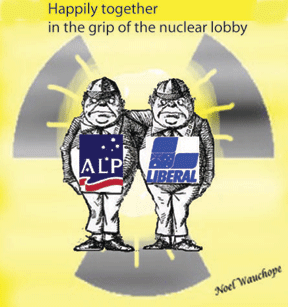
Ed COMMENT. I can’t help noticing how the Liberal ad Labor agendas overlap here – in this carefully controlled pro-nuclear event -described by Sybilla George.
Labor is pushing on with the AUKUS nuclear submarine folly. Liberal is pretending that jt really intends to start nuclear power in Australia.
Both in the grip of USA militarism and the nuclear lobby
Despite having three women on stage – including Stanke – for the panel event, the Celebrity Room at Moonee Valley Racing Club was dominated by men on Saturday night. Opening the evening, Shackel said his charity aimed to “enable civil debate”, yet panels on the tour featured only pro-nuclear views.
By Sybilla George | 6 February 2025, https://independentaustralia.net/environment/environment-display/nuclear-advocates-splitting-atoms-and-spinning-agendas,19407
Former Miss America and nuclear energy activist Grace Stanke‘s Melbourne visit saw a pro-nuclear panel push persuasion over debate, with filtered questions and few dissenting voices, writes Sybilla George.
FOLLOWING EVENTS in Perth and Brisbane, Nuclear for Australia’s ‘An Evening with Miss America 2023 Grace Stanke’ took place last Saturday at the Moonee Valley Racing Club.
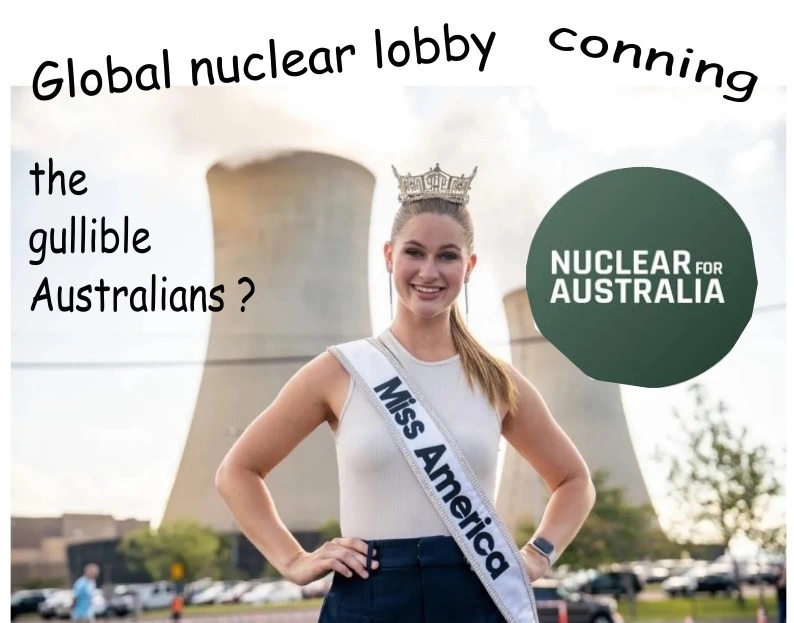
Nuclear for Australia is a nuclear power advocacy charity started in 2023 by teenager Will Shackel and patronised by electronics entrepreneur Dick Smith. The Miss America 2023 Australia Tour is also supported by Smith, according to the Nuclear for Australia website which has served as a platform for Smith’s response to The Guardian’s fact-checking of his anti-renewables arguments.
Nuclear for Australia is a nuclear power advocacy charity started in 2023 by teenager Will Shackel and patronised by electronics entrepreneur Dick Smith. The Miss America 2023 Australia Tour is also supported by Smith, according to the Nuclear for Australia website which has served as a platform for Smith’s response to The Guardian’s fact-checking of his anti-renewables arguments.
The tour aims to ‘help bridge the current divide between men and women for nuclear energy’ and cites the Australian Conservation Foundation statistic that 51% of men versus 21% of women support nuclear energy.
Despite having three women on stage – including Stanke – for the panel event, the Celebrity Room at Moonee Valley Racing Club was dominated by men on Saturday night. Opening the evening, Shackel said his charity aimed to “enable civil debate”, yet panels on the tour featured only pro-nuclear views. Questions put to the panel were selected from those sent in before and during the event, omitting the opportunity for live questions.
Stanke, who has an undergraduate degree in nuclear engineering, advocates for clean energy, including wind, solar and nuclear power. She began working for the United States’ largest nuclear energy provider, Constellation Energy, in 2024. Of Constellation’s energy capacity, 60% derives from nuclear power, while 25% comes from oil and natural gas fossil fuels.
The panel portion of the event featured Stanke alongside fellow American Mark Schneider, former operator of U.S. civil and defence nuclear reactors and current chief nuclear officer for UBH Group — an Australian defence consultancy firm angling for a ‘piece of the AU$368 billion nuclear sub [AUKUS] pie’.
They were joined by energy and resources lawyer Kirsty Braybon and Global Nuclear Security Partners’ (GNSP) Australia branch managing partner Jasmin “Jaz” Diab.
Army officer and nuclear engineer Jaz Diab is a star of the pro-nuclear media circuit. She’s made several appearances on Sky News and spoke at The University of New South Wales (UNSW) Navigating Nuclear conference in May 2024 alongside Coalition Shadow Energy Minister Ted O’Brien, before the Coalition’s nuclear energy plan announcement in July 2024.
Diab joined the business group AUKUS Forum, suggesting GNSP will be making a play for the AUKUS pie and nuclear energy contracts should the Coalition get into government at the next federal election.
As reported by the Australian Financial Review in December 2024, the Australian Department of Defence spent AU$811 million on just the big five consultancy firms in 2022-23.
Braybon, who teaches a subject on nuclear law at the University of Adelaide, responded to a question about the current illegality of nuclear power in Australia under the 1998 Radiation Protection and Nuclear Safety Act.
Some legal barriers to nuclear energy have already been watered down to accommodate AUKUS nuclear-powered submarines, Braybon said, and “no one noticed”, pointing to the entwined framework of defence and civil nuclear programs.
The defence backgrounds of panel members Diab and Schneider also attest to this. Braybon did not specify which law changes she was referring to, however, the Australian Naval Nuclear Power Safety Act 2024, which was pushed through the Senate in October 2024 – designating waste “zones” in Adelaide and Perth for AUKUS-related nuclear waste – was reported on by Independent Australia, Michael West Media, The Advertiser and The Guardian.
While anti-nuclear protesters attended the Perth and Brisbane events – including a community action projecting ‘Nuclear energy distracts from the climate emergency’ outside the Gabba – there were no visible objectors in Melbourne.
However, Latrobe Valley Sustainability Group (LVSG) members attended the Moonee Valley Racing Club ahead of the Morwell event the next evening. The Coalition selected Loy Yang – a coal-fired power station in the Latrobe Valley – as one of seven sites around Australia for proposed nuclear power plants.
LVSG is concerned about the questions that Nuclear for Australia will not answer regarding the impact of nuclear power in fighting climate change and the economic cost of constructing and maintaining nuclear power plants. It points out that renewables have surpassed nuclear energy production in the U.S. in just 15 years and that there is a lack of private investment in nuclear power because of its unprofitability.
Indeed, a popular argument in favour of nuclear power appealing to the increasing energy demands of artificial intelligence data centres took a blow in recent days with the announcement that the Chinese AI program DeepSeek performs a similar function to the U.S. program ChatGPT, at a fraction of the cost and energy.
According to LVSG member Dan Caffrey, the Nuclear for Australia Morwell event attracted 240 attendees, but panel members “expressed a complete ignorance” of issues in the local area that reduce the viability of nuclear power, such as water availability and rehabilitation of the existing coal-fired station. The avoidance of challenging questions about nuclear power was “very disheartening”.
Sybilla George is a freelance writer with an interest in nuclear policy and the Pacific region.
Dutton’s nuclear policy is a Coalition scam
By Steve Bishop | 10 February 2025, https://independentaustralia.net/life/life-display/duttons-nuclear-policy-is-a-coalition-scam,19427
Overwhelming evidence is proving the Coalition’s nuclear plan to be a scam, writes Steve Bishop.
OPPOSITION LEADER Peter Dutton is scamming Australians with a nuclear power promise he knows he cannot deliver.
LNP research would have revealed the impossibility of providing nuclear power by the Coalition’s target of the mid-2030s.
This means a Dutton government would continue the years of Coalition ineptitude in tackling climate change and failing to provide a workable energy policy.
Coalition Senator Matt Canavan has revealed it’s nothing more than a “fix”.
Canavan said:
“Nuclear is not going to cut it. But we’re latching on to it… because it fixes a political issue for us… But it ain’t the cheapest form of power.”
In other words, it’s a con. Or to use a good Aussie word: a rort.
It’s why an internet search has found no trace of an authoritative nuclear body or expert endorsing the Coalition’s nuclear timeframe.
It’s simply a version of the old-time medicine show that peddled worthless cures to the gullible. The evidence demonstrates that the flimflammery of Mr Dutton’s Miracle Nuclear Elixir cannot work.
Mr Dutton promised:
‘A Federal Coalition Government will initially develop two establishment projects using either small modular reactors or modern larger plants such as the AP1000 or APR1400. They will start producing electricity by 2035 (with small modular reactors) or 2037 (if modern larger plants are found to be the best option).’
The CSIRO found in its GenCost 2023‐24 report that the earliest deployment for large-scale nuclear rectors would not occur until after 2040.
In the U.S., which has a nuclear power industry, AP1000 units at Vogtle, Georgia took 15 years to build, more than twice the projected timeline.
In Finland, the 1600mw Olkiluoto 3 was completed in 2023 — 18 years after construction started.
Even in China, with fewer hurdles to jump and a massive nuclear industry, it took 14 years for the Sanmen1 nuclear power station to be completed with plans for two units approved in 2004 and the first 1200mw reactor starting commercial operation on September 2018.
So it would be impossible to switch on a large plant in Australia before 2040. Is it feasible for the Coalition to build small modular reactors (SMRs) by 2035 as projected?
The ANU Institute for Climate, Energy and Disaster Solutions suggests it would be more like 15 years before the first reactor could start producing.
It says:
In Western countries… recent construction times have far exceeded a decade.
Before any nuclear power plant can be built here, we would first need to establish a regulatory system. That could take up to five years.
The Institute for Energy Economics and Financial Analysis (IEEFA) has found:
‘SMRs would not be operating before the 2040s in Australia, too late to replace coal.’
It also revealed construction delays of 12 to 13 years had occurred in four of the few completed SMRs in Argentina, China and Russia.
Similarly, the Australian Academy of Technological Sciences and Engineering (ATSE) has found
‘…a mature market for the technology may emerge in the late 2040s.’
Professor Hugh Durrant-Whyte, a nuclear engineer, told a NSW inquiry in 2020 that it would be naïve to think a power plant could be built in less than two decades.
The UK, which already has nuclear power stations, claims it is running the world’s fastest process to deliver an operational SMR by the mid-2030s. But it started this process in 2021 with a target date of the early 2030s and that has already blown out to the mid-2030s — some 16 years on from 2021.
This process aims to invest in demonstration SMRs in 2029. But a research paper filed on Social Science Research Network (SSRN) has found that if it then takes only two years to deploy resources ready for construction, only three years to build the plant and a further two years to demonstrate successful operation, any follow-on capacity would only come online well after 2040.
Even if a Coalition government was able to emulate this “fastest” process it would be after 2040 before an SMR is built. But a graph on page 7 of the plan released by Mr Dutton shows about 1,750mw of nuclear power being produced by 2036.
That would require six reactors having gone through the planning process, built, tested and commissioned — an impossibility based on the expert evidence.
In June, Mr Dutton said:
“I’m very happy for the Election to be a referendum on energy, on nuclear, on power prices…”
The overwhelming evidence means the Coalition scam should be rejected at the ballot box.
Australia’s technocratic drive to nuclear ignorance
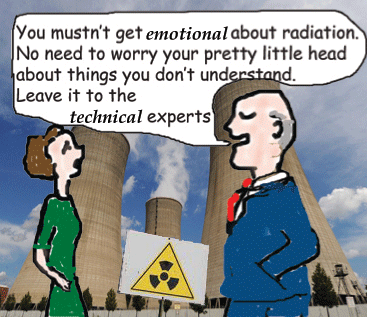
The worshipped role of the expert has excised public debate from nuclear policy. The expert’s validation exonerates the government from the onus of explanation, excluding constituents from relevant information and thus precluding commentary. Nuclear science, a field shrouded in esotericism, marks the summit of techno-scientific rationality, in which utter destruction is intellectually atomised out of politics to the realm of the expert/executive.
ARENA, Sybilla George, 11 Dec 2024
Australia is ‘going nuclear’. The addition of nuclear-powered submarines to Australia’s defence arsenal through the $368 billion AUKUS deal passes a threshold of nuclear legitimisation that Oceania’s anti-nuclear activists have been battling for decades. Nuclearisation used to be an eco-ethical debate, as with the anti- vs pro-uranium mining battles since the 70s that have seen wins and losses on both sides. The rapid increase of Australia’s nuclear involvement, however, signals the reframing of national nuclear rhetoric as techno-scientific rationality that precludes dialogue and authorises executive ruling.
While the AUKUS deal plays out in the limelight, at RAAF Tindal in the Northern Territory the building of facilities to host six United States B-52H Stratofortress bombers on rotational deployment, alongside ‘up to 75’ US Armed Force permanent staff, is underway. The facility renovations are funded through the Force Postures Initiative, the most recent phase of the Force Postures Agreement which since 2014 has defined the United States’s military agenda in Australia, with the consent of successive Australian governments. The Enhanced Air Cooperation branch of the US Alliance was recently ratified when Australian Defence provided ‘air-to-air refuelling’ to B-2 Spirit bombers involved in the US’s October strike on Houthi targets in Yemen.
More than half of the United States’s stock of 76 active B-52 bombers is capable of carrying and deploying nuclear weapons; the remainder is conventionally armed. These jets have been flying over Australian airspace for half a century; however, stationing them at RAAF Tindal signals a significant escalation in nuclear involvement, as it will produce for the first time the conditions ‘to support potential nuclear combat missions from Australian soil’, according to a Nautilus Institute Special Report published in August.
This would be illegal under the United Nations Treaty on the Prohibition of Nuclear Weapons (TPNW), an agreement on which Australia under Labor has abstained since 2022 when it rescinded the Coalition government’s ‘No’ vote. Signing and ratifying the treaty features as a goal in Labor’s 2023 National Platform. Yet progress seems unlikely, given Australia’s third abstention on the TPNW on 1 November 2024 and the persistent silence from the government on the United States’s policy to ‘neither confirm nor deny’ the presence of nuclear arms aboard aircraft or ships. Under this policy, Australia will not be informed whether B-52 bombers on deployment at RAAF Tindal are carrying nuclear weapons.
The public interest in the disclosure of the presence of nuclear weapons includes matters of security, ethics and democratic transparency. Of great concern is the Albanese government’s passive concession to a foreign state’s policy that conflicts with its own commitment to ‘full knowledge and concurrence’ of foreign activities conducted in Australia. Restricted speech has been increasingly utilised as a tactic to expedite pro-nuclear policy in the rush towards technological rationality.
Another example is Albanese’s Nuclear Power Safety Bill, which was rammed through the Senate without debate in October 2024. It stipulates two dumping ‘zones’ for highly irradiated ‘spent nuclear fuel’, to be located within dozens of kilometres of Perth and Adelaide—Western and South Australia being selected once again to play host to nuclear, as during the United Kingdom’s nuclear testing campaign. Indeed, Defence recently withdrew its environmental approval application for developments to prepare HMAS Stirling to host nuclear-powered submarines, and The Australian has reported that the government will resubmit the application with an additional request for the rights to store irradiated waste materials at the facility, which would thus be ‘subject to a single round of community feedback’.
Deferral to the United States’s ‘neither confirm nor deny’ nuclear weapons policy is an appeal to ignorance, and thus innocence, which in turn forecloses systems of accountability, since governments’ denial of information renders their constituents ignorant. The current government’s silence on the presence of nuclear weapons on US aircraft stationed at RAAF Tindal eerily resembles Robert Menzies’ ‘extreme’ commitment to the United Kingdom’s ‘need to know’ policy during the nuclear testing campaign from 1952 to 1963. As prime minister, Menzies exclusively assented without consulting Cabinet or scientific advisers to the use of the Montebello Islands as the site of Operation Hurricane, the nuclear bomb detonation that cemented the United Kingdom as the world’s third nuclear power. The program was not announced until 1952, prior to which Menzies deliberately misled the media about plans for nuclear testing on Australian soil, claiming he had ‘heard nothing’ about it.
The worshipped role of the expert has excised public debate from nuclear policy. The expert’s validation exonerates the government from the onus of explanation, excluding constituents from relevant information and thus precluding commentary. Nuclear science, a field shrouded in esotericism, marks the summit of techno-scientific rationality, in which utter destruction is intellectually atomised out of politics to the realm of the expert/executive.
. The UK nuclear testing campaign caused massive human and ecological suffering to Aboriginal communities in Western and South Australia. It was not until the publication of the 1985 Royal Commission into British Nuclear Tests in Australia, more than two decades after the final tests, that the extent of Australian government collusion was revealed, typified by Menzies’ ‘complete’ acceptance that Australia be entirely excluded from technical information about the tests. This submission to an allied foreign state enacts the technocratic power of nuclear, which pitches influence disproportionally towards those with technical knowledge and renders those without it mute and nakedly vulnerable to, in the case of nuclear arms, annihilation………………………………
The Albanese government’s silence on the presence of nuclear weapons aboard B-52s at RAAF Tindal regurgitates the United States’s policy so as to allow it to skirt its democratic responsibility to inform the public of potential nuclear escalation. Extensive control of messaging and media across the decade-long nuclear testing campaign by Menzies on behalf of the United Kingdom, particularly regarding its true health risks, denied Australians the opportunity to establish informed opinions on the tests. The drive to ignorance common to both Menzies’s and Albanese’s nuclear policy strategies has been achieved via the interiorisation of allied foreign states’ intelligence protocols. This techno-scientific rationale dangerously licences executives to accelerate nuclear proliferation beyond the forum of public debate to which it belongs, and into reality. https://arena.org.au/australias-technocratic-drive-to-nuclear-ignorance/
1 This month

of the week – Australians for War Powers Reform (AWPR)
To see nuclear-related stories in greater depth and intensity
 Antinuclear