The punishing effect on Australia’s environment by rapid population boom
 Environment the biggest loser as Australia’s population hits 25 million https://independentaustralia.net/politics/politics-display/environment-the-biggest-loser-as-australias-population-hits-25-million,11748 Michael Bayliss
Australia’s population growth has several disadvantages, one of the main ones being environmentalimpact, writes Michael Bayliss.
AUSTRALIA IS ON THE CUSP of a major demographic milestone. Our population will reach 25 million by mid-August this year.
We were never expected to reach this “milestone” so soon. In 1999, then Minister for Immigration Philip Ruddock said that there was no need for a population policy as the nation was on course to reach 23 million “by the middle of next century”. Not only have we surpassed 23 million, but we are now heading to reach 40 million by 2050.
The consequences of rapid population growth are many. Housing security, job security, traffic congestion and infrastructure are all concerns increasingly felt by many Australians feeling the pressures of growth. It has been reported that population has become a primary political issue among voters this year.
Another casualty of population growth is Australia’s natural environment. If we agree it is impossible to have a healthy economy on a dead planet, then we should be paying more attention to the impacts of growth in our national backyard.
Australia’s population ballooned quicker than any other developed country on the planet from 1990 to 2017, during which time we have grown by 50%. At the same time, Australia is leading the developed world in terms of rapid land clearance. This is no coincidence.
Australia’s leading ecologists agree growth is a major driver of species loss and degradation of habitats in our country. Successive State of the Environment Reports (at both national and state level) have recorded ongoing deterioration of all environmental indicators; increasing population density, urbanisation and settlement patterns have all been cited as leading causes of this deterioration.
The koala and emu, both Australian icons, are fast becoming the poster animals of the victims of urban sprawl and the clearance of native habitat. It is no coincidence that their habitats overlap with the areas of most rapid urban expansion, for example the peri-urban areas around Sydney and Brisbane. It is anticipated that the continual urban expansion in NSW and Queensland will result in a crash of wild koala populations within several decades. We won’t solve this problem by putting solar panels on the new housing estates or hybrid cars on our roads. Endless urban growth corridors will wreck native habitats, regardless of how “green” these new developments are — and most new suburbs are anything but green.
If the impact on other species is not a strong enough motivator for change, perhaps we should consider the impacts of growth for future generations. Take Melbourne, Australia’s fastest growing capital city, for example. Continued urban sprawl will reduce the city’s food bowl capacitysignificantly — from 40% now to around 18% by 2050.
Last year, our emissions grew by 1.5%, whilst the population grew by almost the same amount. The figures speak for themselves. If we grow by the size of a new Canberra every year, our emissions will go up regardless of how innovative we are or how many plastic bags we no longer use.
This highlights the many difficulties for rapidly growing nations such as Australia to meet their responsibilities under the Paris Agreement. For example, to meet the agreement, Australia will need to reduce national emissions by 30% over the next three decades. Adding an extra 50% to our population over the period will make this monumental task even more difficult to achieve and likely to mask any gains achieved in fuel and energy efficiency over the same period.
The “creeping normalcy” of both densification (more apartment blocks) and urban sprawl are easy to overlook against our busy pace of life. At 1.5% per annum, population increase can appear gradual against the rapid rate of change in our world. But the changes over a decade leave a tangible and permanent legacy on our landscape. The remaining strands of forest and open space on the urban fringe will be swallowed by housing estates while productive farmland is converted into roads and concrete. The hasty planning and development that accompanies rapid population growth locks future generations into high carbon living.
t is often asked as to what is Australia’s optimum population size. Whilst this can be difficult to quantify, most of us can agree that Australia cannot grow at 1.5% per annum indefinitely — the laws of physics do not allow for exponential growth on a finite space.
The idea that Australia is a continent of empty plains and that we can solve the problem by moving inland does hold up to scrutiny. Australia is the world’s second driest continent and our only major river system, the Murray-Darling basin, has a fraction of the water flow compared with other major river systems, such as the Mississippi. We are also one of the least fertile continents on earth, with only 6% of our land area arable, mostly around our capital cities and on the coast. It is these very areas that are being encroached on by urban development. It is not viable to densify much of Australia and to suggest so makes almost as much sense as developing Antarctica.
It is critical that as a nation we can move beyond the assumption that we need to keep growing for growth’s sake. It is necessary that we reduce and level off our carbon emissions, the rate in which we destroy our ecosystem and native habitats and the rate in which we concrete over our food bowls. This requires a transition to a post-growth economy, where our per capita consumption andour population remain stable. Only then can any improvements to technology and efficiency have any lasting impact.
In South Australia pro nuclear people have been seeded into positions of power
 Regina McKenzie Fight To Stop Nuclear Waste Dump In Flinders Ranges SA, 2 Aug 18
Is Minister Canavan lying about nuclear wastes, or is he just uninformed?
 Susan Craig, Fight To Stop Nuclear Waste Dump In Flinders Ranges SA, 1 Aug 18, Mr. Canavan stated on ABC radio this morning that the radioactive waste dump proposed for South Australia was safe for both low level waste above ground storage and intermediate level waste above ground temporary storage.
 The ANSTO & ARPANSA report states that the low level waste be stored below the surface, however, the Federal Governments proposal is for above ground.
 surface.
 However, the intermediate level waste for South Australia will be stored in ZWILAG TN81 container, above ground which only lasts 40 years.
EXTRACT FROM INTERIM WASTE STORE OPERATING LICENCE SUMMARY SAFETY CASE FOR THE INTERIM WASTE STORE AT LHSTC
ARPANSA AND ANSTO DOCUMENT
“The Government is currently assessing the siting and construction of the NRWMF, a co-located near surface disposal repository for Low Level Waste (LLW) and an above-ground store for Intermediate Level Waste (ILW).
Joy Engelman Unfortunately Susan, nuclear waste is not safe which is exactly why the government is not keeping it at Lucas Heights but wanting to put it as far from major urban areas as possible. It will never be safe. There are so many nuclear waste facilities around the world now with huge problems, leaking canisters, isotopes becoming active in the biosphere etc etc. It is also not possible to store canisters containg the waste above ground in the temperatures experienced in the outback nor with the possibility of flooding. Not only that, the waste does contain high level waste from Australia’s propensity to try to develop weapons grade waste over the late 20th Century. Canavan needs to be properly educated about the nuclear industry before he opens his mouth and not just be another puppet.
France, USA, UK, Japan call it High Level Waste: Australia calls it Intermediate Level Waste

Steve Dale Nuclear Fuel Cycle Watch South Australia,
Funny. Spent fuel rods (which the USA and other countries would call High Level Waste (HLW)) leaves this country. Vitrified waste remnants will return one day (which the French, USA, UK, Japan would call HLW) – but at no time in Australia will this be honestly called High Level Waste.
“‘The spent fuel rods at Lucas Heights can only sensibly be treated as high level waste The pretence that spent fuel rods constitute an asset must stop” from the Research Reactor Review, Future Reactions: Report of the Research Reactor Review, 1993
Seems like the pretense at ANSTO has a longer half life than some of the isotopes they produce. https://www.facebook.com/groups/1021186047913052/
Catholic Religious Australia: temporary nuclear waste dump will cause serious future problems
 Catholic Religious Australia 1 August 2018
Catholic Religious Australia (CRA) comprises representatives of religious congregations of women and men throughout the nation. As a group historically involved with the education of generations of young Australians, CRA is concerned that short term proposals for the storage of Australia’s nuclear waste will leave insoluble problems for present and future generations.
Three sites, all in South Australia, have been shortlisted by the Federal Government for a nuclear waste facility that will permanently hold low-level nuclear waste and temporarily hold intermediate level waste, toxic for up to 10,000 years. Two are close to the international grain farming area near Kimba and one near Hawker in the iconic Flinders Ranges. All three sites are strongly contested.
‘Our members’, said CRA President, Sr Monica Cavanagh, ‘question the sense, the expense and the risks of transporting long lived intermediate nuclear waste from where it is temporarily housed at Lucas Heights, 1700 kilometres across the country to be temporarily stored in a regional, yet to be built, facility.’ ‘It is disturbing,’ she went on, ‘that it is not clear how long the intermediate level waste will be simply stored at this temporary site as there is no plan for its permanent disposal.’
CRA warns that acknowledging ‘Aboriginal peoples’ strong relationship to the land’ must be more than words. We are uneasy that acknowledgement and the promise of ready, substantial money to under-funded communities/regions both Aboriginal and non-Aboriginal, has exerted unfair pressure to expose their lands and community members to such risks now and for countless generations.
CRA points out that the unknown dangers of groundwater contamination have not been sufficiently examined and that transport accidents are a real possibility. Moreover, the Barndioota site, and the entire Flinders Ranges, is considered seismically active. Understandably, the Kimba international grain farming markets are also at risk by association.
The submissions to the Senate inquiry make sobering reading. This process makes communities feel powerless – no support is given to those with opposing views, it is a process that is heavily favoured towards those pro-nuclear and when the rules keep changing to suit those in favour it really gives people a sense of hopelessness. Kimba resident (Submission No. 61)
Given that most of Australia’s intermediate level nuclear waste comes from Lucas Heights many believe that it should be kept there, at least until a final disposal solution is established.
‘Surely care of Earth and reverence for our land should be our underlying principles’, concluded Sr Monica.
Processing of radioactive wastes at Woomera to take 5 to 10 years
 Woomera’s 10,000 nuclear waste barrels have ‘low levels’ of radiation, says CSIRO, ABC News 30 July18 Ten thousand barrels of radioactive waste stored at Woomera in South Australia’s far north have no significant levels of radiation, according to the latest assessment from Australia’s leading scientific research agency.
Investigative journalism greatly threatened by Nine-Fairfax merger
 Nine-Fairfax merger rings warning bells for investigative journalism – and Australian democracy https://theconversation.com/nine-fairfax-merger-rings-warning-bells-for-investigative-journalism-and-australian-democracy-100747?utm_medium=email&utm_campaign=Latest%20from%20The%20Conversation%20for%20August%201%202018%20-%20107769581&utm_content=Latest%20from%20The%20Conversation%20for%20August%201%202018%20-%20107769581+CID_13595e5e9a6e76046365f409b090bf10&utm_source=campaign_monitor&utm_term=Nine-Fairfax%20merger%20rings%20warning%20bells%20for%20investigative%20journalism%20%20and%20Australian%20democracy
Incoming Associate Professor at LaTrobe University. Former Lecturer, Political Science, School of Social and Political Sciences; Honorary Research Fellow, Centre for Advancing Journalism, University of Melbourne
If you value the media’s watchdog role in democracy, then the opening words in the deal enabling Channel Nine to acquire Fairfax Media, the biggest single shake-up of the Australian media in more than 30 years, ring alarm bells.
The opening gambit is an appeal to advertisers, not readers. It promises to enhance “brand” and “scale” and to deliver “data solutions” combined with “premium content”. Exciting stuff for a media business in the digital age. But for a news organisation what is missing are key words like “news”, “journalism” and “public interest”.
Those behind the deal, its political architects who scrapped the cross-media ownership laws last year, and its corporate men, Fairfax’s and Nine’s CEOs, proffer a commercial rather than public interest argument for the merger. They contend that for two legacy media companies to survive into the 21st century, this acquisition is vital.
Perhaps so. But Australia’s democratic health relies on more than a A$4 billion media merger that delivers video streaming services like Stan, a lucrative real estate advertising website like Domain, and a high-rating television program like Love Island.
The news media isn’t just any business. It does more than entertain us and sell us things. Through its journalism, it provides important public interest functions.
Ideally, news should accurately inform Australians. A healthy democracy is predicated on the widest possible participation of an informed citizenry. According to liberal democratic theorists, the news media facilitate informed participation by offering a diverse range of views so that we can make considered choices, especially during election campaigns when we decide who will govern us.
Journalists have other roles too, providing a check on the power of governments and the excesses of the market, to expose abuses that hurt ordinary Australians.
This watchdog role is why I am concerned about Nine merging with Fairfax. To be clear, until last week, I was cautiously optimistic about the future of investigative journalism in Australia.
Newspapers like The Sydney Morning Herald, The Age, the Newcastle Herald and the Financial Review have a strong record of using their commercial activities to subsidise expensive investigative journalism to strengthen democratic accountability by exposing wrongdoing. Channel Nine does not.
Since the formation of The Age’s Insight team in 1967, Fairfax investigations have had many important public outcomes after exposing transgressions including: judicial inquiries, criminal charges, high-profile political and bureaucratic sackings, and law reforms. Recent examples include the dogged work of Fairfax and ABC journalists to expose systemic child sex abuse in the Catholic Church and elsewhere, leading to a royal commission and National Redress Scheme for victims. Another was the exposure of dodgy lending practices that cost thousands of Australians their life savings and homes, which also triggered a royal commission.
The problem with Nine’s proposed takeover of Fairfax (if it goes ahead) is that it is unlikely to be “business as usual” for investigative journalism in the new Nine entity. First, there is a cultural misalignment and, with Nine in charge, theirs is likely to dominate.
With notable exceptions such as some 60 Minutes reporting, Nine is better known for its foot-in-the-door muckraking and chequebook journalism than its investigative journalism. In comparison, seven decades of award-winning investigative journalism data reveal Fairfax mastheads have produced more Walkley award-winning watchdog reporting than any other commercial outlet.
Second, even as the financial fortunes of Fairfax have waned in the digital age, it has maintained its award-winning investigative journalism through clever adaptations including cross-media collaborations, mainly with the ABC. This has worked well for both outlets, sharing costs and increasing a story’s reach and impact across print, radio, online and television.
How will this partnership be regarded when Fairfax is Nine’s newlywed? Will the ABC be able to go it alone with the same degree of investigative reporting in light of its successive federal government budget cuts?
Third, my latest research (see graph, on original) ) has shown that in Australia, as in Britain and the United States, investigative stories and their targets have changed this decade to accommodate newsroom cost-cutting.
Investigations are more likely to focus on stories that are cheaper and easier to pursue. This means some areas such as local politics and industrial relations have fallen off the investigative journalist’s radar. Here and abroad, this reflects cost-cutting and a loss of specialist reporters.
Echoing this, The Boston Globe’s Spotlight editor, Walter Robinson, warned:
There are so many important junctures in life where there is no journalistic surveillance going on. There are too many journalistic communities in the United States now where the newspaper doesn’t have the reporter to cover the city council, the school committee, the mayor’s office … we have about half the number of reporters that we had in the late 1990s. You can’t possibly contend that you are doing the same level or depth of reporting. Too much stuff is just slipping through too many cracks.
Of concern, Australian award-winning investigations already cover a smaller breadth of topics compared to larger international media markets. The merger of Fairfax mastheads with Channel Nine further consolidates Australia’s newsrooms. If investigative journalism continues, story targets are likely to be narrow.
Finally, investigative journalism is expensive. It requires time, resources and, because it challenges power, an institutional commitment to fight hefty lawsuits. Fairfax has a history of defending its investigative reporters in the courts, at great expense.
Will Nine show the same commitment to defending its newly adopted watchdog reporters using earnings from its focus on “brand”, “scale” and “data solutions”? For the sake of democratic accountability, I hope so.
Overnight secret transport of nuclear wastes through Sydney
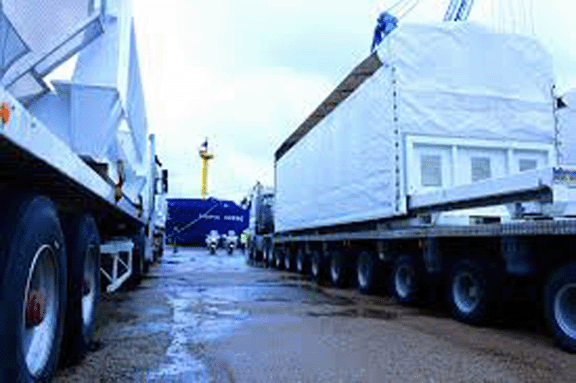
Radioactive nuclear rods leave Sydney bound for France, ABC 30 July 18
Bringing to the fore Indigenous voices the media ignore
 Stephen Langford www.greenleft.org.au/glw-authors/stephen-langford
July 27, 2018
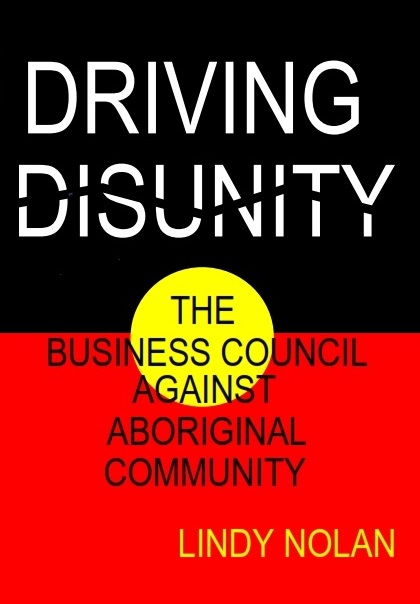
Driving Disunity: The Business Council Against Aboriginal Community
By Lindy Nolan
Bexley: Spirit of Eureka, 2017
‘In reviewing this important – but not self-important – book by Lindy Nolan,
I can hardly do better than start by quoting Rosalie Kunoth-Monks,
Northern Territory Australian of the Year in 2015 and Amatjere Elder,
from the backcover of the book: “Such deep and fearless truth.”
‘Award-winning journalist Jeff McMullen, meanwhile notes:
“This important study highlights destructive strategies in the neoliberal era
that undermine Aboriginal progress through the age old tactic of divide and conquer.” …
‘Lindy Nolan is an activist in the Stop The Intervention Collective Sydney (STICS).
This is a small but talented group of people who organise events against the NT Intervention,
now 11 years since its disastrous and fraudulent imposition
by the John Howard government. …
‘Nolan has written a book full of Indigenous voices that most people will not have heard,
because the mainstream media has been mainly accepting Murdoch’s anointed “leaders”. …
‘I hope you buy or borrow Driving Disunity – and read it.
It is full of Indigenous voices you simply will not hear in the mainstream.’
Read much, much more of Stephen Langford‘s comprehensive & interesting review of Lindy Nolan‘s book:
www.greenleft.org.au/content/bringing-fore-indigenous-voices-media-ignore
99% of South Australians are excluded from vote on nuclear waste dump for South Australia
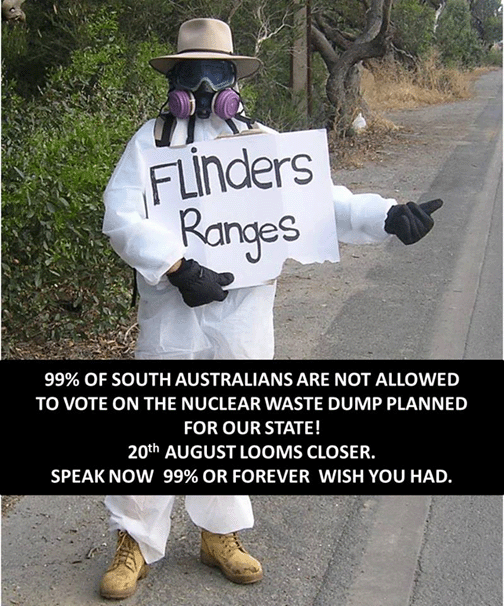
Susan Craig Fight To Stop Nuclear Waste Dump In Flinders Ranges SA, 24 July 18
• The proposed site is for an ABOVE GROUND temporary facility, stored in above ground bins, 40kms from Wilpena Pound and in our wheat farming land at Kimba.
• Both low level and INTERMEDIATE radioactive waste will be stored.
• INTERMEDIATE level is classified HIGH GRADE in France and has a half- life of TENS OF THOUSANDS OF YEARS. The containers proposed for storage only last for a few hundred years.
• ANSTO have the capacity (500 hectares) and the expertise to continue storage at Lucas Heights for another three decades.
• We should use this time to prepare a PERMANENT UNDERGROUND intelligent and cohesive solution to Australia’s burgeoning nuclear waste.
• Not just move it from one site to another.
• Mr. Canavan said and I quote: “It’s perfectly safe”. So why move it?
• ANSTO currently store 10 tonne of intermediate level nuclear waste at Lucas Heights NSW.
• Another similar quantity of intermediate level nuclear waste is arriving from Britain in a few years and proposed for South Australia.
• Current nuclear medicine using isotopes can be replaced with new technology using Cyclotrons which have a half-life of just hours rendering the waste benign. Awesome!
• Many countries around the world are moving to Cyclotrons for nuclear medicine and Australia should investigate this!
*ANSTO are developing a nuclear waste storage system called SYNROC it’s a synthetic casing for nuclear waste. However, this will only be used at LUCAS HEIGHTS and there is no intention of using SYNROC for the storage of nuclear waste proposed for South Australia.
The Federal Government is showing total disregard, disrespect and contempt for the people of South Australia, including the Adnyamathanha community of the Flinders Ranges. https://www.facebook.com/groups/344452605899556/
Nuclear reactor’s costly processes for medical isotopes: cyclotron production clean and cheaper
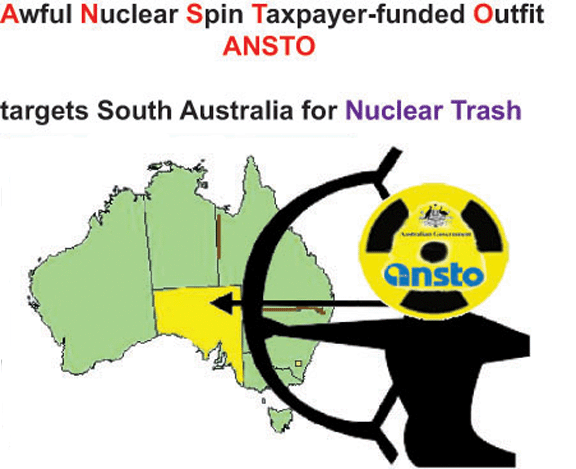 Steve Dale Fight To Stop Nuclear Waste Dump In Flinders Ranges SA 28 July 18 ANSTO ships most of its isotopes overseas, yet Australia has to deal with 100% of the large amount of waste produced from its messy isotope process.
PET/cyclotron isotopes give better imaging and no waste. If ANSTO was truly a commercial company and had to pay the true cost of its waste it would go broke immediately. https://www.facebook.com/groups/344452605899556/
Journalists’ rights in danger, if Julian Assange is prosecuted for Wikileaks

 Judges Hear Warning on Prosecution of WikiLeaks https://www.courthousenews.com/judges-hear-warning-on-prosecution-of-wikileaks/ July 24, 2018MARIA DINZEO NAHEIM, Calif. (CN) – Prosecuting WikiLeaks founder Julian Assange for publishing leaked documents related to the 2016 presidential election would set a terrible precedent for journalists, the top lawyer for The New York Times said Tuesday.
Addressing a room full of federal and circuit judges at the Ninth Circuit’s annual judicial conference, David McCraw, the deputy general counsel for The New York Times, explained that regardless of how one feels about Assange and traditional news outlets receiving the same kind of deference over publishing leaked materials, his prosecution would be a gut punch to free speech.
“I think the prosecution of him would be a very, very bad precedent for publishers,” McCraw said. “From that incident, from everything I know, he’s sort of in a classic publisher’s position and I think the law would have a very hard time drawing a distinction between The New York Times and WikiLeaks.”
McCraw went on to clarify that while Assange employs certain methods that he finds discomfiting and irresponsible, such as dumping unredacted documents revealing the personal information of ordinary people, Assange should be afforded the same protections as a traditional journalist.
“Do I wish journalism was practiced in a certain way, like it is with The New York Times, The Washington Post, or The Wall Street Journal? Of course. But I also think new ways of publishing have their value. Our colleagues who are not only challenging us financially but journalistically have raised an awareness that there are different ways to report,” McCraw said.
“But if someone is in the business of publishing information, I think that whatever privilege happens to apply – whatever extension of the law that would apply – should be there. Because the question isn’t whether he’s a journalist. It’s in that instance was he committing an act of journalism.”
Assange has long considered himself a journalist operating no differently than other news outlets. This has complicated matters, because if Assange can be prosecuted for publishing leaked information, why not prosecute news organizations like The New York Times?
Earlier this month, a grand jury returned an indictment against twelve Russian military spies for hacking into the servers and emails of the Democratic National Committee and state election officials, stealing documents and staging the release of those documents to interfere with the 2016 presidential election. While the indictment did not name Assange and WikiLeaks specifically, it has been widely suggested that WikiLeaks received the materials and could very well be the group referred to in the indictment as “Organization Number 1.”
Barry Pollack, who represents Assange in an ongoing criminal investigation in the Eastern District of Virginia, weighed in on the indictment Tuesday.
“If you read the indictment that just came out on Russians and you look at what Organization Number 1, which is clearly WikiLeaks, is alleged to have done in that indictment, it is doing exactly what The New York Times and The Washington Post do every day of the week,” Pollack said. “He [Assange] is communicating with a source, the source provides him with information, he publishes that information.
“There are no questions about the truthfulness or accuracy or authenticity of that information. And then he encourages the source to give him more information. He says ‘don’t give it to my competitors, give it to me. This story will have more impact if I publish it.’”
Pollack and McCraw spoke as part of a panel titled “The Law of Leaks,” a session on how the United States has ramped up efforts to prosecute people who have leaked state secrets. Thirteen people have been prosecuted under the first law against leaking state secrets, the Espionage Act of 1917, most under the Obama administration.
President Donald Trump has waged an unprecedented war against the media, taking to Twitter last year to call the media “the enemy of the American people.” Yet no publisher has ever been indicted over leaks, and both McCraw and Pollack expressed doubts about whether it will happen any time soon.
“Unlike firing off a tweet, bringing a prosecution requires a career professional prosecutor to sign off on the prosecution, so there also is a tremendous check there that doesn’t exist in some of the rhetoric we hear,” Pollack said.
“Prosecutions of journalists would be difficult,” McCraw said. “I think they’d be unpopular, I think they’d be wrong, and I think they’d be unsuccessful. I see this PR campaign against the press as almost an alternative to legal measures.”
Nuclear industry bigwig Jim McDowell now boss of South Australia’s public sector
JimMcDowell, most recently CEO of BAE Systems Saudi Arabia, now chair of Australian Nuclear Science and Technology Organisation
South Aust gets new public sector boss,
Former BAE Systems chief executive Jim McDowell has been appointed to head up South Australia’s Department of Premier and Cabinet.
Premier Steven Marshall described Mr McDowell as a talented leader with decades of international business experience in industries critical to South Australia’s future prosperity.
“Mr McDowell is well placed to guide the South Australian public sector as we seek to take full advantage of the Commonwealth’s naval shipbuilding program and other defence contracts based in South Australia,” Mr Marshall said on Thursday.
Scrutiny on Hansard reveals the Australian government’s confusion about nuclear wastes
Federal nuclear waste dump will have large storage for intermediate to high grade storage
1 This month


Help Aunty Sue Protect Her Land and Sacred Sites From Destructive Rocket Testing.
.

Australians deserve the truth
about
AUKUS – https://aukuspublicinquiry.com/

PETITION – To: Prime Minister Anthony Albanese and the Australian Labor Government

of the week – Australians for War Powers Reform (AWPR)
To see nuclear-related stories in greater depth and intensity

