‘Campaign led by anti-nuclear groups had its intended effect’
FOE Adelaide, 14 May 25
Support for Nuclear Power Collapsed from Feb-April 2025
Polling released by the pro-nuclear group WePlanet Australia reveals that support for nuclear power dropped from 55% in February 2025 to just 42% in April. This is the lowest level in years, WePlanet says, and “a clear sign that a … campaign led by anti-nuclear groups had its intended effect in the lead up to this election.”
The polling was conducted by Essential Research with data provided by Qualtrics. The survey was conducted online from 24th to 27th April and is based on 2,241 participants.
Support for nuclear power increased from 2019 to 2021 (AUKUS-related?). Support didn’t take an immediate fall after the Coalition’s mid-2022 announcement that they would promote the introduction of nuclear power to Australia. Support didn’t take an immediate fall after the Coalition’s June 2024 release of 7 proposed nuclear power reactor sites across 5 states, or the December 2024 release of (highly questionable) cost estimates. But in less than 3 months from Feb. 2025 to late April, net support fell from +21% to -2% with a sharp drop in support of -13% and a sharp increase in opposition of 10%. Support fell from 55% to 42% and opposition increased from 34% to 44%.
The polling data shows that most males support “Australia developing nuclear power plants for the generation of electricity” (51% strongly or somewhat support; 41% strongly or somewhat opposed) but among females, support is more than doubled by opposition (23:47). Nuclear power is not supported by those aged 18-34 (38:48), or those aged 35-54 (41:45) but enjoys more support from those aged 55+ (47:41). Nuclear power is opposed by Greens voters (29:60) and Labor voters (27:63) but supported by Coalition voters (65:24).
If the Coalition sticks with nuclear, the fallout will be toxic.

Rebecca Huntley May 10, 2025, https://www.smh.com.au/national/if-the-coalition-sticks-with-nuclear-the-fallout-will-be-toxic-20250505-p5lwmu.html
Much of the post-election commentary has rightly focused on how the Coalition’s nuclear energy proposal was bad – very bad. It was one of the reasons Peter Dutton lost his seat and for net swings against the Coalition in areas such as Gippsland and the Hunter. Unpopular among women voters, who the Coalition continue to struggle to appeal to, and unpopular among undecided voters.
More importantly, nuclear undermined Peter Dutton’s credibility. After the Voice, the only real policy most voters associated with the opposition leader was nuclear. Once his ill-fated campaign began with a backflip on public servants working from home, the swath of undecided voters got spooked.
No one wants someone who seems highly disorganised to build a nuclear reactor.
If you scrutinise the research numbers, the lack of public support for nuclear was clear; more importantly, support for renewables didn’t dip in the face of the pro-nuclear push. Pursuing nuclear made the Coalition look like it was out of sync with what people really wanted. If it continues to pursue this as a policy, it will be seen as defying the will of the people.
Over the years of Labor’s first term, despite a cost-of-living crisis and well-funded campaigns against renewables online and in traditional media, research showed steady support for solar, wind and batteries. Even the election of Donald “drill-baby-drill” Trump didn’t undermine support.
The online misinformation and disinformation campaigns against renewables certainly ramped up after Albanese was first elected, supported by attacks from Sky News and the Murdoch-owned press.
The Coalition playbook was simple: cast enough disinformation and misinformation across channels to create doubt and antagonism against renewables. It fully believed it could win seats off the back of voter dislike of offshore wind in particular, especially in areas such as the Illawarra. It was in for a surprise.
The outcome of this election shows us a truth the Coalition must accept: amid a cost-of-living crisis, Australians back renewables. In fact, the overall swing towards Labor in seats where anti-offshore wind campaigns were rife was greater than the overall statewide swing. Except for Monash in Victoria, anti-offshore campaigns backfired on the Coalition.
Dutton and his Coalition colleagues in the Nationals severely underestimated the Australian people, particularly those in the regions. Support in proposed nuclear reactor communities, including Gladstone, Bunbury, Hunter and Gippsland, was weak, ranging from 22 to 32 per cent.
A poll published in this masthead in April showed 31 per cent of voters said their biggest hesitation in voting for the Coalition and Dutton was the plan to use nuclear power, up 5 percentage points from two months earlier.
This campaign was fought and won on the cost of living. In the end, Australians believed the right policies on renewables – including more access to home batteries – would save them money now and into the future.
Can you imagine what would happen if all the confected outrage over renewables disappeared, and all that was left was public opinion? The support for renewables is there once you strip away the headlines that seem to suggest otherwise.
So, what does this mean for our newly elected Labor-landslide majority government? And for a Coalition still wrestling with where to go on energy policy? When the word “mandate” gets used in relation to election victories, I have to resist a reflexive eye-roll. Election results don’t necessarily equate to public endorsement of every promise made in the campaign by the winning party. But this result is definitive, and more remarkable considering so many federal elections in the past two decades have been close. The last time there was such a strong message from the electorate was in 2007. In many respects, the Rudd government underestimated the permission the public gave it to act on climate. When Labor stepped away from that commitment, its credibility sagged.
A triumphant Albanese government, going into a second term with more power and confidence, should feel like it can act on the energy transition with a belief that the community will follow, especially if its policies deliver cost savings to households and significant and lasting benefits to the regional communities hosting renewable infrastructure. It’s a green light for further progress, but understanding community sentiment – and responding to it – will be essential to maintaining the permission.
Early signs from the Labor government indicate it knows it can proceed swiftly. On election night, Minister for Climate Change and Energy Chris Bowen said, “In 2022, the Australian people voted to finally act on climate change. After three years of progress, in 2025, they said keep going.”
“Keep going” should be the official government slogan. Fingers crossed that sanity prevails, but early signs from the Coalition seem to indicate more of the same: support for nuclear, which really means less renewable energy.
If the members of the Coalition don’t want to believe the polling data, perhaps they should think about these figures. In the years they have been pursuing their nuclear policy, global solar power has doubled. According to the Clean Energy Council, more than 300,000 small-scale rooftop solar systems were installed across Australia in 2024, bringing the total number to more than 4 million. Utility battery storage more than tripled. And last year, Australia added more renewable capacity to the energy system than the entirety of the Coalition’s nuclear plan.
The transition to renewables is happening, and nuclear is a policy that is too toxic for the electorate and too late to be helpful for emissions.
Any politician who resists that logic will be warming the benches of opposition for some time to come.
Dr Rebecca Huntley is one of Australia’s foremost researchers on social trends and a Fellow of the Research Society of Australia. She is director of research at 89 Degrees East.
Coalition bombs itself with nuclear energy policy
By Dave Sweeney | 12 May 2025
While the Coalition was determined to switch Australia over to nuclear energy, voters had another opinion and overwhelmingly rejected the LNP’s energy policy, writes Dave Sweeney.
WHEN HE UNVEILED the Coalition’s nuclear energy ambitions last June, outgoing Opposition Leader Peter Dutton said:
“I’m very happy for the Election to be a referendum on energy, on nuclear.”
As the adage says, be careful what you wish for. The election result was a resounding rejection of the high-cost, high-risk nuclear option.
The Coalition’s intention to build nuclear reactors at seven sites in regional Australia was the biggest policy difference between the major parties ahead of the Election.
The nuclear push was heavy on headlines and assurances, but very light on details and evidence.
Despite numerous requests, the Coalition’s nuclear promoters failed to visit the reactor sites or answer fundamental questions, including where the required water would come from and where the resultant radioactive waste would go.
Other unanswered questions overflowed the Coalition’s too-hard basket.
What would the impact on employment and output be from Australia’s rapidly growing renewable energy sector? What sort of reactors were planned and how many? What would fill the electricity shortfall between the certain closure of coal and the uncertain start of nuclear? Would taxpayers bear the increased cost of nuclear in our tax bills, our power bills, or both? Who would operate and regulate the Coalition’s nuclear plants?
As the scrutiny and uncertainty grew, so did the community concerns and the considered critiques.
The Climate Change Authority warned the Coalition’s nuclear policy would add huge amounts of extra climate pollution to the atmosphere and make it “virtually impossible” for Australia to reach net zero by 2050.
The interim report by a parliamentary committee inquiring into nuclear energy found – like so many inquiries before it have found – that nuclear energy was not right for Australia.
While Australia’s energy utilities made it clear they did not support or see a future in nuclear, Australia’s insurance sector confirmed that its policies do not cover nuclear accidents.
Shadow climate and energy spokesperson Ted O’Brien might have been convinced nuclear is as safe as houses, but Australian insurance providers did not share that view.
The concern was widespread, but most obvious in Australian women’s scepticism about nuclear. They didn’t want to hear about it and when the issue was raised with Dutton, he didn’t want to talk about it.
When the Coalition pushes nuclear, Australia pushes back. In 2007, John Howard took nuclear to an election where he lost government and his own seat. In 2025, Peter Dutton said nuclear and Australia said no — and goodbye.
Polling by the Liberals Against Nuclear group demonstrated the nuclear policy’s drag on the Coalition’s vote in marginal seats and across the nation, while 46 per cent of voters in Dutton’s electorate of Dickson said they were less likely to vote for Mr Dutton because of the nuclear power policy.
In front of shellshocked Coalition politicians on election night, senior press gallery journalist Mark Riley summed up the Coalition’s problem:
“The party that chose nuclear energy as its policy has exploded in a nuclear bomb set on them by voters tonight.”
The idea of domestic nuclear power is over.
It’s time to draw a line under this unproductive distraction and get on with real action to meet our nation’s climate and energy challenges.
Liberal Senator Maria Kovacic has called on her party to “immediately scrap the nuclear energy plan and back the private market’s investment in renewable energy”.
Her call echoes that of the South Australian Liberals, which have already dropped plans for another inquiry into nuclear power, with State Leader Vincent Tarzia declaring that nuclear has been “comprehensively rejected” by the electorate.
Defeated Tasmanian MP Bridget Archer says the nuclear push was “not the policy position I would have taken” and she would rather “let the market decide”.
The Federal Coalition must ditch any lingering nuclear ambitions and join every other major political player in backing a renewable energy future for our nation.
Australians have overwhelmingly voted for positive solutions, real action and respect — for each other and our environment.
It’s time to stop playing politics with nuclear distractions and delays. It’s time to get on with the clean energy transition, effective climate action and building an energy future that is renewable, not radioactive.
Australians choose batteries over nuclear after election fought on energy
By climate reporters Jess Davis and Jo Lauder, ABC News, 6 May
When Peter Dutton unveiled his party’s nuclear energy plan last year, it opened up a seismic difference between the two major parties.
It offered a real choice for Australian voters over the future of the country’s energy policy.
“I’m very happy for the election to be a referendum on energy, on nuclear, on power prices, on lights going out, on who has a sustainable pathway for our country going forward,” he said.
Taken on those terms, Saturday’s election outcome was an endorsement of renewable energy over nuclear.
“It’s clearly a referendum on energy policy, given the prominence of energy throughout the entire election campaign,” Clean Energy Council CEO Kane Thornton said.
“I think it’s an emphatic victory for Australia’s transition to clean energy.”
At a household level, Labor offered a significant discount on home batteries to accompany the booming solar on rooftops all across the country, aiming to get 1 million batteries installed under the scheme by 2030.
The last election saw a new generation of independents join the parliament, riding a wave of climate concern. Any expectation that the “teals” were a single-election trend has been dispelled, with most of them set to be returned, and new ones joining their ranks.
While the Greens have an anxious wait ahead to see how many lower seats they’ll win, they recorded their highest-ever primary vote and will hold the balance of power in the Senate with 11 senators.
After losing the Liberal heartland to the teals in the last election, the Coalition decided to pitch instead to the outer suburbs.
But the decision to campaign against renewables, and scrap climate policies such as the EV tax breaks, seems to mismatch the views of middle Australia.
Outer suburbs embrace solar power
Dutton set out to make up gains in the outer suburbs by offering a discount on the fuel excise. But the data for solar uptake and electric cars paints a very different picture to the caricature of solar and batteries as a plaything for the inner city.
While energy may not have been a top concern for voters, it’s the outer suburbs where our love for rooftop solar is at its highest, especially in Queensland and Western Australia.
In Dutton’s former electorate of Dickson, some 60 per cent of households have a solar system, double the national average, according to data from the Clean Energy Regulator……………………………………………… https://www.abc.net.au/news/2025-05-06/federal-election-shows-voters-support-renewables-over-nuclear/105252888
Business as usual: Labor stalls on Defence reform as AUKUS woes grow

Defence spending is lagging, AUKUS is stalling, and systemic mismanagement persists as Labor avoids hard structural reform.
Bernard Keane, May 11, 2025, https://www.themandarin.com.au/291901-business-as-usual-labor-stalls-on-defence-reform-as-aukus-woes-grow/
Having managed to get through an election campaign barely mentioning defence — despite the opposition trying to make it a late-stage vote winner — the newly expanded Labor government still faces a number of big challenges in the defence portfolio, and no easy answers.
The two big ones are well-known: the replacement of the US security guarantee with Trumpian chaos, which means Australia will have to strengthen its defence capability so that it has to rely less on the US, and the profound problems of AUKUS.
Despite some budget sleight of hand purporting to show an acceleration in defence spending, the government remains committed to increasing defence spending to just 2.33% of GDP — not merely well below the Trump administration’s demand for 3%, but below the Coalition’s planned increase to 2.5% and the calls from defence and security experts, as well as Labor luminaries like Kim Beazley, for a significant increase.
But the ability of the Department of Defence to handle any increase in spending — or even competently spend what it currently receives — is openly questioned even by hawks. Average major project slippage time, already alarming when the Coalition was last in power, noticeably deteriorated in Labor’s first term. The response of Defence appeared to try to hide embarrassing data from the Auditor-General under the pretence of national security.
Also characterising Labor’s first term was the admission of failure of departmental process, to the very highest echelons of Defence, in relation to the Hunter-class frigate project and the shocking audit of Defence’s dealings with Thales on munitions manufacturing (the second part of which is yet to arrive from the auditor-general).
With both defence minister Richard Marles’ track record in Labor first term, and his general insouciance toward revelations such as the Thales debacle — which included the revelation that the department had actively misled predecessor ministers — it seems unlikely Defence will face any real pressure to improve the incompetence and, quite possibly, corruption that marks its management of major procurement processes. A defence minister like Andrew Hastie, far more credentialed in military matters than most within the department, could have driven the kind of reform that would have gotten Defence backs up, and led to copious leaking against him, but improved the reliability and integrity of the department’s procurement processes. Instead, we’ll have to hope that a Labor government with a big majority and more confidence will be more willing to take on the fundamental problems in the portfolio.
A similar business-as-usual approach will likely characterise the unfolding disaster that is AUKUS. The grim reality is that US submarine construction rates are slowing, not accelerating as they need to if the US is to provide three Virginia-class nuclear submarines to Australia from 2030. In early April, the US Navy admitted to Congress significant delays in constructing its new Columbia-class ballistic missile submarine, which shares some components with the Virginia class. While the builders of the Virginia-class boats are talking bravely of demand signals and additional investment, the build rate for the subs late last year was barely above half that required by AUKUS.
None of this, apparently, is of interest to the bureaucrats charged with overseeing AUKUS. The Mandarin applied under Freedom of Information laws to the Australian Submarine Agency to see what briefing it was providing to ministers on the problems in submarine construction in the US and the UK. No such documents, came back the answer. Blind faith that the US can double the rate of submarine construction in a couple of years is one thing, but remaining ignorant of how badly off track AUKUS is? That’s quite another.
One of the key problems of the Virginia-class boats for Australia is that they require huge crews — 135 sailors, compared to just 58 for Australia’s current submarines. That brings into focus a persistent and worsening problem — our inability to attract and retain ADF members. Last year the Navy was short around 900 people. The Army was short around 5000; only the RAAF is around its mandated strength. A change of recruitment agency for the ADF proved a disaster, with portfolio minister Matt Keogh expressing his “deep disappointment” with the provider’s “wholly deficient” performance. Critics say the problem is with the ADF itself, which is “too slow and too picky”. The government announced in mid-2024 the brilliant idea of opening up the ADF to personnel from Five Eyes. countries. Only problem is, they’re all suffering the same problems with defence recruitment. In fact, armies, navies and air forces around the world are suffering ongoing recruitment problems and have done so for years — even the People’s Liberation Army is struggling to attract Chinese youth to its ranks.
In each of these areas, clearly, business as usual won’t cut it. But that is what Defence is very good at, and its ministers are very bad at preventing. To prevent it, only structural arrangements that disrupt Defence’s normal processes will achieve results. The royal commission into ADF member and veteran suicide had the right idea — and the government rightly took its lead from the commission in its response. The commission recommended a new independent statutory body to oversee reform across the whole Defence/Veterans Affairs portfolio, not a new area of Defence. And it urged, and the government agreed, that central agencies be charged with implementing the commission’s recommendations: the result was a Prime Minister and Cabinet taskforce to start implementing reforms, with the help of external expertise.
An independent agency, and a PM&C-led implementation taskforce, was what was needed to ensure Defence didn’t simply default back to business as usual when it came to the mental health of its members and veterans. Only the oversight and interference of high-powered external bodies will compel Defence to change its culture.
And it’s the only thing that will enable the government to seriously tackle the biggest challenges in the portfolio over the coming years.
Bernard Keane
Bernard Keane is a columnist for The Mandarin. He was a Canberra press gallery correspondent covering politics, national security and economics, and a public servant and speechwriter in transport and communications. He is co-author of A Short History Of Stupid, which covers the decline of reason and issues with public debate.
Who’s afraid of big, bad China?
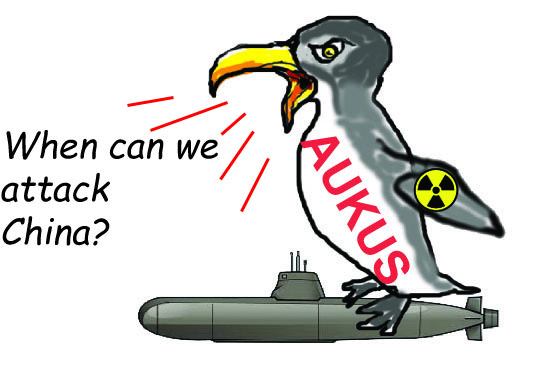
Neither side wanted to bring China into the debate, and neither side wanted to discuss AUKUS, which is based on a perceived need to take military action against that country.
In the recent Australian election, Neither side wanted to bring China into the debate, and neither side wanted to discuss AUKUS, which is based on a perceived need to take military action against that country.
Jocelyn Chey, May 7, 2025 , https://johnmenadue.com/post/2025/05/whos-afraid-of-big-bad-china/
Be afraid, be very afraid. But not of China. To the contrary, the proper management of co-operative relations with China is essential to Australia’s future.
Finally, the election process is over and done with and the results are in. We look forward to news bulletins not dominated by party spokespeople spruiking how they will deal with the cost of living. Rents, health and transport costs are all important, but the big issues that will make or break their social policies are all global, and the real question is how we can front up to them and hopefully turn them to our benefit. If the world goes into recession, which is a very real possibility, we will all be affected. The cost of living will go up. Cuts to social services will be inevitable.
Why did the candidates not admit this? Do they have contingency plans and, if so, what are they? What are they afraid of? Were they scared that if they mentioned China, the US or Russia, they would lose votes, or be backed into election promises that they could not keep? Or were there structural weaknesses in their policies that they did not wish to expose to scrutiny?
In previous election campaigns, the candidates were not so hesitant to pronounce on international affairs. The 2001 election was dominated by immigration issues and the terrorist attack on the Twin Towers in New York. It was the first “khaki election” since the Vietnam War. In the 2022 election, the Morrison Government tried to repeat their 2001 success by promoting fear of Chinese invasions, both military or cultural, but their attempt failed. This time around, both sides of politics have been careful about their choice of language and avoided difficult topics.
Insofar as national security featured at all in the elections, Labor and the Liberals competed to portray themselves as the better party to protect Australia’s international relationships, particularly in the Pacific. Penny Wong accused the Liberals of leaving a “vacuum” that China was ready to fill, but she did not directly accuse Beijing. The one attempt to whip up fear of an invasion was pinned onto Moscow, rather than Beijing, when news broke of a possible deal between Russia and Indonesia about developing a military airbase in West Papua.
Neither side wanted to bring China into the debate, and neither side wanted to discuss AUKUS, which is based on a perceived need to take military action against that country. Labor and Liberal both promised to increase defence spending, one side to 2.3% of GDP, and the other side to 3% over 10 years. Neither mentioned the reasons for such an increase, or where the money would be found. AUKUS is already absorbing all the increases announced by the last government and affecting other procurement needs. AUKUS spending over the next five years is estimated to reach $18 billion and ultimately will total $368 billion, not including the cost of new infrastructure such as a dedicated naval base at HMAS Stirling. The rationale for nuclear-powered vessels is not the defence of our coasts, but the perceived need to attack distant targets, and that target is China.
China has been progressively opening to the world since the 1980s. It is a permanent member of the UN Security Council and an active member of many multilateral organisations. With Australian encouragement, it has engaged with the multilateral trade system, joined APEC and the World Trade Organisation. The domestic economy has flourished in this open environment and in a region that has not seen armed conflict since the end of the Vietnam War. Maintaining strong growth and raising living standards have been the main pillars of Chinese domestic policies.
Economic development has not always been smooth, and recently new problems have emerged on the international front. China trusted the established international governance system to support and regulate its growth, but, as the country grew stronger, it became evident that the US did not return that trust. Its rapid rise and increasing global presence changed the regional and global balance and generated a geopolitical response that was perhaps predictable.
In 2025, the Trump administration has not yet clarified its policy for handling the relationship with China. Tariffs have been imposed, increased and decreased, and threats and hints have been made by the White House. All is chaos. The only thing that is certain is that Trump will challenge China in a more transactional and unpredictable way, will intensify trade confrontations and sanction Chinese companies in his goal to achieve greater self-sufficiency in the US.
In Beijing, Xi Jinping’s response has been measured and consistent. Official statements emphasise that China supports international rules and regulations and the multilateral system. During the National People’s Congress in March, Foreign Minister Wang Yi in a briefing to the international press presented China as a responsible and stable global power and, without explicitly saying so, drew comparisons with Trump’s America and its chaotic pronouncements.
He said: “We will provide certainty to this uncertain world. … We will be a staunch force defending our national interests. … We will be a just and righteous force for world peace and stability. … We will be a progressive force for international fairness and justice. We will be a constructive force for common development of the world.”
The contrast with Trump’s Tweets could not be more striking.
China is now truly integrated into the global economy. National policy has determined this, and, in any case, it would have been inevitable, given the development of advanced technologies and information and communication systems, all requiring international engagement. China, above all, wants stability and security in international relations to underpin its economic growth. In the future, the major challenges that the world will face are global. Climate change cannot be tackled without international co-operation. Australia needs more than ever to understand China and its domestic and foreign policies.
Co-operation with China is not easy. To borrow Trump’s words, “They hold the cards”. Australia, however, is not alone, and the best response to China is to consult and co-ordinate with neighbouring countries who also regularly interact with the rising superpower. Singapore, Thailand, Vietnam, Malaysia, all have important trade and diplomatic ties with China and have much experience to share about how to manage a relationship with China, a regional power and a global superpower. Australia should be able to manage relations with China. If we respect Beijing’s legitimate rights, Beijing will respect ours
It is possible. China has no history of annexing other countries as Russia annexed Crimea. It respects other countries’ autonomy more than Trump respects the sovereignty of Mexico, Canada or Greenland. It has claims over a large part of the South China Sea that on the surface suggest aggressive intent, but this is not a new claim. The “nine dash line” outlining its territorial claim was first proposed by the then Nationalist government in 1948, and the government of Taiwan still maintains this position. Considering that China is surrounded by a string of US bases along the “first island chain” from Japan to the Philippines, amid that Camp Humphreys, near Seoul in South Korea, the largest US overseas military base, is just 549 kms from the city of Dalian in northeast China, it is not surprising that China should wish to limit further US advances.
As for the other superpower, in the first 100 days of the Trump regime, he has attempted to use the legal system to carry out his personal vendettas. He has shut down many government departments. He has attacked scientific research and the universities and disregarded statistical evidence, particularly in medical science and climate science. He is prejudiced against immigrants. He dismisses the most basic ideas of trade and economics. He prefers to deal with other autocrats like Vladimir Putin and has turned his back on international agreements and treaties.
Be afraid, be very afraid. But not of China.
(This is a summary of a talk given at the Festival of Wild Ideas, St Paul’s Burwood, on 4 May 2025)
US military expected to export ‘high-risk’ explosives to Australian ports amid arms expansion
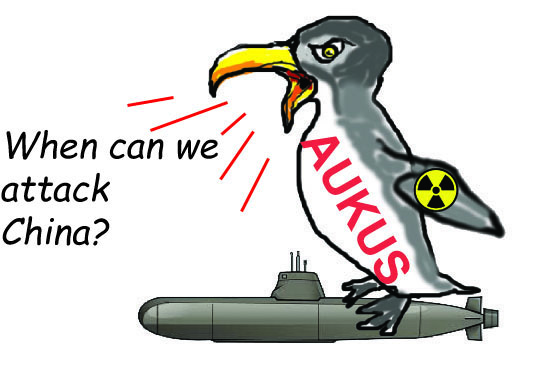
“Australia and the Indo-Pacific region is a theatre to the American military planners,”
ABC News, by Oliver Chaseling, Fri 9 May 25, https://www.abc.net.au/news/2025-05-09/us-defence-department-to-increase-arms-shipments-to-australia/105259122
In short:
The US Department of Defence has sought tenders for the handling of US military cargo in Australian ports.
In its tender solicitation, the shipping manifest of an existing contract has been expanded to include indefinite quantities of explosive cargo.
What’s next?
Further announcements on US-Australian military cooperation in coming months was flagged at a recent Defence industry summit in Darwin.
Subcontractors in at least four Australian ports are expected to soon handle United States military cargo containing gases and radioactive material, as part of an expanded contract with the US government, the ABC can reveal.
The US Department of Defense is currently seeking tenders for port services in the Northern Territory, Queensland and Victoria, where it expects “indefinite quantities” of explosives, aircraft, classified and general cargo to be unloaded from ships and onto trucks.
The tender solicitation issued by a US transportation battalion based in Yokohama, Japan, covers the handling of cargo shipped to and from Australia……………………………………………………………………………….
The new contract will also expand arms shipments to the Point Wilson port, between Geelong and Melbourne, which in 2023 was flagged for “large-scale importation of guided weapons and explosive ordnance” according to the Australian Department of Defence……………………………………………………..
Shipments mark ‘maturing’ US military logistics network
Defence industry consultant Darian Macey said the contract “broadens the [US] strategic footprint” in Australia, by adding more dangerous cargo and expanding arms shipments to Victoria’s Point Wilson port.
“While the contract itself doesn’t specify end use, the inclusion of high-risk cargo types and expanded port access is consistent with broader trends we’re seeing under AUKUS and allied posture initiatives,” he said.
Mr Macey said the contract signalled “a maturing [US] posture in the region” that could support rapid deployments throughout the Indo-Pacific.
“Australia and the Indo-Pacific region is a theatre to the American military planners,” he said.
“Having those assets in theatre means that they can respond more rapidly, than if they had to bring those assets across from their home country.”
The Australian Department of Defence’s Brigadier Mick Say told the recent Northern Australia Defence Summit that the pre-positioning of US military equipment in Australia had been “enabled” by the 2014 US Force Posture Agreement.
He flagged a potential expansion in US Force Posture efforts after high-level ministerial talks between Canberra and Washington later this year.
“That will lead to a number of other announcements, once agreed to by governments, in regards to the next steps of the Force Posture activities within Australia,” he said.
Front groups working with Zionist actors are promoting Islamophobia
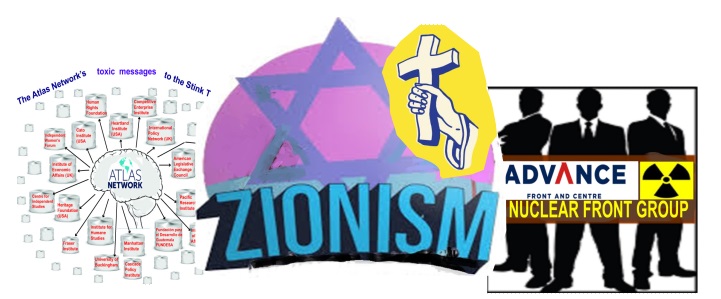
Letters were circulated in the electorate of Goldstein shortly before the election last weekend falsely accusing climate independent (“teal”) Zoe Daniel of being antisemitic in conspiracist terms. It is not known which individual or group circulated the anonymous letters.
Daniel’s Liberal Party rival Tim Wilson, was affiliated with the Atlas Network partner the Institute of Public Affairs (IPA)
May 9, 2025 Lucy Hamilton, https://theaimn.net/front-groups-working-with-zionist-actors-are-promoting-islamophobia/
Australian front groups have been working to promote the idea that the Greens make many cultural identities less safe. Zionists are incorporating Hindu and Iranian figures, depicting a fake “threat.”
Wendy Bacon and Yaakov Aharon are tracking the Zionist disinformation strategies that have been at work in the Australian local, state and federal political information space recently.
In this information project, any speech act or protest supporting peace and rights for Palestinians is depicted as an “antisemitic” threat that frightens Jewish people. The Greens are being tarred with the accusation that they pose a threat to many multicultural identities, not just Jewish. This of course distorts the fact that the Greens are the strongest party voice against prejudice in Australian politics – which includes opposing Zionist prejudice against Palestinians as well as antisemitism.
Protest is a speech act and must be protected – particularly when it is directed against matters as urgent as the climate catastrophe and genocide.
The project being carried out by the front groups investigated by Bacon and Aharon functions to foster anti Muslim sentiment. That work is inherent to the current shape of the transnational Right. Demonising Muslims is not new: in 2010, then Liberal Party MP Scott Morrison proposed targeting Muslims for political gain. His colleagues attempted to shame him for the divisive suggestion, but in the years since, that tactic has become mainstream for the political and media Right in Australia as well as abroad.
Morrison’s role flags the importance of Christian Zionists to this mission.(1) It is difficult to tease out the primary motivation. One role is to help Australia’s “conservative” politicians win elections. It is also potentially to keep out the Greens (and independents known as “teals”) to prevent genuine climate action, since the Labor Party appears to be constrained by state capture. The focus on Israel might be for Jewish Zionist interests or as part of the Christian Nationalist project aiming to control Australian politics. The Never Again is Now body speaks to that last motivation.
Advance – which was so active against the First Peoples’ Voice to Parliament and then committed over the last few months to destroying the Greens and “teal” independents – has been shown to have personnel links with Atlas Network partners in Australia. Advance has also received funding from the Liberal Party through the party’s Cormack Foundation.
Maurice Newman, who has a long track record of action around Atlas Network partners in Australia, was a Mont Pelerin Society (MPS) member from 1976. (The MPS is described as the functional steering committee of the Atlas Network and one of its major roles in recent years has been promoting climate denial.) Newman was also listed in 2014 as one of Australia’s 12 “most influential” climate deniers who used his time as ABC chairman to skew the coverage of the science. Newman was an “early driver” of Advance. In March this year, Newman described pro-Palestinian encampments on university campuses as one sign that “ideology” (rather than a moral compass) is taking over and stated, “We might as well be in communist China.”
Some Atlas Network partners have a history of promoting intervention in the Middle East, with the American Enterprise Institute’s neocons probably being the most influential in promoting “regime change” from within the White House. The Heritage Foundation claims to be no longer affiliated with the Atlas Network after decades of acting as one of its major partners. It too is engaging strongly in culture wars over purported antisemitism with Project Esther. As Axios observed, the project was as much about crushing Americans’ ability to protest. Jewish commentators also fear that the mechanism will cause blowback against Jewish Americans. As a part of the Christian Nationalist project, Esther’s strategy has been summarised as “a sweeping program of surveillance, propaganda, deportation, and criminalization.”
David Adler was a “founding board member and advisor” of Advance. He is best known as having founded the extreme Australian Jewish Association, a “private advocacy group” mimicking a peak body. Adler has spoken on rightwing media against doctors being vocal on the substantial threat that the climate crisis poses to health as leftist posturing. He disdainsclimate science as comparable to “gender issues.” Adler has recently stepped down as AJA “president.”
The degree to which Adler is a fringe figure in Jewish Australian opinion is conveyed by rejections such as:
“Australia/Israel & Jewish Affairs Council national chairman Mark Leibler, a prominent Indigenous rights activist who co-chaired the Referendum Council, said that due to the AJA’s “misleading name”, it is very important for people within the Jewish community, but also people outside the Jewish community, to “understand that this organisation and this person, they do not speak for us”.
“They do not communicate what, in any sense of the term, can be regarded as Jewish values,” Leibler said.
“Some of the things that Adler has said are frankly nothing short of horrific.”
Executive Council of Australian Jewry co-CEO Peter Wertheim said Adler’s comments “are wrong, offensive and bigoted, and indicate that he lacks the same sensitivity to other forms of racism that he has for antisemitism”.
“These comments do not in any way represent or reflect the views of the mainstream Jewish community in Australia. They are contrary to Jewish values, and the teaching ‘That which is hateful to you, do not do to others’,” Wertheim said.
“Despite its misleadingly generic name, the Australian Jewish Association is a private group led by a small number of unelected people promoting marginal, ideologically-blinkered views. The Executive Council of Australian Jewry has been the peak, representative body of the Australian Jewish community since 1944.”
Given that none of the older peak bodies have been what might be described as particularly supportive of justice for Palestinians (leading to the formation of the progressive Jewish Council of Australia to fight for both Jewish and Palestinian safety), this condemnation speaks to the fringe nature of the AJA’s politics.
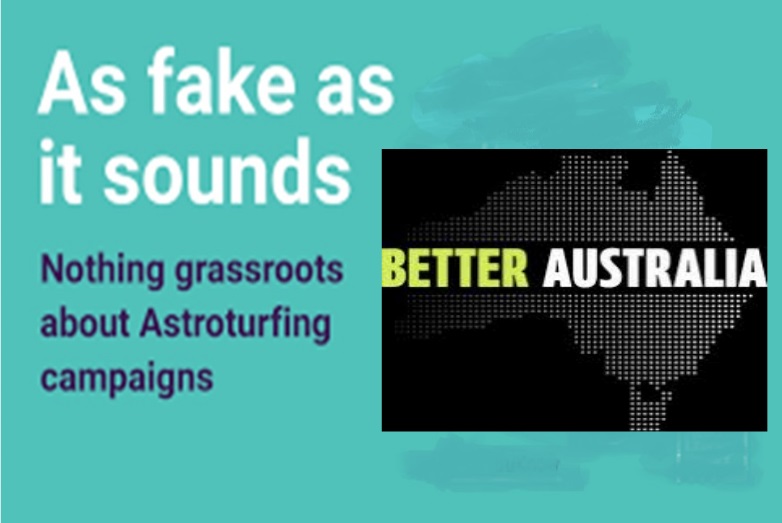
Bacon and Aharon have been tracking down several Zionist front groups. Better Australia began as Better Councils where the “Israel lobby,” as Bacon termed it, appeared to be attempting to disrupt and influence Sydney council elections. The pair have found connections with Liberal Party affiliates such as Alex Polson who owns Better’s ABN. He is a Liberal Party member and previously worked for Liberal Senator Simon Birmingham. Bacon and Aharon have also investigated the Queensland Jewish Collective (QJC) which appeared to be a reasonably significant player in the 2024 Queensland state election.
The Minority Impact Coalition (MIC) is a creation of the QJC. Alex McKinnon has reported some of the extremity of that body’s social media posts. The Australian depicted the group as a grassroots immigrant movement against Labor and the Greens.
Bacon and Aharon have tracked down loose connections of various kinds between Advance with the Zionist-affiliated groups. QJC accepted help from Advance. QJC’s MIC has claimed very limited connection with Advance. Better may have had early plans to work in cooperation with Advance. Bacon and Aharon have noted that Advance or AJA boost the social media posts of these micro bodies, creating the only occasions when their posts achieve traction. This suggests some degree of cooperation.
In her reporting on the Queensland election campaign, Bacon illustrates a graphic from the AJA that was used to advertise a webinar to introduce its members to Advance. That same image was later used on QJC billboards as well as on the MIC’s website.

The image features three individuals targeting the Greens as a “divisive hate group” for the represented ethnicities or cultural identities. One of the three is posed as representing a “Jewish Queenslander” who doesn’t feel safe in her own cities because of Greens repeating “slogans of the terrorists that wish [her] dead.”
The other two represent an identity coalition that the QJC (alone?) was forging in a “multicultural impact network meeting.”
The second individual is a “Hindu Queenslander” who is quoted on the graphic as asserting “The Greens glorify those that terrorise us. They make me scared for the future.”
This is not an outlier. The shared work of linking Muslims with terrorism is central to the Hindutva nationalist project, just as it is to Israel. Prime Minister Modi, for example, declared that both Israel and India face a shared threat from “radical Islam.”
The recent attack in Kashmir has led to calls to use the “Israel model” in Kashmir with suggestions that both Kashmir and Pakistan should be “flattened” like Gaza.
There is no inference made that the woman pictured supports Hindutva ideology.
It appears the Hindu Council of Australia (HCA) had a speaker at the QJC event in June 2024. The HCA may have no interest in the religio-ethnonationalist Hindutva ideology. It is noteworthy, however, that the HCA site hosts a post suggesting that an attempt to tackle Hindutva extremism is actually about “dismantling Hinduism” and an attempt to spread fear mongering against Hindus.
The MIC site claims to have the group Hindus of Australia as an endorsing body. That link is backed up by an Indian-Australian news site, which depicts MIC as protecting Australia from “imported hate.” In the aftermath of the election, the Hindus of Australia X account reposted a QJC post, with additional comment that the Greens had brought “degeneracy” to “Australian political and social lives.” It also made the strange claim that the Greens had “put targets on the backs of Australian Jewish and Hindu communities so that the terror and criminal elements now consider our communities soft targets.”
Modi and his party have a long history of targeting Muslims, including Modi campaigning on the fear of being outbred by Muslims at the last election.
Israel and India are bonded over these parallels.
The third individual on the AJA graphic represents Iranians. A speaker at the event is reported to have represented the Iranian Novin Party (INP). Hesam Orujee, a member of the INP, is featured on the AJA Facebook page as a member of the QJC.
The Iran Novin Party is “Pahlavist.” That is, they support the Pahlavi family to replace the Iranian Islamist regime. The QJC site claims that the Greens “support the Iranian regime’s terror proxies.” This is, of course, nonsense. (The MIC site also targets Labor for not attacking these groups’ issues aggressively enough.)
The Iranian monarchist community is connected to the NatCon religio-ethnonationalist project. The last conference in Washington (where JD Vance was soft launched at the final dinner just before being announced as Trump’s running partner) featured Crown Prince Reza Pahlavi.
Iranian monarchists are reportedly working with Israel in their efforts to overthrow the regime and reinstall their Shah.
It is also reported that the Iranian MEK has funnelled Saudi money into the creation of the Spanish Far Right Vox party that is militantly Islamophobic as well as socially ultra-conservative.
The J-United group from Melbourne is on record as being backed by Advance in its targeting of Greens candidates. Australian Jewish News described J-United’s political campaign as having “received support from diverse community groups including Iranian, Hindu and Christian organisations.”
Letters were circulated in the electorate of Goldstein shortly before the election last weekend falsely accusing climate independent (“teal”) Zoe Daniel of being antisemitic in conspiracist terms. It is not known which individual or group circulated the anonymous letters.
Daniel’s Liberal Party rival was affiliated with the Atlas Network partner the Institute of Public Affairs (IPA) and was a member of the Mont Pelerin Society the last time the list was leaked. Tim Wilson’s most significant moment with the international Atlas Network-connected activity was breaking Australia’s carbon price mechanism. In recognition of this, his IPA team was shortlisted for the Atlas Network’s most prestigious global prize.
Advance and the AJA have several reasons for welcoming losses of Greens seats in parliament. For the former, this signals fewer politicians to defend climate action and social justice. The AJA rejects politicians supporting a peaceful resolution for Palestine. The work of the front groups suggests both groups to be loosely part of the NatCon project that aims to unite Christian Nationalists, Israeli Jewish Nationalists and Hindu Nationalists against Muslims, against modernity and against climate action. The Iranian monarchists’ role in that coalition is noteworthy.
The Australian Right is more strongly represented in the Alliance for Responsible Citizenship’s (ARC) version of NatCon messaging.
Tony Abbott was an advisor to Advance. Abbott is a Distinguished Fellow at the IPA and is also on the ARC Advisory Board alongside several other past and serving Australian politicians.(2) ARC co-founder John Anderson AO has posted this disturbing interview about Israel and Islam with Douglas Murray, another board member, on his YouTube channel.(3) ARC is a strongly climate denial project, loosely promoting NatCon ideology. NatCon ideology is backed by the Edmund Burke Foundation which has important Zionist connections.
The fact that Advance is so closely connected with a Zionist group such as the AJA, which real Jewish peak bodies depict as “marginal” and “ideologically blinkered,” not to mention expressing “horrific” views, is an important feature.
It is natural that immigrant and other minority groups will hold opinions on ways nations they are affiliated with could be better. It is also to be expected that some fringe elements will hold views that incorporate prejudice.
Australia’s multicultural project is, however, a precious and vulnerable experiment. It is reckless to allow strategists to undermine it for political goals. The Australian majority was revealed in this election to reject divisive culture war games: we cannot ignore the inherent Islamophobia that is core to the religio-ethnonationalist NatCon ideology. It is even more dangerous when bodies founded to foster dis- and misinformation bring together those fringe elements of our multicultural communities, promoting the demonisation of one category of Australian citizen.
Keating savages Albanese and Labor ‘factional lightweights’ after Husic and Dreyfus pushed from cabinet
Tom McIlroy Chief political correspondent, Guardian, 7 May 25
Former prime minister says dumping of Ed Husic was ‘appalling denial’ of his ‘diligence and application’
Former Australian prime minister Paul Keating has savaged Anthony Albanese and “factional lightweights” within the Labor party over moves to dump ministers Ed Husic and Mark Dreyfus from cabinet, calling the decision unfair and disrespectful.
Jostling between right faction MPs in New South Wales and Victoria led to Husic, the industry and science minister, being pushed out of cabinet on Thursday, in a move Labor insiders said was ruthless.
……………………..”As the cabinet’s sole Muslim member, Husic’s expulsion from the ministry proffers contempt for the measured and centrist support provided by the broader Muslim community to the Labor Party at the general election,” Keating said in a statement.
…………………He also criticised the move by Victorian right faction MPs to remove Dreyfus, who has been attorney general since 2022 and held the same role at the end of the Rudd-Gillard government in 2013.
Keating said “factional lightweights” had pushed out Dreyfus, calling him “the cabinet’s most effective and significant Jewish member”………………………………….
A Labor legend, Keating has been a public critic of the Albanese government in the past. He accused Albanese, Richard Marles [above] and the foreign minister, Penny Wong, of abandoning traditional party values over support for the Aukus nuclear submarines agreement.
Keating even suggested last year on the subjects of defence and foreign policy, “this is not a Labor government”.
Albanese’s second cabinet is expected to be sworn in on Tuesday next week. https://www.theguardian.com/australia-news/2025/may/08/keating-savages-albanese-and-labor-factional-lightweights-after-husic-and-dreyfus-pushed-from-cabinet?CMP=Share_iOSApp_Other
Tim Wilson, secretive money and “think” tanks. Australia’s democracy is at stake.


April 18, 2025 Lucy Hamilton, https://theaimn.net/tim-wilson-secretive-money-and-think-tanks-australias-democracy-is-at-stake/
Advance’s links to Australia’s Atlas Network partners were laid out by Dr Jeremy Walker in the Voice campaign. Its origin and links to the Liberal Party as well as the global thinktank operation was explored in detail in the Sydney Morning Herald. That report also illustrates the body’s links to Zionist operations, fostered through its co-founder David Adler. It has three new front groups to discredit the Greens: Greens Truth, Her Truth and Election News.
There are as many as 18 such shadowy organisations acting against renewables and in favour of nuclear energy at the moment. Most can be found on social media targeting key seats. Others can afford billboards.
April 18, 2025 Lucy Hamilton, https://theaimn.net/tim-wilson-secretive-money-and-think-tanks-australias-democracy-is-at-stake/
Australians should remember, as the election approaches, that Tim Wilson was shortlisted in 2015 for the US-based Atlas Network’s most prestigious prize. He and his team at the Atlas Network-partner the Institute of Public Affairs (IPA) had been nominated for the award for their work in bringing down Australia’s carbon price.
Crikey captured the misleading wording of the nomination for posterity before the Atlas Network became more cautious and took it – as well as its list of partners – down: “As the only major organization in Australia to publicly and consistently oppose the tax, the IPA’s work against the carbon tax was instrumental in fostering sentiment against the tax, which, in addition to its economic drawbacks, wouldn’t have achieved any environmental goals.”
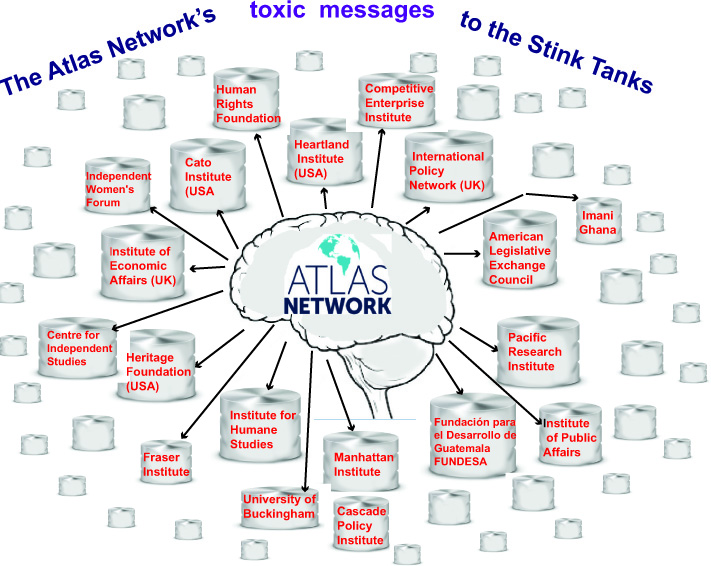
The Atlas Network is the organising force that connects “almost 600 think tanks in over 100 countries” to promote big business’s goals. While the head office is not currently funded by fossil fuel, many of the partner organisations continue to be, and fighting climate change science and solutions remain core business for many of them.
In fact, a carbon price was working and has been found to be an effective method of pushing transition. Peta Credlin has admitted that the attacks on it as a “tax” were just “brutal retail politics.” The “fostering sentiment” that the Atlas Network described is the job of these so-called thinktanks. They create the permission structure for the policy that big business wants. They also enable the election of big business’s preferred political party.
Atlas’s wording highlighted that the IPA was the “only major organization in Australia” helping engineer Tony Abbott’s victory in 2013 and the resulting instant dismantling of the carbon price.
Voters need to be reminded that it is largely foreign mining interests that benefit from fostered sentiment created by thinktanks. Prizes worth $100,000 from abroad don’t often come for purely domestic campaigns. That said, one of the Atlas Network’s US partners awarded Gina Rinehart its “Lifetime Achievement Award” for her contribution to the Network’s shared goals in 2024.
Rinehart is the only known big donor to Wilson’s former employer, the IPA now. Her largesse was made public by accident: donations of over $2 million a year for two years were recorded in tax filings submitted to court. We cannot know how much more she has given. Rupert Murdoch continues to support this organisation his father co-founded in 1943. We cannot know if he gives money now, but News Corp is an “in kind” donor, providing constant platforms for the Australian Atlas partners and interlinked groups.
The IPA is 80 years old, so it seems more respectable than the temporary dark money front groups that are popping up to push messaging as suspect as the IPA’s war on the carbon “tax.” The difference is more in scale and ambition than in nature.
These bodies copy the Atlas Network model: that involves spawning new PR operations to ensure that the electorate does not come between the corporations and their profits. Because the Atlas Network no longer declares which organisations it lists as partners (and many interlinked bodies were never listed at all), we cannot declare them to be part of the Network. They serve, however, the same purpose for similar clients.
Australians for Prosperity is clearly interlinked with both the coal sector (by the only declared donation), and the Liberal Party (by its personnel). It was forced to delete two months-worth of social media posts by the Australian Electoral Commission for being unauthorised election material. Their prime targets are the independent MPs that are now representing formerly Liberal Party safe seats, and they are spreading disinformation to discredit these parliamentarians.
It may be a coincidence that the body has copied the name of one of the Atlas partners most responsible for the current debased condition of American politics, Americans for Prosperity.
Advance’s links to Australia’s Atlas Network partners were laid out by Dr Jeremy Walker in the Voice campaign. Its origin and links to the Liberal Party as well as the global thinktank operation was explored in detail in the Sydney Morning Herald. That report also illustrates the body’s links to Zionist operations, fostered through its co-founder David Adler. It has three new front groups to discredit the Greens: Greens Truth, Her Truth and Election News.
There are as many as 18 such shadowy organisations acting against renewables and in favour of nuclear energy at the moment. Most can be found on social media targeting key seats. Others can afford billboards.
Pollsters have always been a key tool in business propaganda: the Coalition’s internal pollster in this election campaign is connected to Australians for Natural Gas. That body’s director, Nathanial Smith” is also the Liberal Party’s candidate for Whitlam.
One of the old guard Atlas partners is the Australian Taxpayers’ Alliance. Its founder, Tim Andrews, is now working for Grover Norquist at Atlas’s Americans for Tax Reform in DC. The current executive director is Brian Marlow.
Marlow is also functioning as the “Campaigner” for Citizen Go, under whose umbrella he appeared before federal Parliament arguing against the Misinformation and Disinformation Bill. Citizen Go is a global project constructed out of a Spanish extremist Catholic “hate group.” Citizen Go’s Australian “campaigns director” is George Christensen who has registered himself as the head of a “foreign political organisation.” The Facebook page campaigns using an “end abortion” hashtag, using misleading information. As a state MP, Nathaniel Smith argued for abortion to “remain in the Crimes Act.” The Coalition candidates’ commitment to a Christian Nationalist position is not separate from their Atlas Network links but directly connected to that movements’ transnational trend.
It is not surprising, in either of Marlow’s roles, to find such figures fighting efforts to control mis- and disinformation. With climate science as certain as it is, and the need to transition to clean sources of energy so urgent, the campaign to disrupt the transition is hard pressed to find useful truths: both misleading information and distraction can serve.
Australia needs a minority government with the crossbench granting it courage to tackle the threats to Australian politics of dark money and shadowy disinformation campaigns.
Political merchandise
We don’t need a government containing Tim Wilson whose speech at the 2015 Atlas Network regional gathering, the Friedman Conference, celebrated his turning Human Rights Commissioner role into a defence of property rights. Think hard about why this network values protecting property but not protecting you as a community member, worker, consumer or citizen.
The pro-nuclear drive and Zionism are inter-twined

https://theaimn.net/the-pro-nuclear-drive-and-zionism-are-inter-twined/ 10 May 25
For many years, I’ve been running websites devoted to the nuclear-free movement. People have asked me why, over the past two years, I’ve been including news about Israel and Gaza.
What on earth do Israel and Gaza have to do with the pro-nuclear cause?
Well, unfortunately, quite a lot.
“While everyone believes that the Israelis possess a sizable nuclear arsenal, no one really knows how big that arsenal is. In 2008, President Jimmy Carter estimated that Israel probably had a minimum of 150 weapons in stock ready to use if the most dire circumstances warrant. Six years later, the former President revised that estimate and put the figure in the 300 range, which—based on Carter’s calculations—would mean that Israel doubled its arsenal from the 2008-2014 time-period. “
Of course the Israeli government “does not confirm or deny” that they’ve got nuclear weapons, and the cowardly governments that support Israel similarly do not officially confirm it. And of course Israel has not signed the Treaty on the Non-Proliferation of Nuclear Weapons (NPT), or participated in any kind of weapons control negotiations.
In Sep 22, 2023 Israeli Prime Minister Benjamin Netanyahu warned Iran at the United Nations of a “nuclear threat” in what his office quickly walked back as a slip of the tongue. In July 2024 Prime Minister Benjamin Netanyahu pledged in a scathing speech to Congress on Wednesday to achieve “total victory” against Hamas.
The Zionist philosophy means that the Jews are God’s chosen people. And the Islamics certainly are not. The attitude of Israel towards the Palestinians is that they are not the same kind of human being as the Jews are. Indeed, it’s OK to starve Gazan children to death – after all, they are some kind of untermenchen.
Well, the genocide of Gazans is being achieved without any need for nuclear weapons. But what about the other Islamics? There’s Yemen, and there’s Iran. Netanyahu believes that Iran poses an existential threat to the Zionist state, and could make a nuclear weapon in a short period of time, making Israel and even the US unable to defeat or contain it.
To what lengths might Netanyahu go, to prevent that? Bomb Iran’s nuclear sites?
And would Donald Trump, an enthusiastic fan of Israel, support that option.
Here’s Trump, seven months ago, urging Israel to make such a strike,
While I’ve been thinking about this for some time, I was prompted to write about it now, after reading an article by Lucy Hamilton in Australian Independent Media, about the close involvement of Australian pro-nuclear front groups with the Zionist movement.
It’s not only Israel that we must worry about, in Australia, and presumably world-wide. If we aim to be nuclear-free, we are up against a lobby determined to have nuclear-weapons superiority, and the Zionist movement is right up there in that determination.
Is nuclear dead? Signs Coalition’s policy isn’t buried despite election loss

The Liberals and Nationals will review their policy platforms as they assess their sweeping election defeat, which resulted in Labor claiming a majority government.
By Cameron Carr, 9 May 25, https://www.sbs.com.au/news/article/signs-coalition-nuclear-policy-not-buried-despite-election-loss/ideom2e8z
But the Coalition didn’t have much of a choice when it came to election promises around energy, Simpson told SBS News.
“The Coalition had to come to the election saying something about energy policy if they were going to oppose Labor’s policy, and there’s not really that many options,” he said.
“They could have come out and said, ‘We’re going to use gas and or coal for eternity’, but then they would have to abandon their commitment to net zero.”
Fewer moderates in the party
Simpson said there are a couple of reasons the Coalition could come back with a version of the policy for the next election.
“In 2022, they lost all those teal seats. They lost a lot of moderate voices from the Liberal Party. And then that’s just been exacerbated in this recent election,” Simpson said.
“There are very few voices going to be coming from metropolitan urban areas in the Coalition party room. So that’s why I wouldn’t be surprised if, after they do the post-election wash-up and assessment of what went wrong, they come out again with another pro-nuclear policy.”
Simpson said “cultural opposition” is likely another factor, with the Coalition ideologically resistant to a transition to renewable energy.
“They don’t particularly believe in climate change, and it’s certainly not a priority for them,” he said.
While nuclear energy could be a policy the Coalition runs again in 2028, Simpson predicted it would cause “further devastation” within its remaining metropolitan seats and push the Coalition into the “electoral wilderness” for a generation.
Sacking Dreyfus and Husic to appease Marles proves Labor 2.0 will be just more of the same
In that sense, it’s appropriate that his (Dreyfus’) demise has come at the hands of Marles, who is everything wrong and sordid about the current Labor Party. He is a policy vacuum, with his only apparent belief being the primacy of the US alliance. He is not merely incapable of properly managing an incompetent and potentially corrupt Department of Defence, but he also appears entirely insouciant about its poor performance.
As Paul Keating pointed out in blasting Albanese’s failure to prevent this, the Victorian Right faction, led by Marles, is “demonstrably devoid of creativity and capacity”.
The sacking of Mark Dreyfus and Ed Husic sends a signal that performance and party loyalty are far less important than what the factions want.
Bernard Keane, May 9, 2025, https://www.crikey.com.au/2025/05/09/mark-drefus-ed-husic-cabinet-frontbench-richard-marles-anthony-albanese-labor/
Anthony Albanese, having ascended into the Labor pantheon with a remarkable victory that smashed opponents left and right, has demonstrated his new authority by… sacking two well-regarded ministers at the behest of his single worst minister, Richard Marles, and replacing them with duds.
The defence minister’s ousting of Attorney-General Mark Dreyfus and Industry Minister Ed Husic has cast a particularly gloomy shadow over what should have been an unalloyed Labor triumph. It also reflects badly on Albanese’s willingness to use his authority to deliver better government, rather than keep his party’s factional hacks happy — Marles’ Labor Right faction stiffed Dreyfus; in the case of Husic, he was turfed in response to Marles’ demands for NSW to give up a frontbench spot.
The replacements for Dreyfus and Husic, Victorian backbenchers Sam Rae and Daniel Mulino, are remarkable in their banality. Mulino, a former Andrews government outer ministry member, has been in Parliament for six years without anyone being aware of his existence. Rae is a Labor Party functionary, a former Victorian state secretary who joined PwC before entering Parliament in 2022. Yes, that PwC, the firm that represents everything toxically wrong with the way government was run under the Coalition. Rae’s supporters apparently think that’s something to boast about.
As Paul Keating pointed out in blasting Albanese’s failure to prevent this, the Victorian Right faction, led by Marles, is “demonstrably devoid of creativity and capacity”.
………………………Dreyfus, like John Faulkner in the Rudd government, was the only consistent advocate within cabinet for more integrity and transparency in government. His departure cripples any internal push to make the Albanese government a better, more accountable one.
In that sense, it’s appropriate that his demise has come at the hands of Marles, who is everything wrong and sordid about the current Labor Party. He is a policy vacuum, with his only apparent belief being the primacy of the US alliance. He is not merely incapable of properly managing an incompetent and potentially corrupt Department of Defence, but he also appears entirely insouciant about its poor performance.
As Paul Keating pointed out in blasting Albanese’s failure to prevent this, the Victorian Right faction, led by Marles, is “demonstrably devoid of creativity and capacity”.
Again, as Keating points out, Albanese could have intervened, as he has intervened in other factional disputes. Instead, he has sent a strong signal to his frontbench: actual performance and willingness to serve the party loyally are far less important than what the factions want. He’s allowed a factional brawl to significantly diminish the capacity of the ministry, thus permitting the deadening touch of Marles to break out of Defence like a fungating tumour.
In its first term, the Albanese government frequently demonstrated it was a timid, unambitious and craven government. Winning 90+ seats doesn’t seem to have changed that. Maybe winning all 150 wouldn’t either.
The dark cloud of Murdoch has no silver lining

News Corp, Sky after dark, Fox News … they spew lies and propaganda around the globe, and the evil empire’s tentacles keep wrapping around the fearful and the ignorant.
by Nicole Chvastek, 7 May 2025, https://thepolitics.com.au/the-dark-cloud-of-murdoch-has-no-silver-lining/
As Saturday’s bloodbath washes through the Liberal corridors of no power, the electoral train wreck has turned attention to other overly cocky players: the Murdoch media.
From the moment the poll was called, Rupert Murdoch’s news culture warriors turned up the heat on Labor, exhorting the brilliance of Peter Dutton’s failed nuclear fantasy and his war on migrants, “woke” schools, people who work from home and Welcomes to Country — while tearing down anyone who dared suggest he and his party were not fit for office.
But on election night none of that mattered. None of the confected outrage, the miles of newsprint, the spin and the bullying had made a jot of difference and was more likely to have worked against the Liberals’ interests. Australians it seems have a finely tuned bullshit radar.
Sky pirates
Greens Senator Sarah Hanson-Young nailed it when she told Radio National on Monday:
“I think what has happened to the Coalition is they spent a bit too much time hangin’ out with Sky News and they forgot to really hear what people were saying. The other big loser is the Murdoch press. They created an echo chamber for themselves.”
Dr Denis Muller of the Centre for Advancing Journalism at the University of Melbourne said the Murdoch media were “agents of disaster” for the Coalition:
“I see the sun beginning to set on Rupert’s influence in Australian politics. News Corp created a bubble in which their journalists and Coalition politicians cocooned themselves, talking to each other on Sky after dark, persuading each other that everything was going to be fine.”
A setting sun? It’s a big call. Australian politicians of all persuasions famously make the trek to Murdoch headquarters after an election for a ritual known as “kissing the ring”, and Anthony Albanese, Richard Marles and Penny Wong were quick to do their duty in 2022.
Strings attached
Eric Beecher, a former News Corp employee, recalls being sued (unsuccessfully) by Lachlan Murdoch who issued a writ for defamation over an opinion piece linking the Murdoch news empire with 2021’s January 6 Capitol riots:
“The day after the defamation writ was issued, a large Commonwealth government car pulled up outside the Holt Street Surry Hills headquarters in Sydney of News Corp. Three people got out of that car to go upstairs and visit Lachlan in his office: the prime minister, the deputy prime minister and the foreign [affairs] minister of Australia. It’s been going on for 100 years and it should stop.”
The reach of puppetmaster Rupert Murdoch into governments and policy making knows no bounds and there have been countless exposés on unethical business practices. But the machine roars on, a powerhouse of global disinformation and propaganda while pretending to be a news-gathering organisation.
In January, Murdoch was photographed reclining in the Oval Office as Donald Trump signed an executive order creating a sovereign wealth fund. Fox News cable spits out Trump propaganda daily and is credited with helping to return the convicted felon and sex predator to office. Murdoch has called Trump “increasingly mad” and yet publicly admitted he knew Fox commentators were lying when they broadcast falsehoods about a “stolen rigged election” in 2020. But hey, it was good for business.
Nuke the enemy
The habitual process of retribution and vendetta from News Corp is bitter and legendary. The Australian Financial Review reports that Malcolm Turnbull and Kevin Rudd blame Murdoch for their political demise. In 1974, Murdoch famously directed his editors to “kill Whitlam” 10 months before Gough Whitlam’s electoral ousting.
Every day, Murdoch’s media rival, the ABC, is a target of sneering “hit jobs”, and any politician or voice that suggests climate change is real or nuclear reactors are a fantasy or billionaires don’t deserve tax breaks are hounded, possibly for life. The Herald Sun still runs revelations about former Labor premier Dan Andrews and sporadic pieces of condemnation over a car accident his wife had 20 years ago. According to Beecher in his book The Men Who Killed The News, Andrews was the only premier who refused to schlep up to News Corp headquarters for the compulsory kissing of the ring.
In Australia, the power base is the print media, overwhelmingly controlled by News Corp with a huge digital presence and backed by Sky News. In 2020, Rudd and Turnbull joined forces to call for a royal commission into Murdoch’s concentrated media holdings. Rudd claimed his media power is “routinely used to attack opponents in business and politics by blending editorial opinion with news reporting”.
Break the News
How is it that such deep, lasting damage to democracy, businesses and people’s lives can be inflicted with precisely zero repercussions? One part of the answer is the acceptance that democracies cannot flourish without a free press. Section 65A of the Trade Practices Act provides a general exemption to most of the media as publishers of news and current affairs from liability for publishing misleading or deceptive material. Former chairman of the ACCC Allan Fels said concerns around Murdoch’s practices are more likely to be addressed by a royal commission, an idea the government and opposition have not supported.
“I don’t have a view on whether he should be reined in. All media mislead to some extent. It’s not the sort of thing consumer protection law addresses.”
Dr Victoria Fielding, senior lecturer in strategic communication at the University of Adelaide, was bolder. She said legislative change was needed to rein in Murdoch excesses. She agrees a healthy democracy needs an independent free press populated by balanced journalists who hold the powerful to account and publish verifiable information — but that’s not what the Murdoch media are:
“If there was some legislation that said if you want to be a commentary organisation you can only have a particular share of the market — like any competition commissioner can do — you break it up. You say: ‘You can no longer be that large.’ It’s distorting our democracy.”
Running scared
The other part of the answer is fear, fear of taking on a monolithic disinformation machine which countless readers think is a news outlet and being publicly torn down and repeatedly shredded by a media gorilla with few scruples and deep pockets.
Remarkably, after cheerleading the Liberals to disaster on May 3, The Australian leapt back up onto its feet to brush off its flesh wound and lecture the Coalition on “missing the warnings”:
“Of all the mistakes that led to this result, one was fatal: the untested assumption that Labor was out of touch and unaligned with the mainstream values of Australians. There can be no other interpretation that that this is fundamentally wrong.”
This from the paper that tells us pretty much every day that Labor is out of touch and unaligned with the mainstream values of Australians.
Culture vultures
Reports of the death of the Murdoch brand in Australia may well be exaggerated. Like any good parasite it is known to stew and grow before attacking the host again. Fielding reminds us that backed by the Murdoch press, Dutton was on track to win the federal election as recently as January — until the catastrophic reality of the Trump presidency became obvious to Australians.
Murdoch has withstood worse setbacks than crashing an election and, like Monty Python’s Black Knight, his culture warriors rebound after each atrocity and, still bleeding, berate their victims for taking the advice.
I’d like to think the tide is turning on news outlets that amplify bullshit while bragging they are society’s moral pulse and insisting their bullshit is good for you. But if the tide is not for turning, you can always join the Liberals, and learn the hard way.
Scrap nuclear: Key Liberal senator wants radioactive energy plan buried

David Crowe and Paul Sakkal, May 6, 2025
The Liberal Party is set for a pivotal clash over nuclear power after a key senator broke ranks to urge her colleagues to dump their plans for atomic energy, shaping the choice over the party’s leadership and direction.
The warning from Liberal senator Maria Kovacic marks the first public rejection of the nuclear plan from a member of the federal party room ahead of a broader debate about how to recover from the catastrophic defeat at the election.
The move comes as deputy Liberal leader Sussan Ley and shadow treasurer Angus Taylor contest a tight race to decide the leadership, with each side approaching immigration spokesman Dan Tehan to serve as deputy.
A damaging leak of internal polling, revealed by this masthead on Tuesday, has also fuelled discontent within the party, as MPs criticise the party’s pollster, Freshwater Strategy, for providing data that that gave Liberal leader Peter Dutton a false sense of confidence.
Kovacic said the election campaign showed that younger voters did not support the nuclear policy, based on her experience with Liberal candidates at polling stations, and that the party needed to listen to the verdict from voters last Saturday.
“We know how tough it is out there, and we didn’t offer Australian voters a legitimate alternative – and they sent that message very, very clearly on Saturday,” she said.
“And we can’t deny the fact that our nuclear plan was a part of that because it was one of the keystone policies.
“So it’s my view that the Liberal Party must immediately scrap the nuclear energy plan and back the private market’s investment in renewable energy.”
Liberal leader Peter Dutton embraced nuclear power in August 2022 after calls from Nationals leader David Littleproud to adopt the policy, but the plan set off a political firestorm over the $331 billion forecast to build and own the power stations.
While the Liberals expect to launch an election review to consider their defeat, Kovacic said the nuclear policy needed to be dumped immediately…………………………………….https://www.theage.com.au/politics/federal/tehan-firms-as-kingmaker-in-liberal-leadership-battle-as-polling-leak-sparks-recriminations-20250506-p5lwvy.html
1 This month
.

Australians deserve the truth
about
AUKUS – https://aukuspublicinquiry.com/

PETITION – To: Prime Minister Anthony Albanese and the Australian Labor Government

of the week – Australians for War Powers Reform (AWPR)
To see nuclear-related stories in greater depth and intensity

