Coalition’s nuclear power pitch falling flat with some voters, Vote Compass data suggests

ABC By Vote Compass reporter Isabella Higgins and Claudia Williams, Topic:Australian Federal Elections, Sat 12 Apr 25 [excellent tables]
The Coalition’s pitch for nuclear power in Australia appears to be struggling for support among some key voters, as the nation prepares to vote on its energy future.
New data from the ABC’s Vote Compass survey shows respondents are divided on nuclear energy, while support for climate change action appears to have softened.
About 47 per cent of ABC Vote Compass respondents said they strongly disagreed or somewhat disagreed with building nuclear power plants, while 38 per cent were somewhat or strongly supportive.
Perth local Gabriel Maddock said she’s made up her mind on nuclear energy, and it is a decision she is making with her young children in mind.
“I don’t think it will be better for the environment, it’s going to be hugely expensive, and I think there’s serious safety risks,” the 35-year-old told the ABC.
ABC Vote Compass found views towards nuclear were split along party lines, while men were more supportive, and those over 65 were the age group most likely to be unsupportive.
According to Vote Compass data, 29 per cent of males strongly disagree with the plan while 41.9 per cent of females disagree.
However, the data shows strong support from those who intend to vote for the Coalition with 44 per cent saying they agree Australia should build nuclear power plants.
This contrasts with those who plan to vote for independents, Labor and the Greens — with just 7, 5, and 4 per cent respectively in strong agreement.
This data comes from a sample of more than 270,000 and has been demographically weighted…………………………………………………………………………………………………
The Coalition is promising by 2050 Australia will get 38 per cent of its power from nuclear energy, 54 per cent from renewables, and 8 per cent from storage and gas.
Some experts have questioned the projected cost and timelines of the Coalition’s nuclear plan.
Meanwhile, Labor plans to have a grid almost totally powered by renewable energy, with the target of reaching 82 per cent of renewable energy by 2030 and fully renewable by 2050.
Ms Maddock is concerned that a switch to nuclear power would lead to more carbon emissions in the shorter term.
“From a climate perspective, it seems like it’s solving one environmental issue with another, because nuclear waste is a very difficult thing to deal with,” she said.
“Why would we do that when we could continue developing our renewable power, something Australia is really in a position to be a leader in.”……………………………………………………………………………
Vote Compass is an educational tool designed to promote electoral literacy and civic engagement. While not a conventional public opinion poll, Vote Compass responses can be analysed using statistical methods similar to those used in polling to try to adjust for sampling bias.
Responses have been weighted by gender, age, education, language, religion, place of residence and past vote to account for the selection effects of the sample, enabling us to make statistical inferences about the Australian population.
Rightwing lobby group Advance says it makes ‘no apology’ for support given to anti-Greens groups

Advance has also focused on the anti-renewables movement, appearing at “energy forums” across the country and events held by groups set up to oppose the roll-out of offshore wind and solar energy.
Ariel Bogle, 13 Apr 25 https://www.theguardian.com/australia-news/2025/apr/13/rightwing-lobby-group-advance-says-it-makes-no-apology-for-support-given-to-anti-greens-groups?CMP=share_btn_url
Spokesperson acknowledges supply of flyers, T-shirts and corflutes to ‘dozens of community groups’ seeking to defeat party’s candidates.
The rightwing advocacy group Advance has acknowledged it is paying for election materials attacking the Greens to be used by third-party groups during the election campaign.
“Advance is working with hundreds of volunteers from dozens of community groups to defeat Greens candidates and we make no apology,” a spokesperson said.
The spokesperson said Advance did not fund groups directly but “we absolutely pay for anti-Greens campaign material to be at the disposal of volunteers”.
“This includes 2m flyers and thousands of T-shirts and corflutes.
“Again, we make no apologies.”
The group’s plan to focus its election campaign on reducing the Greens vote has been no secret. Advance’s executive director, Matthew Sheahan, claimed in a February email to supporters it had already raised $7.6m to “smash the Greens” and about $2m to target Labor. The group has spent more than $200,000 in the past week to promote posts from Facebook pages with names such as “Greens Truth”.
But it has not previously talked publicly about the extent of its support for other groups hostile to the Greens, including those that take exception to the party’s position on the Israel-Gaza war or on renewable energy.
The type of assistance Advance has on offer was revealed by two Jewish advocacy groups at a forum hosted by the Australian Jewish Association (AJA).
Simonne Whine of J-United, which campaigned against the Greens in the recent Prahran byelection in Victoria, said her group had reached out to Advance to get its campaign started.
“They were fantastic, efficient, strategic, well resourced,” she said. “They supplied the flyers, the T-shirts and the corflutes, and shipped everything to Melbourne, helping us hit the ground running.” Advance even paid for a picnic to thank volunteers, Whine said.
During last year’s Queensland state election, the Queensland Jewish Collective (QJC) also focused on the Greens vote in Brisbane seats such as Maiwar and Moggill. One of the group’s directors, Roz Mendelle, told the AJA forum QJC had spoken with Advance after seeing its work during the campaign against the Indigenous voice to parliament.
“When time came … to do something against the Greens here in Brisbane, I knew who to turn to,” Mendelle said, claiming that Advance kept “a healthy distance” while the campaign was under way. According to an event invitation seen by Guardian Australia, QJC held a volunteer event with Advance in February.
Mendelle is a co-director of a new group, Minority Impact Coalition (MIC), which has started a billboard campaign against Labor and the Greens in multiple states. A spokesperson for both groups said neither QJC nor MIC had received materials or funding from Advance.
“We had agreed to share volunteers for the federal election,” she said. “However, our volunteers do not want to work with Advance at the federal election so we have made the decision to do our own groundforce campaign.”
During the AJA briefing, Mendelle showed an image of a billboard paid for by QJC that read: “The Greens: They’ve changed for the worse.”
“This is also inspired by the Advance messaging,” she said. “But from there, we gained our footing, and we decided to just speak our truth.” MIC is using the same mobile billboard provider as Advance in Queensland, NSW and Victoria – STT Advertising.
In return, Advance has also used content from groups such as J-United on social media, sharing pictures of its “local grassroots community members” on its Greens Truth Facebook page.
The likely electoral impact of the anti-Greens strategy remains somewhat elusive. The Greens hold only four seats in the lower house, of which the three they won in Brisbane at the last election appear vulnerable. They have six senators up for re-election. By contrast, six new teal independent MPs were elected in 2022 – if they hold those seats or even increase their numbers, they might be expected to have a greater say in the event of a hung parliament.
“They’ve clearly worked out how to get conservative people fired up enough to throw money at them, and the way to do that is by attacking the Greens,” said Peter Lewis, the executive director of Essential, which is conducting qualitative research for the ALP. “But it’s not going to do anything to help the Liberals win back teal seats.”
The Advance spokesperson said: “Our campaign against the Greens won’t defeat teals because it was never meant to. We have been crystal clear for the past 18 months that our focus is on the Greens this election.”
Sheahan told an Australian Jewish Association forum in 2024: “Our goal is to just expose the Greens policies so that people don’t vote for them … A partial benefit will be that we think that will also reduce the teal vote.” His logic for that claim was unclear.
Anti-renewables
Advance has also focused on the anti-renewables movement, appearing at “energy forums” across the country and events held by groups set up to oppose the roll-out of offshore wind and solar energy.
As Guardian Australia has previously documented, the Facebook account for Advance spokesperson Sandra Bourke is active in dozens of local Facebook groups and pages opposing renewable projects in places such as Lake Borumba and Mount Fox in Queensland, regularly sharing Advance content.
Bourke is a regular speaker at these rallies and events – unusually for the outfit, which generally avoids a public-facing presence.
Grant Piper is the former chair of the National Rational Energy Network (NRen), which brought together community groups opposed to renewable energy projects and hosted events including the Reckless Renewables rally in Canberra last year.
That’s where Piper first met Advance. “We didn’t tie any formal knots, but we could tell we were pushing after the same thing when it comes to renewables,” Piper said.
NRen, which has rebranded as Let’s Rethink Renewables, has had discussions with Advance “all the way through”, he said, although it has remained independent. Bourke, one of NRen’s original members, is now Advance’s spokesperson and the face of its campaign against the Greens.
According to Piper – who appeared in Advance’s anti-renewables Dollars & Destruction video series – the organisation is a natural ally for groups that feel they are mostly excluded from the conversation taking place in parliament and the media.
“Advance is helping get publicity for the grassroots people who have been shut out of everything,” he said.
Others who have teamed up for the Greens Truth campaign include groups that emerged from the anti-lockdown movement, the Freedom party and Reignite Democracy Australia – which makes clear to prospective volunteers that their details will be shared with Advance.
Another NRen member and former One Nation candidate, Katy McCallum, was the MC at a “Goodbye Greens Rally” in Brisbane in late March, where QJC also appeared. Along with other event backers such as the Libertarian candidate Jim Willmott, she thanked Bourke and Advance for their help at the event.
“If our other good mate Sandra Bourke … from Advance hadn’t have jumped on, this would not be happening today,” she said.
Dump nuclear, restore momentum – new poll shows opportunity for Coalition
Liberals Against Nuclear. 14 Apr 25
New polling shows the Liberal Party would increase its primary vote by 2.8 percentage points if it abandoned its nuclear energy policy, according to research commissioned by Liberals Against Nuclear.
Andrew Gregson, spokesperson for Liberals Against Nuclear, said the polling demonstrates that the same political flexibility recently shown by Peter Dutton on the work-from-home policy should be applied to the Coalition’s nuclear energy plan.
“Peter Dutton has shown he can make hard-headed decisions when they’re needed to win government. Our polling shows dumping nuclear would deliver an immediate 2.8% boost to the Liberal primary vote in key seats – potentially the difference between winning and losing this election,” Mr Gregson said.
The uComms survey of 5,177 voters across 12 marginal electorates, including Liberal-held seats and those targeted for recovery from Labor and independents, found that 50.6% of undecided voters are less likely to vote for the Coalition because of its nuclear policy.
“Just as Mr Dutton recognised that the work-from-home policy was hurting his standing with women voters, our polling shows that dropping nuclear would increase the Liberal vote among women by four percentage points,” Mr Gregson said.
“The Coalition’s backdown on forcing public servants back to the office full-time shows Mr Dutton can listen to voters and change direction when necessary. We’re simply asking for that same political flexibility to be applied to a fiscally irresponsible nuclear policy that’s proving even more unpopular.”
Mr Gregson noted that 48% of respondents indicated they don’t support nuclear power at all, with concerns about reducing investment in renewable energy (17.3%), nuclear waste management (14.6%), and high build costs (11.6%) topping the list of voter concerns.
“Our message to Liberal candidates is simple – even if you personally support nuclear energy, this polling shows dropping the policy gives you the best chance of winning your race. We’re running out of time, but it’s not too late to make this change and give the Coalition its best shot at forming government.”
Community groups furious Coalition nuclear plan would go ahead even if locals oppose it
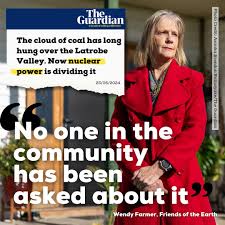
Critics of policy say residents should be ‘very angry’ they will not be able to veto generators in their towns despite promise to consult them.
Tory Shepherd, 13 Apr 25, https://www.theguardian.com/australia-news/2025/apr/13/community-groups-furious-coalition-nuclear-plan-would-go-ahead-even-if-locals-oppose-it
There is a “growing backlash” to the Coalition’s nuclear plan, with community groups furious at the lack of consultation and angered that the policy would not give local communities the power of veto and that nuclear plants would be built regardless of local opposition.
Opponents say the pro-nuclear lobby group Nuclear for Australia has been hosting information sessions but that it makes it overly difficult for people to attend and ask questions, and is not able to answer those questions that are posed.
Wendy Farmer, who has formed an alliance of the seven regions affected by the Coalition’s pledge to build nuclear reactors on the site of coal-fired power stations, says Australians should be “very angry” that they will not be able to veto any planned nuclear generators in their towns despite the Coalition’s promise to carry out a two-and-a-half-year consultation.
She refuses to call the policy a “plan” because of that lack of consultation. “They haven’t even looked at these sites,” she said.
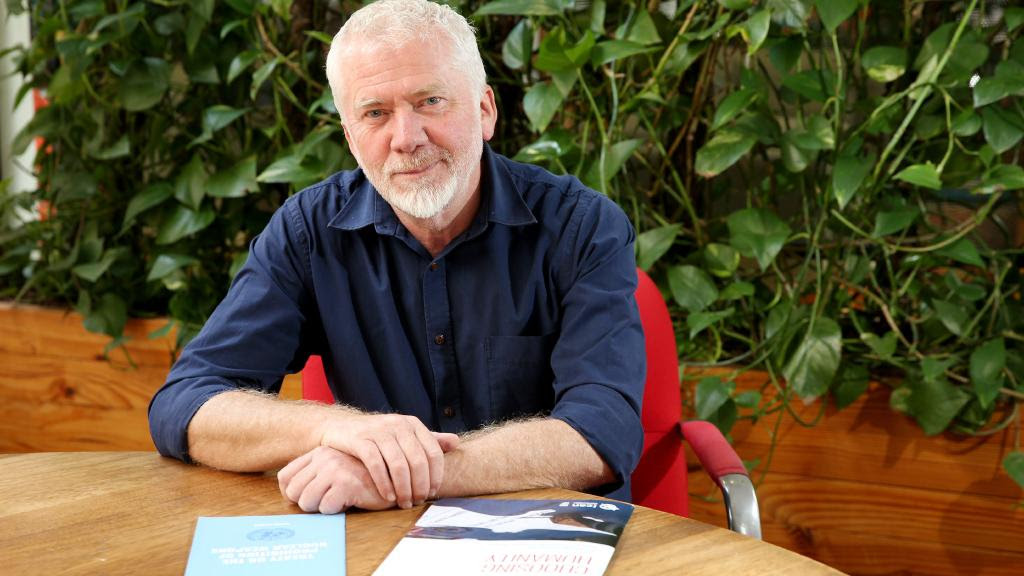
Dave Sweeney, the Australian Conservation Foundation’s nuclear free campaigner, says it is “more con than consultation”. And he says in his many years in nuclear-free campaigns he has never seen so many sectors – including unions, state leaders, energy producers, businesses and protest groups – aligned against nuclear.
The Coalition has pinpointed Tarong and Callide in Queensland, Liddell and Mount Piper in New South Wales, Loy Yang in Victoria, and small modular reactors (SMRs) in Port Augusta in South Australia and Muja, near Collie in Western Australia.
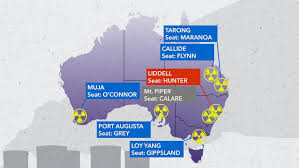
It says the $331bn nuclear plan will make electricity cheaper, while critics have called its costings a “fantasy”.
The Liberal party did not respond to questions about the lack of consultation and lack of veto power.
The alliance said there “has been no consultation or free prior and informed consent from traditional custodians”.
“You never asked locals if they want nuclear reactors in their back yards, instead you threaten compulsory acquisition and federal overrides with no right to veto,” it said in a petition to the Coalition.
It said the plan was a “distraction” designed to “create false debate” when communities are already transitioning away from fossil fuels to renewable energy.
Jayla Parkin, a Collie resident and community organiser for Climate Justice Union, said pro-nuclear information sessions had not provided any answers and had tried to stop First Nations people from entering.
Nuclear for Australia has held two information sessions with “expert speakers” in the town.
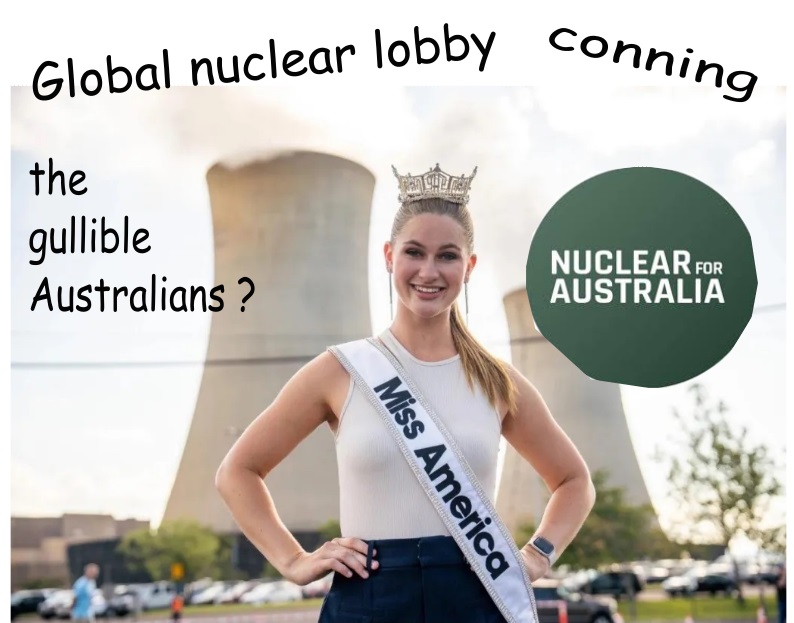
One elder was “devastated” after initially being refused entrance to a meeting last year, Parkin said. “She wanted to get the information,” Parkin said. “Not everyone is simply for nuclear or against. We are for being informed on what’s going to happen.”
At a January meeting, elders were told they couldn’t go in because of something wrong with their registrations, which Parkin then sorted out. Once inside, she said questions had to be submitted via an app.
Not a single question could be answered … like ‘Where is the water coming from?’, ‘How will this benefit Collie?’, and ‘Where are you going to store the radioactive waste?’” she said.
Since then, the community had heard nothing, she said.
Nuclear for Australia, founded by Will Shackel and boasting the entrepreneur Dick Smith as a patron, describes itself as a grassroots organisation with no political affiliation.
Information sessions have featured Grace Stanke, a nuclear fuels engineer and former Miss America who says being called “Barbenheimer” is one of her favourite compliments.
Shackel told SBS that Nuclear for Australia Google people when they try to register for the sessions.
“If we believe that someone is a known protester … someone who could cause a physical threat to people in there, we will not allow them in,” he said.
Farmer, also the president of Voices of the Valley, said Nuclear for Australia was “silencing people” by only allowing questions through an app and filtering them.
Nuclear for Australia has also taken out ads in local newspapers claiming 77% of coal jobs are transferable to nuclear plants and that nuclear workers are paid 50% more than other power generation-related jobs.
The fine print shows those claims come from a US nuclear industry lobby organisation and refer to the situation in the US.
Farmer said that, “adding insult to injury”, the advertisements misspell Latrobe Valley as La Trobe Valley and, in one case, an ad aimed at Latrobe was put in an SA newspaper.
“Regional communities are desperate for jobs now,” Farmer said. “Nuclear is not the answer.”
Protesters heckled the opposition leader, Peter Dutton, for not meeting with the community when he visited Collie in October last year.
“Collie doesn’t like it when people like that come to our town and hide,” Parkin said. “People have questions … at least openly answer them.”
In Perth last week Dutton was asked about criticism from Collie residents that he hadn’t heard their concerns about nuclear power and whether he would commit to visiting the town during the election campaign.
“I’ve been to Collie before,” he said. “There are seven locations around the country, and I won’t be able to get to all of them.”
Those communities knew the Coalition was offering them “the ability to transform”, he said.
Greg Bannon is from the Flinders Local Action Group, which was formed to oppose plans to build a nuclear waste dump in SA.
He said the community had not heard much apart from a February information session held by Nuclear for Australia. He said there were concerns about the safety of any power plant and the impact on the local environment. “Port Augusta … is probably the most stupid place to put a nuclear power station in the world,” he said, pointing to the unique nature of Spencer Gulf and its flat “dodge” tides.
“Any leakage … the water would end up in the top end of the gulf, with only one place to go, through Port Lincoln, the fish nurseries, the mangroves … only 50km further south is Point Lowly near Whyalla, where the annual migration of the southern giant cuttlefish occurs, which is a unique event in the world,” he said.
The other point, Bannon said, was that the region had already transitioned away from baseload power to renewables.
Guardian Australia has approached the Coalition and Nuclear for Australia for a response.
Tom Venning was preselected to replace retiring MP Rowan Ramsey in Grey, the federal electorate that Port Augusta sits within. He said he supported the policy as part of a “credible path to net zero” and that if the Coalition formed government there would be a two-and-a-half-year community consultation and an independent feasibility study.
“I’m committed to keeping my community fully informed and involved,” he said, adding that he would take any concerns seriously and would work with local leaders and the energy minister to address them.
Sweeney said the Coalition already appeared to be backing away from its commitment to nuclear and appeared reluctant to bring it up.
On Friday Dutton said people would flock to nuclear if they subsidised it but that they could “subsidise all sorts of energies”.
“I don’t carry a candle for nuclear or any other technology,” he said.
Farmer said: “There is a growing backlash.
“We are keeping it as a hot topic – because the Coalition doesn’t want to talk about nuclear, we will.”
Going nuclear will decimate jobs in regions first, stop billions in new investment.
Cancelling new transmission projects will decimate opportunities for electrical workers and apprentices in exactly the regional areas where opportunities are needed, says ETU national secretary Michael Wright
Rachel Williamson, Apr 10, 2025 https://reneweconomy.com.au/going-nuclear-will-decimate-jobs-in-regions-first-stop-billions-in-new-investment/
Regional areas will suffer the most from job and investment losses stemming from the Coalition’s energy promises, according to analyses from alarmed energy sector stakeholders.
The Coalition’s push for nuclear, a policy that was announced with much fanfare in December but has largely disappeared from the election hustings, will result in the loss of $58 billion in direct investment in renewable and storage, and cause the loss of 42,000 full time jobs, the Clean Energy Council says.
Opposition leader Peter Dutton’s Budget reply promised to abolish the $19 billion Rewiring the Nation fund will also cause the immediate loss of jobs, the Electrical Trades Union (ETU) says.
The ETU analysis suggests 2000 electrical worker jobs will disappear this year if work stops on major network projects, rising to 7000 job losses in 2029 when building work on new transmission is expected to peak.
The costs are the direct impact from the Coalition’s promise to build seven nuclear reactors across Australia.
In December, it outlined a vision of small modular reactors becoming operational by a hugely ambitious timeline 2035 – notwithstanding the fact that these do not exist as commercial technology yet – and predicted the first large reactor operational by 2037.
But that vision requires renewable generation taking up no more than54 per cent of the total energy supply in 2050 – compared to Labor’s target of 82 per cent by 2030 – and cutting funding for new transmission by 79 per cent to allow room both in the grid and budget, according to modelling by think tank Frontier Economics.
At what cost?
The overall cost of abruptly changing the country’s energy course will be high, according to numbers crunched in a Clean Energy Council analysis.
Their data shows the size of the loss in the years before 2030 alone, and the size and longevity of the damage to investment decision making.
“The energy sector doesn’t plan based on three-to-four-year election cycles. These are 30–40-year investment decisions and investors need to see continued confidence in the sector through stable, long-term policy settings to keep investing in Australia,” says CEC CEO Kane Thornton.
“We need the right policy settings in place and both government and industry working together to accelerate the delivery of cheap, reliable and modern clean energy that works for Australia.”
Renewable generation is set to reach 54 per cent of the National Energy Market (NEM) by 2028 from projects that are being built or have financial backing today.
Preventing renewable energy generation from growing past that level would mean cancelling almost 29 gigawatts (GW) of large scale solar and wind currently proposed or in planning and the $58 billion of capital investment they will need.
Some 37,7000 construction jobs per annum won’t happen, nor will 5000 jobs annually in operations and maintenance, just between 2026 and 2030.
Regional areas will miss out on $68 billion of economic activity and landholders will miss out on $2.7-3.4 billion in payments over a 25-year project life cycle.
Communities will lose a further $696 million in direct contributions from renewable energy projects.
And to top it off, household bills will be $449 higher, according to the Clean Energy Council NEM bill analysis in March of the impact of going nuclear.
Regions will hurt the most
While the nuclear proposal is seen by many analysts as a smokescreen for keeping decrepit coal plants running longer, the immediate ramifications will hit hardest and immediately in the regions.
Renewable energy projects are delivering jobs and financial investment in country areas long neglected by national and state budgets, says Renew Economy‘s David Leitch.
“This is the greatest economic opportunity the regions will ever face in Australia, at least in the last 100 years, and probably in the next 100 years,” he said during a Smart Energy Conference talk on Wednesday.
Cancelling new transmission projects will decimate opportunities for electrical workers and apprentices in exactly the regional areas where opportunities are needed, says ETU national secretary Michael Wright.
“Peter Dutton is planning a jobs bloodbath for the electrical industry,” he said in a statement.
“Cancelling new transmission construction] deprives nearly 12,000 electrical workers, their communities and their families of a living across the country.”
Its analysis suggests that staying the course under the Australian Energy Market Operator’s (AEMO) Step Change plan would lead to almost 43,000 new jobs by 2050. Dutton’s energy plan would lead to an aggregate of almost 25,000 job cuts.
Other jobs that will disappear include construction workers and truck drivers, due to halting new renewable projects in order to meet the 54 per cent cap, says Thornton.
Capping renewables at 54 per cent would not only see Australia miss out on billions of dollars of capital investment and economic growth, but thousands of jobs… and billions of dollars in community benefits would be left on the table,” he said in a statement.
“We need all sides of politics to embrace this private-sector investment into regional Australia and the thousands of well-paid jobs this industry generates every year.
“These are real dollars for farmers, real dollars for country towns and real blue-collar jobs that pay Australians’ bills.”
The irrational optimism of the nuclear power lobby

12 Apr 25, https://theaimn.net/the-irrational-optimism-of-the-nuclear-power-lobby/
Australia’s Opposition Party is the prime example of this unfounded optimism. Liberal Coalition leader Peter Dutton is full of enthusiasm in his nuclear plan :
Our plan will deliver a net-zero electricity grid by 2050 and a strong and resilient economy. It will set our country up for decades to come. At the front of this next wave of growth will be those communities which host zero-emissions nuclear plants. Not only will local communities benefit from high paying, multi-generational jobs but communities will be empowered to maximise the benefits from hosting an asset of national importance .……….
A Federal Coalition Government will initially develop two establishment projects using either small modular reactors or modern larger plants such as the AP1000 or APR1400. They will start producing electricity by 2035 (with small modular reactors) or 2037 (if modern larger plants are found to be the best option).
Dutton and his chief nuclear spruiker, Ted O’Brien, gloss easily over concerns about costs, safety, water shortage, environmental effects, timing, and of comparisons with wind and solar power.
Ted O’Brien is indeed a master at this stuff. He looks just the right guy to be a reassuring expert to farmers, and rural communities. His background in marketing shows, with his perfect marketing style. Pleasant, affable, -even warm, calm and confident, O’Brien doesn’t need the detailed facts to interfere with his comfortable assertions about Australia’s wonderful nuclear energy future.

“because hand on heart that’s in our national interest It is the right thing to do I It is why othercountries all around the world are now introducing nuclear energy It’s in Australia’s interest …….We’ll always have to focus on what is right for Australia.
Australia is already behind the eight ball when it comes to zero-emission nuclear energy. The sooner we get going the betterIt has proven around the world to be the fastest way to decarbonise electricity grids.”
Australia, geographically remote from the countries that do have nuclear power, is vulnerable to this kind of “style over substance” persuasion.
If we look at the substance of what is going on in those countries, we find a very mixed bag indeed. The national governments of France, USA, UK, Canada, Japan, Russia, are all for new nuclear power – encouraging and subsidising big and (so far non-existent) small nuclear reactors. Not so much China, which is going allout for renewable energy.
The politicians might be backing nuclear power – but the economic realities tell a different story:
BRITAIN: Let’s start with the COSTS – Hinkley Point C nuclear will cost at least £75 billion – highly unlikely that Sizewell C will be any cheaper. Then there’s the WASTES problem – Nuclear bosses quizzed by MPs over Sellafield’s £130 billion century-long clean up. And there’s the OPPOSITION to the industry and to its wastes – Resistance to nuke dump grows in South Copeland.
FRANCE. is in all sorts of trouble with its nuclear programme – France delays EPR2 reactors to 2038. The Flamanville EPR nuclear reactor will not be able to deliver its full power without major works. Squabble with Britain over who pays for France’s nuclear projects in the UK. And there’s The poisonous problem of France’s nuclear waste
USA – COSTS – USA nuclear power companies feeling the financial pain- future very dubious. Failure of small nuclear reactor project. Attempts to restart old reactors – Groups Demand DOE Environmental Impact Statement Before Agency Bails Out Palisades Zombie Reactor Restart.
JAPAN. has a huge nuclear WASTE problem. And it’s not just the Fukushima continuing waste disaster. There is little enthusiasm in government or community for reviving the nuclear industry – TEPCO’s rehabilitation plan delays expose limits to nuke power reliance.
CANADA. The government is gung-ho for nuclear power, but here is strong and well-informed opposition to it. And those pesky indigenous opponents are having legal wins on waste plans, – the wastes problem does put a damper on new nuclear.
These are all nations that are stuck with existing nuclear reactors, many of them aging, and stuck with the very significant waste problem – which, by the way, doesn’t get a mention from the comforting Mr Ted O’Brien.
Australia’s Liberal-National Coalition has as its main policy, the setting up of a tax-payer funded nuclear industry. This is a breathtakingly bold step for a Liberal party, traditionally the champion of private enterprise, and sworn enemy of socialism.
The Coalition doesn’t seem to have much else in the way of policies. Their leader, Peter Dutton. is currently inclined to shut up a bit about nuclear. https://www.youtube.com/watch?v=12RE1WGl-VQ
It’s up to Ted O’Brien to work his marketing magic. He will probably be helped with his “style above substance” message, by well-funded groups like Advance and The Atlas Network.
Well, it worked in America. Voters, tired of all the bad stuff, turned away from facts and policy details, and voted for an entertaining charlatan. It could work in Australia, and would certainly be a triumph for the nice Mr O’Brien.
Coalition nuclear plan will plough $58bn wrecking ball through renewable energy projects, analysis warns

Going nuclear will cost ‘real dollars for farmers, real dollars for country towns and real blue-collar jobs’, Clean Energy Council says
Guardian, Adam Morton Thu 10 Apr 2025
Coalition nuclear plan will plough $58bn wrecking ball through renewable energy projects, analysis warns
Going nuclear will cost ‘real dollars for farmers, real dollars for country towns and real blue-collar jobs’, Clean Energy Council says
- Election 2025 live updates: Australia federal election campaign
- Polls tracker; election guide; full federal election coverage
- Anywhere but Canberra; interactive electorates guide
- Listen to the first episode of our new narrative podcast series: Gina
- Get our afternoon election email, free app or daily news podcast
Adam Morton Climate and environment editorThu 10 Apr 2025 01.00 AESTShare
A Coalition proposal to limit the rollout of renewable energy could stop at least $58bn of private investment in new developments and halt billions of dollars in flow-on spending in communities, new analysis has warned.
The estimation by consultants Green Energy Markets, on behalf of industry group the Clean Energy Council (CEC), assessed what would happen if renewable energy in Australia was capped at 54% of total use, the level assumed in Frontier Economics modelling relied on by the Coalition to support its nuclear power policy.
The analysis compared this with Labor’s promise to have 82% renewable energy by 2030. It found the 54% level would likely be met in 2028. Stopping industry expansion at that level would result in nearly 29 gigawatts of new large-scale solar and windfarms not being built.
Those developments would be expected to lead to 37,700 full-time-equivalent construction jobs and 5,000 ongoing jobs in operations and maintenance.
The CEC’s chief executive, Kane Thornton, said the Coalition’s position would cost “real dollars for farmers, real dollars for country towns and real blue-collar jobs that pay Australians’ bills”.
“The clean energy sector injected $40bn in essential electricity infrastructure into the national economy over the past five years alone,” Thornton said. “We need all sides of politics to embrace this private-sector investment into regional Australia.”
The analysis was released ahead of a debate between the climate change and energy minister, Chris Bowen, and the opposition shadow minister, Ted O’Brien, on Thursday…………………………………………………………………………………………………………………………..https://www.theguardian.com/australia-news/2025/apr/10/coalition-nuclear-plan-will-plough-58bn-wrecking-ball-through-renewable-energy-projects-analysis-warns
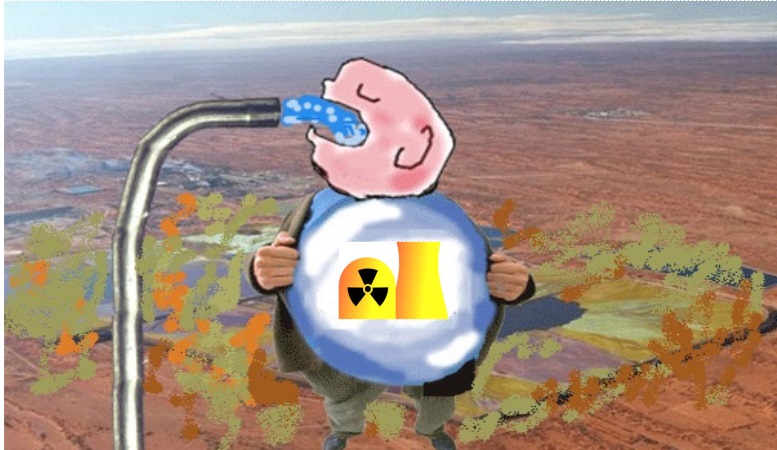
Nuclear would funnel up to 200 Gigalitres away from Australian farms annually.
Liberals Against Nuclear, 9 Apr 25
Peter Dutton’s nuclear plan would spark an Australian water crisis, potentially sucking a mammoth 200 gigalitres away from farmers in dry years through water buybacks and acquisitions, according to a new report by one of the nation’s leading subject matter experts. The Coalition bitterly opposes the current Labor Government buyback of 43 gigalitres of water allocation a year, less than a quarter of what its own nuclear plan would require. “The nuclear idea is toxic with voters,” said Liberals Against Nuclear spokesman Andrew Gregson, a former NSW Irrigators’ Council chief executive. “It will require enormous water buybacks from farmers – which the Coalition has fought bitterly against for 15 years.” |
The report, Australian nuclear energy proposals, water availability and acquisition options was commissioned by Liberals Against Nuclear and authored by former Land & Water Australia chief executive and ANU visiting fellow, Professor Andrew Campbell. It reveals the scale of water acquisitions required to run the Coalition’s proposed nuclear reactors by asking how much water would need to be acquired through buybacks or compulsory acquisitions to run them at the seven proposed sites.
Relying on the Coalition’s own modelling, the report assumes 13.8 gigawatts of nuclear capacity would replace the existing 8 gigawatts of coal-fired capacity. It estimates water consumption based on newly-commissioned nuclear reactors at Georgia USA, the same ‘off the shelf’ Westinghouse AP-1000 units proposed by The Coalition.
The report found:
- Annual high-security water allocation for a mammoth 200 gigalitres would potentially have to be acquired from farmers and other water users, such as coal mines and urban water supplies, to cool the nuclear reactors
- There is no guarantee farmers would give up this much water for sale. Compulsory acquisitions would likely be required
- Up to 39 gigalitres of annual allocation would need to be acquired each year in the Hunter, up to 25 GL around Mt Piper/Lithgow, up to 125GL in the Latrobe Valley (where the typical annual allocation to the local Macalister Irrigation District is just 32GL), 5GL in Callide and 7.5GL in Collie, WA
The report concludes that 50% of the proposed nuclear generation capacity is already infeasible due to lack of water, and a further 40% would need to be curtailed in dry seasons due to lack of water to cool the reactor, or the water becoming too warm- In short, at 5 of the 7 sites, representing 90% of the proposed generating capacity, nuclear power generation would be an unreliable source of electricity
- Most nuclear reactors overseas are near the ocean, large lakes or large rivers – in cold and wet places – due to the enormous amount of high-security water required. Six of Coalition’s seven proposed sites are inland.
“The Nationals have spent 15 years educating rural communities on how much water buybacks hurt them and fighting tooth and nail to protect our agricultural water,” Gregson said. “Now, there is a proposal to take water from the very farmers who grow our food.
“Making matters worse, this precious water will be used to create government-owned electricity companies to compete against private businesses. Forcing farmers to compete with the government when they buy water assaults every value that Liberal voters hold dear.
“We recently saw polling which showed support for nuclear in the political death zone in the proposed host sites. Support was 22% in Central West NSW, 27% in Gladstone, 24% in the rest of Central Queensland, 24% in south-west WA, just 32% in the Hunter and 31% in Gippsland. This policy is electoral poison.
“Nuclear must be dumped. It is already causing an electoral nightmare and in the long run, it is political and economic suicide. It will completely distort our economy, crowding out the private sector. It is the wrong thing to do and means destroying the livelihood of some of our most loyal supporters.
“This water grab threatens to sever the trust between the Coalition and agricultural communities permanently. We’ve spent decades building our reputation as champions of farmers’ rights – particularly water access. Why would we throw away that political capital for nuclear plants that most Australians don’t want?
“Mr Dutton must drop this toxic nuclear policy and focus on our winning strengths of small government, managing the economy and real liberal values. We can still win this election, but not with this nuclear proposal, which is diametrically at odds with our values.
How US Dependence is Not in Our Best Interest
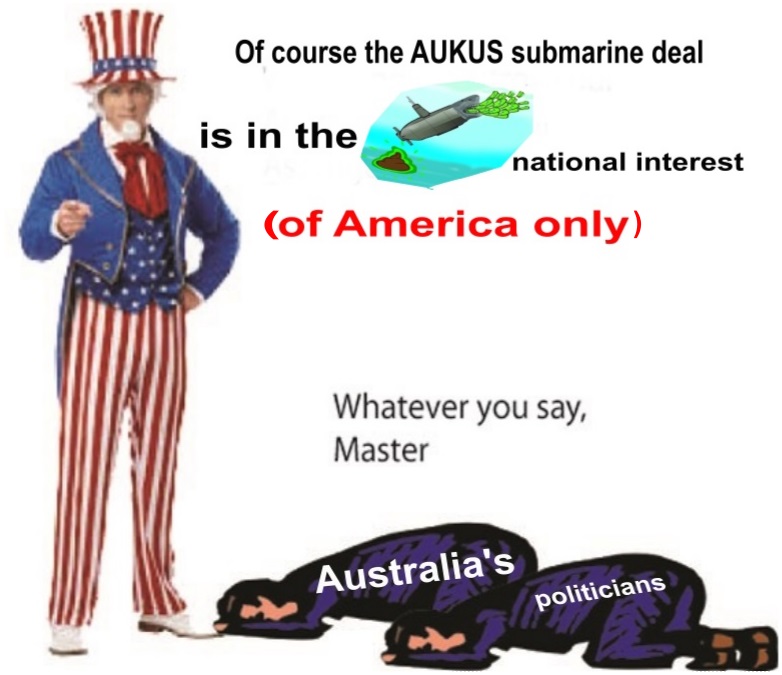
Real Example: The AUKUS submarine deal, projected to cost over $368 billion, ties Australia into US military logistics for decades – yet those funds could be spent on domestic defence innovation, regional aid, or green manufacturing.
Real Example: The AUKUS submarine deal, projected to cost over $368 billion, ties Australia into US military logistics for decades – yet those funds could be spent on domestic defence innovation, regional aid, or green manufacturing.
April 9, 2025 AIMN Editorial By Denis Hay
Description
US dependence. Discover real steps Australia can take to diversify defence, diplomacy & trade while using its currency power to reclaim sovereignty.
Introduction: A Turning Point for Australia
Location: Canberra, 2024. The Defence Minister stands before cameras, repeating familiar rhetoric: “The US alliance is central to Australia’s security.” But in community halls, cafés, and public forums across the nation, a growing number of Australians are beginning to ask: What if it’s not?
Thoughts: Many Australians feel a quiet unease about our nation’s strategic direction. We’ve followed the US into war zones, hosted its military bases, and allowed our foreign policy to align too closely with American interests. Yet few alternative paths are ever seriously discussed in public debate.
Emotions: There’s frustration, even disillusionment. Australia is a sovereign nation. Why then do we act like a client state?
Dialogue: “It’s not anti-American to want independence,” says Jenny, a retired diplomat. “It’s just good strategy.”
Problem: The Australia-US alliance has become a crutch. While it served a purpose post-WWII, the world has changed. The Indo-Pacific is more multipolar than ever. To secure a peaceful, just future, Australia must explore new defence partnerships, deepen regional diplomacy, and reshape trade alliances. Critically, we must use our monetary sovereignty to do this independently, not through the profit-driven mechanisms of public-private partnerships.
The Problem: Locked into a Narrow Strategic Path
Following WWII, Australia signed onto ANZUS, believing American power would guarantee our safety. But since then, Australia has:
• Participated in every major US-led conflict since Vietnam.
• Spent billions hosting US military infrastructure (like Pine Gap).
• Aligned its foreign policy with US military objectives, often at odds with neighbours.
Meanwhile, the security landscape has shifted:
• China, India, and ASEAN nations now influence the Indo-Pacific.
• US influence is declining, with unpredictable leadership changes.
• Regional cooperation, not superpower allegiance, is the new path to peace.
Real Example: The AUKUS submarine deal, projected to cost over $368 billion, ties Australia into US military logistics for decades – yet those funds could be spent on domestic defence innovation, regional aid, or green manufacturing.
Internal Reflections: “Why are we borrowing American power when we have the capacity to build our own?”
Note on Defence Think Tanks: When assessing defence strategies, it’s important to consider the source. The Australian Strategic Policy Institute (ASPI), often referenced by the government and media, receives funding from the Australian Department of Defence, foreign governments, and major US arms manufacturers such as Lockheed Martin and Northrop Grumman.
These financial ties raise serious concerns about bias in ASPI’s advocacy for militarised solutions and deepening reliance on the US military-industrial complex.
Heightened Risk Through US Dependence: By embedding ourselves in the strategic priorities of the United States, Australia risks becoming a target in conflicts that are not of our making.
Should tensions escalate between the US and China, Australia’s hosting of American military bases, integration into US-led command systems, and participation in initiatives like AUKUS make us more – not less – vulnerable to retaliation.
Instead of ensuring protection, over reliance on US dependence could make Australia a frontline state in the event of a major geopolitical confrontation. The risk is amplified when one considers the United States’ long and well-documented history of military interventions, regime change operations, and aggressive foreign policy – often justified under the banner of “freedom” but resulting in destabilisation, displacement, and long-term suffering in regions such as Iraq, Vietnam, Libya, and Afghanistan.
The Consequences of Strategic US Dependence
Imagine you’re a young Pacific Island leader sitting across from an Australian diplomat in 2030. Rising seas threaten your nation, yet Australia prioritises nuclear submarines over climate aid. “You talk about friendship,” she says, “but you act like a US outpost.”
This isn’t just geopolitical optics:
• Australia risks alienating regional neighbours.
• We are perceived as an extension of Western military ambitions.
• The economic burden of defence decisions like AUKUS will fall on future generations.
Stat: 56% of Australians in a 2024 Lowy Institute poll said Australia should remain neutral in a US-China conflict. The people are ahead of the policymakers.
Diversifying Alliances Through Sovereign Action
Diversifying Defence Partnerships………………………………………………………………………………………………………………………………. https://theaimn.net/how-us-dependence-is-not-in-our-best-interest/
As the debate around renewables and nuclear continues, here is what the experts say
It’s ludicrous to suppose that nuclear energy will have a resurrection. It’s akin to saying that film cameras will take over from digital cameras.“
“Nuclear is being deployed at about two gigawatts per year around the world. Solar and wind last year did 700 gigawatts,”
By Adam Shirley, Stateline, ABC News 10 Apr 25
Russell Mowbray lives in one of the 39 per cent of all Australian homes that have solar panels.
His house renovation doesn’t include loads of energy features, that are in his words “the bee’s knees”, but what his growing family can afford.
Installing solar was a priority.
“That’s the big one. As soon as you go and do all these new fancy things they come with bills, but offsetting those costs helps massively,” Mr Mowbray said.
“Most of the roof is covered, apart from the odd skylight here and there, but most of that’s covered with panels … We’re getting a fair bit [of power] and not paying a great deal.
“We’re not actually paying anything in summer. So summers are free!”
On how his energy use has changed, Mr Mowbray is blunt.
“It’s not like a conscious decision now that we have to go and turn the air conditioning off or … we can’t use the heating,” he said.
Mr Mowbray runs a house extension and renovation company.
He said every single customer asked him about solar power and electricity.
“There’s limits of costs on what [customers] want to put into their solar and energy efficiencies … Most are pretty comfortable putting solar on because that’s a nice, easy, quick way to help them out with bills. That’s the end game,” he said.
A heated debate
Modern day solar panels have their origins in suburban Canberra.
When ANU professor of engineering Andrew Blakers switched to studying solar energy in the 1980s, it was a little-known niche industry.
“When I started, solar energy was a very small endeavour, small panels in remote areas and on satellites … and today, it is a global juggernaut,” he said.
Professor Blakers has been a key influence in that industry.
He’s watched Australia’s current and future energy needs become a very hot topic.
The source — and cost — of our power is a key federal election issue, with the opposition arguing nuclear must be a key component of our energy mix.
It’s an issue Professor Blakers has a clear position on.
“Pure politics is driving the so-called debate on nuclear energy,” he said.
“It’s ludicrous to suppose that nuclear energy will have a resurrection. It’s akin to saying that film cameras will take over from digital cameras.”
Australian households don’t have the choice of nuclear power right now, and it’s unclear if there will ever be an option of household nuclear systems anywhere in the world.
Household solar systems have been around for a while, and costs have reduced significantly in the past 10 years.
Depending on which state or territory you live in, the payback period for a fully installed system is four-and-a-half to eight years.
And depending on the size of the system, a household will save anywhere from $510 to $1,120 every year on power bills.
……. UNSW associate professor Edward Obbard has decades of experience in nuclear engineering and design. He acknowledges that compared to other sources, nuclear power is “an expensive form of electricity”…………………..
We have renewable technology ‘that works’
Alison Reeve is the deputy program director of energy at the Grattan Institute.
Part of her job is to assess the most practical, cheapest and reliable energy that Australians need.
She said the vast majority of energy in Australia should come from solar and wind plus storage, with a small amount — two to 10 per cent — of gas……………………
“Two things to understand about nuclear power. One is that it’s the most expensive form of generation, and the second one, that it takes a long time to build.”
‘We’re going to live in a changed climate’
A challenge is the need to lay cables and connections for new power sources across the country.
Both Professor Blakers and Ms Reeve acknowledge this, but argue it’s a problem that can be solved.
They say that if Australia continues to follow the renewable path it’s on, there are significant economic benefits………………………………………………………..
The unstoppable momentum of solar
As Australians make day-to-day decisions about how to reduce their bills, Russell Mowbray says renovations and rebuilds are all going in one direction.
“It’s always part of the conversation with the clients we’re dealing with,” he said…………………
And Professor Blakers points to the broader numbers to illustrate what he says is unstoppable momentum.
“Nuclear is being deployed at about two gigawatts per year around the world. Solar and wind last year did 700 gigawatts,” he said.
“It’s game over.”
What Australians are saying about energy prices……………………………..https://www.abc.net.au/news/2025-04-10/act-solar-and-nuclear-experts/105155684
What if a Fukushima-sized nuclear accident happened near you?
On March 11 we commemorated 14 years since the terrible nuclear disaster in Fukushima. The impacts of this event are felt to this day with tens of thousands of people still displaced and tens of thousands of tonnes of contaminated liquid being routinely dumped in the Pacific.
Japan is a rich, technically sophisticated and modern country with high safety standards., In these ways it is comparable to Australia – except that unlike Australia Japan has decades of nuclear experience. If the Coalition’s nuclear power proposal were to go ahead, the risk of a nuclear accident is always present. It is simply not worth the risk.
The interactive map at nuclearplume.au uses a directo overlay of the Fukushima radiation plume, based on research originally peer reviewed and published by the European Geosciences Union. It shows the deposition of radioactive caesium-137 from the Fukushima disaster as of July 2011. The darker the shading, the higher the level of radioactive contamination and the higher the radiation exposures for people in those areas. At distances far from the Fukushima plant, radiation exposures were low but even low radiation doses can cause negative health impacts including fatal cancers and cardiovascular disease.
Not enough water available for Coalition’s nuclear proposal to run safely, report finds
Analyst says nuclear is the ‘thirstiest’ energy source, as report commissioned by Liberal supporters throws doubt on plan’s feasibility.
Guardian, Petra Stock, 9 Apr 25
About 90% of the nuclear generation capacity the Coalition proposes to build would not have access to enough water to run safely, according to a report commissioned by Liberals Against Nuclear.
The report authored by Prof Andrew Campbell, a visiting fellow at the Australian National University, assessed nuclear energy’s water needs and the available supply across the seven sites where the Coalition has proposed new reactors.
Campbell found replacing coal generation with “off the shelf” nuclear technology as proposed by the Coalition would require 200 gigalitres of water annually.
He found half of the proposed nuclear capacity was already unfeasible given insufficient water, while a further 40% of the capacity would need to be curtailed during dry seasons.
“At Loy Yang in Victoria, Mt Piper in NSW and Muja in Western Australia, existing water availability is already so constrained that new nuclear power stations of the capacities proposed would lack sufficient cooling water to provide reliable power now, let alone for 80 years into the future, even if the majority of existing irrigation water entitlements were acquired,” the report said.
The volumes required at Callide in Queensland and Liddell in New South Wales would be so significant the demands could place pressure on other water users, including agriculture, industry, urban residents and the environment.
Dave Sweeney, a nuclear policy analyst at the Australian Conservation Foundation, described nuclear energy as the “thirstiest of the energy sources”, which required reliable access to large volumes of water for steam to drive a turbine as well as to cool the reactor core.
On a per-kilowatt hour basis, nuclear power used more water than coal, and “massively more than renewables”, he said……………………………………
Dr Mark Diesendorf, an expert in sustainable energy at the University of NSW, said nuclear power stations were typically larger than coal generators and used more water as a result. “In comparison, solar and wind don’t use any water during operation at all,” he said.
“Australia is the driest continent in the world, apart from Antarctica,” he noted. That meant water use was an important issue, alongside other concerns such as the proliferation of nuclear weapons, the difficulty and expense of managing radioactive waste and the danger of low-level radiation as well as accidents…………………………………………………………….
Andrew Gregson, the spokesperson for Liberals Against Nuclear and a former state director of the Liberal party in Tasmania, said the nuclear water grab threatened to “sever the trust between the Coalition and agricultural communities permanently”.
“We’ve spent decades building our reputation as champions of farmers’ rights – particularly water access. Why would we throw away that political capital for nuclear plants that most Australians don’t want?” https://www.theguardian.com/environment/2025/apr/09/not-enough-water-available-for-coalitions-nuclear-proposal-to-run-safely-report-finds?fbclid=IwY2xjawJj08VleHRuA2FlbQIxMQABHsr4gCWoCyIIPdf_Pd5L89YMaJnymCsNl3F3wcT-YgT7oP1C5Bl9U_fpxYsf_aem_RVvJw4Qzs8w3lNw7HHFP9g
Dutton’s ‘nuclear thought bubble’ needs to be popped
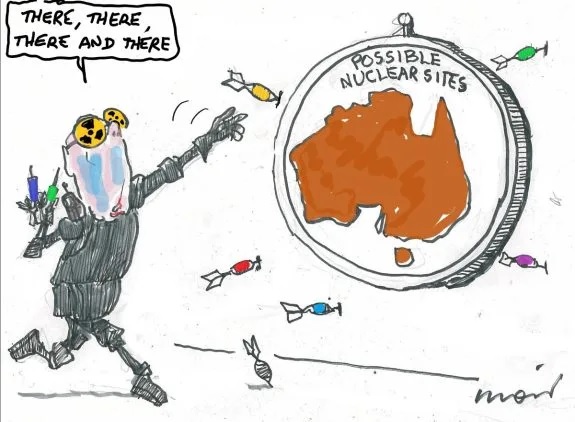
The Age, April 6, 2025
Nuclear disaster
Thank you, Peter Garrett, for telling it like it is in his take-down of the Coalition’s ill-conceived, expensive and dangerous nuclear energy policy (“I’ve spent my life fighting nuclear: Here’s what Dutton isn’t telling you about his reactors” March 30). Peter Dutton and his cronies have been allowed to get away with their ridiculous nuclear thought bubble for too long. The Labor Party has been relatively weak in its criticism of what is essentially a “smoke and mirrors” idea to present an alternative to developing renewable energy and to appease the fossil fuel lobby in the bargain. The anti-nuclear energy message needs to be hammered out to all Australians before the election. It is simply a backward and disastrous way to go.
Robert Hickey, Green Point
Thank you so much, Peter Garrett, for your insightful article. You have most eloquently summed up my thoughts and fear of Australia going down the rabbit hole of nuclear power. As a kid, I witnessed the psychological stress of the Cold War when it was thought that our world could end any day, with Russia and America in full conflict. It’s why Australians turned its back on nuclear all those years ago. For those of my era that have read Peter’s article, please share it with your children and get them to share among their friends. I’ve yet to see a mushroom cloud of destruction coming from a solar panel or pumped hydro. Ray Gilmour, Blaxland
Peter Garrett’s article makes very convincing points. Another negative aspect of these proposed nuclear reactors is the amount of cooling water which is required for them to function. These hypothetical nuclear reactors would require at least twice as much water as the existing coal-fired power stations use, and yet we live on the driest inhabited continent. These reactors sound like another thought bubble from Mr Dutton.
Evan Bailey, Glebe
Now in my late 80s, it seems that I must again join demonstrations against proposal for nuclear energy in Australia. Still, the crucial question is: where in Australia will the nuclear waste be stored for hundreds of years? Like Peter Garrett, I thought that we had won this argument decades ago. Else Gelling, Merimbula https://www.theage.com.au/national/nsw/dutton-s-nuclear-thought-bubble-needs-to-be-popped-20250330-p5lnlg.html
Trump tariffs spark questions over US alliance

Andrew Tillett, AFR, Foreign affairs, defence correspondent, 3 Apr 25
The alliance with the United States is facing its toughest test in decades after Donald Trump imposed a 10 per cent tariff on Australian exports as part of his escalating trade war, which has sent shockwaves around the world and heightened the risk of a global recession.
Markets plunged on news of Trump’s Liberation Day tariffs, with Australian stocks shedding more than $21 billion, while traders bet the Reserve Bank could cut interest rates up to four times this year.
Australia escaped Trump’s tariffs relatively unscathed, with just the minimum baseline of 10 per cent applied to goods exported to the US, although the President singled out the longstanding ban on American beef as a grievance.
A government source, speaking on condition of anonymity because of the sensitivities, said there had been indications from the US that it was willing to negotiate to reduce or remove tariffs on Australian exports.
However, the government remains on alert for more tariff hikes after pharmaceuticals, copper and gold were among a select few commodities exempted from Trump’s “liberation day” executive order.
Prime Minister Anthony Albanese said the tariffs were totally unwarranted and would prompt some Australians to question the relationship with the US. Former prime minister Paul Keating suggested Trump’s tariff campaign cast doubt on the value of the ANZUS alliance, the cornerstone of Australian defence policy for more than 70 years.
“The administration’s tariffs have no basis in logic and they go against the basis of our two nations’ partnership. This is not the act of a friend,” Albanese said.
The Australian people have every right to view this action by the Trump administration as undermining our free and fair trading relationship and counter to the shared values that have always been at the heart of our two nations’ long-standing friendship. This will have consequences for how Australians see this relationship.”
Keating said the announcement was effectively the death knell of the North Atlantic Treaty Organisation, the US-led military alliance with Europe, a decision which would inform other allied relationships with the US.
“Australia’s clutch of Austral-Americans, that phalanx of American acolytes,
must have choked on their breakfasts, as Donald Trump laid out his blitzkrieg on globalisation, with all its implications for the rupture of cooperation and goodwill among nations,” he said.
“If NATO, America’s principal strategic alliance, is expendable, what credible rationale could underpin US fidelity to ANZUS and with it, to Australia?”
Former foreign minister Bob Carr said the alliance with the US “counts for nothing” and was reason to axe the AUKUS pact, Australia’s agreement to acquire nuclear-powered submarines from the US and UK…………………………………………………………………………………
a mining industry source, speaking anonymously, said the government could buy up critical minerals and stockpile them to use as leverage in future trade negotiations.
Opposition Leader Peter Dutton said if he won the May 3 election he would use access to Australia’s critical minerals and deeper defence cooperation, particularly in defence industry, as bargaining chips to get tariffs lifted…………………….https://www.afr.com/politics/federal/trump-tariffs-spark-questions-over-us-alliance-20250403-p5lox9
Responses to “Australia’s MUMS FOR NUCLEAR – propaganda wheels within wheels”
Heather Hoff says: March 31, 2025 (extract)
I am Heather Hoff, cofounder of Mothers For Nuclear, and nonprofit based in California, but with informal chapters or groups of mothers and mums around the country and around the world…………………….
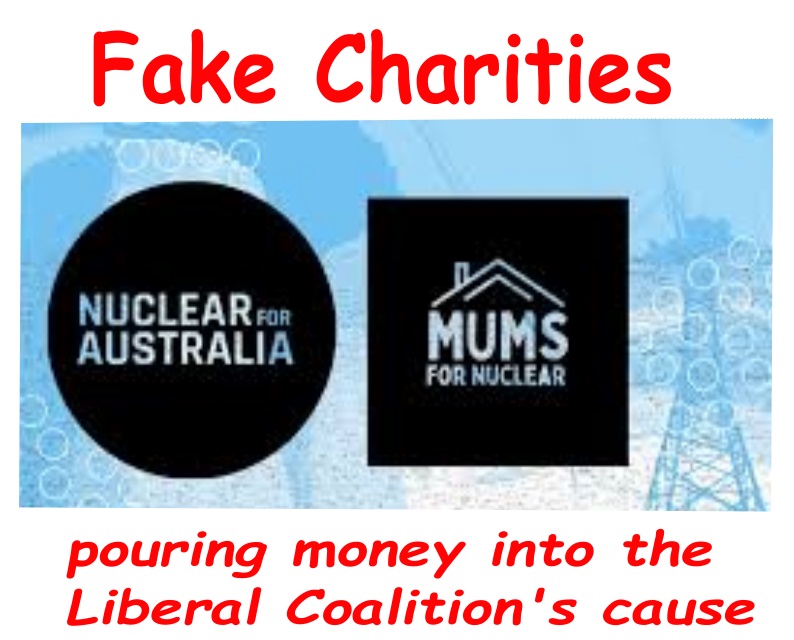
Heather Hoff continues (extract)
We are separate and different from the recent organizing Mums for Nuclear under the umbrella of Nuclear for Australia. …………….. As for the mums in Australia, we have already shared some of their stories on our website, and now the same mothers are also speaking up on behalf of Nuclear for Australia.
Terry Mills says: 31 Mar 25
Heather thank you for your contribution.
In Australia we want answers on several fundamental points ranging from where waste will be dumped/stored ?
Is the exemplar for the SMR the Westinghouse model or if not is it a Chinese or Russian alternative (very important)?
What is the delivery/installation/commissioning time frame from time an order is placed ?
What is the fixed cost for acquisition/assembly/installation/commissioning (within ten percent)?
What is the energy output of the small modular reactor (SMR) under consideration : i.e. how many conventional dwellings would be fully serviced and what could an average householder (four persons) expect to pay for that energy over a 12 month period ?
Answers to some of these fundamental questions would certainly assist us in Australia as our politicians have been less than forthcoming.
ThankYou
Bert Hetebry says: 31 Mar 25
Heather, the only question I have is WHY?
Why when we have an abundance of solar power
Why when we have an abundance of wind power
Why when we have battery technology to store energy when wind and sun are not providing that power
Why when nuclear is so hellishly expensive to build
Why when nuclear is not just expensive to build but seems to be too difficult to build in a timely manner
Why when the waste produced becomes a time bomb for future environmental problems.
So yes, Heather, Why?
Roswell says:
Thank you for your comment, Heather. Much appreciated.
Terry speaks for the most of us: we do have questions.
Bert Hetebry says:
Our contributor Roswell has a wonderfully understated sense of humour, an Australian sense of humour which at times is layered with soft, gentle sarcasm.
As he so clearly points out, the mums and mothers he cites have a vested interest in promoting nuclear power.
Kathryn says:
I wonder if these foolish pro-nuclear women and the RWNJs (like that short-sighted political psychopath, Peter Dutton) have STOPPED and given any thought about what the hell our government is going to do with the MASSIVE amount of NUCLEAR WASTE nuclear energy inevitably produces?
Do they realise that nuclear waste is, in fact, RADIOACTIVE for THOUSANDS OF YEARS posing a REAL, perpetual danger and deadly health risk for future GENERATIONS of future Australians? Have they STOPPED – even for a minute – to consider WHERE an inhumane, racist and self-serving LNP regime are likely to DUMP not only the nuclear waste of Australian-generated nuclear power but, likely, to import nuclear waste from other nations (such as America, the UK and/or other European nations) in order to make a “fast buck” at OUR expense?
No doubt, the likes of Dutton et al will consider it quite OK to dump toxic waste in what THEY consider to be “remote” areas of the outback trying to convince themselves (and anyone who will listen) that “nobody lives there” when, in fact, such areas are inhabited by communities of vulnerable indigenous aboriginals and remote farming communities!
Nuclear power = RADIOACTIVE NUCLEAR WASTE and, as such, will NEVER be a safe, acceptable alternative for our children, our grandchildren and our descendants! Australians live in the SUNNIEST continent on the planet. As such, the intensive further research and refinement of SOLAR POWER is the SENSIBLE choice because it can be accessed so easily, is inexpensive to process and, by far, the best, safest and cleanest form of energy available!
Canguro says: 30 Mar 2025
Unlikely to find any MUMS FOR NUCLEAR in Japan, in particular around such districts as Fukushima, Nagasaki, or Hiroshima, along with the Ukrainian mothers in proximity to Chernobyl, or moms close to the Three Mile Island in the USA, or indeed many other moms in the target areas of radiation fallout from a raft of similar incidents of varying severity and the associated human toll.
As Noel Wauchope’s essay implies, selling the sizzle is as equally important as the charred sausage; ironic doesn’t even begin to cover the potential horrors of human endeavour gone awry, as is so often the case and in particular in this instance of the allure of nuclear-fission based energy sources; tens of thousands of highly trained and knowledgeable engineers & technicians and still, things can and do go disastrously wrong.
Much to the distress of early implementers, Oppenheimer & Einstein for example, the lament was that the nuclear genie has well and truly been released and now mankind must find a way to manage this monstrous entity. The attraction persists, and the list of commercial nuclear reactors is extensive across many countries.
I guess the MUMS FOR NUCLEAR are acting out of self-interest as opposed to a detached rational assessment of the pros & cons of nuclear-derived energy for the general benefit of the wider population, given the range of non-potentially lethal options within the renewables sector. Do they hold hen’s parties, where they sit around fondling lumps of uranium or radium… lights out and enjoy the glow?
1 This month
.

Australians deserve the truth
about
AUKUS – https://aukuspublicinquiry.com/

PETITION – To: Prime Minister Anthony Albanese and the Australian Labor Government

of the week – Australians for War Powers Reform (AWPR)
To see nuclear-related stories in greater depth and intensity

