Australia’s democracy trashed, as Labor government + Liberal opposition join forces to push AUKUS bills through
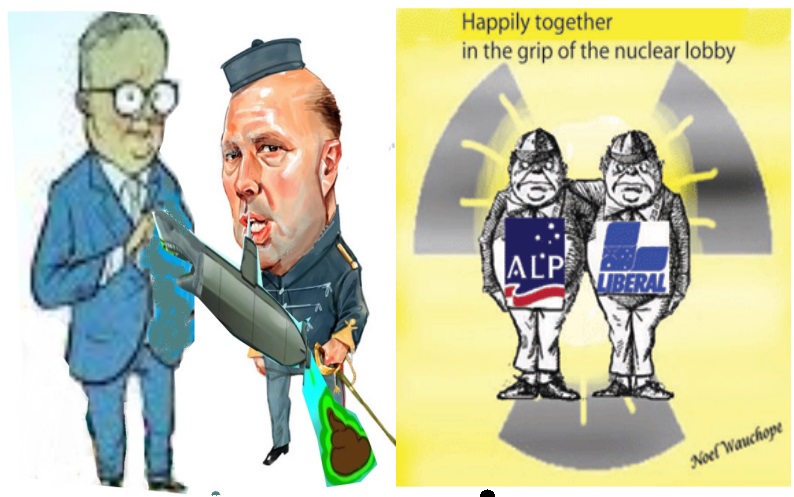

15 Oct 24, On Thurs 10th the ALP Gov & Coalition jointly forced a Senate vote on two AUKUS Bills without allowing any debate and jointly voted down all proposed amendments (see below) – see the vote at Senate Hansard extract at p.28-29 of this doc https://parlinfo.aph.gov.au/parlInfo/download/chamber/hansards/28068/toc_pdf/Senate_2024_10_10.pdf;fileType=application%2Fpdf
16 x Senators voted No:
Allman-Payne, P. J. Cox, D. Faruqi, M. Hanson-Young, S. C. Hodgins-May, S. Lambie, J. McKim, N. J. (Teller) Payman, F. Pocock, B. Pocock, D. W. Roberts, M. I. Shoebridge, D. Steele-John, J. A. Thorpe, L. A. Tyrrell, T. M. Waters, L. J.
36 x Labor & Liberal & National Senators voted Yes to AUKUS Bills.
see Australian Greens Senator David Shoebridge Media Release on 11th Oct 2024 on nuclear waste aspects:
Albanese and Dutton team up on toxic AUKUS nuclear waste deal | Australian Greens
All proposed Amendments to the AUKUS Bills were voted down by the ALP & the Coalition.
a set of Amendments by Greens Senator Shoebridge, a set by Ind Senator Thorpe, a set by Ind Senator Pocock, and a set by Senator Lambie, were voted down as four groups of amendments – see a Senate Hansard extract from p.40 to p.58 of doc: https://parlinfo.aph.gov.au/parlInfo/download/chamber/hansards/28068/toc_pdf/Senate_2024_10_10.pdf;fileType=application%2Fpdf
Premier vows to hold vote on Coalition nuclear power plan ahead of federal election

Queensland state law forbids the construction and operation of nuclear reactors and other facilities under the Nuclear Facilities Prohibition Act.
LNP leader David Crisafulli, who is on track to lead the opposition to power, stands firmly against the proposal.
Fraser Barton, Oct 15, 2024, https://reneweconomy.com.au/premier-vows-to-hold-vote-on-coalition-nuclear-power-plan-ahead-of-federal-election/
Queenslanders will be asked to vote in a plebiscite on nuclear energy at the next federal election if Labor Premier Steven Miles is re-elected.
The premier believes a separate vote on Opposition Leader Peter Dutton’s nuclear proposals can be held at the same time as the federal poll.
“I’ve said I’ll comply with the law,” the premier told reporters alongside Prime Minister Anthony Albanese on Monday.
“The law bans nuclear in Queensland but also requires the minister to hold a plebiscite as soon as they reasonably believe that the Australian government intends to build a nuclear reactor.
“Peter Dutton said the first step to get nuclear reactors in Queensland is to elect David Crisafulli – they were his words – and that means that the first step to blocking Peter Dutton’s plan for nuclear reactors is to elect me in October.”
Albanese labelled the federal coalition’s nuclear energy goals a “fantasy”.
“They don’t have a proper plan here, and it’s no wonder that they should be held to account for it,” he said.
Dutton has promised to build seven nuclear plants across Australia if the coalition wins next year’s federal election.
Dutton has previously vowed to override states who refuse to adopt the energy plan.
But Queensland state law forbids the construction and operation of nuclear reactors and other facilities under the Nuclear Facilities Prohibition Act.
LNP leader David Crisafulli, who is on track to lead the opposition to power, stands firmly against the proposal.
Political analyst John Mickel said Labor would use nuclear’s high costs and dependency on water to woo regional voters, if the plebiscite goes ahead.
“What Labor would be trying to do there is bring that issue to the fore,” he told AAP.
Plans to build nuclear plants could cost up to $600 billion and the coalition said nuclear reactors could be online by 2037.
Queensland premier will hold plebiscite on nuclear power if he wins state election
Exclusive: Steven Miles says law requires a referendum be called if the commonwealth is likely to build a ‘prohibited nuclear facility’ in the state
Andrew Messenger and Graham Readfearn, Mon 14 Oct 2024
Steven Miles will hold a state plebiscite on Peter Dutton’s nuclear power plans if he wins the 26 October poll, a move that could polarise the electorate in the Coalition’s strongest state at the next federal election.
The Queensland premier said he had received legal advice on the nuclear issue and raised the possibility of initiating a plebiscite on the same day as the federal election.
“Depending on how things play out, you could even hold that plebiscite on the same day as the federal election, to save people going to the polls twice,” Miles said in an exclusive interview with Guardian Australia.
The federal opposition leader, Peter Dutton, will take a plan for seven Commonwealth-owned nuclear power stations to the next election. That includes two in Queensland, replacing existing coal plants at Callide and Tarong.
But an obscure provision in Queensland’s 17-year-old Nuclear Facilities Prohibition Act 2007 may stand in the way. The act bans granting a grid connection, development application or generating authority to any nuclear facility.
It also requires the minister call a plebiscite if “satisfied the government of the commonwealth has taken, or is likely to, take any step supporting or allowing the construction of a prohibited nuclear facility in Queensland”.
The state opposition leader, David Crisafulli, has repeatedly ruled out changes to the law, most recently at a joint press conference with Dutton this month……………………………………………………………………………………. more https://www.theguardian.com/australia-news/2024/oct/14/queensland-premier-will-hold-plebiscite-on-nuclear-power-if-he-wins-state-election
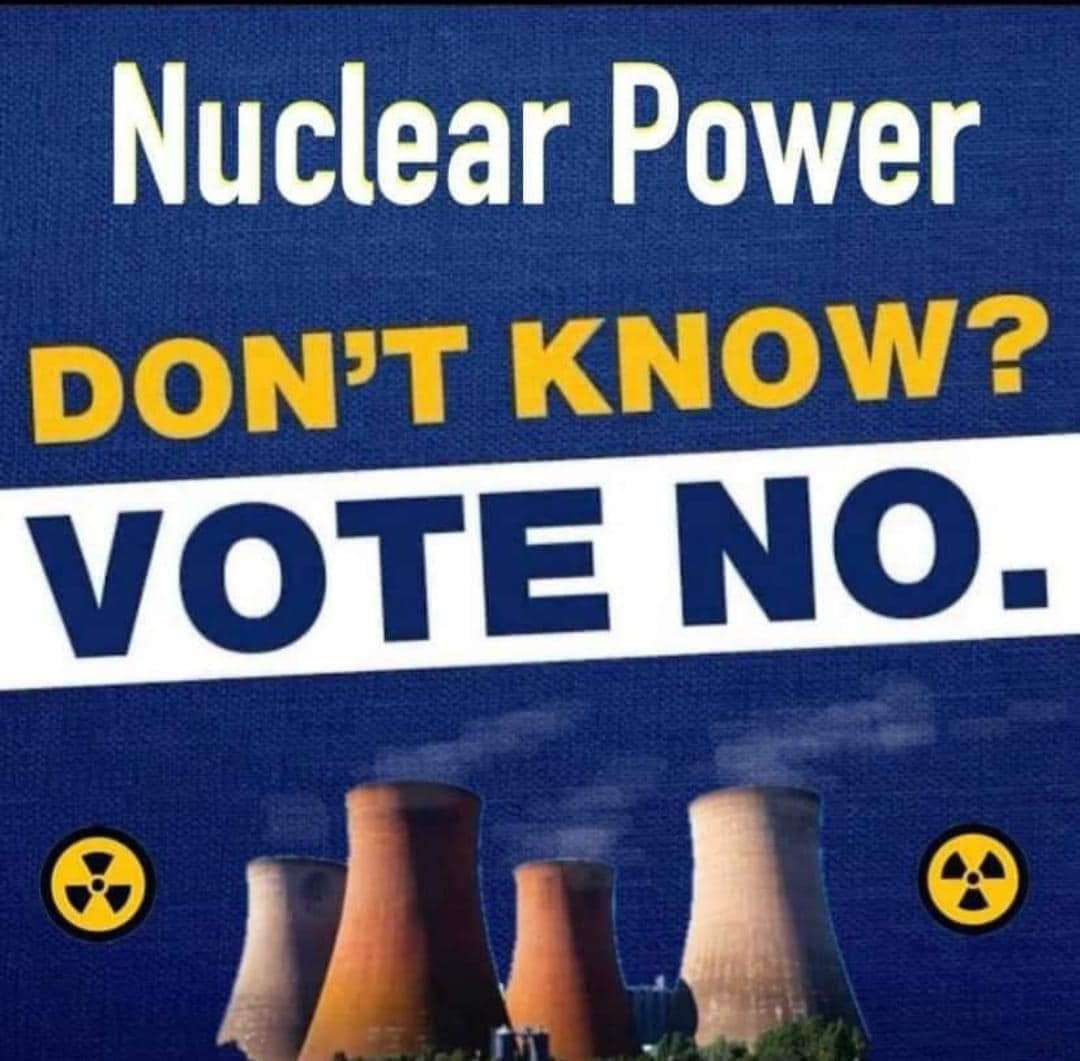
Two Peter Dutton policies may swing Teals to Labor in a minority government
Michael West Media by Michael Pascoe | Oct 14, 2024
The scenario: a minority government after the next election, as various polls forecast.
The question: in a close-run thing, to whom would the “Teals” give the keys to the Lodge?
The hypothesis: there are two Dutton policies that should force the genuine independents to select Albanese as Prime Minister.
The perversity: neither of those policies could be expected to appeal much to voters who weren’t already in the LNP camp.
May election likely
Slipping by without much attention last week was the government changing Budget Night to March 25, effectively confirming the early May election that has always been most likely. So seven months to win any hearts and minds that are not already committed.
The makeup of the crossbench will be different. Not all the community independents – to give Teals their official name – from the Class of ’22 may be returned (for starters, vale the scratched seat of North Sydney and, therefore, Kylea Tink) and there could be newbies. From here, though, it still looks likely that Teals will have the final say on who forms government. More on that later.
Enter stage right the two key LNP policies that should make it impossible for Teals to give Dutton the nod: nuclear power and housing.
The key common issues of the Teal wave in 2022 were climate, integrity, gender, and not being Scott Morrison, all based on a pledge of listening to and reflecting their communities’ concerns.
The nuclear “concept” of a plan
Dutton’s “concept of a plan” to build multiple nuclear reactors somewhere between a distant tomorrow and eternity – an excuse for extending fossil fuel burning and reducing investment in renewables – won’t and can’t wash with any Teal genuinely concerned about climate policy.
Enter stage right the two key LNP policies that should make it impossible for Teals to give Dutton the nod: nuclear power and housing.
The key common issues of the Teal wave in 2022 were climate, integrity, gender, and not being Scott Morrison, all based on a pledge of listening to and reflecting their communities’ concerns.
As Phil Coorey reported in the AFR ($):
“If they’re not going to release the detail, we’ll do it for them,” a government member said, speaking on condition of anonymity.
“The terms of reference include an examination of how soon a nuclear power plant could be operational; the cost of building and maintaining them, the storage and transportation of fuel and waste; the feasibility of using existing coal-fired power station sites and their power lines; federal, state, territory and local government legal and policy frameworks; and the impact of power prices.”
Generally forgotten is that we had a parliamentary inquiry into nuclear power only five years ago, chaired by the LNP’s Ted O’Brien, now the shadow energy spokesman tasked with selling Dutton’s nuclear gambit.
With the Coalition dominating that inquiry, the most O’Brien could come up with was that “nuclear energy should be on the table for consideration as part of our future energy mix”, not that we should go for it.
Then, like now, O’Brien was hoping small modular reactors might become a thing and other new large reactor technologies could be the economical go.
Generally forgotten is that we had a parliamentary inquiry into nuclear power only five years ago, chaired by the LNP’s Ted O’Brien, now the shadow energy spokesman tasked with selling Dutton’s nuclear gambit.
With the Coalition dominating that inquiry, the most O’Brien could come up with was that “nuclear energy should be on the table for consideration as part of our future energy mix”, not that we should go for it.
Then, like now, O’Brien was hoping small modular reactors might become a thing and other new large reactor technologies could be the economical go.
The only certainty about the LNP’s energy/climate policy is that it would delay efforts to reduce Australia’s carbon emissions. With climate denial strong in the party, the procrastinator’s golden rule rules: Put off to tomorrow what you don’t have to do today because you might get away with not doing it tomorrow.
There is no way Teals, in conscience, could choose such a policy. Climate 2000’s Simon Holmes à Court doesn’t call the Teals’ shots, but they couldn’t expect his support if they went with the deniers and sceptics………………………………………………………………………………………………..
The minority government scenario?
The post-election negotiations will test the integrity of cross-bench members. The Teals of Liberal heritage – most obviously Allegra Spender in Wentworth and Kate Chaney in Curtin – might have to hold their noses to appoint a Labor government, but they would forfeit all personal credibility if they empowered fraudulent nuclear and housing policies.
The others – Monique Ryan, Zali Steggall, Helen Haines, Zoe Daniel, Sophie Scamps and, possibly post-May, Nicolette Boele in Bradfield – have their own professed standards to live up to. If they do, they won’t be empowering a minority LNP government.
We may also assume that Bob Katter, Rebekha Sharkie ($) and Andrew Gee (if he is returned in Calare after quitting the Nationals over the Voice referendum) go LNP, while the Greens and Andrew Wilkie prefer Labor.
The self-declared opposite of a Teal, the former Liberal Dai Le ($) in the former Labor seat of Fowler, has never pledged herself on climate or anything else for that matter, winning by being an involved local and not the parachuted-in Labor candidate, Kristina Keneally.
Her gaffe in ignorantly suggesting the Lucas Heights research facility could generate electricity indicates she would not have a problem with the Dutton nuclear fantasy – unless the parliamentary inquiry convinces her otherwise. https://michaelwest.com.au/peter-duttons-policies-may-swing-teals-to-labor-in-election/
Albanese and Dutton team up on toxic AUKUS nuclear waste deal
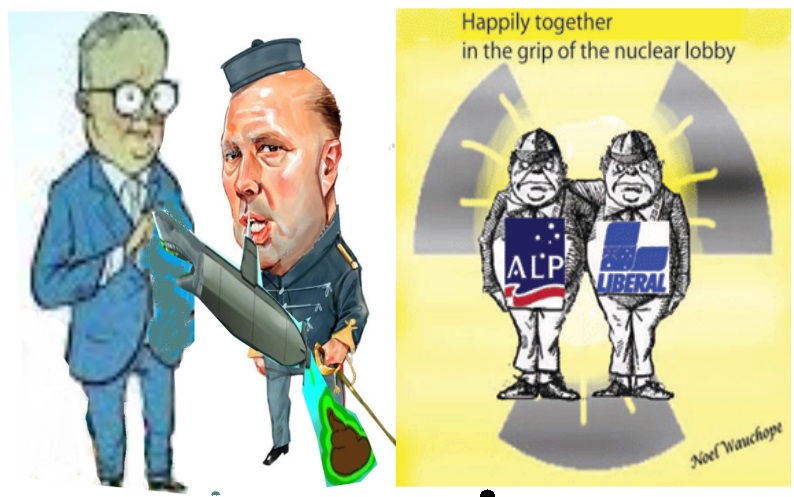
The Bill immediately creates two nuclear dump ‘zones’, one off the coast of Perth and the other at Port Adelaide, without any community consultation or local support.
The Albanese Government today teamed up with Peter Dutton’s Coalition to push through a controversial AUKUS Bill that will allow the dumping of high-level naval nuclear waste anywhere in Australia.
The Albanese Government, in alliance with the Coalition, rammed the Australian Naval Nuclear Power Safety Bill through the Senate today without debate.
The Bill also created a new naval nuclear regulator as part of the AUKUS agreement with the UK and US on nuclear submarines. It initially allowed for all UK and US nuclear submarine waste to be dumped in Australia until the Albanese Government sheepishly amended it, due to growing public opposition, to prevent the dumping of UK or US ‘spent nuclear fuel’.
However, the amendments still allow the dumping of US and UK intermediate-level waste and other high-level nuclear waste from their nuclear submarines. The Greens moved amendments this afternoon that explicitly prevented this, and the major parties voted against these amendments and others.
The Bill immediately creates two nuclear dump ‘zones’, one off the coast of Perth and the other at Port Adelaide, without any community consultation or local support.
The Bill also allows nuclear dump zones to be declared anywhere in Australia that the Defence Minister chooses with the flick of their pen, again without any consent from local communities or First Nations traditional owners.
Senator David Shoebridge, Greens Spokesperson for Defence, said: “Albanese and Dutton have teamed up today to push this AUKUS nuclear waste legislation through the Senate without debate.”
“Today’s actions see both Labor and the Coalition joining hands to ram through legislation that will let the UK and US dump their naval nuclear waste in Australia.”
“The Albanese Labor Government initially tried to sneak through a law that would allow the UK and US to dump all types of nuclear waste in Australia. The Greens called the Government out on this, and then people around Australia pushed back.
“Even with last-minute Labor amendments, this legislation still allows the dumping of US and UK nuclear waste in Australia. Labor’s amendments only prohibit the US and UK dumping ‘spent nuclear fuel’ from their submarines in Australia, but do not prohibit any other highly irradiated UK and US nuclear waste.
“This legislation green-lights dumping of all Australian naval nuclear waste anywhere in Australia. To be clear, exposure to even intermediate-level waste is lethal to humans, and the risk lasts for hundreds of years.
“Everyone can see AUKUS is sinking, the question is now becoming how much environmental and financial damage it will do before it hits rock bottom,” Senator Shoebridge said.
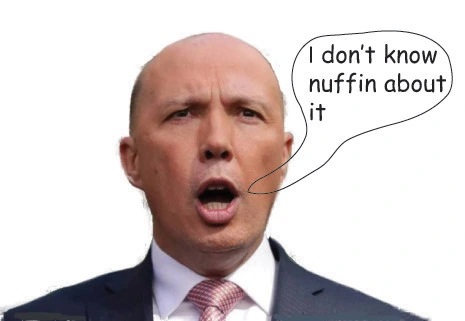
John Hewson – The opposition leader’s nuclear bullshit
But the basic question that never seems to be asked is whether the electricity sector is being run in the interests of electricity consumers or the nuclear industry. This needs to be asked in the Australian context, in relation to Dutton’s persistence with his nuclear option against the massive and still-mounting global evidence of its cost and time delay disadvantages, and the hollowness of his commitments to cheaper electricity.
https://www.thesaturdaypaper.com.au/comment/topic/2024/10/12/the-opposition-leaders-nuclear-bullsh, 12 Oct 24, John Hewson is a professor at the ANU Crawford School of Public Policy and former Liberal opposition leader.
In a full mimicry of Donald Trump, Opposition Leader Peter Dutton’s reality is how he claims it to be, in complete disregard for the facts. So it is with his stance on nuclear energy. He simply asserts his nuclear power will deliver cheaper electricity to Australian households, and that nuclear is the only pathway to net zero by 2050. In a speech to the Committee for Economic Development of Australia last month he delivered his rationale: line after line of bullshit.
Dutton builds much of his case for nuclear on what he claims are the very cheap electricity prices in the Canadian province of Ontario, where nuclear accounts for about half of the energy mix. However, he ignores the fact the domestic supplier, Ontario Power Generation, is effectively a basket case, with a very sorry financial history that has been catalogued by the Ontario Clean Air Alliance.
In 1998, seven of public utility Ontario Hydro’s nuclear reactors were unexpectedly forced to shut down due to safety concerns. All of these reactors were inoperable for more than five years – two were still inactive as late as 2017, according to the Ontario Clean Air Alliance.
By the following year, Ontario Hydro was effectively bankrupt, and split into five companies. The nuclear stations went to OPG, while some $20 billion of the stranded nuclear debt was transferred to the Ontario Financial Corporation, with the paydown lasting for more than a decade.
The province had to boost its dirty coal plants’ output by 120 per cent to keep the lights on – an outcome that would be most pleasing to Dutton’s important donors.
OPG’s electricity prices rose about 60 per cent between 2002 and 2016, in order to pay for nuclear power – including restarting the five reactors that had been shut down. In September 2016, OPG told the Ontario Energy Board it needed to increase its nuclear power prices by more than 10 per cent a year for the next decade. The premier of Ontario later directed OPG to take on billions of dollars of additional debt to ensure electricity price increases over subsequent years would not exceed the rate of inflation.
It is worth noting that in the start-up phase, the relatively new Darlington Nuclear Generating Station on the north shore of Lake Ontario has suffered from technical problems, even with proven technology, which have delayed it becoming fully operational. It should be clear there are very few givens in adopting these technologies, as evidenced with most projects across the globe, whereas Dutton is inclined to assume otherwise.
Dutton and O’Brien have attempted to create the impression that Australia is being left behind in a world rushing to adopt and expand nuclear power. This is in doubt, but it is certainly true that there is a major push to decommission existing nuclear power plants.
It is also important to learn from the cost blowouts of the Darlington project. The project was initiated in 1973 but not started until roughly a decade later. Ontario Hydro estimated a cost of C$7.4 billion when construction began (though earlier projections were lower). Costs more than doubled from here, an important element of which was the interest cost on the project debt over and above the expanding costs from delays in construction scheduling and in the build itself, which is often ignored in discussions. Other reasons for the cost blowout included the need to meet regulatory changes and updates to Ontario Hydro’s financial policies, as well as necessary design tweaks during construction. All of which seem to be characteristic of nuclear projects.
The overruns prompted more questions about whether OPG would go bankrupt again if the Darlington rebuild continued to go over budget and demand for electricity continued to fall. Why weren’t costs cut, or the Darlington rebuild cancelled, and, importantly, why didn’t they start buying more cheap water power from neighbouring Quebec, using existing transmission lines?
But the basic question that never seems to be asked is whether the electricity sector is being run in the interests of electricity consumers or the nuclear industry. This needs to be asked in the Australian context, in relation to Dutton’s persistence with his nuclear option against the massive and still-mounting global evidence of its cost and time delay disadvantages, and the hollowness of his commitments to cheaper electricity.
It is also worth noting that Canada established Atomic Energy of Canada Limited (AECL), a Crown corporation, not as a generator but as the primary research and development agency in the field of nuclear energy. As such, it is responsible for design, engineering, marketing and servicing of the country’s CANDU reactors, and aims to make CANDU “the long-term competitive electricity supply system”. This is a for-profit operation. Does the Coalition aim to replicate this sort of entity?
Peter Dutton and his shadow energy minister, Ted O’Brien, have sought to challenge the authority of CSIRO’s GenCost report on these cost disadvantages. A United States study has suggested the CSIRO estimates were conservative, putting the cost at $12,351 a kilowatt, compared with GenCost’s $8446/kW. Similarly, a recent report on the ABC’s Four Corners reviewing the US experience with the Plant Vogtle project in Georgia – which is also often cited by the Dutton team, in support of their policy proposal, as delivering cheaper electricity – revealed consumer dissatisfaction as electricity prices have risen sharply. And Bill Gates’s new Kemmerer project in Wyoming has encountered troubles.
While there are many gaps still in Dutton’s advocacy for us to adopt nuclear energy, one of the most important is his vagueness about the technology to be adopted – he has vacillated from the demonstrated, expensive large reactors to the commercially as yet unproven small modular reactors (SMRs). He would have us believe that by the time we need to build these, the proven technologies will be available. This delay may prevent him from supplying adequate cost estimates before the next election. It’s notable that the only SMR project to receive approval by the US Nuclear Regulatory Commission was abandoned recently because of rising costs, even after the Department of Energy had pledged some US$500 million in grants.
Although we probably have the world’s largest deposits of uranium, we don’t have an enrichment industry. This also raises another serious question for the opposition to answer: where will the fuel for the reactors come from? Are they advocating that we also launch a nuclear enrichment industry? Is this also part of their AUKUS dream?
There are also important issues to be addressed in relation to the disposal of the waste from the reactors. The United Kingdom is currently demonstrating just how significant a challenge this can become.
Western Australia Statement: Nuclear is No Climate Solution
| SIGN THE STATEMENT Please take action to protect WA from the threat of nuclear power by signing the statement “Nuclear is No Climate Solution.” Please help grow the support to stop Dutton’s nuclear power push in the West. |
| Unlike other states WA does not have a prohibition on nuclear power. With the Federal election increasingly uncertain we face a very real risk of a Federal Coalition advancing nuclear power in WA. We are pushing the State government to legislate a prohibition as the best legal protection against a Federal Coalition who seek to impose nuclear power in WA and we need your help to get the WA government to act. |
Peter Dutton’s proposal for WA is to build Small Modular Nuclear Reactors (SMNRs) at the Muja Coal fired power station in Collie which is due to be closed in 2027. There are new developments in the region for hydrogen power steel recycling, wind farms and battery storage all feeding into the South West grid.
The irresponsible and reckless nuclear proposal for Collie undermines and derails climate action, creates uncertainty for renewable energy investors and locks in gas and fossil fuels for longer. We cannot underestimate how serious Peter Dutton is on nuclear power and we do not have time to delay climate action.
You can download a sign on sheet to collect signatures and send back to us Nuclear Free WA c/o CCWA PO Box 883, West Perth, WA 6872.
Thanks so much for helping grow the momentum to stop nuclear power in WA.
Mia Pepper
Nuclear Free WA Committee Member
One Horrible Year on from October 7 2023, a Bleak Reflection.

larryjhs September 27, 2024, https://webstylus.net/2024/09/27/a-bleak-year/?fbclid=IwY2xjawF1TM9leHRuA2FlbQIxMAABHesplRcX1423JwSpof6CAkT303FkdzIX_bEcTdRO5SkXXOkPsj9hdRcULg_aem_XDLROjlruTcdEBP9ZqlzlQ—
The past year since Hamas’ attack has been traumatic for the Australian Jewish community locally and internationally. The fate of hostages appears to in the hands of Netanyahu, his generals, and extremists, who despite public outrage, has continued to prosecute an unwinnable war. It is now clear that that Hamas has made numerous offers for a prisoner exchange and ceasefire, but these have been deliberately refused with a preference for war at all costs by the Israeli government. Israeli Jews who protest are now arrested and beaten up. This includes hostage members’ families and protesting members of the Israeli establishment. The forces of anti-democratic extreme nationalism and militarism have taken over the country, unimpeded. Sadly, this mentality appears to be held by some Jews locally.
This war against the Palestinian people has now been extended to the West Bank and into Lebanon against Hezbollah for firing rockets. For liberal Zionists, the sum total of such a military strategy is a betrayal of what they thought was possible, to negotiate a peaceful political settlement for two peoples, in two states. Zionism as an ideal now appears bereft of a moral foundation and liberal Zionists are flailing. For non-Zionists and anti-Zionist Jews, it is confirmation of their worst fears about the seemingly inevitable drift of Zionism to extremism of the worst sort.
Some now call what is going on genocide, others reject the term as offensive, and in fact, it is up to the Internal Court of Justice to make the final ruling. But with the ongoing evidence of incitement to genocide in the Israeli media, we should call a spade a spade. This is a situation where some Israeli Jews are calling for, or taking part in war crimes.
The violence in real time – aided by an almost unimpeded flow of American arms is like nothing we have seen before, and we have rapidly entered into the world of science fiction with remote explosions of pagers and other devices.
There is always the same excuse for such violence and its “collateral” damage – Hamas or Hezbollah are our eternal enemies and the fight is existential. The only solution is military eradication. Sadly, this is the script that has been in use for decades, but it has worn thin. This violence is an attempt to permanently destroy anything that amounts to independent Palestinian life. The Israel State rejects the existence of an independent Palestine. But people’s wars – which is what the revolt in Gaza is about – are not won by military force, as learned in Algeria and Vietnam.
Israel has committed war crimes in Gaza, far beyond Hamas’ own act on October 7. Israeli soldiers have been filmed rejoicing in destruction and using Palestinians as human shields. Hospitals and schools and universities have been destroyed and journalists killed. Aljazeerah is closed down. Thousands are arrested for unspecified crimes. Starvation is taking place. This is not an ordinary war for legitimate defence. It is something far, far worse. For Palestinians and their supporters, this is considered to be a continuation of what went on in 1948 and thereafter, but this time, the world sees the brutality on its screens.
This brutality helps to explain why the atrocity against Jews and foreign workers on October 7 is now considered by many on the left as of secondary importance, when it has become an obsession among Jews, used to reinforce the sense of eternal victimhood. It also helps to explain the simplistic identification by some with Hamas’ actions and its war machine as a justified form of resistance “by any means possible”, when the result has been the superior and brutal murder conducted by Israel. It also helps to explain why so many have doubted accounts of sex crimes and atrocities by Hamas, when Israel manipulated unclear information from the very beginning. In war, truth is the first casualty.
Israel/Palestine brings together issues of war and peace, identity, and great power politics as a social media event. It has become a focus for culture and political wars that particularly affect the thinking of alienated young people in a world that appears to be falling apart under the pressure of climate change, political corruption, and technological abuse.
The brutality of Israel’s assault also helps to explain how the uncritical acceptance of formerly specialist academic theories about colonialism, imperialism, and racism, have found root in many corners of the left internationally, angered by the lack of action by the US and others to stop the carnage. Palestine has become the cause celebre even a surrogate for all international injustice even though other brutal regional wars and massacres also call for attention. The difference is of course, that Israel has claimed to be acting as a democracy and in the interests of the West. At times of course, this anger over Israel has at times segued into explicitly conspiratorial antisemitism, though this is abhorrent to responsible pro-Palestine advocates.
In fact, the idea that only the colonized, not the colonialist has any rights is totally ahistorical. Theories should not be set in stone and exclude other insights. In this case, the current take on Israel as a colony reflects theoretical narrowness and the absence of deep knowledge or particular empathy for the peculiar and awful historical circumstances that brought about migration of so many Jews to historical Palestine, as Zionists of one sort or other, or desperate refugees. Once a colony, damned as a colony for ever, including its children. This is determinism. It has got to a point that the idea of a “conflict” is rejected, since the situation is seen as a pure invasion. The Jews of modernity are thus regarded as wholly outside interlopers to an imagined Palestine, when in fact Palestine was always multicultural, subject to migration forces and domination by great powers. I’ve thus got a real concern that Palestinian nationalism, for all its talk of future equality, shares a similar thread of intolerance of difference as the Zionist project. In fact, as the great Palestinian historian and activity Rashid Khalidi said in his The Hundred Years War on Palestine “[T]here are now two peoples in Palestine, irrespective of how they came into being, and the conflict between them cannot be resolved as long as the national existence of each is denied by the other.”
But such subtlety now appears to be rejected by many on the left in Australia with dogmatic calls for particular forms of future arrangements that smack of an antidemocratic form of thought and political control, and are devoid of any understanding of the reality of peacemaking in conflict zones, whatever the cause. The result, as we all know, has even been a political nightmare even in Australia as accusations are made about the direct complicity of any number of institutions for any connection to Israel and politicians are accused of heinous crimes well out of their direct control. Many Jews feel unsafe whether or not the threat is real. But as a number of commentators have said, there should be no confusion between the perception of unsafety because of political criticism that upsets a privileged comfort zone and blindness or indifference to the plight of others (as distinct from real antisemitism), and the truly and physically unsafe position of Palestinians in Gaza or the West Bank.
Of course, the intolerance shown by elements of the left to anything identified as “Zionist” deserves condemnation because it leads to stereotypes and oversimplification. Consequently, I have greatly regretted the lack of support on the left in Australia for the activist Israeli Jewish left which while a minority in the Israel, has taken on the hard task of standing up for Palestine. This criticism extends to elements of the anti-Zionist Jewish left who appear bereft of any empathy for 50% of the world’s Jews. This lack of support may be due to position that this amounts to “legitimatization” of Jewish -Israeli domination over that of oppressed of Palestinians. I think this is a wrong position to take. Conflict resolution needs people of goodwill from all sides, whatever the shape of final political arrangements, which I hope are based on principles of full and equal rights for all, the end to the occupation and the apartheid system and restorative justice for Palestinians. Huge political & psychological concessions are required by both sides, something hardliners refuse to admit at both ends.
Of course, actions of major Australian Jewish organisations, aligned to dominant political interests in acting as echoes for hasbarah and attacking Israel’s critics has been destructive. Their and others’ attack on universities for alleged and widespread antisemitism is also flawed, exaggerated, highly partisan, and a threat to academic freedom. Crying wolf over antisemitism is destructive to the interests of free political speech. Likewise, uninformed sloganeering, exaggerations and barbs on both sides, and attacks by Zionist or leftist thugs do nothing to progress social cohesion. They detract from political efforts to alter Australian foreign policy to take a strong stand against the Israeli state.
Sadly, I may be wrong in all this and we will be stuck with unceasing violence by the military state, a largely compliant population, continuing repression of Palestians and violent blowback while the world stands by. The US will be constrained by internal weakness to do any thing, and there will be an increased fracture between Israel and a fair proportion of world Jewry, while an unrepentant and fanatical faction pours in money and support and exerts political pressure. Bleak Bleak Bleak.
(edited a bit for clarification)
[The image is “Exterminating the cockroach” Yosi Even Kama came up with these posters about the fascist state in 2010 as part of an art project about how things would be in 2023]
Australia’s evolving nuclear posture: avoiding a fait accompli (Part 1 of 2)
Pearls and Irritations, By Vince Scappatura, Oct 12, 2024
A monumental transformation: There has been a great deal of public criticism of Australia’s decision to acquire a fleet of nuclear-powered submarines (SSNs) via the AUKUS security partnership. The criticism has been both broad and deep, spanning political and industrial challenges, budgetary consequences, safety and environmental concerns, strategic risks, and the erosion of national sovereignty.
While these are all worthy issues to bring to the fore of the public debate, one set of issues that have not received nearly as much attention are the ways in which AUKUS implicates Australia in US nuclear war planning.
From one perspective this is understandable given AUKUS does not involve plans for Australia to acquire nuclear-armed submarines or to station US nuclear weapons on Australian soil. However, when viewed from a wider perspective, AUKUS epitomises Australia’s geostrategic transformation and evolving nuclear posture within the US alliance.
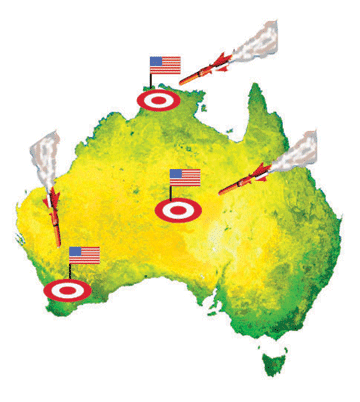
The significance of this transformation is reflected in the fact that Australia will soon become ‘the only ally in the world to host and support military operations by forward-deployed US strategic bombers and SSN attack submarines’. This comes in addition to hosting mature US expeditionary Marine capabilities and a more recent rotational presence of US Army personnel and permanent associated support infrastructure.
Perhaps more significant than providing a ‘vast military launchpad’ for multiple forms of US power projection is the developing role of the ADF to seamlessly integrate with American military forces and to provide what is approaching full-spectrum support operations, including for nuclear missions.
AUKUS and nuclear war
Although the focus of AUKUS ‘pillar one’ is the acquisition by Australia of nuclear-powered, but conventionally-armed submarines, there are in fact several nuclear war planning dimensions to the broader security partnership.
The Australian government refuses to publicly broach the questions of how, where and against whom Australia’s future SSN force might be expected to operate both in peacetime and in the event of conflict. …………………………………………….
It would not be surprising if all of these contingencies are perceived by Beijing as posing an existential threat, particularly as China’s nuclear submarine deterrent continues to develop into an assured second-strike capability…………………………………………………………………
Australia’s evolving nuclear posture
AUKUS is more than just an international arms agreement. By Scott Morrison’s admission the political framework is intended to secure a ‘forever partnership’ and a ‘forever responsibility’ between Australia and the United States. The unprecedented scale, cost, time frame and interdependence generated by the singular AUKUS deal clearly signals a decision to lock Australia into America’s distinctive military strategy for containing China into the future.
A key objective of America’s strategy is to achieve seamless high-end defence integration with its global network of allies and partners. While obstacles to full realisation remain, Canberra’s embrace of ‘integrated deterrence’ is already transforming Australia into both a critical base of operations and provider of full-spectrum support for US force projection into the region. It is also leading to the development of a new and unprecedented role for the ADF in support of US nuclear operations.
………………………………………………………………………………………. Avoiding a fait accompli
The situation emerging is one of enduring high-level tactical and institutional integration between the defence forces of Australia and the United States, creating the conditions for extreme political pressure and expectations from Washington of Australian support for any future US war with China……………………………………………………………..
The time to put a halt to any plans for expanding Australia’s nuclear posture is now. If no public pressure is forthcoming the Australian government is likely, in time, to move forward with precommitments to support US nuclear operations behind closed doors, and if presented to the public at all, will be done so as a fait accompli, as was the case with AUKUS, the forward-deployment of B-52 bombers and the US Force Posture Initiatives generally. https://johnmenadue.com/australias-evolving-nuclear-posture-avoiding-a-fait-accompli-part-1-of-2/
Electrical Trades Union questions Australia’s billion-dollar nuclear price tag
09 October, 2024, BY Aaliyah Rogan, https://mining.com.au/etu-questions-australias-billion-dollar-nuclear-price-tag/?fbclid=IwY2xjawF1SuRleHRuA2FlbQIxMQABHZuZOLhjX1n0h3g6EQL1ux1wMtrzMt09-VLVDSaM8enMFX4RZ8Fu8yOx0w_aem_1ulz0sgMMWof53yKtuqOUQ
The Electrical Trades Union (ETU) is pushing back against the Coalition’s proposal to build nuclear reactors in a new advertising campaign that queries the project’s price tag, and flags concerns it will destroy valuable job opportunities.
In mid-June 2024, Opposition leader Peter Dutton revealed the opposition’s plans to build several nuclear power plants that will begin rolling out in 2035 if the party wins the upcoming election.
Dutton’s plan involves reactors being built on the sites of end-of-life coal-fired power stations at locations including Gippsland in Victoria, Gladstone in Queensland, Port Augusta in South Australia, Collie in Western Australia, and the Hunter Valley in New South Wales.
Following Dutton’s proposal, the Smart Energy Council conducted a detailedanalysisusing CSIRO’s latest GenCost report and the Australian Energy Market Operator’s integrated system plan, which revealed the nuclear reactors will cost between $116 billion and $600 billion.
ETU National Secretary Michael Wright says the ad was prompted by electrical workers’ concerns that an abrupt shift towards nuclear energy will “rob the industry of a jobs and skills boom”.
“Renewables and batteries in Australia are producing so much low-cost energy we are on track to hit climate targets,” Wright says.
“This will create nearly 100,000 more jobs for electricians by 2050 — so many that we need to rewire our training system to skill up enough people.
“We are very concerned that a rapid change in direction to high-cost nuclear with decades-long timelines would derail this momentum and rob the next generation of electrical workers of renewable transition opportunities.”
Wright adds that people have the right to ask questions about Dutton’s nuclear plans, about the costs, the length of time, and why Australia needs nuclear energy when batteries and low-cost renewables are gathering momentum in a short period of time.
“People should get to form their views with the same information that electrical workers, energy investors, and businesses in the industry have access to,” he says.
“These insiders have reached a consensus view that nuclear is not right for Australia.
“People are questioning the financial cost of nuclear for relatively little output that won’t come online until the middle of the century. We think most people would prefer to see renewables and batteries bring down power bills and hit climate targets much sooner than that.”
ETU’s video advertisement will be launching initially for catch-up viewers across key areas of Queensland exposed to plans for nuclear energy, before being launched in other areas ahead of the 2025 federal election.
The ad will air on 7plus, 9Now, 10Play, SBS ON Demand, FoxtelGo, Kayo, Tubi, and Binge, as well as Youtube and Meta properties.
The Electrical Trades Union is an Australian trade union that is a division of the Communications, Electrical, and Plumbing Union. It is considered the largest of the three divisions.
Labor announces surprise parliamentary inquiry into nuclear power, raising hopes of an ‘adult conversation’

ABC, By chief digital political correspondent Jacob Greber, 10 Oct 24
In short:
Labor has launched a parliamentary inquiry into nuclear power, which it hopes will expose shortcomings in the opposition’s plans.
But the Coalition says it is ready to “come to the party” and profile arguments in favour of nuclear.
What’s next?
Labor, the Coalition and crossbench will nominate members of the committee, due to report back no later than April 30.
An energy expert has welcomed Labor’s decision to establish a parliamentary inquiry into nuclear power, saying open consideration of the technology is better than the federal government’s current position of seeking to “pooh-pooh the whole thing”.
Labor surprised the Coalition by announcing on Thursday that it will report no later than April 30 on the deployment of nuclear power, including small modular reactors.
Tony Wood, an energy specialist at the Grattan Institute, said “anything that begins to open up an adult conversation about nuclear power is a good thing”.
“In some ways, it’s better than what the government was doing, which is pooh-pooh the whole thing.”
The government-dominated House of Representatives committee will look at deployment time frames, uranium transport, supply, storage and enrichment capability, water impacts, and costs and consequences for electricity affordability.
Labor hopes the inquiry — which the ABC understands was initiated by backbenchers led by Hunter Valley MP Dan Repacholi — will fill the information void left by the Coalition’s repeated delays in releasing its planned nuclear policy or economic modelling.
Voters have ‘many questions’, Labor MP says
Mr Repacholi said voters in his electorate and around the nation have “many questions” about the opposition’s plan to build several nuclear power stations.
“Whether they support or oppose the scheme, the questions raised by Australians show they want more details,” he said.
“Right now, the information Australians need to fully understand the proposal is simply not there…………………………. more https://www.abc.net.au/news/2024-10-10/labor-announces-nuclear-power-inquiry/104456124
Coalition claims of a nuclear power renaissance in UK further expose its shameless policy con
Tim Buckley & John Hewson, Oct 10, 2024, https://reneweconomy.com.au/coalition-claims-of-a-nuclear-power-renaissance-in-uk-further-expose-its-shameless-policy-con/
In the one-page nuclear policy pamphlet the LNP released in June, federal opposition leader Peter Dutton states that “of the world’s 20 largest economies, Australia is the only one not using nuclear energy, or moving towards using it.”
Even this claim lacks credibility and relies on half-truths – so no wonder Dutton and his nuclear-spuiking sidekick Ted O’Brien are failing to get buy-in on their delusion from those in their own party, let alone most experts.
The UK – the 6th largest economy in the world by GDP in 2023, and one which has an established nuclear power industry – is a case in point for both the problems with technology and its decline in some major economies.
Since 2000, nuclear power generation in the UK has more than halved from 85 terawatt hours (TWh) to a multidecade low of 41 TWh in 2023.
In the same period nuclear’s share of total UK electricity generation has dropped from 23% to a record low of 14%. Energy analyst company Aurora Energy forecasts UK nuclear generation could fall to a three-decade low of just 8 TWh by 2029.
This ongoing, inexorable decline has occurred even as coal’s share of electricity supply has plummeted from 32% in 2000 to just 1% in 2023.
Meanwhile, wind power doubled to 82 TWh from 2016 to 2023, and is exactly twice the amount of energy produced by nuclear. UK solar has grown sixfold in the last decade to 14 TWh, and is likely to double nuclear’s contribution by 2029.
While O’Brien has claimed there is nuclear renaissance in the UK, the reality is the UK’s end-of-life nuclear fleet is rapidly approaching its use-by date.
France’s EDF owns the only five remaining nuclear power plants (with a total of 9 units) still operating in the UK, all due to be shuttered by 2028: Sizewell B (to retire in 2025); Hartlepool 1&2 (retirement in March 2026); Heysham I 1&2 (March 2026); Heysham 2 1&2 (2028); and Torness 1&2 (2028).
EDF has flagged it would consider extending the life of some of these plants, but no decision has been made.
EDF has now reported a €12.9 billion writedown on its under-construction Hinkley Point C nuclear plant – an eye-watering mega-project debacle comparable to the LNP’s Snowy 2.0 and Kurri Kurri gas plants in Australia – and pivoted into developing wind, solar and hydro-electricity plants.
With a 2029-2031 commissioning date, Hinkley is running around 15 years late from its original targeted completion date of 2017.
It has a rapidly rising estimated construction cost of £41.6-47.9 billion, or A$80-93 billion, making the CSIRO GenCost estimates of nuclear in Australia look conservative. EDF’s Hinkley Point C equity partner, China’s CGN, stopped supporting the cost overruns in 2023.
The UK consumer can now look forward to being gouged when this white-elephant is actually commissioned next decade. The UK government-underwritten power purchase agreement (PPA) was set at £92.5/MWh (in 2012 prices), escalating with inflation through to commissioning and thereafter over the 35 year plant life.
In 2022 the price of power from Hinkley ballooned to £116/MWh, twice the cost of energy supplied by new wind farms at £54-59/MWh.
The proposal for a Sizewell C nuclear plant is long delayed and is still to gain financial backing, despite €5.5bn of proposed new UK government subsidies on top of the existing €2.5bn taxpayer support.
On top of these issues are massive nuclear decommissioning costs worn by taxpayers. The UK government estimated in 2022 it will cost UK taxpayers £132bn to decommission civil nuclear sites, with the work taking 120 years.
These cost estimates have doubled in the past decade, and could easily double again by the time they are imposed on the people. Add to this the fact the UK has no facility for permanently and safely storing the waste from past, present or future nuclear power stations.
Far from depending on nuclear, UK electricity consumers rely on its world leading wind industry and international grid connectivity to keep power prices down and to keep their lights on.
Dutton and O’Brien tout Rolls Royce as a preferred supplier of still mythical small modular reactors (SMR). What the LNP doesn’t mention is that Rolls Royce doesn’t actually build SMRs for electricity markets, nor does it even have a single approval or final investment decision, despite milking significant government funding over many years.
A flurry of press releases and yet more UK government subsidies doesn’t alter the fact that there isn’t even an SMR factory under construction or approved.
The LNP’s claim that Rolls Royce will have an SMR operational by 2030 anywhere is also far-fetched, and arguably a physical impossibility. Since it is now reported that Rolls Royce’s SMR subsidiary is running out of cash, and Rolls Royce considering divesting, SMRs are looking more and more like vapourware.
Despite the overwhelming evidence against nuclear on cost, timeframe and technical grounds, the LNP, Australia’s party of small government and free markets proposes to nationalise onto taxpayers the cost of building 7 nuclear reactors – which we estimate at over $100bn – as well as decades of massive construction risks and delays, and higher power bills in the short, medium and longer term.
A cursory look at the international experience is enough to expose the LNP’s shameless con, designed only to disrupt and delay our accelerating transition to abundant, reliable, low-cost firmed renewables.
Tim Buckley is director of independent think tank Climate Energy Finance. John Hewson, is former leader of the LNP and Honorary Professorial Fellow at ANU.
Labor springs surprise nuclear power committee to call Coalition bluff on energy policy.
https://reneweconomy.com.au/labor-springs-surprise-nuclear-power-committee-to-call-coalition-bluff-on-energy-policy/ 10 Oct 24
The Labor government has sprung a surprise on the last sitting of the winter parliament by establishing a parliamentary select committee to inquire into the viability of nuclear power.
The committee is not designed to support any shift in Labor government policy, but more to call out the Coalition bluff, and fill in the the lack of details, and costings, of its own nuclear power plans.
The committee has been proposed and will be chaired by Labor’s Dan Repacholi, the MP for the Hunter region which is host to one of seven sites identified by Opposition leader Peter Dutton and energy spokesman Ted O’Brien for their nuclear power plants.
The committee is expected to report by April 30, but given that the next federal election is now almost certain to be held in May next year, it can also issue an interim report.
Its term of reference are focused on the unknown and contested parts of the Coalition’s nuclear policy, including the costs and timeframes of both large scale and small modular reactors, its potential share of the country’s energy mix, water and waste issues, enrichment capabilities, and state and federal regulations.
The committee will have a majority four members appointed by the government, two from the opposition and one cross-bencher. O’Brien sought to make it three government and 3 opposition, but the motion failed.
The decision to create the committee comes just weeks after Dutton failed to outline details of his nuclear power plans at a CEDA event where he was expected to do just that. His claims that nuclear will deliver cheaper prices to consumers, and that the first reactor can deliver power by 2035, have been rejected by virtually everyone in the energy industry.
Federal energy and climate minister Chris Bowen told parliament on Thursday that nuclear is clearly the most expensive form of energy.
Bowen said O’Brien had refused an invitation to debate the issue on ABC’s Q&A program. I said yes, he said no,” Bowen said.
“Report after report shows that the Oppositions plan will push prices up. Professor Rod Sims said maybe $200 a year. Dr Dylan McConnell said $400 or $500 a year. Dr Roger Dargerville said $1,000 a year. And of course, we’ve also seen the report from IEEFA which said $665 a year on average.”
Repacholi told the house earlier on Thursday that he had been “out and about in the Hunter electorate” listening to people about the opposition’s proposed nuclear scheme.
“One thing that has been absolutely clear is that people have many questions. Whether they support or oppose the scheme, the questions raised by Australians show that they want more detail. Right now, the information Australians need to fully understand the proposal is simply not there.”
In a shock move early this morning, leader of the House Tony Burke moved a motion to establish the inquiry which would report back by April 30, 2025, but it can issue an interim report.
‘Pursuit of truth will live on’: Assange speaks to the world
Independent Australia, By Binoy Kampmark | 7 October 2024,
Having been freed from incarceration at Belmarsh Prison, Julian Assange delivered his first public speech at a recent parliamentary hearing, writes Dr Binoy Kampmark.
WIKILEAKS FOUNDER Julian Assange’s last public address was made in the Ecuadorian Embassy in London. There, he was a guest vulnerable to the capricious wishes of changing governments. At Belmarsh Prison in London, he was rendered silent, and his views were conveyed by visitors, legal emissaries and his family.
The hearing in Strasbourg on 1 October, organised by the Committee on Legal Affairs and Human Rights of the Parliamentary Assembly of the Council of Europe (P.A.C.E.), arose from concerns raised in a report by Iceland’s Thórhildur Sunna Ævarsdóttir, in which she expressed the view that Assange’s case was ‘a classic example of “shooting the messenger”’.
Ævarsdóttir said:
‘I find it appalling that Mr Assange’s prosecution was portrayed as if it was supposed to bring justice to some unnamed victims the existence of whom has never been proven, whereas perpetrators of torture or arbitrary detention enjoy absolute impunity.’
His prosecution, Ævarsdóttir went on to explain, had been designed to obscure and deflect the revelations found in WikiLeaks’ disclosures, among them abundant evidence of war crimes committed by U.S. and coalition forces in Iraq and Afghanistan, instances of torture and arbitrary detention in the infamous Guantánamo Bay camp facility, illegal rendition programs implicating member states of the Council of Europe and unlawful mass surveillance, among others.
A draft resolution was accordingly formulated, expressing, among other things, alarm at Assange’s treatment and disproportionate punishment ‘for engaging in activities that journalists perform on a daily basis’ which made him, effectively, a political prisoner; the importance of holding state security and intelligence services accountable; the need to ‘urgently reform the 1917 Espionage Act’ to include conditional maliciousness to cause harm to the security of the U.S. or aid a foreign power and exclude its application to publishers, journalists and whistleblowers.
Assange’s full testimony began with reflection and foreboding: the stripping away of his self in incarceration, the search, as yet, for words to convey that experience, and the fate of various prisoners who died through hanging, murder and medical neglect. It was good to hear that voice again. A voice of provoking interest that pitter patters, feline across a parquet, followed by the usual devastating conclusion.
While filled with gratitude for the efforts made by P.A.C.E. and the Legal Affairs and Human Rights Committee, not to mention innumerable parliamentarians, presidents, prime ministers and even the Pope, none of their interventions “should have been necessary”. But they proved invaluable, as “the legal protections that did exist, many existed only on paper or were not effective in any remotely reasonable time frame”.
The legal system facing Assange was described as encouraging an “unrealisable justice”. Choosing freedom instead of purgatorial process, he could not seek it, the plea deal with the U.S. Government effectively barring his filing of a case at the European Court of Human Rights or a freedom of information request. ……………………………………………………………………………………………………….
A spectator, reader or listener might leave such an address deflated. But it is fitting that a man subjected to the labyrinthine, life-draining nature of several legal systems should be the one to exhort to a commitment: that all do their part to keep the light bright, “that the pursuit of truth will live on, and the voices of the many are not silenced by the interests of the few”. https://independentaustralia.net/politics/politics-display/pursuit-of-truth-will-live-on-assange-speaks-to-the-world,19049
Dutton’s nuclear remarks spark calls for clarity on Queensland LNP’s energy plan
Dave Copeman, 4 October 2024, https://www.queenslandconservation.org.au/duttons_nuclear_remarks_lnps_energy_plan?fbclid=IwY2xjawFvCu5leHRuA2FlbQIxMQABHWQFoEI2cqiTljqKHWH3tgX_Vn0_sbMmzV_mCAb1RfmcOcv0tqp3xtDDFw_aem_A3vBJVajSTGpG64uEbkoLg
As Queenslanders await clarity on the LNP’s energy plan, Peter Dutton has today raised the prospect of convincing a future LNP government to change its mind on nuclear power.
While David Crisafulli has rejected nuclear energy, it’s becoming apparent that the clear alternative currently being proposed to the Queensland Energy and Jobs Plan is from Peter Dutton.
Crisafulli has yet to present a detailed and transparent energy plan for Queensland, and his reluctance to outline a clear roadmap raises questions about the future of the state’s energy strategy, including the Queensland Energy and Jobs Plan.
The Queensland Conservation Council is calling for transparency from David Crisafulli regarding the LNP’s energy plans. Queenslanders deserve clarity on how the party intends to meet the state’s energy needs and emission reduction targets.
Queensland Conservation Council Director Dave Copeman said:
Peter Dutton’s comments today make it clear that he is prepared to convince any future LNP Queensland government to reconsider its stance on nuclear power.
While David Crisafulli has rejected nuclear, it’s clear that right now, Peter Dutton’s nuclear agenda is the main alternative being put forward to the Queensland Energy and Jobs Plan.
The Queensland Conservation Council is calling for transparency from David Crisafulli regarding the LNP’s energy plans. Queenslanders deserve clarity on how the party intends to meet the state’s energy needs and emission reduction targets.
Queensland Conservation Council Director Dave Copeman said:
Peter Dutton’s comments today make it clear that he is prepared to convince any future LNP Queensland government to reconsider its stance on nuclear power.
While David Crisafulli has rejected nuclear, it’s clear that right now, Peter Dutton’s nuclear agenda is the main alternative being put forward to the Queensland Energy and Jobs Plan.
Every day that David Crisafulli doesn’t outline his energy plan, the questions around Queensland’s energy future will only grow louder. Queenslanders need to know what the LNP’s strategy is, especially with the growing focus on nuclear from the federal Coalition. We know David Crisafulli doesn’t support Pioneer Burdekin Pumped Hydro, but we don’t have clarity on what he would suggest in its place.
The best way for David Crisafulli to confirm his opposition to nuclear power is to build on the strong pipeline of renewable energy projects Queensland already has and outline a clear plan for closing coal-fired power stations with renewable energy backed by storage.
Renewable energy is already helping to drive down power bills and create jobs, and it’s vital we have energy policy certainty to support this growing sector. The longer we wait for clarity, the more uncertain the future becomes to meet our emission reduction targets and avoid the worst impacts of climate change.
1 This month

of the week – Australians for War Powers Reform (AWPR)
To see nuclear-related stories in greater depth and intensity
 Antinuclear