Nuclear waste. AUKUS agency’s reckless indifference
Last Friday, government solicitors acting for the Australian Submarine Agency sent me a warning against publishing some embarrassing information about their conduct.
Neither I (Rex Patrick) nor Michael West Media will be subject to their bullying, however.
The Australian Submarine Agency deals with high-level Defence secrets and fissile material, yet it has been caught ignoring security obligations while threatening Rex Patrick, who reports on their conduct.
by Rex Patrick | Feb 3, 2025, https://michaelwest.com.au/aukus-agency-reckless-on-nuclear-waste/
Last Friday, government solicitors acting for the Australian Submarine Agency sent me a warning against publishing some embarrassing information about their conduct.
Neither I nor MWM will be subject to their bullying, however.
The Australian Government has undertaken to accept responsibility for the spent nuclear fuel from our planned AUKUS submarines. This is no light undertaking. It’s more than a lifetime obligation; indeed,
it’s an obligation that will last tens of thousands of years.
The Government has announced that this high-level radioactive waste will be stored on Defence land.
As reported in MWM, in February 2023, the Australian Submarine Agency awarded a contract for nearly $400K to former Defence Department Deputy Secretary Steve Grzeskowiak to find a suitable Defence location
The very expensive irony that lurked behind this contract was the fact that Grzeskowiak had, when he was inside Defence, looked for a location on Defence land to store low-level radioactive waste and had been unable to find a suitable site.
According to Grzeskowiak, there wasn’t a single spot anywhere across the vast Defence estate that was suitable for storing low-level radioactive material. Yet he was now the go-to person who would, through some miraculous divination, find the Australian Submarine Agency a location across the very same territory.
Document request
In December 2023, I requested Mr Grzeskowiak’s report under our Freedom of Information laws. I was refused access on the basis the report was a Cabinet document.
But here’s the interesting thing. I knew that the report had been being worked on by multiple agencies, so I requested related documents from the Australian Nuclear Science and Technology Organisation (ANSTO), the Australian Radiation Protection and Nuclear Safety Agency (ARPANSA), Geoscience Australia (GA), the Department of Industry, Science and Resources (DISR) and the Department of Prime Minister and Cabinet (PM&C).
What those documents showed me was the report was not, at least until after I made my FOI request, developed on the Government’s CabNet+ system.
I’m now in a legal fight at the Administrative Review Tribunal, pressing my case for the report to be made public.
The Cabinet Handbook, the bible for Cabinet’s processes, makes it crystal clear that cabinet documents must be prepared on a special CabNet+ system.
The protective security framework of the Government also commands that Cabinet documents are stored on CabNet+.
Despite this, the Australian Submarine Agency didn’t do that.
Why? I can’t publish their evidence in the proceeding until the matter has been heard in the Tribunal, but what I can say is that it’s a case of reckless indifference to the rules.
It begs the question, will the Australian Submarine Agency also play fast and loose with the rules in relation to our highly classified data or our allies’ highly classified data?
“The Australian Submarine Agency is under a great deal of pressure to “get the job done”.
There are unquestionably a lot of unrealistic expectations coming down from the top. Will they follow the rules when it comes to nuclear safety, or will they bend and break the rules when they find it expedient to meet a politically driven objective?
Legal arguments
In their legal submissions, the Australian Government asserts: “The fact that the document was not created within the ‘CabNet’ system is not indicative one way or the other as to the intention of the authors.”
Actually, the rules of Cabinet are very strict. A document must meet two tests to qualify as a cabinet document 1) it must have been bought into existence for the dominant purpose of submission for consideration by the Cabinet, and 2) it must have been submitted to Cabinet.
I am satisfied it meets the second test but not the first.
To meet the first test the Government has to present objective evidence to the Tribunal that a minister so commissioned the document for consideration by Cabinet.
“They have not done so.”
And the fact that the document, in breach of the rules, just floated around on a government network not authorised to hold Cabinet documents for months on end will work against the Australian Submarine Agency in the end.
Hypocrisy
In response to insistence from Prime Minister Anthony Albanese that Peter Dutton should disclose the intended location of seven nuclear power stations, the Opposition Leader did so.
But Albanese is refusing to be transparent about the intended location of a high-level radioactive waste dump. His government wants to block public debate for as long as possible and then present people with a fait accompli.
It’s yet to be seen whether the Government will win on its claim that the report I’m after is a Cabinet document. But in the end, if it were determined that the report is that, there would still be nothing to stop Albanese from being true to his past rhetoric about the importance of government transparency and releasing the report to inform public debate.
“Australians have a right to know. The fact that the Prime Minister hasn’t already done this says a lot.”
For me, given that the Government has cautioned me against publishing details that reveal security incompetence inside the Australian Submarine Agency, I’ll wait for the knock on the door from the Federal Police. I’m not going to be intimidated.
There’s a vital democratic principle to be defended – the right to publish embarrassing information about government. The only way to protect that right, especially in the face of Government bullying, is to publish.
Dutton’s nuclear plan requires ‘huge’ new bureaucracy.
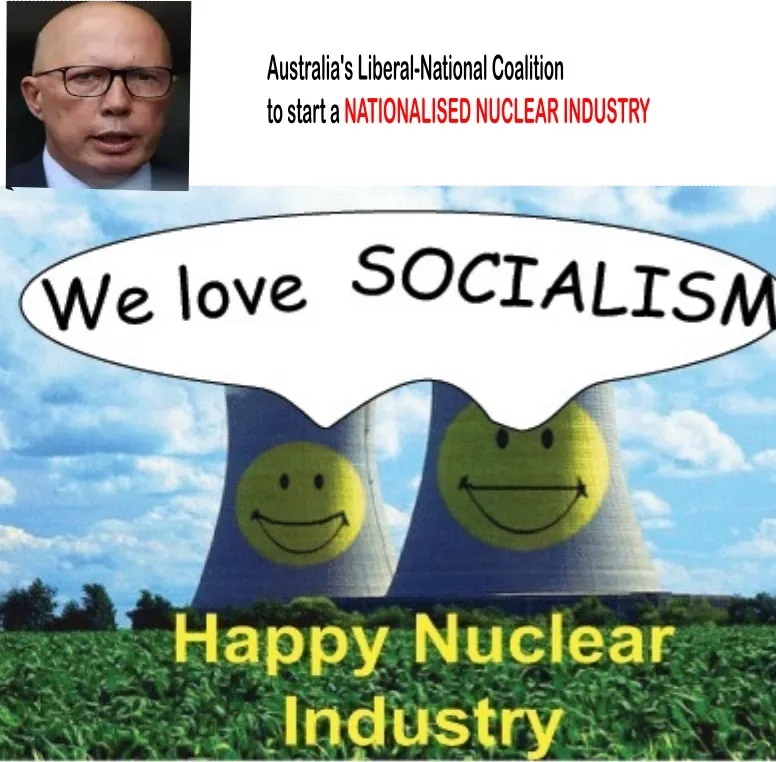
“Every single dollar spent on nuclear will come from the taxpayer. So of course, that will lead to a bureaucracy.
Opposition Leader Peter Dutton has criticised what he calls Labor’s “big government” approach and “wasteful” spending
A “huge” new bureaucracy, numbering thousands of extra public servant positions, would need to be created by the Coalition to establish and support an Australian nuclear power industry, according to the minister for public service, Katy Gallagher.
The proposal for a civil nuclear power program, as described by shadow energy minister Ted O’Brien last year, included “institutional architecture” that he said would entail an expansion of the regulatory agency, the Australian Radiation Protection and Nuclear Safety Agency (ARPANSA), a new independent nuclear energy coordinating authority and a government business enterprise to be called Affordable Energy Australia.
That architecture raises questions in the midst of the current opposition attacks on the growth and efficiency of the bureaucracy under the Albanese government. The Coalition’s election campaign push to cut government spending, sharpened by the nomination last week of Senator Jacinta Nampijinpa Price to lead a proposed efficiency department, has focused so far on paring back the public service.
The Coalition’s coal-to-nuclear strategy appears to defy that objective, as it requires building a large department “from scratch”, Gallagher tells The Saturday Paper. “We haven’t run state energy systems for so long,” the minister says. “It would be up there with departments like, you would think, Services Australia. Probably a bit smaller than the NDIA [National Disability Insurance Agency, Defence. It would be thousands of public servants.”
Gallagher likens the bureaucratic infrastructure for a nuclear power industry, which the Coalition has said would be taxpayer funded, to Labor’s creation of the Climate Change Department of more than 2500 staff. She expects more than that would be needed, including outside Canberra, for the Coalition plan to build its proposed seven nuclear power plants across five states.
“It would be planning, construction, safety, getting the skills. I don’t even know how you’re going to get the skills into that,” Gallagher said. “It’d be a lot of travel because you’re all around the country.”
Last year, O’Brien revealed that, under the Coalition’s plan, a coordinating authority would determine how much nuclear power is produced at each of the seven proposed sites before it enters the national energy mix.
“In terms of exactly how many on any plant, we’ll be leaving that to the independent nuclear energy coordinating authority,” he told the ABC’s Insiders last June. “It is right we want multi-unit sites. That’s how to get costs down.”
The shadow minister was not available for an interview. In response to emailed questions, O’Brien did not address the size of a civil nuclear power bureaucracy or the cost of expanding nuclear agencies and creating new ones, but acknowledged that “a highly skilled nuclear workforce will be paramount to ensuring the success of this plan”.
In his response, O’Brien gave more detail about the nuclear program, including outlines of private and public partnerships and a proposition to include the Australian Safeguards and Non-Proliferation Office (ASNO), which looks after Australia’s international treaty obligations.
“Experience is not cheap, because you’ll have to get it from overseas … we’ll be having to buy that in, at expense. You don’t just train someone up over a two-year period.”
“The ARPANSA legislation will be amended to allow the licensing and regulation of civilian nuclear facilities, including power stations,” the shadow minister said. “ARPANSA will have its resources increased to prepare to license the establishment projects and advice will be sought regarding the merits of regulatory consolidation of ARPANSA and ASNO.
“The independent Nuclear Energy Coordinating Authority will lead community consultation and manage a process to select experienced nuclear companies to partner with Government to deliver these projects.
“Affordable Energy Australia will be financed by the federal government through a combination of debt and equity and, through its partnership arrangements with experienced nuclear companies, will own, develop and operate the establishment projects.”
A former energy adviser to Britain’s Thatcher government says the Coalition is trivialising the bureaucratic support needed for a local nuclear power industry.
Greg Bourne, who is a former president of BP Australasia and is a councillor on the Climate Council, said the experience in the UK showed that the nuclear part of the electricity industry had to be regulated, as “no one commercially wanted it”.
He says established nuclear power countries in comparable democracies such as the United States have very large regulatory organisations rigorously covering issues such as skills, construction, safety, finance and radioactive waste.
“What you would need to do – almost certainly getting the people from overseas, building ARPANSA’s strength – it’s not a trivial act,” Bourne tells The Saturday Paper.
“They will have to build a complete set of public servants, for want of a better word, to be able to advise Department of Energy … on what can be done, what can’t be done, the pace at which it can be done and so on.”
The scale of the Coalition’s nuclear proposal, Bourne says, is obviously a far cry from Australia’s experience with its sole reactor, the 20-megawatt nuclear medical reactor at Lucas Heights in southern Sydney.
“We will have to buy experience. And buying experience is not cheap, because you’ll have to get it from overseas,” he says. “People will be coming in with different models. European models… a number of United States, Canadian models. They’ll all be coming in with different things, but we’ll be having to buy that in, at expense,” he says. “You don’t just train someone up over a two-year period.
“Lucas Heights is a very, very different thing. The people there are good. They understand what they’re doing. I do not think that [the Coalition] will be able to grab the head of the nuclear agency from Lucas Heights, and then that person will have credibility with two gigawatt-size reactors.”
The public service minister suggests that if the nuclear bureaucracy were to be added to the Department of Climate Change, Energy, the Environment and Water (DCCEEW), not only would the department need to be “a lot larger” but there would likely be “a huge consultant bill”, over decades. “You’d be paying for all of that before anything gets happening.”
The Albanese government, meanwhile, is moving to accelerate household electrification efforts, through a deal with the Senate crossbench to support Labor’s Future Made in Australia legislation. The government aims for 82 per cent of power to be sourced from renewable energy by 2030 – a plan the Coalition has derided as “unrealistic”.
Energy Minister Chris Bowen revealed this week he used ministerial powers at the end of last year to direct the Australian Renewable Energy Agency to consider funding solar panels and home batteries. However, the basis of Labor’s transition plan, Bowen says, is private-sector funded.
“Every single dollar spent on nuclear will come from the taxpayer. So of course, that will lead to a bureaucracy. Our plan is based on private-sector investment. Theirs is based on public investment and a bureaucracy,” the minister tells The Saturday Paper.
He points to the lack of detail in the Coalition’s planning, in contrast with its demands for more detail in the lead-up to the Indigenous Voice to Parliament vote: “They campaigned against an alleged government bureaucracy in the referendum, and they’re proposing at least two new government organisations.”
The Coalition’s plan to build seven nuclear power plants to replace Australia’s ageing coal-fired power stations is backed by a contested set of costings, prepared by Frontier Economics and released late last year, amounting to roughly $300 billion spread over 50 years. The modelling suggests the Coalition plan is $263 billion cheaper than Labor’s renewables proposal, but a wide range of economists have countered that the costings lack crucial information about how the figures were calculated, and are based on a scenario of dramatically lower energy use than is realistic.
The delays in getting the reactors on line have also drawn strong criticism. The opposition insists its plan, under the best-case scenario, would begin producing electricity by 2035, but this is five years earlier than the earliest estimate by the Australian Academy of Technological Sciences and Engineering, and assembling the necessary regulation and skills is a key component of that timeline.
The Coalition’s energy spokesman says the opposition’s civil nuclear policy is well formed and ready to start.
“[T]his policy follows the most comprehensive study ever undertaken by an Opposition, learning from experts in 10 nations about their decarbonisation policies while keeping prices down, the lights on and ensuring energy security,” O’Brien said in his statement.
“Upon entering government, the Coalition will be ready to implement a detailed energy policy immediately, informed by global best practices and established relationships.”
Opposition Leader Peter Dutton has criticised what he calls Labor’s “big government” approach and “wasteful” spending that he says has exacerbated inflation in the lead-up to an election that will be heavily focused on the cost of living.
His most cited example is the 36,000 additional Average Staffing Level places in the public service funded by Labor over three budgets.
The opposition leader now has four frontbenchers whose portfolios cover the public service, two of whom are solely tasked with zeroing in on waste and efficiency: Jacinta Nampijinpa Price and James Stevens.
While Dutton isn’t explicitly referencing as its inspiration the Elon Musk-led Department of Government Efficiency in the US, he’s elevating the mission within his ranks just as the Trump administration takes over. Australia’s richest person, Gina Rinehart, has long urged the Coalition to emulate the MAGA policy agenda.
“Our argument is to bring that role, that function, into [the Department of the] Prime Minister and Cabinet as a key central agency, and then to have the authority of Prime Minister and Cabinet to run the operation of senior efficiencies achieved across every department of the Commonwealth,” the Coalition leader told reporters in Perth on Tuesday.
“And that’s something that we would take very seriously.”
Dutton says Labor’s spending on public service positions is a question of “priorities”. Speaking to reporters in his electorate of Dickson last weekend, the opposition leader said, “That’s money that we could be spending elsewhere to provide support to people during Labor’s cost-of-living crisis, or into defence or into security and into priorities for Australians otherwise.
“I just don’t think any Australian can say that their lives are simpler or better off today because of the tens of thousands of additional public servants that the prime minister’s employed in Canberra.”
The plans for cuts have been flagged for at least six months.
“The first thing we’ll do is sack those 36,000 public servants in Canberra, that’s $24 billion worth,” Nationals leader David Littleproud told commercial radio station Triple M in August.
The figure for additional public servants equates to 20 per cent of the workforce, a boost that entailed rebuilding positions lost to more expensive outsourced labour. The cost cited by the opposition is over four years.
An audit, ordered by the Albanese government soon after the 2022 election, found that the Coalition government in the 2021-22 financial year alone spent $20.8 billion on almost 54,000 contractors and external providers. The bulk of the external labour was employed in the defence, social services and agriculture portfolios.
The 36,000 figure under the Albanese government, confirmed in federal budget papers, also covers Labor’s moves to rein in Centrelink and other government call centre waiting times, as well as additional staffing to reduce chronic backlogs in claims and visa processing times.
Gallagher, who is also finance minister, accepts that efficiencies remain to be made within government. She adds that $92 billion was saved over the past three Labor budgets and mid-year updates.
“We’ve had over $4 billion saved from not using consultants as much as the former government did,” the senator says.
She says there is an ongoing effort in explaining the worth and work of the public service.
“It’s always up to us to explain what we’re doing and why we’re doing it, but I would say to Peter Dutton, go and speak to a veteran who actually is getting their pension now, who’s getting their appropriate payment. There was a 40-month wait for people to get their pension,” she told reporters last week. “What he wants to pretend is that you don’t need anyone to do these jobs. Two thirds of these jobs are in the regions. They’re in every part of Australia.”
Briefing paper from UK trip shows nuclear waste discussions held, as location for AUKUS submarine waste remains undecided
ABC News, Stateline, Leah MacLennan, 31 Jan 25
In short:
Former senator Rex Patrick says documents show SA’s Defence Industries Minister met with a defence company in the UK for the “specific purpose of being briefed” on the dismantling of nuclear reactors and the waste associated.
Mr Mullighan says those topics were not the “focus” of the discussions.
What’s next?
Legislation passed last year allowing nuclear waste to be stored at Osborne, but the government says a location for any high-level waste storage is still to be decided.
A former senator has sounded the alarm over documents he says point to government discussions about the defueling and dismantling of nuclear submarines at South Australia’s Osborne shipyards.
Rex Patrick was a Navy submariner, entered the Senate as a replacement for Nick Xenophon, and is now running for the Senate again as a Jacqui Lambie Network candidate.
He has obtained documents through freedom of information (FOI) that show South Australia’s Treasurer and Defence Industries Minister Stephen Mullighan met with defence company Babcock during a visit to the United Kingdom late last year.
“What the FOI shows is that the Treasurer Mr Mullighan met with Babcock for the specific purpose of being briefed on the dismantling of nuclear reactors and waste associated with those nuclear reactors,” Mr Patrick said.
The documents include a briefing paper for the meeting, which said the objective of the visit was to “discuss Babcock’s approach to nuclear powered submarine sustainment, defueling and disposal … seek information on Babcock’s experience in radioactive waste management/nuclear decommissioning,” and “discuss Babcock’s approach to nuclear powered submarine social license”.
Mr Patrick said the documents show the government was exploring the idea of dismantling the submarines’ nuclear reactors at Osborne.
He has called for more transparency and discussion with the public about what is being planned for the site under the AUKUS agreement.
“I’ve been looking at AUKUS and issues of nuclear waste for about three years and what I’ve found is that you really have to pull teeth to get access to information about this sort of stuff,” Mr Patrick said.
“Any decisions being made about this are not decisions that just affect this term of government or the next, they are decisions that will affect South Australians for tens of thousands of years.”…………………………………………………………………………………………………………………………………………………
Decommissioning still decades away
Australia’s first nuclear submarine will not arrive until the early 2030s, when the US plans to sell the government three Virginia Class boats.
The Virginia Class have a life span of more than 30 years, meaning their defueling and decommissioning is still decades away.
Rex Patrick argues that does not mean decisions can be delayed, because signing up to AUKUS is also signing up to a nuclear industry and dealing with the waste they will ultimately produce.
“Decisions around high-level nuclear waste are decisions that last for generations upon generations,” Mr Patrick said.
“They are not decisions that should simply be made and presented as a fait accompli by a government.”……………………………………………………………………..
Federal laws mean nuclear waste can be stored at Osborne
In October last year, legislation passed federal parliament that will allow for the storage and disposal of nuclear waste at Osborne.
The law does not define what level of waste can be stored there, but the federal government has given assurances that it will only be low-level waste.
Those assurances are not enough to allay concerns from the local community group that has branded itself ‘Port Adelaide Community Opposing Aukus’.
“One of our major concerns is that waste will be literally transported down Victoria Road, which alongside of it is a residential area,” group member Eileen Darley said.
“We’re going to be a docking point, or a gateway if you like, to some as yet unknown permanent nuclear dump somewhere.”………………………………………………
Major delays to UK decommissioning
The United Kingdom has had a fleet of nuclear submarines since the 1960s, but has faced multiple challenges decommissioning and disposing of boats that are out of service.
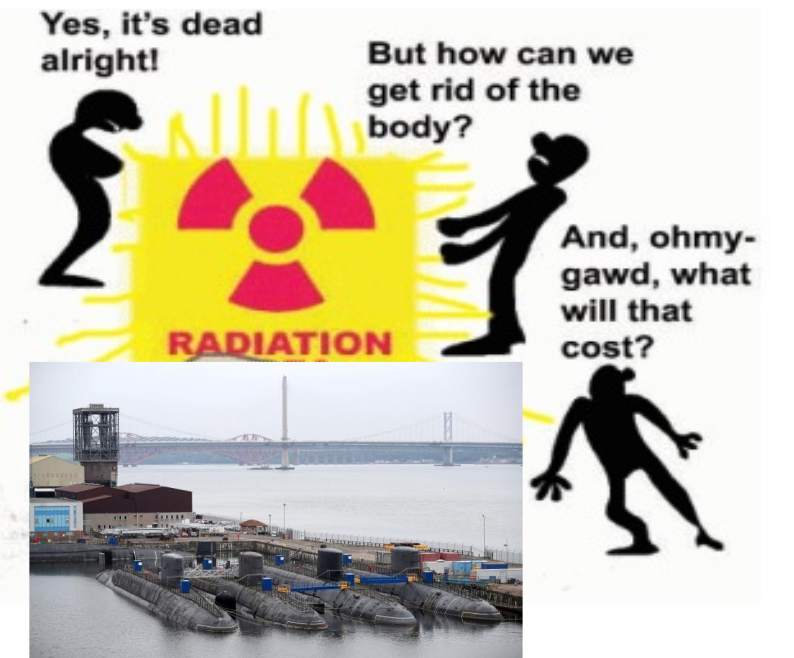
More than 20 decommissioned submarines are awaiting disposal at dockyards in Scotland and England, with half still waiting to be defueled.
The oldest, HMS Swiftsure, left service in 1992 and Babcock is now working with authorities to dismantle it, with an aim to be finished by the end of next year.
Overall it is a program that will cost billions of pounds. https://www.abc.net.au/news/2025-01-31/documents-show-nuclear-waste-discussions-aukus-submarines/104874852
Is the world going nuclear? The hope and hype of nuclear as a climate solution.
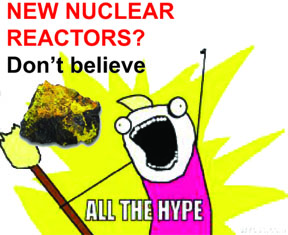
“The industry is having some very good rhetoric, but it’s having a very poor reality. We’ve seen 30 countries say that they will triple nuclear (power) by 2050; we’ve seen 125 say they will triple renewables by 2045.”
By political reporter Tom Lowrey, 26 Jan 25
In short:
Momentum behind nuclear power as a part of the global solution to climate change has been growing, with the technology gaining more attention and interest.
But climate advocates point out that nuclear still has a poor reputation for being delivered late and hugely over budget.
What’s next?
The Coalition will continue to point to any international shifts towards nuclear power, to make its case for Australia’s adoption of the technology.
It’s been a difficult few decades for nuclear power.
Nuclear’s share as part of the global energy mix has been falling, and incidents like the Fukushima disaster in 2011 highlighted for many the risks of the technology.
Some countries started mothballing or shutting down plants, and many new projects were plagued by cost blowouts and delays.
But in the past few years there has been a remarkable turnaround.
Countries are pledging to help triple the production of nuclear power globally, and industry advocates are a growing presence at global climate summits.
The International Atomic Energy Agency, a United Nations body that advocates for peaceful use of nuclear technology, is forecasting substantial growth in the sector over coming decades.
And Australia is about to head into a federal election with the adoption of nuclear power at the centre of the political contest.
The Coalition argues Australia risks being left behind if it doesn’t get on board.
But others point out that while there is plenty of global interest in nuclear — and the as-yet unrealised promise of new technology such as small modular reactors — there is a lot more real money flowing into renewables, which are already transforming global energy grids.
Nuclear’s big global arrival
The COP29 climate summit held in Baku, Azerbaijan late last year was ostensibly dedicated to climate financing — that is, finding the money needed to fund a massive global effort to tackle climate change.
But it made headlines for a few different reasons.
One was that for the second year running, the global climate summit was being held in a country that derives most of its wealth from oil and gas. (Last year’s summit was held in the UAE).
Another was the growing presence of nuclear power.
Six more countries signed a pledge to triple nuclear’s global production by 2050, taking the total number of countries on board to 31.
They range from relatively small countries such as Moldova, through to major Australian allies like Canada, Japan, the UK and US.
All four of those larger countries have long-established nuclear industries.
Nuclear attracted plenty of attention, including headlines labelling it a “rising star” at the climate summit.
And there was an Australian presence in Baku ready to cheer it on.
Nationals MP David Gillespie, the retiring member for the NSW North Coast seat of Lyne, travelled to the summit (with some support from Coalition-aligned environment group Coalition for Conservation).
David Gillespie has been one of nuclear power’s longest and loudest supporters, chairing the “parliamentary friends of nuclear industries”.
He acknowledges that a “big slice” of the climate summit was devoted to renewable energy, and a lot of money and ambition is flowing into solar and wind.
But he said the shift in thinking on nuclear power at a global scale was clear to see………………………………..
But other Australians at the November conference say it is important not to overstate nuclear’s presence, and its place in the global net-zero effort.
Tennant Reed is the Director of Climate Change and Energy at the Ai Group, and is a veteran of COP climate summits.
He said the arrival of nuclear energy on the climate scene had certainly been noticeable……………..
He made the point that growth in nuclear power wasn’t a feature of the main negotiations at Baku, but nor was scaling up any other particular energy source.
Mr Reed said nuclear advocates were hosting events on the sidelines — and they were sensitive to one criticism in particular
“They’re all conscious — they have to show that they can deliver new projects ‘on time and on budget’,” he said.
“I must have heard that phrase 50 times from nuclear people………………………………
Mr Reed said much of the growth in nuclear power was coming from countries with established industries, and while others were expressing interest in setting up an industry, few had recently broken ground.
He said there was a much more obvious momentum in the roll-out of renewables.
“Wind and solar deployment, and especially solar at the moment, is taking off like a rocket,” he said………….Conservationists cast doubt
Some conservation groups have sought to push back on the rising prominence of nuclear power, seeing it as a threatening distraction in efforts to combat climate change.
The Australian Conservation Foundation’s Dave Sweeney was also at the COP29 conference in Baku, and cast some doubt on nuclear’s future, at least compared to renewables.
“It’s one thing to have agreements and aspirations, it’s another to have projects and power,” he said.
“The industry is having some very good rhetoric, but it’s having a very poor reality. We’ve seen 30 countries say that they will triple nuclear (power) by 2050; we’ve seen 125 say they will triple renewables by 2045.”
And he argues part of the nuclear industry’s ambition is attracting public funding, in an effort to “de-risk” its projects.
“At meeting after meeting, they’ve spoken about the need for market reforms to de-risk nuclear projects,” he said.
“I think that is very bold code for ‘no-one wants to fund us, so we’re looking for the public purse’.”
https://www.abc.net.au/news/2025-01-26/is-the-world-going-nuclear-hope-or-hype/104856852
Media coverage of Dutton’s nuclear ‘plan’: Scrutiny, stenography or propaganda.
By Victoria Fielding | 28 January 2025, https://independentaustralia.net/politics/politics-display/media-coverage-of-duttons-nuclear-plan-scrutiny-stenography-or-propaganda,19
Unsurprisingly, the conservative media has failed to scrutinise Peter Dutton’s nuclear plan, once again displaying bias towards the Coalition, writes Dr Victoria Fielding.
WHEN OPPOSITION LEADER Peter Dutton snuck his dodgy nuclear energy “plan” out just before Christmas, it was an important moment for Australian news media to demonstrate the quality of journalism they produce: scrutiny, stenography or propaganda.
It was also their opportunity to be honest with the public about why Dutton is backing nuclear power, an opportunity they unsurprisingly did not take.
I analysed 37 news reports published by the ABC, The Guardian, News Corp and Nine newspapers on 13 December 2024, the day Dutton released his long-awaited “plan” for nuclear power. I categorised each article as either scrutinising the plan (a useful form of journalism that critically assesses the viability of the nuclear policy), as stenography (just repeating Dutton’s plan without scrutiny), or as propaganda (news presented to look like news but what is actually a form of political advocacy, aiming to persuade readers to support Dutton’s nuclear plan).
Here are the results.

In what will not be surprising to anyone, propagandistic content made up the majority of News Corp’s 20 articles about Dutton’s nuclear plan, with 14 out of 20 enthusiastically supporting nuclear power as a viable energy solution for Australia.
One notable example of this propagandistic approach by News Corp was in The Australian’s editorial on the subject which clearly gave away the views of the masthead.
‘…the Opposition Leader has taken an important and brave step, setting out the economics of the issue in a context relevant to concerns about living costs, especially power bills… Frontier’s modelling shows that the Coalition’s plan, incorporating nuclear and renewables, would cost $331 billion across 25 years, 44 per cent less than Labor’s renewables approach.’
Just like much of News Corp’s propagandistic content advocating for right-wing policies and politicians, the implied suggestion that nuclear is cheaper than renewables is manipulatively deceiving.
According to Climate Council reports using CSIRO’s analysis:
‘…the cost of electricity generated from nuclear reactors by 2040 would be about $145-$238 per MWh, compared to $22-$53 for solar, and $45-$78 for wind. So that’s at least twice as much for nuclear, or up to ten times as much when comparing with the lowest-cost solar.’
Dutton and his News Corp collaborators never let facts get in the way of manipulating voters.
Next, we have stenography. Stenography is the laziest form of journalism. Rather than doing the difficult work of analysis and being a watchdog to ensure only credible information is relayed to voters, stenographers just repeat what a politician has said, uncritically.
This has the effect of allowing manipulative politicians like Dutton to put information in the public domain which is false and/or misleading. Stenography is actually the opposite of what of journalism is meant to be.
Nine’s newspapers published six articles which just lazily repeated Dutton’s nonsensical nuclear plan, giving it undue credibility and failing to adequately scrutinise it.
For example, Phillip Coorey in the Australian Financial Review authored a piece originally titled ‘New costings signal war over energy’, which starts with the sentence:
‘The Coalition’s nuclear power plan will cost up to $263 billion less than Labor’s renewable rollout between now and 2050, translating into cheaper electricity over the long run, its long-awaited economic modelling purports.’
Coorey would no doubt claim that he is not responsible for any manipulative or misleading content he has included in his article, because he is just reporting what Dutton said. But that is exactly the problem with stenography. Although it is not as bad as News Corp’s overt propagandist style, it still gives Dutton a platform to mislead the newspaper’s audience.
The only useful form of journalism out of the three categories is scrutiny. Indeed, the whole point of political journalism is to scrutinise politicians and policies to ensure voters are not misled and have useful information in which to make an informed decision when voting. All four outlets included at least some articles with extensive scrutiny of Dutton’s nuclear plan. News Corp had five and Nine published three.
The ABC (four articles) and The Guardian (three) were the only two outlets to only present Dutton’s nuclear policy alongside critical analysis.
One shining example of scrutiny from The Guardian’s Graham Readfearn and Josh Butler’s explainer, titled ‘The glaring gaps and unanswered questions in the Coalition’s nuclear plan and costings’, methodically lays out the facts and problems with Dutton’s plans — including the true higher cost comparison with renewables and the huge amount of time it would take nuclear to come online.
The ABC and The Guardian’s useful critique of Dutton’s plan is exactly the information that voters need to accurately appraise whether Dutton’s nuclear policy is beneficial to them and their community. No doubt News Corp and Nine would claim that this scrutiny just shows the ABC and The Guardian are “left wing”, but it shows no such thing. The ABC and The Guardian are doing a public service in scrutinising a major policy announcement and providing factual analysis comparing the real costs of nuclear and renewable energy.
If a left-wing party announced a different energy policy, they would do exactly the same thing. It is called public interest journalism.
Unfortunately, however, this is not the end of the story. There was one major element of Dutton’s nuclear policy which was only included in one of the 37 news reports I analysed — the motive behind Dutton’s nuclear push. This was included in The Guardian’s Readfearn and Butler explainer, albeit only in two after-thought quotes at the end of the piece.
Under the sub-title ‘How have critics responded?’ The Greens’ Adam Bandt was reported to have said “the nuclear strategy relied on extending the life of fossil fuels”. The Australia Institute’s Rod Campbell similarly said the nuclear plan was a “distraction to prolong fossil fuel use and exports”.
Disappointingly, no articles overtly pointed out to the public that the whole point of Dutton’s nuclear policy was to undermine investment in renewable energy, unsettling the transition to a low carbon economy, to slow down efforts to address climate change, all in aid of fossil fuel and mining billionaires. This exclusion is not just a small part of the story of Dutton’s nuclear policy, it is the story.
This truth, unfortunately, is the story journalists collectively have failed to tell.
Geoscience Australia declares Darwin, Latrobe Valley high-risk earthquake zones
The Age By William Howard, 29 Jan 25
In short:
Darwin and Victoria’s Latrobe Valley have been identified as high-risk earthquake zones.
The National Seismic Hazard Assessment has been updated for the first time since 2018.
What’s next?
The Coalition has earmarked the Latrobe Valley as a potential site for a nuclear reactor if it wins the election, which is a concern for some residents.
…………………………………….In an update to the National Seismic Hazard Assessment, Geoscience Australia identified the Latrobe Valley and Darwin as the only two areas in Australia with a “higher risk of strong ground shaking”.
The Woods Point quake, centred about 130 kilometres east of Melbourne and 125km south of Ms Cox’s Traralgon South home, was the largest onshore event of its kind in the state’s modern history.
There were more than 43,000 reports from the public and the earthquake was felt in parts of New South Wales, South Australia, Tasmania, and the Australian Capital Territory. https://www.abc.net.au/news/2025-01-30/darwin-and-latrobe-valley-high-risk-earthquake-zones/104873178
Dutton’s atomic power bill for a ‘nuclear family’ could be nearly $39K
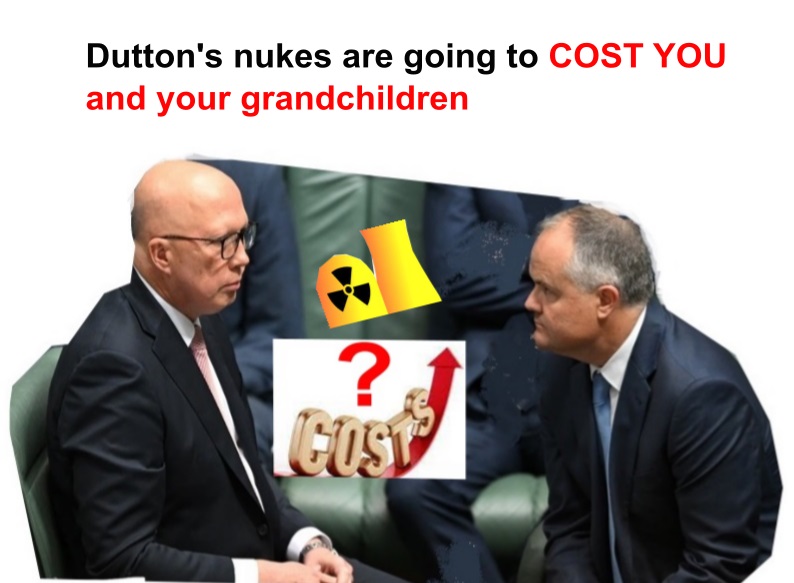
By Steve Bishop | 28 January 2025, https://independentaustralia.net/politics/politics-display/duttons-atomic-power-bill-for-a-nuclear-family-could-be-nearly-39k,19381
The Dutton nuclear power plan will cost about $264 billion if the type of reactor extolled by Shadow Energy Minister Ted O’Brien is adopted.
That’s equivalent to more than $9,700 for every man, woman and child in Australia — and $38,800 for the proverbial “nuclear family”.
The costings are simple.
Opposition Leader Peter Dutton announced on 13 December:
‘By 2050, our plan will deliver up to 14 GW of nuclear energy, guaranteeing consistent and stable electricity for all Australians.’
O’Brien even produced a video highlighting the virtues of the Bill Gates-backed Natrium reactor, which provides 345 megawatts of power and is costing US$4 billion (AU$6.45 billion) for the first one being built in Wyoming by TerraPower.
Forty-one of the reactors would be needed to produce the promised 14GW of nuclear power at a cost of $264.45 billion.
Australia has an estimated population of 27.2 million, giving a total of $9,724 for every man, woman and child.
Mr Dutton has made it plain he is opposed to big nuclear facilities and the Natrium small modular reactor (SMR) reactor meshes with his pledge to ‘place the latest zero emission nuclear technologies on the sites of seven retiring coal-fired power plants’.
Another reactor that falls within his pledge to use the latest technologies is the Rolls Royce UK SMR 470 MWe which could cost between £3 billion and £4 billion (AU$5.9-7.9 billion) apiece.
Even the lower estimate of £3 billion equates to $5.9 billion. Thirty of them would be needed to meet the 14GW target, at a cost of $176.7 billion.
But Nuclear Consulting Group chairman Paul Dorfman has warned that because the Rolls Royce reactor is more than 50 per cent bigger than an SMR it “will need big sites, standard nuclear safety measures, exclusion zones, core catchers, aircraft crash protection and security”.
Ontario and the Tennessee Valley Authority are planning to use the innovative GE Hitachi BWRX-300 reactor but it has been reported that planning documents reveal a cost of around US$5.4 billion (AU$8.6 billion), amounting to a cost of $369 billion for the 43 needed to produce 14KW of power.
Another new SMR is the Westinghouse AP300 SMR.
An order for four of the reactors has been placed in the UK for the Tees Valley with the Daily Express reporting:
‘The four reactors would cost £10 billion and generate 1.2 gigawatts of power, enough for 1.6 million homes.’
That’s £2.5 billion each, or AU$4.91 billion. Forty-three would be needed to meet the LNP target of 14GW — costing $211 billion. But this does not factor in the sort of cost blow-out experienced with other SMRs.
Mr Dutton was asked by ABC journalist Bridget Brennan in June:
“So, surely Australians need to know right now how much this is going to cost? Is it going to be as much as $16 billion per site?”
The answer is very much more expensive — more than $35 billion for each of the seven sites if Ted O’Brien’s preferred Natrium reactor is adopted.
Former Miss America’s Australian nuclear tour clouded by Chinese AI blow to her employer

Royce Kurmelovs, Jan 30, 2025, https://reneweconomy.com.au/former-miss-americas-australian-nuclear-tour-clouded-by-chinese-ai-blow-to-her-employer/
Miss America 2023 winner Grace Stanke has begun her Australian tour to promote nuclear power, just as the US energy giant that employs her has taken a big market hit after Chinese company DeepSeek claimed to have found a cheaper way to make AI.
Stanke, who flew into Perth on Wednesday, is a nuclear engineer who works in public relations for Constellation to promote nuclear technology, and has been brought out for an Australian tour by campaign group Nuclear For Australia in an attempt to drum up local support for the technology.
Nuclear For Australia is nominally headed by 18-year-old Will Shackel. But Stanke’s tour has reportedly been bankrolled by Australian businessman Dick Smith, who also provided the funding to establish the group.
The tour comes amid an aggressive expansion drive by Constellation, which holds a suite of nuclear and fossil fuel assets. According to the company’s 2024 Sustainability Report, nuclear makes up 67% of its generation capacity, with natural gas and oil making up 25% and renewables and storage accounting for 8%.
Constellation has increasingly been looking to capitalise on the development of AI as a driver in future electricity demand that it hopes to meet with nuclear power.
In September last year the company announced it would buy the Three Mile End nuclear facility under a deal to supply Microsoft with power to run its AI data centres.
Earlier in January, Constellation bought out rival Calvine for $US 27 billion, a move that meant it acquired the company’s gas-plants.
As gas-peaking plants currently help smooth out spikes in the wholesale electricity market by turning on during periods of high demand — at the expense of nuclear generators — the acquisition potentially gives Constellation greater influence over wholesale prices.
Late last week, President Donald Trump announced the US would pour $US 500 billion into AI development in what has been described as an “arms race” with China, a decision welcomed by Constellation CEO Joe Dominguez.
“President Trump is right that sustaining and enhancing America’s global AI dominance goes hand in hand with reliable, abundant American electricity,” he said. “Data center developers, generators, utilities, and other stakeholders should continue to work together to accomplish the President’s goals on behalf of the American people.”
On Tuesday, however, the assumption that power-hungry chipsets needed to train and run AI data centres would continue to drive demand for “clean” nuclear power ran into a wall.
Chinese firm DeepSeek announced it developed an open large-language model (LLM) that provides roughly the same service as ChatGPT with a smaller team and a fraction of the hardware as their US counterparts.
With the Chinese market subject to sanctions that limit access to the full-power graphics processing units (GPUs) needed to build their own models, the company was forced to find a workaround to do more with less.
These GPUs perform the calculations needed to drive LLMs and are manufactured by chipmaker Nvidia that was, until Wednesday, considered the world’s most valuable publicly-traded company with a market cap of $3.45 trillion. That changed with the latest news from DeepSeek.
In December, DeepSeek claimed it cost (USD) $5.6m and two months to develop its V3 model – a portion of what it cost to create ChatGPT. The accuracy of this figure, however, is questionable as the price of electricity is unknown.
Last week the company released the full version of its R1 model that it said is 30-times cheaper to run than equivalent models produced by US competitors such as OpenAI. The company has not released the training data, but has published papers outlining its methods, effectively allowing anyone to take DeepSeek work and expand upon it for free.
The announcement of a cheaper, less-demanding model triggered a massive 17% drop in Nvidia shares — wiping off $USD593bn, and knocked 20 per cent off the price of Constellation shares. By Thursday Constellation’s performance had partially recovered but not nearly enough to make up for Tuesday’s losses.
These events coincide with the arrival of 22-year-old Stanke, now a pro-nuclear influencer, in Australia to help local campaigns sell the technology to the Australian public.
Her tour includes appearances in Perth, Brisbane, Melbourne, Adelaide and Sydney, a parliamentary briefing and appearances at private events, including a community meeting in Lithgow, New South Wales.
The town selection is interesting as it has been a flashpoint for an anti-wind and anti-renewables campaign and has traditionally been a strong Nationals stronghold.
Lithgow falls within the federal seat of Calare which is currently held by federal independent Andrew Gee, who resigned from the National Party in 2022 over its opposition to the Indigenous Voice to Parliament.
Australia’s new chief scientist open to nuclear power but focused on energy forms available ‘right now’
Prof Tony Haymet says nuclear industry will need to ‘rebuild their social licence’ while noting solar and wind are ‘incredibly cheap’.
Josh Butler, Guardian 28th Jan 2025 –
Australia’s new chief scientist has said he is open to the prospect of nuclear power playing a role in the country’s energy mix, but remained focused on forms of energy that were “available to help us right now”.
On his first day in the job, Prof Tony Haymet said new energy-intensive technologies like artificial intelligence could be powered by renewables, but that he thought serious discussions about nuclear in Australia were likely to be years away.
“If you go back and look at Chernobyl and Three Mile Island and so on, there wasn’t enough transparency and openness. I think the nuclear industry has accepted the fact that they have to rebuild their social licence to operate,” Haymet told a press conference when asked about small modular reactors (SMRs).
“You know, for the next chief scientist in 2030 or 2040, I think you can re-ask your question.”
Haymet said Australia shouldn’t “rule out any energy source” but said new technologies, like AI datacentres, would require much more power in the short term.
“So I’m looking at the slate of energies that are going to be available to help us right now. If we wait until we perfect wave energy or nuclear fusion, or some other source of power, we’re going to miss the bus,” he said……………………………………….
The CSIRO’s GenCost report in December reaffirmed that electricity from nuclear energy in Australia would be at least 50% more expensive than power from solar and wind, backed up with storage. Electricity from SMRs would be significantly more expensive again, with the report rejecting opposition claims that nuclear power plants could be developed in Australia in less than 15 years.
The former chair of the Antarctic Science Foundation and high-level working groups on climate change, Haymet has also held senior roles at the CSIRO, with a particular focus on oceans.
Amid a heated debate on nuclear energy, sparked by the Coalition’s pledge to build conventional large reactors and SMRs – a developing technology that does not exist anywhere on a commercial basis – Dutton and his shadow ministers have been strongly critical of scientific reports and experts who have cast doubt on the viability of an Australian nuclear power industry.
Energy experts have noted the Coalition’s modelling forecasts much lower consumption of energy in Australia than Labor’s renewables-focused energy policy, which the treasurer, Jim Chalmers, claimed would see a $4tn hit to Australia’s economy. The Coalition modelling does not forecast a reduction in power bills and the Coalition senator Matt Canavan admitted the plan was “unachievable”.
At the press conference alongside the science minister, Ed Husic, Haymet strongly backed his former colleagues in the CSIRO.
“You may not be surprised to hear that I think the CSIRO report is a very fine piece of work. I don’t know of any mistakes in it, and if you do, please let me know. Having been inside CSIRO, I see the care and the diligence that goes into these reports,” he said. https://www.theguardian.com/australia-news/2025/jan/28/australia-nuclear-power-plan-tony-haymet-chief-scientist
Miss America and nuclear engineer Grace Stanke will be travelling around Australia with a host of other nuclear experts as a part of the National Nuclear Tour.
COMMENT. As I have predicted, the media emphasis is on “Miss America”, and the propaganda is so shallow as to be laughable. (Despite her obvious intelligence, Ms Stanke is not asked to say anything really sensible).
The tour is hoping to improve the public perception around nuclear science.
Grace Stanke told Peter Fegan on 4BC Breakfast, “I think nuclear energy and nuclear science as a whole is seen as some weird, unknown science that you have to spend 20 years in school to even so much as break into the industry, but that’s not the case.”
“Nuclear science is all around us, it’s in our homes. If you like bananas, you’re actually ingesting some radiation, smoke detectors use some nuclear technology.”
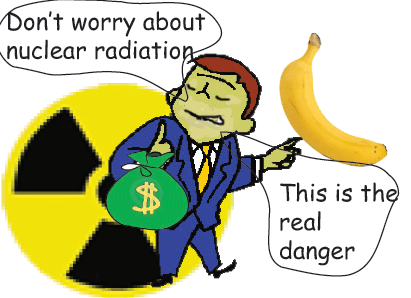
“All of these things that are part of our daily lives, so imagine how much more good nuclear science could do if we fully embrace this technology.”
The Atlas Network talking about itself
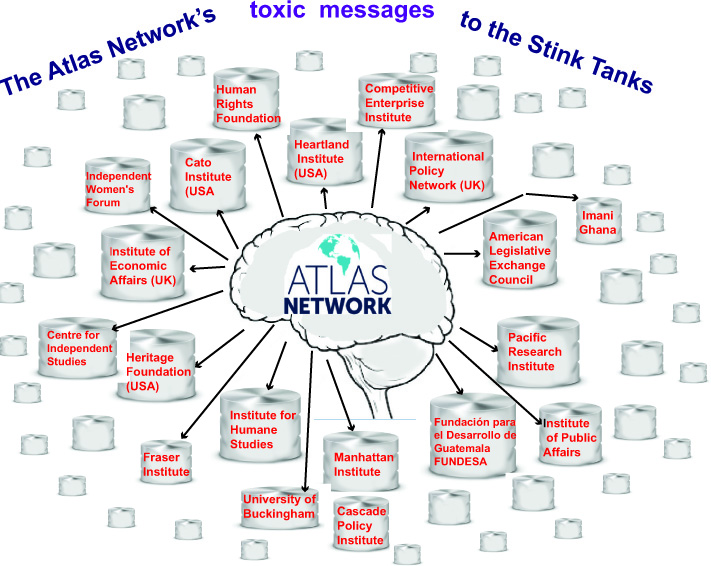
The MPS and its Atlas Network have conscientiously worked to change university campuses from places of free inquiry and critical thinking. Those beachheads in universities are matched by opportunities to find and promote “conservative” students. The idea is to shape them and potentially promote their careers in politics, the law, media, policy, academia and business.
January 26, 2025, Lucy Hamilton , https://theaimn.net/the-atlas-network-talking-about-itself/
There is much to learn about the Atlas Network from one of Ron Manners’ Mannkal Economic Education Foundation newsletters. This Mannkal newsletter was issued in April 2015. The project continues unabated.
The Atlas Network is a global interconnection of over 500 faux “thinktanks” (or junktanks), dedicated to reinforcing and propagandising the “free market” message. The Mont Pelerin Society (MPS) is considered its steering committee. The Atlas Network was designed from 1981 to metastasise similar bodies to sell “business” ideas. It finds local enthusiasts and donors around the world to eliminate obstructions to profit for American corporations and local fellow-travellers. The MPS is secretive: its membership is only rarely leaked.Ron Manners, with mining money, founded Mannkal in 1997. He is currently a life member and on the board of the MPS. He was appointed to the Advisory Council for the Atlas Economic Research Foundation in 2010. In 2020, he was awarded Atlas’s Sir Antony Fisher Achievement award. The newsletter explains that the name Mannkal originated in the cable/telex address of the company he inherited.
The Mannkal newsletter illustrates the connection to the MPS which first met in 1947. It brought together Austrian School economists such as Friedrich von Hayek and Ludwig von Mises together with the Chicago School’s Milton Friedman. The MPS, through Hayek, began the process of creating plutocrat-serving law and economics institutes in universities around America.
It also took the model provided by bodies such as the Foundation for Economic Education (FEE), founded in 1946, to create the mirage that a chorus of genuine policy experts supported the political economy that the donors desired. Friedman did much of the public relations for the project before the junktanks became more organised.
In the 1950s, Brit Antony Fisher, inspired by The Road to Serfdom, visited Hayek for advice. One of the UK junktanks in the Network explains that Hayek “told him bluntly to forget politics. Politicians just follow prevailing opinions. If you want to change events, change ideas.” He instructed Fisher to found thinktanks to help shift the prevailing mood away from the consensus that government, labour and capital all had a say in how society should operate towards a world where capital could dictate all including directing the government for its own ends.
When the co-founder of the Atlas Network Heritage Foundation, Ed Feulner, visited Australia in 1985 to conduct a workshop, he contrasted Friedman’s role marketing supply side economics, privatisation and the flat tax with the need for bodies to “set the terms and agenda of public policy.” The intent was to propagandise or “market an idea.” There must be “permanent saturation campaigns with multi-pronged, longterm strategies.” Proctor and Gamble, he explained, sell Crest toothpaste by “keeping the product fresh in the consumers’ minds.” That was to be the junktanks’ role. (These are a combination of Dr Jeremy Walker’s summaries and Feulner’s own words. The essay is well worth your time to see the history and people of Atlas in Australia.)
That Adam Smith Institute essay continues to boast that the Atlas Network had grown at the time of writing to 450 bodies. Now, the essay boasts, “They are changing events all over the world – from land reform in Peru, through privatization in Britain, public debt control in Pakistan, to low-cost education in India. And spreading the ideas of liberty in even the most unlikely places, in the Muslim world from Morocco through Turkey to Yemen and Kazakhstan; in Africa from Mali and Ivory Coast to Ethiopia; in Europe and the Far East.”
The MPS and its Atlas Network have conscientiously worked to change university campuses from places of free inquiry and critical thinking. Those beachheads in universities are matched by opportunities to find and promote “conservative” students. The idea is to shape them and potentially promote their careers in politics, the law, media, policy, academia and business.
One of Mannkal’s primary roles is the selecting of libertarian students in Western Australia for scholarships to Atlas Network junktanks around the world. In this edition of the newsletter, two report back on attending an MPS conference. One celebrated attending “networking events with prominent intellectuals and businesspeople from around the world.” Another was dazzled by, “Having dinner alongside a mining magnate, the chairman of a prominent think-tank, a famous TV presenter and an ex-CIA agent”. He continued, “I was exposed to a network rich in knowledge and influence, including a plethora of world-class academics, Nobel laureates and senior political figures.” (Nafeez Ahmed’s Alt Reich shows the significance of the CIA – and their former Nazis – in the shaping of the Atlas Network.)
Melbourne’s Institute of Public Affairs (IPA), a 1943 creation, was absorbed into the Atlas Network in the era of the Liberal Party’s battle between the Wets and the Dries. It was reportedly “hijacked” by “radicals” after people senior in the body attended an MPS conference.

The newsletter report of a third scholarship holder illustrates the Cold War dread of communism that continues to motivate the MPS and its Atlas junktanks. Former Czech president Vaklav Klaus, then a member of the MPS for 25 years, spoke at a lunch. People who have suffered under communist and socialist governments are often rolled out to warn audiences of the continuing threat of authoritarianism. The offspring of refugees who have had awful experiences in such countries provide some of the enthusiastic recruits for Mannkal.
Neoliberalism was always a bunk economics that trumpeted itself as superior because it was driven by theory and rejected evidence. In fact it was an ideology – and a network of activists – that functioned to serve the rich donors. As the project became our new normal, it created ever more dramatic inequalities, resulting in the fury and pain that drives sadopopulism. Youthful interest in social democracies has been a more productive response. In 2024, the IPA was sharing American Atlas junktank Cold War 2.0 propaganda to address the risk that youth might turn away from the “freedom” they sell.
Those of us watching the Atlas Network’s Heritage Foundation plans come to fruition in the first week of Trump’s second term see where authoritarianism lurks right now. Heritage’s Mandate for Leadershiphas come a long way since its first iteration set out the Ronald Reagan economic revolution’s steps. Now it combines its ultra-libertarian positions with authoritarian social policy and autocratic governance.
In this newsletter, Mannkal boasts of 154 scholarships available. Many are to conferences. Fifteen are “midyear internships abroad.” Another 45 are “3-month internships abroad.” The students are sent to Atlas junktanks around the world with 12 partners in particular listed. They include the inspiration for Mannkal, the FEE in Atlanta mentioned above. The Institute of Economic Affairs in London is another. That’s the body that helped create Maggie Thatcher’s economics after she was inspired by The Road to Serfdom. She co-founded another Atlas junktank, the Centre for Policy Studies.
One of the interns celebrates Maggie Thatcher’s certainty of the importance of Atlas: “It started with Sir Keith and me, with the Centre for Policy Studies, and Lord Harris at the Institute of Economic Affairs. Yes, it started with ideas, with beliefs. That’s it. You must start with beliefs. Yes, always beliefs.” Thatcher and Reagan make repeat appearances as Atlas heroes in the newsletter.
Another intern went to the New Zealand Institute, where the Chief Economist is Eric Crampton, MPS director.
The intern who was sent to Atlas headquarters in Washington was delighted to attend events at several of the Atlas junktanks including the Cato Institute (where Rupert Murdoch was a board member in the 1990s) and the Leadership Institute (party to Project 2025 and, like Heritage, to the Christian Nationalist Council for National Policy). She was impressed by Tom Palmer: Atlas’s Executive Director for International Programs. His patronising speeches at the Friedman Conference over the years can be found online.
Another of the interns was deeply grateful to spend time in Melbourne at the IPA with John Roskam. Two went to the Menzies Research Centre (MRC). One was thrilled to sit in on “meetings with high-level politicians and policy-advisors.” Mathias Corman, then Finance Minister, spoke at an MRC event about “shrinking government” in New Zealand and Australia. The Atlas Network’s Project 2025 shows how brutal the cuts to government are ultimately intended to be.
The Executive Director of the Liberal Party-affiliated MRC Nick Cater has just spent the European summer with Viktor Orbán’s junktanks in Budapest.
Scholarship donors are listed in the newsletter as Manners, Gina Rinehart, Willy Packer and Toby Nichols.
One public figure who shows the path and now models the Atlas policy influence is David Seymour, Deputy Prime Minister of New Zealand/Aotearoa. He was recruited on his university campus by the Atlas Association of Consumers and Taxpayers (ACT). The ACT is the now the political party that he leads. Seymour was awarded an Atlas “MBA” after a fortnight’s training at Atlas headquarters. He went on to work in the Canadian Atlas Frontier Center before returning to Atlas work in NZ. He is far from the only political leader with deep Atlas Network ties.
Austrian School economics is largely dead these days, although Atlas partners continue to try to resuscitate them. One of the intern reports in the newsletter says the “highlight of my experience was learning about Austrian economics, a stream of economics that is not taught in Australian high schools or universities.” There is a cogent reason why she was freshly discovering the contribution from “economists such as Ludwig von Mises, Friedrich Hayek, Joseph Schumpeter and Frederic Bastiat – important economists whose ideas or names have never once been mentioned in my four years of studying economics.” Several interns mention this inculcation of Austrian School truthiness as part of their experience.
One of the most ebullient floggers of Austrian thought in America has been Rand Paul. The intern sent to Canada’s Fraser Institute was excited to report that he met the man.
The newsletter discusses its links to the then highlight of the Atlas Network calendar in Australasian region, the Friedman Conference. In 2024, the conference was reduced to a rabble-rousing event called the Triple Conference that gave a day to libertarianism, a day to Christian Nationalism and a day to conspiracy theory nonsense.
The Mannkal newsletter also links to the History of Economic Thought Society Australia (HETSA), which hosts a Young Scholars Initiative (YSI) conference. HETSA is, anecdotally, a host to MPS figures. In 2024, this event took place at the Alphacrucis University College in NSW. Alphacrucis is the official training college of the Pentecostal Assemblies of God network, Australian Christian Churches reshaped under Hillsong’s Brian Houston. Notre Dame University, also a Catholic force in reactionary politicking and culture wars, provided the YSI organiser.
A third conference series mentioned is the “Freedom to Choose” conference, hosted by Notre Dame University and “supported” by Mannkal. The 2024 conference focused as its theme on the “enduring relevance” of Hayek’s Road to Serfdom, the book that inspired so many of the big money donors in the early history of neoliberalism.
Ron Manners pontificates on Public Choice Theory in the newsletter. This is a core aspect of Atlas’s history.
One of the key details to be gleaned from the newsletter is that this project is lifelong and often intergenerational for the donors. One of the interns at the IEA considered herself lucky to meet Hayek’s daughter who allowed the interns to “gain insight into the workings of her father first-hand!” Antony Fisher’s daughter, Linda Whetstone, was president of the MPS, chair of the Atlas Network and on the board at the IEA. Rupert Murdoch’s father Keith co-founded the IPA with Charles Kemp. Rupert was an official board member at Cato, and an unofficial conduit of the IPA, Centre of Independent Studies and MRC, whose people are regularly found on his platforms. The Kemp sons, Rod and David, were key figures in the thinktanks and the Atlas Americanisation of Australian politics.
Charles Koch has been a prime force financially and strategically at Atlas for decades.
It is hard to know how much of the change from Keynesian balanced economy to neoliberal brutality is attributable to the MPS and the Atlas Network, compared to how much might be due to the general impact of the donors and ideologues. Industry lobbies and the direct power of the plutocrats intermix with the marketing of the Atlas Network and its soft power impact for American corporations around the world.
The plutocrats ventriloquised through Atlas operations, but do not seem to feel the same compulsion to separate their goals from their faces any longer. Whether it’s Elon Musk or Gina Rinehart, they seem to feel comfortable now dictating oligarch policy for themselves.
Regardless, it’s worth watching Atlas talking about itself: the freedom it declares it fights for was always anti-democratic.
Peter Dutton’s nuclear energy policy is unclear policy
January 18, 2025 Michael Taylor, https://theaimn.net/peter-duttons-nuclear-energy-policy-is-unclear-policy/
Peter Dutton’s signature nuclear energy policy has rightly been subject to significant criticism and analysis, highlighting several key issues:
- The policy has been criticised for its potential high costs. Reputable sources suggest that nuclear energy is likely to be significantly more expensive than renewable energy alternatives. For instance, the Climate Council estimates that it could increase household electricity bills by $665 annually, and the CSIRO’s GenCost report indicates that nuclear power is at least twice as expensive as renewables.
- The timeline for establishing nuclear power in Australia is considered overly ambitious. It’s estimated that it would take at least 15 years to get reactors up and running, which means significant delays in addressing immediate energy needs. This delay could lead to continued reliance on fossil fuels, thus increasing emissions rather than reducing them.
There are substantial environmental concerns related to nuclear power, including the management of nuclear waste, the risk of accidents, and the overall environmental footprint (which the industry says is nil) when considering the lifecycle of nuclear facilities. Dutton’s policy doesn’t adequately address these risks, particularly in a country such as ours with no prior nuclear energy infrastructure.- Implementing nuclear power requires overcoming significant political and regulatory hurdles. Opposition from state governments, along with existing federal bans on nuclear energy, presents legal and political obstacles. The need for new legislation and the potential for compulsory land acquisition further complicates the policy’s execution.
- The policy could deter investment in renewable energy by creating uncertainty about the future energy landscape. Investors might be reluctant to commit to long-term renewable projects if there’s a possibility that the energy market will shift towards nuclear, potentially leading to higher energy costs and less economic growth.
There are valid doubts about public support for nuclear power in Australia, particularly given historical opposition. The proposed choice of sites for nuclear reactors raises questions about community consent.- The policy focuses on nuclear at the expense of more immediately deployable and cost-effective renewable solutions (Sydney Morning Herald, paywalled). The argument is that renewable energy can be scaled up more quickly to meet current and future energy demands without the risks associated with nuclear.
- There has been a noted absence (Sydney Morning Herald, paywalled) of comprehensive costings from the Coalition for their nuclear plan, leading to skepticism about the economic claims made by Dutton. This lack of transparency has been highlighted as a major flaw.
- In summary, the policy is economically risky, environmentally questionable, and politically contentious, potentially leading to higher energy prices, slower adoption of clean energy, and increased reliance on fossil fuels in the interim.
- It looks as though Dutton is on a loser with his nuclear energy policy. He pursues it at his political peril.
Dutton’s nuclear plan to wipe out Australia’s aluminium smelters

Australian Financial Review, Chris BowenMinister for Climate Change and Energy, 19 Jan 25
The Coalition’s costings are predicated on large industrial facilities in the southern and eastern states of Australia halving their energy use by the end of 2030, and keeping it there.Chris BowenMinister for Climate Change and Energy
Of all the problems with Peter Dutton’s nuclear energy costings released in the dying days of 2024, probably the biggest is that the entire policy assumes much of Australian heavy industry closes over the next few years.
This is particularly ironic as Mr Dutton claims with a straight face that nuclear power is necessary for industrial growth.
The details of his so-called policy costings reveal the only way the Coalition can make nuclear energy appear cheaper than it is – even Ted O’Brien admits he’s not predicting nuclear will bring power bills down – is to assume Australia will need a lot less power.
It indicates an extraordinary degree of pessimism about Australia’s manufacturing future, specifically for electricity-hungry industries like aluminium smelting.
In releasing those figures, the Coalition has tied themselves to a future scenario predicated on large industrial facilities across the southern and eastern states of Australia halving their energy use by the end of 2030 – and keeping it there.
Specifically, the model Peter Dutton has adopted as the basis for his energy policy, shows a material drop and then permanent flatlining in industrial electricity demand for Victoria, Tasmania, Queensland and NSW.
That is, less than half the energy we need to power our biggest industrial users right now – let alone to enable growth in the future.
We need to be planning an energy system for economic growth.
Peter Dutton says he supports the aluminium industry, but his own nuclear costings rely on shutting it down.
Analysis of the timing of large loads coming off, shows it coinciding with the end dates of existing power purchase agreements for each of Australia’s four aluminium smelters across those states.
It shows a Liberal Party either cavalier about, or comfortable with Tasmania’s Bell Bay smelter closing in less than 12 months by January 2026, Portland’s smelter winding down in July 2027, plus NSW’s Tomago and Queensland’s Boyne smelter gone by July 2029…………………………………………………………………
As someone who wants to lead a country, why would Dutton be planning for an economy that’s smaller and an industrial sector that’s worse off with no growth opportunities, before he’s even begun? Why bank on job losses to bring down the cost of his electricity system?
And if you’re not planning for a contracting economy, then where’s your credible energy policy to meet growing demand in the next five, 10 and 20 years?
We need to be planning an energy system for economic growth. We need to be planning an energy system for the future, one that has bigger industry, ………………………………………………………. more https://www.afr.com/policy/energy-and-climate/dutton-s-nuclear-plan-to-wipe-out-australia-s-aluminium-smelters-20250119-p5l5l4
Lack of detail Dutton Launches Much to Do About Nothing campaign

January 17, 2025 John Lord Australian Independent Media
You might remember the relentless scrutiny that Peter Dutton applied during the Voice referendum regarding Labor’s proposal. He would challenge the Prime Minister each day, demanding more specifics when many felt the key points were already apparent. Like Tony Abbott or Donald Trump, Dutton seems poised to adopt a campaign strategy that embraces a lack of detail in the upcoming election. He plans to present broad, sweeping outlines of potential policies and actions he might pursue in office rather than delving into the intricacies and specifics many voters desire.
A prime example of the shortcomings in leadership is Peter Dutton’s vague and often frustrating approach to nuclear policy, which raises more questions than it answers. The most effective leaders possess a vast reservoir of accurate information, readily available for reference at any moment. John Howard exemplified this quality, as did Kim Beazley and Peter Costello. In recent times, however, there have been few who can match this standard. Julia Gillard stood out for her sharp insights, while Kevin Rudd’s exceptionally agile mind distinguished him from his peers. Anthony Albanese, in particular, demonstrates an extraordinary ability to recall even the slightest of details; a skill honed during his tenure as Minister for Infrastructure, where he developed an almost uncanny depth of knowledge.
It is precisely in this area that Peter Dutton is likely to struggle. During the frenetic pace of an election campaign, when rapid-fire questions bombard a candidate at their most vulnerable, his lack of depth in detail will become apparent. In politics, it is always the meticulous attention to detail that can make or break a leader…………………………………………….
Dutton emerged from a long yawn to play catch-up politics on Sunday, 12 January, to launch the Coalition’s unofficial election campaign.
During a 38-minute hastily put-together address at a rally in Melbourne, he depicted the forthcoming election as a pivotal “sliding doors moment” for the future of Australia. At this event, he unveiled the Coalition’s rallying cry, “Let’s get Australia back on track,” which resonated with the audience eager for detail. Alongside this slogan, Dutton introduced a new brochure that detailed twelve key governing priorities designed to steer the country in a different direction. In his speech, he strongly criticised the current Labor government, labelling it one of the most “incompetent governments” Australia has ever seen (after only three years, he had forgotten his own) and described the leadership of Prime Minister Anthony Albanese as among the weakest in the nation’s history……..
So, with little detail, Dutton launched his Much to Do About Nothing campaign.
Michelle Grattan wrote about Dutton’s launch:
“What it wasn’t, though, was detailed. The specifics of what a Dutton government would do, and how it would do it, remain unclear.”…… https://theaimn.net/lack-of-detail-dutton-launches-much-to-do-about-nothing-campaign/
Nukes kill kids

Dr Tony Webb, 17 Jan 25
One moment from my work in the USA in the early 1980s stands out in my memory. I’d driven from Chicago to Cleveland at the invitation of the Health and Safety Officer of the US Boilermakers Union to speak to the members meeting held on the night ahead of the recruitment of members for work on the annual ‘clean-up’ of the local Nuclear Power plant. The hired workers would be ‘radiation sponges’ – short-term casuals recruited for the ‘dirty jobs’ that would result in significant radiation exposures sometimes up to the permitted annual exposure limit and ‘let go’ if they reached that limit. The practice offered some protection to the company’s full -time employees whose skills would be needed on an ongoing basis and whose exposures needed to be kept below the limit. The meeting was well attended , rowdy, with a lot of questions and discussion which spilled over into the carpark after the meeting closed. I noticed one man hanging back from the circle and invited him to join and share his thoughts. As I recall them the essences was:
“I will be going in to apply for work tomorrow. I understand what you shared about the risks . . . no safe level of exposure and chance of getting cancer perhaps 20 years from now . . . It will put a roof over my family’s heads and food on the table . . . BUT my wife and i have had all the family we want. If we hadn’t, what you shared about the genetic risks, the damage to our children and future generations . . . no I wouldn’t be going . . . “
It is a sad fact that workers, both men and women will choose, often from necessity, to put their health at risk from the work environment. What is however consistent in my experience of working on radiation and other occupational health and safety issues is that they are far more concerned, cautious and likely to prioritise safety when it comes to risks to their children.
We now have solid evidence that workers in nuclear power plants routinely exposed to radiation face significantly increased cancer risks, risks of cardiovascular disease including heart attacks and strokes, dementia and potentially other health effects. There is also an increased risk of genetic damage that can be passed on to their children and future generations. But perhaps most significant of all there is now solid evidence of increased rates of leukaemia in children living close to nuclear power plants.
To put it simply and in language that will resonate with workers and their families in the communities around the seven nuclear power plant sites the federal Liberal-National Coalition proposes to build if elected to government; nuclear kills kids. It matters little whether or not these nuclear plants can be built on time, within budget, make a contribution to climate change, reduce electricity prices, or secure a long-term energy future; these nuclear power plants will kill kids who live close by. They cannot operate without routine releases of radioactive material into the environment and our young will be exposed and are particularly susceptible to any exposure that results.
Now add to that if you care that women are more susceptible than men, that workers in these plants face greater exposure and health risks than adults in the community, that nuclear plants have and will continue to have both major accidents and less major ‘incidents’ resulting in radiation releases, community exposures and consequent health damage. Add also that quite apart from the workers and others exposed when these plants need to be decommissioned, the radioactive wastes resulting from perhaps 30-50 years life will need to be safely stored and kept isolated from human contact for many thousands of years longer than our recorded human history. And, again if you care, also add in the concerns around proliferation of nuclear weapons which historically has occurred on the back of, enabled by and sometimes concealed by countries’ developing so called peaceful nuclear power.
All these arguments add weight to the absurdity of Australia starting and the world continuing down this nuclear power path. But if we want a single issue that strikes at the heart of human concerns it is this – and forgive me saying it again, it needs to be repeated many times until the electorate in Australia hears it loud and clear – Nuclear Kills Kids
1 This month
.

Australians deserve the truth
about
AUKUS – https://aukuspublicinquiry.com/

PETITION – To: Prime Minister Anthony Albanese and the Australian Labor Government

of the week – Australians for War Powers Reform (AWPR)
To see nuclear-related stories in greater depth and intensity

