Australian govt’s cuts to clean energy will mean loss of many CSIRO jobs
 120 CSIRO jobs face the axe if clean energy cuts go through, http://www.canberratimes.com.au/national/public-service/120-csiro-jobs-face-the-axe-if-clean-energy-cuts-go-through-20160831-gr5hxc.html Noel Towell, 31 Aug 16
More than 120 research jobs at the CSIRO face the axe if the Coalition’s proposed cuts to the clean energy research agency are approved by Parliament.
The threatened jobs come on top of scores of university science positions on the chopping block if the Australian Renewable Energy Agency is de-funded as part of the government’s “budget repair” omnibus bill currently before the Parliament.
The new threat to CSIRO research comes less than a month after Science Minister Greg Hunt instructed the organisation to renew its focus on climate science, claiming it would be a “bedrock function” of the agency’s activities.
Fairfax reported on Wednesday that Australia’s leading renewables researchers were warning the nation was heading towards the “clean energy valley of death” if the ARENA cuts are passed. Continue reading
Australian Capital Territory Liberals back ACT govt’s targets of 100 per cent renewables by 2020 and zero net emissions by 2050

 Environmental groups urge ACT to commit to carbon neutrality by 2040, Canberra Times, Christopher Knaus, 1 Sept 16 Environmental groups have urged the ACT government to reach zero net emissions a decade earlier than its current target, while praising the territory’s newly-realised bi-partisanship on climate change.
The ACT government’s targets of 100 per cent renewables by 2020 and zero net emissions by 2050 were backed by the Canberra Liberals at an election forum on Monday night. Liberal leader Jeremy Hanson confirmed his party would continue to pursue Labor’s climate change policies if elected.
The position has drawn praise from the ACT Conservation Council and climate change action group 350.org, which said the approach of the Canberra Liberals “sits in stark contrast to the federal party’s ongoing support for the coal, oil and gas expansion industry and paltry emissions reduction targets”.But both groups have urged the ACT to speed up its transition to a carbon-neutral economy.
Conservation Council ACT executive director Larry O’Loughlin said the ACT should seek to achieve zero net emissions by 2040 to maintain its status as a nation-leading jurisdiction on climate change. Mr O’Loughlin said the government should also set an interim target at some point between 2020 and 2040, to ensure it stays on track to the ultimate goal of carbon neutrality.
He said speeding up the transition to a carbon neutral economy, if adopted across the globe, would help limit global warming to two degrees. The emerging evidence, he said, may even prove that target to be inadequate. “It may be that [2040] is soon unambitious. We might need to do more,” Mr O’Loughlin said.
The Conservation Council has also recently released its election policy document, which sets out the priorities for both major parties ahead of the October election……..
Climate change action group, 350.org, issued a statement on Wednesday congratulating the Canberra Liberals on adopting the existing climate change and renewable energy targets.
350.org Canberra spokesperson Josh Creaser said the ACT had been a leader in fighting climate change, but said more must be done. “Whilst the ACT Liberals have taken an important step by matching the ACT Government’s policies it’s clear that a transition to net zero emissions must happen sooner than 2050,” he said.
“This should also include the ongoing divestment of ACT Government shares in fossil fuel companies.” http://www.canberratimes.com.au/act-news/environmental-groups-urge-act-to-commit-to-carbon-neutrality-by-2040-20160830-gr4i5d.html
Climate Change Authority’ s review on Australia’s climate goals and policies
 Towards a climate policy toolkit: special review on Australia’s climate goals and policies, Australian Policy Online Climate Change Authority 31 August 2016 The Climate Change Authority is pleased to release the third and final report of its Special Review into the actions or policies that Australia should take to implement outcomes flowing from the historic Paris climate change agreement……..The emissions reduction policy toolkit needs to take account of Australia’s climate policy history, be suited to the emissions opportunities and challenges in individual sectors and be able to be scaled up in the future to meet the emission reduction challenges in the Paris Agreement…….
The Authority is also recommending that an enhanced safeguard mechanism be put in place as an effective, pragmatic and durable way of reducing emissions across a range of industrial, manufacturing and resource sectors. For households, vehicles and buildings, the Authority recommends that energy efficiency standards be put in place or strengthened.
For the land sector, the Authority found that voluntary offsets are the best tool for the task, given the large number of landholders and the differences between farming operations. In this report, as flagged in the Authority’s Special Review final report on targets, the Authority has not sought to provide further advice on emissions reduction targets. Emissions reduction targets are very important parts of the emissions reduction armoury but without effective policy action they will remain aspirational rather than determinative for the way ahead.
Secret forum – for the Nuclear Royal Commission to indoctrinate kids?
 The South Australian government is going to a lot of trouble to set up a forum for 160 students and 60 teachers to hear a presentation from the former Nuclear Royal commissioner, Kevin Scarce, and the Chief Executive of the Nuclear Consultation and Response Agency, to tell them all about the plan for South Australia to import foreign nuclear waste.
Walk Against Nuclear Waste Importation protestors speak out at Willunga, Adelaide
 Fleurieu protesters stand against nuclear storage | VIDEO, The Times On The Coast, 30 Aug 16 “Nuclear waste, what a disgrace,” was chanted loud and clear by more than 100 participants in the Walk Against Nuclear Waste Importation as they gathered on the steps of the Willunga Hub on August 24.
Inside was a consultation team who welcomed the walkers with feedback forms and Know Nuclear information packs, taking an opportunity to inform the community about what the Nuclear Fuel Cycle Royal Commission recommendation on storing international radioactive waste meant.
“The proposal before us is an economic one: $5.5 billion per annum, $445 billion over the life of the facility,” said John Phalen, Director, Engagement, Nuclear Fuel Cycle Royal Commission Consultation and Response Agency.
“What we are asking people to do is examine the opportunity,” he said……..
Willinga, Strathalbyn and Victor Harbor among the 100 selected sites for Know Nuclear representatives to talk to local communities.
“I don’t think nuclear dumping is good for our environment or our future,” said Jeffrey Simmons. “Especially when we take it from other parts of the world.”
Sherilee Williams agreed. She said she had a deep respect for the land and its traditional owners since walking from central Australia’s Dingo Fence to Mount Compass a few years ago. “They (the state government) are thinking South Australia’s desert is a wasteland but it’s a sacred place; it’s a place of healing,” she said………
Community consultation runs until October. Feedback forms are available atnuclear.yoursay.sa.gov.au
Living in a radioactive environment Boris Sopotsko from Hallett Cove grew up in St Petersburg, Russia, 40 kilometres from a nuclear power plant and remembers as a child being taught where to run, where to hide, and what to eat after an explosion or leak.
“I hate the idea so much,” he said, referring to an international nuclear waste storage facility proposed for South Australia. “It makes me feel ill. “I remember our school had a gas mask for every single student and an under ground shelter; a nuclear bomb shelter. “The walls had posters showing us how to check which way the wind was blowing and what to do to avoid contaminated rains. “We were well trained, but that doesn’t mean we’d survive.”
Mr Sopotsko feared for the state’s future and said he actively opposed the importing, storing and burying of international nuclear waste in South Australia.
“Nuclear waste from all over the world is clearly a concern, especially when shipping in high seas,” he said. He said transporting the material on roads and rail posed a safety risk: “you freeze with dread at the sight,” he remembers.
Storing the waste above ground was also a concern. “We live in a time when the West has enemies,” he said. “This would be an easy target.”
Underground storage poses a contamination risk to soil and water. “Germany’s waste deposit in Lower Saxony has experienced an underground radioactive leak and people’s resistance against further storage is very strong……..http://www.victorharbortimes.com.au/story/4130203/fleurieu-protesters-stand-against-nuclear-storage-video/
Federal govt slashes safety checks at Ranger uranium mine
ERA, controlled by Rio Tinto, stopped mining new ore in 2012. Since then, it has been extracting ore – totalling about 2000 tonnes a year – from tailings at a rate that leaves 999 tonnes of waste for every uranium tonne produced.
Under federal statutes, the millions of tonnes of waste rock and billions of litres of water must be stored so “radiological material is separated from the environment for 10,000 years”, Mr O’Brien said.
“All that contaminated matter … all the buildings, the mill, the power plant, all the machinery, all the trucks – everything – has to be put into pits.”
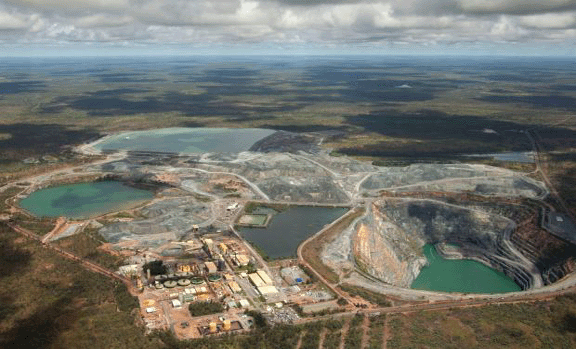
Lone Ranger: Kakadu uranium miner faces fewer safety checks, The Age, Peter Hannam, 30 Aug 16 The controversial Ranger uranium mine in the Top End has had its independent government oversight depleted just years before its closure in a move the local Aboriginal organisation describes as “absurd”.
Since December, the Supervising Scientist Branch – the agency under the federal environment department enforcing standards at the giant mine – has halted atmospheric testing of radon and other radioactive dust from the project owned by Energy Resources of Australia.
Neither has the SSB’s environmental research institute – known as ERISS – tested a range of foods including fish and wallaby eaten by the nearby traditional owners, the Mirarr people, since 2011, according to one insider. Continue reading
Uranium miner ERA forced to slash its assets value
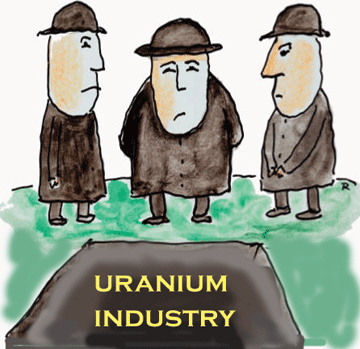 Energy Resources of Australia slashes asset values, The Age, Brian Robins 30 Aug 16 Uranium miner Energy Resources of Australia has been forced to slash the value of its assets by $161 million, almost equal to the company’s remaining sharemarket value.
With its controversial Ranger mine, which is surrounded by the Kakadu National Park, scheduled to close within five years, the Australian Securities and Investments Commission (ASIC) had questioned the way ERA valued its assets in its December 31, 2015 financial report.
The miner had now conceded that the value at which it carried the Ranger mine assets in its books “exceeded fair value”, ASIC said in a statement on Tuesday.
ERA pointed to weakness in the uranium oxide price at a time when the mine had only a five-year life left, without an extension of its authority to mine, as reasons for booking the impairment.
The write-down compares with ERA’s sharemarket worth of just $173 million, which signals deep-seated investor pessimism over its prospects in light of the traditional land owners’ opposition to extending the operation of the mine.
In the June half, ERA lost $35.2 million, which blew out to $196.5 million following the write-down. Revenue slipped to $170.5 million from $185.8 million due to the weak uranium price……..
ASIC had queried the company’s use of a single discount rate when valuing its assets. ERA has agreed to use different valuation techniques for the mining and rehabilitation of the site, for example.
ERA’s biggest single asset is its accumulated losses, which now total $822.8 million and tower over the value of its dwindling equity of $273.4 million.
Turnbull govt attacks renewable energy, plans to gut Australian Renewable Energy Agency (ARENA)
The sun will set on solar if the Australian Renewable Energy Agency is gutted, The Age, Andrew Blakers and Richard Corkish, 30 Aug 16
The federal government plans to strip the Australian Renewable Energy Agency of most of its funding, as well as its ability to give grants now that Parliament has resumed. Remarkably, the ALP, which established ARENA when in government, may allow this to happen. This is an existential threat to renewable energy research, innovation and education in Australia.
The solar photovoltaic industry is big business. It now makes up a quarter of all new electricity generation capacity installed each year across the world, and it’s growing at 20 to 30 per cent a year. Together, solar and wind energy make up half of all new generation capacity installed globally and all new generation capacity installed in Australia. A renewable energy revolution is in progress, and Australia is at the forefront. Gutting ARENA directly threatens our leadership position.
Our economy has benefited to the tune of billions of dollars in the form of dramatically reduced solar system costs, increased renewable energy business activity, fewer greenhouse gas emissions, royalties, shares and international student fees.
To provide just one example, the Australian-developed PERC solar cell now has annual sales of $9 billion and is forecast to dominate the worldwide solar industry. Further, gains in energy efficiency made possible by this technology are forecast to save our country $750 million in electricity generation costs over the next decade……..
If ARENA is cut, then hundreds of people will lose their jobs within two years. That is the cold reality. This includes researchers, PhD positions and industry leaders. Our brightest minds will be forced to either leave the field, or leave Australia in favour of other parts of the world where solar research is still valued.
In the longer term, Australia’s leadership in solar energy will vanish. As support for research and innovation dwindles, later-stage commercialisation will also start to dry up. This won’t be a temporary loss, but a long-lasting extinction as we lose the research groups that underpin the very education and training of future Australian engineers and scientists.
This would be completely at odds with the federal government’s innovation agenda, as well as its commitment at the UN climate change conference in Paris to double clean energy research and development by 2020…….http://www.theage.com.au/comment/australian-renewable-energy-agency-to-lose-most-of-its-funding-20160829-gr3qme.html
Australian govt’s environment and energy committee chaired by climate sceptic
 Climate sceptic MP appointed chair of environment and energy committee
Liberal Craig Kelly will lead backbench committee that provides advice and feedback on legislation and policies, Guardian, Gabrielle Chan, 29 Aug 16, The climate sceptic Liberal MP Craig Kelly has been appointed chairman of the backbench environment and energy committee, with National party MP Kevin Hogan as secretary.
The committee will provide feedback on legislation and policies relating to the environment and energy, including to the minister, Josh Frydenberg.
Kelly served on the committee during the last parliament and previously invited climate sceptics to “balance” a presentation given by top climate scientists…….https://www.theguardian.com/australia-news/2016/aug/29/climate-sceptic-mp-appointed-chair-of-environment-and-energy-committee
Victorian govt to ban unconventional gas exploration – fracking and CSG extraction
 Victorian unconventional gas exploration ban to end fracking and CSG extraction, ABC News, 30 Aug 16 The Victorian Government is introducing legislation to permanently ban exploration and development of unconventional gas in the state, including coal seam gas and fracking.
Key points:
- Legislation will permanently ban development, production of all unconventional gas in Victoria
- Moratorium on conventional gas extraction to be extended until 2020
- Government says ban will protect Victoria’s agriculture sector
The legislation — the first of its kind in Australia — will be introduced into State Parliament later this year.
Premier Daniel Andrew said the ban would protect the reputation of Victoria’s agriculture sector and alleviate farmers’ concerns about environmental and health risks associated with hydraulic fracturing, known as fracking.
“We’ve listened to the community and we’re making a decision that puts farmers and our clean, green brand first,” he said.
The legislation will also extend the moratorium on conventional onshore gas until 2020, but offshore gas exploration and development will continue.
The Government said the decision, which responds to a parliamentary inquiry, acknowledged the risks involved outweighed any potential benefits……..http://www.abc.net.au/news/2016-08-30/victoria-to-ban-csg-fracking-and-unconventional-gas-exploration/7796944
Liberal Chairman of Coalition’s environment policy committee a proud climate sceptic, suggests nuclear power
Coalition environment committee chairman takes aim at solar subsidies Craig Kelly says he wants wind and solar funding to be redirected to research into ‘technological breakthroughs’ because existing renewables had ‘little effect’, Guardian, Gabrielle Chan, 31 Aug 16, The Liberal chairman of the Coalition’s environment policy committee, Craig Kelly, has questioned solar and wind power subsidies and would like a cost-benefit analysis of future emission reductions policy, due to be reviewed next year.
Kelly was named chairman of the environment and energy committee at the party room meeting on Monday, making him responsible for coordinating backbench feedback to the government on climate and energy policy.
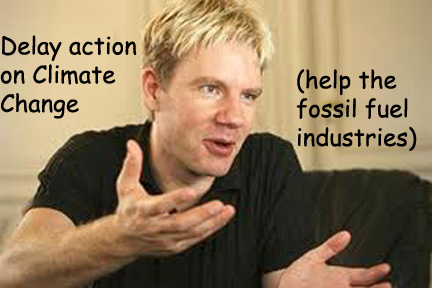 He said he was proud to be a climate sceptic rather than “wallow in groupthink, to be a sheep, or a lemming”. Kelly described himself as in the “Bjorn Lomborg” camp, suggesting wind and solar funding should be channelled into “further research” because those current renewables like wind and solar power had “diminishing returns”………
Kelly said in considering the price of power, the option of nuclear power should be considered……..https://www.theguardian.com/environment/2016/aug/31/coalition-environment-committee-chairman-takes-aim-at-solar-subsidies
Turnbull’s “innovative” crippling of ARENA
ANU and UNSW, Independent Australia, 30 August 2016 Following on from the destruction of the CSIRO, the Turnbull Government plans to cripple the Australian Renewable Energy Agency’s (ARENA) funding. We have reproduced an open letter from academics at UNSW and ANU urging public support to save this vital agency.
AN OPEN LETTER FROM ANU AND UNSW ACADEMICS
Australia’s endangered solar research THE FEDERAL GOVERNMENT plans to strip the Australian Renewable Energy Agency (ARENA) of most of its funding as well as its ability to make grants.
This is an existential threat to renewable energy research, innovation and education in Australia.
After the fiasco involving CSIRO climate scientists, we now have a potential fiasco in mitigation of climate change. Remarkably, the ALP, which established ARENA when in government, may allow this to happen.
We call upon all political parties to support retention of ARENA……..https://independentaustralia.net/politics/politics-display/turnbulls-innovative-crippling-of-arena,9411#.V8Ur0j5jSY0.twitter
Geothermal power project closes in SA as technology deemed not financially viable
ABC News, 30 Aug 16 By Tom Fedorowytsch A potential energy source in Australia is set to remain untapped, with a geothermal power project in the far north of South Australia now closed.
Energy company Geodynamics closed and remediated the sites of several test wells and generation plants in the Cooper Basin after deciding they were not financially viable.
Before the closure, the company had managed to extract super-heated water from five kilometres below the earth’s surface and use it to generate small amounts of electricity.
“The technology worked but unfortunately the cost of implementing the technology and also the cost of delivering the electricity that was produced to a market was just greater than the revenue stream that we could create,” Geodynamics chief executive Chris Murray said…….http://www.abc.net.au/news/2016-08-30/geothermal-power-plant-closes-deemed-not-financially-viable/7798962
Australia trapped in its status as Nuclear Umbrella State
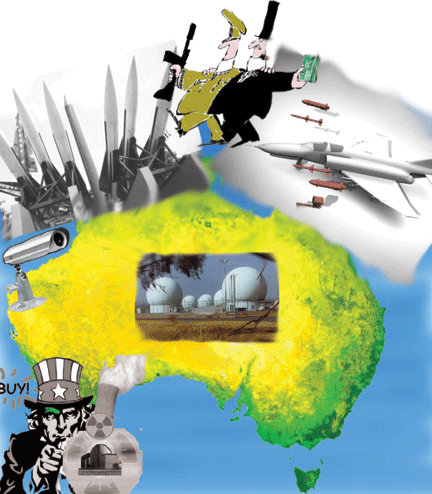 The great nuclear disarmament divide, “……On the one hand, there are umbrella states that are addicted to their nuclear protection, and on the other, there are umbrella states that clearly feel trapped by it, Livemint, 29 Aug 16 W.P.S. Sidhu, Austria, which remained neutral and nuclear weapon-free during the Cold War, has become the leading anti-nuclear crusader in the post-Cold War era. Last year, Austria, along with a group of non-nuclear countries—mostly from the southern hemisphere and Africa, which is entirely covered by nuclear weapon-free zones—proposed several United Nations General Assembly (UNGA) resolutions including on the humanitarian consequences of nuclear weapons. One of the significant Austrian co-sponsored resolutions proposed an open-ended working group (OEWG) to take forward multilateral disarmament negotiations.
Although this resolution was overwhelmingly supported by 138 countries, the five permanent nuclear weapon states of the UN Security Council plus Israel voted against it. While India and Pakistan abstained, North Korea, curiously, supported the resolution. Significantly, 34 states—mostly members of the North Atlantic Treaty Organization (Nato) and those protected by the US nuclear umbrella—also abstained.
Subsequently, while all nine nuclear-armed states (including India) stayed away from the OEWG deliberations in Geneva, the group made substantial progress. By 19 August, the group’s final report had drafted far-reaching recommendations, including a call to initiate negotiations in 2017 on a legal instrument to prohibit nuclear weapons—unlike biological and chemical weapons, nuclear weapons have never been banned. There were indications that this report would be carried by consensus among the states participating in the OEWG. Clearly, a consensus report recommending a treaty to ban nuclear weapons outright would be anathema not only for the nuclear armed states but also the so-called ‘umbrella states’, which depend on the nuclear protection particularly of the US. Thus, the nuclear-armed states sought to influence the OEWG process by proxy.
Enter Australia. In the past, Australia played a leading role in pushing disarmament initiatives, for instance, when it resurrected the Comprehensive Test Ban Treaty in 1996 and co-sponsored an International Commission on Nuclear Non-proliferation and Disarmament in 2008. However, this is at odds with its dependence on nuclear weapons.
As an umbrella state, it depends on the perceived security of US nuclear weapons. In the OEWG, Australia became a proxy of nuclear weapon states and a disarmament spoiler: it called for a vote on the group’s final report even though it was evident that the majority would support the report’s recommendations.
Australia’s objective was two-fold: first, to break the emerging consensus and, second, to close ranks among all the umbrella states. Australia almost succeeded in its second goal. Although 19 Nato states plus Australia and South Korea voted against the report, several other Nato members plus Japan abstai-ned, indicating that not all umbrella states are willing to sustain nuclear weapons and deterrence in perpetuity.
The OEWG process reflects a great disarmament divide not only among the nuclear haves and have-nots, but also among the umbrella states. On the one hand, there are umbrella states that are addicted to their nuclear protection, even though it is not apparent that such security is omnipotent. On the other hand, there are umbrella states that clearly feel trapped by the protection provided, but are unsure how get out of this situation. This debate will now play out on the floor of the UNGA…..http://www.livemint.com/Opinion/4smGv8MNF3hg63Y1WpRzQL/The-great-nuclear-disarmament-divide.html
Surface nuclear waste spurs community concern
Community concern is mounting about plans to store high level radioactive waste above ground for years before building a proposed nuclear waste dump, warns Conservation SA CEO Craig Wilkins.
“From our public consultation, most people think this proposed dump is an ‘out of sight, out of mind’ idea, where we bury the waste deep in the outback and that’s it,” he said. “The reality is very different.
“The Nuclear Fuel Cycle Royal Commission was very candid: The project only stacks up financially if we import and stockpile 50,000 tonnes of nuclear waste above ground for as long as 17 years before we can deposit it in an underground disposal site. Indeed, that ‘interim’ surface site will store tens of thousands of tonnes above ground for the next 100 years.

“So, we acquire the risk and responsibility for this nuclear waste before we know if we can actually build and operate the ultimate repository – let alone obtain community consent for it.
“Before we get there, ships containing that high-level waste enter South Australian waters through problem areas such as the South China Sea, then traverse our prawn and tuna fisheries, aquaculture zones and tourism hotspots every month for 70 years. That is a huge amount of risk.
“The plan would require a purpose-built nuclear port and rail line with nuclear waste being stored at five different locations across the state. While these facts are publicly accessible, they’ve been obscured by the promise of eye-popping windfall profits from this proposal.”
However, community concern has grown as South Australian citizens identify problems with the financial viability, environmental impact and community effects of the proposed nuclear waste dump.
In Port Augusta, a two-day community forum, called Exposure 2016, will run this weekend, from September 2-4, at the city’s Institute Theatre, starting on Friday night with ‘Talking Straight Out’. This exhibition showcases the famous Irati Wanti campaign when senior Aboriginal women from Coober Pedy, the Kupa Piti Kungka Tjuta, defeated Federal Government plans to dump radioactive waste on their land.
The free event will also include sessions on the SA Government’s international nuclear waste dumping plans; current Federal Government plans to dump waste in the Flinders Ranges; traditional owners’ voices and rights; impacts of radiation on people and the environment; impacts on industries including tourism, farming and recreation and the track record of radioactive waste management / mismanagement in South Australia and globally.
For many South Australians, the proposed nuclear waste dump in the State’s outback invokes memories of Maralinga and Emu Fields, the South Australian sites of nine British secret nuclear tests between 1953 and 1963. The tests exposed local Aboriginal communities to radiation that caused cancers, blindness and ongoing genetic damage. British and Australian servicemen were also exposed and radioactivity was detected in SA, NT, NSW and Queensland.
South Australian singer Mike Roberts also communicates concern about the nuclear waste dump in his new song Welcome to the Nuclear State. Listen at http://www.cdbaby.com/cd/mikeroberts23#. For community concerns about the SA nuclear waste dump, visit http://www.nodumpalliance.org.au/.
1 This month


Help Aunty Sue Protect Her Land and Sacred Sites From Destructive Rocket Testing.
.

Australians deserve the truth
about
AUKUS – https://aukuspublicinquiry.com/

PETITION – To: Prime Minister Anthony Albanese and the Australian Labor Government

of the week – Australians for War Powers Reform (AWPR)
To see nuclear-related stories in greater depth and intensity

