A South Australian Labor MP has the guts to speak out against nuclear waste dump plan
“I don’t want nuclear dump”: Labor MP http://indaily.com.au/news/local/2016/03/18/i-dont-want-nuclear-dump-labor-mp/, Tom Richardson, 18 Mar 16
Jay Weatherill could face a divided party if he forges ahead with a proposal to establish a high level nuclear waste dump in South Australia, with a long-time Labor MP telling InDaily the idea is “quite worrying” – and suggesting several colleagues share the same view.
The tentative findings of Kevin Scarce’s nuclear royal commission handed down last month found an unambiguous economic case to establish a repository, with the Premier already moving to amend the law to facilitate broader debate on the issue.
 But the debate is heating up in the corridors of parliament, with former Labor minister and Ashford MP Steph Key joining Greens MLC Mark Parnell – a vocal opponent of increasing SA’s nuclear involvement – in sponsoring a briefing for interested MPs by a noted critic of the waste dump push.
An email went out to all MPs this week, reading: “Dear colleagues, there’s been so much said about an economic bonanza from building a global nuclear waste facility – but what if the economics don’t stack up?”
“Come and hear from Dr Richard Denniss, Chief Economist, The Australia Institute,” it concluded.
The briefing will be held on Tuesday, after a public briefing by Denniss together with economist and InDaily columnist Richard Blandy, both of whom have argued against the economic case for a waste dump.
“I think it would be fairly well known that I’m an anti-nuclear person,” Key said when contacted by InDaily. “I have been for the last 40 years, and I still am.” She said she was “interested to know what [Denniss and Blandy] have to say about the costings that have been put forward so far”.
“People are saying it could help us economically [but] I don’t actually want to have a dump at all,” she said. “I’m just interested to know whether these billions of dollars cited actually stack up – Mark and I decided we’d try and offer something to people that can come along.”
Key says she believes SA should “store our own waste [and] I do have some sympathy for low level or intermediate level repository”, but she has grave misgivings about a high-level global storage facility.
“I want to know all about it… the study I have done, I think it’s quite worrying,” she said, citing concerns over transportation. “We keep getting things across the sea and then by train, presumably, and truck… what does all that mean? What’s the risk analysis of all that? There’s quite a bit to consider.”
Labor right-winger Tom Kenyon has argued passionately in favour of the repository, but Key – a Left-faction stalwart – says: “I want to have a look at all the facts before I come out and argue in a very public way about this issue.”
“And I want to talk to my colleagues, but I get the impression that quite a few of them have a lot of sympathy for my way of thinking,” she said. “I’ve spoke quite passionately at both convention and state council – and national conference – over the years, so I don’t think anyone would be surprised that I don’t think this is a good idea.
“I just remember Fukushima – five years on and there’s still just people helping with the cleanup, let alone the natural disaster that it was… it just seems like a very big risk to me, and if it doesn’t stack up financially I think people are starting to run out of arguments.”

Greens call on Nuclear Royal Commission to “get real”
 The Greens SA’s submission to the Nuclear Royal Commission’s Tentative Findings rejects the suggestion that an economic bonanza awaits our State if South Australians would only resign ourselves to becoming the world’s nuclear garbage bin.
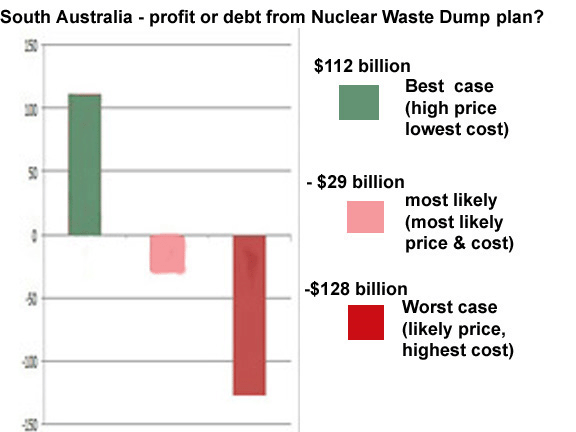
“The Royal Commission has been blinded by imaginary wealth and sucked into believing that a project that has never succeeded anywhere else in the World is South Australia’s for the taking”, said Greens SA Parliamentary Leader, Mark Parnell MLC.
“The most obvious question is being ignored: If this is such a great deal, how come no other country has grabbed it before now?
“The Greens are urging the Royal Commission to “get real” and critically examine the supposed economic benefits alongside the ongoing economic, social, environmental and reputational costs.
“Washing your hands of responsibility for a toxic legacy left to future generations is just immoral.
“The solution to South Australia’s current unemployment problems won’t be solved with mythical jobs that are decades into the future with the creation of toxic liabilities that last hundreds of thousands of year.
On releasing the “Tentative Findings” Report to the media on 15th February 2016, Commissioner Kevin Scarce stated, “The community needs to understand the risks and the benefits.” The Royal Commission’s “Tentative Findings” highlights many purported benefits but is scant on detail when it comes to the profound risks.
According to the Greens’ submission, the “Tentative Findings” suffer from:
1.Unrealistic expectations of the magnitude of the project;
2.Failure to appreciate 6 decades of international failure to solve the nuclear waste problem;
3.Missing costs, unfunded liabilities, missing contingencies and failure to recognise inevitable cost blow-outs
4.Heroic assumptions of other countries’ willingness to pay for SA to take their nuclear waste;
5.Lack of recognition of the potential for irrecoverable sunk costs and unlimited future liabilities;
6.Failure to address reputational damage and impact on other sectors of the economy; and
7.Naïve expectations that South Australia would get to keep all the profits from a nuclear waste dump in our State, without having to share them with other States.
“The Commission’s final report due on 6th May should recommend that the folly of South Australia’s increased involvement in the nuclear industry be abandoned.
“In relation to the other Terms of Reference, increased uranium mining, uranium processing or nuclear power were never really an option for SA and the Royal Commission was an expensive way to tell us what we already knew”, concluded Mark Parnell.
Is there REALLY profit in nuclear waste importing industry?
Conservation Council South Australia 18 Mar 16 A high-level nuclear waste dump for SA
Should we do it for the money?
The Nuclear Royal Commission claims some eye-popping revenue figures to take the world’s high-level nuclear waste.
Labor, Liberal unite to support high-level nuclear waste dump in South Australia
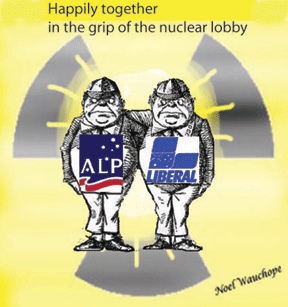 Labor, Liberal unite to support high-level nuclear waste dump in South Australia February 16, 2016 Paul Starick and Daniel Wills The Advertiser UNPRECEDENTED political support is being thrown behind South Australia becoming the global storage facility for high-level nuclear waste in return for a $445 billion bonanza.
Forging a historic united front on a decades-old issue of bitter division, Labor Premier Jay Weatherill and Liberal federal Resources and Energy Minister Josh Frydenberg are encouraging debate on a Royal Commission proposal, unveiled on Tuesday, for SA to store and dispose of hundreds of thousands of tonnes of spent nuclear fuel and waste…….http://www.adelaidenow.com.au/news/south-australia/labor-liberal-unite-to-support-highlevel-nuclear-waste-dump-in-south-australia/news-story/683296ab45e53c73432c66bbe0358e34
Senate tables over 6,000 signatures against Hill End nuclear waste dump
 18 Mar 16 NSW Greens Senator Lee Rhiannon today tabled 6,282 signatures calling on the government to drop plans for a nuclear waste dump at Hill End. “Over 6,000 people have signed three petitions saying no to a nuclear waste dump at Hill End,” Senator Rhiannon said.
“The Hill End community has voted at three separate community meetings to unanimously oppose a nuclear waste dump and are strongly supported by their neighbouring towns, local councils and business groups.
“The Minister and the Department keep repeating that the nuclear waste dump won’t be imposed on communities that don’t want it.
“Yet the government has spent hundreds of thousands of dollars of public money sending glossy packages promoting the dump to residents in Bathurst and Mudgee, after promising the Hill End community meetings that they had heard the message it wasn’t wanted.
“They’re now following up their promotional package blitz with survey phone calls and face to face visits to Hill End , Bathurst and Mudgee residents fishing for support. “It’s time the Government acknowledges that no one wants nuclear waste at Hill End,” Senator Rhiannon said.
New South Wales Parliament passes anti-protest laws
 Anti-protest laws giving police greater powers pass NSW parliament http://www.theguardian.com/australia-news/2016/mar/16/anti-protest-laws-giving-police-greater-powers-pass-nsw-parliament
Anti-coal seam gas protesters could be jailed for seven years under laws described as a ‘crackdown on democratic rights’ Trespassing anti-coal seam gas advocates face heavier fines and greater jail sentences with tough new anti-protest laws passing through NSW parliament.
With the support of the Shooters and Fishers party and Christian Democrat Fred Nile, the controversial legislation was passed 20-16 in the upper house on Wednesday after minor amendments to the original proposal.
The bill gives police greater powers to search without a warrant, seize items and move protesters on, while fines for illegal entry to mining and CSG sites have increased tenfold from $550 to $5500.
Anti-CSG protesters who interfere with gas sites – including those who chain themselves to machinery – will also be exposed to a maximum jail sentence of seven years.
The Greens MP Jeremy Buckingham, who along with Labor voted against the legislation, condemned the changes as a “jackboot police crackdown on democratic rights”.
The Labor MP Adam Searle also spoke out against the bill’s “sinister” provisions.
“This legislation strikes at the heart of a fundamental aspect of our society – the right to peacefully protest,” he told parliament during hours of fierce debate.
But the premier, Mike Baird, defended the legislation, saying he didn’t believe it was too harsh.
“It’s quite simple, peaceful protests are fine,” Baird said. “Anyone that wants to disrupt a business or ultimately act illegally and puts the lives of themselves and others at risk, well we’ve put these measures in and I think it’s appropriate.”
About 500 protesters shut down a part of Sydney’s CBD to rally against the proposed changes on Tuesday.
A Reachtel poll commissioned by the NSW Nature Conservation Council this week also showed 61.4% of people opposed increasing police powers and fines for protest action.
The NSW Law Society said lawyers were concerned the legislation could seriously interfere with people’s human rights liberties.
Meanwhile, the NSW Unions movement says it’s considering launching a high court challenge against the laws.
Turnbull govt missing the chance for Australia to lead on climate change action
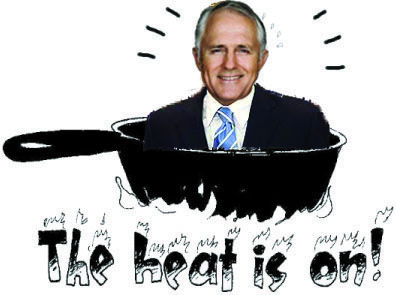 Malcolm Turnbull risks Australia’s economy with inaction on climate change, Guardian
Jonathon Porritt, 15 Mar 16
He may not want to confront climate-change deniers in his party, but it’s time for the prime minister to seize the low-carbon agenda for the opportunity it is
Even for a sympathetic observer from the UK, the politics of climate change in Australia is, to say the least, vexatious. But it’s now entering a more critical phase than ever before. The mismatch between the conclusions of the Paris agreement in December last year and the failure of Australia’s political establishment to understand what’s going on “out there in the rest of the world” is putting Australia’s entire economy at risk.
When the prime minister, Malcolm Turnbull, wrested the prime ministership from Tony Abbott in September last year, the international climate community breathed a deep sigh of relief. With the former Canadian prime minister, Stephen Harper, Abbott was seen as the most egregiously pig-headed climate-change denier in western world had ever thrown up. By contrast, Turnbull had done OK on climate change as a previous leader of the Liberal party, so it was assumed he would do a lot better second time round.
Nothing could be further from the truth. As I discovered on my latest visit, Turnbull has been utterly pusillanimous in pursuing any kind of progressive climate agenda. As part of his “oil on troubled waters” strategy, he apparently decided not to take on Abbott’s climate-denying guerilla fighters, and has offered zero leadership to Australia’s confused and polarised citizenry either before or after Paris.
For instance, he stood idly by as Australia’s world-renowned science agency, the CSIRO, announced it would cut 80% of its climate scientists, effectively ending Australia’s climate research program.
No surprise then that the New South Wales Liberals recently passed a motion, with the support of more than 70% of delegates, calling on the federal government to hold public debates between scientists from the Intergovernmental Panel on Climate Change and independent climate scientists. Basically, they are still refusing to accept that the science of climate change is settled, and are fighting an obstinate rearguard action to keep mining and burning as much coal and gas as possible.
You can see why Turnbull might be a bit nervous about confronting such a monumentally ignorant faction in his party. And he may even be reassured that such deniers still hang on elsewhere in the world. ……..
What he needs to know is that it’s all so much worse (and moving so much faster) than anyone imagined even five years ago. Instead of having decades to do what needs to be done to set the global economy on a genuinely low-carbon trajectory (as in net zero emissions by 2050, which is what Turnbull’s government signed up to in Paris), we now have little more than a decade.
Australia is uniquely vulnerable in this respect. The damage that will be done to the Australian economy as the world decarbonises at speed, leaving billions of dollars stranded in fossil-fuel assets that can no longer be developed, is almost impossible to imagine. And to rub salt into that already inflamed wound, there are few countries that will suffer more from rising average temperatures (as in forest fires, increasingly inhospitable cities, and drought-devastated rural economies) and rising sea levels……..
as it happens, not only is Australia uniquely vulnerable to the consequences of runaway climate change, it’s also extraordinarily well-placed to navigate its way through to the kind of ultra-low-carbon prosperity on which the destiny of all nations now depends.
In January a blockbuster report from the International Renewable Energy Agency (Irena) identified Australia as one of the most significant beneficiaries of this kind of accelerated shift to renewables by 2030, providing significant gains in GDP (up 1.7%) and employment, as well as socioeconomic and other environmental benefits. http://www.theguardian.com/sustainable-business/2016/mar/15/malcolm-turnbull-risks-australias-economy-with-inaction-on-climate-change
Renewable-based energy system cheaper than fossil fuels – new research
 New modelling shows renewable-based system cheaper than fossil fuels, REneweconomy, (good graphs) By Giles Parkinson on 14 March 2016 New modelling from a group of engineers, energy analysts and IT experts in Western Australia shows that a high penetration renewable energy system would be cheaper based around existing fossil fuel generation.
The modelling, known as SIREN, looks at the West Australian grid, known as the South West Interconnected System, and shows that an electricity system with 85 per cent renewable energy will be cheaper than “business as usual” – an average of $124/MWh compared to $127/MWh – and around the same price as current costs.
A system with 91 per cent renewable energy penetration would be slightly higher ($136/MWh), while three separate scenarios for 100 per cent renewable energy would be more expensive (ranging from $157/MWh to $164/MWh).
The modelling assumed that there will be 6,000MW of wind and 3,000MW of solar PV in the high renewables scenarios, and 5,000MW of wind and 2,000MW of solar PV in the 100 per cent renewable energy scenarios. The difference in the 100 per cent renewables scenario is the addition of 1.2GW of solar thermal and storage.
The SIREN modelling template will soon be used for an updated assessment and costing of the main grid in Australia, the National Electricity Market. “We intend to use this to lobby government and show (utilities) Western power and Synergy what we have found, and what they can do,” says Ben Rose, one of the authors.
Some may quibble with the fact that it compares new investment in each scenario, but the fact remains that most of the current generation in W.A., particularly its coal assets – and indeed the rest of Australia – is reaching its used-by date and will need to be replaced by 2030. Yet, says Rose, few politicians are addressing this issue.
The results are also based on relatively conservative technology cost assessments included in the AETA survey done by the Bureau of Resource and Energy Economics.
Many of these costs, particularly the solar thermal costs used in the 100 per cent renewable energy scenarios, are expected to come down quickly, and well below the 2025 forecasts included by AETA. Most of the technologies are already cheaper than those forecasts……….http://reneweconomy.com.au/2016/new-modelling-shows-renewable-based-system-cheaper-than-fossil-fuels-55032
Draconian anti-protest laws for New South Wales?
The proposed protest laws would give police new powers to break up protests, to search and destroy private property. If police say just one person obstructs traffic, they can shut down an entire peaceful assembly.
This is a slippery slope that gives police discretion to silence dissent and could turn NSW into a police state. Far from being a moderate, Baird is taking NSW down the sad road of Joh Bjelke-Petersen’s Queensland.
The laws will allow police to arrest anyone carrying or operating anything the police think will be used in a protest. Police would be able to arrest you and confiscate and destroy your car, for example, if they think it will be used to disrupt business in a protest. What has happened to the presumption of innocence?
Protesters could be fined more for opposing illegal mining activity than miners could for operating illegally.
Mike Baird’s anti-protest laws risk turning NSW into Bjelke-Petersen’s Queensland http://www.canberratimes.com.au/comment/mike-bairds-anti-protest-laws-risk-turning-nsw-into-bjelke-petersens-queensland-20160315-gnj4to.html March 15 2016 Naomi Hodgson
*Poll: More than 60 per cent of voters opposed Mining protesters could face seven years’ jail
*Freedom of speech and freedom of association are cornerstones of democracy. Continue reading
Mary Robinson criticises Australia’s cuts to CSIRO climate research
 Mary Robinson joins chorus against CSIRO cuts, says climate science ‘imperative, not luxury’ By Sara Phillips, ABC News, 16 Mar 16 Former president of Ireland Mary Robinson criticised the proposed cuts to CSIRO climate science in a speech made last night at the University of Melbourne’s Sustainable Society Institute.
Key points:
- Mary Robinson says CSIRO cuts ‘wrong message to be sending at the moment’
- Says research ‘an investment … not a luxury’
- Joins growing number of international voices to criticise the cuts
The highly-decorated former politician was last year a United Nations Secretary-General’s Special Envoy on Climate Change.
She was a key player in brokering the global agreement on climate change reached in Paris in December.
But on Tuesday night she said she was concerned about proposed cuts to long-running climate science programs.
CSIRO chief Larry Marshall announced structural changes to Australia’s national science agency in February, paring back efforts to observe and measure climate change and instead emphasise research into how Australia should prepare for it.
Approximately 350 climate science jobs are expected to be affected.
The cuts were condemned around the world, with an open letter from nearly 3,000 scientists from around the world calling on Dr Marshall to reconsider his plans.
The Intergovernmental Panel on Climate Change co-chair and even the World Meteorological Organisation also spoke up against the proposed cuts.
‘I urge Australia to continue to provide leadership’
Ms Robinson, a career diplomat, was forthright in adding her voice to the chorus.
“I think it’s the wrong message at the moment. We need the research at all levels and more of it,” she said.
“Research is an investment in our shared future. It’s not a luxury……….http://www.abc.net.au/news/2016-03-16/climate-change-research-‘imperative’-not-‘luxury’-mary-robinson/7249596?section=environment
Nuclear power is now redundant: dispelling the “baseload” myth
 Dispelling the nuclear ‘baseload’ myth: nothing renewables can’t do better! Ecologist 10th March 2016 The main claim used to justify nuclear is that it’s the only low carbon power source that can supply ‘reliable, baseload electricity’, writes Mark Diesendorf – unlike wind and solar. But not only can renewables supply baseload power, they can do something far more valuable: supply power flexibly according to demand. Now nuclear power really is redundant.
We have all heard the claim. We need nuclear power because, along with big hydropower, it’s the only low carbon generation technology that can supply ‘reliable baseload power’ on a large scale……
Underlying this claim are three key assumptions. First, that baseload power is actually a good and necessary thing. In fact, what it really means is too much power when you don’t want it, and not enough when you do. What we need is flexible power (and flexible demand too) so that supply and demand can be matched instant by instant.
The second assumption is that nuclear power is a reliable baseload supplier. In fact it’s no such thing. All nuclear power stations are subject to tripping out for safety reasons or technical faults. That means that a 3.2GW nuclear power station has to be matched by 3.2GW of expensive ‘spinning reserve’ that can be called in at a moments notice.
The third is that the only way to supply baseload power is from baseload power stations, such as nuclear, coal and gas, designed to run flat-out all the time whether their power is actually needed or not. That’s wrong too.
Practical experience and computer simulations show it can be done……… Continue reading
What does the Australian govt REALLY plan about long-lived intermediate-level nuclear waste
What should the government do about LLILW?
First, the government needs to carry out a thorough audit/inventory of LLILW, considering the following issues:
- volume/mass and radioactivity of LLILW at each current storage site;
- whether waste production is ongoing at each particular site and if so, whether storage capacity has been reached or is approaching and if so, whether increasing storage capacity is an option;
- nature and adequacy/inadequacy of current storage conditions;
- nature and adequacy/inadequacy of institutional control.
Second, the government should initiate a thorough, transparent process to consider all options for management of LLILW. There is no logical reason for the initiation of that process to wait until “the National Facility Project is underway” as the government now states. The delay is not only illogical, it also feeds uncertainty and suspicion.
What does the government plan to do with long-lived intermediate-level waste (LLILW)?

 Jim Green, Friends of the Earth, 8/3/2016. Here is the government’s formal position (8/3/16 email from Department of Industry, Innovation and Science):
“Australia’s current management approach toward long-lived intermediate-level waste is for long-term above ground storage pending future disposal. The preferred option for the National Radioactive Waste Management Facility, as identified in the Initial Business Case, provides for the centralised management of intermediate-level waste in a purpose-built storage facility. The Department of Industry, Innovation and Science will undertake a detailed consideration of disposal pathways for Australian generated intermediate level waste once the National Facility Project is underway.”
What is the government really planning?
1. The government is already considering deep borehole disposal of LLILW. It might be at intermediate depth, perhaps 200 metres underground.
2. Deep borehole disposal of LLILW could possibly be pursued at the same site as a shallow repository for lower-level radioactive waste. That option is floated in an ARPANSA document (see below).
3. Or the government could go in a very different direction – a stand-alone shallow repository for lower-level wastes without co-location of a LLILW store (or a deep borehole for LLILW disposal). Government representatives have said in public meetings that ILW would not be moved to the shallow repository site (for above-ground storage) for 10-20-30 years after the shallow repository is established, and presumably the reason for that is that the government is considering alternative options (borehole disposal at a different site, or perhaps above-ground storage at a different site). Or perhaps the statement that ILW wouldn’t be moved to the site for 10-20-30 years isn’t true, or at least it certainly isn’t locked in, and it is simply designed to quell public opposition.
4. Even if the government does decide that borehole disposal of LLILW is the best way forward, it would likely take decades to progress that project. So above-ground storage of LLILW for many decades at the same site as the shallow repository remains a distinct possibility.
5. The government must be considering the potential to reduce opposition to a shallow repository for lower-level wastes by separating that project completely from its half-baked plans for LLILW. That separation could be enshrined in the MoU that the government plans to establish with the host community for the shallow repository. It could also be enshrined in legislation.
That separation might indeed reduce public opposition, although it wasn’t effective in SA in the early 2000s. From 1998–2003, the Howard government planned co-location, and by the time it reversed that position and decided to separate management of lower level wastes from LLILW, opposition was so entrenched and widespread that it made little difference. The Howard government established a National Store Committee to develop plans for LLILW disposal, but it was disbanded in 2004, at the same time as the government abandoned its plan to impose a repository for lower-level wastes in SA……… Continue reading
Joint civil society groups comment to the National Radioactive Waste Management Project.
(please note that this comment refers to the ANSTO radioactive waste, which Australia is bound to accept back from its processing overseas. It is a separate issue from the South Australian Royal Commission’s purpose to invite in the world’s radioactive trash, as a supposedly profit-making industry)
Recommendation:
We believe that extended interim storage of radioactive waste at ANSTO – which is already the site and source of most of Australia’s higher level radioactive waste – would provide the time and opportunity required to build on the foundation work of the NRWMP and Detailed Business Case process.
Coupled with an independent and robust assessment of the full range of radioactive waste management options, we would also support a joint federal-state process to audit the adequacy of existing waste storage facilities and address any deficiencies, identify legacy sites that may be retired and provide an accurate analysis of current and future waste streams and volumes.
The vast majority of Australia’s radioactive waste is currently stored at secured and defined Commonwealth facilities at Lucas Heights (NSW) and Woomera (SA).
Both of these facilities have confirmed they have the capacity to continue appropriate storage of this material for many years, providing an opportunity to revisit this policy arena in order to realise the most effective, equitable and lasting outcome.
 Joint civil society groups comment to the National Radioactive Waste Management Project. March 11, 2016
Our groups represent many Australians across different regions and sectors who share a common desire to advance and realise responsible radioactive waste management in Australia.
We write to provide formal comment on the approach taken to facility siting in the revised National Radioactive Waste Management Project (NRWMP) that was established following the end of the protracted and fiercely contested plan to develop a national radioactive waste facility at Muckaty in the Northern Territory.
For over two decades, successive Australian governments have sought to manage Australia’s radioactive waste inventory through the development of a co-located remote central dump and store at locations chosen by the Commonwealth without adequate consultation or clear community consent.
This approach has repeatedly failed to win social license and has been characterised by division, contest and the inability to realise a site.
Our organisations welcome the commitment repeated through the course of the NRWMP to date not to impose a facility without broad community support.
It is our view that this essential project pre-condition has not been realised at any of the six sites currently being considered. Continue reading
Community struggle against government plans for nuclear waste dump
The Government should scrap these sites, admit they got it wrong, and then apologise to the people this has affected. They should then start a responsible and correct process to decide what to do with the waste- not just pushing it on regional and rural communities with promises of financial gain. They need to find out a way to stop making more nuclear waste and research what we can do or use instead.
We’re under a nuclear cloud but we’re not backing down, Beyond Nuclear March 11,  2016/ By Robyn Rayner. Farmers contend regularly with fire, flood and drought, but fine wool producer Robyn Rayner never expected to be fighting off plans for a radioactive waste dump across the road from her property
How would you feel if you woke up one morning and was told via a media report that you could be living next door to a nuclear waste dump?
On November 13 last year the Federal Government announced a shortlist of six sites, from twenty eight volunteered properties around Australia, for a proposed national radioactive waste dump. A property at Hill End was named. Since then our lives have been turned upside down. My husband Geoff and I, along with our family, own and run Pomanara Merino Stud directly across the road from the proposed site. It is just 1.5km from our family home. We are second-generation woolgrowers and our son James would like to be the third. This may not be important to Government Departments, but it is to us. This nuclear waste will also be around for generations to come, wherever they put it.
We have worked long and hard to achieve the clean, green and sustainable label that we have today. Our region is renown for growing the best superfine wool in the world and we have won many major awards for the sheep we breed. At no time did the landowner who nominated his property consult with neighbours, nor did he take into consideration the environment or the village of Hill End, located nine kilometres away. Hill End is a historic precinct that host 5000 school children a year and over 100 000 other visitors. The nominated property backs onto the Turon River, a major waterway for the food bowl of Australia. Continue reading
South Australia to weaken Aboriginal Heritage Act -(nice for the nuclear industry)
 Aboriginal Heritage Act changes give traditional owners less say: Indigenous groups ABC News By Nicola Gage 10 Mar 16 Proposed changes to South Australia’s Aboriginal Heritage Act will reduce powers of traditional owners, according to Indigenous groups.
Amendments to the act were introduced to Parliament a fortnight ago and today passed the Legislative Council.
South Australian Native Title Services chief executive officer Keith Thomas believed amended language in the act would give traditional owners less say over their heritage. “This is going to help people who want to access lands and destroy heritage, rather than improving the protection of Aboriginal heritage,” he said.
There are tens of thousands of sacred Indigenous sites across South Australia, from ancient song lines and springs to burial grounds.
The act is in place to protect them from different activities, including mining operations. Mr Thomas said the proposed changes would make it harder to prosecute companies if they had disturbed a site without approval.
“At the moment they’re very concerning, because it’s diluting Aboriginal rights, whereas the Aboriginal Heritage Act should be strengthening Aboriginal rights to protect their heritage,” he said. Mr Thomas said the changes would also remove clause 6-2 in the act, which stipulates the minister must delegate his or her powers to the traditional owners of a site.
Aboriginal groups from Lake Torrens have been trying to use that clause over recent years to stop a mining operation from going ahead. “I think the amendments are being rushed through for some reason,” he said. “It means that the minister doesn’t have to delegate his powers and it paves the way for the miners to come back and have another go.”
Some Aboriginal groups said they had not been properly consulted over the amendments.
Traditional owner Karina Lester grew up on South Australia’s Anangu Pitjantjatjara Yankunytjatjara Lands and did not know the bill was in Parliament. “That was quite concerning for us as native title [holders] because we hadn’t been informed,” she said.”Therefore, we didn’t know what changes were being proposed.”…..http://www.abc.net.au/news/2016-03-10/changes-aboriginal-heritage-act-give-traditional-owners-less-say/7236302
1 This month


Help Aunty Sue Protect Her Land and Sacred Sites From Destructive Rocket Testing.
.

Australians deserve the truth
about
AUKUS – https://aukuspublicinquiry.com/
PETITION – To: Prime Minister Anthony Albanese and the Australian Labor Government

of the week – Australians for War Powers Reform (AWPR)
To see nuclear-related stories in greater depth and intensity

