On global comparisons, Australia fast falling backwards on renewable energy
“With more than 140 countries now adopting renewable energy targets in some form, Australia is part of a mainstream global move towards cleaner sources of power such as solar, wind, bioenergy, hydro, ocean and geothermal energy,” Mr Green said.
“But Australia is at risk of being left behind as other countries continue to strengthen their targets for renewable energy. The process of constantly reviewing Australia’s Renewable Energy Target is destabilising the market and stalling local investment.”
Mr Green said US President Barack Obama announced another acceleration in renewable energy construction this week as part of a comprehensive clean energy package.
“China has introduced an ambitious clean energy program to deal with its air pollution, and in 2013 the installation of new renewable energy capacity in China passed fossil fuel and nuclear power for the first time. Last year alone China installed more wind and solar than any other country in the world,” he said.
“India’s new Prime Minister Narendra Modi has pledged to provide enough solar power to run at least one light bulb in every home. And meanwhile some of the world’s largest economies are those with the most renewable energy installed, including the United States, Germany and Canada.
“Australia has some of the best sun, wind and waves in the world. The Renewable Energy Target needs to be left to get on with the job it was designed to do under former Prime Minister John Howard and expanded in 2009 with the support of the major parties. Business can then get on with driving the creation of much-needed jobs and investment in partnership with local communities.”
Key results from REN21’s 2014 Global Status Report include:
- By early 2014, 144 countries had renewable energy targets, an increase of six from the year before
- An estimated 6.5 million people worked directly or indirectly in the renewable energy sector in 2013
- For the first time, more solar than wind power was installed worldwide in 2013
- China accounted for nearly a third of the global renewable energy capacity added in 2013
- China’s new renewable energy capacity exceeded its new fossil fuel capacity for the first time
- 72 per cent of new energy capacity in the European Union came from renewable energy for the sixth straight year, a stark turnaround from a decade earlier when fossil fuel investment accounted for about 80 per cent of new generation capacity.
REN21 Chair Arthouros Zervos said global perceptions of renewable energy had shifted considerably, with the many technology advances and rapid deployment of renewable energy technologies over the last decade.
Muckaty Court Report Day 3 – When is a nuclear waste dump not a nuclear waste dump?
 Muckaty Court report Day 3- June 4 when is a dump not a dump? By Padraic Gibson Beyond Nuclear Initiative, 5 June 14 “…...Mr Merkel handed up to the court two anthropologist reports completed by the NLC specifically for the waste dump nomination in 2006. Mr Merkel argued there were differences between the first report, prepared exclusively by the NLC anthropologists, and the second, which had been both “heavily edited” and “rewritten” by NLC principal lawyer Ron Levy, despite his signature being absent…….
More significant than an argument about who has primary responsibility however, is the emphasis in the original report on shared responsibility for sites across Muckaty by all clan groups. Mr Yarrow argued that this fundamental principle that underpins the land grant had been abandoned by the NLC in their nomination of the site on Muckaty……
Despite the focus of the legal proceedings on the alleged misconduct of the NLC, from the perspective of the campaign against the Muckaty dump, the Commonwealth submissions provided an important reminder that the central problem here is the discriminatory actions of the government in targeting impoverished Aboriginal communities for some of Australia’s most toxic industrial waste.
The genesis of the Muckaty dump nomination is the Commonwealth push to establish a waste dump on Aboriginal land. The court heard evidence of Commonwealth representatives starting to attend full council meetings of the Northern Land Council in late 2005, to pitch the idea of a dump to Aboriginal land owners……..
As Traditional Owners have consistently pointed out – if this stuff is so safe, why do you want to put it so far away from the cities?
 The second ideological argument put strongly by the Commonwealth, both in their submissions to court and in their presentations to Traditional Owners during consultations, is that the waste dump is needed to allow for the continued operation of nuclear medicine in Australia. This argument has been comprehensively rebuffed by health professionals, such as Dr Michael Fonda from the Public Health Association, who has highlighted the cruelty of making Traditional Owners, who live in communities that suffer from developing world health conditions, feel guilty that somehow their opposition to a waste dump would be an impediment to others receiving health care.
See for example the short video: Nuclear Furphies and Political Follies……..
No mention was made about provisions in the 2005 Radioactive Waste Management Act which stipulate that the Commonwealth will not hand back any land that had been contaminated. This also ignores the fact that the “low level” waste is set be buried, with no intention of recovery.
The nature of the waste dump then, is shaping up to be a central issue in the case……..
In my discussions with Muckaty Traditional owners over the last seven years, key witnesses relied upon by the Commonwealth have strongly rejected the assertion that they ever consented to the waste dump, or ever said the decision should rest with the narrow family group in question. Next week they will have a chance to be heard directly, as the court relocates to the Northern Territory for hearings both at Muckaty itself and in Tennant Creek http://beyondnuclearinitiative.com/muckaty-court-report-day-3-june-4/
Energy Resources of Australia – uranium company expecting an even huger loss this time
Energy Resources of Australia expects loss http://www.marketwatch.com/story/energy-resources-of-australia-expects-loss-2014-06-05-14855444?link=MW_latest_news By Ross Kelly SYDNEY–Uranium producer Energy Resources of Australia Ltd. expects a first-half loss of up to 140 million Australian dollars (US$130 million) after a radioactive leak halted activities at its Ranger operation in the Northern Territory.

The company, which is 68% owned by Rio Tinto PLC, said it expects to restart operations at Ranger progressively beginning Thursday after cleanup and regulator approval.
The leak of about 1 million liters of contaminated slurry, which occurred in December, was caused by toxic material eating through a steel tank involved in the process of refining ore. Investigations by authorities found the leak was contained within the mine site.
The company had already stopped mining uranium at the Ranger operation in late 2012 after its ore was depleted. But it continued to process stockpiled ore while it studied the feasibility of digging a new underground pit there called Ranger 3 Deeps.
The company expects a loss of A$120 million and A$140 million for the six months through December, in large part due to costs associated with the suspension of ore processing. That compares to a A$53.4 million loss in the year-earlier period.
Energy Resources of Australia has run up a string of losses in recent years, dogged by low uranium prices, disappointing output volumes and costs associated with the rehabilitation of the old mine site.
Tony Abbott shows Australia ‘out of touch’ as he excludes Climate Change from G20 summit in November
 Australia should come in from the cold June 6, 2014 The Age As Tony Abbott heads towards the northern hemisphere summer on the next stage of his 12-day round-the-world trip, he might have cause to feel a distinct chilliness, particularly from his hosts in Europe and the United States. The reason is simple: the more the Australian government downplays the critical importance of acknowledging and controlling climate change, the more behind we will be with world opinion and action.
Just look at what has happened over the past week or so…….
as The Age has said, without carbon pricing, the nation lacks a credible policy outline to adapt to and match even modest accelerations in global emission cuts.
Sadly, the Prime Minister’s glib attitude to climate change is entirely predictable. But this does not excuse his consignment to the political freezer of anything that threatens to add to what should be a reasoned and far-reaching debate on what is a world problem.
The latest thing to be popped into the Australian government’s icebox is the potential inclusion of climate change on the agenda at the G20 leaders’ summit in Brisbane in November. ”The focus … will overwhelmingly be our economic security, our financial stabilisation, the importance of private-sector growth,” Mr Abbott said this week, adding that there are other international forums for climate change discussions. Yes, but not ones attended by those world leaders who regard the unchecked progress of global emissions as detrimental to our economic security and financial stability. To restrict, or possibly exclude, climate change from the G20 discussions is short-sighted and counter-productive. Again, it makes Australia look retrograde and out of touch with reality…….http://www.theage.com.au/comment/the-age-editorial/australia-should-come-in-from-the-cold-20140605-39lq4.html
Australia needs new standards on the rights of indigenous people
 The United Nations has established the Permanent Forum on Indigenous Issues which has a mandate to discuss indigenous issues related to economic and social development, culture, the environment, education, health and human rights. The United Nations World Conference on Indigenous Peoples will be held in New York in September 2014.
The themes of the Conference are set out in the Alta Outcome Document
 This could set a new standard for Australia as a whole.
There is still distinct disadvantage in Australia, Australian Options Magazine May 31, 2014 in Focus, May  2014 no 76 Dr Valerie Cooms* “……..With the enhanced involvement of the UN and the continuing relationship with resistance organisations, the Commonwealth had to not only address the suffering and treatment of Aboriginal populations, but also had to remove racist legislation from all Australian statutes (including its own). It was forced to commit to a program of land rights for Aboriginal peoples to address the disadvantage associated with the dispossession of lands by the colonisation process.[xviii] The UN also demanded Australia put anti-discrimination legislation in place. By 1975, the Commonwealth had removed its own discriminatory legislation, undertaken an investigation into a national land rights program by engaging Justice Woodward, and introduced the Racial Discrimination Act 1975as well as the Aboriginal and Torres Strait Islanders (Queensland Discriminatory Laws) Act, 1975.[xix] The latter was introduced specifically to over-ride the 1971 Queensland Act which the State Government had refused to acknowledge contained discriminatory provisions involving the confiscation of earnings and property of Aboriginal workers. Though, according to John Pilger, no federal government ever enforced the 1975 Act about Queensland.[xx]
While the Racial Discrimination Act was watered down to a conciliatory process, its introduction along with the engagement of Justice Woodward, the removal of overtly racist legislation cleared the way for the Commonwealth to have UN conventions ratified. The Commonwealth also established the National Aboriginal Consultative Congress (NACC) in 1973 and informed the public it would be advised by the representatives elected from across Australia.[xxi] However, the Federal Government failed to fund NACC’s secretariat or to take advice that it either could not address or did not agree with.[xxii] Arguably, the NACC was put into place to quieten the growing Aboriginal activism which was in constant contact with not only the UN but other international resistance organisations.[xxiii]
Indisputably it was the need to avert UN and international criticism in order to have conventions ratified that saw the Commonwealth remove or over-ride racist legislation and address the appalling treatment and condition of Aboriginal people in Queensland. Yet as clearly demonstrated here, the Aboriginal policies of all Governments were merely modified into more acceptable methods of colonisation that could avert international criticism.
In 2014 and with decolonialisation almost complete, the critical United Nations’ body is the United Nations Permanent Forum on Indigenous Issues which first met in 2002.[xxiv] The UN Declaration on the Rights of Indigenous Peoples (UNDRIP) was adopted by the UN General Assembly in September 2007.[xxv] Only four countries, Australia, Canada, New Zealand and the United States, voted against. In 2009, the Rudd Government reversed the position that had been taken by the Howard Government and endorsed the UN Declaration.[xxvi]The Howard Government was based its opposition on claims that it allowed customary law to override legislative law. The current Attorney George Brandis said in 2009 that the UN Declaration had provisions ‘that go well beyond the rights recognised in Australian domestic law’. He said it conferred the right to seek compensation for land taken without permission and to veto projects affecting land, without providing recognition for the rights of third parties.[xxvii]
As the Aboriginal and Torres Strait Islander Social Justice Commissioner said The Declaration is the most comprehensive tool we have available to advance the rights of Indigenous peoples.[xxviii] The Australian Human Rights Commission in its Community Guide to the Declaration says that the preamble makes some key points including that Continue reading
Lawyer for Norther Land Council accused of ‘doctoring’ anthropologists’ report about proposed nuclear waste dump site
Indigenous land owners accuse lawyer of manipulating nuclear waste storage report June 4, 2014 – Jane Lee Legal Affairs Reporter for The Age A lawyer who was key to the Howard government’s plan to store nuclear waste on indigenous land has been accused of manipulating the legal process required to ensure its approval.
Traditional owners from four indigenous clans are challenging the Ngapa clan’s 2007 nomination of Muckaty Station for the dump site in the Federal Court in Melbourne. The owners, including Aboriginal elders, argue they did not consent to the nomination, were not consulted on the agreement reached and were misled on the government’s proposal for the nuclear storage site.
Ron Levy was then the chief legal counsel for the Northern Land Council, which was set up to help indigenous people in the Northern Territory acquire and manage traditional lands. Mr Levy will be called as a witness later in the five-week case before Justice Anthony North.
Ron Merkel, QC, for the traditional owers, told the court on Thursday that Mr Levy “personally edited” anthropologists’ views in a Council report which concluded that only the Ngapa Lauder clan owned the site. Mr Levy also wrote a new section in the final report, reflecting his view that the Land Commissioner could depart from judges’ previous decisions on land claims, “if relevant material was before the commissioner.”
Mr Merkel said that he did this “(so) that the Lauder Ngupas would be recognised by the Northern Land Council as the only traditional owners of the site so their consent could be secured.” The site nomination could then “jump a hurdle” of having to consult in more detail about about the plan with other clans, he said………..
Mr Merkel told the court on Tuesday that Mr Levy, who controlled the consultation process, also failed to tell the full Northern Land Council or traditional owners about the only up-front $200,000 payment given to traditional owners for the site nomination or the terms of their agreement.
But he later told the federal goverrnment that he had all traditional owners’ full consent.
Mr Merkel said there was no explanation for this “unless … Mr Levy had a plan from the outset about how to achieve the end result and he did”. http://www.smh.com.au/federal-politics/political-news/indigenous-land-owners-accuse-lawyer-of-manipulating-nuclear-waste-storage-report-20140604-39jk8.html#ixzz33nhZjp26.
Tony Abbott informs the world that Climate Change will NOT be discussed at the G20
 Climate change ‘off G20 agenda’, The Age June 5, 2014 Lisa Cox and Adam Morton Prime Minister Tony Abbott has downplayed the likelihood of climate change being discussed at a G20 leaders’ summit hosted by Australia, suggesting it does not fit the meeting’s economic focus.
Asked about pressure from the US and Europe for climate to be included on the agenda for the November meeting in Brisbane, Mr Abbott said there were other international meetings that were more appropriate for discussing the issue………
His comments followed US and Chinese leaders revealing new plans to tackle climate change.
A top Chinese climate adviser told a Beijing conference that the world’s largest emitter of greenhouse gas would put a cap on emissions for the first time in its next five-year plan, starting in 2016………
US President Barack Obama announced he would regulate to cut emissions from power plants to 30 per cent below 2005 levels by 2030 – considered the most significant step he has taken to tackle global warming.
Also this week, the European Union reported its emissions were 19 per cent lower than in 1990 and South Korea said it would tax coal imports and cut duty on alternative fuels from July.
Australia will become the first country to abolish a carbon pricing scheme if the Abbott government’s repeal legislation is passed by the incoming Senate. In its place it is proposing a ”direct action” scheme, which would involve the government paying some companies to cut emissions………
Greens leader Christine Milne said financing tackling climate change had to be on the G20 agenda. ”Our Prime Minister is so backward he doesn’t seem to understand the connection between climate change and economics.” http://www.theage.com.au/federal-politics/political-news/climate-change-off-g20-agenda-20140604-39jdx.html
Time that Northern Territory’s Chief Minister Adam Giles came clean about nuclear wastes
 GILES NEEDS TO COME CLEAN ON NUCLEAR DUMP STANCE http://territorylabor.com.au/giles-needs-to-come-clean-on-nuclear-dump-stance/ Gerry McCarthy , 4 June 2014 Local Member for Barkly, Gerry McCarthy, today called on the Chief Minister, Adam Giles, to stand alongside Territory Labor and other Territorians who do not want a nuclear waste dump in the Territory.
“Territorians are adamant that they do not want a Nuclear Waste Dump at Muckaty Station,” Mr McCarthy said.
Mr McCarthy said Adam Giles needs to come clean to Territorians about where he stands on the issue.
“It has been alleged that Adam Giles is an ardent supporter of a having nuclear waste facility in the Territory,” Mr McCarthy said.
“By his silence it appears the Chief Minister does support the proposed nuclear waste dump at Muckaty. “Territory Labor and many Territorians are concerned about the risk of potentially dangerous nuclear waste that will be transported on our roads, rail and through our ports to reach the proposed facility.
“The Chief Minister needs to assure Territorians that he will not stand by and let the Federal Government turn the Territory into a nuclear waste dump.”
The Member for Barkly said representatives of traditional owners against a nuclear waste dump at Muckaty were in the High Court in Melbourne currently trying to end the 7 year struggle to establish the first purpose built nuclear waste dump facility in the Territory. The High Court hearings will collect evidence in Tennant Creek and Darwin later this month. Media contact: Cathryn Tilmouth  0427 500 667
The collapse of uranium company Paladin’s share price
 Why the Paladin Energy Share Price Fell Today What Happened to the Paladin Energy Share Price? Shares of Paladin Energy [ASX:PDN] fell by 3.95% on Wednesday, closing at 36.5 cents. This was the lowest closing price in nearly 10 years of trading! , Money Morning 5 June 14
 Why Did This Happen to the Paladin Energy Share Price?
Paladin Energy Limited is a uranium production and exploration company with projects currently in Australia, Canada, and Africa. The Langer Heinrich mine in Namibia is its flagship project.
Since the Fukushima uranium plant meltdown in 2011, the uranium industry has never been the same. Following this event, the Japanese government turned off all of its 54 uranium power plants.
The uranium spot price is now trading at around US$28.25 per pound, a level not seen since April 2005. Certain estimates now place up to 60% of current annual global production with costs above the current spot price, which is unsustainable.
For years, Paladin experienced financing, production, and profitability issues. And last week it officially temporarily closed its Kayelekera mine in Malawi.
For this plant to restart operations, Paladin wants to see a uranium price between US$70–75 dollars per pound, which implies that the breakeven price for Kayelekera is significantly above the current spot price. Overall the share price is declining because of a poor uranium environment. Last week, Japan announced that it won’t restart any reactors during 2014 — something that uranium punters were betting on.
Northern Land Council bars journalist from visiting Muckaty – planned nuclear waste dump site
 There is a very important wider issue in all this – irrespective of my visit – “If the radioactive waste facility goes ahead, will journalists and indigenous rights advocates like me be able to have access to freely visit it and report on any issues associated with its operation?”
Northern Land Council puts out ‘Not Welcome’ mat for site visit at Muckaty. #wasteontrial http://songlines.org.au/2014/06/04/northern-land-council-puts-out-not-welcome-mat-for-site-visit-at-muckaty-wasteontrial/ June 4, 2014 by Bruce Reyburn One of the hallmarks of an open democracy is the ability of the media and human rights advocates to go freely to contested places where they can report on what they see and learn in the process.
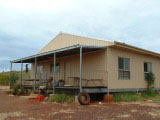 As I have just found, this is not the case in one part of Australia.In keeping with the tight provisions of the Australian government legislation for a radioactive waste facility, a site on “Muckaty” was ‘volunteered’ by one small ‘local descent group’ (or part thereof) of Warlmanpa people in return for a few million dollars – and then nominated to the Australian government by the Northern Land Council. All done by the book, according to the NLC.
Other Warlmanpa at Muckaty objected to this process – hence the present Federal Court case presently underway in Melbourne, thence Tennant Creek, Darwin, Melbourne.
The Northern Land Council is a respondent in this Federal Court case, along with the Commonwealth of Australia.
Under the Aboriginal Land Rights (NT) Act a permit is required to enter onto Aboriginal land (as defined by that Act).
Issuing permits is a function of the relevant Aboriginal Land Council to process permit applications.
Soon after I decided to blow the budget and travel to Tennant Creek to see old friends and listen to Warlmanpa people’s evidence in their Federal Court case, I realised that the Federal Court would travel to Muckaty to view the site nominated for the Australian government’s radioactive waste facility. This proposed radioactive waste facility site is on Aboriginal Land gained by a traditional Aboriginal land claim under that Act, and has a pastoral lease “Muckaty” over it. Muckaty is in that part of the Northern Territory covered by the Northern Land Council.
Therefore I would need a permit to visit Muckaty and the proposed site if I got the opportunity, either as part of the court case or separately during my short visit, with Warlmanpa people who might want me to help tell their story to the wider world.
Accordingly, I made an application to the Northern Land Council, nominating a couple of different dates and mentioning that I aimed to write about these matters on myhttp://www.songlines.org.au blog.
When I did not get a reply back I sent an email to the NLC asking about the progress of my permit application. Copies of that correspondence are included below My application does not appear to have been referred to the traditional owners of Muckaty, but the NLC legal section.
On the basis of that I have been effectively blocked from visiting the proposed radioactive waste site…..
The main question in my mind is this – “Is the decision of the Northern Land Council to deny me access to visit the proposed radioactive waste site a decision which:
(a) truly reflects the wishes of the traditional owners of Muckaty, in whose name the Northern Land Council operates or
(b) was it a decision based on other than normal considerations and
(c) if it was not normal practice, was the decision in keeping with the relevant legislation regarding the role of the NLC in processing permits?”
There is a very important wider issue in all this – irrespective of my visit – “If the radioactive waste facility goes ahead, will journalists and indigenous rights advocates like me be able to have access to freely visit it and report on any issues associated with its operation?”
Australia’s Panel to Review Renewable Energy target – close ties with polluting industries!
 (VIDEO) Alleged conflict of interest in energy review panel Australian Broadcasting Corporation Lateline Broadcast: 04/06/2014 Reporter: Kerry Brewster The expert panel which is deciding how much renewable energy Australia should produce is defending itself against claims of conflict of interest because an economist on the panel is using work he did for the oil and gas industry to argue the case for scrapping the renewable target.
 Transcript
TONY JONES, PRESENTER: The expert panel which is deciding how much renewable energy Australia will continue to produce is defending itself against claims of conflict of interest. Solar advocates say economist Brian Fisher should step down from the Government’s review of the Renewable Energy Target. They say he previously did work for the oil and gas industry and that’s being used to argue the case for scrapping the Renewable Energy Target. This exclusive report from Kerry Brewster.
KERRY BREWSTER, REPORTER: For 14 years, the oil and gas industry has lobbied for the 20 per cent Renewable Energy Target, or RET, to be dumped.
DAVID BYERS, AUST. PETROLEUM PRODUCTION & EXPLORATION ASSN: We would like to see the Renewable Energy Target removed.
KERRY BREWSTER: Now a Government-appointed panel is reviewing the target. And it hasn’t ruled out scrapping it altogether, a move that the renewable energy industry says would halt billions of dollars in new solar and wind projects and potentially bankrupt some large companies……..
KERRY BREWSTER: The modelling used to argue for the target to be scrapped is two-year-old work from BAEconomics, headed by economist Dr Brian Fisher. Dr Fisher is one of the four experts tasked by the Prime Minister to decide the target’s future.
Solar advocates are calling this a serious conflict of interest. They point to the fact the same modelling was rejected by the last RET review conducted 18 months ago by the Climate Change Authority.
JOHN GRIMES, AUSTRALIAN SOLAR COUNCIL: He’s been an active player, providing advice that’s been absolutely one-sided in the past, advice that’s still being used. Brian Fisher should step down from his position on this review committee……..
In the complex world of modelling, Bloomberg New Energy says it’s crucial to reflect not just the cost of renewables, but also the benefits. Its submission includes what it says APPEA’s modelling doesn’t: the ability of solar and wind to drive down the wholesale price of electricity when the sun shines and the wind blows.
KOBAD BHAVNAGRI, BLOOMBERG NEW ENERGY: That’s essential, really. You have to look at both the costs and the benefits of the scheme. Just like when you’re going to buy a house you look at the cost of buying a house versus the benefits of not having to pay rent anymore. It’s quite easy to highlight the costs and completely ignore the benefits.
MILES GEORGE, INFIGEN: In that modelling that was done for APPEA two years ago, there was no attempt to identify or model the wholesale price reduction that’s associated with renewable energy.
KERRY BREWSTER: Wind energy company Infigen says APPEA’s modelling doesn’t stand up to scrutiny……….http://www.abc.net.au/lateline/content/2014/s4018998.htm
Coalition Ministers say that Moree solar energy plant funding is assured
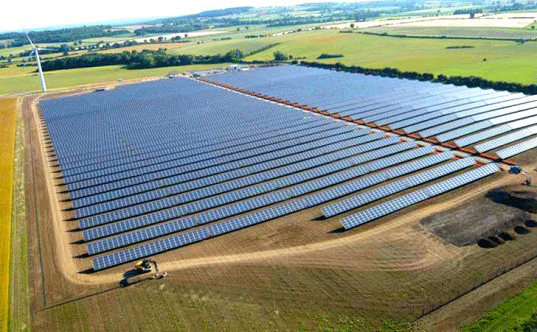 Moree solar on track for Commonwealth funding http://www.abc.net.au/news/2014-06-04/moree-solar-on-track/5500668 By Tim Lamacraft 4 Jun 2014,The Federal Coalition is confident the Moree Solar Farm will secure Commonwealth funding despite plans to axe its finance source.
The Government is looking to axe the Australian Renewable Energy Association, which has expressed interest in providing finance to the Moree Solar Farm, a joint initiative of Pacific Hydro and Fotowatio.
The two companies are nervous that tens-of-millions of dollars in funding is in jeopardy.
But Federal Parkes MP Mark Coulton recently met with Industry Minister Ian Macfarlane on the issue.
He says the Moree Solar Farm is on track to meet Commonwealth funding approvals.
“I’ve been reassured by the Minister and his Department that there’s nothing with this project that’s ringing alarm bells and they’re very happy with it the way it is,” he said.
“Certainly the Moree Solar Farm has no reason at this stage to be fearful that the ARENA funding wont be there.”
It’s not yet clear when the Coalition will approach the Senate in an attempt to repeal the Arena Act, but projects that do not already have agreements in place will not be funded.
Muckaty nuclear waste case highlights financial irregularities in the project
Financial irregularities in Muckaty compo http://localtoday.com.au/get-local/local-news/137684-financial-irregularities-in-muckaty-compo.html By AAP 03/06/14 There were financial irregularities in the compensation package for indigenous people who face a nuclear waste dump on their land, a court has heard. A $200,000 up-front payment to a narrow group of indigenous families was not part of the package that was negotiated, lawyer Ron Merkel QC told the Federal Court on Tuesday.
Mr Merkel pointed to letters and meeting minutes which showed the Northern Land Council’s (NLC) 2007 discussions with the Commonwealth, in which it secured use of the remote land near Tennant Creek as a radioactive waste management facility.Negotiations ultimately arrived at a package of $9 million to be held in a charitable trust, $2 million for a road on Aboriginal land and $1 million, over five years, for scholarships.
“There was no mention of a $200,000 payment, which was the only payment to go directly into pockets,” Mr Merkel said.
“It was the only money to be paid up-front.”
A $200,000 payment was made to a narrow group of indigenous families who, Mr Merkel said, did not represent all traditional owners of the land.
The court was also told the same group was cited in letters in which the NLC sought to reassure the federal government it had obtained informed consent from all traditional landowners.
The case is being heard by Justice Anthony North, who also sought to confirm whether Mr Merkel’s clients were opposed to “the dump or the deal”. “My clients are not trying to get a penny of this,” Mr Merkel said. “They were never given the right to consent or not to consent and if they were included, as they should have been, then the NLC would not have got consent (of all traditional land owners) at all.”
Highlighting process flaws was the only legal avenue to challenge the project, Mr Merkel said, and his clients did not want it to proceed.
The Commonwealth and the NLC are yet to make opening submissions.
Forty witnesses will be called for the hearings being held in Melbourne, Muckaty Station, Tennant Creek and Darwin.
Aboriginal art exhibition “Flow of Voices” highlights environment and history
Aboriginal elders paint pre-mine tragedy GINA FAIRLEY Visual Arts Hub, 3 JUNE, 2014
A new exhibition from remote mining country provides a ‘prequel’ tale that goes back to colonial frontier massacres Jacky Green’s potent pictures of the environmental impact of the Macarthur River Mine’s (MRM) on the remote Gulf Country of Borroloola recently offered a powerful example of the way art tells an important contemporary story.
But the region, which sits just below the Gulf of Carpentaria in the Northern Territory, has an equally charged story of land and dispossession from colonial times which is now the subject of a matching exhibition Flow of Voices 2: Stewart Hoosan and Nancy McDinny……….in this unrecognised frontier war about one-sixth of the population lost their lives in lawless massacres and violence (600 men, women and children in official records),’ said Cross Arts Projects director Jo Holder.
‘Nancy McDinny and Stewart Hoosan insist that the settlement of Australia wasn’t a simple story of Aboriginal people acquiescing to the occupation of their land, but one of resistance where many people fought back against violence, sexual abuse and dispossession’, Holder added in a statement.
‘When they were powerful old people, didn’t know how to speak English but used to talk in language, saying, “We not going to give away our land. This is our land. It belong here. This is our history, our story and our dreaming”,’ said McDinny.
The old people who set up Waralungku art centre – including McDinny, Hoosan and the late Ginger Riley (from Ngukkur) – wanted to make history paintings to account for their peoples’ agency and overwhelming belief in their just claim on their land. Renowned for their colour and realism, ‘many paintings from the Gulf are unique conceptual and analytic documents about history and contemporary issues,’ explained Holder………The partner exhibitions ‘argue for proper consultation, environmental monitoring, restoration and community benefit in exchange for resource extraction. Without proper respect for people and country racial hierarchies and “imperial” attitudes persist,’ said gallery director Jo Holder.
Green’s work captures that sentiment: ‘I want to show people what is happening to our country and to Aboriginal people. No one is listening to us. What we want. How we want to live. What we want in the future for our children. It’s for these reasons that I started to paint. I want government to listen to Aboriginal people. I want people in the cities to know what’s happening to us and our country.’
The artists and Waralungku Arts are proud to announce their plan to found a Yanyuwa, Garrwa, Marra and Gudanji People’s Keeping Place and Knowledge Centre at Borroloola.
Flow of Voices 2:
Cross Art Projects, Kings Cross
22 May – 28 June 2, 2014
www.crossarts.com.au
www.waralungku.com http://visual.artshub.com.au/news-article/news/visual-arts/aboriginal-elders-paint-pre-mine-tragedy-244014
Victoria’s anti-wind energy Premier Napthine decides that gas is “renewable” energy
Napthine government wants gas included in renewable energy target June 3, 201 Tom Arup Environment editor, The Age Australia’s renewable energy target would include gas-fired power – derived from fossil fuels – under a controversial proposal by the Victorian government.
The state also suggests the target should also be scaled back to reflect falling demand for power……….
Greens Leader Greg Barber said including gas in the target would be “a huge hit to the earth …….”If Premier Denis Napthine has convinced himself that gas is a renewable energy source, then he is confused,” he said. “Adding gas to the renewable energy target means it is no longer about renewable energy.”
The Victorian opposition said the government should be fighting to maintain the target in current form.
Labor energy spokeswoman Lily D’Ambrosio said: “As it stands, the [target] provides investment in new industries and will create thousands of jobs for Victorians. We wholeheartedly support that – Denis Napthine should too.”……..
The Victorian submission puts it at odds with renewable energy firms and NSW, which supports the target as it stands but wants the timeframe to achieve it pushed out…….
Environment Victoria campaigner Nick Aberle said keeping the target would allow Victoria to tap into billions of dollars of clean energy investment, creating skilled jobs in regional areas. “There is also good evidence that keeping the target will ultimately lead to lower electricity prices for consumers,” Dr Aberle said.
In a separate submission, the City of Melbourne strongly backs the retention of the target as it stands. It says the policy is pushing down wholesale electricity prices, benefiting consumers including manufacturers in the city.
The Melbourne City Council submission also says the advent of renewable energy technology, such as rooftop solar panels, has strengthened the resilience of the energy grid and both put curbs on demand and lowered prices during extreme heatwaves.http://www.theage.com.au/environment/energy-smart/napthine-government-wants-gas-included-in-renewable-energy-target-20140603-39gs0.html
1 This month


Help Aunty Sue Protect Her Land and Sacred Sites From Destructive Rocket Testing.
.

Australians deserve the truth
about
AUKUS – https://aukuspublicinquiry.com/

PETITION – To: Prime Minister Anthony Albanese and the Australian Labor Government

of the week – Australians for War Powers Reform (AWPR)
To see nuclear-related stories in greater depth and intensity

