Southern Australia will get dry winters, as Southern Ocean winds stronger
 Southern Ocean winds strongest in 1,000 years: study Rappler. Agence France-Presse 13 May 14, According to the study’s lead researcher, Nerilie Abram, ‘The Southern Ocean winds are now stronger than at any time in the past 1,000 years’ SYDNEY, Australia – Winds in the wild Southern Ocean are blowing at their strongest in a millennia as climate change shifts weather patterns, leaving Antarctica colder and Australia facing more droughts, a study showed Monday.
Rising carbon dioxide levels in the atmosphere were strengthening the winds, already dubbed the “Roaring Forties” for their ferocity, and pushing them further south towards Antarctica, researchers from the Australian National University (ANU) said.
“The Southern Ocean winds are now stronger than at any other time in the past 1,000 years,” said the study’s lead researcher Nerilie Abram of an ocean notorious for having some of the fiercest winds and largest waves on the planet.
“The strengthening of these winds has been particularly prominent over the past 70 years, and by combining our observations with climate models we can clearly link this to rising greenhouse gas levels.”
The new research, which was published in the Nature Climate Change journal, explains why Antarctica is not warming as much as other continents. (READ:Warmer Earth, humans to blame – UN panel)………..
The research helped to explain why the westerlies were further cooling already cold parts of the continent even as they were also driving “exceptionally quicker” warming in the Antarctic Peninsula, which juts out into their path, Abram said.
The strengthening westerlies drive up the temperature at the peninsula – the only part of the Antarctica that is hit by the wind – through the warm, moist air they carry from the Southern Ocean.
This has made the peninsula the fastest-warming place in the southern hemisphere, with scientists concerned about the stability of the ice sheets and sea level rises in the region……….
“Even for a mid-range climate scenario, the trend is going to continue in the 21st century,” Phipps said, adding that southern Australia was likely to experience more dry winters. – Rappler.com http://www.rappler.com/science-nature/earth-space/57830-southern-ocean-winds-strengthRappler,
Evidence mounts on benefits of Renewable Energy target: South Australia’s wind energy success
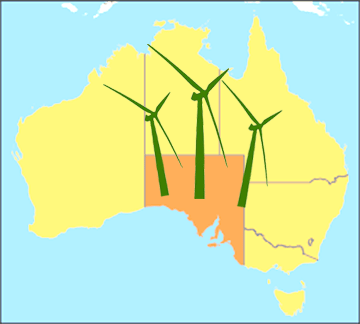 South Australian Wind Power – Economical And Effective http://www.energymatters.com.au/index.php?main_page=news_article&article_id=4299 A new report shows wind power in South Australia has not increased wholesale electricity prices, nor created a need for additional back-up power generation capacity.
Around a quarter of South Australia’s electricity is now sourced from wind power; growing substantially from just 6% in 2005/6.
The eight year study of South Australia’s electricity sector by Windlab Systems shows during the period between 2005 and 2013, wholesale electricity prices have not risen, even if the full cost of the renewable energy certificates (REC) is included. Publicly available data from the Australian Energy Market Operator (AEMO) was utilised for the study.
Reliance on expensive and emission-intensive peaking power plants has reduced as have electricity imports from Victoria states the report. Windlab says electricity related carbon emissions have plummeted 34% even though power consumption has remained stable.
“The findings should provide clear guidance to the Federal Government’s Renewable Energy Target (RET) review panel that wind energy and by association the RET should not be a scapegoat for explaining increases in domestic and business energy costs,” says Roger Price, the CEO of Windlab. “The study further underpins the conclusions of the Clean Energy Council’s commissioned report into the positive cost implications of the RET.”
The Clean Energy Council report indicates abolishing Australia’s Renewable Energy Target (RET) would see Australian households paying billions more for electricity.
A copy of Windlab’s study report can be viewed here (PDF).
The evidence is mounting that the benefits of Australia’s Renewable Energy Target far outweigh the costs. Even so, there are fears the RET review is heading towards a “predetermined and biased outcome” that will result in the loss of thousands of jobs, billions of dollars of investment and also create additional financial burden on Australian households and businesses.
More trouble for ERA as shaft collapses ar Ranger uranium mine
 Shaft collapse brings new setbacks to Ranger 3 Deeps uranium operation Australian Mining 12 May, 2014 The Ranger 3 Deeps exploration decline project has suffered another setback after a collapse during works on a new ventilation shaft last week. Energy Resources Australian reported that soft ground had “gradually subsided” beneath the top of the vent opening, and that crumbling of material has created a cavity in the shaft wall, about 20 metres below the surface running to the top, which was observed after the completion of drilling by a raise bore.
ERA said this type of crumbling is common, and that ground movement was identified in the development of the raise bore design.The crumbling, which began midway through last week, created a cavity in the ventilation shaft wall which led to the gradual subsidence of material to the top of the shaft…….
The Australian Conservation Foundation, outraged at the “litany of management and material failures at Ranger”, has called upon ERA to suspend development of the Ranger 3 Deeps project altogether. “All mine development operations at Ranger should be immediately halted,” said ACF nuclear free campaigner Dave Sweeney. “The Ranger mine is a dog’s breakfast with eroding shafts, collapsing tanks and the company routinely losing contaminants and credibility,” he said.
“There have been enough warnings, now there needs to be a stop to works and a comprehensive and public assessment of the full impacts of this aging and failing facility.”
In 2021 ERA are legally obliged to end all mining and mineral processing and start the comprehensive clean-up of the existing Ranger site, however in their 2013 report ERA has stated they will not be able to fund the clean-up unless the Ranger 3 Deeps project goes ahead.
Rio Tinto again refused to commit to underwrite the cost of Ranger’s rehabilitation.
This has called into question the issue of regulatory approval for the Ranger 3 Deeps expansion. “The ultimate cost of rehabilitation is uncertain and whilst ERA has used its best estimate, costs may vary in response to factors such as legal requirements, technological change and market conditions,” the 2013 report reads. “In addition, if the Ranger 3 Deeps mine is not developed, in the absence of any other successful development, ERA may require an additional source of funding to fully fund the rehabilitation of the Ranger Project Area.
“Any inability to obtain additional capital or to monetise assets would have a financial impact on ERA’s business and financial performance.”Under the Ranger permit, rehab works must be completed by 2026, which a strategy review has found will cost $603 million……..http://www.miningaustralia.com.au/news/shaft-collapse-brings-new-setbacks-to-ranger-3-dee
Environmental and racial injustice. The saga of Northern Territory radioactive trash dump plan continues
 Environmental Injustice in Australia – Nuclear Waste, The Stringer, by Kate O’Callaghan, May 8th, 2014 Muckaty Station is a small township in the remote Northern Territory, 110km north of Tennant Creek and roughly 800km south of Darwin. Also known as Marlwanpa, the land is held under Native Title having formally been returned in 2001 to thetraditional owners – the Milwayi, Ngapa, Ngarrka, Wirntiku, Kurrakurraja, Walanypirri and Yapayapa peoples. Muckaty is also the proposed site of Australia’s first national nuclear waste dump or, as it’s officially called, radioactive waste repository.
Despite the absence of consultation with the broader community, in 2007 the Howard government approved the Muckaty dump site with plans to open the facility in 2011. After thesecretive deal was negotiated with the NLC, so secretive that some members of the Ngapa clan were not even given a copy, a bitter conflict erupted. Other clans, environmental groups, unions and the NT Government expressed outrage at the lack of proper consultation with the traditional owners. Despite ongoing attempts to contact the government, opposing community groups had their meeting requests ignored, correspondence unanswered and were continually ignored.
In 2010, the subsequent Rudd government introduced legislation giving them the ability to override the Northern Territory’s threat to block the construction of the Muckaty dump. After years of opposition, the Gillard government passed the legislation in 2012. The National Radioactive Waste Management Bill removed community appeal rights, indigenous & environmental protections, and gave the government the ability to override state or territory concerns about environmental impacts. After her election in 2013, Northern Territory Senator Nova Perris expressed her objection to the Muckaty site, stating it would cause “profound grief, suffering and loss on Aboriginal people.”……..
while there are still disagreements on the best way to deal with nuclear waste, there is consensus that the process must involve a high level of community consultation. According to a UK report by an expert committee on nuclear waste, “There is a growing recognition that it is not ethically acceptable for a society to impose a radioactive waste facility on an unwilling community.” It is clear at Muckaty that the Australian government did not engage in meaningful consultation with the community as a whole. More deplorable than this is the willingness of successive governments to dump this problem on marginalised indigenous communities. This is in direct conflict with our international obligations under the UN Declaration on the Rights of Indigenous Peoples which requires that no disposal takes place on  indigenous lands without without “their free, prior and informed consent.”
So what’s next for the people of Muckaty? After being postponed, the legal battle against the Commonwealth Government and Northern Land Council is expected to commence in the Federal Court in June 2014. The legal team will include prominent human rights lawyers Julian Burnside and George Newhouse, who will challenge the nomination of the indigenous land for the nuclear dump site. The case will be an important litmus test for any similar legal challenges in the future. It is crucial that the government looks toward the responsible and transparent management of radioactive waste and away from the secretive tactics that have defined the past decadehttp://thestringer.com.au/environmental-injustice-in-australia-nuclear-waste/#.U3Er04FdWik.
Matthias Corman, Australia’s Finance Minister – Abbott’s mouthpiece for killing renewable energy
 Axing of renewable energy agency would add to broken promises, clean energy industry says, http://www.smh.com.au/federal-politics/political-news/axing-of-renewable-energy-agency-would-add-to-broken-promises-clean-energy-industry-says-20140512-zr9v1.html#ixzz31XjkyEzz May 12, 2014 – The Abbott government is planning to abolish the primary agency supporting clean energy in Australia. The planned axing of the primary agency supporting clean energy in Australia by the Abbott government would break pre-election commitments and send investment in emerging technologies off-shore, an industry group says.
Fairfax Media is among outlets reporting on Monday that the federal government will axe the Australian Renewable Energy Agency (ARENA) in Tuesday’s budget as part of efforts to curb spending.
ARENA, whose budget had been previously cut to $2.5 billion to 2022, would reportedly be left with about $1 billion to complete projects already backed. The agency, established through the combination of other bodies in July 2012, aims to increase the supply and competitiveness of renewable energy such as large-scale solar photovoltaic plants and other emerging technologies.
What’s disappointing here is that the Coalition really went out of its way prior to the election to restate their commitment to ARENA,” said Kane Thornton, deputy chief executive of the Clean Energy Council.
The Abbott government also backed the Renewable Energy Target (RET) before the September election, saying it would support the existing goal of supplying 41,000 gigawatt-hours of clean energy, such as from wind farms and hydropower, by 2020. It has since set up a review of the target led by businessman and climate change sceptic, Dick Warburton, which the renewable energy industry fears will dilute or delay the RET goal.
Axing the agency “would send concerning signals to the renewable energy sector broadly but also to investors around the world who are making investments under ARENA, and are watching closely the outcome of the RET review”, Mr Thornton said.
On ABC’s Radio National on Monday, Finance Minister Mathias Cormann said “too many agencies” were responsible for similar functions and needed to be cut back.
“This is about making government as efficient and effective as possible,” Senator Cormann said.
Support for emerging renewable energy technologies, which include geo-thermal and marine power, should be seen in the context that all other major forms of energy had got their start with backing from governments, Mr Thornton said.
“The very first coal-fired power stations, the first gas and the first nuclear power stations were all supported by the government, and wouldn’t have happened without government help,” he said.
Among the projects getting ARENA support was AGL’s 155 megawatt-capacity solar photovoltaic power plants at Nyngan and near Broken Hill in NSW. ARENA and the NSW government supplied $166.7 million and $64.9 million, respectively, with AGL supplying the remainder of about $208 million, according to the agency.
“That wouldn’t have happened without the support of ARENA,” Mr Thornton said.
“A lot of large-scale solar companies will really question why they are still operating in Australia, and will really focus their efforts on other parts of the world,” he said.
Economically depressed North Tasmania stands to lose wind farm project if Renewable Energy Target is cut.
 Renewable energy fears for wind farm http://www.examiner.com.au/story/2274842/renewable-energy-fears-for-wind-farm/?cs=95 By EMILY BAKER 12 May 14, CUTS to the renewable energy target could affect a wind farm planned for the state’s economically depressed North, the project’s developer says. Low Head Wind Farm founder and director Shane Bartel yesterday said any significant cuts to the target would affect the $60 million wind farm proposed for an area east of Low Head.
Mr Bartel said the project would hire between 30 and 50 contractors in the building phase and employ five to 10 people post- construction.The project was partly driven by the federal target of 20 per cent renewable electricity production by 2020, which is under review.Low Head Wind Farm’s development application has been submitted to the government.”It’s up to the Commonwealth to approve that – we’re still working with them on that,” Mr Bartel said.
“I certainly think (a decision will be made) this month … to date, there have been no serious issues with it.”
The Australian reported on Saturday that Hydro Tasmania – which has power-purchasing agreements for its major Tasmanian wind farms Musselroe and Woolnorth – would suffer financially if there were significant cuts to the renewable energy target.
The state-owned company would not comment on the report leaked to the national newspaper but said ongoing reviews of the target had created uncertainty around wind farm revenues. “Hydro Tasmania did not confirm to The Australian the losses claimed in the story,” a statement from Hydro Tasmania said.
“It is our expectation that a positive outcome from the RET review will in fact make these figures meaningless, and our wind farm investments will be delivering the expected returns.”
Clean Energy Council deputy chief executive Kane Thornton said more than $10 billion of investment in renewable energy would be damaged if the scheme was changed. “Leaving the policy alone would create approximately 18,400 jobs by the end of the decade, additional investment of $15 billion in large-scale renewable energy and lower power bills over the medium term,” he said.
National Health and Medical Research Council finds no evidence of wind turbines negatively affecting health
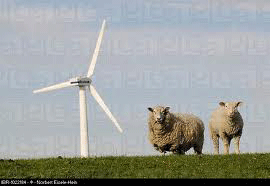
NHMRC says evidence scant in wind turbine health debate ABC News 10 may 14 An initial report from the National Health and Medical Research Council has found no reliable evidence that wind turbines have a direct physical effect on health…….The review of submissions to the draft report is under-way and the final report is due out within the next few months.http://www.abc.net.au/news/2014-05-09/tch-nhmrc-wind-health-research/5442148
Massive wind farm project approved by Tasmania’s West Coast Council
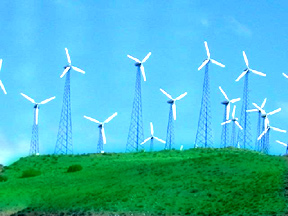 $200m wind farm on west coast passes another hurdle http://www.abc.net.au/news/2014-05-09/24200m-wind-farm-on-west-coast-passes-another-hurdle/5441192 9 May 2014 Up to 200 jobs could be created on Tasmania’s west coast after the approval of a massive wind farm project.
The $200 million Granville Harbour project has passed another hurdle after gaining approval from West Coast Council. The proponent Westcoast Wind wants to build 33 turbines which will link to Reece Dam via an 11 kilometre transmission line. The Environment Protection Authority approved the project last month and handed it back to the council to assess.
West Coast Mayor Robyn Gerrity says it was given the green light at a special council meeting last night. “It’s a great boost for us, more job creation to saddle onto the new mining developments that are happening over the next 12 to 18 months,” she said.
The venture is still looking for investors.Last month, the proponents said they were not confident of finding investors while the Federal Government reviews the Renewable Energy Target.
Abbott govt’s draft climate action Bill could result in 30 % emissions rise by 2030
 Govt releases climate action draft bill http://www.heraldsun.com.au/news/breaking-news/govt-releases-climate-action-draft-bill/story-fni0xqi4-1226911847929 10 May 14, PUTTING in energy-efficient light bulbs and cutting gas in coalmines could be eligible for taxpayer funding under the federal government’s climate policy. There could also be scope for international carbon emission permits to be counted, despite the government saying they wouldn’t be part of its emissions cuts.
Environment Minister Greg Hunt released draft legislation on Friday for the emissions reduction fund, which will replace Labor’s carbon tax and carbon farming initiative. Both major parties are committed to cutting carbon emissions by five per cent below 2000 levels by 2020.
Improving the energy efficiency of homes and factories, capturing landfill and mine gas, improving farm soil and upgrading vehicles will qualify for funding. Those seeking funding, for projects lasting up to 15 years, will need to pass a new “fit and proper person” test.
And any project for which funding is sought would have to be something not likely to have occurred “under normal business conditions”.
The Clean Energy Regulator (CER) would be responsible for registering projects and issuing Australian carbon credit units for verified emissions reductions. The CER would buy emissions reductions at the lowest available cost, generally through reverse auctions.
The draft bill does not set out the rules for a new safeguard mechanism, which would ensure emissions reductions paid for by the fund were not displaced by a rise in emissions elsewhere. The safeguard, due to start on July 1, 2015, will be the subject of a separate bill.
Climate Institute chief John Connor said the draft laws were well short of a credible alternative to the current carbon pricing scheme.
The policy could put Australian emissions on track to rise by 30 per cent by 2030, he said.
Mr Connor said the draft laws left the door open for the purchase of international permits. The CER’s new powers would enable it to use almost any process it wanted to buy emissions reduction, undermining the claim to be a market mechanism.
“This draft legislation is still well short of a package that can credibly reduce pollution, let alone reduce pollution enough to help avoid costly climate disruption,” Mr Connor said. “Parliament should instead stay with the current laws, which price and limit pollution and can reduce emissions by up to 25 per cent by 2020 with deeper reductions thereafter.”
Submissions on the emissions reduction fund draft bill close on May 23.AAP
MAY 09, 2014
New website makes Aboriginal ecological knowledge available
 First Nation knowhow to help save our landscapes http://phys.org/news/2014-05-nation-knowhow-landscapes.html May 08, 2014 The deep knowledge of First Nation (Aboriginal) people is being called on as part of a nationwide effort to stem the tide of extinction and decline that is engulfing the Australian landscape and its wildlife.
At a major scientific meeting in Canberra today, a new website will be unveiled which brings together thousands of records documenting Aboriginal traditional knowledge about Australian native landscapes, plants and animals.
The knowledge is presented in the form of a world-first map, which records publically-available Australian Indigenous bio-cultural knowledge (IBK) that is place-based. The detailed content of the identified documents is only made available with the express permission of the Aboriginal communities which own it.
Aboriginal people and non-Indigenous scientists and managers are currently working together on hundreds of projects across Australia to understand and better manage country using a combination of indigenous bio-cultural knowledge and ecological science.
The map draws together, for the first time worldwide, the wealth of projects, documents, reports, research and management plans where Indigenous bio-cultural knowledge is being used and Aboriginal people are adding value to today’s understanding of Australian ecology and land management practices.
This website maps the places where projects have been or are being carried out, documents results and provides examples of current leading practice, useful information and case studies of “living knowledge” and its practical application.
These include cases of Aboriginal-led landscape restoration, fire management, knowledge about native plants and animals and knowledge about wetlands and other important ecosystems.
“This is the first time that Aboriginal knowledge about landscape and Australian ecological science have been brought together across the whole continent in a single resource,” says ACEAS director Associate Professor Alison Specht
“It also represents a major contribution to documenting and preserving traditional knowledge for future generations of Aboriginal people – and for all Australians.”
The project is part of a worldwide trend to bring the knowledge held by First Nation peoples together with science and conservation policy, and makes Australia one of the global leaders in this field, she says.
“We have shown that all of Australia’s conservation priorities could be greatly informed by Indigenous bio-cultural knowledge – although the existing opportunities far outweigh the advances made to date,” says the team behind the project, in a soon to be published discussion paper. The ACEAS IBK Working Group is led by Dr Emilie Ens and includes twenty Indigenous and non-Indigenous researchers and land managers from around Australia.
“Threats to global environments are increasing, so it is timely to rethink our ecological knowledge base and develop more holistic and inclusive research, management and funding options for the future.
“Enhanced cross-cultural and cross-disciplinary engagement has great potential to strengthen global capacity to build socio-ecological resilience for … inclusive and sustainable environmental management strategies.”
Rio Tinto dodging its responsibilities for radioactive pollution of Kakadu National Park
 Rio Tinto dismisses Ranger rehab funding concerns as “hypothetical” Mining Australia, 8 May, 2014 Rio Tinto has stated that concerns about the funding for rehabilitation of the Northern Territory Ranger mine site are hypothetical, and remain the concerns of the ERA board of directors.
CEO Sam Walsh once again shrugged off suggestions that Rio Tinto, as 68 per cent shareholder in ERA, is responsible as the parent company for any of ERAs financial shortcomings in regard to rehabilitation and clean-up at the Ranger uranium mine…….David Sweeney of the Australian Conservation Federation, in his question to Sam Walsh and the Rio Tinto board of executives, suggested that because ERA reports to RioTinto’s energy division, it will be “closely watched and long judged on its actions regarding ERA”……..
“I thought his response was very partial and legalistic,” Sweeney said.
“Clearly Energy Resources Australia is a separate legal entity to Rio Tinto, but Rio provides the mining instructions, they provide the management, the CEO of ERA is appointed by Rio and is always a Rio person, Rio’s energy division manages ERA.
“It is absolutely a Rio Tinto subsidiary, it is a Rio Tinto child, and it concerns us greatly now that, when it’s coming to the pointy end of what will be a costly and complex rehabilitation exercise, ERA is saying they don’t have the funding capacity and Rio Tinto is saying they don’t have the responsibility.
“Just this week, Rio bailed ERA out of a problem caused by the suspension of mineral processing, by saying that they will pool Australian and Namibian uranium through the Rio Tinto marketing authority.”……http://www.miningaustralia.com.au/news/breaking-rio-tinto-dismisses-ranger-rehab-funding
Why the Walinu Martu People will do everything possible to prevent Toro Energy’s Wiluna Uranium project
WESTERN AUSTRALIA’S WILUNA MARTU CONDEMN EXPANSION OF URANIUM MINING PROJECT , InterContinental Cry, by Curtis Kline on May 7, 2014 In Western Australia, plans of expanding Toro Energy’s mine site into a much larger uranium mining wasteland–spanning 100km and two lake systems–has been condemned by elders of the Wiluna Martu people.
“The lives of not only our people today are at stake but the future of our people into time immemorial. This uranium mining if it goes ahead will spell the end of us as custodians of the land. It will make toxic the land, preventing us from caring for the land, it will poison the rivers that we swim in, drink and fish from,” said Wiluna Elder, Glen Cooke to The Stringer.
On March 25, Western Australia’s EPA made the Toro Wiluna uranium expansion project open for public review. Wongi anti-nuclear campaigner, Kylie Fitzwater, commented that Toro had a long way to go before gaining new approvals to expand their single-mine approved project. “The company needs to complete additional environmental management, mine closure, tailings management and transport plans for assessment before any mining can commence at the Wiluna site,” she said.
Included in the proposal, Toro Energy wants to double its water consumption and store radioactive mine waste from several mine sites in a Lake bed. The company’s new plan also involves four more deposits covering over one hundred kilometers – Lake Way, Centipede, Millipede and Lake Maitland, with longer term plans including mining an additional three deposits at Nowthanna, Dawson Hinkler and Firestrike – covering another one hundred kilometers in the other direction.
Stop the bull – the Wiluna uranium program
This region is also home to Western Australia’s largest uranium deposit at Yeelirrie, owned by the Canadian uranium mining giant, CAMECO. This project has been consistently opposed for forty years by Traditional Owners, now led by Kado Muir. Mr. Muir has said “The only safe place for uranium is in the ground, where it belongs. For 40 years my people have campaigned to protect Yeelirrie. We have walked this Country for thousands of years, it should not become Country that we fear to tred.”
While Toro’s original mine plan is expected to be operational next year, the traditional lands on which it is situated is covered by two native title claims at an advanced stage towards a consent determination of native title under the Native Title Act………
As the majority of uranium exploration and mining occurs on Indigenous lands all over the world, this project would continue the denial of the Walinu Martu Peoples right of free, prior and informed consent and their self-determination. They have particularly been striving for the right to negotiate with uranium explorers directly to ensure that their culture and rights are adequately protected.
As the first of Western Australia’s mining projects, the government and industry are hoping this will be the first of many. This is why, the Walinu MArtu People will do everything possible to prevent it. http://intercontinentalcry.org/western-australias-wiluna-martu-condemn-expansion-of-uranium-mining-project-22980/
Australia’s radiation protection not good enough, especially in remote areas
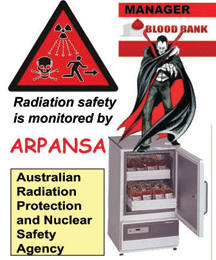 Audit finds nuclear shortcomings PS News 8 May 14 An audit of the regulation of nuclear radiation and related activities in Australia has found that while the Agency responsible had been generally effective in managing key aspects of the regulatory framework, shortcomings identified in a 2005 audit had yet to be rectified.
In his audit report on the Australian Radiation Protection and Nuclear Safety Agency (ARPANSA), Auditor-General, Ian McPhee found that only 11 of the 19 recommendations made by the previous 2005 audit had been implemented.
The 2005 audit found ARPANSA “did not have a systematic approach to planning, undertaking and monitoring its activities”.
“By not implementing agreed recommendations in a timely manner, ARPANSA has foregone opportunities to enhance its performance,” the Auditor-General said……..Mr McPhee said the licence assessment process could be further improved and there was also scope for ARPANSA to extend its risk‑based regulatory approach.
The audit found that aspects of the inspection process, particularly unannounced inspections, were largely driven by geographical convenience rather than risk.
He also recommended ARPANSA strengthen its approach to managing conflicts of interest, assisted by its Audit and Risk Committee.
The audit team was Stewart Ashe, Tara Rutter and Donna Burton. http://www.psnews.com.au/Page_psn408f6.html
Uranium long-term market forecast is as bad as its short term – from Nuclear Energy Institute
 www.neimagazine.com/opinion/opinionthe-future-of-uranium-higher-prices-to-come-4259437/ Predictions of the rise in price of uranium are unjustified; they do not fully appreciate the segmented nature of the market. Steve Kidd 6 May 14
The world uranium market has fallen back substantially from the highs it sustained in the period around 2005-2010, when the spot price peaked at over $130 per pound in summer 2007. After the Fukushima accident in 2011, the price drifted down further and has been stable at the $35 per pound level since last summer. Although this is well above the $10 per pound that prevailed for the long period from the late 1980s up until 2003, it is universally agreed that very few (if any) new mines can be developed at today’s price level. The suggestion is therefore made (particularly by uranium producers and their financial sector backers) that with rising demand, there will be shortages of supply in future unless we soon have much higher prices to encourage new production. On the demand side, a lot of attention is currently being to the upcoming Japanese reactor restart programme, in terms of timing and number of reactors.
A recent report from my company (East Cliff Consulting, ‘The Fifth Age of Uranium’) shows why the case made by the uranium bulls is in reality full of holes. We are now more likely to see a long period of relatively low prices, in which uranium producers will find it hard to make a living.

Substantial oversupply in the Fourth Age
The starting point is to understand the full history of uranium supply and demand. This is covered in the WNA’s biennial fuel market report, which identifies four distinct ages running from 1945 until today. The fourth of these began in 2003, when prices started rising sharply to mark the end of the third age, which was the long period of inventory rundown and constrained production lasting from the late 1980s. Talk in 2003 was of a “renaissance” of nuclear power and lots of new mines were apparently needed to meet their fuel requirements, while previously abundant secondary supplies would gradually wither away. Not so different from what the optimists are saying about uranium today.
World production certainly responded strongly to the obvious price signal back then and it had risen by half by 2010. One curious feature, however, was that the increase was almost entirely concentrated in only one country, namely Kazakhstan. Apart from this, hundreds of “junior” uranium companies suddenly appeared but the only company successful in establishing new large-scale production facilities was Paladin, with Langer Heinrich in Namibia and Kayelekera in Malawi. The others succeeded in mining only the financial markets.
Another remarkable fact was that despite all the hype about nuclear growth plans, the level of underlying uranium demand did not rise at all during this period. This is even without the adverse impact of the accident at Fukushima in 2011. Shutdowns of ageing reactors in various countries were just balanced by the commissioning of new units (increasingly in China). Another crucial factor has been a fundamental realignment in the relationship between uranium and enrichment requirements. The closure of the inefficient gaseous diffusion enrichment plants removed the high marginal cost production which had propped up prices, while notably higher uranium prices in themselves encouraged the use of higher enrichment (through reducing the optimum “tails assay”). Enrichment is now expected to remain cheap and abundant as centrifuge plants are modular and capacity can be expanded relatively easily to meet demand, so this substitution of enrichment for uranium will continue to be important.
The impact of much higher production combined with static demand during this fourth uranium age is substantial over-supply in the world uranium market, with prices naturally falling back to lower levels. The other obvious corollary of this period has been a renewed upsurge in uranium inventory levels in the United States, Europe and (with the shutdown of reactors since Fukushima) Japan. Some of this has been entirely voluntary on the part of the fuel buyers, who want more security of supply. The biggest increase has been in China, which has been building huge inventory balances to provide security for the anticipated fuel requirements of its rapid reactor building programme. On the other hand, some of the accumulation (such as in Japan) has been involuntary and this material can be used to balance the market over the next period, effectively at the expense of fresh production.
In fact China can be seen as the mirror image of the production growth in Kazakhstan, as the majority of Chinese imports have been sourced from there. The rest of the world has continued much as before, with no overall nuclear growth and not much of any real substance happening in the development of new uranium mines, except a few key projects such as Cigar Lake in Canada.
Uranium demand to increase in China and Russia
The uranium bulls continue to point to the prospects for nuclear growth to 2030. The problem is that most of this will be concentrated in China and Russia. Over half will likely be in China and the Chinese may also become important in supplying reactors to other countries in the 2020s. The Russian domestic nuclear programme is now progressing quite well, and they too will be a key supplier of reactors to other countries in the period to 2030. When the Russians supply a reactor, they invariably include long-term fuel contracts. What is important is that uranium demand will almost certainly fall in the key markets in Western Europe and North America, which are satisfied by the established uranium producers. Many Japanese reactors will undoubtedly restart but it will take a long time to unwind the inventory accumulation there.
Those who believe in higher uranium prices take an over-optimistic demand scenario. It can now be argued that the range of possibilities has actually narrowed considerably and it is appropriate to centre discussion on just one main case to 2030. Upper scenarios showing rapid nuclear growth in many countries including plants starting up in new countries now look very unlikely, certainly before the late 2020s. If there is to be a nuclear renaissance, it is now much more likely to happen later, and with a new generation of reactors. On the other hand, predictions that another major accident would shut down nuclear in lots of countries have been negated by the experience of Fukushima. Although there remain some uncertainties, the outlying upper and lower cases are much less credible than before.
Uranium market split into three
So we are entering a fifth era of uranium, where the market is split into three.
The Chinese will favour investing directly in mines to satisfy their requirements. These (like Husab in Namibia) will not necessarily be at the low end of the cost curve: there are important geopolitical considerations too and the Chinese are keen to get involved directly in the economic development of many countries, particularly in Africa. They are also not going to “play ball” with the established uranium market. Although they will maintain a presence in the spot market and sign further long-term supply contracts with producers, they have learned their lesson from the iron ore market. In that sector their heavy dependence on imports from BHP Billiton, Rio Tinto and Vale has given these producers fantastic profits.
The Russians will continue to be significant nuclear fuel exporters but their own market will remain essentially closed to outsiders. They still have secondary supplies to tap into (plenty of surplus HEU remains to be down-blended) and they will follow the Chinese and invest directly in uranium assets if their own domestic production remains constrained. Their recent acquisition of the producer Uranium One can be seen very much in this vein.
The established uranium producers will have the remainder of the market to satisfy and that will likely be declining in magnitude. There are bright spots are South Korea and the Middle East (where Saudi Arabia may join the UAE in having a nuclear programme) but the prospects in North America and Europe are not so good. In the United States, the number of operating reactors will fall by 2030, with a small number of new units not sufficient to compensate for closures due to cheap shale gas and the incursion of subsidised renewable energy into power markets. Although reactors may well be licensed for up to 80 years, they will not operate unless the economic fundamentals are right. In Canada too, it seems unlikely that all three nuclear stations in Ontario will be refurbished, and there is a strong possibility that Pickering will close. InEurope, even in France the future of the currently operating units is now in question. It is likely that there will be a gradual reduction in the nuclear share of electricity in France towards 50% and so older units (beyond Fessenheim) will likely close by 2030. New-build in the United Kingdom will only compensate for units shutting down, while further new units will only happen in a few countries such as Finland and (possibly) the Czech Republic. So with countries like Belgium and Switzerland following Germany into a nuclear phase-out, the overall European situation is one of gentle decline.
This market segmentation and the way the Chinese and Russians will operate means that the two prime analytical devices utilised in the uranium market are both now useless. First, calculated annual world supply-demand balances (miraculously often showing a shortage after 3-5 years) are irrelevant in a segmented market, where key actors with expanding demand choose to go it alone. For a time in the early 2000s, it looked as if a globalised world nuclear fuel market could emerge, but this has not happened and it is arguably now going into reverse. Secondly, uranium supply curves (based on mine cost data), demonstrating the need for higher prices as demand expands, are also invalidated. China and Russia (and probably India too, if it eventually gets its nuclear act together) will develop uranium assets wherever it best suits them. They have the confidence to bypass the conventional market, which could increasingly become merely a sideshow.
Another issue to watch is the persistence of secondary supplies beyond Russia. Only part of the 2.5 million tonnes of uranium mined since 1945 has been utilised. Almost 2 million tonnes of depleted uranium is an attractive resource while there is overcapacity in enrichment and cheaper prices. In the very long term, China, Russia and India are committed to reprocessing their used fuel and will probably eventually succeed in tempering their uranium use by building large reprocessing plants. Any substantial replacement of uranium, however, will have to await the next generation of reactors, which will be fuelled very differently from today’s large light water designs.
Fifth Age price predictions
In this fifth age of uranium, prices will essentially be determined by the cash costs of production of operating mines (and not by the full costs of future mines). This means a reversion to the long period of low (but relatively stable) uranium prices of the late 1980s and 1990s (the third age), but at a higher level to reflect the greater level of production now, the escalation of mining costs and the movements in currency exchange rates. The shortages predicted by many analysts (leading to rapid price increases to provide good rates of return on their favourite projects) are purely a mirage.
The outlook is therefore not favourable for either current or prospective uranium producers. Only those with low-cost operations will prosper. Others will struggle to stay in business and further mine closures (beyond Paladin’s Kayelekera which is now on “care and maintenance”) are definitely on the horizon. A high-profile mine closure is one factor that could cause the price to spike, but historical experience is actually rather different: once mines get into operation, owners will usually withstand short-term financial losses so long as they are convinced that there are better times around the corner. And they tend to be incurable optimists.
Steve Kidd is an independent nuclear consultant and economist with 17 years of work in senior positions at the World Nuclear Association and its predecessor organization, the Uranium Institute.
Coalition government utterly dependent on funding from mining industry
The fossil fuel industry and who really runs Australia Independent Australia Sandi Keane 6 May 2014,The age of entitlement is over in Australia — except for the dominant fossil fuel industry and those rich enough to be able to buy political patronage.“……..Last month, at global talks in Nairobi, energy experts at were calling on subsidies to oil, gas and coal prices to be cut:
‘According to the International Energy Agency, the elimination of fossil fuel subsidies will be the single most effective measure for climate change mitigation and would be one of the most effective measures for keeping the temperature rise beneath two degrees, which has been agreed upon in the international climate negotiations.’
The talks were organized by Germany’s development agency GIZ, the UN’s Environment Program and the International Monetary Fund. It was noted that most European countries have already cut their fossil fuel subsidies.
There’s little chance of the Abbott Government following suit while its policy outcomes continue to favour Australia’s richest corporate elites in return for hefty political donations. (See below – graph explains donations from mining industries)

At this point, donations – other than certain donations, such as from developers as in NSW – are not illegal.
Until such time as there is a national ICAC and an appetite to clean up the corrupt practice of political donations being tied to favourable decisions, we know who really governs Australia — the miners and the moguls. http://www.independentaustralia.net/business/business-display/who-really-runs-australia-the-miners-and-the-moguls,6450
1 This month


Help Aunty Sue Protect Her Land and Sacred Sites From Destructive Rocket Testing.
.

Australians deserve the truth
about
AUKUS – https://aukuspublicinquiry.com/

PETITION – To: Prime Minister Anthony Albanese and the Australian Labor Government

of the week – Australians for War Powers Reform (AWPR)
To see nuclear-related stories in greater depth and intensity

