“History is Calling: Australia and the Treaty on the Prohibition of Nuclear Weapons”
– Melissa Parke, ICAN International Executive Director, 30 Apr 24 https://icanw.org.au/history-is-calling-report/
“History is Calling: Australia and the Treaty on the Prohibition of Nuclear Weapons” sets out in detail the case for Australia to join the global majority of nations in supporting the nuclear weapon ban treaty. It outlines Australia’s progress on implementation, the TPNW’s complementarity with other agreements, nuclear safeguards and disarmament architecture, enforcement, universalisation, victim assistance and environmental remediation, Australia and its alliances, and nuclear deterrence theory.
By early 2024, almost half the world’s nations have already joined the TPNW. More will join. And they are getting to serious, practical work implementing the treaty.
Australia is currently the only nuclear-allied state where the governing party has repeatedly committed to sign and ratify the ban treaty. Under governments both Coalition and Labor, Australia has joined every other treaty banning an inhumane, indiscriminate weapon, but not yet this one banning the worst weapons of mass destruction.
Australia must step up and do its part to wind back the looming nuclear danger. Let’s get on the right side of history, not add to the risk of ending it. It’s time Australia joined the Treaty on the Prohibition of Nuclear Weapons.
– Melissa Parke, ICAN International Executive Director
Staggering rise of clean energy in China a wake-up call to Australia – including on nuclear
Given the implications for Australian taxpayers of the massive capital, time and LCOE blowouts of A$50-60bn per nuclear plant, it’s time to call the nuclear debate here for what it is – a politically motivated furphy designed to derail the renewables transition.
Taxpayers have already funded six government nuclear inquiries since 2015 which all concluded nuclear is too slow and too costly.
Nuclear works at scale in China. Here, it is a deliberate distraction by fossil fuel incumbents and politicians on their payroll.
Tim Buckley, Apr 30, 2024, https://reneweconomy.com.au/staggering-rise-of-clean-energy-in-china-a-wake-up-call-to-australia-including-on-nuclear/
China is undergoing a monumental power shift, with the staggering rise of zero-emissions energy positioning the green powerhouse to end new coal power before 2030. This has massive implications for global and Australian decarbonisation.
Climate Energy Finance’s latest report, released this week, modelled China’s electricity system nationally at the annual level through to 2040, evaluating its likely GDP growth trajectory and the resulting energy demand growth, as well as the increased share and hence demand for electricity in the energy mix as China continues to pursue its ‘electrification of everything’ strategy of the last two decades.
CEF forecasts that through to 2040, China will install a world-leading 323GW per annum of solar capacity, 80GW of wind, 1GW of hydropower and 3GW of nuclear.
Sustaining this rate of installation of >400GW pa of zero-emissions additions a year – over six times the total capacity of Australia’s National Electricity Market (NEM) – would see China achieve its ‘dual carbon’ targets, to peak carbon emissions by 2030 and reach carbon neutrality by 2060, ahead of time.
This in turn opens up the potential for it to revise its emissions reduction pledge to net zero by 2050 or 2055, bringing the behemoth in line with the rest of the developed world.
While China’s total electricity demand will continue to rise through 2040 due to sustained strong economic growth and economy-wide electrification, CEF forecasts that the share of thermal power in total generation will progressively decline, from 70% in 2023 to just 50% by 2030 and potentially to just 30% by 2040. A staggering transformation in under two decades.
This astonishing acceleration of the nation’s energy pivot is reflected in its energy investment trend. China Invested US$890bn in cleantech in 2023, more than double the US as the second largest investor.
China installed 63GW of zero-emissions electricity capacity in the first three months of 2024, as much as the entire NEM of Australia. That represented growth of 35% year-on-year (yoy), building on the 301GW of new zero emissions capacity installed in 2023, which was in turn double the rate of new capacity installs of 2022.
This rate of expansion is both world leading and global energy system-transforming.
Nuclear in China
China also leads the world in deployment of new nuclear energy. The levelised cost of energy (LCOE) of nuclear, at US$70 per megawatt hour (MWh), is half the cost of the US$160/MWh in Europe and US$105/MWh in the US.
This is a key point that Australia’s nuclear proponents fail to appreciate: There are demonstrable financial benefits to the technology in a super-large-scale, centrally-planned economy with a well-entrenched record of deploying complex, dangerous, massively capital-intensive nuclear power plants every year. These conditions do not apply in western economies and are completely out of the question for Australia.
The IEA estimates China can build nuclear power plants at half the capital cost of the US and Europe, and in almost half the time. Australia, on the other hand, has never built a commercial nuclear power plant, as confirmed by the World Nuclear Association.
China currently has 54GW of operable nuclear power reactors, with 31GW of nuclear power reactors under construction, another 45GW in planning and 98GW proposed as of February 2024, with more proposals for new nuclear reactors awaiting approval.
CEF’s Chinese electricity model forecasts China will double its nuclear power plant fleet to 108GW by 2040 to be #1 in the world in terms of total installed capacity, overtaking the US at 100GW.
December 2023 saw the world’s first 4th generation nuclear power plant go into commercial operation, operated by Huaneng Shandong Shidao Bay Nuclear Power. The facility has a modest net capacity of 150MW, but still took a lengthy 11 years to construct after approval in 2012.
In 2011 the National Energy Administration (NEA) announced that China would make nuclear energy the foundation of its electricity generation system in the next “10 to 20 years,” adding as much as 300GW of nuclear capacity over that period.
China has delivered less than a sixth of this target. Post Fukushima China wanted to only install the most modern facilities deploying the latest technology, which they developed themselves, becoming the world leader in this technology as in all zero-emissions technologies of industries of the future..
We forecast China will add 3GW annually of new capacity as part of its all-of-the-above strategy for domestic power generation. We estimate nuclear will rise to 790TWh of annual generation by 2040, representing a national share of 5.0% (vs 433TWh and a 4.9% share in 2023), just a fraction of the 20-25% share targeted a decade ago.
With the massive scaling up of nuclear power capacity in China, the IEA models the real LCOE will fall 10% to US$65/MWh by 2050, vs the 50% decline in solar LCOE to US$25/MWh.
By comparison, the IEA models Chinese coal with carbon capture and storage will rise to US$220/MWh, ten times the cost of solar, and three times the 2050 cost of nuclear, making coal increasingly uneconomic.
In short, nuclear makes sense as part of the zero-emissions energy mix in China given the need to decarbonise at speed.
As for its viability in Australia, there is not a single small scale nuclear reactor (SMR) – the Federal Coalition’s preferred nuclear technology – approved for construction anywhere in the world outside of Russia and China.
This begs the question of whether Opposition Leader and chief nuclear spruiker Peter Dutton is proposing to deploy 4th generation Chinese developed technologies, or antiquated 2nd generation Russian technology, here.
Given the implications for Australian taxpayers of the massive capital, time and LCOE blowouts of A$50-60bn per nuclear plant, it’s time to call the nuclear debate here for what it is – a politically motivated furphy designed to derail the renewables transition.
Taxpayers have already funded six government nuclear inquiries since 2015 which all concluded nuclear is too slow and too costly.
Nuclear works at scale in China. Here, it is a deliberate distraction by fossil fuel incumbents and politicians on their payroll.
Let’s wait till at least one plant is commissioned and the cost of nuclear power plants built somewhere in the west is remotely affordable and proven, and timeframes for deployment make sense as the imperative to decarbonise escalates, and then have a debate about its merits.
Opportunities for Australia
The critical shift in the energy landscape in China that we map toward zero-emissions technology, with coal playing a diminishing back-up role, also has profound significance for Australia – including the inevitable decline in demand for coal in China.
This is a wakeup call for Australia to accelerate the transition of its economy from its historic overdependence on coal exports and diversify its economic base. We should be pivoting now to deploy our natural advantages – our world-leading wealth of critical minerals and strategic metals – to produce value-added energy transition materials for export.
Key to this is enhancing cleantech supply chain partnerships and bi- and multilateral agreements in the Asian region – a central premise of the new Future Made in Australia Act – including with China, the world’s green economic powerhouse.
And while they do nuclear, alongside their accelerating VRE capacity additions, we can be “embodying decarbonisation” in our exports by value-adding our lithium and other critical minerals, producing green iron, and manufacturing energy transition materials such as cleantech using the boundless potential of our superabundant renewable energy.
For this, we also need to be boosting the ambition, speed and scale of our utility and distributed wind and solar rollout, a critical enabler of Australia’s opportunity to reposition the domestic economy as a zero-emissions trade and investment leader in a rapidly transitioning world.
Nuclear has no viable part in this picture.
The conservative charity group figures driving the opposition leader’s pivot to nuclear energy

Dutton and O’Brien are also brazenly using the AUKUS defence agreement to bolster the case for civilian nuclear power reactors. Under AUKUS, Australia will get submarines powered by small nuclear reactors. As part of the agreement, signed by the Albanese government, Australia is responsible for disposing of the nuclear waste from the subs. That means Australia will be obliged to develop a responsible nuclear waste system. The nuclear lobby hopes this will help overcome popular resistance to a civilian nuclear waste dump in Australia.
Dutton’s nuclear power plants . The conservative charity group figures driving the opposition leader’s pivot to nuclear energy
By Marian Wilkinson, The Monthly, May 24
Five charity group figures driving the opposition leader’s pivot to nuclear energy
When Lesley Hughes agreed to lead a nocturnal wildlife tour at Sydney’s Taronga Zoo in August last year, she didn’t quite realise what she was letting herself in for. As the distinguished professor of biology explained the perils facing the animal kingdom from climate change, a disparate group of movers and shakers nodded with polite enthusiasm – among them, National Party leader David Littleproud, Liberal Party climate and energy spokesman Ted O’Brien, and Larry Anthony, the head of a lobbying firm known for pushing fossil fuel clients.
This was not the professor’s natural milieu, but, like many of the guests at the splendid harbourside function centre that wintry evening, Hughes was there to win hearts and minds in the fight to save the planet. It was the opening night of the International Climate Conference hosted by the Coalition for Conservation, an enterprising conservative charity with deep roots in the Liberal and National parties. One of its aims is to reach out to environmentalists, renewable energy experts and climate scientists to garner support for Coalition members backing the goal of getting Australia to net zero emissions.
C4C, as it’s known, had gathered an impressive line-up of speakers, including the man who led the successful 2021 United Nations Climate Change Summit in Glasgow, former United Kingdom minister Sir Alok Sharma, and His Excellency Abdulla Al Subousi, ambassador for the United Arab Emirates, whose nation was set to host the next UN climate summit in Dubai.
But as the guests tucked into the opening night dinner, one speaker sounded a jarring partisan note: C4C’s influential patron, Trevor St Baker, couldn’t resist taking a swipe at the Albanese government’s renewable energy policy. St Baker’s intervention was telling. The Queensland rich-lister was close to C4C’s chairman, Larry Anthony, a former National Party president. For years, he had employed Anthony’s lobby shop, SAS Consulting, back when he was in the coal-fired power business. Now St Baker was investing in the energy transition – electric vehicle charging and battery technology – but his passion project was nuclear energy and, in particular, introducing the idea of small modular nuclear reactors to Australia.
While St Baker’s presence was a surprise to some C4C supporters that night, his ideas on nuclear energy were about to hit the zeitgeist. He and his partners in a small nuclear consultancy, SMR Nuclear Technology, were riding the new wave of global enthusiasm for nuclear energy. Influential players, from former Microsoft boss Bill Gates to UK Prime Minister Rishi Sunak, were spruiking small and micro modular reactors as a game-changer that would help the world reach net zero emissions by 2050. In climate circles it was dubbed the “tech bro” culture, as next-generation nuclear attracted bullish headlines, and billions in private investment and government grants
The C4C climate conference was dotted with speakers enthusiastic about bringing nuclear power to Australia, few more so than the opposition’s spokesman, O’Brien. The line-up was a clear signal that the C4C charity had pivoted towards its patron’s pro-nuclear position. More importantly, it reflected the big nuclear shift by Opposition Leader Peter Dutton. In a headline-making speech a few weeks earlier, Dutton had attacked what he called “renewable zealotry”, saying that if Albanese wanted to phase out coal and gas, the only feasible and proven technology to back up renewable energy was “next-generation nuclear technologies”. Specifically, Dutton pushed the idea of small modular reactors (SMRs) and micro modular reactors (MMRs).
Dutton is now releasing more details on the opposition’s “coal to nuclear” power plans, which he argues can deliver cheaper electricity and new jobs in regions where ageing coal generators will be forced to close. So far, the plans bear a striking resemblance to a policy Trevor St Baker and SMR Nuclear Technology have been advocating for several years, in evidence and submissions to federal and state parliamentary committees, in think tanks and in energy forums. These describe in voluminous detail how small modular nuclear reactors are less costly to build than the big nuclear plants, safer and more flexible, allowing them to be sited at old coal plants already connected to the electricity grid.
Just how influential St Baker and his partners have been in the opposition’s nuclear switch is unclear. Dutton’s move to nuclear has been slammed by critics………………………………………………………
Whatever the economics of the opposition’s nuclear plan, there is no doubt about its political impact. It has reignited the partisan climate wars in Australia. Since first signalling their nuclear plans in 2022, Dutton and O’Brien have kept up a relentless attack on the Albanese government over what they call its reckless “renewables only” energy plan, blaming it for driving up household energy prices, threatening energy security, de-industrialising Australia and trampling the rights of farmers.
Professor Hughes is watching the divisive nuclear debate unfold with dismay. A director of the Climate Council, Hughes has been a lead author with the UN’s chief scientific advisory panel, the Intergovernmental Panel on Climate Change, and now sits on the federal government’s Climate Change Authority advising on its emissions reduction targets. “In my opinion, given the lack of any economic rationale for nuclear, one can only conclude that it’s a distraction to allow the fossil fuel industry to keep operating with business as usual,” she says.
Despite Dutton and O’Brien’s bullish optimism, their nuclear pivot is a big political gamble. While a rash of polls suggests support for nuclear energy is growing in Australia, some also show most Australians still don’t want a reactor in their own region, let alone a nuclear waste dump. Even Queensland’s Liberal National Party leader, David Crisafulli, has ruled out any plan to replace the state’s old coal-fired power stations with small nuclear reactors, saying it can’t happen without bipartisan support. The issue also threatens the fragile truce in the Liberal Party over climate change policy. The party’s most vocal renewable energy advocate, former New South Wales energy minister Matt Kean, has launched a stinging attack against the policy push. “I am not opposed to nuclear power,” he tells me. “I was state energy minister for five years. If nuclear power was a viable pathway to net zero, I would have done it. But it did not stack up – economically, environmentally or engineering-wise.”
Kean was speaking shortly after he resigned from his role as ambassador for the C4C environmental charity. In his frank resignation letter, he told C4C’s chair, Larry Anthony, that he saw the advocacy for nuclear power “as an attempt to delay and defer responsible and decisive action on climate change in a way that seems to drive up power prices in NSW by delaying renewables”.
Kean sees Anthony and St Baker as having an outsize influence on the charity’s shift to a pro-nuclear position. St Baker is a powerful business figure in Dutton’s home state. He’s long been a political donor to the Queensland LNP and to the state’s Labor Party. His support for nuclear power is no secret.
Talacko denies either St Baker or Anthony influenced the charity’s position on nuclear energy. “Our exploration of this technology was thorough and impartial, and our support for nuclear energy is not influenced by political agendas nor tied to financial backing from the nuclear industry,” she tells me by email. But she also says she didn’t know her charity’s key patron was a director and major shareholder of SMR Nuclear Technology. “I was not aware of Trevor’s position at this organization.”
For well over a year, C4C has played a critical role in supporting and promoting the Coalition’s push on nuclear energy. In early 2023, Talacko joined Ted O’Brien on a nuclear fact-finding trip to the United States and Canada. O’Brien’s trip was funded in part by one of C4C’s donors – which one he doesn’t say. The group was briefed by corporate executives and government officials on a range of small and medium modular nuclear reactor projects. O’Brien says Talacko returned from the trip convinced “nuclear should be part of a balanced mix”. Talacko posted O’Brien’s upbeat story about their briefings on the C4C website. None of the projects O’Brien wrote about was commercially operating. Indeed one, a much-anticipated small nuclear project in Idaho run by American company NuScale, collapsed months later because of major blowouts in costs. That was despite getting almost $1 billion in US government support. NuScale’s chief executive was blunt about the project’s future prospects, telling Bloomberg, “Once you’re on a dead horse, you dismount quickly. That’s where we are here.”
Neither O’Brien nor Talacko’s enthusiasm for next-gen nuclear was dented by what happened to NuScale. Quite the reverse. Just weeks after the collapse, in November 2023, C4C funded a delegation of Coalition MPs, as well as Talacko, to attend the UN Climate Change Conference in Dubai, COP28. O’Brien had been invited to address a meeting that the World Nuclear Association, the global nuclear lobby, was hosting with C4C at the summit. The C4C delegation included Liberal senators Andrew Bragg and Dean Smith, the Nationals’ Senate leader Bridget McKenzie, deputy leader Perin Davey and shadow trade minister Kevin Hogan, and Larry Anthony.
………………………….. the COP declaration was a triumph for the nuclear lobby, and O’Brien vowed the Coalition would sign up to the nuclear partnership if it was re-elected. Talacko posted a glowing account on C4C’s website. …………………..
But turning the heady nuclear promises in Dubai into a credible climate policy at home is proving a daunting challenge for the opposition. The first hurdle it faces is the law. Federal environment and nuclear safety laws effectively ban civilian nuclear power generation in Australia. Victoria, New South Wales and Queensland also have specific laws prohibiting it.
Overturning these laws has long been on the wish list of business lobbies such as the Minerals Council of Australia, as well as the National Party and senior Liberals, but it remains politically fraught. O’Brien admits there was no chance of it happening in this parliament.
Even Bob Pritchard thinks overturning the laws will be tough. And he worries that if Dutton goes to an election pledging to change the laws and loses, it will put the nuclear industry in Australia back years.
The opposition’s immediate problem is the lack of “social licence” for nuclear power in Australia. A majority of us are still anxious that nuclear reactors and their waste are not safe to live with. O’Brien, with help from C4C and other pro-nuclear lobby groups, is working hard to turn this around. Barely a week goes by now without an event with a panel of experts talking up nuclear energy’s role in getting to net zero emissions.
Dutton and O’Brien are also brazenly using the AUKUS defence agreement to bolster the case for civilian nuclear power reactors. Under AUKUS, Australia will get submarines powered by small nuclear reactors. As part of the agreement, signed by the Albanese government, Australia is responsible for disposing of the nuclear waste from the subs. That means Australia will be obliged to develop a responsible nuclear waste system. The nuclear lobby hopes this will help overcome popular resistance to a civilian nuclear waste dump in Australia.
It’s no coincidence Dutton recently met with executives from Rolls Royce last month to talk about nuclear power. Under AUKUS, the British company will supply the small reactors for Australia’s nuclear submarines. Rolls Royce is also trying to rapidly develop small modular reactors for civilian nuclear power with the backing of millions of dollars in UK government grants.
Veteran anti-nuclear campaigner Dave Sweeney, from the Australian Conservation Foundation, sees AUKUS as the best leg-up for the nuclear lobby in Australia for decades.
“Despite years of lobbying from the mining sector, and from pro-nuclear advocates, there has been no success in gaining a social licence for the technology in Australia,” Sweeney tells me. “But they see AUKUS as the thin edge of the wedge – the way they will expand nuclear from a defence relationship to get domestic acceptance and integration of nuclear technology and nuclear power in Australia.”
Sweeney is convinced Dutton’s nuclear plans have little chance of success. “I think that they will have their work cut out,” he says, “but there is no question that this is a very serious, systematic and resourced attempt by the pro-nuclear voices.” Like many activists who spent years campaigning on climate change, Sweeney believes the overriding aim of Dutton’s nuclear shift is political. “It unites techno-modernist Liberals with the renewable-recalcitrant Nationals in one policy framework. And it also continues business as usual – it’s no challenge to the fossil fuel interests to talk about nuclear.”………………………………………………………………………..
When the politicians returned to Canberra in February, the drums were once again beating in the climate wars. On the lawn in front of Parliament House, the “Rally Against Reckless Renewables” was in full swing. The National Party’s Barnaby Joyce was firing up the crowd of several hundred farmers and anti-renewable activists telling them, “You’re the army! This is the start!”
Joyce’s performance enraged Dr Matt Edwards, a prominent Australian solar scientist now working for Adani Solar, owned by the giant Indian power company. Edwards was also the vice chair of C4C, but he’d clearly had enough. He belted out a stinging op-ed for the Australian Financial Review laying into Joyce and what he called “the remnants of the Coalition now taking an uninspired punt on nuclear”. Edwards bluntly dismissed the opposition’s plan to replace ailing coal plants with nuclear, saying, “given high costs, long lead times and lack of investor appetite for nuclear, it is easy to cynically imagine that these plans might be used to justify extending the life of fossil generation while we wait for an atomic revolution that never comes”.
The fallout was immediate. C4C’s chairman and chief executive were furious. Dr Edwards resigned from the board. Just one more casualty in the latest round of the climate wars.
Marian Wilkinson is a multi-award-winning journalist and author. Her latest book is The Carbon Club. https://www.themonthly.com.au/issue/2024/may/marian-wilkinson/dutton-s-nuclear-power-plants#mtr
Dutton’s nuclear policy backfires
Mike Seccombe The Saturday Paper, 27 Apr 24
This much can be said for Colin Boyce: he is not one of the federal Coalition’s nuclear nimbys. He would, if necessary, agree to have a nuclear power station in his electorate…………………………………………………..
Opposition Leader Peter Dutton’s announcement on March 12 that the Coalition would “shortly” announce about six sites across the country where nuclear reactors could be built forced the issue. Dutton’s plan would put them in places where coal-fired power stations were closing down.
The promised announcement of potential nuclear sites has been pushed progressively further into the future. Initially it was expected within a couple of weeks, then before the federal budget on May 14. Last Sunday, on the ABC’s Insiders program, Dutton would not commit to a pre-budget announcement, improbably blaming the recent stabbing incidents in Sydney for the delay.
On Tuesday this week, Nationals leader David Littleproud told Sky News the Coalition parties were “not going to be bullied into putting this at any time line, but you will see it before the election”.
Whenever the announcement does eventually come, Boyce’s central Queensland electorate, Flynn, is likely to be on the list.
Boyce’s acceptance of nuclear power in his electorate is not so much an endorsement of the policy being pushed by his leaders as an acceptance that he has no other choice.
Flynn, twice the size of Tasmania and dotted with coalmines and gas wells, produces vast amounts of energy, most of which is shipped overseas.
………………………………………………………………….. Boyce says, probably correctly, “ there will be no coal-firedpower stations in Queensland operational after 2035”.
He is not happy about that and is even less happy that the state opposition supported the government’s legislated target, for he has never accepted the need to stop burning fossil fuels.
Before his election to federal parliament, Boyce served five years in the Queensland parliament, representing the coal seat of Callide. There, he argued for the construction of more coal-fired power stations. He denied the reality of human-induced climate change.
Opposition to fossil fuels, he told state parliament on June 17, 2021, was “driven by the mind-numbing, eco-Marxist Millennials and upper middle-class ‘wokes’ who have been indoctrinated with some quasi-religious belief that coal is bad and carbon dioxide is poisoning the planet”.
……………………………………………………………………. Even within the Coalition’s ranks there are some who see the move as being at least as much an attempt to address a political problem as to address the climate crisis, although most will not say so publicly.
Bridget Archer will, however. The Tasmanian MP – one among a much-depleted cohort of moderate Liberals after the 2022 election – issued a warning to her colleagues via the pages of the Nine newspapers last month that nuclear energy should not be put forward as an alternative to wind and solar.
“There is no point even having a nuclear discussion if you don’t accept a need to decarbonise, to transition away from coal and gas,” she said. “There only is a case for nuclear if there is a fairly rapid transition to large-scale renewables, otherwise why are you doing it?”
She then answered her own question: “I think part of the reason for having the discussion is to keep people in the tent on net zero.”
Others privately assess the motivations of the federal Coalition leadership more harshly. They suggest it’s not primarily about getting nuclear up but about slowing the transition to wind and solar and thereby extending the life of fossil fuels in power generation.
Certainly, the chances of getting the federal parliament to greenlight a domestic nuclear industry are remote. For about 25 years, nuclear power has been prohibited by law in Australia, and it was the Howard Coalition government that banned it, under a 1998 deal with the Greens to get other legislation through the Senate.
Given the ever-growing proclivity of Australian electors to give their votes to progressive independent candidates and Greens, there is a good chance neither major party will win majority government at the next election. Even if the Coalition did win the House of Representatives, it almost certainly would not gain a majority in the Senate. Unless Labor recanted on its vehement opposition to nuclear power, Dutton’s plan would fall at the first hurdle.
……………………………………. the available evidence suggests even those members of the federal Coalition parties who publicly spruik the Dutton policy lack the courage of their convictions.
Last month, shortly after Dutton made his big announcement, reporters for the Nine papers contacted a dozen of them.
“Twelve opposition MPs have publicly backed lifting the moratorium on nuclear power in Australia but will not commit to hosting a nuclear power plant in their own electorate,” their story began
……………………………………………….. Two points. First, the Coalition plan no longer involves small modular nuclear reactors, but instead would rely on building traditional large plants. Second, the polling to which Littleproud referred actually showed a lot of people were woefully misinformed about the cost of nuclear power.
When asked to rank sources of energy “in terms of total cost including infrastructure and household price”, 40 per cent of respondents thought solar and wind power were the most expensive, compared with 36 per cent who thought nuclear was, and 24 who picked coal and gas. Fully one third of respondents thought nuclear was the cheapest option.
They are spectacularly wrong. According to the most recent GenCost report – the annual collaboration between the Australian science agency CSIRO and the Australian Energy Market Operator (AEMO) – SMRs are by far the most expensive way of generating electricity. The “levelised cost” of power from an SMR would be $382 to $636 per megawatt hour, while solar and wind would cost between $91 and $130 per MWh.
The Dutton response was to attack the experts. He claimed GenCost underestimated the cost of renewables because it did not include expenditure on the transmission infrastructure required to integrate them into the grid.
This was untrue, as the report’s authors promptly made clear. Dutton was undeterred, however, which in turn saw the chief executive of the CSIRO, Douglas Hilton, release an open letter defending the importance of independent scientific endeavour.
Last Tuesday, the same day as Littleproud went on Sky News and maintained the falsehood that nuclear power was cheaper than wind and solar, another report was released, further confirming more wind and solar energy was simultaneously lowering both prices and emissions from the electricity sector.
The quarterly Energy Dynamics report from the energy market operator showed that in the first three months of this year, renewables provided 39 per cent of power in the east coast power grid, almost 2 per cent more than in the corresponding period last year.
……………………………..“We are increasingly seeing renewable energy records being set which is a good thing for Australian consumers as it is key in driving prices down and NEM [National Electricity Market] emissions intensity to new record lows,” AEMO’s executive general manager of reform delivery, Violette Mouchaileh, said in a media release accompanying the report…………………………………………………………………………………… more https://www.thesaturdaypaper.com.au/news/politics/2024/04/27/duttons-nuclear-policy-backfires
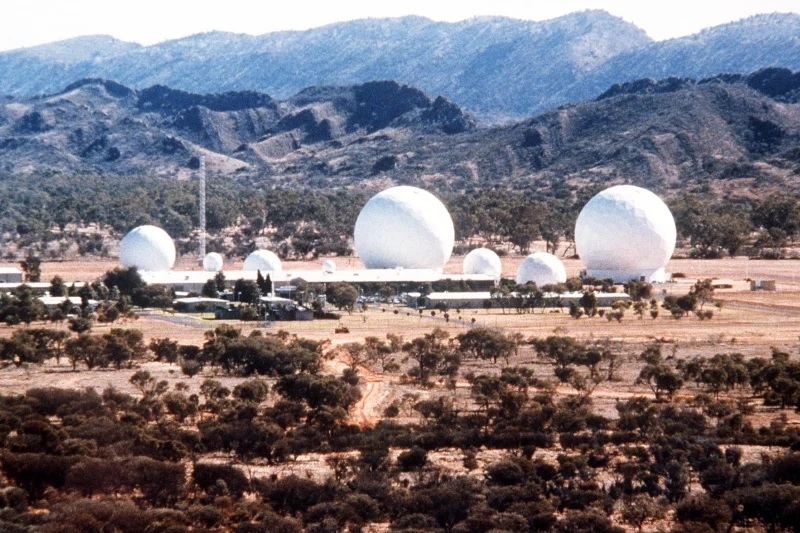
US bases including Pine Gap saw Australia put on nuclear alert, but no-one told Gough Whitlam
“The Australian government takes the attitude that there should not be foreign military bases, stations, installations in Australia. We honour agreements covering existing stations. We do not favour the extension or prolongation of any of those existing ones.” – Gough Whitlam
ABC News, By Alex Barwick for the Expanse podcast Spies in the Outback, 25 Apr 24
During the 1972 election campaign, Gough Whitlam promised to uncover and share Pine Gap’s secrets with Australians.(ABC Archives/Nautilus Institute)
When Australia was placed on nuclear alert by the United States government in October 1973, there was one major problem.
No-one had told prime minister Gough Whitlam.
One of the locations placed on “red alert” was the secretive Pine Gap facility on the fringes of Alice Springs.
Officially called a “joint space research facility” until 1988, the intelligence facility was in the crosshairs with a handful of other US bases and installations around Australia.
In fact, almost all United States bases around the world were placed on alert as conflict escalated in the Middle East. Whitlam wasn’t the only leader left out of the loop.
A prime minister in the dark
“Whitlam got upset that he hadn’t been told in advance,” Brian Toohey, journalist and former Labor staffer to Whitlam’s defence minister Lance Barnard, said.
Toohey said Whitlam should have been told that facilities including North West Cape base in Western Australia, and Pine Gap were being put on “red alert”.
“There had been a new agreement knocked out by Australian officials with their American counterparts, that Australia would be given advance warning.”
They weren’t.
Suddenly, the world was on the brink of nuclear war.
Why were parts of Australia on ‘red alert’?
The Cold War superpowers backed opposing sides in the Yom Kippur War.
The Soviet Union supported Egypt and the United States was behind Israel.
As the proxy war escalated in October 1973, United States secretary of state Henry Kissinger believed the crisis could go nuclear and issued a DefCon 3 alert.
A DefCon 3 alert saw immediate preparations to ensure the United States could mobilise in 15 minutes to deliver a nuclear strike.
The aim was to deter a nuclear strike by the Soviets.
And, it simultaneously alerted all US bases including facilities in Australia that a nuclear threat was real.
This level of alert has only occurred a few times, including immediately after the September 11 attacks.
Politics, pressure and protest
The secretive intelligence facility in outback Australia caused Whitlam more trouble beyond the red alert.
During the 1972 election campaign, the progressive politician had promised to lift the lid on Pine Gap and share its secrets with all Australians.
“He gave a promise that he would tell the Australian public a lot more about what Pine Gap did,” Toohey said.
But according to Toohey, the initial briefing provided to Whitlam and Barnard by defence chief Arthur Tange left the prime minister with little to say.
“Tange came along and he said basically that there was nothing they could be allowed to say. And that was just ridiculous,” Toohey said.
“He said, the one thing he could tell them was the bases could not be used in any way to participate in a war. Well, of course they do.”
Whitlam would cause alarm in Washington when he refused to commit to extending Pine Gap’s future.
In 1974 on the floor of parliament he said:
“The Australian government takes the attitude that there should not be foreign military bases, stations, installations in Australia. We honour agreements covering existing stations. We do not favour the extension or prolongation of any of those existing ones.”
According to Toohey, “the Americans were incredibly alarmed about that”.
“As contingency planning, the whole of the US Defence Department said that they would shift it to Guam, a Pacific island that America owned,” he said.
And the following year, allegations would emerge that the CIA were involved in the prime minister’s dismissal on November 11, 1975…………… https://www.abc.net.au/news/2024-04-24/when-australia-was-put-on-nuclear-alert-expanse-podcast/103733194
National Party threatens to tear up wind and solar contracts as nuclear misinformation swings polls
The campaign against renewables and for nuclear has been based around misinformation, both on the cost and plans of renewables and transmission, and on the cost of nuclear power plants, which have stalled around the world because of soaring costs, huge delays, and because no small modular reactor has yet been licensed in the western world.
That campaign has been amplified by right wing “think tanks” and ginger groups, and the Murdoch media, and largely reported uncritically in other mainstream media. It appears to be having some traction.
Giles Parkinson, Apr 23, 2024, https://reneweconomy.com.au/nationals-threaten-to-tear-up-wind-and-solar-contracts-as-nuclear-misinformation-swings-polls/
National leader David Littleproud has threatened to tear up contracts for wind and solar farm developments, in the latest broadside against large scale renewable energy from the federal Coalition.
The remarks – reported by the Newcastle Herald and later verified by Renew Economy via a transcript – were made in a press conference last week in Newcastle, when Littleproud was campaigning against offshore wind projects and outlining the Coalition’s hope that it could build a nuclear power plant in the upper Hunter Valley.
The Coalition has vowed to stop the roll out of large scale renewables, and keep coal fired power plants open in the hope that they can build nuclear power plants – recognised around the world as the most expensive power technology on the planet – some time in the late 2030s and 2040s.
No one in the energy industry, nor large energy consumers for that matter, are the slightest bit interested in nuclear because of its huge costs and time it takes to build, and because it would set back Australia’s short term emissions reductions.
But the comments about contracts are the most sinister to date, and reflect the determination of a party leader who just a few years ago described renewables and storage as a “good thing”, including the huge wind and solar projects that are being built in his own electorate, to destroy the renewables industry.
The Newcastle Herald asked Littleproud if an incoming Coalition government would consider “tearing up contracts” for renewable infrastructure contracts that had already been signed.
“Well exactly,” Littleproud said. “We will look at where the existing government took contracts and at what stage they are at.
“There are some projects on land that we will have to accept, but we are not going to just let these things happen. If that means we have to pay out part of the contracts, and we will definitely look at that. You’re not going to sit here and say today that we’re stopping it and then not following through.”
The federal government this week announced the biggest ever auction of wind and solar in Australia, seeking six gigawatts of new capacity that will be underwritten by contracts written by the commonwealth.
This will see at least 2.2 GW of new wind and solar sourced in NSW, at least 300 MW in South Australia, already the country’s leader with a 75 per cent share of wind and solar in its grid, and multiple gigawatts spread over other states.
However, the Coalition’s nuclear plans are already facing delays, having pulled back from a previous commitment to deliver the nuclear policy before the May 14 federal budget. It now only promises to release the policy before the next election, with Littleproud telling Sky News on Monday that the party “would not be bullied” into an early release.
One of the many problems with its nuclear strategy will be finding sites for the proposed power plants. The Coalition has targeted the upper Hunter as one site, but AGL, the owner of the site that houses the now closed Liddell and the still operating Bayswater coal generators, has said it is not interested because it is focused on renewables and storage.
Littlepround, however, said there are other sites in the area that could be used, although the Newcastle Herald said he declined to nominate those sites. Inevitably, they would require new infrastructure.
The campaign against renewables and for nuclear has been based around misinformation, both on the cost and plans of renewables and transmission, and on the cost of nuclear power plants, which have stalled around the world because of soaring costs, huge delays, and because no small modular reactor has yet been licensed in the western world.
That campaign has been amplified by right wing “think tanks” and ginger groups, and the Murdoch media, and largely reported uncritically in other mainstream media. It appears to be having some traction.
According to an Essential Media poll published in The Guardian on Tuesday, 40 per cent of respondents ranked renewables as the most expensive form of electricity, 36 per cent said nuclear, and 24 per cent said fossil fuels.
The poll also found a majority (52%) of voters supported developing nuclear power for the generation of electricity, up two points since October 2023, and 31% opposed it, down two points.
The most recent GenCost report prepared by the CSIRO and the Australian Energy Market Operator, like other international studies, says that nuclear power costs nearly three times more than renewables, even counting the cost of storage and transmissions.
However, the Coalition – with the support of right wind media and agitators – have led relentless campaigns against the CSIRO and AEMO, even though their nuclear costs were based on the only SMR technology that has gotten close to construction, before being pulled because it was too expensive.
The push to stop renewables comes despite reports from both AEMO and the Australian Energy Regulator that highlight how the growth in renewables has lowered wholesale power prices, despite extreme weather events and the impact of the unexpected outage of Victoria’s biggest coal generator.
The only state where wholesale electricity prices actually rose were in Queensland, which has the heaviest dependency on coal, although the state has just passed laws that lock in its 75 per cent emissions reduction target and its 80 per cent renewables target by 2030.
South Australia has already reached a 75 per cent wind and solar generation share in its grid, and aims to reach “net” 100 per cent by the end of 2027. It enjoyed the biggest fall in wholesale spot prices in the last quarter, which state minister Tom Koutsantonis said should be passed on to consumers.
“SA’s prices fell the most of any state, and the black coal dependent states of Queensland and NSW had the highest prices,” Koutsantonis said.
“These proven falls in wholesale prices are encouraging signs that we are on the right track. South Australia’s high proportion of renewables – which exceeded 75 per cent of generation in 2023 – is key to South Australian prices being far lower than the black-coal states of NSW and Queensland.
“Retail prices must fall because wholesale costs to retailers are going down.”
Dutton’s plan to save Australia with nuclear comes undone when you look between the brushstrokes
Graham Readfearn, https://www.theguardian.com/environment/2024/apr/24/duttons-plan-to-save-australia-with-nuclear-comes-undone-when-you-look-between-the-brushstrokes
The dystopian picture of renewables painted by the opposition leader is full of inconsistencies, partial truths and misinformation
The Coalition leader, Peter Dutton, has been trying to paint a picture of what life in Australia will be like if it tries to power itself mostly with renewable energy and without his technology of choice: nuclear.
Towering turbines offshore will hurt whales, dolphins and the fishing industry, factories will be forced to stop working because there’s not enough electricity and the landscape will be scoured by enough new transmission cables to stretch around the entire Australian coastline.
At the same time – so his story goes – only his option to go nuclear will save Australia from falling behind the rest of the world.
But Dutton’s dystopian image, with more brushstrokes added in an interview on the ABC’s flagship Insiders program, is a picture of inconsistencies, partial truths and misinformation.
Let’s have a look between the brushstrokes.
Is it a credible plan?
The Coalition has said it wants to put nuclear reactors at the sites of coal-fired power plants, but hasn’t said where, how big the reactors will be, when it wants them built or given an estimate on cost.
The Coalition has previously said it would give more details on its plan in time for its response to the Albanese government’s budget next month, but Dutton is now saying it will come “in due course”.
Despite this, Dutton claimed in his interview with the ABC’s David Speers that: “I believe that we’re the only party with a credible pathway to net zero by 2050.”
OK then.
28,000 kilometres?
Dutton claimed the government’s plans relied on “28,000km of poles and wires being erected” to connect renewables to the grid – a distance he said was “equal to the whole coastline of Australia”.
That’s a catchy soundbite, but where does this number come from?
According to the Australian Energy Market Operator’s most recent plan for the development of Australia’s east-coast electricity market, the most likely scenarios to decarbonise the electricity grid would require about 10,000km of additional transmission lines to be built between now and 2050.
What about the extra 18,000km? That figure comes in an estimate of what would be needed if Australia chose to become a major exporter of clean hydrogen as well as decarbonising the grid.
So about two-thirds of Dutton’s 28,000km is not so much related to decarbonising the electricity grid, but rather to an export industry that may or may not happen, to an as-yet-unknown extent.
Turning off power?
Dutton claimed: “At the moment, we’re telling businesses who have huge order books to turn down their activity in an afternoon shift because the lights go out on that grid. Now, no other developed country is saying that.”
Dutton is suggesting that businesses are being routinely forced to reduce their demand for power. This is simply not true.
Dr Dylan McConnell, an energy systems analyst at UNSW, says it’s very rare for businesses to be told by the market operator they are going to have their power interrupted.
Such “load shedding” has happened only five times in the last 15 years, he said, typically occurs in extreme conditions such as storms or coal plants going offline, and only a subset of consumers are affected.
There are two main formal voluntary schemes in place across the National Electricity Market (everywhere except NT and WA) where major electricity consumers can offer to reduce their demand for electricity at certain times, but businesses are compensated for being part of those schemes. Nobody is telling any of these businesses that they have to do anything.
Neither is it true that no other country is engaging in some sort of process where demand for electricity can be managed.
Is Australia really the only developed country engaged in what’s known as demand response? No.
The International Energy Agency lists the UK, US, France, Japan and South Korea as having large markets already in place to help their electricity systems balance the supply of electricity with demand.
McConnell said: “Demand response is becoming a common and important part of modern electricity systems. This includes countries like France and the US, which have both nuclear and demand response programs.”
G20 and nuclear
Dutton said Australia was the only G20 nation “not signed up to nuclear or currently using it”.
According to information from the World Nuclear Association, Australia is one of five G20 nations with no operating nuclear power plants, alongside Indonesia, Italy, Saudi Arabia, Germany and Turkey.
But aside from Italy, Germany and Australia, the rest do have some plans to develop nuclear power in the future. Dutton’s phrase “currently using it” allows him to capture countries like Italy that import electricity from nuclear nations.
But what’s also important to note is that among the G20 countries (actually 19 countries) nuclear is mostly playing a marginal role. Nuclear provides more than 5% of its electricity in only seven of those 19 countries.
Social licence?
Projects would need a “social licence” to go ahead, Dutton said, but there was opposition in western New South Wales where “productive” land was being sold for renewables projects.
This is a variation of a previous Dutton speech, where he lamented a supposed “carpeting of Australia’s prime agricultural land with solar and windfarms”.
The renewable energy industry’s Clean Energy Council has countered claims like this, saying even if all the country’s coal plants were replaced with solar farms, the amount of space needed would be about 0.027% of agricultural land.
The Coalition leader has been to the Hunter coast more than once where offshore windfarms are being planned, telling reporters they were a “travesty” and that they would put whales, dolphins and the fishing and tourism industries “at risk”. He told Speers the turbines would rise “260 metres out of the water”.
Dutton told the ABC that Australia should be mindful of the environmental consequences of windfarms – which is, of course, true – but his past statements have sounded more like cheerleading for voices opposed to the plans than an attempt to understand the scale and legitimacy of the concerns, some of which are being stoked by misinformation.
Dutton can’t know what impact offshore windfarms will have on fishing or tourism, but is willing in any case to use labels like “travesty”.
Nationals’ nuclear climate policy puts Australia’s Paris deal in doubt
The Age, James Massola and Mike Foley, April 25, 2024
The Coalition cannot commit to Australia’s 2030 emissions reduction targets, with senior Nationals MPs conceding a plan to adopt nuclear power would mean a future Coalition government would not comply with the Paris Agreement.
Days after Opposition Leader Peter Dutton delayed his announcement of up to six sites for future nuclear power plants – the announcement is now expected after the budget – Nationals leader David Littleproud told this masthead the path to net zero emissions by 2050 would not be linear under a future Coalition government.
The Nationals’ stated aim of slowing down the rollout of large-scale renewable energy projects, combined with the 15-year timeline for building a nuclear plant, means the Coalition would struggle if returned to power to meet Labor’s current target of 43 per cent emissions reduction by 2030.
But a Coalition government would inherit Australia’s legally binding 2030 target under the Paris Agreement, which requires nations to contribute to an international effort to keep global warming under 2 degrees.
Walking away from the Paris Agreement would infuriate Liberal moderates and MPs in metropolitan seats, where climate action is more popular; embolden the teals and other independents; and risk reigniting the climate wars fought between Nationals and Liberals in the former Morrison government.
Littleproud said “there is not a linear pathway to net zero, and trying to achieve one will have a detrimental impact on the economy. We have to have a broad-based solution rather than an all renewables approach.”
He would not commit to Australia’s climate target, set by the Albanese government, to cut emissions by 43 per cent by 2030.
“We want to wait and see what the modelling we come up with for 2030 [in the party’s new nuclear policy] says, but we won’t rush into anything …”
Experts including former chief scientist Alan Finkel and former Australian Energy Infrastructure Commissioner Professor Andrew Dyer have said it would take a minimum of 15 years for a nuclear plant to be built in Australia
Grattan Institute deputy energy director Alison Reeve said it would be impossible for Australia to reach its 2030 Paris target if there were a slowdown in the renewables rollout – including a pause to accommodate nuclear plant…………………………………………………………..
The Grattan Institute’s Alison Reeve said Australia would not hit the 2030 target under the Coalition’s nuclear push because most of the decarbonisation needed hangs off the government’s renewable goals.
“If you don’t reach that, you just don’t meet the 2030 target,” she said.
The bulk of reductions are to come from reducing coal-fired power and achieving the target to boost renewables to 82 per cent of the grid by 2030.
Reeve said cutting emissions from the energy sector by replacing fossil fuel electricity with renewables was a fundamental underpinning of Australia’s climate policy and any slowdown in wind and solar farms would make it harder for other sectors to clean up their act………. https://www.theage.com.au/politics/federal/nationals-nuclear-climate-policy-puts-australia-s-paris-deal-in-doubt-20240424-p5fm8p.html
‘A little awkward’: Coalition faces internal tension over nuclear plans
Sky News host Chris Kenny says the Coalition is in an “awkward” situation with their behind the scenes negotiations around nuclear energy.
It is reported that a rift has formed with the Coalition regarding Opposition leader Peter Dutton’s nuclear energy plans.
“Inside the Coalition, there is argument about where the nuclear power stations might be sited in this country,” Mr Kenny said.
“Apparently some MPs saying they don’t want them in their backyard.
“Sounds like there is tension.”
Washington Syndrome: Australia’s sovereignty sell-out hidden in plain sight

“The process is almost complete. The Australian Defence Force’s integration into the US military to serve the needs of Washington has been announced, albeit without announcement, this week.”
Arguably the only thing left to do is to adopt American spelling and replace the letter ‘c’ with the letter ‘s’ in ‘Department of Defence’.
by Rex Patrick | Apr 21, 2024 https://michaelwest.com.au/washington-syndrome-marles-defence-plan-sovereignty-sell-out/
Defence Minister Richard Marles rolled out some glossy new brochures this week spelling out the composition of the Australian Defence Force in the decades ahead. As media quibbled about this equipment purchase or that one, former Senator and submariner Rex Patrick explains the sovereignty sell-out hidden in plain sight.
Washington Syndrome
It’s confirmed. All the evidence points to the Defence Minister suffering from Stockholm Syndrome (or more accurately Washington Syndrome), except that he hasn’t just formed a bond with his Defence Department, where he won’t challenge them. He’s swallowed the whole kit and caboodle; adopting Defence lingo and lines as his own.
Marles has expressed Defence’s wishes beautifully, without revealing explicitly what that wish is. But it’s sitting there in plain sight.
National Defence Strategy
The use of smokescreens is a longstanding battlefield tactic, and it’s often employed by bureaucrats too. To get a clear and truthful picture from the National Defence Strategy released this week, you have to peer through a dense cloud of verbiage to get a clear sense of what’s really going on.
Early in the document the strategic framework is laid out.
Our Alliance with the US remains fundamental to Australia’s national security. We will continue to deepen and expand our defence engagement with the US, including by pursuing greater scientific, technological and industrial cooperation, as well as enhancing our own cooperation under force posture initiatives.
So, we’re joined at the hip to the United States, and we intend to stay that way.
The document spells out why Defence thinks we need to do that. The optimism at the end of the Cold War has been replaced by uncertainty and tension of entrenched and strategic competition between the US and China.
It is accompanied by an unprecedented conventional and non-conventional build-up in our region, taking place without strategic reassurance or transparency.
…
This build up is also increasing the risk of military escalation or miscalculation that could lead to a major conflict in the region.
Indeed, it zooms in with on the specifics. The risk of a crisis in the Taiwan Strait is increasing, as well as other flashpoints, including disputes in the South and East China Seas and on the border with India.
The Government will continue to strengthen its defence engagement with the US to:
- ensure joint exercises and capability rotations with the US are focused on enhancing collective deterrence and force posture cooperation.
- Acquire the technology and capability required to enhance deterrence, including through increasing collaboration on defence innovation, science and technology.
- Leverage Australia’s strong partnership with Japan in its trilateral context, including opportunities for Japan to participate in Australia-US force posture cooperation activities, to enable interoperability and contribute to deterrence; and
- Progress enabling reforms to export controls, procurement policy and information sharing to deliver a more integrated industrial base.
- Meanwhile, the US is increasing its military footprint in Australia in terms of facilities in the north (mission briefing/intelligence centre and aircraft parking aprons) at RAAF Darwin, fuel storage at Darwin Port, infrastructure at RAAF Tindal near Katherine and logistics storage in both Victoria and Queensland).
- This is on top of the long established top secret signals intelligence base, the Joint Defence Facility Pine Gap, and Australian support for US naval communications through the very low-frequency receiving and transmission facility at North West Cap. As far as American strategists are concerned, Australia has long been “a suitable piece of real estate”.
But now there’s a new dimension to the alliance with Australian taxpayers are sharing the alliance love by pouring billions into the US submarine industrial base.
US Seventh and a Half Fleet
Of course, it’s hard to fight a conflict in Taiwan Straights with an army. That’s reflected in the distribution of future expenditure outline in the Integrated Investment Program, released alongside the National Defence Strategy.
The Navy will receive almost 40% of all Defence expenditure. The Royal Australian Navy will become the seventh and a half fleet of the US Navy, supported by what are being referred to as the expeditionary air operations by the Royal Australian Air Force.
Again, hidden in plain sight.
Taiwan
Taiwan is a democracy of 22 million people. I might like to think we would come to their aid in the event their democracy was threatened.
But sending our sons and daughters to engage in a northern hemisphere conflict is a matter which should be decided upon by our Parliament at some future time.
We should seek to have a balanced and flexible Defence Force optimised first for Defence of Australia and second for near regional security (a deployment to Taiwan, if approved by our elected members, should draw from an order-of-battle optimised for Defence of Australia).
Sovereignty Stolen
But that’s not what’s happening.
It’s all too tempting to suggest that the sovereignty sell-out started at with AUKUS, announced by Scott Morrison on 16 September 2021 and adopted by Anthony Albanese at the Kabuki show in San Diego on 15 March 2023. But it didn’t.For those astute enough to have picked up and read a copy of Professor Clinton Fernandes’ book “Sub-Imperial Power: Australia in the International Arena”, they’ll know AUKUS is just natural and obvious. So too is the even greater embedding of the ADF into the US military to serve the needs of Washington that has been announced this week, albeit without announcement.
“The process is almost complete. The Australian Defence Force’s integration into the US military to serve the needs of Washington has been announced, albeit without announcement, this week.”
Arguably the only thing left to do is to adopt American spelling and replace the letter ‘c’ with the letter ‘s’ in ‘Department of Defence’.
History repeats
We have been down this road before.
n the 1920s and 1930s conservative Australian Governments saw Australian security as part of that of the British Empire as a whole. As a consequence, they implemented defence programs that were designed to produce forces, especially the Royal Australian Navy, that were hopelessly unbalanced and only made sense as a subset of British forces. Imperial Defence was prioritised ahead of national defence in a ‘strategy’, if you can call it that, that compromised Australia’s then very new national sovereignty and almost came to disaster in 1942.
Bureaucratic and political self-interest
Australia’s new “National Defence Strategy” really is nothing of the sort. It’s a sub-set of strategic planning made in Washington, not an Australian national perspective.
AUKUS has devoured whatever vestiges of independent strategic thought that might have been lingering in our Defence Department.
But don’t imagine that there’s any dissent about this in Defence Headquarters.
Those in Defence bureaucracy guiding our politicians are be happy, uproariously happy, because they’ll personally benefit from the arrangement.
AUKUS and this latest steerage will serve as a tremendous career and institutional opportunity for them. They’ve cemented their position in an alliance arrangement that involves important meetings and conferences, important decisions, trips overseas, and, for some, exchange postings. For them, they’ve got ringside seats and the opportunity to be occasional players in the big league.

Which brings me back to Defence Minister Marles, who can’t really be blamed for the sell-out.
Marles isn’t, and never was, the sort of political figure that could develop much of an understanding of what is going on around him, let alone be the one to lead with strategic vision and agenda forward. He’s too busy learning the lingo, enjoying the photo opportunities, and impressing upon his ‘sub-ordinates’ in Defence Headquarters that he’s not to be referred to as the Defence Minister, but rather as the Deputy Prime Minister. Surely he deserves that courtesy!
Push-polling goes nuclear

Dr Jim Green , 18th April 2024 https://theecologist.org/2024/apr/18/push-polling-goes-nuclear
Conservative political parties in Australia actually believe that nuclear power is popular – based on biased push-polling.
A Newspoll survey led to a page-one article in the Australian, the Murdoch national newspaper, under the following headline: “Powerful majority supports nuclear option for energy security”.
The Australian’s political editor Simon Benson wrote in February: “Labor is now at risk of ending up on the wrong side of history in its fanatical opposition to nuclear power.” The party “ignores this community sentiment potentially at its peril”, he added. The story was prominent across the Murdoch owned press and on Murdoch’s Sky News.
The Newspoll question was as follows: “There is a proposal to build several small modular nuclear reactors around Australia to produce zero-emissions energy on the sites of existing coal-fired power stations once they are retired. Do you approve or disapprove of this proposal?”
Push-polling
The results: 55 per cent approval, 31 per cent disapproval and 14 per cent ‘don’t know’. However the poll was a crude example of push-polling designed to generate pro-nuclear results and headlines. Its many faults were identified by polling experts Kevin Bonham and Murray Goot and by economist Professor John Quiggin.
To give just one example of the bias, replacing Australia’s 21,300 megawatts of coal-fired power generation capacity with small modular reactors (SMRs) would require a large number of reactors, not ‘several’ as Newspoll asserted. If, for example, NuScale Power’s 77-megawatt reactors were chosen, 277 reactors would be required.
In broad terms, the tricks used by pro-nuclear push-pollers involve swaying opinions with biased preliminary comments, biased questions, limited response options, and misreporting the findings. Specific tricks include the following:
* Presenting or implying a narrow or false choice – as with the implication in the Newspoll survey that Australians could choose between nuclear reactors or coal.
* Asking respondents if nuclear power should be “considered” or if they support an “informed and balanced conversation”, and then conflating support for those bland propositions with support for nuclear power itself.
* Linking nuclear power to climate change abatement without mention of the downsides or expense of nuclear power, or alternative and arguably better ways to address climate change.
* Asking respondents if they support ‘advanced’ nuclear power or ‘the latest nuclear energy technologies’ without noting that ‘advanced’ nuclear power reactors are few in number, they aren’t really ‘advanced’ in any meaningful sense, and in some cases they are used to power fossil fuel mining or pose increased weapons proliferation risks.
* Reporting on poll results without clearly stating what the actual survey questions were.
* Avoiding the word ‘nuclear’ by referring to small modular reactors, or avoiding the word reactors by using phrases such as ‘the latest nuclear energy technologies’.
* Using the word ‘small’, as in ‘small modular reactors’: expect to see more of this, it seems to work well despite the spectacular implosion of the most advanced SMR project in the US, the NuScale project in Idaho.
* Reporting self-selecting, online polls as if the results mean anything. For example Australian academic Oscar Archer is impressed by a meaningless ABC poll, a meaningless Murdoch tabloid poll, and a meaningless Channel 7 Sunrise poll.
Australia’s conservative parties fall for push-polling
Partly because of the Murdoch media’s promotion of nuclear power and its push-polling, the federal Liberal-National Coalition opposition has “pledged” to introduce nuclear power to Australia by the mid-2030s if it wins and forms a government at the election to be held no later than May next year.
The Coalition believes that most Australians support nuclear power, that younger Australians are particularly enthusiastic, and that local communities will welcome a nuclear power reactor. The problem is that those views are underpinned by nothing other than biased push-polling.
Unbiased polls find that support for nuclear power in Australia falls short of a majority; that Australians support renewables to a far greater extent than nuclear power and nuclear power is among the least popular energy sources; that a majority do not want nuclear reactors built near where they live; and that most Australians are concerned about nuclear accidents and nuclear waste.
Even the push-polling results should raise red flags for the Coalition. A 2019 Roy Morgan poll preceded the poll question with this highly dubious assertion: “If the worries about carbon dioxide are a real problem, many suggest that the cleanest energy source Australia can use is nuclear power.”
Even with that blatant attempt to sway respondents, only a bare 51 per cent majority expressed support for nuclear power.
Locals are ‘hostile’
The Coalition hasn’t even formally released its nuclear power policy yet ‒ that will happen in the coming weeks. But already the policy has been disastrous for the Coalition with near-zero support beyond the far-right of the Coalition and the far-right media, in particular the Murdoch-Sky echo chamber.
Opposition to locally-built nuclear power reactors has been clearly and consistently demonstrated in Australian opinion polls for 20 years or more. A 2019 Essential poll was typical of the others: 28 per cent of respondents “would be comfortable living close to a nuclear power plant” while 60 per cent would not.
The Coalition proposes replacing retiring coal power plants with nuclear reactors and expects an enthusiastic response from local communities. A ‘Coalition source’ told the Murdoch press that Coalition MPs “had convinced themselves that people would be queuing up” for nuclear reactors.
But recent focus group research carried out in the Hunter Valley in NSW and the Latrobe Valley in Victoria ‒ two of the coal regions that might be targeted ‒ found that voters are “hostile” to plans for reactors in their areas.
Local hostility is just one of the problems facing the Coalition’s nuclear policy. Coalition MPs have said on countless occasions that the development of nuclear power in Australia would require bipartisan support. But nuclear power isn’t supported by the Labor Party and it faces strong resistance even from within the Coalition.
Indeed there is bipartisan opposition to nuclear power in most of the four states with operating coal plants that are likely to be targeted in a coal-to-nuclear program ‒ Victoria, Queensland, New South Wales, and Western Australia. Labor state governments in those four states are opposed to nuclear power in their states, and Liberal/Coalition opposition leaders are opposed to nuclear power or have failed to endorse it.
Colourful commentary
Tony Barry ‒ a former deputy state director and strategist for the Victorian Liberal Party, and now a director at the research consultancy RedBridge ‒ describes the Coalition’s decision to make nuclear power the centrepiece of its energy and climate policy as “the longest suicide note in Australian political history”.
On the strength of a detailed RedBridge analysis of Australians’ attitudes to nuclear power, Barry says that just 35 per cent of Australians support nuclear power and that only coal is less popular. If the Coalition is to have any chance of winning the next election it will not be with nuclear power, he says.
Colourful commentary has also been offered to Murdoch journalists by Coalition MPs under cover of anonymity. One Coalition MP says the nuclear policy is “madness on steroids”, another says the Liberal and National Party rooms are “in a panic” about the nuclear policy and “they don’t know what to do”, and another says the nuclear policy is “bonkers”,
Former Liberal prime minister Malcolm Turnbull also describes the nuclear policy as “bonkers”. He says nuclear power’s only utility is “as another culture war issue for the right-wing angertainment ecosystem, and a means of supporting fossil fuels by delaying and distracting the rollout of renewables”, and that nuclear power “is exactly what you don’t need to firm renewables.” Turnbull describes ultra-conservative Coalition leader Peter Dutton as a “thug” who says “stupid things” about nuclear power. With friends like that…
Matt Kean, the NSW Liberal MP and former deputy premier, states: “I not only regard advocacy for nuclear power as against the public interest on environmental, engineering and economic grounds, I also see it as an attempt to delay and defer responsible and decisive action on climate change in a way that seems to drive up power prices in NSW by delaying renewables.”
John Hewson, the former federal Liberal leader, says the Dutton opposition has become “ridiculous” with its pro-nuclear, anti-renewables stance which is economic “nonsense”, and that Dutton may be promoting nuclear “on behalf of large fossil-fuel donors knowing nuclear power will end up being too expensive and take too long to implement, thereby extending Australia’s reliance on coal and natural gas”.
Nuclear power a ‘dog whistle to climate denialists’
The cynicism reflects concerns about the Coalition’s opposition to the federal Labor government’s target of 82 per cent renewables by 2030 and the Coalition’s plans to expand gas and prolong the use of coal. The Nationals are calling for a moratorium on the rollout of large-scale renewables.
Professor John Quiggin, an economist, notes that, in practice, support for nuclear power in Australia is support for coal and he has described nuclear advocacy in Australia as a dog whistle to climate denialists.
Even in the Murdoch-Sky right-wing echo-chamber, splits are emerging. A Murdoch media editor says the Coalition’s nuclear policy is “stark raving mad” and “madness…total madness”.
Australia’s big private electricity generators ‒ AGL Energy, Alinta, EnergyAustralia and Origin Energy ‒ have dismissed nuclear energy as a viable source of power for their customers. One senior executive says that power bills would triple if the nuclear path was pursued. Industry isn’t interested, and trade unions are overwhelmingly opposed.
The Australian chief scientist opposes to the introduction of nuclear power to Australia, as do at least two former Australian chief scientists and the NSW chief scientist.
A recent survey by the Investor Group on Climate Change asked big institutional investors with $37 trillion under management which energy and climate solutions they believed had good long-term returns. Nuclear power was ranked last of the 14 options, renewable energy first.
History repeating itself
In the mid-2000s, John Howard as the Liberal prime minister promoted nuclear power and conservatives hoped the policy would create splits within the Labor Party and the environment movement.
Labor wasn’t split, nor was the environment movement, but at least 22 Coalition candidates publicly distanced themselves from the Howard government’s nuclear policy during the 2007 election campaign. Howard lost his seat, the Coalition lost the election, and the nuclear policy was ditched immediately.
We could be seeing history repeating itself with Peter Dutton’s ill-advised promotion of nuclear power.
Labor MPs can’t believe their luck. Speaking in parliament, prime minister Anthony Albanese compared Peter Dutton to a nuclear reactor: “One is risky, expensive, divisive and toxic; the other is a nuclear reactor. The bad news for the Liberal Party is that you can put both on a corflute, and we certainly intend to do so.”
This Author
Dr Jim Green is the national nuclear campaigner with Friends of the Earth Australia and a member of the Nuclear Consulting Group.
Faulty Assurances: The Judicial Torture of Assange Continues
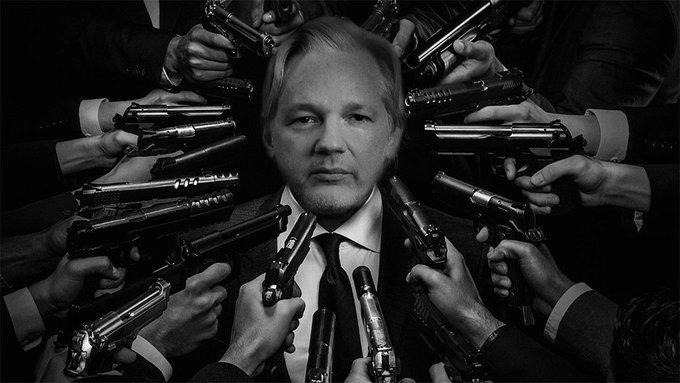
April 17, 2024, Dr Binoy Kampmark, https://theaimn.com/faulty-assurances-the-judicial-torture-of-assange-continues/
Only this month, the near comatose US President, Joe Biden, made a casual, castaway remark that his administration was “considering” the request by Australia that the case against Julian Assange be concluded. The WikiLeaks founder has already spent five gruelling years in London’s Belmarsh prison, where he continues a remarkable, if draining campaign against the US extradition request on 18 charges, 17 incongruously and outrageously based on the US Espionage Act of 1917.
Like readings of coffee grinds, his defenders took the remark as a sign of progress. Jennifer Robinson, a longtime member of Assange’s legal team, told Sky News Australia that Biden’s “response, this is what we have been asking for over five years. Since 2010 we’ve been saying this is a dangerous precedent that’s being set. So, we certainly hope it was a serious remark and the US will act on it.” WikiLeaks editor-in-chief Kristinn Hrafnsson found the mumbled comment from the president “extraordinary”, hoping “to see in the coming days” whether “clarification of what this means” would be offered by the powerful.
On April 14, the Wall Street Journal reported that Canberra had asked their US counterparts whether a felony plea deal could be reached, enabling the publisher to return to Australia. “Prosecutors and a lawyer for Assange have discussed a range of potential deals, including those that include pleading guilty to a felony under the espionage law under which he was indicted, and those of conspiring to mishandle classified information, which would be a misdemeanor, people familiar with the matter have said.”
Last month, the UK High Court gave what can only be regarded as an absurd prescription to the prosecution should they wish to succeed. Extradition would be unlikely to be refused if Assange was availed of protections offered by the First Amendment (though rejecting claims that he was a legitimate journalist), was guaranteed not to be prejudiced, both during the trial and in sentence on account of his nationality, and not be subject to the death penalty. That such directions were even countenanced shows the somewhat delusionary nature of British justices towards their US counterparts.
On April 16, Assange’s supporters received confirmation that the extradition battle, far from ending, would continue in its tormenting grind. Not wishing to see the prospect of a full hearing of Assange’s already hobbled arguments, the US State Department, almost to the hour, filed the assurances in a diplomatic note to the Crown Prosecution Service (CPS). “Assange,” the US Embassy in London claimed with aping fidelity to the formula proposed by the High Court, “will not be prejudiced by reason of nationality with respect to which defenses he may seek to raise at trial and at sentencing.”
Were he to be extradited, “Assange will have the ability to raise and seek to rely upon at trial (which includes any sentencing hearing) the rights and protections given under the First Amendment of the Constitution of the United States.” An obvious caveat, and one that should be observed with wary consideration by the High Court judges, followed. “A decision as to the applicability of the First Amendment is exclusively within the purview of the US Courts.”
The US embassy also promised that, “A sentence of death will neither be sought nor imposed on Assange. The United States is able to provide such assurance as Assange is not charged with a death-penalty eligible offense, and the United States assures that he will not be tried for a death-eligible offense.” This undertaking does not dispel the threat of Assange being charged with additional offences such as traditional espionage, let alone aiding or abetting treason, which would carry the death penalty.
In 2020, Gordon Kromberg, the chief Department of Justice prosecutor behind the case, told the Central Criminal Court of England and Wales that the US “could argue that foreign nationals are not entitled to protections under the First Amendment, at least as it concerns national defense information.” There was also the likelihood that Assange, in allegedly revealing the names of US intelligence sources thereby putting them at risk of harm, would also preclude the possibility of him relying on such protections.
-ADVERTISEMENT-
That the zealous Kromberg will be fronting matters should Assange reach US shores is more than troubling. Lawyers and civil rights activists have accused him of using the Eastern District Court of Virginia for selective and malicious prosecutions. As Murtaza Hussain of The Intercept observed with bleak accuracy in July 2021, “[r]ather than being pushed into obscurity by these efforts, today he is serving as a key figure in one of the most important civil liberties cases in the world.”
The High Court also acknowledged Kromberg’s views at trial regarding the possibility that the First Amendment did not cover foreign nationals. “It can fairly be assumed that [Kromberg] would not have said that the prosecution ‘could argue that foreign nationals are not entitled to protections under the First Amendment’ unless that was a tenable argument that the prosecution was entitled to deploy with real prospect of success.” These latest assurances do nothing to change that fact.
A post from Assange’s wife, Stella, provided a neat and damning summary of the embassy note. “The United States has issued a non-assurance in relation to the First Amendment, and a standard assurance in relation to the death penalty. It makes no undertaking to withdraw the prosecution’s previous assertion that Julian has no First Amendment rights because he is not a US citizen. Instead, the US has limited itself to blatant weasel words claiming that Julian can ‘seek to raise’ the First Amendment if extradited.”
Biden Administration Defies Australia’s Call To End Assange Case, Submits ‘Assurances’ To UK Court
Streamed live on 17 Apr 2024, Join Kevin Gosztola, author of “Guilty of Journalism: The Political Case Against Julian Assange,” as he covers the U.S. government’s “assurances” that were submitted to a British appeals court. They represent a clear indication that President Joe Biden’s administration is not going to end the case. If Biden was “considering” a plea deal for Assange, as was reported, he has made the decision to keep pursuing extradition and a U.S. trial on Espionage Act charges.
“An Awkward Problem”: Julian Assange and the Australian dog that didn’t bark

a clear Australian Government policy to limit direct engagement on the Assange case until after he has been extradited to the United States, put to trial, convicted, sentenced and exhausted all appeal rights.
by Philip Dorling and Rex Patrick | Apr 13, 2024, https://michaelwest.com.au/julian-assange-an-awkward-problem-for-albanese/?utm_source=newsletter&utm_medium=email&utm_term=2024-04-18&utm_campaign=Michael+West+Media+Weekly+Update
Joe Biden says he’s “considering” an end to the prosecution of Julian Assange. Anthony Albanese says, “enough is enough,” but not much else. Rex Patrick and Philip Dorling discuss the latest developments in the Assange case.
That’s the position behind the Government’s careful words about bringing the matter to a close.
At no point has the Australian Government called publicly for the espionage charges to be dropped and the extradition process to be ended.
A plea deal?
Last month, the Wall Street Journal reported the US Justice Department has been considering a proposed plea deal with Assange, dropping the espionage charges and allowing him to admit to a misdemeanour concerning the mishandling of classified documents.
According to the Journal the Justice Department was exploring ways to end the long London court battle as Assange continues to fight against extradition. It isn’t clear whether the move for a plea deal has come from Justice or Assange’s legal team. In any case, Assange’s lawyers said they’d been “given no indication” of any change in the US position.
President Biden may have been referring to the question of a plea deal as much as any representations from the Australian Parliament.
A plea deal might well be under consideration, but it’s clearly not a done deal yet, and a radical reduction in the charges, with Assange walking free in London and his time in His Majesty’s Prison Belmarsh taken into account, sounds like a big ask.
That dog ain’t barking…
One thing’s clear, however, Albanese hasn’t followed up on the parliamentary resolution with any personal diplomatic push on the Assange case.
One might have thought that Albanese would have directly engaged President Biden or else directed new representations across the top levels of the US Administration.
If that were the case, one would expect Albanese’s own Department to be closely engaged, working with DFAT and the Australian Embassy in Washington. Albanese is a careful, process-driven prime minister, so one would expect there to be PM&C briefing papers and correspondence. If absolutely nothing else one would expect there to be a Parliamentary Question Time Brief.
With such expectations, on March 7, 2024, Rex Patrick submitted a new FOI application for access to “PM&C submissions, talking points or other documents provided to Prime Minister Albanese between 1 February 2024 and 29 February 2024 that refer or relate to Julian Assange”.
Yesterday, the same day as Albanese’s latest comments that his government was using “all of our diplomatic efforts at every level”, PM&C provided their FOI response.
Dave Titheridge, head of the Department’s Global Interests Branch, advised: “I am refusing your request for access … as the documents you have requested do not exist”.
PM&C conducted an extensive search, including through its email system, Parliamentary Document Management System and electronic records repository and turned up nothing.
Nothing happening here – either before or after the parliamentary resolution.
Zero, zip, zilch, nada.
What’s next?
So, where does this leave Assange? His appeal options in London are nearly at an end. Perhaps his lawyers will finally get lucky. Perhaps President Biden is “considering” his case. Perhaps there will be a plea deal.
But Assange may well be extradited and spend decades rotting in a US maximum security prison. He might die there. He could also eventually come home, but as a prisoner in shackles, not as a free man.
Whatever happens, however, it won’t be down to a big effort – or barking – from the Albanese Government.
Supporters of Julian Assange were encouraged on Thursday by US President Joe Biden’s off-the-cuff- remark that his administration was “considering” an Australian request to end the espionage prosecution of the WikiLeaks founder.
Assange’s spouse, Stella Assange, called on Biden to “do the right thing” and “drop the charges”. Prime Minister Anthony Albanese said Australia was using “diplomatic efforts at every level to communicate that it is time that this was brought to a close, enough is enough.”
However, getting to the bottom of what governments do in the secretive world of diplomacy can often be akin to investigating a murder mystery. The clues are elusive and fragmentary. In the case of imprisoned Australian journalist Julian Assange, it’s a case of a dog that didn’t bark.
Parliamentary action
Media reports attributed the apparent shift in the US position to Albanese’s support for a parliamentary motion moved by independent MP Andrew Wilkie on February 14 that declared the Assange extradition proceedings have “gone on for too long” and “underline[d] the importance of the UK and USA bringing the matter to a close so that Mr Assange can return home to his family in Australia”.
Albanese said his government had supported the motion “because it is the right thing to do.” He added that he had raised the Assange case “at the highest levels” with the US and UK with “a calibrated and deliberate approach” that included discussions with Assange’s lawyers. In that context, the parliamentary resolution was “important… it’s important to send that message.”
Quiet diplomacy
It’s one thing to express support for “bringing the matter to a close”; but what does that mean in practice? For Assange supporters, it means the US dropping the prosecution and Assange returning to Australia as a free man.
However, the Albanese Government’s understanding and expectations are likely rather different.
FOI inquiries by Rex Patrick over the past eighteen months have shown that the Albanese Government’s track record on the Assange case has been patchy at best. The government’s “quiet diplomacy” has been minimalist. FOI applications directed toward the Department of Foreign Affairs and Trade, including Australia’s Embassy in Washington, have revealed little evidence of concerted diplomatic activity,
This isn’t to say that Albanese hasn’t raised the Assange case at the “highest levels.” He undoubtedly has, but it’s likely involved mentioning it as a politically awkward problem rather than a push to secure Assange’s freedom.
In response Secretary of State Antony Blinken made it publicly clear the US Government was most reluctant to intervene in the Justice Department’s prosecutorial process – an issue of obvious political sensitivity given the criminal charges brought against former president Donald Trump.
FOI inquiries also unearthed briefings for Attorney-General Mark Dreyfus that revealed a clear Australian Government policy to limit direct engagement on the Assange case until after he has been extradited to the United States, put to trial, convicted, sentenced and exhausted all appeal rights. Only then could Assange apply under the International Transfer of Prisoners scheme to serve a sentence of imprisonment in Australia. Only then would the Attorney-General formally consider that possibility,
1 This month

of the week – Australians for War Powers Reform (AWPR)
To see nuclear-related stories in greater depth and intensity
 Antinuclear