Coalition “in a panic” about response to confused and unpopular nuclear power plan
The Australian noted the Australian Workers Union’s support for nuclear power but didn’t mention the opposition of the Australian Council of Trade Unions, Australian Education Union, Australian Manufacturing Workers Union, Australian Nursing and Midwifery Federation, Australian Services Union, Communication Workers Union, Electrical Trades Union, Independent Education Union (Vic – Tas), Maritime Union of Australia, National Union of Workers, Tasmanian Unions, Unions ACT, Unions WA, Unions SA, Unions NT, United Voice, United Firefighters Union, and the Victorian Trades Hall Council.
Jim Green, Apr 8, 2024, https://reneweconomy.com.au/coalition-in-a-panic-about-response-to-confused-and-unpopular-nuclear-power-plan/
The Coalition’s nuclear power policy is being released in instalments in the Australian newspaper ahead of its formal release sometime before the May budget.
Under a plan taken to the Coalition shadow cabinet in March, seven coal regions have been identified as potential locations for nuclear power plants, the Australian reports.
Presumably those regions are Collie in WA, the Latrobe Valley in Victoria, the Hunter Valley and Lithgow in NSW, and three regions in Queensland — the Darling Downs, Gladstone and Central Queensland.
The Australian reports that a shadow cabinet subcommittee will produce ‘economic impact statements’ to promote the potential economic benefits in the seven regions.
The Coalition will try to win local support by using taxpayer funds to reduce power bills for people living near the proposed nuclear plants. Workers will be offered higher-paid jobs, presumably at taxpayers’ expense. And taxpayers will be on the hook for workforce training, regulation, waste disposal and much more.
The plan “will involve the creation of new precincts for advanced manufacturing centred on cheap energy from small nuclear reactors”, the Australian reports. Cheap nuclear power will attract heavy industry, adding to the high-paid jobs bonanza.
A “community engagement process” would be rolled out once the coal sites had been identified, opposition leader Peter Dutton says.
But just like everything else associated with the Coalition’s nuclear policy, the plan to win over communities in coal regions has hit a snag.
The Murdoch press reported on April 7 that focus group research carried out in the Hunter Valley in NSW and the Latrobe Valley in Victoria found that voters are “hostile” to plans for reactors in their own areas.
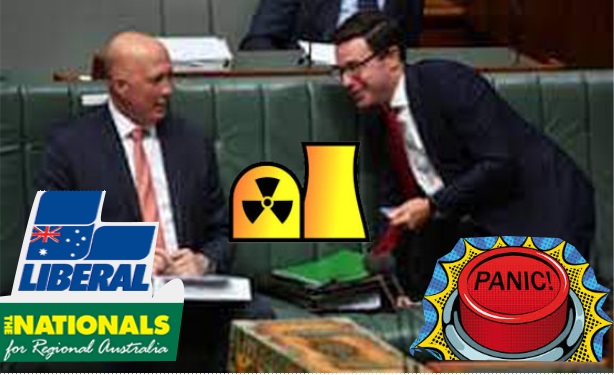
An unnamed Coalition MP said of the Liberal and National Party rooms: “My read is they’re in a panic about it. They don’t know what to do.” A Coalition frontbencher said Dutton is “obsessed with this nuclear thing — obsessed with it.”
Rolls-Royce reactors

“There is every reason to be optimistic about bringing small modular net-zero emission nuclear into the power mix in the 2030s,” Dutton told the Australian.
Indeed he has “pledged” that if the Coalition were returned to government at the next election, the first nuclear reactors would be up and running by the mid-2030s. That’s a big pledge since there is zero chance of reactors operating in Australia by the mid-2030s.
Dutton recently met privately with executives from Rolls-Royce to discuss “the pursuit of low-cost small modular reactor technology for Australia”, the Australian reports.
Rolls-Royce claims it could build a reactor in Australia in just four years (once licensing and a myriad of other issues were sorted). Let’s compare that speculation with real world experience:
Continue readingPeter Dutton to press ahead with nuclear despite opposition in regional Australia

Locals who live in areas earmarked for nuclear reactors have delivered a blow to Peter Dutton’s energy plan.
James Campbell National political editor, April 7, 2024, The Sunday Telegraph
https://www.adelaidenow.com.au/news/nsw/peter-dutton-to-press-ahead-with-nuclear-despite-opposition-in-regional-australia/news-story/53a7108e83484542ee99870d5002fba9
Peter Dutton will press on with his plans for nuclear power, despite recent Coalition research finding widespread opposition to the proposals in regional areas earmarked for reactors.
Coalition sources said focus group research carried out in the Hunter Valley in NSW and the Latrobe Valley in Victoria in recent weeks found hostility to the proposed polices.
It found that while voters were aware of the general arguments for nuclear power, they were hostile to plans for reactors in their own areas.
A Coalition source familiar with the research said the findings had come as a shock.
“They had convinced themselves that people would be queuing up for these things,” the source said.
Another said it was clear “more work needs to be done” on winning the argument.
But Mr Dutton is still set to release his plan for net-zero energy before the May budget.
The Weekend Australian reported the Coalition’s plan would offer heavily discounted power bills to communities with nuclear power plants.
It also reported the plan is to install small nuclear reactors at as many as seven sites, which will be operating by the mid-2030s.
“The ability to produce zero-emissions baseload with 24/7 electricity to firm up renewables is within our grasp,” he told the paper.
However a Coalition MP who strongly supports nuclear power said there was increasing concern in both the Liberal and National Party rooms that it was already too late to win the public argument about nuclear power in the time left before the next election.
“We haven’t even seen the policy yet,” the MP said. “My read is they’re in panic about it. They don’t know what to do.”
The Sunday Telegraph spoke to a number of Coalition MPs, including frontbenchers, who expressed concerns about the saleability of nuclear power from opposition.
But they all agreed Mr Dutton is not for turning on ¬nuclear power.
According to one frontbencher who supports the plan “the best case scenario” from pushing nuclear power would be a “nil-all draw” with the Government.
“Let’s not kid ourselves that this is some kind of vote-catching policy,” the frontbencher said.
But he said there was no chance Mr Dutton would walk away from it.
“He’s obsessed with this nuclear thing – obsessed with it,” the frontbencher said.
“Peter is very determined to go down this path,” another said.
On Wednesday, Mr Dutton told reporters: “I think we need to have a proper, mature discussion about how we migrate to a new energy system where we can have renewables that are firmed up by zero emissions, latest generation nuclear technology”.
He added: “In terms of regions, we’ve been very definite in our advice that we’re looking at about half a dozen sites, on brownfield sites, those where you’ve got a coal-fired generator coming to an end of life”.
Aukusing for War: The Real Target Is China
Dr Binoy Kampmark, April 7 2024 https://theaimn.com/aukusing-for-war-the-real-target-is-china/
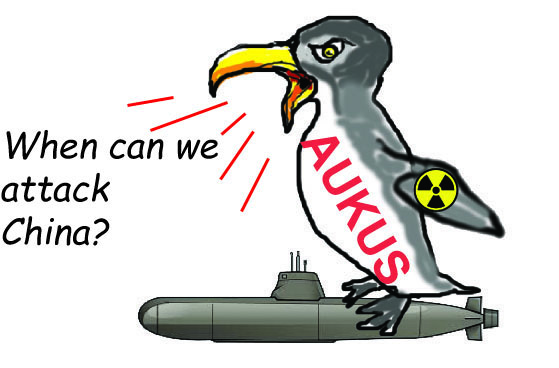
A remarkably perverse reality is in the offing regarding AUKUS. In terms of submarines, it will lag, possibly even sink, leaving the US and, to a lesser extent the UK, operating their fleets as Australians foot the bill and provide the refreshment
Not only is Australia effectively promising to finance and service that particular capacity, it will also do so in the service of a potentially catastrophic conflict which will see its automatic commitment. A truly high price to pay for an abdication of sovereignty for the fiction of regional stability.
The occasional burst of candour from US diplomats provides a striking, air clearing difference to their Australian and British counterparts. Official statements about the AUKUS security pact between Washington, London and Canberra, rarely mention the target in so many words, except on the gossiping fringes. Commentators and think tankers are essentially given free rein to speculate, masticating over such streaky and light terms as “new strategic environment”, “great power competition”, “rules-based order”.
On the occasion of his April 3 visit to Washington’s Center for a New American Security (CNAS), US Deputy Secretary of State Kurt Campbell was refreshingly frank. His presence as an emissary of US power in the Pacific has been notable since the AUKUS announcement in September 2021.
In March last year, Campbell, as Deputy Assistant to the US President and Coordinator for the Indo-Pacific National Security Council, was unfurling the US flag before various Pacific states, adamant that US policy was being reoriented from one of neglect to one of greater attentiveness. The Solomon Islands, given its newly minted security pact with Beijing, was of special concern. “We realise that we have to overcome in certain areas some amounts of distrust and uncertainty about follow through,” he explained to reporters in Wellington, New Zealand. “We’re seeking to gain that trust and confidence as we go forward.”
In Honiara, Campbell conceded that the US had not done “enough before” and had to be “big enough to admit that we need to do more, and we need to do better.” This entailed, in no small part, cornering the Solomon Islands Premier Manasseh Sogavare into affirming that Beijing would not be permitted to establish a military facility capable of supporting “power projection capabilities.”
In his discussion with the CNAS Chief Executive Officer, Richard Fontaine, Campbell did the usual runup, doffing the cap to the stock principles. Banal generalities were discussed, for instance, as to whether the US should be the sole show in projecting power or seek support from like-minded sorts. “I would argue that as the United States and other nations confront a challenging security environment, that the best way to maintain peace and security is to work constructively and deeply with allies and partners.” A less than stealthy rebuke was reserved for those who think “that the best that the United States can do is to act alone and to husband its resources and think about unilateral, individual steps it might take.”
The latter view has always been scorned by those calling themselves multilateralists, a cloaking term for waging war arm-in-arm with satellite states and vassals while ascribing to it peace keeping purposes in the name of stability. Campbell is unsurprising in arguing “that working closely with other nations, not just diplomatically, but in defensive avenues [emphasis added], has the consequence of strengthening peace and stability more generally.” The virtue with the unilateralists is the possibility that war should be resorted to sparingly. If one is taking up arms alone, a sense of caution can moderate the bloodlust.
Campbell revealingly envisages “a number of areas of conflict and in a number of scenarios that countries acting together” in the Indo-Pacific, including Japan, Australia, South Korea and India. “I think that balance, the additional capacity will help strengthen deterrence more general [sic].” The candid admission on the role played by the AUKUS submarines follows, with the boats having “the potential to have submarines from a number of countries operating in close coordination that could deliver conventional ordinance from long distances. Those have enormous implications in a variety of scenarios, including in cross-strait circumstances.” And so, we have the prospect of submarines associated with the AUKUS compact being engaged in a potential war with China over Taiwan.
When asked on what to do about the slow production rate of submarines on the part of the US Navy necessary to keep AUKUS afloat, Campbell acknowledged the constraints – the Covid pandemic, supply chain issues, the number of submarines in dry dock requiring or requiring servicing. But like Don Quixote taking the reins of Rosinante to charge the windmills, he is undeterred in his optimism, insisting that “the urgent security demands in Europe and the Indo-Pacific require much more rapid ability to deliver both ordinance and other capabilities.”
To do so, the military industrial complex needs to be broadened (good news for the defence industry, terrible for the peacemakers). “I think probably there is going to be a need over time for a larger number of vendors, both in the United States in Australia and Great Britain, involved in both AUKUS and other endeavours.”
There was also little by way of peace talk in Campbell’s confidence about the April 11 trilateral Washington summit between the US, Japan and the Philippines, following a bilateral summit to be held between President Joe Biden and Japan’s Prime Minister Fumio Kishida. When terms such as “modernize” and “update” are bandied about in the context of an alliance, notably with an eye towards a rival power’s ambitions, the warring instincts must surely be stirred. In the language of true encirclement, Campbell envisages a cooperative framework that will “help link the Indo-Pacific more effectively to Europe” while underscoring “our commitment to the region as a whole.”
A remarkably perverse reality is in the offing regarding AUKUS. In terms of submarines, it will lag, possibly even sink, leaving the US and, to a lesser extent the UK, operating their fleets as Australians foot the bill and provide the refreshments. Campbell may well mention Australia and the UK in the context of nuclear-powered submarines, but it remains clear where his focus is: the US program “which I would regard as the jewel in the crown of our defense industrial capacity.” Not only is Australia effectively promising to finance and service that particular capacity, it will also do so in the service of a potentially catastrophic conflict which will see its automatic commitment. A truly high price to pay for an abdication of sovereignty for the fiction of regional stability.
The high-stakes power play that will shape our future
April 5, 2024, The Australian, Simon Benson; Political editor
The climate wars may be over but an equally divisive battle is arising out of the nation’s new political consensus. Both sides of politics are locked into a net-zero emissions target by 2050, Labor by choice, the Coalition by the force of political reality. But Peter Dutton’s introduction of the nuclear option creates a stark contest between the main parties on how to get there.
The competing pathways to net zero offer profoundly different outcomes for the nation’s future. They go beyond climate change and raise the fundamental question: what sort of Australia will emerge once a point of no return in the rollout is reached?
…………………………………. a new ideological contest into the debate, reigniting a clash of ideas not only over the future of energy but for the communities that have generational ties to its production.
There are two essential issues at stake.
While the question of energy security has become the axis around which Albanese’s radical transformation of the economy pivots, the economic future of the nation’s coal communities has become the new political frontline between Labor and the Coalition.
In this sense, Australia is not unique. The US is grappling with its own socio-economic dilemma……….
Last week, as the Prime Minister was preparing to fly to the Hunter Valley coalfields to announce a $1bn solar panel scheme to generate jobs as coal exits the community, Dutton was meeting privately with executives from Rolls-Royce for a deep dive into the feasibility of small modular reactors in an Australian context.
This juxtaposition symbolises the chasm of policy approaches to the challenge of decarbonising the economy. Both sides are embarking on equally ambitious road maps. While Albanese has rubbished the idea of an Australian civil nuclear energy program, Dutton is convinced it can work.
In an interview with Inquirer on Wednesday, he pledged that if the Coalition were returned to government at the next election, the first nuclear reactors would be up and running by the mid-2030s.
It is understood Rolls-Royce is confident its small modular reactor technology could be ready for an Australian market in this time-frame with a price tag of $5bn for a 470-megawatt plant. Each plant would take four years to build and have a life-span of 60 years.
Rolls-Royce signed a contract with the Albanese government in February to build the nuclear reactors for the second tranche of AUKUS submarines.
According to this timeline, nuclear power generation could begin being rolled out at about the same time as the first nuclear-powered submarines are delivered. The feasibility of this timeline will be strongly contested.
Social licence is essential to the Coalition’s ambitions…………………..
Under a plan taken to Dutton’s shadow cabinet two weeks ago, seven coal communities were identified as potential locations for coal-to-nuclear transition on or near the sites of exiting coal-fired power stations, with the promise of cheaper electricity for those communities, higher paying jobs and upgraded infrastructure……………………………………
Not all of Dutton’s colleagues are convinced there is enough time in the political cycle to start building the political case for nuclear power……………………..
Both sides are highly alert to the acute political consequences of an ill-managed transition.
What looms is an election battle over energy security set against vastly contrasting ideologies…………………………………………………
The Albanese government’s Net Zero Economy Authority bill passed by the parliament before Easter set out the agency’s purpose as one clearly designed around the transition to renewables. It was unambiguous in its assessment of the cost and scope of Labor’s plan. The bill was equally clear about what is at stake with the exiting of coal-fired power stations across the country and the consequences if steps aren’t taken to protect these communities.
It defines coal-fired power stations and associated thermal coalmines as being located in six regions around Australia: Collie in Western Australia, the Latrobe Valley in Victoria, the Hunter Valley and Lithgow in NSW and three regions in Queensland – the Darling Downs, Gladstone and Central Queensland.
The political expression of this reality is the number of regional seats that will be affected. Some sooner than others. Neither side can claim a monopoly on ownership of these constituencies.
In NSW, Labor is at risk in the Hunter Valley in the seats of Hunter, Shortland and Paterson, while Calare west of Sydney, held by the Nationals until Andrew Gee resigned to sit on the crossbench, covers the coal community of Lithgow.
In Queensland, the LNP has Flynn stretching west from Gladstone to consider with legacy coal community economics also stretching into Capricornia, which takes in Rockhampton up to southern Mackay. Both seats have been in Labor hands before. Nationals leader David Littleproud’s massive Queensland seat of Maranoa is another that takes in coal communities through Queensland’s southern and central west.
In Victoria, coal communities stretch across the Nationals’ seat of Gippsland, which now takes in the industrial region of the Latrobe Valley………………………………………………………………………………..
Updated Climate Council statement re nuclear power
Nuclear power stations are not appropriate for Australia – and never will be
March 2024By Climate Council
The prospect of nuclear power in Australia has been a topic of public debate since the 1950s. While Australia has never had a nuclear power station, we do have 33% of the world’s uranium deposits and we are the world’s third largest producer of it. Periodically, as with the changing of the seasons, various individuals appear in the media singing the virtues of nuclear energy – claiming it is the only option for clean and reliable electricity in Australia.In fact, over one third of Australia’s electricity is already powered by renewables, and new initiatives like the Capacity Investment Scheme are set to push us towards 82% renewable energy by the end of this decade. While the move to clean energy is still not happening fast enough, it is underway and starting to speed up. We do not need distractions like nuclear to derail our progress now, so let’s set the record straight.
Why doesn’t nuclear power make sense for Australia?
1. Nuclear power stations can’t be built anywhere in Australia.
They are banned in every state, and in every territory. Such bans were introduced because of community concerns about the health and environmental risks. Many parliamentary inquiries at a federal and state level – see this Victorian Inquiry, this Federal Inquiry, and this South Australian Inquiry for instance – have been held into nuclear energy, and all have concluded that it makes no sense in Australia.
2. Nuclear power stations are expensive and take too long to build.
Australia’s independent science information agency, CSIRO, has found that solar and wind are by far the cheapest ways of producing electricity(even when factoring in storage). In contrast, the cost of building and operating nuclear in Australia remains prohibitively high.
Analysis conducted by the nuclear industry itself shows nuclear power stations take an average of 9.4 years to build – compared to 1–3 years for a major wind or solar project. Australia needs to replace its ageing coal-fired power stations as quickly as possible to rapidly reduce emissions this decade. As shown in the Australian Energy Market Operator’s Integrated System Plan, by far the cheapest and quickest way to do this is to ramp up renewable energy paired with storage like pumped hydro, and batteries.
3. Nuclear power poses significant community, environmental, health and economic risks.
Radiation from major nuclear disasters, such as Chernobyl in 1986 and Fukushima in 2011, have impacted hundreds of thousands of people and contaminated vast areas that take decades to clean up. Even when a nuclear power station operates as intended, it creates a long-term and prohibitively expensive legacy of site remediation, fuel processing and radioactive waste storage.
4. Nuclear power is not renewable, and it is not safe.
Uranium is a finite resource just like coal, oil and gas. It needs to be mined and, just like mining coal, oil and gas, this carries serious safety concerns, including contaminating the environment with radioactive dust, radon gas, water-borne toxins, and increased levels of background radiation. On the other hand, energy generated from the sun and wind releases no pollutants into the air and is overwhelmingly considered to be safe.
There you have it: nuclear power is expensive, illegal, dangerous and decades away from powering our homes and businesses. It makes no sense. On the other hand, energy from the sun and wind is cheap, abundant, safe and available now. So, let’s get on with building more renewable energy!
Jim Green demolishes Rolls Royce’s claims about so-called “small” and “cheap” nuclear reactors for Australia.

Nuclear Fuel Cycle Watch Australia, Jim Green 7 Apr 24
According to reports in The Australian, Rolls-Royce claims it could build a 470-megawatt reactor in Australia for A$3.5-5 billion. That equates to A$7.4-10.6 billion / gigawatt (GW). For comparison, the cost for the two EPR reactors under construction at Hinkley Point, the only reactor construction project in the UK, is A$27.8 / GW.
So Rolls-Royce claims its cost-per-GW will be just 27-38% of the cost of Hinkley Point, for a reactor type that it has never built and doesn’t have a licence to build, anywhere in the world. Clearly Rolls-Royce’s cost claims need to be treated with scepticism.
Rolls-Royce claims it could build a reactor in Australia in just four years (once licensing and a myriad of other issues were sorted). Let’s compare that speculation with real world experience:
* Hinkley Point was supposed to be a seven-year construction project. That has blown out to 12-13 years with further slippage likely.
* The one EPR under construction project in France was meant to be completed in five years but it remains incomplete after 17 years.
* The one EPR recently completed in Finland was meant to be a four-year construction project but ultimately took 17 years to complete.
* The two AP1000 reactors in the US were meant to be completed in three years, but ultimately took 10 and 11 years to complete.
Rolls-Royce’s 470-MW design is being marketed as a small modular reactor (SMR) even though it falls well outside the <300 MW definition of SMRs. Only two SMR plants are said to be operating anywhere in the world (though there’s nothing modular about either of them). Russia’s floating ‘SMR’ was supposed to be a three-year construction project but that blew out to 12 years (and costs increased six-fold). China’s ‘SMR’ was supposed to be a four-year construction project but that blew out to nine years (and costs increased three-fold).
Clearly Rolls-Royce’s claim that it could build a reactor in just four years needs to be treated with scepticism.
Peter Dutton vows to bring small nuclear reactors online in Australia by mid 2030 if elected.

April 5, 2024, The Australian, Simon Benson
https://www.theaustralian.com.au/nation/politics/peter-dutton-vows-to-bring-small-nuclear-reactors-online-in-australia-by-mid2030-if-elected/news-story/eaf9eaf2084916fa118fbeebf2ed72c9
Cheaper power prices would be offered for residents and businesses in coal communities to switch from retiring coal-fired generators to nuclear power if the Coalition wins government.
Peter Dutton has pledged that if elected, the Coalition could deliver the first small modular reactors into the grid by the mid-2030s, with British manufacturer Rolls-Royce understood to be able to deliver them at an estimated $3.5bn to $5bn each.
Economic impact statements will also be conducted on at least seven communities identified by a shadow cabinet subcommittee established by the Opposition Leader to develop the Coalition’s energy security policy.
Mr Dutton confirmed to The Weekend Australian that under the Coalition’s net-zero energy plan, to be released before the May budget, cheaper electricity bills would be offered to those communities that took up nuclear when coal-fired power stations were retired.
The plan will involve the creation of new precincts for advanced manufacturing centred on cheap energy from small nuclear reactors.
Mr Dutton met privately last week with executives from nuclear power plant manufacturer Rolls-Royce and its Australian partner Penske over the pursuit of low-cost small modular reactor technology for Australia.
It is understood Rolls-Royce is confident that its small modular reactor technology could be ready for the Australian market by the early to mid-2030s with a price tag of $5bn for a 470 megawatt plant.
Each plant would take four years to build and have a life span of 60 years.
Rolls-Royce will also build the nuclear reactors for the second tranche of the future AUKUS nuclear-powered naval submarines under contracts signed in February with the Albanese government.
“There is every reason to be optimistic about bringing small modular net-zero emission nuclear into the power mix in the 2030s,” the Opposition Leader said in an interview with The Weekend Australian, adding: “I think the mid-2030s.
Grattan Institute Deputy Energy Director Alison Reeve says the nuclear energy debate is a “bit of a distraction” when there are “immediate problems” to worry about. Ms Reeve joined Sky News Australia to discuss the future of energy in the country. “The federal opposition has said they want to take the ban off nuclear power – they could do that,” she said. “The thing is that there’s a hell of a lot of things that would need to happen before you end up with being able to actually build a nuclear power station. “In the meantime, we’ve got an awful lot of other stuff that we need to concentrate on building.”
“If we win the election, it is clear to me that (South Australian Labor Premier) Peter Malinauskas would be the first to sign up, and we could deal with regulatory burdens quickly.
“There is no question about that. And there is every reason to believe other jurisdictions would follow suit.
“I think when you look at where technology has advanced and what Rolls-Royce is doing with the nuclear submarines the government has signed up to buy, the future is much closer than we think.
“The ability to produce zero-emissions baseload with 24/7 electricity to firm up renewables is within our grasp.
“My honest view is we have to embrace a new energy system and we have to have an orderly transition but the government doesn’t have a credible pathway to net zero by 2050.”
Mr Dutton said a community engagement process would soon be rolled out once the potential coal sites had been finalised. He confirmed that those communities supportive of future transitions from coal to nuclear would be offered cheaper power prices and higher-paid jobs…………………
The first phase of the Coalition’s net-zero energy plan was taken to shadow cabinet two weeks ago and will be released before the May budget.
The debate facing the Coalition now is over the cost and timely delivery of nuclear into the energy mix, as well as the future of some coal communities facing bleak socio-economic outcomes one coal-fired generators exit the system……………….
Anthony Albanese told The Weekend Australian his government had a clear focus on the future of coal communities and insisted that no one would be “left behind”, claiming Labor’s renewable energy plans would drive new manufacturing jobs in those regions.
“Eleven coal-fired power plants have already closed and the former Coalition government didn’t lift a finger to help workers in these communities,” the Prime Minister said
“Rather than playing politics with the transition, the government is putting in place practical measures to ensure workers are looked after. The Net Zero Economy Authority will support workers to access new employment and to help create jobs in new businesses and industries.
“The Energy Industry Jobs Plan introduced into parliament last week outlines a redeployment scheme to align workers with jobs in new industries.
“The authority will work with business unions and communities.
“We will not leave them behind.
“A practical example is the Liddell site in the Upper Hunter which is being transformed into an energy and manufacturing hub, employing more people than the old power station did.
“Recently, Rio Tinto signed Australia’s biggest renewable energy deal to power its Boyne aluminium smelter in Gladstone.”
https://www.theaustralian.com.au/nation/politics/peter-dutton-vows-to-bring-small-nuclear-reactors-online-in-australia-by-mid2030-if-elected/news-story/eaf9eaf2084916fa118fbeebf2ed72c9
China’s quiet energy revolution: the switch from nuclear to renewable energy
By Derek Woolner and David Glynne Jones, Apr 6, 2024 https://johnmenadue.com/chinas-quiet-energy-revolution-the-switch-from-nuclear-to-renewable-energy/
There is now a policy dispute about the roles of nuclear and renewable energy in future Australian low emission energy systems. The experience of China over more than a decade provides compelling evidence on how this debate will be resolved. In December 2011 China’s National Energy Administration announced that China would make nuclear energy the foundation of its electricity generation system in the next “10 to 20 years”. Just over a decade later China has wound back those ambitious targets and reoriented its low emission energy strategy around the rapid deployment of renewable solar and wind energy at unprecedented rates.
Australia has seen a campaign against the use of renewable energy technologies and for the benefits of nuclear energy in developing Australia’s future low emission energy systems. The Federal Opposition has now adopted this position as their policy. The recent experience of China provides a compelling commentary on this decision.
In December 2011 China’s National Energy Administration (NEA) announced that China would make nuclear energy the foundation of its electricity generation system in the next “10 to 20 years”, adding as much as 300 gigawatts (GWe) of nuclear capacity over that period.
This was followed by a period of delay as China undertook a comprehensive review of nuclear safety in the aftermath of the Fukushima nuclear disaster.
Subsequently, moderated nuclear energy targets were established, aiming for a nuclear energy contribution of 15% of China’s total electricity generation by 2035, 20-25% by 2050 and 45% in the second half of the century.
However by 2023 it was becoming clear that China’s nuclear construction program was well behind schedule. The target for 2020 had not been achieved, and targets for subsequent 5-year plans were unlikely to be achieved.
In September 2023 the China Nuclear Energy Association (CNEA) reported that China was now aiming to achieve a nuclear energy contribution of 10% by 2035, increasing to around 18% by 2060.
The CNEA also indicated that ‘greenlighting’ of new construction would now be at the rate of 6-8 large nuclear power reactors per year – not the 10 per year previously targeted for 2020-2035 and beyond. This will result in new nuclear generation increasing by 60-80 terawatt-hours (TWh) annually.
Meanwhile the deployment of renewable energy (primarily solar and wind energy) was dramatically accelerated in 2023, with the installation of 217GWe of new solar capacity and 70GWe of new wind capacity.
This represents an increase of around 400TWh in annual low emission generation – the quantitative equivalent of 40 large nuclear power reactors, or four times the average annual output of the Three Gorges Dam hydroelectric system (the world’s largest power station).
In 2023 energy analysts started reporting that China was now expected to achieve or exceed its 2030 target of 1200GWe for the total installed capacity of solar and wind energy by 2025, and was now planning to triple the 2030 objective, to reach 3900GWe.
Previously China expected that its energy emissions would peak in 2030, but revised forecasts are now indicating that this could happen as early as 2024, 5-6 years ahead of target.
By the end of 2023 it was clear that nuclear energy was no longer going to be the foundation of China’s future electricity generation system, and that this task had shifted to renewable energy.
So what has happened? There’s no single answer, but two key factors appear to be at play.
The first is the emergence of renewable energy technologies at competitive scale and cost since 2011.
Between 2011 and 2022, the cost of solar PV modules declined by 85%, wind energy costs by 60-70%, and battery costs by 90%.
China now dominates the global production of solar PV panels, wind turbines and batteries, with costs expected to continue to decline significantly for the foreseeable future while performance improves.
The consequence is that renewable energy generation can now be deployed economically at rates five to eight times faster than nuclear energy, which is constrained by logistical and regulatory capability, safety, site availability and other factors.
The second is the slow delivery of new nuclear generation which contributed to continued ‘greenlighting’ of new coal-fired generation to underwrite energy security, as it became clear that deployment rates for new low emission electricity generation were insufficient to blunt demand from provincial governments for new coal-fired generators, even though many existing plants are operating at uneconomically low capacity factors
By 2035, under the original plan, combined nuclear, solar and wind generation would have been comparable to current coal generation but insufficient to meet significantly increased new electricity demand.
Under the new plans, combined solar, wind and nuclear generation is likely to match current coal generation and meet new demand, with solar and wind energy contributing around 85% of this low emission generation.
By 2030 another factor will come into play, with China’s battery giant CATL developing long duration utility battery systems that will provide dispatchable electricity from renewable sources at competitive or lower costs than either coal or nuclear generated electricity.
The central message here is that even in China – the world’s largest industrial economy and preeminent builder of advanced civil infrastructure in the 21st century – nuclear energy cannot compete with renewable energy to deliver low emission electricity generation at the deployment rates needed to meet mid-century emission targets.
1
Killing Aid Workers: Australia’s Muddled Policy on Israel
Australian anger at the government level must therefore be severely qualified. Support roles, thereby rendering Australian companies complicit in Israeli’s military efforts, and in ancillary fashion the Australian government, continue to be an important feature. The F-35, a mainstay US-made fighter for the Israeli Air Force, is not manufactured or built in Australia, but is sustained through the supply of spare parts stored in a number of allied countries. According to the Australian Department of Defence, “more than 70 Australian companies have directly shared more than $4.13 billion in global F-35 production and sustainment contracts.”
April 5, 2024, by: Dr Binoy Kampmark, https://theaimn.com/killing-aid-workers-australias-muddled-policy-on-israel/
The Australian Prime Minister, Anthony Albanese, was distraught and testy. It seemed that, on this occasion, Israel had gone too far. Not too far in killing over 32,000 Palestinians in Gaza, a staggering percentage of them being children. Not too far in terms of using starvation as a weapon of war. Not too far in bringing attention to the International Court of Justice that its actions are potentially genocidal.
Israel had overstepped in doing something it has done previously to other nationals: kill humanitarian workers in targeted strikes. The difference for Albanese on this occasion was that one of the individuals among the seven World Central Kitchen charity workers killed during the midnight between April 1 and 2 was Australian national Lalzawmi “Zomi” Frankcom.
Frankcom and her colleagues had unloaded humanitarian food supplies from Cyprus that had been sent via a maritime route before leaving the Deir al-Balah warehouse. The convoy, despite driving in a designated “deconflicted” zone, was subsequently attacked by three missiles fired from a Hermes 450 drone. All vehicles had the WCK logo prominently displayed. WCK had been closely coordinating the movements of their personnel with the IDF.
In a press conference on April 3, Albanese described the actions as “completely unacceptable.” He noted that the Israeli government had accepted responsibility for the strikes, while Israel’s Prime Minister, Benjamin Netanyahu had conveyed his condolences to Frankcom’s family, with assurances that he would be “committed to full transparency”.
The next day, the Australian PM called the slaying of Frankcom a “catastrophic event”, reiterating Netanyahu’s promises from the previous day that he was “committed to a full and proper investigation.” Albanese also wished that these findings be made public, and that accountability be shown for Israel’s actions, including for those directly responsible. “What we know is that there have been too many innocent lives lost in Gaza.”
Australian Foreign Minister, Penny Wong, restated the need for “full accountability and transparency” and Australian cooperation with Israel “on the detail of this investigation.” She further acknowledged the deaths of over 30,000 civilians, with some “half a million Palestinians” starving.
Beyond an investigation, mounted and therefore controlled by the Israeli forces themselves, nothing much else can be hoped for. The Albanese approach has been one of copybook warnings and concerns to an ally it clearly fears affronting. What would a ground invasion of Rafah do to the civilian population? What of the continuing hardships in Gaza? Push for a humanitarian ceasefire, but what else?
Australian anger at the government level must therefore be severely qualified. Support roles, thereby rendering Australian companies complicit in Israeli’s military efforts, and in ancillary fashion the Australian government, continue to be an important feature. The F-35, a mainstay US-made fighter for the Israeli Air Force, is not manufactured or built in Australia, but is sustained through the supply of spare parts stored in a number of allied countries. According to the Australian Department of Defence, “more than 70 Australian companies have directly shared more than $4.13 billion in global F-35 production and sustainment contracts.”
The Australian government has previously stated that all export permit decisions “must assess any relevant human rights risks and Australia’s compliance with its international obligations.” The refusal of a permit would be assured in cases where an exported product “might be used to facilitate human rights abuses.” On paper, this seems solidly reasoned and consistent with international humanitarian law. But Canberra has been a glutton for the Israeli military industry, approving 322 defence exports over the past six years. In 2022, it approved 49 export permits of a military nature bound for Israel; in the first three months of 2023, the number was 23.
The drone used in the strike that killed Frankcom is the pride and joy of Elbit Systems, which boasts a far from negligible presence in Australia. In February, Elbit Systems received a A$917 million contract from the Australian Defence Department, despite previous national security concerns among Australian military personnel regarding its Battle Management System (BMS).
When confronted with the suggestion advanced by the Australian Greens that Australia end arms sales to Israel, given the presence of Australian spare parts in weaponry used by the IDF, Wong displayed her true plumage. The Australian Greens, she sneered, were “trying to make this a partisan political issue.” With weasel-minded persistence, Wong again quibbled that “we are not exporting arms to Israel” and claiming Australian complicity in Israeli actions was “detrimental to the fabric of Australian society.”
The Australian position on supplying Israel remains much like that of the United States, with one fundamental exception. The White House, the Pentagon and the US Congress, despite increasing concerns about the arrangement, continue to bankroll and supply the Israeli war machine even as issue is taken about how that machine works. That much is admitted. The Australian line on this is even weaker.
The feeble argument made by such watery types as Foreign Minister Wong focus on matters of degree and semantics. Israel is not being furnished with weapons; they are merely being furnished with weapon components.
Aside from ending arms sales, there is precedent for Australia taking the bull by the horns and charging into the mist of legal accountability regarding the killing of civilians in war. It proved an enthusiastic participant in the Joint Investigation Team (JIT), charged with combing through the events leading to the downing of the Malaysian Airlines MH17 over Ukraine in July 2014 by a Buk missile, killing all 298 on board.
Any such equivalent investigation into the IDF personnel responsible for the killing of Frankcom and her colleagues is unlikely. When the IDF talks of comprehensive reviews, we know exactly how comprehensively slanted they will be.
“No feasible pathway:” Liberal MP Matt Kean quits Coalition-based charity because of its obsession with nuclear
Giles Parkinson, Apr 4, 2024, https://reneweconomy.com.au/no-feasible-pathway-kean-quits-coalition-based-charity-because-of-its-obsession-with-nuclear/
Former NSW Liberal government energy minister Matt Kean has quit his role as ambassador of an environmental charity dominated by state and federal Liberal and National Party MPs, saying it had become obsessed with promoting nuclear power and is seeking to delay the rollout of renewables.
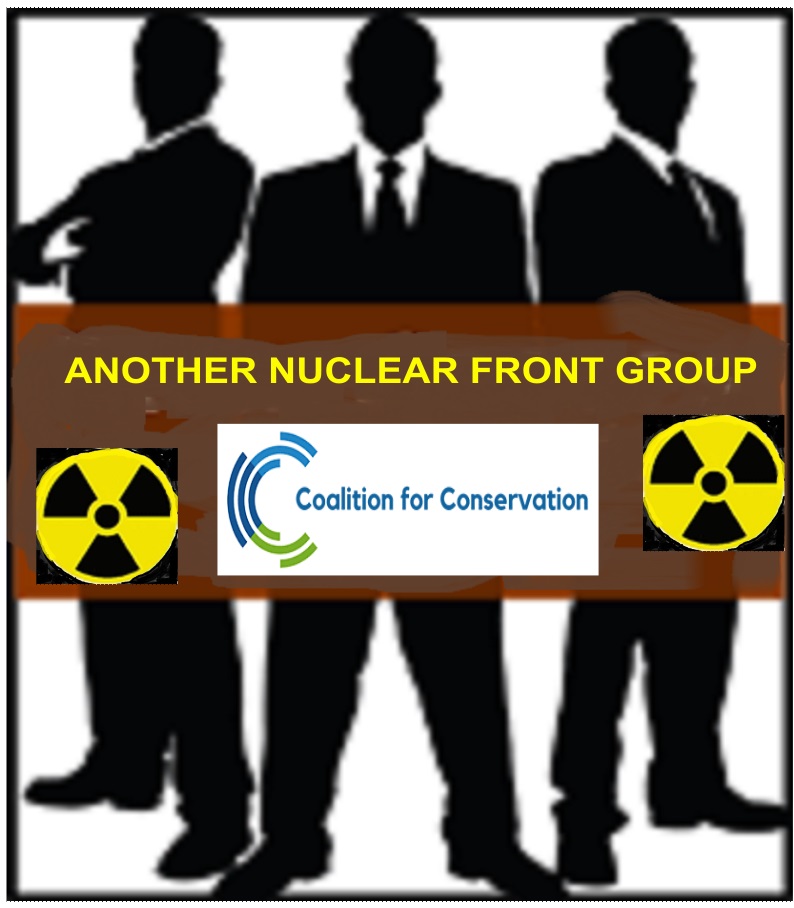
Kean says he is quitting the Coalition for Conservation (c4C) because of concerns about the direction of the charity, which has undergone a major shift in focus in the past year, coinciding – according to the AFR – with the growing involvement of patrol Trevor St Baker, the former coal baron and now nuclear investor and proponent.
“When the network was formed, I was an enthusiastic supporter, because I believe that it is the Coalition that should be the best custodians for our environment,” Kean wrote in a letter to the organisation’s chair, former federal Coalition minister Larry Anthony.
“It has become clear in recent times that the Coalition for conservation has increasingly focussed on nuclear power in the electricity system.
“In particular I was concerned to read an article in the Canberra times advocating nuclear power stations as an alternative to building new large scale transmission lines.
“While I recognise that one cannot rule out nuclear playing a constructive role in the Australian electricity system in the distant future, the reality is that there is no feasible pathway to play any material role in helping Australia replace our coal fired power stations in line with the climate science.”
The C4C appears to have undergone a rapid rethink on emissions reductions, dumping its previous support for renewable as the cheapest path to net zero in favour of nuclear.
It is a major major shift which has coincided – according to the AFR’s Rear Window column – with the growing involvement of one of the C4C two patrons, the billionaire Trevor St Baker, the former coal baron and now nuclear investor and proponent.
Kean is the architect of the plan to replace Australia’s biggest fleet of coal generators with wind, solar and storage, and whose work now forms the basis of the Federal Labor government’s Capacity Investment Scheme that will lead its own ambitious renewable energy targets.
His decision to quit the group highlights the growing divide between moderates in the Coalition, and the hard right, which has become obsessed with nuclear and is supported by a growing number of so-called “think tanks”, Murdoch media, and charities such as C4C.
The group’s recent activity on X and its own website have been focused entirely on nuclear, and it has joined the chorus of conservatives, including Coalition leader Peter Dutton and energy spokesman Ted O’Brien, in attacking institutions such as the CSIRO and AEMO for their GenCost reports and renewable energy roadmaps.
Kean wrote in his letter that large scale nuclear reactors have proven costly and slow to deliver, particularly in the UK with the massive delays and cost overruns at the Hinkley point C nuclear power project.
He also noted that small modular nuclear reactors promoted by the charity as a solution to Australia’s energy challenges are not currently commercial anywhere in the world, and early stage demonstration projects have been cancelled or delayed into the 2030’s.
“Even if (nuclear energy in Australia) were possible, it would be extremely expensive and far more expensive than the alternative as set out in AEMO’s integrated system plan,” he wrote.
“I not only regard advocacy for nuclear power as against the public interest on environmental, engineering and economic grounds, I also see it as an attempt to delay and defer responsible and decisive action or climate change in a way that seems to drive up power prices in NSW by delaying renewables.”
Matt Kean admonished by federal Opposition for criticising nuclear direction
NSW Shadow Health Minister Matt Kean has been admonished by Shadow Treasurer Angus Taylor after he expressed concern over the Coalition’s direction away from renewables and towards nuclear power, reports NSW Political Reporter Julia Bradley.
The comments follow former NSW treasurer and energy minister Matt Kean’s public resignation from an organisation called Coalition for Conservation, which works with the Liberal Party on issues to do with climate change.
The Shadow Health Minister for NSW says he became “increasingly concerned with the direction of the Coalition for Conservation” after he claimed the institution became “increasingly focused” on nuclear power rather than renewable energy, Ms Bradley explained.
Mr Kean posted the resignation letter to his X social media page on Friday morning, claiming there is “no feasible pathway” for nuclear energy “to play any material role in helping Australia replace our coal-fired power stations in line with climate science.”
Shadow Treasurer and former energy minister Angus Taylor responded to the story with a statement expressing his disappointment a Coalition MP could not understand “Labor’s renewable only madness will fail”.
A hard job for the Australian government to find credible spruikers for a nuclear waste dump

Nobody wants a nuclear waste dump, By The Canberra Times, April 2 2024, https://www.canberratimes.com.au/story/8576489/nuclear-waste-disposal-woes-in-australia/
One would think, given the Australian continent is second only to Antarctica in terms of low population density, it would be easier to develop a nuclear waste dump here than almost anywhere else.

COMMENT. Why on Earth would Australia want a nuclear waste dump? Just because it has space?
Unfortunately, due in large part to a series of hubristic decisions by former governments, that is not the case.
It is now more than two decades since plans for a nuclear waste facility at Woomera had to be abandoned. A subsequent proposal to site a national storage facility at Muckaty Station in the Northern Territory fell over 10 years later.
Then, after more than seven years of research and planning, the former Coalition government’s push to use farmland near Kimba in South Australia was derailed last July and August after traditional owners took their case to the Federal Court and won.
The court set the 2021 site declaration aside on the grounds that not only had the traditional owners not been consulted, they had been deliberately excluded from the consultation process.
According to Ian Lowe, emeritus professor of environment and science at Griffith University, the process had been doomed from the start by the government’s heavy-handed approach.
“The ‘decide and defend’ model where a government decides to put radioactive waste somewhere and then attempts to defend it against the community hasn’t worked anywhere,” he said.
Opposition to the proposal, which left Kimba bitterly divided, was fuelled by revelations that even though it had been billed as a “low level” nuclear waste dump, once up and running Kimba would be used to “temporarily” store intermediate-grade material until a suitable “permanent” disposal site could be found.
While millions of Australians have benefited from radioactive medical isotypes created at the former HIFAR reactor and its replacement, the Opal reactor, at Lucas Heights nobody wants the leftover waste in their backyard. And that’s perfectly understandable.
Unfortunately the temporary storage facility at Lucas Heights, which holds some of the 5000 cubic metres of waste Australia has accumulated at about 100 locations over more than six decades, is reportedly running out of space. It apparently won’t be able to accept some classes of material as early as 2027.
COMMENT. Confusion here between the “low level” medical wastes, mainly with short half-lives of radioactivity, stored at various locations across Australia, and the “higher level” long-lasting wastes resulting from the nuclear reactor itself.
Plenty of space at Lucas Heights for continued storage of these more dangerous reactor wastes.
This has put the Albanese government on the spot. As a result it has opted to go on the front foot in terms of damage control by seeking expressions of interest for a public relations team able to manage the “high outrage” national conversation about nuclear waste disposal.
The multi-million dollar question, given Kimba had been costed at $300 million, is what process will be followed in selecting the next site. Will Resources Minister Madeleine King revisit the six sites originally shortlisted almost a decade ago? Or will fresh expressions of interest from interested landowners be sought?
And, most importantly, what consultation process does the government intend to follow? Will it repeat the “decide and defend” mistakes of past governments or will it listen to the experts including Professor Lowe who urge the highest possible level of community engagement?
Given, as he has said, that under the AUKUS agreement Australia is to manage high-level waste from the future nuclear submarine fleet this is going to be a very hard sell. Australia has come a long way since the 1950s when the Menzies government, admittedly at the height of the Cold War, gave Britain carte blanche to test its nuclear weapons in the outback.
Whoever wins the “high outrage” PR tender is going to have a big job ahead of them.
Dutton’s perks for nuclear plan

April 2, 2024, The Australian, Simon Benson; Political Editor
Peter Dutton is poised to release a major incentive package for coal communities to move from coal-fired power stations to nuclear energy, promising higher paying jobs and industry energy subsidies, following a US report that found the coal-to-nuclear transition pumped millions of dollars into regions that adopted them.
The Australian understands the Coalition will release the first major plank of its nuclear energy plan within weeks after identifying six or more potential sites, primarily in Queensland and NSW.
The Liberal leader will address a small business conference on Wednesday to promote the Coalition’s nuclear plan as the only proven technology that emits zero emissions while providing cheap, consistent and clean power as a source of baseload power to firm up renewables.
A report by the US Department of Energy released on Monday confirmed it would look to replace its fleet of coal-fired power plants with nuclear reactors, citing significant economic benefits to the local communities who agreed to the transition………………………………………..
Coalition climate change and energy spokesman Ted O’Brien confirmed that a Coalition package that would incentivise local coal communities would be announced before the May budget.
He said that “social licence” would be key to a future rollout of coal-to-nuclear with gas as a transition baseload energy provider.
Mr Dutton has flagged that the Coalition’s nuclear energy plan would provide incentive packages, including potential subsidised electricity prices for local industries as well as new infrastructure.
A key element of the packages would be transition arrangements for coal plant workers to upgrade to higher-paid jobs in nuclear plants………………..
Former Victoria Liberal Party President Michael Kroger says Peter Dutton has to show why “life will improve” under his government, in order to win the next election………………….
Mr Dutton will tell the Council of Small Business Australia conference that under its current approach, the government couldn’t credibly meet its 2050 net zero emissions target.
“That is why a Coalition government will ramp up domestic gas production to make energy more affordable and reliable and to help transition our economy to new energy systems,” he will say.
“And that is why we want Australia to move towards adopting the latest nuclear power technologies.
“Nuclear is the only proven technology which emits zero emissions, which can firm up renewables, and which provides cheap, consistent and clean power………………………………………….
https://www.theaustralian.com.au/nation/politics/peter-dutton-to-reveal-key-details-of-going-nuclear/news-story/87fc2f81063750adfd93a0c802d7c0e4
Coalition to release nuclear incentive package
Sky News 3 Apr 24
Peter Dutton has flagged higher paying jobs and energy subsidies for coal-fired power stations that move to nuclear energy.
Sky News Australia understands the Opposition Leader could release part of his party’s nuclear energy plan within weeks.
This comes after flagging more potential sites along the East Coast.
He is attending a small business conference in Sydney today to promote the Coalition’s nuclear plan……https://www.skynews.com.au/australia-news/politics/coalition-to-release-nuclear-incentive-package/video/fad99f67779685ace4f51b1e1ffbf58d
‘Poison portal’: US and UK could send nuclear waste to Australia under Aukus, inquiry told

Labor describes claims as ‘fear-mongering’ and says government would not accept waste from other nations.
Tory Shepherd, Tue 2 Apr 2024, https://www.theguardian.com/world/2024/apr/02/poison-portal-us-and-uk-could-send-nuclear-waste-to-australia-under-aukus-inquiry-told
Australia could become a “poison portal” for international radioactive waste under the Aukus deal, a parliamentary inquiry into nuclear safety legislation has heard.
New laws to establish a safety framework for Australia’s planned nuclear-powered submarines could also allow the US and UK to send waste here, while both of those countries are struggling to deal with their own waste, as no long-term, high-level waste facilities have been created.
The government introduced the Australian naval nuclear power safety bill in November last year. If passed, it will establish a nuclear safety watchdog, allow for naval nuclear propulsion facilities to be created, including for storing or disposing of radioactive waste from Aukus submarines. A second bill to enable the regulator to issue licenses was introduced at the same time.
Both have been referred to a Senate inquiry, which is due to report on 26 April.
Dave Sweeney, the Australian Conservation Foundation’s nuclear free campaigner, said the issue of waste disposal was “highly disturbing” and that the Aukus partners could see Australia as a “a little bit of a radioactive terra nullius”.
“Especially when it’s viewed in the context of the contested and still unresolved issue of domestic intermediate-level waste management, the clear failure of our Aukus partners to manage their own naval waste, the potential for this bill to be a poison portal to international waste and the failure of defence to effectively address existing waste streams, most noticeably PFAS,” he said.
The defence minister, Richard Marles, has previously accused the Greens of “fearmongering” when they raised similar concerns, saying the government would not accept waste from the other nations.
However, the legislation allows for the creation of facilities for “managing, storing or disposing of radioactive waste from an Aukus submarine”, and defines an Aukus submarine as either an Australian or a UK/US submarine, and “includes such a submarine that is not complete (for example, because it is being constructed or disposed of)”.
The Greens defence spokesperson, David Shoebridge, said HMS Dreadnought, one of the UK’s first nuclear submarines, had been “rusting away” since being decommissioned in 1980.
“You can go on Google Maps and look at them rusting away in real time, can’t you?” Shoebridge asked Australian Radiation Protection and Nuclear Safety Agency (Arpansa) chief regulatory officer, James Scott.
“Yes. There is no disposal pathway yet,” Scott said, adding he was “aware of the UK plans to establish a deep geological repository somewhere in the 2050s to 2060s”.
“There’s no exact date,” he said.
“The UK is pursuing a disposal pathway, and Australia will need to do the same. We are fully aware of this; we are engaging with our own radioactive waste agency, ARWA, on this, and it’s something that needs to be dealt with now, not later.”
The Dreadnought’s nuclear fuel has been removed to be stored safely. This has happened with some but not all of the submarines, but there is still no permanent disposal facility. The US also removes nuclear fuel for temporary storage.
1 This month

of the week – Australians for War Powers Reform (AWPR)
To see nuclear-related stories in greater depth and intensity
 Antinuclear