Renewables caught in misinformation crossfire from Australia’s nuclear cheerleaders

Graham Readfearn, 18 July 24, https://www.theguardian.com/environment/article/2024/jul/18/renewables-caught-in-misinformation-crossfire-from-australias-nuclear-cheerleaders
Those pushing the nuclear option are making some questionable claims about the capacity of renewable energy.
Advocacy for the Coalition’s hopes to build nuclear power plants is increasingly coming with large side-orders of misinformation, not just on the speed or costs of nuclear but on renewables.
Dr Adi Paterson, the chair of the Nuclear for Australia advocacy group, has taken to attacking the credentials of CSIRO experts while going hyperbolic with his rhetoric.

When Paterson told Sky News he thought the agency’s report on the costs of different electricity generation technologies was “a form of fascism” there was not a whisper of disapproval from the surrounding studio panel. Mussolini would be turning in his grave.
The definitely-not-fascist GenCost report has found electricity from nuclear would be far more expensive than solar and wind, taking into account the cost of extra transmission lines and technologies to connect, store and rerelease renewable power.
Paterson claimed on the Sky news show Outsiders that the GenCost report “looks at one reactor in Finland”. In fact, the report had based the cost of large-scale reactors in Australia on South Korea’s long-running nuclear program – one of the most successful in the world.
Entrepreneur Dick Smith, a patron of Nuclear for Australia, has also tried to claim CSIRO used a “worst-case scenario” for nuclear costs. One leading energy analyst has previously told Temperature Check the opposite was more likely the case.
Paterson, a former boss of the Australian Nuclear Science and Technology Organisation, said in any case, he wanted to see Australia consider 5MW micro-reactors (less than the size of a large wind turbine, suggesting Paterson would like to see Australia scattered with tiny nuclear reactors).
He then pointed to Bill Gates’ Terrapower company and its project in Wyoming (which has a much higher proposed generation capacity of 345 MW), saying it was currently licensed and “being built now”.
In fact, as Terrapower’s chief executive told CNBC a couple of months ago, the company has only just submitted its construction permit application to the US Nuclear Regulatory Commission and hopes to get approval in 2026. They are doing some construction at the site, but none of it relates to the nuclear aspects of the plant.
Two days out of five?
Paterson has claimed wind turbines only generate electricity “two days out of five” or “37% of the time”.
Dr Dylan McConnell, an energy systems analyst at UNSW, said this was a “misleading” characterisation of windfarm performance.
McConnell said the 37% figure referred to something called the capacity factor – that is, how much electricity is generated over a given period relative to a windfarm’s maximum capacity.
“It is equivalent to implying that windfarms run at 100% of capacity two days out of five, and zero capacity three days out of five. This is of course not at all how windfarms or renewable energy generation works,” he said.
“They infrequently run at 100% of capacity. The converse of this is that they are often running just at levels below their full rated output – which is even more true across the whole fleet.”
McConnell points to data showing over the past year windfarms contributed about 12% of the total generation across the national electricity market (everywhere except WA and the NT) and while he said there was “a lot of variability”, there were no days when windfarms failed to generate.
He said: “Saying they work ‘two days out of every five’ is misunderstanding or a misrepresentation of the contribution of wind to the power system.”
Free pass for renewables?
Conservative economist and contributor to the Australian and the Spectator, Judith Sloan, has penned several pieces in recent weeks favouring nuclear power while making questionable claims about renewables.
In the Spectator, Sloan wrote that state governments “have allowed renewable energy companies to avoid the normal approval processes, including environmental assessments”.
Firstly, renewables projects are subject to both state and federal environmental assessments.
The federal environment minister, Tanya Plibersek, has assessed and approved more than 50 renewables projects – often with conditions attached – under current environmental laws, and rejected one windfarm in north Queensland in May because of potential impacts on nature. (The previous environment minister, Sussan Ley, also rejected a windfarm in 2020.)
Marilyne Crestias, interim chief executive at the Clean Energy Investor Group, said it was “inaccurate” to say that projects avoided environmental assessments at state level.
“Each state and territory has its own set of laws governing environmental assessments for renewable energy projects.
For example, in New South Wales, large-scale renewable energy projects must undergo an environmental impact assessment (EIA) under the Environmental Planning and Assessment Act 1979. Similarly in Victoria, projects are assessed under the Planning and Environment Act 1987 for their environmental, social and economic impacts. And in Queensland, the Environmental Protection Act 1994 requires environmental impact statements (EIS) for significant projects, including renewable energy developments. These assessments ensure that renewable energy projects are developed responsibly and sustainably.”
Talking to Sky, Sloan has said: “One of the worst aspects of [the renewables rollout] is that these renewable investors have never entered into an undertaking that they will remediate the land.”
Crestias said this was a “misconception”, saying developers typically did have agreements that included remediating the land.
“These agreements often cover the entire lifecycle of the project, from development through decommissioning,” she said.
“For instance, planning permits for windfarms in Victoria require developers to submit a decommissioning and rehabilitation plan before construction begins.”
BARNGARLA COURT WIN OVER NUCLEAR DUMP.

Jim Green, 18 July 23
Today, in a history making moment, The Federal Court of Australia through Her Honour Justice Charlesworth, handed down a decision which was favourable to the applicant the Barngarla Determination Aboriginal Corporation. This has resulted in the quashing of the decision to place the waste dump site at Napandee near Kimba.
“I am so happy for the women’s sites and dreaming on our country that are not in the firing line of a waste dump. I fought for all this time for my grandparents and for my future generations as well.” – Aunty Dawn Taylor, Barngarla Elder.
“This result today is about truth telling. The Barngarla fought for 21 years for Native Title rights over our lands, including Kimba and we weren’t going to stop fighting for this. We have always opposed a nuclear waste dump on our country and today is a big win for our community and elders.” – Jason Bilney, Chairperson Barngarla Determination Aboriginal Corporation.
“Every Australian, whether First Australians or more recent Australians have the right to independent scrutiny of Government. Today the Federal Court has set aside the declaration for the nuclear waste facility reinforcing how important these rights of independent review are. It has been a significant dispute which has created much pressure on Barngarla and their legal team they should be proud of their efforts to hold the government to account.” – Nick Llewellyn-Jones lawyer for Barngarla.
“The Barngarla have opposed the radioactive waste dump at Kimba since it was first suggested. We have fought for 7 years, to be heard, to be seen and to be respected. We welcome this decision and expect that this will be the end of this threat to our country, heritage and culture. We, the Barngarla have always stood strong and believe that this decision is reflective of staying steadfast; it shows that if you have a voice and want it to be heard, never give up. Continue to be loud. Continue to use your voice. Don’t rely on others to speak for you. Speak up for what’s right. Truth telling is what led us today. We are proud.” – The Barngarla People.
DUTTON’S RISKY NUCLEAR REACTOR PLAN THREATENS 12,000 FARMS
FOOD PRODUCTION ACROSS THE COUNTRY ON HIGH ALERT FROM DUTTON’S RISKY REACTOR PLAN
Agriculture Minister Murray Watt, 18 July 24
The fallout from Peter Dutton’s expensive and risky nuclear reactor announcement continues with new revelations that nearly 12,000 farms across Australia could be impacted.
The LNP’s announcement that nuclear reactors would be built at seven sites across the country could have serious implications for the agricultural sector.
The regions selected by Mr Dutton are major contributors to Australia’s food supply with significant cattle, milk, lamb, grain and vegetable production nearby.
Various states in the United States of America, including Illinois, California, Indiana, Maryland, Missouri and Florida set out detailed guidelines to be followed by farmers, processors and distributors within an 80-kilometere radius of nuclear reactors (known as the “ingestion zone”) to protect their food supply, in the event of a nuclear accident.
Analysis of ABS and local government data by the Parliamentary Library has found approximately 11,955 farms are located within an 80-kilometre radius of the Coalition’s selected sites.
Mr Dutton must urgently explain whether Australian farmers, processors and distributors within a similar ingestion zone will be forced to replicate the expensive actions recommended by American counterparts.
On top of this, leaks have occurred in recent years at nuclear reactors in the United States, Japan, India and Europe, in some cases contaminating agricultural land, crops and water sources.
Eating contaminated foods and drinking contaminated milk and water could have a harmful, long-term effect on the health of the wider community.
Mr Dutton needs to explain his plan to prevent such leaks, how he will manage them if they occur and how he would compensate affected farmers.
Agriculture Minister Murray Watt: –
“Peter Dutton’s risky nuclear plan is not only expensive, slow and unreliable, it also poses a threat to the agricultural industry.
“Based on international practice, farmers would need to take expensive steps during a nuclear leak and would need to inform their customers that they operate within the fallout zone.
“It’s bizarre that the Nationals and Liberals are putting at risk our prime agricultural land like this, especially without the decency to explain it to farmers and consumers how they’d mitigate all the potential impacts.”
BACKGROUND:
Parliamentary library analysis of farm businesses within the 80km ingestion zone of each proposed reactor.
- Collie (WA): Approximately 1,150 agricultural establishments. Major agricultural products include beef cattle, milk, lamb, barley, and carrots.
- Callide (Qld): Approximately 1,040 agricultural establishments. Major agricultural products include beef cattle, cotton, vegetables, wheat, and herbs.
- Hunter (NSW): Approximately 1,650 agricultural establishments. Major agricultural products include beef cattle, milk, chicken (meat), eggs, and hay.
- Latrobe Valley (VIC): Approximately 4,175 agricultural establishments. Major agricultural products include milk, beef cattle, vegetables, applies, and strawberries.
- Mt Piper (NSW): Approximately 1,280 agricultural establishments. Major agricultural products include beef cattle, cultivated turf, lamb, mushrooms, and other vegetables.
- Port Augusta (SA): Approximately 260 agricultural establishments. Major agricultural products include wheat, barley, lamb, wool, hay, and eggs.
- South Burnett/Darling Downs (Qld): Approximately 2,400 agricultural establishments. Major agricultural products include beef cattle, pork, sorghum, cotton, and milk
Government moves quietly on towards radiation facility for nuclear submarine programme
ARPANSA approves siting licence for ASA Controlled Industrial Facility
17 July 2024
ARPANSA has issued a licence to the Australian Submarine Agency to prepare a site for the prescribed radiation facility known as the ‘Controlled Industrial Facility’. The proposed Controlled Industrial Facility will provide low-level waste management and maintenance services to support the Submarine Rotational Force – West program, which is being planned at the existing HMAS Stirling Navy Base, Garden Island, Rockingham, Western Australia.
ARPANSA is responsible for licensing Commonwealth entities that use or produce radiation and applies a
strict review and assessment process once a licence application is received………………………..
The siting licence approval is the first stage of a stringent licencing process that requires separate applications for siting, construction, operation and decommissioning.
Parliament is considering legislation to establish a dedicated naval nuclear power safety regulator, the Australian Naval Nuclear Power Safety Regulator (ANNPSR). Until the new regulator is established, ARPANSA will regulate nuclear and radiological safety for ASA.
Future applications for the Controlled Industrial Facility are likely to be made while ARPANSA remains the regulatory authority for nuclear and radiological safety for ASA. The CEO has committed to continuing to invite public comment on all future ASA facility licences considered by ARPANSA……,,, https://www.arpansa.gov.au/arpansa-approves-siting-licence-asa-controlled-industrial-facility?fbclid=IwZXh0bgNhZW0CMTEAAR1xXw4CRdQCPOLg3sp1MqQAl-RCQHby8KJjOf_X_BXL3OxmKyMmq2nH9Xw_aem_gN1-iDIpedU70PUZyyEqJQ&sfnsn=mo
Nuclear too slow to replace coal, and baseload “simply can’t compete” with wind and solar, AEMO boss says
Giles Parkinson, Jul 16, 2024, https://reneweconomy.com.au/nuclear-too-slow-to-replace-coal-and-baseload-simply-cant-compete-with-wind-and-solar-aemo-boss-says/
The head of the Australian Energy Market Operator, Daniel Westerman, has rejected nuclear power as an option to replace Australia’s ageing coal fleet, saying it is too slow and expensive, and that baseload power sources in any case won’t be able to compete in a grid dominated by wind and solar.
The comments by Westerman at the Clean Energy Summit in Sydney on Tuesday, come as the federal Coalition intensifies its push for nuclear power, outlining plans to build nuclear facilities at seven current and former coal generation sites across the country.
Westerman says the updated roadmap released by AEMO last month, known as the 2024 Integrated System Plan, does not consider nuclear because it remains outlawed in Australia and is not part of any government policy package. But he said it was clear from AEMO’s work with CSIRO in the GenCost report that nuclear was expensive, and too slow.
“To be clear, AEMO does not form the view that one form of energy is ‘good’ and another ‘bad’,” Westerman said.
“Our engineers and economists are focused on finding the least-cost path to reliable and affordable energy for Australian consumers.
“Even on the most optimistic outlook, nuclear power won’t be ready in time for the exit of Australia’s coal-fired power stations. And the imperative to replace that retiring coal generation is with us now.
“In fact, the old notion of “baseload” generation which runs constantly, then supplemented with “peaking generation” for the daily peaks in demand, simply does not reflect the way our power system works today, or into the future.
“When the sun is shining and wind is blowing, renewable generation produces energy at zero marginal cost, and “baseload” energy simply can’t compete. It is either pushed out of the market entirely, or has to sell its energy at a loss if it can’t flex up and down to absorb the peaks and troughs of variable renewable supply.
Westerman’s comments were echoed by Damien Nicks, the CEO of AGL Energy which is the country’s biggest producer of coal power, all of which will close by 2035.
“We haven’t got time to wait,” Nicks said. We need to build 12 GW of both firming and renewables over that period of time and we have to get on with it. Nuclear is not part of our strategy.”
Rob Wheals, the former head of gas company APA who now heads iron ore billionaire Andrew Forrest’s renewable investor Squadron Energy, agreed. “Nuclear does not actually solve the problem(of impending coal closures) …. we’ve got to get on with the job of building and rebuilding Australia’s energy system.”
The AEMO ISP outlines plans to deal with the expected retirement of all of Australia’s coal fleet over the next 10 to 15 years, and the costs involved to build new wind, solar and storage, as well as transmission lines – which AEMO puts at $122 billion.
That figure – along with the conclusions from the GenCost report – have been repeatedly attacked by the federal Coalition, right wing “think tanks” and mainstream media outlets. They claim that the ISP ignores costs such as networks, and consumer energy resources, which will be one of the major components of the transition.
Westerman rejected this. “It does not include the cost of distribution networks whose plans are made at a local level…and it does not include the cost of consumer devices like rooftop solar systems, because those investment decisions are made by consumers themselves,” he said.
The ISP maps out a dramatic transition in Australia’s main electricity grid, from around 60 gigawatts (GW) now, including 20 GW of rooftop solar, to more than 300 GW and more than 86 GW of rooftop solar, with demand doubling as a result of economic growth and electrification in homes, industry and transport.
This will require 60 GW of large scale wind (up from 12 GW now), 58 GW of large scale solar (up from 10 GW), and 44 GW of battery storage capacity.
It will also need 15 GW of gas capacity, up from 11.5 GW now, but that meant that around 13 GW of new capacity would be needed as much of existing capacity is ageing and will need to be replaced.
He said gas will not be used much – maybe just 5 per cent of the time – but it will be important to meet demand peaks, and also to fill gaps in so-called “dunkelflaute” the German word for extended wind and solar droughts which may be apparent in states like Victoria, particularly in winter.
One of the biggest challenges remains the management of consumer energy resources, particularly rooftop solar, which are largely uncontrolled. This meant that protocols had to be introduced to protect “minimum load” levels which would enable AEMO to remain control of the grid and keep the lights on.
Westerman said the overall pace of investment needs to increase, and the connections process – cited by investors as one of the biggest causes of project delays – also needs to be streamlined.
He said the capacity of new generation and storage projects in various stages of the connection process in the National Electricity Market had grown to close to 43 GW from 30 GW a year ago.
AEMO is also working on the engineering requirements to accommodate periods of 100 per cent renewables on the main grid. Already new milestones had been reached, including renewables reaching more than 70 per cent of NEM demand, rooftop solar alone providing 50 per cent of the NEM, and more than 100 per cent in South Australia.
He noted that South Australia, which leads the country and the world with a 70 per cent renewable share – wind and solar – over the past year, had also met more than 90 per cent of its supply with wind and solar, mostly rooftop PV, even when the state grid was electrically separated from the rest of the NEM as a result of a storm last year.
“Australia is leading the world in proving how to reliably source the majority of electricity for a developed economy from the wind and the sun.
China is installing the wind and solar equivalent of five large nuclear power stations per week

Instead of nuclear, solar is now intended to be the foundation of China’s new electricity generation system.
Who is going to be the economic winner in that global economic transition? It’s going to be China.”
energy experts are frustrated with the progress of Australia’s transition, including the discussion of nuclear power and the “weaponisation of dissent” from community groups over new wind farms and transmission lines.
ABC Science / By technology reporter James Purtill, 16 July 24, https://www.abc.net.au/news/science/2024-07-16/chinas-renewable-energy-boom-breaks-records/104086640
In short:
China is installing record amounts of solar and wind, while scaling back once-ambitious plans for nuclear.
While Australia is falling behind its renewables installation targets, China may meet its end-of-2030 target by the end of this month, according to a report.
What’s next?
Energy experts are looking to China, the world’s largest emitter and once a climate villain, for lessons on how to rapidly decarbonise.
While Australia debates the merits of going nuclear and frustration grows over the slower-than-needed rollout of solar and wind power, China is going all in on renewables.
New figures show the pace of its clean energy transition is roughly the equivalent of installing five large-scale nuclear power plants worth of renewables every week.
A report by Sydney-based think tank Climate Energy Finance (CEF) said China was installing renewables so rapidly it would meet its end-of-2030 target by the end of this month — or 6.5 years early.
It’s installing at least 10 gigawatts of wind and solar generation capacity every fortnight.
By comparison, experts have said the Coalition’s plan to build seven nuclear power plants would add fewer than 10GW of generation capacity to the grid some time after 2035.
Energy experts are looking to China, the world’s largest emitter, once seen as a climate villain, for lessons on how to go green, fast.
“We’ve seen America under President Biden throw a trillion dollars on the table [for clean energy],” CEF director Tim Buckley said.
“China’s response to that has been to double down and go twice as fast.”
Smart Energy Council CEO John Grimes, who recently returned from a Shanghai energy conference, said China has decarbonised its grid almost as quickly as Australia, despite having a much harder task due to the scale of its energy demand.
“They have clear targets and every part of their government is harnessed to deliver the plan,” he said.
China accounts for about a third of the world’s greenhouse gas emissions. A recent drop in emissions (the first since relaxing COVID-19 restrictions), combined with the decarbonisation of the power grid, may mean the country’s emissions have peaked.
“With the power sector going green, emissions are set to plateau and then progressively fall towards 2030 and beyond,” CEF China energy policy analyst Xuyang Dong said.
So how is China building and connecting panels so fast, and what’s the role of nuclear in its transition?
Like building solar farms near Perth to power Sydney
Because its large cities of the eastern seaboard are dominated by apartment buildings, China hasn’t seen an uptake of rooftop solar like in Australia.
To find space for all the solar panels and wind turbines required for the nation’s energy needs, the planners of China’s energy transition have looked west, to areas like the Gobi Desert.
The world’s largest solar and wind farms are being built on the western edge of the country and connected to the east via the world’s longest high-voltage transmission lines.
These lines are so long they could span the length of our continent.
In Australian terms, it’s the equivalent of using solar panels near Perth to power homes in Sydney.
Mr Buckley said China’s approach was similar to the Australian one of developing regional “renewable energy zones” for large-scale electricity generation.
“They’re doing what Australia is doing with renewable energy zones but they’re doing it on steroids,” he said.
What about ‘firming’ the grid?
One of the issues with switching a grid to intermittent renewables is ensuring a steady supply of power.
In technical terms, this is the difference between generation capacity (measured in gigawatts) and actual energy output (measured in gigawatt-hours, or generation over time).
Renewables have a “capacity factor” (the ratio of actual output to maximum potential generation) of about 25 per cent, whereas nuclear’s is as high as 90 per cent.
So although China is installing solar and wind generation equivalent to five large nuclear power plants per week, their output is closer to one nuclear plant per week.
Renewables account for more than half of installed capacity in China, but only amount to about one-fifth of actual energy output over a year, the CEF’s Tim Buckley said.
To “firm” or stabilise the supply of power from its renewable energy zones, China is using a mix of pumped hydro and battery storage, similar to Australia.
“They’re installing 1GW per month of pumped hydro storage,” Mr Buckley said.
“We’re struggling to build the 2GW Snowy 2.0 in 10 years.”
There are some major differences between Australia and China’s approaches, though. Somewhat counterintuitively, China has built dozens of coal-fired power stations alongside its renewable energy zones, to maintain the pace of its clean energy transition.
China was responsible for 95 per cent of the world’s new coal power construction activity last year.
The new plants are partly needed to meet demand for electricity, which has gone up as more energy-hungry sectors of the economy, like transport, are electrified.
The coal-fired plants are also being used, like the batteries and pumped hydro, to provide a stable supply of power down the transmission lines from renewable energy zones, balancing out the intermittent solar and wind.
Despite these new coal plants, coal’s share of total electricity generation in the country is falling.
The China Energy Council estimated renewables generation would overtake coal by the end of this year.
The CEF’s Xuyang Dong said despite the country’s reliance on coal, “having China go green at this speed and scale provides the world with a textbook to do the same”.
“China is installing every week the equivalent of what we’re doing every year.”
Despite this speed, China wasn’t installing renewables fast enough to meet its 2060 carbon neutrality target, she added.
“According to our analysis, [the current rate of installation] is not ambitious enough for China.”
What about nuclear?
China is building new nuclear plants, although nowhere near as fast as it once intended.
In 2011, Chinese authorities announced fission reactors would become the foundation of the country’s electricity generation system in the next “10 to 20 years”.
But Japan’s 2011 Fukushima disaster prompted a moratorium on inland nuclear plants, which have to use river water for cooling and are more vulnerable to frequent flooding.
Meanwhile, over the following decade, solar became the cheapest electricity in the world.
From 2010 to 2020, the installed cost of utility-scale solar PV declined by 81 per cent on a global average basis.
As well as cheap, it was safe, which made solar farms quicker to build than nuclear reactors.
Instead of nuclear, solar is now intended to be the foundation of China’s new electricity generation system.
Authorities have steadily downgraded plans for nuclear to dominate China’s energy generation. At present, the goal is 18 per cent of generation by 2060.
China installed 1GW of nuclear last year, compared to 300GW of solar and wind, Mr Buckley said.
“That says they’re all in on renewables.
“They had grand plans for nuclear to be massive but they’re behind on nuclear by a decade and five years ahead of schedule on solar and wind.”
How is China transitioning so fast?
In June of this year, on the eve of the Coalition’s nuclear policy announcement, former Queensland Premier Annastacia Palaszczuk, who’s now a Smart Energy Council “international ambassador”, led a delegation of Australians to the world’s largest clean energy conference in Shanghai.
The annual Smart Energy Conference hosts more than 600,000 delegates across three days.
Its scale underlines China’s increasing dominance of the global clean energy economy and, for some attendees, prompted unenviable comparisons with Australia’s progress.
Mr Buckley, who was part of the delegation, said he was “blown away”.
“China is winning this race.”
John Grimes, the Smart Energy Council CEO who also attended, said Australia could learn from the Chinese government’s ability to execute a long-term, difficult and costly transition plan, rather than relying on market forces to find a solution.
“Australia’s transition is going too slow, there was a lost decade of action,” he said.
“The world today spends about $7 trillion a year on coal, gas and oil and that money is going to find a new home.
Who is going to be the economic winner in that global economic transition? It’s going to be China.”
He and other energy experts are frustrated with the progress of Australia’s transition, including the discussion of nuclear power and the “weaponisation of dissent” from community groups over new wind farms and transmission lines.
Stephanie Bashir, CEO of the Nexa energy advisory, said Australia’s transition was tangled in red tape.
“The key hold-up for a lot of projects is the slow planning approvals,” Ms Bashir, who also attended the conference, said.
“In China they decide they’re going to do something and then they go and do it.”
The Australian Energy Market Operator’s (AEMO) plan to decarbonise the grid and ensure the lights stay on when the coal-fired power stations close requires thousands of kilometres of new transmission lines and large-scale solar and wind farms.
Australia is installing about half the amount of renewables per year required under the plan.
Due to this shortfall, many experts say its unlikely to meet its 2030 target of 82 per cent renewables in the grid and 43 per cent emissions reduction.
“We need to build 6GW each year from now until each power station closes, and so far we’re only bringing online 3GW,” Ms Bashir said.
“If we identify some projects are nation-building … and we need them for transition, we just have to get on with it.”
Mr Buckley predicted China would accelerate its deployment of renewables.
“My forecast is it will lift 20 per cent per annum on current levels.”
“Battering ram of bad faith actors:” Clean Energy Council says nuclear push causing confusion, delays and higher costs

Giles Parkinson, Jul 16, 2024, https://reneweconomy.com.au/battering-ram-of-bad-faith-actors-cec-says-nuclear-push-causing-confusion-delays-and-higher-costs/
The head of the Clean Energy Council, Kane Thornton, has launched a forceful attack on the pro-nuclear lobby, describing it as littered with bad faith actors, disinformation, and praying on a weakened mainstream media.
Thornton said Australia is poised to finally take advantage of its unique competitive advantage to produce low-cost, zero-emissions power that will transform the Australian economy, but the country’s ability to deliver reform and generational change is fragile and being undermined by vested interests.
“Bad faith actors are using a weakened media, praying on communities increasingly anxious about the uncertainty and tensions in the world around us to tear things down,” Thorntold said in an opening address to the Clean Energy Summit in Sydney on Tuesday.
“Vested interests are stepping up to tell their story and peppering it with mistruths and outright disinformation. They are undermining the very things that would build our nation’s future and resilience in an unstable world, to further their own short term political agenda.”
”The battering ram of bad faith actors today is nuclear power. We all know it’s several times more expensive than renewables and storage and is two decades away at best.”
Thornton noted that heavily promoted nuclear technologies such as small nuclear reactors still do not exist in commercial form, and coal power in Australia would be long gone before they could be delivered, if ever they could.”
Despite this reality, we are having a national debate about nuclear power. The Australian public are being confused and misled,” Thornton said.
”Investors know nuclear is not a commercially viable option for Australia and will never be realised here. But this debate is nevertheless deeply unhelpful for Australia’s international reputation as a safe place to invest, giving a perception that Australia’s energy policy remains deeply fractious and at risk of radical U-turns from one election to another.
”If we can’t have a sensible discussion about energy policy, then our problems as a nation go far beyond balancing our energy mix. We have suffered for over 15 years through the climate wars.
”These distractions and the inaction are why power prices are higher today and the energy transition is all the harder. It’s why we are playing catchup to reform our energy markets, fix and build out the grid, train the workforce, developing the standards and practices we should expect.”
Thornton said the rooftop solar market remained strong, and the battery storage market was also robust. “It’s the energy we need to charge these batteries that needs to happen much quicker,” he said.
Thornton said he hoped that the federal government’s Capacity Investment Scheme, which seeks 32 GW of new wind, solar and storage, will be one of the last “missing pieces” of the energy transition puzzle and help accelerate the rollout.
‘It needs to move quickly and deliver the investment confidence the market is seeking. If it works, we can expect a wave of large-scale renewable energy projects come forward,” he said.
But Thornton said that, given the disinformation around nuclear, the industry needed to work together to give confidence in the future of renewables.
“We need to recognise that change doesn’t always come easy. For some people it can create anxiety and uncertainty,” he said.
”They look for clarity, to people they trust. They want to understand lived experience and how new technology or projects in their community will impact their lives.”
Sealed away in steel and concrete is Australia’s nuclear waste legacy at Lucas Heights in Sydney’s south
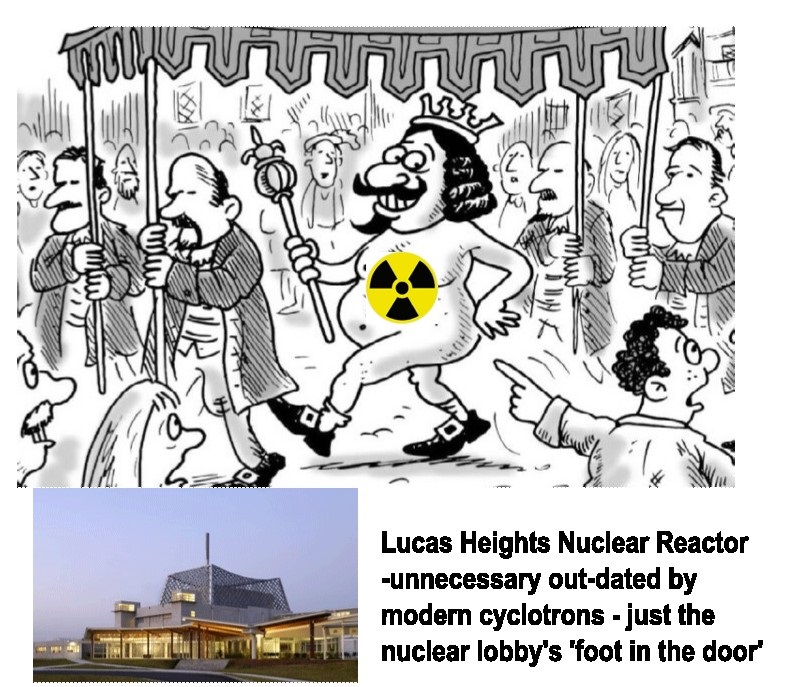
ABC News, By political reporter Matthew Doran, 15 July 24
Whenever there is a debate about nuclear power in Australia, one question regularly pops up: What do we do with the waste?
It can’t just be taken to the local dump along with garbage or rubble, and it has to be handled with immense care and stored in particular ways while it remains dangerous — sometimes for decades, and in the case of high level waste up to thousands of years.
Despite nuclear power generation still being a subject of political debate rather than reality, and nuclear-propelled submarines being decades away from being tied up at local docks, many Australians don’t know we are already producing, processing, and storing nuclear waste.
One of the largest repositories is Australia’s Nuclear Science and Technology Organisation (ANSTO) at the Lucas Heights nuclear facility, in Sydney’s south.
The ABC was invited inside……………………………………………………………………………………………………
The type of contaminated waste coming into the vast warehouse for assessment and processing is what’s classified as “low-level”.
Much of it includes items like rubber gloves, gowns, glassware, and old laboratory equipment from ANSTO’s nuclear medicine facility
It’s still contaminated and needs to be meticulously picked through, categorised, and stored away until it’s no longer dangerous, sealed away in the steel drums lining the shelves of multiple warehouses dotted across the Lucas Heights site.
Decades of legacy
Bags and bags of contaminated material sit in bins at the edge of the warehouse we’re standing in.
All the waste comes from ANSTO itself. While the organisation doesn’t store waste for others, it does assist with the material they produce………………. It’s brought into the warehouse, and scanned with high-tech machinery before ANSTO figures out the best way to store it – and for how long.
…. “A lot of the waste that we bring in is really very quickly able to be sent out to the normal tip, because working with nuclear medicine, which generates most of our waste, we have a lot of short-lived isotopes,” Paula Berghofer, head of waste management , says.
…………………………………………………………………………………………………………………… ANSTO’s Lucas Heights site is home to the only nuclear reactor in the country.
It’s a facility used to create radioactive isotopes for use in areas such as nuclear medicine. ……..
Lucas Heights’ OPAL reactor is currently undergoing maintenance.
It’s not used for power generation and doesn’t create waste anywhere near the level of radioactive material that would come from such a reactor.
However, that’s not to say there isn’t decades-old nuclear waste stored at the site.
Some drums and blocks of radioactive material, encased in concrete and steel tombs weighing many tons, have been here for decades.
Among them, are remnants of the original nuclear reactor at Lucas Heights – known as MOATA – which operated between 1961 and 1995, and was decommissioned 15 years ago.
“It will remain here, safely monitored and stored, until Australia has a disposal operation available for us to send it to,” Ms Berghofer says……………………………………………………………………………………………………………………
Offshore processing

There’s another warehouse, which looks a little different, on the Lucas Heights campus.
It’s newer. It’s taller. It’s wrapped in extra layers of security.
When you walk inside, it’s striking how empty it is. Apart from two huge cylinders, standing on their ends, at one side of the building
“While Australia has a very important role in the nuclear space, we are comparatively small, and we certainly don’t have the infrastructure or really the need or desire to install what is a very large price reprocessing facility here,” Ms Berghofer says.
“So it makes sense for us to have those international agreements, so that we can send this overseas to the experts, where they can reprocess it and send us back an equivalent.”
Again, these canisters are also intended for a national nuclear waste dump, once it is established. https://www.abc.net.au/news/2024-07-16/australias-nuclear-waste-legacy-lucas-heights-ansto/104091600
Experts argue for an Australian ban on nuclear weapons ahead of UN Summit
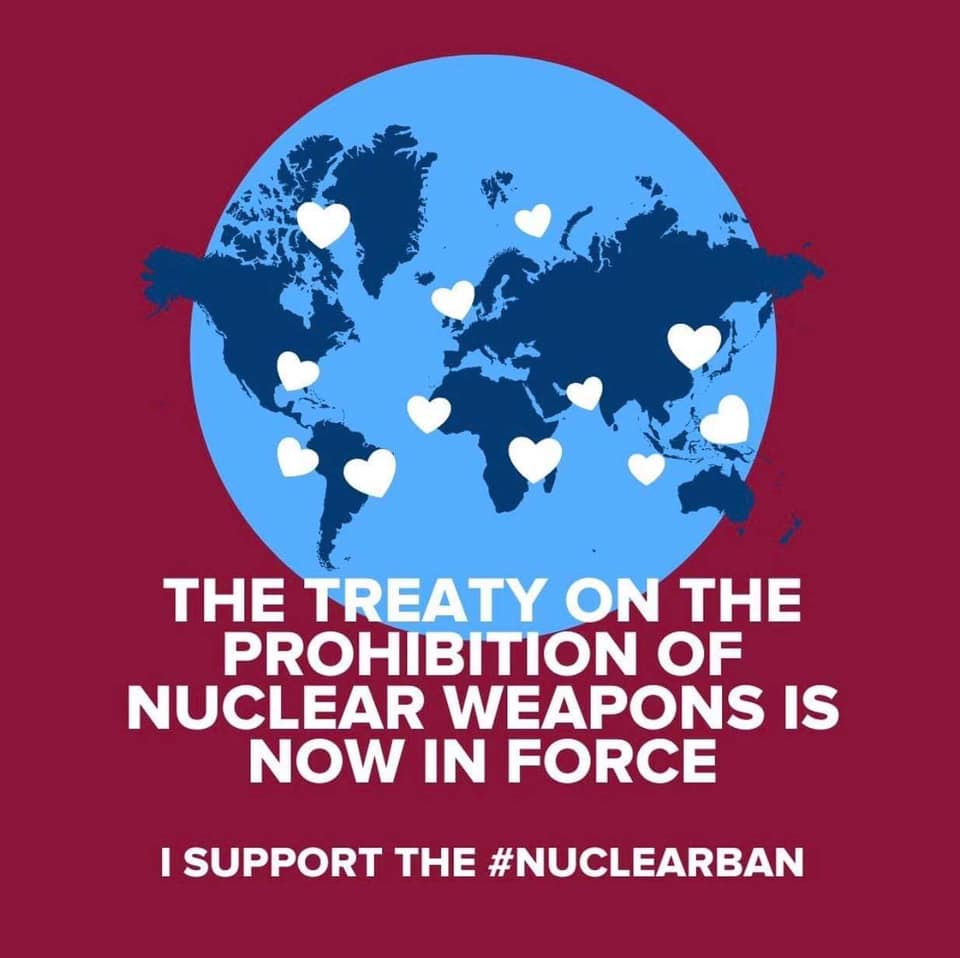
University of Melbourne experts are urging Australia to sign and ratify the UN Treaty on the Prohibition of Nuclear Weapons (TPNW) to commit most effectively to nuclear disarmament and non-proliferation.
The argument was made in ‘Luck is not a strategy: it’s time to prohibit Nuclear Weapons’, the second paper in a series prepared by the University of Melbourne’s Initiative for Peacebuilding to stimulate discussion of key issues on the agenda at the upcoming UN Summit of the Future.
Associate Professor Tilman Ruff AO, co-founder of the International Campaign to Abolish Nuclear Weapons (ICAN), which received the 2017 Nobel Peace Prize, ICAN Australia director Gem Romuld and Executive Director of ICAN Melissa Parke argue it is important Australia signs the Treaty before taking a seat on the UN Peacebuilding Commission in 2025.
Almost half the world’s nations have already joined the TPNW, which contains the only comprehensive prohibition of nuclear weapons and the only internationally agreed framework to eliminate nuclear weapons in a time-bound, verified way.
The TPNW is also the first nuclear weapons agreement to address the harm done by nuclear weapons use and testing.
Associate Professor Ruff argues Australia’s involvement is particularly critical given the number of available deployed nuclear weapons is increasing for the first time in two decades, along with explicit nuclear threats, and two nuclear-armed states – Russia and Israel – are prosecuting war, risking nuclear escalation.
No disarmament negotiations are underway, while hard won treaties limiting nuclear weapons have been abolished.
“Additional signatories, such as Australia, will contribute to the universalisation of the ban treaty, and its effectiveness,” Associate Professor Ruff said.
“For as long as we remain outside the treaty, promoting a role for nuclear weapons and assisting in their possible use in our defence policies, we are contributing to the problem.”
The Summit of the Future will be held from 22–23 September 2024 in New York, gathering world leaders to forge a new international consensus on how we deliver a better present and safeguard the future.
The Initiative for Peacebuilding, which brings together multidisciplinary research, engagement, and education to advance peacebuilding and conflict prevention in the Indo-Pacific region, plans to release a series of five policy briefs ahead of the Summit.
Associate Professor Ruff called for Australian leaders to harness this moment of great danger to sign the TPNW and then work towards ratification, just as Australia has joined the treaties banning other inhumane and indiscriminate weapons, including chemical and biological weapons, landmines and cluster munitions.
“Nuclear weapons are abhorrent, immoral, and illegal under international law. They are the worst weapons of mass destruction, and have no place in a secure and healthy future. Australia needs to signal its firm agreement and expedite signature and ratification of the UN-TPNW,” he said.
South Australia’s renewable triumph is stunning proof that Dutton’s nuclear plans are a folly
Giles Parkinson, Jul 12, 2024 https://reneweconomy.com.au/south-australias-renewable-triumph-is-stunning-proof-that-duttons-nuclear-plans-are-a-folly/
When the federal and state governments were deciding on a location to announce a funding deal that will underwrite South Australia’s final leap to its remarkable goal of 100 per cent net renewables within the next three years, Port Augusta was the obvious choice.
The city at the top of the Spencer Gulf, like the neighbouring Whyalla, is everything that the climate deniers, the renewable naysayers, the conservative media and the federal Coalition say is not possible.
Port Augusta once played host to the state’s ageing and incredibly dirty coal generators. Whyalla was the subject of taunts from former prime minister Tony Abbott that it would be rendered a ghost town by a carbon price.
Now the two cities are host to thriving renewable energy hubs, new green industries and technologies that will help propel the state into a clean energy future.
And it is remarkable how little is actually known about the achievements of South Australia beyond its borders. Already it is at an annual average of 70 per cent renewables, and by 2027 it intends to be the first in the world to reach 100 per cent net renewables primarily through wind, solar and storage.
Just to be clear, that does not mean that it will consume only renewables. “Net” means that the amount of power it produces from wind and solar during the year will be equivalent to the amount it consumes. But it will still export and import as needs must.
It’s a stunning achievement, and still one that the naysayers insist is not possible. The state has become a globally significant testing ground in technologies – it hosted the first Tesla big battery that helped change the thinking on future grids around the world – and it is addressing and solving complex engineering issues that many experts thought were too difficult and some still say are insurmountable.
More importantly, it is doing this as a result of bipartisan policy. Labor kicked it off more than a decade ago by making itself the most welcoming state for wind and solar.
The Liberal state government set the target of reaching 100 per cent renewables by 2030. Labor is now back in power and has accelerated that target to 2027. It is marvellous what can be achieved when the coal lobby is removed and not pulling the strings of the politicians and public mood.
Despite all this, the achievements in South Australia remain largely ignored by the rest of the country.
The announcement by federal energy minister Chris Bowen and state energy minister Tom Koutsanstonis about the funding deal for a gigawatt of new wind and solar and 600 MW (2,400 MWh) of battery storage – to ensure the 100 per cent net renewable target is met – barely rated a mention in mainstream media outside the state.
Yet it is here, in Port Augusta, that federal Opposition leader Peter Dutton has decided should be one of seven sites – along with Collie, Liddell, Mt Piper, Loy Yang, Callide and Tarong – that should play host to their nuclear power plant proposals.
They were chosen, the Coalition tells us, because they are locations that still have or once supported coal fired power generators, and – they claim – would have available transmission capacity. But as Koutsantonis pointed out during his visit this week, that is simply not the case. That capacity has already been taken up by other projects.
“This site here where the Port Augusta power station once sat is now at capacity in terms of our renewable transmission lines to Adelaide,” he told journalists. “So the idea you can just plug in a nuclear power station here is just folly.
“I haven’t seen Peter Dutton here. I haven’t seen the Commonwealth Opposition here at all talking to the state government about their pretend plans for nuclear power in South Australia.”
Indeed, it is not surprising that Dutton has not shown up: South Australia is not just shining a path to the future, it is a real life repudiation of the folly of the federal Coalition’s nuclear plans, and the sheer nonsense of its claims.
Let’s remember that the Coalition and the conservative media’s nuclear arguments are based almost entirely around the assumption that wind and solar cannot power a modern economy.
South Australia proves them wrong, emphatically so. The grid is reliable, wholesale power prices are falling, and will continue to do so as it free itself from the yolk of fossil gas. Legacy industries are being revived by the growth of wind and solar, new industries are being established, and big business with big loads are being attracted to the state.
The once broke Whyalla steelworks, for example, has based its revival around plans for “green steel” underpinned by wind and solar, and BHP will power its giant Olympic Dam mine with a unique “firmed renewables” contract sourced from the state’s biggest wind project and a big battery.
The state’s transmission operator ElectraNet reports inquiries amounting to several gigawatts of new load from industries attracted to cheaper and greener power, and apparently not the least bit concerned about the scare campaigns that the lights will surely go out.
South Australia is already at the stage where enough rooftop solar is generated in the middle of the day to meet all local demand. That will soon occur in other states too, including Western Australia, effectively eliminating grid demand and requiring storage or new load or exports to soak up the excess.
As every major utility in Australia makes clear, the era of always-on base-load power is well and truly passed in such grids. South Australia has not just shut down its last coal generators, and is closing down its remaining combined cycle gas plants, which perform a similar role. The gaps will be filled by facilities that are fast and flexible. There is simply no room in the grid for an always-on nuclear plant.
“This site is taken. So I’m not quite sure where he’s planning to build this or how he’s planning to build this,” Koutsantonis said.
“If Peter Dutton was serious about what he was talking about, he would have come to us earlier and spoken to us about it, consulted with us. For whatever reason, he hasn’t even stepped a foot on this site to actually have a look at it.”
Bowen has been taking that message across the country. “This whole precinct’s being transformed … into a renewable energy hub, a green cement hub and a critical minerals hub,” he said at Port Augusta.
The next day, Bowen popped up in Lithgow, at the site of another mooted nuclear site, the Mount Piper coal generator, where the asset owner Energy Australia also outlined plans to build pumped hydro, a giant battery and to convert its coal plant into a “flexible” asset rather than an “always on” baseload asset in the interim.
“Traditionally Mount Piper has been a full-load, continuous load power station, and today it’s becoming much more flexible,” EnergyAustralia’s head of operations and projects Sue Elliott said. “It now operates during the day and seasonally depending on renewable availability in the market.
“We are progressing planning for a Lake Lyell Pumped Hydro Project … and we’re also planning a 500 megawatt, four hour Mount Piper Battery Energy Storage System right here on site to take advantage of transmission assets.”
As Bowen pointed out, this is real investment happening now, not some time in the distant future.
“I’m not sure if Mr Dutton and (Opposition energy spokesman Ted) O’Brien have been here yet, but they have a plan for nuclear power, which is at least 30 years away,” he said.
“They admit 2035 at its earliest; even that is wildly ambitious and optimistic and unrealistic. But that doesn’t fix the problems today.
“It doesn’t create jobs today. It doesn’t create investment today and, indeed, it will chill investment. It will stop people investing in the alternative plans because of the investor uncertainty created by having a nuclear plan, which is never going to happen – it’s a fantasy.”
South Australia, and its charge towards 100 per cent renewables, is very real. And worth talking about.
Yet another huge procurement bungle has been unearthed. Guess where?
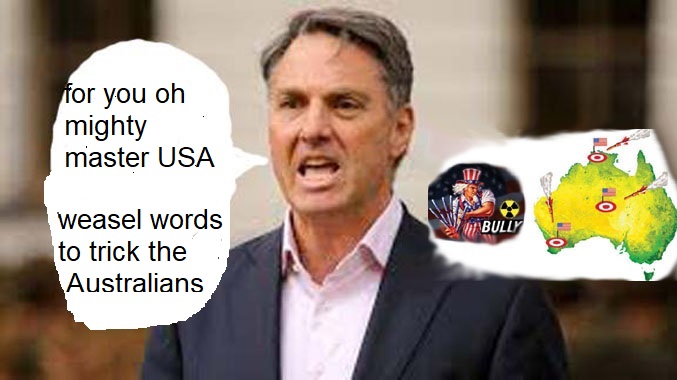
A procurement process so blatantly rotten that the beneficiary itself tried to stop it? It could only happen in Defence.
Crikey BERNARD KEANE, JUL 12, 2024
The hits keep coming for Defence. The Australian National Audit Office has just revealed another big bungled project by the department, one that was a decade in the making.
While it lacks the champagne glamour of the Defence-Thales munitions scandal and only costs hundreds of millions, not billions, the debacle over “myClearance” demonstrates that Defence’s inability to manage procurement — a core task for such an institution — is department-wide.
It’s also a likely unique case of procurement process so bad that the company that benefited objected to it.
myClearance” might sound like a colonoscopy prep, but it is in fact the notional answer to longstanding problems with the systems used by the Australian Government Security Vetting Agency within Defence to vet people for security clearances across the public sector — a process much criticised by other agencies for its glacial speed.Richard Marles takes on reality, comes off second-best in growing Thales scandalRead More
In 2014, Defence decided that its vetting platform needed to be replaced, and thus began what became the Vetting Transformation Project — given impetus, no doubt, by the Abbott government’s hysteria over the Snowden revelations and the idea of “inside threats” used to……………(Subscribers only) more https://www.crikey.com.au/2024/07/12/defence-procurement-rotten-myclearance/?utm_medium=Social&utm_source=Twitter#Echobox=1720756332
Power-hungry data centres are booming in Australia. Can the grid cope?
By Nick Toscano, July 12, 2024, https://www.theage.com.au/business/companies/power-hungry-data-centres-are-booming-in-australia-can-the-grid-cope-20240711-p5jssa.html
An explosion in the number of data centres in Australia is looming as a new test for the energy grid amid warnings they might soon require as much as electricity as two giant coal-fired power stations are capable of generating.
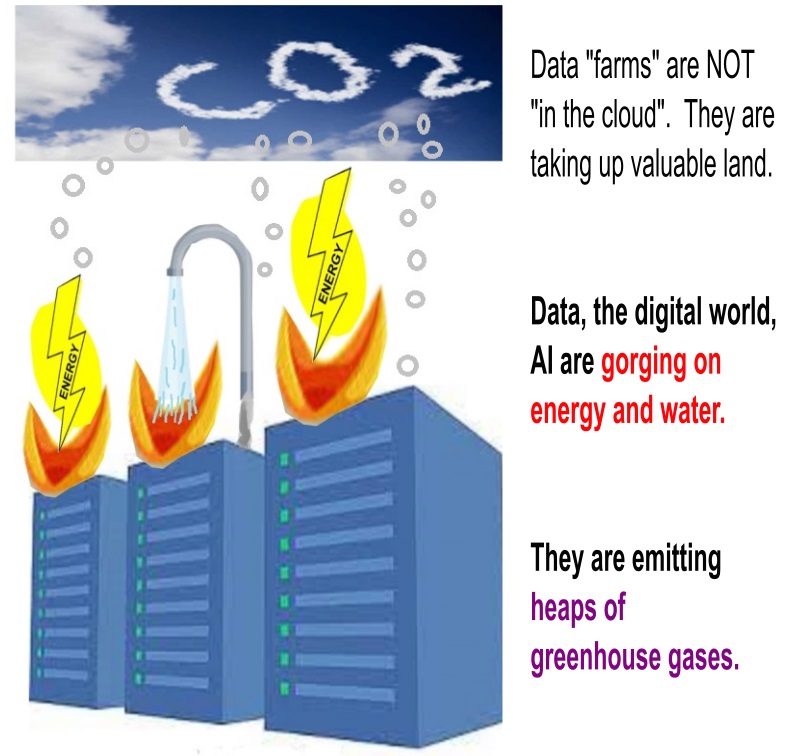
As cloud-based computing [nb there is no “cloud”] and artificial intelligence (AI) accelerate demand for data storage, Melbourne and Sydney have emerged as key locations for tech companies building vast industrial facilities to house their servers that send and receive data 24/7, known as data centres.
These data centres, which need huge amounts of electricity to run high-intensity computing and cooling systems, are already major power users in Australia – consuming about 5 per cent of available generation.
They are expected to drive further electricity demand growth alongside homes switching from gas to electric appliances and the growing adoption of electric cars.
However, new modelling from UBS suggests official forecasts may be underestimating the scale of the added demand that data centres could drive in the coming years.
The investment bank calculates between 3.3 gigawatts and 5 gigawatts of demand – equivalent to the combined generating potential of approximately two of Australia’s biggest coal-fired power plants – could be added to the east coast grid by 2030 on the back of growth in data centres and artificial intelligence.
At the top end of the range that could equate to up to 15 per cent of overall grid demand, which could add significant strain to supplies and push up prices unless properly managed.
The data centre boom is coming at a time of upheaval for Australia’s main grid as it transitions to cleaner energy, while the coal plants that have supplied the bulk of its power for decades increasingly bring forward their closures.
Although renewables’ share of the mix is growing, there are worries it’s not happening fast enough, with authorities fearing a shortfall of generation, storage and transmission lines to protect against the threat of price rises or blackouts once coal exits the grid.
Analysts at Morgan Stanley believe the grid will be able to accommodate extra demand from data centres’ growth, which it forecasts to rise from 5 per cent to about 8 per cent by 2030.
However, the system will face more strain next decade when the majority of the nation’s remaining coal-fired power plants are expected to have closed, they said.
“We see the power requirement for new Australian data centres as manageable for the Australian power system to 2030, but power could become a constraint in the 2030s given planned coal plant closures,” they said.
UBS said data centres may provide benefits for grid planners trying to maintain system stability, given they offer consistent minimum demand 24/7 – similar to the role of aluminium smelters. But they would add “incremental pressure” during evening peak demand periods once the sun sets and solar output recedes, Allen said.
The spread between daytime and evening wholesale prices could widen to up to 70 per cent by 2030 due to coal closures and delays to the renewable rollout, he added.
Don’t make my home a nuclear power hub- nuclear reactors in Latrobe Valley unsafe and unrealistic.
As some Coalition MPs have let slip, talk of nuclear reactors is really code language for extending the life of coal and gas for at least 20 years until nuclear reactors can be regulated, built and actually generate energy into the Australian energy grid. This is incompatible with our global commitment to limit warming to 1.5 degrees and will see Australians more vulnerable to extreme heat, fires and floods.
By Hayley Sestokas, July 10 2024, https://www.canberratimes.com.au/story/8691386/nuclear-reactors-in-latrobe-valley-unrealistic-and-unsafe/
Earlier this year the federal Coalition began spruiking their ill-conceived idea to build nuclear reactors on the land of retired coal-fired power plants as a solution to Australia’s energy future. That talk has now reached fever pitch as Peter Dutton announced his proposed sites last week – including in the Latrobe Valley.
Leaving aside for a moment the prohibitive costs and safety concerns associated with nuclear reactors – it seems clear that Peter Dutton nor his Coalition colleagues bothered doing their homework or actually speaking to local people on the ground before naming the Latrobe Valley as a potential site.
If he had conducted even a superficial survey of community attitudes to the proposition of turning the Latrobe Valley into a nuclear power hub, he would have realised quickly that the vast majority of the community can see this proposition for what it is – a dangerous distraction that ignores the more urgent need for safe mine rehabilitation.
As it currently stands, the so-called retired coal mine sites being referred to are facing ongoing issues associated with rehabilitating the existing toxic and unstable mine pits that remain full of flammable coal. It doesn’t take too much of a mental stretch to realise that mixing old unstable mine pits and nuclear reactors is not likely to end well.
The Latrobe Valley also sits in an earthquake hotspot near the fault lines of the Strzelecki Ranges. The Fukushima nuclear disaster, which led to mass evacuations, hundreds of billions of dollars of economic loss and the release of large amounts of radioactive contamination to the air and ocean, clearly showed the danger of building a nuclear reactor on a fault line.
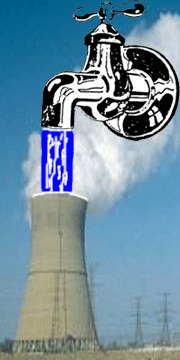
The other glaring gap in the nuclear push is water. According to the World Nuclear Institute, one nuclear reactor requires between 1514 and 2725 litres of water per megawatt hour. That equates to billions of gallons of water per year, all of which requires intensive filtering.
So where, might we ask, is all this water going to come from? Especially at a time when it’s not clear where the millions of litres of water for rehabilitating all three mine pits are going to come from. We are already in the midst of a looming water crisis without the added intensive drain of a nuclear facility.
As recently as 2019 local MP Darren Chester already publicly stated that the government had no plans to change the moratorium in place on nuclear power – let alone that his own electorate would be the site on which it would be staged.
Mr Chester has previously said safety concerns would need to be ameliorated and the development would need to demonstrate direct “social and economic benefits”. So it sounds like having opposed the nuclear push it now seems he is prepared to support his Coalition’s nuclear pipedream, at the right price.
As the area that has powered Victoria for decades, people in the latrobe valley know better than anyone that we are now in the midst of a clean energy transition. we can’t afford to wait decades for nuclear reactors when we have clean sun and wind energy right here and right now, already powering 40 per cent of our electricity grid.
It is also disingenuous that after decades of inaction and outright climate denial from the Coalition parties, the same party are now spruiking nuclear as the fastest way to reduce emissions. Instead, the Coalition needs to get with the program and focus on the fast and fair rollout of renewable energy as we phase out burning coal and methane gas.
As some Coalition MPs have let slip, talk of nuclear reactors is really code language for extending the life of coal and gas for at least 20 years until nuclear reactors can be regulated, built and actually generate energy into the Australian energy grid. This is incompatible with our global commitment to limit warming to 1.5 degrees and will see Australians more vulnerable to extreme heat, fires and floods.
While many local people are experiencing a worsening cost-of-living crisis, the federal Coalition is proposing we transition Australia to the most expensive source of energy in the world. The current levelised cost of energy (LCOE) puts nuclear generated electricity at $US180 per megawatt hour compared to $US50 for onshore wind and $US60 for utility-scale solar.
In addition to the very high cost of electricity from nuclear reactors is the huge cost to build them. In the UK, the Hinkley Point C reactor was originally budgeted to cost £18 billion, it will now cost up to £46 billion with inflation factored in. This is in a country with an established regulatory framework and nuclear industry.
Despite the reassurances of those in the Coalition who really should know better, there is still no long-term solution for the radioactive waste from nuclear reactors that meets community expectations for safety and environmental protection. Australia currently struggles to store low-grade waste from nuclear medical facilities, let alone the more radioactive waste from nuclear power reactors.
Dating right back to when the British first tested nuclear weapons in central Australia in the 1950s and ’60s in South Australia, First Nations communities, particularly in remote areas, have borne the brunt of the harm caused by nuclear activities in Australia.
First Nations communities continue to protest and take legal action against radioactive waste burial on country. There are communities who are still unable to access their land due to radioactive waste – let’s not add to that shameful legacy. Not here, not anywhere.
In pitching this radioactive, future technology, the Coalition is ignoring the fact that the clean energy transition is already well under way – and the Latrobe Valley community is out in front with a vision for a healthy, sustainable and safe future in our region. Gippsland has more than 25 large renewable energy projects in the pipeline, worth $54 billion.
With the support of the local community, these projects are already delivering the kinds of jobs and energy solutions we need now, not two decades away.
Hayley Sestokas is the Latrobe Valley community organiser for Environment Victoria.
The dirty history of ‘Nukey Poo’, the reactor that soiled the Antarctic.
By Nick O’Malley, July 10, 2024 , https://www.theage.com.au/environment/conservation/the-dirty-history-of-nukey-poo-the-reactor-that-soiled-the-antarctic-20240708-p5jrzd.html
The rekindled nuclear debate in Australia has stirred old memories in some of a little-known chapter of our region’s history, when the US Navy quietly installed what today we might call a small modular reactor at the US Antarctic base on Ross Island.
The machine, nicknamed “Nukey Poo” by the technicians who looked after it, was installed at McMurdo base in 1961, when Antarctic exploration was expanding and nuclear energy had developed a bright futuristic sheen.
Things did not end well.
Back then, as now, Antarctic missions relied upon lifelines with distant homes. Supplies had to be carried long and sometimes dangerous distances. The US kept its Antarctic sites supplied via an ongoing supply mission called Operation Deep Freeze, which was based at the McMurdo Naval Air Facility.
According to an article on the Nukey Poo incident published in 1978 by the Bulletin of the Atomic Scientists – a journal concerned with the potential danger of nuclear technology, founded by Albert Einstein and veterans of the Manhattan Project – while a gallon of diesel cost the US Navy US12¢ back then, by the time the Americans shipped supplies to McMurdo, diesel cost 40¢ a gallon. At South Pole station, diesel was worth $12 a gallon.
But the then US Atomic Energy Commission had a solution to save costs on transporting supplies. What if McMurdo, and other distant US bases, were supplied by small transportable nuclear reactors? Congress agreed and soon the Martin Marietta Corporation won a contract to build them.
In an advertisement in Scientific American, the company boasted in language reminiscent of today’s debate over modular reactors that “because nuclear energy packs great power in little space, it’s extremely useful when you need electricity in remotes spots. It’s portable and gives you power that last for years …” Soon, the company said, nuclear power might be carrying us to outer space and frying our eggs.
A reactor named PM-3A (PM stood for “portable, medium powered”) was shipped out in sea crates and installed at McMurdo – which is within New Zealand-claimed Antarctic territory – over the summer of 1961 and became known on the base as Nukey Poo. Because cement would not cure in the frigid climate, the reactor was not encased in concrete, rather its four major components sat in steel tanks embedded in gravel and wrapped in a lead shield.
Admiral George Dufek described the moment as “a dramatic new era in man’s conquest of the remotest continent”. The US administration was certain the reactor did not violate the Antarctic Treaty’s declaration that “any nuclear explosions in Antarctica and the disposal there of radioactive waste material shall be prohibited”.
Within a year, Nukey Poo caused its first fuss, a hydrogen fire in a containment tank that led to a shutdown and energy shortages. Icebreakers fought to break through and fuel for generators was delivered by helicopter, which burned as much as they delivered over the course of a flight. Over the following years, Nukey Poo proved so unreliable and expensive to maintain that the military gave up hopes of using the technology to displace diesel at other remote locations.
In 1972, the navy began the three-year task of decommissioning the reactor and decontaminating the site. During that process, they discovered corrosion that technicians feared may have caused leaks of irradiated material. No detailed investigation was done. The secretary of the US National Academy of Sciences said the program was ended due to a series of malfunctions and the possibility of leaks, the Bulletin of the Atomic Scientists reported. The New Zealand government declared the decision was economic.
Either way, it was decided not only to remove the reactor, but half the hillside it was built into. Eventually 12,000 tonnes of irradiated gravel and soil was removed on supply ships to be buried in concrete lined pits in the United States.
The young Australian scientist, Dr Howard Dengate, who had run one of the NZ bases, hitched a lift on one those ships, the Schuyler Otis Bland, in 1977. Dengate recalls a grumpy captain who once swore at him for inviting bad luck on the ship by whistling on deck. The captain, Dengate recalled this week, blamed him for “whistling up” the storm that struck the vessel before the Australian disembarked in New Zealand and the ship sailed on to the US.
Though the reactor was little discussed in the wider world, no secret was made on the base of the reactor or its impact. Indeed, Dengate recalled finding an operating manual for the reactor in the American rubbish pits that New Zealanders had developed the habit of fossicking in.
But the story did not end there.
In 2011, an investigation by journalists of News 5 Cleveland found evidence that McMurdo personnel were exposed to long-term radiation, and in 2017 compensation was paid to some American veterans of the base. A year later, New Zealand officials announced that it was possible that New Zealand staff were also affected.
It has since been reported that four New Zealanders had raised claims about their ill health since their time in the Antarctic.
In 2020, the Waitangi Tribunal, a permanent commission in New Zealand to investigate cases against the Crown, launched inquiries. They are not yet complete.
Asked if he was concerned about travelling with the irradiated material, Dengate said he was not. “We were young and dumb and adventurous,” he told this masthead of his time in the Antarctic.
Decoded: Defence Department’s deadly deceits
After nine months of denial and disinformation, the Australian government has been forced to confirm its deadly exports to Israel
Undue Influence MICHELLE FAHY, JUL 09, 2024
After spending nine months denying any weapons were going to Israel, senior Australian government ministers are now in damage control after a Defence Department official admitted for the first time since the Hamas attack on Israel on 7 October 2023 that there are active export permits relating to Israel that cover the transfer of parts and components.
Labor MPs from Prime Minister Anthony Albanese down have spent months attacking political opponents on this issue.
This was Defence Minister Richard Marles just weeks ago on ABC Melbourne radio: ‘So, to be clear, what the Greens are alleging is that somehow we are supplying Israel with weapons which are being used in the conflict in Gaza. That is absolutely false, and that is a total lie.’
Following the revelations about active permits, senior government ministers have doubled down and introduced a perverse phrase – ‘non-lethal parts’ – to defend the continued export of key parts and components into the F-35 fighter jet supply chain.
The F-35 is being used by Israel over Gaza, and the global supply chain, of which Australia is a key part, services this combat aircraft. In June, the US agreed to sell 25 more F-35 fighter jets to Israel.
More than 70 Australian companies have been awarded over $4.13 billion in global production and sustainment contracts through the F-35 program so far.
Minister Marles and Foreign Minister Penny Wong both recently referred to Australia’s export of ‘non-lethal parts’, having spent eight months insisting: ‘Australia is not sending weapons to Israel and has not done so for the past five years.’
Israel is accused of committing genocide in Gaza in a case that is before the International Court of Justice. Israel is also accused of deliberately causing the starvation of Palestinians in Gaza, according to the International Criminal Court. Australia’s response to both cases has been muted, at best.
Non-lethal’ parts
The F-35 would not operate without all its parts and components. Australia remains the sole source of a number of them, as I reported for Declassified Australia in April.
The proposition that the Australian parts used in a lethal weapon system could be separately considered ‘non-lethal’ indicates a government intent on damage control.
‘Lethal’ is the first word that arms manufacturer Lockheed Martin uses to describe its F-35 fighter jet. It markets the aircraft as the most lethal fighter jet in the world.
In a testament to that, in March the F-35A version was operationally certified to carry a nuclear bomb – the first fighter jet or bomber to be granted nuclear-capable status since the 1990s
The UN Arms Trade Treaty (ATT) makes no mention of the lethality of the individual parts or components that comprise the weapons (“conventional arms”) it covers.
Two weeks ago, the UN published a damning report on Israel’s extensive use of heavy bombs with wide area effects in densely populated areas in Gaza since 7 October: ‘The scale of human death and destruction wrought by Israel’s bombing of Gaza…has been immense.’
High Commissioner for Human Rights Volker Türk said: ‘The requirement to select means and methods of warfare that avoid or at the very least minimise to every extent civilian harm appears to have been consistently violated in Israel’s bombing campaign.’
Last December, the head of the F-35 joint program office, Lieutenant General Michael Schmidt, gave evidence at a US Congressional hearing that confirmed Israel was using its F-35s in the bombing attacks.
Lt-Gen Schmidt said the F-35 program office had been moving ‘at a breakneck speed to support…Israel…by increasing spare part supply rates’.
Lockheed Martin has acknowledged that ‘every F-35 built contains some Australian parts and components’.
The government’s ‘non-lethal parts’ messaging is at odds with a significant UN statement issued on 20 June, which included and named multinational arms companies in its call to cease supplying Israel with arms, ‘even if [the arms transfers] are executed under existing export licenses’.
Under the headline ‘States and companies must end arms transfers to Israel immediately or risk responsibility for human rights violations’, the statement named 11 multinationals – including Lockheed Martin, BAE Systems, Boeing, Northrop Grumman, Rheinmetall and RTX/Raytheon – which all have significant operations in Australia.
These companies, by sending weapons, parts, components, and ammunition to Israeli forces, risk being complicit in serious violations of international human rights and international humanitarian laws,’ the statement said.
Government in damage control
The Albanese government was forced to employ new language following evidence given by a Defence Department official in a recent Senate Estimates hearing………………………………………………..
What is a ‘weapon’?
The senior ministers were forced to change tack because the favoured line of all Labor MPs since Israel launched its newest and deadliest war against Palestine has cracked under sustained scrutiny.
The carefully crafted statement that ‘Australia is not sending weapons to Israel and has not done so for the past five years’ contains two elements designed to mislead: ‘weapons’ and ‘to Israel’.
All Labor MPs, including the Prime Minister, use the word ‘weapons’ repeatedly without defining it, knowing the vast majority of Australians will assume it means ‘weapons’ in the usual broad sense.
However, the government is cynically relying on a narrow military definition.
The Defence Department’s Hugh Jeffrey, in a previous Senate hearing, said the Department’s chosen definition of ‘weapon’ was ‘derived from’ definitions in the UN Arms Trade Treaty (ATT), ‘which classifies what weapons are’.
‘Under the UN definition, weapons are defined as whole systems, like armoured vehicles, tanks and combat helicopters,’ he said……………………………………………..
UN experts referred to the Geneva Conventions when warning countries that any transfer of weapons or ammunition to Israel that would be used in Gaza was likely to violate international humanitarian law:
‘States must accordingly refrain from transferring any weapon or ammunition – or parts for them – if it is expected…that they would be used to violate international law.
Such transfers are prohibited even if the exporting State does not intend the arms to be used in violation of the law…as long as there is a clear risk.’
This article was first published at Declassified Australia on 1 July 2024, https://undueinfluence.substack.com/p/decoded-defence-departments-deadly?utm_source=post-email-title&publication_id=297295&post_id=146424013&utm_campaign=email-post-title&isFreemail=true&r=1ise1&triedRedirect=true&utm_medium=email
1 This month
.

Australians deserve the truth
about
AUKUS – https://aukuspublicinquiry.com/

PETITION – To: Prime Minister Anthony Albanese and the Australian Labor Government

of the week – Australians for War Powers Reform (AWPR)
To see nuclear-related stories in greater depth and intensity

