There is a curious phenomenon in modern politics whereby leaders rejected by voters at home are reborn as sages abroad. It is a kind of political reincarnation, except instead of coming back as something wiser, they come back with a microphone, an expense account, and a suspiciously friendly audience.
Take Tony Abbott and Scott Morrison. Two of the most out-of-their-depth, ineffectual, policy-light and spectacularly uninspiring Australian prime ministers of the past 50 years. Governments so underwhelming that voters didn’t merely change their minds – they slammed the door, locked it, and put the furniture up against it.
This is surprising, because while neither man excelled at governing Australia, they have since been warmly embraced on the international speaking circuit – mainly by right-wing conferences, “freedom” forums, and governments that find Western accents useful when saying deeply illiberal things.
Tony Abbott, whose prime ministership was defined by instability, internal warfare and three-word slogans that passed for policy, is now invited to explain leadership. Abbott struggled to explain his own government to his own party room, but apparently this has not deterred organisers elsewhere.
Scott Morrison’s record is fresher – and stranger. A prime minister who treated government as a branding exercise, communicated almost exclusively through slogans, and managed crises with photo opportunities rather than competence. A man so committed to secrecy that, in his final months in office, he quietly appointed himself to five ministries without telling the ministers involved.
Ironically, since leaving office, Morrison appears to have lost the ability to keep secrets altogether.
The man who secretly ran half the government now speaks endlessly. Panels, conferences, fireside chats. There is no shortage of words – just an ongoing shortage of insight. Morrison’s speeches are long on grievance, heavy on culture-war talking points, and light on anything resembling reflection or accountability.
One might reasonably ask: who is paying to hear this?
The answer is not “the public.” These are not broad, curious audiences wondering what went wrong. They are curated rooms. Friendly rooms. Rooms where applause is guaranteed and difficult questions are optional. Rooms where electoral defeat is reframed as martyrdom and democratic accountability as persecution.
Failure, it seems, has become a credential.
In a healthy democracy, losing office used to mean something. It was feedback. A verdict. An instruction to step aside. Now it is merely the start of a second career – one in which rejection at home is marketed overseas as proof of courage.
None of this is illegal. None of it is particularly new. But it is revealing.
If Abbott and Morrison had left office respected, effective, and admired, their global speaking careers would make sense. Instead, they left behind governments remembered largely for chaos, secrecy, and exhaustion. And yet, somewhere overseas, there is always a stage, a lectern, and an audience eager not to ask why.
“It’s a wake-up call that can no longer be ignored by the Australian government. It’s now more than time for the Aukus submarine project to be abandoned, and our defence capability to be built in our own interests, not those of a now totally unreliable United States,” Evans said.
Bob Carr says Trump foreign policy presents a ‘colossal challenge’ for Australia and Gareth Evans says the Aukus pact should be reconsidered
The Albanese government should urgently reconsider Australia’s alliance with the US, two former Labor foreign ministers have said, as they voiced alarm over Donald Trump’s military intervention in Venezuela and renewed push to claim Greenland.
Speaking to Guardian Australia in the days after the US seizure of Venezuela’s president, Nicolás Maduro, former Labor foreign minister Bob Carr said Trump’s US had become a “fiercely unpredictable” ally, raising a “colossal challenge” for Australia.
Another former Labor foreign minister, Gareth Evans, said he was concerned the US had “zero respect” for international law or the interests of its allies. Evans said the Aukus pact should be reconsidered.
“It’s a wake-up call that can no longer be ignored by the Australian government. It’s now more than time for the Aukus submarine project to be abandoned, and our defence capability to be built in our own interests, not those of a now totally unreliable United States,” Evans said.
After launching airstrikes and a raid in Venezuela that led to the seizure of Maduro earlier this month, Donald Trump has threatened to take over Greenland and has said the US would take action on Greenland “whether they like it or not”.
Australia has not criticised the Trump administration’s actions or rhetoric on Venezuela or Greenland. After the US operation to capture Maduro and moves to capture Venezuelan oil, Albanese said his government was “monitoring developments”, calling for an adherence to international law and a “peaceful, democratic transition” of political power.
Carr, the foreign minister from 2012 to 2013, said it was wise for the government to “keep our head down and watch closely”, adding it was unclear what Trump’s “burst of unilateralism” meant for the world.
“Our US ally is fiercely unpredictable and dedicated ruthlessly to American national interests, without any pretence of being committed to universal values or a global, rules-based order,” he said.
“That is a colossal challenge for Australia and the national security establishment.
“This is an utterly different America than the one that generated our rhetoric about shared values, rules-based order and seeing the world through that lens.”
Carr has used recent posts on social media to suggest “our alliance with the mad politics of the US might have run its course”, adding “goodbye US-led alliance structures”.
Evans, foreign minister between 1988 and 1996, claimed Trump’s recent actions “put beyond doubt that his America has zero respect for international law, morality, and the interests of its allies and partners”.
“The crazy irony of the whole project [Aukus] has always been that it commits Australia to spending eye-watering amounts to build a capability supposed to defend us from military threats which are in fact most likely to arise simply because we have that capability – and are using it to support the US in some conflict not in our interests to engage, without any guarantee of support in return should we ever need it,” Evans said.
Both Carr and Evans have long criticised the Aukus pact, but Evans said recent developments required an urgent rethink about the military agreement.
Penny Wong’s former adviser, Allan Behm, last week wrote that Trump’s short-term tactical success had “come at the expense of the complete destruction of the rules of international behaviour”.
“Australia … has a strong and consistent reputation as an instigator of and contributor to the diplomatic engineering needed when things go pear-shaped, regionally or globally,” he wrote in Guardian Australia. “This is what we need to saddle up for again.”
Trump endorsed the military agreement between the US, Australia and the United Kingdom when he met with Albanese in Washington in October. Aukus was put under review by the Pentagon after the Trump administration was sworn in. Australia has pledged more than $4.5bn towards building US shipbuilding capacity.
Australia’s response to US intervention in Venezuela raises serious questions about sovereignty, international law, and political courage.
Introduction
The Australia response to US intervention in Venezuela was cautious, restrained, and carefully worded. While the United States openly spoke about taking control of another country’s political future, Australia chose not to condemn the action. For many Australians, this raises an uncomfortable question.
This matters because US intervention in Venezuela sets a precedent for how powerful allies bypass international law while expecting silence from partners like Australia. If Australia claims to support a rule-based international order, why does it fall silent when a powerful ally breaches it?
Context box:
Under the UN Charter, sovereign equality and non-intervention are core principles. These rules are meant to apply to all nations, large or small.
This is not an abstract legal debate. It goes to the heart of whether international law still matters, and whether Australia has an independent foreign policy voice or merely echoes its most powerful partner.
The Problem
US intervention in Venezuela and the assertion of control
The trigger was a public statement by Donald Trump, who said the United States would run Venezuela until a safe and proper transition could occur. The problem begins with how the US intervention in Venezuela was framed, justified, and left largely unchallenged by allied governments. This was not diplomatic language. It was an assertion of authority over a sovereign state.
At the time, Venezuela had a sitting president, Nicolás Maduro. His legitimacy was contested, but under international law, governance disputes do not allow external powers to impose control. There was no UN Security Council mandate, no international trusteeship, and no lawful basis for administering another country.
Australia’s reluctance to name the breach
Australia responded by urging restraint and dialogue, while avoiding any direct criticism of the United States. Statements from the Australian Department of Foreign Affairs and Trade focused on stability rather than legality.
This creates a clear problem. When breaches go unnamed, norms weaken. Silence becomes precedent.
The Impact
Erosion of international law credibility
The US attack on Venezuela international law debate is not about defending any one government. It is about defending rules that prevent powerful nations from deciding the fate of weaker ones. When allies ignore these rules, enforcement becomes selective.
The consequences of US intervention in Venezuela extend beyond Latin America, weakening global respect for sovereignty and law.
Australia regularly invokes international law when condemning adversaries. When it does not apply the same standards to friends, credibility suffers.
Who benefits from silence
Silence benefits powerful states that wish to act without constraint. It also benefits political leaders who want alliance comfort without accountability. Ordinary Venezuelans do not benefit, and neither do Australians, who rely on international law to protect smaller nations.
The Solution
Reclaiming Australia’s foreign policy sovereignty
Australia’s foreign policy sovereignty does not require hostility toward allies. It requires consistency. Australia can support diplomacy while also saying clearly that external control and regime change violate international law.
A genuinely independent foreign policy would acknowledge that alliances do not override legal obligations.
Using Australia’s monetary sovereignty for peace
Australia has full monetary sovereignty. It is never financially constrained from investing in diplomacy, humanitarian aid, and multilateral institutions. Instead of reflexively aligning with military power, Australia could invest public funds in conflict prevention, mediation, and UN-led solutions that respect self-determination………………………………………………… https://theaimn.net/australias-response-to-us-intervention-in-venezuela/
This article contrasts the developmental trajectories of China and the United States (representing the modern West) by examining their foundational civilisational codes, historical experiences, and political philosophies. It argues that while the U.S. follows the extractive, individual-centric model of a classic maritime empire (extending the Roman pattern), China operates as a continuous civilisational-state, its policies shaped by a deep memory of collapse and humiliation and a Confucian-Legalist emphasis on collective resilience. The analysis critiques the Western failure to comprehend China through the reductive lens of “Communism,” ignoring the profound impact of the “Century of Humiliation” and China’s subsequent focus on sovereignty, infrastructure, and social stability as prerequisites for development. The paper concludes that China’s model, focused on long-term societal flourishing over short-term extraction, presents a fundamentally different, and perhaps more durable, imperial paradigm.
Introduction: The Mandate of History vs. The Mandate of Capital
The rise of China is often analysed through the prism of Western political theory, leading to a fundamental category error. To compare China and the United States is not to compare two nation-states of similar ontological origin. It is to compare a civilisational-state – whose political structures are an outgrowth of millennia of unified cultural consciousness and bureaucratic governance – with a contractual empire – a relatively recent construct built on Enlightenment ideals, but ultimately sustained by global financial and military hegemony (Jacques, 2009). Their paths diverge at the root of their historical memory and their core objectives.
China’s Catalysing Trauma: Modern China’s psyche is indelibly shaped by the “Century of Humiliation” (c. 1839-1949), beginning with the Opium Wars – a stark example of Western imperial extraction enforced by gunboats (Lovell, 2011). This was compounded by the collapse of the Qing dynasty, civil war, and the horrific suffering during the Second World War. The foundational drive of the People’s Republic, therefore, was not merely ideological victory but the restoration of sovereignty, stability, and dignity (Mitter, 2013). Every policy is filtered through the question: “Will this prevent a return to fragmentation and foreign domination?”
America’s Founding Myth: The U.S. narrative is one of triumphant exceptionalism. Born from anti-colonial revolution, it expanded across a continent it saw as empty (ignoring Native nations) and engaged with the world primarily from a position of growing strength. Its traumas (Civil War, 9/11) are seen as interruptions to a forward progress, not as defining, humiliating collapses. This fosters an optimistic, forward-looking, and often abistorical mindset (Williams, 2009).
2. Political Philosophy: Meritocratic Collectivism vs. Individualist Democracy
China’s System: The “Exam Hall” State. China’s governance synthesises Confucian meritocracy and Legalist institutionalism. The modern manifestation is a rigorous, multi-decade screening process for political advancement, emphasising administrative competence, economic performance, and crisis management (Bell, 2015). The objective is governance for long-term civilisational survival. The Communist Party frames itself as the contemporary upholder of the “Mandate of Heaven,” responsible for collective welfare. Political legitimacy is derived from delivery of stability and prosperity.
The West’s System: The “Arena” State. Western liberal democracy, particularly in its U.S. form, is a contest of ideas, personalities, and interest groups. Legitimacy is derived from the procedural act of election. While capable of brilliance, this system incentivises short-term focus (electoral cycles), polarisation, and the influence of capital over long-term planning (Fukuyama, 2014). Expertise is often subordinated to popularity.
3. The Social Contract: Infrastructure & Security vs. Liberty & Opportunity
China’s Deliverables: Post-1978 reforms shifted focus to development, but within the framework of the party-state. The state prioritises and invests heavily in tangible foundations: universal literacy, poverty alleviation, high-speed rail networks, urban housing, and food security (World Bank, 2022). The social contract is explicit: public support in exchange for continuous improvement in material living standards and national prestige.
The West’s Deliverables: The Western social contract, historically, promised upward mobility and individual liberty protected by rights. However, the late-stage extractive economic model has led to the decline of public goods: crumbling infrastructure, unaffordable higher education, for-profit healthcare, and eroded social safety nets (Piketty, 2013). The contract feels broken, leading to societal discord.
4. Global Engagement: Symbiotic Mercantilism vs. Extractive Hegemony
China’s Method: Development as Diplomacy. China’s Belt and Road Initiative (BRI) is the archetype of its approach: offering infrastructure financing and construction to developing nations, facilitating trade integration on its terms. It is a form of state-led, long-term strategic mercantilism aimed at creating interdependent networks (Rolland, 2017). Its “soft power” is not primarily cultural, but commercial and infrastructural.
The West’s Method: The post-WWII U.S.-led order, while providing public goods, has been characterised by asymmetric extraction: structural adjustment programs, financial dominance, and military interventions to secure resources and political alignment (Harvey, 2003). It maintains a core-periphery relationship with much of the world.
Conclusion: The Durability of Patterns
The West’s mistake is viewing China through the simple dichotomy of “Communist vs. Democratic.” This ignores the 4,000-year-old continuum of the Chinese statecraft that values unity, hierarchical order, and scholarly bureaucracy. China is not “learning from Communism”; it is learning from the Tang Dynasty, the Song economic revolutions, and the catastrophic lessons of the 19th and 20th centuries.
China’s course is different because its definition of empire is different. It seeks a Sinic-centric world system of stable, trading partners, not necessarily ideological clones. Its focus is internal development and peripheral stability, not universal ideological conversion. Its potential weakness lies in demographic shifts and the challenge of innovation under political constraints. The West’s weakness is its accelerating internal decay and inability to reform its extractive, short-termist model.
Two imperial models are now in full view. One, the West, is a flickering, brilliant flame from Rome, burning its fuel recklessly. The other, China, is a slowly rekindled hearth fire, banked for the long night, its heat directed inward to warm its own house first. History is not ending; it is presenting its bill, and the civilisations that prepared their ledger will write the next chapter.
How can we, Australia, remain allied to the US if they threaten annexation of an ally’s territory?
This throws into question our AUKUS pact with the UK and US, and sets America on the path to being an unreliable – if not dangerous and possibly even hostile – ally.
This is getting all too bizarre.
What of our official status as an “Enhanced Opportunities Partner of NATO”? While we are not a member of NATO, because it is a geographically confined alliance, we have always worked in partnership with them because of our historical connection to the UK and having been involved in European conflicts in both WWI and WWII, and the conflict following the collapse of the former Yugoslavia.
Are we just going to shrug off the violation of a NATO partner’s territory, abandon the support of self-determination, sovereignty, and support of an international rules-based order?
Will the potential collapse of NATO be without repercussions to AUKUS or our relationship with an aggressively military expansionist America?
Do we even want to maintain a relationship with such a dangerous, unreliable partner and ally?
We are in an epoch- or era-changing moment.
Trump is a declining, demented geriatric, raging against the dying of his light, with megalomaniacal and sociopathic tendencies.
This current crisis is possibly the biggest global crisis since Hitler marched into Poland in 1939.
Are we going to choose the moral high ground, or are we going to be on the wrong side of history?
Are we going to, by default, end up being on the side of a Hitlerian maniac, who could quite possibly be setting the foundations of WWIII?
Trump right now is being more of a threat to Europe than Putin, if that’s even possible.
The Trump shit show has just jumped the shark.
America needs to muzzle and chain up its distempered dog.
America, is it time to metaphorically take “Old Yeller” out behind the barn and put him out of his misery.
Are there any adults left in the room in the American Congress, in the American establishment, in the American military-intelligence apparatus?
Where we stand at the moment, in my opinion, is at one minute to midnight on the Doomsday clock.
America, along with their demented President, has dangerously lost the plot.
Australian Prime Minister Anthony Albanese did little to improve upon the weak formula in his shabby statement, similarly skipping over the violations of the UN Charter and Maduro’s abduction. “We urge all parties to support dialogue and diplomacy in order to secure regional stability and prevent escalation.” A bland acknowledgement of “the need to respect democratic principles, human rights and fundamental freedoms” is made, along with the risible reference to supporting “international law and a peaceful, democratic transition in Venezuela that reflects the will of the Venezuelan people.”
On the surface, abducting a Head of State is a piratical act eschewed by States. A Head of State enjoys absolute immunity from foreign criminal jurisdiction, known as ratione personae, at least till the term of office concludes. The International Court of Justice was clear enough about this principle in the 2002 Arrest Warrant Case, holding that high ranked government officials such as a foreign minister are granted immunity under customary international law to enable the effective performance of their functions “on behalf of their respective States.”
That said, international law has been modified on this score by the jurisdiction of theInternational Criminal Court, whose founding Rome Statute stipulates that the official standing of a serving Head of State is no exemption from criminal responsibility. The effectiveness of this principle lies in the cooperation of State parties, something distinctly unforthcoming regarding certain serving leaders. (Israeli Prime Minister Benjamin Netanyahu springs to mind.)
US domestic law puts all of this to side with the highwayman logic of the Ker-Frisbie doctrine. Decided in Ker v Illinois in 1886, the decision overlooks the way, lawful or otherwise, a defendant is apprehended, even if outside the jurisdiction. Once American soil is reached, judicial proceedings can commence without challenge. The US Department of Justice has further attempted to puncture ancient notions of diplomatic immunity by recategorizing (how else?) the standing of a leader – in this case Venezuela’s Nicolás Maduro – as nothing more than a narco-terrorist. Maduro was seized, explains US Secretary of State Marco Rubio, as part of a law enforcement operation.
In addition to being a violation of the leadership immunity principle, the January 3 kidnapping of Maduro and his wife by US forces was an audacious breach of the sovereignty guarantee under Article 2 of the United Nations Charter. Operation Absolute Resolve involved 150 aircraft, strikes on military infrastructure including surface-to-air missile and communication systems, and various depots. The security fantasists from the White House to the State Department treated Venezuela as not merely a dangerous narco-state but one hosting undesirable foreign elements, but it has never posed a military threat to the US homeland.
In the face of such unalloyed aggression – a crime against peace, if you will – the response from Washington’s allies has been feeble and worse. This is made all the more grotesque for their claims to purity when it comes to defending Western civilisation against the perceived ogres and bogeymen of international relations: Russia and China.
From the United Kingdom, Prime Minister Keir Starmer could not have been clearer about his contempt for the processes of international law. “The UK has long supported a transition of power in Venezuela,” he declared in his January 3 statement. “We regarded Maduro as an illegitimate President and we shed no tears about the end of his regime.” Having given a coating of legitimacy to the banditry of the Trump administration, he could still claim to “support” international law. His government would “discuss the evolving situation with US counterparts in the days ahead as we seek a safe and peaceful transition to a legitimate government that reflects the will of the Venezuelan people.” Certainly, judging from this, the will of President Donald Trump.
An official statement from the European Union released by its high representative, Kaja Kallas, was even more mealy-mouthed: “The EU has repeatedly stated that Nicolás Maduro lacks the legitimacy of a democratically elected president and has advocated for a Venezuelan-led peaceful transition to democracy in the country, respectful of its sovereignty.”
The tactic here involves soiling the subject before paying some false respect for such concepts as democracy and sovereignty. We can do without Maduro, and won’t miss him, but make some modest effort to respect some cardinal virtues when disposing of him. All those involved should show “restraint […] to avoid escalation and to ensure a peaceful resolution of the crisis.”
The arrogance of this position is underlined by the concession to diplomacy’s importance and the role of dialogue, when there has been no dialogue or diplomacy to speak of. “We are in close contact with the United States, as well as regional and international partners to support and facilitate dialogue with all parties involved, leading to a negotiated, democratic, inclusive and peaceful resolution to the crisis, led by Venezuelans.”
From the Canadian Minister for Foreign Affairs, Anita Anand, there was not a whisper of Maduro’s abduction, or the US breach of the UN Charter. The phantom conveniently called the Venezuelan People stood as an alibi for lawbreaking, for they had a “desire to live in a peaceful and democratic society.” And there was the familiar call “on all parties to exercise restraint and uphold international law,” marvellous piffle in the face of illegal abductions.
Australian Prime Minister Anthony Albanese did little to improve upon the weak formula in his shabby statement, similarly skipping over the violations of the UN Charter and Maduro’s abduction. “We urge all parties to support dialogue and diplomacy in order to secure regional stability and prevent escalation.” A bland acknowledgement of “the need to respect democratic principles, human rights and fundamental freedoms” is made, along with the risible reference to supporting “international law and a peaceful, democratic transition in Venezuela that reflects the will of the Venezuelan people.”
Who, then, are these idealised people? Presumably these Venezuelans are the vetted ones, sanitised with the seal of approval, untainted by silly notions of revolution and the poverty reduction measures initially implemented by the government of Hugo Chávez. But if EU officials and other states friendly to Washington thought that a Venezuelan appropriately representative of the People’s Will might be the opposition figure and travesty of a Nobel laureate, María Corina Machado, Trump had other ideas. To date the Maduro loyalist Vice President Delcy Rodríguez, has caught his fickle eye. “I think,” he said with blunt machismo, “it would be very tough for [Machado] to be the leader. She doesn’t have the support within or the respect within the country. She’s a very nice woman, but she doesn’t have the respect.” The Venezuelan people’s choice will be, putting democracy and dialogue to one side, the same as Trump’s.
“Venezuelan strongman Maduro seized in daring US operation.”
That’s how our ABC led its coverage when American forces stormed Caracas in January. Over at The Australian, it was “Narcoterrorist-in-chief finally brought to justice,” a newly-minted international crime, ingeniously linking two scourges, drugs and terror.
The Sydney Morning Herald went with the risible “Democracy’s long-delayed victory in Venezuela.”
Not one dare say that what we’d just witnessed was an illegal military invasion of a sovereign nation. Dear SMH, how is the invasion democratic? Not one asked why Australian media were suddenly experts on Venezuelan “narcoterrorism”, a freshly-pressed grape of wrath? Or brand-new imperial panic button.
And not a soul bothered to note that we’ve seen this movie before, frame for frame, lie for lie.
Welcome to the second level of contempt: not just the violence itself, in which we all through our membership of various organisations failed the people of Venezuela, but the propaganda about the propaganda, served up by our own trusted news sources.
It’s as if we’re too dim to remember Iraq’s WMDs or Libya’s “humanitarian intervention.” They’re counting on our goldfish memories, our inability to hold a pattern in our heads long enough to shout: “Hang about, haven’t we been down this path before?”
Narcoterrorism: The Empire’s Latest New Designer Label
Every imperial adventure needs its signature scare. Saddam had (invisible) WMDs that could strike London in 45 minutes. John Howard, hadn’t actually seen them but he was prepared to lie that proof existed. Gaddafi was about to massacre Benghazi. Assad gassed his own people (some of which was true, conveniently omitting our backing of jihadists fighting him). Now Maduro runs a “narcoterrorist state”, a portmanteau phrase that fuses two reliable panic buttons into one handy package.
If he could remember his earlier phrase, Trump would doubtless call Venezuela a shithole country.
But let’s be clear, we are being sold a smash and grab raid. Cool. Maduro had it coming. It’s Marketing 101 for illegal invasion. Drugs? Terrifying. Terrorism? Even worse. Mash them up and you’ve got a villain so vile that international law is just a mere technicality. Far-fetched? It’s a hoot. The United States; the world’s largest consumer of cocaine, its biggest market and architect of the catastrophic “War on Drugs”, now poses as global sheriff, with just a whiff of the crusader against narcotics? Hilarious.
But the crusader copy writes itself. And our media newshounds are selling it with a straight face.
It’s not the drugs. It’s the oil. Venezuela sits atop the world’s largest heavy sour crude oil reserves. Bigger than Saudi Arabia. Bigger than Iraq. And unlike those compliant petrostates, Venezuela has had the temerity to suggest that its oil might benefit Venezuelans rather than Exxon-Mobil shareholders.
That’s the real crime. The drugs are just the marketing.
Our media know this. They’re not stupid, just complicit. When The Australianquotes “Western intelligence sources” on Maduro’s drug empire, they’re parroting CIA talking points. When the ABC describes Venezuela as a “failed state,” they skip over how it got that way. And when they mention sanctions at all, it’s as a footnote, “pressure for reform”, not as the economic siege warfare it actually is.
But always check your oil. A reality check: Venezuela’s Orinoco Belt contains extra‑heavy, sulphur‑laden crude that’s expensive and technically finicky to extract and refine. CNN reports that gulf refineries in Texas and Louisiana are already tooled up for this dirty work—cheaper than retro-fitting to deal with local shale oil.
Despite Venezuela needing $58 billion for infrastructure upgrades, refining Venezuelan oil remains cheaper long-term due to low production costs and refinery optimisation. This could stabilise US diesel amid tight global supply, potentially dropping American refining costs 10-20% versus Saudi or Canadian alternatives.
Economic Strangulation as Prelude to Invasion
Since 2017, Washington has waged silent war on Venezuela, strangling its economy with a sadistic deliberation that would make any medieval besiegers green with envy. To be fair, corruption in Caracas and mismanagement helped. But billions in Venezuelan funds were frozen. Oil exports blocked. Access to global financial markets cut. Ships intercepted. Assets seized. The whole machinery of dollar dominance weaponised against a country whose real offence is daring to chart its own course.
The arithmetic of empire is written in bodies. Forty thousand preventable deaths from sanctions-induced medicine shortages by 2024, according to Physicians for Human Rights. Three hundred thousand Venezuelans with cancer, diabetes, HIV at risk of death because medical supplies can’t get through the blockade. Maternal mortality at 125 deaths per 100,000 live births. A population where 75% collectively lost an average of over 8 kilograms to hunger. Seven point six million people, nearly a quarter of the population, driven into exile, generating the largest displacement crisis in Latin American history.
UN human rights experts have condemned these sanctions as collective punishment, noting that unilateral coercive measures enforced through armed blockades violate international law. Human Rights Watch criticised the sanctions for lacking humanitarian exemptions. In 2025, UN rapporteurs called US actions “collective punishment,” violating international law by inducing suffering without UN Security Council approval. They are, in plain English, economic warfare against civilians.
Now Australian media perform their best trick: they report the humanitarian crisis while erasing its primary cause. Venezuela is “collapsing under Maduro’s mismanagement,” we’re told. True enough; the man couldn’t run a chook raffle. But the sanctions turbo-charged a crisis into a catastrophe, and that’s the bit that gets memory-holed. It’s like reporting on a bushfire while forgetting to mention the arsonist.
It’s America’s classic neocon playbook. Throttle the economy. Wait for the suffering to mount. Blame the government. Present military intervention as mercy. Rinse and repeat. We did this to Iraq. We did this to Libya. We did this to Syria. And now, with barely a change in script, we’re doing it to Venezuela while the ABC and its fellow travellers play their assigned role: cheerleaders for the latest passage in a very old US game play.
From Sanctions to Shock and Awe: The Long Con
The January military assault isn’t some sudden eruption. It is the logical endpoint of a strategy perfected over generations. The USA has been toppling Latin American governments since before most of us were born.
Guatemala’s Jacobo Árbenz in 1954, was overthrown for daring to redistribute land owned by United Fruit Company. Chile’s Allende was sent packing in 1973, because socialism and copper don’t mix (from Washington’s perspective). Panama’s Manuel Noriega in 1989.
Yes it’s the same narcotics pretext, when a former CIA asset outlived his usefulness. Nicaragua, Honduras, El Salvador, Haiti: the list reads like a greatest hits of manufactured regime change.
Each time, the script is identical. Step one: demonise the target government. (Check: Maduro’s been “dictator” and “strongman” in our papers for years, never mind that he’s been elected multiple times under international observation.) Step two: manufacture or exploit a crisis. (Check: sanctions created the crisis, now presented as evidence of governmental failure.) Step three: present military action as the only solution. (Check: “No choice but to act,” as the Pentagon spokesman put it, parroted faithfully by our lot.)
The “kidnapping” of Maduro; let’s call it what it is, not “arrest”, represents peak imperial theatre. A sitting president of a sovereign nation, indicted by a US court on charges of narcoterrorism and having guns and stuff, (the real charge sheet is preposterous), seized in a military raid that violated every principle of international law, paraded before cameras like a trophy buck.
Legal scholars and a UN Secretary-General have warned this sets a catastrophic precedent. Without Security Council authorisation, without credible self-defence claims, this is simply illegal. An act of war.
But watch how Australian media runs with it: as if it were a police procedural, not an invasion. “Wanted man captured.” “Fugitive seized.” The language of law enforcement, not the language of international aggression. This is propaganda by omission, the most insidious kind.
Australian Complicity: Our Shame
Australia isn’t some innocent bystander tutting from the sidelines. We’re up to our necks in this.
Check our UN voting record on Venezuela: lockstep with Washington, backing every condemnatory resolution, every sanctions package, every diplomatic manoeuvre designed to isolate Caracas. We’ve imposed our own sanctions; targeting oil, gold, and individual officials, all while the Australian press trumpet this as righteous punishment of corruption rather than a lethal punching-down in economic warfare.
Not spelled out: Through Five Eyes intelligence sharing, we’re part of the machinery that provided targeting data for the Caracas raid. Our Pine Gap facility, that polite lie of “joint defence,” played a role in communications and surveillance. We’re not just cheer-leading; we’re materially enabling the US.
And the media? They’re the propaganda arm of this operation, whether they admit it or not. When The Australian runs pieces about Venezuela’s “criminal regime” sourced entirely to the US State Department and the CIA-backed opposition, that’s just stenography, not journalism.
When the ABC describes Maduro as “widely regarded as illegitimate” without noting that “widely” means “by Western governments who want his oil,” that’s editorialising posing as fact.
Compare the coverage to Saudi Arabia, for example, a real autocracy that dismembers journalists, starves Yemen, and funds extremism globally. The press might tut occasionally, but there’s no drumbeat for regime change, no breathless coverage of Saudi “crimes against humanity,” no earnest panels discussing whether we have a “responsibility to protect” Yemeni children from starvation.
Why? Because the Saudis play ball with Western oil interests. Venezuela doesn’t. That’s the difference, and our media know it.
This is the second level of contempt I feel: they think we’re mugs. They think we won’t notice the pattern. They think we can’t hold two ideas together long enough to ask: “Hang on, didn’t they sell us this same pig in a poke before?”
The Oil They’re Not Talking About
Let’s cut through the smoke: this is about oil. Always has been, always will be.
Venezuela holds roughly 300 billion barrels of reserves; the largest in the world. After years of sanctions crippled Russian oil exports following Ukraine, and with OPEC playing hard to get on production increases, those reserves are irresistible to Washington. Add China’s deepening energy partnerships with Venezuela; Belt and Road investments, oil-for-loans deals, and you get the strategic picture.
Maduro’s great sin isn’t drugs or authoritarianism (Washington has backed far worse). It’s keeping Venezuela’s oil revenues at home instead of letting them flow north to Houston. It’s partnering with Beijing instead of bowing to the Monroe Doctrine. It’s being an example, however flawed, of resource nationalism in a region where the US prefers compliant client states.
The press mention the oil in passing, if at all. It’s treated as context, not cause. But follow the money, follow the barrels, and the whole “narcoterrorism” narrative reveals itself as window dressing for a very old-fashioned resource grab.
Chevron, notably, got a sanctions exemption in 2022 to restart Venezuelan operations. Funny how the “criminal narco-state” is fine for doing business with when it suits corporate interests, but requires military intervention when it doesn’t play ball politically.
The Human Cost: What They Won’t Count
And now, in the January strikes: at least 40 dead in the initial assault, Venezuelan and Cuban military personnel alongside civilians. An apartment block in Catia La Mar with its exterior wall blown off, one confirmed dead, others seriously injured. “Unspecified” casualties—that bureaucratic language that erases individual lives. The Venezuelan government is still counting bodies while the American press celebrates “liberation.”
Add to that the 115 people killed in the boat strikes from August through December 2025, fishermen and alleged traffickers alike, all part of the same operation. Governments and families of those killed say many were civilians, primarily fishers. The Pentagon insists they were all “narco-terrorists.” The bodies can’t argue back.
But this is developing information, casualties still being tallied. What we know for certain: Venezuelan Vice President Delcy Rodríguez confirmed deaths among both military and civilians. Trump confirmed two US soldiers injured. One US helicopter was hit but remained flyable. The 30-minute assault involved over 150 aircraft striking military bases, ports, communication facilities, and yes, civilian areas too.
Resistance: The Story They’re Burying
Here’s what should terrify the Pentagon but won’t make the ABC news: Venezuela isn’t collapsing in grateful relief. The Bolivarian militia, whether 1.6 million or government claims of eight million, represents a genuine popular defence force. Millions of Venezuelans, whatever they think of Maduro’s economic management, won’t thank the Americans for bombing their capital and kidnapping their president.
Across Latin America, governments from Mexico to Argentina have condemned the invasion. Not because they love Maduro; many don’t, but because they recognise the precedent: if Washington can do this to Venezuela, it can do it to anyone. Regional solidarity isn’t about personality; it’s about sovereignty.
China and Russia have issued sharp condemnations. They’ve got skin in the game: billions in loans and infrastructure investments that a US-installed puppet government might default on. This isn’t ideological—it’s the emerging reality of a multi-polar world where US military adventurism faces actual push-back.
And in the streets, from Caracas to Mexico City, from Barcelona to Sydney; protests are building. Not because protesters are Maduro fans, but because they’re sick of watching the same imperial playbook run again and again while their media gaslight them about “liberation” and “democracy promotion.”
The press is busting a gut to ignore or minimise this resistance.
Can’t have the narrative complicated by inconvenient facts like Latin American solidarity or popular opposition to invasion. Better to focus on the “drama” of Maduro’s capture, the “terrorism” charges, the grateful (CIA-vetted) Venezuelan exiles welcoming “freedom.”
Lest We Forget
What ought to enrage us: the utter contempt for our minds. They genuinely believe we won’t remember.
Colin Powell’s vial of “anthrax” at the UN, the aluminium tubes, the mobile weapons labs lies. Or Libya, where “protecting civilians” became regime change and now boasts open-air slave markets. Syria’s Assad was gassing his people (true) so we’d better arm the jihadists (catastrophic).
Won’t remember that every single time, the pattern is identical: demonisation, sanctions, crisis, intervention. And every single time, our media play their part in manufacturing consent.
The difference now? They’re not even trying that hard. The “narcoterrorism” frame is lazy; transparently so. But they’re banking on our scattered attention being too fragmented to notice. They’re counting on the dopamine hit of outrage at the “dictator” overwhelming any critical thought about whether invading a sovereign nation might be, you know, illegal and catastrophic.
This is what I mean by the second level of contempt. The violence itself is bad enough. But being propagandised about it by our own media, who know better but do it anyway? That’s the deepest cut.
What Comes Next
The US may have captured Maduro, but they haven’t captured Venezuela. Guerrilla resistance, regional backlash, and international condemnation are already brewing. This may not be the clean victory our media are selling. It could be messy, bloody, protracted; another forever war to add to the collection.
But then our media could “both-sides” Gaza. Australia is complicit. Our government will back it. Our media will sell it. And most of us will scroll past, troubled but not troubled enough to actually do anything.
Unless we start holding the pattern in our heads. Unless we start asking the questions our media won’t: Who benefits? What’s being omitted? Where have we seen this before?
The anatomy of an imperial project isn’t complicated. It’s the same operation, over and over. The only variable is whether we’re awake enough to recognise it.
Time to wake up.
[To be continued in Part Two: The Media’s Role in Manufacturing Consent
A recent U.S. airstrike in Nigeria, coordinated with the nation’s authorities, has elicited a forceful response from Australian Senator Michaelia Cash. Her declaration – “ISIS is evil… Australia should always stand with partners confronting Islamist terror” – presents a binary, morally unambiguous view of a profoundly complex reality. While condemning extremist violence is unobjectionable, this framing serves as a case study in strategic omission. It ignores the multifaceted drivers of Nigeria’s conflicts, the role of external actors in shaping its crises, and the dangerous simplification of a struggle over resources, identity, and power into a singular war of religion. This analysis will deconstruct the senator’s statement by examining Nigeria’s historical context, the true nature of its security challenges, and the geopolitical interests at play.
Section 1: The Colonial Crucible and Post-Colonial Fragility
To understand modern Nigeria is to understand a nation forged by colonial cartography, not organic nationhood. The 1914 amalgamation of hundreds of distinct ethnic and religious groups – primarily Muslim in the north and Christian in the south – into a single British colony created a fundamental political fault line. The colonial administration’s indirect rule entrenched these divisions, empowering northern elites and fostering systemic regional inequality. This engineered disparity over access to political power, education, and economic resources laid the groundwork for the communal and sectarian tensions that plague the nation today. The competition is not inherently theological but is a scramble for a stake in the modern state, a competition framed and often inflamed by the identities colonialism hardened.
Section 2: Deconstructing the “Religious Conflict” Narrative
Senator Cash’s focus on “Islamist terror” reflects a narrative heavily promoted by certain U.S. political figures. However, data and expert analysis reveal a more complex picture:
A Mosaic of Violence: The security landscape in Nigeria is fragmented. It includes the jihadist factions of Boko Haram and Islamic State West Africa Province (ISWAP), ethno-communal conflicts – often between predominantly Muslim Fulani herders and Christian farmers – criminal banditry, and secessionist agitation
Muslims as Primary Victims: While attacks on Christian communities are severe and warrant condemnation, the data shows that Muslims constitute the majority of victims of Islamist extremist violence. Groups like Boko Haram have killed tens of thousands of Muslims they deem insufficiently orthodox. A 2025 data analysis of over 20,400 civilian deaths found more were from attacks targeting Muslims than Christians, though the majority of fatalities were unattributed.
Resource Competition as Core Driver: Underlying much of this violence, particularly the farmer-herder conflicts, is intense competition over dwindling arable land and water, exacerbated by climate change and population growth. The Nigerian government itself has consistently rejected the characterisation of a one-sided religious war, emphasising that “people of many faiths” are victims.
Violence Profile in Nigeria’s Northwest and Middle Belt
This following breaks down the complex actors and motives often simplified as “Islamist terror”:
Main Actor(s): Jihadist Groups (ISWAP, Boko Haram) Primary Motivations and Targets: Establish Islamic law; target state, Christians, and Muslims deemed non-compliant. Relation to Religious Narrative: Exploits religious identity but kills more Muslims; seeks to impose sectarian frame……………………………………………………………………………………….
Section 4: The Australian Position – A Critical Independence Foregone
Senator Cash’s call for Australia to “stand with partners” uncritically adopts the simplified U.S. framing. An independent Australian foreign policy, one committed to a “rules-based order” and nuanced humanitarian engagement, would demand a more forensic approach:
Acknowledge All Victims: Public statements must recognise that Muslims are the primary victims of the jihadist groups Australia condemns, and that violence stems from multiple, overlapping conflicts.
Address Root Causes: Effective, long-term policy must engage with the governance failures, corruption, climate-induced resource scarcity, and lack of economic opportunity that fuel all forms of instability.
Scrutinise Geopolitical Motives: Australia’s alignment should be with the Nigerian people’s sovereignty and complex reality, not with a single ally’s simplified narrative or resource-driven interests. Silence on these dimensions is a form of complicity in a misleading story.
Conclusion: Beyond the Simplistic Frame
Senator Cash’s statement is not false in its condemnation of ISIS’s evil, but it is dangerously incomplete. By reducing Nigeria’s agony to a front in a global war on “Islamist terror,” it erases history, obscures complexity, and echoes a geopolitical narrative that serves external interests as much as it claims to serve Nigerian ones. It ignores the colonial roots of strife, the resource wars masked as holy wars, and the plight of millions of Muslim victims.
Médecins Sans Frontières has warned Israel’s suspension of NGO operations in Gaza would be “absolutely devastating”. Stephanie Tran reports on Australian reaction to Israel expelling humanitarian orgs.
Overnight, Israel announced it has banned the world’s leading humanitarian agencies from Gaza, including Doctors without Borders (Médecins Sans Frontières), World Vision, Oxfam, Caritas and more than two dozen others. For antisemitism.
Ashley Killeen, director of engagement at Médecins Sans Frontières (MSF) Australia and New Zealand, said MSF was continuing to operate in Gaza but remained in limbo about whether it would be allowed to remain.
“We’re continuing to operate in Gaza, unless we hear otherwise,” Killeen told MWM. “We are awaiting official communication from Israeli authorities whether we have or have not received registration.”
Israel has said it will halt the operations of 37 international humanitarian organisations in the Gaza Strip from 1 January 2026, accusing them of failing to meet new requirements introduced by its Ministry of Diaspora Affairs and Combating Antisemitism.
The new regulations require aid groups to submit detailed information on their staff, funding and activities, and include conditions that organisations “must not engage in any activities or criticism which delegitimise the state of Israel”.
The Israeli Ministry also came under fire on Monday for releasing a report naming dozens of Australians as “Key generators of anti-Semitism and delegitimization in Australia”.
Killeen said MSF was currently in a “grey area” following the December 31 deadline set by Israeli authorities.
“The 31st of December was the deadline so I’m sure we’ll know in the next 24 hours,” she said. “But what we can say is that if this comes into effect, it will be absolutely devastating.”
MSF is one of the largest medical providers operating in Gaza. Killeen said the organisation currently supports six hospitals and two field hospitals, delivering a scale of care that would be impossible to replace.
“In 2025, we delivered 800,000 outpatient consultations,
“100,000 trauma surgeries, and delivered 10,000 babies.”
“This gives you a sense of the huge gap that will be there if we are told that we have to cease these operations,” she said.
Gaza’s health system is heavily reliant on international NGOs, with local facilities overwhelmed, damaged or destroyed.
We’re experienced in operating in these types of situations where the infrastructure and the medical facilities are decimated,” Killeen said. “So to be able to replace that, I’m honestly not quite sure how that would happen.”
“The population of Gaza is reliant on these international NGOs. This is not something that is a complementary service. It’s a core service.
“And if it’s not there, it’s horrific to think what will happen to these people.”
Killeen expressed concern that organisations similar to the Gaza Humanitarian Foundation (GHF) may be brought in to fill the gaps left by the NGOs. In August, the UN called for the dismantling of the GHF after 859 Palestinians were killed while seeking food at GHF sites.
“We know that there have been interventions introduced, such as the so-called ‘humanitarian hubs’, where people have gone to receive food and have been met with gunshots,” she said. “The prospect of that type of solution is terrifying.”
MSF has operated in Gaza since 1989 and employs a predominantly Palestinian workforce, many of whom are unable to leave the territory.
“We will do everything to try and remain in Gaza,” Killeen said. “The majority of people that work for MSF in Gaza are Palestinian. They can’t leave. We come in and we complement that with international staff, but these are people that are there, their families there.
“To no longer be there and provide this service – it’s so much more than taking away a lifeline for people. It’s ripping the fabric of the community.
How to make ‘Iran like Gaza’ and describing the genocide in Palestine as a weapons testing laboratory. Michael West and Stephanie Tran with the inside story of a weapons expo.
Inside a conference hall at Tel Aviv University, executives, generals and venture capitalists took turns boasting about “combat-proven” Israeli weapons and surveillance systems.
At Defense Tech Week 2025, senior figures from Israel’s defence establishment openly described how the genocide in Gaza has accelerated weapons development, unlocked new export markets and reshaped Israel’s global identity as a defence powerhouse.
Less than 70 kilometres from where the conference was held, Gaza has been reduced to rubble. More than two years of genocide, indiscriminate bombardment and mass displacement have left at least 70,000 Palestinians dead and 90% of the Strip destroyed.
Gaza weapons lab
Defense Tech Week advertises itself as a forum connecting startups, investors, defence primes and policymakers. According to its organisers, the event showcases “practical lessons from Israel’s cutting-edge solutions that are addressing global security challenges”.
MWM has obtained the footage with Drop Site News in the US.
The speakers resembled a roll call of Israel’s military-industrial complex with senior Israeli military leadership, officials from the Ministry of Defense, and executives from Israel’s largest arms manufacturers, including Israel Aerospace Industries, Elbit Systems and Rafael Advanced Defense Systems.
Speaker after speaker framed the war as a lucrative opportunity for weapons development and sales.
“These are not lab projects or PowerPoint concepts,” said Amir Baram, Director General of Israel’s Ministry of Defense.
“They are combat-proven systems.”
Gili Drob-Heistein, Executive Director at the Blavatnik ICRC and Yuval Ne’eman Workshop for Science, Technology and Security, described defence technology as Israel’s “next big economic engine”.
Israel is known for being the startup nation,” she said. “We all believe that defence tech has the potential to become the next big economic engine for Israel.”
She credited what she called Israel’s “technological leadership” and “out of the box thinking” for results “we’ve seen recently on the battlefield.”
For Boaz Levy, President and CEO of Israel Aerospace Industries, the war has presented an opportunity to showcase the company’s wares with IAI’s weapons being deployed in Gaza, Iran and Yemen.
“The war that we faced in the last two years enabled most of our products to become valid for the rest of the world,” he said.
“Starting with Gaza and moving on to Iran and to Yemen, I would say that many, many products of IAI were there.”
Real-time combat data
Elbit Systems CTO Yehoshua (Shuki) Yehuda spoke about deploying autonomous systems and mass data collection in real-time combat. He showed a video demonstrating how an AI-powered system developed by Elbit is used to select and track targets “less than a pixel.”
“All of it is done by collecting the data,” he said, describing the ability to track “small targets in a very tough background… less than a pixel.”
He explained that these systems were developed in collaboration with the IDF and refined through continuous data collection during military operations.
Profiting from genocide
The speakers were candid about the scale of the financial opportunity presented by genocide.
According to Amir Baram, more than 300 startups are now working with Israel’s military research directorate, MAFAT, with 130 joining during the current war alone. In 2024, he said, the ministry invested 1.2 billion shekels in defence startups.
Baram oriented Israel’s surge within the global boom in defence spending.
“Global defence spending reached $2.7 trillion in 2024,” he said, pointing to the increase in expenditure from NATO countries and US defence spending exceeding $1 trillion.
“By partnering with Israel, you gain access to our advanced technologies as well as the valuable insights and experience that make our system truly effective. The world has chosen to partner with Israel because trust in defence must be built on credibility, performance, and shared strategic purposes.”
In 2024 alone, Baram said, Israel signed 21 government-to-government defence agreements worth billions, positioning Tel Aviv as the world’s third largest defence tech hub.
At Israel Aerospace Industries, Levy said 80% of the company’s activity is export-oriented.
“IAI as of now has $27 billion of new orders,” he said, with annual sales of around $7 billion.
Elbit Systems reported $8 billion in annual revenue and a $25 billion backlog, with more than 20,000 employees worldwide.
‘Make Iran like Gaza’
The speakers were explicit about how techniques developed and used in Gaza could be deployed in future conflicts.
Dr Daniel Gold, head of Israel’s Directorate of Defense Research and Development, described scenarios in which Israel would replicate Gaza style control in Iran.
“Once we have operational freedom in the air,” he said, “we inject inside… our UAV fleet controlling Tehran and controlling Iran – which means we make Iran like Gaza.”
Gold highlighted the practicality of “dual use” technology which have both civilian and military applications.
“A swarm of drones that control the traffic in Tel Aviv can be the same swarm of drones that control in Gaza,” he said.
During his presentation, video footage was shown of a semi-autonomous drone targeting an individual inside an apartment building, imagery that bears striking resemblance to documented Israeli strikes that have killed civilians in residential homes, including the attack that killed Dr Marwan al-Sultan and his family.
“It is very simple to operate,” Gold explained. “Semi-autonomous.”
Mounting pressure
In her report on the “Economy of Genocide”, UN Special Rapporteur for Palestine, Francesca Albanese stated that “for Israeli companies such as Elbit Systems and Israel Aerospace Industries, the ongoing genocide has been a profitable venture.”
the report found.
Two years into Israel’s livestreamed genocide in Gaza, execs appear to be acutely aware of the mounting international pressure.
Shlomo Toaff, an executive at RAFAEL Advanced Defense Systems, lamented that “Israel is experiencing a boycott.”
“I think Israel is experiencing a boycott,” he said, citing the company’s exclusion from the Paris Air Show last year. “This is something that we have to take into account when we’re talking about what we’re doing here in the industry.”
The final stage of the playbook is the deliberate conflation of three distinct entities: the Jewish faith, the Jewish people (especially in the diaspora), and the political State of Israel. Political Zionism’s success depends on merging these concepts, thereby framing any criticism of Israeli state policy as an attack on Jewish people globally, which is then branded as antisemitism.
Introduction: A Sovereign Nation on a Foreign Hook
The premise is stark and troubling: Australia is being played. This manipulation operates on two interconnected levels: the geopolitical, where Australian sovereignty and policy are leveraged to serve a foreign nation’s interests, and the communal, where the rich, complex history of Australian Jewry is reduced to a political pawn. The cynical exploitation of the Bondi Beach tragedy – used to justify cross-border political pressure and a rapid legislative response absent in domestic crises – is not an anomaly. It is the latest move in a long game, one that deliberately conflates Jewish identity, faith, and safety with the agenda of the modern Israeli state. This article traces the historical roots of this conflation and examines its contemporary manifestation, arguing that both the Australian body politic and its Jewish citizens are victims of a sophisticated foreign policy playbook.
Part I: The Australian Jewish Tapestry – From First Fleet to National Pillars
The history of Jews in Australia begins with the First Fleet in 1788, with at least eight Jewish convicts among the initial colonists. This community grew steadily through the 19th century, comprised initially of British Jews and later supplemented by those fleeing persecution in Eastern Europe. By Federation in 1901, they numbered over 15,000 and were recognised as equal citizens in a society where the antisemitism endemic to Europe was notably rare.
Their integration and contribution to Australian nation-building are undeniable. In commerce, Jewish entrepreneurs were central to sectors like clothing manufacturing, particularly in Melbourne’s Flinders Lane, creating employment and industry. In service to the nation, no figure looms larger than General Sir John Monash. The son of Jewish parents from East Prussia, Monash commanded the Australian Corps in 1918 with such brilliance that he is considered one of the war’s most celebrated commanders. His leadership, however, was attacked by rivals, including official war historian C.E.W. Bean, who expressed antisemitic views about Jews’ “ability… to push themselves”. Monash’s triumph over this bigotry to become a national hero symbolised a powerful truth: loyalty and identity for Australian Jews were directed at their home country, Australia.
This history creates a clear benchmark: for over a century, Australian Jewish identity was synonymous with Australian civic identity. The community’s battles were against stereotypes and prejudice, not for the political objectives of a foreign state. The notion of a “Jewish society” in Australia is a historical falsehood; Australia is and has always been a pluralist, secular democracy.
Part II: The Fracturing Instrument – Zionism’s Rise and the Haavara Precedent
The rise of political Zionism in the 20th century created a new and potent ideology that sought to redefine Jewish identity in national-political terms. This movement often found itself at odds with established Jewish communities in the diaspora, including in Australia, where early Zionist overtures were reportedly dismissed by a government wary of disruptive foreign influence.
A critical and darkly revealing historical nexus is the 1933 Haavara Agreement between Nazi Germany and Zionist organisations. This pact allowed approximately 60,000 German Jews to transfer some assets to Palestine in exchange for boosting German exports. For the Nazis, it was a tool to forcibly emigrate Jews while breaking an international boycott. For some Zionist leaders, it was a pragmatic, if horrifying, means to build the Jewish population in Palestine.
The agreement was deeply controversial. Mainstream Jewish leaders like American Rabbi Stephen Wise opposed it, and right-wing Revisionist Zionist leader Ze’ev Jabotinsky denounced it vehemently. The pact illustrates a chilling precedent: the willingness of a nationalist political movement to engage in realpolitik with even the most abhorrent regimes when it served its demographic and state-building goals, treating individual Jewish lives as political currency. This instrumental approach foreshadowed later accusations of Zionist leaders showing contempt for Holocaust survivors, viewing them less as victims to be comforted than as demographic assets to be utilised.
Part III: The Geopolitical Playbook – From USS Liberty to Bondi Beach
The modern playbook for manipulating Western democracies was refined over decades. A foundational event was the 1967 Israeli attack on the USS Liberty, a U.S. Navy spy ship in international waters, which killed 34 American servicemen. Declassified documents and senior U.S. officials, from Secretary of State Dean Rusk to CIA Director Richard Helms, concluded the hour-long assault on a clearly marked ship in broad daylight was deliberate.
The subsequent cover-up was a masterclass in political coercion. Records show Israeli diplomats threatened to accuse President Lyndon Johnson of “blood libel” if he pressed the issue, while U.S. officials, fearing domestic political fallout, ordered the Navy to “hush this up”. The lesson was clear: a foreign nation could attack a sovereign ally with impunity by leveraging perceived political control over a minority voting bloc and the weaponised charge of antisemitism.
This template is now visible in Australia. Following the Bondi attack, the U.S. Special Envoy to Monitor and Combat Antisemitism (a role with an explicitly American mandate) publicly blamed the Australian government for “inaction,” inserting himself as an authority on Australian internal security. The Australian government’s response was tellingly swift, pledging to adopt recommendations from its own Antisemitism Envoy, Jillian Segal. Critics note the government is simultaneously ignoring the report’s “unlawful” aspects while fast-tracking measures that curtail free speech—a reaction that stands in stark contrast to the glacial pace of action on homelessness or healthcare. The tragedy was leveraged to advance a pre-existing, contentious policy agenda, demonstrating how external pressure can create “political will” for a foreign-aligned objective where none exists for domestic suffering.
Part IV: The Conflation and the Crisis – Playing Both Sides Against the Middle
The final stage of the playbook is the deliberate conflation of three distinct entities: the Jewish faith, the Jewish people (especially in the diaspora), and the political State of Israel. Political Zionism’s success depends on merging these concepts, thereby framing any criticism of Israeli state policy as an attack on Jewish people globally, which is then branded as antisemitism.
This conflation is a betrayal of both the Australian Jewish community and the Australian public. It ignores the long tradition of Jewish voices in Australia and globally who are strident critics of Israeli policy and the ongoing violence in Gaza. It resurrects the very ideas of racial-national identity the world sought to bury after WWII. It forces a false choice upon Australian Jews: either express unwavering support for a foreign government’s actions or be accused of betraying your people.
The ultimate goal is to create a political monolith. By fostering suspicion and manufacturing crises – whether through the amplification of extremist attacks or the promotion of divisive legislation – the architects of this playbook aim to polarise societies, dismantle bipartisan foreign policy, and align democracies unquestioningly behind a single geopolitical vision. As recent statements from U.S. figures about creating a singular empire suggest, Australia’s sovereignty is not a principle to be respected but a variable to be managed.
Conclusion: Reclaiming Sovereignty and Sanity
Australia is indeed being played. Its Jewish community, with its deep and patriotic history, is being used as a wedge and a shield. Its political class is being manipulated into prioritising a foreign nation’s narrative over its own citizens’ welfare. The rapid, forceful response to the Segal report’s agenda, contrasted with the neglect of foundational domestic issues, is proof of a hijacked policy compass.
Breaking this hook requires intellectual and moral courage. It requires disentangling faith from nationalism, rejecting the conflation that is the playbook’s central weapon, and reaffirming that in a pluralist democracy like Australia, loyalty is to the nation and its people – not to a foreign flag. It requires remembering the legacy of Sir John Monash, who served Australia, not a foreign ideology. The task is to reclaim sovereignty from foreign manipulation and sanity from manufactured crisis, for the benefit of all Australians.
The earth has moved under our feet, and our massive security gamble is crumbling, but the government pretends nothing has happened, writes Michael Pascoe.
Tits on a bull, the Joint Standing Committee on Foreign Affairs, Defence and Trade and the Parliamentary Joint Committee on Intelligence and Security, all same same. The former committee is a random mix of odds and sods – even Ralph Babet – as could be assembled, the latter stacked with fans of last century’s security stories, devotees of Pax Americana, fed and watered by the local and American security establishment
“to think no further than their outdated Anglosphere prejudices.“
This was the year the earth moved for Australia’s security, while our timid government kept its head under the pillows, desperately hoping it would not have to face up to the changes and challenges, praying its political strategy of copying coalition policy would help keep it safe at the polls. What’s Labor’s main security concern? How it looks in khaki on election day.
Can the opposition come up with a more pro-American defence spokesman than Richard Marles? No. Labor remains safe on the security right flank that was traditionally Liberal high ground.
With the Albanese/Marles/Wong government devoted to exerting discipline, quashing dissent and going all the way with Donald J, Australia’s national security future goes unexamined while its current blueprint burns.
Strategic failure
We have proven ourselves to be rich in the greatest strategic failure: lacking imagination. Our defence establishment – politicians, spooks, bureaucrats, military, salespeople, foreign agents – could not imagine the change that has been foisted on them, could not conceive any future for Australia other than one embedded in the American military armpit,
can’t grasp that the game has irreversibly changed.
Now, as America changes faster than anyone dared guess, we pursue the path of failure that comes from not believing what is happening. Having explicitly bet our strategic future on America always protecting us, that that is our only hope for survival, it is too painful for the establishment to face up to America withdrawing, to being proven wrong.
Australia Deputy Sheriff
There have been rare and largely ignored voices forecasting what is happening under Trump. A decade ago, Geoff Raby warned of the US eventually withdrawing from Western Pacific domination, leaving Deputy Dawg Australia an orphaned shag on a rock. Hugh White, more recently, has made the case that America is in retreat to its core interests.
That has now been spelt out in the Trump administration’s National Security Statement and by its “Secretary for War” Pete Hegseth. America is to be about the Americas, with Europe left to itself, or Russia, and China’s military rise acknowledged and accepted in Asia.
A new reality
Crikey’s Bernard Keane summarised the new reality ($) while highlighting local mainstream media’s failure to examine it, citing a speech last weekend in which Hegseth said the quiet bits out loud:
“Our interests in the Indo-Pacific are significant, but also scoped and reasonable … this includes the ability for us, along with allies, to be postured strongly enough in the Indo-Pacific to balance China’s growing power.
“President Trump and this administration seek a stable peace, fair trade and respectful relations with China…this involves respecting the historic military buildup they are undertaking.”
Keane concluded Hegseth had said the unthinkable: the US aims merely to be present in the Pacific, not to dominate it. It merely seeks to balance China’s power, not defeat it. And it “respects” China’s military build-up.
“Imagine the absolute uproar from the media — and not just from News Corp — if Anthony Albanese had talked about ‘respecting’ China’s military build-up,” Keane posited.
Like the US blatantly committing war crimes and now piracy off the Venezuelan coast, America’s declared security strategy is an embarrassment Australia doesn’t want to see. This is the America which preferences Russia over Europe.
Not “just a phase”
The optimistic view within the defence establishment clinging to American coattails is that Trump, too, will pass and everything will get back to just the way it was.
It won’t. That’s not the way it happens when the world changes. Much of MAGA will prove sticky even if the Democrats reclaim the White House and Congress.
“Having given ground, it’s very difficult to reclaim it.
Not much of Trump 1.0 was overturned by Biden. The tax cuts and Chinese tariffs remained. The domestic chaos created by Trump will be more than enough for a Democrat administration to wrestle with, if there is a Democrat administration next.
America is set for so many problems by 2028, China’s role in Asia won’t register.
In little ol’ Australia, we’ll watch the cricket and slumber through summer. Prime Minister Albanese’s interview on the final Insiders program for 2025 was typical, being purely domestic. A minister’s expensive airfares was a major issue, American war crimes and the national strategic statement Russia applauded didn’t rate a mention.
And with an iron grip on Labor Party members and an irrelevant opposition, Albanese/Marles/Wong will continue to treat the somnambulant Australian public with contempt, refusing to be open about our AUKUS fantasy,
“refusing to risk a public inquiry,
refusing to tell us what more the US is demanding of its South Pacific vassal.
Oh well, we can concentrate on the cricket, ignore our complicity in piracy and war crimes and just keep handing over the billion-dollar cheque
Michael Pascoe is an independent journalist and commentator with five decades of experience here and abroad in print, broadcast and online journalism. His book, The Summertime of Our Dreams, is published by Ultimo Press.
Benjamin Netanyahu is blaming the attack at Bondi Beach on Australia’s support for Palestinian statehood. He conflates Jewish safety with Zionism to garner support for Israel, but in doing so, he enlists all Jews as agents of Palestinian oppression.
On September 21, Australia officially recognized the State of Palestine. This recognition coincided with that of several other Western countries, including France, Canada, and the United Kingdom. This is, of course, a problem for an Israeli government that “flatly rejects the establishment of a Palestinian Arab state west of the Jordan River.”
So what better than a massacre of Jews on Hanukkah to undermine this effort?
At an Israeli government meeting following the Bondi Beach massacre, Netanyahu admonished the Australian government and its Prime Minister, Anthony Albanese, for its supposed role. This rhetorical attack aimed not only to delegitimize support for Palestinian statehood but also to garner support for the continuing genocide in Gaza. It does not seem to matter that the shooters, a father and a son of Pakistani Muslim background, are reported to have been inspired by ISIS and not a Palestinian cause as such. Israel never misses an opportunity to incite against Palestinians.
“On August 17th, about four months ago, I sent Prime Minister Albanese of Australia a letter, in which I gave him warning, that the Australian government’s policy was promoting and encouraging antisemitism in Australia. I wrote: ‘Your call for a Palestinian state pours fuel on the antisemitic fire. It rewards Hamas terrorists. It emboldens those who menace Australian Jews, and encourages the Jew hatred now stalking your streets. Antisemitism is a cancer. It spreads when leaders stay silent. It retreats when leaders act. I call upon you to replace weakness with action, appeasement with resolve’.
Instead, Prime Minister, you replaced weakness with weakness, and appeasement with more appeasement. Your government did nothing to stop the spread of antisemitism in Australia, you did nothing to curb the cancer cells that were growing inside your country, you took no action, you let the disease spread, and the result is the horrific attacks on Jews we saw today.”
So, following the Bondi Beach attack, Netanyahu is basically saying, “I told you so.”
The “appeasement” narrative is one that Netanyahu likes a lot, because it alludes to the appeasement policy of Britain towards Nazi Germany under PM Neville Chamberlain, who sought at the time to play soft with Hitler. The analogy turns Palestinians into Nazis, and those who seek to ‘appease’ them, weaklings and antisemites. For Netanyahu, antisemitism is a cancer, and who embodies it? Palestinians.
Netanyahu continued to apply pressure on Albanese, and in turn, any other leaders in the West who are considering supporting the Palestinians:
“We saw an action of a brave man, turns out a Muslim brave man [Netanyahu first claimed he was Jewish], that stopped one of these terrorists from killing innocent Jews. But it requires the action of your government, which you’re not taking, and you have to, because history will not forgive hesitation and weakness – it will honor action and strength. That’s what Israel expects of each of your governments in the West, and elsewhere. Because the disease spreads, and it will consume you as well. But we are worrying right now about our people, our safety, and we do not remain silent”.
And he then expanded his analogy to lump the Bondi Beach attack in with recent news from Syria, Gaza, and Lebanon:
“We fight those who try to annihilate us. They’re not only trying to annihilate us, they attack us because they attack the West. In Syria, we saw yesterday two American soldiers killed, and one American interpreter killed as well, killed because they represent our common culture. Now as a result of this, Secretary of War Pete Hegseth said the following. He said ‘let it be known, that if you target Americans anywhere in the world, you will spend the rest of your brief, anxious life, knowing the United States will hunt you, find you, and ruthlessly kill you’. We send our condolences to the people of America, and I want to say that our policy is exactly that policy. That’s why those who target Israelis, target our soldiers, try to kill them, or try to hurt them and wound them, as happened in Gaza yesterday – we take action. They will spend the rest of their brief, anxious lives knowing that Israel will hunt them, find them, and ruthlessly dispose of them. That is American policy, this is Israel’s policy. It’s our policy in Gaza, Lebanon, anywhere around us. We do not sit by and let these killers kill us.”
This is thus also a message to the U.S., we are one in our imperialist alliance. Netanyahu is signaling to Albanese, Australia, and anyone else who is thinking about aligning with the Palestinians in any form or shape, that they will be aligning with those who seek to annihilate Jews.
Netanyahu is playing an all-or-nothing game, and it’s forcing governments that seek to be liberal to choose a side – with Israel, or with the Palestinians, since Israel is so clearly bent on their destruction. Albanese was asked about Netanyahu’s accusations on ABC. Sarah Ferguson asked:
“Let me just talk to you about antisemitism. I want to bring up what Prime Minister Netanyahu said today. He singled you out personally, he said, for ‘pouring fuel on the antisemitism fire by recognising a Palestinian State’. Do you accept any link between that recognition and the massacre in Bondi?”
Albanese: “No, I don’t. And overwhelmingly, most of the world recognises a two-state solution as being the way forward in the Middle East.”
Albanese is clearly trying not to respond with fury to Netanyahu’s demeaning provocations, but Netanyahu is seeking to divide the world, are you with us or against us – and with us is against the Palestinians.
And it is exactly this rhetoric from Israel that arguably fuels antisemitism, or at least anti-Jewish animus.
This is because it seems impossible to protect Palestinians or even offer symbolic support for their national aspirations without being labeled a coward, an appeaser, or an antisemite seeking the destruction of the Jewish people. When these accusations set the terms, many feel that proving their worth against Israel’s claims is pointless. This dynamic also sustains hostility toward the Jewish community.
In 2015, after an attack in France on a Jewish supermarket, Netanyahu said to French Jews: “Israel is your home”. It caused considerable discontent among the Jewish community at the time, which is probably why he didn’t repeat it now. But he’s still posing as the strong leader of all Jews, whom the “weak” leaders should take example from, as it were. When such self-appointed ‘Jewish leaders’ conflate Judaism with Zionism and insist on unquestioning support for Palestinian destruction as proof of solidarity, people will often side with humanity—supporting those facing genocide, not those perpetrating it—and grow resentful of anyone demanding support for such actions.
We are already seeing the Zionist exploitation of the massacre to target Palestine solidarity in Australia, as well as internationally. We will likely also see a further crackdown on Palestinians from the river to the sea.
Following the massacre, mourners descended upon Bondi Beach to remember the victims. Jews waving Israeli flags were permitted, while anti-Zionist Jews wearing a kuffiyeh were distanced by the police. It was a message to all that the lessons drawn from this will likely be the Zionist ones.
Many are now once again listening to Netanyahu’s violent incitement, as if he weren’t wanted by the ICC for crimes against humanity. He has been granted moral authority once again, even if for a fleeting moment, as head of the self-proclaimed Jewish state. He is using it to berate the world about how to be on the right side of history, while actively commanding a genocide.
Gaza is being carved up. Palestinians are being written out.
As governments and billionaires design a “new Gaza,” most corporate media treat it as a technical project, not a colonial mandate that denies Palestinians the right to govern themselves. The basic fact of Palestinian self-determination is pushed to the margins or erased
How US military and corporate power reshaped Australian sovereignty, limited democratic control, and constrained independent decision-making.
Introduction: When Control Slips Quietly
Many Australians feel that major national decisions are no longer made entirely in Canberra. Defence policy, foreign affairs, intelligence cooperation, and even economic priorities increasingly align with United States interests, often without meaningful public debate.
At the centre of this shift is Australian sovereignty, the ability of citizens, through democratic institutions, to decide the nation’s direction. This erosion did not occur through invasion or emergency powers. It occurred gradually, through treaties, trade agreements, military integration, and political choices made over decades.
The Origins of US Military Influence in Australia
ANZUS and the Post-War Security Mindset
The 1951 ANZUS Treaty embedded Australia within a US-led security framework. While often described as a mutual defence pact, it imposes no binding obligation on the United States to defend Australia.
Over time, strategic alignment hardened into an assumption. Independent defence thinking was increasingly treated as unrealistic.
Pine Gap and Intelligence Dependency
Pine Gap is often described as a joint facility. In practice, it primarily supports US intelligence, surveillance, and targeting systems. Australia receives help from access, but not operational control. This dependency discourages dissent. Restricting operations risks exclusion from the intelligence systems Australia now relies upon.
US Marines now rotate continuously through Darwin. Australian bases support US operations across the Indo-Pacific. Command systems and logistics are increasingly integrated. These changes occurred with limited parliamentary scrutiny, shifting Australia from ally to forward operating platform.
AUKUS and Strategic Lock-In
AUKUS commits Australia to decades of nuclear submarine dependency and foreign technology control. Decisions on deployment and escalation often fall outside democratic oversight. This significantly weakens independent defence policy.
Foreign Influence in Australian Politics and the Economy
US corporations dominate defence procurement, digital platforms, energy services, and critical infrastructure. Privatisation transferred public assets into private, often foreign-owned, hands.
Trade agreements such as AUSFTA further limit regulatory freedom, allowing corporations to challenge laws designed to protect the public interest.Political Leadership, Capability, and Accountability
Successive governments approved deeper military and corporate integration with little public mandate. Many ministers responsible for defence and trade have limited experience outside party politics or corporate-aligned advisory roles. The revolving door between politics, lobbying, and defence contracting undermines independence and accountability.
Politics Ebook
Is This Treason or Democratic Breakdown?
Treason under Australian law requires intent to assist an enemy during wartime. That threshold is not met.
However, legality is different from legitimacy. What has occurred reflects dereliction of duty, erosion of democratic consent, and policy capture by foreign and corporate power.
Why Governments Now Fear Change
Challenging entrenched US dominance risks diplomatic pressure, intelligence withdrawal, capital flight, and media backlash. As a result, even modest reforms are framed as security threats. This is structural dependence, not conspiracy.
Australia’s Dollar Sovereignty and Defence Independence
Australia issues its own currency. It cannot run out of Australian dollars. Yet, governments behave as though public investment depends on foreign approval or balanced budgets.
This misunderstanding weakens Australia’s defence independence. A currency-sovereign nation can fund domestic industry, defence capability, infrastructure, and diplomacy using public money.
The AUKUS agreement allows any party to withdraw with one year’s notice. But here’s the lethal asymmetry: Australia’s payments are subsidies, not deposits; they are not refundable, and there is no guarantee that the submarines will ever be delivered.
How the AUKUS Caucus built a cargo cult and called it strategy.
There’s a certain kind of Australian politician who never quite grew out of childhood. You know the type: Richard Marles, Tony Abbott, Christopher Pyne. Peter Pan to a man. Their eyes light up whenever a Pentagon staffer remembers their name. They sit bolt upright like kelpie pups on the back of the ute, ears pricked for master’s return. They mistake condescension for intimacy, patronage for partnership, obedience for relevance.
Marles, Pat Conroy (Defence Industry), and Brendan O’Connor (Veterans’ Affairs) along with “Rear Admiral-Albo” and Wayfinder Penny Wong make up the AUKUS Caucus: a dream team. Not bound by evidence, timelines, or arithmetic; only by faith. Faith that if Australia sends enough money, bases and deference across the Pacific, the Great Mate in the Sky will someday descend bearing nuclear submarines and strategic salvation.
Australia’s $368 billion imaginary friend.
The Cargo Cult Playbook
Cargo cults arise when isolated societies witness advanced powers arrive with miraculous technology. Locals build imitation runways; light signal fires hoping the planes will return. The AUKUS Caucus has updated the ritual for the modern age. Our runways are ports. The offerings are our sovereignty. The signal fires are AUSMIN pressers. And the planes, as ever, do not land.
Richard Marles, Labor’s embattled Defence Minister, is the cult’s high priest. Asked about implementation delays, he smiles wanly and intones the sacred words: “Full steam ahead.” Full steam ahead to where is never explained.
AUKUS is sold as strategic realism. In practice, it operates as faith: belief substituted for capacity, ritual for delivery, loyalty for leverage.
The Hegseth Problem
This week Marles and Wong flew to Washington for the annual, ceremonial abasement known as AUSMIN. Their opposite number is Pete Hegseth. Former Fox News shouter, veterans’ charity mismanager, and a chap once carried from a strip club by mates after trying to storm the stage. Now improbably directing US defence as Secretary of War.
Hegseth’s character matters because AUKUS asks us to entrust our strategic future to decision-makers whose judgment, attention span and institutional grip are already demonstrably strained. His own mother calls him as an “abuser of women” who “belittles, lies and cheats,” urging him to “get some help and take an honest look at yourself.”
When a nation stakes $368 billion on the judgment of a man disqualified by his own mother from trust, it has crossed from strategy into pathology.
8 December, Marles and Wong are pictured nodding earnestly as Hegseth endorses a $368 billion submarine fantasy he cannot possibly deliver. He barks approval of AUKUS as “pragmatic hard power.” Wong, cryptic as ever, merely echoes Trump’s mantra: “full steam ahead.” The boats are not coming, so who cares what fuels the boiler?
The Pragmatic Hard Power Con
Pragmatic hard power? It could be a new brand of laundry detergent. The absurdity runs deeper than performance.
Australia is trading real sovereignty for imaginary submarines.
AUKUS legislation effectively transfers operational priority and access over key Australian military bases to the US. The terminology is pure institutional dissemblance: “expanded US rotational presence” and “integrated command arrangements.” In plain English: we concede control over our own strategic assets. We slip a few lazy billion to US and British shipyards to “expedite” production; meaning we subsidise their accumulated backlogs. We bind our “defence posture” so thoroughly into US command that when Washington sneezes, Canberra catches cold.
But we do get to wave flags. Hum anthems. Pay invoices.
Each concession merits national debate. Yet, the AUKUS Caucus has sealed the deal without meaningful parliamentary inquiry, without detailed public costings, only an “oversight” committee denied subpoena power, denied independent costing, and so carefully neutered it might as well be chaired by a shredder.
The Legal Trap
And yes, the legal architecture is exactly what critics feared. Under the agreement, Australia provides $4.7 billion (with more coming) to US and UK submarine builders, and according to questioning in Senate Estimates, there is no clawback provision; Australia does not get its money back if the US fails to transfer nuclear submarines.
The AUKUS agreement allows any party to withdraw with one year’s notice. But here’s the lethal asymmetry: Australia’s payments are subsidies, not deposits; they are not refundable, and there is no guarantee that the submarines will ever be delivered.
The US and UK can walk away at any time. They keep the cash, the upgrades, the expanded industrial bases and the sovereign right to prioritise their own needs. Which, as serious countries, they will do.
Australia, meanwhile, is padlocked like a rental fridge in a share-house. Jiggle the handle all you like, but the thing won’t open unless the bloke with the key decides you’ve paid up.
A Big Perhaps
At some point, the more unsettling explanation has to be entertained. Perhaps the submarines are not delayed. Perhaps they are not even expected. Perhaps AUKUS is not failing at all, but performing exactly as intended. The money flows early and without clawback. The bases open. Command structures integrate. Strategic dependency is formalised. The submarines remain permanently over the horizon, always promised, never required. If this were a ruse designed to secure American basing access and regional posture while outsourcing the political pain to future governments, it would be hard to design it differently. Whether Australia’s political class believes its own story, or merely finds it convenient, becomes almost beside the point. The outcome is the same.
And whatever the truth of the submarines, Defence needs a bit of a rescue.
Defence’s House of Horrors
Marles’ predicament worsens when you look at Defence itself: a moral, administrative and institutional nightmare he inherited and, like his predecessors, Linda Reynolds and Peter Dutton, has failed to master. Could anyone? Australia’s predicament worsens also.
The Brereton inquiry exposed 39 unlawful killings in Afghanistan. The stain remains. Atop this moral wreckage sits administrative farce: a Defence official leaked confidential information before walking straight into a job with a private weapons contractor.
The Hunter class frigates tell the broader story. What began life as a $45 million per ship concept has metastasised into $2.6 billion per ship, with hundreds of millions in variations already locked in, and the program at least 18 months late due to design immaturity.
When Labor took office, 28 major Defence projects were running a combined 97 years behind schedule, with roughly a quarter of procurement unfunded. Over it all looms $368 billion we’ve agreed to throw at AUKUS, as a $60 billion annual defence budget swells toward $100 billion by 2034, absorbing failure without correcting it. (AUKUS costs are a guess, announced without consulting Treasury, Parliament or any other authority.)
What Do We Actually Get?
And what does Australia receive for this tithe?
Not submarines.
Not even capability.
A promise.
Five SSN AUKUS boats to be built in Adelaide at some conveniently indeterminate date. Early 2040s if all goes well. If Britain remembers how to build submarines at scale. If the US has spare industrial capacity. If history pauses politely to accommodate our fantasy.
The BAE Systems Track Record
BAE Systems, cast as AUKUS’s industrial saviour, spent two decades struggling to deliver the UK’s Astute class submarines……………………………………………………..
The Pillar Two Mirage
When reality intrudes, the faithful point to Pillar Two, the sideshow of defence tech collaboration; AI, cyber and hypersonics; meant to suggest strategic depth where there is only debt. Scott Morrison dubbed it “AUKUS in Space,” as if adding a preposition and some stars transformed a lopsided submarine purchase into visionary strategy.
But the real achievement is rhetorical: substituting buzz-words for credible policy. In this sense, AUKUS is Scott Morrison’s most enduring legacy.
The Question Marles Won’t Answer
No-one likes a smart-arse but the pitiful Richard Marles still cannot explain why nuclear submarines are worth this ruinous spend when modern diesel-electric boats exist.
Modern diesel-electric submarines provide maximum range, endurance and stealth, operating underwater before having to resurface to snorkel and recharge batteries. Australia’s own Collins-class diesel submarines demonstrated during 2003 multinational exercises that they were comparable in underwater warfare to US Los Angeles-class nuclear-powered attack submarines, trading roles and achieving , successful attacks despite being smaller and less powerful……………………………………………………………………………………………………………………………………………………………………………………………..
The Runway at Dusk
For $368 billion, AUKUS is not a procurement program. It is a wager on dependency.
Australia is paying staggering sums for submarines that do not yet exist, to be built by industries in chronic difficulty, on timelines that belong to fantasy, while ceding real autonomy over real assets in the present. In return, we receive reassurance. Access. Attention. The comforting sense that someone larger, louder and more heavily armed is standing somewhere behind us………………………………………………………………………………
History will not ask whether the submarines eventually arrived. It will ask why a nation willingly surrendered so much, so early, for so little certainty in return. And it will judge us not by the promises we believed, but by the choices we made when the risks were already plain. https://theaimn.net/aukus-caucus/
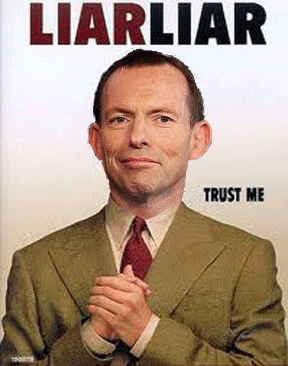
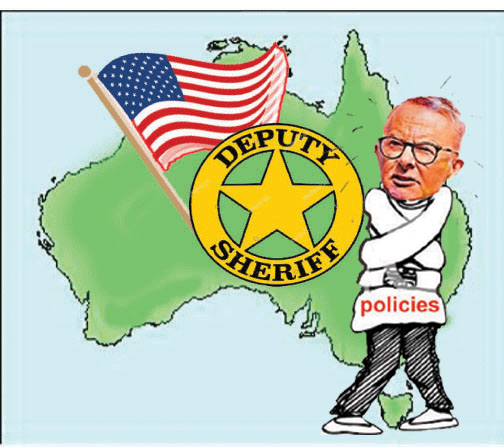



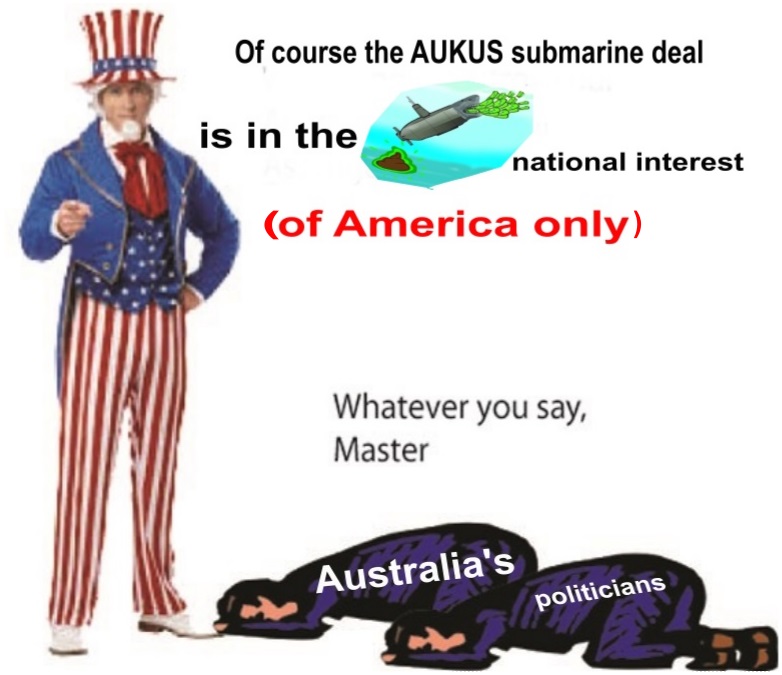


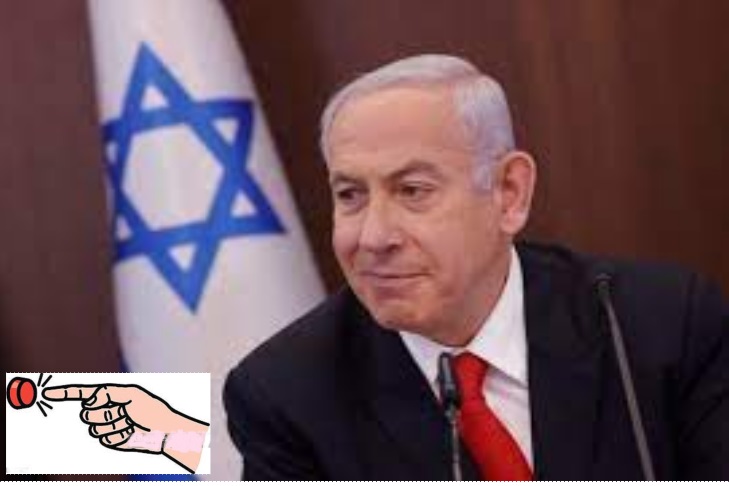
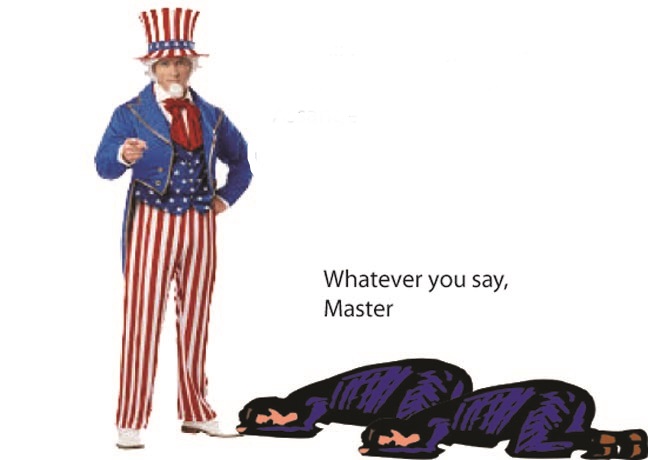

 Antinuclear