Australia has said “all nations” – including the US – should refrain from nuclear weapons testing after Donald Trump announced plans to potentially start exploding nukes for the first time in more than three decades.
Assistant Minister for Foreign Affairs and Trade Matt Thistlethwaite said the globe was entering a “critical time” where limits on weapons of mass destruction are being eroded
He is in New York this week representing Australia at a United Nations review of efforts to stop the spread and use of nuclear weapons.
Mr Thistlethwaite also told news.com.au that on the sidelines of the meeting he had held “frank conversations” with nations such as Japan, South Korea and Singapore to get “assurances” on fuel supplies to Australia.
‘Critical time’ for stopping nuclear weapons
The UN’s Treaty on the Non-Proliferation of Nuclear Weapons (NPT) entered into force in 1970 and now has 191 signatories, with notable exceptions being nuclear nations India, Pakistan and Israel.
The aim of the treaty is to stop the spread of nuclear arms and push for disarmament.
But New START, the last agreement to prevent the US and Russia from building more bombs, expired in February.
There are now concerns that a global nuclear arms race could be on the cards.
On Monday, UN Secretary-General Antonio Guterres told the New York meeting, “for too long, the treaty has been eroding.”
“The drivers of (nuclear) proliferation are accelerating.”
There’s little expectation the conference will notably change that gloomy outlook.
Critical time’
Asked if Australians should be concerned about the threat of nuclear weapons, Mr Thistlethwaite told news.com.au the New York review “does occur at a critical time.”
“We’ve got increasing uncertainty in the global geostrategic situation, particularly around the Middle East and Ukraine, and there’s increasing tension within the Asia Pacific region.
“We’re going to make sure that Australia plays a role in de-escalation, supporting peaceful outcomes and upholding the international rules.”
“We want to see a world where the spread of nuclear weapons is prevented … and we’ve been a loud voice in ensuring that nations shouldn’t be involved in testing nuclear weapons anymore.”
No nation should test nukes – including US
But one louder voice doesn’t seem to be on the same page as Australia.
In October, Donald Trump said the US would resume nuclear weapons testing “on an equal basis” with other nations.
“That process will begin immediately,” he said.
Mr Trump’s comments have led to confusion about what new US nuclear testing might involve.
The last country to explode an actual bomb was North Korea in 2017. The US and Russia haven’t tested nuclear weapons since the early 1990s. But Vladimir Putin claimed recently that Russia had tested a nuclear-powered torpedo that was capable of carrying nuclear weapons.
Would Australia be against the US resuming tests with actual nuclear bombs?
“We’re against all nations testing nuclear weapons,” Mr Thistlethwaite said, who did not mention the US by name.
“We know Maralinga (the UK’s 1950s nuclear weapons testing site in Australia) had a lingering effect on the Indigenous community.
“We want to make sure that we don’t see those situations in our region again, or indeed anywhere in the world.”
Iran nuclear role ‘not appropriate’
There was uproar at the UN NPT conference when Iran was announced as one of 34 vice presidents of the event.
Assistant Secretary for the US Bureau of Arms Control and Non-proliferation Christopher Yeaw told the conference it was an “affront” that Iran had been appointed to the role.
“(It is) indisputable that Iran has long demonstrated its contempt for the non-proliferation commitments of the NPT.
Iran’s role was “beyond shameful and an embarrassment to the credibility of this conference,” he was reported by Reuters as saying.
Ms Thistlethwaite said Australia had “expressed its concern and opposition” to Iran’s elevation.
“That wasn’t the appropriate move, and we’ve expressed our support for the United States position”.
‘Frank conversations’ with oil nations
Mr Thistlethwaite added that he had meetings with countries on the fringes of the event, including those critical to Australia’s energy security.
“An important part of this trip is working with our international partners on securing Australia’s fuel supplies,” he said.
“Most of our refined oil products come through Southeast Asia, so I’ve had meetings with (South) Korea, Singapore, Japan, Vietnam … to reiterate the importance that open trade and supplies continue to get through.
“It’s been heartening to have those frank conversations with those partners, to get those assurances regarding continued fuel supplies and to ensure that they remain trusted partners for Australia.”
Mr Thistlethwaite mentioned Australia’s trump card with nations that export oil – Australia’s abundance of liquid natural gas (LNG), which many countries need just as keenly.
“We’re a big supplier of LNG exports to countries in the region, and we’ve been making sure that we reiterate that fact that we’re a reliable supplier that will continue and the relationship with those important fuel partners is in a pretty strong position.”
Israel’s escalating actions and influence over U.S. policy are framed as the trigger for a global crisis, with Australia set to bear the economic fallout, writes George Grundy.een enough to say it with absolute certainty: the Israeli army is the most depraved army’ ~ Francesca Albanese, UN Special Rapporteur.
‘I have seen enough to say it with absolute certainty: the Israeli army is the most depraved army’ ~ Francesca Albanese, UN Special Rapporteur.
Benjamin Netanyahu’s influence over U.S. President Donald Trump may be the defining reason why America made the catastrophic decision to go to war with Iran, which is why the Strait of Hormuz remains closed, which in turn explains why Australia seems poised to experience an unprecedented oil shock.
Many economists forecast that our economy is about to grind to a halt, perhaps for months, so Australians must be clear-eyed about the role Israel has played in this disaster.
The prevailing view in Western politics, media and society has, for many decades, been that the Middle East is a “tough neighbourhood” (implicitly absolving Israel of blame for its occasional bouts of brutality), and an assumption that the “only democracy in the region” was committed to peace and, ultimately, a two-state solution with the Palestinians.
This was and remains an absolute fiction. Even the most casual glance at a map showing the shrinking landmass of Gaza and the West Bank (particularly since 1967) makes clear that the two-state solution was a lie, a fig-leaf allowing successive Israeli governments to expand territory and further immiserate the hapless Palestinians.
Yet what was an ongoing and immoral delusion moved from disaster to catastrophe, following the atrocious attack by Hamas in October 2023. Prime Minister Netanyahu appears to have viewed the atrocity as an opportunity to implement the long-held Zionist goal of establishing a “Greater Israel”, the first stage of which was to be the complete obliteration of Gaza.
Prime Minister Anthony Albanese has attempted to walk a fine line in his relations with Israel, recognising a Palestinian state but risking significant political damage by inviting Israel’s President to our shores.
Albanese’s clinging to established international dogma, whilst a betrayal of his past beliefs, might be acceptable in earlier times, but global tectonic plates are shifting at a pace unmatched since perhaps 1945.
Australians of all political persuasions should rightly consider whether Israel is indeed a moral player on the world stage and whether our country should continue to align itself with a regime that has:
Used snipers to deliberately target infants and children in Gaza, killing thousands and creating the largest group of childhood amputees in modern history. Israel has subsequently blocked the distribution of prosthetic limbs for survivors.
Dropped bombs on civilians sheltering in tents, burning people alive. An Australian doctor said she delivered a baby by C-section from a nine-month pregnant woman with no head, following an Israeli strike. In late 2023, the IDF forced staff out of a Gaza hospital at gunpoint and left newborn babies to starve and die. Every hospital in the territory has now been destroyed.
Killed at least 80,000 in Gaza (the true number is probably much higher), targeting children, medical and power facilities, schools, mosques, hospitals and ambulances, water purification, journalists and civic leaders, whilst stopping nearly all aid and medicine from entering — actions clearly aimed at devastating every aspect of civil society and starving the population. A genocide, in other words.
Attacked and killed UN peacekeepers in Lebanon. Used banned white phosphorous and cluster munitions while destroying countless villages, and carried out clear acts of ethnic cleansing that have left over a million people displaced, including around 370,000 children. Oxfam has stated that Israeli tactics used in Gaza are now being exported to Lebanon, a nation now suffering one of the world’s worst humanitarian crises on Earth.
Tortured and murdered Palestinian children. The IDF buried captured Palestinian children alive in mass graves, after tying their hands behind their backs. An 18-month-old Palestinian child recently taken into custody by the IDF was returned with cigarette burns on its legs, having been tortured to get a confession from its father.
Institutionalised the practice of “double tap” attacks, whereby an initial bombing is followed by subsequent attacks on the same location, killing first responders and medics. Just last week, Israel carried out a “quadruple tap” in southern Lebanon, killing those trying to help the injured over and over again.
Trained and used dogs to rape Palestinian detainees and prisoners (according to B’Tselem and EuroMed Human Rights Monitor). In fact, sexual torture of Palestinians is so widespread that it has been described as “organised state policy”. One UN report highlighted the use of rape with bottles, metal rods and knives.
This is far from an exhaustive list. There is much, much more, often filled with unimaginable horror and moral degeneracy. As defined by Australian law, Israel is a terrorist state and carries out war crimes and grave violations of international humanitarian law almost daily.
Recently, Israel passed a law allowing capital punishment for Palestinians found guilty of “terrorism-related” crimes (which, given how Israel practices law against Palestinians, could mean nearly anything). The law only applies to Palestinians — an Israeli convicted of the same crime is not subject to it, and judgment will be carried out by martial law, with no due process, clemency or appeal process.
National Security Minister Itamar Ben-Gvir proudly posted a video of the proposed execution chamber in which convicted Palestinians will be hanged. Armed Israeli forces have begun the practice of putting numbers on the hands of displaced Palestinians in the West Bank.
As the IDF has advanced across southern Lebanon, they have explicitly warned Christian and Druze leaders not to harbour Shiite Muslims in their homes — Jewish troops forcing one particular religious group of people out of Lebanese society, potentially searching for them in their attics. Anyone with a knowledge of history should see the historical resonance of these monstrous practices.
Race-based execution laws, genocidal destruction, institutionalised rape, pogroms in the West Bank, military expansion in nearly all directions. A network of at least 16 torture camps, where thousands are held, often without charge. Were it not such a forbidden comparison, we might spot similarities to another fascist regime in the 1930s.
Those making the connection are hardly from the fringe. Almost half of Britons in one poll said they believed Israel treats Palestinians like the Nazis treated the Jews. Ehud Olmert, a former Prime Minister of Israel, signed a letter describing settler violence in the West Bank as ‘Jewish terrorism’.
“If there were Nuremberg trials, right, where the Israelis and the Americans were brought before the court, President Trump, along with President Netanyahu and many of their advisors, would be hanged.”
Imagine this horror was being carried out by any nation on Earth not named Israel. Ask yourself what poses the greater threat — Iran, which until Trump tore up the JCPOA agreement was clearly not developing a nuclear bomb, or Israel, wildly attacking everyone in sight, led by a genuine maniac and possessors of the world’s only undeclared nuclear arsenal.
Far from operating the most moral army in the world, overwhelming evidence shows that Israel is now an entirely rogue state, raping, starving, torturing and murdering its prisoners, bombing its neighbours indiscriminately, annexing nearby territory and goading its patron, America, into actions that could easily lead us to a new world war.
Israel is hardly shy about its intentions. Finance Minister Bezalel Smotrich recently gave a speech in which he said, “There will be expansion in Gaza that will extend our borders. In Lebanon, to the Litani, in Syria, Mount Hermon, parts of the north, south, and east.” This would represent a “Greater Israel” plan, stretching (one might say) from the river (Litani) to the (Mediterranean) sea.
Such is the insanity of the time in which we live that voicing this same expression in Queensland will land you in prison, while it is so widely used by Israeli politicians that it’s literally in the Twitter (X) bio of the Prime Minister’s son.
Yet, despite heartening protests in Tel Aviv, poll after poll shows that a majority of Israelis support this endless militarism. Young Israelis are more right-wing, religious and conservative than their elders. An eventual end to Netanyahu’s appalling leadership seems unlikely to reform Israeli society.
An unprecedented oil shock is nearly at Australia’s shores. It’s likely to be the most devastating event for this country since the Second World War and when it arrives, Australians should remember that the crisis originated in the White House situation room on 11 February, when Netanyahu finally convinced a gullible American president to carry out his decades-long wish for an attack on Iran.
Benjamin Netanyahu is a violent extremist, a fugitive from justice at the International Criminal Court, who cannot enter even the commercial airspace of many countries for fear of arrest. It was Netanyahu who convinced Trump to catastrophically withdraw from the JCPOA, Israel that is primarily responsible for the catastrophe currently re-shaping our world and Israel who will be culpable, should a worldwide famine ensue.
Israel is the single greatest threat to world peace today. The past comfy assumptions about global partnerships are gone. Australia should join the growing list of nations that want nothing to do with this belligerent, fascistic country.
Look at the photo[on original] Anthony Albanese, grinning in his USS Vermont baseball cap like a kid who just won a free submarine from the Pentagon’s lucky dip. Beside him, Vice Admiral Mark Hammond, now our incoming Chief of the Defence Force, in his crisp “Chief of Navy” lid, the two of them bonded like old mates who’ve just kayaked Sydney Harbour together over Christmas and strolled San Diego in matching Souths Rabbitohs caps. It’s not subtle. It’s not strategic. It’s surrender cosplaying as mateship.
This week Albanese confirmed what insiders have long known: Hammond, the submariner true-believer who once tried and failed to charm Paul Keating out of his withering contempt for AUKUS, will run the entire ADF from July. Another submariner, Rear Admiral Matthew Buckley, takes Navy. The navy now owns the top two defence jobs while the $425 billion defence spend over the next decade funnels the lion’s share into undersea warfare “anchored by the AUKUS submarine program.”
Translation: the US military-industrial complex just got the keys to the Australian treasury, delivered by a Labor government that once pretended to care about sovereignty.
Keating, to his eternal credit, wasn’t buying the sales pitch back in early 2023. Picture the scene: Hammond, briefcase locked to his wrist, submarine photos ready for the reveal, deploying the full arsenal of Pentagon charm on a man who had already watched one generation of Americans promise the world and deliver the bill. Keating told Marles and Hammond straight that AUKUS is “failed by design.” You can only keep about one-third of a submarine force at sea against a peer enemy. The rest is just expensive metal rusting in dry dock
Hammond’s real mission was never to convert Keating. It was to lock in the man who matters: Albanese. Kayak dates, Rabbitohs solidarity, San Diego photo-ops. The power couple of Australian defence was born. Keating went back to his piano.
And even if the submarines arrive, a proposition on which the actuaries are not taking bets, who exactly is going to crew them? Australia has been scrambling to find qualified submariners for years. The training pipeline is thin, the retention rates are worse, and nuclear submarines demand a level of crew specialisation that takes a decade to build and about eighteen months of a better offer to lose. We are proposing to operate one of the most technically demanding weapons platforms in human history with a workforce we currently cannot fill for the vessels we already have. The recruiters are working weekends. The submarines, theoretically, arrive in the 2030s. The crews, theoretically, materialise sometime after that. In the Pentagon’s spreadsheet this is presumably listed under “Australia’s problem.”
It’s an absurdity that needs the comic genius of Clarke and Dawe to illuminate. My goodness, here they are…………………………………………………………………………………………………………………………………………………………………..
Then there is the small embarrassment that nobody in the AUKUS salesroom wants to dwell on: submarines are yesterday’s technology. The oceans that once hid them are filling up with sensors, autonomous underwater vehicles, satellite-linked surveillance arrays, and drone systems that can stalk a nuclear submarine across an ocean with the patient indifference of a search algorithm. The acoustic and thermal signatures that once dissolved into the depths are now readable. Add the tyranny of distance that always makes Australia’s strategic situation unique, and we are a long, slow bicycle ride from any plausible theatre of war. By the time a Virginia-class boat lumbers north from Perth or Garden Island, the conflict it was sent to influence has already been decided by hypersonic missiles, drone swarms, and electronic warfare conducted at the speed of light. The submarine arrives, metaphorically speaking, to find the furniture already rearranged and the Americans writing the after-action report.
Meanwhile, every serious military analyst watching Ukraine, watching the Persian Gulf, watching the drone campaigns rewriting the rules of engagement in real time, is drawing the same conclusion: cheap, expendable, autonomous systems are eating the lunch of expensive, crewed, prestige platforms. A drone costs thousands. A Virginia-class submarine costs $3.4 billion American, arrives late, requires a crew we don’t have, takes weeks to reach a fight, and can be tracked by technology already proliferating across the Indo-Pacific. We are buying a Rolls-Royce, with a target painted on its roof, for a road that no longer exists.
Michael Shoebridge of Strategic Analysis Australia put the broader problem bluntly: “Hammond’s elevation signals the Albanese government doubling down on its single bet on AUKUS and deepening Australia’s military reliance on the US as the key source of resupply for everything our military would need to fight an actual war. While Europe, Canada, and every other US ally are frantically rethinking assumptions in the age of Trump’s “America First,” cheap drones, and missile shortages, Australia stands lonely in its refusal to admit the world has changed.” Albert Palazzo, former director of war studies for the Australian Army, asks the obvious question nobody in Russell Hill wants answered: “when the person running the entire defence apparatus comes from the service consuming most of the budget, is there any critical oversight at all?”
Binoy Kampmark puts the whole farce with magnificent precision: Australian negotiators resemble “a facsimile of Bertie Wooster in desperate need of the good advice of his manservant Jeeves.”
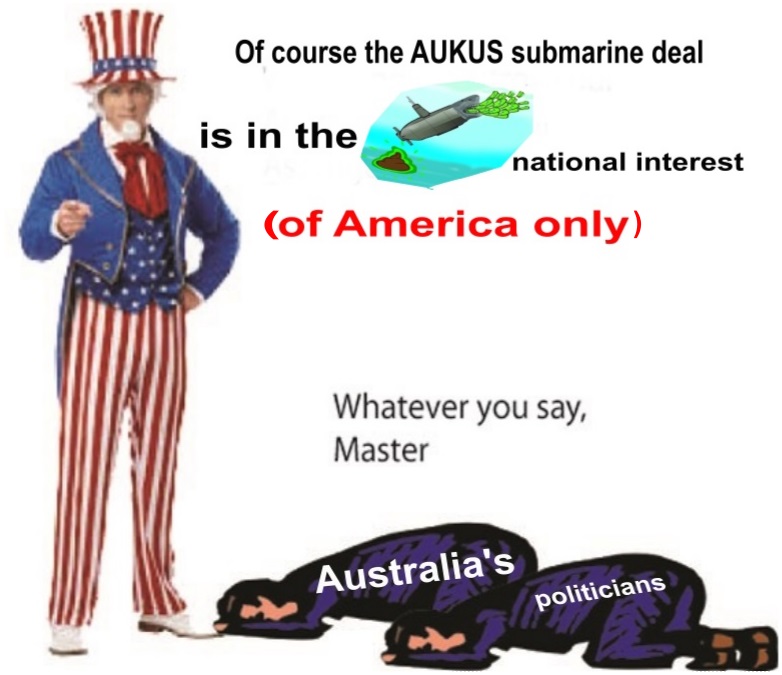
There is Bertie, enthusiastic, well-connected at the club, constitutionally incapable of recognising a con, signing documents in San Diego while the manservant, who is Washington, quietly pockets the cheque. We have already funnelled $1.6 billion into US naval yards for what amounts to stealthy proliferation that benefits the American military-industrial complex far more than any sovereign Australian capability.
The Virginia-class boats? The US will keep them when it suits, rotate them through our bases under effective American operational control, and leave us holding the nuclear waste, the recruitment crisis, and the bill. Retired Rear Admiral Peter Briggs calls it a “wasteful folly” headed for a “train smash.” Even Malcolm Turnbull, not a man prone to anti-American sentiment on weekdays, labelled Australia the “rich dummy” subsidising Britain’s creaky program.
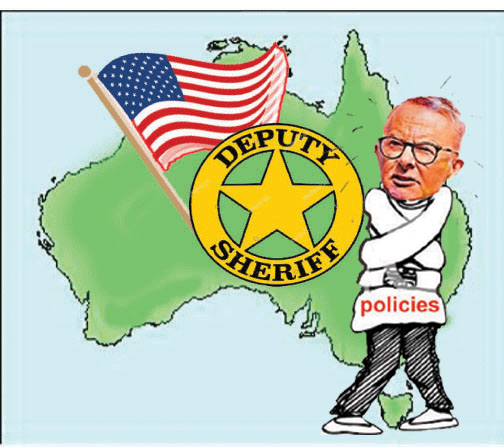
This is the dark comedy of it all. Labor, the party that once marched against Vietnam and sneered at Yankee imperialism, has become the most compliant vassal in the Anglosphere. Albanese’s “independent” foreign policy is now measured in how enthusiastically we open our chequebook and our bases. Hammond, the perfect courtier with deep Washington contacts and fearless advice that somehow always aligns with the Pentagon, will ensure there is no awkward questioning of the $368 billion black hole.
While the rest of the world pivots to drones, autonomous systems, and missile defence that actually works in actual wars, we are betting the farm on nuclear-powered prestige projects that may never arrive, or may arrive under effective US operational control, crewed by personnel we are still advertising for, travelling very slowly toward a war that ended while we were in transit.
The men who marched against Vietnam are now the men writing the cheques for the Pentagon. The party that was born in the shearing sheds is now the party that holidays in San Diego. The submariners have taken the wheel of a vessel that costs more than any previous generation of Australians could have imagined, moves slower than the conflicts it was designed to fight, and flies, when you look carefully at the fine print, someone else’s flag.
The caps told us everything. We just didn’t want to read them.
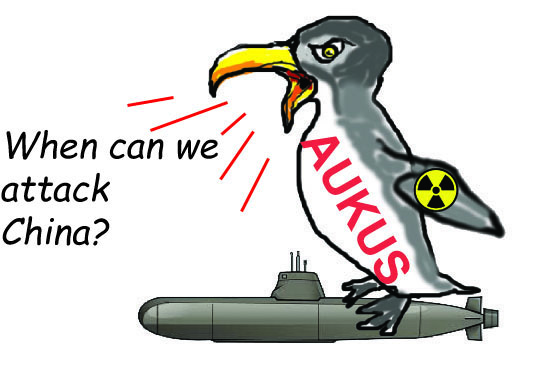
Marles identified China as the primary threat to peace. He spoke of the need to project Australian military force “anywhere on the planet” to police global trade.
But China has no history of being an aggressor against Australia. It has never threatened Australia. It has never invaded Australian territory. It has never attacked Australian forces.
The only “threat” is that China might replace the United States as a trading partner by offering quality products at better prices and better trading conditions. This is not a military threat. It is an economic threat – to the profits of the defence contractors, to the hegemony of the United States, to the permanent war economy.
Former prime minister Paul Keating, no stranger to plain speaking, previously accused Marles of a “careless betrayal of the country’s policy agency and independence.”
Keating said:“A moment when an Australian Labor government intellectually ceded Australia to the United States as a platform for the US and, by implication, Australia, for military engagement against the Chinese state in response to a threat China is alleged to be making.”
“China has not threatened Australia militarily, nor indeed has it threatened the United States. And it has no intention of so threatening.”
On April 16, 2026, Defence Minister Richard Marles stood before the National Press Club and announced the biggest military spending spree in Australian history. An extra $14 billion over four years. An additional $53 billion over the next decade. Defence spending to rise to 3% of GDP by 2033.
“Australia faces its most complex and threatening strategic circumstances since the end of World War II,” Marles declared. “International norms that once constrained the use of force and military coercion continue to erode.”
On the same day, the Prime Minister was flying to Brunei to beg for fertiliser and diesel.
The juxtaposition is obscene. While Marles was marketing the apocalypse, Anthony Albanese was scrambling to secure the basic necessities of Australian life – fuel for trucks, fertiliser for crops, the stuff that keeps the country running
The 100 million litres of diesel from Brunei and South Korea is not a solution. It is a distraction. The government is hoping that Australians will see the headline, breathe a sigh of relief, and stop asking the hard questions.
But the questions remain. And they are damning.
The Severity of the Crisis
The situation is far worse than the government has admitted.
As of April 11, 2026, Australia had 31 days’ worth of diesel, 28 days of jet fuel, and 38 days’ of petrol. These figures are dangerously close to the point where the government would be forced to implement nationwide fuel rationing.
In early April, Energy Minister Chris Bowen disclosed that 144 service stations across the country had completely run out of fuel, with a further 283 stations reporting no diesel supplies. The shortages have been most acute in rural and regional areas – precisely where farmers and truck drivers need fuel the most.
The Geelong refinery fire has compounded the problem. Viva Energy’s refinery is one of only two remaining refineries in Australia. The blaze shut down production at the worst possible moment.
As one Taiwanese media outlet starkly put it, Australia is living a “real-life Mad Max” scenario. The comparison is not hyperbolic. The film franchise depicted a world brought to its knees by fuel scarcity. Australia is now staring into that abyss.
The Root Cause: Structural Failure, Not Bad Luck
This crisis is not a bolt from the blue. It is the predictable consequence of decades of policy neglect.
Australia now imports over 90% of its refined fuel needs. In 2000, the country was almost entirely self-sufficient in petroleum products, meeting nearly 98% of its own demand. That figure has collapsed to just 5.6% for crude oil production.
The Just-in-Time model that has governed Australia’s fuel supply for decades is a house of cards. It prioritises efficiency and low costs over resilience and security. The Asian refineries that supply Australia are themselves dependent on crude oil shipped through the Strait of Hormuz, which has been effectively closed since late February.
The government has known about this vulnerability for years. In 2010, the NRMA warned that Australia was becoming dangerously dependent on fuel imports from “some of the most politically unstable corners of the globe.” Those warnings were ignored.
The same pattern applies to fertiliser. Australia imports 65% of its urea – the key ingredient in crop fertiliser – from the Middle East. The Strait of Hormuz closure has sent prices skyrocketing by 60%. Urea now costs more than $1,550 per tonne, up from $700 before the war.
Farmers are now on “boat watch”, anxiously tracking ships that may not arrive in time for winter planting. “Nothing grows without fertiliser and water,” said canegrower Dean Cayley. He is not exaggerating. Without urea, crop yields can drop by 40%.
The crisis is not a natural disaster. It is a policy choice.
The 100 Million Litre Announcement: Too Little, Too Late
The shipment secured by Prime Minister Albanese from Brunei and South Korea totals approximately 100 million litres.
Opposition sources have been quick to point out that this volume represents little more than a single day’s supply. Australia consumes roughly 90 million litres of fuel daily. The announcement is not a solution. It is a photo opportunity.
The government has also signed “no surprises” energy agreements with Malaysia, Singapore, and Brunei. These agreements are not legally binding supply guarantees. They are diplomatic assurances that Australia will be given advance notice if any of these nations consider restricting fuel exports.
Prime Minister Anwar Ibrahim of Malaysia was frank about the limitations of the arrangement. “The world looks very different to when you were here last year,” he said. “Global energy markets are under serious stress.” He did not promise that Malaysia would continue supplying Australia indefinitely. He promised that the two nations would talk.
Meanwhile, Australia has no national strategic fuel reserve. The International Energy Agency recommends that member countries hold reserves equivalent to 90 days of net imports. Australia holds approximately 30 days.
The Hidden Story: The Fuel Tax Credit Scheme
The most egregious aspect of this crisis is the one the mainstream media has almost entirely ignored.
Australia’s largest mining companies – BHP, Rio Tinto, Glencore, Fortescue, and Yancoal – continue to receive billions of dollars in fuel tax credits while ordinary Australians struggle to fill their tanks.
The Fuel Tax Credit Scheme is Australia’s largest taxpayer-funded fossil fuel subsidy, costing the budget $11 billion annually. In the 2025 financial year alone, the five largest mining companies were collectively refunded $1.94 billion:
BHP: $622 million
Rio Tinto: $423 million
Glencore: $349 million
Fortescue: $290 million
South32: $140 million
Climate Energy Finance has calculated that 18 of the largest diesel consumers in Australia received $3.36 billion in fuel tax credits in the 2025 financial year alone.
The scheme refunds the full customs duty – currently 51.6 cents per litre – paid on imported diesel used off-road in industry. It is a direct transfer of wealth from Australian taxpayers to some of the largest corporations on the planet.
The government is simultaneously pleading with Australians to conserve fuel, subsidising the import of diesel from Asia, and handing billions of dollars to mining companies to continue burning the stuff.
Climate Energy Finance founder Tim Buckley has called for urgent reform, warning that without change, Australia will hand back almost $84 billion in fuel tax credits to major miners by 2030.
The silence from the government is deafening.
The Opportunity Cost: Defence vs. Everything Else
While Marles was marketing the apocalypse, the opportunity cost to Australia became staggering.
The government has announced an extra $14 billion in defence spending over the next four years, with a further $53 billion over the next decade. Total defence spending over the next decade will top out at $887 billion.
Meanwhile, the government has committed a paltry $386 million to Gavi, the Vaccine Alliance, for 2026–2030. Gavi has helped vaccinate more than 1.1 billion children globally, saving more than 18.8 million lives. It is one of the most cost‑effective health interventions in history.
The government has provided just $5 million to the Australian Partnership for Preparedness Research on Infectious Disease Emergencies (APPRISE).
The message is unmistakable: the government is prepared for war. It is not prepared for the next pandemic.
The Manufactured Threat
Marles identified China as the primary threat to peace. He spoke of the need to project Australian military force “anywhere on the planet” to police global trade.
But China has no history of being an aggressor against Australia. It has never threatened Australia. It has never invaded Australian territory. It has never attacked Australian forces.
The only “threat” is that China might replace the United States as a trading partner by offering quality products at better prices and better trading conditions. This is not a military threat. It is an economic threat – to the profits of the defence contractors, to the hegemony of the United States, to the permanent war economy.
Former prime minister Paul Keating, no stranger to plain speaking, previously accused Marles of a “careless betrayal of the country’s policy agency and independence.” Keating said:
“A moment when an Australian Labor government intellectually ceded Australia to the United States as a platform for the US and, by implication, Australia, for military engagement against the Chinese state in response to a threat China is alleged to be making.”
Keating noted the obvious:
“China has not threatened Australia militarily, nor indeed has it threatened the United States. And it has no intention of so threatening.”
The Revolving Door
The frequency with which political advisers revolve from the Albanese government into the private sector is striking. In March 2026, Defence Minister Richard Marles’s former policy adviser, Kieran Ingrey, left his position and immediately landed at the lobby shop GRACosway.
This is not an isolated incident. It is the revolving door – the mechanism by which public servants and political advisers convert their access into private-sector profit. The same mechanism that has been documented in the United States.
The Australian Financial Review notes that the practice “is starting to give the impression they’re using parliament as a halfway house.” The impression is correct. The halfway house is not a failure. It is a feature.
Ingrey’s new employer, GRACosway, is a lobbying and strategic communications firm. It represents corporate clients. It does not represent the Australian people. The revolving door ensures that the interests of the defence contractors are well represented – not only in the minister’s office, but in the minister’s mind.
The Silence of the Mainstream Media
The mainstream media has been complicit in downplaying the severity of the crisis. The government’s “no surprises” agreements have been reported as diplomatic victories. The 100 million litre purchase has been framed as a success. The underlying structural vulnerabilities have been glossed over.
The fuel tax credit scheme has received almost no coverage. The billions of dollars flowing to mining companies have been ignored. The fact that Australia has no strategic fuel reserve has been mentioned in passing, then forgotten.
The media is not neutral. It is captured.
A Final Word
Richard Marles did not deliver a defence strategy. He delivered a sales pitch.
The target is China. The enemy is abstract. The threat is manufactured.
The real purpose is the wealth transfer. The real beneficiaries are the defence contractors. The real losers are the Australian people, who will pay for this escalation with their taxes, their security, and their future.
The tickets to the Apocalypse Circus keep hitting the marketplace. The government is selling them. The media is promoting them. The opposition is cheering them on.
And the fuel crisis is not a natural disaster. It is a policy choice.
Last week’s meeting between Beijing and Taiwan’s main opposition leader is a bad sign for the China hawks and a sign of rapprochement. Marcus Reubenstein reports.
The combination of the US-Israel war on Iran and the anti-China media narrative in Australia has meant the visit of the leader of Taiwan’s main opposition party, Cheng Li-wun, to China has largely been ignored. Cheng chairs the Kuomintang (KMT) party, and she spent five days in mainland China from the 7th until the 12th of April.
Her public pronouncements indicate a belief that it is not in Taiwan’s interest to pin all of its hopes on an economic and military alliance with the US, and its future is better served with a pivot towards Beijing.
A significant proportion of Taiwan’s population does not want armed conflict with China. More importantly, Taiwan’s political leaders are acknowledging the fact that the US is becoming an increasingly unhinged and unreliable ally.
As reported by NBC News, Cheng points to Ukraine, saying,
“People do not want to see Taiwan become the next Ukraine.”
Add to that mix that Taiwan gets 70% of its oil from the Middle East, there is sentiment in Taiwan that the US bombing of Iran has been disastrously thought out and delivers Taiwan massive economic pain. Will Taiwan risk becoming the centrepiece of a future US military disaster?
In December, Cheng told the New York Times, “Could it be the United States is treating Taiwan as a chess piece, a pawn strategically opposing the Chinese Communist Party at opportune times?”
Taiwan’s ruling DPP (Democratic Progressive Party) had attempted to push a $US40B arms deal with the US through parliament in March, but that was sunk by Cheng’s KMT. The ruling DPP was eventually able to get a deal worth just $US11B through – around one third of an AUKUS submarine.
Cheng’s China visit
The visit to China by Taiwan’s opposition leader took in three very significant cities, Nanjing, Shanghai and Beijing. Shanghai and Beijing, as financial and political capitals, were logical, but Nanjing is of great historical significance.
She visited the Sun Yat‑sen Mausoleum in Nanjing with a large Taiwanese delegation, a site honouring the founding father of the Republic of China, revered in both Taiwan and mainland China. Nanjing is also the site of one of Japan’s greatest wartime atrocities, the so-called Rape of Nanjing.
A small number of hardline figures in Japan’s ruling LDP continue to deny Japanese participated in any wartime atrocities. The LDP’s newly elected prime minister, Sanae Takaichi, stating that Japan would send in its military to aid Taiwan in any conflict with China, has dramatically escalated tensions between Beijing and Tokyo.
Takaichi is one of Japan’s most pro-US leaders, and Cheng’s visit to Nanjing would not be lost on the US. By extension, Cheng’s point of visiting Nanjing could be seen as a backhanded message to Japan, which hosts 55,000 US troops, to stay out of Taiwan’s affairs.
Implications for Australia
Cheng’s trip to China has implications for Australia and our foreign policies towards both our biggest trading partner and most important strategic partner.
The Albanese government has gone all in on the US’s East Asia military push, and now the US is showing clear signs of stress. The US has redeployed Thaad missile systems from South Korea to fight its war with Iran, while supercarrier naval vessels based in Japan, and operating in the South China Sea, have also been sent to the Gulf. Despite being the greatest military power in global history, it’s obvious it doesn’t take much to wear US forces thin.
Neither Prime Minister Anthony Albanese, Foreign Minister Penny Wong, nor Defence Minister Richard Marles has deviated from Australia’s blind support for the US war on Iran.
The question is, will they follow the US into an inevitably disastrous war against China or, worse still, act as a proxy in a future war?
Australia’s tilt towards offensive military capability, also enthusiastically supported by the LNP opposition, and the billions committed to submarines which may never arrive, do not augur well.
If the US cannot defeat Iran, there is no path to victory against an equally determined China, far better equipped, with the world’s second largest economy, and that is not a pariah state.
1×1515
2:54 / 8:51
1×1515
0:16 / 8:51
Last week’s meeting between Beijing and Taiwan’s main opposition leader is a bad sign for the China hawks and a sign of rapprochement. Marcus Reubenstein reports.
The combination of the US-Israel war on Iran and the anti-China media narrative in Australia has meant the visit of the leader of Taiwan’s main opposition party, Cheng Li-wun, to China has largely been ignored. Cheng chairs the Kuomintang (KMT) party, and she spent five days in mainland China from the 7th until the 12th of April.
Her public pronouncements indicate a belief that it is not in Taiwan’s interest to pin all of its hopes on an economic and military alliance with the US, and its future is better served with a pivot towards Beijing.
A significant proportion of Taiwan’s population does not want armed conflict with China. More importantly, Taiwan’s political leaders are acknowledging the fact that the US is becoming an increasingly unhinged and unreliable ally.
As reported by NBC News, Cheng points to Ukraine, saying,
People do not want to see Taiwan become the next Ukraine.
Add to that mix that Taiwan gets 70% of its oil from the Middle East, there is sentiment in Taiwan that the US bombing of Iran has been disastrously thought out and delivers Taiwan massive economic pain. Will Taiwan risk becoming the centrepiece of a future US military disaster?
In December, Cheng told the New York Times, “Could it be the United States is treating Taiwan as a chess piece, a pawn strategically opposing the Chinese Communist Party at opportune times?”
Taiwan’s ruling DPP (Democratic Progressive Party) had attempted to push a $US40B arms deal with the US through parliament in March, but that was sunk by Cheng’s KMT. The ruling DPP was eventually able to get a deal worth just $US11B through – around one third of an AUKUS submarine.
The visit to China by Taiwan’s opposition leader took in three very significant cities, Nanjing, Shanghai and Beijing. Shanghai and Beijing, as financial and political capitals, were logical, but Nanjing is of great historical significance.
She visited the Sun Yat‑sen Mausoleum in Nanjing with a large Taiwanese delegation, a site honouring the founding father of the Republic of China, revered in both Taiwan and mainland China. Nanjing is also the site of one of Japan’s greatest wartime atrocities, the so-called Rape of Nanjing.
A small number of hardline figures in Japan’s ruling LDP continue to deny Japanese participated in any wartime atrocities. The LDP’s newly elected prime minister, Sanae Takaichi, stating that Japan would send in its military to aid Taiwan in any conflict with China, has dramatically escalated tensions between Beijing and Tokyo.
Takaichi is one of Japan’s most pro-US leaders, and Cheng’s visit to Nanjing would not be lost on the US. By extension, Cheng’s point of visiting Nanjing could be seen as a backhanded message to Japan, which hosts 55,000 US troops, to stay out of Taiwan’s affairs.
Implications for Australia
Cheng’s trip to China has implications for Australia and our foreign policies towards both our biggest trading partner and most important strategic partner.
The Albanese government has gone all in on the US’s East Asia military push, and now the US is showing clear signs of stress. The US has redeployed Thaad missile systems from South Korea to fight its war with Iran, while supercarrier naval vessels based in Japan, and operating in the South China Sea, have also been sent to the Gulf. Despite being the greatest military power in global history, it’s obvious it doesn’t take much to wear US forces thin.
Neither Prime Minister Anthony Albanese, Foreign Minister Penny Wong, nor Defence Minister Richard Marles has deviated from Australia’s blind support for the US war on Iran.
The question is, will they follow the US into an inevitably disastrous war against China or, worse still, act as a proxy in a future war?
Australia’s tilt towards offensive military capability, also enthusiastically supported by the LNP opposition, and the billions committed to submarines which may never arrive, do not augur well.
If the US cannot defeat Iran, there is no path to victory against an equally determined China, far better equipped, with the world’s second largest economy, and that is not a pariah state.
Respected US political scientist Professor John Mearsheimer says, US President Donald Trump’s war with Iran is “manna from heaven” for China. He argues the war on Iran has made the US an irresponsible stakeholder in the international system and that China looks like the “adults in the room.”
China’s carrot and stick
China’s approach to Taiwan, and more broadly to much of its global diplomacy, has been a mix of carrot and stick. Beijing is still dangling carrots in front of Taiwan. Reunification with Taiwan remains the endgame,
“but the overwhelming desire is that it should be achieved peacefully.”
Cheng was warmly received by Chinese President Xi Jinping, and following Cheng’s visit, the Chinese government announced a list of ten new policies to promote economic and travel initiatives to strengthen ties between Beijing and Taiwan.
In the background, a looming stick could be an easily achievable Chinese blockade of commercial shipping around Taiwan. As Iran’s blockade of the Strait of Hormuz demonstrates, it doesn’t take a great deal of military firepower to cripple an economy.
What would, or could, Australia do to intervene? Hypothetically, that is a question which may face Australia, but a reconciliation, indeed possible unification between Taiwan and China, would render moot Australia’s current strategic policy.
Taiwan’s future?
While opinions in Taiwan about Cheng are divided, she has a realistic chance of becoming Taiwan’s next president at the 2028 election. To win, she doesn’t only have to run on China policy; there are plenty of domestic issues facing voters. Also, there is no suggestion that a reunified Taiwan would be considered as a province of China. Instead, it would become a special administrative region, citizens would keep their Taiwanese passports, and the New Taiwan Dollar would remain the official currency.
The line in the sand for Beijing would be separatist movements and their sympathisers speaking out publicly. Taiwan would also be prohibited from entering into any military alliances or agreements with other nations.
While this is the same set of conditions imposed on Hong Kong, Taiwan hardly has a tradition of democracy. For its first four decades as a territory, it was governed under martial law, and it wasn’t until 1996 that democratic presidential elections were held.
Current president, Lai Ching-te, is unpopular with his approval rating sinking to 33% in late 2025, having recovered to the low 40% mark in the most recent polls. Cheng’s approval rating is lower, reflecting the distrust Taiwanese people have for their political leaders.
In terms of specific issues, concerns over the economy rank first for Taiwanese voters.
The Chinese, that is to say those of Chinese ethnicity, are by and large very pragmatic. Cheng is betting on a belief that close ties with China represent the future and that the
“Taiwanese people will come to distrust Washington more than they distrust Beijing.”
For months, many of us have watched in frustration as our government responded to Gaza with caution, equivocation, and a reluctance to break from the familiar script of deference to powerful allies. It has felt, at times, like moral clarity was being carefully managed rather than clearly expressed.
Which is precisely why Anthony Albanese’s sudden intervention on Lebanon lands with such force.
By urging that Lebanon be included in any Middle East ceasefire, the Prime Minister has done something rare in modern Australian foreign policy: he has stepped, however briefly, out of line. Not dramatically. Not defiantly. But unmistakably.
This is not just a policy position – it is a signal.
A signal that Australia may be willing to acknowledge what much of the world can already see: that this is not a series of neatly contained conflicts, but a widening humanitarian crisis stretching from the ruins of Gaza Strip to the streets of Beirut. A signal that civilian suffering is not selective, and that our concern for it should not be either.
And yet, it is impossible to ignore the contrast.
Because while this newfound clarity extends to Lebanon, the same certainty has too often been absent when it comes to Gaza. The language has been softer, the urgency more muted, the moral line less clearly drawn. For many Australians, that inconsistency has not gone unnoticed – or unchallenged.
And perhaps most striking of all, it is a signal that the Prime Minister has finally “read the room.”
Because the room has changed. Public patience has thinned. Across Australia – including among Labor’s own supporters – there has been a growing unease with the language of balance when the images on people’s screens tell a far more unbalanced story. People are not asking for perfection, nor for reckless gestures. But they are asking for something that feels increasingly rare in public life: honesty, consistency, and the courage to apply our values evenly.
In that context, this moment feels different.
It feels like a government, or at least a Prime Minister, beginning to find his footing – beginning to speak not just as an ally, but as a representative of a public that expects more than quiet alignment and careful phrasing.
Whether this is the start of something more substantial, or merely a brief departure from the script, remains to be seen. Governments have a way of snapping back into old habits. The gravitational pull of alliance politics is strong, and Australia has rarely resisted it for long.
But for now, credit where it is due.
In choosing to speak up for Lebanon – and in doing so, gently but clearly diverging from the positions of allies such as the United States under Donald Trump – Anthony Albanese has shown a flicker of something Australians have been waiting to see.
Not a break with our allies. Not a dramatic realignment.
Just something quieter – and, perhaps, more important.
A willingness to stand, at least for a moment, on our own two feet.
There is a bitter truth that must be spoken before we can talk honestly about what is happening to us now. Andrew Brown on Australia’s quiet complicity in the illegal US-Israeli war on Iran, fourth in a series.
When the bombs fell on Gaza, Australia was quiet.
When the hospitals were destroyed, when the aid was blocked, when children were pulled from rubble in pieces, when the United Nations, the International Criminal Court, and humanitarian organisations with decades of credibility in conflict zones used words like genocide, ethnic cleansing and collective punishment, Australia was quiet.
Not uniformly. Not entirely. There were protests in every major city, sustained over months, of a size and seriousness this country has not seen since the Iraq War.
There were independent senators who stood in Parliament and said what needed to be said, in plain language, without diplomatic hedging. There were journalists, academics, former diplomats, and hundreds of thousands of ordinary Australians who signed petitions, marched in the streets, and wrote letters that went largely unanswered.
Palestinian-Australian, Muslim-Australian, Arab-Australian communities, and many others with no personal connection to the conflict beyond a functioning conscience, screamed into a political void and were told, in effect, to calm down.
Or apprehended for wearing a t-shirt.
The country, as a political entity, its government, its major institutions, its official voice to the world, was quiet.
The cost of silence
That silence had a cost. Not just a moral cost, though the moral cost is staggering and will take generations to fully reckon with. A strategic cost. The cost of allowing a logic of unchecked military impunity to establish itself as the operating principle of the US-Israeli alliance. A logic that, once normalised in Gaza, did not stay in Gaza.
It never does.
Over 72,000 people killed so far. Over 171,000 injured. An entire civilian population, in one of the most densely populated places on earth, was systematically starved, displaced, and destroyed.
Journalists were killed in numbers that constitute, by any honest accounting, a deliberate campaign to eliminate witnesses. Paramedics were bombed. UN peacekeepers were struck. Aid workers from Australia’s own partner organisations were killed in strikes so precise they could not have been accidental.
And then, when the same alliance, emboldened by eighteen months of zero meaningful consequence, turned its weapons on a sovereign nation-state, on Iran, on February 28 of this year, Australia expressed support. Called it constructive. Offered the American justification back to its own people as sovereign Australian policy.
Warnings ignored
The people warning loudest about Gaza were not merely warning about Palestinians. They were warning about a system. A system in which American military power and Israeli strategic ambition, freed from the constraints of international law and serious allied pushback, would expand. Would find new targets. Would come, eventually, for the stability of every country caught in its orbit.
“They were right. And they were called antisemitic for saying so.“
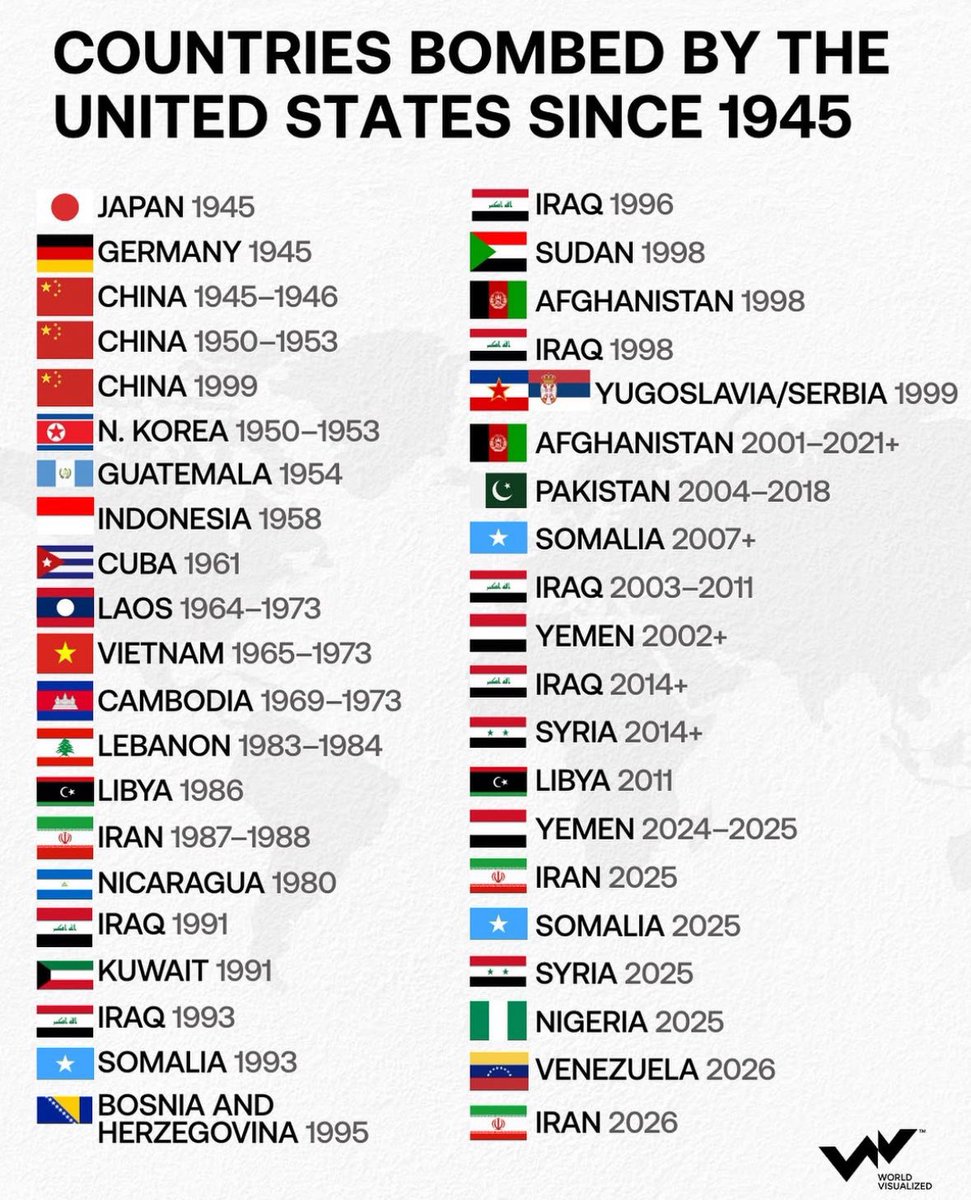
Iran did not come from nowhere. The assault on Iran is the direct and logical extension of the impunity normalised in Gaza. If you can destroy a civilian population with no meaningful consequence, you can bomb a sovereign nation.
If the ICC arrest warrant for Netanyahu means nothing, then international law means nothing. And if international law means nothing, then the only operating principle is force. And the consequences of force are distributed not just to the combatants but to every country whose government chose alignment over principle.
Australia chose alignment over the people of Gaza. It chose it again over Iran. And now it is discovering, at the bowser and the checkout and the business bank account, exactly what that choice costs.
The war came home
Here is what makes this moment different from every protest march and every unanswered letter that came before.
The pain is no longer abstract.
When Gaza burned, the average Australian, cocooned by geographic distance, insulated by a media that kept the most confronting images off prime time, reassured by politicians who described it as heartbreaking while doing nothing, could maintain the fiction that this was someone else’s tragedy.
Terrible, certainly. Distant. Manageable. Something that happened over there, to people over there, in a conflict that had been going on forever and would presumably continue
“without any particular bearing on the school fees or the mortgage or the quarterly business figures.”
That fiction is now dead.
The fuel price spike is not over there. The supply chain disruption is not over there. The investment uncertainty showing up in superannuation statements, in business loans that just got harder to service, in the job that exists today and may not exist in three months. None of that is over there.
business loans that just got harder to service, in the job that exists today and may not exist in three months. None of that is over there.
The war came home. Not in body bags. Not in the specific grief of a military family. It came home in the way that imperial adventurism always eventually comes home to the countries that enable it. Through the economy. Through the slow, grinding, distributed punishment of a population that was never consulted, never warned, and never honestly told what their government’s choices would cost them.
Australia’s complicity
Australia was a participant in Gaza’s destruction. Not with weapons. Not with soldiers. With silence. With diplomatic cover. With the specific, material legitimacy that flows from a liberal democracy declining to formally object. And with the arms adjacent, intelligence and security cooperation that flows through Five Eyes and has never been seriously interrogated in the Australian public domain.
When you have the power to intervene, to sanction, to condemn, to withdraw diplomatic cover, and you choose not to, you are not a bystander. You are a participant. And participants, eventually, share in the consequences.
The Palestinian people could not make Australia listen with their suffering alone.
Not because Australians are cruel. They are not. But because the suffering was made distant. The media made it complex. The politicians made it delicate. The lobby groups made it professionally dangerous to say in plain language what was plainly happening.
“The whole architecture of managed consent did its job with brutal efficiency for eighteen months.”
But a forty percent fuel price increase cuts through managed consent, as does a wave of small business closures. And young Australians told to absorb the economic consequences of a war their government endorsed without their knowledge or consent. That cuts through everything.
The people who protested Gaza, who were dismissed and belittled and accused of antisemitism and told they were being naive about geopolitical complexity, understood something that the political class is only now beginning to grasp: That the world does not offer permanent non-involvement. That the wars you enable reach you. That the impunity you excuse comes back denominated in currencies you understand personally.
Fuel. Food. Jobs. Mortgages. Businesses. Futures.
This is that reckoning. The genocide in Gaza did not wake Australia up, the bill for enabling it will.
And when Australia wakes, fully, clearly, with the focused fury of people who now understand exactly what was done to them, the politicians who called it constructive and the media that told them to blame the Energy Minister are going to find that managed consent has a shelf life.
TACO or not, ceasefire or not, the repercussions from the Iran war will be with us for a long time, and Australians who are done being managed need to resist. Final article on Australia’s complicity in the war on Iran by Andrew Brown.
This is where we stop being polite, because being polite has not worked.
Polite got us a Prime Minister who calls an illegal war of aggression constructive. Polite got us a media landscape that blames the Energy Minister for a conflict that blocked the Strait of Hormuz. Polite got us a political class so thoroughly captured by Washington and Tel Aviv that it cannot find the most basic, elementary words to say that what is happening is wrong, that it is costing us, and that we did not consent to it.
Four articles into this series, we have laid out the case in full. The economic cost. Forty per cent fuel price increases, supply chain disruption, business collapse, and job losses are arriving now and worsening in the months ahead.
The men responsible. A criminal defendant in Tel Aviv prolonging a war that keeps him out of prison, a convicted felon in Washington trailing the shadow of the most significant blackmail network in modern political history, and an Australian Prime Minister who looked at both of them and said: constructive.
The media running cover. Murdoch’s empire pointing your anger at Chris Bowen while the actual cause of your pain, an illegal war fought by Israel and America, goes unnamed in the pages of papers that exist to protect the order, not interrogate it.
And the silence that enabled all of it. Eighteen months of Australia watching a genocide in Gaza, saying nothing of substance, and discovering now that the impunity it excused did not stay in Gaza.
First: Name it.
The US-Israeli war on Iran is illegal. That is not an opinion. It is the assessment of international legal scholars, former UN officials, and the framework of the United Nations Charter that Australia itself helped draft and has repeatedly invoked as foundational to its foreign policy.
There was no Security Council authorisation. There was no act of self-defence as defined under Article 51. There was no imminent attack. There was a decision, made in Washington and Jerusalem, communicated to allies as a fact rather than a request, to bomb a sovereign nation-state because they had the weapons to do it and had calculated that the international community, as currently constituted, lacked both the will and the mechanism to stop them.
That calculation was correct. And it was correct in part because governments like Australia’s, governments that routinely invoke the rules-based order, that send representatives to UN proceedings, that sign international legal instruments with great ceremony, have made it correct through years of unconditional deference that have taught the architects of this war that there are no real consequences.
Name the war for what it is. Say it plainly, in public, without diplomatic hedging. Illegal. Unjustified. Conducted in violation of the international legal framework that Australia claims as a cornerstone of its foreign policy. Say it to your MP. Say it at your workplace. Say it in the letters you write to newspapers that have not said it themselves. The first act of any movement worth the name is
“the refusal to accept the sanitised language of the people responsible for the thing being named.”
Second: Blame it
The blame in this matter is not complex. It is specific, traceable, and attributable to specific decisions made by specific people with names, titles and addresses.
Benjamin Netanyahu, Prime Minister of Israel, criminal defendant on charges of fraud, bribery, and breach of trust, subject of an International Criminal Court arrest warrant, made the political decisions that drove Israel’s regional escalation. His personal legal and political incentives to prolong conflict, to prevent the ceasefire that might accelerate his criminal reckoning, are documented and discussed openly within Israeli civil society.
The suggestion that those incentives have had no bearing on the character or duration of this war is not a serious position.
Already, ceasefire just struck between the US and Iran, Israel’s PM has refused to abide by it, maintaining hostilities in Lebanon.
Donald Trump, President of the United States, convicted felon, a man whose documented relationship with Jeffrey Epstein’s network of influence and leverage has never been fully or honestly examined by the institutions responsible for examining it, authorised the strikes on Iran. He did so without UN authorisation.
Without defined objectives. Without the consent of allies, now absorbing the economic shockwave.
And he did so as a man whose own vulnerability to leverage, whose own history of proximity to an intelligence-connected blackmail operation, raises questions about whether American foreign policy in this period is being conducted in the American national interest or in the interests of something rather darker and harder to name.
Anthony Albanese, Prime Minister of Australia, leader of a government elected on a promise of principled and independent foreign policy, endorsed the war on national television before its objectives had been defined, described Australia’s contribution as constructive, and has since managed the domestic economic consequences of that endorsement by allowing the media to redirect public anger toward his own Energy Minister.
These are the people responsible. Blame them. By name. Publicly. Specifically.
Third: Shame it.
Into the public record. Permanently. Without apology and without a single concession to the people who would prefer you look away.
Shame the government that called a genocide concerning for eighteen months and then called the next war constructive. Shame the press that covered the economic consequences of an illegal war without once naming the war as the cause. Shame the political class that invokes the rules-based international order at every opportunity except the specific, concrete moment when invoking it might cost them something with Washington.
And shame the lobby infrastructure that has made honest public discussion of Israeli state conduct so professionally dangerous that elected representatives self-censor in real time, on camera, in ways they would never do on any other topic involving any other government.
Shame requires naming. And naming requires the willingness to absorb the inevitable accusation. Antisemitism, naivety, conspiracy theory, whatever the silencing vocabulary of the moment happens to be. The answer to that accusation is simple: these are questions about governments, intelligence agencies, and specific individuals. They are being asked by legal scholars, former diplomats, investigative journalists, and the International Criminal Court.
They are not fringe questions. They are the most serious questions available in the current political moment. And the people deploying the accusation are, without exception, people who cannot answer the questions and are therefore trying to end the conversation.
Do not let them end the conversation.
Build the movement
Not a fringe movement. Not an activist movement that can be dismissed with a wave and a label. A mainstream movement of small business owners and tradies and nurses and teachers and families around kitchen tables looking at bills they cannot pay and asking why.
A movement with a single, clear demand: that this government act in Australian interests, not American or Israeli ones, and be
“held accountable when it fails to do so.“
Concretely, that means demanding the following from your MP, from candidates seeking your vote, from any politician who wants to claim the mantle of representing the Australian people.
Formally condemn the US-Israeli war on Iran as a violation of international law and call for an immediate ceasefire and negotiated settlement. Honour the International Criminal Court’s arrest warrant for Netanyahu. State clearly, as sovereign Australian policy, that a man under international indictment for war crimes is not a partner to be accommodated but a defendant to be treated as the court’s warrant requires.
Establish and publish an independent economic inquiry into the full cost to Australian households and businesses of this conflict, with clear attribution, so that every Australian knows exactly what they are paying and exactly why. Suspend all defence and intelligence cooperation that makes Australia complicit in operations it did not approve, and that would not survive public scrutiny if disclosed.
And tell Washington, firmly, as a matter of principle and sovereign policy rather than private diplomatic discomfort, that this alliance has terms. And one of those terms is that you do not commit Australia to your wars without consent and then leave Australians to absorb the damage.
These are not radical demands.
“They are the demands of a country that takes its own sovereignty seriously.”
They will be called radical. They will be called dangerous. They will be called antisemitic.
That word again, the last refuge of those who cannot answer the argument. Ignore it. The charge of antisemitism is not an argument. It is a silencing tactic. You can oppose antisemitism completely, genuinely, without reservation, and oppose the conduct of this war. You can value the American alliance and question the terms on which we have surrendered our independence within it. These are not contradictions. They are the positions of a free people governing themselves.
The pain is coming. For many, it is already here.
Job losses. Business collapses. Families who cannot make rent. Superannuation funds exposed to volatile markets. A small business economy that did nothing to cause this shock and had no voice in preventing it, being asked to absorb consequences that flow directly and traceably from decisions made in Jerusalem, Washington, and ratified by silence in Canberra.
When that pain arrives at your door, and it will if it has not already, remember this.
It was not caused by bad luck. It was not caused by market volatility operating in a benign vacuum. It was not caused by Chris Bowen. It was caused by a war. A specific, illegal, unjustified war of aggression.
A war that the international community, including Australia’s own former diplomats and independent legal scholars,
“warned repeatedly was coming and begged their governments to prevent.”
It was caused by Netanyahu’s impunity, sustained by Trump’s belligerence, enabled by Epstein’s shadow and Mossad’s reach, and ratified by Albanese’s obedience.
And if we do not say that, clearly, publicly, without apology, we will have learned nothing. We will absorb the pain, accept the cover story, and watch it happen again. Because it will happen again. This is what unconditional deference to American and Israeli power produces. Not security. Not prosperity. Not the rules-based international order we were promised.
Your actions to take
So here is the ask. It is not complicated.
Write to your MP. Your name. Your circumstances. Your specific question: what did you do to prevent this, and what are you doing now to protect us from it?
Talk about it. At work, at the table, at the local, at the school gate. Say the quiet part out loud. Say: This war is costing us; our government supported it, and we are going to hold them accountable for that.
Vote accordingly. The politicians who called this constructive, who endorsed it before its objectives were defined, who stayed silent through a genocide and then supported the next war, must answer for it. Not with anger that dissipates into abstraction. With the cold, clear-eyed precision of people who know exactly what was done to them and who did it.
“And refuse, from this moment forward, to accept the managed version of events.”
Managed consent has a shelf life.
The story that all of this is just global complexity, market volatility, regrettable conditions beyond anyone’s control, that story is finished. Australians are not stupid. They are angry. And they are starting, finally, to understand exactly why and at whom that anger should be directed.
They thought we weren’t watching. We were. We just didn’t yet know that the invoice was being issued in our name.
>>> Name it: an illegal war of aggression, enabled by Washington, prosecuted by Tel Aviv, ratified by Canberra.
>>> Blame it: on Netanyahu’s impunity, Trump’s belligerence, Epstein’s shadow, Mossad’s reach, and Albanese’s silence.
>>> Shame it: into the permanent public record, without apology, without concession, and without a single backward step.
The movement starts now. Not with a rally or a petition or a hashtag, though all of those will follow. It starts with each person who reads this and decides, from this moment, that they are done being managed. That they are owed the truth. And that they are going to insist on it.
That is how this ends differently. That is how Australia stops being a footnote in someone else’s war. That is how we become, for the first time in a long time, a country that governs itself in its own interests and has the courage to say so out loud.
The price is being collected at the checkout, at the bowser, and in the quiet ruin of small businesses across this country. The genocide was real. The complicity was real. The bill is real. And we are just getting started.
While the “Iran war” is fuelling Israel’s desire for Middle East chaos, Australia finds itself in strategic quagmire of confused priorities and escalating energy costs. Stuart McCarthy reports.
According to the 2023 Defence Strategic Review, Australia is confronting the “worst strategic circumstances since WWII.” A need to “pivot” from pointless “forever wars” in the Middle East towards the Indo-Pacific and counter a rapid build-up of Chinese military power evidently warrants an overhaul of our “not fit for purpose” defence force, expenditure of up to $368B on AUKUS submarines and a plan to enter the “missile age.”
No mention is made in that “strategic” document of this country’s most serious vulnerability. Namely, our systemic exposure to exactly the kind of global oil shocks triggered by the latest Middle East military fiasco.
Our lack of preparedness for these shocks is the result of at least two decades of inexcusable incompetence across the political spectrum.
The reality we face is that Australia has been caught with its pants down during a seismic but foreseeable shift in the global geopolitical landscape. The fallout from the current Middle East war will hit us hard, and we are not prepared.
Even if the Strait of Hormuz – the vital artery for 20% of global oil supplies – is miraculously reopened to merchant shipping within the next few weeks, an economic recession is already a safe bet. The 1979 oil shock saw a severe recession across industrialised countries. Australia saw a double-dip recession, and unemployment rose to more than 10%.
Oil dependency
Australia produces less oil now than it did in 1979, but demand has doubled over the same period, in line with economic growth. We are now 90% dependent on imported petroleum fuel.
The 20 years needed to transform our road transport fleet have been squandered, and we are at the tail end of a jet fuel-dependent global air transport system. The demand-led Covid recession saw a 7% decline in domestic petroleum fuel consumption, mostly as a result of the near total shut down of the aviation sector, but we now face a collapse in the availability of globally traded petroleum fuels, affecting the entire transport sector.
And there’s more. As much as two-thirds of the Urea fertiliser used by Australian farmers also usually comes through the Strait of Hormuz. There are already shortages of some essential medicines and other manufactured goods, which rely on fragile, just-in-time global supply chains.
The stability of our financial system remains as dependent on the assumption of perpetual economic growth as it did before the 2008 financial crisis. Oil supply and economic shocks such as these are blithely dismissed as “externalities” in business-as-usual finance and economic models. Much of the financial capital we need to properly transform our economy to a sovereign resilience model is sure to evaporate in equities and finance markets.
This shock will undoubtedly be much worse than what we saw in 1979.
“And who will pay the price? In short, we all will.”
The cost of war
Since the end of WWII, the human costs of Australia’s wars have been carried solely by the tiny proportion of our community who serve in the defence force, their families and the populations of countries “over there.”
For most of us, mere curiosities on the evening news or social media feeds.
Within military circles, Australia’s contributions to US-led wars in the Middle East and elsewhere have often been disparaged as niche wars. Relatively small contingents of “niche” capabilities were assigned to US-led military coalitions with little impact on overall strategic outcomes other than legitimising US hegemony, while minimising domestic political risk and accountability in case things went wrong.
Given this government reflexively committed us to this war with even less forethought than previous governments in the last several wars, it would more accurately be described as Albanese’s rubber-stamp war.
Within hours of the first Israeli and US air strikes against Iran on 28 February, Albanese regurgitated the Israeli pretext that Iran posed an imminent nuclear threat. This pretext has already been publicly debunked by the US Director of National Intelligence.
Unprovoked attacks
For the second time in less than a year, the attacks were launched even as US officials were negotiating with the Khamenei regime over its uranium enrichment program. Iran would be irrational to come back to the negotiating table because that is now proven indicator of the next Israel-US aerial bombardment campaign.
“The degree of Israel-US incompetence on display here is breathtaking,”
even before any moral or legal considerations are made.
Now facing a direct existential threat, the Khamenei regime, on the other hand, has responded with a coherent strategy of lateral escalation, for which they have been preparing since at least 2003.
From their perspective, to “win” this war, all they need to do is survive.
Their strategy is to inflict severe economic pain on the global economy by closing the Strait of Hormuz until the US eventually comes to its senses, and to drive a wedge between the US and the Gulf states, which host permanent US military bases that project power across the region.
These bases have been a growing source of tension in the Middle East since the Iranian revolution in 1979 and the Russian invasion of Afghanistan later in the same year. The US at the time saw a Russian presence in Afghanistan as a threat to its vital national interests in maintaining access to Middle East oil exports, responding with a permanent military presence in the Gulf states under its “Carter doctrine.”
Over time, this US support also allowed the Gulf states and Israel to contain the perceived threat to regional stability from the Iranian regime.
Now, almost fifty years later and with the NATO-led Afghanistan and Iraq wars in the rear view mirror, US bases nonetheless remain, part of a self-perpetuating escalatory spiral with Iran.
Iran will not be content with Israel and the US merely stopping their attacks. They are now demanding that US bases in the Gulf be shut down permanently. The Gulf states – despite their serious diplomatic efforts to establish stable relations with Iran – are trapped in the middle of a war they didn’t want, and they have no clear way out.
War out of control?
On Wednesday night, Israel bombed South Pars, the world’s largest gas field jointly owned by Qatar and Iran. Iranian officials have vowed to launch retaliatory strikes against gas and oil infrastructure elsewhere in the region. This marks the next step up the escalatory ladder, and it means the duration of the energy and economic shock will be measured in years, not months.
Trump no longer has control of the situation, even if he ever did. Netanyahu has for many years envisaged not merely regime change but the fracturing of the Iranian state as a strategic win for Israel, and he – not Trump – is calling the shots.
For Australia’s part, our rubber-stamp contribution of an air force Wedgetail surveillance aircraft, ostensibly to help defend the United Arab Emirates from incoming Iranian missiles, has actually played into the hands of the Iranian strategic narrative.
Regardless of Foreign Minister Penny Wong’s nauseating semantics over this aircraft playing a “defensive” role,
“Australia is now party to the war with Iran,”
from our own base at Al Minhad in the UAE, which has already been targeted by the Iranians at least twice. We are one of only a small handful of Western countries with a permanent military presence in the Gulf, a presence that in and of itself is helping to fuel the escalatory spiral.
While all this plays out “over there”, for the first time in almost a century, some of the human cost of this war will be carried by the wider public here at home. Costs for fuel, food and utilities will continue to soar, as will mortgage payments and rents. Savings and investments will take a hit. Many people will lose their jobs. Some will lose their homes.
Among them are those who used to be considered Labor’s core constituents – the “Aussie battlers” who work hard but struggle to make ends meet – before the “workers’ party” abandoned its principles in favour of banal neoliberal economic rationalism, political careerism and mindless identity politics.
We can only hope that this shock might at last see a consensus emerge for a rational, sovereign, independent national security and foreign policy. Our policies of vassal state subservience to the US and, in this case, Israel are beyond unfit for purpose. They are directly undermining our vital national interests. In the meantime, we’re in for a rough ride.
Stuart McCarthy is a medically retired Australian Army officer whose 28-year military career included deployments to Afghanistan, Iraq, Africa, Indonesia and Papua New Guinea. Stuart is an advocate for veterans with brain injury, disabilities, drug trial subjects and abuse survivors. Twitter: @StuartMcCarthy_
‘…every day Trump and Netanyahu’s demands of Australia keep growing.’
She accused Labor of having ‘no red lines’. Australia’s significant Iranian, Israeli, Lebanese, and broader Middle Eastern diaspora communities bring both personal grief and political intensity to the debate.
Operation Epic Fury is exposing the true cost of alliance dependence, energy fragility, and strategic distraction from the Indo-Pacific, writes Vince Hooper.
ON 28 FEBRUARY 2026, the United States and Israel launched Operation Epic Fury against Iran. As the war enters its third week, the scale is staggering: at least 1,348 Iranian civilians killed and over 17,000 injured, 3.2 million displaced, approximately 6,000 U.S. strikes, and a new supreme leader – Mojtaba Khamenei – vowing to keep the Strait of Hormuz closed.
The International Energy Agency warns of the ‘largest supply disruption in the history of the global oil market’. Oil has breached US$100 (AU$142.11) a barrel. More than 820,000 have been displaced in Lebanon as Israel–Hezbollah hostilities reignite.
For Australia, geographically distant but entangled through alliance commitments, intelligence infrastructure, energy dependence and a 115,000-strong diaspora in the Middle East, the ramifications are immediate. In financial economics, alliance membership functions like a call option — the right to draw on a protector’s military power, but at a price paid in sovereignty foregone, bases hosted, and conflicts joined.
The Iran crisis is Australia’s margin call. The price is suddenly, painfully visible.
The alliance reflex
The Albanese Government endorsed Operation Epic Fury with speed that surprised even American officials, while insisting Australia was “not participating” offensively.
By 10 March, that distinction had eroded: Albanese deployed an E-7A Wedgetail early warning aircraft, air-to-air missiles for the UAE, and 85 Australian Defence Force personnel to the Gulf. The Wedgetail’s capacity to map missile launch locations and coordinate battle management in real time makes it far more than a passive shield — the line between defensive and offensive enablement is, as one analyst observed, a blurry one at best.
It has since emerged that three Royal Australian Navy sailors were aboard the U.S. submarine that torpedoed the Iranian frigate IRIS Dena near Sri Lanka on 4 March — the first U.S. submarine torpedo attack since the Second World War.
Albanese confirmed their presence but insisted they did not take part in offensive action. Meanwhile, the Joint Defence Facility Pine Gap near Alice Springs – now hosting 45 satellite radomes and dishes – continues to provide real-time intelligence across the Middle East. A former NSA analyst confirmed in 2023 that Pine Gap was collecting data on the Gaza conflict and “surrounding areas”.
That intelligence flows to Washington and, in turn, to Israel. Having invested decades in this facility, Australia cannot credibly claim neutrality. It is infrastructure that commits the country irrevocably — a strategic investment with no exit clause.
The Indo-Pacific opportunity cost
Here is the dimension that should concern Australian strategists most. In what economists call “real options” theory, the value of an investment depends on keeping the opportunity alive until conditions are ripe. AUKUS is precisely such an option: a ticket to a credible submarine deterrent, but only if the U.S. industrial base and technology transfers remain available. The Iran conflict is degrading every one of those conditions.
The U.S. submarine industrial base produces around 1.2 Virginia-class boats per year against a combined requirement of 2.3.
An Iran war that diverts Navy priorities means no spare construction capacity for Australian boats. Congressional approvals, State Department licences, and Department of Energy support all stall when those agencies are managing Iran’s nuclear fragments. Australia’s planned 2030s submarine delivery could slip to the 2040s. We know the cost of American distraction: between 2001 and 2020, while Afghanistan and Iraq consumed U.S. bandwidth, China militarised the South China Sea, developed carrier-killing missiles, and built the world’s largest navy.
The U.S. has already spent over US$11 billion (AU$15 billion) in Epic Fury’s first week. As the Hudson Institute’s Zineb Riboua has argued, every dollar spent defending Red Sea shipping lanes is a dollar unavailable for Pacific basing or Taiwan contingency planning.
Fat tails at the fuel bowser
Australia imports roughly 90 per cent of its refined liquid fuel. The Strait of Hormuz, carrying a fifth of global petroleum, has been reduced to what the IEA calls ‘a trickle’ — global supplies down an estimated eight million barrels per day. IEA members have agreed to release 400 million barrels from emergency stockpiles, the largest coordinated release in history, but analysts warn this only partially offsets prolonged disruption.
For anyone who studies what statisticians call ‘fat-tailed’ distributions — events that are rare but devastating when they occur — this is a textbook case. Australia’s fuel supply architecture is built for normal times: 36 days of strategic reserves against an IEA benchmark of 90.
According to Westpac’s modelling, a one-month Hormuz disruption lifts the Australian CPI by approximately 1 percentage point; a three-month closure spikes it by 1.5 points and reduces GDP by 0.5 points. Petrol prices could rise 40 cents per litre. LNG prices have surged 12 per cent, and Qatari production remains halted. These pressures compound: higher oil costs flow through shipping, fertilisers, and manufacturing into broader inflation, landing on an economy where the RBA is already navigating delicate disinflation.
115,000 reasons to worry
An estimated 115,000 Australians were in the Middle East when the conflict erupted.
“This is a consular crisis that dwarfs any that Australia has had to deal with in terms of numbers of people.”
The closure of airspace across Bahrain, Iraq, Iran, Qatar, Kuwait, and Syria stranded thousands.
By 10 March, over 2,600 had returned on 18 flights from the UAE.
Tens of thousands remain, with Smartraveller now advising against all travel to the UAE, Qatar, Kuwait, Bahrain, Israel, and Lebanon. Bus convoys to Kuwait and Bahrain, overland routes to Oman, and limited commercial flights have been the improvised lifelines. Canberra also granted asylum to five members of Iran’s women’s football team who were in Queensland for the AFC Women’s Asian Cup — a gesture that only hints at the potential for larger refugee flows if the conflict deepens further.
The rules-based order — selectively applied
Operation Epic Fury was launched without UN Security Council authorisation. Ben Saul the UN Special Rapporteur on the promotion and protection of human rights and fundamental freedoms while countering terrorism, has stated that Iran had not enriched uranium to the point of building a nuclear device — the case for self-defence, in his words, “does not fall anywhere close”.
Australia’s refusal to address the strikes’ legality places it in what ANU’s Don Rothwell calls a “say nothing” posture — conspicuously at odds with its willingness to assert the illegality of Russia’s invasion of Ukraine.
In my own work on alliance behaviour, I model geopolitical commitments using the same frameworks that price financial options. International law functions as a hedge — an insurance policy limiting everyone’s downside. When a country lets that insurance lapse for allies while enforcing it against adversaries, it is strategically exposed.
For a middle power whose influence rests on normative authority rather than military mass, this shapes standing in ASEAN, the Pacific Islands Forum, and every multilateral setting where Western double standards are a live issue.
Domestically, the Greens’ Senator Larissa Waters captured the mood of many when she warned:
‘…every day Trump and Netanyahu’s demands of Australia keep growing.’
She accused Labor of having ‘no red lines’. Australia’s significant Iranian, Israeli, Lebanese, and broader Middle Eastern diaspora communities bring both personal grief and political intensity to the debate.
The energy transition as strategic hedge
If the conflict carries a silver lining, it may be in strengthening the case for energy transition. Renewables and storage now provide nearly 45 per cent of electricity on Australia’s main grid and contributed to halving wholesale power prices in late 2025. Renewable energy is a natural insurance policy against geopolitical oil shocks: its fuel cost is zero and its supply chain is overwhelmingly domestic.
Accelerating electrification of transport, homes, and industry reduces exposure to precisely the kind of extreme energy price events that the Strait of Hormuz crisis illustrates. But the transition is capital-intensive: a one-year delay in wind or transmission projects could increase residential power prices by up to 20 per cent. The conflict sharpens both the urgency and the stakes.
The margin call
The Iran conflict is a stress test for Australian strategic policy on every front: alliance dependence, energy fragility, consular capacity, and commitment to international law. Most importantly, it reveals the opportunity cost in the Indo-Pacific.
Every month of Middle Eastern entanglement is a month in which AUKUS – and a credible deterrent posture in the Western Pacific – loses value. The conflict is not just consuming Australian resources. It is consuming the strategic future those resources were meant to buy.
For policymakers, the lessons are uncomfortable but clear. Diversification – of energy sources, strategic relationships, and economic exposure – is not merely desirable but urgent. The capacity to make independent strategic judgements, rather than reflexively aligning with allied positions, must be cultivated alongside the alliance itself. International law must be applied consistently, not selectively invoked when adversaries breach it and quietly set aside when allies do the same. The margin call has arrived. The question is whether Australia can pay it without liquidating the portfolio.
Vince Hooper is a proud Australian-British citizen and professor of finance and discipline head at SP Jain School of Global Management with campuses in London, Dubai, Mumbai, Singapore and Sydney.
Today marks three years since a widely criticised media series predicted Australia would be at war with China within three years.
The Red Alert series was published by the Sydney Morning Herald and the Age, and featured a panel of national security experts who claimed war was just around the corner and Australia was woefully unprepared.
“As it turns out all five “experts” were wrong and the authors of the series, Peter Hartcher andMatthew Knott, were also wrong,” said AWPR President and former Senator Andrew Bartlett.
No doubt all of Australia is breathing a sigh of relief today as the threat of annihilation recedes.
While it is easy to make fun of this laughable series of reports, it is depressing to think that the views expressed in the articles are common among establishment defence commentators.
We have had years of fearmongering about imminent threats to Australia, all of which have been shown to lack any credibility. Yet this is what currently passes for mainstream defence expertise.
Rarely does a day go by without a news article featuring a so called expert, demonising our largest trading partner and demanding that Australia spends billions more on the military.
This is despite the fact that the government’s own Defence Strategic Review in 2023 found that there is very little risk of an invasion.
Many commentators regularly suggest that if a war over Taiwan erupted, Australia would be compelled to get involved.
This is a dangerous suggestion and should be rejected outright. The Australian government has the right to decline any US request to join foreign wars.
This is why Australia should urgently re-visit War Powers Reform, which would ensure the whole parliament gets a say on overseas wars.
The John Howard-style ‘captain’s call’ decision-making, which we saw over the Iraq and Afghanistan wars is no longer acceptable in modern Australia” Mr Bartlett concluded.
The Australian prime minister, Anthony Albanese, gave Donald Trump a gift of a model nuclear submarine with golden plates and finishes, internal documents reveal, during his visit to the White House last year which sealed the president’s support for the Aukus pact.
The prime minister also presented the US first lady, Melania Trump, with a A$3,000 Paspaley pearl pendant.
The information, obtained by Guardian Australia from the Department of Prime Minister and Cabinet after a four-month freedom of information process, revealed more about the delicate diplomatic planning and charm offensive that went into Albanese’s long-awaited first face-to-face meeting with Trump.
“Gift form” documents from the department reveal Albanese came to the White House bearing a two-foot-long model Virginia-class submarine, mounted on a base with gold plates, and a pearl necklace from one of Australia’s most famous jewellers.
Albanese had previously stated he’d given the Trumps a model submarine and jewellery, but at the time neither Albanese’s office nor his department would reveal any further information about the gifts.
Or, Why Australia chooses to live in the lies of an American world
Burning Archive, Substack, Mar 07, 2026
Australia feinted on the global stage this week when Canadian Prime Minister Mark Carney went to Canberra. Offered dignity as a middle power, the Australian Government acted the pawn in another USA-run war.
Disappointing, but what I have come to expect, and we have to deal with the world as it is, right? Or, so the realist fictions say. But let me tell you a stranger history of the plural Australian experience, and how this decolonised nation came to be that way.
Contemporary Australia’s muddled national sovereignty is the product of three botched decolonisation projects:
Federation as White Dominion, 1890-1920;
USA Agent in a British Commonwealth, 1930-50;
Deputy Sheriff and Starlet in the USA’s Liberal Empire, 1968-1999.
You may not have heard these labels; I devised them for this essay. But don’t worry: I explain the history and evidence behind them at the end of this post on Australia’s experience of decolonisation.
Mark Carney’s Wake-Up Call to Independence
In each of the three botched decolonisation projects, Australians – both élites and masses – chose belonging to an empire, which claimed global supremacy, over modest, gregarious co-existence as a middle power of one earth.
Now, in 2026, another historic opportunity for decolonisation has arisen. It was announced to the Australian Parliament by the Prime Minister of another decolonised dominion, Mark Carney of Canada.
“Yes, the world will always be driven by great powers, but it can also be shaped by middle powers that trust each other and act with speed and purpose.
Mark Carney, Address to Parliament, Hansard, 5 March 2026
Will Australia seize the moment? Will we act with speed and purpose? Will Australia ride, or get dumped by, a fourth wave of US American decolonisation, by the unravelling of the USA Empire?
My hunch is: we will get dumped, and then sucked out with the rip into the most dangerous waters. Like a bad cocky swimmer in rough surf, we have not been paying attention to the world “as it is” around us, and not even swimming between the flags.
At least, the mainstream élites in politics, business and culture in Australia have not been paying attention. The omens of this opportunity for a new decolonisation have been noticed in the Great Southern Land, for a decade or more, by a few dissident, reviled voices. Like antipodean Havels, we have tried to live in the truth, and point out the lies and slogans our leaders ask us to hang in our shop windows, like the indispensable American Alliance, our great and powerful democratic friend, and the ‘liberal rules-based international order,’ exposed as a sham by Mr Carney at Davos. But Australian leaders have suppressed all readings of the omens. They have blocked their ears and masked their eyes. They refuse to see Australia as anything but the Deputy Sheriff of the USA’s Empire or some B-grade celebrity starlet aspiring to be enriched by Rupert Murdoch’s global media empire.
The Closing of the Australian Mind
The Australian mind is closed and colonised, like few around the world. It may be because Mr Murdoch has so successfully counter-colonised the political and cultural networks of imperial masters, Britain and the USA. It may be because we botched our past three attempts at decolonisation, and the gulfs have washed us down. It may be that we have been unlucky in our leaders. But I suspect, most deeply, it is because, in each attempt at independence, we neglected one crucial truth: colonisation begins and ends in the mind.
It’s only Day Five of the war, but surely the epic stupidity of Australia so cravenly backing the US-Israeli invasion of Iran is evident by now. Michael West reports.
We are led by fools and sycophants. The illegal, unprovoked invasion of Iran is not just garden-variety stupidity. This is stupidity on a grandiose, stratospheric scale.
The Israeli propaganda narrative that Iranians would sprinkle rose petals at the feet of their invaders has not come to pass. It has already been demolished in fact.
Instead of bringing freedom and democracy – ‘regime change’ – we have brought chaos, possibly a world war, and definitely the destruction of the Middle East. The world economy is being hit hard as we write; oil prices spiralling, energy prices about to soar, and the inexorable spectre of inflation and recession.
“And it didn’t have to happen.“
This was a war of choice. Even without the “Epstein Coalition” – as the Iranian media so aptly dubs their invaders – murdering 168 Iranian school girls on day one, ‘peace through strength’ was never going to happen.
Quite the contrary. The illegal and unprovoked invasion of Iran has hardened the resolve of Iranians, who are massing in their hundreds of thousands across the country to mourn their dead and chant Death to America, to back their regime.
Where was the advice?
The Epstein Coalition killed the Ayatollah, who was actually against nuclear power; he was a moderate. Did Albo and Penny Wong not seek advice from Foreign Affairs that attacking Iran was folly, that the anti-regime protestors were a minority, that the pre-invasion protests were a Mossad and CIA psyop, that Iran might attack US proxy states in the region, that invasion would be a Brobigdadgian mistake?
Or did they ignore the advice in favour of a Washington regime compromised by the Epstein pedophile scandal?
And now, we see the feeble, hypocritical whining by Israel and its supporters about Iran attacking the Gulf states. Is that our only moral defence? Decades of supporting these regimes: Bahrain, Qatar, Kuwait, Saudi Arabia, and the United Arab Emirates – US proxy states all – regimes now unravelling, the oil price is soaring, inflation and recession are beckoning globally.
Images are emerging from Bahrain of locals cheering on the Iranian missiles. Were DFAT and our politicians unaware of popular angst in the Gulf states against American imperialism?
And what did they expect Iran to do in the face of this existential threat? Not blow up American bases and infrastructure while the US attacked them; after the US betrayed them at the very negotiating table when they were offering significant concessions on nuclear enrichment, all to avoid war? This war.
Australia, the US flunkies
Yet here was Australia, Saturday night, first out of the blocks worldwide to throw its support behind Donald Trump and his preposterous “Operation Epic Fury”, a probable pedophile being blackmailed and led around by the genocidal Benjamin Netanyahu like a pony at the fairground show.
“Operation Epstein Fury”, it was fast labelled. The soaring, craven stupidity is hard to grasp. Both major parties backing it. Albo first, then Angus Taylor rushing to tow the Donald’s line. Then, Pauline Hanson, too, who even congratulated and praised Netanyahu. We are led by fools and sycophants.
The flawed defence of atrocity
To address the empty rhetoric of the pro-war lobby, criticism of this war does not equate to support for the regime in Iran. Defenders of the US-Israel atrocity are busy with their swarms of social media bots peddling the argument that “you are an Islamist terror supporter” if you criticise the invasion.
This is the 2026 version of “You are a Hamas supporter” if you argue against genocide in Gaza.
The cold facts of this debacle are that regime change does not work, that Iran did not want this war, that Iran appears to be exceptionally well prepared – even winning the war – that the Epstein Coalition, which Australia supports, is daily backing war crimes: blowing up hospitals, schools and civilian infrastructure.
“This is a war which has already been lost.“
The obvious reality is that regime change wars are a demonstrable failure. Vietnam. Iraq. Afghanistan. Iraq – a million dead, irretrievable regional stability. In Afghanistan, 20 years, trillions of dollars spent, four US presidents, six Australian PMs – all to replace the Taliban with the Taliban.
And here we are, the world’s busybodies, doing it again.
Who would ever negotiate with the US in good faith again, or Israel for that matter? Iran did not want this war. Iran has not attacked another country in 300 years.
The US lured them to the negotiating table, then, without warning, murdered their leadership. This echoes last year’s 12-day war, where Israel and the US lured them in on the premise of good faith talks, then murdered them and now play the victim.
What did they expect Iran to do in the face of this existential threat?
The record speaks for itself. The US is the biggest invader of other countries in history. Israel has, last year alone, attacked Iran, Iraq, Lebanon, Yemen, Jordan, Palestine, Qatar, Tunisia, Malta, and Greece.
Six illegal attacks of sovereign nations, as well as three illegal attacks in international waters equals 9 all up. In one year. And now they are invading Lebanon again, seizing more territory as their puppets, America, fight their campaign against Iran.
Albo, what are you doing?
We know who the war mongers are. We are the war mongers. Yet, in his bizarre statement of support, Prime Minister Anthony Albanese was the fastest out of the blocks of all the allies on the weekend, issuing a false statement.
The claim, echoed by the usual warmongers of the Lib-Lab establishment, is that Iran is guilty of attacks on Australian soil, referencing alleged attacks on a deli in Bondi.
We know who the war mongers are. We are the war mongers. Yet, in his bizarre statement of support, Prime Minister Anthony Albanese was the fastest out of the blocks of all the allies on the weekend, issuing a false statement.
The claim, echoed by the usual warmongers of the Lib-Lab establishment, is that Iran is guilty of attacks on Australian soil, referencing alleged attacks on a deli in Bondi.
Then there is the age-old claim that Iran is about to produce nuclear weapons. The US and Israel’s nuclear risk claims have been so roundly discredited it’s a joke.
Benjamin Netanyahu has been trying to instigate a war against Iran for 30 years – claiming Iran is days away, weeks away, months away from nuclear missiles.
And they were at the negotiating table again when the Epstein forces murdered them.
The propaganda
We are now seeing mainstream media decry the ‘illegal attacks’ on Israel and the Gulf states. Yet the ‘victim card’ is tapped out. Around the world, outside the legacy media propaganda, there is little sympathy for Israel having razed Gaza and slaughtered between 72,000 and 700,000 Palestinians while stealing more land in the West Bank daily.
It will continue. The media and political classes have failed so majestically that they can only try to salvage their authority with more propaganda.
The deplorable coverage of the murdered schoolgirls in Iran is a case in point. The “40 beheaded babies” and the “mass rapes” of Hamas filled the headlines in the West on October 8, 2023. Yet real murders – 170 murdered schoolgirls – have hardly rated a mention. Yes, a mention perhaps, but a side story, buried, no headlines of outrage.
Can’t handle the truth?
Is the truth too hard to handle? Is it not evident to everybody except the most brainwashed advocate of the Epstein lobby that Israel – the government, the state – is the problem here?
Netanyahu has won his ambition to drag America into a war against Iran, and if you follow the money, while world stock markets teeter, the stock market in Tel Aviv is surging, replete with weapons companies as it is.
Meanwhile, the ASX is tanking, ergo our savings. Oil prices are surging, ergo higher energy prices and inflation. The Houthis, Iran’s allies, are shooting again in the Red Sea while, on the other side of the Arabian peninsula, Iran has blocked the Straits of Hormuz, choking off a large chunk of the world’s oil supply.
Higher prices in India and China will mean higher prices for imports and inflation around the world.
The lessons of history have not been learnt; in fact, they have been discarded in spectacular fashion.
Australia’s acquisition of nuclear-powered submarines is not in fact the most important part of the AUKUS deal – they are a distraction … AUKUS’s main game is the base that Australia intends to give to the US at HMAS Stirling in Western Australia
It is tempting to label the AUKUS project an exercise in self-delusion and self-denial. The number of commentators who believe the project’s core promise will actually be honoured – the transfer of Virginia-class nuclear-powered submarines from the United States to Australia – is astonishingly small and mainly limited to politicians and their hangers-on.
Even in the US, the likelihood of the transfer taking place is openly discounted, including by the chief of naval operations, Admiral Daryl Caudle. As if preparing for a let-down, a new report from the Congressional Research Service advances alternatives to the transfer of the promised submarines that will still allow the US to meet its strategic priorities.
In addition, it is hard to square the submarine promise with the reality that is Washington these days. US President Donald Trump’s willingness to pressure America’s allies and turn the US into a rogue superpower is well documented – just ask the Canadians and Danes. We have witnessed in real time his destruction of the global rules-based order as the US withdraws from dozens of international organisations and agreements.
That the US warship-building industry is in poor shape is also no secret. The odds of the nation being able to increase its submarine build rate to the required level for the transfer to go ahead without a loss of US operational capability is virtually nil, according to a December 2025 report from the Washington-based Center for Strategic and International Studies.
One must accept that Australia’s politicians are reasonably intelligent, yet with the myriad well-known problems facing the nuclear-powered submarine transfer it is hard to understand how they can still insist that the project is “full steam ahead”. Nor is this insistence without cost to the taxpayer, as evidenced in the recent promise to spend $30 billion on South Australia’s Osborne shipyard to make it AUKUS ready. How can our politicians sustain their faith in AUKUS and not be rightly labelled as delusional?
The answer to this contradiction lies in recognising what AUKUS is really about – what the parties actually expect to gain from the agreement. Australia’s acquisition of nuclear-powered submarines is not in fact the most important part of the AUKUS deal – they are a distraction. There are too many challenges to Australia’s acquisition, operation and maintenance of these boats for any rational person to believe they will arrive as promised. Hence AUKUS’s main game is the base that Australia intends to give to the US at HMAS Stirling in Western Australia.
This base may be on Australian soil but its primary beneficiary will be the US, just as it is the US that disproportionately gains from the seemingly “joint” military facilities at Pine Gap and North West Cape.
The forthcoming nuclear submarine base is part of a wider American preparation for a possible war between the US and China. From the base, American submarines will be able to operate against China’s southern flank and sever its lines of communication across the Indian Ocean. In addition, the base allows the US to complicate China’s security arrangements by allowing American forces to operate on multiple lines of attack – westwards across the Pacific Ocean and northwards from Australia.
For the US, the defence of Australia is a distant secondary goal for this base. Our politicians are not therefore being delusional; they are being actively deceptive to their voters, since they must know what it is that the US really wants.
Australia is making enormous improvements to Fleet Base West (Stirling). The base is being upgraded so it can sustain and maintain a fleet of foreign nuclear-powered submarines, principally the US Navy’s Virginia-class attack boats, Ohio-class nuclear-armed missile submarines and the occasional British submarine.
The Stirling upgrade is similar in intent to what is happening at RAAF Base Tindal in the Northern Territory, which is being improved to accept US heavy bombers, presumably including nuclear-armed ones.
As a second order effect, the US presence at Stirling will see a significant influx of American sailors, maintenance personnel and administrative staff to the area. So determined is our government to meet its AUKUS responsibilities and make the US submarine base a reality that it plans to build new homes for the 1200 mainly American military personnel and their families who will be calling Australia home.
In the midst of a national housing crisis, and in a region where home prices increased by 15 per cent in a single year, a similar urgent housing build for Australian citizens is apparently not on the cards.
If one examines AUKUS from the perspective of Australia’s longstanding security practice, what appears to be merely senseless starts to reveal a disturbing logic.
Since the end of World War II, Australian governments have gone to great lengths and expense to keep the US interested in our part of the world. Australia needs to get US attention because the south-west Pacific has never been – and still isn’t – an important part of the world in the eyes of our great power leader.
In order to keep our protector onside and interested in our fate, Australia has had to demonstrate repeated and enthusiastic support for American policy. The need to maintain relevance explains why Robert Menzies encouraged the US to fight in Vietnam, why Australia then invited itself to the war, and why this country went to such great lengths to be included in the 2003 invasion of Iraq, as well as other military missions. Of course, getting into such conflicts was easy. Getting out again can be a lot harder. Any early withdrawal risks offending the US, so Australians have fought to the end.
Generating relevance also explains the readiness with which successive governments have accepted the establishment of US military bases on Australian soil. The most important of these are the spy and signals establishment at Pine Gap and the Naval Communication Station Harold E. Holt.
Just how vital these facilities are to America should not be minimised – they are critical for the conduct of US military and CIA operations, as well as the interception of communications by individuals ranging from actual terrorists to ordinary people, including Australians. The submarine base at Stirling will join Pine Gap and Naval Station Holt as a third facility of great operational importance.
AUKUS has a grim rationale when it is seen as the latest initiative in Australia’s longstanding tradition of seeking American attention. What is different in this case is that Australia’s leaders have increased the nation’s exposure to risk in any future war to a potentially existential level.
In the past, our participation in Vietnam, Iraq and Afghanistan did not create any threat to Australia itself. Only those who served were placed in harm’s way. That is no longer the case.
China is a great power and, unlike Vietnam 60 years ago, has power projection capabilities that can hold Australian territory and population centres at real risk. The Australian government has placed a bullseye on Australia’s back and it isn’t clear if our leaders understand this.
Since the US bases are of great military importance, China would likely seek to destroy them in order to protect its own interests. Worse, China could safely employ nuclear weapons against Australia because the US would be unlikely to retaliate against such distant damage and risk the incineration of one of its own cities.
Without any commensurate benefit, the Australian government has embraced AUKUS and accepted the tremendous costs and risks it entails. It has done so with an appalling lack of honesty towards the Australian public, using the submarine promise like a set of shiny keys in front of a baby.
Our leaders must know that the US will not have submarines to spare when the time comes for the transfer. Instead, they employ deception to distract from the real game – a US submarine base and the unstated commitment of Australia to the American side in a war between great powers.
Of course, this need not be the outcome. Despite tradition and reluctance by our political leaders to embrace new ideas, policy can change. An independent defence policy that puts Australian sovereignty first is within reach, and the military technologies to enact it already exist.
The impediment is the Australian government’s inability to accept the reality of the present security situation. Instead, it opts for nostalgia. Australia needs a government that is willing to embrace the necessary changes in perspective and culture that will allow it to consider other security options.
Perhaps one day our politicians can rise to conceiving and implementing a different security policy, rather than falling back on the traditional default response of jumping up and down to get the attention of Washington. One can only hope.
David Noonan will speak on public interest concerns over the new Roxby Downs Indenture Act 2026 on BHP copper-uranium mining and ore processing in SA, and on how AUKUS may face SA with a High-Level nuclear waste agenda.
Dr Jim Green will discuss international developments in the field of nuclear power including ‘small modular reactors’ and Generation 4 ‘advanced’ nuclear reactor concepts.