Climate Change Is a Security Threat to the Asia-Pacific
|
Climate Change Is a Security Threat to the Asia-Pacific
Climate change is likely to alter the local physical and strategic environment profoundly, and potentially catastrophically. The Diplomat, By Shiloh Fetzek and Dennis McGinn, August 10, 2020 This week the ASEAN Joint Task Force on Humanitarian Assistance and Disaster Relief (HADR) will meet via video conference, with the COVID-19 pandemic escalating just as some countries in the disaster-prone Indo-Asia Pacific enter their cyclone, drought, heatwave, or monsoon seasons. The overlaying of the pandemic with existing complex challenges is a timely reminder that planning for HADR capacities – and regional security – needs to be attuned to the increasing likelihood of multiple, overlapping hazards and converging security risks, especially in a future where climate change alters the context in which other disasters and crises take place. Developing a clearer recognition of how climate change can reshape the strategic environment will be essential for preserving regional security, stability, and prosperity in the face of complicated and interlocking challenges, as we argue in a new report on the Indo-Asia Pacific published by the International Military Council on Climate and Security (IMCCS).
The Indo-Asia Pacific is highly exposed to climate change impacts. Climate change is likely to alter the local physical and strategic environment profoundly, and potentially catastrophically. More frequent or intense extreme weather, sea level rise, and ocean acidification (among other climate impacts) will create a range of threats to the well-being and security of countries in the region, many of which are already threatened by disaster vulnerability and increasingly complex security tensions.
As well as the immediate physical impacts, climate change will increase food and water insecurity, contribute to forced migration and displacement, and challenge disaster response and recovery capabilities …….. https://thediplomat.com/2020/08/climate-change-is-a-security-threat-to-the-asia-pacific/
|
|
Although Australians started a move to abolish nuclear weapons, The Australian government tried to sabotage the U.N. nuclear ban treaty
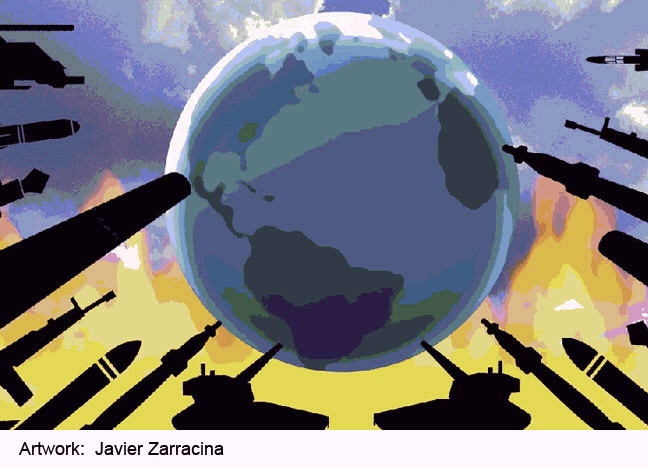 75 years after Hiroshima and Nagasaki, the arms race isn’t over, Independent Australia By Binoy Kampmark | 12 August 2020,“………………The 75th anniversary of the Hiroshima and Nagasaki bombings might have encouraged some reflection on current attitudes to the United Nations Treaty on the Prohibition of Nuclear Weapons. Passed on July 7, 2017, it has become a focal point for advocates of a nuclear weapons-free world and a source of irritation for nuclear weapons states.
Most perversely of all are those powers not in possession of nuclear weapons yet derive some form of security from states who have them, a strategic figment of the military imagination known as the ‘umbrella of extended nuclear deterrence“. For that reason Japan, despite being a global town crier for the banning of nuclear weapons, has refused to add its name to the nuclear weapons ban treaty.
Hiroshima Mayor Kazumi Matsui took the commemorative occasion to encourage the Japanese government to abandon that position:……
Australia, another U.S. annex in the Asia Pacific, similarly refuses to join the club of prohibitionists. When it participated in the UN working group on nuclear disarmament in 2016, Australian diplomats made it clear that they had no interest in seeing any document banning nuclear weapons emerge.
The disruptive involvement of Australian officials in the group was keenly exposed in documents obtained under Freedom of Information by the International Campaign to Abolish Nuclear Weapons (ICAN). ‘So long as the threat of nuclear attack and coercion exists,’ states one document from foreign ministry officials, ‘U.S. extended deterrence will serve Australia’s fundamental national security interests’.
Such a position would have to be renounced were Canberra to sign up to any treaty outlawing nuclear weapons. To avoid that outcome, they were to serve as spoilers, providing ‘a strong alternative viewpoint, notably against those states who wish to push a near-term ban treaty’.
During the course of negotiations, Australian officials also served as the ears and eyes of Washington, a role they have been accustomed to for decades. As the United States had boycotted the meetings, Canberra felt it necessary to remain in “close contact” with Washington ‘about our shared concerns’ on the working group’s disturbing move towards recommending ‘negotiations on a ‘ban treaty”’. Happily, Australia’s spoiling role merely served to strengthen the resolve of the other parties.
Canberra’s current position is that of a jaded cynic in realist’s clothes. The Department of Foreign Affairs and Trade states:
‘Australia does not support the “ban treaty” which we believe would not eliminate a single nuclear weapon.’
It scoffs at efforts that have ignored powers possessing nuclear weapons in negotiations, avoiding ‘the realities of the global security environment’. The document, furthermore, lacks the teeth of the NPT and ‘would be inconsistent with our U.S. alliance obligations’.
As long as the nuclear weapons option remains genuine, credible and desirable, there will always be a prospect for use. Once acquired, their abandonment has only ever proven exceptional (South Africa provides a unique case of this).
As things stand, a good number of countries could go nuclear overnight. It has taken much persuasion, and long discussion, to reassure South Korea and Japan not to do so before the nuclear ambitions of North Korea. The atom, in other words, still retains a deadly magic, tempting to upstarts, arrivistes and possessors. https://independentaustralia.net/article-display/75-years-after-hiroshima-and-nagasaki-the-arms-race-isnt-over,14192
Another Hiroshima is Coming…Unless We Stop It Now
Today, an unprecedented campaign of propaganda is shooing us all off like rabbits. We are not meant to question the daily torrent of anti-Chinese rhetoric, which is rapidly overtaking the torrent of anti-Russia rhetoric. Anything Chinese is bad, anathema, a threat: Wuhan …. Huawei. How confusing it is when “our” most reviled leader says so.
The target is China. Today, more than 400 American military bases almost encircle China with missiles, bombers, warships and nuclear weapons. From Australia north through the Pacific to South-East Asia, Japan and Korea and across Eurasia to Afghanistan and India, the bases form, as one US strategist told me, “the perfect noose”.
In the Sydney Morning Herald, tireless China-basher Peter Hartcher described those who spread Chinese influence in Australia as “rats, flies, mosquitoes and sparrows”. Hartcher, who favourably quotes the American demagogue Steve Bannon, likes to interpret the “dreams” of the current Chinese elite, to which he is apparently privy. These are inspired by yearnings for the “Mandate of Heaven” of 2,000 years ago. Ad nausea.
To combat this “mandate”, the Australian government of Scott Morrison has committed one of the most secure countries on earth, whose major trading partner is China, to hundreds of billions of dollars’ worth of American missiles that can be fired at China.
At a quarter past eight on the morning of August 6, 1945, she and her silhouette were burned into the granite.
I stared at the shadow for an hour or more, then I walked down to the river where the survivors still lived in shanties.
I met a man called Yukio, whose chest was etched with the pattern of the shirt he was wearing when the atomic bomb was dropped.
He described a huge flash over the city, “a bluish light, something like an electrical short”, after which wind blew like a tornado and black rain fell. “I was thrown on the ground and noticed only the stalks of my flowers were left. Everything was still and quiet, and when I got up, there were people naked, not saying anything. Some of them had no skin or hair. I was certain I was dead.”
Nine years later, I returned to look for him and he was dead from leukaemia.
“No radioactivity in Hiroshima ruin” said The New York Times front page on 13 September, 1945, a classic of planted disinformation. “General Farrell,” reported William H. Lawrence, “denied categorically that [the atomic bomb] produced a dangerous, lingering radioactivity.”
Only one reporter, Wilfred Burchett, an Australian, had braved the perilous journey to Hiroshima in the immediate aftermath of the atomic bombing, in defiance of the Allied occupation authorities, which controlled the “press pack”.
“I write this as a warning to the world,” reported Burchett in the London Daily Express of September 5,1945. Sitting in the rubble with his Baby Hermes typewriter, he described hospital wards filled with people with no visible injuries who were dying from what he called “an atomic plague”.
For this, his press accreditation was withdrawn, he was pilloried and smeared. His witness to the truth was never forgiven.
The atomic bombing of Hiroshima and Nagasaki was an act of premeditated mass murder that unleashed a weapon of intrinsic criminality. It was justified by lies that form the bedrock of America’s war propaganda in the 21st century, casting a new enemy, and target – China.
During the 75 years since Hiroshima, the most enduring lie is that the atomic bomb was dropped to end the war in the Pacific and to save lives.
“Even without the atomic bombing attacks,” concluded the United States Strategic Bombing Survey of 1946, “air supremacy over Japan could have exerted sufficient pressure to bring about unconditional surrender and obviate the need for invasion. “Based on a detailed investigation of all the facts, and supported by the testimony of the surviving Japanese leaders involved, it is the Survey’s opinion that … Japan would have surrendered even if the atomic bombs had not been dropped, even if Russia had not entered the war [against Japan] and even if no invasion had been planned or contemplated.”
The National Archives in Washington contains documented Japanese peace overtures as early as 1943. None was pursued. A cable sent on May 5, 1945 by the German ambassador in Tokyo and intercepted by the US made clear the Japanese were desperate to sue for peace, including “capitulation even if the terms were hard”. Nothing was done.
The US Secretary of War, Henry Stimson, told President Truman he was “fearful” that the US Air Force would have Japan so “bombed out” that the new weapon would not be able “to show its strength”. Stimson later admitted that “no effort was made, and none was seriously considered, to achieve surrender merely in order not to have to use the [atomic] bomb”.
Stimson’s foreign policy colleagues — looking ahead to the post-war era they were then shaping “in our image”, as Cold War planner George Kennan famously put it — made clear they were eager “to browbeat the Russians with the [atomic] bomb held rather ostentatiously on our hip”. General Leslie Groves, director of the Manhattan Project that made the atomic bomb, testified: “There was never any illusion on my part that Russia was our enemy, and that the project was conducted on that basis.”
The day after Hiroshima was obliterated, President Harry Truman voiced his satisfaction with the “overwhelming success” of “the experiment”.
The “experiment” continued long after the war was over. Between 1946 and 1958, the United States exploded 67 nuclear bombs in the Marshall Islands in the Pacific: the equivalent of more than one Hiroshima every day for 12 years. Continue reading
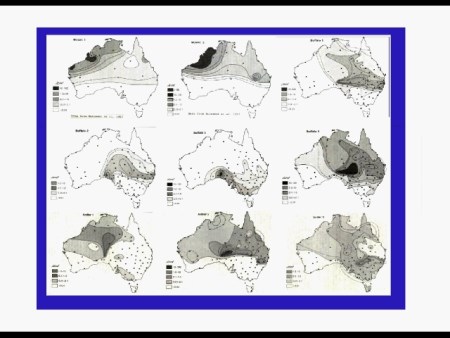
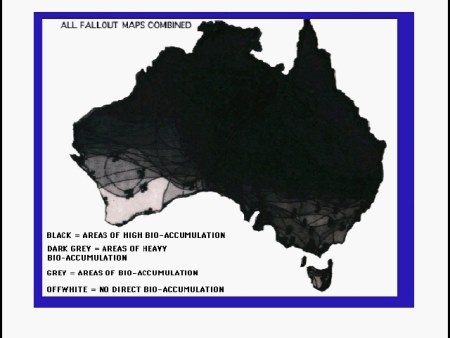
Australia was the guinea pig population for Britain’s nuclear weapons tests radiation fallout
Julian Assange’s father in tireless fight to free his son, calls on Scott Morrison to help Australian citizen Julian
 Assange’s father calls extradition process ‘disgrace’ https://telanganatoday.com/assanges-father-calls-extradition-process-disgrace?fbclid=IwAR1a7bQ0W_Xcgc9EIeGaAHVP7Zmm2cM6nNV65ZXtkhCwNUlarqIYTJVw6xo1 July 20, The 80-year-old is organizing public events in Australia despite the ongoing coronavirus pandemic and hopes to travel to London in August to support Assange during his extradition trial.
Sydney: WikiLeaks founder Julian Assange’s father, John Shipton, is fighting tirelessly for the release and return of his son, who is facing an extradition trial in London for publishing classified information, a process he described as abuse.
“We maintain that the extradition request is a fraud in the English court… It’s a fraud in the English legal system, it’s a case of abuse of process, it is a disgrace,” Shipton, who travelled from Melbourne to Sydney to campaign for his son’s release, told Efe news in an interview.
The 80-year-old is organizing public events in Australia despite the ongoing coronavirus pandemic and hopes to travel to London in August to support Assange during his extradition trial which, he says, is being carried out under “dire” circumstances.
In May 2019, the UN Special Rapporteur on Torture, Nils Melzer, said, after visiting Assange in the Belmarsh prison along with two medical experts, that he showed “all symptoms typical for prolonged exposure to psychological torture, including extreme stress, chronic anxiety and intense psychological trauma”.
Assange has spent almost a decade in confinement, first under house arrest in a British town and then at the Ecuadorian embassy in London between 2012 until 2019, when Ecuador withdrew his political asylum status.
Shipton has urged the Australian government to mediate with the UK administration for the release of his son, who is wanted in the US on 18 charges of espionage and computer intrusion, for which he could be sentenced to prison for up to 175 years.
“I believe the government can, if it wishes to, assist us in bringing Julian home. I believe that (it) is very simple for the Prime Minister (Scott Morrison) to pick up the phone and ring (his UK counterpart) Boris Johnson and say Julian Assange is an Australian citizen in dire circumstances.
“This will resolve this immediately and that’s easily possible,” he told Efe news during the interview.
Australia: USA’s Deputy Sheriff goes for bloated military expenditure
 Defending Australia: The Deputy Sheriff Spending Spree https://theaimn.com/defending-australia-the-deputy-sheriff-spending-spree/?fbclid=IwAR0K25d1UTZX_0DTF_2JFQESQ3nBlXbvGjv3PihUHH3ib6Q9yW6mNUV6LBE,
 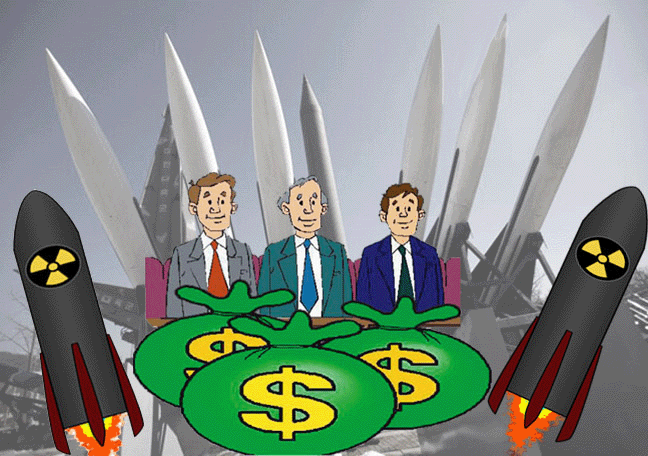 July 1, 2020, by: Dr Binoy Kampmark There are few sadder sights in international relations than a leadership in search of devils and hobgoblins. But such sights tend to make an appearance when specialists in threat inflation either get elected to office or bumped up the hierarchies of officialdom. The sagacious pondering types are edged out, leaving way for the drum beaters. As the Roman general Vegetius suggested with solemn gravity in the 4th century, “Igitur qui desiderat pacem, praeparet bellum,” an expression that has come to mean that those desiring peace best ready for war.
- Australia’s drum beating government has told its citizens rather pointedly that “we have moved into a new and less benign strategic era.” It is something that the federal government has never tired of stressing ever since the White Tribe of Asia developed fears of genetic and maternal abandonment, being thousands of miles from Britannia but uncomfortably close to the hordes of Asia. To the north lay the colours black, brown and yellow, tempered, for a time, by the powers of Europe. Henry Lawson, who had a fear or two tucked under his belt, reflected on this sentiment in his patchy Flag of the Southern Cross: “See how the yellow-men next to her lust for her, Sooner or later to battle we must for her.”
Instead of committing to an easing of that tension, Morrison is keen to throw Australia into an increasingly crowded theatre of participants in the Indo-Pacific on the mistaken premise that things have dramatically changed. “And so we have to be prepared and ready to frame the world in which we live as best as we can, and be prepared to respond and play our role to protect Australia, defend Australia.”
That defence is, invariably, linked to that of the United States, which sees Australia as an essential cog in the containment strategy of the PRC. The idea that this new round of spending will assist Australia’s own independence from this project is misleading in the extreme. For one, the continuing stress on interoperability between the Australian Defence Force and its US counterparts remains a feature of spending decisions. Deputy Sheriffs know where and from whom to take their cues and stock from. Such weapons as the United States Navy’s AGM-158C Long Range Anti-Ship Missile (LRASM) are on the list of future purchases. There is also the promise of underwater surveillance systems, and research and development in what promises to be another frontier of an international arms race: hypersonic weapons or, as US President Donald Trump prefers to call them “super duper missiles.” (Some $9.3 billion has been allocated for the latter.)
The prime minister also revisits a term that is impossible to quantify, largely because of its fictional quality. Deterrence, ever elastic and rubbery, only has meaning when the hypothetical opponent fears retaliation and loss. To undertake any attack would, to that end, be dangerous. For decades, this fictional deterrent was kept up by the vast umbrella of the US imperium.
The sense that this umbrella might be fraying is being used as an excuse to beat the war drum and stir the blood. Senator Jim Nolan is one, insisting that “we must share some of the blame [for the likelihood of regional conflict] because we have ignored our century-long history of national unpreparedness, and have relied blindly on an assumed level of US power which, since the end of the Cold War, exists at a much lower and dangerous level, and looks less likely to deter regional conflict.” Nolan nurses a fantasy that seems to be catching: that Australia aspire to “self-reliance” and have “confidence that we could adjust in time required to defend ourselves and so, with a bit of luck, deter conflict impacting directly on us. At present, we are severely deficient.”
Morrison similarly opines that, “The ADF now needs stronger deterrence capabilities. Capabilities that can hold potential adversaries’ forces and critical infrastructure at risk from a distance, thereby deterring an attack on Australia and helping to prevent war.” To imagine that Australia would be able to deter a power such as China, even with projected purchases, is daftly entertaining. The term simply does not come into play.
This incoherence is of little concern to the family of strategists that inhabit the isolated climes of Canberra. When money and weaponry is promised, champagne corks pop. Peter Jennings of the Australian Strategic Policy Institute is duly celebrating, given his fixation with that one power “with both the capacity and the desire to dominate the Indo-Pacific region in a way that works against Australia’s interest.” He even has a stab at humour: “We’re not talking about Canada.”
Broad policy commitments to bloated military expenditure are always to be seen with suspicion. They come with warnings with little substance, and only matter because people of like mind find themselves on opposite sides of the fence warning of the very same thing. If you do not spend now, you are leaving the country open to attack. That most important question “Why would they attack us in the first place?” is never asked. Even at the height of the furious battles of the Second World War, Imperial Japan debated the merits of invading an island continent which would have needlessly consumed resources. Australia, in short, has never been an inviting target for anyone.
The dangers of adding to the military industrial complex, then, are only too clear. Countries who prepare for war in the name of armed security can encourage the very thing they are meant to prevent. Purchased weapons are, after all, there to be used. The result is the expenditure of billions that would better be spent on health, education and, ever pressingly, on redressing environmental ruination.
We are then left with the desperate sense of a psychological defect: the need to feel wanted and relevant on the big stage. This was very much the case when Prime Minister Robert Menzies committed Australian troops in 1965 to stem the Red-Yellow Horde in the steaming jungles of Vietnam. The language being used then was much as it is now: to deter, to advance national security, to combat an authoritarian menace in a dangerous region. Little weight was given to the subtleties of a nationalist conflict that was not driven by Beijing. Half-baked and uncooked strategy was served in the messes.
In adding their bloody complement to a local conflict that would eventually see a US defeat, Labor’s Arthur Calwell, himself a self-styled white nationalist, made a sober speech in denunciation. Australia was committing resources to “the bottomless pit of jungle warfare, in a war in which we have not even defined our purpose honestly, or explained what we would accept as victory.” Doing so was “the very height of folly and the very depths of despair.” Australia now finds itself committed to a defence strategy against a mirage dressed in enemy’s clothes masked in language that resists meaning or quantification.
USA adds a new indictment to its charges against Julian Assange
WikiLeaks founder Assange faces new indictment in US, By ERIC TUCKER, 29 June 20, WASHINGTON (AP) — WikiLeaks founder Julian Assange sought to recruit hackers at conferences in Europe and Asia who could provide his anti-secrecy website with classified information, and conspired with members of hacking organizations, according to a new Justice Department indictment announced Wednesday.The superseding indictment does not contain additional charges beyond the 18 counts the Justice Department unsealed last year. But prosecutors say it underscores Assange’s efforts to procure and release classified information, allegations that form the basis of criminal charges he already faces.
Beyond recruiting hackers at conferences, the indictment accuses Assange of conspiring with members of hacking groups known as LulzSec and Anonymous. He also worked with a 17-year-old hacker who gave him information stolen from a bank and directed the teenager to steal additional material, including audio recordings of high-ranking government officials, prosecutors say.
Assange’s lawyer, Barry Pollack, said in a statement that “the government’s relentless pursuit of Julian Assange poses a grave threat to journalists everywhere and to the public’s right to know.”
“While today’s superseding indictment is yet another chapter in the U.S. Government’s effort to persuade the public that its pursuit of Julian Assange is based on something other than his publication of newsworthy truthful information,” he added, “the indictment continues to charge him with violating the Espionage Act based on WikiLeaks publications exposing war crimes committed by the U.S. Government.”
Assange was arrested last year after being evicted from the Ecuadorian Embassy in London, where he had sought refuge to avoid being sent to Sweden over allegations of rape and sexual assault, and is at the center of an extradition tussle over whether he should be sent to the United States.
The Justice Department has already charged him with conspiring with former U.S. Army intelligence analyst Chelsea Manning in one of the largest compromises of classified information in U.S. history by working together to crack a password to a government computer.
Prosecutors say the WikiLeaks founder damaged national security by publishing hundreds of thousands of classified documents, including diplomatic cables and military files on the wars in Iraq and Afghanistan, that harmed the U.S. and its allies and aided its adversaries.
Assange maintains he was acting as a journalist entitled to First Amendment protection. His lawyers have argued the U.S. charges of espionage and computer misuse were politically motivated and an abuse of power.
Assange generated substantial attention during the 2016 presidential election, and in investigations that followed, after WikiLeaks published stolen Democratic emails that U.S. authorities say were hacked by Russian military intelligence officials. An investigation by special counsel Robert Mueller revealed how Trump campaign associates eagerly anticipated the email disclosures. One Trump ally, Roger Stone, was found guilty last year of lying about his efforts to gain inside information about the emails. Assange, however, was never charged in Mueller’s Russia investigation.
The allegations in the new indictment center on conferences, in locations including the Netherlands and Malaysia in 2009, at which prosecutors say he and a WikiLeaks associate sought to recruit hackers who could locate classified information, including material on a “Most Wanted Leaks” list posted on WikiLeaks’ website.
According to the new indictment, he told would-be recruits that unless they were a member of the U.S. military, they faced no legal liability for stealing classified information and giving it to WikiLeaks “because ‘TOP SECRET’ meant nothing as a matter of law.”
At one conference in Malaysia, called the “Hack in the Box Security Conference,” Assange told the audience, “I was a famous teenage hacker in Australia, and I’ve been reading generals’ emails since I was 17.”
Trump’s Justice department doubles down on USA allegations against Julian Assange
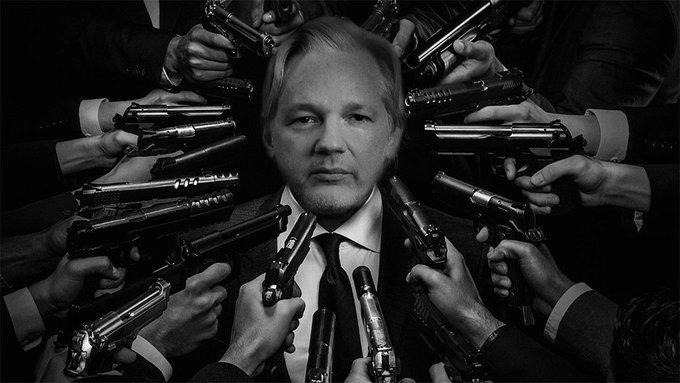 ASSANGE EXTRADITION: Assange Hit With New Superseding Indictment, Reflecting Possible FBI Sting Operation The U.S. Justice Department on Wednesday unveiled the new superseding indictment against the WikiLeaks publisher, adding to existing computer intrusion charges. By Joe Lauria, Consortium News June 24, 2020 The Justice Department on Wednesday said it had filed a second superseding indictment against imprisoned WikiLeaks publisher Julian Assange, adding to existing computer intrusion charges.“The new indictment does not add additional counts to the prior 18-count superseding indictment returned against Assange in May 2019,” the DOJ said in a press release.
“It does, however, broaden the scope of the conspiracy surrounding alleged computer intrusions with which Assange was previously charged,” the release said. “According to the charging document, Assange and others at WikiLeaks recruited and agreed with hackers to commit computer intrusions to benefit WikiLeaks.”…….
The indictment quotes Assange at hacking conferences encouraging hackers to obtain a “Most Wanted Leaks” list of classified materials that WikiLeaks sought to publish.
It provides new allegations that Assange instructed a “teenager” from an unnamed NATO country to conduct various hacks “including audio recordings of phone conversations between high-ranking officials” of the NATO nation as well as members of parliament from that country. The indictment claims Manning “downloaded classified State Department materials” about this country.
WikiLeaks has identified the “teenager” as Sigurdur Thordarson, “a diagnosed sociopath, a convicted conman, and sex criminal” who had impersonated Assange to embezzle money from WikiLeaks………..
Thordarson, an Icelander, became an FBI informant, and was flown to Washington in May 2019 for an interview with the FBI.
The superseding indictment says Assange was allegedly able to learn from “unauthorized access” to a website of this government that police from that country were monitoring him. The indictment says the source of this information was a former member of Anonymous who worked with WikiLeaks named Sabu, identified in the press as Hector Monsegur, who became an FBI informant after being arrested in June 2011.
In the same month, Iceland’s Interior Minister Ögmundur Jonasson prevented FBI agents from entering Iceland, testifying that “FBI dirty-tricks operations were afoot against WikiLeaks.” He said the agents had been sent to seek “our cooperation in what I understood as an operation to set up, to frame Julian Assange and WikiLeaks.” The possibility remains that the new evidence against Assange was obtained in an FBI sting operation.
Jeremy Hammond, a hacker arrested for obtaining the Stratfor files, is named in the new indictment has having revealed information about his activities with Assange to Sabu in December 2011. Last September, Hammond, who was serving a 10-year sentence in Memphis, TN, was brought by prosecutors investigating Assange to Alexandria, VA to compel him to give testimony against Assange. Hammond has refused.
Reiterates Original Charges
The new indictment repeats the existing espionage and computer intrusion charges………
In 2010, Robert Parry, one of the best investigative reporters of his era, and the founder of this website, wrote that the then pending plans of the Obama administration to indict Assange “for conspiring with Army Pvt. Bradley Manning to obtain U.S. secrets strikes at the heart of investigative journalism on national security scandals.”
Parry added:
“That’s because the process for reporters obtaining classified information about crimes of state most often involves a journalist persuading some government official to break the law either by turning over classified documents or at least by talking about the secret information. There is almost always some level of ‘conspiracy’ between reporter and source.” [Emphasis added.]
Parry thus admitted to encouraging his sources to turn over classified information even if it meant committing the lesser crime of leaking classified information if it could help prevent a larger crime from being committed. In this way Assange encouraged Manning to turn over material such as the “Collateral Murder” video in the hope that it could end the illegal war in Iraq…….
The New York Times reported at the time that “federal prosecutors were reviewing the possibility of indicting Assange on conspiracy charges for allegedly encouraging or assisting Manning in extracting ‘classified military and State Department files from a government computer system,’” Parry wrote.
“The Times article by Charlie Savage notes that if prosecutors determine that Assange provided some help in the process, ‘they believe they could charge him as a conspirator in the leak, not just as a passive recipient of the documents who then published them,” wrote Parry.
This is precisely what the Trump Justice Department has done in the first computer intrusion indictment against Assange and now with this superseding one. https://consortiumnews.com/2020/06/24/assange-extradition-assange-hit-with-new-superseding-indictment-broadening-computer-intrusion-charges/?fbclid=IwAR3uZdqQkMLxeheGyUVLpkUYPIo0ywUZwFiQcu6pD9woYSYyPhZtyh3kiw4
Assange faces new indictment in US
|
WikiLeaks founder Assange faces new indictment in US, https://apnews.com/218d39782d70c434533b8faa033eb45e By ERIC TUCKER, 26 June 20 WASHINGTON (AP) — WikiLeaks founder Julian Assange sought to recruit hackers at conferences in Europe and Asia who could provide his anti-secrecy website with classified information, and conspired with members of hacking organizations, according to a new Justice Department indictment announced Wednesday. The superseding indictment does not contain additional charges beyond the 18 counts the Justice Department unsealed last year. But prosecutors say it underscores Assange’s efforts to procure and release classified information, allegations that form the basis of criminal charges he already faces. Beyond recruiting hackers at conferences, the indictment accuses Assange of conspiring with members of hacking groups known as LulzSec and Anonymous. He also worked with a 17-year-old hacker who gave him information stolen from a bank and directed the teenager to steal additional material, including audio recordings of high-ranking government officials, prosecutors say. Assange’s lawyer, Barry Pollack, said in a statement that “the government’s relentless pursuit of Julian Assange poses a grave threat to journalists everywhere and to the public’s right to know.” “While today’s superseding indictment is yet another chapter in the U.S. Government’s effort to persuade the public that its pursuit of Julian Assange is based on something other than his publication of newsworthy truthful information,” he added, “the indictment continues to charge him with violating the Espionage Act based on WikiLeaks publications exposing war crimes committed by the U.S. Government.” Assange was arrested last year after being evicted from the Ecuadorian Embassy in London, where he had sought refuge to avoid being sent to Sweden over allegations of rape and sexual assault, and is at the center of an extradition tussle over whether he should be sent to the United States. The Justice Department has already charged him with conspiring with former U.S. Army intelligence analyst Chelsea Manning in one of the largest compromises of classified information in U.S. history by working together to crack a password to a government computer. Prosecutors say the WikiLeaks founder damaged national security by publishing hundreds of thousands of classified documents, including diplomatic cables and military files on the wars in Iraq and Afghanistan, that harmed the U.S. and its allies and aided its adversaries. Assange maintains he was acting as a journalist entitled to First Amendment protection. His lawyers have argued the U.S. charges of espionage and computer misuse were politically motivated and an abuse of power. Assange generated substantial attention during the 2016 presidential election, and in investigations that followed, after WikiLeaks published stolen Democratic emails that U.S. authorities say were hacked by Russian military intelligence officials. An investigation by special counsel Robert Mueller revealed how Trump campaign associates eagerly anticipated the email disclosures. One Trump ally, Roger Stone, was found guilty last year of lying about his efforts to gain inside information about the emails. Assange, however, was never charged in Mueller’s Russia investigation. The allegations in the new indictment center on conferences, in locations including the Netherlands and Malaysia in 2009, at which prosecutors say he and a WikiLeaks associate sought to recruit hackers who could locate classified information, including material on a “Most Wanted Leaks” list posted on WikiLeaks’ website. According to the new indictment, he told would-be recruits that unless they were a member of the U.S. military, they faced no legal liability for stealing classified information and giving it to WikiLeaks “because ‘TOP SECRET’ meant nothing as a matter of law.” At one conference in Malaysia, called the “Hack in the Box Security Conference,” Assange told the audience, “I was a famous teenage hacker in Australia, and I’ve been reading generals’ emails since I was 17.” |
|
Doctors accuse UK and US of Assange ‘psychological torture’ amid new indictment
US prosecutors are seeking the WikiLeaks founder’s extradition on grounds that he damaged national security by publishing classified documents. More than 200 doctors from 33 countries have signed a letter saying British public officials could be held accountable for the “psychological torture” of Julian Assange.
It came as the WikiLeaks founder faced a new indictment in the US, which alleges that he sought to recruit hackers at conferences to train in obtaining official secrets.
In their letter, printed in The Lancet, the Doctors for Assange group accuse UK and American officials of “intensifying Julian Assange’s psychological torture” and call for his immediate release.
They add in the letter, which has also been sent to Justice Secretary Robert Buckland, that Assange is at medical risk because of increasing abuse of his “fundamental human and legal rights at the hands of judicial, prison and contracted security authorities”.
Earlier this month, the 48-year-old was said to be too ill to attend the latest court hearing in his extradition case.
He is wanted in the US to face 17 charges under the Espionage Act as well as conspiracy to commit computer intrusion after the publication of hundreds of thousands of classified documents in 2010 and 2011……
US prosecutors are seeking his extradition on the grounds that he damaged national security by publishing hundreds of thousands of classified documents, but Assange maintains he was acting as a journalist entitled to First Amendment protection.
His full extradition hearing is set to take place on September 7, having originally been scheduled for May 18, although a crown court has not yet been found to take the case.
A further administrative hearing is due to take place on June 29.https://www.expressandstar.com/news/uk-news/2020/06/25/doctors-accuse-uk-and-us-of-assange-psychological-torture-amid-new-indictment/?fbclid=IwAR28IW4pqkYDsqMW-GxrZ3kGC7l0xE4aVan58Ppt34RhTCQpP5hJebTbAvw
There is really no market in India for Australia’s uranium
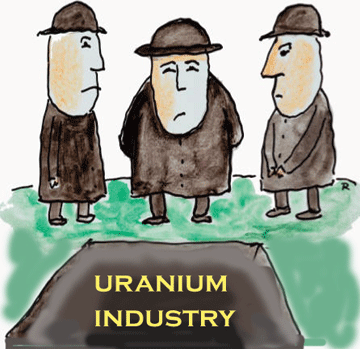
 No market for Australian uranium in India, 23 June 2020, M V Ramana and Cassandra Jeffery, https://www.eastasiaforum.org/2020/06/23/no-market-for-australian-uranium-in-india/
In 2011, the Australian Labor Party (ALP) voted to overturn a ban on uranium sales to India. The Civil Nuclear Cooperation Agreement between Australia and India was then signed in 2014. The Australian Parliament subsequently passed a bill permitting its uranium mining companies to supply nuclear material to India. These efforts were supposedly intended to allow Australia to profit from Indian uranium purchases.
At the 2011 ALP national conference, then prime minister Julia Gillard argued that India was planning to generate 40 per cent of its electricity with nuclear energy by 2050. ‘Having access to this market is good for Australian jobs’, said Gillard during the conference. The Australian Uranium Association projected that ‘Australia could expect to sell some 2500 tonnes of uranium annually to India by 2030, generating export sales of AU$300 million’ (US$205 million). But nearly a decade later, what is the reality?
Aside from a small shipment of uranium sent to India for testing in 2017, no uranium appears to have been exported to India from Australia. In 2018, India’s Ministry of Atomic Energy stated that the country had signed contracts with firms from Kazakhstan, Canada, Russia and France to procure uranium. And in March 2020, India signed a contract with Uzbekistan. There has been no mention of Australia.
A large order for Australian uranium appears unlikely in the future as well. With a net generating capacity of only 6.2 gigawatts (GW), India does not have a large requirement for uranium in the first place. Further, Australian uranium can only be used for reactors under International Atomic Energy Agency (IAEA) safeguards, which attempt to ensure that no materials are used for nuclear weapons. Such reactors amount to less than 2 GW of India’s capacity.
India’s nuclear fleet will not expand dramatically either. India’s Department of Atomic Energy (DAE) has a long history of setting ambitious nuclear power generation targets and failing to meet them. In 1984, the DAE promised a nuclear capacity of 10 GW by 2000. The actual figure in 2000 was 2.7 GW. By then the DAE had set a new target, 20 GW by 2020. Again, today’s current capacity (6.2 GW) is nowhere close to this target.
Seven more reactors, with a total capacity of 4.8 GW, are under construction. But five of these reactors have been significantly delayed. Four of them were supposed to be commissioned in 2015 and 2016. But these reactors are now expected to start operating in October 2020, September 2021, March 2022 and March 2023 respectively.
The fifth is India’s flagship project, the Prototype Fast Breeder Reactor (PFBR). Construction started in 2004 and the reactor was supposed to start functioning in 2010 but is now ‘expected to commence production of electricity in October 2022’.
Costs have increased, too. The PFBR’s estimate has jumped from Rs 34.9 billion (US$457 million) to Rs 68.4 billion (US$896 million). And the PHWRs will cost around 40–45 per cent more than initially projected.
In contrast, India’s renewable energy sector is a different story. Wind and solar power have only recently been introduced to India’s energy mix, but both technologies are expanding rapidly while becoming significantly cheaper. Between 2016 and 2019, installed solar capacity increased from 9.6 GW to 35 GW, while wind capacity increased from 28.7 GW to 37.5 GW. In 2019, both wind (63.3 terawatt-hours (TWh)) and solar (46.3 TWh) power contributed more to overall electricity generation in India than nuclear power (45.2 TWh).
India’s renewable energy sector is expected to continue growing, while nuclear energy will likely remain stagnant. Recently, the Department of Economic Affairs assembled a task force to ‘identify technically feasible and financially viable infrastructure projects that can be initiated in fiscals 2020–25’. The task force foresaw renewable capacity increasing from 22 per cent of the total installed electrical capacity in 2019 to 39 per cent by 2025. Conversely, nuclear capacity stays around 2 per cent of installed capacity.
Even the Indian government expects the divergence between the growing renewable energy sector and the stagnant nuclear sector to increase as the rapidly falling cost of solar power makes nuclear power redundant.
Australian policymakers who advocated for exporting uranium to India were betting on the wrong energy source. Perhaps there were ulterior motives, including recognising India as a major power. But good policy cannot be made on the basis of false claims.
Australian uranium companies continue to insist that India is expanding its nuclear power capacity. Energy Resources of Australia Ltd’s 2017 annual report claims that ‘India has 22 reactors in operation and plans to generate as much as 25 per cent of electricity from nuclear power by 2050’. Paladin and Yellow Cake made similar claims in 2019.
Nuclear power has never constituted more than a few per cent of India’s electricity supply. Given current trends, it will never amount to much more. Nuclear reactors are expensive and time-consuming to construct, factors that explain why the share of electricity supplied by nuclear power plants globally has declined continuously, from 17.5 per cent in 1996 to 10.15 per cent in 2018. This global trend must be considered by Australian policymakers as they deal with lobbyists for uranium mining and the push there to build nuclear plants.
M V Ramana is Professor, Simons Chair in Disarmament, Global and Human Security, and Director of the Liu Institute for Global Issues at the School of Public Policy and Global Affairs, the University of British Colombia. Cassandra Jeffery is a recent Master‘s of Public Policy and Global Affairs graduate of the University of British Columbia.
Julian Assange’s fiancé calls on the Australian government to secure his freedom
|
Julian Assange’s fiancé calls on the Australian government to secure his freedom, https://www.wsws.org/en/articles/2020/06/22/assa-j22.html, By Oscar Grenfell, 22 June 2020Stella Morris, the fiancé of Julian Assange and mother of his two young children, issued a powerful call last night for the Australian government to secure the WikiLeaks founder’s freedom and prevent his extradition to the US, where he faces life imprisonment for exposing American war crimes.
Morris was featured on Channel Nine’s “60 Minutes” program. The 24-minute segment provided an objective account of Assange’s decade-long arbitrary detention, first in Ecuador’s London embassy where he was a political refugee, and since April 2019 in the maximum-security Belmarsh Prison. The program, presented by Tara Brown, was the first substantive examination of Assange’s plight by the Australian media since the coronavirus pandemic began. Despite the fact that he is an Australian journalist being persecuted by the most powerful governments in the world for his publishing activities, corporate media outlets have maintained an effective D-notice on Assange for more than three months. This has dovetailed with the refusal of the Australian government, the Labor opposition and all of the official parties to defend the WikiLeaks founder. Morris warned that Assange’s incarceration in Belmarsh, which she noted has been dubbed the “UK’s Guantanamo Bay,” is exacerbating physical and psychological health issues stemming from his protracted persecution. “He’s very unwell and I’m very concerned for his ability to survive this,” she said. “Now he’s in the UK’s worst prison. It’s a high-security prison. One in five prisoners are murderers. He shouldn’t be there. He’s not a criminal, he’s not a dangerous person, he’s a gentle intellectual thinker and a journalist. Those people are not the people who belong in prison.” Morris stated that she was “very worried” about Assange’s circumstances. She has been unable to visit him since February, as a result of coronavirus lockdown measures. Despite widespread infections throughout the British penitentiary system, including in Belmarsh, and Assange’s vulnerability to the virus as a result of a chronic lung condition, he has been refused bail. “If you’re separated from your family and you’re alone in a tiny, dark room for 23-hours a day, with no control over your surroundings, I think people can imagine what that is like,” Morris said. Brown stated that in such circumstances, “most people would probably go mad.” Morris responded: “I think any person would get very severely depressed and he is very depressed.” “60 Minutes” showed Morris and her two young children speaking with Assange on the phone. The older of the two asked Assange when he was coming home. Morris, a 37-year-old lawyer, recounted the circumstances of her relationship with Assange. They had grown close when she was working on his legal cases after he had successfully sought political asylum in the Ecuadorian embassy. When the couple’s two children were born in 2017 and 2018, the new Ecuadorian government had initiated closer relations with the US and was increasingly hostile to Assange. UC Global, a Spanish firm contracted to manage the embassy’s security, was surveilling every aspect of Assange’s life and was passing the the material gathered to the US Central Intelligence Agency. When she fell pregnant, Morris informed Assange by writing the news on a piece of paper. They were fearful that any conversation about their personal life would be picked up by the audio recording devices placed throughout the embassy by UC Global. Morris sought to hide her pregnancies from the embassy staff and after the children were born, a friend of Assange pretended to be their father and brought them to the embassy. “The real issue was I thought that our family would be targeted by the same people that were trying to harm Julian,” Morris stated. The program featured news clips of senior US government figures denouncing Assange in hysterical terms and calling for him to be silenced. Morris noted that UC Global had considered stealing the diaper of one of her children to confirm his paternity, and had even discussed plans to kill Assange or allow American agents to kidnap him. Morris commented that it would be difficult for many people to appreciate the lawlessness that had characterised Assange’s persecution. “There’s incredible criminality that has been going on in order to gather information about Julian’s lawyers, and his family, and journalists who were visiting him,” she said. “I’ve been in a permanent state of fear for years and now it’s slowly playing out.” Significantly, the politically-motivated character of Swedish sexual misconduct allegations against Assange was made clear in the program. The allegations were concocted by that country’s police and judiciary, in the midst of a frenzied US campaign against WikiLeaks’ exposure of war crimes in Iraq and Afghanistan. Brown noted that Assange had never been charged with a crime in Sweden, and that the Swedish investigation had been dropped. Australian independent parliamentarian Andrew Wilkie pointed out that documents had shown that the British government used the allegations to enforce Assange’s arbitrary detention in the Ecuadorian embassy. The British authorities had been aware that the Swedish claims were a smokescreen for plans to dispatch Assange to his US persecutors. The program concluded with an appeal from Morris to the Australian government. She said: “I want people to understand that we’re being punished as a family. It’s not just Julian in the prison. The kids are being deprived of their father. I need Julian and he needs me.” Morris declared: “I’d like to ask [Australian Prime Minister] Scott Morrison to do everything he can to get Julian back to his family. If Australia doesn’t step in I’m very fearful this wrong won’t be righted. It’s a nightmare.” Tellingly, Brown stated that Morrison, Foreign Minister Marise Payne and Christian Porter refused to be interviewed. This was in line with the ten-year collaboration of Australian governments in the US-led vendetta against Assange. Beginning with the Greens-backed Labor government of Julia Gillard, they have rejected calls to defend the WikiLeaks’ founder, instead participating in the campaign against him. The official hostility to Assange is bound up with the Australian ruling elite’s unconditional support for the US military alliance and all of American imperialism’s illegal wars and military preparations and dovetails with a domestic assault on democratic rights, including attacks on press freedom and laws increasing punishments for whistleblowers. It is facilitated by the refusal of the Greens, the pseudo-left groups and the unions to mount any campaign for Assange’s rights. This underscores the fact that the fight for Assange’s freedom and for the defence of all civil liberties requires the mobilisation of the working class. The international protests over recent weeks against police violence have demonstrated the objective basis for building such a movement. |
|
Pacific leaders do not want the coronavirus pandemic to distract from work on climate change
 Pacific leaders fear climate change campaign will ‘lose momentum’ amid COVID-19 pandemic, ABC, By foreign affairs reporter Melissa Clarke 19 June 20 Pacific leaders fear climate change campaign will ‘lose momentum’ amid COVID-19 pandemic, ABC, By foreign affairs reporter Melissa Clarke 19 June 20
Pacific leaders have said action on climate change “cannot and should not” take a back seat during the COVID-19 pandemic and have appealed for Australia to help rally global support for more emissions cuts.
Key points:
Senior political leaders from both the Fijian and Samoan governments have raised concerns that climate change is being overlooked while global leaders and the media focus on the coronavirus. The Fijian Government, which has been a strong critic of Australia for not doing more to reduce carbon emissions, has said the urgency for addressing climate change has not abated. “It may appear that climate change has taken a back seat, but it cannot and should not,” Fiji’s Attorney-General Aiyaz Sayed-Khaiyum said. Coronavirus update: Follow all the latest news in our daily wrap.Taking part in an online forum hosted by the Australian National University (ANU) on Thursday, Mr Sayed-Khaiyum said the impacts of climate change were being felt every day by Fijians.
Pacific nations regard climate change as an existential threat, with changing weather systems affecting sea levels, fish stocks, water quality and the frequency of severe weather events. Samoa’s Deputy Prime Minister Fiame Naomi Mata’afa, speaking on the same forum, said it is important attention isn’t diverted from climate change. “We’re talking about a pandemic, but… climate change impacts us in all aspects of our lives, including health as well.”…….. Pacific Island nations have been trying to get all countries to agree to register more ambitious emissions reductions targets under the Paris Agreement on climate change. Ms Mata’afa is concerned their campaign could “lose momentum” during the pandemic and appealed for Australia’s help. “I think it is very important for Australia, as a member of the Pacific [Islands] Forum, that it comes in strongly as one of our larger members, with the Pacific and the message: to ensure that the 1.5 [degree] objective that we’ve been advocating for and that we raise the global ambition in regards to [cutting] emissions.” Pacific nations have previously expressed their disappointment that Australia has not fully embraced their calls for more global action……… https://www.abc.net.au/news/2020-06-18/pacific-leaders-fear-coronavirus-distraction-climate-change/12371182 |
|
Don’t send uranium to India- Dr Vaishali Patil speaks to Australia
 Dr Patil spoke on the first of the Yellowcake Country webinars on 10th June. She spoke of the beautiful country of the Konkon area, formerly a place of thriving agriculture, fruit growing and fishing. It is now known for having the largest nuclear power plant in the world. Despite the opposition of farmers and fishermen, this gigantic and enormously expensive nuclear project has gone ahead.
The local people have continued their protest for 15 years. The government has the right to commandeer land for nuclear activities, giving very little compensation. Many protestors have been gaoled. Livelihoods are threatened, not only by the loss of land, but also, the remaining agricultural and fishing industries lose their markets, due to both the real contamination of the environment, and the perceived contamination, as the area becomes known as a nuclear hub.
Environmental damage has affected the lives of the community, as well as their livelihoods. Radiation has resulted in a rise in cancer incidence. Men who never took part in the past, in protest movements are now joiningthe anti-nucler movement. But women have always been prominent in opposition to nuclear power, in the Jaitapur Anti-Nuclear Movement. It’s a peaceful protest, following Ghandian philosophy. But activists face gaol, and condemnation – are depicted as being against development, against the national interest.
Nuclear power contributes very little to India’s energy, less than 2% of energy supply. However the government invests hugely in it. Despite the devastation from the recent cyclone, despite the onslaught of the coronavirus, the government pours huge amounts of money into nuclear industry, nuclear weapons. This investment continues, while the cyclone destruction has ravaged the Konkon area, with 7000 school buildings collapsed, 500,000 trees uprooted, and thousands of migrant workers still walking through.
The National Alliance of Anti Nuclear Movement of India (NAAM) continues its work and calls for Australia’s anti-nuclear movement to join forces with it, and work to prevent the export of uranium to India.
Injustice of UK court process regarding Julian Assange. Assange too sick to attend
2. In addition to other ongoing health concerns, Assange faces the serious risk of exposure to Covid in Belmarsh prison, and has been advised that even going to the video room to take part in hearings is unsafe. This is another reason he should be immediately released.
3. Assange’s lawyers have long complained they have had insufficient access to him in prison. Under lockdown conditions, they have had no access to him at all. They have repeatedly flagged that this lack of access seriously impacts their ability to prepare his defence.
4. One of the next steps agreed today is that psychiatric reports on Assange from the prosecution and defence will be due to the court on 31 July. Remember that UN Special Rapporteur @NilsMelzer has expressed alarm many times that Assange shows symptoms of psychological torture.
5. It is a welcome step that the continuation of the full extradition hearing was adjourned, as lockdown conditions present clear barriers to open justice – but 7 September may not be late enough to make a meaningful difference. Also the court is still struggling to find a venue.
6. It remains extremely frustrating that the court does not adequately accommodate NGO observers. I have never experienced so much difficulty accessing a trial in any country as at Woolwich Crown Court in February, and the teleconference option we now have is far from sufficient.
7. The press are also facing severe restrictions. Only 6 journalists have been allowed to attend in person the past 2 hearings, with others limited to the awful phone line. This case is of high public interest and a better solution must be found before the full hearing resumes.
8. Assange’s next callover hearing has been scheduled for 29 June at 10 am. We urge the court to find workable solutions to enable his safe attendance and ensure the press and observers are able to properly monitor proceedings. /END
1 This month
17 October, Free Public Talk on Nuclear Issues in South Australia
David Noonan will speak on public interest concerns over the new Roxby Downs Indenture Act 2026 on BHP copper-uranium mining and ore processing in SA, and on how AUKUS may face SA with a High-Level nuclear waste agenda.
Dr Jim Green will discuss international developments in the field of nuclear power including ‘small modular reactors’ and Generation 4 ‘advanced’ nuclear reactor concepts.


Help Aunty Sue Protect Her Land and Sacred Sites From Destructive Rocket Testing.
.

Australians deserve the truth
about
AUKUS – https://aukuspublicinquiry.com/

PETITION – To: Prime Minister Anthony Albanese and the Australian Labor Government

of the week – Australians for War Powers Reform (AWPR)
To see nuclear-related stories in greater depth and intensity

