Climate protests in London, Berlin, Madrid, Copenhagen and Stockholm target Australian government
Climate action protesters angry over Australia’s bushfires rally across Europe https://mobile.abc.net.au/news/2020-01-11/scott-morrison-labelled-laughing-stock-europe-climate-protests/11859988 BY EUROPE CORRESPONDENT BRIDGET BRENNAN AND ROSCOE WHALAN IN LONDON
Thousands of people have taken part in demonstrations across Europe, taking aim at what they say is the Australian Government’s lack of action on climate change during the bushfire crisis.
- Demonstrations organised by Extinction Rebellion were held in London, Berlin, Madrid, Copenhagen and Stockholm
- The protesters called for stronger action on climate change in response to the Australian bushfires
- Protesters in London rallied outside Australia House, while protesters chanted outside the Australian embassy in Berlin
Protesters stopped traffic in London and turned out at rallies in Berlin, Madrid, Copenhagen and Stockholm to show their support for victims of the disasters.
At the Strand in London, hundreds gathered outside Australia House, where the High Commission of Australia is located, calling for stronger action on climate change as part of a protest organised by Extinction Rebellion.
Anne Coates travelled from Sheffield, north of London, to attend the rally.
She began to cry when she spoke about watching the effect of the disaster on people who had lost relatives and homes.
“It’s just too much for your heart. You just can’t live with it. It just gets worse and worse every day,” she said.”Absolutely devastating to watch it. It’s like hell. And it seems like governments around the world are in a race to drag us down to hell.”
She said Prime Minister Scott Morrison was “a laughing stock around the world”.
“We’re absolutely furious with him. And I don’t know what’s it going to take. Governments should be listening,” she said.
Many people wore koala hats to represent the massive loss of wildlife in New South Wales, Victoria and South Australia.
Fi Radford from Bristol carried a sign which said “koalas not coal”.
“We’re here to say to the Australian people, challenge your Government on the evidence they’re giving you,” she said.
“Australia, you are custodians of precious species that exist nowhere else in the world. Overturn your Government, they’re leading you to destruction.”
Among the protesters were some of the tens of thousands of Australians living in London.
Harley McDonald-Eckersall from Melbourne said she had been watching on in horror at what has been unfolding in Australia.“It’s been so horrible being away … Australians are extraordinarily resilient — like our First Nations people who have survived genocide and are still caring for the environment,” she said.
Australian Dylan Berthier said he believed the catastrophic conditions in Australia were a wake-up call for the world.
“I think a crisis of this magnitude is a global crisis. I think world leaders have a responsibility to call on the Australian Government to enact new policy that will actually prevent this from happening in the future,” he said.
In Germany, protesters chanted outside the Australian embassy in Berlin.
One man carried a sign which read “Aloha from Berlin” in reference to Mr Morrison’s maligned trip to Hawaii when the bushfires were burning in December.
The climate action group Extinction Rebellion organised the protests across Europe.
Bushfires ‘a warning to the whole world’: UK politicians
The bushfire emergency has been front-page news in the UK for weeks — and has forced Tourism Australia to temporarily pull its new $15 million advertising campaign, fronted by Kylie Minogue.
When the UK Parliament returned earlier this week, Speaker Lindsay Hoyle said what had been happening in Australia should act as a “wake-up call for the world”.
Last year, the Conservative Government in the United Kingdom passed legislation to reach net-zero carbon emissions by 2050 — one of the most ambitious targets set by a major economy.
But many environmental groups have said 2050 is not soon enough.
Labour leadership contender Clive Lewis told the House of Commons: “So as Australia burns, as millions in African states face climate-driven famine, and floods have swept the north of England, will this Government give a damn about this existential threat and act, not posture?”
Shadow Foreign Secretary Emily Thornberry, who is vying to become the new opposition leader, has criticised the Morrison Government.
“I hope that the horrendous wildfires in Australia, brought on by record temperatures, with such devastating impacts for the human and animal populations in New South Wales, will not just wake up Scott Morrison’s Government to its wilful inaction over climate change, but serve as a warning to the whole world,” she said.
Earlier this week, outspoken British television presenter Piers Morgan cut short an interview with Liberal MP Craig Kelly on Good Morning Britain.
Climate change and global warming are real and Australia is right now showing the entire world just how devastating it is,” he said.
“And for senior politicians in Australia to still pretend there’s no protection is absolutely disgraceful.”
In an address to Vatican diplomats this week, Pope Francis also criticised climate inaction.
“Many young people have become active in calling the attention of political leaders to the issue of climate change. Care for our common home ought to be a concern of everyone,” he said.
“Sadly, the urgency of this ecological conversion seems not to have been grasped by international politics, where the response to the problems raised by global issues such as climate change remains very weak and a source of grave concern.”
Morrison’s Aussie ocker, very religious, fans won’t care, but he’s not popular globally
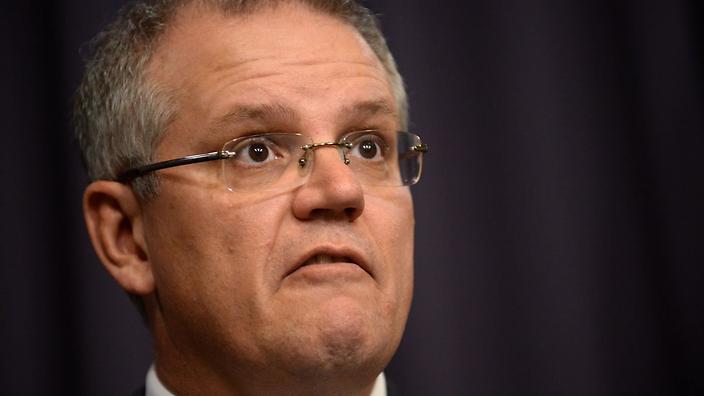 From Bernie Sanders to Bette Midler: The world reacts to the bushfires, SBS , 4 Jan 2020, Figures from across the globe are weighing in on Australia’s bushfire crisis, with many directing criticism at Prime Minister Scott Morrison.The world has taken to social media to express horror and condolences for those affected by the Australian bushfires. From Bernie Sanders to Bette Midler: The world reacts to the bushfires, SBS , 4 Jan 2020, Figures from across the globe are weighing in on Australia’s bushfire crisis, with many directing criticism at Prime Minister Scott Morrison.The world has taken to social media to express horror and condolences for those affected by the Australian bushfires.Personalities across the political spectrum, from legislators to entertainers have used various platforms to react to the “unfathomable loss and destruction”. At least 19 people have died and more than 1400 homes have been destroyed this fire season as flames leave their mark on more than five million hectares. Many observers have made the connection between Australia’s bushfires and climate change. Former Democratic presidential nominee Hillary Clinton said, “with Australia on fire and the Arctic in meltdown, it’s clear we’re in a climate emergency”…. Fellow high-profile Democrat and climate campaigner Al Gore made a similar point, saying “the bushfires in Australia represent a startling climate catastrophe unfolding before us”.
Among the risks of the climate crisis is a normalization of its horrific and deadly consequences. The bushfires in Australia represent a startling climate catastrophe unfolding before us. Important piece from @dwallacewells. http://nymag.com/intelligencer/
The sentiment was shared by US presidential-hopeful Senator Bernie Sanders. “What is happening in Australia today will become increasingly common around the world if we do not aggressively combat climate change and transform our energy system away from fossil fuels,” he said…… Actress Bette Middler had some harsh words for Prime Minister Scott Morrison. “Pity the poor Australians, their country ablaze, and their rotten Scott Morrison saying, ‘this is not the time to talk about climate change, we have to grow our economy.’ What an idiot,” she said, before slamming the PM with even stronger language…… But it was not just progressives who weighed in. Conservative UK commentator Piers Morgan has tweeted a number of times…… Mr Morgan then went on to criticise Mr Morrison, siding with fire victims who heckled him on Thursday….. https://www.sbs.com.au/news/from-bernie-sanders-to-bette-midler-the-world-reacts-to-the-bushfires  |
|
In the interests of the coal lobby, Australia sabotaged the UN climate talks
Australia took a match to UN climate talks while back home the country burned https://www.theguardian.com/commentisfree/2019/dec/16/ australia-took-a-match-to-un-climate-talks-as-back-home-the-country-burned Julie-Anne Richards The gleeful coal lobby stalked the Madrid COP25 meeting halls as the Morrison government threw out compassion and international citizenship. I’ve been at the climate summit in Madrid for the past two weeks. The question I was constantly asked was: “What will it take for Australia to treat the climate crisis seriously?” International friends, colleagues and strangers looked on in horror at the effects of the bushfires and outright amazement at the Morrison government’s denial of the link between the fires and Australia’s coal industry, and seeming lack of concern at this extreme impact of climate change.
The ray of hope is the youth, demanding their future back. The rest of us have a responsibility to join them, to back their calls however we can. Force our government to show compassion. Demand genuine climate action. We can do this. Other governments are – New Zealand is showing us up. It is our government that is failing us, failing our neighbours, failing our youth. We’ve got no choice but to demand they act, and refuse to give up until they do. See you at a youth-led climate rally soon.
• Julie-Anne Richards is executive director of Climate Action Network Australia
Australia on the nose at UN climate talks
 Not winning friends’: Australia cops blame as climate talks extended, SMH, By Peter Hannam. December 14, 2019 Global climate talks have been extended into the weekend as nations wrangle over carbon accounting issues, including whether Australia should be able to slash its Paris emissions reduction goals using a surplus from an earlier era….. Not winning friends’: Australia cops blame as climate talks extended, SMH, By Peter Hannam. December 14, 2019 Global climate talks have been extended into the weekend as nations wrangle over carbon accounting issues, including whether Australia should be able to slash its Paris emissions reduction goals using a surplus from an earlier era…..
International media singled out Australia’s insistence it be allowed to count “over-achievement” during the 2012-20 Kyoto Protocol period to reduce its abatement task during the 2021-30 Paris accord as one brake on progress. Sweden’s TT News Agency blamed the stalled talks on Australia, Saudi Arabia and Brazil. https://www.smh.com.au/environment/climate-change/not-winning-friends-australia-cops-blame-as-climate-talks-extended-20191214-p53jyk.html |
|
Australia at the bottom of the list in global assessment of climate action
|
‘Cause for great concern’: Australia ranked last in global assessment on climate action, Australia’s record on climate change has been panned in the latest Climate Change Performance Index tracking nation’s efforts to combat global warming, SBS NEWS, BY TOM STAYNER, 1 Dec 19, Australia’s climate change record has been ranked among the bottom five nations in the world in a global assessment of countries’ emissions trajectories.
The Climate Change Performance Index (CCPI) measures the emissions, renewable energy share and climate policies of 57 countries and the European Union. It has been released at COP25, the UN climate summit being held in Madrid, as nations attempt to thrash out the way forward on the global Paris framework responding to the crisis. According to the report, Australia, Saudi Arabia, and the United States give “cause for great concern” over their performance on emissions, renewable energy development and climate policy. Australia’s climate policy rating was ranked the lowest in the world with analysts noting that “the newly elected government continued to worsen performance at both national and international levels.” Its policies were given a 0.0 rating, in comparison the United Stated ranked one position higher held a 2.8 rating and the top-performing nation Portugal received a 98.7. National experts observe a lack of progress in these areas with the [Australia] government failing to clarify how it will meet the country’s insufficient 2030 emissions reduction target and inaction in developing a long-term mitigation strategy,” the report reads. “While the government is not proposing any further targets for renewable energy beyond 2020, it continues to promote the expansion of fossil fuels and in April 2019 approved the opening of the highly controversial Adani coalmine.” Across the assessment, Australia ranked 44th on emissions, 50th on renewable energy, 52nd on energy use and 61st on climate policy. National experts observe a lack of progress in these areas with the [Australia] government failing to clarify how it will meet the country’s insufficient 2030 emissions reduction target and inaction in developing a long-term mitigation strategy,” the report reads. “While the government is not proposing any further targets for renewable energy beyond 2020, it continues to promote the expansion of fossil fuels and in April 2019 approved the opening of the highly controversial Adani coalmine.” Across the assessment, Australia ranked 44th on emissions, 50th on renewable energy, 52nd on energy use and 61st on climate policy……. HTTPS://WWW.SBS.COM.AU/NEWS/CAUSE-FOR-GREAT-CONCERN-AUSTRALIA-RANKED-LAST-IN-GLOBAL-ASSESSMENT-ON-CLIMATE-ACTION |
|
Australia is copping it at COP25 – and rightly so
|
Australia is copping it at COP25 – and rightly so, Canberra Times, Dermot O’Gorman , 9 Dec 19,
This week the world’s climate ministers, including Australia’s embattled Minister for Emissions Reduction Angus Taylor, are meeting in Madrid for international climate talks. It has already been an inauspicious start to the COP25 UN Climate Change Conference, where Australia is receiving a well-deserved kicking from the international community for its inaction on the issue.
Australia bagged the infamous Fossil of the Day award from environment groups on the opening day. The satirical award, presented each day of the conference, was in recognition of the Australian government’s downplay of the link between climate change and the bushfires that continue to devastate communities across the country. As the talks continue, we shouldn’t be surprised to see members of the European Union, who are leading the way in tackling climate change, taking aim at Australia for our weak climate commitments. Trade Minister Simon Birmingham recently got a taste of this when France pushed Australia to adopt enforceable climate change targets as part of a planned trade deal with the EU. COP25 should be a wake-up call that our domestic climate policies and position on thermal coal exports are undermining Australia’s standing in the world…..https://www.canberratimes.com.au/story/6532512/australia-is-copping-it-at-cop25-and-rightly-so/?cs=14246 |
|
Australian govt’s dodgy climate accounting tricks to be tested in Madrid
Australia’s ‘betrayal of trust’ emissions plan to be tested in Madrid, SMH, By Peter Hannam, December 9, 2019, The Morrison government could be forced to justify Australia’s plan to count “carry-over credits” towards the country’s Paris climate target, with a global summit set to debate eliminating their use.
The 25th Conference of the Parties (COP25) meeting in the Spanish capital of Madrid is scheduled to debate the so-called “rulebook” for the goals agreed by the nearly 200 Paris signatory nations.
According to the draft “guidance on cooperative approaches“, one “option” for debate will be that “Kyoto Protocol units, or reductions underlying such units, may not be used by any Party toward its [nationally determined goals]”.
The Morrison government has repeatedly said Australia is entitled to use “surplus” units the country will generate during the Kyoto period (2008-2020) to count against the 2021-2030 Paris target.
Australia’s latest emissions projections report, released over the weekend, showed the government is planning to count 411 million tonnes of carbon dioxide equivalent (MtCO-e) from the Kyoto-agreement era. The use of such credits would mean Australia could meet its pledge of cutting 2005-level emissions 26-28 per cent by 2030 with minimal effort.
Malte Meinshausen, co-director of the Energy Transition Hub at Melbourne University and a former climate negotiator with Germany, said it was good the Kyoto option appears “to be on the table”.
The use of Kyoto credits was “a betrayal of the trust which all countries signed up to at Paris”, Professor Meinshausen said, noting New Zealand, European Union and Pacific states opposed them.
While climate laggards such as Russia and Brazil may join Australia in opposing the Kyoto “option”, “it’s a reminder that the international community does not want to give up easily the good cooperative fruits developed in Paris”, he said…….
Australia will certainly have to defend its carryover and depending on how the text evolves might find itself increasingly isolated,” said Richie Merzian, an emissions analyst with The Australia Institute and former climate treaty negotiator for the Australian government.
“There are apparently over 100 countries supporting the restriction to limit Kyoto Protocol units from being used to meet Paris Agreement commitments,” he told the Herald and The Age from Madrid.
“Australia’s usual allies – other developed countries – either have ruled out using these credits voluntarily or don’t have skin in the game,” Mr Merzian said. “Australia’s only support might come from China and Brazil keen to use their carbon market credits from Kyoto to cash into Paris.”
Adam Bandt, Greens climate spokesman, said “Scott Morrison’s dodgy climate accounting is now up in lights on the world stage.
“Australia is burning at home, and Angus Taylor is turning up at an international event asking for the right to keep on polluting,” he said…….
“[The emissions drop] is driven mainly by declines in the electricity sector because of strong uptake of rooftop solar and the inclusion of the Victoria, Queensland and Northern Territory 50 per cent renewable energy targets,” the report said.
Jamie Hanson, head of campaigns at Greenpeace Australia Pacific, said the Liberal National coalition had long been using “dodgy accounting tricks like these so-called carryover credits to mislead the Australian public on their appalling track record on emissions”.
“Scrapping the ability to rely on carryover credits and shifty accounting is a great step towards holding governments like Australia to account over their rising emissions,” he said. https://www.smh.com.au/environment/climate-change/australia-s-betrayal-of-trust-emissions-plan-to-be-tested-in-madrid-20191208-p53hyv.html
COP25, and Australia’s position at the Madrid climate talks
 Earth has a couple more chances to avoid catastrophic climate change. This week is one of them https://theconversation.com/earth-has-a-couple-more-chances-to-avoid-catastrophic-climate-change-this-week-is-one-of-them-128120 Robert Hales
Director Centre for Sustainable Enterprise, Griffith University, December 3, 2019 Almost 200 world leaders gather in Madrid this week for climate talks which will largely determine the success of the Paris agreement, and by extension, the extent to which the planet will suffer under climate change.
Negotiations at the so-called COP25 will focus on finalising details of the Paris Agreement. Nations will haggle over how bold emissions reductions will be, and how to measure and achieve them.
Much is riding on a successful outcome in Madrid. The challenge is to get nations further along the road to the strong climate goals, without any major diplomatic rifts or a collapse in talks.
What COP25 is about
COP25 is a shorthand name for the 25th meeting of the Conference of Parties to the UN Framework Convention on Climate Change (or the nations signed up to the Paris agreement).
After Paris was signed in 2015, nations were given five years in which to set out bolder climate action. Current targets expire in 2020. At next year’s November COP in Glasgow, nations will be asked to formally commit to higher targets. If Madrid does not successfully lay the groundwork for this, the Glasgow talks are likely to fail.
The United Nations says the world must reduce overall emissions by 7.6% every year over the next decade to have a high chance of staying under 1.5℃ warming this century.
The 1.5℃ limit is at the upper end of the Paris goal; warming beyond this is likely to lead to catastrophic impacts, including near-total destruction of the Great Barrier Reef.
Presently, emissions reduction targets of nations signed up to Paris put Earth on track for a 3.2℃ increase.
A global carbon market
Parties will debate the mechanism in the Paris agreement allowing emissions trading between nations, and via the private sector.
Such mechanisms could lower the global cost of climate mitigation, because emissions reduction in some nations is cheaper than in others. But there are concerns the trading regime may lack transparency and accountability.
Among the risks are that emissions cuts are “double counted” – meaning both the buying and selling nation count the cuts towards their targets, undermining the aims of the agreement.
Help for vulnerable nations
Small island states say COP25 is the last chance to take decisive action on global emissions reduction.
Fossil fuel burning in the developing world is largely responsible for the carbon dioxide that drives global warming. Developing nations are particularly vulnerable to the loss and damage caused by climate change.
Parties will discuss whether an international mechanism designed to assess and compensate for such damage is effective.
Developing nations are expected to contribute to the Green Climate Fund to help poorer nations cope with and mitigate climate change. Some 27 nations contributed US$9.78 billion in the last funding round.
Some nations have indicated they will not contribute further, including Australia, which says it already helps Pacific nations through its overseas aid program.
Arguments about cost
Nations opposed to adopting stronger emissions reduction targets often argue the costs of decarbonising energy sectors, and economies as a whole, are too high.
However, recent cost benefit analysis has found not taking action on climate change will be expensive in the long run.
Realisation is also growing that the cost of emissions reduction activities has been overestimated in the past. In Australia, prominent economist Ross Garnaut recently said huge falls in the cost of equipment for solar and wind energy has created massive economic opportunity, such as future manufacturing of zero-emission iron and aluminium.
The shift in the cost-balance means nations with low ambition will find it difficult to argue against climate mitigation on cost grounds.
Australia’s position at Madrid
At the Paris talks, Australia pledged emissions reduction of 26-28% by 2030, based on 2005 levels. The Morrison government has indicated it will not ramp up the goal.
About 68 nations said before COP25 they will set bolder emissions reduction targets, including Fiji, South Africa and New Zealand. This group is expected to exert pressure on laggard nations.
This pressure has already begun: France has reportedly insisted that a planned free trade deal between Australia and the European Union must include “highly ambitious” action on climate change.
The Climate Action Tracker says Australia is not contributing its fair share towards the global 1.5℃ commitment. Australia is also ranked among the worst performing G20 nations on climate action.
The Madrid conference takes place amid high public concern over climate change. Thousands of Australians took part in September’s climate strikes and the environment has reportedly surpassed healthcare, cost of living and the economy as the top public concern.
Climate change has already arrived in the form of more extreme weather and bushfires, water stress, sea level rise and more. These effects are a small taste of what is to come if negotiations in Madrid fail to deliver.
Johanna Nalau, Samid Suliman and Tim Cadman contributed to this article.
Former PM Kevin Rudd says Assange faces ‘unacceptable’ and ‘disproportionate’ punishment
Rudd says Assange faces ‘unacceptable’ and ‘disproportionate’ punishment https://www.theage.com.au/politics/federal/rudd-says-assange-faces-unacceptable-and-disproportionate-punishment-20191125-p53duj.html By Rob Harris, Kevin Rudd says Julian Assange would pay an “unacceptable” and “disproportionate” price if he is extradited to the United States, arguing the WikiLeaks founder should not take the fall for Washington’s failures to secure its own classified documents.
In a significant intervention into Mr Assange’s extradition fight, the former Australian prime minister said US prosecutors had not made any specific allegations that anyone was seriously harmed as a consequence of the release of highly classified documents relating to the Iraq and Afghanistan wars in 2010.
The Morrison government is resisting a rising tide of demands to intervene in the case of the 48-year-old Australian citizen, as his supporters grow increasingly concerned over his deteriorating health in a British prison.
Mr Rudd, himself targeted in WikiLeaks’ publication of more than 250,000 leaked diplomatic cables nine years ago, said while he had “serious reservations” about Mr Assange’s character and conduct, he did not believe he should be extradited to face an “effective life sentence” in the US.
In a letter to the Bring Julian Assange Home Queensland Network, seen by The Age and The Sydney Morning Herald, Mr Rudd said he could not see the difference between Mr Assange and the editors of many American media outlets that reported the material he had provided them.
“If [the US prosecutors’] case is essentially that Mr Assange broke the law by obtaining and disclosing secret information, then I struggle to see what separates him from any journalist who solicits, obtains and publishes such information,” Mr Rudd wrote.
“In other words, why should Mr Assange be tried, convicted and incarcerated while those who publicly released the information are afforded protection under provisions of the US constitution concerning press freedom?”
The group was briefed by barrister Jen Robinson, a member of Mr Assange’s London legal team, as well as Greg Barns from the Australian Assange Campaign and human rights and due process advocate Aloysia Brooks.
Mr Rudd said he was “deeply opposed” to the leaking of classified diplomatic or intelligence communications, which needed to be protected to maintain Australia’s national security interests and that of its allies.
“Ultimate responsibility for keeping sensitive information secure rests with governments. The United States government demonstrably failed to effectively secure the classified documents relevant to this case,” he wrote.
“The result was the mass leaking of sensitive diplomatic cables, including some that caused me some political discomfort at the time. However, an effective life sentence is an unacceptable and disproportionate price to pay. I would therefore oppose his extradition.”
More than 60 doctors from the United Kingdom, Australia, Europe and Sri Lanka, wrote to British Home Secretary Priti Patel on Monday asserting that Mr Assange urgently needs medical treatment at a university hospital.
The doctors said in a letter, distributed by WikiLeaks on Monday, that he was suffering from psychological problems including depression as well as dental issues and a serious shoulder ailment.
Mr Barns welcomed Mr Rudd’s intervention saying his comments, like his former colleague Bob Carr, rightly pointed to the threat to freedom of the media.
“The Australian government and all MPs we hope will place pressure on the US to make it understand that the treatment of an Australian citizen this way is not something that should happen,” Mr Barns said.
“Mr Rudd and Mr Carr could never be described as anti-Washington but they clearly understand the need for Canberra to take action to prevent this gross injustice.”
Mr Assange will return to court briefly next month before a full hearing of a US extradition request in which he faces a 175-year jail sentence if found guilty on 18 charges relating to computer fraud and obtaining and disclosing national defence information.
Scott Morrison shuns Torres Strait Islanders worried about climate change
 Scott Morrison shuns Torres Strait Islanders worried about climate change, https://www.sbs.com.au/news/scott-morrison-shuns-torres-strait-islanders-worried-about-climate-change Scott Morrison has declined to visit the homes of a group of Torres Strait Islanders who are taking their complaint against government inaction on climate change to the UN.
A group of Torres Strait Islanders have accused the Morrison government of breaching their human rights over its failure to cut emissions and build defences such as sea walls.
After lodging an official complaint with the UN Human Rights Committee in May, they asked Mr Morrison to see for himself the effects of climate change on their low-lying homes.
But Mr Morrison has declined, as has Emissions Reduction Minister Angus Taylor to make the journey to Australia’s north.
Complainant Yessie Mosby said they were disappointed Mr Morrison would not visit.
“Just like those battling bushfires on the mainland, our islands are on Australia’s climate frontline.”
Mr Mosby said the complainants are demanding Australia increase its commitment to cut emissions under the Paris Agreement in the lead-up to COP 26 next year.
“We’ll wait and see what Canberra declares in coming months, as will our fellow islanders across the Pacific.
“This is not a problem for another country to sort out. Bushfires, floods, droughts, extreme heat and in our case rising seas – this is the reality of living in Australia now,” he added.
In their letter to Mr Morrison, the Torres Strait Islanders described how rising seas were threatening homes, swamping burial grounds and washing away sacred cultural sites.
The prime minister’s office has been contacted for comment.
The movement to save Julian Assange – his father in Ireland
Will you come and help?’ Father of Julian Assange on campaign to free his son, Irish Examiner, MICHAEL CLIFFORD November 09, 2019 At 80, John Shipton thought he would be enjoying his retirement, he tells Michael Clifford. Instead, he is touring European capitals campaigning for his son, Wikileaks founder Julian Assange.
A parent’s work is never done. John Shipton entering his ninth decade. He’d like to kick back, maybe learn a few recipes, stroll at a leisurely pace towards the declining years.
But his son needs him. His son’s health is in serious danger and his future looks dark, with the prospect of spending decades, if not the remainder of his life, in prison.
His son is Julian Assange. It’s a name that is familiar to most people, although many would, at this remove, find it difficult to couple his celebrity standing with his talent or achievement.
Assange is an Australian who has been a serious thorn in the side of the powerful. His Wikileaks organisation was responsible for disseminating information that showed what exactly the US and its allies were getting up to in foreign wars.
Wikileaks exposed war crimes. It was the receptor for whistleblower Chelsea Manning’s treasure trove of documents that painted a picture of torture and maltreatment by US forces in Iraq, among other crimes.
Vanity Fair described the resultant stories as “one of the greatest journalistic scoops of the last 30 years… they have changed the way people think about how the world is run”…….
Assange is a category B prisoner, which means he’s not considered an immediate danger to fellow human beings or society in general, but his conditions of detention are still onerous.
“He’s locked up 22 or 23 hours a day,” his father says. “It’s a grade A maximum security prison. Because those in it are treated like terrorists, that’s what Julian is being subjected to.”
Shipton was in Dublin recently on a flying visit that now forms part of his current “job”. That entails lobbying, meeting, and publicising on behalf of his son. Shipton is on a tour of European capitals trying to round up support……
Assange is in a bad way, there is no doubt about that. Both physically and psychologically, his condition is deteriorating. The prison conditions are onerous but they come following eight years cooked up in the embassy, at times under serious stress. The day before arriving in Dublin Shipton had been in to see his son.
“As you would expect after nine years of persecution, he’s a bit down in the dumps,” he says.
“The report of the UN rapporteur on torture says it all really, pointing out that he has every sign of having suffered torture with both physical and mental results…..
The UN rapporteur on torture, Nils Melzer, did visit Assange with two doctors in June in Belmarch and were highly condemnatory of the conditions in which he was being kept.
Last week, Melzer issued a further statement, saying Assange’s life was at risk and that he must not be extradited to the US as a consequence of “exposing serious governmental misconduct”…..
Melzer goes further and offers an opinion on what is driving the harsh treatment.
“In my view, this case has never been about Mr Assange’s guilt or innocence, but about making him pay the price for exposing serious governmental misconduct, including alleged war crimes and corruption,” he says. “Unless the UK urgently changes course and alleviates his inhumane situation, Mr Assange’s continued exposure to arbitrariness and abuse may soon end up costing his life.”…..
Since coming to power, Trump has railed against many forms of the free press. And his government has requested Assange’s extradition to stand trial for spying.
If he is extradited, his father doesn’t have much confidence in the prospects of a fair trial.
“The espionage law courts are held in Elizabeth, Virginia,” says Shipton. “It’s a town where all the constituents are from the intelligence community. Every judgement in the espionage courts they say just go to jail. It’s not theoretical. If he’s tried he will go to jail.”
The next hearing on extradition isn’t scheduled until February and on the basis that he previously did skip bail while awaiting an extradition hearing he is unlikely to get bail. For his family and close friends, the most immediate issue is his health rather than the political and legal vortex into which he has been drawn.
At a recent court appearance on October 21, he was described by eyewitnesses as appearing “distressed and disorientated”.
He is subject to a legal process, but few could argue that it is anything more than political. Assange published leaked material. In that he was performing an act of journalism.
Manning, for instance, was prosecuted and served seven years of what was originally a 35-year sentence. But Assange’s role was that of publisher.
Much of Wikileaks most serious material was presented in collaboration with leading global newspapers, including the New York Times and The Guardian.
His father believes that the attack on the press through Assange is not fully appreciated.
“It’s in the self interests of all journalists and news corporations to ensure that this is fought,” he says…… https://www.irishexaminer.com/breakingnews/views/analysis/michael-clifford/will-you-come-and-help-father-of-julian-assange-on-campaign-to-free-his-son-962776.html
Gross injustice: the relentless destruction of Julian Assange
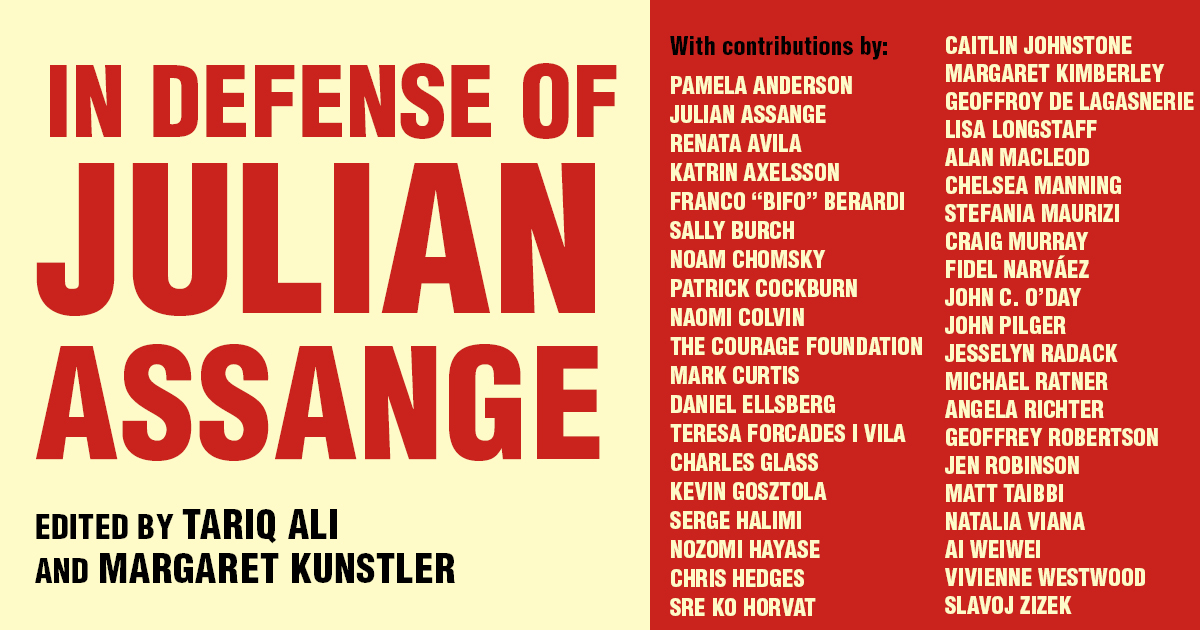
The charge against Julian is very specific; conspiring with Chelsea Manning to publish the Iraq War logs, the Afghanistan war logs and the State Department cables. The charges are nothing to do with Sweden, nothing to do with sex, and nothing to do with the 2016 US election; a simple clarification the mainstream media appears incapable of understanding.
The campaign of demonization and dehumanization against Julian, based on government and media lie after government and media lie, has led to a situation where he can be slowly killed in public sight, and arraigned on a charge of publishing the truth about government wrongdoing, while receiving no assistance from “liberal” society.
Unless Julian is released shortly he will be destroyed. If the state can do this, then who is next?
 The Annihilation of Julian Assange, https://www.truthdig.com/articles/the-annihilation-of-julian-assange/, Craig Murray “In Defense of Julian Assange,” edited by Tariq Ali and Margaret Kunstler, is now available for OR Books.
I was deeply shaken while witnessing yesterday’s events in Westminster Magistrates Court. Every decision was railroaded through over the scarcely heard arguments and objections of Assange’s legal team, by a magistrate who barely pretended to be listening.
Before I get on to the blatant lack of fair process, the first thing I must note was Julian’s condition. I was badly shocked by just how much weight my friend has lost, by the speed his hair has receded and by the appearance of premature and vastly accelerated aging. He has a pronounced limp I have never seen before. Since his arrest he has lost over 15 kg in weight.
But his physical appearance was not as shocking as his mental deterioration. When asked to give his name and date of birth, he struggled visibly over several seconds to recall both. I will come to the important content of his statement at the end of proceedings in due course, but his difficulty in making it was very evident; it was a real struggle for him to articulate the words and focus his train of thought.
Until yesterday I had always been quietly skeptical of those who claimed that Julian’s treatment amounted to torture – even of Nils Melzer, the UN Special Rapporteur on Torture – and skeptical of those who suggested he may be subject to debilitating drug treatments. But having attended the trials in Uzbekistan of several victims of extreme torture, and having worked with survivors from Sierra Leone and elsewhere, I can tell you that yesterday changed my mind entirely and Julian exhibited exactly the symptoms of a torture victim brought blinking into the light, particularly in terms of disorientation, confusion, and the real struggle to assert free will through the fog of learned helplessness. Continue reading
Nuclear weapons and Australia’s hypocrisy about them
 from congratulating ICAN for the first Australian-born Nobel Peace Prize. While a childish move, this only served to highlight the government’s discomfort with the treaty and its clear challenge to Australia’s position on nuclear weapons. As the signatures and ratifications continue to stack up and the treaty nears entry-into-force, this challenge persists.
Financial institutions are divesting from nuclear weapon producers, citing the treaty as their reason for doing so even though it has yet to enter into force. These include ABP, the largest Dutch pension fund, and Norway’s trillion-dollar sovereign wealth fund. Cities and towns are declaring their support for the treaty, including Paris, Berlin, Geneva, Washington DC, Toronto, Sydney and Melbourne.
This year’s Nobel Peace Laureate, Ethiopian Prime Minister Abiy Ahmed Ali, has been rewarded for formalising a peace agreement between Ethiopia and Eritrea. For ICAN, the Nobel Peace Prize served a directive upon all nations to sit up and pay attention to the fresh 10-page nuclear weapon ban treaty. We know that we’re up against powerful nations, a lucrative industry and deeply entrenched modes of thinking. The real prize will be the total elimination of nuclear weapons, and we have the tools to get there. It’s up to all people, civil society and governments to turn the tide of history. Our collective security depends on it.
- Gem Romuld is the Australian director of the International Campaign to Abolish Nuclear Weapons and a recipient of the 2017 Nobel Peace Prize. https://www.canberratimes.com.au/story/6442739/nuclear-hypocrisy-cant-continue/?cs=14246
Australian company Worley Parsons joins the international throng trying to sell nuclear power to Saudi Arabia
Australian company WorleyParsons will provide consultancy services including project governance, resource management, project services, training and compliance across the full scope of the large nuclear power plant (LNPP), small modular reactors and nuclear fuel cycle.
 US confirms nuclear energy talks with Saudi Arabia, https://www.power-technology.com/comment/us-confirms-nuclear-energy-talks-with-saudi-arabia/ By MEED 30 Oct 19, Riyadh will have to sign an accord with Washington on the peaceful use of nuclear technology for US firms to participate in the projectA senior US official has confirmed that Washington is in talks with Riyadh about supporting Saudi Arabia’s planned nuclear programme. US confirms nuclear energy talks with Saudi Arabia, https://www.power-technology.com/comment/us-confirms-nuclear-energy-talks-with-saudi-arabia/ By MEED 30 Oct 19, Riyadh will have to sign an accord with Washington on the peaceful use of nuclear technology for US firms to participate in the projectA senior US official has confirmed that Washington is in talks with Riyadh about supporting Saudi Arabia’s planned nuclear programme.
Speaking in Abu Dhabi on 26 October, US Energy Secretary Rick Perry Perry confirmed that talks were ongoing. Continue reading |
Australian government rejects call for help from Julian Assange’s legal team
 Why is it that the Australian government is so helpful to Australian murderers and drug dealers imprisoned overseas, but so relentlessly unhelpful to an Australian whose only crime is to tell the truth?
Assange legal team asks for Australian government help amid growing health fears, https://www.theage.com.au/politics/federal/assange-legal-team-asks-for-australian-government-help-amid-growing-health-fears-20191028-p534xw.html, By Rob Harris
The WikiLeaks founder has been held in HM Prison Belmarsh since his April 11 arrest at the Ecuadorian embassy, where he had lived in asylum for almost seven years.
Australian officials told a Senate estimates hearing on Thursday that diplomats had not heard back from Assange’s lawyer since writing to her last week asking that she raise with him their offer of consular assistance.
The 48-year-old is fighting US attempts to extradite him to face 17 counts of spying and one of computer hacking in relation to WikiLeaks’ release of thousands of classified Pentagon files regarding the Iraq and Afghanistan wars.
Barrister Greg Barns, an adviser to the Australian Assange campaign, told The Age and The Sydney Morning Herald his UK lawyers on Friday requested consular assistance following a recent inquiry from the Department of Foreign Affairs and Trade.
“Julian’s lawyers are asking for the Australian government’s assistance in dealing with their client’s inhumane conditions in Belmarsh prison which has led to, and is continuing to cause, serious damage to Julian’s health,” Mr Barns said.
His supporters say he is being kept in solitary confinement and is allowed out of his cell for only 45 minutes a day. At a court appearance last week, he appeared gaunt and disorientated.
Assange was due to be released on September 22 but was told at a court hearing last month he would be kept in jail because there were “substantial grounds” for believing he would abscond.
The Australian Lawyers Alliance (ALA) passed a motion at its national conference on Saturday calling for the Australian government to do “all it can” to bring Assange home and resist US attempts to extradite him.
ALA national president Andrew Christopoulos said it was an important issue about the rule of law and protecting an Australian in a vulnerable position overseas.
“This is about standing up for the rule of law, fairness and the freedom to expose wrongdoing,” he said. “The reported decline of Julian Assange’s physical and mental health heightens the need for urgent government intervention. The government has intervened in cases like this before and should do so in this circumstance.”
If the case goes to a series of appeals, Assange could remain in a UK jail until at least 2025.
Foreign Minister Marise Payne last week acknowledged the publicity around the case and that Assange had high-profile and loyal supporters. She said it was important to let the legal process run its course.
“He has been offered consular services … like any other Australian would,” Senator Payne told the Senate committee. “I think it’s important to remember that as Australia would not accept intervention or interference in our legal processes, we are not able to intervene in the legal processes of another country
1 This month
17 October, Free Public Talk on Nuclear Issues in South Australia
David Noonan will speak on public interest concerns over the new Roxby Downs Indenture Act 2026 on BHP copper-uranium mining and ore processing in SA, and on how AUKUS may face SA with a High-Level nuclear waste agenda.
Dr Jim Green will discuss international developments in the field of nuclear power including ‘small modular reactors’ and Generation 4 ‘advanced’ nuclear reactor concepts.


Help Aunty Sue Protect Her Land and Sacred Sites From Destructive Rocket Testing.
.

Australians deserve the truth
about
AUKUS – https://aukuspublicinquiry.com/

PETITION – To: Prime Minister Anthony Albanese and the Australian Labor Government

of the week – Australians for War Powers Reform (AWPR)
To see nuclear-related stories in greater depth and intensity

