Torres Strait Islanders ask UN to hold Australia to account on climate ‘human rights abuses’ The Conversation, Kristen Lyons Professor Environment and Development Sociology, The University of Queensland. May 27, 2019 Climate change threatens Australia in many different ways, and can devastate rural and urban communities alike. For Torres Strait Islanders, it’s a crisis that’s washing away their homes, infrastructure and even cemeteries.The failure to take action on this crisis has led a group of Torres Strait Islanders to lodge a climate change case with the United Nations Human Rights Committee against the Australian federal government.
It’s the first time the Australian government has been taken to the UN for their failure to take action on climate change. And its the first time people living on a low lying island have taken action against any government.
This case – and other parallel cases – demonstrate that climate change is “fundamentally a human rights issue”, with First Nations most vulnerable to the brunt of a changing climate.
The group of Torres Strait Islanders lodging this appeal argue that the Australian government has failed to take adequate action on climate change. They allege that the re-elected Coalition government has not only steered Australia off track in meeting globally agreed emissionsreductions, but has set us on course for climate catastrophe.
In doing so, Torres Strait Islanders argue that the government has failed to uphold human rights obligations and violated their rights to culture, family and life………
Torres Straight Islanders are on the frontlines
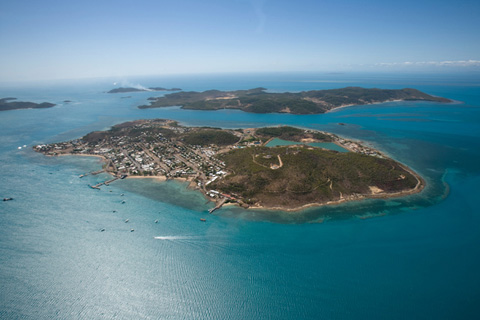
Some Torres Strait Islands are less than one metre above sea level and are already affected by climate change.
Rising tides have delivered devastating effects for local communities, including flooding homes, land and cultural sites, with dire flooding in 2018 breaking a sea wall built to protect local communities…….
Parallel threats across the Pacific
While the Torres Strait appeal to the UN is groundbreaking, the challenges facing Torres Strait Islanders are not unique.
Delegates at the Pacific Islands Forum in Fiji last week described climate change as the “single greatest threat” to the region, with sea level rise occurring up to four times the global average in some countries in the Pacific.
Climate change is already causing migration across parts of the Pacific, including relocation of families from the Carteret Islands to Bougainville with support from local grassroots organisation Tulele Peisa.
The Alliance of Small Island States, an intergovernmental organisation, has demanded that signatories to the Paris Agreement, including through the Green Climate Fund, recognise fundamental loss and damages communities are facing, and compensate those affected.
Whatever Assange got up to in 2010-11, it was not espionage. Nor is he a US citizen. The criminal acts this Australian maverick allegedly committed all happened outside the US. As Joel Simon, director of the Committee to Protect Journalists, has observed: “Under this rubric, anyone anywhere in the world who publishes information that the US government deems to be classified could be prosecuted for espionage.”
The new indictment against Assange falls into three parts – each of them attempting to criminalise things journalists regularly do as they receive and publish true information given to them by sources or whistleblowers.
Alan Rusbridger, I found the WikiLeaks co-founder a troubling figure when I worked with him, but America’s case would criminalise journalistic inquiry.
Do you remember the Collateral Murder video – the one that showed US air crew in Apache helicopters killing people as though playing computer games, laughing at the dead after slaughtering a dozen people, including two Iraqis working for the Reuters news agency? Do you remember how the US military had lied about what happened in that incident in July 2007 – first claiming that all the dead were insurgents, and then that the helicopters were responding to an active firefight? Neither claim was true. Do you recall that Reuters had spent three years unsuccessfully trying to obtain the video?
Collateral Murder?
Was it in the public interest that the world should have eventually seen the raw footage of what happened? You bet. Was it acutely embarrassing for the US military and government? Of course. Was the act of revelation espionage or journalism? You know the answer.
We have two people to thank for us knowing the truth about how those Reuters employees died, along with 10 others who ended up in the crosshairs of the laughing pilots that day: Chelsea Manning, who leaked it, and Julian Assange, who published it. But the price of their actions has been considerable. Manning spent seven years in jail for her part in releasing that video, along with a huge amount of other classified material she was able to access as an intelligence analyst in the US army. Assange has been indicted on 17 new counts of violating the Espionage Act, with the prospect that he could spend the rest of his life in prison. Continue reading →
Lynas’ US plans no threat to Wesfarmers interest, Malaysian problems, https://www.smh.com.au/business/companies/lynas-us-plans-no-threat-to-wesfarmers-interest-malaysian-problems-20190507-p51kx2.html. By Colin Kruger – May 20, 2019 Lynas Corp’s plans to establish processing operations in the US are not expected to pose a threat to Wesfarmers’ interest in the rare earths group, but it won’t offer a Plan B for its Malaysian problems either.Lynas told the ASX on Monday it had signed a memorandum of understanding (MOU) with one of its US customers, Blue Line Corp, for a joint venture to separate medium and heavy rare earths elements in Texas. Lynas said it would be the majority owner of the venture…….
The company declined to comment further but Ms Lacaze will front investors on Tuesday and is expected to clarify plans to invest in processing infrastructure in Western Australia where it mines the rare earths at Mt Weld.
This will offset the sovereign risk of its billion-dollar Malaysian operations, which could be forced to close in September if Lynas does not remove more than 450,000 tonnes of low level radioactive waste.
The company had been in talks with Wesfarmers about a processing joint venture in WA last year which led to a controversial $1.5 billion bid by the conglomerate in March. Continue reading →
Unusual secrecy around 1950s nuclear testing , The Saturday Paper, Martin McKenzie-Murray 18 May 19 Between 1952 and 1957, Britain tested 12 nuclear weapons in Australia – on the Montebello Islands off the Pilbara coast, and at Maralinga and Emu Fields in the South Australian outback. The tests were hurried, incautious and showed extraordinary disregard for Australian assistance and the local Indigenous people who had been forcibly but imperfectly evacuated from their land.
It was a clusterfuck,” says Elizabeth Tynan, an Australian historian, and the award-winning author of Atomic Thunder: The Maralinga Story. “The disregard was partly driven by the fact they were in a rush. They cut corners. They did it on the cheap – and it showed. They had very little regard for safety. Cavalier. They knew about the risks. There were international protocols. Many were disregarded. I met one man, he was a technician with the British effort in Australia, and he said of Indigenous Australians that they were ‘nothing to do with us – it was the Australian government’s responsibility’.”
For Susanne Roff growing up in Melbourne in the 1950s was uneventful. But later, living in Scotland with her husband, William Roff, an eminent historian, she developed a dogged, almost obsessive interest in this chapter of British history that remains cloaked in secrecy.
Once a month, Roff takes the train south from her home in a Scottish fishing village – to archives in London, Birmingham and Cambridge. She’s still looking for answers. “Why was the purportedly Australia-controlled Atomic Weapons Tests Safety Committee so ineffective?” she asks. “Why was the UK able to continue testing at Maralinga until barely six weeks before opening of the 1956 Olympics despite the known hazards to east coast populations? Why didn’t [Sir Mark] Oliphant ever speak out against the tests and contamination, including when he was governor of South Australia?”
Late last year, Roff had another question: Why, more than 60 years after the last nuclear test in Australia, had the British government suddenly vanished previously declassified documents about the tests from its national archives? Roff wasn’t alone in her surprise. The Campaign for Freedom of Information, a British not-for-profit organisation, described it as worrying.
All that was certain was that the files had been removed on the order of the Nuclear Decommissioning Authority.
“WE CAN BUT WONDER WHY THE WORLD’S THIRD ATOMIC AND THERMONUCLEAR POWER HAS SUDDENLY BECOME SO NERVOUS ABOUT EVENTS THAT HAPPENED DECADES AGO.”“The secrecy is arguably even worse today,” Tynan tells me. She is working on a second book about the British tests. “British service personnel have run into brick walls at every turn [in seeking compensation and acknowledgement]. One of the clues to the attitude of the British government is that it has not really ever properly acknowledged what they did. They were nuclear colonialists and they buggered up a part of our country. One former British personnel I met burst into tears when he thought about how Britain had never said sorry. The secrecy … seems incomprehensible. They continue to be secretive.”
But not all documents are closeted. Susanne Roff has some, which she shared with me – British intelligence files on Dr Eric Burhop, an Australian physicist who had worked on the Manhattan Project, which ran from 1939 to 1946. …….
Robert Menzies agreed to the testing immediately, without bothering to consult cabinet. For a time, only three people in the country knew of the agreement: the prime minister, treasurer and defence minister. He asked few questions of the British. “But it wasn’t pure patriotic sycophancy,” Tynan says of Menzies’ decision. “The pragmatic response was: vast reserves of uranium in Australia. It’s central to weaponry and power. It was completely valueless until the Manhattan Project. Then it became a valuable commodity. Australia had a lot of it. That was a very significant part of his reasoning. The other thing that would’ve informed Menzies’ thinking was that he was anxious to ensure Britain and America would protect Australia.”
They were also without the counsel of the Australians who had worked on the American tests – notably, Mark Oliphant and Eric Burhop. Both Susanne Roff and Elizabeth Tynan agree Oliphant would have been a strong head of the safety authority, which was otherwise feckless.
Both men were long suspected of being Communist spies, and may have been excluded to mollify US doubts about British security. The files on Burhop that I’ve seen are voluminous. The FBI, MI5 and ASIO all had records on him. In England and America, he was aggressively surveilled. His phone was tapped. Even Joseph Rotblat had his doubts about his former colleague. The British intelligence historian Andrew Brown has written: “Rotblat remained convinced that Burhop and other left-wing scientists … opposed the [proposed nuclear] moratorium not for their stated reasons but because it would perpetuate the USA’s monopoly and place the USSR at a dangerous disadvantage.”……
In 1984, Australia held a royal commission into the British tests. It found a litany of negligence and cover-ups. “Britain had to be dragged, kicking and screaming, to it,” Elizabeth Tynan says. Today, their attitude is much the same. In 2015, Fiji – frustrated by Britain’s refusal to compensate its people who suffered radiation poisoning during the Pacific tests – declared it would compensate citizens itself. “We are bringing justice to a brave and proud group of Fijians to whom a great injustice was done,” Fiji’s prime minister said. “Fiji is not prepared to wait for Britain to do the right thing.”
Meanwhile, in Britain’s national archives, the nuclear files are still gone. “The UK government has always [downplayed] risks to the servicemen who took part in the tests, the Aboriginal community in the immediate vicinity of them, and the general population downwind … as well as possible genetic effects on subsequent generations,” Susanne Roff says. “We see similar responses in relation to Fukushima in Japan. All the operational and scientific documents relating to the Australian tests that have been on open access in the National Archives have suddenly gone walkabout. We can but wonder why the world’s third atomic and thermonuclear power has suddenly become so nervous about events that happened decades ago.” https://www.thesaturdaypaper.com.au/news/law-crime/2019/05/18/unusual-secrecy-around-1950s-nuclear-testing/15581016008158
UN secretary-general Antonio Guterres said the Pacific is on the “front line of climate change”
Pacific leaders have voiced frustration over Australia’s failure to curb its emissions
Australian politicians say rapidly cutting emissions would be “ruinous” for Australia
Regional heavyweights had gathered at an historic climate change summit convened with the UN secretary-general Antonio Guterres.
Mr Guterres is intent on building global momentum for sharper cuts to emissions, arguing that drastic action is necessary to stave off ecological disaster.
The Pacific is on the “front line of climate change”, Mr Guterres told the meeting.
“It has a unique moral authority to speak out. It’s time for the world to listen.”
Senior Australian officials at the meeting could do little else; sent in the place of Prime Minister Scott Morrison only days before the federal election, they were bound to observer status by the caretaker conventions.
As a result, Australia did not sign up to the final statement by Pacific leaders, which declared climate change a “global catastrophe” and called for “transformative action” to stop it……
while Pacific leaders have praised New Zealand’s announcement that it wants to go carbon neutral by 2050, many are frustrated that Australia has failed to curb its emissions.
One Pacific official told the ABC the meeting’s call for radical action on climate change “really was aimed at the whole globe” but “for those in the room [it] was a message for one country”.
“Of course no-one said Australia. No-one needed to say Australia,” the official said. “What other country in the room could we be referring to?”
The outspoken Prime Minister of Samoa, Tuilaepa Sailele, went much further, wading straight into Australia’s election campaign during the post-summit press conference…….
decision makers in Canberra also know that the Pacific is increasingly impatient about Australia’s long and painful debate on climate policy.
The argument will flare up again in only months when regional leaders gather for the Pacific Islands Forum on tiny Tuvalu, which has long been a vocal champion for drastic climate action.
The United Nations secretary-general Antonio Guterres has warned the world is “not on track” to meet its climate change commitments kicking off a historic trip throughout the Pacific intended to focus on the looming threat of climate change.
The trip marks the first time a sitting UN secretary-general will meet with Pacific Islands Forum (PIF) leaders in the region.
Key points:
Mr Guterres said the “paradox” is that political will fades as climate change gets worse
He is set to visit Tuvalu, Vanuatu and Fiji following after his trip to New Zealand
Samoa says climate change is not just a Pacific issue and that “Sydney could go down”
“Climate change is running faster than what we are … the last four years have been the hottest registered,” Mr Guterres said yesterday alongside New Zealand’s Prime Minister Jacinta Ardern.
“The paradox is that as things are getting worse on the ground, political will seems to be fading.”
Under the Paris Agreement, many countries agreed to a long-term commitment to keep the rise of global temperatures well below two degrees Celsius above pre-industrial levels in a bid to substantially reduce the effects of climate change.
Mr Guterres added to those sentiments yesterday warning that Pacific nations are on the frontlines of climate change.
“We cannot allow for runaway climate change,” he said.
“We need to protect the lives of our people and we need to protect our planet.”
However, he praised the efforts of Ms Ardern’s Government who just last week, introduced an ambitious bill that aims to make New Zealand mostly carbon neutral by 2050 while giving some leeway to farmers.
‘With America or Australia — Sydney could go down’In Fiji, Mr Guterres will meet with PIF leaders and senior government officials from the region. Samoa’s Prime Minister Tuilepa Sailele, a leading critic against nations who he believes are ignoring the threats of climate change, told the ABC’s Pacific Beat program that he had a message for Mr Guterres.
To impress on him the importance of the smallness of our islands, and the quicker moves that our vulnerable islands would like to see from the bigger countries responsible for all these problems that we are facing today,” he said.
Mr Sailele, who has previously blasted countries for ignoring the warnings, added that rising sea levels is not just an issue for the Pacific, but for those very same “bigger countries” as well.
“With America for example, or Australia — Sydney could go down,” he said.
Lynas backs Malaysian waste solution despite removal order, Fin Rev Brad Thompson 6 May 19,Lynas Corporation is pushing ahead with plans to build a permanent disposal facility for low-level radioactive waste in Malaysia despite a contested ultimatum to export about 450,000 tonnes of residue already stockpiled by September.
Cold War exhibition tries to airbrush Britain’s dark history of nuclear testing, The Conversation,Sue Rabbitt Roff, Researcher, Social History/Tutor in Medical Education, University of Dundee, May 2, 2019 A new exhibition about the Cold War recently opened at the UK National Archives at Kew in south-west London. Protect and Survive: Britain’s Cold War Revealed seeks to tell the story of how the years of high nuclear tensions affected the UK, from spy paranoia to civil defence posters to communications at the heart of government. …..
an extremely important facet of Britain’s Cold War has been almost entirely airbrushed from the story. There is barely anything in the exhibition about the 45 atomic and nuclear weapons detonations carried out by the British: 12 in Australia from 1952-57, nine in the central Pacific in 1957-58, and a further 24 alongside the Americans in the Nevada desert until as recently as 1991. The effects on the health of all this testing on indigenous people and some 22,000 British servicemen who were sent as observers is still being researched.
The Cold War exhibition includes three photos showing the atmospheric effect of the 1952 detonation off the Montebello Islands off north-western Australia. There is one additional picture of the hydrogen bomb that was exploded near Christmas Island in May 1957, the first of the central Pacific series, which persuaded the US to resume nuclear collaboration with the UK. And that’s about it. Worse, the exhibition includes a map of the global impact of the nuclear era in which the test locations in Australia are obscured by lettering – not least Maralinga, an important Aboriginal area in which seven detonations took place.
Files under review
My understanding is that decisions about the content of the exhibition were finalised late last year. Interestingly, this was around the same time as the Nuclear Decommissioning Authority, the public body with ultimate responsibility for the UK’s nuclear legacy withdrew recordsfrom the National Archives relating to 1950s nuclear weapons tests that had been declassified decades ago, pending a “security review” by the Ministry of Defence and Atomic Weapons Establishment. Specialists in this field have long complained about the many files concerning British testing that have remained secret, which makes the withdrawal of declassified files all the more unsettling………
Remembrance, The omissions at the London Cold War exhibition are a reminder about the UK’s low-key approach to its weapons testing history. The story doesn’t only need to be properly told at this exhibition, it needs a permanent public space. Yet no existing museum dedicated to Britain’s wars is interested in giving it house room – not even the records and memorabilia of all the military personnel sent to observe the tests. A number of years ago I was quietly told while walking down a corridor in one major institution not to offer it my own records because “they will end up in the skip”.
Journalist Glenn Greenwald defends Assange: The Hill, Julia Manchester 24 Apr 19 ‘Things that journalists do every single day’ Journalist Glenn Greenwald on Monday defended WikiLeaks founder Julian Assange after he was charged by the Justice Department earlier this month for allegedly conspiring to hack a government computer in connection with the organization’s release of sensitive government files in 2010.
“So much of what’s in the indictment, encouraging a source to get more documents, helping a source cover her tracks in order not to be detected, are things that journalists do every single day,” Greenwald, co-founding editor at The Intercept, told hosts Krystal Ball and Buck Sexton in an appearance on Hill.TV.
Record result but still no breathing space for Lynas, The Age, Colin Kruger, April 20, 2019
It should have been a great week for Lynas Corp….. Despite soft prices in the rare earths market – and a forced shutdown of its operations in Decemberdue to a local Malaysian government cap on its production limits – Lynas reported a 27 per cent jump in revenue to $101.3 million in the March quarter……
Unfortunately, Lacaze could provide no information on the glaring issue outside the company’s control that imperils its future: the regulatory cloud around the 450,000 tonnes of radioactive waste produced by its Malaysian operations since 2013, which is jeopardising the renewal of its licence to operate in the country. …..
Mahathir said Lynas – or any potential acquirer (without explicitly naming Lynas’ estranged suitor, Wesfarmers, whose $1.5 billion indicative offer for the group was rebuffed in March) – would be able to continue to operate in Malaysia if it agreed to extract the radioactive residue from its ore before it reached the country.
Despite two cabinet meetings since that announcement, Mahathir has failed to clarify his comments, or confirm whether it means Lynas might not need to move the existing mountain of radioactive waste that has been accumulating at its $1 billion, 100-hectare processing facility in Kuantan province.
Julian Assange: Within Washington’s grasp? | The Listening Post (Full)
Debunking All The Assange Smears, by Caitlin Johnstone , Robert Gore, STRAIGHT LINE LOGIC,21Apr19
This is the definitive and comprehensive source for anyone who wants to defend Julian Assange in an argument and win. From Caitlin Johnstone at theburningplatform.com:
Have you ever noticed how whenever someone inconveniences the dominant western power structure, the entire political/media class rapidly becomes very, very interested in letting us know how evil and disgusting that person is? It’s true of the leader of every nation which refuses to allow itself to be absorbed into the blob of the US-centralized power alliance, it’s true of anti-establishment political candidates, and it’s true of WikiLeaks founder Julian Assange.
Corrupt and unaccountable power uses its political and media influence to smear Assange because, as far as the interests of corrupt and unaccountable power are concerned, killing his reputation is as good as killing him. If everyone can be paced into viewing him with hatred and revulsion, they’ll be far less likely to take WikiLeaks publications seriously, and they’ll be far more likely to consent to Assange’s imprisonment, thereby establishing a precedent for the future prosecution of leak-publishing journalists around the world. Someone can be speaking 100 percent truth to you, but if you’re suspicious of him you won’t believe anything he’s saying. If they can manufacture that suspicion with total or near-total credence, then as far as our rulers are concerned it’s as good as putting a bullet in his head.
Those of us who value truth and light need to fight this smear campaign in order to keep our fellow man from signing off on a major leap in the direction of Orwellian dystopia, and a big part of that means being able to argue against those smears and disinformation wherever they appear. Unfortunately I haven’t been able to find any kind of centralized source of information which comprehensively debunks all the smears in a thorough and engaging way, so with the help of hundreds of tips from my readers and social media followers I’m going to attempt to make one here. What follows is my attempt at creating a tool kit people can use to fight against Assange smears wherever they encounter them, by refuting the disinformation with truth and solid argumentation.
This article is an ongoing project which will be updated regularly where it appears on Medium and caitlinjohnstone.com as new information comes in and new smears spring up in need of refutation.
Here’s a numbered list of each subject I’ll be covering in this article for ease of reference:
Lynas still has to move a radioactive mountain, say Malay officials, SMH, By Colin Kruger, April 18, 2019Malaysian Environment Minister Yeo Bee Yin accused Lynas Corp of putting its bottom line before the environmental concerns of local Malays in a letter to the company’s employees last year, and it appears that her hard line stance against the controversial rare earths group is prevailing.Malaysian Government officials told the Sydney Morning Herald and The Ageon Wednesday that Lynas Corp still needs to remove more than 450,000 tonnes of radioactive waste from the country for its licence to be renewed in September.
Minister Yeo laid down the law in a letter to Lynas employees in December just days after her ministry effectively ordered the company to remove 450,000 tonnes of low level radioactive waste.
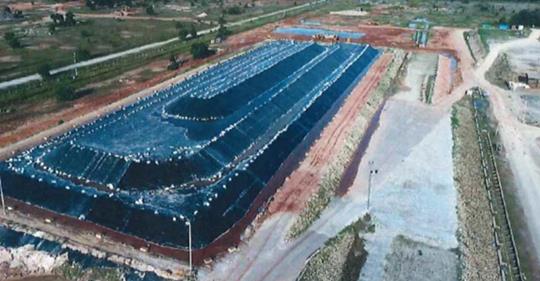
As of now, there is no viable near-term solution to manage the accumulated residue, which is stored at the open landfill temporary site,” Minister Yeo said in the letter.
“The risks to the surrounding communities and environment increases with the increasing amount of accumulated residue as it is exposed to the threat of natural disasters such as major flooding.”
The officials, who are not authorised to speak on behalf of the government on this subject, confirmed that the original conditions that the Environment ministry introduced in December remain in place.
In the Lynas employee letter, which was posted to her official Facebook page, Minister Yeo emphasised that the government was holding Lynas to its promise of removing the waste from Malaysia and seized on Australian analyst reports indicating that the cost of removing the residue could be as low as $60 million……..
Lynas, and its estranged suitor Wesfarmers, both welcomed comments this month from Malaysian Prime Minister Mahathir Mohamad that appeared to give a green light to Lynas continuing its operations if it agreed to extract the problematic radioactive residue before the ore was shipped to Malaysia.
While still seeking further clarification from the government on his comments, it was suggested that the radioactive waste no longer needs to be exported.
This was around the same time that ASX-listed Lynas was being warned, in a confidential report it commissioned, that it had failed to engage with the Malaysian community, which could jeopardise its operations in the country.
A letter obtained by The Sydney Morning Herald and The Age details a response from Mr Rudd, who was foreign minister at the time, to Senator Doug Cameron, who had met with a delegation of Malaysian citizens expressing their concerns about Lynas’ $1 billion operating plant in Kuantan.
“The Australian government expects Australian companies to operate to high environmental and safety standards in their overseas operations, as they would in Australia,” said the letter from Mr Rudd dated July 20, 2011.
“While ultimately Malaysian law governs the management of residues from the plant, the Australian government has welcomed the Malaysian government’s decision to establish the independent expert panel as an open and transparent response to community concerns.”
Mr Rudd noted that the Lynas plant, once completed, would be the “largest single investment in Malaysia and as such, the government is taking a close interest in the project”.
The plant’s importance went beyond Australia’s relationship with Malaysia.
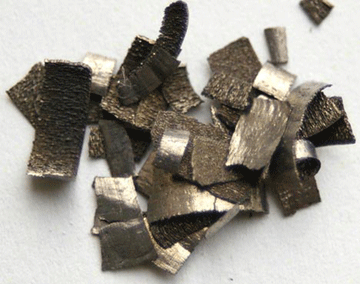
At the time, there was significant global concern about the fact that China dominated the supply of rare earths – a group of 17 elements crucial to the manufacture of hi-tech products like digital cars, smart phones and wind turbines. Despite the name, the elements are not actually that rare, but they are environmentally hazardous to extract.
In 2010, the then Japanese foreign minister, Seiji Maehara, raised the issue with Mr Rudd during trade talks in Canberra.
Mr Rudd said at the time that Australia “understands the significance of rare earths globally” and “Australia stands ready to be a long-term, secure, reliable supplier of rare earths to the Japanese economy”.
It was shortly after that trade visit that a deal was unveiled under which $US250 million in Japanese government agency financing was made available for an accelerated expansion of Lynas’s Mount Weld rare earths mine in Western Australia, and its associated processing facilities in Malaysia.
Mr Rudd is understood to have played a key role. The Department of Foreign Affairs and Trade and Senator Cameron were approached for comment.
Lynas, which is being pursued by former Coles owner Wesfarmers with a potential $1.5 billion indicative offer, faces closure of its Malaysian operations by September if it cannot comply with new conditions introduced in December due to the environmental concerns. These currently include the removal of more than 450,000 tonnes of residues containing low-level radiation.
Wesfarmers chief executive Rob Scott met with Malaysian Prime Minister Mahathir Mohamad last month to discuss the regulatory issues faced by Lynas.
The following day, Dr Mahathir announced that a company interested in acquiring Lynas had promised to extract the radioactive waste before exporting the ore to Malaysia.
Wesfarmers has denied any impropriety in its meetings with the Malaysian government.
Earlier last month, four Lynas directors had acquired shares during a designated trading window.
A Lynas spokesman said the company had “no reason to believe that Wesfarmers had an ongoing interest in the company at the time the shares were purchased. The purchases were made in a designated trading window”.
Lynas said it “categorically rejects any assertions of impropriety”.
Lynas chief executive Amanda Lacaze will update the market on the company’s operational performance for the March quarter on Tuesday.
The company’s results for the December quarter were affected by a temporary shutdown of its operations after Lynas failed to receive approval to lift the approved limit for processing lanthanide concentrate.
Whatever you think of Julian Assange, his extradition to the US must be opposed,Owen Jones, Guardian, 12 Apr 19, States that commit crimes in foreign lands depend on at least passive acquiescence. This is achieved in a number of ways. One is the “othering” of the victims: the stripping away of their humanity, because if you imagined them to be people like your own children or your neighbours, their suffering and deaths would be intolerable. Another approach is to portray opponents of foreign aggression as traitors, or in league with hostile powers. And another strategy is to cover up the consequences of foreign wars, to ensure that the populace is kept intentionally unaware of the acts committed in their name.
It is Manning who is the true hero of this story: last month, she was arrested for refusing to testify to a grand jury investigating WikiLeaks, placed in solitary confinement for four weeks, and now remains imprisoned. We must demand her freedom.
These leaks revealed some of the horrors of the post-9/11 wars. One showed a US aircrew laughing after slaughtering a dozen innocent people, including two Iraqi employees of Reuters, after dishonestly alleging to have encountered a firefight. Other files revealed how US-led forces killedhundreds of civilians in Afghanistan, their deaths otherwise airbrushed out of existence. Another cable, which exposed corruption and scandals in the court of Zine al-Abidine Ben Ali, the western-backed then-dictator of Tunisia, helped fuel protests, which toppled him……..
Assange must answer the allegations of sexual assault in Sweden without the threat of extradition to the US………. That Swedish case must be entirely disentangled from the US extradition attempt. And while opposing Assange’s rightwing libertarian politics is perfectly reasonable, it is utterly irrelevant to the basic issue here of justice. ………
Assange’s extradition to the US must be passionately opposed. It is notable that Obama’s administration itself concluded that to prosecute Assange for publishing documents would gravely imperil press freedom. Yes, this is a defence of journalism and media freedom. But it is also about the attempt to intimidate those who expose crimes committed by the world’s last remaining superpower. The US wishes to hide its crimes so it can continue to commit them with impunity: that’s why, last month, Trump signed an executive order to cover up civilian deaths from drones, the use of which has hugely escalated in Afghanistan, Somalia, Yemen and Pakistan.
WikiLeaks founder Julian Assange has been dragged out of the Ecuadorian Embassy in London where he has spent the last seven years. That’s after Ecuador’s president Moreno withdrew asylum.
That’s only a day after WikiLeaks Editor-in-Chief Kristinn Hrafnsson claimed that an extensive spying operation was conducted against Assange in the Ecuadorian Embassy. During an explosive media conference Hrafnsson alleged that the operation was designed to get Assange extradited.
Assange’s relationship with Ecuadorian officials appeared increasingly strained since the current president came to power in the Latin American country in 2017. His internet connection was cut off in March of last year, with officials saying the move was to stop Assange from “interfering in the affairs of other sovereign states.”
The whistleblower garnered massive international attention in 2010 when WikiLeaks released classified US military footage, entitled ‘Collateral Murder’, of a US Apache helicopter gunship opening fire on a number of people, killing 12 including two Reuters staff, and injuring two children.
The footage, as well as US war logs from Iraq and Afghanistan and more than 200,000 diplomatic cables, were leaked to the site by US Army soldier Chelsea Manning. She was tried by a US tribunal and sentenced to 35 years in jail for disclosing the materials.
Manning was pardoned by outgoing President Barack Obama in 2017 after spending seven years in US custody. She is currently being held again in a US jail for refusing to testify before a secret grand jury in a case apparently related to WikiLeaks.
Julian Assange ‘won’t get any special treatment’: Scott Morrison, SMH , By Michael Koziol and Latika Bourke April 12, 2019 Prime Minister Scott Morrison has confirmed Australia is providing consular assistance to Julian Assange following his arrest in London but the Wikileaks founder will receive “no special treatment”, even in the wake of a US extradition request.
An Australian citizen, Assange had been living in the Ecuadorian embassy for more than six years until that country ended his political asylum on Thursday for “discourteous and aggressive behaviour” and WikiLeaks’ “hostile and threatening declarations” against Ecuador.
He was charged with skipping bail by entering the embassy in 2012. Appearing in Westminster Magistrates’ Court four hours later, he pleaded not guilty, claiming he had a reasonable excuse for seeking asylum as his arrest would end in his extradition to the US.
That extradition request, on charges related to the publication of vast quantities of classified information by Wikileaks, is forthcoming but will be fought by Assange’s lawyers…..
Scott Morrison – “He won’t be getting any special treatment from Australia, he’ll be getting the same treatment that any other Australian would get.”
Asked whether Australia would fight a move to extradite Assange to the US, Mr Morrison said the Wikileaks founder was at the mercy of the British justice system. ……
Opposition Leader Bill Shorten, also commencing the election campaign in Sydney, said Assange was entitled to his day in court but had no view on his extradition to the US.








 Antinuclear