Australian teachers for Japan – in irradiated areas?
Australian teachers in Japan may be placed too close to leaky nuclear reactors, Liam Walsh ,The Courier-Mail August 20, 2011 A LEADING Japanese recruiter of teachers from Australia is placing recruits closer to leaky nuclear reactors than recommended by Canberra’s radiation safety agency.
The move by the Japanese Government-sponsored JET program reflects the gulf between what Japanese and other nations’ authorities constitute a safe distance……The program confirmed to The Courier-Mail that 31 new JET participants from English-speaking nations were offered placements within 80km of the nuclear plants. Three who took up the offer were Australians, JET said.
The Australian Radiation Protection and Nuclear Safety Agency recommends Australians keep at least 80km away from the reactors.”As a precautionary measure … Australians within an 80km zone from the Fukushima nuclear power plant (are recommended to) move out of the area,” an advisory guide says….”The US had made a similar recommendation in accordance with the standard guidelines of their Nuclear Regulatory Commission.”
JET’s explanation document details that it might place participants closer to reactors than advised by foreign governments.– http://www.couriermail.com.au/news/national/australian-teachers-in-japan-may-be-placed-too-close-to-leaky-nuclear-reactors/story-e6freooo-1226118370859
with the goal of a nuclear free Asia, Australia should engage with North Korea
We need to engage with North Korea, THE AUSTRALIAN, Danielle Chubb August 18, 2011“……….The fact US Northern Command believes the Taepodong-2 rocket is incapable of reaching US territory (let alone Australia) notwithstanding, the North Korean nuclear crisis is seen as evidence of a government whose goals and ambitions seem insusceptible to usual diplomatic routes, run as it is by a man with whom one can clearly not negotiate. Rather than reminding ourselves of the many ways in which North Korea is different to us, we need to begin our conversations with a recognition of what we have in common. Yes, North Korea deserves our condemnation. However, recent history shows us that treating North Korea as an exceptional case has not served us well.
We have had a string of policy failures and little progress has been made towards either disarmament or non-proliferation. It is time to move past the notion that treating North Korea as a legitimate negotiating partner is akin to a form of appeasement.
Our Foreign Minister, rather than describing the North Koreans as “detached from reality”, as he did during the July ASEAN Regional Forum in Bali, would do well to start talking about lifting the visa ban that prevents North Koreans from coming to Australia for cultural and educational programs. Calling a country’s policies “irrational” is actually an admission that we don’t understand their rationale.
Such understanding is gained through interaction, not isolation. There are no quick fixes to the “North Korea conundrum” and moral posturing will not get us far. On the back of spectacular policy failure after spectacular policy failure, it is time to look with new eyes at this country that sits in the centre of northeast Asia.
Australia needs to open its doors to North Korean citizens and government employees, for it is not until we recognise that North Korea is a state made up of real people with real fears about their national security (well-founded or not) that we will be able to come some way to crafting a more intelligent and innovative response to the North Korea nuclear crisis and eventually achieve the end goal of a nuclear-free Asia…http://www.theaustralian.com.au/news/world/we-need-to-engage-with-north-korea/story-e6frg6ux-1226116930716
Australia – secret deals for uranium to United Arab Emirates, waste returned to Australia?
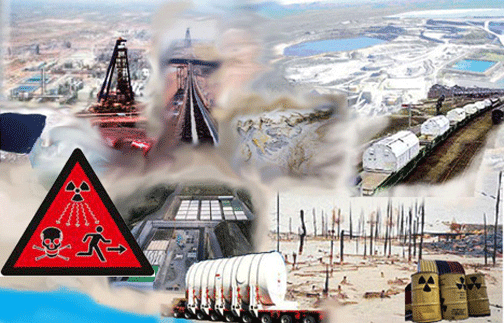
Clamour to supply UAE nuclear needs, April Yee, The National, Aug 12, 2011 “……The UAE is in talks with nations to have used nuclear fuel returned, an arrangement known as “fuel leasing”. This would save the UAE the headache of having to store radioactive waste. France and Russia are the only countries that have agreements to keep other nations’ spent fuel.
“The UAE would favour an arrangement where spent fuel is taken back after use,” Hamad Al Kaabi, the UAE’s permanent representative to the International Atomic Energy Agency, said yesterday. Continue reading
Australian uranium companies exploit workers in Africa
 Anglo-Australian group Rio Tinto is the majority shareholder in Rossing Uranium, the world’s oldest and largest open-pit uranium mine operation, which is in Namibia.
 Australia’s Paladin Energy wholly owns Langer Heinrich uranium mine and French nuclear utility Areva is developing the Trekkopje uranium mine, both in Namibia.
Extract Uranium is developing Husab uranium deposit, which could become one of the world’s largest and Canadian Forsys Metals Corp, Australian firm Bannermann resources are developing Valencia and Etango uranium projects in Namibia.
Uranium mining – the grim realities The Southern Times, South Africa, By Felix Njini 01-08-2011“……Windhoek – Namibia and South Africa are amongst African countries that lack regulatory capacity and technical knowledge to monitor environmental impact and radiation poisoning on workers and communities due to uranium mining. A study that delved into the environmental impact of uranium mining in Central African Republic (CAR), Namibia and South Africa concluded that mining operations’ health consequences on workers and the environment are severe. Continue reading
North Korea’s nukes a threat to Australia
Australia may be nuclear target: Kevin Rudd, THE AUSTRALIAN, Peter Alford in Nusa Dua , July 23, 2011 FOREIGN Minister Kevin Rudd says North Korea’s nuclear weapons and missile programs are a direct threat to Australia……He lashed out following an intervention by Foreign Minister Pak U’i-chu’un at the ASEAN Regional Forum blaming the US, South Korea and Japan for provoking the current dangerous instability on the Korean Peninsula.
Mr Rudd told Mr Pak it was “unacceptable” for North Korea to blame on others the security problems it had caused for the whole region, Continue reading
Lynas’ Malaysian rare earths plant an experiment in irradiating local community
 “We will see whether there is any increase of people afflicted with radiation-linked diseases or cancer,”…So what if the future health of the people is adversely affected. Nothing is mentioned about compensation….
It is now abundantly clear that the project had been scheduled to proceed right from the beginning, when it was surreptitiously approved without consultation of the people, way back in 2008.
How else can you explain Lynas construction of the plant, now at 40% completion, when they didn’t have government approval or sanction in the first place?
Gebeng residents mere guinea pigs for Lynas project, Malaysi Kini, Kuantan Resident, Jul 21, 11, All is not quiet on the western front. Some may think they have won the battle. But they have not won the war yet!
Yesterday’s Star report (20.7.2011) on ‘Lynas to compile residents’ health data for future comparison’ is laughable.
Atomic Energy Licensing Board (AELB) director general Raja Abdul Aziz Raja Adnan said it would serve as a baseline data for Lynas before the operation began.
“It will be used later to provide a comparison for assessing the operation’s impact on the people living in nearby areas such as Balok. Continue reading
Australian uranium mining greed puts profits above World Heritage ecology
 Australian Mining Company in $400m uranium project in Tanzania, BUSINESS WEEK, 17 JULY 2011 , MARY JOHN, DARES SALAAM, TANZANIA – An Australian uranium mining company, Mantra Resources, plans to build a $400-million uranium mine in the Selous Game Reserve in Tanzania within the next three years…….
“We hope that UNESCO Heritage Committee will not halt the mining in the Game Reserve as it did recently in Serengeti National Park road project, considering the effect of the uranium activities to the environment,” said the analysts. Continue reading
China not a military nuclear threat to Australia
Compared with China’s 200 nuclear warheads, the US has 2150 operational strategic nuclear warheads together with 2850 warheads in reserve that are relatively quickly deployable…
…. let’s not frighten ourselves to death by drumming up the next military threat to Australia and basing our defence policy on the likelihood that we are going to be attacked by China.
Knocking on nobody’s door, THE AUSTRALIAN, Paul Dibb , July 18, 2011 “……..Since its first nuclear explosion in 1964, Beijing has struggled to develop a minimum nuclear deterrent force. Unlike the US and Russia, it has no credible nuclear war-fighting capability. Continue reading
Australia chairing IRENA – Yey! Martin Ferguson involved – Boo!
 Australia To Chair International Renewable Energy Agency, By Ross Kelly Jul 13, 2011, NASDAQ , SYDNEY -(Dow Jones)– Australia has been elected as the inaugural chair of the International Renewable Energy Agency, established to promote the increased adoption of green energy worldwide, Energy and Resources Minister Martin Ferguson saidThursday.
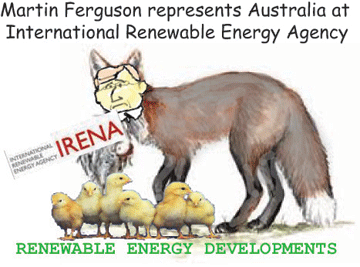
Established in 2009, IRENA held its inaugural assembly in Abu Dhabi in April this year. It has 77 members, while 149 states and the European Union have ratified its statute.
“International cooperation is vital in accelerating the deployment of new technologies by driving down costs,” Ferguson said in a statement. “Australia’s election to this leadership role reflects our commitment to developing renewable energy.”
Australia on Sunday released details of a plan to impose a tax on carbon emissions of A$23 per metric ton from July 1, 2012. It also announced A$13.2 billion in government support for renewable energy projects.
Australian company to mine uranium in World Heritage Wildlife Sanctuary
Australians open Uranium mine in the Selous Game Reserve, Work World 11 July 11, Mantra Resources will begin uranium mining in the Selous Game Reserve at the end of next year. The Australian mining company will be operating in the south of Tanzania on a UNESCO heritage site, the second largest wildlife sanctuary in the African continent……..http://www.worktheworld.co.uk/blog/australians-open-uranium-mine-in-the-selous-game-reserve_2550
World Heritage Parks not necessarily immune from uranium mining
 Don’t let’s get too complacent about UNESCO naming Koongarra as a World Heritage
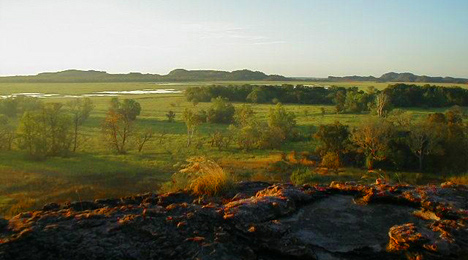 National Park. The French nuclear company AREVA is still ruthlessly pursuing its goal of mining uranium there. And look what an Australian uranium company is doing in a UNESCO Heritage Park in the magnificent Tanzanian ecology.
 Aust firm mines uranium in game reserve, Sydney Morning Herald, July 5, 2011, Australia’s Mantra Resources will start mining in late 2012 in the southern part of the 54,600-square kilometre park estimated to have 24.4 million kilogrammes) of uranium oxide deposits……
Tanzania will begin uranium mining in its southern Selous Game Reserve, Africa’s second-largest wildlife sanctuary and a UNESCO heritage site, the energy minister said……
he voiced optimism about getting clearance from the national environmental authorities and added that a UNESCO team would visit Tanzania for verification…..Environmentalists argue that the road project will endanger wildlife and disrupt the annual migration of millions of wildebeest and zebras from the Serengeti to the Maasai Mara in neighbouring Kenya….http://news.smh.com.au/breaking-news-world/aust-firm-mines-uranium-in-game-reserve-20110705-1h0w9.html
.
Call to governments for a nuclear-free Asia Pacific
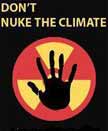 Nuclear power has no part in building a climate-friendly and sustainable future.
A large and growing number of scientific studies have detailed the wide range of energy supply and energy efficiency options that can be deployed to meet energy demand while sharply reducing greenhouse gas emissions…..
Friends of the Earth Asia Pacific is calling for Government‘s in our region like Korea, Japan, Malaysia, Sri Lanka and Australia to transition into nuclear free societies.
Friends of the Earth Asia Pacific region will pursue a nuclear free world as a region and in our individual countries.
Nuclear Free Asia, The Hankyorah, 30 June 11, Activists from 15 countries participating in the Friends of the Earth Asia Pacific meeting held at the Haja Center in Seoul announce a declaration for Nuclear Free Future, June 30.
The statement as follows: Overcoming Fukushima’s Nuclear Crisis – Creating Nuclear Power Free Asia Pacific region
Several months after the Fukushima nuclear disaster, we are beginning to get a sense of the likely long-term impacts. Continue reading
IAEA’s inadequate report on Lynas’s rare earths project’s safety
“the report seems to say things are okay, but read between the lines. The IAEA is trying to say in a very nice way that Malaysia cannot do it.”
Fuziah, who is PKR vice-president, said that she would provide an alternative report with the help of an Australian radiation consultant.
Fuziah ‘tears up’ IAEA report, Free Malaysia Today , Tashny Sukumaran, June 30, 2011, KUALA LUMPUR: Kuantan MP and staunch anti-Lynas protester Fuziah Salleh today “tore up” the IAEA report, claiming that it had glossed over several important aspects related to the Lynas Corp rare earth plant in Gebeng, Kuantan. Continue reading
Nuclear company AREVA tries to stop Koongarra’s Heritage Listing
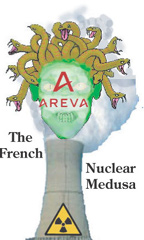 federal Labor made an election promise last year to incorporate Koongarra into Kakadu, removing the possibility of future uranium mining there. Areva formally requested Australia to withdraw its nomination for heritage listing from the agenda of the 35th World Heritage Committee meeting, which will be held in Paris this week
French uranium challenge to Kakadu heritage listing, Lindsay Murdoch, Darwin, The Age, June 20, 2011
A FRENCH government-owned company attempted to block countries discussing an Australian request to expand the World heritage-listed Kakadu National Park to include land that contains uranium worth billions of dollars. Continue reading
Australian company Lynas faces resistance in its plan to dump thorium wastes in Malaysia
Democratic Action Party, have been warning that Lynas has the potential to create the same kind of environmental and public health problems that the workers and residents of Bukit Merah endured….| Lynas Malaysia and the rare earth controversy, Asia Sentinel by John Berthelsen , 14 June 11 |
1 This month

of the week – Australians for War Powers Reform (AWPR)
To see nuclear-related stories in greater depth and intensity
 Antinuclear