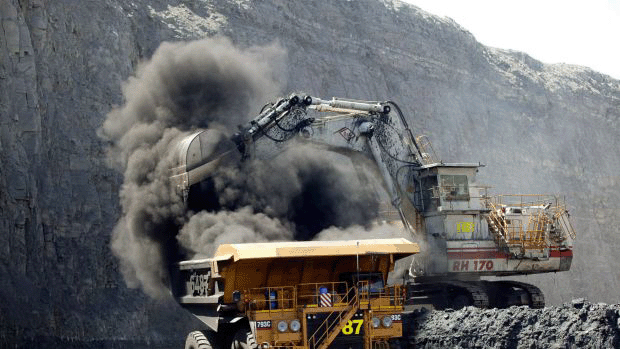
Queensland cabinet has decided not to grant a royalty holiday for the Adani Carmichael mine.
 Palaszczuk rules out royalty holiday for Adani http://www.brisbanetimes.com.au/business/mining-and-resources/palaszczuk-rules-out-royalty-holiday-for-adani-20170526-gwe937.html Felicity Caldwell, 27 May 17
Queensland cabinet has decided not to grant a royalty holiday for the Adani Carmichael mine.
It comes after ongoing reports of tension between the Left and Right factions in the Palaszczuk cabinet over royalties for the Adani mine. Adani released a statement on Friday evening following news of the unanimous decision.
“Adani Australia will give urgent consideration of state cabinet’s decision tonight on a royalties arrangement for the $16.5 billion Carmichael coal mine project.” “Adani will analyse the details when they have been formally provided (and) confirms again that it will pay every cent of royalties to the state as was always the case.”
Ministers were called to a cabinet meeting on Friday afternoon to make a decision on the issue. In a brief statement released at 5.29pm on Friday, Ms Palaszczuk said state cabinet had “unanimously agreed to a new policy approach for the future development of the Galilee and Surat Basins and the North West Mineral Province”.
“Under this new policy, the Adani Carmichael mine will pay every cent of royalties in full,” Ms Palaszczuk said. “There will be no royalty holiday for the Adani Carmichael mine.”
On Monday, May 22, Adani announced it would postpone its final investment decision on the $21 billion central Queensland project after learning the cabinet did not make a ruling on royalties.
Earlier this week, Ms Palaszczuk told journalists that cabinet would meet as usual on Monday, May 29. She did not flag the unexpected Friday afternoon meet-up. More details would be released in “due course”, Ms Palaszczuk said.
Australia’s rural sector cautious about National Party’s enthusiasm for nuclear power
 Nuclear the NSW Nationals’ solution to energy crisis, JAMES WAGSTAFF, The Weekly Times, May 24, 2017 “…..NSW Deputy Premier John Barilaro said with rising energy costs “crushing businesses, farmers and families”, all available options, “including nuclear energy”, must be considered…….
Most Queensland voters reject taxpayer support for Adani coalmine
Most Queensland voters oppose taxpayer support for Adani coalmine – poll
59% give thumbs down to state or federal assistance for Carmichael mine as state government faces factional fight over whether to give project a royalties holiday, Guardian, Katherine Murphy, 25 May 17 Queensland voters have given the thumbs down to taxpayer support for the controversial Adani coalmine, with 59% saying they were opposed to state or federal assistance.
A new poll of 1,618 Queenslanders taken by ReachTel indicates 57% of the sample objected to a loan for a rail link between the mine and Abbot point, which is championed by the federal resources minister Matt Canavan.
Just over 50% of the sample said a decision by the Queensland government to grant the project a royalties holiday would be a broken election promise.
The poll was commissioned by the progressive thinktank the Australian Institute.
It comes as the state Labor government is battling an internal split on whether or not to give the project a royalties holiday.
This week officials from Infrastructure Australia told Senate estimates they had not identified the proposed rail line as a priority, and they had not consulted the body which is expected to stump up a concessional loan, the Northern Australia Infrastructure Facility.
Adani is seeking a $900m concessional loan from the Naif for the rail line. Infrastructure Australia and the Naif are required to consult on projects worth more than $100m.
As well as facing internal resistance to taxpayer support, the environment group, the Australian Conservation Foundation, has warned the Turnbull government it will pursue all avenues, including possible legal action, to stop a concessional loan being granted to the rail line.
The new poll also comes as federal Labor MPs this week have also broken ranks to express public objections to the controversial project…… https://www.theguardian.com/environment/2017/may/25/most-queensland-voters-oppose-taxpayer-support-for-adani-coalmine-poll
Australian government about to secretly sign up to developing Generation IV nuclear reactors?
Should Australia invest funds and resources in developing Generation IV nuclear reactors? Online opinion,
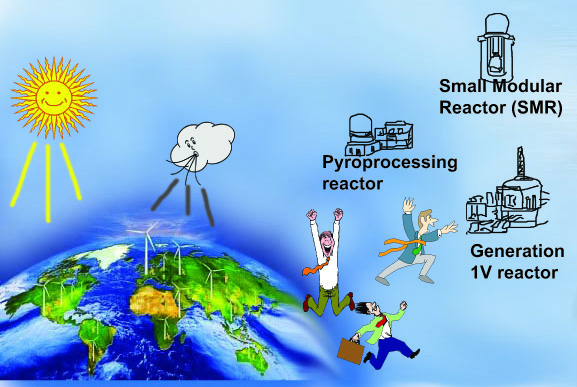
| By Noel Wauchope, 23 May 2017 Without any fanfare, with no media coverage, Australia’s Parliamentary Joint Standing Committee on Treaties (JSCOT) is presently considering Australia signing up to the International Framework for Generation IV Nuclear Energy Systems (GIF), which will commit this nation to take part in developing new nuclear reactors.Dr Adi Paterson, CEO of the Australia Nuclear Science and Technology Organisation, signed up to this GIF Framework last year. However, that does require confirmation by the Australian government. Hence there was the need for the JSCOT Committee to at least take a look at it, before the government completes the membership. Apparently there is no need for public discussion, or probably even Parliamentary discussion.
This Committee very quietly invited submissions, and very few were in the know about this. Now the received submissions have been published – at http://www.aph.gov.au/Parliamentary_Business/Committees/Joint/Treaties/NuclearEnergy/Submissions. Anyway, it looks as if ANSTO is the driving force behind this process, and judging by the submissions received, the nuclear lobby was in the know, even if the public was not. Fourteen submissions were received. Of these, eleven were strongly pro- nuclear, and three were opposed. The opposing submissions came from Friends of the Earth (FOE), (jointly with the Australian Conservation Foundation (ACF ), Medical Association For The Prevention of War (MAPW), and myself, (I came upon the Parliamentary website just by chance). In assessing these submissions, of course, I have to admit to bias on my part. Still, I think that any reader would find that there is one submission that stands out for clarity, and a detailed, factual discussion of the GIF plan. That is the one written by Jim Green and Dave Sweeney, for FOE and ACF. Green and Sweeney respond to assertions made in ANSTO’s National Interest Analysis. They question claims that the new reactors reduce weapons proliferation risks, are economic, efficient, and solve waste problems. They rebuke the claim of ANSTO that “a significant expansion in nuclear power production is underway “, listing the overall decline in nuclear power growth, with the exception of China. They discuss at length the very long time frame expected even by nuclear industry experts, before any Generation IV reactors could be commercially viable. They go on to discuss each of the six proposed new nuclear reactors, giving a detailed history of the attempts to develop each, and factual information that refutes those claims made by ANSTO. For all of their statements, Green and Sweeney provide evidence and references. The Medical Association for Prevention of War (MAPW)’s submission questions the government’s high subsidising of ANSTO, and points out the poor prospects for private investment in new nuclear power. It refutes the argument that Gen IV reactors would solve the nuclear waste problem, quoting analysis by the US National Academy of Sciences. They discuss the history of attempts to develop Gen IV nuclear reactors: ” a track record of repeated failure and massive cost”. They discuss the direct and indirect costs, and ANSTO’s secrecy about nuclear costs. Safety and reliability issues, and proliferation risks, are examined. They also point out that the recent Nuclear Fuel Cycle Royal Commission (NFCRC) was not supportive of new nuclear technology. The Commission proposed:
|
Final investment decision postponed by Adani, regarding Carmichael coal mine
 Adani indefinitely postpones final investment decision on Carmichael coal mine, ABC News, 23 May 17 Senior Queensland Government members were in meetings on Monday night, discussing how to urgently convince Indian company Adani to proceed with a board meeting to fund the proposed Carmichael coal mine.
The mining giant has postponed its final investment decision on the $16.5-billion project in central Queensland until the State Government gives “clarity” over lower or deferred royalties.
A company spokesman said they were waiting for the State Government to advise on whether it would offer a lower royalty rate or deferred royalties.
The Adani board was to meet in India next week for final approval but has postponed the meeting.
The State Cabinet on Monday discussed whether to give Adani a royalty discount or deferral, but no decision has been made…….
The proposed royalty deal is understood to have caused division among Labor factions.
Deputy Premier Jackie Trad and Roads Minister Mark Bailey, from the Left faction, have publicly opposed any government subsidy of the mine and said that had been Labor’s position since before the 2015 state election.
However earlier on Monday, Agriculture Minister Bill Byrne said royalty arrangements were being considered by the Government…….
Greens, activists accuse Adani of bullying
Queensland Greens senator Larissa Waters said the mining company was trying to bully the State Government into handing over $320 million in free coal.
“So far, Adani is in line for a $1 billion handout, unlimited free water, new legal loopholes, special changes to Native Title, a free pass on reef destruction,” she said.
She called on the Queensland and Federal Governments to abandon their support for the project.
Activist group Get Up said if Adani could not afford the project without a royalty holiday, it was not financially viable. http://www.abc.net.au/news/2017-05-22/adani-indefinitely-postpones-final-carmichael-coal-mine-decision/8548164
‘Dirty Deeds’ – The shady web behind potential Adani coal mine finance
https://www.acf.org.au/dirty_deeds STOP ADANI 24 MAY 2017
An Australian Conservation Foundation (ACF) investigation has discovered the publically funded Export Finance Investment Corporation (Efic) could be used as a backdoor option to finance Adani’s Carmichael coal mine.
An Australian Conservation Foundation (ACF) investigation has discovered the publically funded Export Finance Investment Corporation (Efic) could be used as a backdoor option to finance Adani’s Carmichael coal mine.
Efic could provide loan insurance to private investors for Adani’s Carmichael coal mine, leaving Australians exposed to billions of dollars being lost to a useless stranded asset.
These findings are part of a new report from ACF exposing the web of ties between the fossil fuels industry, the government, the Northern Australia Infrastructure Facility (NAIF) and Efic.
- Five of the seven NAIF directors have close connections to the fossil fuel industry.
- NAIF Board has lack of experience with industries such as communications and renewable energy which are critical to the development from Northern Australia.
- NAIF’s chief adviser, Efic, has a track record of investing in large fossil fuel projects, backing fossil fuels over renewables at a rate of more than 100:1.
- Efic could insure private investment in Adani coal mine – Turnbull government has refused to rule it out.
Download the investigation, and watch a video below showing the web of NAIF and Efic coal interests.
“That public money could be put on the line to protect private profit from the Adani coal mine that will help destroy the Reef and Australian tourism jobs is a truly gobsmacking and outrageous idea.” said Kelly O’Shanassy, Australian Conservation Foundation CEO.
“Both NAIF and Efic must be prevented from supporting a mine that will end up being a stranded asset, potentially wasting billions in public money. The Turnbull government must take responsibility and rule it out immediately.
“When the Adani mine fails, the Australian public will be the very last people to get their money back and probably won’t.
“Public investment in coal is a losing proposition for public money, the Reef and the 70,000 tourism jobs that rely on it.”
Is the Australian govt secretly planning for tax-payers to finance Adani coal mine?
Report; EFIC may finance Adani coal mine, Michael West, May 23, 2017 Is the government secretly planning to put taxpayers on the hook to build the world’s biggest new thermal coal mine? It is refusing to rule it out.
Until now, speculation has centred on a $1 billion discount loan from the Northern Australia Infrastructure Facility (NAIF) to Indian billionaire Gautam Adani to build a rail line from the Galilee Basin to Abbot Point on the Queensland coast. This is a “cart before the horse” proposition however. There can be no rail line without a mining project, and Adani is yet to attract project finance from commercial banks to build its mine.
A new report by the Australian Conservation Foundation notes that a number of approaches were made to the Federal Government and its credit agency, Export Finance and Insurance Corporation (EFIC), asking whether the agency was considering supporting the Carmichael thermal coal project. Already EFIC has a team working within NAIF on project evaluation. Continue reading
Poll shows that Australian voters decisively reject Adani coal mine expansion
Just 7 per cent of voters want the government to invest in Adani mine: poll http://www.theage.com.au/federal-politics/political-news/just-7-per-cent-of-voters-want-the-government-to-invest-in-adani-mine-poll-20170521-gw9k4g.html Adam Gartrell, 22 May 17,
Just 7 per cent of voters want money from the federal government’s northern Australia investment used to prop up Adani’s giant coalmine, while nine times that number say they would prefer taxpayer cash going towards renewable energy or education infrastructure.
A new poll ReachTEL poll has found just 6.8 per cent of people support the idea of using public money to support coal mine projects such as the Indian mining conglomerate’s controversial Carmichael proposal, which would be Australia’s biggest coalmine.
Adani is seeking a $1 billion concessional loan from the Turnbull government’s Northern Australia Infrastructure Facility to build a railway for the mine. The application will be assessed by the fund’s independent board but the government supports the plan.
But the new poll of nearly 3000 people – commissioned by the Australian Conservation Foundation – suggests the public wants NAIF investments made elsewhere. Even among Coalition voters there was only 10.5 per cent support for public money going into coalmine infrastructure.
The poll found nearly 33 per cent of people believe renewable energy projects should be NAIF’s top priority. Nearly 28 per cent believe schools and universities should be first in line for funding, with tourism and telecommunications infrastructure also attracting more support than coal.
The polling accompanies a new ACF research paper on the “opportunity cost” to northern Australia of funding the mine in Queensland’s Galilee Basin, identifying scores of other job-creating projects.
ACF economist Matt Rose says across Queensland, Western Australian and the Northern Territory there are 20 alternative proposals for jobs-rich large-scale solar plants.
There are 20 potential higher education campuses, 67 Indigenous ranger groups with no certainty of long-term funding and hundreds of locations with poor phones or internet.
“Any NAIF investment in coal will come at a huge cost to Northern Australia in terms of missed opportunities for a cleaner, smarter future,” Mr Rose said.
“Public investment in Adani coal would cheat Australians in the north out of jobs in renewable energy, better education facilities and tourism.”
Respondents to the poll also showed support for strong restrictions on any NAIF lending, with 60 per cent saying they agreed the government should “only provide funding to companies that meet minimum social and environmental standards”.
The ReachTEL poll surveyed 2984 residents across Australia in late April.
ACF is one of 130 groups involved in trying to stop the $21 billion mine, which is shaping up as one of the country’s big environmental battles.
The big four banks have all ruled out funding for the mine, angering Resources Minister Matt Canavan. But Mr Turnbull has defended the potential use of the NAIF, saying the mine would create “tens of thousands” of jobs and boost state and federal budgets.
The Queensland Labor government last week flagged it may provide Adani with a $320m “royalty holiday” to help get the mine up and running. It has also offered it free water in the form of an unlimited water licence.
At a federal level, Opposition Leader Bill Shorten has suggested the mine should only go ahead if it stacks up environmentally and commercially – and that means no federal loan. However some federal Labor MPs do not believe the mine should go ahead at all.
NATIONALS SHOULD NAME LOCATIONS FOR NUTTY NUCLEAR POWER PLANT PLAN
 The Greens NSW Energy spokesperson Jeremy Buckingham today slammed the National Party and NSW Deputy Premier John Barilaro for raising the prospect of a nuclear power plant in NSW saying renewable energy is safer, cheaper, and more effective at combatting climate change.
“I challenge John Barilaro and Gladys Berejiklian to name which electorate, which suburb and which town in NSW they think a nuclear power plant should be built in,” Greens MP Jeremy Buckingham said.
“They also need to come clean with where they are planning to have a nuclear waste dump to manage the highly radioactive waste fuel that will be produced.
“Nuclear power is an enormous risk that is not worth taking. We should learn the lessons from Fukushima and Chernobyl that nuclear power can be catastrophic.
“This is just another nutty, extreme idea from the National Party who is stuck in the wrong century pushing coal and nuclear and ignoring the massive renewable energy potential of Australia.
“Launching their nuclear ambitions in Broken Hill shows the Nationals are completely out of touch with the community and the future of energy supply in Australia.
“One of the largest solar farms in the country, the Broken Hill Solar Plant, has just been built and the nearby Silverton Wind Farm will be the largest wind project in NSW once it is constructed.
“The declining cost of renewables means nuclear energy does not make financial sense, as we can see with Japanese giant Toshiba going broke because of its involvement in nuclear power plants.
“Even if the Nationals could force nuclear power through massive community opposition, it is not an answer to our energy needs or climate crisis with plants taking more than a decade to be built.
“The Greens believe the future of energy supply is renewables, not dirty coal and dangerous nuclear power,” Mr Buckingham concluded.
New South Wales Green Groups challenge Deputy Premier John Barilaro on nuclear power
Green groups shut down nuclear NSW talk http://www.sbs.com.au/news/article/2017/05/20/green-groups-shut-down-nuclear-nsw-talk
Green groups have ridiculed talk of nuclear power being placed back on the agenda by NSW Deputy Premier John Barilaro as a “nutty” idea.
Green groups have reacted swiftly to condemn an attempt by Deputy NSW Premier John Barilaro to place nuclear energy back on the agenda.
Mr Barilaro told the NSW Nationals Annual Conference in Broken Hill on Thursday nuclear energy could mean “guaranteed power to millions, lower bills and next to no emissions” in the face of a power crisis. He said energy costs were crushing businesses, farmers and families.
The Nature Conservation Council of NSW called on Premier Gladys Berejiklian to declare nuclear options weren’t on the table.
“Renewables are by far the cheapest, cleanest and most sustainable way to meet our energy needs,” chief executive Kate Smolski said in a statement.
She said nuclear power was “dirty, dangerous and expensive” and could leave a “toxic legacy”.
Ms Smolski challenged Mr Barilaro to explain which electorate would house a nuclear reactor, uranium processing plant and radioactive waste dumps.
The NSW Greens energy spokesperson Jeremy Buckingham said Mr Barilaro’s comments showed the party was out of touch with the community.
“This is just another nutty, extreme idea from the National Party who is stuck in the wrong century pushing coal and nuclear and ignoring the massive renewable energy potential of Australia,” he said.
New South Wales govt about to go all enthusiastic about nuclear power?
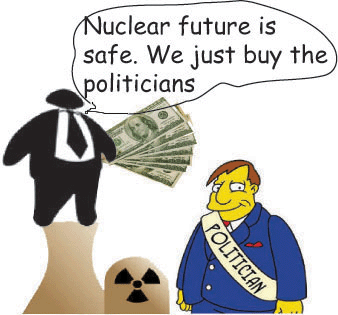 Nuclear power on the agenda in NSW as Deputy Premier claims ‘we’ve been led by fear and mistruths’ ABC News By state political reporter Lucy McNally, 19 May 17, New South Wales Deputy Premier John Barilaro has put nuclear energy on the agenda, arguing it would help secure the state’s power supply in the future.
Mr Barilaro, the leader of the NSW Nationals, will address his party’s annual conference in Broken Hill today, where he will make the case for a nuclear debate.
“I’m challenging my members to look for exciting solutions and think about the generations to come,” he said.”We live in a resource-rich nation, where energy should be our competitive advantage, but we’ve had the settings wrong, we’ve been led by political correctness and unfortunately by fear and mistruths.”
Mr Barilaro said those “mistruths” had stifled debate……
“Look at France, they currently rely heavily on nuclear energy which they import from places next door like the Czech Republic and other European nations,” Mr Barilaro said.
“Yet they have made a commitment to build a plant in France. Places like the US and Korea have all decided to look at building nuclear plants.”….. [ed note – this is simply incorrect]
Premier Gladys Berejiklian said she was not convinced of the merits of nuclear power.
“My view always is that science and safety have to stack up, on anything,” she said.
“So I’m in the camp of the jury’s still out.”
Ms Berejiklian said she was open to discussing the issue, including at the next Council of Australian Governments meeting in June…….
The State Opposition’s energy spokesman, Adam Searle, has dismissed the comments as a “thought bubble”. “The fact is nuclear energy is enormously expensive, consumes huge amounts of water — and of course Australia doesn’t have a lot of spare water — to say nothing of the environmental issues,” he said.
“Who’s going to build it? Who’s going to fund it? It’s just ridiculous.” http://www.abc.net.au/news/2017-05-19/nuclear-power-nsw-nationals-leader-wants-to-open-debate/8540274
Australia should not throw away $1 billion on a destructive and doomed Adani coal project
The first stage currently being discussed involves a total investment of around $5 billion, of which the Australian public is supposed to contribute at least a $1 billion.
we may easily end up with the worst of all worlds: no royalties and few jobs for a project that will contribute massively to environmental destruction both locally and globally.
We shouldn’t throw it away on a doomed project that will leave us with, at best, a stranded asset and a legacy of massive environmental damage.
There are better things to spend $1 billion on than the Adani coal mine, Brisbane Times, John Quiggin, 18 May 17
Ever since taking office, the Palaszczuk government has been walking a tightrope with respect to the Adani Group’s proposed Carmichael mine in the Galilee Basin.
On the one hand, it’s obvious that the project is both environmentally disastrous and economically dubious. The government has been keen to avoid putting public money into this mess. On the other hand, if the project falls over, as still appears quite likely, the government is keen to avoid the blame.
The supposed benefits of 10,000 jobs and billions of dollars in royalties make an appealing case to voters at any time and particularly with the mining boom on the edge of failing. For most of the past 18 months, the government has managed the tightrope act successfully, but now it appears to be on the verge of falling. Adani is pushing for a ‘holiday’ from royalties, which might last as long as nine years. The project may go ahead if the government accepts, but the promised benefits to the Queensland public will disappear into the never-never.
The holiday is supposed to be temporary, but that’s unlikely. Continue reading
Australia isn’t trying to stop global warming. We’re subsidising it.
Palaszczuk and Turnbull governments are Adani mine’s lonely fans, Canberra Times, Ebony Bennett, 20 May 17 Australia isn’t trying to stop global warming. We’re subsidising it.
While the ACT is on track to source 100 per cent of our electricity from renewable energy by 2020, Queensland’s state government is doubling down on the No. 1 contributor to climate change: coal. Despite banks, economists and Australians in general showing little interest in handing Indian coal giant Adani billions of dollars to dig up a heap of carbon, many politicians just can’t seem to wait to throw your money at it. The Queensland government’s enthusiasm is exceeded only by that of Turnbull government ministers, who have taken to fondling lumps of coal on the floor of Parliament.
Ten days before the last Queensland election, then opposition leader Annastacia Palaszczuk blasted the Newman’s government for picking winners and losers, warning: “What we’re seeing at the moment is Campbell Newman throwing a bucket of taxpayers’ cash … at one particular company [Adani].”
She further promised that “Queenslander taxpayers’ money is not going to be used to fund commercial operations”. She then went on to win the election in one of Australia’s biggest political upsets.
Coal subsidies are unpopular
Despite being elected on a “no subsidies” platform, the Palaszczuk government has since offered Adani free water (in the form of an unlimited, unchallengeable water licence), free coal (in the form of a reported $320 million “royalty holiday”) and a possible 39-year raincheck on the clean-up bill. It’s also on track for a $1 billion subsidised loan for its rail line from the federal government’s Northern Australia Infrastructure Facility.
At this rate, we’ll soon be paying Adani to dig up our coal. And voters don’t appear to be impressed. Continue reading
Turnbull government budget ignores health impacts of climate change
 Shortsighted Budget 2017 ignores health impacts of climate change, Independent Australia Kristine Barnden 19 May 2017, The Turnbull Government has once again prioritised growing the economy over human lives, writes Dr Kris Barnden.
ACTION TO PROTECT AUSTRALIA from climate change was a policy free zone in the 2017 Budget. Despite strong scientific and economic consensus on the urgent need to transition away from fossil fuels, our government has prioritized efforts to grow the economy using a business as usual approach.
Doctors have been speaking out about the adverse health effects of climate change, as well as the health co-benefits of policies aimed at mitigating and adapting to climate change. In Australia, air pollution from coal fired power stations contributes a significant proportion of the over 3000 deaths per annum from pollution and a plea has been made by doctors for a rapid transition away from coal fired power.
Agriculture is another area where actions to reduce green house gas emissions are likely to be associated with multiple benefits, including health. In last week’s Budget, agriculture and regional Australia are seen as winners only from expenditure on rail. However, we need to recognize that agriculture is an important contributor to greenhouse emissions and also extremely vulnerable to their effects as recognized by the farming industry. These factors are budgetary items and need to be built into national financial policy. Indeed as President Obama has noted, food security is a world issue and we carry responsibility as a food exporter……….
Agriculture, the environment, the economy and human health interact at many levels, and we face significant difficulties on all fronts. All will be affected by climate change, and we cannot afford to consider each in isolation. We need strong leadership, and the ability to look beyond short term political and ideological considerations to longer term gains.
Dr Kristine Barnden is a member of the management committee of Doctors for the Environment Australia. https://independentaustralia.net/politics/politics-display/budget-2017-ignores-health-impacts-of-climate-change,10314
Queensland govt must resist bullying by resources industry: mine rehabilitation should be progressive
Queensland mine rehabilitation should be progressive, not left as one big job: Miles, ABC News, By Louisa Rebgetz, 19 May 17, Environmental groups are urging the Queensland Government not to be “bullied” by the resources industry in a bid to fix a $10-billion legacy of mine rehabilitation.
It comes as the State Government is on a hard sell to tighten the demands on miners to ensure financial assurance and progressive rehabilitation with a discussion paper out until mid-June.
Campaigner with Lock the Gate Alliance, Rick Humphries, said the reforms were “long overdue” but the “devil will be in the detail”.
“It’s long overdue, the cause for reform. We see all the numbers going the wrong way in terms of the amount of progressive rehab,” Mr Humphries said.
“The devil will be in the detail and already there are some emerging concerns.
“The major issue though is in the past the mining industry has generally bullied governments of all persuasions in the past to drop any reforms, so the Government has really got to focus on the public interest and protecting the environment and make sure these reforms are solid and get the job done.”
Reforms to apply to existing and new operations: Miles
One mine’s progressive rehabilitation has Queensland Environment Minister Steven Miles interested, who said it was what all mines would be expected to do under the proposed changes.
Hail Creek Coal Mine, in the heart of coal country in Queensland’s Bowen Basin, is one of the largest coal reserves in the country.
Rio Tinto exports about 10 million tonnes a year of coking coal from the site.
During a tour of the mine, Hail Creek’s Acting General Manager Michael Priestly said about 360 hectares had already been rehabilitated.
“It would be pretty close to what it looked like. Obviously the topography changes a little bit around with the dumps,” Mr Priestly said.
“It’s really a matter of tipping the dumps, shaping them and then progressively rehabilitating them with topsoil and natural vegetation.”
The Minister said the reforms would apply to both existing and new operations, including Adani’s proposed $21-billion Carmichael mine in Central Queensland. This program of reforms is all about making sure rehabilitation happens progressively so it is not left as one big job for the end of the mine’s life, and also ensuring that we have sufficient financial assurance every time one of those mines has been abandoned,” Mr Miles said.
Mr Miles said he hoped it would also create jobs for regions currently struggling through the mining downturn.
Fears clean-up for Ebenezer Mine will be left to taxpayers
Queensland has more than 15,000 abandoned mines ranging from small infrastructure to mega-sized mines.
Mr Humphries said Ebenezer Mine, on the outskirts of Ipswich, was a classic example of failed regulation in Queensland.
The coal mine has been in care and maintenance since 2002. The former operator, Japanese company Idemitsu, transferred the lease to Zedemar Holdings, who had planned to on-sell the site, but the deal fell through.
Mr Humphries said he feared it would be left to the taxpayer to fund the rehabilitation of the site…… http://www.abc.net.au/news/2017-05-19/queensland-mine-rehabilitation-progressive-reform-steven-miles/8540586
1 This month
17 October, Free Public Talk on Nuclear Issues in South Australia
David Noonan will speak on public interest concerns over the new Roxby Downs Indenture Act 2026 on BHP copper-uranium mining and ore processing in SA, and on how AUKUS may face SA with a High-Level nuclear waste agenda.
Dr Jim Green will discuss international developments in the field of nuclear power including ‘small modular reactors’ and Generation 4 ‘advanced’ nuclear reactor concepts.


Help Aunty Sue Protect Her Land and Sacred Sites From Destructive Rocket Testing.
.

Australians deserve the truth
about
AUKUS – https://aukuspublicinquiry.com/

PETITION – To: Prime Minister Anthony Albanese and the Australian Labor Government

of the week – Australians for War Powers Reform (AWPR)
To see nuclear-related stories in greater depth and intensity

