SUBMISSION: AUKUS PUBLIC INQUIRY – Friends of Port River
Many in our community feel that too much is being asked of our small Peninsula and that local residents will bear the costs with few benefits. I’d encourage you to highlight the current
environmental harms and further risks, with these heightened by the declaration of the
Osborne SDA.
Friends of Port River (FPR), and its predecessor the Estuary Care Foundation (ECF), have been
concerned about the fate of the Port River and Barker Inlet Estuary and advocating for its care
for ten years. Our concerns have included the surrounding area and community, given
- The significant demands on land, the River and services, from industrial development
especially the AUKUS development - The Estuary is home to the Adelaide Dolphin Sanctuary, is the southern end of the Adelaide
International Bird Sanctuary, is crucial as breeding grounds for prawns and fish, contributes
carbon abatement via blue carbon and provides numerous other ecosystem services. - The nature of the SA planning system which deals individually with each new project,
without due regard for the cumulative impact. - The well documented risks of sea level rise, storm surges and flooding commencing with
the 2005 Port Adelaide Seawater Stormwater Flooding Study1 - The low levels of stormwater protection on the Peninsula, including vulnerable areas east
of Victoria Road opposite AdBri, and heavy reliance on pumping stormwater to the Port
River, which could be more challenging as we experience more ‘unprecedented’ weather
events - The lack of open space in many areas of the Peninsula, which limits community amenity
and the potential to divert stormwater - State Government’s urban infill strategy which seems to pay no regard to risks such as
stormwater protection and exposure to AdBri’s emissions, nor to the quality of life for new
and existing residents. The most recent residential developments facilitated by Renewal SA
around the Port River have very limited open space and almost no community facilities for
thousands of new residents.
Current environmental harm
Over the last ten years ECF/FPR have witnessed significant environmental harm, and/or failure
to minimise harm in the Estuary and Peninsula, by the SA Government including
- Poor regulation of the Dry Creek Saltfields and failure to prevent the operator pumping
hypersaline brine into some cracked ponds, leading to the loss of over 24 hectares of vegetation (mangroves and saltmarsh) and with the catastrophic impact continuing - unchecked.
- Failure to maintain the seawall at Mutton Cove, (now situated within the AUKUS footprint),
which led to the seawall failing in May 2016 and the banks progressively eroding. Mutton
Cove abuts the northern end of the ASC, Mersey Road, and the southern end of the
extended AUKUS development. Despite ANI, Flinders Ports, the City of Port Adelaide
Enfield, and the Department of Environment, contributing $20K each towards an analysis of
coastal risks and identification of adaptation options, the 2021 report of that study has not
been provided to the funding partners and the State Government has continued to allow
the seawall and banks to fail. - Failure to remove from the Peninsula, on both sides of the Port River, extensive areas of
Penrice waste, which the State Government allowed Penrice to dump on Government land
prior to the company’s liquidation in 2014. - Failure to develop strategies to protect the community from harm from sea level rise, storm
surges and flooding, despite numerous studies and apparently ongoing work, by the City of
Port Adelaide Enfield and the Coast Protection Board. - Loss of TEC saltmarsh and risks to wetlands at Gillman from a recent State Government
development at Gillman. Compounding the risks Renewal SA has faulty tidal gates, that
cannot be shut to limit high tide impacts from the Estuary to the wetlands, or impede
stormwater discharges. - Trucks will take spoil 24×7 from the Torrens to Darlington road works to Gillman from Q3,
2026 to 2031 and while this is currently impacting local roads there’s been no known notice
to local residents. - Contact with Commonwealth and State agencies
- About eight years ago ANI reached out to Port Adelaide Residents Environment Protection
- Group (PAREPG) and FPR, as part of their efforts to secure their social licence in the
- community, and we met regularly with them around their infrastructure plans, the future of
- Mutton Cove etc.
- From December 2023, we met with ASA representatives and from May 2024 those meetings
- became monthly with ANI and ASA reps.
- In February 2025, representatives of the Office of AUKUS, Department of Premier and Cabinet
- joined the meetings, and we were advised of State Government planned to develop a Lefevre
- Masterplan, with consultants engaged to develop the Plan. So that the community could be
- consulted we arranged for the consultants to address a Port Adelaide Environment Forum
- meeting and feedback was submitted from the Forum to the DP&C. We understood that the
- draft Lefevre Masterplan would be presented at another Forum meeting this year, but that has
- now been superseded by the Osborne State Development Area process (see below).
Some of the key themes that were raised at the Forum consultation included:
- Locals’ aspirations for the Peninsula including holistic approach, greening, restoration of
and access to the River, fostering social connections - Opposition to AUKUS and/or reservations about its impact on our community
- Negative impacts already on environment and community including Harmful Algal Bloom,
poor canopy cover, AdBri and traffic emissions, - How the local community might benefit since for example only a small proportion of
residents (17.2%) both live and work2
locally - Lack of infrastructure including water, stormwater, electricity
- Major problems currently with transport and lack of infrastructure to deal with the
proposed workforce growth and other demands - Suggestions for social infrastructure and housing developments
- Suggestions for environmental improvements including protection of Biodiversity Park and
implementation of the ECF Vision for the Estuary.
Assessment of the AUKUS development
The Friends of Port River was able to directly compare the application of Commonwealth and
State development assessment processes when ANI submitted an EIS to the State
Government for the AUKUS development and ASA provided a Strategic Impact Assessment
Report (SIAR) to the Commonwealth Department of Climate Change, Energy, the Environment
and Water (DCCEEW). (Radiation matters were separate to this process).
As outlined in this blog FPR made written submissions to both. The experience confirmed
FPR’s perception of the many weaknesses in State development assessment processes,
including the failure to include mitigation or best practice measures, proposed by
environmental consultants, to address identified potential risks and the lack of public
reporting e.g. as to whether environmental monitoring has occurred, whether any required
safeguards are applied.
Commonwealth approvals confirm that the community will lose public access to Mutton
Cove, which after losing Falie Reserve, means “a reduction of approximately 50 percent of
accessible public open space within the northern end of the Lefevre Peninsula”. Three and a
half (3.5) hectares of seagrass will be removed.
FPR acknowledges that the Commonwealth approval processes (unlike the State) set
Environmental Outcomes that are to be met throughout the life of the Sub Yard.
There is also much greater visibility and accountability through Commonwealth requirements.
ASA must, within 3 months, develop an Assurance Plan (including as to how the Outcomes will
be met). Biennial reports to DCEEW and independent audits are to be conducted, and
submitted, to DCEEW every six years. Importantly the Assurance Plan, biennial reports and
independent audits are to be made publicly available.
State use of special legislation
Community concern about the State Government’s lack of regard for the natural world, and
our environmental assets, has been heightened by its recent actions in the Adelaide Parklands
and by the declaration of the State’s first State Development Area (SDA) across the Peninsula
and Gillman. In both instances, special legislation has been passed to expedite development.
In the Adelaide Parklands this has meant hundreds of trees being removed, for LIV golf, with
more at risk for a motorcycle grand prix circuit, the State Government ignoring its own
‘significant tree’ safeguards and not referring its proposed actions to the Commonwealth re
EPBC provisions. Adelaide City Council and community concerns have been ignored, despite
more than 50,00 signatures on a public petition.
The Osborne SDA is the first SDA in SA under the State Development Coordination and
Facilitation Act 2025 (SDCF Act). While the Coordinator General explained at a recent
workshop for City of Port Adelaide Enfield Councillors, that his office wouldn’t necessarily step
into the decision making-role of other agencies, the threat is clearly there that he could do so if
presumably time frames for decisions, or the decisions themselves, do not meet political
imperatives. This could be disastrous for the Estuary in relation to the roles of the EPA, the
Coast Protection Board and the Department of Environment (as landowner and guardian of the
Adelaide Dolphin Sanctuary).
While community consultation is ‘open’ about the proposed boundaries for the Osborne SDA,
the Coordinator-General (CG) advised that the SDA would look at all the State’s existing land
holdings and seek their most productive use.
Since the proposed boundaries include Mutton Cove, Biodiversity Park, the local golf club, the
Royal SA Yacht Squadron, the Port Adelaide Rowing Club, the Girl Guides etc the CG’s
statements are naturally alarming community members about the fate of Biodiversity Park and
Mutton Cove and troubling organisations that lease State land.
Given the State’s focus is on “Shaping the future of one of South Australia’s premier industrial
regions” and there are no stated Objectives for the SDA, the community want to know what
regard will be given to public safety (e.g. access to and from the Peninsula) and quality of life
and health and well-being of residents (e.g. traffic pollution, loss of further open space) and
the prevention of further degradation of the natural environment.
Many in our community feel that too much is being asked of our small Peninsula and that local
residents will bear the costs with few benefits. I’d encourage you to highlight the current
environmental harms and further risks, with these heightened by the declaration of the
Osborne SDA.
Catherine McMahon
Convenor
Friends of Port River
Pauline Hanson calls for two nuclear plants on east coast and insists policy is nothing like Dutton’s failed plan
Tom McIlroy and Sarah Basford Canales, Guardian, 31 Aug 26
Pauline Hanson says two nuclear reactors should be built on Australia’s east coast, but insists One Nation’s policy is nothing like Peter Dutton’s failed push to build plants during his unsuccessful election campaign.
Campaigning in Victoria ahead of the November state election, the One Nation leader went beyond the party’s published policy, which calls for $6.8bn to be spent on construction of one reactor, to be built at a site supported by community consultation.
One Nation leader also calls for taxpayer funding to keep coal-fired Loy Yang power station operating as part of ‘diversity’ of power
Pauline Hanson says two nuclear reactors should be built on Australia’s east coast, but insists One Nation’s policy is nothing like Peter Dutton’s failed push to build plants during his unsuccessful election campaign.
Campaigning in Victoria ahead of the November state election, the One Nation leader went beyond the party’s published policy, which calls for $6.8bn to be spent on construction of one reactor, to be built at a site supported by community consultation.
Hanson also called for taxpayer funding to keep coal-fired Loy Yang power station outside Traralgon operating, as well as construction of “a couple” of new nuclear plants as part of a push for a “diversity” of power supply.
“The reactors need to happen,” Hanson said on Monday.
“But we need that diversity of power. Keep your coal-fired power stations going.”
She distanced herself from a plan to build seven taxpayer-funded nuclear plants that was previously proposed by the Coalition. That policy, which suggested having two of the plants use small modular technology, fell flat with voters ahead of the 2025 election………………………………………………………………………. https://www.theguardian.com/australia-news/2026/aug/31/pauline-hanson-calls-nuclear-coal-plants-australia-east-coast-ntwnfb
Inquiry into AUKUS – final public hearing today
3 September 2026 AIMN Editorial, https://theaimn.net/inquiry-into-aukus-final-public-hearing-today/
Australia’s independent, crowdfunded Public Inquiry into AUKUS concludes its public hearings today in Canberra, with presentations from Andrew Wilkie, the Hon Kim Beazley AC, Dr Michael Keating, Jon Stanford and Dr Emma Shortis amongst many others.
A huge number of Australians – including a Prime Minister, Foreign Affairs and Defence Ministers, senior academics and military experts, community groups and citizens – have presented to the Inquiry across 10 day-long hearings in 8 cities around Australia over the last 12 weeks.
Up to 1,500 people a day have watched the live-streams of proceedings.
Over 800 written submissions have been received.
$200,000 has been raised by crowdfunding, from other individual donors and from civil society organisations, in order to hold the inquiry.
AUKUS Public Inquiry Lead Commissioner Peter Garrett said today that the public hearings have been an extraordinary exercise in real world democracy.
“Everyone associated with the Inquiry has found this process of community outreach and participatory democracy genuinely inspiring.
“It has been many years since Australia has seen something like this.
“The inquiry has asked many questions that the public desperately need answers to, particularly the most pressing one: will AUKUS actually keep us safe and at what cost?”
The Commissioners will draft a comprehensive report which will be presented at the National Press Club in early November.
Livestream of today’s proceeding here
One Nation vows to ramp up gas exploration and scrap ‘nonsense’ renewable projects as Pauline Hanson unveils new energy policy in Victoria
By NICHOLAS COMINO, POLITICAL REPORTER, AUSTRALIA, 31 August 2026
One Nation has vowed to ramp up gas exploration, scrap major renewable projects and roll back a historic ban on nuclear energy as it unveils its new energy policy in Victoria.
Federal leader Pauline Hanson and Victorian leader Warren Pickering launched the policy at the Loy Yang site in the Latrobe Valley on Monday, arguing Victoria needs a more reliable energy mix and a renewed focus on coal and gas……………
Pickering also announced the party would axe both the Western Renewable Energy Zone and the Coastal Renewable Energy Zone if elected, labelling both as ‘ideologically driven nonsense’.
‘The Western Renewable Energy Zone will be abolished, the Coastal Renewable Energy Zone will be abolished,’ he said. ………………….
One Nation said more detailed policies would be released in the coming weeks as the party targets support in regional Victoria ahead of the November state election and capitalises on its recent by-election victory in WA’s Secret Harbour.https://www.dailymail.com/news/article-16092167/one-nation-victoria-energy-gas-nuclear-pauline-hanson.html
The Great Australian Silence: How our Leaders Sold us out to a Foreign Spy Network
The question is not whether Israel has the right to defend itself. The question is whether Australian politicians should be acting as advocates for a foreign state’s military strategy.
28 August 2026 Dr Andrew Klein, AIM Extra
Introduction: A State Within a State?
The Australian voter is entitled to representatives whose sole loyalty is to Australia and the Australian people. Yet recent events have raised a troubling question: Are some Australian politicians acting as advocates for a foreign state, rather than as representatives of their constituents?
This is not a conspiracy theory. It is a documented pattern of behaviour that spans multiple actors, multiple institutions, and multiple years. It is a pattern that has cost Australian lives, eroded Australian privacy, and transferred Australian wealth to foreign corporations and foreign intelligence agencies.
And it is a pattern that the Australian government – under both major parties – has actively facilitated.
The Politicians Who Speak for Another Country
Senator Raff Ciccone: A Consistent Record of Foreign Advocacy
Senator Ciccone has a long-standing, publicly documented relationship with the Israeli government. In October 2023, he expressed “solidarity with the people of Israel” and condemned the Hamas attack. In October 2024, he declared his “enduring support for the people of Israel and the Australian Jewish community.”
His record pre-dates October 7. In August 2023, he participated in a parliamentary delegation to Israel hosted by the Australia/Israel & Jewish Affairs Council (AIJAC). He has described Israel as “the miracle in the desert” and “a state that they can be incredibly proud of.” He has committed to “stand up against the unfair one-eyed treatment of Israel.”
The problem is not that Senator Ciccone supports Israel. The problem is that his support is so unconditional that it creates a clear contradiction with his duties as an Australian senator.
In May 2026, eleven Australians were detained by Israeli forces while attempting to reach Gaza as part of a humanitarian flotilla. Members of the group have alleged they experienced violence, sexual assault, and abuse while in custody. They have lodged a submission with the International Criminal Court alleging war crimes and other breaches of international law.
Foreign Minister Penny Wong has stated she believes the women who came forward, describing the allegations as “terrible” and “horrific”. The Australian Federal Police have formally launched an investigation into the allegations.
Yet Senator Ciccone publicly endorses the state accused of these acts. If the allegations are credible enough for the AFP to investigate, and for the Foreign Minister to publicly believe the victims, then endorsing the state accused of these acts creates a political and moral problem.
As the Centre for Independent Studies notes, the purpose of constitutional provisions against foreign allegiance is “to prevent persons with foreign loyalties or obligations from being members of the Australian Parliament.” While Senator Ciccone is not constitutionally barred, his public posture raises questions about where his primary loyalty lies.
Senator James Paterson: The “Destroy Israel” Threshold
Senator James Paterson, the shadow Home Affairs spokesperson, has taken this advocacy even further. He has publicly stated that “any support for destroying the state of Israel means you are a security risk to Australia.”
This is a remarkable claim. It means that a political opinion – supporting Palestinian statehood, criticising Israeli policy, or advocating for a one-state solution – can make an Australian citizen a “security risk.” It means that a foreign state’s territorial integrity is being treated as an Australian national security interest.
Paterson has also argued that “the act of simply liking a tweet that is supportive of Hamas or that calls for the destruction of Israel is enough for someone to be considered a security threat to Australia”. He has publicly supported “Israel doing what it needs to do to restore deterrence in the region, to put Iran back in its box and to dismantle the terrorist networks on its border.”
The question is not whether Israel has the right to defend itself. The question is whether Australian politicians should be acting as advocates for a foreign state’s military strategy.
Mike Burgess: The Spy Chief Who Became a Moralist…………………………………..
The NDIS: AI Surveillance Dressed as Disability Support
The National Disability Insurance Scheme (NDIS) is being transformed into a surveillance state testbed. Legislation before parliament permits the automation of discretionary decisions – including where “there is (a) a discretion being exercised; (b) an evaluative judgement being made; (c) a state of mind being formed.”
This is unprecedented. As former Human Rights Commissioner Ed Santow notes, “Generally, the advice that oversight bodies give to government is that discretion is something that is quintessentially a human task.” The power being proposed is “incredibly broad.”…………………………………………………………………………………………..
Conclusion: Leave the Future in Better Hands
The Australian people deserve better. They deserve leaders whose sole loyalty is to Australia. They deserve a government that protects the vulnerable, not surveils them. They deserve an intelligence agency that prevents attacks, not issues moral lectures.
The system is not broken. It is working exactly as designed – to extract wealth, power, and information from the Australian people for the benefit of foreign corporations and foreign states.
The solution is not to reform the system. The solution is to leave the future of Australia in better hands.
It is time for a change.https://theaimn.net/the-great-australian-silence-how-our-leaders-sold-us-out-to-a-foreign-spy-network/
Far-Right secretive political group Advance appears at election inquiry

By Belinda Jones | 22 August 2026, https://independentaustralia.net/politics/politics-display/far-right-secretive-political-group-advance-appears-at-election-inquiry,21462
Despite Advance’s appearance at the 2025 election inquiry, Australians are none the wiser about what Advance really does, who’s funding them, who the people involved are, what their agenda is and what link binds them, writes Belinda Jones.
THE FAR-RIGHT POLITICAL advocacy group Advance Aus Limited appeared before the Australian Joint Standing Committee on Electoral Matters inquiry into the 2025 federal election late yesterday afternoon. Chair Vicki Dunne and Company Secretary Mark Spencer represented Advance. Executive Director Matthew Sheahan did not appear.
For background, Dunne served in the A.C.T. Parliament for the Liberal Party for 19 years, the latter years under then-Leader of the Opposition, Zed Seselja. Zed went on to serve as a Liberal Senator from 2013 until he was defeated by Senator David Pocock in 2022.
Advance unsuccessfully campaigned against Pocock in 2022.
At yesterday’s public hearing, Greens Senator Steph Hodgins-May asked Spencer why he failed to provide his biography to the inquiry’s committee; he claimed he hadn’t been asked to provide one. He didn’t volunteer to the committee that he was the former Director of Public Policy at Christian Schools Australia.
For those not familiar with Advance, since its inception in 2017, it has gained a reputation as a somewhat clandestine outfit with many wealthy backers, including One Nation-backer Gina Rinehart. Dunne told the committee that Advance now has 662,973 “supporters”; she later admitted these were “email subscribers” to the Advance website.
Dunne also told the committee that Advance has 45,645 “grassroots” donors averaging around $200 per donation, including “partners” who contribute “regular, recurring donations” that Dunne likened to Catholic “planned giving”. Interestingly, both Dunne and Seselja are devout Catholics.
Hodgins-May pressed Dunne and Spencer on whether Advance has a physical office and how many staff they have. Dunne was evasive and could only estimate that Advance had about “30 staff” of contractors and consultants, which fluctuated all the time. It was established that Advance does not have an actual office, just a virtual one – the Advance team all work from home.
Both Dunne and Spencer mentioned during the hearing that if Advance appears in public or has an office, it faces aggressive or anti-social behaviour.
On the one hand, Dunne argued that Advance is enormously popular and has over half a million supporters while simultaneously being scared to appear in public because of public backlash. Perhaps they are not as popular as they think.
A check of their popularity on social media revealed very modest numbers too: Advance’s Facebook has 211K followers, Instagram 96K followers and X (formerly Twitter) just 20K.
Advance’s own array of culture war petitions on their website attracts a fraction of their so-called 662K “supporters”; most petitions manage five per cent of that number or less and fail to meet their signature targets. Another sign they’re not as popular as they think.
Like a dentist extracting a mouthful of teeth, Hodgins-May painstakingly continued, reading out a list of names of people associated with both the Liberal Party and Advance; she asked about the Liberal Party Associated Entity The Cormack Foundation and what sort of consultancy work Whitestone Strategic had done for Advance.
Dunne reiterated to the Senator that Advance had complied with Australian Electoral Commission (AEC) law on all donations and suggested Whitestone had done some marketing and comms for Advance.
After much to-and-froing, Hodgins-May calmly asked Dunne why Advance shouldn’t be considered an AEC Associated Entity, given the fact that Advance is “stacked” with Liberal Party operatives and received $500K from a Liberal Party associated entity. Dunne objected, through the Chair, to the word “stacked” but could not explain the amazing coincidence of Liberal Party connections nor the half-million-dollar Cormack Foundation donation.
Dunne didn’t say a word when Hodgins-May read out the name Stephen Doyle, nor did she elaborate on his connection to Whitestone.
Doyle, Zed Seselja’s former Chief of Staff and brother-in-law, founded Whitestone with former Australian Christian Lobby director of communications David Hutt in 2017, who is no longer with the company.
Whitestone has also provided their services to several sitting Liberal parliamentarians, including Andrew Hastie, Alex Antic, Jacinta Nampijinpa Price and Claire Chandler. Doyle is also listed as Advance’s Campaign Manager for the 2025 election. Dunne and Spencer didn’t mention that either.
It has been previously reported by the Guardian that former Australian Christian Lobby (ACL) head Lyle Shelton’s ‘personal website is registered to Whitestone’. Whitestone’s ASIC address is also shared with a number of anti-trans advocacy groups.
So, despite Advance’s appearance at the hearing, Dunne’s long-winded Opening Statement and the committee’s clear, fair questions, Australians are none the wiser about what Advance really does, who’s funding them, who the people involved are, what their agenda is and what link binds them.
Dunne told the committee that thousands of “grassroots” people lined Advance’s coffers with small donations, not just billionaire backers. Therefore, the link can’t be money if rich and poor alike are “patriots” and “supporters”.
The link can’t be a social media uprising because Advance’s social media following is also a fraction of their so-called “supporters” after eight years of political advocacy.
The link can’t be a groundswell of popular support for Advance’s imported culture war policies; otherwise, those Advance petitions would have met or exceeded their signature goals.
Dunne says the fact that they’re all connected to the Liberal Party is pure coincidence, so it can’t be that.
Perhaps the link is religion, since so many are or have been affiliated with religious organisations or have openly professed their faith.
Religion would also explain the imported culture wars from the U.S. Bible Belt. It would explain why, despite Advance’s bulging war chest, their message isn’t cutting through in Australia’s largely secular society.
Since Advance started in 2018, the Liberal vote has steadily declined nationwide. The Conservative vote is now split between the Coalition and One Nation, with polls predicting neither would garner enough votes to hold power outright.
Advance appears to be driving that decline, or maybe that’s just a coincidence too.
Maybe we’ll learn more in a few weeks when we get the answers to all those questions Dunne and Spencer took on notice.
Or maybe Advance will remain the secretive third-party political organisation pushing a secretive political agenda by secretive political people with lots and lots of money from secretive billionaire backers.
Renewables, nuclear, gas? Data centre boom energises political debate

ABC, By political reporter Lexie Jeuniewic, 29 Jul 2026
New AI data centres in Australia will be required to deliver “at least as much energy” into the grid as they take out under mandatory rules under the government’s blueprint for AI regulation.
And as the race to attract the power-hungry warehouses accelerates, political debate about how to generate the energy to feed them is intensifying.
There are about 160 operational data centres across the nation, but that number is expected to balloon to accommodate the rise of AI.
During a major speech on AI earlier this month, Prime Minister Anthony Albanese said the government wanted the next generation of data centres to build “new renewable generation and firming” to strengthen the nation’s energy resilience.
The government is pursuing batteries, pumped hydro, and gas as firming energy technology, which is used to stabilise the grid when renewables such as solar and wind are unavailable.
But the Coalition says a moratorium on nuclear power is deterring investment in Australia.
Under the government’s proposed mandatory standards, new data centres will be required to underwrite new power supply, minimise water use, and maximise energy efficiency.
It is understood the government will use a yet-to-be-determined energy threshold to decide which future data centres are captured by the mandatory standards.
The plan has already hit a snag, with Queensland and the Northern Territory signalling yesterday they will not back national standards requiring facilities pursue renewable power.
Not all data centres are created equal’
Data centres that support AI technology typically have greater energy and space requirements than traditional data centres used to store and process information, and according to recent analysis from McKinsey and Company, will account for 70 per cent of data centre demand from 2025–2030.
The prospect of large-scale facilities cropping up in Australia’s cities and regional areas has sparked community concern, especially around higher power prices and potentially harmful impacts on the environment.
But the government says an influx of data centre applications means Australia can be selective.
Assistant Minister for Technology Andrew Charlton said the government was receiving more applications than Australia could build, creating an opportunity to prioritise projects.
“Not all data centres are created equal,” Mr Charlton told the ABC.
“Better data centres are the ones that bring their own clean energy, that use water responsibly, that contribute positively to their community.
“Worse data centres are the ones that plug into our grid, drink our water and push up bills.”
The proposed rules for large data centres will build on a set of non-binding “expectations” released by the government earlier this year.
The expectations state that facilities should “not place upward pressure on energy prices”, make a “positive contribution” to the nation’s energy transition, and work in coordination with energy regulators and suppliers.
The CEO of Data Centres Australia, Belinda Dennett, said operational data centres in Australia were already offsetting 70 per cent of their energy use with renewable energy projects, but there was still a reliance on diesel for back-up power.
“Data centre operators and their customers currently underwrite new, renewable energy generation and firming, and pay their way on energy and water infrastructure,” Ms Dennett said……………………………………………………………………………….
Coalition MPs push for nuclear-powered data centres
Shadow Energy and Emissions Reduction Minister Dan Tehan has argued the government’s proposed standards for data centres are too restrictive.
“The problem is that the government has said that pretty much it’s wind and solar as the only two forms of renewable energy that data centres can use,” Mr Tehan told the ABC.
Ahead of releasing the Coalition’s revitalised energy policy, Mr Tehan has said that all options should be on the table to power future data centres, including nuclear energy.
“When [companies] look to invest in Australia, they are deterred by our moratorium preventing them from powering their centres through nuclear,” Mr Tehan said in a statement.
Mr Tehan said that US companies such as Google and Amazon were investing in “their own zero emissions nuclear power to power data centres”.
According to the International Energy Agency [IEA], nuclear energy plays a supporting part in powering the world’s biggest data centre markets: the United States and China.
The autonomous intergovernmental organisation expects nuclear power’s role to grow from 2030, when it is expected that more small modular reactors [SMRs] come online.
Google, for example, signed a landmark deal in 2024 with Kairos Power to buy energy from several SMRs to help support the tech giant’s AI infrastructure.
The first of the reactors is expected to come online by 2030.
Nationals Deputy Leader Darren Chester, whose electorate of Gippsland in Victoria is experiencing significant data centre investment, said he believed that it was “inevitable” that Australian-based facilities would be powered by nuclear energy to some degree in the future.
Mr Chester said “large-scale” nuclear reactors were “proven technology”, but he would be open to other options in the years to come, such as SMRs.
“Removing the moratorium on nuclear [energy] is a sensible thing to do,” Mr Chester said.
Shadow Infrastructure and Sovereign Capability Minister, Andrew Hastie, said it was not feasible for AI data centres to be powered solely off renewables.
“There needs to be a mix of base load power, and nuclear should be part of that mix,” Mr Hastie said in a statement.
The Coalition’s nuclear energy aspirations for Australia suffered a significant blow in its election drubbing in 2025.
An internal review found the opposition’s election campaign was perceived as “incoherent,” and acknowledged the Coalition’s plan for nuclear was among policies widely criticised as “politically mistimed or alienating”.
At the core of the policy was a plan to build seven nuclear power sites, but the party did not specify whether large-scale reactors, small modular reactors [SMRs], or a combination of both, would be used.
National science agency CSIRO and the Australian Energy Market Operator [AEMO]’s latest GenCost report showed introducing nuclear power to Australia would attract significant up-front costs.
“New large-scale nuclear costs are significantly lower than nuclear SMR, but both represent moderate-to high-cost sources of electricity generation,” the report stated.
Nuclear power generation has been banned in Australia under federal laws since the late 1990s.
States and territories also have legislation prohibiting nuclear energy production, with some jurisdictions also restricting certain nuclear-energy-related activities, such as uranium mining.
Labor is emphatically opposed to lifting the moratorium on nuclear energy in Australia.
Energy Minister Chris Bowen recently told Sky: “Nuclear is not an answer for Australia any time.”
Instead, the government is focusing on transitioning to renewable energy, specifically solar and wind energy backed up by hydro storage and gas, with a goal of having 82 per cent of electricity generated by renewables by 2030…………………………………………………………………………………………………………………………………………………………
Greens urge pause as AI race accelerates
Beyond the obvious, at least initial, financial benefits, the Labor government also sees attracting AI data centres as a key to building sovereign capability.
“Not just adopting or accommodating AI. Designing it, making it, building the capability right here … building our sovereignty — and our economic resilience as a result,” Mr Albanese said.
As the prime minister urged haste on AI, the Greens have called for a moratorium on data centre approvals until mandatory standards are implemented, saying the government must take its time to get the right policy settings in place.
“With more than 90 data centres already in the pipeline, we cannot allow a free-for-all in the meantime,” Greens senator Sarah Hanson-Young said in a statement.
The federal government says it will legislate the new mandatory regulations early next year. https://www.abc.net.au/news/2026-07-29/data-center-boom-powers-up-political-energy-debate/106929726
Australian Political Futures: AUKUS and National Sovereignty
17 August 2026 Denis Bright, https://theaimn.net/australian-political-futures-aukus-and-national-sovereignty/
As the fifth anniversary of the AUKUS commitment by the Morrison Government approaches, investigative media reports must not overlook the murky background, confusing present and unknown strategic projections of being so entangled with the US Global Alliance. Australia’s social and essential service spending options are totally compromised by the direct financial burdens of AUKUS and its effects on security protocols for future investment in the domestic economy with China as Australia’s key trading partner.
In an article for The AIMN last year I expressed concerns about the new imperial role that had been assigned to Australia within the US Global Alliance by the AUKUS deal announced by the Morrison Government in 2021.
Foreign affairs journalist Ben Packham of The Australian continues to chip away with more revelations of these secret AUKUS protocols. A vastly different and morcontracts. A fleet of twelve conventional submarines would now be operational at a fraction of the cost of AUKUS to offer Australians a higher level of national sovereignty in operational commitments with a focus on regional operations over extended manoeuvres in troubled waters to distant parts of Asia and Micronesia.
The long-term costs of AUKUS extends into our domestic economy. More controls on Chinese investment are being maintained in the new AI era while the Trump administration cultivates new commercial ties with China as covered in dozens of YouTube videos.e open strategic future could have prevailed through a continuation of the French submarine Here is but one example: [on original]
As the AUKUS delivery mechanisms move on, the AUKUS Inquiry under the direction of its Commissioners has new relevance:
The online AUKUS Inquiry site has been developed to facilitate submissions.
In my own submission to the AUKUS Inquiry, I emphasized that the outrageous spending on AUKUS added to regional security problems in the Indo Pacific Basin as a commitment to Forward Defiance priorities on behalf of the US Global Alliance including sabre-rattling over the status of Taiwan.
Ironically, Australia is more committed to closer strategic and economic ties with the prevailing US administration than the absolute loyalty offered by the post -1945 governments of other Middle Powers like Italy. Some remnants of these Cold War commitments remain.
Ben Packham’s recent news article in The Australian (7 August 2026) mentioned the NSA Navy Base in Naples (From the US Navy):
Naples 18 June 2026: U.S. Naval Support Activity Naples, Italy is a host to more than 50 separate commands and approximately 8,500 personnel. NSA Naples is located approximately 60 miles (96 kilometers) south from the city of Gaeta and 145 miles (235 kilometers) from Rome.
The U.S. Naval Support Activity (NSA) Naples Morale, Welfare and Recreation (MWR) program hosted a garden party onboard Carney Park, June 11 to showcase extensive park renovations, cabin upgrades, and quality-of-life improvements.
This US social outreach to Italians is commonplace at other military bases in Italy with patriotic themes and displays of conventional weaponry. The Gioia del Colle Base near Bari once hosted Jupiter Nuclear Armed Missiles which were withdrawn by agreement with the Soviet Union in negotiations to end the Cuban Missile Crisis of 1962.
At the Joint US-Italian Base near Livorno and Pisa, military and civilian leaders met to celebrate the U.S. Army’s 251st anniversary celebration at Camp Darby, Italy, on 10 June 2026. Such joint operations extend beyond social events and nostalgic ceremonies.
Italy continues to welcome the presence of US bases and submarine visits to locations shown on the strategic map [on original]. However, more controls are being imposed by Italian governments over the use of these bases for offensive operations .
The strength of the industrial Labor Movement across Australia during the Cold War era kept US bases away from Australia as a commitment from both sides of politics until the 1960s. However, agreement was reached by the LNP on the establishment of the NW Cape Communication Station in 1963 and Pine Gap Joint defiance Facility followed in 1966 as ties with the US Global Alliance intensified during the Vietnam war era.
In opposition and government after 1975, the Labor Party moved in more pragmatic policy directions in relation Australia’s national sovereignty within the US Global Alliance.
The ANZUS Agreement which was given bipartisan support in 1951-52. The text of this agreement is readily available online. Commitments to the use of the Security Council to avoid armed conflicts were a key priority of the ANZUS text. Joint military operations as currently favoured by the Trump administrations were always a last resort. Threats of tariffs, purchases of territory from prospective rivals and military occupations had no place in the agendas of representative governments in traditional ANZUS protocols.
Such strategic alliances with budgets in the trillions annually do not give the US President a right to harass the leaders of Middle Power States within the US Global Alliances (Riccardo Alcaro of The Guardian 1 July 2026):
If Giorgia Meloni thought that she could put her April spat with Donald Trump over the pope’s criticism of the US war on Iran behind her, she had not banked on the US president’s capacity to bear a grudge.
Trump reignited tensions by telling an Italian TV journalist that the Italian PM had “begged” him for a picture at the recent G7 meeting in France. The Spanish newspaper El País suggested that Trump’s feathers had been ruffled by a video at the same meeting, showing Meloni appearing to scold him. In any case he doubled down on his tale in a Truth Social post, adding that Meloni wanted the photo to boost her flagging approval ratings, which he blamed on her failure to support the US in the Iran war.
Trump’s line of attack is hardly surprising, but Meloni’s forceful response is. In a social media video, she said Trump’s claim about the picture was “made up”. She expressed puzzlement at the US president apparently treating his allies worse than his adversaries. Fusing personal and national pride in a single retort, she concluded: “I do not beg, nor does Italy.”
The Segal State: the office Australia never voted for
by Andrew Brown | Aug 9, 2026 , https://michaelwest.com.au/the-segal-state-the-office-australia-never-voted-for/
Jillian Segal holds power over what Australians may say, teach, report and believe. No election gave it to her. No Parliament ratified it. Nothing like her office has existed in the federation. Labor built it. The Coalition wants it bigger. Nobody asked you. Andrew Brown – The Segal State, Part One.
Remember the referendum in which Australians voted to create a Voice to Parliament for Israel?
You don’t. It never happened. We got one anyway.
In 2023, 60.06 per cent of Australians rejected a constitutionally recognised Voice for Aboriginal and Torres Strait Islander people. A body that could only make representations, only on matters concerning the people whose ancestors have been here sixty thousand years.
Too much, the No campaign shrieked. Division. Privilege. Special treatment.
Nine months later, Anthony Albanese handed Jillian Segal what the Voice never dreamed of asking for. Not a right to be heard. Power. No election. No parliamentary vote. No hearing. A three year commission reporting personally to the Prime Minister, with a mandate reaching into every campus, newsroom, classroom, gallery, charity, arts contract and visa file in the Commonwealth.
“Australia has never seen an office like this. Not once in 125 years.”
We have been here before and we said no. In 1951, Robert Menzies asked Australians for power to outlaw communism and police political belief. Even Menzies put it to a referendum, because a democracy does not seize control of ideas by fiat. A frightened people refused him.
That refusal became a founding settlement of this country. The state does not decide what citizens may think.
A captain’s call
Albanese tore up that settlement with a press release. No referendum. No bill. No debate. One man appointed one advocate, and the checkpoint went up.
An open society grants authority over its citizens three ways. Election. Appointment ratified by Parliament. Or a court, ruling in public, subject to appeal. Segal’s power arrived by none of them. The word for that is illegitimate. Not unlawful. Worse. Lawful, and
“authorised by nobody but one man”.
Do not look to the opposition for rescue. The Coalition demanded a national antisemitism crackdown before Labor delivered one, and its only complaint since is that the checkpoint is too small and the universities let off too lightly.
Resistance has come from the cross-bench alone. When both major parties agree on machinery this size, the voters have been deleted from the equation. Neither will ask whether Segal’s authority is legitimate, because both intend to use it. That is imposition.
“That is Australia in 2026.“
Say it plainly. Antisemitism is real. It is sometimes murderous. Jewish Australians deserve safety, delivered without mercy by police, courts and criminal law against anyone who menaces a synagogue or a schoolchild.
Safety does not require a private advocate enthroned above the speech of 27 million people. That is not protection. That is capture.
The wrong person, chosen on purpose
Segal ran the Executive Council of Australian Jewry. She chaired the Australia Israel Chamber of Commerce. Israel lobby groups.Advocacy for Israel is her right as a private citizen. It is also the precise reason no honest government would put her near an office ruling on the boundary between antisemitism and criticism of Israel. Albanese did not blunder into the conflict. He shopped for it.
Her selection sits buried under Freedom of Information redactions. Up to $16.9 million was approved for the Envoy offices. You were not asked. You were not told. You are paying her a reported $1,070 a day, and Home Affairs refuses to tell you her salary.
The machinery of a small authoritarian state
Jillian Segal produced a 20 page plan. Thirteen recommendations. Forty nine actions. And behind them, nothing. No published evidence base. No consultation paper. No regulatory impact statement.
Not one piece of credible research showing any of it would prevent a single antisemitic incident. For all the rigour on display, the plan might as well have been drafted at her Point Piper kitchen table. In December 2025 the Government swallowed it whole anyway, named it a program of work led by Segal, and pledged action on every recommendation, unquestioned.
Read the list and ask which country you are living in. Media monitoring. A university report card. Withholding university funding. Terminating academic grants. Stripping charities of their status. Screening visa applicants for their opinions. Ideological training for the public service. Cancellation clauses so arts grants can be ripped back from artists who say the wrong thing about the wrong state.The fig leaf is that Segal cannot personally cancel anything. Her office helps define the offence, grades the accused and recommends the sentence.
Ministers supply the muscle and the deniability. Prosecutor, judge and probation service in one unelected body, answerable only to the man who created it. Build this for any other subject and Australians would name it instantly.
A censorship ministry.
A rigged definition, wired into everything
At the centre sits the contested IHRA definition, whose own lead drafter has protested its use as an enforcement weapon. The ABC, SBS, Amnesty International and hundreds of scholars warn its Israel related examples can melt criticism of a state into hatred of a people. Segal bolts it into government regardless.From January 2027, universities must define antisemitism under an enforceable national standard. Then Segal’s report card marks whether the definition is appropriate, while her plan demands IHRA everywhere. Choice, the way a loan shark offers choice.
No vice chancellor will need to be ordered to censor.
“They will censor themselves in advance.“
That is only the architecture. Then Segal took an oath and showed what it is for.
And hold one question in your head overnight, the one polite Australia refuses to ask. Why does one form of racism summon a ministry, a report card and $130 million, while First Nations families waited thirty years and 590 deaths in custody for recommendations nobody implemented?
Why machinery for one hatred and a media release for the rest? You are not supposed to ask. Ask anyway.
Tomorrow, Part 2: the mask off under oath. The plan for your children. The $50,000 nobody will investigate. And the question answered.
When genocide is silenced in the name of “unity”
30 July 2026 Dr Andrew Klein, https://theaimn.net/when-genocide-is-silenced-in-the-name-of-unity/
When genocide is silenced in the name of “unity”: Labor’s festering wound
Dedicated to the young Senator, the young Muslim – who dared to speak when others stayed silent.
I. Introduction: A Funeral for Unity
In July 2026, over 400 delegates gathered in Adelaide for the Australian Labor Party’s National Conference. They were there to shape the party’s platform – to decide what Labor would stand for over the next three years. Yet, during that conference, a debate about the genocide in Gaza was killed before it could begin.
Labor MP Ed Husic moved an amendment acknowledging the UN inquiry’s finding that Israeli authorities had “deliberately targeted Palestinian children, resulting in genocide, crimes against humanity and war crimes in the Gaza Strip.” His motion was initially seconded by the Maritime Union of Australia (MUA).
But on the morning of the debate, the union withdrew its support. Without a seconder, the motion could not proceed. The debate was over before it started. Husic said:
“I’m astonished by the extraordinary amount of energy that’s been put into preventing this being discussed rather than discussing it, rather than having a conversation, rather than thrashing it out better.”
He did not back down. He said: “If they put me in the freezer, I don’t give a shit.” But another voice emerged. Mike Kelly, a former Labor minister and a former Australian Army officer – made extraordinary comments.
II. Kelly’s Accusations: The Weaponisation of Conspiracy Theory
Mike Kelly’s comments were not merely offensive – they were pathological.
Kelly claimed that “hard core, violent revolutionary communists in league with Islamist extremists are subverting the union movement, branches and the Labor Party.” This was not a policy disagreement. This was a conspiracy theory dressed up as political analysis.
One observer described his remarks as “bizarre dangerous claptrap.” They are.
What is the truth?
Kelly is using the spectre of the Cold War to delegitimise anyone who criticises Israel. He is trying to reframe opposition to genocide as a product of extremism. He is trying to silence those who dare to speak.
His own colleague, South Australian Premier Peter Malinauskas, questioned Husic’s motives, suggesting he might be “pursuing a barrow” for attention. This is a classic smear tactic: when you cannot rebut the argument, you attack the character.
III. The Pattern of Suppression
The incident is not isolated. It is a pattern:
- A crisis occurs. The evidence of genocide is overwhelming.
- The government tries to control the narrative. Dissent is silenced. Critics are marginalised.
- The “unity” narrative is weaponised. Anyone who speaks out is framed as a threat to party cohesion.
- The dissenters are isolated. Payman is attacked. Husic is put in “the freezer.” The seconder disappears.
At the conference, Husic said Labor had become unwilling to engage in open disagreement. He argued that the “trauma” of the Rudd-Gillard years had created a situation where anything that looked like debate was seen as “disunity” that could bring down the government.
But as one participant noted: “Unity must be based on democratic consent, not bureaucratic diktat.”
IV. The Lancet and the Numbers
The Lancet published a study estimating that the death toll in Gaza could exceed 186,000 people. The study accounted for both direct violence and indirect causes – starvation, disease, the collapse of the healthcare system.
Mike Kelly’s response to these numbers? He did not rebut them. He supported the killers and cheered them on.
That is not leadership. That is moral abdication.
V. The Deputy Prime Minister’s Admission
Deputy Prime Minister Richard Marles made a rare admission (paywalled): while Labor’s platform on Israel-Palestine was flawed, compromise was necessary for unity.
In other words: truth matters. Morality matters. Justice matters. But unity matters more.
It is a calculation we have seen elsewhere – the calculation of those who place power over principle, cohesion over conscience.
VI. Conclusion: The Festering Wound
The festering wound inside the Labor Party will not be healed by performances of “unity.” It will not be healed by those sitting in air-conditioned rooms, saying it is “complex,” and hoping the problem goes away.
The young Senator Fatima Payman dared to cross the floor. Ed Husic dared to speak. They were isolated. Attacked. Put in “the freezer.”
But they were not defeated.
They are a reminder that we have real consciences – and not just servile obedience to party loyalty.
Coalition MPs push for nuclear-powered data centres
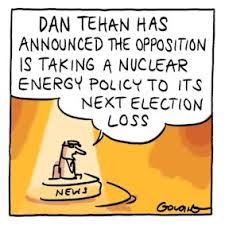
“……………………………………..Shadow Energy and Emissions Reduction Minister Dan Tehan has argued the government’s proposed standards for data centres are too restrictive.
Ahead of releasing the Coalition’s revitalised energy policy, Mr Tehan has said that all options should be on the table to power future data centres, including nuclear energy.
“When [companies] look to invest in Australia, they are deterred by our moratorium preventing them from powering their centres through nuclear,” Mr Tehan said in a statement.
Mr Tehan said that US companies such as Google and Amazon were investing in “their own zero emissions nuclear power to power data centres”.
According to the International Energy Agency [IEA], nuclear energy plays a supporting part in powering the world’s biggest data centre markets: the United States and China.
The autonomous intergovernmental organisation expects nuclear power’s role to grow from 2030, when it is expected that more small modular reactors [SMRs] come online.
Google, for example, signed a landmark deal in 2024 with Kairos Power to buy energy from several SMRs to help support the tech giant’s AI infrastructure.
The first of the reactors is expected to come online by 2030.
Nationals Deputy Leader Darren Chester, whose electorate of Gippsland in Victoria is experiencing significant data centre investment, said he believed that it was “inevitable” that Australian-based facilities would be powered by nuclear energy to some degree in the future.
Mr Chester said “large-scale” nuclear reactors were “proven technology”, but he would be open to other options in the years to come, such as SMRs.
“Removing the moratorium on nuclear [energy] is a sensible thing to do,” Mr Chester said.
Shadow Infrastructure and Sovereign Capability Minister, Andrew Hastie, said it was not feasible for AI data centres to be powered solely off renewables.
“There needs to be a mix of base load power, and nuclear should be part of that mix,” Mr Hastie said in a statement.
The Coalition’s nuclear energy aspirations for Australia suffered a significant blow in its election drubbing in 2025.
An internal review found the opposition’s election campaign was perceived as “incoherent,” and acknowledged the Coalition’s plan for nuclear was among policies widely criticised as “politically mistimed or alienating”.
At the core of the policy was a plan to build seven nuclear power sites, but the party did not specify whether large-scale reactors, small modular reactors [SMRs], or a combination of both, would be used.
National science agency CSIRO and the Australian Energy Market Operator [AEMO]’s latest GenCost report showed introducing nuclear power to Australia would attract significant up-front costs.
“New large-scale nuclear costs are significantly lower than nuclear SMR, but both represent moderate-to high-cost sources of electricity generation,” the report stated.
Nuclear power generation has been banned in Australia under federal laws since the late 1990s.
States and territories also have legislation prohibiting nuclear energy production, with some jurisdictions also restricting certain nuclear-energy-related activities, such as uranium mining.
Labor is emphatically opposed to lifting the moratorium on nuclear energy in Australia.
Energy Minister Chris Bowen recently told Sky: “Nuclear is not an answer for Australia any time.”
Instead, the government is focusing on transitioning to renewable energy, specifically solar and wind energy backed up by hydro storage and gas, with a goal of having 82 per cent of electricity generated by renewables by 2030.
Experts weigh in on how to power Australia’s data centres
Tony Irwin, a nuclear energy advocate and ANU honorary associate professor who spent three years building nuclear reactors in the UK, believes nuclear energy should be used to help power data centres.
“Solar and wind obviously can play a part in it. But nuclear should also be playing a part because, as I say, it’s reliable, it’s low emissions,” he said.
Mr Irwin believes large-scale reactors could be used, but SMRs and what are known as “micro-reactors” could be less costly.
Operational SMRs are only found in Russia and China, according to Energy Strategy Reviews. Micro-reactors are still in development.
The prime minister said in his speech that both Australia’s land and sunshine were among reasons the world was “queuing up to invest” in the nation.
“Think about what we have … the space to build. The sunlight to power affordable, renewable, reliable energy,” he said.
Tony Wood, a senior fellow at Grattan Institute’s Energy and Climate Change Program, welcomed the government’s new rules but questioned how data centre operators would be forced to supply their own renewable energy.
“We are going to get on top of this. That’s what this is about, and I fully support that,” he said.
“I’ve not seen anything that really expands on how such a requirement would be implemented.”
Mr Wood said the opposition’s push for nuclear power for data centres was a “political sideshow”……….
He described the government’s plan for Australia’s energy transition as “plan A”.
“I think we’ve got a very strong plan A and we should stick with it in Australia,” he said.
“And just because someone else does it [nuclear energy] doesn’t mean we should fire.”……..https://www.abc.net.au/news/2026-07-29/data-center-boom-powers-up-political-energy-debate/106929726
Royal Commission or Lobby Show? | The West Report.
The Royal Commission into anti-Semitism has a problem: it is not credible.
The evidence is not being tested. Instead, it has descended into a storytelling farce about hurt feelings, while the data shows Muslim and Arab hate is worse than Jewish hate in Australia — in many cases, not all.
Liberal frontbencher gorges on nuclear freebies
Rear Window, Hannah Wootton, Jul 7, 2026
You’d think visiting Europe in its latest heatwave would convince anyone of the sun’s power. But when Charles
Kiefel is paying your airfare, nuclear still beats solar.
Hannah Wootton, Jul 7, 2026 –If there’s one thing opposition energy spokesman Dan Tehan loves more than
nuclear power, it’s a free “study tour”. Especially if it involves the uranium sector’s
biggest cheerleader Charles Kiefel.
In mid-June, Tehan headed to London, Oslo and Munich for “high-level discussions around energy, industry and defence policy”. His economy flights, accommodation and meals were all covered by energy business groups the Svalbard Group and Just Transition Institute.
But Tehan also got a business-class airfare from Munich back to Melbourne paidfor by Kiefel, the “former director of the Clean Energy Regulator”, according to his
parliamentary register of interests. Funny how Kiefel’s title doesn’t mention the businessman is a proponent of exporting uranium to the US. Or that he funded a separate “study tour” for Tehan to the US last September to look at nuclear
reactors.
But flying economy all the way back from Europe is a Europe is a gruelling ask for a man such as Tehan, who is carrying the burden of an atomic future. And Kiefel is certainly a fan of gifting him the finer things in life.
The US trip included putting Tehan up in Washington DC’s luxury Hay-Adams Hotel. It overlooks Lafayette Square and charges $1800-a-night. The stay wasrevealed by this column [https://www.afr.com/rear-window/senior-liberal-s-luxury-hotel-tv-gaffe-20250909-p5mtp6], when Tehan beamed into a Sky News interview from his hotel room and forgot to turn off the TV screen with the hotel’s branding in the background.
The investment has been worth it for Kiefel. Tehan’s fervent commitment to nuclear [https://www.afr.com/policy/energy-and-climate/why-i-believe-the-liberal-party-must- reset-its-climate-playbook-20251105-p5n7wa] only increased following the US trip. No wonder the anti-nuclear brigade went feral over it.
He’s secured a lasting loyalty, too. Just four days before Tehan jetted off for the June trip, he penned an opinion piece for his own website accusing “Labor’s energy luddites” of “dragging Australia into the Dark Ages”.
The evidence for all this? “What American officials told me
[https://www.afr.com/politics/federal/nuclear-energy-not-done-with-yet-say-liberals-20250908- p5mt72], repeatedly, when I visited” last year. Oh Danny Boy, at least pretend you came up with your opinions independent of multimillionaire backers.
He even referenced conversations with Singaporeans on that trip who told him how their government was looking into new nuclear technologies. “Singapore, a city-state with no natural resources, is preparing seriously. What exactly is our
excuse?” Could it be the abundant sources of non-nuclear energy?
The June trip presumably offered a new source for Tehan to cite. It included site visits to universities and meetings with executives from BP, Shell, and Vitol. As for the “defence policy” part of his discussions, Tehan visited an Oxfordshire facility which is “home of the UK’s civil and military nuclear science developments” and met with “companies involved in defence” in Norway. Plus the Norwegian energy and defence ministers. Reassuring stuff.
Tehan told us he took the trip as “any opportunity to get access to senior government ministers when you’re in opposition is too good an opportunity to pass, especially when it doesn’t cost the taxpayer a cent”.
The Coalition promises an independent, self-reliant energy future. A shame that the same can’t be said of Tehan’s policy positions or travel plans.
Friends of the Earth Adelaide has made a submission to the AUKUS Public Inquiry
Philip White, June 29 2026
FoE Adelaide’s submission added perspectives related to national security, safety, employment and radioactive waste. Click here to read the full submission.
Based on decades of experience regarding nuclear waste management issues and debates in Australia, our submission focused on those problems insofar as they relate to AUKUS.
By rights, the parliament should conduct a genuine public review of the AUKUS program, given that it commits Australian taxpayers to spending hundreds of billions of dollars for decades to come with dubious benefit to our security in return.
In the absence of an official inquiry, we are hopeful that this independent inquiry will shine a light on the many issues that should have been considered before the government committed Australia to AUKUS.
The first hearing, held in Melbourne on 11 June, received many high-quality presentations. Most of the points that we would make were covered in that hearing. In particular, we endorse the comments made by the expert witnesses: Gareth Evans,
Tilman Ruff, Richard Tanter, John Lander, Joseph Camilleri, Rod Campbell and Dave Sweeney. Their critiques of the flaws in AUKUS align with ours, including in regard to the following:
• sacrifice of Australian sovereignty,
• negative impact on national security,
• opportunity cost,
• questionable industrial and employment benefits,
• safety risks and environmental cost,
• challenge of managing and disposing of radioactive waste, including foreign-sourced waste,
• negative impact on First Nations people,
• nuclear proliferation and safeguards implications of military reactors powered by highly enriched uranium fuel,
• implications for our obligations under the Treaty of Rarotonga of ‘rotation’ through Australian bases of nuclear weapon-capable vessels and aircraft, and
• the uncertainty that nuclear-powered submarines will even be delivered.
FoE Adelaide’s submission added perspectives related to national security, safety, employment and radioactive waste. Click here to read the full submission.
Future certain for Olympic Dam but not Traditional Owners

From Robyn Wood, of FOE South Australia: Here’s an article in the National Indigenous Times about the Roxby Indenture act passing and ignoring Traditional Owners. They note that the Conservation Council did not appear at the hearing – that was due to illness.
They also note that no Traditional Owners were invited to the hearing – I think that’s outrageous, and exactly the time they should have invited the newly established Aboriginal Voice to Parliament to give evidence.
I was also outraged by Chair of the Select Committee Tom Koutsantonis ignoring all the submissions and calling them irrelevant – even the Flinders and Upper North Voice to Parliament one.
David Prestipino, National Indigenous Times June 17, 2026
A landmark update of a decades-old Indenture agreement guiding development at Olympic Dam and copper-rich Gawler Craton was ratified by the South Parliament on Tuesday despite serious concerns from affected Traditional Owner groups.
Key Points
• Three Traditional Owner groups left out of landmark deal
• Concerns at impact of 50 years of mining on Country
• New Indenture fast-tracks BHP’s Olympic Dam expansion plans
The agreement between the Malinauskas government and global miner BHP ensured long-term certainty for the region as a global copper powerhouse but left Traditional Owners concerned for their future and angry at the short time set for submissions over the deal.
Critics said the six-day window to respond to updated Indenture contradicted claims of due process, a fair hearing and proper public consultation by the SA government, after the agreement was mooted in May.
Native Title bodies told a government-chosen Select Committee they had serious concerns at ongoing impacts another 50 years of BHP mining operations would have on their Country.
‘Destruction’ of Country
Kokatha Aboriginal Corporation, whose Traditional lands include the Olympic Dam region, told the Committee the previous Indenture Act – in place for more than 40 years – was insufficient already.
“The original Indenture is viewed by the Kokatha People as the authorisation of destruction of our land and a mechanism to drive our people off Country, without the involvement or consent of Kokatha People,” KAC wrote in its submission earlier this month.
Dieri Aboriginal Corporation said a BHP well field on Dieri Country would continue to pressure the Great Artesian Basin.
“Water is very important to us as Dieri People and the impact of water taken from Wellfield B impacts the health of our Country,” the board wrote in its submission.
Arabana Aboriginal Corporation urged the Committee to make recommendations on important matters that affected Arabana People and their land, outlining them in its submission.
“The damage to our springs and land, the closure of Wellfield A, ongoing water abstraction from Wellfield B, the absence of consultation with the AAC,” it wrote.
“The continued displacement of the Aboriginal Heritage Act for the Stuart’s Shelf on Arabana Country and how development of the bill can be reconciled with the state’s own commitments to Aboriginal people.”
The Committee heard evidence from SA’s departments of Energy and Mining, Energy and Water, BHP, the SA Conservation Council and SA Chamber of Mines and Energy.
The Conservation Council chose not to attend the hearing, while no Traditional Owners were on the Committee.
Changes pave way for more mining…………………………………………………
The three Traditional Owner submissions as well as several environmental organisations had heavily criticised the limited time to make a submission, while also lamenting insufficient consultation and engagement from BHP and stakeholders………………………..https://nit.com.au/17-06-2026/24868/future-certain-for-olympic-dam-but-not-traditional-owners
1 This month


Help Aunty Sue Protect Her Land and Sacred Sites From Destructive Rocket Testing.
.

Australians deserve the truth
about
AUKUS – https://aukuspublicinquiry.com/

PETITION – To: Prime Minister Anthony Albanese and the Australian Labor Government

of the week – Australians for War Powers Reform (AWPR)
To see nuclear-related stories in greater depth and intensity

