‘Dumb idea’: Energy minister fires at Peter Dutton’s nuclear power plan, urging him to ‘come clean’ about the facts
The Climate Change and Energy Minister took aim at the Liberal leader’s “dumb” nuclear power plan, telling him to “come clean” about the facts of the alternate energy source.
Yashee Sharma, Digital Reporter,14 May, https://www.skynews.com.au/australia-news/politics/dumb-idea-energy-minister-fires-at-peter-duttons-nuclear-power-plan-urging-him-to-come-clean-about-the-facts/news-story/c98bcf8500bcc643c93b008b19bc9995
Minister for Climate Change and Energy Chris Bowen has debunked nuclear power statements spruiked by Coalition leader Peter Dutton.
Mr Dutton in his second budget reply on Friday said that “any sensible government must consider small modular nuclear as part of the energy mix”.
He disputed the Labor government’s climate change policies, warning they were putting the country “on the wrong energy path”.
In response, senator Bowen took to social media with an almost 2-minute-long video on “why Peter Dutton’s nuclear plan is a dumb idea for Australia”.
He took aim at the Opposition leader, questioning why the former Liberal government had nine years to introduce the nuclear energy but “never got around” to it.
“Because it’s a very bad idea,” he answered in the video.
The Labor Minister factchecked Mr Dutton with three reasons why nuclear power was not suitable for Australia, with the first being its hefty $400 billion price tag.
He referenced CSIRO findings that detail how renewable energy is the cheapest form of power while nuclear energy the most expensive.
“Wherever nuclear power plants are being built around the world, they are taking longer and costing much more than budgeted for,” he said.
“Even small modular reactors would cost a massive $5 billion each to build and proponents say we need as many as 80 small nuclear reactors spread across the country.
“That’s a whopping $400 billion in cost.”
Mr Bowen then fired at the “huge delays” in nuclear reactor construction, claiming that it would take more than a decade to establish a nuclear power industry.
Minister for Climate Change and Energy Chris Bowen has debunked nuclear power statements spruiked by Coalition leader Peter Dutton.
Mr Dutton in his second budget reply on Friday said that “any sensible government must consider small modular nuclear as part of the energy mix”.
He disputed the Labor government’s climate change policies, warning they were putting the country “on the wrong energy path”.
In response, senator Bowen took to social media with an almost 2-minute-long video on “why Peter Dutton’s nuclear plan is a dumb idea for Australia”.
He took aim at the Opposition leader, questioning why the former Liberal government had nine years to introduce the nuclear energy but “never got around” to it.
“Because it’s a very bad idea,” he answered in the video.
The Labor Minister factchecked Mr Dutton with three reasons why nuclear power was not suitable for Australia, with the first being its hefty $400 billion price tag.
He referenced CSIRO findings that detail how renewable energy is the cheapest form of power while nuclear energy the most expensive.
https://imasdk.googleapis.com/js/core/bridge3.572.0_en.html#goog_1312684880
| SKYNEWS.COM.AU03:37Government must ‘at least consider’ nuclear as part of energy mix: Dutton |
UP NEXT
04:37The budget ‘didn’t go far enough’ on issues which affect all Australia…
07:04Australia should have an ‘open mind’ to nuclear energy
05:41Budget measures ‘left middle Australia behind’: Ley
06:50‘Quarter acre block dream is gone’: Capital cities will have to build …
09:32‘Do this properly’: Ley urges government to ‘start again’ on housing bill
04:13‘Serious constitutional risk’: Liberal MP weighs in on Voice to Parlia…
05:20Don Farrell received ‘visibly warm’ reception during China visit
Government must ‘at least consider’ nuclear as part of energy mix: Dutton
“Wherever nuclear power plants are being built around the world, they are taking longer and costing much more than budgeted for,” he said.
“Even small modular reactors would cost a massive $5 billion each to build and proponents say we need as many as 80 small nuclear reactors spread across the country.
“That’s a whopping $400 billion in cost.”
Mr Bowen then fired at the “huge delays” in nuclear reactor construction, claiming that it would take more than a decade to establish a nuclear power industry.
https://imasdk.googleapis.com/js/core/bridge3.572.0_en.html#goog_2088505775
| SKYNEWS.COM.AU05:29Labor ‘denies’ that Australia is already a ‘nuclear nation’ |
UP NEXT
07:49Prince William and Kate’s royal ‘one-up’ on Harry and Meghan
02:26Meghan Markle missing from King’s coronation was reportedly a ‘blow to…
01:53’Very arrogant’ of sporting codes to suggest they can ‘influence Austr…
05:01’Their bias is on show’: Majority of ABC’s airtime ‘given to those who…
04:36Big Help Out was a ‘huge hit’: Russell Myers
03:49’Nasty and semi-racist’: Media’s spin about Dutton’s ‘obvious point’ o…
04:47‘Big questions’: Prince Andrew wears Garter robes at coronation
Labor ‘denies’ that Australia is already a ‘nuclear nation’
“Even if we started today, the first small reactor wouldn’t be in operation to meet the urgent need to deliver dispatchable power now,” he said.
“We don’t have a nuclear power industry, a regulatory or safety framework, nuclear power expertise or nuclear power workforce.”
The Energy Minister concluded his video, saying Australia is already struggling to store nuclear waste from one small medical reactor and probed Liberals over how they would dispose of waste from 80 reactors.
“If the Liberals want lots of nuclear power plants across Australia, they would need to explain where they’re going to store the nuclear waste,” he said.
“If Mr Dutton and the Liberals want to be taken seriously on their nuclear energy plan, they need to come clean on a few key things.
“Where will these nuclear power plants go? What will they do with the radioactive waste that generate? And when will they be operational? And how on earth are we going to pay for it?”
Former prime minister Malcom Turnbull threw his support behind Senator Bowen after the scathing attack.
“Very good video and absolutely right,” he wrote to Twitter.
Nuclear advocates energised despite economic reality
Canberra Times By Jacob Shteyman, May 15 2023
Australia could develop a domestic nuclear energy system within 15 years but it would not be economically competitive, a Senate committee has been told.
A procession of energy experts, and a 16-year-old boy, lined up to give their two cents on a proposal to remove the prohibition on installing nuclear power in Australia on Monday.
Gillian Hirth, chief executive of nuclear regulator ARPANSA, told the committee it would take 10 to 15 years to develop nuclear energy facilities, but regulatory frameworks would need to be established first.
There would also need to be a significant uplift in the capability of the nuclear industry, she said.
While new technologies being developed overseas, like small modular reactors, are safer and produce less radioactive waste [a dubious claim!] than traditional nuclear generation, the committee heard the economics behind nuclear doesn’t stack up in the Australian context.
Department of Energy deputy secretary Simon Duggan said work done by the CSIRO found the abundance of low-cost renewable energy in Australia would make it difficult for nuclear technology to compete financially by the time it was ready to be deployed.
The government’s focus is instead on getting as much renewable energy, firming and transmission infrastructure into the grid as possible to provide more stability for consumers, Mr Duggan said.
Will Shackel, 16, told the committee he created advocacy group Nuclear for Australia because he wants to encourage the country to have an open mind on nuclear energy and a fact-based debate.
“Young people are energised by the prospect of nuclear energy, yet government is not reacting,” he wrote in a submission.
“Despite bids to pander to us with utopian fantasies of a clean energy transition through renewables, young people are calling for the commonwealth government to acknowledge that the only pragmatic solution lies in the tabooed energy generation capability of nuclear energy.”
But Dave Sweeney, nuclear policy analyst at the Australian Conservation Foundation, said radioactive waste remains the achilles heel of the industry.
“We get three years with existing commercial reactors of reliable electricity and then we get 100,000 years of an intergenerational carcinogenic, mutagenic waste burden,” he told the committee.
“We need to back a winner and that winner is the renewable sector.”……………………………
The committee is due to report back by June 15 https://www.canberratimes.com.au/story/8196744/nuclear-advocates-energised-despite-economic-reality/
Very bad advice: $368b nuclear submarines and the Federal budget

Although he knows almost nothing about submarines, Albanese gave the go-ahead to acquire nuclear ones without insisting on a cost effectiveness study showing how they compare to modern conventional versions.
An objective study would’ve shown the latest conventional ones are superior – they are much harder to detect and are operationally available far more often because they don’t suffer few serious maintenance problems.
The program cost of twelve high quality conventional subs is only about $18 billion compared to $368 billion for 11 nuclear ones that repeatedly break down
.
By Brian Toohey https://johnmenadue.com/aukus-very-bad-advice/
At a time when the Reserve Bank’s interest rate rise is adding to cost of living pressures and increasing the chances of a recession, Albanese is finding it hard to justify the staggering $368 billion cost of AUKUS nuclear submarines.
Anthony Albanese says it only took him 24 hours to decide to back the AUKUS pact between Australia, the UK and the US. And not much longer, it seems, to decide to get nuclear submarines, if not precisely how. The rush shows. At a time when the Reserve Bank’s interest rate rise is adding to cost of living pressures and increasing the chances of a recession, Albanese is finding it harder to justify the staggering $368 billion cost of these submarines. As explained below, this is 20 times more than 12 superior conventional submarines would cost.
So he’s taken to claiming the job creation benefits of building a handful of subs in Adelaide is just as important as the national security benefits. During his visit to England for the Coronation, Albanese visited Barrow-in-Furness where the Astute class nuclear submarines were built. The shipyard employs 11,000 people, which is due to rise to 17,000. Albanese said, “I see this is being very similar to what the car industry provided for Australia in the post-war period.” In fact, employment in car manufacturing in Australia was much higher at its peak. Employment dropped by 80,000 between 1973 and 1980, yet it was still 45,000 in 2015. Large sums of government funding failed to ensure car manufacturing survived.
Albanese’s government estimates that 20,000 jobs will be created by building seven submarines, called the AUKUS class, at Adelaide. Although sharing the design work for a highly complex product is rarely successful, it will be done in this case between the three AUKUS countries. The construction jobs won’t start to flow at discernible rate until shortly after 2040. Yet Albanese implies the job benefits will be available before the next election. If job creation is the goal, there are much better ways to achieve it.
Given Albanese’s excitement about the quality of the work done at Barrow-in-Furness, it’s worth looking at what actually happened. The National Interest reported in November 2021 that, although the first boat, HMS Astute, had been laid down in 2001, the key design and production facilities had atrophied, resulting in delays and cost overruns that continue to harry the program today. Basic drafting and engineering skills had deteriorated. Problems emerged with software used to design the sub. After HMS Astute entered service in 2014, the crew suffered from excessive heat. It ran aground during sea trials a month after delivery.
Earlier, the Guardian reported in 2012 that during exercises that year a pipe carrying seawater from the back of the submarine to the reactor sprang a leak, forcing the boat to surface. An investigation revealed that a cap was made from the wrong metal, but construction records said the right metal had been installed. The Guardian also said a lead-lined water jacket surrounding the reactor core was fitted with substandard lead, creating a risk that electrical charges in the lead could generate false readings in instruments monitoring the state of the reactor.
A confidential Ministry of Defence memo obtained by the Guardian says extensive corrosion is “a cause for major concern”. The memo said the damage means “severe problems” can be expected in future and warns that the submarines will have to spend more time than planned under repair. All is now supposed to be going well.
Although he knows almost nothing about submarines, Albanese gave the go-ahead to acquire nuclear ones without insisting on a cost effectiveness study showing how they compare to modern conventional versions. An objective study would’ve shown the latest conventional ones are superior – they are much harder to detect and are operationally available far more often because they don’t suffer few serious maintenance problems. The program cost of twelve high quality conventional subs is only about $18 billion compared to $368 billion for 11 nuclear ones that repeatedly break down.

In the circumstances, Albanese’s failure to consider conventional submarines before going nuclear was deeply irresponsible. Perhaps he wasn’t told by his advisors. In any event, no Australian official has publicly mentioned this huge drawback in acquiring nuclear submarines.
Quoting from secret US Navy documents, Newsweek on April 19 confirmed earlier authoritative reports showing that only a quarter of America’s Virginia class submarines are operationally available at any one time, due to highly complex maintenance problems. The highly regarded American defence analyst defence analyst Winslow Wheeler gave the same figure in 2021.
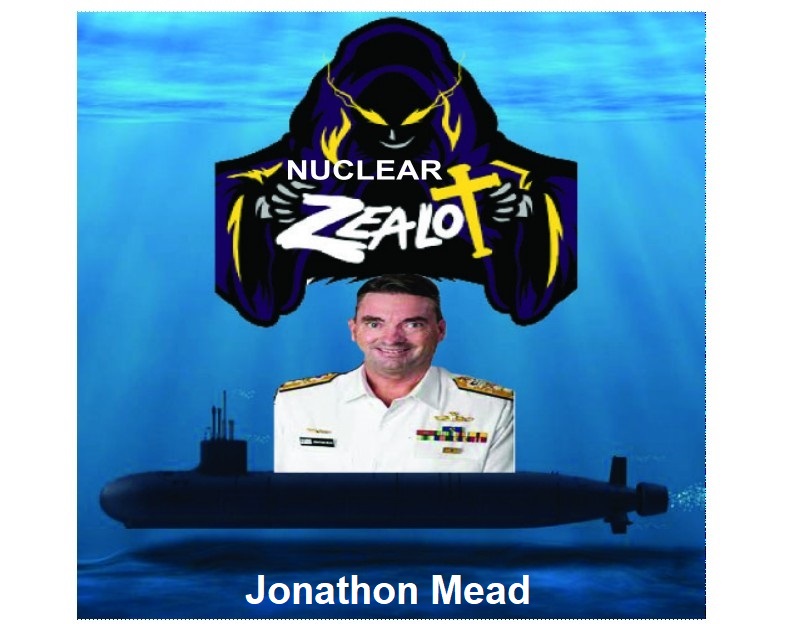
Surely someone in Vice Admiral Jonathan Mead Admiral Mead’s 350 strong advisory team group advising Albanese on nuclear submarines should have stumbled across it.
Mead gave an astonishing interview to the Guardian published on March 8 and 9 this year. Mead wrongly described Australia’s existing Collins class conventional submarines as “the most advanced in the world”. They are certainly not. They lack modern equipment such as fuel cells and advanced batteries that let submarines operate extremely quietly for sustained periods without having to rise to the surface to recharge their batteries every day or two, unlike the Collins class. Modern German, Japanese and South Korean ones are in this category. These submarines have low sustainment costs, unlike the Collins class where this burden has hit almost $700 million a year, not including fuel and crew costs. Taking the Collins out of service would free up billions in funding for new conventional submarines.
Because nuclear subs are significantly bigger than most conventional subs, they are easier to detect as they move through the earth’s magnetic field and the water column. Rapid advances in sensor power and computer processing increase the chances of subs’ detection – and destruction. Mead said he had taken account of the prospect oceans would become more transparent by 2050. His solution is to use underwater drones in places where you don’t want a nuclear submarine to be detected. That would be just about everywhere that the presence of nuclear submarine was supposed to be important. Apparently, the nuclear sub would control a drone at a safe distance. In this case, far cheaper platforms can be used to control the drones.
Nuclear power at least 15 years away, says regulator
Australia’s chief nuclear regulatory body has told a parliamentary inquiry how long it would take to legislate and build a nuclear power plant.
Anthony Anderson and Ellen Ransley 15 May 23, news.com.au
A senate inquiry examining whether Australia’s ban on nuclear energy should be lifted has been told it would take 10-15 years to have a power plant up and running if the moratorium was lifted right now.
The Environment and Communications Legislation Committee sat on Monday to discuss the Environment and Other Legislation Amendment (Removing Nuclear Energy Prohibitions) Bill 2022.
The bill would see amendments made to the Australian Radiation Protection and Nuclear Safety Act 1998 and the Environment Protection and Biodiversity Conservation Act 1999, effectively paving the way for nuclear power generation.
CEO of the Australian Radiation Protection and Nuclear Safety Agency (ARPANSA) Dr Gillian Hirth fronted the inquiry on Monday afternoon, where she was questioned about her organisation’s role in nuclear regulation.
Dr Hirth told the inquiry there would need to be a regulatory framework established for private nuclear generation, since ARPANSA only regulates Commonwealth projects.
“The time frames for implementation, if it were established today, you would be lucky to have it up and running in 15 years … 15 years would be the minimum,” said Dr Hirth.
“It can take three to five years to do a significant review of regulations in Australia … once they’re done, you’re looking at at least 10 years to develop facilities.”
The CSIRO also fronted the inquiry, with representatives grilled over data from 2018 showing nuclear would be prohibitively expensive for Australia.
The discussion focused on small modular reactors (SMRs), a technology of which CSIRO’s executive director for environment, energy, and resources, Dr Peter Mayfield, said there was limited information available……………………………………………………………..
The laws around nuclear technology will also need to be amended to enable Australia to take carriage of nuclear powered submarines, due to arrive in the early 2030s under the recently signed AUKUS agreement.
“(According to) our Act as it currently stands, we can’t regulate nuclear powered submarines,” said Dr Hirth.
“The proposed amendment, in the short term, seeks to give ARPANSA regulatory power until Defence can establish [their own body].”
Earlier, a number of executives in Australia’s leading nuclear industry associations and groups spruiked the benefits which nuclear energy could offer Australia……………………
The committee has twice been granted an extension to develop a report, which at the time of writing will be expected to be finalised on June 15. https://www.news.com.au/technology/environment/nuclear-power-at-least-15-years-away-says-regulator/news-story/6b8c4ec9c94cd4d05471783678abdb59
Nuclear waste is a $476m problem even before AUKUS
Justin Hendry 11 May 23, https://www.innovationaus.com/nuclear-waste-is-a-476m-problem-even-before-aukus/?fbclid=IwAR2jeLiHd5k32VIsMOXxhGnAaIfIyFJUvtLblzvt3mbMFPrGCSnOLL3d8UU
A long-planned nuclear waste facility to store and dispose of radioactive material that has built up over decades has secured significant funding after the former Coalition government settled on a site for the facility.
More than $160 million will be spent on preparatory work for the National Radioactive Waste Management Facility, including “technical, design, regulatory and governance activities, and community engagement”.
But there is no indication when the facility – which has been on the cards in one form or another for 40 years – might be ready, with the funding provided in Tuesday’s federal Budget intended to stretch until 2030.
The facility will become the single location for the disposal of Australia’s low level nuclear waste and a temporary storage location for intermediate level waste which until now has resulted from scientific research and industrial, agricultural and medical applications. [Ed. They don’t here mention the waste generated by the Opal nuclear reactor itself !]
That is set to change from early 2030, when Defence is expected to begin acquiring up to five Virginia-class nuclear powered submarines from the US for delivery, before building a new squadron of nuclear submarines based on a British design for delivery in early 2040.
Existing radioactive waste is currently kept at the Australian Nuclear Science and Technology Organisation’s (ANSTO) Lucas Heights reactor in Sydney, with another 100-plus locations across Australia also being used for storage.
In November 2021, the former Coalition government acquired a site near the town of Kimbra on Eyre Peninsula in South Australia to build the facility, which is opposed by the local Barngarla people.
By May last year, parts of the facility’s design and planning had already been outsourced, despite an ongoing legal challenge from Traditional Owners set to begin next month.
South Australian Premier Peter Malinauskas has reportedly already ruled out the facility handling spent fuel rods from AUKUS submarines, although is lobbying the federal government for the rods to be stored in the state’s Woomera Prohibited Zone.
The funding for the National Radioactive Waste Management Facility is accompanied by further Budget measures to support the development of radioactive waste management, storage and disposal, including a $5.2 million project with Defence and the planned Australian Submarine Agency.
The Department of Industry, Science and Resources will also receive $9.7 million over the next five years to develop a “pathway” for the long-term disposal of intermediate-level radioactive waste generated from non-defence activities.
In total, the Industry department has been allocated $476.4 million, the bulk of which will be used by the Australian Radioactive Waste Agency to continue managing a national inventory of radioactive waste and coordinate its disposal and storage.
Elsewhere in the Budget, the ANSTO has been funded with at least $84.4 million over three years to provide nuclear medicines, with the full 10-year funding package not-for-publication due to “commercial sensitivities”.
More than half of the funding will be used by the agency to manage the shutdown of its OPAL nuclear reactor for maintenance in March 2024, requiring medicines that would ordinarily be produced onshore to be imported.
During the shutdown, the reactor’s unique cold neutron source, which has been used since 2007, will be replaced, promising “increased scientific performance” well into the next decade, according to ANSTO.
The remaining $39.9 million in known funding set aside for ANSTO over the next three years will be used to wind-up ANSTO Nuclear Medicine by June 2024, with its operations, assets and liabilities to be transferred to ANSTO.
An undisclosed amount of funding will be used by ANSTO to build a new nuclear medicine manufacturing building and maintain its current facility, as well as develop a business case for a new facility to “support Australia’s sovereign nuclear security science capability”.
The agency will also receive $16.3 million as part of a $4.5 billion nuclear-powered submarine support package to provide “radiological baselining and monitoring, and provide advice on the safe implementation of nuclear technology”.
As previously announced by the government, a new Australian Submarine Agency will be created within Defence to manage the submarine program, with $7.9 million from that allocation to be used to establish the Australia-Nuclear Powered Submarine Safety Regulator
Do you know more? Contact James Riley via Email.
Weakening of Australia’s nuclear prohibition laws – necessary to develop the submarines

Parliament takes first steps to nuclear submarines. Examiner, By Andrew Brown, May 10 2023
The first step to Australia acquiring nuclear-powered submarines as part of the AUKUS security pact has been introduced to federal parliament.
Laws brought in to the House of Representatives on Wednesday will update rules banning civil nuclear power to allow for work to be done on the submarines……………….
Defence Minister Richard Marles said the bill would be the first of many associated with the vessels, but a civil nuclear energy industry would not be on the cards. https://www.examiner.com.au/story/8190260/parliament-takes-first-steps-to-nuclear-submarines/
—
AUKUS high-level nuclear waste dump must be subject to Indigenous veto
there is no question Defence would require the free, prior and informed consent of Indigenous people before a high-level nuclear waste facility could proceed on their land. …. in those circumstances the government must provide a veto right, because the project would eliminate future access to traditional Indigenous land.
If Plibersek knew about the radioactive waste facility and its intended siting in remote Australia at the time AUKUS was announced she has kept quiet about it.
A far more substantial inequality of power now exists between the Indigenous groups to be consulted about the site of the radioactive waste facility and the Defence Department. The facility has solid bipartisan support. In addition, it is essential to the AUKUS submarine deal, meaning Defence embodies the combined wishes of the Australian, British and United States governments.
Bipartisan secrecy and Defence’s poor record with Indigenous groups at Woomera are red flags for the consultation over AUKUS high-level nuclear waste facility.
Undue Influence MICHELLE FAHY, MAY 6, 2023
This is part one of a two-part series
The federal government had no public mandate for any of the AUKUS decisions: no mandate to enter the agreement, none to acquire eight nuclear-powered submarines for up to $368 billion, and none to establish a high-level radioactive waste facility. On this last, in fact, it had long term evidence to suggest Australians would likely oppose the proposition.
Perhaps this is why both major political parties concealed for 18 months, a period including the federal election, their shared knowledge that AUKUS requires a high-level radioactive waste facility to be built.
The AUKUS agreement was revealed on 15 September 2021. On 14 March 2023, deputy prime minister and defence minister, Richard Marles, announced the nuclear waste facility. Next day, opposition leader Peter Dutton said: ‘The Labor Party signed up to AUKUS knowing they would have to deal with the waste, and now that they’re in government they know that’s a part of the deal.’ The government has not denied Dutton’s claim.

Meanwhile, the Albanese government continues its work to establish an Indigenous Voice to Parliament. Just nine days after the prime minister was in San Diego announcing the AUKUS submarine deal and his deputy Marles came clean about the radioactive waste facility, Anthony Albanese released the proposed Voice wording. The prime minister noted in his speech the importance of consultation, ‘it’s common courtesy and decency to ask people before you take a decision that will have an impact on them’.
Governments have been trying for decades to put a radioactive waste dump in outback Australia. They have been rebuffed time and time again. Yet the Albanese government is trying once more.
Legal experts have pointed out the international legal requirement to obtain the free, prior and informed consent of Indigenous peoples before making significant decisions that affect them. This process includes giving Indigenous peoples full information about a development in advance and respecting their choice to give or withhold consent.
The UN Declaration on the Rights of Indigenous Peoples, which Australia has pledged to support ‘in both word and deed’, says: ‘[No] storage or disposal of hazardous materials shall take place in the lands or territories of indigenous peoples without their free, prior and informed consent.’
As to whether the government can claim ‘national security’ as a reason to avoid these obligations and dictate a radioactive waste site, international human rights law expert John Podgorelec says: ‘States may not derogate from their responsibilities on the basis of national security unless a “state of emergency” has been formally invoked.’
He adds, ‘A lesson to come out of the Iraq calamity is that manufactured or undisclosed national security intelligence cannot be used to subvert democracy.’
Unfortunately, the Defence Department’s fact sheet on nuclear stewardship and waste is light on detail. It does not mention free, prior and informed consent. Defence commits only to ‘consultation and engagement’ – a lesser standard – and adds that it will also consider ‘wider social license and economic implications’. Globally, the ‘economic implications’ of significant projects habitually undermine human rights, particularly those of Indigenous peoples.
Furthermore, Defence has a poor track record of engagement with Indigenous people in one of its key locations, South Australia’s Woomera Prohibited Area (explored further in part two).
Woomera is used by Australian and foreign military forces, in close partnership with multinational weapons corporations, for extensive weapons testing and military training activities.
‘When militaries around the world need a place to test their weapons and fly their new fighter jets, there’s nowhere better than the rugged expanses of South Australia,’ enthused US weapons giant Raytheon in 2016, talking up ‘a further expansion of US-Australian cooperation’.
The Woomera weapons testing range covers one-eighth of South Australia, occupying more than 122,000km2. Before Defence took over, less than a century ago, Indigenous people had inhabited the region for tens of thousands of years.
Despite the international outcry at the destruction of Juukan Gorge, the Defence Department has not changed its behaviour. For example, it continues to use a registered Indigenous heritage site in Woomera as a target zone for high explosive weapons tests. (I visited this and other sites inside Woomera last year at the invitation of Andrew and Bob Starkey, senior Kokatha lawmen and traditional owners.)
Defence is aware of the site’s significance, just as Rio Tinto was aware of the significance of Juukan Gorge. Defence’s heritage management plan, relevant sections of which I have seen, says the site has a ‘high level of Aboriginal heritage value’ and is a place of ‘sensitive cultural significance that can be easily impacted’. The public might wonder how Defence can know this yet still decide it’s acceptable to direct high explosive munitions onto the site.
‘The Commonwealth cannot give with one hand and take with the other,’ says Podgorelec, who acts for the Starkeys, on the tensions between federal commitments to Indigenous heritage protection and to AUKUS. He says there is no question Defence would require the free, prior and informed consent of Indigenous people before a high-level nuclear waste facility could proceed on their land. He also says in those circumstances the government must provide a veto right, because the project would eliminate future access to traditional Indigenous land.
Australia is not alone in being unable to find a radioactive waste solution. The UK has failed for decades to make meaningful progress on dismantling decommissioned nuclear submarines – it currently has 21 of them floating in dockyards awaiting disposal, mirroring its wider failure to resolve its nuclear waste problems. The US has also failed in this regard: spent fuel from its nuclear submarines remains in temporary storage. Griffith University’s Emeritus Professor Ian Lowe has written that the nuclear waste from US military and civilian reactors ‘is just piling up with no long-term solution in sight’.
Defence does not mention this pertinent information in its brief positive account of US and UK nuclear stewardship.
The federal government gave its response to the Juukan Gorge inquiry report in November 2022. Minister Tanya Plibersek, whose Environment portfolio encompasses Indigenous heritage protection, said:
[T]hese are thorough and considerate reports… the recommendations speak to the principles and priorities that will shape our [heritage protection] legislation. Free, prior, and informed consent.
If Plibersek knew about the radioactive waste facility and its intended siting in remote Australia at the time AUKUS was announced she has kept quiet about it.
Free, prior and informed consent requires that intimidation and coercion be avoided. Plibersek is well aware of the possibility of abuses of power in high stakes developments. In her speech, she noted partnership agreements were signed under ‘gross inequalities of power’ between the traditional owners of Juukan Gorge and Rio Tinto.
A far more substantial inequality of power now exists between the Indigenous groups to be consulted about the site of the radioactive waste facility and the Defence Department. The facility has solid bipartisan support. In addition, it is essential to the AUKUS submarine deal, meaning Defence embodies the combined wishes of the Australian, British and United States governments.
Podgorelec is adamant. ‘Australia cannot enact domestic laws that undermine its international legal obligations. If a project will take away Indigenous cultural connection to land forever – as a high-level nuclear waste facility will do – then the government is obliged to give a right of veto.’
Note: The legal basis for free, prior and informed consent was explained by John Podgorelec as lead author of Adelaide University’s submission to the 2015 SA Nuclear Fuel Cycle Royal Commission. Unfortunately, having been available until recently, the Royal Commission’s website is presently inaccessible. Email us if you would like a copy of the submission: undueinfluence@protonmail.com
$123B Contingencies for Nuclear Subs Unveiled
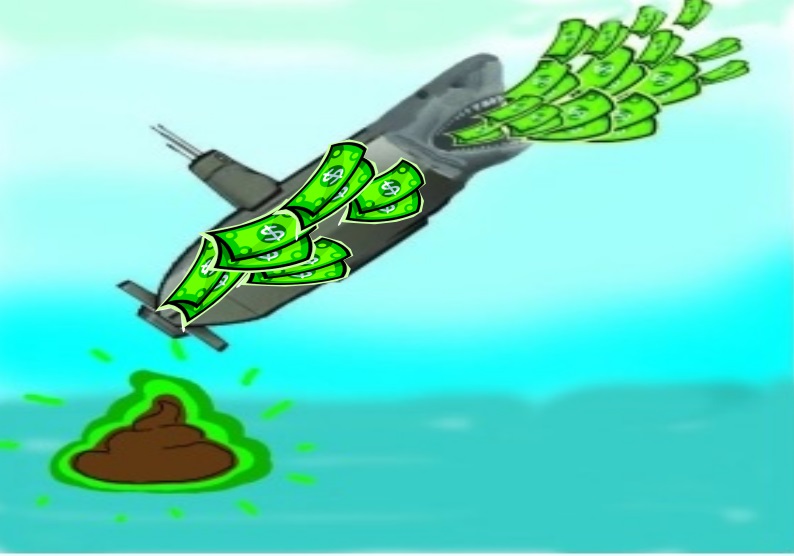
“The Albanese government is giving Defence a totally unprecedented $122 billion stuff-up fund. This is a license to fail on contract negotiations and project delivery for the AUKUS submarine deal.
“It’s extraordinary that a whopping one third of the $368 billion nuclear submarines budget comes with no strings attached.
https://www.miragenews.com/123b-contingencies-for-nuclear-subs-unveiled-996385/ 30 APR 2023
An extraordinary $122.9 billion, that’s one-third of the $368 billion dollar price tag for nuclear submarines, has been allocated to a so-called “contingency” budget, according to new figures released by the Parliamentary Budget Office, commissioned by the Greens.
The PBO analysis, which is based on Defence figures, for the first time shows that $122.9 billion dollars has been earmarked for “contingency” funding as part of the government’s projected budget. The amount of contingency funding is setting off alarm bells about the sheer scale of no-strings-attached public funding allocated to the deal.
The PBO figures also show the unfair intergenerational impact of the AUKUS subs. Hundreds of billions in costs will be heavily skewed to future budgets, forcing deep cuts to public spending for decades.
Australian Greens Defence Spokesperson Senator David Shoebridge said:
“The Albanese government is giving Defence a totally unprecedented $122 billion stuff-up fund. This is a license to fail on contract negotiations and project delivery for the AUKUS submarine deal.
“It’s extraordinary that a whopping one third of the $368 billion nuclear submarines budget comes with no strings attached.
“The scale of this contingency fund demonstrates that the government has no real idea how they will deliver these hugely expensive submarines or what the true costs of the nuclear sub deal will be.
“No serious project planner in any other industry would be allowed to have a third of the total budget as contingency – this is worse than a blank cheque, it’s an incentive for profligate Defence spending.
For the AUKUS subs deal Defence has persuaded the Albanese government to take away any restraint on future spending or project delivery. When you add in the repeated failures of Defence to deliver past projects on time or on budget this is worse than negligent.
“To help sell the deal the Albanese government is burying the most exorbitant expenditure across future budgets, in a brazen attack on future generations. This is deceptive and reckless budgeting and it means young people and future generations will inherit a savage debt.
“Babies who haven’t even been born yet will spend their lives paying for these nuclear subs rather than getting essential public services and support because Labor has signed up to this toxic deal.
“It’s grossly unjust to steal from future generations to pay for today’s political mistakes, but that’s exactly what is happening here with our children and grandchildren saddled with the bulk of the $368 billion bill, ” Senator Shoebridge said.
Larry O’Loughlin’s Submission reminds Senate of the unsolved problem of nuclear wastes, and calls to retain Australia’s nuclear prohibitions.

Environment and Other Legislation Amendment (Removing Nuclear Energy Prohibitions) Bill 2022 Submission 147
There are long-term issues with the use of nuclear materials which create more problems than the
short-term solutions they are alleged to provide
Australia has nuclear medicine as an option for some specific needs and nuclear materials have uses
in diagnostics. Australia has a nuclear reactor to produce some of these materials and in order to
gain international recognition of the reactor and to be part of international nuclear safeguards we
needed a regulations regime which was obtained through ARPANSA.
We do not now need to start developing nuclear power for electricity generation or for propulsion
or nuclear weapons. There are far better options for achieving long-term goals
The main problem with nuclear options is the generation of waste, whether high, medium or lowlevel. Some nuclear waste must be managed for thousands of years; longer than the known life-span
of any human civilization.
There is a need for further research on how to deal with nuclear waste but we do not need to
produce more waste in order to study it. We already have enough and do not have a solution for
that.
There are many sources of information on the costs and problems of nuclear power and I trust that
the Committee will refer to these and that there will be many submissions that provide this detail. I
suggest that particular respect be given to work which looks at the entire timeframe of the waste
that needs to be managed. That is, the economics of nuclear projects must be considered over
thousands of years. We should also consider the durability of maintenance regimes over those years
and the likelihood of further capital input to upgrade and maintain systems which potentially no
longer provide an economic return.
All nuclear options necessarily include a high level of support of public money from government in
order to operate. Governments do not always make good economic decisions. Once they start
something they find it hard to stop.
We should not now be starting on a long-term nuclear pathway which will be expensive, create longterm problems managing dangerous materials, and for which other and better options currently
exist
Please do not develop nuclear power . https://www.aph.gov.au/Parliamentary_Business/Committees/Senate/Environment_and_Communications/Nuclearprohibitions/Submissions
Timothy Nott Submission to Senate – as a conservative opposes risky, expensive, unsustainable nuclear power
As a conservative, I can’t support highly risky, expensive compared to the options
power provision that is unsustainable and misleading as the whole process cost is
not included for the nuclear option against the others that does include the entire
process.
Environment and Other Legislation Amendment (Removing Nuclear Energy Prohibitions) Bill 2022 Submission 141
As a private citizen of Australia, I support cheap reliable energy and thus can not
support the use of nuclear power. I also understand the costs have not included
disposal of waste which is a vital part of the assessment. If this isn’t included, no
comparison can be made for cost and sustainability. Nuclear power is a risk to
Australian national security as the pollution has no effective and safe disposal and
until the legacy of this risk to human health and safety has a solution, there can be
no way to determine the costs or risks. This is unacceptable to my family.
The current approval system for power providers has lead to ongoing losses of jobs
and prosperity for short-term profit. It is damaging the biophysical basis of humans
existence and thus the system is failing the people of Australia. Until the approval
system is changed to allow the community to maintain health and jobs, it will
continue to be unsustainable and damage Australian sovereignty. Adding nuclear
power options to a biased and unsustainable system will add further pressure and
policy that prioritises short-term profit over life. I can not support the increase in
pressures that is currently damaging the prosperity of Australians and increasing
costs on the community.
Considering Australia is the best placed globally to take advantage of the renewable
energy sector, any competition to this will damage this economic strength and limit
Australia’s competitiveness. Australia’s delay in making a transition to cheaper
energy forms has left us behind other countries and thus we are loosing jobs and
economic opportunities. Adding expensive power options that are unsustainable as
they do not include all stages of the power creation process is opposite to good
economic management. If anything like the current gas system experience, this will
lead to more of Australian wealth going overseas with Australian’s and business
paying a high price so corporations can avoid tax and profitise from the monopoly
position. Any financial subsidies that will be required are in direct opposition to
Australian economic strength and jobs creation. I support Australian jobs for
Australian products so currently can’t support including nuclear power approval.
The long time required for nuclear power creation and short lifespan make the option
unable to repair current limitations in the power system. The ongoing delay to using
the natural competitive advantage has already made the nuclear power option less
competitive and risky. Within a decade, renewable energy will be significantly
cheaper and the cost assessment should clearly articulate this. By the time a nuclear
power station is built, it may already be not viable without the entire costs being
included.
As a conservative, I can’t support highly risky, expensive compared to the options
power provision that is unsustainable and misleading as the whole process cost is
not included for the nuclear option against the others that does include the entire
process.
Please don’t waste money, increase risk of increasing costs and accidents and leave
a legacy of expensive and dangerous materials for the next 100plus generations.
The huge cost and unknowns of managing the waste makes the nuclear option far
inferior. As previously stated, I can not support increasing costs forced onto the
Australian public while increasing risk to health and national security. This proposal
demonstrates the corrupted system as no reasonable person who cares about the long-term prosperity and health of average Australians would support such short
term decision making. https://www.aph.gov.au/Parliamentary_Business/Committees/Senate/Environment_and_Communications/Nuclearprohibitions/Submissions
Grusha Leeman: Submission to Senate – Australia is much too hot for safe nuclear power – let’s not dither with the nuclear distraction

Grusha Leeman. Environment and Other Legislation Amendment (Removing Nuclear Energy Prohibitions) Bill 2022 Submission 136
Retain the ban on nuclear energy.
It is heartwarming to know there is serious consideration being given to replacing the climate destroying fossil fuel power methods, but going back to old failed methods is not the best answer for this sunny windy country.
Australia is much too hot for safe nuclear power
We are in a time of climate crisis. Extreme weather events are inevitable and increasing. We know there will be more heatwaves and droughts and some will be more intense. As nuclear power plants consume a lot of water for cooling, the Australian climate is simply not conducive for safe nuclear power. Nuclear power plants are vulnerable to water stress, the warming of rivers, and rising temperatures, which weaken the cooling of power plants and equipment. Nuclear reactors in an increasing number of countries 1 are being shut down during heatwaves, or see their activity drastically slowed. Overheating can present a major safety risk. We can’t be spraying water on the walls of our nuclear power plants to cool the insides during a heatwave when we are also deep into a drought. As the lakes and rivers that typically supply cooling water become hotter thanks to climate change — and as droughts dry up some water bodies — nuclear power plants aren’t viable. We cannot thermally pollute our seas either. Hotter seas kill the plankton, the seagrasses and the mangroves. Sea Level rise and higher intensity storms mean situating vulnerable nuclear power plants on the coast is becoming less attractive.
We need power that is stable to function during heatwaves. Coal, gas and nuclear are notorious for failing that requirement.
Nuclear is much too expensive.
To protect the climate, we must abate the most carbon at the least cost and in the least time. We must quickly
replace our climate destroying fossil fuel plants with clean electricity. To produce stable affordable electricity we must recognise that the economic factors relating to nuclear rule it out as an option.
Not only is nuclear power greatly more expensive compared with other forms of power, it is essentially
uninsurable. Nuclear power plants depend on large government subsidies to be built, and never has nuclear
energy been profitable. On top of the initial capital costs, the cost of maintaining and decommissioning the plant, there’s the endless safe storage of the radioactive waste. Safe disposal facilities don’t come cheap and nowhere in the country are they wanted.
It is feasible that if we finally got a carbon price, nuclear powered electricity could be better able to compete, butmthe insurance risks would need to be borne by the public as none of Australia’s major insurance agencies are willing to provide cover for nuclear disasters. Indeed, if nuclear power operators were to adequately insure against the risk of nuclear accidents, the insurance premiums would make nuclear power completely uneconomic.
As the CSIRO’s GenCost 2021-22 report points out, solar and wind are the lowest cost way of producing electricity in Australia even when factoring in storage. In addition, whilst renewables are getting cheaper all the time, the costs of building and operating nuclear power plants are increasing.
We would still need to import the fuel rods.
There are currently only a few countries that are allowed to process the yellowcake into nuclear fuel rods and
Australia is likely to continue to be excluded. This would mean we would need to export our raw uranium and then import it once processed into fuel rods at an exorbitant price hike. Just because we have a resource doesn’t mean it will be economic to utilise it.
Nuclear energy is too slow
Stabilising the climate is an urgent emergency. Given the urgency of climate change, we need effective solutions now. It takes only a few years to set up a major wind or solar project, whilst nuclear power is slow. Setting up new plants takes about a decade, but some time blowouts have been extraordinary.
Also we are still waiting for long ago promised new technologies. We can’t afford to wait any longer.
Hypothetical new nuclear power technologies have been promised to be the next big thing for the last forty years, but in spite of massive public subsidies, that prospect has never panned out. That is also true for Small Modular Reactors (SMRs).
Uranium is finite and will run out……………………..
The nuclear fuel cycle produces greenhouse gases
While minimal greenhouse gases are created in the operation of a nuclear reactor, the mining, processing and
transport of uranium and the generation of nuclear waste all produce large amounts of carbon dioxide.
Nuclear power is unhealthy
Uranium mining causes lung cancer in large numbers of miners because uranium mines contain natural radon gas, some of whose decay products are carcinogenic. Uranium miners die of lung cancer at six times the expected rate. Clean, renewable energy does not have this risk because (a) it does not require the continuous mining of any material, only one-time mining to produce the energy generators; and (b) the mining does not carry the same lung cancer risk that uranium mining does.
The nuclear industry already has an immense radioactive waste legacy.
The storage and disposal of nuclear waste pose a serious risk. Waste from nuclear power plants is highly
radioactive and very difficult to dispose of safely. It can take up to 100,000 years for it to become safer. There is currently no agreed international solution for the long-term storage of high-level nuclear waste. Already there are hundreds of radioactive waste sites in other countries that must be maintained and funded for at least 200,000 years.. The more nuclear waste that accumulates, the greater the risk of radioactive leaks, which can damage water supply, crops, animals, and humans.
Nowhere in Australia is a nuclear waste dump wanted and it is unconscionable to inflict such a burden on unborn future generations along with our climate legacy.
Nuclear brings a scary weapons proliferation risk………………….
Meltdown risk is unacceptable.……………………………….
Conclusion: leave the uranium in the ground.
Australia has abundant safe and cheap renewable resources like solar and wind. As we face an increasingly urgent need to take action on climate change, we must focus on solutions that are scalable, cost-effective, and safe.
According to the Climate Council, Australia is one of the sunniest and windiest countries on earth, with enough renewable energy to power resources to power our country 500 times over. Compared to nuclear power plants, we can build large-scale wind and solar farms in Australia cheap and fast.
Frankly, pursuing nuclear power is just a waste of time and resources in Australia’s race against climate change. We need to focus on renewable energy if we’re going to make a dent in our emissions.
Let’s not get distracted by the nuclear debate. There is a very real risk that the delay and distraction posed by
dithering with old failed technologies like nuclear will mean a failure to advance a just energy transition. https://www.aph.gov.au/Parliamentary_Business/Committees/Senate/Environment_and_Communications/Nuclearprohibitions/Submissions
Greens support Barngarla people’s opposition to Kimba radioactive waste dump set to open after 2030
ABC North and West SA / By Nicholas Ward https://www.abc.net.au/news/2023-04-21/greens-affirm-nuclear-dump-opposition-at-kimba-visit/102252440
Greens senators travelled to Kimba on South Australia’s Eyre Peninsula this week to hear from farmers and First Nations groups opposed to the national radioactive waste management facility proposed at Napandee.
Key points:
- Calls are growing for the federal government to drop court action against a First Nations group opposing a nuclear dump
- The local Native Title chair says the government is “not being truthful” about listening to Aboriginal voices
- Greens senators say intermediate-level waste must stay at Lucas Heights until a permanent storage solution is found
SA senator Barbara Pocock said the federal government’s process to determine the site for permanent low-level and temporary intermediate-level waste storage was flawed.
“It didn’t listen to First Nations people, it hasn’t listened to local farmers in the community, and it’s not an appropriate site for intermediate-level waste coming out of Lucas Heights [in Sydney],” Senator Pocock said.
“It results in the double-handling of highly toxic intermediate-level waste, which will be temporarily stored at Kimba, and future generations are going to have to find a long-term solution.
“Bearing in mind the history of nuclear testing in our state, it’s especially important that we … can find a safe long-term solution, not a temporary solution.”
Calls to listen to Aboriginal voices
Jason Bilney is chair of Barngarla Determination Aboriginal Corporation (BDAC), which is fighting the federal government in court to block the current proposal.
He said the government’s continued legal action showed a lack of commitment to listening to Aboriginal voices.
“They’re breaking First Nations hearts by continuing down this path of the Liberals and outspending us 4: 1 in court to put a nuclear waste dump on our country,” Mr Bilney said.
“What does that say about the Statement from the Heart, let alone constitutional recognition?
“It’s about truth-telling and yet they’re not being truthful about listening to our voice.”
Mr Bilney welcomed the senators’ visit to Kimba and said proponents of the waste dump needed to speak honestly about its impact on Barngarla culture.
“It’s always good to come out on country and actually see for themselves where the site is and meet us on country. It’s a very positive step,” he said.
‘Don’t need a court to tell us’
BDAC holds native title over large areas of the Upper Spencer Gulf and Eyre Peninsula, including around Kimba, but not at the specific location of the proposed radioactive storage site at Napandee.
The Greens’ spokesperson for First Nations, Science and Resources, Senator Dorinda Cox, said that did not delegitimise Aboriginal concerns about its placement.
“The Barngarla people have stories, know the songlines, know the importance of birthing places, know the importance of country and practice of their culture in a very strong and traditional way still,” Senator Cox said.
“I don’t think we need a court to tell us that, and unfortunately that is a process they are pushed into.
“There was no free, prior, informed consent.”
Waste at Kimba ‘not expected before 2030’
The Australian Radioactive Waste Agency (ARWA) is overseeing site preparation works at Napandee, while awaiting final approvals to begin construction of the waste facility.
“Construction of the facility can only commence after all necessary siting, construction, nuclear, and environmental regulatory approvals are received,” an ARWA spokesperson said.
“The facility is not expected to be operational before 2030.”
Penny Wong’s World View: AUKUS All The Way

Australian Independent Media, April 19, 2023, Dr Binoy Kampmark
If anyone was expecting a new tilt, a shine of novelty, a flash of independence from Australian Foreign Minister Penny Wong’s address to the National Press Club on April 17, they were bound to be disappointed. The anti-China hawks, talons polished, got their fill. The US State Department would not be disturbed. The Pentagon could rest easy. The toadyish musings of the Canberra establishment would continue to circulate in reliable staleness.
In reading (and hearing) Wong’s speech, one must always assume the opposite, or something close to it. Whatever is said about strategic balance, don’t believe a word of it; such views are always uttered in the shadow of US power. From that vantage point, Occam’s Razor becomes a delicious blessing: nothing said by any Australian official in foreign policy should ever be taken as independently relevant. Best gaze across the Pacific for confirmation.
………….. Like a lecture losing steam early, she finally gets to the point of her address: “how we avert war and maintain peace – and more than that, how we shape a region that reflects our national interests and our shared regional interests.” It does not take long to realise what this entails: talk about “rules, standards and norms – where a larger country does not determine the fate of the smaller country, where each country can pursue its own aspirations, its own prosperity.”
That the United States has determined the fate of Australia since the Second World War, manipulating, interfering and guiding its politics and its policies, makes this statement risible, but no less significant. We are on bullying terrain, and Wong is trying to pick the most preferable bully.
She can’t quite put it in those terms, so speaks about “the regional balance of power” instead, with Australia performing the role of handmaiden. ……..
It takes one, obviously, to know another, and Senator Wong, along with Prime Minister Anthony Albanese, have shown little resistance to the very binary concept they supposedly repudiate. Far from opposing it, we might even go so far as to see their seduction by US power as a move towards the unitary: there is only one choice for the Canberra cocktail set.
……… Wong is keen to point the finger to one great power’s behaviour: unstainable lending, political interference, disinformation, reshaping international rules and standards.
Finally, the dastardly feline is out of the bag – and it is not the United States. “China continues to modernise its military at a pace and scale not seen in the world for nearly a century with little transparency or assurance about its strategic intent.”
….
Assange imprisonment has gone on for too long: Foreign Minister Penny Wong
Bendigo Advertiser, By Andrew Brown, April 17 2023
Foreign Minister Penny Wong has called for the extradition case against Julian Assange to come to an end.
Senator Wong said the legal case and imprisonment of the WikiLeaks co-founder has been going on for too long.
Mr Assange has been imprisoned in the UK for more than four years and faces extradition to the US on espionage charges.
Appeals to stop his extradition are currently before the UK courts.
Speaking at the National Press Club, Senator Wong said the government would continue to press for Mr Assange’s release…………………………………
Last week, almost 50 Australian MPs and senators signed a letter to US Attorney-General Merrick Garland urging him to end the pursuit of the WikiLeaks co-founder.
Advocates have urged for Prime Minister Anthony Albanese to raise the issue of Mr Assange during upcoming meetings with US President Joe Biden and UK Prime Minister Rishi Sunak. https://www.bendigoadvertiser.com.au/story/8161607/assange-imprisonment-has-gone-on-for-too-long-wong/?src=rss
Monica Leggett, in a powerful Submission, calls on all Australian MPs to reject nuclear power

Environment and Other Legislation Amendment (Removing Nuclear Energy Prohibitions) Bill 2022 Submission 134
My first employment, after completing my PhD in surface physics from Southampton
University, was to work as a research officer at Berkeley Nuclear Research Laboratories.
These were located adjacent to the Berkeley Nuclear Power Station. This gave me a lifelong interest in the industry and the controversies associated with it.
I find it hard to believe that the issue of Nuclear Power in Australia has come back to the
Senate. From an energy point of view it is unbelievable that a country with such
abundant sources of renewable energy should even contemplate using nuclear energy.
Nuclear power is the most expensive, inflexible, complex and socially problematic source
of energy. All that massive infrastructure with its associated safety and security
measures built just to boil water.
Re-engineering a nuclear bomb to generate heat in a controlled and safe manner may
have been an extraordinary feat of engineering and optimism in the 1950s, but technology
has moved on. Nuclear Power is an inappropriate, unnecessary and potentially
dangerous choice for Australia for the reasons outlined below.
1 Too slow and too expensive
Nuclear power has never been cheap despite the initial vision of nuclear energy as “too
cheap to meter”. It has very large upfront costs, is plagued by delays and cost over-runs.
While the costs of renewables are decreasing, the cost of nuclear is increasing.
The high profile and controversial nature of nuclear power would divert attention, funds
and focus from renewables to nuclear. The world cannot afford any more delays in
reducing carbon dioxide emissions.
2 Lessons from recent world-wide extreme weather events
The impacts of global warming can no longer be dismissed as a future problem. Records
are now being broken on a regular basis. The last two years have been particularly brutal
with extreme temperatures, intense wild fires, droughts and floods across the world.
Using only historic data to predict future weather is no longer sufficient. This would have
a very major impact on site selection, the safe operation and emergency planning for any
nuclear power plant.
3 Unacknowledged social impacts
The presence of a nuclear power station in an area would alter the risk profile of the area
for those in the vicinity and pose an additional psychological stress on residents. In
addition to bush fire and flood preparedness plans, residents would need to have nuclear
accident preparedness plans. These are not necessarily compatible. Local authorities
would need response plans for minor and major nuclear accidents.
If the power plant site is in a country area, which is likely, then there is an additional
problem. Country areas, in WA for example, rely on a large volunteer component in fire
and ambulance services. Will volunteers wish to serve in an area which includes a
Nuclear Power Station? How will they be protected? How will they be trained?
4a Adverse environmental impacts – normal operation
The environmental case for nuclear power appears to be based on its low carbon dioxide
emissions while operating without incident, compared to the carbon dioxide emissions
from a fossil fuel plant. This is correct but incomplete. It compares one yet-to-be-built
working nuclear power plant with an operating fossil fuel power plant. But their life cycles
are very different. The public relations material ignores some or all of the emissions from
the following:
- Site preparation
- Construction
- Water supply
- Storage of spent fuel rods
- Decommissioning including the treatment of the highly radioactive pressure vessel
and shielding (while the reactor is operating, the fuel vessel and shielding are
constantly under neutron bombardment from the core, hence becoming highly
radioactive). - Long term storage and monitoring of radioactive waste.
4b Adverse environmental impacts – accidents
In the case of a major nuclear accidents (e.g. Chernobyl and Fukushima) all energy
benefits while operating became insignificant compared to the energy used to deal with
the aftermath of the accident. These include the energy costs of making the reactor safe
and monitoring it for an innumerable years, site and area rehabilitation, relocating
residents and broader health costs.
The probability of a weather related nuclear accident has been made greater by the
changes in climate with extreme weather events more likely.
Accidents release radioactive isotopes into the environment. These can expose plants
and animals to external radiation. If ingested, then they can be absorbed into body tissue
and irradiate the body from inside.
Our environment is under enormous threat from human impact and climate change. It
does not need another threat.
5 Security issues
The war in Ukraine has brought into sharp focus, the reality of having a nuclear power
station in a country when under attack . It is not an asset that adds to a country’s
security, so why would we choose to have nuclear power stations that we do not need?
In addition, the presence of enriched uranium in the country broadens the range of
possible terrorism threats. Extra security then becomes an added expense for the
taxpayer.
6 Ethical issues – intergenerational equity and resource sharing
Should a nuclear power station be built and assuming the station is accident free, then
the current population would get the advantage of the power generated. Future
generations would be bequeathed the costs. They would inherit responsibility for decommissioning (if not already done) looking after the waste, maintaining its security
from terrorists and monitoring containment, all the while living with the impacts of climate
change. This lacks intergenerational equity and is not acceptable.
Uranium is a finite resource. As world citizens with an abundant supply of renewables,
we should not be using Uranium for our power. Uranium should be reserved for countries
that have few or no alternatives.
If we with our enormous renewable resources choose to use nuclear, what message
about renewables are we sending to our Pacific neighbours? What message does it send
about our concern for their wellbeing if they could be down-wind from a possible nuclear
accident?
7 Conclusion
Nuclear Power is an inappropriate and unnecessary choice for Australia. It fails on
economic, social, and environmental grounds and is ethically indefensible. I call upon all
politicians to reject nuclear power https://www.aph.gov.au/Parliamentary_Business/Committees/Senate/Environment_and_Communications/Nuclearprohibitions/Submissio
1 This month


Help Aunty Sue Protect Her Land and Sacred Sites From Destructive Rocket Testing.
.

Australians deserve the truth
about
AUKUS – https://aukuspublicinquiry.com/

PETITION – To: Prime Minister Anthony Albanese and the Australian Labor Government

of the week – Australians for War Powers Reform (AWPR)
To see nuclear-related stories in greater depth and intensity

