Nuclear likely to remain part of Coalition’s energy policy as Dan Tehan warns Australia risks being left ‘stranded’

Nuclear power looks set to remain part of the Opposition’s energy policy, with the Liberal MP responsible for developing the Coalition’s policy warning Australia risks being “left stranded” as other countries embrace the technology.
Patrick Hannaford, Digital Reporter, Sky News, September 8, 2025
The Coalition’s energy policy has been under review since its record defeat at the May election, with Opposition Leader Sussan Ley having set Victorian MP Dan Tehan the task of leading a comprehensive review with the aim of developing a policy that lowers energy costs and reduces emissions.
Mr Tehan provided a major signal the Coalition remained committed to nuclear on Monday, after he arrived in the United States for a nuclear-focused fact-finding mission…………………………..
“So we have to make sure that we are absolutely on top of everything that’s going on. And it’s not only in nuclear space, when it comes to SMRs and large scale reactors that are being built globally. But also the latest developments which are taking place in fusion, which could be absolutely groundbreaking in five or 10 years’ time.
“If we’re not on top of this, then as a country, and especially as a nation which needs energy abundance to keep up with the rest of the world, we’re just not going to be in the picture, sadly.”
The Victorian MP said he planned to visit Idaho to investigate developments relating to small modular reactors, before going to Oak Ridge, where research is being done on nuclear fusion. “I’ll also be discussing fusion there, because there will be a fusion reactor, which will be up and trialling in 2027 here in the US,” he said………………………………………………………………… https://www.skynews.com.au/australia-news/politics/nuclear-likely-to-remain-part-of-coalitions-energy-policy-as-dan-tehan-warns-australia-risks-being-left-stranded/news-story/eeabb56aee6aeb681a12da64c2ba72eb
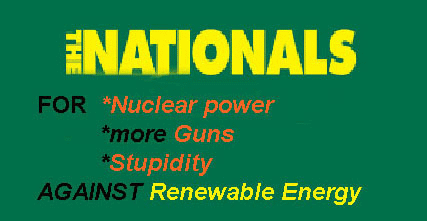
Nationals double down on nuclear power policy.
Energy, 25 Aug 25
The Nationals are doubling down on introducing nuclear power to Australia, with leader David Littleproud vowing to take the policy to the next election.
Littleproud told National party members the nuclear policy was at the centre of the party’s fallout with the Liberals following the May federal election………………………..
“We have to have, as part of our energy mix, nuclear in that mix. It was something that we believe in passionately because we see the consequences,” he said.
“There is a sensible way to fix it and that’s what we’re going to take to the next election.”
This move comes despite The House of Representatives Select Committee on Nuclear Energy releasing an interim report in which it has found establishing nuclear power generation would be too late and too costly to support the country’s energy targets.
Committee chair Dan Repacholi MP, Federal Member for Hunter, said, “This interim report focuses on two key issues that have dominated the evidence we’ve received to date: whether nuclear power generation could be rolled out in Australia in an acceptable timeframe, and how affordable it would be—particularly compared to alternative power generation technologies currently available in Australia.”
“From the evidence considered by the Committee to date, it is apparent that it could be well into the 2040s before we might see nuclear energy generated in Australia if that form of energy generation were to be pursued. This would be too late to meaningfully support the achievement of Australia’s climate and energy targets or to help our coal power plant workforce and communities as we transition away from coal power.” https://esdnews.com.au/nationals-double-down-on-nuclear-power-policy/
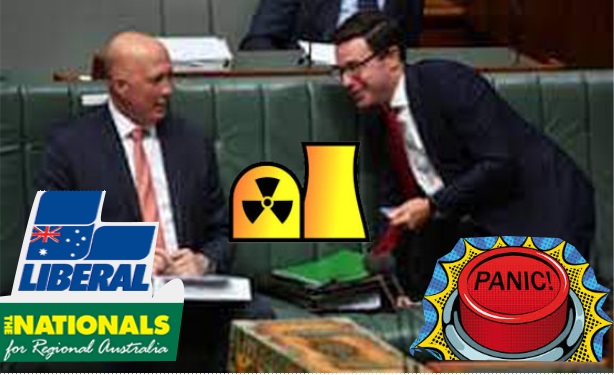
Nationals Leader David Littleproud says nuclear power policy ‘sensible’ next step.
ABC News, Sat 23 Aug, 25
In short:
Nationals Leader David Littleproud told the Liberal National Party annual convention nuclear had to be part of the country’s energy mix.
It would help with food security and the environment, he said.
What’s next?
Nuclear power and energy alternatives dominated discussions at the convention’s opening day on Friday, following the near-unanimous passing of a resolution to abandon net zero by 2050………………………
Coalition practice after an election meant policies taken to the campaign would remain and only be dumped by exception, he told the Liberal National Party annual convention in Brisbane……………………
“We have to have, as part of our energy mix, nuclear in that mix. It was something that we believe in passionately because we see the consequences,” he said……………………………. https://www.abc.net.au/news/2025-08-23/nationals-leader-david-littleproud-says-nuclear-power/105689740
Government-funded nuclear is fine for Dan Tehan, but not renewables or climate initiatives
Rachel Williamson, ReNeweconomy, Aug 14, 2025
From the party that promised seven taxpayer funded nuclear reactors, now comes a call to enforce pure free-market economics on all things renewable and climate related, at least according to new shadow energy minister Dan Tehan.
Tehan’s speech to the Carbon Market Institute’s emissions summit in Melbourne on Thursday was a pitch for renewable energy and climate initiatives to be turned over to competitive markets.
But mentions of the Coalition’s former plans for state-funded nuclear power plants, or the removal of the $14.5 billion in annual fossil fuel subsidies were conspicuously absent.
And while Tehan was keen to adopt Ross Garnaut’s contention that Australia will struggle to achieve its 82 per cent renewable energy target by 2030, he did not also reference in his markets-led speech Garnaut’s contention that oligopolistic gas participants are using their market power to drive up prices.
Playing to his role as a free market champion, Tehan opened his talk with a gentle neg at the audience about why he thinks the entire premise of the conference founder is wrong.
“I called it the so-called carbon market, for a reason,” he told the crowd, saying markets are defined by transparency.
“Australians deserve clarity about costs, trade-offs and pathways in our energy transition. At the moment, this has been hidden, and we need to know why.”
In a speech that repeatedly referenced the cost blowout of the VNI West transmission line, called for CSIRO to “release its code, data and assumptions in full” for the GenCost report, and demanded to know how much the beneficiaries of electric vehicle incentives are earning, Tehan’s pitch was that governments are too involved in the economy-wide changes currently underway to reduce emissions. …………………………………………………………………………………………………………………………………
Currently, the Coalition still can’t agree on what kind of energy they’d like in Australia.
Two weeks ago, Barnaby Joyce and Matt Canavan from the Nationals were again calling for more coal fired power stations to be built, and last week Liberal frontbencher Andrew Hastie came out against a too-quick transition from fossil fuels,
Energy is one of the five issues Liberal leader Sussan Ley has put up for negotiation.
Tehan listed eight different areas where the federal government should bring in more market-based measures rather than an approach marked by “ideology, energy constraint and emissions reduction through a high cost de-industrialisation”……………………………………………https://reneweconomy.com.au/government-funded-nuclear-is-fine-for-dan-tehan-but-not-renewables-or-climate-initiatives/
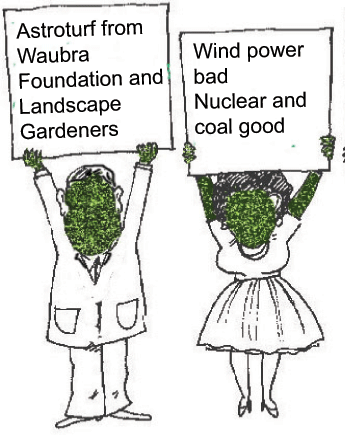
Senate launches inquiry into who is funding fake astroturf anti-renewables groups.
Rachel Williamson, Jul 31, 2025, https://reneweconomy.com.au/senate-launches-inquiry-into-who-is-funding-fake-astroturf-anti-renewables-groups/?fbclid=IwY2xjawL7lhVleHRuA2FlbQIxMABicmlkETFYcTREaGZqTGVKTWZZSW15AR5cMmu1PBB20ZAr6159zOAR8q2xQnTPPQwVB8SWse9kOCEuKiGNiOnOwzpF3g_aem_zBcQMv8fwSb8s4qbxBk1uA
Australians have a right to know who is funding anti-climate campaigns and, if a new Senate inquiry can uncover those money trails, the findings could be shocking, says the Smart Energy Council’s Tim Lamacraft.
The new Senate committee was installed last night and tasked with investigating climate and energy mis- and disinformation campaigns and uncovering which foreign and local organisations are funding “astroturfing”, fake grassroots movements that are actually coordinated marketing campaigns.
“Australians have a right to know who’s really behind the clogging up of their social media feeds with anti renewables, anti climate, anti science propaganda. Rest assured, they’ll be shocked when they find out,” Lamacraft told Renew Economy.
“We saw from the last federal election campaign, where [conservative lobby group] Advance Australia had a $15 million warchest, $14 million of that was in dark money where we don’t know where it came from.

“The most important thing to do with shadowy networks like this is to shine a light. It’s extremely damaging to our democracy to allow millions of dollars from shadowy multinationals, and hidden domestic interests, to influence public policy for their personal gain, not the public.”
The inquiry, formally known as the select committee on Information Integrity on Climate Change and Energy, will also question whether Australia’s laws preventing foreign interference in national politics are strong enough to fight off internationally-funded domestic political campaigns.
That work will encompass the role of social media in building astroturf campaigns through the coordinated use of bots and trolls, messaging apps and AI to spread fake ideas and news.
It will be the first step towards finding out who is financing sophisticated anti-renewable energy campaigns and misinformation, and whose interests they truly serve, says committee chair Greens senator Peter Whish-Wilson.
“For decades, vested interests have been waging a global war of disinformation against the clean energy transition, including environmental and climate legislation, and these vested interests have recently achieved significant political success in nations such as the US,” he said in a statement.
“In the last parliament, evidence was provided to the Senate Inquiry into offshore wind industry that strategies such as establishing fake community groups – otherwise known as astroturfing – were being used in Australia to spread lies about renewable energy.
“It’s critical that parliament continues this work and now examines these interests for what they are and who they serve.”
Devastating impact of astroturfing
The inquiry comes on the back of years of sophisticated anti-climate campaigns masquerading as grassroots movements.
These seek to demonise a climate or renewable energy issue and rally support for nuclear power, a position known to be a cover for retaining a fossil fuel status quo.
Campaigns against everything from offshore wind to individual projects have polarised public opinion and are having a tangible impact.
Coordinated anti-offshore wind campaigns in 2023 peddled fears such as that offshore turbines kill whales and any in the waters around Wollongong would block out the sunrise.
As a result, the federal government reduced the Illawarra offshore wind zone by a third and pushed it 10km further offshore, while in Queensland the Stop Chalumbin Wind Farm claimed the scalp of the Wooroora Station proposal by claiming risks to the nearby world heritage rainforests.
Ark Energy, which was behind the Wooroora Station project, also scrapped the Doughboy wind project in NSW after the New England landowners involved in the project changed their minds.
Organised anti-renewables groups are weaponising NSW’s planning process by forcing projects into the Independent Planning Commission, the final arbiter of development applications if more than 50 opposing submissions are lodged during the regular planning process.
David and Goliath battles
For genuine activist groups, going up against well-funded, apparently grassroots campaigns that are peddling half truths and outright lies is “incredibly frustrating”, says Surfers for Climate CEO Joshua Kirkman.
“We simply do not have the financial resources as an advocacy group… against big forces like that which the Senate inquiry will actually find out about,” he told Renew Economy.
“I really hope this inquiry can put the spotlight on the realities of where the support for these voices in Australia comes from. I think the public have a right to know, and I think the public wants to understand how their democracy is being influenced by nefarious parties with ill-intent for the environment.”
Kirkman says climate change is a big enough problem without tactical misdirection and influence undermining the work being done.
Organisations such as Responsible Future (Illawarra Chapter) are what Kirkman is up against.
The anti-wind, pro-nuclear organisation was registered in April 2024 and claims to be funded by donations. Founder Alex O’Brien declined to comment on a series of basic questions about the organisation sent by Renew Economy last year.
Follow the money
The risks of foreign funding influencing Australian climate debates is not a conspiracy theory: the issue was raised in the Senate last year after an inquiry into offshore wind recommended the government act to stop foreign lobby groups from crowding out local community voices in public debates.
Last year, Walker published a submission which highlighted the similarities between US anti-wind campaigns and those targeting offshore wind in Australia.
He found similarities between the claims made by groups like Stop Offshore Wind, such as the same imagery and messaging in social media campaigns saying turbines kill whales, as used in campaigns overseas funded by conservative US lobby the Atlas Network.
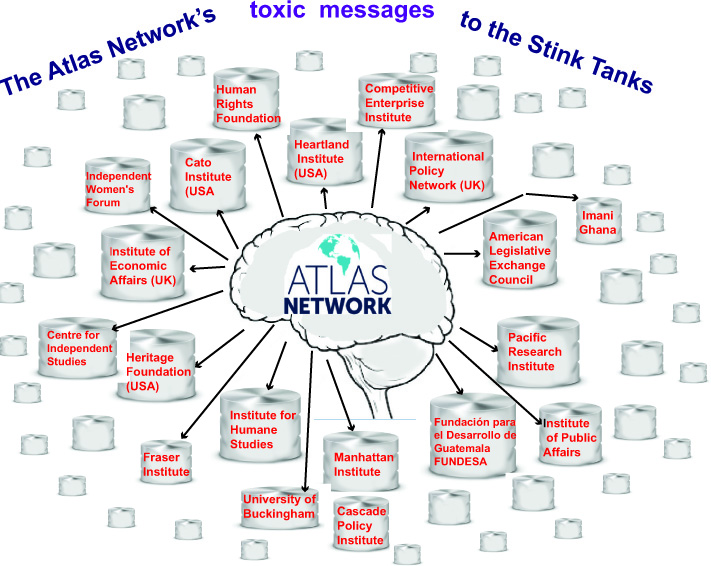
But he was only able to guess at actual funding trails into Australia.
It’s known that deep-pocketed conservatives such as mining billionaire Gina Rinehart and the multimillion-dollar Liberal Party investment arm Cormack Foundation have been sponsors of the likes of the Institute of Public Affairs (IPA), the Centre for Independent Studies (CIS), Menzies Research Centre and the ‘campaign group’ Advance Australia, all of which have strongly campaigned against renewable energy.
Walker has linked their campaigns with those of a global network of conservative think tanks.
The Moral Compass is Broken
29 July 2025 Lachlan McKenzie, https://theaimn.net/the-moral-compass-is-broken/
When Opposition Leader Sussan Ley was asked about the deaths of Palestinian children in Gaza, she said Israel bears no responsibility whatsoever – that it’s entirely the fault of Hamas. Then, when a journalist tried to ask a follow-up question, she cut them off and said: “Can I just move on?”
That cold, careless response speaks volumes. It’s not just political indifference – it’s complicity.
Let’s be clear: this isn’t about diplomacy. It’s about basic humanity. And right now, too many politicians and media outlets are showing none.
They’re not operating in a vacuum. A small but powerful network of lobbyists, media owners, and foreign policy influencers decide which lives are worthy of outrage – and which ones can be quietly buried. That influence doesn’t reflect the values of most Australians. It reflects power.
If you’re more afraid of upsetting foreign interests than mourning dead children, then your moral compass isn’t broken – it’s been thrown away.
Some of us will not just “move on.”
An Israel voice to Parliament? | Scam of the Week
20 Jul 2025 The West Report playlist
Albo heads to China, gets blasted for no good reason. Angus Taylor wants to pack us off to a US war against China to save Taiwan and The Voice (that one for First Australians) might have failed but somehow Jillian Segal has established a Israel’s Voice to Parliament without a referendum. somehow Voice to Parliament, pushing censorship under the guise of antisemitism. Elsewhere, Nine, CBA’s Mat Comyn and much more.
Welcome to #auspol Scam of the Week.
00:00 — Albo’s China Win
02:45 — Angus Taylor Talks War 04:00 — Sky News & Barnaby Blow-Up
05:15 — Jill Segal’s Antisemitism Push
07:07 — Nine vs Israel Lobby in Court 08:50 — Beer Garden Journalism
09:35 — Bradfield Challenge & Wealth Tax Uproar
10:30 — Fake AS Plots & The Netanyahu Voice
13:10 — Jill Segal’s Report & IHRA Plan
15:00 — Albo’s No-Win Game
17:01 — SOTW Winner
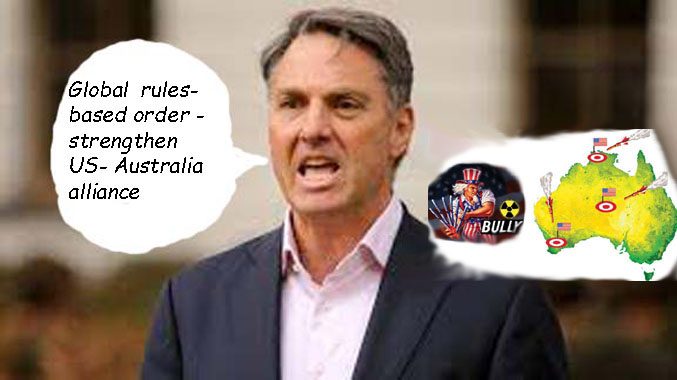
Why Voters Reject Richard Marles US War
27 June 2025 AIMN Editorial By Denis Hay
Description
Richard Marles US war has anti-war voters turning against him. Learn why peace, sovereignty, and democracy are at stake in 2028.
Introduction
Darwin, 4:42 a.m., June 2025. KC-46 tankers lift off from RAAF Base Darwin, refuelling U.S. bombers returning from a strike on Iranian nuclear sites. Veteran Ron McKinnon, 71, stares from his porch. “Here we go again,” he mutters, haunted by his service in Iraq.
Just hours later, Defence Minister Richard Marles appears on ABC News: “Australia stands shoulder to shoulder with our ally.” Foreign Minister Penny Wong echoes him. But the public mood is shifting fast, as concerns over the Richard Marles US war agenda grow louder.
Agitate: The Iran strike has deepened fears of entanglement in endless U.S. wars.
Solution: Voters now demand a sovereign, peaceful defence policy – and they’re ready to make it an election issue.
PROBLEM – Public Trust Collapse Over U.S. Military Alignment
1. Polls Signal a Sea Change
• 40% of Australians now believe we should distance ourselves from the U.S. (Lowy Institute, 2025)
• Only 26% say we should follow the U.S. into military conflicts.
• 74% oppose involvement in a future war with Iran or China, reflecting a growing rejection of the Richard Marles US war direction.
2. The Trigger: Iran Strike
Australia’s support for the June 2025 U.S. strike on Iran shocked many voters. While the government called it a “measured response,” Australians viewed it as another unjustified conflict.
3. Personal Voices
Ella Tait, an ICU nurse from Newcastle, recalls messaging her brother at RAAF Tindal: “Are you being deployed?” He didn’t reply for hours. Online, #MarlesWarMachine trended as thousands shared anti-war posts.
“We save lives in hospitals, not bomb people across the world,” Ella said.
4. Strategic Concerns
• Pine Gap may have been used to assist the Iran targeting
• Darwin and Tindal bases make Australia a first-strike target in future retaliations
• Experts warn Australia’s role in U.S. wars increases – not decreases – our risk
Consequences of Following the U.S. War Machine
1. Economic Trade-Offs
• AUKUS subs will cost taxpayers $368 billion over 30 years
• Meanwhile, public housing, health, and disaster funding suffer under the financial burden of the Richard Marles US war priorities.
• Australia’s dollar sovereignty means we don’t need to choose war over welfare, but our leaders are
2. Voter Backlash
• Greens, Teals, and Independents have made “Peace Vote” pledges
• In 18 marginal electorates, candidates are calling for War Powers reform
• Many voters say: “If Marles won’t represent peace, we’ll find someone who will”, a clear repudiation of the Richard Marles US war stance.
3. Moral Injury
Every new conflict escalates demand for veterans’ services.
• Defence-linked trauma spikes 19% during combat support operations
• Public sympathy for veterans turns into public anger at those who sent them
“It’s not anti-troop to be anti-war,” says veteran Ron. “It’s anti-stupidity.”
A Peace-First Defence Strategy
1. Use Australia’s Monetary Power for Peace
As a sovereign currency issuer, Australia can fund:
• Fire & flood resilience
• National mental health services
• Cyber defence and coastal radar
No foreign wars required.
2. Model Countries
• Costa Rica abolished its military in 1948 and outperforms neighbours on education & health
• Austria maintains military neutrality and invests heavily in civil defence
• Ireland avoids entangling alliances yet contributes to UN peacekeeping missions, offering a powerful contrast to Richard Marles US war framework.
3. A Legislative Blueprint
A new, independent body could investigate and publicly review Pine Gap’s involvement in past conflicts such as the Iraq and Iran strikes, both tied to Richard Marles US war alignment.
Peace Policy Roadmap: A legislative alternative to Richard Marles US war approach, focused on sovereignty, diplomacy, and the public good.
• Defence of Australia Act – Bans combat beyond 1,000 nm (1,852 km) without a referendum
• War Powers Tribunal – Reviews Pine Gap’s role in Iraq & Iran
• Universal Housing & Health Fund – Redirect defence funds toward social programs
• Pacific Peace Office – Expands diplomacy and soft power in the region
Voter Toolkit
TheyVoteForYou.org.au – Track MPs’ war‑powers votes…………………………………………………………………https://theaimn.net/why-voters-reject-richard-marles-us-war/
Crossbench Calls for AUKUS Inquiry
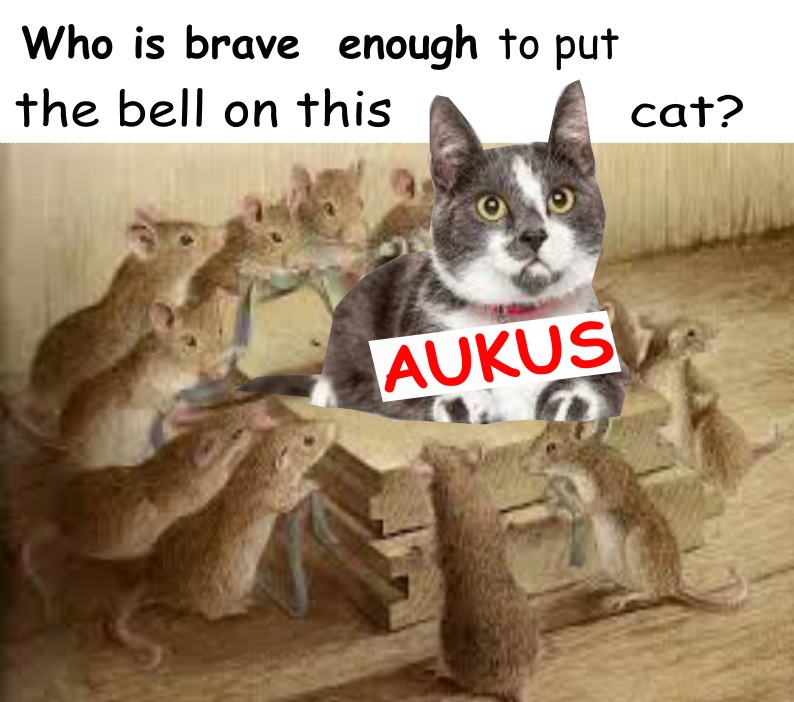
Crossbench MPs from the House of Representatives and Senate have written to Deputy Prime Minister and Defence Minister Richard Marles, calling for an urgent parliamentary inquiry into AUKUS.
In April, the UK Parliament’s Defence Committee announced an inquiry into the AUKUS arrangements, and this week the US defence department announced they were undertaking a rapid review of AUKUS.
AUKUS represents Australia’s largest defence investment in decades and is central to our defence and foreign affairs strategy.
Australians are concerned to know more about the strategic and financial implications of this policy which has been jointly adopted by major party governments without significant parliamentary scrutiny.
A full and formal parliamentary inquiry is therefore both important and timely.
Quotes from letter to Deputy Prime Minister, Richard Marles
Allegra Spender, Independent MP for Wentworth
AUKUS is the centrepiece of our defence and foreign policy strategy, but it’s been adopted by the major parties with very poor public engagement. AUKUS will shape Australia’s future for decades with enormous implications both financially, economically, and strategically, but in discussions at the community level, there are consistent questions and concerns that have not been addressed. AUKUS won’t work without wider community interrogation and engagement, and a parliamentary inquiry is the first step to building that.
We also need a more open discussion of the challenges facing AUKUS. Most urgently, the US Navy is currently short of attack submarines and there is a very clear risk that the US President at the time will not be able to certify that the Virginia class submarines can be transferred to Australia without undermining US Navy capability: a requirement of the current enabling legislation. We must publicly face those risks and actively manage them including identifying viable alternatives.
Helen Haines, Independent MP for Indi
In light of the reviews of AUKUS by our two partner nations and the consequential nature of the agreement, it important for our Parliament to apply the same level of scrutiny.
Andrew Wilkie, Independent MP for Clark
More than ever an Australian Inquiry into AUKUS is needed, and President Trump’s caution about the deal gives Australia a great chance to reset. Nuclear subs were always the wrong technology for Australia’s future submarine needs given the shallow littoral and offshore waters in our region, not to mention the ridiculous cost and impractical timeframe.
Nicolette Boele, Independent MP for Bradfield
Any time Parliament commits to spend $368 billion, we should at least have a full parliamentary inquiry. The case for an inquiry on AUKUS is even stronger given the rules of global co-operation have dramatically changed since it was signed.
AUKUS now risks our defence — because we don’t know if these submarines will ever arrive. It risks our budget — because we may waste $368 billion in taxpayer’s money. And it risks our Australian values, which we do not import from the United States.
Sophie Scamps, Independent MP for Mackellar
Circumstances have changed significantly since the AUKUS deal was first announced and it’s only reasonable it be reviewed in the current context.
This is the largest investment in our defence capability in decades, other parties are conducting their own reviews, and the Australian community largely supports a parliamentary inquiry – it’s high time the Government responds.
Senator Jacqui Lambie
We’ve poured billions into AUKUS with nothing to show for it but broken promises and cancelled defence programs. It’s a $368 billion blank cheque to the US and UK with zero guarantee of real capability for decades.
Australians deserve better and it’s time for a full parliamentary inquiry into this dud deal.
Senator David Pocock
With the UK and now the US reviewing AUKUS, Australia is now the only country not actively considering whether the agreement in its current form best serves our national interest. Given the scale and cost of this deal, a transparent review is not just sensible, it’s overdue.
Kate Chaney, Independent MP for Curtin
AUKUS is a monumental strategic commitment with far-reaching implications for our economy, sovereignty, and security posture, yet it continues to unfold with minimal public transparency and virtually no parliamentary accountability. Australians want to understand whether this is the best use of our resources and the right path for our security.
The 375 billion dollar blunder
12 June 2025 Roswell, https://theaimn.net/the-375-billion-dollar-blunder/
It’s just my opinion, but…
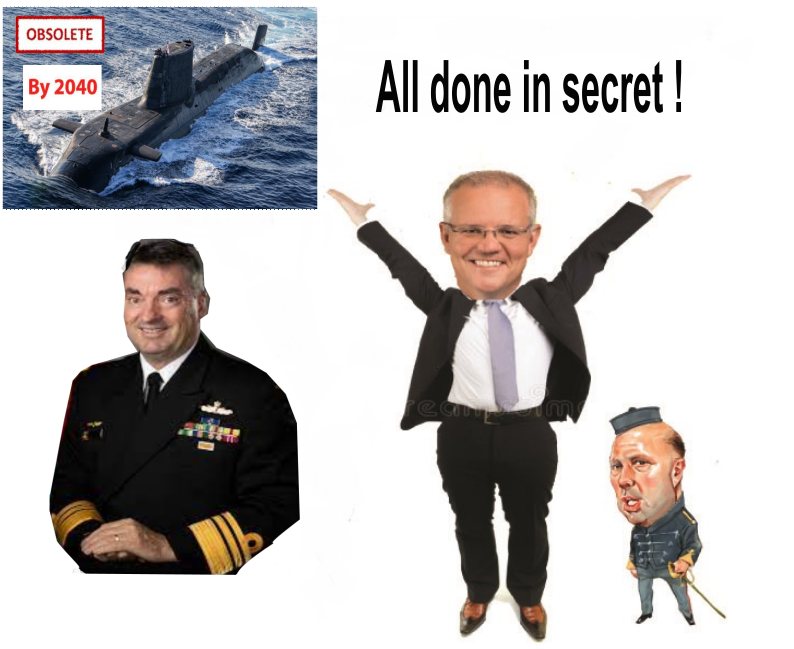
When then-Prime Minister Scott Morrison secretly negotiated the AUKUS pact in 2021, he didn’t just commit Australia to the most expensive defence project in its history – he also blindsided France, abruptly cancelling a $90 billion submarine deal and damaging an important diplomatic relationship. Now, with the Trump Administration threatening to torpedo AUKUS, Australians are left wondering: Was this deal always a $375 billion mistake?
For that eye-watering sum, Australia could have transformed healthcare, built affordable housing, or lifted thousands out of poverty. Instead, we locked ourselves into a decades-long military splurge for submarines that won’t arrive until the 2040s – assuming they ever do. Meanwhile, the U.S. and UK get a massive economic windfall while we foot the bill for their shipyards.
Worse still, Trump’s comments expose the fragility of relying on America’s political whims. If Washington pulls out, Canberra shouldn’t just walk away – it should claw back every cent we have paid them. Why waste money on a deal that may never deliver?
Defence planning is vital, but not at the expense of everything else. If Trump kills AUKUS, it might be the best thing that ever happened to Australia’s budget.
Liberals put nuclear power policy to the sword
Tess Bennett, AFR 2 June 25
Liberals won’t revisit nuclear power plant policy, says Paterson
Shadow finance minister James Paterson has all but put to the sword the Coalition’s nuclear power policy, saying the more simplistic approach of lifting the moratorium on the energy source was more in line with Liberal Party principle.
Last week, as part of a new Coalition agreement, Liberal leader Sussan Ley and Nationals leader David Littleproud agreed that the ongoing commitment to nuclear energy be limited to lifting the moratorium………………… https://www.afr.com/politics/federal/ukraine-drone-strikes-hits-russian-air-bases-20250602-p5m41e
Marles’ misstep: welcome to the backlash

June 2, 2025 Michael Taylor https://theaimn.net/marles-misstep-welcome-to-the-backlash/
Defence Minister Richard Marles’ support for US Defense Secretary Pete Hegseth’s call for increased Asia-Pacific security contributions, particularly to counter China’s military build-up, has sparked significant backlash.
Prime Minister Albanese has reportedly been upset by Marles’ stance. Albanese recently criticised a security think tank report warning of Australia’s unpreparedness for regional conflict, showing his sensitivity to escalating military rhetoric. Marles’ alignment with Hegseth, especially amid pressure from the Trump administration to raise Australia’s defence spending to 5% of GDP (from the current 2.02%), directly contradicts Albanese’s more cautious approach. This has created tension within the government, with Albanese likely viewing Marles’ comments as undermining his authority and Australia’s independent foreign policy.
Australians, too, are frustrated. Many see this as a repeat of Peter Dutton’s failed strategy of aligning closely with the Trump administration, which contributed to his election loss. Scores of comments on X reflect this sentiment, with some calling Marles’ approach “America-friendly” and a betrayal of national interests. Others argue that the focus on military spending – potentially at the expense of social programs, community infrastructure, and welfare – prioritises US agendas over domestic needs. For instance, there’s concern that funds could be better used to build a better society rather than fueling what some see as a provocative stance against China.
China, predictably, has reacted strongly. Beijing issued statements condemning Hegseth’s rhetoric as “defamatory,” accusing the US of being the true hegemonic power destabilising the Asia-Pacific. China also dismissed comparisons between Taiwan and Ukraine as “unacceptable,” asserting Taiwan as an internal affair. Marles’ call for transparency on China’s military build-up, made at the Shangri-La Dialogue, was met with silence from Beijing, which instead sent a low-level delegation to the summit, signaling its displeasure. China’s criticism extends to the broader US-led push, including the AUKUS pact, which Marles defended as “on track” despite regional unease.
Additionally, an overwhelming number of commentators on social media have criticised Marles for potentially escalating tensions with China. They argue that Australia should avoid provocative actions – such as sending warships near China’s coast – and focus on diplomacy rather than aligning with a US administration that has slashed Pacific aid and abandoned the Paris Agreement, moves that Pacific nations have also criticised.
Overall, the criticism paints Marles’ alignment with Hegseth as a risky move that alienates his own government, frustrates Australians wary of US influence, and provokes China, all while regional stability hangs in the balance.
The backlash reflects deep concerns about the implications of Marles’ stance, both domestically and regionally. The tension with Albanese, public frustration, and China’s response highlight the complexity of Australia’s position in this geopolitical context.
Turnbull says ‘stupid’ Nationals picking ‘fight over nothing’ as Liberals weigh nuclear
An agreement on nuclear is likely to settle on the lifting of the moratorium, but without binding the Liberals to keeping the full policy taken to the last election.
Two Liberals from different wings of the party told the ABC there was no chance the party could agree to keep the policy they say lost them votes, but that lifting the moratorium would allow the private sector to invest in nuclear if it became viable.
ABC News, By political reporter Tom Crowley, national political lead David Speers and political reporter Pablo Viñales, Fri 23 May
In short:
David Littleproud had a last-minute change of heart yesterday about detonating the alliance with the Liberals, but insists his four policy demands must be “ratified” before the partnership can resume.
In a lengthy early evening meeting, frustrated Liberals said the Nationals were acting in bad faith but that the Coalition was important and they were determined to be “the adults in the room”.
What’s next?
Malcolm Turnbull has told the Insiders: On Background podcast that this amounts to “holding a gun to the Liberal Party’s head” and risks damaging both parties if Sussan Ley is seen to capitulate to Nationals’ pressure.
Resentful Liberals have unloaded on the Nationals for holding them to ransom over a series of policy demands, which former prime minister Malcolm Turnbull has likened to “holding a gun to [the] head” of the party he once led.
But while a lengthy Liberal phone hook-up late on Thursday ended without a clear timeline for resolution, colleagues agreed with leader Sussan Ley that the Coalition should be salvaged, and a nuclear deal seems likely.
Mr Littleproud had a last-minute change of heart yesterday on detonating the alliance, hitting pause just hours away from enacting a split when Ms Ley agreed to consider his four policy demands.
Irritated Liberals said they believed their junior partner was acting in bad faith but agreed to be the “adults in the room”, as one put it, and will meet again today to discuss their position.
‘Back off’, says Turnbull
Mr Turnbull, who as prime minister regularly clashed with Nationals on climate and energy, said the minor party should “back off” and the Liberal Party should not agree to any policies so soon after a heavy election defeat.
“Policies are of academic interest only until such time as we get close to an election … This is a fight about nothing. They’ve just done enormous harm for no purpose at all, the Nationals, by blowing it up in this way,” he told the ABC’s Insiders: On Background.
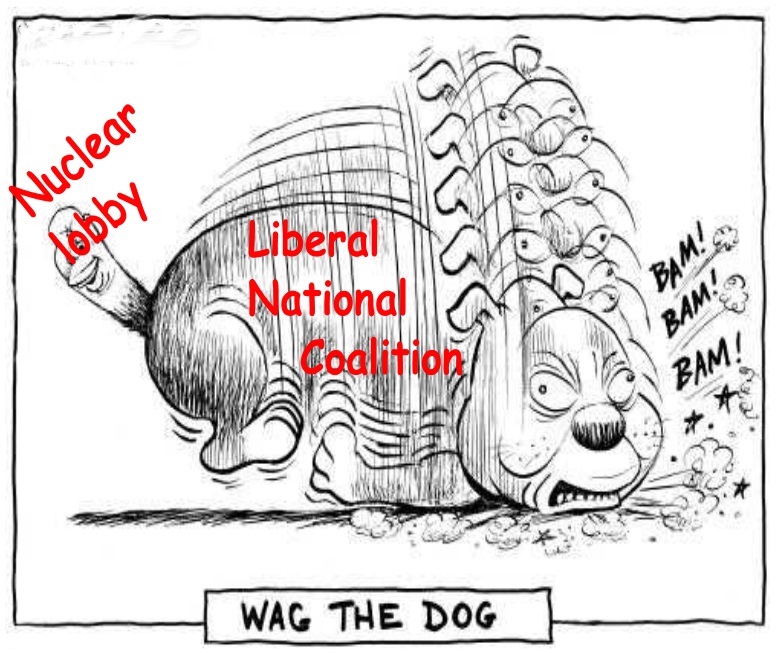
“It’s really, really unwise [and] stupid politically … The National Party is treating the Liberal Party with zero respect and trying to stand over them, and if Sussan Ley goes along with it … everybody will be saying this is just another case of the tail wagging the dog.”
Liberals frustrated but ready to talk
There is disagreement between Ms Ley and Mr Littleproud about exactly what led to Thursday’s stay of execution, announced by the Nationals leader yesterday in a chaotic press conference in the corridors of Parliament House.
Ms Ley said talks resumed after Mr Littleproud agreed he would respect cabinet solidarity, but Mr Littleproud insisted this was never in doubt and talks resumed because the Liberals agreed to consider “ratification” of his demands.
In a phone call with Liberal colleagues on Thursday afternoon, Ms Ley discussed the possibility of a limited agreement on nuclear energy, supermarket divestiture, a $20 billion off-budget regional fund, and better connectivity in the bush.
The proposal was for those policies to be carved out of what was going to be a comprehensive review of everything the Liberals took to the election………………………….
Nuclear agreement likely on moratorium
Liberals who spoke to the ABC were broadly confident the Nationals’ demands could be met.
An agreement on nuclear is likely to settle on the lifting of the moratorium, but without binding the Liberals to keeping the full policy taken to the last election.
Two Liberals from different wings of the party told the ABC there was no chance the party could agree to keep the policy they say lost them votes, but that lifting the moratorium would allow the private sector to invest in nuclear if it became viable……………….
But Nationals colleagues are on the record calling for the nuclear policy to be retained in full, while Matt Canavan, who challenged Mr Littleproud for the leadership, is among the voices advocating for the net zero emissions target to be dropped entirely…………………….
Mr Turnbull said it was important that the Coalition be reformed, or else there was “no prospect of forming a government”.
Turnbull declines to endorse Ley, savages Dutton
The former prime minister, who has been a vocal critic of his party since leaving politics after his ousting, blamed longtime rival Tony Abbott and his conservative allies for the Coalition’s calamitous election defeat.
“The angertainment ecosystem in which the right wing of politics exists nowadays, they got what they wanted. They got Peter Dutton as the leader and they got control of the party, and they have burned it to the ground,” he said………………………………………….. https://www.abc.net.au/news/2025-05-23/turnbull-says-nationals-picking-fight-over-nothing/105325522
Nuclear power may have cost the Coalition 11 seats in the federal election

even if a Coalition government managed to repeal the legal ban, there is no realistic prospect of privately-funded nuclear power plants. That’s why the Dutton Coalition proposed taxpayer-funded nuclear plants.
“Support for nuclear reactors seems to be melting down in the regions who’ve been told they are hosting them. These communities weren’t asked if they want nuclear reactors in their backyard, and have been told it’s happening whether they like it or not.
Jim Green, May 25, 2025, https://reneweconomy.com.au/nuclear-power-may-have-cost-the-coalition-11-seats-in-the-federal-election/?fbclid=IwY2xjawKfkqFleHRuA2FlbQIxMABicmlkETFhajFIaEp5YUgwblJ2b1dnAR4mAGGM8t3q6FAYGZAUFRhTYWueycBG8grfFPPDMidaGksemNdmgxN8O11QUA_aem_osPG4UnoECyz8P69zj0Wug
On the day after the Coalition’s disastrous performance at the May 5 federal election, Nationals leader David Littleproud said nuclear power was not responsible for the Coalition’s historic loss.
Ted O’Brien, head salesman for the nuclear policy and now deputy leader of the Liberal Party, refuses to concede that the nuclear policy cost the Coalition votes, saying it would be “premature” to judge.
In fact, a vast amount of evidence clearly shows that the nuclear policy cost the Coalition many votes. It may have cost the Coalition around 11 seats, as discussed below.
If not for the swing away from the Coalition for other reasons, the nuclear policy could have cost the Coalition many more seats. In the seat of Dickson, for example, nuclear power was clearly unpopular but Peter Dutton would likely have lost his seat regardless of the nuclear policy.
Voter rejection of nuclear power was evident to the South Australian Liberal Party, which abandoned its pro-nuclear power policy and abolished the position of ‘Shadow Minister for Nuclear Readiness’ two days after the federal election. State leader Vincent Tarzia acknowledged that nuclear power has been “comprehensively rejected” by the electorate.
There is some understanding within the Coalition that the nuclear policy cost them votes and seats. But there’s no willingness to vent this issue publicly since the Coalition seems likely to agree to retain its pro-nuclear power policy, albeit in a watered-down form which involves promising to repeal legislation banning nuclear power but without the commitment to build seven nuclear power plants at taxpayers’ expense.
While there’s no willingness to publicly discuss the vote-killing nuclear elephant in the room, an unnamed Coalition MP told the ABC that the nuclear policy “definitely cost us votes, and anyone who says otherwise is kidding themselves.”
The MP flagged a compromise: the Nationals could be persuaded to stick with a net zero policy and in return the Liberals would accept the (watered-down) nuclear power policy. But that is the same compromise that got the Coalition into this mess in the first place.
There are any number of problems with the proposed compromise. Coalition candidates will go to the next election with a nuclear target on their political backs, just as they did at this election.
There is no chance of nuclear power making the slightest contribution to emissions reductions before 2050 despite the conservative mantra that Australia can’t reach net zero by 2050 without nuclear power.
The ABC reported: “Two Liberals from different wings of the party told the ABC there was no chance the party could agree to keep the policy they say lost them votes, but that lifting the moratorium would allow the private sector to invest in nuclear if it became viable.”
But even if a Coalition government managed to repeal the legal ban, there is no realistic prospect of privately-funded nuclear power plants. That’s why the Dutton Coalition proposed taxpayer-funded nuclear plants.
Malcolm Turnbull told the ABC that taxpayer-funded nuclear power was a “truly crazy idea” and lifting the legal ban is acceptable given there is “no prospect of anyone in the private sector ever building a nuclear power plant here.”
The evidence that the nuclear power policy cost the Coalition votes and seats is summarised below and a detailed analysis is posted online.
National attitudes
A RedBridge poll of around 2,000 Australian voters in May 2024 found that support for nuclear power exceeds opposition among Coalition voters, those aged over 65, those who earn more than $3,000 per week, those under no financial stress, and those who own their own home.
Support is outweighed by opposition in every other category: non-Coalition voters, those aged under 65, those earning less than $3,000 per week, those under financial stress, and those who don’t own a home.
The Murdoch / News Corp. press released polling results on April 19 showing that the nuclear policy was “driving a collapse in the Coalition’s primary vote in marginal seats across Australia.”
The RedBridge-Accent poll in 20 marginal seats found that 56 percent of respondents agreed with Labor’s claim that the Coalition’s nuclear power plan will cost $600 billion and require spending cuts to pay for it, while only 13 percent disagreed. RedBridge director Tony Barry said the issue was “smashing the Liberal brand” and “atomising the primary vote.”
The Adelaide Advertiser and other News Corp. publications reported on May 1, four days before the election, that 41 per cent of 1011 respondents to a Redbridge-Accent national poll ranked concerns about the Coalition’s nuclear power plan among their top five reasons for deciding to oppose a particular party. Only one issue topped nuclear power as a vote-changing turn-off.
Liberals Against Nuclear polling
Polling commissioned by the Liberals Against Nuclear group provides further evidence of the political poison of the Coalition’s nuclear policy. The group summarised some of its commissioned research a week before the election:
Liberals Against Nuclear: polling
Polling commissioned by the Liberals Against Nuclear group provides further evidence of the political poison of the Coalition’s nuclear policy. The group summarised some of its commissioned research a week before the election:
“A new uComms poll shows leading Liberal frontbencher Michael Sukkar could lose his seat at the coming election if the Party persists with its unpopular nuclear plan.
“The poll, commissioned by Liberals Against Nuclear, shows Labor and the Coalition tied at 50-50 in two-party preferred terms in Deakin. However, the same polling reveals that if the Liberals dumped their nuclear policy, they would surge to a commanding 53-47 lead.
“The polling follows a broader survey across 12 marginal seats that showed the Liberal Party would gain 2.8 percentage points in primary vote if it abandoned the nuclear energy policy.
“An earlier poll in the seat of Brisbane found the nuclear policy was a significant drag on Liberal candidate Trevor Evans’ support.”
Thus the nuclear policy may have decided the result in Deakin and cost Michael Sukkar his seat. Assuming a national swing comparable to that found by Liberals Against Nuclear polling in 12 marginal seats – a 2.8 per cent drop in the Coalition’s primary vote — the Coalition may have lost around 11 contests because of the nuclear power policy:
* Aston (Vic) — ALP retain — the Coalition’s two-party preferred vote was 46.6 per cent as of 21 May 2025
* Banks (NSW) — ALP gain — 47.6 per cent Coalition two-party preferred
* Bendigo — ALP retain — 48.5 per cent
* Bullwinkel (WA) — ALP retain — 49.5 per cent
* Deakin (Vic) — ALP gain — 47.2 per cent
* Forde (Qld) — ALP gain — 48.2 per cent
* Hughes (NSW) — ALP gain — 47.1 per cent
* Menzies (Vic) — ALP gain — 48.9 per cent
* Moore (WA) — ALP gain — 47.0 per cent
* Petrie (Qld) — ALP gain — 48.9 per cent
* Solomon (NT) — ALP retain — 48.7 per cent
A Resolve poll for Nine newspapers in April 2025 found that 31 per cent of respondents cited nuclear power as one of their biggest concerns about voting for the Coalition, up 5 per cent from the previous poll.
In October 2024, nuclear power regained its status as Australian’s least popular energy source, overtaking coal. Two months later, nuclear was still Australia’s least popular energy source.
The 2024 National Climate Action Survey of more than 4,000 respondents found that 59 per cent wanted to keep the legal ban on nuclear power in 2024, up from 51 per cent in 2023. Sixty-six per cent of women and 51 per cent of men supported the ban.
Polling released by the pro-nuclear group WePlanet Australia found that support for nuclear power dropped from 55 per cent in February 2025 to 42 percent in late April while opposition increased from 34 per cent to 44 per cent. Net support fell from +21 per cent to -2 per cent in less than three months. The poll found majority opposition among those aged 18-34 (38:48) despite countless claims in recent years that young Australians support nuclear power.
Attitudes in rural and regional areas
Many polls over the past 20 years demonstrate opposition to a locally-built nuclear power plant. For example the 2024 National Climate Action Survey found that 73.5 per cent of participants were moderately to extremely concerned about the possibility of a nuclear plant being built within 50 kilometres of their homes.
Only 11.2 per cent were ‘not at all concerned’. In contrast, about 80 per cent of respondents viewed wind and solar favourably with the majority expressing little or no concern if such projects were established nearby.
A poll conducted by SEC Newgate for News Corp. in mid-2024 found 39 per cent support for nuclear power among regional Australians. Asked to rank 12 energy options, regional Australians ranked nuclear power at number eight.
Building large-scale wind farms and solar farms and new transmission lines in regional areas was more popular across all states than building nuclear power plants on coal sites connected to existing transmission lines.
An April 2025 YouGov poll of 1,622 respondents found that regional and rural Australians support renewables over nuclear by a considerable margin: 50 per cent preferred more wind, solar and batteries compared to 30 per cent who preferred nuclear power.
Polling in March 2025 by 89 Degrees East for the Renew Australia for All campaign found little support for nuclear power in some of the regions targeted for nuclear power plants by the Coalition.
Just 27 per cent of respondents supported “developing large-scale nuclear energy infrastructure” in Gladstone, 24 per cent in the rest of Central Queensland, 24 per cent in Bunbury, 22 per cent in Central West NSW which includes Lithgow, 32 per cent in the Hunter, and 31 per cent in Gippsland. The poll also found that just 13 per cent of respondents thought nuclear reactors would bring down their bills the fastest compared to 72 per cent for renewables.
Responding to the 89 Degrees East polling, RE-Alliance national director Andrew Bray said:
“Support for nuclear reactors seems to be melting down in the regions who’ve been told they are hosting them. These communities weren’t asked if they want nuclear reactors in their backyard, and have been told it’s happening whether they like it or not.
“We see multiple polls from Porter Novelli, CSIRO, 89 Degrees East and more showing strong support for renewable energy on local farmland, between 66 per cent and 71 per cent. Now the polling shows us support for nuclear reactors in these regions is between 22 per cent and 32 per cent.”
For more information on public attitudes towards nuclear power in Australia, see the detailed analysis posted online.
Dr Jim Green is the national nuclear campaigner with Friends of the Earth Australia and a member of the EnergyScience Coalition.
1 This month

of the week – Australians for War Powers Reform (AWPR)
To see nuclear-related stories in greater depth and intensity
 Antinuclear