Will the Coalition ditch its nuclear power policy?
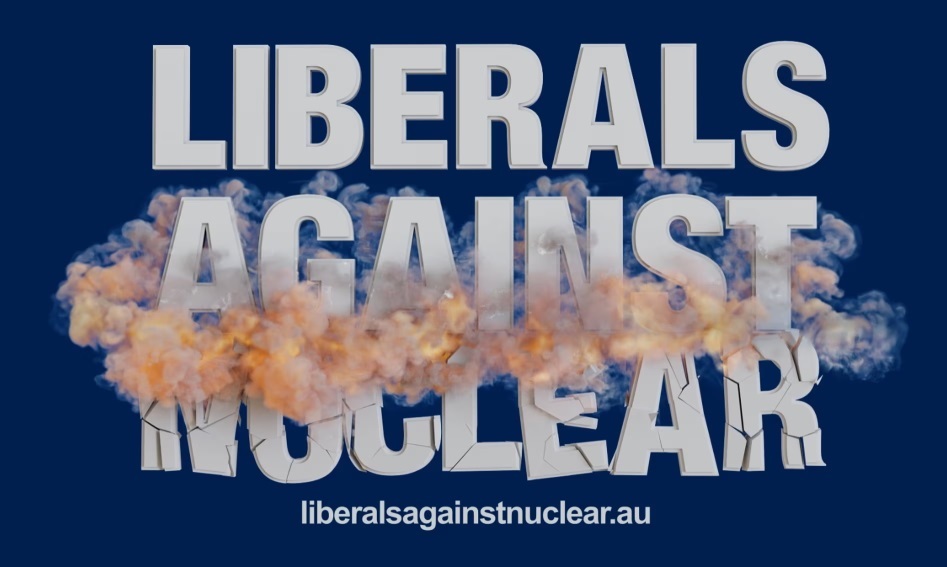
The Liberals Against Nuclear group said in a media release that the “Liberal Party’s resounding defeat in Saturday’s federal election has confirmed what Liberals Against Nuclear has warned for months: the party’s nuclear energy policy was poison that contradicted core party principles.”
“As the party chooses its next leader, denouncing the nuclear energy policy and recommitting to traditional Liberal values must be the litmus test for any potential candidate.”
Jim Green, May 7, 2025, https://reneweconomy.com.au/will-the-coalition-ditch-its-nuclear-power-policy/?fbclid=IwY2xjawKIr5RleHRuA2FlbQIxMQBicmlkETEwN2xCZ0tDcWVCOTJLWjlyAR4dM_A5TV1mtAJXuKwDuXNCPTqBkEx6aqXLiVG_4RSf4CuBw0LCKjXx5M_THQ_aem_9Jf-rhE2w-fA5kbvxu0a4A
There is abundant evidence that the Coalition’s nuclear power policy was a significant drag on its vote on Saturday. On election night, energy minister Chris Bowen said:
“I mean this was a policy that was never going to survive contact with reality. It was a policy that was radical and risky … The Australian people have cast a very strong judgement on this. I mean we had polling a while ago showing 47 percent of voters in Dickson were less likely to vote for Peter Dutton because of the nuclear policy. Peter Dutton said it was a referendum on energy, which we were happy with, and the way the results are flowing, the result of that referendum on energy, nuclear vs renewables, is crystal clear.”
Even Clive Palmer was bagging nuclear power on election night, pointing to the troubled Flamanville reactor project in France that was 14 years overdue and five times over-budget.
Seven News political editor Mark Riley said: “The party that chose nuclear energy as its policy has exploded in a nuclear bomb set on them by voters tonight.”
An editorial in the Sydney Morning Herald summarised the Coalition’s nuclear problem:
“But outside the corridors of political power, his nuclear power policy played a role in the Coalition defeat on Saturday. Dutton was unable to justify or explain the cost adequately. His power stations were too expensive and bent future budgets into contortion. The CSIRO was unimpressed, and the private sector wanted nothing to do with them.
“Worse, they were a gift to Labor. It dawned on both sides early in the campaign that the nuclear policy had turned toxic. Labor jumped on it and Dutton’s battle bus steered well clear of the proposed nuclear sites.
“The fantasy of the timeline to bring the nuclear power stations online and the dubious costings only added to the voters’ perceptions that Dutton was talking hot air and that his promised policy would never happen.
“Now it’s back to square one for the Liberals on energy policy. It will not be easy. The shattered party must rebuild to recapture the heartland after it was crudely shoved towards conservative populism by Dutton and friends. Policy development will be a major cornerstone of that recovery. And energy is central to credible reform.”
Liberals Against Nuclear
The Liberals Against Nuclear group said in a media release that the “Liberal Party’s resounding defeat in Saturday’s federal election has confirmed what Liberals Against Nuclear has warned for months: the party’s nuclear energy policy was poison that contradicted core party principles.”
Spokesman Andrew Gregson said that Liberals Against Nuclear would continue its campaign against the nuclear policy:
“This result sees the Liberals facing a generational wipeout. Only significant and immediate change can chart of pathway back. Dropping the disastrous nuclear policy right now would demonstrate they are prepared to listen, learn and act.
“Since launching our campaign, we’ve been overwhelmed by messages from Liberals across Australia who share our dismay that such a consequential policy emerged without the robust debate that has always defined our party’s decision-making. Fellow Liberals have expressed frustration that a policy of this magnitude was imposed without the transparent consultation that true Liberal values demand.
“Saturday’s election results are simply the latest and most compelling evidence that the party faithful never signed up for nuclear and would not follow Mr Dutton down this path.
“As the party chooses its next leader, denouncing the nuclear energy policy and recommitting to traditional Liberal values must be the litmus test for any potential candidate.”
Divisions
There are deep divisions within the Coalition over energy policy, so much so that a split is under consideration. Canvassing a split, Queensland Senator Matt Canavan said he wants more coal power plants built and an end to the Coalition’s net zero emissions policy. He appears to be ambivalent about nuclear power: “I’m not against nuclear but … it would take some time. We need solutions now for the Australian people.”
Other Nationals MPs are promoting retention of the nuclear power policy, including leader David Littleproud, senate leader Bridget McKenzie, Colin Boyce and Michelle Landry.
The Nationals are congratulating themselves for outperforming the Liberal Party in the election. But the nuclear policy was initiated and strongly pushed by the Nationals and it was a drag on the Coalition vote across the country.
The ABC’s Jacob Greber said: “Littleproud has driven them onto the rocks, as a political movement, with the nuclear plan.” He further noted: “David Littleproud, the Nationals leader, vowed his nuclear power plan would not come at the expense of Liberals in the cities. He has a tough road ahead after this mess.”
Liberal MPs are beginning to publicly call for the Coalition to ditch its nuclear power policy. Senator Maria Kovacic said: “the Liberal Party must immediately scrap the nuclear energy plan and back the private market’s investment in renewable energy.”
Kovacic added:
“I think the result on Saturday is a pretty clear election review of what Australians think. We will not be electable for Gen Z and millennial voters who thought, you know, we were having them on with this policy. The idea that the party of free markets and small government would nationalise a major portion of the energy system is completely at odds with what we stand for.”
Liberal Senator James Paterson said he is not likely to fight to retain the nuclear policy, that nuclear power would be “logistically challenging” and “self-evidently more difficult” to implement in three years given the looming retirement of coal-fired power stations.
The SA Liberal Party announced two days after the federal election that it has dropped its policy of promoting nuclear power. The state party had promised a nuclear royal commission and created a position of ‘Shadow Minister for Nuclear Readiness’. But leader Vincent Tarzia said on Monday that nuclear power has been “comprehensively rejected and we know the thing is with the energy transition, in three years’ time we will be in another position again.”
If the Coalition persists with its nuclear power policy, it will have no support whatsoever from Liberal / LNP parties in the five states targeted for reactors.
Academic Adam Simpson wrote in The Conversation:
“After Saturday’s Coalition rout, the prospect of nuclear power in Australia should be dead and buried. But that’s not guaranteed. The National Party strongly backs nuclear power. With metropolitan Liberals sceptical of nuclear reduced to a rump, the Nationals and regional Liberals will gain influence within the Coalition. If conservative Nationals prevail, we may well see the nuclear policy survive the election post-mortem and be resurrected for the next election.”
Given the drag of the nuclear policy on the Coalition’s vote, it’s hard to see them going to the next election still promising to build seven taxpayer-funded nuclear power plants across five states. A compromise might be reached whereby a Coalition government would repeal federal laws banning nuclear power, and perhaps establish yet another inquiry, but without the commitment to go ahead with the seven proposed nuclear plants. Colin Boyce hinted at a compromise: “At the bare minimum, we need to remove the moratorium, at least.”
Dr. Jim Green is the national nuclear campaigner with Friends of the Earth Australia and a member of the EnergyScience Coalition.
South Australia Liberals who first pushed 100 pct renewables – then went nuclear – now reverse course after poll wipeout
ReNewEconomy, May 5, 2025, Joshua S Hill
The South Australian Liberal party, which set the state’s first 100 per cent renewables target when in government six years ago, before embracing nuclear while in opposition, has reversed course again after the federal poll wipeout and the loss of a long time Liberal seat in Adelaide.
South Australia leads the world in the uptake of variable renewables, with a 72 per cent share of local demand over the last 12 months.
The then Liberal state government in 2019 set a target of reaching 100 per cent “net” renewables by 2030, before the current Labor government accelerated that target to 2027, and enshrined it into law, based on the planning for new wind and solar projects, battery storage and transmission.
New state Liberal leader Vincent Tarzia reversed course on renewables last year, supporting the federal Coalition’s plan to build nuclear power at seven sites across Australia, including at Port Augusta in South Australia, the site of the coal fired power stations that closed nearly a decade ago.
However, speaking to ABC Radio Adelaide, Tarzia has now backed away from his party’s election commitment to hold a Royal Commission into nuclear energy, saying it was clear that the technology has been “comprehensively rejected” by the electorate.
A potential nuclear future had been a top priority for the South Australian Liberal Party, promising in June last year to hold yet another Royal Commission into the technology. This was followed in August by the appointment of Stephen Patterson, the state MP for Morphett, as spokesman for Nuclear Readiness.
Tarzia’s comments came after the Liberals lost the last of their Adelaide based federal seats, including the once safe seat of Sturt, in last weekend’s federal election campaign…………………………………. https://reneweconomy.com.au/s-a-liberals-who-first-pushed-100-pct-renewables-then-went-nuclear-reverse-course-after-poll-wipeout/
Greens fear AUKUS overreach as State Development Coordination and Facilitation Bill 2025 passes SA parliament

A new $4m planning office will be granted unprecedented powers, sparking calls to temper the power of the four bureaucrats set to wield them.
Sweeping new powers will be invested in a $4m office to fast track “significant” SA projects including housing and AUKUS – raising fears they could avoid tougher planning checks.
The State Government is planning to appoint four staff to the office, including an AUKUS expert, with unprecedented powers to “case manage” projects.
Premier Peter Malinauskas has flagged this would allow faster approvals in designated “go zones” for projects like the AUKUS nuclear-powered submarines, housing and renewable energy projects.
The move flared concerns about existing heritage, environment, coastal protection and pastoral land act processes being downgraded after the State Development Coordination and Facilitation Bill 2025 passed this week.
Mr Malinauskas previously said the law meant the State Government could designate “state development areas” as “go-zones”.
Regulatory work in these zones would be completed before developers moved in “allowing for quicker approvals within them once an application is made”.
This was meant to save time in passing “urgent and significant projects”.
A government spokesperson assured provisions meant the new office must perform any assessment independently and it could not be directed “by any Minister to either approve or reject any application.”
The office could not deal with nuclear waste projects.
And the Adelaide Parklands was protected by the Adelaide Parklands Act and the new bill states it “may never be designated as a state development area”.
But SA Greens party co-leader Robert Simms was still concerned.
He feared the inclusion of an AUKUS expert meant approvals for the project would bypass usual safety guards.
“SA parliament has just given the Malinauskas Government the biggest blank cheque in South Australian history,” he said.
“This bill gives an unelected office the power to override South Australian laws to enable controversial projects, including AUKUS, yet it passed the Upper House in the blink of an eye.”
“This bill isn’t about facilitating housing developments, it’s about giving the state government the power to ride roughshod over the community. It’s a power grab of epic proportions that should have been given much more scrutiny.”
It was confirmed in the senate the office would cost $4m a year to operate.
Australians choose batteries over nuclear after election fought on energy

While the Greens have an anxious wait ahead to see how many lower seats they’ll win, they recorded their highest-ever primary vote and will hold the balance of power in the Senate with 11 senators.
While the Greens have an anxious wait ahead to see how many lower seats they’ll win, they recorded their highest-ever primary vote and will hold the balance of power in the Senate with 11 senators.
ABC News, By climate reporters Jess Davis and Jo Lauder, 6 May 25
When Peter Dutton unveiled his party’s nuclear energy plan last year, it opened up a seismic difference between the two major parties.
It offered a real choice for Australian voters over the future of the country’s energy policy.
“I’m very happy for the election to be a referendum on energy, on nuclear, on power prices, on lights going out, on who has a sustainable pathway for our country going forward,” he said.
Taken on those terms, Saturday’s election outcome was an endorsement of renewable energy over nuclear.
“It’s clearly a referendum on energy policy, given the prominence of energy throughout the entire election campaign,” Clean Energy Council CEO Kane Thornton said.
“I think it’s an emphatic victory for Australia’s transition to clean energy.”
At a household level, Labor offered a significant discount on home batteries to accompany the booming solar on rooftops all across the country, aiming to get 1 million batteries installed under the scheme by 2030.
The last election saw a new generation of independents join the parliament, riding a wave of climate concern. Any expectation that the “teals” were a single-election trend has been dispelled, with most of them set to be returned, and new ones joining their ranks.
While the Greens have an anxious wait ahead to see how many lower seats they’ll win, they recorded their highest-ever primary vote and will hold the balance of power in the Senate with 11 senators.
After losing the Liberal heartland to the teals in the last election, the Coalition decided to pitch instead to the outer suburbs.
But the decision to campaign against renewables, and scrap climate policies such as the EV tax breaks, seems to mismatch the views of middle Australia.
Outer suburbs embrace solar power
Dutton set out to make up gains in the outer suburbs by offering a discount on the fuel excise. But the data for solar uptake and electric cars paints a very different picture to the caricature of solar and batteries as a plaything for the inner city.
While energy may not have been a top concern for voters, it’s the outer suburbs where our love for rooftop solar is at its highest, especially in Queensland and Western Australia.
In Dutton’s former electorate of Dickson, some 60 per cent of households have a solar system, double the national average, according to data from the Clean Energy Regulator………………………………………………………………………………………………………………….. https://www.abc.net.au/news/2025-05-06/federal-election-shows-voters-support-renewables-over-nuclear/105252888
State Liberals nuke nuclear promise

The SA Liberals have broken a key election promise with just 10 months to go until the state poll, with Liberal leader Vincent Tarzia dumping his party’s only energy policy.
5 May 25,https://www.premier.sa.gov.au/media-releases/news-items/state-liberals-nuke-nuclear-promise
In a stunning backdown, Mr Tarzia admitted on ABC Radio Adelaide that the Liberals’ election commitment to hold a Royal Commission into nuclear energy would be dumped in the wake of the federal election:
Rory McClaren: That’s what I was going to ask you… should nuclear from a Liberal Party policy perspective now be parked?
Vincent Tarzia: Yes, at the moment it’s been comprehensively rejected and we know the thing is with the energy transition, in three years’ time we will be in another position again.
The State Liberals made the pursuit of nuclear power their top priority, announcing their pursuit of a Royal Commission as their key commitment in their Budget Reply speech in June.
In August, Liberal Leader Vincent Tarzia appointed Stephen Patterson as Shadow Minister for Nuclear Readiness.
Now, just eight months later, the promise has been abandoned.
The 2016 Nuclear Fuel Cycle Royal Commission found nuclear power was not commercially viable in South Australia.
Quotes
Attributable to Tom Koutsantonis
What do the South Australian Liberals stand for?
They’re breaking election promises even before they’ve got to an election.
Only a few months ago, they were making the pursuit of nuclear energy their sole energy policy focus. Now, they’ve dumped it.
Vincent Tarzia must now dump his Shadow Minister for Nuclear Readiness, who has absolutely no policy offering other than the pursuit of an energy source that evidence shows will drive up bills for South Australians.
At a time when the Opposition should be outlining its policy platform ahead of the 2026 State Election, the State Liberals are instead ditching their only energy policy.
Election Lesson: Coalition Must Dump Nuclear Policy

Friends of the Earth Adelaide Federal Election Campaign, Philip White May 5, 2025
Friends of the Earth Adelaide ran a targeted campaign in two marginal seats leading up to the federal election. We created an election leaflet advising voters about the dangers of nuclear power and asking them to “vote nuclear free”.
We are pleased that the Australian people rejected the nuclear option. We hope the Coalition gets the message and dumps its nuclear energy policy and becomes a constructive supporter of real climate action. Let this election mark an end to the climate wars.
Boothby
We delivered 50,000 of our leaflets to the letterboxes of voters in Boothby, a marginal seat in southern Adelaide held by Labor on a 3.3% margin prior to the election. Our aim was to prevent Boothby falling to a pro-nuclear candidate. We are very grateful to a grant from FOE Australia which paid for much of the printing and distribution of 45,000 of the leaflets by Australia Post. The remaining 5,000 leaflets were delivered by hand by our volunteers, who we are also very grateful to. We considered that a good reach of the 80,000 letterboxes in Boothby.
We are very pleased that Boothby was retained by an anti-nuclear candidate (Louise Miller-Frost for Labor, with Joanna Wells of the Greens also doing well). That’s one more seat to keep Australia free from nuclear power. We hope that the large loss the Coalition received means they will drop nuclear power as a policy.
Sturt
In late April a bus load of Traditional Owners from Port Augusta came to the city for a meeting in the marginal eastern Adelaide suburb of Sturt, held by the Liberals on a 0.5% margin prior to the election. Their aim was to appeal to Sturt voters for their support in keeping Port Augusta nuclear free. Friends of the Earth Adelaide co-hosted the meeting along with Don’t Nuke Port Augusta, with financial help from CANA. Traditional Owners spoke strongly of their lives and love for Port Augusta’s land and waterways, and of the tragic intergenerational consequences for their families of the nuclear testing in SA in the 1950s. The meeting was videoed and can be seen at https://www.youtube.com/live/lJ1tpcfkZIU and many great photos are on the Don’t Nuke Port Augusta Facebook page.
The Port Augusta contingent were prominent at the May Day Worker’s Right’s rally the following day. They got a great shoutout from the MC, the SA Unions Secretary, and huge applause and appreciation from the crowd of unionists. Also, that evening, they staged a demonstration at the Arkaba Hotel where Peter Dutton was promoting the Liberal candidate for Sturt. They said, “If Dutton won’t visit us, we’ll come to him.”
Nationals MPs ‘100 per cent’ back nuclear being kept as Coalition dissects loss

ABC News, By political reporter Jake Evans. 5 May 25
In short:
The Coalition will dissect its election loss, with one frontbencher saying the party’s nuclear policy must be part of that assessment.
Two Nationals MPs have urged that it be kept, suggesting it was not to blame for the loss.
What’s next?
The Liberal and National parties will review their election loss once seats are finalised.
Two Nationals MPs have publicly backed the Coalition sticking with its nuclear plan, with leader David Littleproud claiming the party had a “flawless campaign” even though its senior partner was routed.
Queenslanders Colin Boyce and Michelle Landry have called for the Coalition’s signature energy policy to be re-endorsed when the parties review an election that saw the Liberal Party lose 14 seats at current count and be all but exiled from Australia’s cities.
However, Nationals leader David Littleproud, who celebrated on election night that his party had run a “flawless campaign”, gave an early signal yesterday that the Nationals would not pin the blame on a promise to build seven nuclear power stations.
“We’re going to work through all of those, I don’t think nuclear was the reason we lost this,” he told Sky News.
Mr Littleproud suffered a personal swing against him in Maranoa, one of the seven proposed nuclear sites.
There was also a swing against the National and Liberal candidates in Hunter, another proposed site, but elsewhere the results were mixed, such as in O’Connor, where the Nationals had a large swing towards them away from Liberal incumbent Rick Wilson.
Flynn MP Colin Boyce, one of the fiercest advocates for nuclear power in the Coalition, said nuclear was a good policy that was not successfully argued.
“One hundred per cent, I would like to see it hung onto,” Mr Boyce said.
“I think during the cycle, there was not enough detail, certainly not enough detail around the reality of costings, timeframes, you take water, for example — the Labor party put out some rhetoric that there was not enough water, well I would argue there are other options to cool a nuclear facility.
“It’s nonsense, some of these arguments, but none of them were articulated well enough.”
Mr Boyce said the policy was not discussed a great deal during the campaign, but said it was “arguable” whether an anti-nuclear campaign run by Labor was what undid Liberal leader Peter Dutton………………….
Capricornia MP Michelle Landry also urged that the nuclear policy be kept.
“I had fairly positive feedback on it, I don’t think we sold it well enough … and we also should have knocked on the head the lies of the unions and the Labor Party,” Ms Landry told ABC Capricornia.
…………………………… Climate policy contentions within Coalition
The Nationals have led the charge for years on nuclear, eventually convincing its senior Liberal partner to adopt a nuclear strategy in the last term.
Debate over energy and cutting carbon emissions in the electricity sector has caused ructions within the Coalition for generations, and been instrumental in the toppling of former leaders.
The parties were finally united under former prime minister Scott Morrison, who won an agreement with then-Nationals leader Barnaby Joyce to formally sign up to the Paris climate agreement to reach net zero emissions by 2050.
But determining the pathway to achieve that has continued to pose a challenge within the Coalition — Nationals senator Matt Canavan suggested late last year that the nuclear policy was introduced as a political fix to those arguments, and that the Coalition was “not serious” about it as a solution.
The Liberal Party is still picking through the wreckage of Saturday night and will not begin to review the loss until after seats are finalised.
But Tasmanian frontbencher Jonno Duniam said when that time comes, nuclear must be part of a complete review.
“It’s probably going to be one of those things that’s on the table for discussion,” Senator Duniam said.
A year ago, when defeated Liberal leader Peter Dutton announced the Coalition’s plan for seven nuclear power plants, the opposition leader said he would be happy to contest a federal election on the policy.
“I’m very happy for the election to be a referendum on energy, on nuclear, on power prices, on lights going out,” Mr Dutton said in June. https://www.abc.net.au/news/2025-05-05/nationals-keep-nuclear-coalition-review-election-2025-loss/105253116
Nuclear fallout: Coalition’s nuclear energy policy proved toxic to voters

SMH, By Mike Foley, May 5, 2025
The Coalition’s nuclear energy policy was toxic to voters, delivering big swings against Peter Dutton’s candidates in electorates chosen to host reactors, while support for Labor grew in many places it chose for massive offshore wind farms.
Dutton’s energy policy was built on opposing Labor’s “reckless race to renewables”, which the Coalition claimed was trashing farmland in the path of transmission lines and solar panels, in favour of a nuclear and gas-led strategy.
“I’m very happy for the election to be a referendum on energy, on nuclear,” Dutton said on June 19, when he announced his planned nuclear plant locations.
Dutton had not visited any of his proposed nuclear sites by the time the election was over, while the party quietened its advertising for the policy.
In the NSW electorate of Hunter, which borders where the Coalition planned to build a reactor on the site of the old Liddell coal plant, Labor MP Dan Repacholi significantly increased his support.
Repacholi’s first-preference votes jumped from 39 per cent in 2022 to 44 per cent in 2025, while the Nationals fell from 27 per cent to 18 per cent.
The central west NSW seat of Calare was also slated for a reactor near Lithgow, and the election turned into a three-cornered contest between the pro-nuclear Nationals, their former member-turned-nuclear sceptic independent Andrew Gee, and nuclear opponent Kate Hook……………………………
south of the border in the electorate of Gippsland, where the Coalition planned to build a reactor at the Loy Yang A coal plant, Nationals MP Darren Chester defied the trend with his primary vote falling from 55.2 per cent in 2022 to 53.5 per cent in 2025.
The figures could change as the Australian Electoral Commission continues to tally ballots.
The nuclear vote also appears to have inflicted pain on Coalition seats where no nuclear plants were planned.
Chief architect and advocate for the policy, energy spokesman Ted O’Brien, the Liberal National Party MP for Fairfax in Queensland, dropped to 38 per cent on the primary vote from 44 per cent in 2022, while Labor ticked up 2 per cent and anti-nuclear independent candidate Francine Wiig captured 12 per cent.
Nationals leader David Littleproud’s primary vote dropped from 54 per cent in 2022 to 52 per cent.
On the day after the election, Littleproud said nuclear was not responsible for the Coalition’s historic loss.
“I think this was a schmick campaign by Labor destroying Peter Dutton’s character,” he told Sky News.
Dutton vigorously campaigned against wind farms, visiting electorates planned for development and claiming the industry would harm whales, commercial fishing and seascape views.
The Coalition pledged to ban four of Labor’s six offshore wind zones, and Dutton campaigned on this commitment in Paterson, north of Sydney, as well as Whitlam and Cunningham south of Sydney, and Forrest south of Perth.
In Forrest, the Liberal vote fell from 43 per cent in 2022 to 31.5 per cent. First-time independent candidate Sue Chapman, who backed assessment of offshore wind in the area “based on the evidence and [would] aim to bring the community along”, picked up 18.5 per cent of primary votes.
In Cunningham, Wollongong Labor MP Alison Byrnes increased her primary vote from 40.5 per cent in 2022 to 45 per cent.
Down the road in Shellharbour, part of the electorate of Whitlam, Labor’s Carol Berry maintained the 38 per cent primary vote from the past election (although, in terms of ……..the two-candidate preferred vote, Whitlam recorded a 2 per cent swing against Labor)……….https://www.smh.com.au/politics/federal/nuclear-fallout-coalition-s-energy-policy-proved-toxic-to-voters-20250504-p5lwcp.html
Pie in the sky? After the Coalition’s stinging loss, nuclear should be dead. Here’s why it might live on.
Adam Simpson, Senior Lecturer, International Studies, University of South Australia, 5 May 25, https://theconversation.com/pie-in-the-sky-after-the-coalitions-stinging-loss-nuclear-should-be-dead-heres-why-it-might-live-on-255866
When the Coalition launched its nuclear plan last year, Labor was on the nose and early polls showed some support for the policy. But then the wheels fell off.
Nuclear didn’t stack up on cost or timeframe. Early support fell away. By the time of the election, support for maintaining Australia’s ban on nuclear power had increased from 51% to 59%.
When Opposition leader Peter Dutton gave his budget reply speech in late March, he barely mentioned the nuclear policy – instead promoting gas and attacking renewables.
After Saturday’s Coalition rout, the prospect of nuclear power in Australia should be dead and buried. But that’s not guaranteed. The National Party strongly backs nuclear power.
With metropolitan Liberals sceptical of nuclear reduced to a rump, the Nationals and regional Liberals will gain influence within the Coalition. If conservative Nationals prevail, we may well see the nuclear policy survive the election post-mortem and be resurrected for the next election.
Why did the Coalition back nuclear?
In the 1990s, the Coalition introduced laws banning nuclear power in Australia. But interest in the technology has never gone away. Australia has abundant uranium, and nuclear power appeals to some demographics.
Politically, Dutton’s choice to back nuclear power was pragmatic. There were real tensions inside the Coalition on climate action. Nuclear power seemed to offer a way past these tensions, as a zero emissions energy source providing baseload power. It would also have meant slowing the renewable rollout and building more gas power plants to cover the gap left by retiring coal.
It appears the nuclear policy wasn’t a Dutton priority. Nationals leader David Littleproud says he and the Nationals pushed the Coalition to adopt nuclear in exchange for continued support for the 2050 net zero target. After Saturday’s wipeout in Liberal-held metropolitan seats, the Nationals will have a stronger hand.
On Sky News yesterday, Littleproud claimed nuclear was not the reason for the Coalition’s loss. National MPs are still backing nuclear.
If the Nationals stick to their guns, we may see the Coalition bring nuclear to the next election.
Three-year federal terms make it difficult for new governments to embark on long term plans. Nuclear energy would take at least 15 years to come online. The Coalition’s last realistic opportunity to go nuclear would have been back in 2007, when there was renewed interest in the technology.
At that time, renewables were quite expensive. But solar, wind and batteries now cost much less, while nuclear was already expensive and has remained so.
Government tenders for renewable and storage projects tend to be massively oversubscribed, with far more interest than opportunities. By contrast, nuclear doesn’t have business backing. The Australian Industry Group has argued the Coalition’s nuclear policy was 20 years too late. This business reticence explains the Coalition’s proposal to build the nuclear reactors with public money.
This year, clean energy levels in Australia’s main grid will reach 44–46%, according to the Clean Energy Regulator. With a strong pipeline of new projects, that could reach 60% by the next election. It’s hard to see what role nuclear could have in any future grid.
Nuclear isn’t quite dead
In contrast to intermittent renewables, nuclear offers reliable zero emissions baseload power. If you talk to nuclear backers, you’ll likely hear a variant of this sentence.
But there’s “no going back” to the old baseload model where large, inflexible coal plants churned out power, as the head of the Australian Energy Market Operator Daniel Westerman pointed out last week. That’s because renewables are the cheapest energy source. Powering Australia on 100% renewables is possible with enough battery storage or pumped hydro to compensate for the solar duck curve, in which solar power drops off in the evening.
So why does nuclear have a hold on the Coalition’s imagination, even as it faces its largest crisis since Menzies founded the Liberal Party?
One likely reason is cultural opposition to renewables. This is especially evident among prominent Nationals such as Littleproud, Matt Canavan and Barnaby Joyce. As the thinking presumably goes, if “latte-sipping greens” in inner city areas back renewables, genuine country Australians should naturally oppose them.
It is, of course, not that simple. Renewables are often just as popular in the bush as in the cities. A Lowy Institute poll found almost two-thirds of regional respondents supported the government’s 82% renewable target for 2030. Farmers hosting solar panels or wind turbines energy generation on their properties see them as guaranteed income even if livestock or grains are having a bad year.
The problem for the Nationals and for the Coalition more broadly is that nuclear just isn’t that popular. Early support for the policy was soft. It melted away as authoritative sources such as the CSIRO pointed to the exorbitant cost and long timeframe to build reactors from scratch.
Labor, with a resounding majority, is likely to accelerate the shift to clean energy. While the urban-rural political divide will still play out in Coalition opposition to clean energy, Labor’s large electoral mandate and dominance in the populous cities will encourage it to press ahead.
As the surviving members of the Coalition lick their wounds and begin to figure out how they did so badly, we can expect to see nuclear up for discussion. But given the new power of the Nationals and regional Liberals in the party room, we may not have seen the last of nuclear fantasies in Australia.
Coalition’s nuclear power policy must be nuked
5 May 25
The Don’t Nuke the Climate initiative has today welcomed the clear rejection of nuclear power by Australian voters. Seven News political editor Mark Riley summed up the Coalition’s problem: “The party that chose nuclear energy as its policy has exploded in a nuclear bomb set on them by voters tonight.”
The idea of domestic nuclear power is over. The Coalition now must ditch any lingering nuclear ambitions and all political parties need to move swiftly to advance a renewable energy future for our nation.
Dave Sweeney, nuclear free campaigner with the Australian Conservation Foundation, said:
“Australians have rejected nuclear power and that door is now not just closed, it is welded shut. Nuclear power is too slow, too risky and too costly – in every way.
“The economic, environmental and community advantages of renewables have been embraced by Australians. Today we are nearly half way there with around 45% of Australia’s electricity coming from renewables. Our job – and the governments mandate ‒ is to speedily, sensibly and sustainably advance the renewable energy future.
“It’s time to stop playing politics with nuclear distractions and delays. It’s time to get on with the clean energy transition, effective climate action and building an energy future that is renewable, not radioactive.”
Dr. Jim Green, national nuclear campaigner with Friends of the Earth, said:
“There, is overwhelming evidence that the Coalition lost votes and seats because of its nuclear power policy.
“Polling by the Liberals Against Nuclear group demonstrated the nuclear policy’s drag on the Coalition’s vote in marginal seats and across the nation.
“Forty-six percent of voters in Peter Dutton’s electorate of Dickson said they were less likely to vote for Mr. Dutton because of the nuclear power policy.
“In 2007, the Coalition took a pro-nuclear power policy to the election but suffered a large swing against it and lost the election with leader John Howard losing his seat. Yesterday, the Coalition suffered a large swing against it and lost the election with leader Peter Dutton losing his seat.
“The lesson should be clear. The Coalition’s nuclear power policy must be buried once and for all.”
Coalition power plan ‘nuked’ at poll: climate groups

Labor’s landslide election victory shows Australians have overwhelmingly rejected the coalition’s nuclear energy plan, climate action groups say.
Labor on Saturday night stormed to victory, winning a swathe of seats across multiple states and unseating Opposition Leader Peter Dutton in his own electorate.
The coalition’s nuclear plan proposed to build seven reactors across Australia with the first of these not operational until 2035 at a cost of hundreds of billions of dollars……………………………. (Subscribers only) https://aapnews.aap.com.au/news/coalition-power-plan-nuked-at-poll-climate-groups
Coalition to put nuclear plan on the chopping block
Ryan Cropp Energy and climate reporter, May 4, 2025, https://www.afr.com/politics/federal/coalition-to-put-nuclear-plan-on-the-chopping-block-20250504-p5lwcw
The Coalition’s nuclear energy policy looks set to be one of the first casualties of the party’s monumental election defeat on Saturday after opposition MPs declined to publicly back the controversial strategy.
Dutton had used the policy as a means of aligning the party behind a commitment to achieve net zero carbon emissions by 2050, but several senior Liberals on Sunday indicated the party would need to consider dumping the plan if it were to find a path back to government.
Dutton announced the proposal to build seven government-owned nuclear reactors in July last year, but on Saturday the plan proved to be a major electoral liability, particularly in key metropolitan seats.
When asked whether the Coalition should dump its nuclear plans, Liberal frontbencher Keith Wolahan said Australians had sent a message and the party needed to listen.
“It wouldn’t be fair on me to dissect that particular policy, but everything should be on the table and that should be analysed,” Wolahan told the ABC.
“We have to listen to Australians. They have sent us a message. And our first task is to hear it. And that often takes time.”
Wolahan is one of several Liberal moderates who have lost their seats. Others include Michael Sukkar in Deakin and David Coleman in Banks.
Policy toxic in inner urban seats
The lack of public support for the plan was exploited mercilessly by Labor throughout the campaign. The government repeatedly claimed the plants would cost up to $600 billion to build and would need to be paid for by cuts to key social services.
Dutton failed to visit a single one of his proposed nuclear sites during the campaign.
The policy proved particularly toxic in inner-urban and suburban seats in Sydney and Melbourne, where Liberal challengers failed to make any inroads against climate-friendly teal independents.
Six candidates backed by Simon Holmes a Court’s Climate 200 crowdfunding organisation in 2022 were re-elected, while teal challenger Nicolette Boele looks set to take the blue-ribbon Liberal seat of Bradfield.
Dutton’s loss in his own seat of Dickson was based, in part, on preference flows from Climate 200-backed independent Ellie Smith, which went to Labor’s Ali France. Elsewhere, lower-profile Climate 200 candidates in seats such as Sturt in South Australia, Casey in Victoria and Forrest in WA peeled votes off Liberals and put Labor MPs in winning or winnable positions.
Nationals leader David Littleproud denied that nuclear was to blame for the Coalition’s election defeat, but did not rule out dumping the policy.
“I don’t think nuclear was the reason we lost. I think this was a schmick campaign by Labor destroying Peter Dutton,” Littleproud told Sky News. “We’ll sit down, obviously, after this and work through the policy positions and make sure they’re fit for purpose and fit for the future.”
The Coalition’s attempt to exploit local opposition to offshore wind farms also appears to have backfired, with two-party preferred swings to Labor in key coastal seats including Paterson, Gilmore and Whitlam in NSW and Forrest in WA. In Wannon in Victoria, however, Liberal frontbencher and potential leadership contender Dan Tehan saw off Climate 200 contender Alex Dyson, in part off the back of strong opposition to a proposed offshore wind farm in the region.
Asked on Saturday if the Coalition should stick with nuclear power, Tehan also left the door open to axe the policy.
“What we need is a proper review – a proper review of all the policies, a proper review of how we campaigned. And we have to do that over a period of time,” he said. “Everything should be part of the review.”
In the western NSW electorate of Calare, where the Coalition’s proposed Mount Piper nuclear plant was to be built, former Nationals MP Andrew Gee won his seat running as an independent. Gee has expressed scepticism about nuclear, which one poll suggested had as little as 22 per cent support in the region.
Ryan Cropp is an energy and climate reporter at The Australian Financial Review based in the Canberra bureau.
A resounding win for the world’s nuclear-free clean energy movement.
https://theaimn.net/a-resounding-win-for-the-worlds-nuclear-free-clean-energy-movement/ 5 May 25
In early analyses of the historic Labor election victory, commentators have tut-tutted over the Liberal Coalition’s policies that didn’t impress voters – like reduced tax on petrol, like poor housing plans, and certain Trump-like aspects. These were the things, and the “cost-of living” issues that brought down the vote for the Coalition. And a number of interviews with voters did show that these issues were important.
BUT, in the media build-up to the election, those issues were hammered, and it seemed to me, that Peter Dutton’s party was happy with that, and especially, to stay OFF the topic of nuclear power.
But nuclear power was the core policy in the Opposition’s campaign. Its quiet partner policy was the drastic slowing down of solar power, and renewable energy in general. Along with this went a downgrading of climate change – Dutton coming close to climate-change denial – “I’m not a scientist” was his answer to questions about the impacts of global heating. The inevitable delay in nuclear power becoming operational would be a gift for the fossil fuel industries,
And it was a pretty amazing policy- to bring in nuclear power across a very special country! Australia is the only country in the world that is a nation-continent, a great island -continent with one federal government, and one predominant language. There is no doubt that, had the Coalition won this election, it would have been a grand coup for the global nuclear lobby.
The Labor government is also beholden to the nuclear lobby. Anthony Albanese, as Opposition leader in 2021, agreed to the then Liberal government’s AUKUS nuclear submarine deal. In 2024, his Labor government cemented its agreement by signing an updated version of the AUKUS Exchange of Naval Nuclear Propulsion Information Agreement (ENNPIA).
So no wonder that both of Australia’s major parties are playing down the significance of the nuclear issue, now that across the nation, voters have rejected nuclear power. And the obedient mainstream media is playing it down, too.
Australia’s unique advantage is that it is the only nuclear-power -free nation-continent , and is also a world leader in renewable energy.
Even in 2023, 33% of Australian households had rooftop solar panels. generating their own electricity. Australia is a world leader in rooftop solar adoption, with solar panels installed on more homes per capita than any other country. This trend continues to increase, with Australians making huge savings on energy costs.
To be fair to the Albanese Labor government, it has done well on promoting renewable energy. It has not done so well on climate change action – The Australian government is continuing its long-standing support for fossil fuels both at home and abroad.
Despite its two major political parties being wedded to the fossil fuel industries, and both of them sycophantic to American militarism and the nuclear lobby, Australia really does have the opportunity to lead the world in the direction of clean safe nuclear-free energy.
The AUKUS agreement, the nuclear submarine deal , is looking a bit wobbly at this moment -with the Trumpian uncertainty clouding Australia’s relationship with the USA.
All in all, it is a positive outlook for Australia, and its leading role in clean energy. But don’t expect the corporate media, or the timid ABC, to genuinely emphasise the importance of this election victory over the nuclear lobby.
Nuclear free voices have an important role to play in the days following the federal election

Dave Sweeney, 3 May 25
We need to share the message that the Australian people have clearly rejected the nuclear option and that as a nation it’s time to stop playing politics over nuclear distractions and delays and get on with the clean energy transition, effective climate action and building an energy future that is renewable, not radioactive.
Key messages:
- The Australian people want swift and effective action to address climate and energy challenges. They have rejected domestic nuclear power and that door is now not just closed – it is welded shut.
- Australian’s understand that nuclear is too slow, too risky and too costly – in every way – and have said no. Nuclear is not fit for purpose and is now off the table in Australia.
- The economic, environmental and community advantages of renewables have been embraced by Australians. Today we are nearly halfway there with around 45% of Australia’s electricity coming from renewables. Our job – and the governments mandate – is to now advance the renewable energy future speedily, sensibly and sustainably.
Note * the federal prohibitionS on domestic nuclear energy are outlined in Section 140A of the Environment Protection and Biodiversity Conservation Act 1999 (EPBC) and Section 10 of the Australian Radiation Protection and Nuclear Safety Act 1999.
Australians’ support for nuclear power ban rises despite Dutton’s best efforts to sell atomic future, survey finds

Only one in two Liberal party voters are in favour of lifting the national ban, according to the National Climate Action Survey.
Graham Readfearn Environment and climate correspondent. https://www.theguardian.com/australia-news/2025/may/01/australians-support-for-nuclear-power-ban-rises-despite-duttons-best-efforts-to-sell-atomic-future-survey-finds?fbclid=IwY2xjawKCE0ZleHRuA2FlbQIxMQBicmlkETFuSzNVZjdBUVlpaW9NUG41AR7HpN9FsEa4TXvZNvDnumjh3yUamClCltX2hRWi5NHKnYMed5Ju6qvo8drWaQ_aem_ewH1Tx1SHOHJtlwOSZIC2gThu 1 May 2025
Support for Australia’s ongoing ban on nuclear energy has risen sharply since Peter Dutton made the issue a central plank of Coalition energy policy, according to the country’s largest independent survey on climate change and energy.
The survey also found fewer people thought any benefits of nuclear power outweighed the risks compared with the previous year.
Even among people intending to vote Liberal, support for nuclear power was not overwhelming, with only 53% in favour of the party’s intention to lift the national ban if elected.
“These results clearly show that for any political party, proposing nuclear as a solution to Australia’s energy challenges is a very difficult task,” said Assoc Prof Kerrie Foxwell-Norton of Griffith University
Foxwell-Norton said the survey showed “the logic of investment and risk in nuclear power is not passing most Australians’ pub tests”.
The National Climate Action Survey, in its fourth year, is carried out by Griffith University and Monash University. The annual survey will be released in full in September and includes both new respondents and individuals whose views are tracked over time.
About new 2,500 respondents were surveyed in the last quarter of 2023 and again in 2024. The Guardian has previously reported other results from the survey, which showed Australians view solar and wind power more favourably than nuclear.
In 2023, the survey showed 51% of people supported Australia’s ban on nuclear energy. But in 2024 that rose to 59%.
That increase in support coincided with Dutton’s campaign to end the national ban on nuclear energy and build reactors at seven sites around the country.
More than a third of people intending to vote for the Liberal party had either an unfavourable view on nuclear electricity or no view at all, the survey found.
“That’s a lot of supporters who are not backing [the Liberal party’s] central energy policy,” said Foxwell-Norton.https://interactive.guim.co.uk/datawrapper/embed/Pxhwl/2/?dark=false
A majority of Nationals voters (54%) supported keeping the national nuclear energy ban. Only 18% of Labor voters opposed maintaining the ban.
When asked if they held any concerns about personally living within 50km of a proposed nuclear plant, 22% of Liberal voters said they were “extremely concerned” while 22% had no concerns at all.https://interactive.guim.co.uk/datawrapper/embed/pwiWR/1/?dark=false
Elsewhere in the survey, 81% of people supported assisting coal communities in the transition away from fossil fuels, and 84% would back financial incentives for rural landowners to host clean energy.
Foxwell-Norton said: “The oft cited divide between urban centre and regional and rural areas where these coalmines are located is politically expedient, wedge politics. It is politics that overlooks Australians and their relationship between places.
“Regional voters are more supportive of climate action because it is literally their everyday experience.”
This story was amended on 1 May 2025. An earlier version incorrectly said 28% of Liberal voters said they were “extremely concerned”, while 9% had no concerns at all, when asked if they held any concerns about personally living within 50km of a proposed nuclear plant. The correct numbers are 22% and 22% respectively.
1 This month

of the week – Australians for War Powers Reform (AWPR)
To see nuclear-related stories in greater depth and intensity
 Antinuclear
