Australian Financial Review readers want nuclear plan scrapped, climate ambition raised

Paul Karp AFR, 18 May 25
Most readers of The Australian Financial Review want the Coalition to scrap its nuclear power policy and believe the re-elected Albanese government has a mandate to be more ambitious on its climate policies.
A fortnightly poll of readers found overwhelming support for Opposition Leader Sussan Ley over her vanquished Liberal rival Angus Taylor, but a deep split about whether the Coalition should recommit to net zero emissions by 2050 under her leadership.
As Ley faces calls from the Nationals to include nuclear power in the Coalition agreement, the poll found most readers (57 per cent) want the Coalition to scrap nuclear.
The nuclear policy should be dumped, the business case does not stack up,” said one reader.
“The problem with the Coalition’s nuclear policy is that there are no [small modular reactors] currently working anywhere and the one being built is already over budget,” said another.
A third reader noted that Australia “is not an established player, we have no industry and experience” in nuclear power, meaning that “even if a plant was started today it would be many years off operating. The policy was a furphy.”
Another said: “The nuclear policy [Peter] Dutton took to the election was seen by the electorate as a ploy to kick the emissions abatement can down the road.”……………………………………………………………… https://www.afr.com/politics/federal/afr-readers-want-nuclear-plan-scrapped-climate-ambition-raised-20250516-p5lzv2?utm_content=heres_what_else_happened_today&list_name=4CC7DE0B-EBBE-4073-9A9C-F421CED270D0&promote_channel=edmail&utm_campaign=afr-need-to-know&utm_medium=email&utm_source=newsletter&utm_term=2025-05-18&mbnr=MzA5MjY3OTA&instance=2025-05-18-20-06-AEST&jobid=31478047
The fallout of Dutton’s nuclear approach
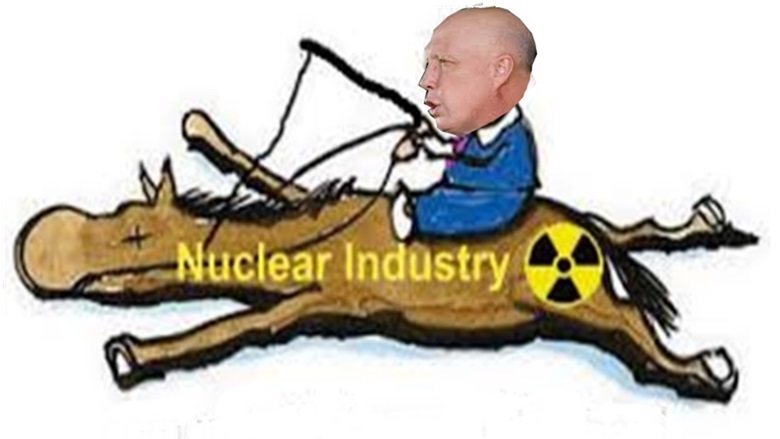
Gladstone Bulletin, Dave Sweeney, Australian Conservation Foundation, 16 May 25,
When he unveiled the Coalition’s nuclear ambitions last June, Peter Dutton said:
“I’m very happy for the election to be a referendum on energy, on nuclear”
It was, and the result was a resounding rejection of high cost, high risk, nuclear power.
The election result is clear, as is the wider lesson: When the Coalition pushes nuclear, Australia pushes back.
In 2007 John Howard too nuclear to an election, where he lost government and his own seat.
In 2025 Dutton said nuclear, and Australia said “No” and “goodbye”.
Thanks to those in the community , who identified and acted on the risk of potential nuclear, – thanks for making a positive difference.
Australians have spoken, and it’s now time to draw a line under this unproductive distraction, and get on with real action to meet our nation’s climate and energy challenges.
‘Campaign led by anti-nuclear groups had its intended effect’
FOE Adelaide, 14 May 25
Support for Nuclear Power Collapsed from Feb-April 2025
Polling released by the pro-nuclear group WePlanet Australia reveals that support for nuclear power dropped from 55% in February 2025 to just 42% in April. This is the lowest level in years, WePlanet says, and “a clear sign that a … campaign led by anti-nuclear groups had its intended effect in the lead up to this election.”
The polling was conducted by Essential Research with data provided by Qualtrics. The survey was conducted online from 24th to 27th April and is based on 2,241 participants.
Support for nuclear power increased from 2019 to 2021 (AUKUS-related?). Support didn’t take an immediate fall after the Coalition’s mid-2022 announcement that they would promote the introduction of nuclear power to Australia. Support didn’t take an immediate fall after the Coalition’s June 2024 release of 7 proposed nuclear power reactor sites across 5 states, or the December 2024 release of (highly questionable) cost estimates. But in less than 3 months from Feb. 2025 to late April, net support fell from +21% to -2% with a sharp drop in support of -13% and a sharp increase in opposition of 10%. Support fell from 55% to 42% and opposition increased from 34% to 44%.
The polling data shows that most males support “Australia developing nuclear power plants for the generation of electricity” (51% strongly or somewhat support; 41% strongly or somewhat opposed) but among females, support is more than doubled by opposition (23:47). Nuclear power is not supported by those aged 18-34 (38:48), or those aged 35-54 (41:45) but enjoys more support from those aged 55+ (47:41). Nuclear power is opposed by Greens voters (29:60) and Labor voters (27:63) but supported by Coalition voters (65:24).
If the Coalition sticks with nuclear, the fallout will be toxic.

Rebecca Huntley May 10, 2025, https://www.smh.com.au/national/if-the-coalition-sticks-with-nuclear-the-fallout-will-be-toxic-20250505-p5lwmu.html
Much of the post-election commentary has rightly focused on how the Coalition’s nuclear energy proposal was bad – very bad. It was one of the reasons Peter Dutton lost his seat and for net swings against the Coalition in areas such as Gippsland and the Hunter. Unpopular among women voters, who the Coalition continue to struggle to appeal to, and unpopular among undecided voters.
More importantly, nuclear undermined Peter Dutton’s credibility. After the Voice, the only real policy most voters associated with the opposition leader was nuclear. Once his ill-fated campaign began with a backflip on public servants working from home, the swath of undecided voters got spooked.
No one wants someone who seems highly disorganised to build a nuclear reactor.
If you scrutinise the research numbers, the lack of public support for nuclear was clear; more importantly, support for renewables didn’t dip in the face of the pro-nuclear push. Pursuing nuclear made the Coalition look like it was out of sync with what people really wanted. If it continues to pursue this as a policy, it will be seen as defying the will of the people.
Over the years of Labor’s first term, despite a cost-of-living crisis and well-funded campaigns against renewables online and in traditional media, research showed steady support for solar, wind and batteries. Even the election of Donald “drill-baby-drill” Trump didn’t undermine support.
The online misinformation and disinformation campaigns against renewables certainly ramped up after Albanese was first elected, supported by attacks from Sky News and the Murdoch-owned press.
The Coalition playbook was simple: cast enough disinformation and misinformation across channels to create doubt and antagonism against renewables. It fully believed it could win seats off the back of voter dislike of offshore wind in particular, especially in areas such as the Illawarra. It was in for a surprise.
The outcome of this election shows us a truth the Coalition must accept: amid a cost-of-living crisis, Australians back renewables. In fact, the overall swing towards Labor in seats where anti-offshore wind campaigns were rife was greater than the overall statewide swing. Except for Monash in Victoria, anti-offshore campaigns backfired on the Coalition.
Dutton and his Coalition colleagues in the Nationals severely underestimated the Australian people, particularly those in the regions. Support in proposed nuclear reactor communities, including Gladstone, Bunbury, Hunter and Gippsland, was weak, ranging from 22 to 32 per cent.
A poll published in this masthead in April showed 31 per cent of voters said their biggest hesitation in voting for the Coalition and Dutton was the plan to use nuclear power, up 5 percentage points from two months earlier.
This campaign was fought and won on the cost of living. In the end, Australians believed the right policies on renewables – including more access to home batteries – would save them money now and into the future.
Can you imagine what would happen if all the confected outrage over renewables disappeared, and all that was left was public opinion? The support for renewables is there once you strip away the headlines that seem to suggest otherwise.
So, what does this mean for our newly elected Labor-landslide majority government? And for a Coalition still wrestling with where to go on energy policy? When the word “mandate” gets used in relation to election victories, I have to resist a reflexive eye-roll. Election results don’t necessarily equate to public endorsement of every promise made in the campaign by the winning party. But this result is definitive, and more remarkable considering so many federal elections in the past two decades have been close. The last time there was such a strong message from the electorate was in 2007. In many respects, the Rudd government underestimated the permission the public gave it to act on climate. When Labor stepped away from that commitment, its credibility sagged.
A triumphant Albanese government, going into a second term with more power and confidence, should feel like it can act on the energy transition with a belief that the community will follow, especially if its policies deliver cost savings to households and significant and lasting benefits to the regional communities hosting renewable infrastructure. It’s a green light for further progress, but understanding community sentiment – and responding to it – will be essential to maintaining the permission.
Early signs from the Labor government indicate it knows it can proceed swiftly. On election night, Minister for Climate Change and Energy Chris Bowen said, “In 2022, the Australian people voted to finally act on climate change. After three years of progress, in 2025, they said keep going.”
“Keep going” should be the official government slogan. Fingers crossed that sanity prevails, but early signs from the Coalition seem to indicate more of the same: support for nuclear, which really means less renewable energy.
If the members of the Coalition don’t want to believe the polling data, perhaps they should think about these figures. In the years they have been pursuing their nuclear policy, global solar power has doubled. According to the Clean Energy Council, more than 300,000 small-scale rooftop solar systems were installed across Australia in 2024, bringing the total number to more than 4 million. Utility battery storage more than tripled. And last year, Australia added more renewable capacity to the energy system than the entirety of the Coalition’s nuclear plan.
The transition to renewables is happening, and nuclear is a policy that is too toxic for the electorate and too late to be helpful for emissions.
Any politician who resists that logic will be warming the benches of opposition for some time to come.
Dr Rebecca Huntley is one of Australia’s foremost researchers on social trends and a Fellow of the Research Society of Australia. She is director of research at 89 Degrees East.
Coalition bombs itself with nuclear energy policy
By Dave Sweeney | 12 May 2025
While the Coalition was determined to switch Australia over to nuclear energy, voters had another opinion and overwhelmingly rejected the LNP’s energy policy, writes Dave Sweeney.
WHEN HE UNVEILED the Coalition’s nuclear energy ambitions last June, outgoing Opposition Leader Peter Dutton said:
“I’m very happy for the Election to be a referendum on energy, on nuclear.”
As the adage says, be careful what you wish for. The election result was a resounding rejection of the high-cost, high-risk nuclear option.
The Coalition’s intention to build nuclear reactors at seven sites in regional Australia was the biggest policy difference between the major parties ahead of the Election.
The nuclear push was heavy on headlines and assurances, but very light on details and evidence.
Despite numerous requests, the Coalition’s nuclear promoters failed to visit the reactor sites or answer fundamental questions, including where the required water would come from and where the resultant radioactive waste would go.
Other unanswered questions overflowed the Coalition’s too-hard basket.
What would the impact on employment and output be from Australia’s rapidly growing renewable energy sector? What sort of reactors were planned and how many? What would fill the electricity shortfall between the certain closure of coal and the uncertain start of nuclear? Would taxpayers bear the increased cost of nuclear in our tax bills, our power bills, or both? Who would operate and regulate the Coalition’s nuclear plants?
As the scrutiny and uncertainty grew, so did the community concerns and the considered critiques.
The Climate Change Authority warned the Coalition’s nuclear policy would add huge amounts of extra climate pollution to the atmosphere and make it “virtually impossible” for Australia to reach net zero by 2050.
The interim report by a parliamentary committee inquiring into nuclear energy found – like so many inquiries before it have found – that nuclear energy was not right for Australia.
While Australia’s energy utilities made it clear they did not support or see a future in nuclear, Australia’s insurance sector confirmed that its policies do not cover nuclear accidents.
Shadow climate and energy spokesperson Ted O’Brien might have been convinced nuclear is as safe as houses, but Australian insurance providers did not share that view.
The concern was widespread, but most obvious in Australian women’s scepticism about nuclear. They didn’t want to hear about it and when the issue was raised with Dutton, he didn’t want to talk about it.
When the Coalition pushes nuclear, Australia pushes back. In 2007, John Howard took nuclear to an election where he lost government and his own seat. In 2025, Peter Dutton said nuclear and Australia said no — and goodbye.
Polling by the Liberals Against Nuclear group demonstrated the nuclear policy’s drag on the Coalition’s vote in marginal seats and across the nation, while 46 per cent of voters in Dutton’s electorate of Dickson said they were less likely to vote for Mr Dutton because of the nuclear power policy.
In front of shellshocked Coalition politicians on election night, senior press gallery journalist Mark Riley summed up the Coalition’s problem:
“The party that chose nuclear energy as its policy has exploded in a nuclear bomb set on them by voters tonight.”
The idea of domestic nuclear power is over.
It’s time to draw a line under this unproductive distraction and get on with real action to meet our nation’s climate and energy challenges.
Liberal Senator Maria Kovacic has called on her party to “immediately scrap the nuclear energy plan and back the private market’s investment in renewable energy”.
Her call echoes that of the South Australian Liberals, which have already dropped plans for another inquiry into nuclear power, with State Leader Vincent Tarzia declaring that nuclear has been “comprehensively rejected” by the electorate.
Defeated Tasmanian MP Bridget Archer says the nuclear push was “not the policy position I would have taken” and she would rather “let the market decide”.
The Federal Coalition must ditch any lingering nuclear ambitions and join every other major political player in backing a renewable energy future for our nation.
Australians have overwhelmingly voted for positive solutions, real action and respect — for each other and our environment.
It’s time to stop playing politics with nuclear distractions and delays. It’s time to get on with the clean energy transition, effective climate action and building an energy future that is renewable, not radioactive.
Business as usual: Labor stalls on Defence reform as AUKUS woes grow

Defence spending is lagging, AUKUS is stalling, and systemic mismanagement persists as Labor avoids hard structural reform.
Bernard Keane, May 11, 2025, https://www.themandarin.com.au/291901-business-as-usual-labor-stalls-on-defence-reform-as-aukus-woes-grow/
Having managed to get through an election campaign barely mentioning defence — despite the opposition trying to make it a late-stage vote winner — the newly expanded Labor government still faces a number of big challenges in the defence portfolio, and no easy answers.
The two big ones are well-known: the replacement of the US security guarantee with Trumpian chaos, which means Australia will have to strengthen its defence capability so that it has to rely less on the US, and the profound problems of AUKUS.
Despite some budget sleight of hand purporting to show an acceleration in defence spending, the government remains committed to increasing defence spending to just 2.33% of GDP — not merely well below the Trump administration’s demand for 3%, but below the Coalition’s planned increase to 2.5% and the calls from defence and security experts, as well as Labor luminaries like Kim Beazley, for a significant increase.
But the ability of the Department of Defence to handle any increase in spending — or even competently spend what it currently receives — is openly questioned even by hawks. Average major project slippage time, already alarming when the Coalition was last in power, noticeably deteriorated in Labor’s first term. The response of Defence appeared to try to hide embarrassing data from the Auditor-General under the pretence of national security.
Also characterising Labor’s first term was the admission of failure of departmental process, to the very highest echelons of Defence, in relation to the Hunter-class frigate project and the shocking audit of Defence’s dealings with Thales on munitions manufacturing (the second part of which is yet to arrive from the auditor-general).
With both defence minister Richard Marles’ track record in Labor first term, and his general insouciance toward revelations such as the Thales debacle — which included the revelation that the department had actively misled predecessor ministers — it seems unlikely Defence will face any real pressure to improve the incompetence and, quite possibly, corruption that marks its management of major procurement processes. A defence minister like Andrew Hastie, far more credentialed in military matters than most within the department, could have driven the kind of reform that would have gotten Defence backs up, and led to copious leaking against him, but improved the reliability and integrity of the department’s procurement processes. Instead, we’ll have to hope that a Labor government with a big majority and more confidence will be more willing to take on the fundamental problems in the portfolio.
A similar business-as-usual approach will likely characterise the unfolding disaster that is AUKUS. The grim reality is that US submarine construction rates are slowing, not accelerating as they need to if the US is to provide three Virginia-class nuclear submarines to Australia from 2030. In early April, the US Navy admitted to Congress significant delays in constructing its new Columbia-class ballistic missile submarine, which shares some components with the Virginia class. While the builders of the Virginia-class boats are talking bravely of demand signals and additional investment, the build rate for the subs late last year was barely above half that required by AUKUS.
None of this, apparently, is of interest to the bureaucrats charged with overseeing AUKUS. The Mandarin applied under Freedom of Information laws to the Australian Submarine Agency to see what briefing it was providing to ministers on the problems in submarine construction in the US and the UK. No such documents, came back the answer. Blind faith that the US can double the rate of submarine construction in a couple of years is one thing, but remaining ignorant of how badly off track AUKUS is? That’s quite another.
One of the key problems of the Virginia-class boats for Australia is that they require huge crews — 135 sailors, compared to just 58 for Australia’s current submarines. That brings into focus a persistent and worsening problem — our inability to attract and retain ADF members. Last year the Navy was short around 900 people. The Army was short around 5000; only the RAAF is around its mandated strength. A change of recruitment agency for the ADF proved a disaster, with portfolio minister Matt Keogh expressing his “deep disappointment” with the provider’s “wholly deficient” performance. Critics say the problem is with the ADF itself, which is “too slow and too picky”. The government announced in mid-2024 the brilliant idea of opening up the ADF to personnel from Five Eyes. countries. Only problem is, they’re all suffering the same problems with defence recruitment. In fact, armies, navies and air forces around the world are suffering ongoing recruitment problems and have done so for years — even the People’s Liberation Army is struggling to attract Chinese youth to its ranks.
In each of these areas, clearly, business as usual won’t cut it. But that is what Defence is very good at, and its ministers are very bad at preventing. To prevent it, only structural arrangements that disrupt Defence’s normal processes will achieve results. The royal commission into ADF member and veteran suicide had the right idea — and the government rightly took its lead from the commission in its response. The commission recommended a new independent statutory body to oversee reform across the whole Defence/Veterans Affairs portfolio, not a new area of Defence. And it urged, and the government agreed, that central agencies be charged with implementing the commission’s recommendations: the result was a Prime Minister and Cabinet taskforce to start implementing reforms, with the help of external expertise.
An independent agency, and a PM&C-led implementation taskforce, was what was needed to ensure Defence didn’t simply default back to business as usual when it came to the mental health of its members and veterans. Only the oversight and interference of high-powered external bodies will compel Defence to change its culture.
And it’s the only thing that will enable the government to seriously tackle the biggest challenges in the portfolio over the coming years.
Bernard Keane
Bernard Keane is a columnist for The Mandarin. He was a Canberra press gallery correspondent covering politics, national security and economics, and a public servant and speechwriter in transport and communications. He is co-author of A Short History Of Stupid, which covers the decline of reason and issues with public debate.
Keating savages Albanese and Labor ‘factional lightweights’ after Husic and Dreyfus pushed from cabinet
Tom McIlroy Chief political correspondent, Guardian, 7 May 25
Former prime minister says dumping of Ed Husic was ‘appalling denial’ of his ‘diligence and application’
Former Australian prime minister Paul Keating has savaged Anthony Albanese and “factional lightweights” within the Labor party over moves to dump ministers Ed Husic and Mark Dreyfus from cabinet, calling the decision unfair and disrespectful.
Jostling between right faction MPs in New South Wales and Victoria led to Husic, the industry and science minister, being pushed out of cabinet on Thursday, in a move Labor insiders said was ruthless.
……………………..”As the cabinet’s sole Muslim member, Husic’s expulsion from the ministry proffers contempt for the measured and centrist support provided by the broader Muslim community to the Labor Party at the general election,” Keating said in a statement.
…………………He also criticised the move by Victorian right faction MPs to remove Dreyfus, who has been attorney general since 2022 and held the same role at the end of the Rudd-Gillard government in 2013.
Keating said “factional lightweights” had pushed out Dreyfus, calling him “the cabinet’s most effective and significant Jewish member”………………………………….
A Labor legend, Keating has been a public critic of the Albanese government in the past. He accused Albanese, Richard Marles [above] and the foreign minister, Penny Wong, of abandoning traditional party values over support for the Aukus nuclear submarines agreement.
Keating even suggested last year on the subjects of defence and foreign policy, “this is not a Labor government”.
Albanese’s second cabinet is expected to be sworn in on Tuesday next week. https://www.theguardian.com/australia-news/2025/may/08/keating-savages-albanese-and-labor-factional-lightweights-after-husic-and-dreyfus-pushed-from-cabinet?CMP=Share_iOSApp_Other
Is nuclear dead? Signs Coalition’s policy isn’t buried despite election loss

The Liberals and Nationals will review their policy platforms as they assess their sweeping election defeat, which resulted in Labor claiming a majority government.
By Cameron Carr, 9 May 25, https://www.sbs.com.au/news/article/signs-coalition-nuclear-policy-not-buried-despite-election-loss/ideom2e8z
But the Coalition didn’t have much of a choice when it came to election promises around energy, Simpson told SBS News.
“The Coalition had to come to the election saying something about energy policy if they were going to oppose Labor’s policy, and there’s not really that many options,” he said.
“They could have come out and said, ‘We’re going to use gas and or coal for eternity’, but then they would have to abandon their commitment to net zero.”
Fewer moderates in the party
Simpson said there are a couple of reasons the Coalition could come back with a version of the policy for the next election.
“In 2022, they lost all those teal seats. They lost a lot of moderate voices from the Liberal Party. And then that’s just been exacerbated in this recent election,” Simpson said.
“There are very few voices going to be coming from metropolitan urban areas in the Coalition party room. So that’s why I wouldn’t be surprised if, after they do the post-election wash-up and assessment of what went wrong, they come out again with another pro-nuclear policy.”
Simpson said “cultural opposition” is likely another factor, with the Coalition ideologically resistant to a transition to renewable energy.
“They don’t particularly believe in climate change, and it’s certainly not a priority for them,” he said.
While nuclear energy could be a policy the Coalition runs again in 2028, Simpson predicted it would cause “further devastation” within its remaining metropolitan seats and push the Coalition into the “electoral wilderness” for a generation.
Sacking Dreyfus and Husic to appease Marles proves Labor 2.0 will be just more of the same
In that sense, it’s appropriate that his (Dreyfus’) demise has come at the hands of Marles, who is everything wrong and sordid about the current Labor Party. He is a policy vacuum, with his only apparent belief being the primacy of the US alliance. He is not merely incapable of properly managing an incompetent and potentially corrupt Department of Defence, but he also appears entirely insouciant about its poor performance.
As Paul Keating pointed out in blasting Albanese’s failure to prevent this, the Victorian Right faction, led by Marles, is “demonstrably devoid of creativity and capacity”.
The sacking of Mark Dreyfus and Ed Husic sends a signal that performance and party loyalty are far less important than what the factions want.
Bernard Keane, May 9, 2025, https://www.crikey.com.au/2025/05/09/mark-drefus-ed-husic-cabinet-frontbench-richard-marles-anthony-albanese-labor/
Anthony Albanese, having ascended into the Labor pantheon with a remarkable victory that smashed opponents left and right, has demonstrated his new authority by… sacking two well-regarded ministers at the behest of his single worst minister, Richard Marles, and replacing them with duds.
The defence minister’s ousting of Attorney-General Mark Dreyfus and Industry Minister Ed Husic has cast a particularly gloomy shadow over what should have been an unalloyed Labor triumph. It also reflects badly on Albanese’s willingness to use his authority to deliver better government, rather than keep his party’s factional hacks happy — Marles’ Labor Right faction stiffed Dreyfus; in the case of Husic, he was turfed in response to Marles’ demands for NSW to give up a frontbench spot.
The replacements for Dreyfus and Husic, Victorian backbenchers Sam Rae and Daniel Mulino, are remarkable in their banality. Mulino, a former Andrews government outer ministry member, has been in Parliament for six years without anyone being aware of his existence. Rae is a Labor Party functionary, a former Victorian state secretary who joined PwC before entering Parliament in 2022. Yes, that PwC, the firm that represents everything toxically wrong with the way government was run under the Coalition. Rae’s supporters apparently think that’s something to boast about.
As Paul Keating pointed out in blasting Albanese’s failure to prevent this, the Victorian Right faction, led by Marles, is “demonstrably devoid of creativity and capacity”.
………………………Dreyfus, like John Faulkner in the Rudd government, was the only consistent advocate within cabinet for more integrity and transparency in government. His departure cripples any internal push to make the Albanese government a better, more accountable one.
In that sense, it’s appropriate that his demise has come at the hands of Marles, who is everything wrong and sordid about the current Labor Party. He is a policy vacuum, with his only apparent belief being the primacy of the US alliance. He is not merely incapable of properly managing an incompetent and potentially corrupt Department of Defence, but he also appears entirely insouciant about its poor performance.
As Paul Keating pointed out in blasting Albanese’s failure to prevent this, the Victorian Right faction, led by Marles, is “demonstrably devoid of creativity and capacity”.
Again, as Keating points out, Albanese could have intervened, as he has intervened in other factional disputes. Instead, he has sent a strong signal to his frontbench: actual performance and willingness to serve the party loyally are far less important than what the factions want. He’s allowed a factional brawl to significantly diminish the capacity of the ministry, thus permitting the deadening touch of Marles to break out of Defence like a fungating tumour.
In its first term, the Albanese government frequently demonstrated it was a timid, unambitious and craven government. Winning 90+ seats doesn’t seem to have changed that. Maybe winning all 150 wouldn’t either.
Scrap nuclear: Key Liberal senator wants radioactive energy plan buried
David Crowe and Paul Sakkal, May 6, 2025
The Liberal Party is set for a pivotal clash over nuclear power after a key senator broke ranks to urge her colleagues to dump their plans for atomic energy, shaping the choice over the party’s leadership and direction.
The warning from Liberal senator Maria Kovacic marks the first public rejection of the nuclear plan from a member of the federal party room ahead of a broader debate about how to recover from the catastrophic defeat at the election.
The move comes as deputy Liberal leader Sussan Ley and shadow treasurer Angus Taylor contest a tight race to decide the leadership, with each side approaching immigration spokesman Dan Tehan to serve as deputy.
A damaging leak of internal polling, revealed by this masthead on Tuesday, has also fuelled discontent within the party, as MPs criticise the party’s pollster, Freshwater Strategy, for providing data that that gave Liberal leader Peter Dutton a false sense of confidence.
Kovacic said the election campaign showed that younger voters did not support the nuclear policy, based on her experience with Liberal candidates at polling stations, and that the party needed to listen to the verdict from voters last Saturday.
“We know how tough it is out there, and we didn’t offer Australian voters a legitimate alternative – and they sent that message very, very clearly on Saturday,” she said.
“And we can’t deny the fact that our nuclear plan was a part of that because it was one of the keystone policies.
“So it’s my view that the Liberal Party must immediately scrap the nuclear energy plan and back the private market’s investment in renewable energy.”
Liberal leader Peter Dutton embraced nuclear power in August 2022 after calls from Nationals leader David Littleproud to adopt the policy, but the plan set off a political firestorm over the $331 billion forecast to build and own the power stations.
While the Liberals expect to launch an election review to consider their defeat, Kovacic said the nuclear policy needed to be dumped immediately…………………………………….https://www.theage.com.au/politics/federal/tehan-firms-as-kingmaker-in-liberal-leadership-battle-as-polling-leak-sparks-recriminations-20250506-p5lwvy.html
Will the Coalition ditch its nuclear power policy?
The Liberals Against Nuclear group said in a media release that the “Liberal Party’s resounding defeat in Saturday’s federal election has confirmed what Liberals Against Nuclear has warned for months: the party’s nuclear energy policy was poison that contradicted core party principles.”
“As the party chooses its next leader, denouncing the nuclear energy policy and recommitting to traditional Liberal values must be the litmus test for any potential candidate.”
Jim Green, May 7, 2025, https://reneweconomy.com.au/will-the-coalition-ditch-its-nuclear-power-policy/?fbclid=IwY2xjawKIr5RleHRuA2FlbQIxMQBicmlkETEwN2xCZ0tDcWVCOTJLWjlyAR4dM_A5TV1mtAJXuKwDuXNCPTqBkEx6aqXLiVG_4RSf4CuBw0LCKjXx5M_THQ_aem_9Jf-rhE2w-fA5kbvxu0a4A
There is abundant evidence that the Coalition’s nuclear power policy was a significant drag on its vote on Saturday. On election night, energy minister Chris Bowen said:
“I mean this was a policy that was never going to survive contact with reality. It was a policy that was radical and risky … The Australian people have cast a very strong judgement on this. I mean we had polling a while ago showing 47 percent of voters in Dickson were less likely to vote for Peter Dutton because of the nuclear policy. Peter Dutton said it was a referendum on energy, which we were happy with, and the way the results are flowing, the result of that referendum on energy, nuclear vs renewables, is crystal clear.”
Even Clive Palmer was bagging nuclear power on election night, pointing to the troubled Flamanville reactor project in France that was 14 years overdue and five times over-budget.
Seven News political editor Mark Riley said: “The party that chose nuclear energy as its policy has exploded in a nuclear bomb set on them by voters tonight.”
An editorial in the Sydney Morning Herald summarised the Coalition’s nuclear problem:
“But outside the corridors of political power, his nuclear power policy played a role in the Coalition defeat on Saturday. Dutton was unable to justify or explain the cost adequately. His power stations were too expensive and bent future budgets into contortion. The CSIRO was unimpressed, and the private sector wanted nothing to do with them.
“Worse, they were a gift to Labor. It dawned on both sides early in the campaign that the nuclear policy had turned toxic. Labor jumped on it and Dutton’s battle bus steered well clear of the proposed nuclear sites.
“The fantasy of the timeline to bring the nuclear power stations online and the dubious costings only added to the voters’ perceptions that Dutton was talking hot air and that his promised policy would never happen.
“Now it’s back to square one for the Liberals on energy policy. It will not be easy. The shattered party must rebuild to recapture the heartland after it was crudely shoved towards conservative populism by Dutton and friends. Policy development will be a major cornerstone of that recovery. And energy is central to credible reform.”
Liberals Against Nuclear
The Liberals Against Nuclear group said in a media release that the “Liberal Party’s resounding defeat in Saturday’s federal election has confirmed what Liberals Against Nuclear has warned for months: the party’s nuclear energy policy was poison that contradicted core party principles.”
Spokesman Andrew Gregson said that Liberals Against Nuclear would continue its campaign against the nuclear policy:
“This result sees the Liberals facing a generational wipeout. Only significant and immediate change can chart of pathway back. Dropping the disastrous nuclear policy right now would demonstrate they are prepared to listen, learn and act.
“Since launching our campaign, we’ve been overwhelmed by messages from Liberals across Australia who share our dismay that such a consequential policy emerged without the robust debate that has always defined our party’s decision-making. Fellow Liberals have expressed frustration that a policy of this magnitude was imposed without the transparent consultation that true Liberal values demand.
“Saturday’s election results are simply the latest and most compelling evidence that the party faithful never signed up for nuclear and would not follow Mr Dutton down this path.
“As the party chooses its next leader, denouncing the nuclear energy policy and recommitting to traditional Liberal values must be the litmus test for any potential candidate.”
Divisions
There are deep divisions within the Coalition over energy policy, so much so that a split is under consideration. Canvassing a split, Queensland Senator Matt Canavan said he wants more coal power plants built and an end to the Coalition’s net zero emissions policy. He appears to be ambivalent about nuclear power: “I’m not against nuclear but … it would take some time. We need solutions now for the Australian people.”
Other Nationals MPs are promoting retention of the nuclear power policy, including leader David Littleproud, senate leader Bridget McKenzie, Colin Boyce and Michelle Landry.
The Nationals are congratulating themselves for outperforming the Liberal Party in the election. But the nuclear policy was initiated and strongly pushed by the Nationals and it was a drag on the Coalition vote across the country.
The ABC’s Jacob Greber said: “Littleproud has driven them onto the rocks, as a political movement, with the nuclear plan.” He further noted: “David Littleproud, the Nationals leader, vowed his nuclear power plan would not come at the expense of Liberals in the cities. He has a tough road ahead after this mess.”
Liberal MPs are beginning to publicly call for the Coalition to ditch its nuclear power policy. Senator Maria Kovacic said: “the Liberal Party must immediately scrap the nuclear energy plan and back the private market’s investment in renewable energy.”
Kovacic added:
“I think the result on Saturday is a pretty clear election review of what Australians think. We will not be electable for Gen Z and millennial voters who thought, you know, we were having them on with this policy. The idea that the party of free markets and small government would nationalise a major portion of the energy system is completely at odds with what we stand for.”
Liberal Senator James Paterson said he is not likely to fight to retain the nuclear policy, that nuclear power would be “logistically challenging” and “self-evidently more difficult” to implement in three years given the looming retirement of coal-fired power stations.
The SA Liberal Party announced two days after the federal election that it has dropped its policy of promoting nuclear power. The state party had promised a nuclear royal commission and created a position of ‘Shadow Minister for Nuclear Readiness’. But leader Vincent Tarzia said on Monday that nuclear power has been “comprehensively rejected and we know the thing is with the energy transition, in three years’ time we will be in another position again.”
If the Coalition persists with its nuclear power policy, it will have no support whatsoever from Liberal / LNP parties in the five states targeted for reactors.
Academic Adam Simpson wrote in The Conversation:
“After Saturday’s Coalition rout, the prospect of nuclear power in Australia should be dead and buried. But that’s not guaranteed. The National Party strongly backs nuclear power. With metropolitan Liberals sceptical of nuclear reduced to a rump, the Nationals and regional Liberals will gain influence within the Coalition. If conservative Nationals prevail, we may well see the nuclear policy survive the election post-mortem and be resurrected for the next election.”
Given the drag of the nuclear policy on the Coalition’s vote, it’s hard to see them going to the next election still promising to build seven taxpayer-funded nuclear power plants across five states. A compromise might be reached whereby a Coalition government would repeal federal laws banning nuclear power, and perhaps establish yet another inquiry, but without the commitment to go ahead with the seven proposed nuclear plants. Colin Boyce hinted at a compromise: “At the bare minimum, we need to remove the moratorium, at least.”
Dr. Jim Green is the national nuclear campaigner with Friends of the Earth Australia and a member of the EnergyScience Coalition.
South Australia Liberals who first pushed 100 pct renewables – then went nuclear – now reverse course after poll wipeout
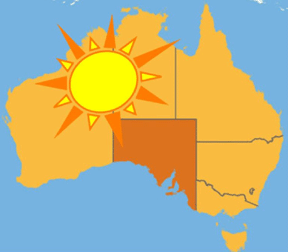
ReNewEconomy, May 5, 2025, Joshua S Hill
The South Australian Liberal party, which set the state’s first 100 per cent renewables target when in government six years ago, before embracing nuclear while in opposition, has reversed course again after the federal poll wipeout and the loss of a long time Liberal seat in Adelaide.
South Australia leads the world in the uptake of variable renewables, with a 72 per cent share of local demand over the last 12 months.
The then Liberal state government in 2019 set a target of reaching 100 per cent “net” renewables by 2030, before the current Labor government accelerated that target to 2027, and enshrined it into law, based on the planning for new wind and solar projects, battery storage and transmission.
New state Liberal leader Vincent Tarzia reversed course on renewables last year, supporting the federal Coalition’s plan to build nuclear power at seven sites across Australia, including at Port Augusta in South Australia, the site of the coal fired power stations that closed nearly a decade ago.
However, speaking to ABC Radio Adelaide, Tarzia has now backed away from his party’s election commitment to hold a Royal Commission into nuclear energy, saying it was clear that the technology has been “comprehensively rejected” by the electorate.
A potential nuclear future had been a top priority for the South Australian Liberal Party, promising in June last year to hold yet another Royal Commission into the technology. This was followed in August by the appointment of Stephen Patterson, the state MP for Morphett, as spokesman for Nuclear Readiness.
Tarzia’s comments came after the Liberals lost the last of their Adelaide based federal seats, including the once safe seat of Sturt, in last weekend’s federal election campaign…………………………………. https://reneweconomy.com.au/s-a-liberals-who-first-pushed-100-pct-renewables-then-went-nuclear-reverse-course-after-poll-wipeout/
Greens fear AUKUS overreach as State Development Coordination and Facilitation Bill 2025 passes SA parliament

A new $4m planning office will be granted unprecedented powers, sparking calls to temper the power of the four bureaucrats set to wield them.
Sweeping new powers will be invested in a $4m office to fast track “significant” SA projects including housing and AUKUS – raising fears they could avoid tougher planning checks.
The State Government is planning to appoint four staff to the office, including an AUKUS expert, with unprecedented powers to “case manage” projects.
Premier Peter Malinauskas has flagged this would allow faster approvals in designated “go zones” for projects like the AUKUS nuclear-powered submarines, housing and renewable energy projects.
The move flared concerns about existing heritage, environment, coastal protection and pastoral land act processes being downgraded after the State Development Coordination and Facilitation Bill 2025 passed this week.
Mr Malinauskas previously said the law meant the State Government could designate “state development areas” as “go-zones”.
Regulatory work in these zones would be completed before developers moved in “allowing for quicker approvals within them once an application is made”.
This was meant to save time in passing “urgent and significant projects”.
A government spokesperson assured provisions meant the new office must perform any assessment independently and it could not be directed “by any Minister to either approve or reject any application.”
The office could not deal with nuclear waste projects.
And the Adelaide Parklands was protected by the Adelaide Parklands Act and the new bill states it “may never be designated as a state development area”.
But SA Greens party co-leader Robert Simms was still concerned.
He feared the inclusion of an AUKUS expert meant approvals for the project would bypass usual safety guards.
“SA parliament has just given the Malinauskas Government the biggest blank cheque in South Australian history,” he said.
“This bill gives an unelected office the power to override South Australian laws to enable controversial projects, including AUKUS, yet it passed the Upper House in the blink of an eye.”
“This bill isn’t about facilitating housing developments, it’s about giving the state government the power to ride roughshod over the community. It’s a power grab of epic proportions that should have been given much more scrutiny.”
It was confirmed in the senate the office would cost $4m a year to operate.
Australians choose batteries over nuclear after election fought on energy

While the Greens have an anxious wait ahead to see how many lower seats they’ll win, they recorded their highest-ever primary vote and will hold the balance of power in the Senate with 11 senators.
While the Greens have an anxious wait ahead to see how many lower seats they’ll win, they recorded their highest-ever primary vote and will hold the balance of power in the Senate with 11 senators.
ABC News, By climate reporters Jess Davis and Jo Lauder, 6 May 25
When Peter Dutton unveiled his party’s nuclear energy plan last year, it opened up a seismic difference between the two major parties.
It offered a real choice for Australian voters over the future of the country’s energy policy.
“I’m very happy for the election to be a referendum on energy, on nuclear, on power prices, on lights going out, on who has a sustainable pathway for our country going forward,” he said.
Taken on those terms, Saturday’s election outcome was an endorsement of renewable energy over nuclear.
“It’s clearly a referendum on energy policy, given the prominence of energy throughout the entire election campaign,” Clean Energy Council CEO Kane Thornton said.
“I think it’s an emphatic victory for Australia’s transition to clean energy.”
At a household level, Labor offered a significant discount on home batteries to accompany the booming solar on rooftops all across the country, aiming to get 1 million batteries installed under the scheme by 2030.
The last election saw a new generation of independents join the parliament, riding a wave of climate concern. Any expectation that the “teals” were a single-election trend has been dispelled, with most of them set to be returned, and new ones joining their ranks.
While the Greens have an anxious wait ahead to see how many lower seats they’ll win, they recorded their highest-ever primary vote and will hold the balance of power in the Senate with 11 senators.
After losing the Liberal heartland to the teals in the last election, the Coalition decided to pitch instead to the outer suburbs.
But the decision to campaign against renewables, and scrap climate policies such as the EV tax breaks, seems to mismatch the views of middle Australia.
Outer suburbs embrace solar power
Dutton set out to make up gains in the outer suburbs by offering a discount on the fuel excise. But the data for solar uptake and electric cars paints a very different picture to the caricature of solar and batteries as a plaything for the inner city.
While energy may not have been a top concern for voters, it’s the outer suburbs where our love for rooftop solar is at its highest, especially in Queensland and Western Australia.
In Dutton’s former electorate of Dickson, some 60 per cent of households have a solar system, double the national average, according to data from the Clean Energy Regulator………………………………………………………………………………………………………………….. https://www.abc.net.au/news/2025-05-06/federal-election-shows-voters-support-renewables-over-nuclear/105252888
State Liberals nuke nuclear promise
The SA Liberals have broken a key election promise with just 10 months to go until the state poll, with Liberal leader Vincent Tarzia dumping his party’s only energy policy.
5 May 25,https://www.premier.sa.gov.au/media-releases/news-items/state-liberals-nuke-nuclear-promise
In a stunning backdown, Mr Tarzia admitted on ABC Radio Adelaide that the Liberals’ election commitment to hold a Royal Commission into nuclear energy would be dumped in the wake of the federal election:
Rory McClaren: That’s what I was going to ask you… should nuclear from a Liberal Party policy perspective now be parked?
Vincent Tarzia: Yes, at the moment it’s been comprehensively rejected and we know the thing is with the energy transition, in three years’ time we will be in another position again.
The State Liberals made the pursuit of nuclear power their top priority, announcing their pursuit of a Royal Commission as their key commitment in their Budget Reply speech in June.
In August, Liberal Leader Vincent Tarzia appointed Stephen Patterson as Shadow Minister for Nuclear Readiness.
Now, just eight months later, the promise has been abandoned.
The 2016 Nuclear Fuel Cycle Royal Commission found nuclear power was not commercially viable in South Australia.
Quotes
Attributable to Tom Koutsantonis
What do the South Australian Liberals stand for?
They’re breaking election promises even before they’ve got to an election.
Only a few months ago, they were making the pursuit of nuclear energy their sole energy policy focus. Now, they’ve dumped it.
Vincent Tarzia must now dump his Shadow Minister for Nuclear Readiness, who has absolutely no policy offering other than the pursuit of an energy source that evidence shows will drive up bills for South Australians.
At a time when the Opposition should be outlining its policy platform ahead of the 2026 State Election, the State Liberals are instead ditching their only energy policy.
1 This month


Help Aunty Sue Protect Her Land and Sacred Sites From Destructive Rocket Testing.
.
Australians deserve the truth
about
AUKUS – https://aukuspublicinquiry.com/

PETITION – To: Prime Minister Anthony Albanese and the Australian Labor Government

of the week – Australians for War Powers Reform (AWPR)
To see nuclear-related stories in greater depth and intensity

