New South Wales Parliament inquiries on uranium, nuclear, and energy
 Dan Monceaux shared a link. Nuclear Fuel Cycle Watch South Australia , 1 Aug 19 https://www.facebook.com/groups/1021186047913052/
1. Uranium Mining and Nuclear Facilities (Prohibitions) Repeal Bill 2019 (Submissions close 18 October 2019)
2. Sustainability of energy supply and resources in NSW (Submissions close 15 September 2019)
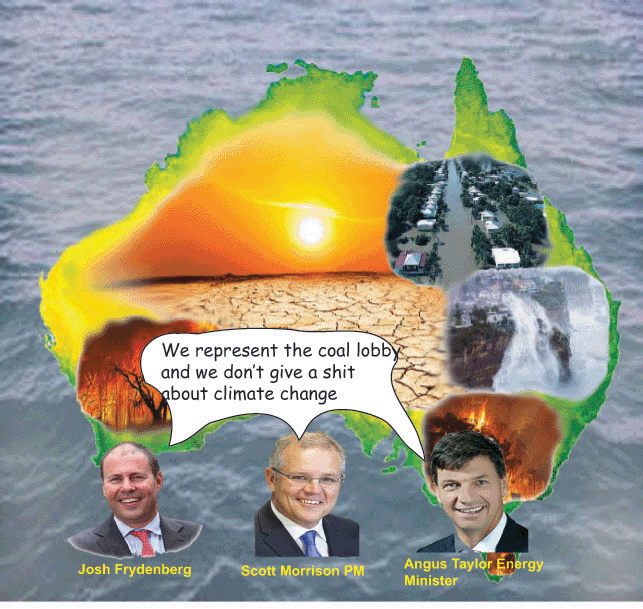
Australia’s government, lackey of the coal industry, in denial over climate change
|
While others face climate reality, our government denies the undeniable, SMH, John Hewson, Columnist and former Liberal opposition leader, 1 Aug 19, despair at just how long our Australian government can continue to deny the undeniable. It seems the new Morrison government has learned nothing, doesn’t want to learn anything, just wants to kick the climate emergency further down the road, hoping nothing of consequence happens on its watch.It is fundamental to us meeting our global obligations as the largest exporter of fossil fuels in the world, with poor and worsening biodiversity, and in the clear interests of our future generations, that we make the transition to a low-carbon society by the middle of this century.
It should have been particularly instructive that Britain, a nation that led the industrial revolution fuelling its economy with coal, and has weathered the Thatcher era tensions with the coal mining industry, has recently announced its plan for a complete exit from coal and declared that there is, indeed, a “climate emergency”. Similarly, the Germans have announced a commitment to stop using coal by the mid-2030s, and even the likes of China and India are moving much faster than expected to reduce their reliance on fossil fuels. At the very least, our government should have heard and responded to the din of cries for action: from the 60 to 80 per cent of respondents to various surveys; from big business, including conspicuously large fossil fuel miners such as BHP, Rio, Glencore, and Woodside; and from the Reserve Bank of Australia, the Australian Prudential Regulation Authority, the Australian Securities and Investments Commission and the Australian Competition and Consumer Commission. No! The tin-eared Coalition has preferred silly stunts such brandishing a lump of coal in Parliament, claiming unjustified electoral mandates to mine more coal and build a new coal-fired power plant in North Queensland, even though there is no net demand for electricity in that region (when more than 80 global banks wouldn’t finance it nor insurers insure it, and where renewable alternatives are much cheaper). It has also ignored the potential of carbon farming in agriculture and scare-mongered over the inevitable transition to electric vehicles. While Australia dithers, others face reality. In November, the Federal Reserve Bank of San Francisco will host what is believed to be its first research conference focused on climate change, acknowledging the systemic risks to the soundness of the US banking system. In April, with global insurers shouldering $160 billion in climate-related losses from last year alone, a group that included 30 central banks – Australia’s included – called for measures to spur green finance. In May, the Bank of England issued climate risk guidance to help insurers and re-insurers assess the financial risks posed by climate threats such as heatwaves, floods and storms. ……https://www.smh.com.au/environment/climate-change/while-others-face-climate-reality-our-government-denies-the-undeniable-20190731-p52cdl.html |
|
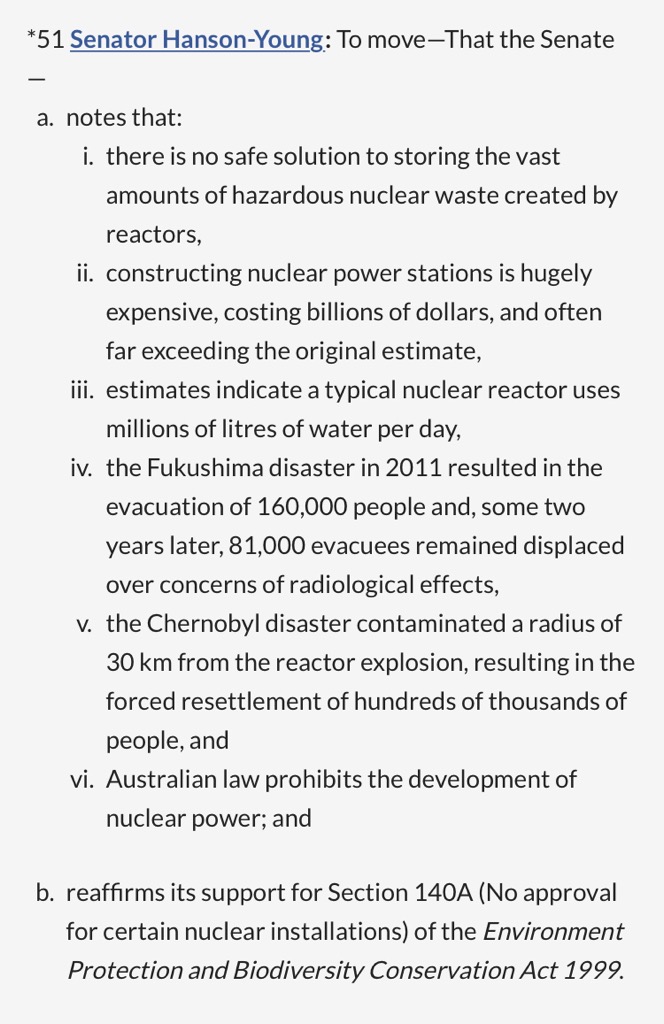
Australian Senate passes motion to retain Australia’s ban on nuclear power
This motion was moved by Senator Hanson-Young and passed by the Senate, 29 July 19
Flynn electorate, Queensland, would be happy to host nuclear power plant, National Party MP Ken O’Dowd says
My area would accept nuclear: Qld Nats MP, The Islander, Rebecca Gredley , 29 July 19,
Federal Nationals MP Ken O’Dowd says his electorate would accept a local nuclear power plant, spruiking the energy source as the “safest” for electricity.
“Study after study in scientific journals prove that nuclear power plants are by far the best and safest way to make reliable electricity,” the Queenslander told the lower house on Monday.
Labor MPs in the chamber heckled Mr O’Dowd during his speech, questioning where he would propose to build a nuclear power plant in Australia.
The Nationals MP said it would take 20 years to build a power station, so the debate needed to start sooner rather than later…….
Mr O’Dowd is one of a handful Nationals MPs calling for a feasibility study into nuclear power. …….https://www.theislanderonline.com.au/story/6299668/my-area-would-accept-nuclear-qld-nats-mp/?cs=7
New Minerals Council chair Helen Coonan speaks out for nuclear power, and for Adani coal mine
Nuclear power should be considered for Australia: Minerals Council chair Helen Coonan, ABC, By senior business correspondent Peter Ryan 29 Jul 19, Newly appointed Minerals Council chair Helen Coonan has become the latest business heavyweight to call for nuclear power to be considered as part of Australia’s future energy mix.
Key points:
- The Minerals Council’s new chair Helen Coonan says there should be a parliamentary inquiry into nuclear power for Australia
- Ms Coonan’s comments come in response to statements from BHP’s CEO saying that climate change poses “an existential risk” to the planet
- She backed Adani’s Carmichael coal mine, saying the company “wouldn’t be proceeding if they didn’t have the business model to sustain the mine”
The former Howard government minister said the “nuclear option” should be on the table, along with renewables, as the resources industry edges away from fossil fuels in the coming decades.
Speaking to the ABC’s AM program, Ms Coonan said Australians were ready for a “sensible conversation” about nuclear power generation, which is currently outlawed in Australia.
“I think it’s time to give it a go quite frankly. There’s a long way to go, of course, because there are legislative barriers and there needs to be political will,” Ms Coonan said in her first broadcast interview as the Minerals Council of Australia’s chair……..
Ms Coonan’s push for nuclear power came as she responded to growing concerns about the future of coal, after BHP chief executive Andrew Mackenzie recently said climate change posed “an existential risk” to the planet.
Federal and state legislation blocks the development of local nuclear power generation, although calls are growing for a parliamentary inquiry into the feasibility of a local industry
 Last week, former National Party leader Barnaby Joyce suggested residents living near a nuclear reactor could be offered free nuclear power.
Ms Coonan — the first Minerals Council chair to come from outside the resources industry — did not sidestep environmental and safety concerns, but suggested Australia could consider smaller nuclear power stations, unlike the giant plants in the US, Europe and China.
“You’ve always got to be concerned about safety and that applies to nuclear power,” she said.
“It’s important to that any technology any mine and any power source is safe.”
Minerals Council backs Adani mine
Ms Coonan backed the approval of Adani’s Carmichael mine in central Queensland and said tough regulation was unnecessarily delaying projects………..
Last week, University of Sydney forensic accounting specialist Sandra van der Laan told the ABC that Adani’s corporate structure was “a corporate collapse waiting to happen”.
In an analysis labelled by Adani as false and misleading, Professor van der Laan likened Adani’s complex structure to the US energy giant Enron, which collapsed in spectacular fashion in 2001.
In addition to the Minerals Council role, Ms Coonan is also chair of the Australian Financial Complaints Authority and a non-executive director at Crown Resorts. https://www.abc.net.au/news/2019-07-29/nuclear-power-australia-should-be-considered-minerals-council/11359998
Australia’s legal ban on nuclear power will remain, says Environment Minister Sussan Ley
Environment Minister Sussan Ley refuses to consider an amendment to nuclear power ban in Australia The West Australian, 29 July 2019
Environment Minister Sussan Ley has quashed a push to lift the moratorium on nuclear power, saying she will not consider the ban as part of an upcoming review of Australia’s environmental protection legislation.
Speaking to The West Australian, Ms Ley gave the Federal Government’s strongest comment yet on the issue, indicating the settings would remain the same on nuclear power and a moratorium would not be lifted.
“I will not be looking to change the moratorium on nuclear power as part of that review,” Ms Ley said.
Ms Ley also said she would not be reviewing the decision by her predecessor — West Australian Melissa Price who was dumped from Cabinet — to approve the Yeelirrie uranium mine 500km north of Kalgoorlie a day before the May 18 Federal election.
“I don’t propose to review decisions that were already made before I became minister,” Ms Ley said, despite advice the mine could lead to the extinction of up to 12 native species.
As part of her portfolio, Ms Ley will have carriage over the 10-year review of the Environment Protection and Bio-diversity Conservation Act, which needs to begin by October.
The Act recognises the protection of the environment from nuclear actions as a matter of national environmental significance and specifically prohibits nuclear power generation in Australia.
A group of Coalition MPs, including Craig Kelly, James McGrath and Keith Pitt, want the Act to be amended to allow nuclear power generation to be permitted in Australia as a way to supply reliable, low-emissions base load power.
The move is backed by the Minerals Council of Australia and industry with Prime Minister Scott Morrison handed a draft terms of reference into a nuclear power inquiry last month. Ms Ley’s stance also comes as Labor tries to wedge the Government on power prices.
Shadow energy minister Mark Butler will today say average wholesale energy prices in the States connected to the National Energy Market — of which WA is not a participant — have risen 158 per cent since 2015.
Resources Minister Matt Canavan said it “makes sense” to see if nuclear power was a worthwhile option in the current environment but that he was not convinced it would be good for Australians struggling with higher power prices.
“It may not meet our present needs given we have a desperate need to reduce power prices and nuclear power is on the more expensive end of the scale,” he said.
Former deputy prime minister and Nationals MP Barnaby Joyce, who wants an inquiry into nuclear power, said last night he believed it was the only way to achieve zero emissions power.
“If this absurd zeitgeist believes that Australia singlehandedly contains the temperature of the globe by reason of them using coal fired power – as much as I disagree with that based on science – I’ll take the next alternative for baseload power which is nuclear power,” he said.
“Although we send uranium all around the world for zero-emissions power, there is an exceptional paranoia about it in Australian politics,” he said.
Energy Minister Angus Taylor told Question Time last week the government had an “open mind” on nuclear power generation but that there was no current plan to lift the moratorium.
“We always approach these things with an open mind, but we do not have … a plan to change the moratorium,” he said.
Opposition energy spokesman Mark Butler said nuclear power would not bring price relief for Australians.
“Based on the advice of industry and experts, it is clear nuclear power is not a viable option for Australia… The economics do not stack up and it would just mean higher power bills,” he said.
Nuclear power generation in Australia was pushed by John Howard while Prime Minister, with the Coalition running on a pro-nuclear platform at the 2007 election.
In 2006 former Telstra CEO Ziggy Switkowski chaired a Commonwealth government inquiry into nuclear power which concluded Australia was well placed to consider adding nuclear to its energy mix.
An energy Green Paper by the Coalition government in 2014 suggested nuclear energy was a “serious consideration for future low emissions energy”.
Australia is home to a third of the world’s uranium deposits and is the third largest producer behind Kazakstan and Canada.
Uranium accounts for around a quarter of Australian energy exports.
Australia’s right-wing push for nuclear power is really a ruse to promote the coal industry
 Wren’s Week: Out with Medicare and in with nuclear power Independent Australia By John Wren | 27 July 2019 “………..In the last week or so, too, there has been an upswing in calls for nuclear power in Australia. Interestingly, the calls are being made by all the old die-hard coal freaks in the Liberal and National Parties. Barnaby Joyce was prominent, with a harebrained scheme to offer free electricity to people whose homes are within sight of the plant.
Nuclear power has also been discussed amongst all the “looney fringe” on Sky News (after dark). The Energy Minister Angus “Watergate” Taylor was put under extreme pressure during Question Time by the Labor Party. He was visibly flustered. Taylor is not a strong performer at the Despatch Box. It culminated with him “not ruling out” nuclear power.
While we argue and debate the pros and cons of nuclear power, we are also continuing to burn coal. It’s a ruse and Australians should not be sucked in by it. Nuclear power is not the answer to Australia’s emissions now. It may have been 20 years ago when it was first mooted, but that time is long gone. https://independentaustralia.net/politics/politics-display/wrens-week-out-with-medicare-and-in-with-nuclear-power,12941
National Party Member for Gippsland Darren Chester makes reassuring, but rather ambiguous, noises against setting up nuclear power
 “No plans” for move to nuclear: MP Latrobe Valley Express, Michelle Slater , 26 July 19,
The Australian Nuclear Association released a paper recommending five nuclear power plants be built in the Latrobe Valley, with the support of a handful of Coalition MPs, including Barnaby Joyce.
He said it was his priority to “secure reliable and affordable energy for Gippsland families, businesses and the farming community”…….
ANA vice president Robert Parker said they had been studying several sites in Queensland, New South Wales and Victoria, but it had not gone “beyond a broad brush approach at this stage”. ….
Gippsland Trades and Labour Council secretary Steve Dodd said the union did not support nuclear energy due to the amount of risks it presented.
“People talk about clean energy, but you only have to look at Japan and Chernobyl with these massive accidents where people have been evacuated,” Mr Dodd said….
Voices of the Valley president Wendy Farmer was sceptical about the viability and safety of nuclear power and described the idea as a “brain fart” and an “expensive pipe dream”.
“We can use the existing energy grid with renewable energy much faster and cheaper than nuclear without the risk of a spill,” Ms Farmer said.https://www.latrobevalleyexpress.com.au/story/6292224/no-plans-for-move-to-nuclear-mp/
Labor leader Anthony Albanese asks “Where would the Liberal Coalition like nuclear reactors to be placed”?
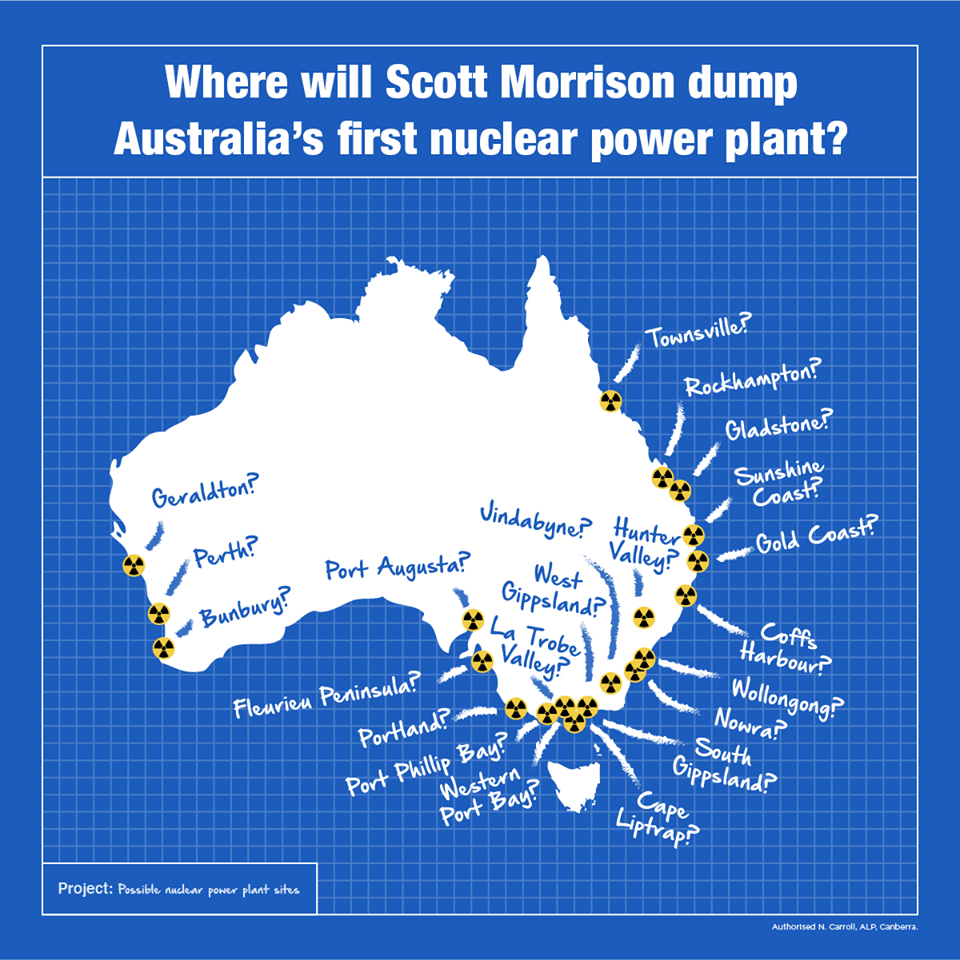
 Anthony Albanese MP https://www.facebook.com/AlboMP/posts/2531261843574579– 25 July 19
This week, the Government said they had an “open mind” about nuclear power in this country. If they really mean that, where on this map are they going to build it? Because these locations haven’t just been pulled out of some hat. These are the locations that the nuclear industry says a nuclear power plant would need to be located.
And if they want to build these things, every single Australian – from Geraldton to the Gold Coast – deserves to know where.
State Development Minister Cameron Dick says that Nuclear power would gut Queensland
 Nuclear power would gut Qld, minister says https://thewest.com.au/business/markets/nuclear-power-would-gut-qld-minister-says-ng-s-1957385, Sonia KohlbacherAAP, Wednesday, 24 July 2019
A senior Queensland politician has shot down a push by a handful of federal politicians to reconsider nuclear power.
The state’s energy and farming sectors would be gutted if Queensland played host to a nuclear power plant, State Development Minister Cameron Dick told a budget estimates hearing on Wednesday.
Mr Dick was responding to several coalition MPs who want to explore the viability of nuclear power, which is banned under federal law.
“A nuclear power plant would be a disaster for industry, for jobs and for growth in our state,” Mr Dick said.
“We’ve got new energy industries, industries that will create jobs for our children, that will be completely gutted by this proposal.” Mr Dick said nuclear power would run renewable energy sources out of town at a time of significant investment, strangle efforts to build a hydrogen industry and require massive government subsidies to get off the ground.
The nuclear push is being led by Hinkler MP Keith Pitt with the backing of Senator James McGrath, while other MPs within the ranks of Prime Minister Scott Morrison’s government have failed to dismiss it when probed.
Energy and Emissions Reduction Minister Angus Taylor noted the ban when asked to rule it out in federal parliament on Tuesday.
“We’re not focused on the fuel source, we are focused on the outcome,” he said.
Mr Taylor said there were no plans to overturn the ban.
Senate moved to call on Senator Canavan to explain nuclear waste dump plan – size of dump, and types of wastes
24 July 19, Sarah Hanson Young has a motion in parliament today re the rumours about a larger dump site
Senator Hanson-Young: moved —That the Senate—
- notes that recent reports that the proposed nuclear waste dump site in South Australia will be expanded, covering at least 160 hectares, an increase of 60%, are deeply troubling given the lack of consultation; and
- calls on the Minister representing the Minister for Industry, Science and Technology, Senator Canavan, to provide a full explanation of the current plans for the nuclear waste dump site, and to clarify exactly how large it will be and what level of waste it will hold.
News South Wales South Coast touted as the place to site a nuclear power plant
|
Is nuclear power an energy solution that could come to the South Coast? Bega District News , Albert McKnight ,23 July19,
Nuclear power has again become part of the national conversation and South East NSW is still being touted as a potential location to install a plant. Earlier this year Nuclear for Climate Australia said NSW could host 10 nuclear power plants and reiterated how the South Coast was a place of interest as a construction site. Under its proposal it states the South Coast has potential if included with other power plants that could be built at East Gippsland, the Snowy Mountains or Jervis Bay.
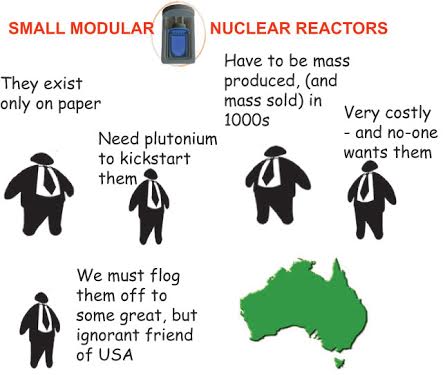
While it states the coast has many sites with “good access to once through sea water cooling” – running a large amount of water through a power plant’s condensers then discharging it into a waterway with only a small amount of evaporation – an extensive grid upgrade would be required for a 2.2GW plant. …… While federal and state laws do not allow the development of a nuclear power industry, several MPs want this changed according the Sydney Morning Herald, and at a recent conference the NSW Nationals passed a motion stating the party’s support for nuclear energy in Australia. Deputy Premier and Member for Monaro John Barilaro has been vocal about the need for a conversation around the technology for years, last month saying it was “guaranteed baseload energy with zero emissions, no fossil fuels and probably the cheapest cost to the average Australian household”. He said last year he attended a global seminar in the US on the next generation of nuclear energy systems called small modular reactors (SMRs), which are are smaller in size than conventional reactors and can be placed in remote areas without the need to feed directly to the grid. “Given their size and efficiency, their waste is minimal (new advancements in technology continues to address the waste issue) and compared to reactors of bygone eras, they are becoming very affordable,” he said. But Electrical Trades Union national secretary Allen Hicks said there were significant safety risks associated with nuclear power and the cost to construct, maintain and dispose of nuclear waste far outweighed any perceived benefits. “If Barilaro was being honest, he would tell people that nuclear is not a viable option without massive taxpayer subsidies which would see Australians’ good money thrown after bad,” he said. “The best option for cheap, clean and safe energy for Australian workers and consumers is for unions, industry and government to work together on pursuing a just transition towards renewable energy.” https://www.begadistrictnews.com.au/story/6288083/is-nuclear-power-an-energy-solution-that-could-come-to-the-south-coast/ |
|
Continuing problem of radioactive waste at Hunters Hill – contamination from old uranium processing site

Key points:
- The area on Sydney’s north shore was the former site of the Radium Hill refinery, which closed in 1915
- Residents have fought for decades to have the Government remove the contaminated soil
- A plan to keep the waste in “cells” on site has been rejected and labelled a “temporary” fix
Several properties on Nelson Parade at Hunters Hill have been built on land contaminated by the former Radium Hill uranium processing plant in the 1900s.
Residents have spent decades urging the government to remove the affected soil, which the NSW Environment Protection Authority found was contaminated with petroleum hydrocarbons, coal tar pitch, arsenic and lead.
The Council has now voted against a recommendation by its own consultants to “encapsulate” the low-level radioactive material in cement “cells” and store it onsite.
Philippa Clark from the Nelson Parade Action Group said residents felt the plan would make their lives worse.
“The cells will make the stigma permanent, our anxiety increased, trapped in unsaleable homes.
“The proposal is silent on all of those impacts.
She said most Hunters Hill residents knew nothing of the latest plan by Property NSW as few residents were formally notified and it was on exhibition over the school holidays.
The existence of the radioactive material, in the soil for over a century, was discovered 53 years ago and remains unmanaged.
The Council and residents want the soil removed altogether but an earlier proposal to send it to a waste facility at Kemp’s Creek in Sydney’s West was abandoned after a backlash from the local community.
There is no other waste facility in the state licenced to handle the material and a national radioactive waste management facility is yet to be established by the Federal Government.
Ms Clarke told Monday night’s council meeting that if the radioactive material was stored onsite at Hunters Hill, there was no guarantee it would be moved later when suitable off-site storage becomes available.
Former Hunters Hill mayor Richard Quinn also urged the Council to reject the proposal.
“Whilst we might wish to see progress at last and endorse this [proposal], the onsite encapsulation component of this report I believe cannot be accepted,” he said.
“It’s contrary to the best practice in sustainable remediation, and it’s not unreasonable for this community to expect anything less than best practice.”
Resident John Akin thought the Council had no choice but to accept the proposal, saying those pushing for outright rejection “overlook the health risk from the waste being left in its current uncontrolled state”.
But Mayor Mark Bennett said Property NSW told the Council during a meeting that the majority of Hunters Hill ratepayers were against the encapsulation option.
“It will be interesting to see what the Government decides to do as a result of this … it’s a decision of the Government at the end of the day.
“My opinion is we should not vote for encapsulation because I think it could be a permanent solution without any guarantees that it’s an interim solution — I can’t support it.”
Last year the NSW Government announced $30 million to fully remediate the land after a parliamentary inquiry a decade ago.
Senate voted on Press Freedoms – Matter of Public importance
 Press Freedoms – Matter of Public importance Senator Sarah Hanson-Young

 Antinuclear