AUKUS & potential terrorism threats.

I don’t think the federal or state government have seriously evaluated what would happen if there was an accident or terrorism strike on the AUKUS nuclear submarines, either in Adelaide or Perth. Or if they have, they certainly aren’t telling us, or planning to provide iodine tablets to locals living in the area.
Robyn Wood. FOE Adelaide, 27 Feb 2026
I’ve been looking at a bit of history and since 2000 there have been three credible attempts towards bombing Lucas Heights.
Three bomb threats to Lucas Heights
The first plot was uncovered by NZ police who found Afghan refugees had plans to bomb Lucas Heights during the Sydney Olympics. They weren’t jailed. I wonder where they are now.
The second was in 2003, when a French Al Qaeda supporter called Willie Brigette came to Australia to teach people how to make bombs destined for Lucas Heights. He was deported back to France. I wonder where he is now. After the plot was discovered, the NSW Health Department told councils and emergency services that residents within 3km of Lucas Heights would be evacuated, and residents within 80km of Lucas Heights (most of Sydney) should stock up on iodine tablets at their own expense. I doubt Sydney people have been told that. The fire brigade, ambulance and other emergency services threatened not to attend a nuclear emergency as they didn’t think the state government was prepared enough, and they were not happy that iodine tablets wouldn’t be supplied to Sydney.
Secret government report – I don’t know who the whistleblower was, but it’s thought that a secret “radiation consequences analysis” commissioned by the nuclear regulator ARPANSA found that a terrorist strike on Lucas Heights could contaminate most of Sydney with radiation. Not released publicly. After 9/11 the regulator’s CEO told a Senate Inquiry that they were considering the impact if a plane hit the reactor building. Nothing has been released publicly. The government claims that it has to stay secret as it might help terrorists and Sydney residents don’t need to know.
The third one was in 2005, Islamic militants in Sydney were arrested for being a terror cell and stockpiling bomb-making materials, training in outback hunting camps and planning a possible attack on Lucas Heights. Three of them were caught near Lucas Heights and when they were separated, each man told police a different story. Bomb making chemicals and equipment was found in their houses. I can’t find what happened to them, and wonder where they are now.
Years ago, Islamic State called for jihadist supporters to attack in western countries.
I wonder if Mark Butler and other MPs are aware of this history? I wasn’t.
References. The Guardian –https://www.theguardian.com/world/2005/nov/15/australia.bernardoriordan
Nuclear FOE – https://nuclear.foe.org.au/articles-about-lucas-heights-accidents-emergency-planning-insurance-etc/
Proposed Australian National Firearms Laws

22 December 2025 By Lee Capocchi, Australian Independent Media
Change from State-based and comprehensive database
By Lee Capocchi
First and foremost: We are not proposing to take away firearms from legitimate and legal owners and users.
What we are proposing is changing shooter Licencing and Weapon registration from a State-based system to a National System.
Creating a National database modelled on existing Driver Licencing, Vehicle registration and fleet-ownership system.
Let’s get the major changes covered first
- A National Shooter and Weapons Authority.
- All shooter Licences and Weapons registrations to be renewed three yearly.
- A National Database that may be accessed by all interested and relevant parties. This will include Police, Security Agencies, Firearms Dealers, Gun Clubs, Shooting ranges and people buying and selling firearms. Access and ability to read or enter data will vary according to requirements of each group.
- Such usage to record each and every access, by whom and what was read or written, similar to the Police LEAP system.
- Recording of Ballistics for EVERY weapon in circulation. Starting with sales of new firearms by dealers, then when there is ownership transfer of second hand weapons, and the balance of existing weapons on Licence or registration renewal.
- Ballistics samples to be held by Authority. Details to be in database as per fingerprints.
Group ownership laws which will include Police, Military where weapons are carried in Public Spaces, Clubs, Shooting Ranges.- Automatic flagging within system or by authorities or other users.
- Transfer of ownership modelled on motor vehicle transfer with Buyer and Seller to complete and separately submit paperwork.
- Tighter rules for weapons stored by authorities.
- Speedy identification of lost or stolen weapons.
- Special permits or licences for those that do technical work on firearms. Renewed annually.
- Physical checks on flagged owners, weapons and special permits.
- Non-Citizens and visitors are not permitted to have a Weapons Licence and are not permitted to own or use a firearm.
- An exception will be made for visiting shooting competitors and their weapons used for competitions/sports Eg commonwealth games or Olympics
- Permanent Residents may obtain a Provisional Licence and be limited to 1 firearm only. (Red P on Licence)
- Only citizens may hold a full licence and for the first 3 years from obtaining that licence (Green P on licence) may only possess 2 weapons.
- an exception will be made for Professional shooters employed in this field
- Professional Shooters may have more than 5 weapons
Benefits of the new system
Lost or stolen weapons will be traceable to last known owner and location. Any responsible person or Authority will quickly know if a weapon is so lost or stolen. This will include buyers and dealers as well as police.
Any ballistic sample obtained at a crime scene will be traceable to last known owner and location and provide Authorities with a serial number and let them know if that weapon was reported lost or stolen. It will instantly link crimes committed with the same weapon.
The database will track which owners are permitted to use which weapons and the number and type owned.
Authorities (mainly police) will be more accountable to tracking all weapons held in custody or storage, as will dealers.
There will be tracking of weapons sent for destruction, which currently does not occur, and if weapon is used in a crime the data trail will point to what happened and who did it.
Police in cars will also be able to check or update quickly on their terminals or tablets.
Downsides of new system
Expect Kickback from:
- Police, Clubs, Ranges and even the Military
- Owners who currently do not have to regularly of frequently renew registration or licences
- Dealers who will need to set up access and purchase ballistics testing equipment.
For the first 3 years there will need to be a large team of staff doing data entry and filing of ballistics samples, after which activity will settle down to renewals and registration. The workload will be somewhat reduced by mandating dealers do the entry for new and secondhand weapons and do the ballistics testing. There will need to be designated police stations to do ballistics and certain tasks like late renewals, etc.
For remote or poorly serviced, paperwork and ballistic samples can be posted to the central authority using registered post.
Some details
All new weapons will be entered in the system and have with ballistics done at point of sale. So rather than fishing a bullet out of someone and simply identifying the type of weapon, authorities will know the serial number of the gun and who, if anyone, was the last owner.
Previous names and addresses of licence owners will be on display and also previous owners of weapons also will be immediately visible. A search of the database can be instigated to further trace history if needed………………………………………………………………………………………………………………………………………………………………………………………………. https://theaimn.net/proposed-australian-national-firearms-laws/
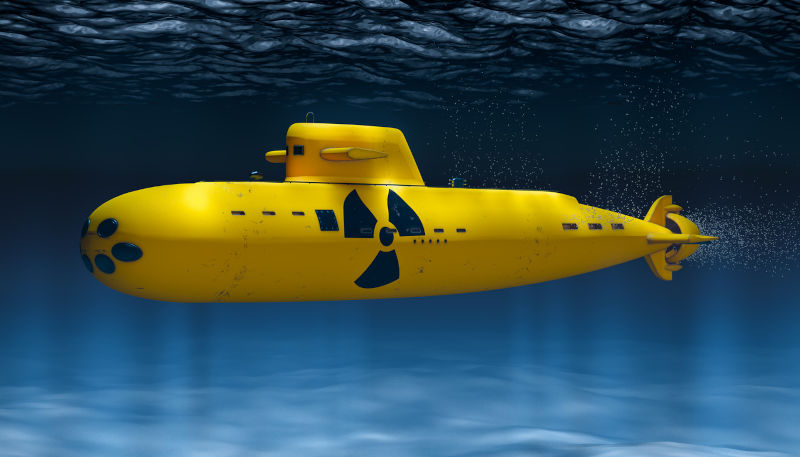
New report on British nuclear submarines should raise alarm bells across Australia.
Friends of the Earth Australia, 11 Aug 25, https://newshub.medianet.com.au/2025/08/new-report-on-british-nuclear-submarines-should-raise-alarm-bells-across-australia/113276/
A detailed new report on the British nuclear submarine experience should ring alarm bells across Australia. The report has been written for Friends of the Earth Australia by British scientist Tim Deere-Jones, who has a B.Sc. degree in Maritime Studies and has operated a Marine Pollution Research Consultancy since the 1980s.
Mr. Deere-Jones said:
“The British experience with nuclear submarines reveals a litany of safety risks, cost blowouts and delays. It can confidently be predicted that these problems will beset the AUKUS submarine programme.”
“Operational risks include radiological pollution of marine and coastal environments and wildlife; risks of radioactivity doses to coastal populations; and the serious risk of dangerous collisions between civilian vessels and nuclear submarines, especially in the approaches to busy naval and civilian sea ways and fishing grounds.
“Ominously, the problems seem to be worsening.”
Dr. Jim Green, national nuclear campaigner with Friends of the Earth Australia, said:
“The report reveals disturbing patterns of unacceptable safety risks, an appalling lack of transparency, cost-blowouts and delays.
“None of the issues raised in Tim Deere-Jones’ report have been adequately addressed in the Australian context. Indeed a federal EPBC Act assessment absurdly precluded nuclear accident impact assessments as ‘out of scope’. If those vital issues are addressed at all, it will be by a new, non-independent military regulator ‒ a blatant, deliberate breach of the fundamental principle of regulatory independence.
“The Australian government must immediately initiate a thorough, independent review of the AUKUS submarine project and this report should be an important input into that inquiry.”
The report, ‘The British experience with nuclear-powered submarines: lessons for Australia’, is online at https://nuclear.foe.org.au/nuclear-subs/ or direct download https://nuclear.foe.org.au/wp-content/uploads/Deere-Jones-nuclear-submarine-report-final-August-2025.pdf
Earthquake with epicentre near proposed nuclear site rattles eastern Australia
Epicentre located about 36km from one of seven locations where federal opposition proposes building nuclear power plant if elected
Stuti Mishra, Wednesday 23 April 2025
The quake’s epicentre has been located about 36km from
Liddell, the site of a decommissioned coal-fired power station and one of
seven locations where the federal opposition has proposed building a
nuclear power plant if elected. Opposition leader Peter Dutton last year
named Liddell as a candidate for Australia’s first nuclear energy
facility under the Coalition’s plan to replace ageing coal infrastructure
with nuclear reactors. The site has since come to be a flashpoint in the
national energy debate.
Independent 23rd April 2025, https://www.independent.co.uk/news/world/australasia/earthquake-australia-nsw-sydney-canberra-magnitude-b2737717.html
What if a Fukushima-sized nuclear accident happened near you?
On March 11 we commemorated 14 years since the terrible nuclear disaster in Fukushima. The impacts of this event are felt to this day with tens of thousands of people still displaced and tens of thousands of tonnes of contaminated liquid being routinely dumped in the Pacific.
Japan is a rich, technically sophisticated and modern country with high safety standards., In these ways it is comparable to Australia – except that unlike Australia Japan has decades of nuclear experience. If the Coalition’s nuclear power proposal were to go ahead, the risk of a nuclear accident is always present. It is simply not worth the risk.
The interactive map at nuclearplume.au uses a directo overlay of the Fukushima radiation plume, based on research originally peer reviewed and published by the European Geosciences Union. It shows the deposition of radioactive caesium-137 from the Fukushima disaster as of July 2011. The darker the shading, the higher the level of radioactive contamination and the higher the radiation exposures for people in those areas. At distances far from the Fukushima plant, radiation exposures were low but even low radiation doses can cause negative health impacts including fatal cancers and cardiovascular disease.
US report discusses possibility of nuclear submarine accident, if subs supplied to Australia

A report to the US Congress discusses the possibility of an accident with a nuclear-powered submarine if it supplies one to Australia.
This comes amid renewed questions over whether an AUKUS submarine deal would leave the US vulnerable, and an accident off the English coast where a tanker carrying jet fuel for the US military has hit a cargo ship.
The risk of a marine accident is one of three risks looked at around the submarines deal that is central to the the AUKUS Pillar One pact.
The congressional research report said an accident “might call into question for third-party observers the safety of all US Navy nuclear-powered ships”.
That could erode US public support and the ability of US nuclear-powered ships to make port calls around the world.
The 111-page report by the Congressional Research Service discussed the US not handing over the subs at all – although Canberra just made a $870m downpayment on them.
Keeping them might make up for the US sub fleet hitting “a valley or trough” around now till the 2030s, and shipbuilding being at a low point, it said.
Donald Trump’s pick for the top defence policy role at the Pentagon, Elbridge Colby, has said AUKUS could leave the US short and “it would be crazy to have fewer SSN Virginia-class [attack submarines] in the right place and time”.
The new research report to Congress said Pillar One was launched in 2021 without a study of the alternatives.
One alternative “would keep all US-made SSNs under the control of the US Navy, which has a proven record extending back to 1954 of safely operating its nuclear-powered ships”.
The original Pillar One pact is for the US to sell between three and five subs to Australia, then Australia to use US and UK nuclear propulsion technology to build another three-to-eight nuclear powered, conventionally armed submarines itself, for a total fleet of eight.
Australia’s Defence Minister Richard Marles said on Monday that Elbridge Colby was broadly supportive of AUKUS, if enough subs were available.
Canberra was aware of the challenge in the US around producing submarines, “and that’s why we’re contributing to the US industrial base”.
“And it’s a significant contribution and it’s going to increase the availability of Virginia class submarines for the United States.
“That’s a point which has been accepted and understood by the US Defence Secretary, Pete Hegseth, in the meeting that I had with him.”
Australia was last year included as a “domestic source” of US military production for the first time, and is aiming to ramp up making ammunition and missiles, as well as test hypersonic weapons with the US and UK.
“That’s going well in the sense that we are making the contributions, we are seeing an increase in production rates, and over the time frame in which we are looking to have our Virginia class submarines transferred to us, we are confident that this challenge can be met,” Marles told the ABC.
In the US, Trump appears most focused on building an ‘Iron Dome’ missile defence system, as he mentioned in his speech to Congress. This would be another huge pressure on military spending.
The report to Congress covered three big risks – accidents and whether Pillar One was the best option for deterrence and “warfighting cost-effectiveness”, and how the tech – the “crown jewels of US military technology” – could be kept secret, especially from China.
It debated a different “military division of labour”.
“Australia, instead of using funds to purchase, build, operate, and maintain its own SSNs, would instead invest those funds in other military capabilities – such as … long-range anti-ship missiles, drones, loitering munitions, B-21 long-range bombers, or other long-range strike aircraft” to conduct “missions for both Australia and the United States”.
The general rule was programmes should not go ahead without a sound business case, it noted.
“There is little indication that, prior to announcing the AUKUS Pillar 1 project in September 2021, an analysis of alternatives … or equivalent rigorous comparative analysis was conducted to examine whether Pillar 1 would be a more cost-effective way to spend defence resources for generating deterrence and warfighting capability”.
The report made no mention of how New Zealand, Japan, Korea and others might join AUKUS Pillar Two, an agreement for sharing advanced military tech.
What if a Fukushima-sized nuclear accident happened in Australia?
Today is the 14th anniversary of the Fukushima disaster, and this morning the good folks at Don’t Nuke the Climate released a huge research project that shows what a Fukushima-style nuclear disaster would look like if it happened at one of Dutton’s seven proposed reactor sites.
About these maps, https://nuclearplume.au/ 11 Mar 25
The seven sites on this map have been selected by the federal Coalition to house multiple nuclear power reactors.
You can select the reactor site and wind direction to see how a Fukushima-scale nuclear disaster would contaminate different areas surrounding the seven sites in Australia.
The interactive map uses a radiation plume map, originally peer reviewed and published by the European Geosciences Union. It shows the deposition of radioactive caesium-137 from the Fukushima disaster as of July 2011. The darker the shading, the higher the level of radioactive contamination and the higher the radiation exposures for people in those areas. At distances far from the Fukushima plant, radiation exposures were low but even low radiation doses can cause negative health impacts including fatal cancers and cardiovascular disease.
Caesium-137 has been one of the most significant radioactive contaminants since the March 2011 Fukushima disaster but many other types of radioactive particles contaminated wide areas (iodine-131, xenon-133, etc.).
Other radiation fallout maps from the Fukushima disaster can be seen here and here.
AUKUS ‘impact assessment’ report ignores nuclear submarine risks in SA

By David Noonan, Feb 28, 2025, https://johnmenadue.com/aukus-impact-assessment-report-ignores-nuclear-sub-risks-in-sa/
Environment Minister Tanya Plibersek has released an EPBC Act ‘Impact Assessment Report’ (IAR) to address the environmental impacts of constructing nuclear submarines at Osborne, Port Adelaide. A deluge of documents — the 200-page IAR with 750 pages of appendices — have been released for “public consultation” running till 17 March. However, the IAR fails to provide answers to community’s “right to know” on nuclear submarine accident risks and radioactive waste storage facing Port Adelaide.
The proponent Australian Submarine Agency ruled a range of lead community safety concerns as “out of scope” of this Osborne assessment. The IAR says: “Information on potential sources of radiation has been provided to inform, however does not form part of the Strategic Assessment as these sources will be managed via separate environmental assessment processes and approvals as necessary.”
Impacts of commissioning and operation of the “power module” (the nuclear reactor) “is considered outside the scope of this assessment” ‒ that assessment is to be “held over” for a new non-independent military nuclear regulator that reports to Defence Minister Richard Marles. The military are to effectively take over public safety at Port Adelaide even though the federal Health Minister Mark Butler is the local MP.
Federal Labor is in denial over nuclear submarine reactor accident risks. The word “accident” does not even appear in the 200-page IAR. Even a visit by a nuclear-powered submarine to a port in Australia requires emergency response planning that sets evacuation zones for potential nuclear reactor accidents. It is at best inept to decide to impose nuclear sub reactor accident risks onto communities across Lefevre Peninsula and Port Adelaide while failing to conduct full impact assessments and limiting “public consultation” to only those aspects that suit Labor’s staged roll-out of the AUKUS nuclear sub agenda.
The management facility for radioactive waste at Osborne, and the disposal pathway for such radioactive waste, “is considered outside the scope of the Strategic Assessment”. Marles is already a year late on his own schedule to announce a “process” for managing AUKUS nuclear waste storage and disposal, due back in March 2024. The IAR radioactive waste management section says: “The facility is to be designed to have the capacity to manage radioactive material over the 50-year Strategic Assessment timeframe.” Thus, radioactive wastes may accumulate and remain ‘stored’ at Osborne for decades.
The IAR also misrepresents nuclear submarine reactor radioactive wastes to be stored at Osborne as “similar to those that occur in over 100 locations nationwide, including hospitals, science facilities and universities” and “similar to the waste generated by hospitals and research facilities around Australia”.
Emergency services workers have a ‘right to know’
SA emergency services workers — first responders, the police, fire, ambulance and hospital personnel — have a right to know what nuclear health risks they face. Federal emergency provisions apply in event of a nuclear sub reactor accident at Port Adelaide. The civilian Australian Radiation Protection and Nuclear Safety Agency “Guide for Radiation Protection in Emergency Exposure Situations” and “Nuclear powered vessel visit planning” set out the studies and Emergency response measures that are to be put in place.
The ARPANSA Guide authorises very high ionising radiation dose exposures to emergency workers in tasking them to undertake “urgent protective actions” on site at a nuclear accident, at a dose of up to 50 milliSieverts (mSv). That is 50 times in excess of the recommended civilian maximum allowed dose of 1 mSv per year.
Affected members of the public within an “Urgent Protective Action Zone” of 2.8 km radius from the site of a nuclear sub reactor accident also face authorised high ionising radiation dose exposure of up to 50 mSv. In a “Reference Accident” the local population may face evacuation and may require “decontamination” and medical treatment. A wider zone where “the surrounding population may be subject to hazards” is described as having a radius of several kms. ARPANSA also require studies of a local population out to 15 km from a nuclear submarine mooring.
Catastrophic conditions
In an even more severe AUKUS nuclear accident, federal provisions provide for civilian SA emergency workers to face “the development of catastrophic conditions”. Emergency workers and designated shipyard workers are then to be called upon to “volunteer” to risk dangerously high ionising radiation dose exposures of up to 500 mSv. The ARPANSA Guide states female emergency workers are to be excluded: “Female workers who might be pregnant need to be excluded from taking actions that might result in an equivalent dose exceeding 50 mSv”.
The ARPANSA Guide authorises “actions to prevent the development of catastrophic conditions” by civilian workers. “Category 1 Emergency workers” may “receive a dose of up to 500 mSv”, a dangerously high ionising radiation dose exposure that is 500 times the maximum allowed civilian annual dose. The ARPANSA Guide states:
“Emergency workers may include workers employed, both directly and indirectly, by an operating organisation, as well as personnel of response organisations, such as police officers, firefighters, medical personnel, and drivers and crews of vehicles used for evacuation. …
“Emergency workers undertaking mitigatory actions and urgent protective actions on-site, including lifesaving actions, actions to prevent serious injury, actions to prevent the development of catastrophic conditions that could significantly affect people and the environment, and actions to prevent severe tissue reactions. … They may also receive a dose of up to 500 mSv for life saving actions, to prevent the development of catastrophic conditions and to prevent severe tissue reactions.”
Federal and SA governments have a responsibility to be transparent over a required “Emergency Response Plan” for AUKUS nuclear reactor accidents. No government can claim to have a social licence for AUKUS nuclear subs while failing to inform affected community and affected workers of the nuclear accident and ionising radiation health risks they may face.
Further information is online.
Australia’s Nuclear Plan: Climate & Security threat.
The Australian Security Leaders Climate Group, 28 Feb 25
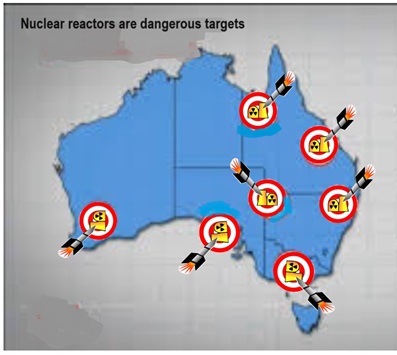
Australia’s proposed nuclear power plan is facing serious pushback from former defence and security leaders, who warn that it increases national and regional security risks and delays climate action.
The Australian Security Leaders Climate Group (ASLCG) has issued a strong statement today highlighting the dangerous vulnerabilities nuclear power plants would introduce:
A Target in Modern Warfare – Nuclear power plants would become high-value, vulnerable targets for missile strikes, sabotage, and cyberattacks. With all proposed sites located within 100 km of the coast, they are easy targets in times of conflict.
A Military Dilemma – Admiral Chris Barrie (Retd), former Chief of the Australian Defence Force, warns that these power stations would divert critical defence resources away from protecting Australian cities and military bases. “Where do we allocate limited national defence capabilities?” he asks.
A Costly Security Burden – Cheryl Durrant, former Defence Department Director, says that Australia lacks a layered missile defence system to protect these plants. “Building one would be complex, expensive, and stretch our security resources even further.”
A Climate Setback – The nuclear plan would perpetuate reliance on coal-fired power for decades, adding two billion tonnes of carbon emissions and derailing our climate targets.
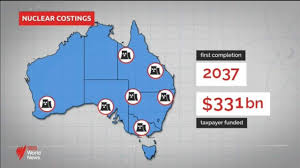
Nuclear reactors could become targets of war, defence experts warn
The Australian Security Leaders Climate Group has warned the Coalition’s nuclear plans could leave Australia vulnerable to devastating attacks.
Key Points
- The Australian Security Leaders Climate Group has warned nuclear reactors could become targets of war in Australia.
- Nuclear reactors could be targeted by missile attack and sabotage, the group said.
- The Coalition is planning to build seven small nuclear reactors across five states.
Australian nuclear reactors could become a target of war if the Coalition was to go ahead with plans to build them, a group of former defence leaders warn.
The plan to build seven small nuclear reactors across five states on the sites of coal-fired stations could leave Australia vulnerable to missile warfare and sabotage, the Australian Security Leaders Climate Group says.
The group, including former Australian Defence Force chief Chris Barrie and former director of preparedness and mobilisation at the Department of Defence Cheryl Durrant, is urging the nation not to go down the path of building nuclear power stations.
Modern warfare is increasingly being fought using missiles and unmanned aerial systems, Barrie said.
“Every nuclear power facility is a potential dirty bomb because rupture of containment facilities can cause devastating damage,” he said.
“With the proposed power stations all located within a 100 kilometres of the coast, they are a clear and accessible target.”
Durrant cited the Russia-Ukraine war where both sides have prioritised targeting their opponents’ energy systems
Australia would be no different,” Durrant said.
Nuclear power plants could become a dual target due to their role in energy supply, but also the catastrophic devastation which would occur if facilities were breached.
This means Australia would need to consider introducing expensive and complex missile defence systems and cyber and intelligence resources to defend the plants if war were to break out — which the nation currently lacks.
“Do we prioritise the protection of cities and population centres and military bases, or do we divert vital resources to defending seven nuclear power stations scattered across Australia?” Barrie said.
The group said building nuclear capabilities would derail Australia’s climate targets and exacerbate risks in the region.
The EPBC Act ‘Impact Assessment’ Report on Federal imposition of N-Subs fails to provide answers to community’s ‘Right to Know’ on nuclear risks facing Port Adelaide
Initial Brief by David Noonan Independent Environment Campaigner 8 Feb 2025. Flawed ‘assessment’ of Osborne / Port Adelaide nuclear submarine site ignores accident risk (David Noonan, Feb. 2025)
The Federal Impact Assessment Report “SUBMARINE CONSTRUCTION YARD STRATEGIC ASSESSMENT
OSBORNE, SA” (IAR, 21 Jan 2025) clearly does is not intend to answer lead community concerns over
N-sub nuclear reactor accident risks and radioactive waste storage at Osborne, Port Adelaide.
A deluge of Federal Gov doc’s, a IAR of 200 pages with Appendices of 750 pages, are out for ‘public
consultation’. The proponent Australian Submarine Agency (see ASA web) are to run four Public
Information ‘Drop-In’ Sessions over 19 – 22th Feb. Public input is due in by cob the 17th March.
However, the Federal Gov has ruled a range of lead community concerns as “out of scope” of this
‘Strategic Assessment’, see IAR Section.6 Impact factors 6.16 Radiation (p.6-40 to 6-44).
The management facility for radioactive waste at Osborne, and the disposal pathway for such
radioactive waste, “is considered outside the scope of the Strategic Assessment” (p.6-41).
The IAR says: “Information on potential sources of radiation has been provided to inform, however
does not form part of the Strategic Assessment as these sources will be managed via separate
environmental assessment processes and approvals as necessary.”
The IAR Radioactive waste management section (p.3-19 to 3-21) says: “The facility is to be designed to
have the capacity to manage radioactive material over the 50-year Strategic Assessment timeframe.”
N-sub radioactive wastes may accumulate and stay ‘stored’ at Osborne for decades…
The IAR also mis-represents N-sub radioactive wastes to be stored at Osborne, as: “similar to those
that occur in over 100 locations nationwide, including hospitals, science facilities and universities” (3-
20), and “similar to the waste generated by hospitals and research facilities around Australia” (6-41).
Key health and safety issues are excluded from this EPBC Act public consultation. ASA (p.6-43) is to
conduct a separate ‘Environmental Radiological Assessment’ to license impacts at Osborne. The IAR
(at 6-44) says: “No nuclear actions are included within the Actions or Classes of Actions of the Plan.”
Impacts of commissioning and operation of the ‘power module’ (the nuclear reactor) “is considered
outside the scope of this assessment” (p.3-19 & 6-41) – to be held over for a military nuclear regulator.
The Federal Labor Gov are in denial over N-sub nuclear reactor accident risks. The word ‘accident’
does not even appear in this 200-page IAR. This is a multi-year Federal Gov failure to study and make
public required nuclear accident Emergency response measures and Evacuation plans at Osborne.
See a 2-page Briefer: “Labor imposes AUKUS nuclear submarines while failing to inform the affected
SA community of the health risks they face in a potential reactor accident” (29 July 2024).
Brief sub-heading: ‘SA Emergency workers may face “catastrophic conditions” at a N-Sub accident.’
It is disrespectful of the Federal Gov to continue to push N-sub accident risks onto community across
Lefevre Peninsula and Port Adelaide while only conducting partial impact assessments and limiting
‘public consultation’ to only those aspects that suit Labor’s roil out of the AUKUS N-sub agenda.
The Federal Gov are also now seriously misleading community and misrepresenting nuclear health
and safety risks, see IAR Effects of Radiation p.6-41 and Figure 34 potential health effects p.6-42.
SA State Gov ‘impact’ assessment for the Osborne Submarine Yard concludes ‘No
significant effects’ on community wellbeing, but fails to release nuclear accident studies:
The SA State Gov has released a “Submarine Construction Yard Environmental Impact Statement”
(EIS, Nov 2024, 427 pages, plus 22 x ‘Technical Report’ Appendices) for ‘consultation’ to 17 March. This EIS
process has a ‘YourSAy’ webpage, a Plan SA webpage, and a proponent’s Australian Naval
Infrastructure (ANI) page that promotes the three ASA ‘Drop-In’ Info Sessions over 19 to 22 Feb.
The EIS claims “there is no risk to people or the environment of radiation exposure” (EIS Summary p.9)
from ‘nuclear-powered propulsion systems’ on-site testing of N-sub nuclear reactors at Osborne.
The EIS Ch.23 ‘Social Impact Assessment’ concludes there are “No significant effects” on community
wellbeing (EIS Summary p.36-37), and no danger to people or property across an ‘immediately
impacted community’ who live or work in North Haven, Largs Bay and Semaphore; or in the ‘wider
community’ within Greater Adelaide who it is said ‘may feel some real or perceived broader impacts’.
These claims and concocted conclusions derive from an abject failure to recognise the effects and
impacts of a potential N-sub nuclear reactor accident, with required Evacuation Zone planning. The
word ‘evacuation’ appears 3 times in the 400-page EIS – all to do with flood risks not reactor risks
Why have key public safety accident studies still not been made public for N-subs at Port Adelaide?
Even a visit by a nuclear-powered submarine to a port in Australia requires Emergency response
planning that sets Evacuation Zones for potential nuclear reactor accidents (see a 2-p Briefer).
The SA Premier Hon Peter Malinauskas MP is effectively targeting Osborne Port Adelaide for N-sub
nuclear reactor accident risks, just as Opposition Leader Peter Dutton MP targets Port Augusta for
his nuclear power reactor accident risks and impacts: see David Noonan’s Public Submission No.261
(14 Nov 2024, 10 pages) to an ongoing Federal “Inquiry into nuclear power generation in Australia”
The EIS 4.12 Nuclear-powered propulsion systems and radiation exposure from accident (p.85-88)
says (p.85) that it has assessed: “the process to transport, receive, secure, store, install, test and
commission a nuclear-powered propulsion system”, and: “radiation exposure pathways to workers,
the public and non-human biota during construction and operation (including incident scenarios)”.
The EIS admits (p.87): “A loss of fuel element integrity within the power unit, while highly unlikely,
could result in a radiological release direct from the NSRP into the atmosphere”, and cites: “a number
of scenarios that could lead to a radioactive release from the Power Unit have been extensively
modelled by the NSRP Design Authority”, but fails to make these public safety studies public.
At this late stage, it is unacceptable for the SA Gov to fail to consult the public on N-sub nuclear
reactor accident Emergency response measures including required Evacuation Zone planning.
This EIS also assesses N-sub generation and storage of radioactive wastes at Osborne but concludes
“No significant waste management effects have been identified” (see Executive Summary p.28-29; EIS
Ch.16 Waste Management p.262 to 288; and Appendix 1.11 Waste Management 44 pages). The EIS cites a
‘Low-Level’ radioactive waste category that can require waste isolation for up to a 300 year period.
The EIS further admits (p.87): “Loss of control of any liquid or solid waste could result in the release of
radioactive material and therefore pose a hazard to individuals and the environment. … An aquatic
release into the Port River could result in a wider spread of contamination, and would be dependent
on quantity of the release and the tidal flow at the time of the release.”
For further information, see FoE Australia webpage: https://nuclear.foe.org.au/nuclear-subs/
Geoscience Australia declares Darwin, Latrobe Valley high-risk earthquake zones
The Age By William Howard, 29 Jan 25
In short:
Darwin and Victoria’s Latrobe Valley have been identified as high-risk earthquake zones.
The National Seismic Hazard Assessment has been updated for the first time since 2018.
What’s next?
The Coalition has earmarked the Latrobe Valley as a potential site for a nuclear reactor if it wins the election, which is a concern for some residents.
…………………………………….In an update to the National Seismic Hazard Assessment, Geoscience Australia identified the Latrobe Valley and Darwin as the only two areas in Australia with a “higher risk of strong ground shaking”.
The Woods Point quake, centred about 130 kilometres east of Melbourne and 125km south of Ms Cox’s Traralgon South home, was the largest onshore event of its kind in the state’s modern history.
There were more than 43,000 reports from the public and the earthquake was felt in parts of New South Wales, South Australia, Tasmania, and the Australian Capital Territory. https://www.abc.net.au/news/2025-01-30/darwin-and-latrobe-valley-high-risk-earthquake-zones/104873178
Emergency leaders say nuclear reactors pose unnecessary risk
November 27, 2024, by: The AIM Network, Emergency Leaders for Climate Action. https://theaimn.com/emergency-leaders-say-nuclear-reactors-pose-unnecessary-risk/
NUCLEAR REACTORS WOULD introduce significant and unnecessary risk to Australian communities and emergency responders, including firefighters already stretched by escalating climate fuelled disasters, warns Emergency Leaders for Climate Action (ELCA) in a submission to the parliamentary inquiry into nuclear power generation in Australia.
Greg Mullins, speaking on behalf of 38 former fire and emergency service chiefs from across Australia said: “Our firefighters are on the frontlines of escalating climate fuelled disasters, like bushfires and floods, fuelled by climate pollution. They’re not trained or equipped to deal with nuclear emergencies that could arise from nuclear reactors or the transportation and storage of radioactive waste.”
The ELCA submission highlights that nuclear reactor emergency planning and management has not been addressed by proponents of nuclear energy and emphasises that Australian emergency services lack the experience and resources to handle potential nuclear emergencies.
“Australian emergency services would have to be built up from scratch to respond to nuclear disasters, with no costings or plans in place to achieve this. There are no fully staffed urban fire service stations near the proposed sites for nuclear reactors, and it’s neither feasible nor reasonable to expect volunteer bushfire fighters to handle such high-risk emergencies,” said Mr Mullins
“I oversaw the deployment of Australian firefighters to assist in the wake of the earthquake and tsunami that led to the Fukushima disaster, where the chaos and devastation caused by nuclear failures was stark. First responders, many of them civilian firefighters, were thrown into situations they weren’t trained for. That’s not a risk we should take in Australia, no matter how remote.
“There are no safety or environmental frameworks in place to manage the risks of nuclear reactors or to safely transport and store radioactive waste in Australia.
“Placing nuclear reactors in disaster-prone areas like Latrobe, Lithgow, Singleton, and South Burnett would add to the burden emergency services already face responding to worsening bushfires, floods, and storms.
Beyond the safety risks, former Commissioner Mullins called the proposal a “dangerous distraction” from the energy solutions Australia urgently needs right now. “Every coal-fired power station will shut down before a single watt of nuclear power can enter our system. Nuclear reactors simply cannot be built quickly to address the urgent task of slashing pollution and reducing climate disaster risks right now.
“Our communities and emergency services are bearing the brunt of worsening disasters driven by burning coal, oil and gas. We don’t have the luxury of waiting decades for new power stations, we must slash climate pollution now to protect Australians. Australia can’t afford to risk our energy security, economy and safety on a nuclear fantasy when renewables can cut pollution today and help ensure a safer future for our kids.”
About Emergency Leaders for Climate Action: We are 38 former senior Australian fire and emergency service leaders who have observed how climate change is driving increasingly catastrophic extreme weather events that are putting lives, properties and livelihoods at greater risk and overwhelming our emergency services.
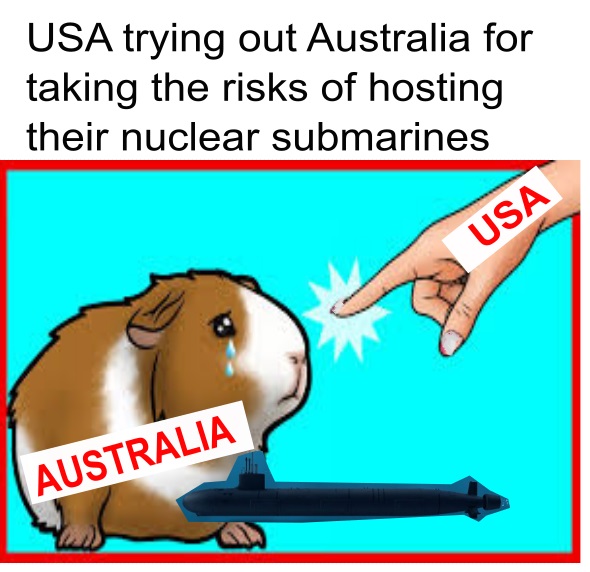
Australia the guinea pig for the safety risks of USA deploying their nuclear submarines on the land of their “friends”?
Why nuclear inspections in Australia have suddenly spiked
The Age, By Matt Wade, October 26, 2024, https://www.theage.com.au/national/why-nuclear-inspections-in-australia-have-suddenly-spiked-20241023-p5kkrl.html
International inspections of Australia’s nuclear facilities and materials have increased by a third in the past year as the nation’s nuclear risk profile changes due to AUKUS.
Since Australia is a signatory to the Nuclear Non-proliferation Treaty, it is required to submit to regular inspections by the International Atomic Energy Agency (IAEA) to verify compliance with nuclear safeguards.
Dr Geoffrey Shaw, director general of the Australian Safeguards and Non-Proliferation Office (ASNO), which ensures compliance with nuclear treaties, said there has been “a 30 per cent increase in inspections in Australia in the last couple of years”.
Under AUKUS, the navy will acquire nuclear-propelled submarines, and Shaw said that has raised Australia’s “risk setting” with the IAEA.
“This country is now going to be acquiring naval nuclear propulsion – it will have high enriched uranium in a country where we don’t currently have high enriched uranium,” he said. “That changes the equation.”
Australia’s nuclear proliferation risk profile is low; it has one research nuclear reactor in Sydney, which uses low-enriched uranium, three uranium mines and some institutions and companies permitted to handle nuclear materials.
But Shaw said the IAEA wants more assurances that there are no undeclared nuclear activities. It is now conducting inspections across the country with “as short as two-hour notification”.
In the year to June 2024, the IAEA made 22 inspections at locations including the Australia Nuclear Science and Technology Organisation (ANSTO), universities, defence facilities and private companies. That compares with 16 the previous year.
The first AUKUS submarines are due to be delivered to the Australian navy in the late 2030s.
When Australia, a non-nuclear-armed nation, acquires nuclear-propelled submarines, a “first-of-a-kind” regulatory approach will be needed to ensure the nation complies with its non-proliferation treaty obligations.
Corey Hinderstein, acting principal deputy administrator of America’s National Nuclear Security Administration (NNSA), said the nuclear safeguards developed in Australia for AUKUS will set a global benchmark for other nations that seek naval nuclear propulsion.
“We know that there are other countries that are interested in developing or partnering on naval nuclear propulsion programs, and those countries are by and large non-nuclear weapon states under the NPT, so they will have the safeguards obligation,” she said………………… https://www.theage.com.au/national/why-nuclear-inspections-in-australia-have-suddenly-spiked-20241023-p5kkrl.html
Protecting the Merchants of Death: The Police Effort for Land Forces 2024
September 12, 2024, by: Dr Binoy Kampmark, https://theaimn.com/protecting-the-merchants-of-death-the-police-effort-for-land-forces-2024/—
September 11. Melbourne. The scene: the area between Spencer Street Bridge and the Batman Park–Spencer Street tram stop. Heavily armed police, with glinting face coverings and shields, had seized and blocked the bridge over the course of the morning, preventing all traffic from transiting through it. Behind them stood second tier personnel, lightly armed. Then, barricades, followed by horse mounted police. Holding up the rear: two fire trucks.
In the skies, unmanned drones hovered like black, stationary ravens of menace. But these were not deemed sufficient by Victoria Police. Helicopters kept them company. Surveillance cameras also stood prominently to the north end of the bridge.
Before this assortment of marshalled force was an eclectic gathering of individuals from keffiyeh-swaddled pro-Palestinian activists to drummers kitted out in the Palestinian colours, and any number of theatrical types dressed in the shades and costumery of death. At one point, a chilling Joker figure made an appearance, his outfit and suitcase covered in mock blood. The share stock of chants was readily deployed: “No justice, no peace, no racist police”; “We, the people, will not be silenced. Stop the bombing now, now, now.” Innumerable placards condemning the arms industry and Israel’s war on Gaza also make their appearance.
The purpose of this vast, costly exercise proved elementary and brutal: to defend Land Forces 2024, one of the largest arms fairs in the southern hemisphere, from Disrupt Land Forces, a collective demonised by the Victorian state government as the great unwashed, polluted rebel rousers and anarchists. Much had been made of the potential size of the gathering, with uncritical journalists consuming gobbets of information from police sources keen to justify an operation deemed the largest since the 2000 World Economic Forum. Police officers from regional centres in the state had been called up, and while Chief Commissioner Shane Patton proved tight–lipped on the exact number, an estimate exceeding 1,000 was not refuted. The total cost of the effort: somewhere between A$10 to A$15 million.
It all began as a healthy gathering at the dawn of day, with protestors moving to the Melbourne Convention and Exhibition Centre to picket entry points for those attending Land Forces.
Over time, there was movement between the various entrances to prevent these modern merchants of death from spruiking their merchandise and touting for offers. As Green Left Online noted, “The Victorian Police barricaded the entrance of the Melbourne Convention Centre so protestors marched to the back entrance to disrupt Land Forces whilst attendees are going through security checks.”
In keeping with a variant of Anton Chekhov’s principle, if a loaded gun is placed upon the stage, it is bound to be used. Otherwise, leave it out of the script. A large police presence would hardly be worthwhile without a few cracked skulls, flesh wounds or arrests. Scuffles accordingly broke out with banal predictability. The mounted personnel were also brought out to add a snap of hostility and intimidation to the protestors as they sought to hamper access to the Convention. For all of this, it was the police who left complaining, worried about their safety.
Then came the broader push from the officers to create a zone of exclusion around the building, resulting in the closure of Clarendon Street to the south, up to Batman Park. Efforts were made to push the protests from the convention centre across the bridge towards the park. This was in keeping with the promise by the Chief Commissioner that the MCEC site and its surrounds would be deemed a designated area over the duration of the arms fair from September 11 to 13.
Such designated areas, enabled by the passage of a 2009 law, vests the police with powers to stop and search a person within the zone without a warrant. Anything perceived to be a weapon can be seized, with officers having powers to request that civilians reveal their identity.
Despite such exercisable powers, the relevant legislation imposes a time limit of 12 hours for such areas, something most conspicuously breached by the Commissioner. But as Melbourne Activist Legal Support (MALS) group remarks, the broader criteria outlined in the legislative regime are often not met and constitute a “method of protest control” that impairs “the rights to assembly, association, and political expression” protected by the Victorian Charter of Human Rights and Responsibilities.
The Victorian government had little time for the language of protest. In a stunningly grotesque twist, the Victorian Premier, Jacinta Allan, defended those at the Land Forces conference as legitimate representatives of business engaging in a peaceful enterprise. “Any industry deserves the right to have these sorts of events in a peaceful and respectful way.” If the manufacture, sale and distribution of weapons constitutes a “peaceful and respectful” pursuit, we have disappeared down the rabbit hole with Alice at great speed.
That theme continued with efforts by both Allan and the opposition leader, John Pesutto, to tarnish the efforts by fellow politicians to attend the protest. Both fumed indignantly at the efforts of Greens MP Gabrielle de Vietri to participate, with the premier calling the measure one designed for “divisive political purposes.” The Green MP had a pertinent response: “The community has spoken loud and clear, they don’t want weapons and war profiting to come to our doorstep, and the Victorian Labor government is sponsoring this.”
The absurd, morally inverted spectacle was duly affirmed: a taxpayer funded arms exposition, defended by the taxpayer funded police, used to repel the tax paying protestors keen to promote peace in the face of an industry that thrives on death, mutilation and misery.
1 This month

of the week – Australians for War Powers Reform (AWPR)
To see nuclear-related stories in greater depth and intensity
 Antinuclear