Basing US Nuclear Subs at Stirling on Garden Island makes Western Australia a nuclear target, while risking “catastrophic conditions” in a N-Sub reactor accident.
Briefer by David Noonan, Independent Environment Campaigner, 07 Sept 2024
What price should West Australian’s pay for AUKUS ? see “AUKUS: The worst defence and
foreign policy decision our country has made” by ex-FA Minister Gareth Evans (17 August 2024):
“… the price now being demanded by the US for giving us access to its nuclear
propulsion technology is, it is now becoming ever more clear, extraordinarily high.
Not only the now open-ended expansion of Tindal as a US B52 base; not only the
conversion of Stirling into a major base for a US Indian Ocean fleet, making Perth
now join Pine Gap and the North West Cape – and increasingly likely, Tindal – as a
nuclear target …”
No Emergency capability exists to respond to a nuclear weapons strike on Stirling off Freo
Nor can Federal and WA Labor claim to have a ‘social license’ for a US N-Sub Base at Stirling
while failing to inform affected community of the nuclear Health & Safety risks they could face.
Community has a basic ‘Right to Know’, a right to full disclosure of nuclear risks in advance of
decisions. A Labor Bill to declare Stirling a “Designated Nuclear Zone” is before Parliament
after a Senate Report. Now 3 yrs into AUKUS, it is long past time for Labor to inform community.
Federal & WA Labor Ministers Joint Ministerial Statement on Nuclear Reactors on Agricultural
Land (18 July 2024) have tackled Dutton over his crazy nuclear ‘power’ reactors at Muja, citing
accident impacts out to 80 km, but Labor fails to be transparent on nuclear risks they impose.
Federal and WA Labor have failed to make public required Health Impact Studies and
Nuclear Accident Scenario Modelling for US N-Sub visits and for a N-Sub Base at Stirling.
The WA State Hazard Plan “HAZMAT Annex A Radiation Escape from a Nuclear Powered
Warship” (update 20 Nov 2023) provides only scant over-view information to the public.
Federal Emergency provisions apply in event of a US N-Sub reactor accident at Stirling. The
federal civilian nuclear safety regulator ARPANSA sets out required Health Impact Studies,
Emergency response measures and Zones that are to be put in place (see “Guide for Radiation
Protection in Emergency Exposure Situations, Part 1 & 2, 2019).
A Defence Operations Manual “OPSMAN 1” (update 2023) is supposed to ‘operationalise’ the
Emergency measures for US N-Sub nuclear reactor accidents in Australian Ports and waters.
An “Urgent Protective Action Zone” of up to 2.8 km radius around the site of a US N-Sub
accident requires an Evacuation Plan for workers and affected residents. An “Extended
Planning Distance”, where “the surrounding population may be subject to hazards”, is set at
‘several kms’ around an accident site. This can extend to 5 km in UK N-Sub Emergency Zones.
ARPANSA and Defence also require studies of a local population out to 15 km from a US NSub mooring – as you can’t tell how far a radioactive pollution plume will spread by wind…
Children are at untenable Health risk in a nuclear strike OR in a US N-Sub reactor accident:
In a military nuclear reactor accident at Stirling the ARPANSA Guide Part 2 (p.18-19 & Table 3.1)
‘authorises’ ionising radiation health exposures to affected civilian workers AND to residents
and their children at a high dose of up to 50 mSv (milli-Sievert). Firty times more than Health
Authorities recommended maximum allowed dose of 1 mSv per year for members of the public.
Exposed residents and especially children need to be able to take stable iodine tablets ASAP to
try to reduce the radiological health risk of contracting thyroid cancer. Evacuees could have to
undergo ‘decontamination’ and need medical treatment, care which may have to be ongoing.
.
The Impact of Nuclear Weapons on Children (ICAN Report, August 2024) “shows in compelling
and often gut-wrenching detail, it is children who would suffer the most in the event of a nuclear
attack against a city today”. The Report is a dire warning that urgent action is needed to rid the
world of nuclear weapons. Australia must Sign & Ratify the Nuclear Weapons Ban Treaty.
WA Emergency workers could face “catastrophic conditions” at a N-Sub reactor accident:
In event of a severe US N-Sub reactor accident at Stirling the ARPANSA “Guide for Radiation
Protection in Emergency Exposure Situations (The Guide Part 2, p.18-19 & Table 3.1) authorises
“actions to prevent the development of catastrophic conditions” by designated WA workers.
‘Category 1 Emergency workers’ could “receive a dose of up to 500 mSv”, a dangerously high
ionising radiation dose exposure that is up to 500 times the public’s max allowed annual dose:
“Emergency workers may include workers employed by an operating organisation, as
well as personnel of response organisations, such as police officers, firefighters,
medical personnel, and drivers and crews of vehicles used for evacuation. …
- Category 1: Emergency workers undertaking mitigatory actions and urgent protective
actions on-site, including lifesaving actions, actions to prevent serious injury, actions
to prevent the development of catastrophic conditions that could significantly affect
people and the environment, and actions to prevent severe tissue reactions. … They
may also receive a dose of up to 500 mSv for life saving actions, to prevent the
development of catastrophic conditions and to prevent severe tissue reactions.”
The ARPANSA Guide Part 1 (Annex A, p.64 Table A.1, 2019) states in stark terms that Emergency
workers can be called upon to ‘volunteer’ for actions “to prevent the development of
catastrophic conditions” in event of a severe US N-Sub nuclear reactor accident:
“… under circumstances in which the expected benefits to others clearly outweigh
the emergency worker’s own health risks”.
As evidence of the extent of nuclear risks to the health of Emergency workers, the ARPANSA
Guide Part 1 (Annex A, p.63) requires female workers to be excluded from these roles:
“…female workers who might be pregnant need to be excluded from taking actions
that might result in an equivalent dose exceeding 50 mSv”
Note: the ‘safety’ of N-Subs in UK Ports has been found seriously wanting, see a Report (2009)
by Large and Associates Consulting Engineers on UK off-site Emergency Planning Measures.
Another Hunter Valley earthquake sounds alarms on Coalition’s nuclear scheme

Solutions for Climate Australia,
Elly Baxter, Senior Campaigner for Solutions for Climate Australia, 7 Sept 24 https://newshub.medianet.com.au/2024/09/another-hunter-valley-earthquake-sounds-alarms-on-coalitions-nuclear-scheme/65734/
The third earthquake in two weeks in NSW’s Hunter Valley today highlights the serious questions about the Liberal National Coalition’s plans for nuclear reactors they are still refusing to answer, says Solutions for Climate Australia.
The earthquake’s epicentre was again very close to the existing Liddell power station, where the Coalition aims to build at least one nuclear reactor. Solutions for Climate Australia Senior Campaigner Elly Baxter said the Coalition has not answered the many questions already raised about safety, emergency response, radioactive waste and water availability at the site.
“Five of the seven sites proposed by the Coalition as suitable for nuclear reactors experience earthquake activity,” Baxter said. “Their energy spokesman Ted O’Brien told ABC Radio Newcastle that a nuclear reactor at Liddell would not proceed if it was deemed unsafe, but what about the four other sites? If these sites are ruled out, where will the Coalition build their nuclear reactors? And will those communities be informed ahead of the federal election?
“Meanwhile, the safety issues we raised two weeks ago remain unanswered. Would local firefighting volunteers handle the nuclear material? What training would local firefighting volunteers receive in handling nuclear radiation? Who would train them? Would the army come in to help?
“How would iodine tablets be distributed to locals to try to reduce cancer risk? What would be the fallout zone and where would the local emergency staging area be? Where would nuclear refugees be accommodated?
“Would the Federal Government be responsible for the emergency management given under the Liberal National policy, the Federal Government would own the nuclear reactor?
“What would happen to the radioactive waste and who would be responsible for that? Where would the enormous volume of water come from to deal with the toxic, radioactive emergency?
“The safety issues highlighted by these earthquakes only compound our concerns that nuclear reactors will take far too long to build to protect Australians from the worst impacts of climate change.”
ENDS
Coalition pledges to ditch nuclear sites if earthquake zones are declared unsafe

The Age, By Mike Foley, August 26, 2024
Proposed nuclear sites would be abandoned if studies reveal unacceptable risks, the Coalition has declared following an earthquake near its planned Hunter Valley site, raising questions about other selected locations close to geological fault lines.
A magnitude 4.7 earthquake struck near Muswellbrook in NSW’s Upper Hunter region on Friday, several kilometres from the Liddell coal plant where the opposition has pledged to build a nuclear reactor if elected. The quake damaged buildings in the town while tremors were felt as far away as Sydney.
Opposition energy spokesman Ted O’Brien pledged that if the Coalition formed government, it would establish an independent nuclear authority that would conduct detailed studies of the proposed sites.
“If [the studies] come back with advice that says any power plant should not proceed, then a power plant would not proceed, full stop,” he told ABC radio on Friday. “That is absolutely key.”………………………………………………………………………………………………………………
Four of the opposition’s seven proposed nuclear sites are located near active fault lines: Port Augusta in South Australia, Lithgow in NSW, Collie in Western Australia and the Latrobe Valley in Victoria – an area that has had seven seismic events this year ranging from magnitudes of 2 to 4.3.
Latrobe Valley resident Wendy Farmer, president of the Voices of the Valley group, is helping to establish an alliance of anti-nuclear groups from the communities selected for plants.
Farmer said the opposition should have studied its selected sites before nominating them for reactors.
“Had they taken time to either speak to companies or communities, they would have already known this,” she said.
Hunter Community Environment Centre co-ordinator Jo Lynch said she was concerned about nuclear waste, considering the millions of tonnes of fly ash stored in dams across her region.
“I am concerned about waste management from a nuclear facility. Just looking at the track record with coal, that was a result of outdated environmental laws,” Lynch said………………………….. https://www.theage.com.au/politics/federal/coalition-pledges-to-ditch-nuclear-sites-if-earthquake-zones-are-declared-unsafe-20240826-p5k5d5.html
NSW earthquake shows Peter Dutton’s nuclear plans are on shaky ground: ACF
Australian Conservation Foundation , Dave Sweeney:
“A magnitude 4.8 earthquake not far from one of Peter Dutton’s proposed nuclear reactor sites is further evidence of the risky nature of the Coalition’s radioactive plan.
“The Coalition failed to do any detailed site analysis or community consultation and has instead based its plan on politics rather than evidence.
“The Fukushima nuclear disaster was caused by a tsunami following an earthquake off the coast of Japan.
“Nuclear facilities are particularly vulnerable to external – and often unpredictable – seismic and climate events.
“Many Australians will have clear memories of the scenes of devastation that followed the December 1989 Newcastle earthquake that killed 13, injured more than 150 and caused a damage bill of around $5 billion.
“If this event had of involved a nuclear reactor, the scale of destruction and impact would have been far greater.
“As well as being the slowest and most expensive energy option for Australia nuclear power is also the most risky and vulnerable.”
Earthquake damages buildings near site of proposed nuclear plant
The Age, By Ben Cubby and Jessica McSweeney, August 23, 2024
A magnitude 4.7 earthquake struck near Muswellbrook just after midday on Friday, a few kilometres from the site where the Coalition has pledged to build a nuclear power plant, damaging some buildings in the town and sending tremors as far away as Sydney.
The State Emergency Services were called to help some people who suffered damage to their homes and businesses in Muswellbrook, but there were no reports of serious injuries.
Some buildings in Muswellbrook’s CBD had broken windows, fallen chimneys and stock spilling off shelves, locals said. At least two public schools were evacuated, and the local power grid was knocked until 2.30pm.
“It was quite alarming, we certainly felt it within the building,” said Muswellbrook Shire Council’s general manager Derek Finnigan. “It went for about 15 seconds I suppose, but it seemed longer of course.”
“We are assessing reports of minor damage to buildings in the community, some private structures in the CBD.”
Tremors were felt in a large radius around the quake’s epicentre at Denman, just south of Muswellbrook, from southern Sydney to Coffs Harbour on the Mid North Coast.
About 2400 people contacted Geoscience Australia to report that they had felt the quake which struck at 12.01pm, senior seismologist Hadi Ghasemi said.
“That is a very large number,” he said. “The earthquake itself was of a decent size and at a depth of 10 kilometres it was quite shallow, so it’s not surprising that it was widely felt.”
Ghasemi said fault lines run near the quake’s epicentre, and these had probably been triggered by stress building up as Australia’s continental plate nudges slowly north-east at a pace of about seven centimetres per year.
“There are existing cracks and weaknesses in the rock in this area, so it is a place where you might expect stress to build up,” he said.
The quake’s epicentre was a few kilometres west of Lake Liddell, where the federal Coalition plans to build a nuclear power plant if elected.
Nuclear facilities can be designed to withstand quakes of magnitude 4.8 and above, according to the World Nuclear Association and studies prepared by the Australian Nuclear Science and Technology Organisation for the Lucas Heights reactor in southern Sydney. However, hardening nuclear facilities against large quakes would add to the overall cost of building them…………………………………..https://www.theage.com.au/national/nsw/earthquake-damages-buildings-near-site-of-proposed-nuclear-plant-20240823-p5k4te.html
Gareth Evans: AUKUS is terrible for Australian national interests – but we’re probably stuck with it

as Paul Keating continues to put it so articulately, that we need to find our security in Asia, not from Asia.
The Conversation, Gareth Evans, Distinguished Honorary Professor, Australian National University, August 16, 2024
This is an edited extract of a presentation by Gareth Evans, Distinguished Honorary Professor at ANU and former Australian foreign minister, to the Academy of the Social Sciences in Australia Conference.
Politics played a significant part in the birth of AUKUS in Australia, and politics both here and in the United States will play a crucial role in determining whether it lives or dies. That is so at least for its core submarine component. The second pillar of the agreement, relating to technical cooperation on multiple new fronts, is both much less clear in its scope and less obviously politically fraught.
On the Australian side, partisan political opportunism was a factor in the initiation of the submarine deal, bipartisan political support was a condition of US agreement to it, and maintenance of that bipartisan support into the future presumably will be a precondition of its continuance, at least when it comes to highly sensitive elements like the handover of three Virginia class submarines.
On the American side, it was perception of US strategic advantage that drove Washington’s agreement to the deal, rather than any domestic political considerations. But strong cross-party support in Congress will remain necessary for its complete delivery. And, at the even more critical executive level, it cannot be assumed the deal is now Trump-proof.
It is only in the United Kingdom that we can reasonably regard domestic politics to be irrelevant to AUKUS’s future. The deal is so obviously a gift to the national Treasury, and has so little impact on national defence and security interests, that no one on any side of politics is ever likely to find it unpalatable.
In Australia, domestic politics have been a factor from the outset. While for the Morrison government the primary driver of the AUKUS decision was, no doubt, the ideological passion of senior Coalition ministers for all things American, it is hard to deny political opportunism came a close second.
Morrison was deeply conscious of the opportunity the deal presented to wedge the Labor opposition in the defence and security space, where the Labor Party has long been perceived, rightly or wrongly, as electorally vulnerable. That the nuclear dimension of the deal was bound to ruffle some feathers in Labor ranks was an added political attraction…………………………………………..
What I am now critical of, is that when Labor did come into office in May 2022, it is clear no such serious review of the whole AUKUS deal ever took place. Crucial questions were never seriously addressed; clearly articulated answers to them have never been given by the prime minister, defence minister or anyone else. The answers that are in fact emerging as further time passes are deeply troubling…………………………………..
……..there is zero certainty of the timely delivery of the eight AUKUS boats. We now know that both the US and UK have explicit opt-out rights. And even in the wholly unlikely event that everything falls smoothly into place in the whole vastly complex enterprise, we will be waiting 40 years for the last boat to arrive, posing real capability gap issues.
………………, the final fleet size – if its purpose really is the defence of Australia – appears hardly fit for that purpose. ………………..
…….the eye-watering cost of the AUKUS submarine program, up to $368 billion, will make it very difficult, short of a dramatic increase in the defence share of GDP, to acquire the other capabilities we will need if we are to have any kind of self-reliant capacity in meeting an invasion threat. Those capabilities include, in particular, state-of-the-art missiles, aircraft and drones, that are arguably even more critical than submarines for our defence in the event of such a crisis.
..the price now being demanded by the US for giving us access to its nuclear propulsion technology is extraordinarily high.
……… The notion that we will retain any kind of sovereign agency in determining how all these assets are used, should serious tensions erupt, is a joke in bad taste.
…….the purchase price we are now paying, for all its exorbitance, will never be enough to guarantee the absolute protective insurance that supporters of AUKUS think they are buying. ANZUS, it cannot be said too often, does not bind the US to defend us, even in the event of existential attack. And extended nuclear deterrence is as illusory for us as for ever other ally or partner believing itself to be sheltering under a US nuclear umbrella. The notion that the US would ever be prepared to run the risk of sacrificing Los Angeles for Tokyo or Seoul, let alone Perth, is and always has been nonsense.
We can rely on military support if the US sees it in its own national interest to offer it, but not otherwise.
…………………………………………………………………………………………………..as Paul Keating continues to put it so articulately, that we need to find our security in Asia, not from Asia.
Australia’s no-holds-barred embrace of AUKUS is more likely than not to prove one of the worst defence and foreign policy decisions our country has made, not only putting at profound risk our sovereign independence, but generating more risk than reward for the very national security it promises to protect. I cannot imagine this decision being made by any of the Hawke-Keating governments of which I was part. Times have changed. https://theconversation.com/gareth-evans-aukus-is-terrible-for-australian-national-interests-but-were-probably-stuck-with-it-236938
The dirty history of ‘Nukey Poo’, the reactor that soiled the Antarctic.
By Nick O’Malley, July 10, 2024 , https://www.theage.com.au/environment/conservation/the-dirty-history-of-nukey-poo-the-reactor-that-soiled-the-antarctic-20240708-p5jrzd.html
The rekindled nuclear debate in Australia has stirred old memories in some of a little-known chapter of our region’s history, when the US Navy quietly installed what today we might call a small modular reactor at the US Antarctic base on Ross Island.
The machine, nicknamed “Nukey Poo” by the technicians who looked after it, was installed at McMurdo base in 1961, when Antarctic exploration was expanding and nuclear energy had developed a bright futuristic sheen.
Things did not end well.
Back then, as now, Antarctic missions relied upon lifelines with distant homes. Supplies had to be carried long and sometimes dangerous distances. The US kept its Antarctic sites supplied via an ongoing supply mission called Operation Deep Freeze, which was based at the McMurdo Naval Air Facility.
According to an article on the Nukey Poo incident published in 1978 by the Bulletin of the Atomic Scientists – a journal concerned with the potential danger of nuclear technology, founded by Albert Einstein and veterans of the Manhattan Project – while a gallon of diesel cost the US Navy US12¢ back then, by the time the Americans shipped supplies to McMurdo, diesel cost 40¢ a gallon. At South Pole station, diesel was worth $12 a gallon.
But the then US Atomic Energy Commission had a solution to save costs on transporting supplies. What if McMurdo, and other distant US bases, were supplied by small transportable nuclear reactors? Congress agreed and soon the Martin Marietta Corporation won a contract to build them.
In an advertisement in Scientific American, the company boasted in language reminiscent of today’s debate over modular reactors that “because nuclear energy packs great power in little space, it’s extremely useful when you need electricity in remotes spots. It’s portable and gives you power that last for years …” Soon, the company said, nuclear power might be carrying us to outer space and frying our eggs.
A reactor named PM-3A (PM stood for “portable, medium powered”) was shipped out in sea crates and installed at McMurdo – which is within New Zealand-claimed Antarctic territory – over the summer of 1961 and became known on the base as Nukey Poo. Because cement would not cure in the frigid climate, the reactor was not encased in concrete, rather its four major components sat in steel tanks embedded in gravel and wrapped in a lead shield.
Admiral George Dufek described the moment as “a dramatic new era in man’s conquest of the remotest continent”. The US administration was certain the reactor did not violate the Antarctic Treaty’s declaration that “any nuclear explosions in Antarctica and the disposal there of radioactive waste material shall be prohibited”.
Within a year, Nukey Poo caused its first fuss, a hydrogen fire in a containment tank that led to a shutdown and energy shortages. Icebreakers fought to break through and fuel for generators was delivered by helicopter, which burned as much as they delivered over the course of a flight. Over the following years, Nukey Poo proved so unreliable and expensive to maintain that the military gave up hopes of using the technology to displace diesel at other remote locations.
In 1972, the navy began the three-year task of decommissioning the reactor and decontaminating the site. During that process, they discovered corrosion that technicians feared may have caused leaks of irradiated material. No detailed investigation was done. The secretary of the US National Academy of Sciences said the program was ended due to a series of malfunctions and the possibility of leaks, the Bulletin of the Atomic Scientists reported. The New Zealand government declared the decision was economic.
Either way, it was decided not only to remove the reactor, but half the hillside it was built into. Eventually 12,000 tonnes of irradiated gravel and soil was removed on supply ships to be buried in concrete lined pits in the United States.
The young Australian scientist, Dr Howard Dengate, who had run one of the NZ bases, hitched a lift on one those ships, the Schuyler Otis Bland, in 1977. Dengate recalls a grumpy captain who once swore at him for inviting bad luck on the ship by whistling on deck. The captain, Dengate recalled this week, blamed him for “whistling up” the storm that struck the vessel before the Australian disembarked in New Zealand and the ship sailed on to the US.
Though the reactor was little discussed in the wider world, no secret was made on the base of the reactor or its impact. Indeed, Dengate recalled finding an operating manual for the reactor in the American rubbish pits that New Zealanders had developed the habit of fossicking in.
But the story did not end there.
In 2011, an investigation by journalists of News 5 Cleveland found evidence that McMurdo personnel were exposed to long-term radiation, and in 2017 compensation was paid to some American veterans of the base. A year later, New Zealand officials announced that it was possible that New Zealand staff were also affected.
It has since been reported that four New Zealanders had raised claims about their ill health since their time in the Antarctic.
In 2020, the Waitangi Tribunal, a permanent commission in New Zealand to investigate cases against the Crown, launched inquiries. They are not yet complete.
Asked if he was concerned about travelling with the irradiated material, Dengate said he was not. “We were young and dumb and adventurous,” he told this masthead of his time in the Antarctic.
The Coalition says its nuclear plants will run for 100 years. What does the international experience tell us?

The average age of an active nuclear reactor worldwide is about 32 years – and a live plant reaching even 60 has ‘never happened’, an expert says
Peter Hannam, Mon 24 Jun 2024 https://www.theguardian.com/australia-news/article/2024/jun/24/coalition-nuclear-policy-peter-dutton-power-plants-100-years-run-time
The federal Coalition’s pledge to build nuclear reactors on seven sites in five states if elected has continued to raise questions this week.
Ted O’Brien, the shadow energy minister, says the plants can operate for between 80 and 100 years, providing “cheaper, cleaner and consistent 24/7 electricity” compared with renewables.
That claim comes despite the CSIRO’s Gencost report estimating each 1-gigawatt nuclear plant could take 15-20 years to build and cost $8.4bn. The first may be double that given the high start-up costs.
But what does the state of the nuclear energy internationally tell us about the Coalition’s proposal?
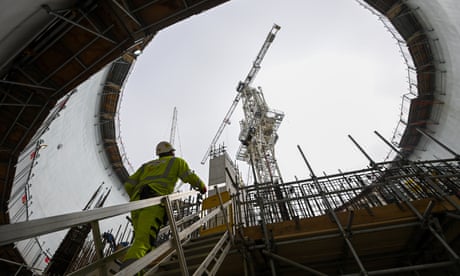
What is the state of the global nuclear industry?
The world opened five nuclear reactors last year and shut the same number, trimming 1GW of capacity in the process, says Mycle Schneider, an independent analyst who coordinates the annual world nuclear industry status report.
During the past two decades, it’s a similar story of 102 reactors opened and 104 shutting. As with most energy sources, China has been the biggest mover, adding 49 during that time and closing none. Despite that burst, nuclear provides only about 5% of China’s electricity.
Last year, China added 1GW of nuclear energy but more than 200GW of solar alone. Solar passed nuclear for total power production in 2022 while wind overtook it a decade ago.
“In industrial terms, nuclear power is irrelevant in the overall global market for electricity generating technology,” he says.
As for small modular reactors, or SMRs,nobody has built one commercially. Not even billionaire Bill Gates, whose company has been trying for 18 years.
The CSIRO report examined the “contentious issue” of SMRs, and noted that one of the main US projects, Utah Associated Municipal Power Systems, was cancelled last November. Even then, its estimated costs in 2o2o of $18,200/kiloWatt, or more than double that of large-scale plants at $8,655/kW (in 2023 dollars).
“In late 2022 UAMPS updated their capital cost to $28,580/kW citing the global inflationary pressures that have increased the cost of all electricity generation technologies,” CSIRO said. “The UAMPS estimate implies nuclear SMR has been hit by a 57% cost increase which is much larger than the average 20% observed in other technologies.”
So at least some nations are still building large reactors?
Of the 35 construction starts since 2019, 22 were in China and the rest were Russian-built in various nations. Russia sweetens its deals by agreeing to handle the waste from the plants it builds.
“The US has blacklisted CGN and CNNC, which are the two major [Chinese] state-owned nuclear companies [in China] that could respond to an international call for tender,” Schneider says. “So could you imagine that Australia would hire a Chinese company under those conditions to build nuclear reactors?”
Aren’t allies like France an option?
France’s EDF was a poster child for the industry, not least because nuclear provides almost two-thirds of the country’s electricity. However, the firm has €54.5bn ($88bn) debt and hasn’t finished a plant since 2007.
Construction of its Hinkley Point C plant in the UK – two giant, 1.63GW units – began in 2018, aiming for first power from 2025. Rounds of delays now mean it might not fire up until 2031 and the costs may approach $90bn when it is complete.
South Korea’s Kepco has been active too, building the 5.6GW Barakah plant in the United Arab Emirates. As Schneider’s report notes, the UAE “did not agree” to the disclosure of cost, delays or impairment losses.
That Kepco debt totals an astonishing $US154bn ($231bn) is perhaps “a slight indication that they cannot have made tonnes of money in the UAE”, Schneider says.
The 4.5GW Vogtle plant reached full capacity in April, making it the US’s largest nuclear power station. Its first two units exceeded $US35bn, with the state of Georgia’s Public Service Commission saying cost increases and delays have “completely eliminated any benefit on a lifecycle costs basis”.
Can these plants really run 80-100 years?
Of the active 416 nuclear reactors, the mean age is about 32 years. Among the 29 reactors that have shut over the past five years, the average age was less than 43 years, Schneider says.
There are 16 reactors that have been operating for 51 years or more. “There is zero experience of a 60-year-old operating reactor, zero. It never happened. Leave alone 80 years or beyond,” he says. (The world’s oldest, Switzerland’s Beznau, has clocked up 55 years with periods of outages.)
CSIRO’s report looked at a 30- or 40-year life for a large nuclear plant as there was “little evidence presented that private financing would be comfortable” with risk for any longer.
As plants age, maintenance costs should increase, as they have in France. That’s not the case in the US, though, with declining investment in the past decade even as the average reactor age has jumped from 32 to 42 years.
“You have two options as to the outcome: either you hit an investment wall, so you have to have massive investments all over the place at the same time, or you get a very serious safety or security problem somewhere,” Schneider says.
US plants have been running an “incredible” 90% of the time over the past decade. Compare that with France’s load factor in 2022 of just 52%, he says.
“The best offshore wind farms in Scotland have a five-year average load factor of 54%.”
Opposition’s nuclear-energy policy would increase defence risk.
7 Jun 2024, Chris Douglas https://www.aspistrategist.org.au/australian-oppositions-nuclear-energy-policy-would-increase-defence-risk/
The Australian Liberal-National opposition’s proposal to build nuclear power stations on the sites of old coal-fired plants is misguided. The policy would perpetuate Australia’s concentration of electricity generation and worsen our vulnerability to air and missile attack.
Renewable-energy installations, by contrast, are numerous, dispersed and therefore much less profitable for an enemy to destroy. They’re also far easier and quicker to fix. And energy storage capacity, another source of resilience, necessarily grows as they’re built.
The current concentration of large slabs of generation capacity in coal-fired stations is already a vulnerability. They’re attractive targets. A single attack by a few strike missiles might knock out a plant and its large chunk of power supply.
Chinese bombers, submarines and carrier-launched aircraft could attack them using guided bunker-busting bombs, regular air-to-ground missiles or hypersonic ones with tungsten penetrators. Russia is indeed targeting power stations in its war against Ukraine, typically hitting them with missiles and drones.
If a big power station’s energy comes from nuclear reactors instead of boilers burning fossil fuel, a strike could cause an environmentally devastating release of radioactive material. If we had nuclear power stations, they would in fact be things that an enemy could use against us.
The Chernobyl nuclear disaster resulted in radioactive contamination of about 150,000 square kilometres reaching as far as 500km from the plant. It released more radiation than the atomic bombs dropped on Hiroshima and Nagasaki combined. In 2007 the Royal United Services Institute for Defence and Security Studies reported: ‘a nuclear power plant contains more than 1000 times the radiation that is released in an atomic bomb blast’. The Chernobyl experience suggests that destruction of a large nuclear station on the site of the Eraring coal-fired plant in New South Wales might render the port of Newcastle inoperative and perhaps force the evacuation of 800,000 people in the city and Central Coast.
Most of Australia’s coal-fired power stations are in NSW, Victoria and Queensland. Replacing at least some with nuclear plants, as the opposition suggests, would therefore expose much of the population to frightening wartime risk. Attacks could result in long-term crippling of the economy by rendering cities uninhabitable. They would raise the cost to Australia for continuing any war.
Fixing a coal-fired power station that had suffered war damage would be hard enough and would take many months, at least. Fixing a nuclear one would be a lot harder and take much longer. For all that time, the economy would be deprived of the plant’s generating capacity.
Wide distribution of electricity generation to hundreds of wind and solar farms avoids such risks. Collateral damage from strikes on them would be small, not least because they are usually in remote places.
Because renewable generation capacity is economically divided among many installations each with modest capacity, they raise an enemy’s cost of knocking down supply. Eraring’s capacity is 2880 megawatts, concentrated in a 400-metre-long line of four generating units, each of which might be disabled by a single hit.
The Macintyre wind farm in Queensland, to be completed this year, will have 180 wind turbines, a site area of 36,000 hectares and a rated capacity of 1026 megawatts. Average output of a typical Australian windfarm, allowing for variation in wind strength, is only about 35 percent of rated capacity. But destroying such an installation would require a great many munitions.
Similarly, the solar farm at Coleambally, NSW, has more than 565,000 solar panels spread over 513 hectares and a rated capacity of 150 megawatts. At the time of completion, its output was expected to average 45 megawatts.
Moreover, generating farms are complemented by homes and businesses that are partly or entirely independent of grid supply thanks to their own solar generation and battery storage.
In World War II, Japan had a dispersed electricity-generating system, which was one reason why the United States did not try to knock out supply. The system consisted of too many targets and would have been too hard to debilitate.
Repairability enhances the inherent robustness of renewable generation. Critical parts that are not made domestically would need to be stockpiled, something that Japan did in preparation for World War II. The federal government’s Future Made in Australia strategy will help. If Australia builds wind turbines, solar panels, batteries and distribution gear, it will have plenty of skills and fabrication machinery for fixing them. Recovery times would be far shorter than for a damaged or destroyed nuclear plant.
The opposition’s nuclear power proposal would lead us into far greater vulnerability in a war with a major adversary. It’s much better to stay on our current course. Every time a new piece of the renewable energy system is switched on, we become a little less vulnerable.
AUTHOR. Chris Douglas served with the Australian Army in infantry and intelligence and later with the Australian Federal Police.
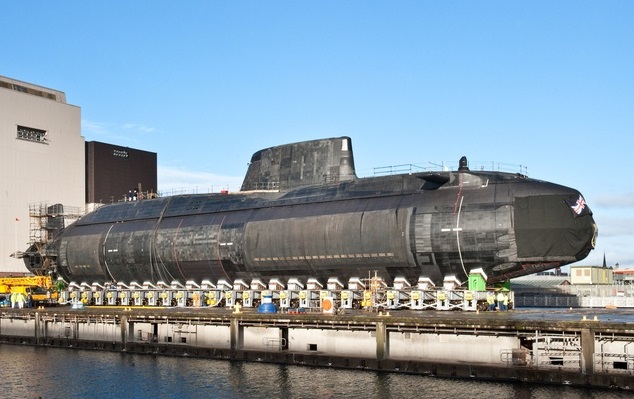
Will Port Adelaide, Fremantle or Port Kembla be the Australian Chernobyl?
By Douglas McCartyJul 21, 2023 https://johnmenadue.com/aukus-will-adelaide-fremantle-or-port-kembla-be-the-australian-chernobyl/
While most discussion of the AUKUS Agreement has focussed on the geopolitical implications for Australia’s standing in the world, the escalation of the risk of war and the crippling cost of the nuclear submarine purchases when less expensive and more sensible non-nuclear options are available, little has been said of the risk to the civilian population posed by these nuclear-powered submarines (or other nuclear-powered naval vessels) in Australia’s home ports.
Perhaps we citizens only enter the calculations as ‘collateral damage’. Any such necessarily technical discussion is hampered by military secrecy. Some information has been released officially, but most is from generalised inference, or conjecture, and so subject to uncertainty. However, in this important matter, it is worth attempting to join the dots….
News from the war in Ukraine includes, almost every other night, a report on the situation around the Zaporizhzhia Nuclear Power Plant, the largest in Europe. Though no longer continuing to generate power for Ukraine, it is always at risk of being shelled or bombed by one side or the other, and regularly just avoiding reactor cooling water pump failure from damaged power transmission lines or lack of diesel fuel for their backup generators for the pumps. How long this situation will continue remains to be seen. And now, after the breaching of the Kakhovka Dam, it is estimated just three months of water for cooling remains.
The consequences of the catastrophic failure of a nuclear reactor are well known to both the Ukrainians and the Russians. To the Northwest of Zaporizhzhia, and just 100 kilometres North of Kyiv, lies the Chernobyl Reactor No. 4, which, on 26 April 1986, underwent meltdown after a coolant and moderator failure, exploded, and caught fire. Radioactive material and fission products were ejected into the air, spreading across the immediate countryside and into Northern Europe. Radioactive rain was reported on the mountains of Wales and Scotland, in the Alps, and contamination in reindeer herds in Northern Sweden. The principal radiological contaminant of concern across this vast area was Caesium-137, one of many fission products and representing some 6% of fission reactor spent fuel. Just 27 kg of Caesium-137, it is calculated, caused this contamination. Some 150,000 square kilometres of Ukraine, Belarus and Russia were initially contaminated. Of course, at the time of the accident, all this was part of the Soviet Union. To this day, 2600 square kilometres around the plant are considered unsafe for human habitation, or agriculture, and will remain so for between 300 and 3000 years! The Reactor used 2% enriched Uranium fuel.
Although the loss of life at Chernobyl was a small fraction of the 100,000 deaths from one of the only two uses of nuclear weapons in war, on Hiroshima in 1945, Chernobyl created 400 times more radioactive pollution. The Hiroshima bomb, “Little Boy”, contained 64 kg of enriched Uranium, though less than 2% actually underwent nuclear fission. The bomb was detonated 500 metres above ground (‘airburst’), and the fatalities were the result of blast, heat, and irradiation, in a city centre. Chernobyl occurred at ground level and so ejected debris upwards initially, followed by smoke columns from subsequent fires. . The 31 deaths at Chernobyl were plant operators and, of course, firemen. The G7, the AUKUS Partners and the Quad just met at ‘ground zero’ in a rebuilt Hiroshima City, 78 years after the bombing.
The US Navy nuclear powered warships, including the ‘Virginia’ Class submarines that Australia would buy under the AUKUS Agreement, principally use Highly Enriched Uranium (HEU) reactors. The Uranium is enriched to above 93% fissionable Uranium-235. It is weapons grade material and has in part been sourced from decommissioned nuclear weapons. The submarine reactors are intended to last for the ‘Life of Ship’ (LOS), up to 33 years, without needing refuelling. Low Enriched Uranium reactors need fuel replacement every 5 to 10 years, when, importantly, the containment pressure vessel around the reactor is physically inspected for flaws and deterioration. This is not done for the HEU, LOS reactors.
The US Navy nuclear powered warships, including the ‘Virginia’ Class submarines that Australia would buy under the AUKUS Agreement, principally use Highly Enriched Uranium (HEU) reactors. The Uranium is enriched to above 93% fissionable Uranium-235. It is weapons grade material and has in part been sourced from decommissioned nuclear weapons. The submarine reactors are intended to last for the ‘Life of Ship’ (LOS), up to 33 years, without needing refuelling. Low Enriched Uranium reactors need fuel replacement every 5 to 10 years, when, importantly, the containment pressure vessel around the reactor is physically inspected for flaws and deterioration. This is not done for the HEU, LOS reactors. In one year, at full power, (210 x 365 ÷ 940 =) 81.5 kg of U-235 would be required. Along with other decay products from the U-235 (Strontium-90, Iodine-131, Xenon-133 etc.), as noted earlier some 6% (or 4.9 kg) would be Caesium-137. The ‘neutron poisons’ also created are balanced out by ‘burnable’ neutron poisons incorporated into the core when new, to maintain reactor function over the years. So far, simple nuclear physics and thermodynamics.
Operationally, one surmises, the submarine reactor will infrequently run at full power. Actual annual production of Caesium-137 may lie between, say, 0.8 kg for 1/6th capacity operation on average for the whole year, and 2.45 kg at half capacity for the year. As the reactor is designed to not need refuelling for the ‘Life of the Ship’, the Cs-137 would continuously accumulate inside the reactor fuel elements. At the lower bound of 1/6th operation, there would be approaching 27 kg of Cs-137 in the core after 33 years, allowing for the decay of some of the Caesiun-137, given its half-life of 30.05 years. At the upper bound, it would take about 13 years for 27 kg of Caesium-137 to accumulate.
Visiting nuclear-powered submarines, from the US or UK, would be similar. Visiting US nuclear-powered aircraft carriers, each with two A1B reactors each of 700MWt, may have 27 kg of Cs-137 in their reactor cores after just two years of operation.
Visiting ships may stay in Australian ports for days or even weeks. Australian submarines will be in port not only between deployments, but also for maintenance, for months and years. The US Navy appears to have about 40 Virginia Class Subs, with some 18 undergoing long-stay maintenance, or about half. We might expect the same. So, at any one time, the AUKUS plan would see naval nuclear reactors, US, or UK, or Australian, or all, in Adelaide, and/or Fremantle, and/or Port Kembla. While peacetime only presents the risk of a nuclear accident, wartime would see these important military assets easily detectable – and targetable – while in port. In the event of a nuclear war, this may be just one of our worries.
In a conventional, non-nuclear conflict, the story may be very different. The situation of the Zaporizhzhia civilian reactors in Ukraine is most instructive. However, as legitimate military targets, would such restraint be shown towards the reactors in the submarines? What would be the impact of a conventional cruise or hypersonic or ballistic missile warhead on the pressure hull and reactor containment vessel (and plumbing) of a nuclear-powered submarine?
Should just 27 kg of the Caesium-137 in the naval reactor cores be released into the air through an explosion (as at Chernobyl) in an accident or deliberate attack, what would be the outcome? In Fremantle, especially if the ‘Fremantle Doctor’ was blowing, would sections of Fremantle and Perth become unsafe for human habitation? In Port Kembla, especially if a ‘Southery Buster’ came through, the Illawarra and, depending on the particular weather conditions, would parts of the South of Sydney become unsuitable for human habitation? For Port Adelaide, especially if a NW change came through, would the Adelaide coastal strip from Gawler to Aldinga become unsuitable for human habitation?
Imagine the number of “single mums doing it tough” who would have to be relocated to emergency accommodation – somewhere! Imagine all that social housing rendered uninhabitable! Even if we ‘won’ the war.
This is a real possibility if we have nuclear reactors in surface ships or submarines in our ports, or in our ship building and maintenance facilities.
Bungled design blamed for cracks in the lining of ANSTO’s new nuclear waste plant
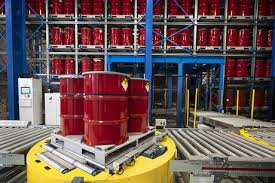
A bitter clash has erupted over who is to blame for cracks appearing in the lining of the “hot cells” of a brand new radioactive waste plant.
Linda Silmalis, Chief Reporter, May 12, 2024, The Sunday Telegraph https://www.dailytelegraph.com.au/news/nsw/bungled-design-blamed-for-cracks-in-the-lining-of-anstos-new-nuclear-waste-plant/news-story/07b3fc1e633cd769bbecb9da90e4932a
The lining within the “hot cells” of the new radioactive waste treatment plant at Lucas Heights has literally been peeling off, with secret details about the defect in the ANSTO-designed facility unveiled during a legal dispute.
The construction of the $27 million plant has been at the centre of a protracted legal battle between ANSTO and the contractor, with each blaming the other for the bungle.
The plant – which will become operation in the late 2020s – has been built to treat waste from the production of a special radioisotope called Mo-99 to be used in medicine.
Contractors were invited in 2017 to build the plant with ANSTO and Icon SI (Aust) – comprising Cockram Construction – awarded a contract for $27 million for the construction of the building.
However, Icon SI has since taken ANSTO to court with the two parties in dispute over the works, including the withholding of payments and who is responsible for the so-called “epoxy defect”.
A technology and construction list statement filed in the NSW Supreme Court late last year by lawyers for Icon IS revealed how ANSTO had noted a “subsisting defect in the epoxy coating”.
However, Icon SI’s lawyers claimed it was ANSTO which had caused the problem – now rectified – as it was its design.
“The defendant’s design at the junctions of steel and concrete failed to take into account the different thermal expansion of the two materials,” the statement said.
“The different thermal expansion of the two materials causes the epoxy coating at the junctions to crack.”
An Icon spokeswoman said the choice of lining within the hot cells had been found to be inadequate, resulting in the delamination and “peeling”.
While ANSTO was trying to “blame the builder”, it had only engaged Cockram under a “construct-only” contract, she said. She also claimed Cockram had been engaged before ANSTO had completed the design, drawings and broader contract documentation for the project.
“ANSTO has consistently tried to blame what are in fact design defects on the builder,” she said.
“One such issue is the lining chosen inside of the hot cell, which contains the nuclear waste. This specification has been found to be inadequate, resulting in delamination/peeling. The design of the hot cell remains unsuitable for its intended purpose.”
The Sunday Telegraph has been told the epoxy coating was applied to the internal floors and walls in the facility, and to the front and back of the hot cells.
The hot cells have yet to receive nuclear waste – which occurs during the “hot commissioning” phase – with the defect detected as it was undergoing cold commissioning. The plant has now been returned to “fit out” stage with defect being rectified by ANSTO.
An ANSTO spokeswoman said it was inappropriate to comment on the matter given the ongoing legal proceedings.
NSW Supreme Court Justice Michael Ball last month sent the matter to arbitration.
Radiation Protection Agency to Decide on Facility Licence Soon
https://www.miragenews.com/agency-to-decide-on-facility-licence-soon-1231158/ 8 May 24
Australian Radiation Protection and Nuclear Safety Act 1998
Australian Radiation Protection and Nuclear Safety Regulations 2018
As required by subsection 48(2) of the Australian Radiation Protection and Nuclear Safety Regulations 2018, the CEO of ARPANSA gives notice that she intends to make a decision under section 32 of the Australian Radiation Protection and Nuclear Safety Act 1998 regarding the following application for a facility licence:
Application No A0346 by the Australian Submarine Agency to prepare a site for a prescribed radiation facility (namely a low level waste management and maintenance facility) to be known as the ‘Controlled Industrial Facility’ at the existing HMAS Stirling site, at Garden Island, Rockingham in Western Australia.
ARPANSA regulates Commonwealth entities that use or produce radiation and is responsible for regulation of relevant activities undertaken by the Australian Submarine Agency until a dedicated naval nuclear power safety regulator is established.
An overview of this licence application is now available for public comment through our Consultation Hub. Submissions close at 11:59pm on 7 June 2024.
Have your say by completing the online survey or visit the ARPANSA Consultation Hub
Radiation leaked from cancer treatment room at Monash Medical Centre in Melbourne, documents reveal
ABC By Danny Tran,8 Dec 23
- In short: Monash Medical Centre discovered a cancer treatment room did not have adequate shielding to prevent radiation exposure to staff
- It self-reported to the Victorian health department, which told the hospital it had provided misleading information about the thickness of the concrete slabs separating the building’s floors
- What’s next? A doctor has raised concerns about radiation risk to hospital staff, however the health department says radiation levels are too low to be of concern
……………………………………………………………………………………………more https://www.abc.net.au/news/2023-12-08/monash-medical-centre-radiation-leak-cancer-treatment-room/103201728
Radioactive instrument missing at South Australian steel plant
The West Australian, Neve Brissenden and Jacob Shteyman AAP, Thu, 19 October 2023
Authorities are scratching their heads after a piece of radioactive material went missing at a steel plant in South Australia.
The Environmental Protection Authority was called to the Liberty OneSteel site on the Eyre Peninsula three weeks ago with reports of a missing industrial bin level gauge – a measuring instrument containing a small radiation source.
Despite a combined effort of the Australian Radiation Protection and Nuclear Safety Agency, police, firefighters and steelworkers, the device – which is about the size of a domestic gas BBQ cylinder – is yet to be found.
The EPA said there was no risk to the public and the 35-year-old device had low levels of radioactivity.
…………………………………….A spokesman for ARPANSA said a team of experts with specialised detection equipment were performing “extensive radiological searches for the missing item”.
He said repercussions would be determined by the regulator and the missing devices were not unusual. https://thewest.com.au/news/radioactive-instrument-missing-at-sa-steel-plant-c-12256768
Accident on nuclear submarine would leave Australia ‘unavoidably’ responsible, says US report.

9 news By Richard Wood • Senior Journalist Oct 4, 2023
Australia would “unavoidably” become responsible for stopping an accident once it sails American-made nuclear powered submarines under the AUKUS deal, a report warns.
The warning comes in a study prepared for US legislators that looks at the potential impacts of the Royal Australian Navy acquiring the submarines.
Australia will spend up to $368 billion by 2055 to build a new fleet of eight nuclear-propelled submarines in Adelaide to enter service in the 2040s under the costliest defence project in the nation’s history.
But any accident on one of the vessels would have potentially huge ramifications, the Congressional Research Service report said.
Any mishap might “call into question for third-party observers the safety of all US Navy nuclear-powered ships”.
It would likely impact support by the American public for operating US Navy nuclear-powered submarines.
Foreign ports might also be put off from hosting the vessels, thus affecting the US Navy’s deterrent ability against potential adversaries such as China and Russia………………..
The federal government confirmed earlier this year that Australia will take delivery of three US Virginia-class nuclear-powered submarines by the early 2030s.
The report comes after a group of Republicans in the US Senate in July expressed their fears that selling nuclear-powered submarines to Australia through the AUKUS arrangement would leave their own navy short.
They demanded more funding for the US military before they said they would support the sale.
But Australian Defence Minister Richard Marles said he was confident the US Congress would pass the AUKUS deal.

1 This month

of the week – Australians for War Powers Reform (AWPR)
To see nuclear-related stories in greater depth and intensity
 Antinuclear