Australian industry super funds are investing in companies involved in the Gaza genocide, and unions are not demanding they stop. Andrew Gardiner reports.
Protected by rules putting a member’s “best financial interests” over ethical, environmental or social considerations, the vast majority of Australia’s industry superfunds are all-systems-go on pouring money into projects connected to the decimation of Gaza, dispossession in the West Bank, and bombing Israel’s neighbours.
An MWM investigation has confirmed that just two of Australia’s 20 industry super funds are making modest changes to their investment portfolios. The other 18 remain invested in Israel’s war machine, with Australian Super alone funding corporations like Elbit Systems (drones), ICL Group (white phosphorus) and Palantir (AI/software for weapons systems).
This, even as the IDF is again using the banned white phosphorus in Lebanon, in which Australian super is invested.
The two funds which did divest – Vision Super and HESTA – still have some money tied up in Israeli projects in Gaza and the West Bank. “HESTA and Vision divested from Israeli banks (but) they still have money in companies listed on a UN database as operating from Israel’s illegal settlements”, Molly Coburn from the Australia Palestine Advocacy Network (APAN) told MWM.
Activist Jill Sparrow says even those modest changes could be quietly reversed “as soon as we look away”. “Divestment isn’t set and forget (and)
“there’s a lot of money to be made in dropping bombs,”
“so super funds could be sorely tempted”, she said.
If you’re in a union-partner industry super fund and have a problem with genocide, chances are you’re out of luck on the socially-conscious investments front. Unions routinely route members’ super into partner funds with little regard to the social or environmental impact when it’s invested.
Ethics ignored
Under 2005 rule changes, union members can transfer their super to retail super funds, Australian Ethical and Future Group, which shun companies whose work enables the carnage in Gaza. These funds show it can be done, so why have industry super funds not done it?
Instead, unions aligned with the Labor Party, under pressure from Zionist lobbyists, are content to send members’ money to super funds that aid the Israeli war effort, funding what the UN calls “a moral stain on us all”.
Like so many other ACTU affiliates, the United Workers Union (UWU), with 151,000 members, talks a good game on Israel’s actions in Gaza, but hasn’t put its members’ super where its mouth is. MWM’s efforts to ascertain how much the union had done to lobby its super funds – HostPlus, Australian Super and HESTA – yielded nothing.
What we learned from UWU members is that in early 2024, a rank-and-file motion including divestment was passed at the council level in various states before being “soft-blocked” by union officials, who reportedly sat on it. Later that year, a more formal “Boycott, Divestment and Sanctions” (BDS) motion, requiring real action compelling divestment by the super funds, was defeated.
“Social issues are bread and butter issues, and funding war is a dead end. Our leadership – who are on the boards of HESTA and Australian Super – (need) to stop hiding behind ‘fiduciary duties’ to fund death and destruction”, UWU delegate (early childhood education) Nicki Toupin told MWM.
Fidiciary duties
Fiduciary duty doesn’t just provide cover for unions putting the bottom line first. “In the interests of members”, it’s cited time and again by super funds whenever there’s pressure to divest.
Buttressing their argument is case law precedent, which will raise the hackles of Australian republicans: Cowan v Scargill, a UK decision dating back to the Thatcher years (1985), helped redefine a member’s “best interests” as “best financial interests” (emphasis added). 2021 changes to fiduciary duty here in Australia reflect that new emphasis.
How do you define “best financial interests”? Wouldn’t a stable Middle East be good for the world’s economy, providing investment opportunities for our super funds that don’t involve genocide?
“Egregious war crimes, crimes against humanity and devastating environmental impacts mean you can argue that the financial interests of super fund members are undermined by investments that support the Israeli military”, Claire Parfitt, Senior Lecturer in Political Economy at Sydney University, told MWM.
It seems our super funds, and their investment managers, are ignoring these arguments in the quest for a quick return, their investment in the Israeli war machine rendering Middle East instability something of a self-fulfilling prophecy.
There are, of course, equal and opposite rules against super funds investing in projects “maintaining the situation created by Israel’s illegal presence in the occupied Palestinian territory”. But some rules, it seems, are more equal than others; successive Australian governments barely lift a finger to enforce international court rulings, human rights obligations and social considerations (ESG), which might trouble the bottom line.
To quote a famous movie line, “a foul is not a foul unless the ref blows his whistle”. The failure to enforce international and ethical obligations means super funds can go on hiding behind “fiduciary duty”; at least 18 of our 20 industry funds are doing just that.
The “fiduciary duty” chestnut, and “soft blocking” tactics by union officials aligned with an ALP which quietly supports the Gaza carnage, have rendered meaningful “change from within” on divestment all but impossible. So groups like ASU for Palestine and UWU 4 Palestine are taking matters into their own hands.
Following a 1000-strong “community picket” of the Israeli-owned ZIM Ganges cargo ship at Port Melbourne, ASU for Palestine started looking at divestment as a way to hit Israel where it hurts. After ASU secretary (now Senator) Lisa Darmanin, then a board member at Vision Super, inevitably advised ASU for Palestine of its “fiduciary and statutory obligations” (adding it wasn’t legal for her to “act as (a) representative” of ASU members on divestment) it became clear something more compelling was called for.
What did ASU for Palestine do? It began a campaign to raise awareness on divestment, suggesting ASU members “switch their super fund” elsewhere, while lobbying to change the default super fund in enterprise agreements to none other than Australian Ethical.
It’s amazing how the threat of losing thousands of ASU members (and untold millions) can motivate a super fund to abandon “fiduciary” rhetoric and do the right thing. A couple of months later, amid much fanfare at the ASU conference, Vision Super announced its limited divestment, full details of which are expected by the end of this month.
These kinds of ‘direct action’ appear to actually work, although (per APAN) the extent of Vision’s divestment was limited. “If it’s not good enough, we’ll just have to go again”, Sparrow told MWM.
For their part, UWU 4 Palestine sees divestment as a major social cause that it and Members First, a grassroots change ticket at upcoming union elections, can get their teeth into. “Building a rank and file, fighting union that isn’t remote from members gives us the power to push for the kind of world we want, not just on workplace issues but in investing our money in something other than genocide”, Toupin told MWM, adding
While Palantir refines its “kill chain” in Gaza, Australia is engaged in the largest military transfer of wealth in its history.
The submarines will not arrive until the early 2040s. In the meantime, Australia has established an export licence-free environment with the UK and US, allowing military and dual-use goods to be transferred between AUKUS partners without oversight. This includes AI and autonomy technologies
The line between Australian defence procurement and U.S. military-industrial interests has effectively dissolved.
On December 10, 2025, Responsible Statecraft published a report that should have shaken capitals around the world. Buried in the details of President Trump’s 20-point “peace plan” for Gaza was a revelation: two American surveillance firms, Palantir and Dataminr, had embedded personnel inside the U.S.-run Civil-Military Coordination Center (CMCC) in southern Israel.
Their presence was not incidental. Palantir’s Project Maven – an “AI-powered battlefield platform” that collects surveillance data from satellites, drones, and intercepted communications to “optimize the kill chain” – was being positioned to shape Gaza’s post-war security architecture. Dataminr, which scans social media to provide “event, threat, and risk intelligence” to governments and law enforcement, was also inside the room.
This is not conspiracy. This is confluence – the quiet alignment of corporate interests, military objectives, and political capture. This article traces that confluence from the battlefields of Gaza to the boardrooms of Australia, and asks a simple question: Who benefits?
Part One: The Business Model – AI as Occupation
Palantir’s “Kill Chain” Optimisation
Palantir Technologies has been explicit about its ambitions. CEO Alex Karp has described the company’s technology as “optimising the kill chain.” Project Maven, for which Palantir recently secured a $10 billion Pentagon contract, sucks information from multiple sources and “packages it into a common, searchable app for commanders and support groups.” It has already been deployed to guide U.S. airstrikes across the Middle East, including in Yemen, Syria, and Iraq.
Since January 2024, Palantir has been in a “strategic partnership” with Israel’s military for “war-related missions”. The company has expanded its Tel Aviv office significantly over the last two years. Karp defended this collaboration amid international concerns over war crimes, saying Palantir was the first to be “completely anti-woke”.
The Gaza Laboratory
For the last two years, Gaza has functioned as an incubator for militarised AI. Israel’s Lavender system, an AI-assisted surveillance tool, used predictive analytics to rank Palestinians’ likelihood of being connected to militant groups, based on an opaque set of criteria. Public sector workers – healthcare workers, teachers, police officers – were included on kill lists because they had ties to Hamas by virtue of working in a territory the group governed.
The Gospel system functioned as a “mass assassination factory.” One source admitted spending only “20 seconds” per target before authorising bombing – just enough to confirm the Lavender-marked target was male.
Under Trump’s proposed “peace plan,” these technologies would be scaled up. The plan envisions “Alternative Safe Communities” – fenced, heavily monitored compounds where Palestinians would be relocated, their movements tracked by AI systems, their online activity scanned by Dataminr, their phones monitored by Palantir’s platforms. Entry would be contingent on approval by Israel’s Shin Bet, with criteria that could disqualify hundreds of thousands based on algorithmic “risk scores.”
For tech companies, war is opportunity. Access to vast datasets, real-world testing for new military systems, and long-term contracts for post-war surveillance infrastructure.
For Israel, the arrangement offers a way to outsource occupation while maintaining control.
For Palestinians, it promises more of what they have already endured: unremitting horror, dragnet surveillance, and death by algorithm.
Part Two: The Australian Connection – Wealth Transfer and Complicity
AUKUS: The $368 Billion Commitment
While Palantir refines its “kill chain” in Gaza, Australia is engaged in the largest military transfer of wealth in its history. The AUKUS nuclear submarine program is estimated to cost $368 billion over coming decades, with $53–63 billion allocated for the first decade alone.
The submarines will not arrive until the early 2040s. In the meantime, Australia has established an export licence-free environment with the UK and US, allowing military and dual-use goods to be transferred between AUKUS partners without oversight. This includes AI and autonomy technologies developed under Pillar 2 of the agreement, which focuses on “artificial intelligence and autonomy, quantum science, advanced cyber, and electronic warfare.”
The same technologies being tested on Palestinian populations in Gaza are, under AUKUS, being integrated into Australia’s defence infrastructure.
The Ghost Shark Precedent
In September 2025, the government announced a $1.7 billion investment in “Ghost Shark” autonomous submarines – underwater drones developed by Australian company Anduril, whose U.S. parent has close ties to the defence establishment. Assistant Minister Matt Thistlethwaite described the technology as so impressive that “the Americans have invested in the company.”
The line between Australian defence procurement and U.S. military-industrial interests has effectively dissolved.
The Cost of Living vs. The Cost of War
While this wealth transfers to the United States, Australians struggle with a cost-of-living crisis that the government refuses to adequately address. The Robodebt scheme – an automated system that raised unlawful debts against welfare recipients – offers a template for how algorithmic governance can devastate vulnerable populations .
The National Anti-Corruption Commission recently found two public servants engaged in “serious corrupt conduct” in relation to Robodebt. But as Economic Justice Australia noted:
“The system punishes only the vulnerable. The main sanction for damaging behaviour at the top levels of the Department has been naming and shaming.”
No one went to jail. No one lost their pension. The system protected itself.
The same pattern is now repeating at scale: algorithms making life-and-death decisions, with no one accountable when they fail.
Part Three: The Segal Nexus – Silencing Critics, Enabling the Agenda
The Envoy’s Role
Jillian Segal AO, Australia’s Special Envoy to Combat Antisemitism, occupies a unique position at the intersection of power. Her credentials are impeccable: former ASIC deputy chair, board member of the Sydney Opera House Trust, the Garvan Institute, and the Australia-Israel Chamber of Commerce. She is deeply embedded in the networks that connect Australian business to Israeli interests.
In December 2025, the Albanese Government formally adopted Segal’s Plan to Combat Antisemitism, accepting all 13 recommendations………………………………………………………………………………………..
The framework created by the antisemitism envoy – however well-intentioned – provides cover for those who would shut down debate. Critics are not engaged; they are managed. Those who persist are not answered; they are silenced.
The Business Connection
Segal’s husband’s company, Henroth Investments, donated $50,000 to Advance Australia, a right-wing lobby group that has shared anti-immigration content and claimed Palestinians in Australia were a “risk to security.” She has disclaimed knowledge of the donation, and government ministers have accepted her statement .
But the appearance matters. When the antisemitism envoy is married to a donor to an organisation that promotes anti-Palestinian rhetoric, it feeds a perception that her role serves a particular political agenda rather than a genuine anti-racism brief. When her networks connect Australian business to Israeli interests, and when those interests align with the very AI companies testing their technologies on Palestinian populations, the confluence becomes visible.
Part Four: The Alignment of Values
In a bizarre way, the values of Palantir’s leadership align with the values of Australia’s political class…………………………………………………………………………………
What if they were, instead, a mechanism to enable and facilitate Israel’s transition to an AI-driven economy independent of the United States?
Consider the logic:
Israel seeks economic independence. Netanyahu has announced plans to “taper off” U.S. military aid, pivoting toward AI sovereignty. A $200 million joint AI and quantum science center with the U.S. is in development.
A state reliant on a single product must ensure demand. If Israel’s future exports are AI-driven surveillance and warfare technologies, it needs customers. It needs a demonstrated market. It needs a proof of concept.
Gaza provides the laboratory. The technologies tested there—Lavender, Gospel, the Maven platform – are refined in real-world conditions, with a population that cannot resist, cannot refuse, cannot escape.
Critics must be silenced. This is where the antisemitism framework becomes essential. If criticism of Israel’s actions can be reframed as antisemitism, if legitimate concerns about algorithmic warfare can be dismissed as hatred, if the very people documenting war crimes can be delegitimised – then the business model is protected.
Australia plays its part. By adopting the antisemitism envoy’s recommendations, by embedding the IHRA definition into policy, by creating legal frameworks that can be used to silence critics, Australia becomes an enabler of this system. Not through conspiracy—through confluence. Through the quiet alignment of interests that requires no coordination, only opportunity
Part Six: The Accountability Vacuum
The Robodebt scheme offers a template for what comes next………………………………………………………………………………………………………………………..Conclusion: What We Have Discovered
This article has traced a network of connections that is not conspiracy but confluence:
Palantir and Dataminr embedded in Gaza, testing AI systems on a captive population, refining technologies that will be exported worldwide.
AUKUS transferring Australian wealth to the U.S. military-industrial complex, integrating the same AI and autonomy technologies into our defence infrastructure.
Jillian Segal positioned at the nexus of Australian business, government, and Israeli interests, her office providing the framework that silences critics.
The antisemitism claim deployed not against genuine hatred, but against legitimate criticism of Israeli policy – protecting the business model, enabling the silence. · The accountability vacuum ensuring that when things go wrong, no one is responsible.
The pattern is consistent. The players are visible. The evidence is documented.
Australian news analysis
What remains is for Australians to ask themselves: Is this who we want to be?
Do we want our wealth transferred to corporations that “optimize the kill chain“? Do we want our government to enable the testing of AI warfare on a captive population? Do we want our political class to silence critics while profiting from death?
The answer, for those with eyes to see, should be clear.
But the system is designed to keep those eyes closed. To cry “antisemitism” at anyone who questions. To ensure that the only voices heard are those that align with the business model.
An Australian charity receiving over $200 million in tax-deductible donations is ignoring international law, while the Government looks the other way. Stephanie Tran reports.
Jewish National Fund Australia (JNF Australia) has remitted more than $125.4m to Israel since 2009, according to financial records, while receiving $213m in tax-deductible donations since 2013.
In 2024 alone, the organisation reported $12m in donations and bequests, with $10.4m transferred to Israel.
Despite JNF Australia’s assertion that it operates independently of its Israeli parent, Keren Kayemet LeYisrael (KKL-JNF), an investigation by MWM has revealed that tax-deductible donations raised by JNF Australia have been directly transferred to KKL-JNF. Some of these funds have been used to support IDF soldiers and fund illegal settlements.
Independent really?
NF Australia has repeatedly stated that it operates independently of KKL-JNF in Israel.
In 2017, Israeli Prime Minister Benjamin Netanyahu demanded that KKL-JNF transfer 80% of its revenue to the Finance Ministry to help fund state-run infrastructure projects or risk losing its tax-exempt status.
Following the announcement, JNF Australia declared that it was a “separate independent entity” from KKL-JNF. They stated that “funds raised by JNF Australia go directly towards these projects, with not one dollar used to fund KKL”
In 2021, KKL-JNF’s board voted to officially permit the purchase of private land in the occupied West Bank for settlement expansion, a decision that was criticised as an open violation of international law.
Shortly after the decision, JNF Australia’s president and CEO again attempted to distance the organisation from its Israeli parent, stating that the Australian body was “an independent entity from KKL”.
“JNF Australia only applies donor contributions towards JNF Australia projects and priorities [and] is therefore unaffected by any changes to KKL’s priorities and policies, whether in respect to land acquisition or elsewhere,” they said, adding that the organisation “has no representatives on the KKL board, nor is it involved with or bound by any of their decisions”.
However, our analysis of Israeli financial filings shows that JNF Australia has transferred millions of dollars directly to KKL-JNF (also known as the Israel National Fund) since making these statements.
Although the sources of foreign donations were redacted in Israel National Fund’s 2024 financial report, financial reports lodged in previous years identify Australia as a source of overseas donations.
Between 2021 and 2024, KKL-JNF received 41.86m Shekels ($19.4 million) in donations from Australia and New Zealand.
The financial reports state that these donations “are received from residents of various countries, including through KKL-JNF offices abroad”.
The Jewish National Fund was founded in 1901 to purchase land in Palestine for Jewish settlement, decades before the establishment of Israel. Over the past century, KKL-JNF has played a central role in land acquisition and large-scale “forestation” projects across the occupied Palestinian territories.
These activities have long been intertwined with the displacement of Palestinians. An investigation by Haaretz revealed that the Israeli Defence Ministry recruited KKL-JNF to secretly purchase Palestinian land in the West Bank for settlers. Israeli NGO Zochrot has accused JNF of contributing to the “ongoing Nakba” through projects that plant forests or develop parks on land where Palestinian communities once stood, while supporting illegal settlement initiatives.
In July 2024, the International Court of Justice (ICJ) issued a landmark advisory opinion finding that Israel’s occupation of Palestinian territory is illegal under international law.
The ICJ held that Israel must end its presence in the Occupied Palestinian Territory as rapidly as possible, and immediately cease all new settlement activity. The Court also held that third states have an obligation “not to render aid or assistance in maintaining the situation created by Israel’s illegal presence in the Occupied Palestinian Territory”.
In a subsequent position paper responding to the ruling, the United Nations Independent International Commission of Inquiry on the Occupied Palestinian Territory, including East Jerusalem and Israel, said states should not provide tax deductibility for donations to organisations that support illegal occupation.
JNF supporting illegal settlements
The Jewish National Fund was founded in 1901 to purchase land in Palestine for Jewish settlement, decades before the establishment of Israel. Over the past century, KKL-JNF has played a central role in land acquisition and large-scale “forestation” projects across the occupied Palestinian territories.These activities have long been intertwined with the displacement of Palestinians. An investigation by Haaretz revealed that the Israeli Defence Ministry recruited KKL-JNF to secretly purchase Palestinian land in the West Bank for settlers. Israeli NGO Zochrot has accused JNF of contributing to the “ongoing Nakba” through projects that plant forests or develop parks on land where Palestinian communities once stood, while supporting illegal settlement initiatives.
In July 2024, the International Court of Justice (ICJ) issued a landmark advisory opinion finding that Israel’s occupation of Palestinian territory is illegal under international law.
The ICJ held that Israel must end its presence in the Occupied Palestinian Territory as rapidly as possible, and immediately cease all new settlement activity. The Court also held that third states have an obligation “not to render aid or assistance in maintaining the situation created by Israel’s illegal presence in the Occupied Palestinian Territory”.
In a subsequent position paper responding to the ruling, the United Nations Independent International Commission of Inquiry on the Occupied Palestinian Territory, including East Jerusalem and Israel, said states should not provide tax deductibility for donations to organisations that support illegal occupation.
“States shall not give support to these organizations, for example, through allowing the organization to have tax-exempt status or providing tax deductibility for donations to the organization and must ensure that financial contributions to support the unlawful occupation, including settlements and settlers, cease,” the Commission said.
Chris Sidoti, a commissioner on the UN inquiry, said the implications for Australian charities that fund Israeli settlements were clear.
“We should end tax deductibility for any Australian charities that provide funding for Israeli settlements or for Israeli organisations that support the establishment or maintenance of settlements,” he said, “Any organisation that is financially or politically supporting the unlawful occupation, including funding settlements,
“should have its tax-exempt status removed and should be deregistered.”
Despite the UN General Assembly adopting a a resolution in September 2024 demanding that Israel end its unlawful occupation no later than 12 months after the adoption of the resolution, the Israeli government has accelerated settlements in the West Bank.
Last month, Israel’s security cabinet repealed land laws, enabling settlers to purchase land in the West Bank without limitation and without government oversight to “enable accelerated development of settlement on the ground”.
Since the US-Israeli war with Iran began, Israel has imposed a total military closure on the West Bank and Israeli settlers have seized the opportunity to expel more Palestinian communities from their land.
Support for IDF soldiers and settlers
Jewish National Fund Australia publicly promotes programs providing financial support to soldiers in the Israel Defense Forces (IDF), including “Ach Gadol”, “Atidim Lone Soldier Education Support” and “Panim el Panim”.
The Ach Gadol initiative offers one-on-one support for “lone soldiers” serving in the IDF. The project aims to create a support system for lone soldiers throughout their army service and “deepen the values of Zionism and love of the land among young new immigrants”.
According to JNF, “there are over 7,000 lone soldiers currently serving in the IDF. About 45% of these soldiers are new immigrants, coming from Jewish communities all over the world.”
Panim-El-Panim is a program launched in cooperation with the IDF Chief Rabbinate to “provide the soldiers with the tools and ability to cope with the complex challenges they face during their military service and life afterwards”. According to JNF Australia, Panim-El-Panim meets with over 90 thousand soldiers annually.
Atidim Lone Soldier Education Support assists lone immigrant soldiers after their service, providing the “support they need to become part of Israel’s vital nation building”.
According to Al Jazeera, more than 50,000 foreign soldiers have fought for IDF during Gaza genocide. 621 of these soldiers are Australian citizens.
JNF Australia has also fundraised for Ateret Cohanim, an extremist settler group active in East Jerusalem. Ateret Cohanim has filed eviction lawsuits against around 100 Palestinian families living in East Jerusalem. JNF Australia removed the fundraiser from its website after members of the Australian Jewish Democratic Society wrote an article about the fundraiser.
Daniel Luria is the executive director and spokesman of Ateret Cohanim later claimed that “Ateret Cohanim does not receive any money from the JNF Australia and Ateret Cohanim has not appeared on the JNF site as a partner project.”
MWM put questions to JNF Australia regarding their relationship to KKL-JNF and their funding of IDF soldiers and settlers. They did not respond to the request for comment.
“Public Benevolent Institution”
JNF Australia operates through three charities registered with the Australian Charities and Not-for-profits Commission (ACNC):
All hold deductible gift recipient (DGR) status. The Jewish National Fund (Australia) Pty Limited is also registered as a public benevolent institution (PBI).
Under Australian law, charities must pursue exclusively charitable purposes and comply with governance and external conduct standards, including obligations relating to overseas activities.
PBIs receive the most concessional treatment under Australia’s charity law, including exemption from income tax, eligibility to receive tax-deductible donations, and access to fringe benefits tax concessions not available to most other charities.
The three charities are overseen by the same 8 person board. Doron Lazarus is the CEO of JNF Australia and long-time board member Pamela Krail is the current president.
ACNC response
MWM put questions to the ACNC, regarding whether providing funds to the IDF and illegal settlements was compatible with JNF Australia’s DGR and PBI requirements. They stated that:
“The United Nations’ view that settling civilian populations in an occupied territory is contrary to international law has not, at this stage, been incorporated into domestic Australian law. The ACNC cannot enforce international law unless that law has been incorporated into Australian domestic legislation.”
See the ACNC’s full response below: [on original]
………….Violating international law
Despite the ACNC’s assertion that they “can’t enforce international law”, legal experts say the use of tax-deductible donations to fund projects connected to Israeli settlements and the IDF raises significant issues under both Australian law and international legal obligations.
The Australian Centre for International Justice (ACIJ), which has been monitoring potentially unlawful activities of Australian charities operating in the occupied Palestinian territories, said the legal position regarding settlements is well established.
“It is well established that Israeli settlements in the occupied Palestinian territory are unlawful under international law, and this position has been repeatedly affirmed by the international community,
“including through Australia’s own foreign policy.“
According to ACIJ, Australian charities supporting activities connected to settlements could face scrutiny under Australia’s criminal and taxation laws.
“Australian charities supporting activities connected to unlawful settlements raise serious questions about compliance that extend beyond charity regulation to broader concerns under Australia’s criminal and taxation laws,” the organisation said.
“Conduct that amounts to direct or indirect participation in the transfer of the civilian population of an occupying power into territory it occupies is a criminal offence under Australia’s Commonwealth Criminal Code.”
ACIJ also warned that funding directed to the IDF may raise additional legal risks given the current proceedings against Israel and its leadership in the ICJ and ICC:
“Directly or indirectly funding the Israeli military raises additional concerns, particularly in circumstances where Israel is currently before the International Court of Justice over alleged violations of the Genocide Convention, and where senior Israeli leadership, including the Prime Minister, is subject to arrest warrants issued by the International Criminal Court for alleged war crimes,
“These circumstances raise serious questions about the risks of complicity for those financially supporting Israel’s military apparatus.”
Human rights lawyer Rita Jabri Markwell, who is part of the coalition of lawyers developing the proposed “Red Lines Package” legislation aimed at preventing Australian institutions from supporting genocide, war crimes and crimes against humanity, said the issue also engages Australia’s international obligations.
“In July 2024, the International Court of Justice found that all third-party states, including Australia, have a mandatory positive obligation not to render aid or assistance that would maintain Israel’s illegal presence in the occupied Palestinian territory.
“The court further stated that all states must abstain from entering into economic or trade dealings with Israel concerning the occupied Palestinian territory or parts thereof which may entrench its unlawful presence in the territory.”
Markwell noted that Australia supported the UN General Assembly resolution calling on Israel to end its unlawful presence in the occupied territories.
“Australia has recently voted in favour of a United Nations resolution demanding that Israel rapidly end its unlawful presence in the occupied Palestinian territories, aligning ourselves with 142 other nations, including the United Kingdom, Canada and New Zealand,” she said.
“What we say at the United Nations must be matched by what we do at home.”
Markwell said the Red Lines Package seeks to close the gap in Australian law.
“This gap in domestic law is precisely why the upcoming Red Lines Package is urgently needed. The bill incorporates these international obligations into domestic law and empowers the ACNC commissioner to revoke charity status where there are breaches.”
“Tax-deductible donations are a form of public subsidy. Every Australian taxpayer contributes when charities are granted Deductible Gift Recipient status. It is therefore vital that charities ensure these funds are used solely for genuine public benefit,” she said.
“Under this system of occupation, settler violence against Palestinians is rife, often armed, protected and facilitated by the Israeli Military. In the West Bank, Israeli settlers have assaulted, tortured, and committed sexual violence against Palestinians, stolen their belongings and livestock, threatened to kill them if they did not leave permanently, and destroyed their homes and schools under the cover of the ongoing campaign in Gaza and now Iran.”
“Behind every donation are attacks on real people and lives, and real suffering.”
In 2024, the Canada Revenue Agency revoked the charitable status of the Jewish National Fund of Canada over the use of donations for Israeli military infrastructure projects.
There is an ongoing campaign in the UK to revoke the charitable status of JNF UK for its role in funding the Israeli military and supporting Israel’s illegal settlements in the occupied Palestinian territory.
The decision by Adelaide University to withdraw a venue booking for an event featuring a leading United Nations human rights expert has ignited a fierce debate about academic freedom and censorship in South Australia.
The controversy surrounds a panel discussion titled “Settler Colonialism: What It Can Tell Us About the Conflict in Israel/Palestine,” which was scheduled to be held at the university’s Elder Hall. The event is part of the Constellations: Not Writers Week, a breakout festival created in response to the recent cancellation of the official Adelaide Writers’ Week.
The panel features Francesca Albanese, the United Nations Special Rapporteur on the Occupied Palestinian Territories, who was to appear via video link, alongside esteemed historian Henry Reynolds and UNSW academic Lana Tatour.
According to event moderator Chris Sidoti, Elder Hall had been booked a month in advance. However, on Tuesday, the university informed organisers that the booking was being revoked, citing “health and safety” concerns.
In a statement, an Adelaide University spokesperson defended the decision, stating they were only made aware of the external event the previous Friday. The university claimed it could not accept the booking because it:
“… did not go through the required review and approval process in accordance with the required policy and procedure.”
The spokesperson added that the university could not “ensure the safety, respect and comfort of those attending” and suggested an alternative venue – the National Wine Centre – at a significantly higher cost of $23,500, compared to the $750 fee for the university hall.
This explanation has done little to quell the criticism. Mr. Sidoti described the move as a “sad reflection on the state of Adelaide University today,” arguing that the institution’s core role is precisely “to provide forums for these kinds of discussions – and it’s failing in that.”
The cancellation has drawn sharp rebukes from political figures, who see it as part of a worrying trend of silencing dissenting voices.
Democracy education resources
Greens Senator for South Australia, Sarah Hanson-Young, demanded the university explain its actions, calling the reports “concerning.” She linked the decision to the earlier controversies surrounding Writers’ Week, suggesting a broader “culture of fear infecting our institutions.”
“You cannot cancel curiosity, you cannot cancel compassion, and you cannot silence a city that believes in the exchange of ideas and freedom of expression,” Senator Hanson-Young said. She accused the university of capitulating to external pressure, stating that “seeking to silence a distinguished international human rights expert undermines academic freedom, weakens intellectual integrity, and contradicts the very principles universities are meant to uphold.”
The event is part of the Constellations festival, which was formed after the official Adelaide Writers’ Week was cancelled this year. That decision followed the withdrawal of hundreds of authors protesting the treatment of Palestinian-Australian writer Randa Abdel-Fattah, who was controversially uninvited from the original lineup.
When questioned directly about whether concerns regarding Ms. Albanese’s appearance – particularly in light of past criticism and US sanctions – influenced the decision, the university spokesperson did not provide a direct answer. They reiterated that the institution prides itself on being a place for the free exchange of ideas.
Event to Proceed at New Venue
Despite the university’s withdrawal, the discussion will go ahead. Organisers have secured the Norwood Concert Hall in Adelaide’s eastern suburbs for Thursday evening, where a sold-out crowd is expected to attend.
Senator Hanson-Young highlighted the public response as a rebuke to the university’s decision:
“Thankfully the event will go ahead… showing that South Australian audiences aren’t as fearful as these institutions,” she said.
There’s a burger franchise in Boronia. I go there, that’s how I got to know the name Hash Tayeh. Reasonable prices. Decent food. Hash Tayeh, the man behind the franchise has been an outspoken critic of Israel’s actions in Gaza. I’ve followed him on X for years. Never saw hate speech. Just someone who watched children die and refused to stay silent.
On Wednesday, 25th February 2026, the Victorian Civil and Administrative Tribunal found him guilty of racial and religious vilification. His crime? Leading a chant at a pro-Palestinian rally in March 2025: “All Zionists are terrorists.”
The same day that judgment was handed down, videos circulated online of people celebrating the burning deaths of Palestinian children. Laughing. Cheering. No charges. No accountability. No outrage from those who shape our laws.
“I keep asking myself what kind of world we are building when outrage at injustice is punished, but the celebration of human suffering is tolerated.”
This article examines that question. It traces how a fraudulent definition of antisemitism has been weaponised to silence critics of genocide. It documents the legal machinery being built to protect a foreign state from accountability. And it asks where we are headed – because when you cut through the rhetoric, that’s exactly what’s happening.
The Tayeh Case – A Warning Shot
The chant was “All Zionists are terrorists.” Judge My Anh Tran ruled that its natural effect was to incite hatred against Jewish people as a group.
Here’s the problem: Zionism is not a religion. It’s a political movement founded in the late 1880s by Theodor Herzl, an avowed atheist. It advocates for a Jewish state in historic Palestine. It has the same structural relationship to Judaism that Christian Zionism has to Christianity – a political ideology drawing on religious heritage, not a faith itself.
The court accepted that “Zionism” is a political ideology. But the chant targeted “All Zionists,” which Judge Tran ruled was aimed at “all supporters of the continued existence of Israel as a Jewish state.” This moves the target from a specific government policy to a group defined by its support for the Jewish state – and therefore, in the court’s reasoning, to Jewish people themselves.
The judge acknowledged you can criticise governments. But you cannot, she ruled, incite hatred against a racial or religious group.
Except Zionism isn’t a race. It isn’t a religion. It’s a political position. And under this ruling, political criticism becomes a criminal offense.
The Definition That Was Never Adopted
This didn’t happen in a vacuum. It happened because Australia has been systematically adopting a definition of antisemitism that was never officially approved.
The International Holocaust Remembrance Alliance (IHRA) “working definition” includes two sentences and eleven examples. Seven of those examples involve criticism of Israel.
But here’s what the Israel lobby doesn’t tell you: the examples were never adopted by the IHRA Plenary.
Oxford University PhD candidate Jamie Stern-Weiner’s research, based on a confidential internal memo from an ambassador present at the May 2016 IHRA Plenary meeting, reveals the truth. Sweden and Denmark explicitly opposed including the examples. The Plenary agreed to adopt only the basic two-sentence definition. The examples were retained as “working material” – a rough draft, not an official definition.
Despite this, from approximately 2018 onwards, pro-Israel lobby groups began promoting the definition as if the examples were part of it. The misrepresentation has now been accepted by governments and institutions worldwide, including Australia.
Kenneth Stern, the lead drafter of the original definition, has publicly stated it’s being “weaponised” to silence criticism of Israel. He repudiated legislative efforts to codify it, recognising exactly what would happen.
The Legal Machinery
Victoria has adopted the IHRA definition. The state has passed Australia’s strongest anti-vilification laws. A new civil scheme will come into full effect in April 2026, making it even easier to pursue complaints at the Victorian Civil and Administrative Tribunal (VCAT).
The ACT is now reviewing its own anti-vilification laws, with the government stating that:
“… strengthened laws could include increased penalties, or the inclusion of aggravated or additional offences to more clearly capture criminal conduct motivated by hate.”
The machinery is being built. And its primary effect, in practice, is to suppress speech critical of Israel.
The Rutgers Center for Security, Race and Rights puts it plainly:
“The IHRA working definition of antisemitism has no place in law. The analysis presented here makes clear that the IHRA definition reproduces anti-Palestinian racism, exacerbates antisemitism, and serves as a tool of censorship of political speech, academic work, and civic engagement on matters of public importance, including criticism of Israel.”
The Legal Contradiction – Wertheim v Haddad
There’s a problem with this whole edifice. Australian law already addresses it.
In Wertheim v Haddad [2025] FCA 720, handed down 1 July 2025, the Federal Court ruled on precisely this distinction.
Justice Angus Stewart found that 25 antisemitic imputations were conveyed in the respondent’s lectures. But crucially, he rejected imputations that sought to characterise criticism of Israel or Zionism as antisemitic.
“The ordinary, reasonable listener would understand that not all Jews are Zionists or support the actions of Israel in Gaza and that disparagement of Zionism constitutes disparagement of a philosophy or ideology and not a race or ethnic group.”
Australian travel guide
“Needless to say, political criticism of Israel, however inflammatory or adversarial, is not by its nature criticism of Jews in general or based on Jewish racial or ethnic identity.”
The court established, as a matter of Australian law, that:
Criticism of Israel is not, in itself, antisemitic
Criticism of Zionism is criticism of an ideology, not a race or ethnic group
The distinction between anti-Zionism and antisemitism is legally recognised and must be maintained
The IHRA definition, with its conflation of political criticism with racial hatred, sits in direct tension with this binding judicial authority.
Yet Hash Tayeh sits convicted.
The Genocide They Won’t Name
While this machinery grinds into motion, the killing continues.
More than 75,000 Palestinians have been murdered in Gaza. Tens of thousands more remain missing under rubble. Approximately 70% are women and children. Close to 300 journalists have been killed.
The International Association of Genocide Scholars passed a resolution in September 2025 declaring Israel’s actions constituted genocide, supported by 86% of voting members. Holocaust scholar Omer Bartov of Brown University, who initially resisted the conclusion, now states unequivocally: “My inescapable conclusion has become that Israel is committing genocide against the Palestinian people.” Israeli professor Raz Segal of Stockton University called it a “textbook case.”
The Lemkin Institute for Genocide Prevention, named after the man who coined the term, has documented how genocide denial is being normalised in Western political discourse. It accuses Germany of complicity, noting that organisations receiving public funding disseminate “disinformation and denialist narratives” while major media outlets become “the Israeli government’s most loyal mouthpiece.”
At Trump’s inaugural “Board of Peace” meeting in Washington, there was no mention of these 75,000 dead. Trump’s envoy thanked Benjamin Netanyahu – an internationally indicted war criminal – and spoke exclusively of Israeli captives. Palestinian suffering was erased entirely.
As one analyst noted: “Peace that exonerates the perpetrators and silences the victims is not peace. It is the normalisation of barbarism and the impunity of genocide.”
What’s Being Silenced
The IHRA definition is not about protecting Jews from discrimination. Existing anti-discrimination laws already do that.
The definition’s purpose, in practice, is to shield Israel from accountability. The seven examples involving Israel are not accidental. They are structural – designed to ensure that any serious criticism of Israeli policy can be framed as antisemitic.
Comparisons of Israeli policy to that of the Nazis
Accusations of genocide (even when documented by genocide scholars)
Demands that Israel be held to the same standards as other nations
As one analysis notes, “This prohibition extends not only to direct comparisons, but to any claim that Israel is by its very nature an ethno-state, or that it is currently engaging in genocide, creating concentration camps, planning for mass expulsions, or engaging in other war crimes or crimes against humanity.”
When genocide scholars, international courts, and UN investigators document these realities, they are accused of antisemitism. When a Melbourne man leads a chant about Zionists, he is convicted.
The message is clear: you may not speak truth about what Israel is doing. You may not name genocide. You may not criticise the ideology that justifies it.
The Double Standard
The IHRA definition commits the very acts it claims to oppose.
It creates a double standard for Israel by proscribing language and criticism that no institution proscribes with respect to any other country. I can criticise Hindu nationalism in India, White nationalism in South Africa, discrimination in Hungary. I cannot criticise Israel for doing the same – or worse.
It stereotypes Jews by assuming that all Jews identify fully with Israel and with the nature of Israel as a Jewish state . Yet the document simultaneously denounces stereotyping Jews. The contradiction is baked in.
It creates impunity for genocide by shielding Israel from the accusations that would be leveled against any other nation committing these acts.
“Singling out antisemitism as the only form of racism deserving of a separate definition is not only unnecessary to protect Jews from discrimination, but also may give rise to antisemitic conspiracies about Jews controlling the government.”
Where We Are Headed
Hash Tayeh’s conviction is not an isolated case. It’s a warning.
The machinery is being built. The definition is being embedded. The penalties are being strengthened. The ACT is reviewing its laws. The federal government attempted to pass similar measures. Victoria has already enacted them.
And every time someone speaks out against what is happening in Gaza, they risk becoming the next Hash Tayeh.
The Iranian Foreign Minister warned at the Al Jazeera Forum that “impunity for attacks on civilians risks normalising military domination as a guiding principle of international relations.” The Somali President cautioned that “the foundations of global governance are weakening” and that “the institutions created after World War II are under grave threat.”
This is where we are headed. A world where the law is replaced by force. Where genocide proceeds with impunity. Where those who speak truth are silenced.
And where a man can be convicted for chanting about Zionists while people celebrate the burning of Palestinian children without consequence.
“Who decides which voices are dangerous and which hatred gets a free pass?”
The answer is becoming clear. Those with power decide. Those who control the definitions decide. Those who can frame criticism as hate decide.
The IHRA definition gives them that power. The courts enforce it. The media amplifies it. And the killing continues.
More than 75,000 dead. Tens of thousands missing. A generation of children erased. And the response from our institutions is to tighten laws against those who speak out.
This is not about combating antisemitism. Real antisemitism – attacks on synagogues, harassment of Jewish individuals, Holocaust denial – is already illegal. Those laws remain on the books. This new machinery adds nothing to their enforcement.
What it adds is the power to punish speech that offends a foreign government’s political interests. Speech that names genocide. Speech that demands accountability.
You are free to criticise any country’s actions – as long as that country is not Israel. You are free to denounce any ideology – as long as that ideology is not Zionism. You are free to oppose any war – as long as that war is not in Gaza.
That’s not freedom. That’s a license to censor. And it’s being used to shield genocide from scrutiny.
The question is whether we will accept it. Whether we will let them silence us while children burn. Whether we will let them build this machinery of suppression while pretending it’s about protecting anyone.
When we look at the visit of the Israeli President Isaac Herzog, we see the complicity in full view. Herzog is like Prime Minister Anthony Albanese, both have no moral backbone.
The executive officer of the Jewish Council of Australia surmised what most independent observers have surmised:
“Herzog represents a state currently facing proceedings before the International Court of Justice for alleged breaches of the Genocide Convention. His public statements have been cited as evidence of incitement to genocide. He supports the expansion of illegal settlements in the West Bank and has made racist statements about Palestinians and Arabs, including depicting a Muslim man in the crosshairs of a gunsight during an election campaign.”
WHEN I APPEARED before the first Senate Committee on Whistleblowing in 1994, I spoke of the problem of accomplices.
There was the auditor who prefaced their audit,“Under the direction of senior management,” but only after they were given evidence of fraud; the auditors who covered up a university enrolling staff to cover shortfalls in enrolments; the regulators who turned a blind eye to financial mismanagement. I came to learn the meaning of complicity.
The 1995 Senate inquiry into 16 unresolved whistleblowing cases was a testament to complicity. There were 16 recommendations; none of them were ever enabled, and it has been the same for most Senate inquiries. The 2001 Senate inquiry into universities recommended the establishment of a universities’ ombudsman but it never happened. Inquiry after inquiry, universities, banks, gambling, lobbying, ASIC, no recommendations are ever followed through. Politicians so addicted to window dressing that they do not understand their complicity.
Whistleblowing legislation is an example. The government purports to be a supporter of whistleblowing protection, yet it is all spin. There have been no prosecutions for retaliation against whistleblowers, instead whistleblowers have been prosecuted. I have long advocated for a False Claims Act, the most powerful whistleblowing act anywhere. When I spoke to the former Attorney General Mark Dreyfus at a 2008 hearing of the House Constitutional and Legal Affairs Committee about a False Claims Act, he responded that it was too early for Australia. It was 18 years ago and it’s probably too early still…………………………………………………………………………………………………..
When we look at the visit of the Israeli President Isaac Herzog, we see the complicity in full view. Herzog is like Prime Minister Anthony Albanese, both have no moral backbone.
The executive officer of the Jewish Council of Australia surmised what most independent observers have surmised:
“Herzog represents a state currently facing proceedings before the International Court of Justice for alleged breaches of the Genocide Convention. His public statements have been cited as evidence of incitement to genocide. He supports the expansion of illegal settlements in the West Bank and has made racist statements about Palestinians and Arabs, including depicting a Muslim man in the crosshairs of a gunsight during an election campaign.”
Herzog is not popular in Israel. A poll published in July last year found 57 per cent of Israelis dissatisfied with Herzog’s performance, compared with 30 per cent who were satisfied. Given that he is a ceremonial head of state and given that Israel is involved in a war, the poll represents a verdict on his complicity.
Unlike the former President Reuven Rivlin, Isaac Herzog has not challenged Prime Minister Benjamin Netanyahu on the Nation-State Law that weakened the judiciary and allowed Netanyahu to defer charges of corruption.
Herzog’s greatest complicity relates to Gaza. On 7 October, 2023, Hamas killed 1,139 people and took 240 hostages. Since 7 October, 2023, 71,000 Palestinians have been killed, including 20,000 children; 170,000 Palestinians have been injured, many with life-threatening injuries. Surely that constitutes genocide. Surely that requires condemnation.
…………………..The government that has been complicit in the retaliation against whistleblowers and complicit in the victimisation of the victims of scams is now complicit with what has occurred in Gaza. We should never be complicit with genocide.
Perhaps Albanese should watch Awni Eldous on YouTube to get a refresher course on humanity.
Albanese and Marles clearly don’t think they’ll be around in politics when the radioactive mess hits the fan. For them, that’s a future Government’s problem to solve.e.
As the SA Premier basks in the campaign glory of a $3.9 billion downpayment on shipyard for nuclear subs, the Federal Government is kicking the nuclear waste can down the road. Rex Patrick reports.
Meanwhile, two senior government officials have told the Administrative Review Tribunal that the public they serve need to be kept in the dark on plans to deal with civil and AUKUS nuclear waste.
For over 40 years, Australian governments of various flavours have been trying, and failing, to work out what to do with the nation’s growing medical and industrial nuclear waste. That problem has become harder as the need to deal with AUKUS’s high-level reactor waste has been added to the task.
Australia’s 3,700m3 of low-level and 1,300m3 of intermediate-level radioactive waste is stored in over 100 locations nationwide, including at hospitals, science facilities and at universities.
Since July 2023, when the Federal Court set aside the decision of the Morrison Government to locate a civil National Radioactive Waste Management Facility at Kimba, there’s been radio silence from Prime Minister Albanese’s Government on what the next steps will be.
There has been a similar silence about the plans for AUKUS high-level waste, despite the Government already having a plan for selecting a dump site.
Narrative control
As MWM tried to use Freedom of Information (FOI) laws to squeeze some information from the Government about on what’s going on, what was instead revealed was a conscious plan to keep the public in the dark.
In order to try to keep everything secret the CEO of the Australian Radioactive Waste Agency (ARWA), Mr Sam Usher, give evidence to the Tribunal explaining the dangers of letting what he described as a “nuclear illiterate” Australian public know what’s going on. The Government’s remedy to public illiteracy, it seems, is to keep the public illiterate.
In an 18th-century approach to winning over the public, he affirmed in an affidavit that
“The release of information (requested by MWM) in these circumstances does not align with current messaging or status on (redacted) – which heavily relies on public approval – could negatively impact trust, and the building and sustaining of the social license that ARWA and the Australian Government will need to deliver (redacted).”
And indeed, CEO Usher asked the Tribunal to keep that statement secret. MWM challenged the secrecy, and the Tribunal ordered the statement to be released; trust and social licence, all to be obtained from the public by narrative control.
Thou shalt not debate!
Alex Kelton, Deputy Director General of Strategy at the Australian Submarine Agency, gave similar evidence. The public should not know – it’s too dangerous for government.
Kelton testified that transparency would cause the diversion of Government resources “by inviting [public] discussion about early contemplative thinking on a matter which Australia does not have a long-standing policy position”.
Transparency would, she said:
“provide signalling about the advice to Government which may result in commentary“
“that places pressure on government to rule in or out particular options, ideas or strategies, or effectively forecloses approaches to issues, by reason of adverse public sentiment that is not fully informed and which it is premature for the government to engage publicly on until it has done further work to develop its view of the options and the position.”
The Australian Government has never run a successful program to obtain social licence for a nuclear waste facility. A fact that flows from that is that Deputy Director General Kelton has no experience in such an endeavour either. She was the Chief of Staff to Defence Minister Linda Reynolds, so she does have political experience.
“Important or urgent?“
The argument adopted by Usher and Kelton on behalf of the Government is that there will be a public consultation, but until that occurs, nothing should be made public.
The evidence in the Administrative Review Tribunal paints a disturbing picture.
In the middle of Usher’s evidence was a sentence with unusual quotation marks around the words “important” and “urgent”.
21.9. Managing radioactive waste that is “important” but rarely “urgent”, considering the long lead times involved
Redacted evidence from Kelton, which the Government was later forced to reveal the gist of under challenge from MWM, explained that the Government was sitting on its hands, not doing anything. A brief on how to choose a location for AUKUS nuclear waste was provided to Defence Minister Richard Marles in December 2023, and nothing has happened.
Under cross examination it was clear that Usher was frustrated by the Government’s failure to deal with an “important” issue with the necessary “urgency”,.
No consultation
MWM was at pains to point out to the Tribunal that there is no legal requirement for the Government to conduct consultation. Section 10 of the Australian Naval Nuclear Power Safety Act allows the Defence Minister to issue a regulation declaring any site in Australia as a nuclear facility for the purposes of AUKUS.
No consultation is required, and any future Government, faced with delays caused by inaction by today’s Government, can just announce a site – and in those circumstances, the Government is asking for no information to be released under FOI.
“Any place in Australia is on the cards.”
Kelton also put in her affidavit that (this) Government has announced the AUKUS nuclear waste site will be on current or Defence land.
However, during cross-examination, Kelton conceded that any location in Australia can be selected and then turned into Defence land by way of compulsory acquisition. She confirmed that all the Defence Minister’s announcement means is that whatever land is used, it will be a “Commonwealth Facility”.
Along with an announcement that any decision on a future nuclear submarine will now not be made until the 2030’s, it is clear that from the Administrative Review Tribunal proceedings that, against the advice of the ARWA, the Government are not interested in advancing work on a future high-level radioactive waste dump. Again, starting from scratch, that project might take at least a decade, probably longer, but Marles and Albanese appear to have no interest in getting things underway.
Living in the moment
Marles gets to jump on a private jet and head to Washington to meet with Secretary of War Pete Hegseth. He gets to strut around and talk tough on Defence. Meanwhile, Albanese clings to AUKUS like a political lifebuoy, hoping to avoid a hostile social media post from President Trump and any suggestion Labor is “soft on defence”.
But in a gross act of maladministration, they’re avoiding the tough political decisions needed now if AUKUS nuclear waste, and indeed all our other radioactive waste, is to be properly tackled.
Albanese and Marles clearly don’t think they’ll be around in politics when the radioactive mess hits the fan. For them, that’s a future Government’s problem to solve.
Rex Patrick is a former Senator for South Australia and, earlier, a submariner in the armed forces. Best known as an anti-corruption and transparency crusader, Rex is also known as the “Transparency Warrior.”
In this exclusive interview, former Australian Foreign Minister, the Hon. Bob Carr reveals the deep underlying influence of the Israeli lobby in Australian politics – and how it has long shaped Canberra’s stance on Israel–Palestine.
Once a co-founder of the Labor Friends of Israel with Bob Hawke in 1977, Carr has undergone a dramatic transformation – from being hailed in Tel Aviv as an “honourable gentile” to now becoming one of the loudest critics of Israel’s brutality in Gaza.
Chris Minns, symbolism, policing, and the narrowing of dissent
The five-day visit of Israeli President Isaac Herzog to Australia in February 2026 was framed by the federal government as a gesture of compassion. A “moment of profound significance,” we were told, intended to comfort a Jewish community still reeling from the Bondi Beach massacre. Yet as Sydney’s CBD was placed under extraordinary police powers under the authority of NSW Premier Chris Minns, and peaceful dissent was progressively marginalised, a harder question emerged. Who exactly was being comforted, and who was being disciplined?
This essay is not about Jewish Australians, nor is it an attack on Jewish identity, culture, or faith. It is about power. Specifically, it examines the political influence of pro-Zionist lobbying networks, their intersection with far-right activism, and the way criticism of Israel’s war in Gaza has been recoded as antisemitism in order to narrow the space for lawful protest and political dissent in Australia.
The radicalization confronting this country is not racial or religious. It is ideological.
Symbolism, Selectively Applied
Symbolism, Selectively Applied
Political authority in modern Australia is increasingly exercised through symbolism. In October 2023, the Premier Chris Minns NSW Labor Government authorized the projection of the Israeli flag onto the Sydney Opera House, a unilateral display of solidarity following the outbreak of war in Gaza. No equivalent space was afforded to Palestinian grief, despite mounting civilian casualties and credible allegations of war crimes.
Less than two years later, when hundreds of thousands of Australians sought to march peacefully across the Harbour Bridge in the “March for Humanity” to protest the starvation and bombardment of Gaza, NSW Premier Chris Minns attempted to block the demonstration entirely. The stated reasons were “logistics” and “public safety,” yet the inconsistency was glaring. The same government that had no difficulty illuminating national icons for one side of a foreign conflict suddenly discovered insurmountable risk when confronted with mass civic dissent.
This contradiction matters because Minns’ own federal party had already moved to recognize the State of Palestine in early 2025, a move grounded in international law and bipartisan precedent. His resistance to the march therefore cannot be explained by party policy. It must be understood as political pressure from lobbying networks that historically provide the largest sponsorship of non-government funded international trips for federal parliamentarians.
Electoral Mandates and Managed Fear
Minns’ 2023 election was powered by Muslim and multicultural Western Sydney electorates. These communities did not merely vote Labor. They organized, volunteered, and mobilized. By 2026, those same voters found their protests discouraged, surveilled, and in some cases forcibly dispersed under expanded “Major Event” police powers.
The Premier moved from campaigning on inclusion to presiding over the criminalization of dissent. Symbolically, he shifted from promising a “fresh start for all of NSW” to publicly accepting praise from Isaac Herzog as a “friend of Israel,” even as Palestinian Australians were told their grief must remain silent.
Why?
Dissent Recast as Disloyalty
That question sharpened further when the police response and official rhetoric began to frame protesters as “anti-Australian.” The remark was not incidental; it signaled a reframing of peaceful assembly as national disloyalty.
Anti-Australian is not marching with placards. Anti-Australian is pepper-spraying, manhandling, and arresting ordinary citizens exercising democratic rights. Among those dispersed and detained at Town Hall and Bondi were young people affiliated with the Labor movement itself. The irony is difficult to ignore: a government elected by grassroots mobilization now presiding over the physical suppression of its own political base.
When dissent is redefined as threat, the social contract fractures. Protest becomes suspicion. Citizenship becomes conditional.
The Infrastructure of Influence
The answer lies not in religion, but in networks. Central to this landscape is Jillian Segal, Australia’s Special Envoy to Combat Antisemitism appointed by Prime Minister Antony Albanese. Appointing any lobbyist as a special envoy is a dangerous move for social cohesion, especially one with strong links to a right wing government that operates with its military, intelligence agencies, the military industrial complex and propaganda machine hand in glove.
While the role is framed as protective, its credibility has been undermined by Australian Electoral Commission data showing her household, via the Henroth Discretionary Trust, as a significant donor to Advance Australia. Advance Australia led the campaign against the Indigenous Voice to Parliament, arguing that constitutional recognition would grant disproportionate influence to a single minority. Yet the same ideological ecosystem now demands exceptional legal protections that redefine criticism of a foreign state as racial hatred. In doing so, it collapses the distinction between antisemitism and opposition to Zionism or Israeli military policy.
This is not a contradiction. It is a strategy.
By expanding definitions of antisemitism to include phrases, political speech critical of Israel, these actors create a legal and cultural environment in which Palestinian Australian identity itself becomes suspect.5 Protest becomes threat. Dissent becomes hate. Assembly becomes extremism.
Fear as a Political Tool
Former Foreign Minister and Labor Premier of NSW Bob Carr has described the pro-Israel lobby in Australia as a “well-funded foreign influence operation.” Its power does not rest solely on donations, though the Henroth Trust alone provided $280,000 to the Liberal Party in 2024-25, but on fear. Fear of reputational destruction. Fear of being branded weak on security. Fear of becoming the next viral political target of confected rage.
Public rebukes from Israeli Prime Minister Benjamin Netanyahu, including claims that Australian policy “fueled” the Bondi attack, functioned as signals. The message was clear: deviation will be punished. For a state premier, the threat of an organized backlash from internationally connected lobbying networks appears to have outweighed the expressed will of his voters, the principles of his party caucus, and the basic democratic right to protest.
The Theatre of Tragedy
The Bondi Beach attack must be named for what it was: outright terrorism driven by radicalized ideology. It is a national trauma. Australians are grieving. Jewish Australians are grieving. Muslim Australians are grieving. This pain is real and shared.
To use that tragedy as diplomatic cover for Herzog’s visit is not an act of healing. It is socially inflammatory populist theatre. It is exploitation pornography, weaponizing grief to silence dissent and to morally coerce the public into picking a side while laws are quietly rewritten in the background. Politicians call for social cohesion while banning words, narrowing protest rights, and empowering police to detain, search, and suppress political opponents. They invoke unity while demanding ideological compliance.
Is this cohesion, or is it theatre?
Surveillance and the Authoritarian Horizon
That question becomes more urgent in light of the federal government’s expanding relationship with Palantir, the data analysis firm whose platforms underpin United States immigration enforcement (ICE) and provide battlefield intelligence to the Israeli military.
Australia has now granted this company “protected-level” access to sensitive national data following its Nov 2025 assessment. The question is no longer theoretical. How long before these tools are turned inward? How long before citizens who challenge laws championed by foreign-aligned lobbyists find themselves catalogued, profiled, and neutralized in the name of security?
True social cohesion is not achieved through surveillance, intimidation, or moral blackmail. It is built through consistency, restraint, and the protection of civil liberties. When governments abandon those principles, they do not preserve democracy. They hollow it out. And no amount of symbolic lighting can conceal that erosion.
Author’s Note
I am pro-Jewish. I am pro-Arab. I am unequivocally opposed to antisemitism, Islamophobia, and political violence in all forms. I draw a clear distinction between race, religion, and ideology. In an age of populism and misinformation, where mainstream and social media demand that we pick a side, I refuse to do so. As a centrist, I reject the false binary that equates moral clarity with tribal allegiance. Democracies fail not when citizens disagree, but when dissent itself is recast as disloyalty. I have resigned from the Labor party as it no longer hears my voice or represents my values
The invitation of Isaac Herzog to Australia was not an act of solidarity. It was an act of political calculation; a cynical attempt to fold the grief of Bondi’s victims into a diplomatic script that served the government’s interests, not theirs.
The emergence of the Jewish Council of Australia (JCA), a progressive body representing a significant segment of the Jewish community, disrupted the government’s assumptions. The JCA warned that using Jewish grief as a diplomatic backdrop risked entrenching the dangerous conflation between Jewish identity and the Israeli state, a conflation that has already fuelled antisemitism around the world. Their warning went unheeded.
The Bondi massacre was not an aberration. It was a reflection, a brutal, unfiltered image of the fractures in Australia’s legal frameworks, the cynicism of its political class, and the ease with which communal grief can be repurposed for geopolitical theatre. On 14 December 2025, Sajid Akram and his son Naveed opened fire on a Hanukkah celebration at Bondi Beach, killing fifteen people and wounding over forty. It was the deadliest mass shooting since Port Arthur, the worst antisemitic attack in Australian history, and a tragedy that exposed not one or two failures, but a cascade of systemic neglect.
This violence did not emerge from a vacuum. It was the latest eruption in a long, unbroken line of homegrown brutality. The 1928 Coniston massacre, where state-sanctioned militias slaughtered Indigenous Australians under the guise of frontier justice. The 1978 Hilton bombing, which shattered the illusion of domestic immunity. The 2019 Christchurch killings, where an Australian radical exported terror across the Tasman. Each of these events was nurtured in the cracks of our own institutions, yet each was swiftly repackaged as something else: a foreign threat, a diplomatic opportunity, or a moment to reassert the myth of Australian exceptionalism.
The Albanese government’s response to Bondi followed this script to the letter. Within weeks, Israeli President Isaac Herzog was invited to stand at the centre of Australia’s mourning, a man whose own words and actions have been cited in allegations of incitement to genocide by the International Court of Justice. The message was clear: in the face of domestic horror, Australia would default to the familiar playbook of alliance politics, even if it meant suspending its own commitments to international law and the right to dissent.
Policy Failure #1: The Firearms Regime’s Fatal Loopholes
The weapons used at Bondi were all legally acquired. Straight-pull rifles, designed to mimic the rapidity of banned pump-action firearms while slipping through the 1996 National Firearms Agreement’s (NFA) mechanism-based categories, sat comfortably in the least restrictive licensing tiers. This was not an accident. It was the inevitable result of a firearms regime that has been systematically weakened by lobbying, political inertia, and a cultural reluctance to confront the reality of gun violence in Australia.
The NFA was never the ironclad solution it was sold as. From the outset, it was a compromise; a patchwork of state-level regulations stitched together under the pressure of public outrage after Port Arthur. Over the years, the seams have frayed. Successive governments, both Labor and Coalition, have bowed to the gun lobby’s demands, carving out exemptions for farmers, sport shooters, and collectors. The result? A licensing system so riddled with loopholes that a man investigated by ASIO for ISIS-linked associations could arm himself with lethal rapid-fire weapons without raising a single red flag.
The National Cabinet’s post-massacre reforms, announced with the usual fanfare of “never again,” arrived only after the familiar ritual of hindsight. But the real question is not whether these reforms will work; it’s why they weren’t implemented decades ago. The answer lies in the quiet, persistent influence of groups like the Sporting Shooters’ Association of Australia (SSAA), which has spent years lobbying against even the most modest restrictions. The SSAA’s success is a testament to the power of organised interests over public safety; a dynamic that has played out in everything from climate policy to industrial relations.
If Australia is serious about preventing another Bondi, it must confront this reality head-on. That means closing the loopholes in the NFA, ending the revolving door between gun lobbyists and political advisors, and treating firearms regulation as a matter of national security; not a bargaining chip for rural votes.
Policy Failure #2: Intelligence – Blind Spots and Misplaced Priorities
ASIO had investigated Naveed Akram for ISIS-linked associations. Yet, somehow, the licensing system never flagged the Akram household. This was not a failure of intelligence gathering. It was a failure of intelligence prioritisation; one that reflects a broader pattern in Australia’s approach to counterterrorism.
Since 9/11, Australia’s security apparatus has been obsessed with the spectre of foreign terrorism. Billions of dollars have been poured into surveillance, border security, and counter-radicalisation programs, all aimed at keeping the “external threat” at bay. Yet, time and again, the real danger comes from within. The Christchurch killer was an Australian. The Bondi killers were Australian. The Hilton bombers were Australian. In each case, the warning signs were ignored or dismissed until it was too late.
The problem is not a lack of resources. It’s a lack of focus. ASIO’s mandate is vast, encompassing everything from cybersecurity to foreign interference. But when it comes to monitoring domestic extremism, particularly the kind that doesn’t fit the “Islamist terrorist” stereotype, the agency has repeatedly dropped the ball. The Lindt Café siege, the Melbourne Bourke Street attack, and now Bondi: all cases where individuals known to authorities slipped through the cracks.
This is not just a bureaucratic failing. It’s a cultural one. Australia’s security establishment remains fixated on the idea of terrorism as an imported phenomenon, something that can be kept out with enough border controls and surveillance. The result is a blind spot the size of a continent; one that allows homegrown radicals to arm themselves, plan their attacks, and strike with devastating effect.
If we are to learn anything from Bondi, it must be this: the greatest threat to Australia’s security is not some shadowy foreign network. It’s the failures of our own systems; the gaps in our laws, the biases in our intelligence agencies, and the political cowardice that prevents us from addressing them.
Policy Failure #3: The Geopolitical Exploitation of Grief
The invitation of Isaac Herzog to Australia was not an act of solidarity. It was an act of political calculation; a cynical attempt to fold the grief of Bondi’s victims into a diplomatic script that served the government’s interests, not theirs.
Above all, Herzog’s presence in Australia is fraught with legal and moral contradictions. The International Court of Justice has found the allegation of genocide against Israel “plausible” and ordered the state to prevent genocidal acts. A United Nations Commission of Inquiry concluded in 2024 that Herzog himself engaged in “direct and public incitement to commit genocide,” citing his statement that “it is an entire nation out there that is responsible.” These are not fringe allegations. They are serious, internationally recognised findings, and they attach to the man Australia chose to place at the centre of its national mourning.
The political logic behind the invitation is clear. After the deadliest antisemitic attack in the country’s history, the Albanese government sought to reassure a frightened Jewish community while maintaining alignment with the United States. In moments of crisis, governments default to familiar interlocutors. The problem is that, in this case, the familiar interlocutor was a figure facing credible allegations of war crimes.
The emergence of the Jewish Council of Australia (JCA), a progressive body representing a significant segment of the Jewish community, disrupted the government’s assumptions. The JCA warned that using Jewish grief as a diplomatic backdrop risked entrenching the dangerous conflation between Jewish identity and the Israeli state, a conflation that has already fuelled antisemitism around the world. Their warning went unheeded.
Instead, the government doubled down. Herzog’s visit was declared a “major event” under the NSW Major Events Act 2009, granting police extraordinary powers; warrantless searches, exclusion zones, and the ability to restrict public assemblies for months. Three thousand officers were deployed, with snipers stationed on rooftops. Sydney was transformed into a security theatre, where the right to protest was suspended to shield a foreign head of state from public criticism.
The scale of dissent was far larger than mainstream broadcasters acknowledge. While the ABC described “hundreds” of protesters in Melbourne, independent footage and on-the-ground reporting suggested the turnout was in the thousands. In Sydney, thousands gathered at Town Hall, only to be met with capsicum spray and arrests when they attempted to march. The message was unmistakable: in the name of “solidarity,” the Australian state was willing to suspend the democratic rights of its own citizens.
The Deeper Contradiction: Gaza and the Rule of Law
The irony of this crackdown was not lost on those who noted the stark contrast with Australia’s response to the ongoing violence in Gaza. Despite a US-brokered ceasefire agreed to in October 2025, the killing has not stopped. Since that agreement, over 500 Palestinians have been killed, and hundreds more have been retrieved from the rubble. The death toll now exceeds 72,000. Herzog, as the titular head of the Israeli state, presides over a government that continues to restrict life-saving aid even as it claims to participate in a truce.
Australia’s signature on the Genocide Convention carries a positive duty to prevent genocide and to refrain from complicity. This obligation is non-derogable. It cannot be set aside, even in times of crisis. Yet, by centring Herzog in its response to Bondi, the Australian government did precisely that. It offered a form of diplomatic indemnification to a leader facing credible allegations of incitement, while simultaneously suppressing domestic dissent in his name.
This is not solidarity. It is complicity. And it raises a fundamental question: if Australia is willing to suspend its commitment to international law in the name of “comforting” one community, what does that say about its commitment to justice for all?
A Path Forward: Truth, Accountability, and Policy
The lessons of Bondi are not just about what went wrong. They are about what must change.
Firearms Reform: Close the loopholes in the NFA. Ban straight-pull rifles and any other weapons designed to circumvent the spirit of the law. End the influence of the gun lobby in political decision-making.
Intelligence Overhaul: Reorient ASIO’s priorities to focus on domestic extremism, regardless of ideology. Invest in community-based counter-radicalisation programs that address the root causes of violence, rather than just the symptoms.
Diplomatic Integrity: Australia’s foreign policy must be consistent with its legal obligations. Inviting leaders accused of war crimes to stand as symbols of national mourning is not just hypocritical; it is a violation of our duties under international law.
Protest Rights: The Major Events Act and other laws used to suppress dissent during Herzog’s visit must be repealed or radically reformed. The right to protest is not a privilege to be revoked at the government’s convenience. It is the bedrock of democracy.
Bondi’s grief does not need a geopolitical interpreter. It needs truth, accountability, and a government capable of upholding the law, even when-and especially when- it is uncomfortable. The real tribute to the victims of Bondi is not a photo op with a foreign leader. It is a commitment to ensuring that the failures that enabled their deaths are never repeated.
In a historic joint action, the Hind Rajab Foundation (HRF), the Jewish Council of Australia, and the Australian National Imams Council (ANIC), have lodged a formal legal complaint to have Israeli President Isaac Herzog arrested or barred from entering Australia. The groups, represented by renowned barrister Robert Richter KC, allege that Herzog has incited genocide and aided and abetted war crimes, rendering him unfit to enter the country under Australian law.
The 30-page submission, sent yesterday to Attorney-General Michelle Rowland, Home Affairs Minister Tony Burke and the Australian Federal Police (AFP), warns that the President’s visit is “highly inflammatory”.
The groups are calling on the AFP to initiate a criminal investigation of Herzog under the Commonwealth Criminal Code.
The urgent request details a “sustained pattern of incitement and hate speech” by the President, specifically citing:
The “Entire Nation” Declaration: Herzog’s October 2023 statement that there are no “uninvolved” civilians in Gaza, which the groups argue stripped 2.3 million people of their protected status under international humanitarian law and urged the IDF to treat the entire population as a military target.
Famine Denial: Herzog’s August 2025 claims that images of starving Gazan children were “staged”—a statement made while famine was setting in and which the brief describes as a “conscious effort to obscure war crimes”.
Endorsement of Military Operations Involving War Crimes: A December 2023 visit to the Nahal Oz military base where Herzog reportedly “encouraged” troops 48 hours before the “wanton destruction” and “flattening” of the Palestinian town of Khuza’a.
The submission rejects any claim that Herzog has diplomatic immunity, citing the Nuremberg Principles and international law to argue that heads of state have no shield against charges of genocide or war crimes. The groups warn that if the government fails to act, it would signal “acquiescence to genocidal rhetoric”.
“If the Prime Minister of Israel is not permitted to visit Australia, the President should not be allowed to act as his surrogate,” the complaint states, referencing the International Criminal Court’s arrest warrants for Israeli Prime Minister Benjamin Netanyahu.
Dyab Abou Jahjah, Hind Rajab Foundation:
“When a head of state publicly denies civilian protection, dismisses famine, and encourages military operations marked by widespread civilian harm and destruction, those acts carry legal consequences everywhere. No country — including Australia — should become a safe haven for individuals credibly accused of inciting genocide or aiding and abetting war crimes. Australia has a duty to uphold the rule of law and protect its communities from such threats.”
Ohad Kozminsky, Executive Member, Jewish Council of Australia:
“President Herzog represents a state found to be committing genocide in Gaza. His presence in Australia would identify this state with Australian Jews, which risks exacerbating social division and endangering Australian Jewish communities. We stand firmly against all forms of racism, and President Herzog’s statements attributing collective guilt to an entire people are a textbook manifestation of anti-Palestinian racism and Israel’s ongoing campaign of dehumanisation.”
Bilal Rauf, Senior Advisor, Australian National Imams Council (ANIC): “In recent times, Australia’s social cohesion has been under threat. Now more than ever, it is incumbent upon all of us, particularly our political leaders, to seek to protect our social cohesion as a country and society and ensure that individuals who may inflame the situation by their very presence, are not permitted into our country. The proposed visit by the Israeli President Isaac Herzog, a highly controversial foreign head of state accused of serious international crimes, risks inflaming social tensions, undermining Australia’s hate-speech protections, and placing Australian communities at risk. ANIC calls on the Government, which has hurriedly passed laws in the name of social cohesion, to refuse or cancel any visa held by President Herzog. In pursuing this, among other outcomes, ANIC joins with the Jewish Council of Australia and the Hind Rajab Foundation, in pursuing the complaint.”
Albanese’s Iran Illusion: How Australia Sleepwalks into Someone Else’s War
While our federal government waffles on about rules based order, Iran is rewriting the rules of modern warfare. Trump is threatening regime-change. The Strait of Hormuz has become a kill box where $13 billion aircraft carriers play sitting duck to lethal, glorified speedboats, where cyberattacks double as deterrence, and where Australia, ever the loyal deputy, pretends it’s all someone else’s problem. Labor’s silence isn’t prudence. It’s complicity in a US strategy that’s already unravelling, and we’ve got the scars to prove it.
Trump already bombed Iran once. In June 2025, Operation Midnight Hammer saw seven B-2 stealth bombers drop bunker-busters on three nuclear facilities while Pine Gap provided the targeting data. Iran’s face-saving response, a telegraphed missile strike on Al Udeid Air Base in Qatar, fooled no one. But it burned through 25% of America’s total THAAD interceptor stockpiles, missiles the US produces at a rate of roughly one per month. Now Trump’s threatening round two, this time with explicit regime-change goals, and Albanese still won’t acknowledge that Australia’s uncritical alignment has painted a target on our own facilities.
The real damage? Washington’s isolation campaign isn’t weakening Tehran. It’s shoving Iran into Beijing and Moscow’s arms, locking in an anti-Western axis that thrives on American blunders, while teaching every threshold nuclear state that compliance buys nothing but bombs. Why won’t Labor admit the scale of the mess? Because doing so would mean confessing its own role in a policy already fraying at the seams.
Iran’s Budget Warfare: Turning American Strength into Liability
Iran isn’t trying to match the US ship for ship. The Islamic Revolutionary Guard Corps has crafted a playbook that turns American firepower into dead weight: coastal swarms, cyber harassment, proxy deterrence. The goal isn’t winning a war. It’s making escalation so unpredictable, expensive, and politically toxic that the US thinks twice before starting one.
In the cramped waters of the Strait, even Iran’s modest fleet of fast-attack craft becomes a force multiplier. The IRGC doesn’t need a knockout punch, just enough chaos to trap US commanders in a no-win scenario. Push ahead and risk humiliation. Retreat and signal weakness. Dither in the middle while morale drains away. So far, the Pentagon has mostly chosen door number three, proving you can outspend your opponent by billions and still lose the initiative to speedboats and audacity.
The Strait of Hormuz: Where Geography Beats Firepower
The USS Abraham Lincoln isn’t just another, elderly ship in the Strait. It’s a floating monument to American overreach, now redeployed for what Trump calls an “armada larger than Venezuela,” the latest regime-change operation on his scorecard. Iran’s swarm tactics don’t need to sink a nuclear-powered carrier to succeed. They just need to make every transit a gamble, every patrol a potential disaster.
The IRGC’s speedboats may look like dinghies, but in these confined waters where 20% of the world’s oil flows, they’re a constant reminder: geography, not firepower, decides who blinks first. Tehran isn’t trying to win a shootout. It’s turning the Strait into a quagmire where the US loses whether it escalates or backs down, and every crisis burns through irreplaceable defensive systems while China takes notes.
Cyber Jihad: How Iran Turned Hacking into Deterrence
Iran may not match Russia or China’s cyber prowess, but it doesn’t need to. Its campaigns against US, Israeli, and Gulf targets aren’t about knockout blows. They’re about raising costs, sowing doubt, ensuring any strike on Iranian soil comes with a digital counterpunch. From disrupting Saudi oil facilities to probing Israeli water systems, Tehran’s message is simple: hit us, and we hit back, not just with missiles, but with chaos in your backyard.
At home, the regime has weaponised the internet itself, using imported surveillance tech and homegrown censorship to crush dissent. Since January 8, Iran’s internet connectivity has been throttled to 1% of normal levels, a digital blackout designed to hide what appears to be one of the bloodiest crackdowns in modern Iranian history. It’s crude, effective, and one more layer of deterrence the Pentagon now factors into every war plan.
The Massacres Under the Blackout: What Trump’s “Humanitarian” Intervention Ignores
Here’s what Trump won’t mention when he frames the next strike as protecting Iranian protesters: his administration is planning regime change in a country already reeling from mass killings. Since late December, Iran has experienced its largest uprising since 1979, sparked by currency collapse and spreading nationwide. The regime’s response has been catastrophic…………………………………………………………………………………………………………………………………………………………………………………….
The Pine Gap Paradox: Australia’s Uncritical Complicity
Australia isn’t a neutral observer. Through Pine Gap, we provided the intelligence backbone enabling the June 2025 strikes on Iranian nuclear facilities, operations now drawing genocide allegations at the ICJ given the broader context of US-Israeli coordination. That makes us complicit, and Tehran has noticed.
Iranian Brigadier General Mohammad Akraminia was explicit in his warning: if the US strikes again, “the scope of war will certainly extend across the entire region… From the Zionist regime to countries that host American military bases, all will be within range of our missiles and drones.” That’s not bluster. That’s a direct threat to Australian facilities, delivered after we’d already enabled one round of strikes.
The Herzog visit crystallises Labor’s paralysis. Albanese frames it as “solidarity” with Jewish Australians, but the timing, amid ICJ hearings, domestic protests, and credible reports of an “imminent” second US strike aimed at regime change, screams political theatre. Hosting an Israeli president while Pine Gap’s data flows unrestricted into contested operations isn’t tone-deaf. It’s a neon sign for Iranian retaliation: cyberattacks, grey-zone harassment, or worse.
Yet Albanese won’t acknowledge the risks, because doing so would mean admitting our uncritical alignment with Washington has made us a target. So we get silence, deflection, empty platitudes about “shared values,” while senior US military officials tell Middle Eastern allies that Trump may strike Iran “as soon as this weekend.”
Greg Moriarty, our ambassador in Washington, saw this coming. His warnings about blowback from sanctions and military-first strategies should be shaping the debate. Instead, they’ve been sidelined, because realism doesn’t win elections, and admitting the Pine Gap Paradox would require honesty this government doesn’t possess.
The Nuclear Cascade: What Comes After Trump Bombs Iran Again
If Trump follows through, the consequences extend far beyond the Middle East. Every regional power watching this crisis is recalculating. Saudi Arabia has made no secret of its nuclear ambitions, with Crown Prince Mohammed bin Salman publicly declaring the kingdom would pursue weapons if Iran did. Riyadh’s deepening defence cooperation with nuclear-armed Pakistan isn’t coincidence. It’s a hedge against American unreliability and regional instability……………………….
Crossroads: The Choice Albanese Won’t Make
Australia still has options, but the window is closing fast. We can deepen our operational integration with the US, provide targeting for regime-change strikes, and hope Iran decides we’re more trouble than we’re worth. Or we can use our position inside the American security ecosystem to argue for de-escalation, regional guarantees, diplomacy over another roll of the dice with irreplaceable defensive systems and global proliferation architecture.
The second path means telling a distracted superpower our support has limits, that we won’t sign a blank cheque for a strategy multiplying our exposure while delivering only drift. It means acknowledging publicly that Pine Gap’s role in the June strikes has already made Australia complicit, and that a second round aimed at regime change crosses a line we should never have approached.
But if Albanese won’t level with the public about the stakes, we risk sleepwalking into a conflict shaped by other people’s decisions, on other people’s timelines, with Australian facilities providing the targeting data that helps trigger a regional war and global nuclear cascade.
Drop Site News reports the strike could come “as soon as this weekend.” Common Dreams notes 56% of Americans already believe Trump has gone too far with military interventions. Even many Iranian protesters warn the US will exploit their struggle rather than support it. The pieces are in place for a catastrophic escalation, one that makes the June strikes look like a warning shot.
The question isn’t whether Australia can afford to speak plainly about these risks. It’s whether we can afford not to, and whether Albanese has the courage to admit that our “shared values” with Washington don’t extend to enabling regime-change operations that will make us targets while accelerating nuclear proliferation across the Middle East.
The silence from Canberra isn’t prudence. It’s complicity. And if Trump pulls the trigger this weekend, Albanese’s refusal to acknowledge our role will look less like diplomacy and more like dereliction.
Since 2013, more than $400 million in tax-deductible donations have flowed through an Australian charity, including direct to IDF soldiers. Stephanie Tran reports.
United Israel Appeal (UIA) Australia has remitted $376m to Israel since 2013 via its global partner Keren Hayesod, according to ACNC financial disclosures.
In 2024 alone, UIA Australia received $50.9m in tax-deductible donations and sponsorships.
Financial statements from Keren Hayesod, the Israel-based body that receives and distributes UIA funds, show it received AU$323m in global donations in 2024, with 98.5% originating overseas.
On that basis, Australian fundraising accounted for roughly 13% of Keren Hayesod’s worldwide donation base last year.
UIA Australia first received tax deductible status in January 1998. However, ACNC financial disclosures only go back to 2013. The amount of tax deductible donations made to UIA over its lifetime is likely significantly higher than the figure calculated in this article.
In a press release announcing the decision, then-treasurer Peter Costello stated that “in recognition of the valuable humanitarian service undertaken by [United Israel Appeal], the Government has decided to specifically list it as an international affairs recipient. Legislation to give effect to the Government’s decision will be introduced as soon as practicable.”
“Every dollar aligned with Israel’s national priorities”
At the UIA Victoria AGM in November 2025, UIA leadership were explicit about the organisation’s role in Israel. David Slade, president of UIA Victoria, told members:
“We are the only organisation in Australia raising funds for Israel that holds a seat at every table of decision-making authority mandated to rebuild the country from the north to the south.”
“We are proud that every dollar we distribute is aligned with Israel’s national priorities.”
Julian Black, outgoing federal treasurer of UIA, reported that $39.2m had been sent to Israel nationally, including $14.4m from Victoria, in the 2025 campaign period to mid-November.
UIA Australia describes its central mission as supporting aliyah, “ascent”, referring to Jewish immigration to Israel, and strengthening Israeli society. They state that they “raise funds within Australia and transfer them directly to Keren Hayesod-UIA.”
Keren Hayesod, founded in 1920, describes itself as the “preeminent worldwide fundraising arm for the people of Israel,” operating in dozens of countries. UIA Australia functions as its Australian partner, channelling hundreds of millions of dollars in tax-deductible donations to the fund.
At the 2025 AGM, Slade said:
“This is not theory. It’s delivery. It’s national in scale, national in scope. It aligns with Israel’s priorities and is executed by our global partners.”
1×1515
0:10 / 8:09
1×1515
0:10 / 8:09
Since 2013, more than $400 million in tax-deductible donations have flowed through an Australian charity, including direct to IDF soldiers. Stephanie Tran reports.
United Israel Appeal (UIA) Australia has remitted $376m to Israel since 2013 via its global partner Keren Hayesod, according to ACNC financial disclosures.
In 2024 alone, UIA Australia received $50.9m in tax-deductible donations and sponsorships.
Financial statements from Keren Hayesod, the Israel-based body that receives and distributes UIA funds, show it received AU$323m in global donations in 2024, with 98.5% originating overseas.
On that basis, Australian fundraising accounted for roughly 13% of Keren Hayesod’s worldwide donation base last year.
Source: ACNC
UIA Australia first received tax deductible status in January 1998. However, ACNC financial disclosures only go back to 2013. The amount of tax deductible donations made to UIA over its lifetime is likely significantly higher than the figure calculated in this article.
In a press release announcing the decision, then-treasurer Peter Costello stated that “in recognition of the valuable humanitarian service undertaken by [United Israel Appeal], the Government has decided to specifically list it as an international affairs recipient. Legislation to give effect to the Government’s decision will be introduced as soon as practicable.”
“Every dollar aligned with Israel’s national priorities”
At the UIA Victoria AGM in November 2025, UIA leadership were explicit about the organisation’s role in Israel. David Slade, president of UIA Victoria, told members:
“We are the only organisation in Australia raising funds for Israel that holds a seat at every table of decision-making authority mandated to rebuild the country from the north to the south.”
We are proud that every dollar we distribute is aligned with Israel’s national priorities.
Julian Black, outgoing federal treasurer of UIA, reported that $39.2m had been sent to Israel nationally, including $14.4m from Victoria, in the 2025 campaign period to mid-November.
UIA Australia describes its central mission as supporting aliyah, “ascent”, referring to Jewish immigration to Israel, and strengthening Israeli society. They state that they “raise funds within Australia and transfer them directly to Keren Hayesod-UIA.”
Keren Hayesod, founded in 1920, describes itself as the “preeminent worldwide fundraising arm for the people of Israel,” operating in dozens of countries. UIA Australia functions as its Australian partner, channelling hundreds of millions of dollars in tax-deductible donations to the fund.
At the 2025 AGM, Slade said:
“This is not theory. It’s delivery. It’s national in scale, national in scope. It aligns with Israel’s priorities and is executed by our global partners.”
Support for “lone immigrant soldiers”
Among the programs UIA promotes in Australia is assistance for “lone immigrant soldiers”, individuals who migrate to Israel and serve in the Israel Defense Forces (IDF) without immediate family support in the country.
Through the “Wings Program”, UIA partners with the Jewish Agency for Israel to provide grants and assistance to immigrant IDF soldiers. UIA states that they supported 2,200 lone immigrant soldiers in 2024.
According to a report compiled by the Knesset, in August 2024, there were 6,731 lone soldiers serving in the IDF.
Overseas funding networks and settlement links
In 2022, Pastor Larry Huch raised $8 million for Keren Hayesod through his ministry to help “settlements take over produce farms in the West Bank”.
“One of the main Bible prophecies is helping Jews return to the nation of Israel, so we started working with Keren Hayesod with projects such as making aliyah. We help settlements take over produce farms in the West Bank, which is Judea and Samaria,” Hutch said.
According to an analysis by Canadian human rights organisation Just Peace Advocates, public filings by UIA Canada show that funds linked to the broader Keren Hayesod network have supported organisations assisting IDF veterans and institutions located in Israeli settlements in the occupied West Bank.
At the same AGM, Slade disclosed that his own son is currently serving in the IDF as a lone soldier, describing himself as “a lifelong Zionist”.
UIA also funds the Net@ program, which provides technology education for youth. Promotional materials for the program state that graduates are “strong candidates for elite IDF units”.
[excellent charts here on original]
Comparable program-level detail is not disclosed in Australian ACNC filings, which aggregate remittances to Keren Hayesod. UIA Australia did not respond to questions regarding whether they have oversight of which initiatives are supported by the funds they provide to Keren Kayesod and whether they engage in due diligence practices to ensure that these programs comply with ACNC External Conduct Standards and DGR conditions.
A charity operating in a genocide
UIA’s fundraising expansion has occurred during the Gaza genocide and escalating violence across the occupied Palestinian territories.
A January 2026 report by the UN Office of the High Commissioner for Human Rights found that Israeli laws, policies and practices have created “asphyxiating” conditions for Palestinians in the West Bank and East Jerusalem.
The report stated that there has been an “unprecedented deterioration of the human rights situation” since October 2023, as Israeli government “further expanded the use of unlawful force, arbitrary detention and torture, repression of civil society and undue restrictions on media freedoms, severe movement restrictions, settlement expansion and related violations in the occupied West Bank”.
In his National Press Club address, Chris Sidoti, a commissioner on the UN Commission of Inquiry on Palestine and Israel, stated that in light of the Commission’s finding that Israel has committed genocide in Gaza,
“anyone who has served in any arm of the Israeli military in Gaza should be treated as a suspect.“
UIA CEO Yair Miller previously told MWM that “the United Israel Appeal is fully compliant with Australian law”. They did not respond to a follow-up request for comment regarding the matters discussed in this article.
Cybersecurity company Palantir has received a high-level Australian government security assessment despite concerns about its surveillance and complicity in the Gaza genocide. Stephanie Tran reports.
In November 2025, Palantir Technologies was assessed as meeting the protected level under the Australian Information Security Registered Assessors Program (IRAP). This protection is a key requirement for companies seeking to handle sensitive government information.
The assessment enables a broader range of Australian government agencies and commercial organisations to use Palantir’s Foundry and artificial intelligence platform, AIP.
In a statement, Palantir said the assessment was conducted by an independent third-party assessor in line with requirements set by the Australian Signals Directorate (ASD), and demonstrated its ability to meet “stringent national security and privacy standards”.
The company described Australia as an “important market”, saying the clearance would open “new opportunities” across the public and private sectors.
Mass surveillance without accountability
Palantir has been mired in controversy internationally over how its data analysis and AI tools are deployed by government and military clients, with experts warning that the company’s technology enables mass surveillance and data collection with limited accountability.
An ASD spokesperson stated that IRAP status should “not be interpreted as government approval or endorsement of a company’s broader conduct or use of data.“
“IRAP assessments are third-party commercial arrangements between IRAP assessors (or companies offering ‘IRAP assessment’ services) and assessed entities,” an ASD spokesperson said. “ASD does not sign off or approve IRAP assessments.”
Lobbying push amid political pressure
Palantir’s expanded access to Australian government work comes amid growing political scrutiny. According to reporting by Capital Brief, in July 2025, the company hired lobbying firm CMAX Advisory, after the Greens called for an immediate freeze on government contracts with the company.
“I want to talk to you about Palantir and its expanding footprint in Australia. TLDR: You should be worried. This US surveillance tech company has secured multiple Defence contracts worth over $11 million. We need transparency about what data they’re accessing & why”. — David Shoebridge (@DavidShoebridge) July 7, 2025
CMAX Advisory was founded by Christian Taubenschlag, a former chief of staff to Labor defence minister Joel Fitzgibbon, who is a special counsel at the lobby firm. CMAX Advisory represents a number of major defence contractors, including EOS and Raytheon.
Gaza, ICE and Coles
Palantir has faced sustained criticism globally over how its software is used by government clients.
In April 2025, CEO Alex Karp dismissed accusations that Palantir’s technology had been used to target and kill Palestinians in Gaza, saying those killed were “mostly terrorists”.
The UN Special Rapporteur on the Occupied Palestinian Territories, Francesca Albanese, has said there are “reasonable grounds” to believe Palantir has “provided automatic predictive policing technology, core defence infrastructure for rapid and scaled-up construction and deployment of military software, and its Artificial Intelligence Platform, which allows real-time battlefield data integration for automated decision-making”.
In the United States, Palantir has long worked with Immigration and Customs Enforcement (ICE). An investigation by 404 Media revealed that the company was developing a tool that generates detailed dossiers on potential deportation targets, maps their locations and assigns “confidence scores” to their likely whereabouts.
The company has also attracted attention in Australia for its work with private sector clients, including Coles, where they were hired to cut costs and “optimise” the company’s workforce.
“We kill enemies”
Karp has been blunt about Palantir’s mission. Speaking to shareholders and investors last week, he described the company’s purpose as helping the West “scare enemies” and, “on occasion, kill them”.
Karp also joked about “getting a drone and having light fentanyl-laced urine spraying on analysts that tried to screw us”.
Millions in government contracts
In the United States, Palantir has long worked with Immigration and Customs Enforcement (ICE). An investigation by 404 Media revealed that the company was developing a tool that generates detailed dossiers on potential deportation targets, maps their locations and assigns “confidence scores” to their likely whereabouts.
Despite the controversy, Palantir has quietly built a substantial footprint in Australia. According to Austender data, the company has secured more than $50m in Australian government contracts since 2013, largely across defence and national security-related agencies.
The 2024 financial report of its Australian subsidiary, Palantir Technologies Australia Pty Ltd, show $25.5m in revenue from customer contracts in 2024, though the company’s local financial reports are not audited.
In 2020, Palantir recommended that the Australian government consider “expanding the exemption from public access to disclosure documents”, arguing that filing financial reports with ASIC “is expensive” and “gives competitors access to confidential information”.
Stephanie is a journalist with a background in both law and journalism. She has worked at The Guardian and as a paralegal, where she assisted Crikey’s defence team in the high-profile defamation case brought by Lachlan Murdoch. Her reporting has been recognised nationally, earning her the 2021 Democracy’s Watchdogs Award for Student Investigative Reporting and a nomination for the 2021 Walkley Student Journalist of the Year Award.
Australian taxpayers are subsidising the Israel Defense Forces and illegal settlements in the West Bank via Australian charities. Stephanie Tran reports.
Australian taxpayers are subsidising donations to Israel’s military and to organisations operating illegal Israeli settlements in the occupied Palestinian Territories through a network of registered charities with deductible gift recipient (DGR) status, an MWM investigation has found.
Under Australia’s tax system, donations to DGR-endorsed charities reduce a donor’s taxable income, meaning the public indirectly contributes to the charity’s activities. Documents reviewed by MWM indicate that several Australian charities have raised and transferred funds to Israeli military units and to settlement-linked projects in occupied Palestinian territory.
One People for Israel raises money for IDF. Chai Foundation raises money for One People for Israel.
Financing genocide
The UN Special Rapporteur on the Situation of Human Rights in the Palestinian Territories, Francesca Albanese, has
” described the situation in Gaza as “the shame of our time”.
Concerns about tax-deductible charities supporting Israel’s military and illegal settlement expansion have been raised internationally. In a 2025 report, Albanese described faith-based charities as “key financial enablers of illegal projects” in occupied Palestinian territory, often benefiting from tax concessions abroad despite strict regulatory frameworks.
The report found that the Jewish National Fund and more than 20 affiliated entities fund settlement expansion and military-linked projects, while online platforms such as Israel Gives have enabled tax-deductible crowdfunding in more than 30 countries for Israeli military units and settlers since October 2023.
According to the report, Christian Zionist organisations in the United States, the Netherlands and elsewhere sent more than $US12.25m in 2023 to projects supporting settlements, including some linked to extremist settler groups.
The Jewish National Fund, Israel Gives and Christians for Israel all have subsidiaries in Australia that have been awarded DGR status. ACNC registered charities Chai Charitable Foundation and United Israel Appeal have also raised funds to support the IDF.
The Chai Charitable Foundation
The Chai Charitable Foundation reported more than $19 million in revenue in 2024, with the vast majority of its funding directed overseas. Registered with the ACNC in 2017, Chai says its purpose is
“to alleviate poverty, distress and suffering in Australia and internationally.“
In its 2024 financial report, the charity disclosed $15.39 million in grants and donations for use outside Australia, compared with $1.62 million domestically.
While the charity says it supports low-income families and “civilian victims of terror” in Israel, it has also hosted fundraising campaigns linked to organisations that openly provide equipment to the Israel Defense Forces (IDF).
One such campaign supports One People for Israel, founded in 2023 by Ari Briggs, an Australian-born man who emigrated to Israel. The organisation says it works directly with senior IDF logistics officials to deliver helmets, protective vests and other military equipment to Israeli soldiers. A letter dated October 14, 2023, from the IDF acknowledges (image above) that Briggs was supplying equipment to military units.
Established in 1992 and based in Melbourne, UIA raises funds almost exclusively for overseas use, though it does not publicly break down how much of its income is spent outside Australia.
The charity describes itself as part of Keren Hayesod, a global fundraising network that operates in more than 40 countries and acts as a “works to further the national priorities of the State of Israel”.
“UIA funds programs that assist people to serve in the IDF.”
Through its support of the Jewish Agency for Israel, UIA helps fund the “Lone Immigrant Soldier” program, which provides grants, counselling, employment guidance and housing assistance to immigrants who move to Israel and serve in the IDF without family support.
Around 1,300 lone soldiers complete their army service each year, according UIA.
UIA also funds education and training initiatives such as the Net@ program, which provides advanced technology training to young people. Promotional material for the program states that graduates are “strong candidates for elite IDF units”.
Charities response
MWM contacted each of the charities identified in this investigation, seeking comment on whether they have provided funds, equipment or other support to the Israel Defense Forces or illegal settlements in the occupied West Bank since October 2023
United Israel Appeal CEO, Yair Miller stated that “United Israel Appeal is fully compliant with Australian law”.
The Chai Charitable Foundation provided the following statement:
“The Chai Charitable Foundation does not provide equipment, funds or other support to the IDF or any of its units. The Chai Charitable Foundation does not support any activities that are affiliated with entities on DFATs list of sanctioned entities, including those based in the West Bank. Regular checks are made to ensure that funds are not made available to entities on DFAT’s sanctions list.”
“The Chai Charitable Foundation employs an overseas Compliance Officer who oversees the onboarding, vetting and monitoring of our overseas partners. This includes ensuring that the purposes being advanced align with our mission and status as a registered charity in Australia. We are committed to the external conduct standards issued by the ACNC and the DGR conditions regulated by the ATO.”
The other charities contacted for this story did not respond to requests for comment by deadline.
How DGR status works
In Australia, charities endorsed with DGR status can receive tax-deductible donations, an incentive intended to support activities that advance the public good.
The ACNC oversees charity registration, while the Australian Taxation Office administers DGR endorsement.
MWM has obtained legal advice in respect of charity registrations. To remain registered, charities must continue to pursue a recognised charitable purpose and provide a public benefit.
The ACNC Act allows registration to be revoked if a charity has a “disqualifying purpose”, including where it engages in, or supports,
“serious criminal activity such as terrorism,”
or where it operates for a non-charitable purpose. Charities can also lose registration if they fail to comply with the External Conduct Standards, which apply to overseas activities.
For charities operating internationally, the External Conduct Standards require that funds and resources be applied consistently with the charity’s stated purpose, that reasonable controls and risk-management processes are in place to prevent misuse, and that charities take reasonable steps to comply with Australian law while operating overseas.
This includes compliance with relevant provisions of the Criminal Code, such as those relating to terrorism financing.
Evidence suggesting charitable funds or resources are being used to support foreign military units or settlement-linked activities could justify regulatory scrutiny by the ACNC, particularly where such activities appear to fall outside a charity’s stated purposes or raise risks under Australian criminal law.
Canada’s crackdown on JNF
Regulatory action against charities funding Israeli settlements is not without precedent. In Canada, multiple charities including Jewish National Fund Canada, have had their charitable status revoked after a tax office audit found “the organisation used donations to help fund infrastructure for the Israeli military, a foreign army, which contravenes Canada’s Tax Code”.
JNF Canada was ordered to wind up its operations in Canada and disperse its remaining assets valued at $31 million. The revocation of JNF Canada’s charity status followed decades of grassroots campaigning and activism.
ACNC response
MWM put detailed questions to the ACNC about its oversight of charities funding the Israeli military and illegal settlements, including whether it considers such funding compatible with charitable purposes and whether any compliance reviews have been opened since October 2023.
The ACNC said it cannot enforce international law unless it has been incorporated into Australian domestic legislation. While the United Nations considers Israeli settlements in occupied territory to be illegal under international law, the regulator said this position “has not, at this stage, been incorporated into domestic Australian law”.
The regulator said it does not categorise concerns using identifiers such as “funding the IDF or settlement-related activities”, but stated that “between 7 October 2023 and 31 December 2025 it received 896 concerns relating to 88 charities in connection with the Israel/Gaza conflict.”
The full ACNC response to questions is below.
What obligations do ACNC registered charities with deductible gift recipient (DGR) status have to ensure their activities and overseas funding comply with Australian law, including sanctions law and counter-terrorism financing requirements, as well as Australia’s international legal obligations? How does the ACNC assess whether a charity’s overseas activities are consistent with the requirement to pursue a charitable purpose and to operate for the public benefit, particularly where funds may support foreign military units or activities in occupied territory?
The ACNC registers and regulates charities. The ATO is responsible for DGR endorsement. In most cases, organisations must be registered charities to qualify for DGR endorsement – some limited exceptions apply (government entities, ancillary funds or entities specifically listed in tax law).
Once registered with the ACNC, charities have ongoing obligations to the ACNC that they must meet to remain registered. These obligations include notifying the ACNC of changes, keeping records, reporting annually and complying with the ACNC Governance Standards (unless they are a Basic Religious Charity) and External Conduct Standards.
Australian registered charities that operate outside of Australia must comply with the External Conduct Standards (ECS) set out in Division 50 of the ACNC Act. ECS 1 covers the way a charity manages its activities overseas and how it is required to control its finances and other resources including ensuring resources are applied in accordance with charitable purposes and that reasonable risk management processes are in place to protect against misuse. ECS 1 also requires registered charities to comply with Australian laws while operating overseas, including to take reasonable steps to ensure they are not breaching international sanctions (this only applies where international law has been incorporated into Australian domestic legislation).
Speaking generally, the ACNC has a range of tools to monitor charity compliance with obligations in addition to compliance and enforcement powers.
Since 2020, the ACNC has had a program to review around 2% of all DGR endorsed charities annually (approx. 500 charities per year), focusing on entitlement to charity registration and correct charity subtypes. The selection of charities reviewed as part of this program is based on an assessment of emerging concerns or patterns of risk identified in our work.
Between 2020-2025 the ACNC conducted compliance reviews that sought to identify areas where governance could be improved amongst particular cohorts of charities where emerging risks and/or areas of regulatory focus had been identified by the ACNC and communicated to the sector. Summaries of matters that the ACNC has considered in these proactive reviews are published on the ACNC’s website here: Compliance reviews.
In addition, the ACNC has the power to compel individual charities or cohorts of charities to complete self-audits of their compliance with specific governance obligations. Programs of self-audits allow the ACNC to better understand emerging issues, areas of operating or governance risk in the sector.
Does the ACNC consider funding directed to Israeli settlements in the occupied West Bank, which is illegal under international law, to be compatible with charitable purposes under Australian law? The United Nations’ view that settling civilian populations in an occupied territory is contrary to international law has not, at this stage, been incorporated into domestic Australian law. The ACNC cannot enforce international law unless that law has been incorporated into Australian domestic legislation.
Has the ACNC received complaints or opened compliance reviews or investigations into any Australian charities alleged to be funding the IDF or settlement-related activities since October 2023? The ACNC does not categorise concerns with identifiers such as ‘funding the IDF or settlement-related activities’.
However, between 7 October 2023 to 31 December 2025, the ACNC received 896 concerns relating to 88 charities in relation to the Israel/Gaza conflict.
What enforcement or regulatory action is available to the ACNC if a registered charity is found to be supporting activities that may contravene international humanitarian law or undermine Australia’s stated foreign policy position on settlements? The ACNC can only enforce Australian law.
Is the ACNC working with other government agencies, including the Department of Foreign Affairs and Trade or AUSTRAC, to monitor or address risks associated with overseas charitable funding in conflict zones? The ACNC works collaboratively with other Australian Government agencies to ensure the best placed agency takes a lead. We support a whole-of-government approach to addressing fraud, and work with other government agencies when it is appropriate to do so.
When our intelligence work uncovers broader illegal activity – for example, detecting suspicious conduct that could be related to terrorism financing, money laundering or serious fraud – we refer these matters to the appropriate authorities
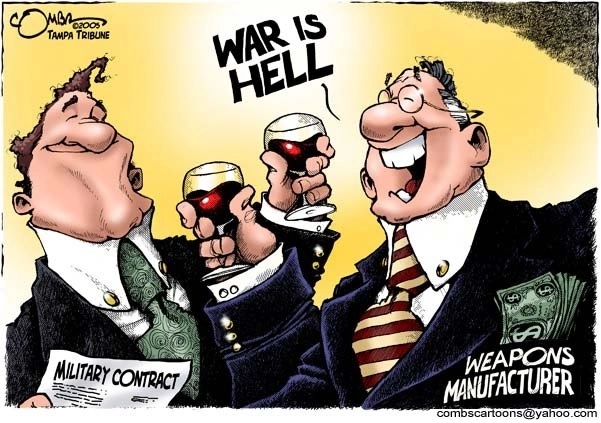
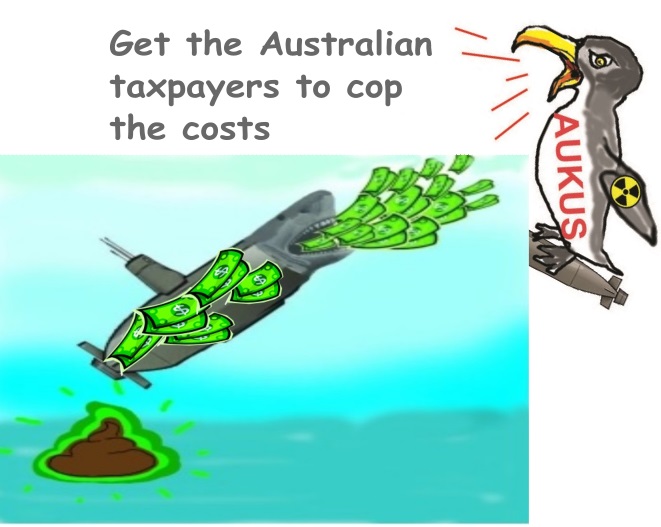
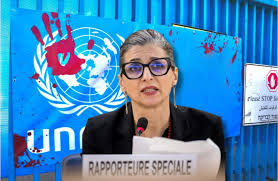
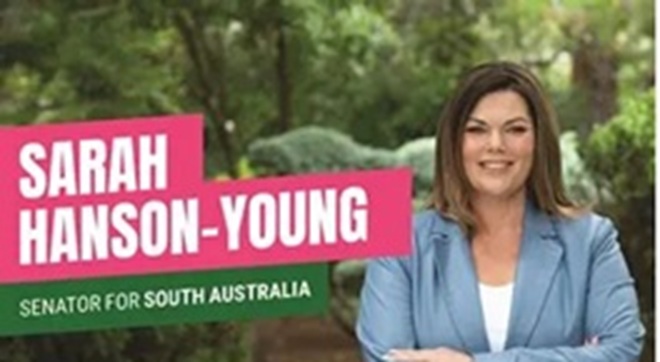

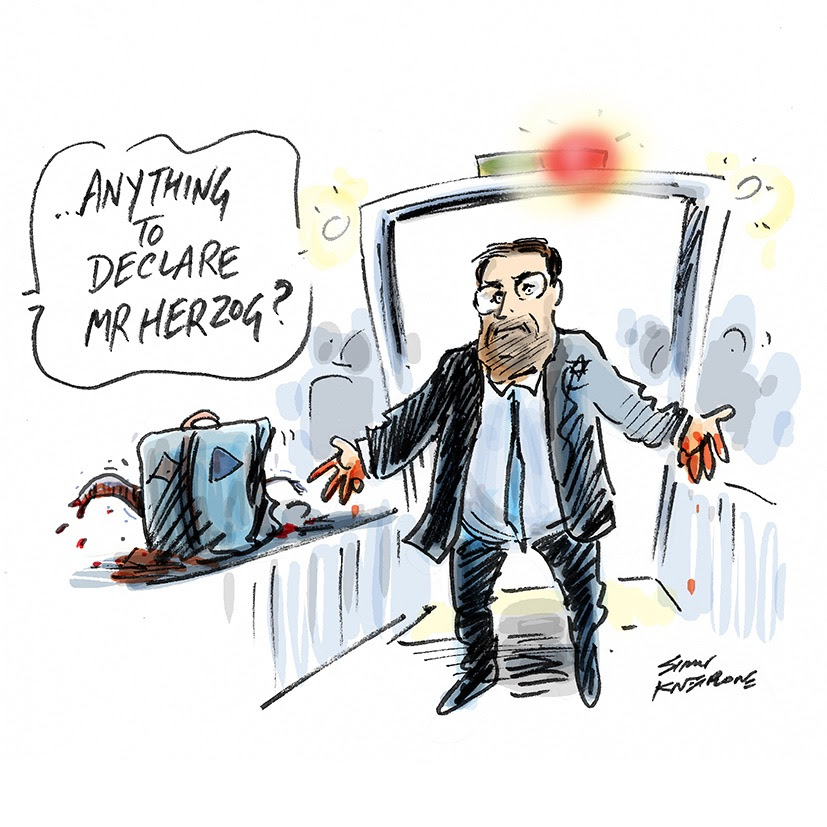

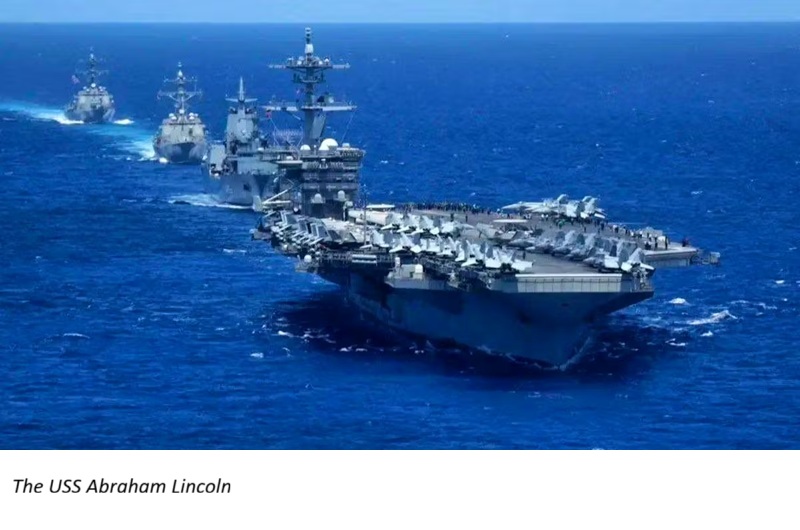
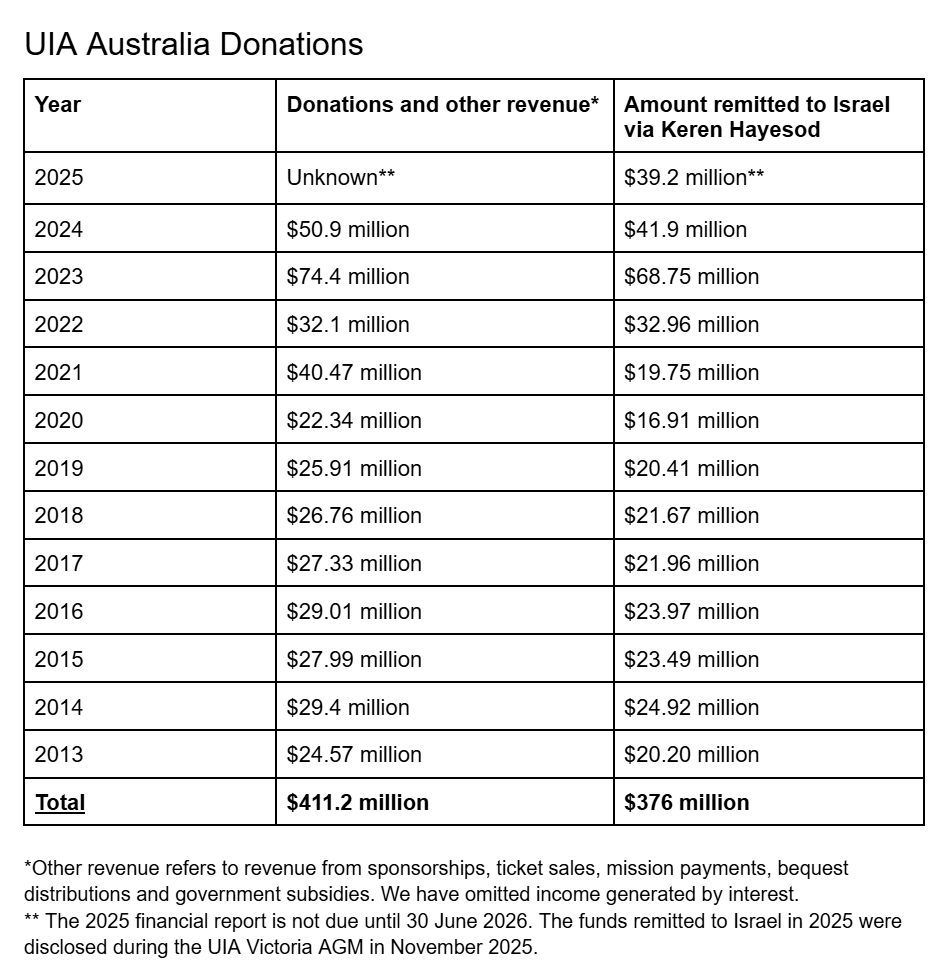

 Antinuclear