In Alice Springs everyone has an opinion on the Pine Gap spy base, but no-one wants to talk about what happens inside.
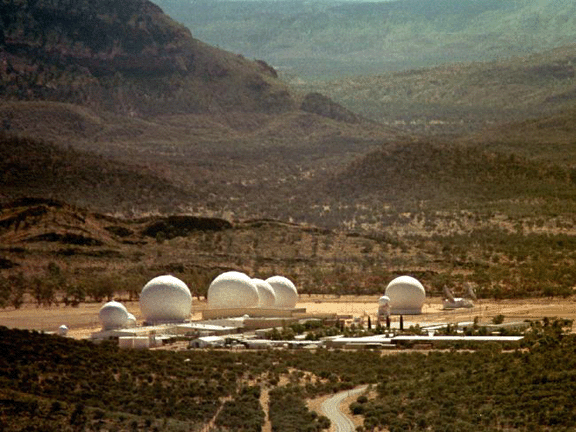
I wanted to hear from the traditional owners of the Arrernte land it was built on, and from the spies tasked with finding targets in Afghanistan and Iraq during the Global War on Terrorism. But how do you investigate something as secretive as Pine Gap when everyone who works there has made a promise never to talk about what they do?
serious claims being made that intelligence gathered at the facility was being used in the Israel-Gaza war.
By Alex Barwick for Backstory, Thu 16 May 2024. https://www.abc.net.au/news/backstory/2024-05-16/backstory-expanse-podcast-spies-in-the-outback-pine-gap-barwick/103844652
In journalism, it’s often politicians who won’t answer your questions.
But in my outback town, it’s just as likely to be the neighbours who won’t, or rather can’t, answer this basic conversation starter: “So, what do you do at work?”
That’s because about 800 of the town’s 25,000 residents are employed at the most secretive intelligence facility in Australia — the Joint Defence Facility Pine Gap — on the edge of Alice Springs/Mparntwe.
When I rolled into this beautiful landscape 16 years ago and began working at the ABC’s Alice Springs bureau, it quickly became clear I wouldn’t hear from this significant section of the community.
Given local radio is all about connecting with the community and sharing people’s stories, this silence felt strange.
My curiosity grew and the book Peace Crimes, written by long-term local journalist Kieran Finnane, motivated me to start looking deeper.
I wanted to know what was going on in my backyard, but I knew trying to make a podcast about a secret military facility hidden in a secluded valley in Central Australia wouldn’t be easy.
Telling this story in a town the size of Alice Springs would undoubtedly feel personal and would likely offend parts of the community.
It’s a line regional journalists walk all the time — telling stories that are in the public interest, while living in the community that is affected by them.
Covering difficult stories in a small town
The words we write as journalists — or say, like in the Expanse: Spies in the Outback podcast — do have real world implications for real people.
That includes everyone from my neighbours, to the parents of my kids’ friends, to people I see regularly at community events.
For them, it’s not a story – it’s their life.
And that can get awkward.
But there are stories in the public interest that the Australian government won’t comment on and this often means they’re shrouded in mystery, or rife with rumour.
Pine Gap is one of those stories.
What goes on beneath the cluster of enormous, oversized-golf-ball-shaped domes covering the military base’s listening antenna on the desert floor, raises big questions for all of Australia, not just my town.
The Pine Gap intelligence-gathering facility is often described as the jewel in the crown of our military partnership with the United States.
But what have we got ourselves into, and do we benefit from it?
Protesters, politicians and spies
Over the past six months, I’ve had lots of off-the-record coffees, trawled the news and library archives, followed some bizarre leads and heard plenty of wild stories, as I have tried to understand the goings-on behind the razor wire.
I wanted to know why America’s Central Intelligence Agency (CIA) decided to build a so-called “space base” in outback Australia in the mid 1960s.
What motivated former prime minister Gough Whitlam to rock the boat and promise to reveal its secrets to the public?
Why were thousands of people so convinced it was a nuclear target they flocked to the desert to demand its closure?
And how had it drawn Australia onto one battlefield after the next through its large-scale surveillance and intelligence gathering?
While plenty of people outside Alice Springs/Mparntwe have never heard of this desert spy base, most people in town have an opinion on it.
There are three main camps: those who say it’s vital for the town’s economy and global peace; those who still see it as a nuclear target and want it shut down; and those who feel generally apathetic to its existence.
And yet, nobody really talks about Pine Gap.
Still, I felt it was important to really understand the diversity of views on this outback spy base as I conducted my research.
I wanted to hear from the traditional owners of the Arrernte land it was built on, and from the spies tasked with finding targets in Afghanistan and Iraq during the Global War on Terrorism.
But how do you investigate something as secretive as Pine Gap when everyone who works there has made a promise never to talk about what they do?
I certainly wasn’t looking to see anyone exiled to Russia like Edward Snowden after he leaked a raft of National Security Agency (NSA) documents, including information on Pine Gap.
In the end, gentle, determined persistence meant I was able to tell the Pine Gap story in a way that lifted the lid but didn’t put national security at risk, and that (I hope) was sensitive to the lives of those in Alice Springs affected by it.
Back in the national spotlight
And then, in late 2023 as I tracked down activists, former spies and politicians … protesters were suddenly blocking the road to Pine Gap again.
There were serious claims being made that intelligence gathered at the facility was being used in the Israel-Gaza war. With Pine Gap back in the spotlight, I knew I had to look deeper.
This spy base, which became operational in 1970 during the Cold War, had expanded through the decades in scale and capability and was more relevant than ever.
The Australian government says Pine Gap is one of the country’s “most longstanding security arrangements” with the United States but it does not comment on its operation.
As each episode of Expanse: Spies in the Outback has been released, I’ve received emails and text messages that confirm why it was an important story to tell.
Some people have been shocked and appalled, while others have been grateful to learn we have this secret intelligence facility in our backyard.
Even in my own town of Alice Springs, where everyone knows someone who works at Pine Gap, there is an appetite to know more – regardless of how uncomfortable that might be.
Follow Expanse: Spies In The Outback on the ABC listen app to hear every episode of season three.
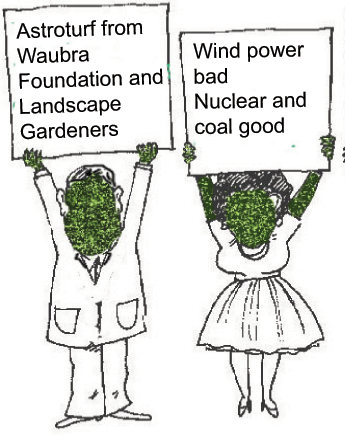
Senate launches inquiry into who is funding fake astroturf anti-renewables groups.
Rachel Williamson, Jul 31, 2025, https://reneweconomy.com.au/senate-launches-inquiry-into-who-is-funding-fake-astroturf-anti-renewables-groups/?fbclid=IwY2xjawL7lhVleHRuA2FlbQIxMABicmlkETFYcTREaGZqTGVKTWZZSW15AR5cMmu1PBB20ZAr6159zOAR8q2xQnTPPQwVB8SWse9kOCEuKiGNiOnOwzpF3g_aem_zBcQMv8fwSb8s4qbxBk1uA
Australians have a right to know who is funding anti-climate campaigns and, if a new Senate inquiry can uncover those money trails, the findings could be shocking, says the Smart Energy Council’s Tim Lamacraft.
The new Senate committee was installed last night and tasked with investigating climate and energy mis- and disinformation campaigns and uncovering which foreign and local organisations are funding “astroturfing”, fake grassroots movements that are actually coordinated marketing campaigns.
“Australians have a right to know who’s really behind the clogging up of their social media feeds with anti renewables, anti climate, anti science propaganda. Rest assured, they’ll be shocked when they find out,” Lamacraft told Renew Economy.
“We saw from the last federal election campaign, where [conservative lobby group] Advance Australia had a $15 million warchest, $14 million of that was in dark money where we don’t know where it came from.

“The most important thing to do with shadowy networks like this is to shine a light. It’s extremely damaging to our democracy to allow millions of dollars from shadowy multinationals, and hidden domestic interests, to influence public policy for their personal gain, not the public.”
The inquiry, formally known as the select committee on Information Integrity on Climate Change and Energy, will also question whether Australia’s laws preventing foreign interference in national politics are strong enough to fight off internationally-funded domestic political campaigns.
That work will encompass the role of social media in building astroturf campaigns through the coordinated use of bots and trolls, messaging apps and AI to spread fake ideas and news.
It will be the first step towards finding out who is financing sophisticated anti-renewable energy campaigns and misinformation, and whose interests they truly serve, says committee chair Greens senator Peter Whish-Wilson.
“For decades, vested interests have been waging a global war of disinformation against the clean energy transition, including environmental and climate legislation, and these vested interests have recently achieved significant political success in nations such as the US,” he said in a statement.
“In the last parliament, evidence was provided to the Senate Inquiry into offshore wind industry that strategies such as establishing fake community groups – otherwise known as astroturfing – were being used in Australia to spread lies about renewable energy.
“It’s critical that parliament continues this work and now examines these interests for what they are and who they serve.”
Devastating impact of astroturfing
The inquiry comes on the back of years of sophisticated anti-climate campaigns masquerading as grassroots movements.
These seek to demonise a climate or renewable energy issue and rally support for nuclear power, a position known to be a cover for retaining a fossil fuel status quo.
Campaigns against everything from offshore wind to individual projects have polarised public opinion and are having a tangible impact.
Coordinated anti-offshore wind campaigns in 2023 peddled fears such as that offshore turbines kill whales and any in the waters around Wollongong would block out the sunrise.
As a result, the federal government reduced the Illawarra offshore wind zone by a third and pushed it 10km further offshore, while in Queensland the Stop Chalumbin Wind Farm claimed the scalp of the Wooroora Station proposal by claiming risks to the nearby world heritage rainforests.
Ark Energy, which was behind the Wooroora Station project, also scrapped the Doughboy wind project in NSW after the New England landowners involved in the project changed their minds.
Organised anti-renewables groups are weaponising NSW’s planning process by forcing projects into the Independent Planning Commission, the final arbiter of development applications if more than 50 opposing submissions are lodged during the regular planning process.
David and Goliath battles
For genuine activist groups, going up against well-funded, apparently grassroots campaigns that are peddling half truths and outright lies is “incredibly frustrating”, says Surfers for Climate CEO Joshua Kirkman.
“We simply do not have the financial resources as an advocacy group… against big forces like that which the Senate inquiry will actually find out about,” he told Renew Economy.
“I really hope this inquiry can put the spotlight on the realities of where the support for these voices in Australia comes from. I think the public have a right to know, and I think the public wants to understand how their democracy is being influenced by nefarious parties with ill-intent for the environment.”
Kirkman says climate change is a big enough problem without tactical misdirection and influence undermining the work being done.
Organisations such as Responsible Future (Illawarra Chapter) are what Kirkman is up against.
The anti-wind, pro-nuclear organisation was registered in April 2024 and claims to be funded by donations. Founder Alex O’Brien declined to comment on a series of basic questions about the organisation sent by Renew Economy last year.
Follow the money
The risks of foreign funding influencing Australian climate debates is not a conspiracy theory: the issue was raised in the Senate last year after an inquiry into offshore wind recommended the government act to stop foreign lobby groups from crowding out local community voices in public debates.
Last year, Walker published a submission which highlighted the similarities between US anti-wind campaigns and those targeting offshore wind in Australia.
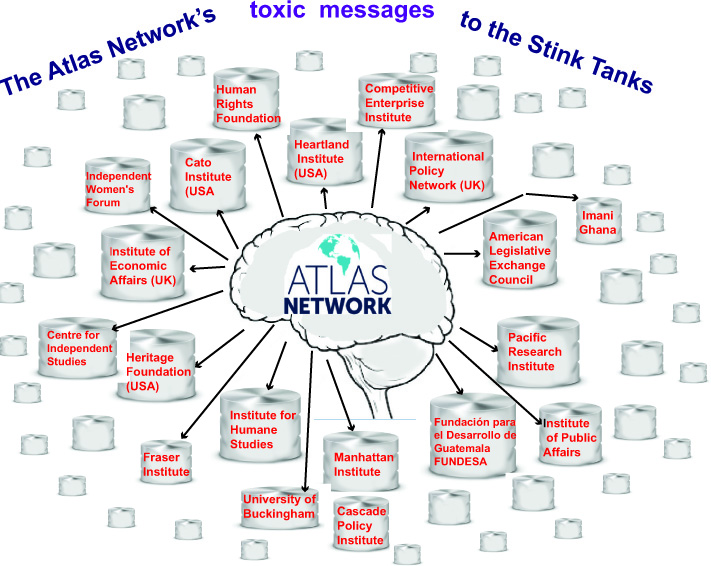
He found similarities between the claims made by groups like Stop Offshore Wind, such as the same imagery and messaging in social media campaigns saying turbines kill whales, as used in campaigns overseas funded by conservative US lobby the Atlas Network.
But he was only able to guess at actual funding trails into Australia.
It’s known that deep-pocketed conservatives such as mining billionaire Gina Rinehart and the multimillion-dollar Liberal Party investment arm Cormack Foundation have been sponsors of the likes of the Institute of Public Affairs (IPA), the Centre for Independent Studies (CIS), Menzies Research Centre and the ‘campaign group’ Advance Australia, all of which have strongly campaigned against renewable energy.
Walker has linked their campaigns with those of a global network of conservative think tanks.
Jillian Segal and the Israel Lobby’s TERRIFYING Plan for Australia
Join criminal lawyer Nick Hanna as he investigates Jillian Segal, her history of pro-Israel lobbying, and why her so-called plan to combat antisemitism threatens to undermine free speech in Australia.
0:00 Intro
1:38 Who is Jillian Segal?
3:39 Antisemitism vs anti-zionism
5:48 IHRA definition of antisemitism
7:50 The pro-Israel lobby’s IHRA campaign
16:18 Appointment of Segal as Special Envoy to Combat Antisemitism
18:15 Why was Segal chosen?
20:13 Segal x Australia-Israel Chamber of Commerce
24:35 Does Segal have a conflict of interests? 28:17 Segal x Weizmann Institute of Science
29:31 The Plan to Combat Antisemitism
39:35 Outro
The What & The Why is an investigative journalism podcast by criminal lawyer and filmmaker, Nicholas Hanna.
Freedom Of Information win as Information Commissioner rebukes Defence secrecy
by Rex Patrick | Jun 15, 2025 , https://michaelwest.com.au/foi-win-as-information-commissioner-rebukes-defence-secrecy/
After more than four years, the Information Commissioner has compelled the Defence Dept. to hand over information sought about expert advice on Australia’s Naval shipbuilding program. Rex Patrick reports.
In the FOI review decision, the Information Commissioner issued a scathing rebuke of Defence secrecy, saying,
“… the assertion made by the Department that disclosure of the relevant material would undermine the willingness of individuals to serve on the panel and provide full and frank advice.
“does not appear to be supported by cogent reasoning or evidence.”
Ouch!
The information we had sought was about advice provided to the Government by the Naval Shipbuilding Expert Advisory Panel, formerly the Naval Shipbuilding Advisory Board. The panel exists to “provide independent, expert advice on all matters relating to the performance of the naval shipbuilding enterprise, and assist in identifying emerging challenges that may require further consideration by Government.”
Recent costs for the board, which is laden with retired US admirals, are not available, but from 2016/17 to 2018/19 the taxpayer forked out $6.4m– an average of $2.1m a year – for their advice.
When I asked to see some of that expensive advice in 2021 (not an unreasonable proposition given the disaster area Defence shipbuilding management had already become, and it’s not got better since), I was denied access to all of the documents, bar some trivial logistical information.
I appealed the decision with the Information Commissioner, who, four years later, has ordered Defence to hand over more information.
Fearful advice
Defence told the Information Commissioner
“There is a close connection between the documents at issue to a governmental process, and disclosure of the relevant material would impair the Government’s ability to receive frank and candid advice.”
That was Defence’s ‘argument’ for secrecy. The sky was going to fall in if advice on an almost $200B naval shipbuilding program (as it was before AUKUS came along and made that look cheap) was made available to the public who were paying for it.
I pushed back hard, pointing out to the Information Commissioner that the Department had not provided any evidence to establish that disclosure of the relevant material would discourage members of the panel from providing quality advice and recommendations.
I further pointed out that the advisory board members would be under a contractual obligation to provide comprehensive advice and recommendations having regard to their expertise, and failure to do so would amount to a breach of their contractual obligations.
The Information Commissioner accepted this and berated Defence for its fantasy claims:
“The Department was provided several opportunities to make submissions in support of their claim that disclosure of the material at issue would be contrary to the public interest. However, other than an assertion that panel members would be less likely to provide full and frank advice and recommendations, the Department has not provided any evidence of substance to establish that disclosure would have this effect.”
And when it came to the idea that no one would serve on the $2m per annum advisory board if their advice were at risk of being disclosed, the Information Commissioner was again scathing, stating:
“Similarly, although the Department contends that disclosure of the relevant material would undermine the willingness of individuals to serve on the panel, the Department has not provided any evidence to support its claim.”
In other words, no evidence from a department that’s committed to spending $56.1B in the coming financial year.
Secrecy does not help
Defence procurement is a mess. MWM has been reporting this for some time. The mainstream media is just waking up to the incompetence of our Defence procurement organisation.
Defence procurement is in need of significant reform. Excessive secrecy, a default setting for Defence bureaucrats, conceals incompetence, maladministration and waste. It enables corruption in a portfolio where tens, even hundreds of millions, are regarded as small change.
The capabilities of our Defence Force and its current operations deserve a level of secrecy,
“but the same is not true for projects that deliver that capability.”
Oversight requires access to information. That includes access to the very expensive advice Government receives in relation to Defence projects. If the providers of that advice are not willing to have it peer reviewed by experienced project management experts in the general community, the Government should not rely on it.
We now await the release of the documents, and to find out what the Defence Minister knew, or didn’t know.
Unfortunately, Defence procurement change will not occur until the Prime Minister, Anthony Albanese, demands it. Defence Minister Richard Marles won’t counsel the Prime Minister because, time and time again, he’s been caught out drunk on Defence-Kool-Aid.

Front groups working with Zionist actors are promoting Islamophobia
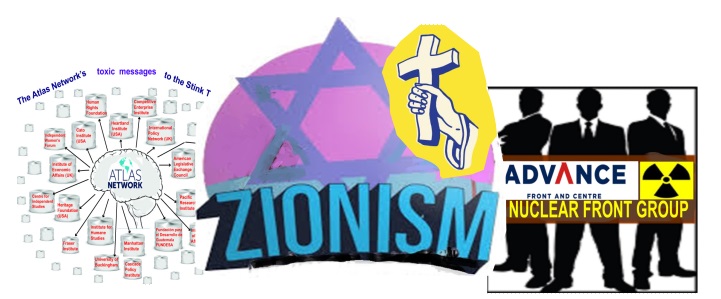
Letters were circulated in the electorate of Goldstein shortly before the election last weekend falsely accusing climate independent (“teal”) Zoe Daniel of being antisemitic in conspiracist terms. It is not known which individual or group circulated the anonymous letters.
Daniel’s Liberal Party rival Tim Wilson, was affiliated with the Atlas Network partner the Institute of Public Affairs (IPA)
May 9, 2025 Lucy Hamilton, https://theaimn.net/front-groups-working-with-zionist-actors-are-promoting-islamophobia/
Australian front groups have been working to promote the idea that the Greens make many cultural identities less safe. Zionists are incorporating Hindu and Iranian figures, depicting a fake “threat.”
Wendy Bacon and Yaakov Aharon are tracking the Zionist disinformation strategies that have been at work in the Australian local, state and federal political information space recently.
In this information project, any speech act or protest supporting peace and rights for Palestinians is depicted as an “antisemitic” threat that frightens Jewish people. The Greens are being tarred with the accusation that they pose a threat to many multicultural identities, not just Jewish. This of course distorts the fact that the Greens are the strongest party voice against prejudice in Australian politics – which includes opposing Zionist prejudice against Palestinians as well as antisemitism.
Protest is a speech act and must be protected – particularly when it is directed against matters as urgent as the climate catastrophe and genocide.
The project being carried out by the front groups investigated by Bacon and Aharon functions to foster anti Muslim sentiment. That work is inherent to the current shape of the transnational Right. Demonising Muslims is not new: in 2010, then Liberal Party MP Scott Morrison proposed targeting Muslims for political gain. His colleagues attempted to shame him for the divisive suggestion, but in the years since, that tactic has become mainstream for the political and media Right in Australia as well as abroad.
Morrison’s role flags the importance of Christian Zionists to this mission.(1) It is difficult to tease out the primary motivation. One role is to help Australia’s “conservative” politicians win elections. It is also potentially to keep out the Greens (and independents known as “teals”) to prevent genuine climate action, since the Labor Party appears to be constrained by state capture. The focus on Israel might be for Jewish Zionist interests or as part of the Christian Nationalist project aiming to control Australian politics. The Never Again is Now body speaks to that last motivation.
Advance – which was so active against the First Peoples’ Voice to Parliament and then committed over the last few months to destroying the Greens and “teal” independents – has been shown to have personnel links with Atlas Network partners in Australia. Advance has also received funding from the Liberal Party through the party’s Cormack Foundation.
Maurice Newman, who has a long track record of action around Atlas Network partners in Australia, was a Mont Pelerin Society (MPS) member from 1976. (The MPS is described as the functional steering committee of the Atlas Network and one of its major roles in recent years has been promoting climate denial.) Newman was also listed in 2014 as one of Australia’s 12 “most influential” climate deniers who used his time as ABC chairman to skew the coverage of the science. Newman was an “early driver” of Advance. In March this year, Newman described pro-Palestinian encampments on university campuses as one sign that “ideology” (rather than a moral compass) is taking over and stated, “We might as well be in communist China.”
Some Atlas Network partners have a history of promoting intervention in the Middle East, with the American Enterprise Institute’s neocons probably being the most influential in promoting “regime change” from within the White House. The Heritage Foundation claims to be no longer affiliated with the Atlas Network after decades of acting as one of its major partners. It too is engaging strongly in culture wars over purported antisemitism with Project Esther. As Axios observed, the project was as much about crushing Americans’ ability to protest. Jewish commentators also fear that the mechanism will cause blowback against Jewish Americans. As a part of the Christian Nationalist project, Esther’s strategy has been summarised as “a sweeping program of surveillance, propaganda, deportation, and criminalization.”
David Adler was a “founding board member and advisor” of Advance. He is best known as having founded the extreme Australian Jewish Association, a “private advocacy group” mimicking a peak body. Adler has spoken on rightwing media against doctors being vocal on the substantial threat that the climate crisis poses to health as leftist posturing. He disdainsclimate science as comparable to “gender issues.” Adler has recently stepped down as AJA “president.”
The degree to which Adler is a fringe figure in Jewish Australian opinion is conveyed by rejections such as:
“Australia/Israel & Jewish Affairs Council national chairman Mark Leibler, a prominent Indigenous rights activist who co-chaired the Referendum Council, said that due to the AJA’s “misleading name”, it is very important for people within the Jewish community, but also people outside the Jewish community, to “understand that this organisation and this person, they do not speak for us”.
“They do not communicate what, in any sense of the term, can be regarded as Jewish values,” Leibler said.
“Some of the things that Adler has said are frankly nothing short of horrific.”
Executive Council of Australian Jewry co-CEO Peter Wertheim said Adler’s comments “are wrong, offensive and bigoted, and indicate that he lacks the same sensitivity to other forms of racism that he has for antisemitism”.
“These comments do not in any way represent or reflect the views of the mainstream Jewish community in Australia. They are contrary to Jewish values, and the teaching ‘That which is hateful to you, do not do to others’,” Wertheim said.
“Despite its misleadingly generic name, the Australian Jewish Association is a private group led by a small number of unelected people promoting marginal, ideologically-blinkered views. The Executive Council of Australian Jewry has been the peak, representative body of the Australian Jewish community since 1944.”
Given that none of the older peak bodies have been what might be described as particularly supportive of justice for Palestinians (leading to the formation of the progressive Jewish Council of Australia to fight for both Jewish and Palestinian safety), this condemnation speaks to the fringe nature of the AJA’s politics.
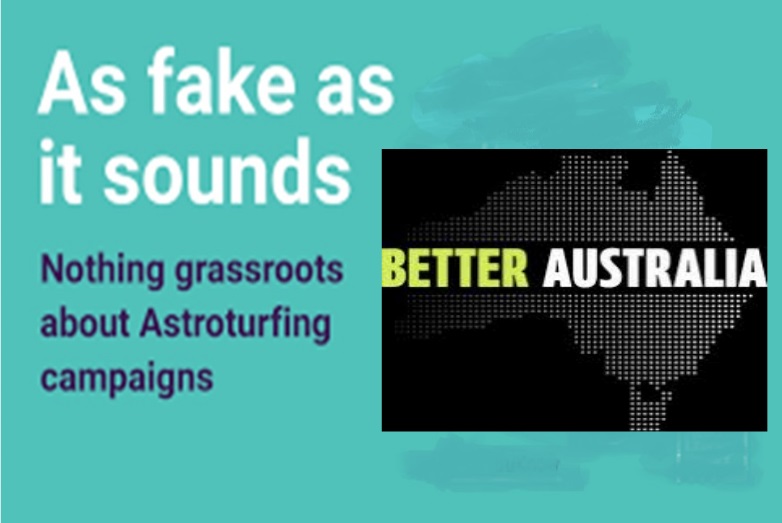
Bacon and Aharon have been tracking down several Zionist front groups. Better Australia began as Better Councils where the “Israel lobby,” as Bacon termed it, appeared to be attempting to disrupt and influence Sydney council elections. The pair have found connections with Liberal Party affiliates such as Alex Polson who owns Better’s ABN. He is a Liberal Party member and previously worked for Liberal Senator Simon Birmingham. Bacon and Aharon have also investigated the Queensland Jewish Collective (QJC) which appeared to be a reasonably significant player in the 2024 Queensland state election.
The Minority Impact Coalition (MIC) is a creation of the QJC. Alex McKinnon has reported some of the extremity of that body’s social media posts. The Australian depicted the group as a grassroots immigrant movement against Labor and the Greens.
Bacon and Aharon have tracked down loose connections of various kinds between Advance with the Zionist-affiliated groups. QJC accepted help from Advance. QJC’s MIC has claimed very limited connection with Advance. Better may have had early plans to work in cooperation with Advance. Bacon and Aharon have noted that Advance or AJA boost the social media posts of these micro bodies, creating the only occasions when their posts achieve traction. This suggests some degree of cooperation.
In her reporting on the Queensland election campaign, Bacon illustrates a graphic from the AJA that was used to advertise a webinar to introduce its members to Advance. That same image was later used on QJC billboards as well as on the MIC’s website.

The image features three individuals targeting the Greens as a “divisive hate group” for the represented ethnicities or cultural identities. One of the three is posed as representing a “Jewish Queenslander” who doesn’t feel safe in her own cities because of Greens repeating “slogans of the terrorists that wish [her] dead.”
The other two represent an identity coalition that the QJC (alone?) was forging in a “multicultural impact network meeting.”
The second individual is a “Hindu Queenslander” who is quoted on the graphic as asserting “The Greens glorify those that terrorise us. They make me scared for the future.”
This is not an outlier. The shared work of linking Muslims with terrorism is central to the Hindutva nationalist project, just as it is to Israel. Prime Minister Modi, for example, declared that both Israel and India face a shared threat from “radical Islam.”
The recent attack in Kashmir has led to calls to use the “Israel model” in Kashmir with suggestions that both Kashmir and Pakistan should be “flattened” like Gaza.
There is no inference made that the woman pictured supports Hindutva ideology.
It appears the Hindu Council of Australia (HCA) had a speaker at the QJC event in June 2024. The HCA may have no interest in the religio-ethnonationalist Hindutva ideology. It is noteworthy, however, that the HCA site hosts a post suggesting that an attempt to tackle Hindutva extremism is actually about “dismantling Hinduism” and an attempt to spread fear mongering against Hindus.
The MIC site claims to have the group Hindus of Australia as an endorsing body. That link is backed up by an Indian-Australian news site, which depicts MIC as protecting Australia from “imported hate.” In the aftermath of the election, the Hindus of Australia X account reposted a QJC post, with additional comment that the Greens had brought “degeneracy” to “Australian political and social lives.” It also made the strange claim that the Greens had “put targets on the backs of Australian Jewish and Hindu communities so that the terror and criminal elements now consider our communities soft targets.”
Modi and his party have a long history of targeting Muslims, including Modi campaigning on the fear of being outbred by Muslims at the last election.
Israel and India are bonded over these parallels.
The third individual on the AJA graphic represents Iranians. A speaker at the event is reported to have represented the Iranian Novin Party (INP). Hesam Orujee, a member of the INP, is featured on the AJA Facebook page as a member of the QJC.
The Iran Novin Party is “Pahlavist.” That is, they support the Pahlavi family to replace the Iranian Islamist regime. The QJC site claims that the Greens “support the Iranian regime’s terror proxies.” This is, of course, nonsense. (The MIC site also targets Labor for not attacking these groups’ issues aggressively enough.)
The Iranian monarchist community is connected to the NatCon religio-ethnonationalist project. The last conference in Washington (where JD Vance was soft launched at the final dinner just before being announced as Trump’s running partner) featured Crown Prince Reza Pahlavi.
Iranian monarchists are reportedly working with Israel in their efforts to overthrow the regime and reinstall their Shah.
It is also reported that the Iranian MEK has funnelled Saudi money into the creation of the Spanish Far Right Vox party that is militantly Islamophobic as well as socially ultra-conservative.
The J-United group from Melbourne is on record as being backed by Advance in its targeting of Greens candidates. Australian Jewish News described J-United’s political campaign as having “received support from diverse community groups including Iranian, Hindu and Christian organisations.”
Letters were circulated in the electorate of Goldstein shortly before the election last weekend falsely accusing climate independent (“teal”) Zoe Daniel of being antisemitic in conspiracist terms. It is not known which individual or group circulated the anonymous letters.
Daniel’s Liberal Party rival was affiliated with the Atlas Network partner the Institute of Public Affairs (IPA) and was a member of the Mont Pelerin Society the last time the list was leaked. Tim Wilson’s most significant moment with the international Atlas Network-connected activity was breaking Australia’s carbon price mechanism. In recognition of this, his IPA team was shortlisted for the Atlas Network’s most prestigious global prize.
Advance and the AJA have several reasons for welcoming losses of Greens seats in parliament. For the former, this signals fewer politicians to defend climate action and social justice. The AJA rejects politicians supporting a peaceful resolution for Palestine. The work of the front groups suggests both groups to be loosely part of the NatCon project that aims to unite Christian Nationalists, Israeli Jewish Nationalists and Hindu Nationalists against Muslims, against modernity and against climate action. The Iranian monarchists’ role in that coalition is noteworthy.
The Australian Right is more strongly represented in the Alliance for Responsible Citizenship’s (ARC) version of NatCon messaging.
Tony Abbott was an advisor to Advance. Abbott is a Distinguished Fellow at the IPA and is also on the ARC Advisory Board alongside several other past and serving Australian politicians.(2) ARC co-founder John Anderson AO has posted this disturbing interview about Israel and Islam with Douglas Murray, another board member, on his YouTube channel.(3) ARC is a strongly climate denial project, loosely promoting NatCon ideology. NatCon ideology is backed by the Edmund Burke Foundation which has important Zionist connections.
The fact that Advance is so closely connected with a Zionist group such as the AJA, which real Jewish peak bodies depict as “marginal” and “ideologically blinkered,” not to mention expressing “horrific” views, is an important feature.
It is natural that immigrant and other minority groups will hold opinions on ways nations they are affiliated with could be better. It is also to be expected that some fringe elements will hold views that incorporate prejudice.
Australia’s multicultural project is, however, a precious and vulnerable experiment. It is reckless to allow strategists to undermine it for political goals. The Australian majority was revealed in this election to reject divisive culture war games: we cannot ignore the inherent Islamophobia that is core to the religio-ethnonationalist NatCon ideology. It is even more dangerous when bodies founded to foster dis- and misinformation bring together those fringe elements of our multicultural communities, promoting the demonisation of one category of Australian citizen.
Tim Wilson, secretive money and “think” tanks. Australia’s democracy is at stake.

April 18, 2025 Lucy Hamilton, https://theaimn.net/tim-wilson-secretive-money-and-think-tanks-australias-democracy-is-at-stake/
Advance’s links to Australia’s Atlas Network partners were laid out by Dr Jeremy Walker in the Voice campaign. Its origin and links to the Liberal Party as well as the global thinktank operation was explored in detail in the Sydney Morning Herald. That report also illustrates the body’s links to Zionist operations, fostered through its co-founder David Adler. It has three new front groups to discredit the Greens: Greens Truth, Her Truth and Election News.
There are as many as 18 such shadowy organisations acting against renewables and in favour of nuclear energy at the moment. Most can be found on social media targeting key seats. Others can afford billboards.
April 18, 2025 Lucy Hamilton, https://theaimn.net/tim-wilson-secretive-money-and-think-tanks-australias-democracy-is-at-stake/
Australians should remember, as the election approaches, that Tim Wilson was shortlisted in 2015 for the US-based Atlas Network’s most prestigious prize. He and his team at the Atlas Network-partner the Institute of Public Affairs (IPA) had been nominated for the award for their work in bringing down Australia’s carbon price.
Crikey captured the misleading wording of the nomination for posterity before the Atlas Network became more cautious and took it – as well as its list of partners – down: “As the only major organization in Australia to publicly and consistently oppose the tax, the IPA’s work against the carbon tax was instrumental in fostering sentiment against the tax, which, in addition to its economic drawbacks, wouldn’t have achieved any environmental goals.”
The Atlas Network is the organising force that connects “almost 600 think tanks in over 100 countries” to promote big business’s goals. While the head office is not currently funded by fossil fuel, many of the partner organisations continue to be, and fighting climate change science and solutions remain core business for many of them.
In fact, a carbon price was working and has been found to be an effective method of pushing transition. Peta Credlin has admitted that the attacks on it as a “tax” were just “brutal retail politics.” The “fostering sentiment” that the Atlas Network described is the job of these so-called thinktanks. They create the permission structure for the policy that big business wants. They also enable the election of big business’s preferred political party.
Atlas’s wording highlighted that the IPA was the “only major organization in Australia” helping engineer Tony Abbott’s victory in 2013 and the resulting instant dismantling of the carbon price.
Voters need to be reminded that it is largely foreign mining interests that benefit from fostered sentiment created by thinktanks. Prizes worth $100,000 from abroad don’t often come for purely domestic campaigns. That said, one of the Atlas Network’s US partners awarded Gina Rinehart its “Lifetime Achievement Award” for her contribution to the Network’s shared goals in 2024.
Rinehart is the only known big donor to Wilson’s former employer, the IPA now. Her largesse was made public by accident: donations of over $2 million a year for two years were recorded in tax filings submitted to court. We cannot know how much more she has given. Rupert Murdoch continues to support this organisation his father co-founded in 1943. We cannot know if he gives money now, but News Corp is an “in kind” donor, providing constant platforms for the Australian Atlas partners and interlinked groups.
The IPA is 80 years old, so it seems more respectable than the temporary dark money front groups that are popping up to push messaging as suspect as the IPA’s war on the carbon “tax.” The difference is more in scale and ambition than in nature.
These bodies copy the Atlas Network model: that involves spawning new PR operations to ensure that the electorate does not come between the corporations and their profits. Because the Atlas Network no longer declares which organisations it lists as partners (and many interlinked bodies were never listed at all), we cannot declare them to be part of the Network. They serve, however, the same purpose for similar clients.
Australians for Prosperity is clearly interlinked with both the coal sector (by the only declared donation), and the Liberal Party (by its personnel). It was forced to delete two months-worth of social media posts by the Australian Electoral Commission for being unauthorised election material. Their prime targets are the independent MPs that are now representing formerly Liberal Party safe seats, and they are spreading disinformation to discredit these parliamentarians.
It may be a coincidence that the body has copied the name of one of the Atlas partners most responsible for the current debased condition of American politics, Americans for Prosperity.
Advance’s links to Australia’s Atlas Network partners were laid out by Dr Jeremy Walker in the Voice campaign. Its origin and links to the Liberal Party as well as the global thinktank operation was explored in detail in the Sydney Morning Herald. That report also illustrates the body’s links to Zionist operations, fostered through its co-founder David Adler. It has three new front groups to discredit the Greens: Greens Truth, Her Truth and Election News.
There are as many as 18 such shadowy organisations acting against renewables and in favour of nuclear energy at the moment. Most can be found on social media targeting key seats. Others can afford billboards.
Pollsters have always been a key tool in business propaganda: the Coalition’s internal pollster in this election campaign is connected to Australians for Natural Gas. That body’s director, Nathanial Smith” is also the Liberal Party’s candidate for Whitlam.
One of the old guard Atlas partners is the Australian Taxpayers’ Alliance. Its founder, Tim Andrews, is now working for Grover Norquist at Atlas’s Americans for Tax Reform in DC. The current executive director is Brian Marlow.
Marlow is also functioning as the “Campaigner” for Citizen Go, under whose umbrella he appeared before federal Parliament arguing against the Misinformation and Disinformation Bill. Citizen Go is a global project constructed out of a Spanish extremist Catholic “hate group.” Citizen Go’s Australian “campaigns director” is George Christensen who has registered himself as the head of a “foreign political organisation.” The Facebook page campaigns using an “end abortion” hashtag, using misleading information. As a state MP, Nathaniel Smith argued for abortion to “remain in the Crimes Act.” The Coalition candidates’ commitment to a Christian Nationalist position is not separate from their Atlas Network links but directly connected to that movements’ transnational trend.
It is not surprising, in either of Marlow’s roles, to find such figures fighting efforts to control mis- and disinformation. With climate science as certain as it is, and the need to transition to clean sources of energy so urgent, the campaign to disrupt the transition is hard pressed to find useful truths: both misleading information and distraction can serve.
Australia needs a minority government with the crossbench granting it courage to tackle the threats to Australian politics of dark money and shadowy disinformation campaigns.
Political merchandise
We don’t need a government containing Tim Wilson whose speech at the 2015 Atlas Network regional gathering, the Friedman Conference, celebrated his turning Human Rights Commissioner role into a defence of property rights. Think hard about why this network values protecting property but not protecting you as a community member, worker, consumer or citizen.
The pro-nuclear drive and Zionism are inter-twined

https://theaimn.net/the-pro-nuclear-drive-and-zionism-are-inter-twined/ 10 May 25
For many years, I’ve been running websites devoted to the nuclear-free movement. People have asked me why, over the past two years, I’ve been including news about Israel and Gaza.
What on earth do Israel and Gaza have to do with the pro-nuclear cause?
Well, unfortunately, quite a lot.
“While everyone believes that the Israelis possess a sizable nuclear arsenal, no one really knows how big that arsenal is. In 2008, President Jimmy Carter estimated that Israel probably had a minimum of 150 weapons in stock ready to use if the most dire circumstances warrant. Six years later, the former President revised that estimate and put the figure in the 300 range, which—based on Carter’s calculations—would mean that Israel doubled its arsenal from the 2008-2014 time-period. “
Of course the Israeli government “does not confirm or deny” that they’ve got nuclear weapons, and the cowardly governments that support Israel similarly do not officially confirm it. And of course Israel has not signed the Treaty on the Non-Proliferation of Nuclear Weapons (NPT), or participated in any kind of weapons control negotiations.
In Sep 22, 2023 Israeli Prime Minister Benjamin Netanyahu warned Iran at the United Nations of a “nuclear threat” in what his office quickly walked back as a slip of the tongue. In July 2024 Prime Minister Benjamin Netanyahu pledged in a scathing speech to Congress on Wednesday to achieve “total victory” against Hamas.
The Zionist philosophy means that the Jews are God’s chosen people. And the Islamics certainly are not. The attitude of Israel towards the Palestinians is that they are not the same kind of human being as the Jews are. Indeed, it’s OK to starve Gazan children to death – after all, they are some kind of untermenchen.
Well, the genocide of Gazans is being achieved without any need for nuclear weapons. But what about the other Islamics? There’s Yemen, and there’s Iran. Netanyahu believes that Iran poses an existential threat to the Zionist state, and could make a nuclear weapon in a short period of time, making Israel and even the US unable to defeat or contain it.
To what lengths might Netanyahu go, to prevent that? Bomb Iran’s nuclear sites?
And would Donald Trump, an enthusiastic fan of Israel, support that option.
Here’s Trump, seven months ago, urging Israel to make such a strike,
While I’ve been thinking about this for some time, I was prompted to write about it now, after reading an article by Lucy Hamilton in Australian Independent Media, about the close involvement of Australian pro-nuclear front groups with the Zionist movement.
It’s not only Israel that we must worry about, in Australia, and presumably world-wide. If we aim to be nuclear-free, we are up against a lobby determined to have nuclear-weapons superiority, and the Zionist movement is right up there in that determination.
Australia Islamic Caliphate? Dark money and the 11th hour Election propaganda blitzkrieg
by Wendy Bacon and Yaakov Aharon | May 2, 2025, https://michaelwest.com.au/australia-islamic-caliphate-dark-money-and-the-11th-hour-election-propaganda-blitzkrieg/
An 11th-hour Election 2025 blitzkrieg claims the Greens are enabling extremists who “will do anything in their power to establish a worldwide Islamic Caliphate.” Wendy Bacon and Yaakov Aharon investigate the Dark Money election.
Minority Impact Coalition is a shadowy organisation that appeared on Australia’s political landscape in February of this year.
According to its constitution, its object is to promote “mutual respect and tolerance between groups of people in Australia by actively countering racism and bringing widespread understanding and tolerance amongst all sectors of the community.”
However, it is spreading ignorance, fear and Islamophobia to millions of mostly male Australians living in the outer suburbs and the regions.
Advance is “transparent … easy to deal with”
Australian Jewish Association webinar, Roslyn Mendelle, who is of Israeli-American origin and a director of Minority Impact Coalition (MIC), said Advance introduced her to the concept of a third party.
“Advance has been nothing but absolutely honest, transparent, direct, and easy to deal with”, Mendelle said.
The electoral laws, which many say are “broken by design”, mean that it will be several months before MIC’s major donors are revealed. Donors making repeated donations below $15,900 are unlisted ‘dark money’. (This threshold will change to $5000 in 2026).
Coming in second place are the returns from the Australian Taxation Office.
Further down is a $50,000 donation from Henroth Pty Ltd, co-owned by brothers Stanley and John Roth. Stanley is also a director of the $51 million charity United Israel Appeal, while John Roth is married to Australia’s Special Envoy for Combating Antisemitism, Jillian Segal.
$14.5 million of Advance’s funds is unlisted dark money.
In NSW, it is targeting Greens candidates everywhere and is also focused on the Labor-held seat of Gilmore, challenged by Liberal Party candidate Andrew Constance.
Roslyn (nee Wolberger) and her wife Hava Mendelle founded MIC last year. The couple met in 2017 while Roslyn was living in the Israeli settlement of Talpiot in Occupied East Jerusalem in breach of international law.
Independent journalist Alex McKinnon reported that MIC spokesperson and midwife, Sharon Stoliar, wrote in an open letter:
“When you chant ‘from the river to the sea Palestine will be free’… while wearing NSW Health uniforms, you are representing NSW Health in a call for genocide of Jews.YOU. ARE. SUPPORTING. TERRORISM… I. WILL. REPORT. YOU.”
Its campaign material is authorised by Joshu Turier, a retired boxer and right-wing extremist.
According to Facebook library, MIC’s ads are targeted at men, particularly between ages 35 and 54 in Queensland, Victoria and New South Wales.
In mid-April, the group paid for an ad so extreme that Instagram pulled it, leading to Turier reposting on his own Facebook page again this week. He complained that “It’s beyond troubling when our media platforms remove simple, factual material.”
They are “coming for us” {Editor … oh no!}
By Wednesday, the video was back on MIC’s Facebook account. The video says that the Greens are deliberately enabling pro-Palestine student protesters, who
“Don’t actually believe in the concept of a nation. They don’t believe in borders. They don’t believe there is a national identity. They believe in the Islamic brotherhood.”
“…It is just the beginning. When antisemitism starts, it’s not going to stop. They are going to come for Christians, for Atheists, for Agnostics.”
MIC is spending big on billboards, campaign trucks, and professional videos targeting at least five electorates. But despite their big spending, they cannot be found on the Australian Electoral Commission transparency register.
According to the transparency advocacy group WhoTargets.Me, MIC has spent more than $50,000 on Google and Meta ads in the last month alone. This doesn’t account for billboards, trucks, labour, or the 200,000 addresses letterboxed in late March.
More investigation shows their donations will all flow through the QJ Collective Ltd (QJC), which also ‘powers’ the Minority Impact Coalition website. QJC is registered as a significant third party with the Australian Electoral Commission.
Clones with ghost offices
MIC and Queensland Jewish Collective are virtually identical. They have always had the same directors, with Azin Naghibi replacing Roslyn’s partner, Hava Mendelle, as both QJC and MIC director in March 2025.
When QJC first came to MWM’s notice last year, it was running a relatively well-funded campaign, although limited to several seats, to ‘Put the Greens Last’ in the Queensland state election.
In September 2024, the group’s website stated that it was “non-partisan and not left or right-wing”, and that its “goal was to support Queenslanders in making informed decisions when voting for our leaders”. MIC is the vehicle for this campaign.
Today, neither the QJC nor MIC makes any such claim. The Collective’s website lists its leading ‘campaign’ as “exposing the two-faced nature of the Labor party”.
The alarming detail
While the two ‘grassroots’ groups share several of their total five different associated addresses, mostly consisting of shared offices, it is not a perfect match.
For both groups, directors Mendelle and Turier list their address as 470 St Pauls Terrace, Fortitude Valley, Queensland. There was no name or company, just an address; however, shared offices run by Jubilee Place are available at that location.
QJC and MIC director Naghibi lists her address on both extracts as 740 St Pauls Terrace, a non-commercial building.
Either Mendelle and Turier are living out of a shared office, or Naghibi is unable to remember the address of the shared office she has little real connection to.
Last year, MWM contacted the owners of QJC’s listed office address at Insolvency Company Accountants in Tewantin, Queensland. At first, the firm said that no one had heard of them. Following that, the firm said that the Collective is a client of the firm, however denied any further connection.
A fresh search this year showed an additional contact address listed by the grassroots Collective – this time 1700 kilometres away – at 1250 Malvern Road, Malvern, Victoria. Again, there was no name or company, just an address.
Located at that address is boutique accounting firm Greenberg & Co, which specialises in serving clients who are “high net worth individuals”. MWM contacted senior partner Jay Greenberg, who said his role was only one of ‘financial compliance’. He said that he did have personal views on the election, but these were not relevant. He declined to discuss further details.
Previously, Greenberg served as Treasurer (2018-2019), under Jillian Segal as President, of the peak roof body, the Executive Council of Australian Jewry.
Attack of the clones
Better Australia is a third-party campaigner that, like QJ Collective in 2024, claims to be bipartisan.
Its communications are authorised by Sophie Calland, an active member of NSW Labor’s Alexandria Branch. Her husband, Ofir Birenbaum – from the nearby Rosebery Branch – is also a member of the third party Better Australia.
Co-convenor of Labor Friends of Israel, Eric Roozendaal, and former Prime Minister Scott Morrison’s secretary, Yaron Finkelstein, provided further campaign advice at a members’ meeting.
Patron of Labor Friends of Israel and former Senator Nova Peris teamed up with Better Australia for a campaign video last week.
“When Greens leader Adam Bandt refuses to stand in front of the Australian flag,” Peris said, “I ask, how can you possibly stand for our country?”
Better Australia’s stated goal is to campaign for a major government, regardless of which major party is in office.
The group urges voters to “put the Greens and Teals last”, warning that a Labor minority government would be chaos. The ‘non-partisan’ third party has made no statements on the Liberal-National Coalition, nor on a minority government with One Nation.
Some Better Australia workers – who wear bright yellow jackets labelled ‘community advisor’ – are paid, and others volunteer.
‘Isabella’ told MWM that her enlistment as a volunteer for the third-party campaigner is “not political” – rather, it is all “about Israel”.
Previously, Isabella had protested in support of the Israeli hostages and prisoners of war held in Gaza.
Better Australia’s ‘community advisor’ Isabella at a Bondi Junction polling booth. Source: Wendy Bacon, supplied
Another campaigner told us he was paid by Better Australia. He spoke little English and declined to say more.
Two schoolgirls campaigning at Rose Bay told MWM they were paid by their father, who had chaired a Better Australia meeting the previous evening. They declined to disclose his name.
On Wednesday, the group posted a video of Calland campaigning at Wentworth’s Kings Cross booth, which included an image of her talking with a young Better Australia worker.
MWM later interviewed this woman, who is an Israeli on a working holiday visa. She was supporting the campaign because it fits her political “vision”: the Greens and independent MPs like Allegra Spender must be removed from office because they are “against Israel” and for a “Free Palestine” which would mean the end of “my country”.
Allegra Spender denies these assertions.
Greens leader Adam Bandt remained determinedly optimistic, telling MWM that organisations such as Better Australia and MIC,
“are able to run their disinformation campaigns because Australia has no truth in political advertising laws, which enables them to lie about the priorities of the Greens and crossbench without consequence, as well as huge corporate money flowing into politics.”
“In this term of Parliament, Labor failed to progress truth in political advertising laws, and instead did a dirty deal with the Liberals on electoral reforms to try and shut out third parties and independents.”
Labor’s candidate for Wentworth, Savannah Peake, told MWM on Tuesday that she has known Calland for 18 months.
Peake said that while she knew Calland had previously founded Better Council, she had only discovered Calland was authorising Better Australia when she arrived at the booth that morning.
Peake told MWM that she had contacted the NSW Labor Head Office to voice her objections and was confident the issue would be “dealt with swiftly”.
The third-party campaign runs contrary to Peake’s preferences, which tells supporters in Wentworth to vote #1 Labor and #2 Allegra Spender. MWM repeatedly tried to follow up with Peake throughout the week to find out what action NSW Labor had taken, but received no reply.
Liberal candidate for Wentworth, Ro Knox, complies with Better Australia’s call to put Greens last on her voting preferences.
Many people in NSW Labor know about their fellow members’ involvement in Better Australia. The Minister for Environment and MP for Sydney, Tanya Plibersek, state member Ron Hoenig and NSW Labor have all previously refused to answer questions.
A Labor volunteer at a Wentworth pre-poll booth told MWM that he disapproved if a fellow party member was involved with the third party. Two older Labor volunteers were in disbelief, having incorrectly assumed that the anti-Teal posters were authorised by the Trumpet of Patriots party. Another said he was aware of Calland’s activities but had decided ‘not to investigate’ further.
Better Australia focuses on Richmond
By the end of the week, Better Australia had left a trail of “Put the Greens last’ placards across Sydney’s Inner West, one of them outside the Cairo Takeaway cafe where the third party’s organiser, Ofir Birenbaum, was first exposed.
The third party have extended their polling campaign to the seat of Richmond, on the North coast of NSW where campaign sources are expecting more volunteers on election day.
As parties dash to the finishing line, they are calling for more donations to counter the astroturfers. According to website TheyTargetYou, the major parties alone have spent $11.5 million on Meta and Google ads over the last month.
Better Australia splurged $200,000 on ads targeting digital TV, social media, and the Australian Financial Review. Digital ads will continue in the final three days of the election, exploiting loopholes in the mandated political advertising blackout.
The Australian public has made little progress towards transparency in the current term of government.
Until reforms are made, Silicon Valley tech giants will continue to profit from dodgy ads and astroturfing groups sowing division with each Australian election cycle.
Australian Government ignores AUKUS ‘very high risk’ warning from the Admiral in charge
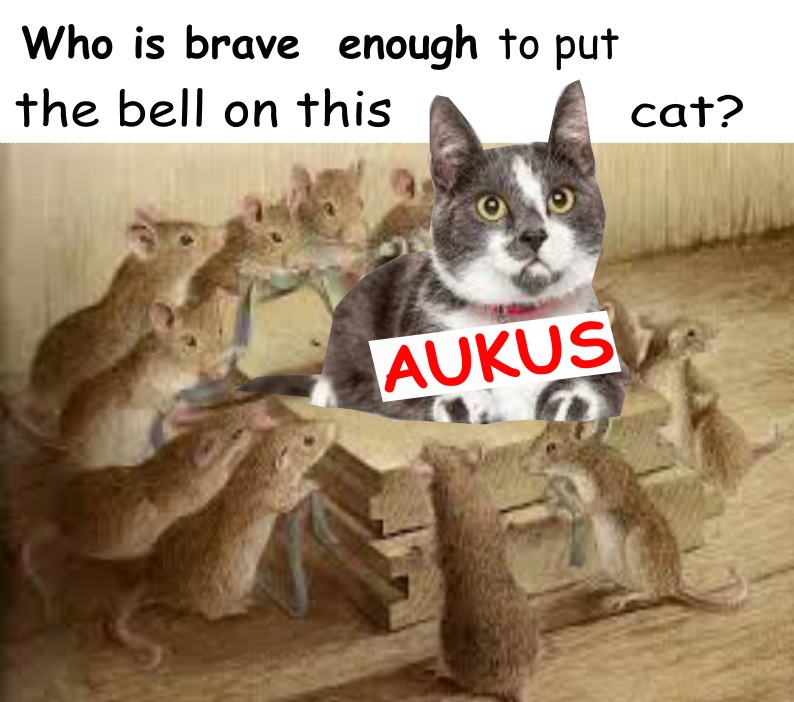
Admiral Mead sought to bell the cat while Defence Minister Marles has not been straight with the Australian people about the very high risks of AUKUS, even though he has been briefed on and appears to have informed Cabinet of those risks.
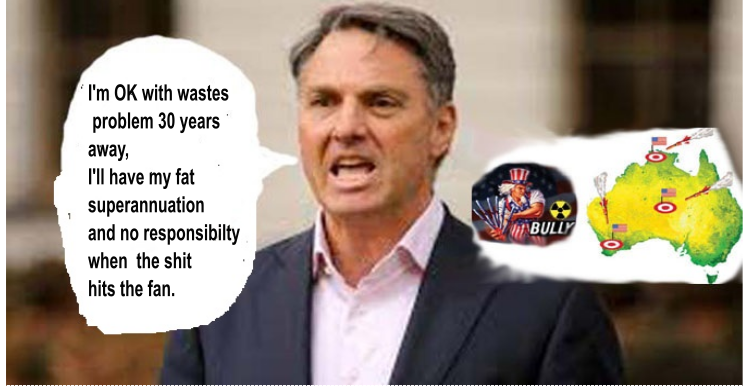
Marles should front up about this concealment without delay.
Labor not blameless
by Rex Patrick | Apr 29, 2025, https://michaelwest.com.au/government-ignores-aukus-high-risk-warning-from-the-admiral-in-charge/
The AUKUS submarine project faces huge risks, and Cabinet knows. But as the Government ships $2B of taxpayers’ money to the US this year, with much more to follow, the taxpayer is not being told. Rex Patrick reports.
On 26 February this year, Vice Admiral Jonathan Mead, the man in charge of AUKUS, advised the Senate that the AUKUS submarine program was “very high risk”. He said, “We’ve made that clear to government, and the government has made that clear to the public.”
However, it has not.
I follow AUKUS closely and had not heard that publicly before. Whilst it is absolutely the case, and something MWM has reported on extensively, this was the first public admission of the very high risk nature of the project from the Australian Submarine Agency.
Concerns about US submarine production rates and the weakness of the UK’s submarine industrial base have generated grave doubts about whether the $368B AUKUS scheme will deliver nuclear-powered submarines for Australia.
Moreover, former Prime Minister Malcolm Turnbull has revealed, after conversations with insiders, that there is no Plan B.
“Plan B is that we will not get any submarines.”
FOI ahoy
I was somewhat surprised by Admiral Mead’s unusual candour, so on 27 February, I moved to test the veracity of his remarks with an FOI application directed at the Australian Submarine Agency (ASA) seeking access to “any ministerial submission or briefing provided by ASA to the Minister for Defence … that refers to the AUKUS nuclear submarine program as involving ‘high risk’ or ‘very high risk’.”
I also sought access to ‘any statement made by the Minister for Defence or the Minister for Defence Industry and Capability Delivery that refers to the AUKUS nuclear submarine program as involving ‘high risk’ or ‘very high risk’.”
A decision on those was made this week. FOI applications can reveal the truth by what is disclosed, by what is withheld, and by confirming what doesn’t exist.
ASA confirmed the existence of a ministerial briefing characterising the AUKUS submarine program as involving ‘high risk’ or ‘very high risk’, but refused access to that briefing on national security and Cabinet secrecy grounds. Significantly, ASA’s refusal decision confirmed this document was produced for the dominant purpose of briefing a Minister on an attached Cabinet submission.
In effect, the Submarine Agency confirmed Admiral Mead’s statement that ASA has briefed the government on the ‘high risk’ or ‘very high risk’ nature of the AUKUS project, and that briefing was submitted to the Defence Minister for Cabinet consideration.
“That high-risk assessment has gone to the very top of the Government.”
Alarm bells should be ringing.
Misleading the public
But the FOI decision also reveals that Defence Minister Richard Marles has not been forthcoming with the Australian public about the full hazards of AUKUS.
In relation to statements the minister has made to the public on the risk status of the project, the Australian Submarine Agency advised that ‘no in scope documents were identified’ that show the Defence Minister has made any public statement that acknowledges the ‘high’ or ‘very high’ risk of the AUKUS scheme.
The agency was able to find only a handful of statements referring to risk management in general and assertions that the United Kingdom will carry the primary risks of the AUKUS-SSN construction.
Admiral Mead was not correct in his statement to the Senate, but more importantly, the Government has been caught red-handed fudging the risks associated with the AUKUS scheme. The public has been misled.
Admiral Mead sought to bell the cat while Defence Minister Marles has not been straight with the Australian people about the very high risks of AUKUS, even though he has been briefed on and appears to have informed Cabinet of those risks.
Marles should front up about this concealment without delay.
Labor not blameless
Last week, at a pre-polling booth, I was standing next to a Labor volunteer who was handing out how-to-vote cards for the seat of Adelaide. An elderly gentleman stuck out his hand and asked the volunteer for a how-to-vote card.
“We have to stop the Liberals getting in”, he said. “We don’t need nuclear power”.
I couldn’t resist. “But you’re taking a Labor how-to-vote”, I said. He gave me a strange look. “What about the eight naval reactors?” I queried. “A naval reactor is a reactor, and naval nuclear waste is nuclear waste”.
Many in the Labor camp think AUKUS is Morrison’s (and Peter Dutton’s) baby. But for Labor, that’s just a convenient mistruth. In September 2021, Morrison announced AUKUS. But he only announced a study. It was Prime Minister Anthony Albanese at the March 2023 San Diego “kabuki show” (as described by Paul Keating) that turned it into a formal Defence project behemoth with a projected cost of $368 billion.
Pre-polling booths are a good place to hang out for political gossip. I also held a discussion with a long-standing grassroots Labor Party member who proceeded to tell me how he had been sidelined for his opposition to AUKUS.
There’s no doubt the Labor rank-and-file have been cut out of the party’s decision-making with the Labor leadership ramming an AUKUS endorsement through the party’s 2023 national conference. Since then, the dissenting views of many, perhaps even a majority of Labor members, have been marginalised and suppressed.
AUKUS to be torpedoed
Politics aside, any project manager worth their salt would put an end to AUKUS. It’s a looming procurement shipwreck.
The US will not be able to supply the Virginia Class submarines to the Royal Australian Navy. The US Congressional Research Service has calculated a US build rate of 2.3 boats per annum is necessary to enable the US to provide boats to Australia without harming US undersea warfare capability. The current build rate is somewhere between 1.1 and 1.3 boats per annum.
The British submarine industry is one big cluster fiasco. Fruit that will flow from that program will be late, possibly rotten, and far more expensive than planned.
Meeting delivery obligations by the US and UK under the program will be really hard. And the fact that the Australian Government can’t even be up front and honest about the program
“suggests there is no chance of success.”
But Albanese need not worry, nor Marles. By the time all of this sinks in, they’ll be out of the system. It will be our children who suffer from the tens of billions wasted and the massive hole in our national security capability.
Rex Patrick
Rex Patrick is a former Senator for South Australia and earlier a submariner in the armed forces. Best known as an anti-corruption and transparency crusader, Rex is running for the Senate on the Lambie Network ticket next year – www.transparencywarrior.com.au.
Peter Dutton’s claim about SA premier’s nuclear support misleads

Matthew Elmas, April 18, 2025, https://www.aap.com.au/factcheck/peter-duttons-claim-about-sa-premiers-nuclear-support-misleads/?fbclid=IwY2xjawJyJ2NleHRuA2FlbQIxMQABHumaAudgFry-WUdbHh6CG_Yc1zFFAjZ_IBuzZE5XtEC3LYX3IqI3WdN7jBwq_aem_0I9My22omArVRsJyCKUhyg
WHAT WAS CLAIMED
South Australian Premier Peter Malinauskas supports nuclear power.
OUR VERDICT
Misleading. While Mr Malinauskas supports nuclear power globally, he’s repeatedly opposed nuclear power in Australia due to the costs.
AAP FactCheck – Peter Dutton is misleadingly claiming South Australian Premier Peter Malinauskas has been “very clear” in his support for nuclear power.
While Mr Malinauskas has spoken of the need for nuclear as part of the global energy mix, he has repeatedly opposed nuclear power in Australia due to high costs.
Mr Dutton made the misleading claim during the leaders’ debate hosted by the ABC on April 16, in response to questions about getting states and territories on board with his nuclear plan.
The coalition will need to overturn state and territory bans on nuclear for its policy, but faces opposition from governments, including from the Liberal Nationals in Queensland.
“We can work with state governments,” Mr Dutton said (timestamp 28 minutes 33 seconds).
“The South Australian Premier has been very clear of his support for nuclear.”
Mr Dutton has made the claim before, including during a press conference on April 8, 2025, where he suggested Mr Malinauskas has been upfront about his support for “the nuclear policy”.
AAP FactCheck asked Mr Dutton for evidence to support his claims but did not receive a response.
After the coalition unveiled plans in 2024 to construct a nuclear power plant in South Australia, Mr Malinauskas held a press conference to outline his position on the policy.
He said his position on nuclear power has been consistent for more than a decade.
“Nuclear power has an important role to play in the global energy mix as we pursue a decarbonised future – that’s just an obvious truth,” Mr Malinauskas said (0:45).
“As a premier I am fine with nuclear power, as long as it doesn’t make electricity bills more expensive,” Mr Malinauskas went on to say.
“What we know from report after report is that in the Australian context, it will make power more expensive, so why on earth would we pursue it?
“I would support nuclear power if it didn’t make electricity more expensive. But it will make it more expensive… all the evidence says it will make electricity a lot more expensive.”
Mr Malinauskas reiterated his position more recently on April 1, 2025, The Guardian reported.
“Why would any premier of any jurisdiction around the country support a plan to make electricity more expensive in households, in business?” he said.
“Peter Dutton has a plan to make it more expensive. I can’t be clearer about it.
“His plan would make electricity and energy prices for South Australia more expensive and there is not a month of Sundays we would support a plan to do that.”
AAP FactCheck is an accredited member of the International Fact-Checking Network. To keep up with our latest fact checks, follow us on Facebook, Instagram, Threads, X, BlueSky, TikTok and YouTube.
Secret AUKUS nuclear waste site docs in Cabinet lockdown

come May 3, if Peter Dutton gets elected, this work will not be available to the Australian Submarine Agency or other Government Departments. At that point the review will be locked away at the National Archives of Australia, unavailable until at least 2044.
The Federal Government has successfully managed to bury, for twenty years, a report into how high-level AUKUS nuclear waste will be stored, and where. Transparency warrior Rex Patrick reports.
Michael West Media, Rex Patrick reports.
”by Rex Patrick | Mar 31, 2025 |
The circumstances of this case are extraordinary, as is the outcome. A report of very high public interest has effectively been hidden from view by the bureaucracy’s misrepresentation of the report’s nature and origin.
In early 2023, the Cabinet made some sort of direction for the Department of Defence to look into AUKUS’ high-level nuclear waste storage.
Ms Alexandra Kelton, a then Defence Department official and now Acting Deputy Director-General of Program and Policy in the Australian Submarine Agency (ASA) contracted a commercial company, SG Advice, to prepare a report.
This is despite the Cabinet Handbook expressly prohibiting external contractors from seeing or handling Cabinet documents.
The Cabinet Handbook states, “It is inappropriate to provide copies of, or access to, final or draft Cabinet documents to sources external to government.”
There was no evidence that a direction was made to produce a report for Cabinet. The February 2023 letter of engagement explains that the role of SG Advice would be advisory in nature and that any decision related to the storage and disposal of radioactive waste is “a decision for the Australian Government.”
Ms Kelton later deposed that the words “Australian Government” mean “Cabinet”. Administrative Review Tribunal (ART) Deputy President, Peter Britten-Jones, swallowed that.
Insecure and unsecured
Consistent with a document that is not a Cabinet document, the nuclear waste review was prepared on unclassified computers and transferred on unclassified networks across multiple agencies.
The Cabinet Handbook, which sets out Cabinet rules and is signed by the Prime Minister and Attorney General, states that in preparing Cabinet documents, such documents must be prepared on a separate secure Cabinet System called CabNet.It further states that Cabinet Division manages and maintains the CabNet+ system, which is the real-time, secure, whole of Australian government information and communications technology system used to support the Commonwealth’s end-to-end Cabinet process.
The system provides electronic access at the PROTECTED and SECRET security classifications from approved networks across government.
It is likely that Ms Kelton and perhaps others engaged in breaches of security by not enforcing this rule. Lawyers for the Australian Submarine Agency suggested that Ms Kelton’s statement, “as a matter of practicality for communicating and formatting parts of the draft, that process occurred outside the CabNet system,
“should be given more weight than the rules set by the Prime Minister and Attorney-General.”
RoboDebt conduct, eat your heart out. Britten-Jones referred to these as “irregularities”, and then just moved on.
Bad decisions by ART – the Administrative Review Tribunal
………As things now stand, any mid-ranking bureaucrat can unilaterally declare that a report was intended for Cabinet and Cabinet secrecy will apply, shrouding failures, scandals and politically awkward problems from public scrutiny for decades.……………
This latest decision is a bad one, too. It’s a very bad decision.
………………………..High public interest
When the nuclear waste review was completed in November 2023 and sent to Defence Minister Richard Marles with a bureaucratic proposal, the review was included as an attachment to a submission to the National Security Committee (NSC) of the Cabinet.
In the brief that recommended it be attached to an NSC submission Admiral Jonathon Mead warned Marles that the report would be of high public interest. The bureaucrats in the Australian Submarine Agency were clearly worried about public reactions if the review were ever released, so they belatedly wanted it shrouded in Cabinet secrecy……………………………………………………………
A waste of money
The contract for SG Advice to produce the report was $360,000. Four Agencies were involved in compiling the report: ANSTO, ARWA, Geoscience Australia, and the Australian Submarine Agency. The work was conducted over nine months. This document is a million-dollar document.
The nuclear waste review was described by Ms Kelton as a “significant piece of policy advice and [t]he subject matter for the Review report remains current and relevant to forward Government decision-making.”
Legally, at least for now, the report is a Cabinet document.
But the Cabinet Handbook states Cabinet documents are considered to be the property of the Government of the day. They are not departmental records. As such they must be held separately from other working documents of government administration.
That means, come May 3, if Peter Dutton gets elected, this work will not be available to the Australian Submarine Agency or other Government Departments. At that point the review will be locked away at the National Archives of Australia, unavailable until at least 2044.
So as soon as the Government changes, sooner or later, it will be a case of “start again”.
Who in their right mind would nominate that a significant piece of work should be a cabinet document? It’s a costly move. But then again, the Australian Submarine Agency did decide to give the United States $4.7B to upgrade their shipyards with no clawback if those same shipyards don’t ever deliver us a submarine. Before that, the Defence Department spent $4B not buying French submarines.
It’s stuff you wouldn’t normally read about, except here at MWM.
An appeal of the decision to the Federal Court is being considered. https://michaelwest.com.au/secret-aukus-nuclear-waste-site-docs-in-cabinet-lockdown/
Integrity watchdog boss steps aside from six defence investigations

ABC News by political reporter Olivia Caisley, Sun 23 March 25
In short:
The National Anti-Corruption Commission has confirmed its chief Paul Brereton has recused himself from six defence matters referred to the watchdog and assigned those matters to a deputy commissioner.
Integrity experts are concerned about how Mr Brereton is handling potential conflict of interest issues related to defence.
What’s next?
The integrity watchdog will appear before a Senate committee on Thursday.
The head of the National Anti-Corruption Commission continues to hold senior roles in the Army Reserves, raising fresh questions about perceptions of neutrality as the watchdog probes a $45 billion federal defence contract.
Six months after a unintentional misconduct finding was made against Paul Brereton over a robodebt referral, the NACC has confirmed the commissioner is self-managing potential conflict of interest issues if and when they arise.
When contacted by the ABC the NACC did not detail whether Mr Brereton had stepped away from a referral regarding the navy’s $45b Hunter frigate project, but confirmed he had recused himself from six defence matters to avoid any perceptions of bias.
Federal crossbenchers — including Greens senator David Shoebridge and Independent MP Helen Haines — have flagged issues with the integrity body since its inception in July 2023 and are pushing for increased transparency in the next term of parliament…………………………………
A NACC spokesperson confirmed Mr Brereton has recused himself from six defence matters being investigated by the commission, but it’s unclear at what point in the process he stepped away.
“The commissioner has appropriately remained involved in decision making and deliberations where the matter does not involve the interests of an individual or unit with whom he has or has had a close association,” they said.
“… Where an actual or perceived conflict is declared or ruled, the member does not participate in the discussion and leaves the meeting while the matter is discussed and determined.”
But Greens senator David Shoebridge told the ABC Mr Brereton’s continued association with defence raised a red flag and the commissioner shouldexplain whether he’s recusing himself from early deliberations or just decision making.
“I think most people will just be shaking their heads at this” he said.
Responding to questions about whether it’s appropriate for Mr Brereton to retain his position as Major General in the ADF Reserves, as well as honorary appointments as Colonel Commandant of the Royal New South Wales Regiment and the University of New South Wales Regiment, the NACC said it wasn’t concerned.
“The commissioner’s ongoing defence roles are honorary appointments and generally present no conflict of interest,” a spokesperson told the ABC.
Director of The Center for Public Integrity, Geoffrey Watson SC, described the NACC’s explanation as problematic.
“I haven’t got complete confidence in the commissioner’s ability to gauge conflict of interest — given his robodebt error,” he said.
“The response seems to gloss over potential defence conflicts of interest because certain appointments of Mr Brereton’s are ceremonial or honorary. I would think if your commitment is so emotionally strong you’re willing to do it for free — it makes it worse not better.”
The August declaration provided to the Senate also lists nine current and former politicians with whom Mr Brereton has previously had professional contact.
Those names include — Defence Minister Richard Marles, former defence minister Linda Reynolds and Marise Payne, who was the defence minister at the time the frigate announcement was made.
The Guardian reported last year Mr Brereton’s Robodebt conflict related to his service in the army reserves.
Senator Shoebridge says he’s been waiting 18 months for a substantive response to his NACC referral regarding the Hunter frigates.
“I have not had any clarification about who is dealing with it, what stage it is at and I’m troubled commissioner Brereton might have had a role in it,” he said……………. https://www.abc.net.au/news/2025-03-23/integrity-watchdog-boss-steps-aside/105084982?utm_source=abc_news_app&utm_medium=content_shared&utm_campaign=abc_news_app&utm_content=twitter
Burying The CIA’s Assange Secrets

The Dissenter, Kevin Gosztola, Feb 19, 2025
The CIA won the dismissal of a lawsuit brought by four Americans who claimed they had their privacy rights violated when they visited Julian Assange in Ecuador’s London embassy.
A United States judge dismissed a lawsuit pursued by four American attorneys and journalists, who alleged that the CIA and former CIA Director Mike Pompeo spied on them while they were visiting WikiLeaks founder Julian Assange in Ecuador’s London embassy.
“The subject matter of this litigation,” Judge John Koeltl determined [PDF], “is subject to the state secrets privilege in its entirety.” Any answer to the allegations against the CIA would “reveal privileged information.”
Few publications followed this case as closely as The Dissenter. It unfolded at the same time that the U.S. government pursued the extradition of Assange, making any outcome potentially significant.
On August 15, 2022, Margaret Ratner Kunstler, a civil rights activist and human rights attorney, and Deborah Hrbek, a media lawyer, filed their complaint. Journalist Charles Glass and former Der Spiegel reporter John Goetz also joined them as plaintiffs.
The lawsuit claimed that the plaintiffs, like all visitors, were required to “surrender” their electronic devices to employees of Undercover Global, a Spanish security company managed by David Morales that was hired by Ecuador to handle embassy security. They were unaware that UC Global had allegedly “copied the information stored on the devices” and shared the information with the CIA.
Pompeo allegedly approved the copying of visitors’ passports, “including pages with stamps and visas.” He ensured that all “computers, laptops, mobile phones, recording devices, and other electronics brought into the embassy,” were “seized, dismantled, imaged, photographed, and digitized.” This included the collection of IMEI and SIM codes from visitors’ phones.
Morales and UC Global were named as defendants in the lawsuit, however, due to the fact that they were not in the U.S., the claims against them were never really litigated.
In December 2023, Koeltl dismissed multiple claims that were filed against the CIA. But remarkably, he found that the four Americans who had visited Assange had grounds to sue the CIA for violating their “reasonable expectation of privacy” under the Fourth Amendment of the U.S. Constitution.
“If the government’s search (of their conversations and electronic devices) and seizure (of the contents of their electronic devices) were unlawful, the plaintiffs have suffered a concrete and particularized injury fairly traceable to the challenged program and redressable by a favorable ruling,” Koeltl declared.
Soon after, the court was notified that the CIA would assert the state secrets privilege to block the lawsuit.
Bill Burns, who was the CIA director, submitted a declaration in April 2024 that asserted “serious” and “exceptionally grave” damage to the “national security” of the U.S. would occur if the case proceeded.
……………………………………………… Burying secrets so deep and for so long that the public does not find them is typically the CIA’s objective when they invoke the state secrets privilege. They have buried a 6,300-page Senate intelligence report on CIA rendition, detention, and torture during the global war on terrorism. They are now burying their Assange secrets.
The decision all but ensures that the CIA will be able to conceal what they allegedly did to Assange, WikiLeaks, and his supporters for several decades. The agency, with support from the U.S. Justice Department, has already frustrated a Spanish court trying to prosecute Morales and other UC Global employees for alleged criminal acts.
It was always unlikely that Assange’s defense would uncover details about the CIA’s alleged actions and share those revelations during an Espionage Act trial. The restrictions the government and courts impose on defendants come with procedures to shield the CIA from scrutiny.
When the prosecution against Assange ended in a plea deal in June 2024, that benefited the CIA even if it was not the outcome that current and former high-ranking officials had desired. The CIA would never have to worry about the agency’s actions being discussed by the press and on social media during a high-profile trial.
Of course, there is also the matter of the CIA allegedly violating the privacy rights of Assange visitors while the U.S government targeted a journalist living under political asylum in a foreign embassy. The U.S. news media never showed much interest in the CIA’s actions, however, let’s not forget there was widespread global opposition to the Assange prosecution that helped end the case. The agency is right to be concerned that if more was known it might erupt into an international scandal. https://thedissenter.org/burying-the-cias-assange-secrets/
Community consultation kicks off for submarine yard, but don’t mention nuclear
“South Australians should understand that AUKUS involves not only plans for the construction and sustainment of nuclear submarines at Osborne, but also for eventual decommissioning, storage and dismantling of those submarines on the banks of the Port Adelaide River, and indefinite storage of high-level nuclear waste, most likely in SA.”
The Australian Submarine Agency (ASA) will today start information sessions for community members about its planned nuclear submarine construction yard project, but any concerns about nuclear issues are out of scope.
The first of four information sessions for community members interested in the Australia Submarine Agency’s (ASA) planned nuclear submarine construction yard at Osborne begin today.
The first – at the State Library on North Terrace – comes during a period of public consultation through which the ASA is receiving feedback from community members on its draft ‘Strategic Impact Assessment Report’ for the yard.
Until 17 March members of the public can submit comments about the 203-page draft, which considers the plan’s potential impact on the environment but notably rules nuclear issues as “outside the scope” of the plan for a shipyard to build nuclear submarines.
It follows an agreement struck in November 2023 between the ASA and the Environment and Water Minister – Tanya Plibersek – which specifically precluded all nuclear issues from the scope of the environmental assessment process.
“The operation, sustainment and decommissioning of the submarines built at the Osborne SCY is considered out of scope of the Strategic Assessment and will be managed via separate environmental assessment processes and approvals as necessary,” the agreement reads.
“The manufacture, delivery and subsequent operation of the reactor power module is considered outside of the scope of the Strategic Assessment, however the assembly into the submarine is included.”
What is included is the processing of steel, outfitting of submarine sections, manufacture of pipe and electrical components, the use of supporting facilities (guard houses, car parks, warehousing, office accommodation, etc.) and more.
The resulting draft environmental impact report, plus 754 pages of appendices, asserts that the impacts of the construction yard are “likely to be acceptable”.
It also confirms on page 156 that “no nuclear actions” are included in the scope of the draft and that “other activities are considered outside the scope of the strategic assessment and will be managed via separate assessment processes and approvals as necessary”.
Former Senator and submariner Rex Patrick – who plans on running for a South Australian seat at the next Federal Election as a member of Jacqui Lambie’s political party – said the consultation process was designed to “minimise public engagement”.
“This is a ‘strategic assessment’ of a nuclear facility in which everything nuclear is excluded. More attention is paid to the environmental impacts of car parks than nuclear reactors,” he told InDaily.
“South Australians should understand that AUKUS involves not only plans for the construction and sustainment of nuclear submarines at Osborne, but also for eventual decommissioning, storage and dismantling of those submarines on the banks of the Port Adelaide River, and indefinite storage of high-level nuclear waste, most likely in SA.”
He added that the fact that Port Adelaide is yet to be visited by a nuclear-powered vessel because it has never been approved as a suitable location for such visits made the situation “an extraordinary state of affairs”.
“Whatever one thinks about AUKUS, it’s clear the environmental assessment has been rigged from the beginning.
“It’s been rigged by ASA with the connivance of Minister Plibersek to produce a predetermined outcome, opening the way for further stages of the project to be ticked off by Defence bureaucrats as they wish.
Those decisions will have consequences for South Australia that will last decades, hundreds and indeed thousands of years.”
1 This month
7 April – WEBINAR – Australia and the Doomsday Clock – Preventing nuclear war through NoFirstUse and other policies
Online | Tuesday April 7, 4:00-5:30pm, Australian Eastern Time / 8:00-9:30am Central Europe Time
– Access the registration link
15 April – Zoom –Nuclear Power is Not the Solution
Apr 15, 2026 01:00 AM in Canberra, Melbourne, Sydney

Join the International Physicians for the Prevention of Nuclear War (IPPNW) on Tuesday, April 14th for a timely webinar exploring the risks associated with nuclear power and challenging the myth that it offers a simple, safe, carbon-free solution to the climate crisis

21 April Webinar: No Nuclear Weapons in Australia
Start: 2026-04-21 18:00:00 UTC Canberra, Melbourne, Sydney (GMT+10:00)
End: 2026-04-21 19:30:00 UTC Canberra, Melbourne, Sydney (GMT+10:00)
Event Type: Virtual
A virtual link will be communicated before the event.
Host Contact Info: australia@icanw.org

of the week – Australians for War Powers Reform (AWPR)
To see nuclear-related stories in greater depth and intensity
 Antinuclear