Environmentalists and Aboriginal traditional owners object to rocket launching on South Australian protected heritage land, at Whaler’s Way.
Rocket launching proposals worry traditional owners, environmentalists, but company committed to holistic care of the land, ABC Eyre Peninsula / By Evelyn Leckie 28 May 21, Popular South Australian tourist spot Whalers Way could become the site of three test rocket launches later this year, causing concern among some environmentalists and traditional owners.
Key points:
- Traditional owners and conservationists have raised concerns about the proposed site for three rocket launches this year
- Nature Conservation SA holds concerns over two threatened species
- Southern Launch says it’s committed to a holistic approach to care for the area during its testing program.
SA space industry leader Southern Launch is looking to conduct test launches on privately owned land, with a view to making the area a permanent launching site in the future to send satellites into space.
Nature Conservation Society of SA advocate Julia Peacock said the area, on the state’s rugged southern coast, wasn’t the right site to conduct test launches.
“It’s a really special conservation area,” she said.
“It’s actually specifically protected under environment legislation that’s called a heritage agreement, which means a private landholder agreement to protect that area so we would really like to see that agreement honoured.
We’re also really concerned that it is habitat for a number of species of conservation concern.”
Ms Peacock said the society was worried about threatened species in the area such as southern emu wrens and white-fronted whip birds.
“They’re very small and shy birds, so they’re quite hard to see,” she said.
We’re concerned that we’re building an industrial facility that involves explosions that are noisy and causes vibrations — that those species are going to be frightened.
“It’s going to change their behaviour and impact the way they want to move through this area.”
‘Let it be natural’
Nauo elder Jody Miller said there were a lot of cultural issues out at Whalers Way.
“It’s significant culturally, there are stories [out there] and we don’t want to destroy anything,” Mr Miller said.
“If it’s just left alone, let it be natural, people can see this for the next generation — everybody’s children as well as my children.”
Holistic protection
Southern Launch CEO Lloyd Damp said the testing program would provide the chance to specifically measure what the noise effect would have on local species.
“We’re working with one of the best universities in Australia to undertake the measurements and then provide that for the environmental impact statement assessment,” Mr Damp said……….. https://www.abc.net.au/news/2021-05-28/rocket-launching-proposals-worry-environmentalists/100173472
Australian company Greenland Minerals fails community test over controversial rare earths and uranium mine plan
Greenland Minerals fails community test over controversial rare earths and uranium mine plan, https://www.acf.org.au/greenland-minerals-fails-community-test 27 May 21, It is a long way from Greenland to Western Australia, but concerns from the Narsaq community in Greenland about a controversial mining project will be raised at today’s annual meeting of Perth-based company Greenland Minerals, listed on the ASX as GGG, which is behind the Kvanefjeld rare earths and uranium mine.
Opposition to the planned mine dominated Greenland’s recent national elections. On 6 April Greenlanders elected the Inuit Ataqatigiit (Community for the People) party, which campaigned on an explicit platform opposing Kvanefjeld.
The new coalition government has committed to stop the mine going ahead.
“When a mine proposal triggers an election and the results show a clear rejection of the project, it is time for the company to accept the community’s will and end its mining plans,” said Mineral Policy Institute board member Dr Lian Sinclair, who will attend the GGG meeting.
Australian groups are calling on GGG to recognise that it has failed to secure social license for the Kvanefjeld project.
“We need a different approach to mining, one based on free, prior and informed consent,” said Australian Conservation Foundation nuclear free campaigner Dave Sweeney.
“Mining materials that are used in renewable energy does necessarily make a company ethical or responsible.
“There are dangerous radioactive elements within these deposits, including uranium, that pose long term environmental and health risks.
“These risks should not be imposed on an unwilling community.
“The Narsaq and wider Greenland community and the new Government have rejected this project. GGG should recognise and respect this clear and democratic decision”.
Senior Morrison government ministers support Iluka’s plan to reprocess rare earths (no mention of what they would do with the radioactive wastes)
Iluka finds favour in bid to build rare earths refinery, W.A. Today, By Nick Toscano, May 11, 2021
A proposal to build the country’s first full-scale rare earths refinery has secured the support of senior Morrison government ministers, as Australia works to position itself as a key supplier of raw ingredients in smartphones, electric cars and wind turbines.
The board of ASX-listed Iluka Resources, a $3.6 billion company, is assessing the feasibility of developing a refinery at Eneabba in Western Australia to process rare earths – a group of elements used in a range of high-tech products and military weapons systems…….. https://www.watoday.com.au/business/companies/iluka-finds-favour-in-bid-to-build-rare-earths-refinery-20210511-p57que.html
Greenland’s election won by party opposing Chinese-backed Australian uranium and rare earths company
Greenland’s Rare-Earth Election
A vote last month answered an important question about the world’s largest island. The Atlantic, ROBINSON MEYER 3May 21, ”’……… Since 1979, the ruling Siumut party has dominated Greenland’s elections; in all those years it has lost power only once, in 2009, after the island reformed its government and loosened ties with Denmark, which has ruled it for three centuries. Earlier this month, the democratic-socialist Inuit Ataqatigiit party (IA), Greenlandic for “Community for the People,” won an election with more than a third of the vote, after centering its campaign on a promise to cancel the controversial mining project.
Greenland, the world’s largest island, is populated by about 56,000 people, and its election is, in some ways, an extremely local story. The mining project is called Kvanefjeld, and it would excavate thorium, uranium, and rare-earth elements. Kvanefjeld is less than four miles from Narsaq, one of the larger cities in South Greenland and a local tourism center. (It also has an excellent brewery.)
“There is no way for me to have the mine, because it’s only six kilometers from our town,” Mariane Paviasen, 56, a local activist who ran for Parliament under IA, told me in an interview before the election.
But the election touches on some of the biggest issues in global politics: climate change, mineral economics, and indigenous sovereignty. Rare earths are used to make finely tuned magnets that are essential to modern electronics, including electric vehicles and wind turbines. There is some irony here: Greenland, whose ice sheet is a visual metaphor for the inevitability of climate change, will be mined to power the only technology that can stop it. But the actual interest here is not so overdetermined—like all true climate stories, it draws together questions of money, land, power, and growth. IA’s answer to those questions is not to oppose all extraction, but it has taken a less friendly stance toward some proposed projects. It is particularly opposed to mining that could create radioactive waste……..
The plans for Kvanefjeld had long been paused, according to Zane Cooper, an anthropologist at the University of Pennsylvania who studies how communities respond to mineral extraction. Then, during the pandemic, the plans seemed to accelerate. Greenland Minerals Ltd., an Australian-headquartered but Chinese-backed company, began pressing its plans forward, and the ruling Siumut party complied. The local population had worries, particularly about uranium, which is often found next to thorium, itself a sign of rare earths. A rushed series of public meetings in February gave residents little warning about how rumored uranium dust would affect their farms and settlements. When someone called in a bomb threat to a meeting that Siumut officials were due to attend, they canceled their appearance. Another party, the Democrats, announced it would leave the governing coalition, depriving Siumut of its majority and precipitating snap elections.
The election, on April 6, saw a major victory for IA. It won overwhelmingly in southern Greenland.
IA does not oppose most mining; what it opposes is uranium mining. Another mine, about 30 miles from Narsaq, meets its approval, and the party supports developing mineral extraction as part of a broader strategy. “I think it will work better for us to have our own mining company in Greenland,” Paviasen said. She also supports more economic diversification, embracing a larger role for tourism and local agriculture. Most vegetables in Greenland are imported from Denmark.
Greenland’s blessing and curse is the large block grant, equivalent to more than $500 million, that it receives every year from the Danish government. It makes up about half of Greenland’s annual budget. Greenland has promised to deposit about a third of the revenue from its mineral wealth into a sovereign-wealth fund modeled off the Norwegian oil fund, which could help it replace the Danish block grant
If IA does find a way to instill some measure of economic autarky in Greenland, then it would be the world’s first completely independent indigenous country, Cooper said. Onlookers expect that Greenland would seek independence from Denmark faster under the separatist IA party than the more moderate Siumut. But that remains a ways off: First, IA must figure out how, and whether, it can cancel the mine in a fjord. Greenland Minerals has vowed to fight the decision in court and in international trade tribunals. (Múte Egede, the new IA prime minister, did not respond to a request for comment.) It may seem like a narrow question, but it could have sweeping implications for the island’s 56,000 inhabitants—and for how the world’s largest powers comport themselves with regard to the world’s largest island.
If IA does find a way to instill some measure of economic autarky in Greenland, then it would be the world’s first completely independent indigenous country, Cooper said. Onlookers expect that Greenland would seek independence from Denmark faster under the separatist IA party than the more moderate Siumut. But that remains a ways off: First, IA must figure out how, and whether, it can cancel the mine in a fjord. Greenland Minerals has vowed to fight the decision in court and in international trade tribunals. (Múte Egede, the new IA prime minister, did not respond to a request for comment.) It may seem like a narrow question, but it could have sweeping implications for the island’s 56,000 inhabitants—and for how the world’s largest powers comport themselves with regard to the world’s largest island. https://www.theatlantic.com/science/archive/2021/05/greenlands-rare-earth-election/618785/
UK in secret talks with Australia and others, about mining rare earths
Telegraph 2nd May 2021, Fears China will “turn off the taps” on Britain’s green revolution
has forced ministers to enter secret talks with seven commonwealth
countries to mine their rare earths. Officials from the Department of
International Trade and the Foreign Office have had meetings with
representatives from Australia, Canada, Malawi and Tanzania in a bid to
persuade them to supply rare earths, as well as critical metals such as
lithium to the UK.
Rare earths are found in abundance across the world, but
are difficult to process and China controls around 90 per cent of the
market. The UK has no known deposits of rare earths, unlike other major
economies such as the US, Canada and Australia, which are also grappling
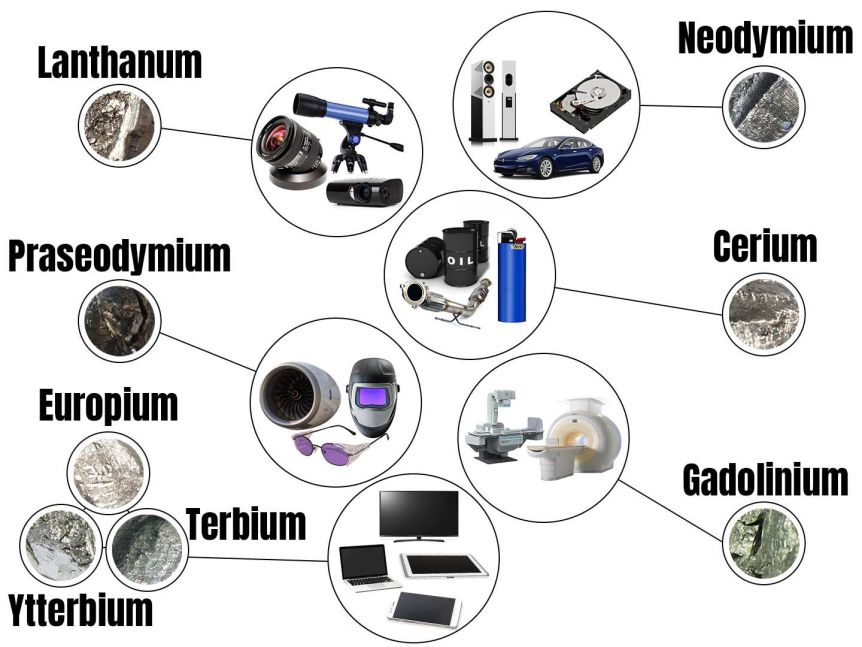
with the problem. Rare earths are used in a wide variety of technology,
from fighter jets, to MRI machines and loudspeakers, but also in the motors
of electric vehicles and in wind turbines, and the worldwide transition to
green infrastructure is expected to put pressure on global demand.
Australia sleepwalks towards nuclear war – enthusiasm for nuclear rockets and submarines.
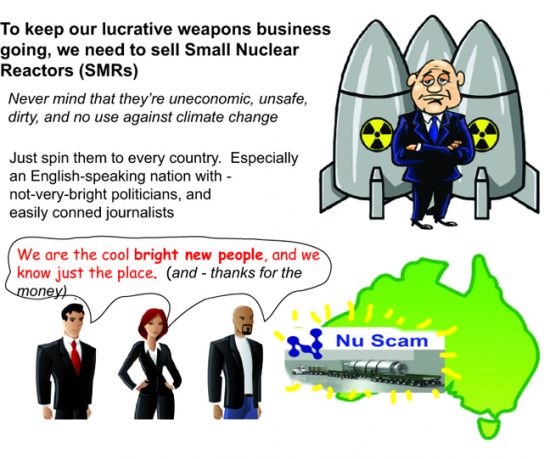
Small nuclear reactors (SMRs) are being pitched to Australians as ”climate salvation”, ”cheap electricity” etc. Of course this is nonsense. But the toxic macho nuclear zealots are confident that SMRs will have a great future in nuclear wars on land, on sea, in space.

SPACE: Australia’s ”cultural cringe” is so obvious, in the fervour for space research. Breathless enthusiasm in media coverage of rockets, space exploration . Yet the truth is that Australian space research is tied to America’s goal of militarising space. We hold events like The Australian International Aerospace and Defence Exposition – pitched as family entertainment:
”THE AIRSHOW will feature the raw potency and power of modern military aviation. The thrust and grunt of the latest military heavy metal will take centre stage. The stars of the show will be state-of-the-art jet fighters, bombers and giant heavy lift leviathans from home and abroad. See them so close you could almost touch them. Shudder to the roar of their mighty jet turbines as they perform high octane routines and simulated combat manoeuvres. Marvel as swarms of attack helicopters join in the fray.”
Of course, if we can help the American drive for weapons in space, it is all the better to have the tax-payer fund our space research.
SUBMARINES. Australia’s nuclear zealots have long been working away for nuclear submarines…… way before the so-called ”neutral” nuclear military fan Kevin Scarce was made head of the South Australian Nuclear Fuel Chain Royal Commission, in 2016.
A push for nuclear submarines has been part of Australia’s appalling history of submarine deals in recent years. Part of this mess was recently exposed by Michelle Fahy in Murder, corruption, bombings – the company at centre of Australia’s submarine deal. But the whole sorry tale goes further. It probably explains why the Australian government chose the super costly French submarine design – in the hopes that it could easily be transformed from a diesal to a nuclear -powered form.
Impelled by the very right-wing Australian Strategic Policy Institute, the push continues. Academia is co-opted, as The University of New South Wales joins with the Submarine Institute to promote nuclear submarines in a July 15 Canberra seminar. The speakers include well known nuclear propagandists Tom Frame, Kevin Scarce, and Hugh White.
Tom Frame has also recently published a book, rapturously received by the nuclear lobby, enthusing about nuclear submarines, and recommending them as Australia’s way into the full nuclear fuel chain, and into the space race .
With Australia’s Murdoch media monopoly, and the ever-weakening ABC, the public is unaware of these machinations towards Australia’s role in nuclear militarism. The push for small nuclear reactors is the starting point.
Scott Morrison’s plan for Australia to fund small nuclear reactors and other very dubious technologies that purport to combat global heating.

Australia to fund low-emissions research as world sets ambitious climate targets, The Age, By Mike Foley, April 21, 2021,
The government is offering $566 million to global experts who want to collaborate with Australia on clean energy projects, with ‘green steel’, battery storage and even research on nuclear fission reactors among the possible tech options.
Australia will help fund groundbreaking research in low-emissions technology as the Morrison government confronts increasingly ambitious climate commitments from major trading partners ahead of a global climate summit.
Prime Minister Scott Morrison will announce a $566 million investment in research partnerships with other countries for new technology like green steel, small modular nuclear reactors, and soil carbon sequestration. He said the technology from the deals would benefit Australian export industries such as agriculture, coal, aluminium and gas…….
Australia’s focus on international action contrasts with the increasingly ambitious 2030 emissions targets that developed nations are announcing in the lead-up to US President Joe Biden’s international climate summit on Thursday…….
But Energy and Emissions Reduction Minister Angus Taylor said one country alone cannot make commercially viable the low emissions solutions needed to replace polluting technologies, or roll them out at scale……..
The partnership funding is a commitment in the upcoming federal budget. The Morrison government has entered discussions with the US, UK, Japan, Korea and Germany…..
Funds will be invested in research and development partnerships in line with Australia’s technology roadmap, which has prioritised hydrogen, low-emissions steel and aluminium, battery storage, and soil carbon sequestration on farmland….”
The Morrison government will also seek to collaborate with the US and UK on small modular nuclear reactors, which are not yet commercially viable. It has no plan to remove Australia’s ban on nuclear power or fuel processing.. … https://www.theage.com.au/politics/federal/australia-to-fund-low-emissions-research-as-world-sets-ambitious-climate-targets-20210421-p57l5v.html
Australian Strategic Policy Institute sees nuclear submarines as a step towards the full nuclear chain
Nuclear submarines could lead to nuclear power for Australia, The Strategist 15 Apr 21‘‘………..Submarines could lead to a broad nuclear industry in Australia. This possibility will be the subject of a seminar to be held at ASPI on Thursday 15 July, jointly hosted by the Submarine Institute of Australia and UNSW Canberra. More information is available here….””
https://www.aspistrategist.org.au/nuclear-submarines-could-lead-to-nuclear-power-for-australia/
Chinese-Australian uranium and rare earths mining company meets political opposition in Greenland
Left-wing party opposed to rare earth mining project wins Greenland election, A left-wing environmentalist party opposed to a controversial mining project won a clear victory in Greenland’s parliamentary election, according to results released Wednesday. https://www.france24.com/en/europe/20210407-left-wing-party-opposed-to-rare-earth-mining-project-wins-greenland-election 7 Apr 21,
With 36.6 percent of the vote, Inuit Ataqatigiit (IA) was ahead of Siumut, a social democratic party that has dominated politics in the Danish territory since it gained autonomy in 1979.
“Thank you to the people who trusted us to work with the people in the centre for the next four years,” IA leader Mute Egede said on KNR public television after the results were announced.
IA, which was previously in opposition, is expected to grab 12 out of the 31 seats in the Inatsisartut, the local parliament, up from eight currently.
But without an absolute majority, the most likely scenario is that IA joins forces with smaller parties to form a coalition. Siumut, which headed the outgoing government, was partly weakened by internal struggles. It gained 29.4 percent of the vote, still two percentage points higher than its results in the 2018 election.
The dividing line between the two parties was whether to authorise a controversial giant rare earth and uranium mining project, which is currently the subject of public hearings.
The Kuannersuit deposit, in the island’s south, is considered one of the world’s richest in uranium and rare earth minerals — a group of 17 metals used as components in everything from smartphones to electric cars and weapons.
IA has called for a moratorium on uranium mining, which would effectively put a halt to the project.
Divisions over Kuannersuit originally triggered the snap election in the territory after one of the smaller parties left the ruling Siumut coalition.
Opponents say the project, led by the Chinese-owned Australian group Greenland Minerals, has too many environmental risks, including radioactive waste.
Egede told KNR he would immediately start discussions to “explore different forms of cooperation” before forming a coalition government.
The 34-year-old, who has been a member of the Inatsisartut since 2015, took over the reins of the left-green party a little over two years ago.
Greenland might reject Australian-Chinese company Greenland Minerals in its bid to mine rare earths
Telegraph 4th April 2021, AS elections go, it sounds rather minor-league: a contest with just 40,000 voters, triggered by a planning row in one of the most remote, inhospitable corners of the planet. On Tuesday, though, diplomats from Washington to
Beijing will be watching carefully as Greenland holds snap parliamentary polls. With a total of population of just 56,000, its electorate is smaller than some British town councils – yet their vote over the vexed issue of the Kvanefjeld mine project could have implications not just for Greenland, but the global superpower race.
Overlooking the tiny fishing settlement of Narsaq, where locals live mainly off catching whales and seals, the project
aims to tap into one of world’s biggest deposits of “rare earth” minerals – materials as vital to the 21st-century as oil was to the 20th. Their supermagnetic, superconductive properties are used in everything from i-Phones and solar panels through to hybrid cars and weapons systems.
Yet while they are key to the goals of a high-tech, low-carbon world, extracting them itself can be an environmentally-hazardous process – a point not lost on Greenland’s residents, some of whom are sceptical of promises from the Australian firm behind the project, Greenland Minerals, that strict anti-pollution measures will be enforced.
Frontrunners in the election are the Left-wing, pro-green Inuit Ataqatigiit party, who could throw the mine project out altogether, despite warnings from rival parties that Greenland’s isolated economy must end its dependence on fishing. But for others, the stakes are about much more than even that. Of particular concern is that Greenland Minerals is part-owned by Shenghe Holdings, a Chinese firm with close ties to the Beijing government.
Because ANSTO shut down cyclotron, Australia has the problem of importing a short-lived medical isotope

|
“……..Australia lost the capacity to make the radioactive isotope iodine-123 – used in the diagnosis and treatment of cancer in the nerve cells of children – just over a decade ago with the closure of the National Medical Cyclotron in Camperdown, NSW. ………
But according to Ansto, iodine-123 is needed in clinical settings by about a dozen patients around Australia at any one time – most of them children with neuroblastoma. This means Australia now relies on imports from Japan. But with a half-life of just over 13 hours – meaning the levels of radioactivity halve every 13 hours – this isotope needs to be distributed to Australian hospitals and health centres very quickly. It expires within 33 hours of being manufactured in Japan. “The challenge with transporting nuclear medicine is the products have a short half-life,” Ian Martin, the general manager of Ansto Health, told Guardian Australia. “We need to get the isotopes from point A to point B before they decay too much to be effective, a complex task when B is in another hemisphere.” ………. https://www.theguardian.com/australia-news/2020/aug/11/australias-nuclear-medicine-agency-chartered-flights-to-deliver-childrens-cancer-treatment?fbclid=IwAR3o8Da64-dDpv0mwYL0K5jaPZreOGOaQCmDdh4ChzfwQLjsv0sFdBBVBVo 11 Aug 2020,
|
|
Corrupt spinning of Small Nuclear Reactors -Australia beware – theme for December 2020
With the financial collapse of the nuclear industry, and with the Nuclear Weapons Ban Treaty coming into force soon, the nuclear lobby is pitching a pack of lies, as it desperately promotes Small Nuclear Reactors (SMRs.).
Australia is not immune to this corrupt spin. Indeed, Australia is a sitting duck
Rocket launches on the Eyre Peninsula wil damage the environment
Nature Conservation Society of SA fears Whalers Way rocket launch site will damage the environment
Worry rocket launch site will damage environment The Advertiser Clare Peddie, Science Reporter, The Advertiser, November 4, 2020
A proposed rocket launch facility at Whalers Way, on the tip of Eyre Peninsula, threatens vulnerable wildlife and coastal wilderness, conservationists say.
The Nature Conservation Society of South Australia is challenging the development, citing heightened fire danger, noise disturbance and land clearing, enabling the spread of feral predators and pests.
Society vice-president Rick Davies said the area was so special that it was protected under a legally binding heritage agreement, meaning it is be managed as a privately-owned conservation area in perpetuity. “We support a space industry in SA, but this is the wrong place for this development,” Dr Davies said.
With our country already seeing more large, uncontrolled fires, why would we allow a commercial firing range and all its propellant fuels in the middle of one of the best expanses of native coastal vegetation?”
The area is home to species at risk of extinction, including nationally vulnerable white-fronted whipbirds and the Eyre Peninsula southern emu-wren.
Dr Davies says these shy secretive birds require long unburnt vegetation and will be impacted both by both direct habitat destruction and associated industrial disturbance.
Coastal raptors such as vulnerable white-bellied sea eagles and rare osprey, which require vast hunting territories, will also be disturbed, he says.
The Eyre Peninsula Southern Emu-wren is endangered in South Australia. This male was briefly captured for research purposes and then released. Picture: Marcus Pickett
The State Government has given the Whalers Way Orbital Launch Complex major development status.
The company behind the development, Southern Launch, is now preparing a development application, including an environmental-impact statement.
Executive director Mike Damp expected those documents would be made available as part of the public consultation process early next year.
“Site selection took a long time and it was diligent; it wasn’t selected willy nilly or with disregard to the environment,” he said.
“Right from the outset, I want to dispel any inclination that you might have that we are prepared to ride roughshod over the environment.
“From the very beginning, we have been very mindful of the area that we are operating out of and we have, therefore, cemented into the bedrock of the company our biodiversity management strategy, so we intend to improve the conservation status of Whalers Way.”
The rugged coastline at Whalers Way, south of Port Lincoln on the Eyre Peninsula, including an osprey nest on a rocky outcrop. Picture: Marcus Pickett
A State Government spokesman said that the project would go through all required environmental-assessment processes.
“The sub-orbital launch facility will be one of two in the southern hemisphere – and presents enormous opportunity for growth in rapidly developing space sector,” he said.
“Projects like this will be critical in our state’s recovery from the global coronavirus pandemic,” he said.
But Shadow Environment Minister and deputy leader of the opposition Susan Close shares the conservationist’s concerns.
“I have serious concerns about the impact of this development on rare species and valuable habitat, and the risks it may pose for fire and damage to adjacent marine life,” she said.
“I urge the government to consider alternative locations which do not involve compromising environmental values and overriding existing protections.”
How ANSTO’s Synroc nuclear waste solution turned out to be a dud

|
HOW SYNROC’S SCIENCE-PUSH FAILED AS THE PANACEA FOR NUCLEAR WASTE, https://www.aumanufacturing.com.au/how-synroc-s-science-push-failed-as-the-panacea-for-nuclear-waste by Peter Roberts, 21 Oct 20, CSIRO’s Synroc synthetic rock method for safely storing radioactive waste is making headlines again (more on that later), but as someone who has been around for a while it all just demonstrates yet again the topsy turvy way we see innovation in Australia. Synroc was unveiled in 1978 by a team led by Dr Ted Ringwood at the Australian National University, and further developed by CSIRO as the answer to nuclear waste. After a process of hot isostatic pressing, in which cannisters of waste are compressed at high temperature, Synroc ceramic was created and said to be a massive step forward from today’s techniques of storing high level waste in glass. But despite decades of trying to commercialise the technology both CSIRO and the Australian Nuclear Science and Technology Organisation have failed to get it adopted commercially – it is simply not seen by customers as that much better than what they were already doing. The process Synroc went through is typical of the science-push model of innovation in which researchers are seen as being the font of brilliant ideas that only need to be picked up by a grateful private sector. ANSTO’s Michael Deura said in a statement: “I am pretty excited to see the HIP system in action at ANSTO. This type of innovation will change the industry and how it operates in the longer term.” And Synroc technical director Gerry Triani said: “This HIP system is a global first for nuclear waste management.” Not a word in ANSTO’s media release about the three decades plus work and expenditure that has gone into Synroc, and not a word about the meagre uptake of the technology internationally. Really, you would hope we might learn the lessons of the past. |
|
|
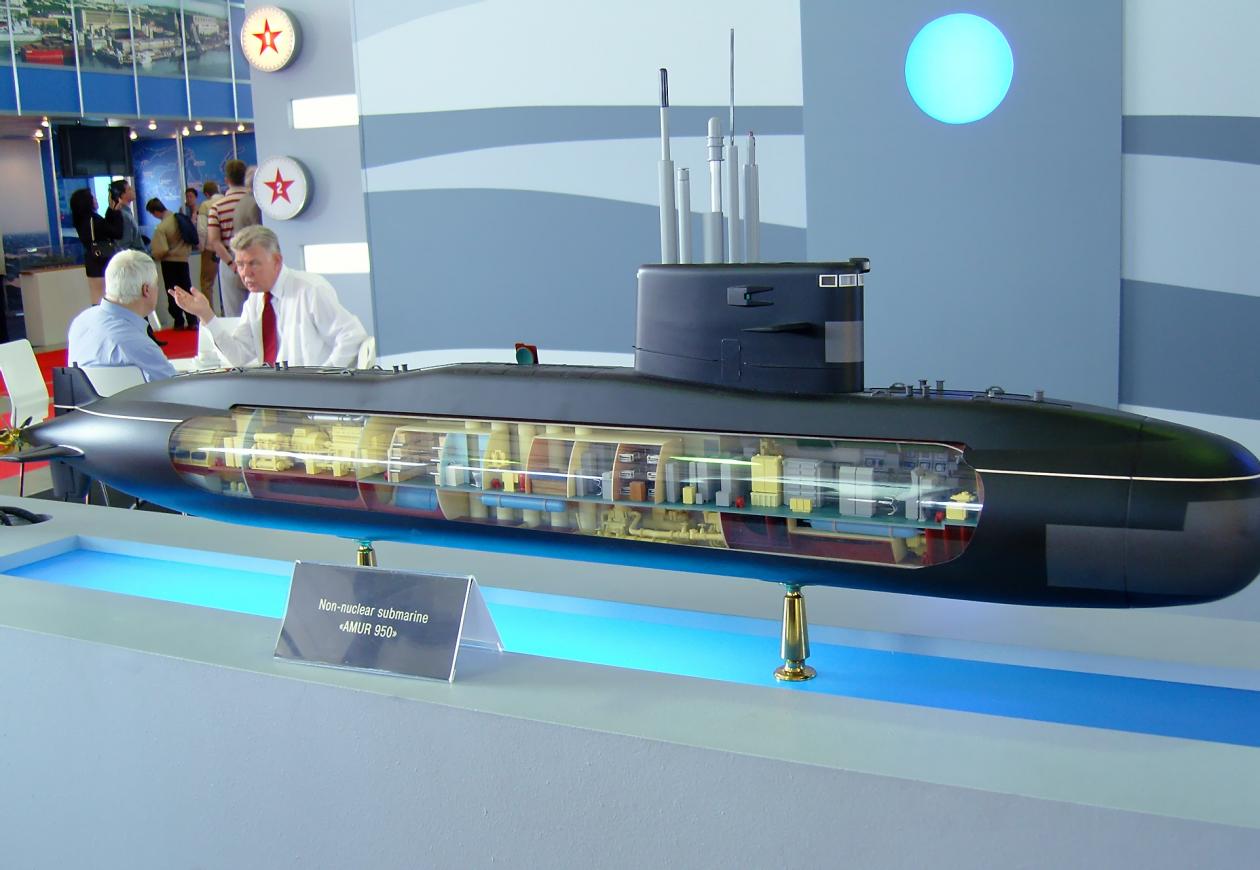
U.S. Deputy Sheriff Australia taken for a ride on an obsolete $90 billion submarine

|
In for a penny, in for a pound: $90 billion for an obsolete submarine fleet, Michael West Media, by Brian Toohey | Oct 18, 2020 So much for sovereignty. Australia is locked out of repairing key US components of our submarines’ computer systems, and the government has committed our fleet to the extraordinarily dangerous role of helping the US conduct surveillance in the South China Sea. Brian Toohey reports.
It is hard to believe that a government genuinely committed to defending the nation would sign a contract to buy 12 ludicrously expensive submarines that would not be operational for at least 20 years, with the final submarine not ready for nearly 40 years. The fleet will be obsolete before its delivered. But this is what the Turnbull government did when it announced in September 2016 that the majority French government-owned Naval Group would build 12 large submarines in Adelaide. The first sub is unlikely to be operational until the late 2030s and the last one until well after 2050. It is even harder to understand why the government endorsed the extraordinarily dangerous role for Australian submarines of helping the US conduct surveillance and possible combat operations within the increasingly crowded waters of the South China Sea. And while the Morrison government repeatedly claims that Australia’s defence force has a “sovereign” capability, in reality we are locked in “all the way” with the USA.
Ominously, an earlier Coalition government gave Lockheed Martin the contract to integrate these systems into the Attack subs. This is the same company that wasted billions on a dud computerised system for the US made F-35 fighter planes.. Called the Attack class, the conventionally powered submarines to be built in Adelaide by Naval will rely on an unfinished design based partly on France’s Barracuda nuclear submarines. Their official cost has already blown out from an initial $50 billion to $90 billion. It was revealed earlier this week that Defence officials knew in 2015 that the cost of the fleet had already blown out by $30 billion to $80 billion, yet continued to state publicly that the price tag was $50 billion. Life-cycle costs are expected to be around $300 billion…….. Under US commandAustralian subs in the South China Sea will be integrated into US forces and will be relying on them for operational and intelligence data. In an escalating clash, accidental or otherwise, they will be expected to follow orders from US commanders. Again, so much for Australia’s sovereignty. There is no compelling strategic reason why Australian submarines should travel that onerous distance to support the US in the South China Sea. ………… Perhaps the best argument, however, for not wasting $90 billion on the Attack class is that cheap underwater drones will soon have an important military role particularly suited to use from bases in northern Australia. https://www.michaelwest.com.au/in-for-a-penny-in-for-a-pound-90-billion-for-an-obsolete-submarine-fleet/ |
|
1 This month

of the week – Australians for War Powers Reform (AWPR)
To see nuclear-related stories in greater depth and intensity
 Antinuclear