What Australia can learn from China to become the world’s ‘cleaner’ rare earth refiner.
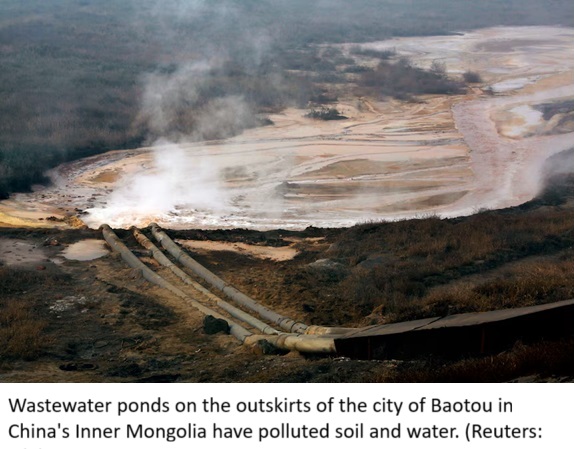
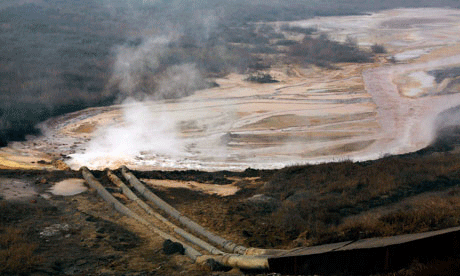
“People don’t quite grasp how much waste we’re talking about.”……………………… cases of cancers, arsenic poisoning and birth and joint deformities linked to years of unregulated dumping.
By Libby Hogan and Xiaoning Mo, Sat 15 Nov, https://www.abc.net.au/news/2025-11-15/australia-refining-rare-earths-environmental-challenges/105969994?utm_source=abc_news_app&utm_medium=content_shared&utm_campaign=abc_news_app&utm_content=other
Australia holds a plethora of rare earths — minerals essential for all sorts of cutting-edge technologies from wind turbines to hypersonic missiles.
Until now, most of them have been sent to be refined in China.
That is largely because the process is dirty, expensive, and politically unpopular.
But after last month signing a $13 billion critical minerals deal with the United States to boost production and refining, Australia must deal with some significant environmental challenges — mostly around water.
Marjorie Valix, a professor of chemical engineering at the University of Sydney, who researches sustainable mineral processing, said Australia has plenty of opportunity — and responsibility — in this space.
“Rare earths aren’t rare in Australia — especially light rare earths,” said Professor Valix.
“But water is one of the vulnerabilities.”
The bottleneck
When researcher Jane Klinger first visited China’s Bayan Obo mine at Baotou in Inner Mongolia — the world’s largest rare-earth operation — more than a decade ago, she expected to see the future of green technology.
What she found instead was a cautionary tale: acidic wastewater and radioactive residue in unlined ponds along with contaminated rivers and farmland.
“The stuff we want is typically a very small percentage of what’s dug up,” Professor Klinger, author of Rare Earth Frontiers, told the ABC.
“And then there’s the waste that’s generated to separate the valuable bits from the rest of the rock.
“People don’t quite grasp how much waste we’re talking about.”
For every tonne of rare-earth oxide produced, roughly 2,000 tonnes of acidic wastewater are left behind.
It was a local taxi driver, pointing to a new hospital built to treat bone disorders, who tipped her off to what was unfolding around Baotou.
She discovered cases of cancers, arsenic poisoning and birth and joint deformities linked to years of unregulated dumping.
Australian National University professor of economic geology John Mavrogenes said the Chinese companies were mining by drilling and pouring chemicals into the holes.
“They found it was so bad environmentally that even China decided maybe they should quit,” he said.
The health and environmental impacts were so severe Beijing has since tightened regulations and cleaned up some sites.
It has also shifted much of its most-polluting refining methods to neighbouring Myanmar.
In Jiangxi province, China’s other main rare earth mining hub in the south, more than 100 mine sites have been shut down in the past decade and converted into parks, according to local media.
Learning from China’s mistakes
Experts insist Australia can do better.
The Donald Rare Earth and Mineral Sands mine in western Victoria — which was given major projects status last month — will use a method that uses fewer chemicals than hard-rock mining to extract rare earths.
Once operational, the site is expected to become the fourth-largest rare earth mine in the world outside China.
The company behind the project, Astron, plans to rehabilitate the land and send its rare-earth concentrate to Utah for further processing, where uranium will also be recovered.
Victoria bans uranium mining outright, but the US intends to use the by-product as fuel for nuclear power plants.
Professor Klinger said one of the most impactful lessons from what she found in China was simple.
“Don’t dump this stuff in tailings ponds without liners,” she said.
“Don’t contaminate groundwater, but also pay attention to ‘who’ is doing the modelling and monitoring.”
When the Donald mine starts production next year, processing is to take place in enclosed sheds, with waste sealed into containers and shipped off-site.
But Australia has not always had a spotless record: past projects such as fracking in the Northern Territory and old coal mines show how environmental oversight can fail.
The water dilemma
China dominates the separation and refining of rare earths, controlling over 90 per cent of global production.
In Western Australia, Iluka Resources is building Australia’s first rare earths refinery.
The process — crushing rock, separating minerals, and neutralising the waste — requires vast amounts of water.
Iluka’s refinery will consume just under 1 gigalitre of groundwater per year.
Iluka head of rare earths Dan McGrath told the ABC the refinery would operate as a zero liquid discharge facility.
“Our design avoids generating liquid waste altogether, and the reagents we use create a saleable fertiliser by-product instead of requiring disposal.
“All remaining solids will be disposed of in existing mine voids, removing the need for new waste containment facilities or above-ground disposal facilities.”
Professor Mavrogenes said water scarcity was already shaping where new mining projects could go ahead.
“Water is an issue because most ores are located in areas that don’t have enough water,” he said.
The Iluka refinery will produce both light and heavy rare earth oxides used in advanced manufacturing of items, including medical devices and defence weaponry.
A wastewater treatment plant will form part of the facilities, but the plan has drawn criticism amid ongoing water shortages.
In Victoria, Astron has secured water entitlement from Grampians Wimmera Mallee Water.
Geologists including Professor Mavrogenes have warned that a secure water supply and planning needed to account for climate change.
“Flooding can shut down processing, especially with heap leaching,” he pointed out.
Heap leaching is where a chemical solution is trickled through a heap of crushed ore, often in a pond, to dissolve the metals.
Other environmental concerns once shadowed Lynas Rare Earths, Australia’s largest producer of rare earths, which ships semi-processed concentrate to Malaysia for refining.
The company initially faced local protests over low-level radioactive waste.
Kuan Seng How, assistant professor in Universiti Tunku Abdul Rahman’s Department of Mechanical and Materials Engineering, said Lynas had since built a permanent, sealed facility to prevent groundwater seepage — an expensive but necessary fix.
Together, Iluka’s new refinery and Lynas’ remediation effort illustrate the same lesson: refining is not just an engineering problem but a resource-management one.
A cleaner frontier
China now lines its wastewater ponds with bentonite clay to reduce leakage and collects some run-off for reuse.
Yet even those measures have not stopped some seepage leaking outward, according to a recent article published in the Chinese journal Modern Mining.
Industry and researchers are now exploring waterless extraction technologies such as solvolysis — a process that uses chemical solvents instead of water to extract rare earths.
“It can leach and separate the metals in one step,” Professor Valix said.
“But it hasn’t been scaled up yet — and right now it’s more expensive.”
She sees water management as the defining test of Australia’s ambitions.
Her colleague Susan Park from the University of Sydney added that as countries raced to upgrade rare earth processing, Australia must invest more in knowledge.
“One of the issues is the absence of long-term research and development into these technological processes and training people,” she said.
China may already be a step ahead, testing new techniques on a large scale.
In January, the Chinese Academy of Sciences claimed a breakthrough: an electrokinetic extraction technique that slashes the use of leaching agents by 80 per cent, mining time by 70 per cent and energy consumption by 60 per cent.
According to the scientists who revealed the development in the journal Nature Sustainability, the method could soon be viable for large-scale production.
For Australia, Professor Valix said the barrier was not capability but commitment.
“It’s not that we don’t have the technology,” she said.
“What we don’t have is the investment and the uptake market here like battery makers or manufacturers.”
Rare Earths processing – a backdoor way into radioactive waste dumping in Australia?

28 October 2025, Noel Wauchope, https://theaimn.net/rare-earths-processing-a-backdoor-way-into-radioactive-waste-dumping-in-australia/
Joy and delight! Australia is to have a booming rare earths industry, mining and PROCESSING – jobs jobs jobs! Money money money!. And we can stick it up to China, confronting its near monopoly on the industry!
The reality is something very different.
Apart from the enormous and time-consuming problems involved in establishing this industry, and in competing economically with China, there’s that other unmentionable problem – RADIOACTIVE WASTES.
Western Australia’s Lynas Rare Earths company knows all about this. They’ve had no end of trouble with their rare earths processing and its radioactive wastes. They were smart enough, had the foresight, to set up processing in another country. Lynas moved its rare earths processing to Malaysia because of Malaysia’s less stringent laws. But what they didn’t reckon with, was Malaysia’ ‘s history, and awareness of radioactive waste danger. As Lynas’ plant started operations in 2012 – in Kuala Lumpur: 10,000 marched for 13 days, rally against Lynas rare earths processing plant. Former Malaysian Prime Minister Mahathir Mohamad imposed stringent conditions on Lynas’ operations.
Malaysians remember the environmental and health disaster of Bukit Merah; where, early this century, rare earth processing left a toxic wasteland.
A longer explanation is provided in this documentary –
It is very hard to get information on Lynas’ processing operations in Malaysia. I remember that a few years ago, there was a controversy, and an Australian protest movement against Lynas’ plan to dump these wastes into an old growth forest in Malaysia. I can now find no record of this. And indeed, many news items of the controversies of Lynas’ Malaysia operations have now vanished from the internet.
But this Malaysian issue has not gone away – Pollution issues and controversy over rare earth company Lynas.
If Malaysia’s history of radioactive pollution from processing of rare earths is scandalous, – what about China’s history?
I know that in recent years, China has cleaned up its act on industrial pollution. But its history is shocking – with a legacy of “cancer villages” –
Whole villages between the city of Baotou and the Yellow River in Inner Mongolia have been evacuated and resettled to apartment towers elsewhere after reports of high cancer rates and other health problems associated with the numerous rare earth refineries there. – China’s legacy of radioactive pollution from rare earths processing.
Well, is everybody now pretending that that to introduce rare earths processing in Australia is a good thing, no problem, it’s progress – blah blah?
This new development comes just as Australia’s government introduces its new reforms to the Environment Protection and Biodiversity Conservation Act – including the aim to simplify and speed up approvals for development. We wait to see what that entails – could it be the weakening of environmental standards?
Coincidentally, Mr Trump’s USA is changing the standards on radiation safety. An Executive Order from the White House states:
“In particular, the NRC shall reconsider reliance on the linear no-threshold (LNT) model for radiation exposure and the “as low as reasonably achievable” standard, which is predicated on LNT. Those models are flawed”, – ORDERING THE REFORM OF THE NUCLEAR REGULATORY COMMISSION.
This will likely result in a significant weakening of the current standards at a time when the evidence strongly suggests that they are in need of further tightening.
The environmental movement fights on – but with a wave of enthusiasm for renewable energy development. A recent article discussed recycling of rare earths from our many digital devices. That’s an idea that seems to be ahead of its time, especially given the extreme difficulty of retrieving those elements from mobile phones, laptops etc.fficulty of retrieving those elements from mobile phones, laptops etc.
Well, it’s the (?) futuristic idea of the circular economy. It fits in with those unfashionable concepts of energy efficiency, energy conservation. We used to hear about them, in the early days of action on climate change.
These concepts are anathema to our billionaire leaders, as we are all drawn into the mindless rollercoaster of ever more artificial intelligence, with its ever more energy use.
Australia, federally and in each State has strong restrictions on radioactive processes. The nuclear lobby has tried for decades to weaken or overthrow those restrictions, and to introduce radioactive waste dumping in a big way.
We’ll be pitched the story that the radioactive wastes from rare earths processing are “minor” “low key” – acceptable. Let’s not worry – after all, the whole rare earths thing is so complex, and so far into the future.
But Albanese so readily agreed with Trump, that Australia can have both the mining and the processing of rare earths – it opens the door up to radioactive waste dumping,
Meanwhile, the issue is also relevant to Australia’s agricultural industry, particularly in Victoria. Victoria being blessed with rich agricultural land, regions like the Wimmera and Gippsland could be threatened by these new industries. The nuclear lobby, too, has long salivated on the possibility of a thorium industry there, too
It’s a sad thing – that history is forgotten, in these days of super-fast “progress’ into the Age of AI. We are being led by the nose by those technobillionaires surrounding Donald Trump – to believe that we don’t need to do much working, or thinking – as we race into this golden age, and embrace this new radioactively-polluting industry.
Why Australia’s Rare Earth Deal Serves U.S. Interests
24 October 2025 AIMN Editorial , By Denis Hay
Australia’s rare earth deal with the US fuels its military industry, not our sovereignty. Here’s why that matters.
Introduction: Australia’s Strategic Crossroads
In October 2025, Prime Minister Anthony Albanese signed an $8.5 billion rare earth deal with the United States, promising closer economic and security ties. The agreement appears to be an opportunity to boost Australia’s resource sector. Yet beneath the surface, it reveals a deepening alignment with the US military-industrial complex through the AUKUS alliance.
As China restricts exports of key rare earth metals used in advanced weaponry, the US is turning to Australia for supply. The question is simple but profound: is the rare earth deal Australia signed a path to sovereignty, or servitude?
The Problem: How the Deal Strengthens Dependence
1. The Geopolitical Trigger – China’s Ban and US Pressure
China’s export controls on critical minerals such as gallium and germanium were a strategic response to the US using them for missile guidance systems, fighter jets, and submarines. Washington needed a reliable alternative, and Canberra complied.
Through the AUKUS alliance, Australia is being drawn into the US defence supply chain, undermining our ability to chart an independent foreign policy. Rather than investing in peaceful manufacturing and clean-energy industries, our resources are now fuelling a global arms race. (ABC News)
2. Resource Exploitation Without Return
Australia holds about 20% of the world’s rare earth reserves, yet most of our minerals are exported raw and processed overseas. This deal continues that pattern, foreign corporations’ profit while Australians bear the environmental costs. Public money is used to subsidise foreign ventures instead of funding domestic processing plants that create local jobs. (AP News)
The Impact: What Australians Are Experiencing
3. From Mining Boom to Dependency Economy
Despite decades of booms, Australia is still a “dig-and-ship” nation. The rare earth deal Australia signed solidifies our position as a key supplier of raw materials to the US military supply chain. Communities see little benefit while regional inequality and labour insecurity grow.
4. Who Really Benefits
The true winners are US defence contractors like Raytheon and Lockheed Martin, who depend on steady rare earth supplies for weapons production. Under AUKUS, Australia is obliged to supply these resources for military use while receiving limited technology transfer. Once again, public money serves private foreign interests. (Politico)
Who Owns the Processors: and Who Gets the Profits
The Albanese government’s rare earth deal, which Australia signed with the United States, has been presented as a boost to local industry. Yet a closer look at who owns the companies processing these critical minerals shows the profits often flow overseas or to private shareholders, not the Australian public.
1. Iluka Resources – Eneabba, Western Australia
Iluka runs Australia’s first integrated rare-earth refinery, funded by a $1.65 billion public loan from the federal government’s Critical Minerals Facility. The project includes a “no-China” clause to satisfy US and UK defence interests. Although Iluka is ASX-listed, profits go to private and institutional investors, not the public, while its supply contracts serve foreign markets.
2. Lynas Rare Earths – Kalgoorlie and Malaysia
Lynas, another ASX-listed firm, runs processing plants in Kalgoorlie and Malaysia. It received early investment from Japan’s Sojitz and JOGMEC, who keep offtake rights. A substantial part of Lynas’s refined output is exported to Japan and US defence manufacturers, making Australia a supplier in the AUKUS alliance rather than an independent producer.
3. Arafura Rare Earths – Nolans Project, Northern Territory
Arafura promotes itself as an Australian company, but binding offtake agreements with Hyundai, Kia, Siemens Gamesa, and Traxys cover most of its planned production. This means much of its revenue will come from foreign contracts, while Australian taxpayers help fund infrastructure and environmental oversight.
4. Alpha HPA – Gladstone, Queensland
Alpha HPA’s high-purity alumina project has been hailed as a clean-tech success, supported by hundreds of millions in government loans. However, its customers are primarily offshore electronics and battery manufacturers, meaning the profits leave Australia even though public funds help build the facilities.
5. Australian Strategic Materials (ASM) – Dubbo, New South Wales
ASM’s Dubbo project has strong ties with a South Korean consortium, with potential equity and offtake arrangements already in place. While the plant is in Australia, most of the downstream manufacturing and profit realisation will occur in Asia.
The Sovereignty Gap
While several companies are headquartered in Australia and listed on the ASX, the real issue is who controls the value chain. With foreign investors and defence-aligned buyers dominating the market, Australia captures little of the long-term benefit.
Despite processing more at home, the profits and strategic control remain offshore, perpetuating the dependency model that the AUKUS alliance reinforces…………………………………………………………………………………………………………………………………. https://theaimn.net/why-australias-rare-earth-deal-serves-u-s-interests/#comment-14832
Kalbar’s exotic minerals mine a toxic risk to Victoria’s food bowl
Kalbar’s exotic minerals mine a toxic risk to Victoria’s food bowl, Michael West Media by Elizabeth Minter | Jun 18, 2021 | A hearing into the Environment Effects Statement for Kalbar’s mineral sands project on rich Victorian farmland has been told about competition for billions of litres of water, high levels of uranium, untested technologies and a strange backflip by the project’s “independent experts”. Elizabeth Minter investigates.
For exactly 100 years, Kane Busch’s family have farmed the fertile soils of the Lindenow Valley in East Gippsland, Victoria. After leaving Denmark in 1913, Kane’s great-grandfather Eiler Busch settled in the Valley, buying in 1921 the land that is now the home of Busch Organics.
Kane’s grandfather, also called Eiler, was behind the push for more environmentally friendly farming while experiencing the devastating droughts of the 1990s. The farm gained official organic certification in 2000. Grandson Kane is following in those footsteps, and was recently a finalist for a national award for “Young Grower of the Year”.
The Lindenow Valley produces the salad greens and vegetables – broccoli, green beans, cauliflower, celery, beetroot, cabbage and carrots – that help feed the nation. The Valley produces nearly one-third of the state’s vegetables; employs up to 2000 people at peak times; and is worth more than $150 million to the local economy.
The area also has huge environmental significance, with the heritage-listed Mitchell River, the Ramsar-protected Gippsland Lakes wetlands, and the Perry River’s unique Chain of Ponds, which is home to many threatened plant and animal species. Once ubiquitous across south-eastern Australia, “chain of ponds” systems are now rare.
But this is all now in jeopardy thanks to a mineral sands mining proposal from Kalbar Operations Pty Ltd (Kalbar), a company that was established as an investment vehicle and that has never operated a mine. It would be almost comical were it not for the potentially deadly consequences.
There’s monazite, which contains rare earth metals plus radioactive uranium and thorium and is thus potentially dangerous to residents, the waterways and the vegetables growing by the mine’s boundary; the competition for billions of litres of water; and the untried technology being proposed to tackle the mining waste. Nowhere in Australia is a mineral sands mine located so closely to, and upwind of, a major vegetable growing industry.
Kalbar is proposing a 1,675-hectare open-cut mine just 350 metres from the Mitchell River, which flows into the Gippsland Lakes wetlands. The mine will operate 24 hours a day, 365 days a year, for 15 years. A public hearing is under way as part of the inquiry into the Environment Effects Statement (EES). The following information has been revealed during the hearing.
Big miners walk away, lack of water the key risk
The multinational miner Rio Tinto originally owned the mining exploration licences. In 2011 Oresome, a subsidiary of Metallica Minerals, entered into a right to explore and option to purchase agreement with Rio for the licences.
A scoping study it commissioned showed a mine could be viable only if there was a dependable water supply. The risk of not finding a reliable source of up to 6.2 billion litres annually for an acceptable price received a Category F rating, defined as a problem with possibly “no viable solution” and a “fatal flaw”.
Water supplies
Kalbar’s proposed mine will sit on the plateau high above the Mitchell River with the vegetables growing just metresfrom the river.
The mine is 3.5 kilometres from the main source of the region’s drinking water (other than tank water). The mine and the horticultural industry will be in direct competition for water, with both relying on the Mitchell River and the same groundwater………….
Treatment of mine waste
Also controversial is access to how mine waste will be managed. The mine’s original design included a 90-hectare tailings dam.
But when government agencies and others highlighted the extreme danger such a dam posed to the Perry River and the Chain of Ponds, Kalbar changed its proposal.
The mine now plans to use giant centrifuge machines to remove water from the tailings waste, and then reuse that water.
The East Gippsland Shire Council, which unanimously opposes the mine, was not convinced of the viability of centrifuges, which are untested in mineral sands mining. The council commissioned a report from an independent mining industry consultancy, Ausenco.
Ausenco’s report raised concerns and advised that many more centrifuges would be required than Kalbar proposed. Then just weeks later, of its own volition, Ausenco issued a new report …………..
Radioactive dust a hazard
Kalbar plans to mine for and partially refine zircon, titanium-bearing rutile, ilmenite and rare earths minerals.
Airborne dust generated from mineral sands mines not only contains toxic heavy metals and radioactive monazite, thorium and uranium but also respirable crystalline silica, which leads to the deadly lung disease silicosis……………
Reputational damage to growers…… https://www.michaelwest.com.au/kalbars-exotic-minerals-mine-a-toxic-risk-to-victorias-food-bowl/
Australian company Greenland Minerals fails community test over controversial rare earths and uranium mine plan
Greenland Minerals fails community test over controversial rare earths and uranium mine plan, https://www.acf.org.au/greenland-minerals-fails-community-test 27 May 21, It is a long way from Greenland to Western Australia, but concerns from the Narsaq community in Greenland about a controversial mining project will be raised at today’s annual meeting of Perth-based company Greenland Minerals, listed on the ASX as GGG, which is behind the Kvanefjeld rare earths and uranium mine.
Opposition to the planned mine dominated Greenland’s recent national elections. On 6 April Greenlanders elected the Inuit Ataqatigiit (Community for the People) party, which campaigned on an explicit platform opposing Kvanefjeld.
The new coalition government has committed to stop the mine going ahead.
“When a mine proposal triggers an election and the results show a clear rejection of the project, it is time for the company to accept the community’s will and end its mining plans,” said Mineral Policy Institute board member Dr Lian Sinclair, who will attend the GGG meeting.
Australian groups are calling on GGG to recognise that it has failed to secure social license for the Kvanefjeld project.
“We need a different approach to mining, one based on free, prior and informed consent,” said Australian Conservation Foundation nuclear free campaigner Dave Sweeney.
“Mining materials that are used in renewable energy does necessarily make a company ethical or responsible.
“There are dangerous radioactive elements within these deposits, including uranium, that pose long term environmental and health risks.
“These risks should not be imposed on an unwilling community.
“The Narsaq and wider Greenland community and the new Government have rejected this project. GGG should recognise and respect this clear and democratic decision”.
Senior Morrison government ministers support Iluka’s plan to reprocess rare earths (no mention of what they would do with the radioactive wastes)
Iluka finds favour in bid to build rare earths refinery, W.A. Today, By Nick Toscano, May 11, 2021
A proposal to build the country’s first full-scale rare earths refinery has secured the support of senior Morrison government ministers, as Australia works to position itself as a key supplier of raw ingredients in smartphones, electric cars and wind turbines.
The board of ASX-listed Iluka Resources, a $3.6 billion company, is assessing the feasibility of developing a refinery at Eneabba in Western Australia to process rare earths – a group of elements used in a range of high-tech products and military weapons systems…….. https://www.watoday.com.au/business/companies/iluka-finds-favour-in-bid-to-build-rare-earths-refinery-20210511-p57que.html
Greenland’s election won by party opposing Chinese-backed Australian uranium and rare earths company
Greenland’s Rare-Earth Election
A vote last month answered an important question about the world’s largest island. The Atlantic, ROBINSON MEYER 3May 21, ”’……… Since 1979, the ruling Siumut party has dominated Greenland’s elections; in all those years it has lost power only once, in 2009, after the island reformed its government and loosened ties with Denmark, which has ruled it for three centuries. Earlier this month, the democratic-socialist Inuit Ataqatigiit party (IA), Greenlandic for “Community for the People,” won an election with more than a third of the vote, after centering its campaign on a promise to cancel the controversial mining project.
Greenland, the world’s largest island, is populated by about 56,000 people, and its election is, in some ways, an extremely local story. The mining project is called Kvanefjeld, and it would excavate thorium, uranium, and rare-earth elements. Kvanefjeld is less than four miles from Narsaq, one of the larger cities in South Greenland and a local tourism center. (It also has an excellent brewery.)
“There is no way for me to have the mine, because it’s only six kilometers from our town,” Mariane Paviasen, 56, a local activist who ran for Parliament under IA, told me in an interview before the election.
But the election touches on some of the biggest issues in global politics: climate change, mineral economics, and indigenous sovereignty. Rare earths are used to make finely tuned magnets that are essential to modern electronics, including electric vehicles and wind turbines. There is some irony here: Greenland, whose ice sheet is a visual metaphor for the inevitability of climate change, will be mined to power the only technology that can stop it. But the actual interest here is not so overdetermined—like all true climate stories, it draws together questions of money, land, power, and growth. IA’s answer to those questions is not to oppose all extraction, but it has taken a less friendly stance toward some proposed projects. It is particularly opposed to mining that could create radioactive waste……..
The plans for Kvanefjeld had long been paused, according to Zane Cooper, an anthropologist at the University of Pennsylvania who studies how communities respond to mineral extraction. Then, during the pandemic, the plans seemed to accelerate. Greenland Minerals Ltd., an Australian-headquartered but Chinese-backed company, began pressing its plans forward, and the ruling Siumut party complied. The local population had worries, particularly about uranium, which is often found next to thorium, itself a sign of rare earths. A rushed series of public meetings in February gave residents little warning about how rumored uranium dust would affect their farms and settlements. When someone called in a bomb threat to a meeting that Siumut officials were due to attend, they canceled their appearance. Another party, the Democrats, announced it would leave the governing coalition, depriving Siumut of its majority and precipitating snap elections.
The election, on April 6, saw a major victory for IA. It won overwhelmingly in southern Greenland.
IA does not oppose most mining; what it opposes is uranium mining. Another mine, about 30 miles from Narsaq, meets its approval, and the party supports developing mineral extraction as part of a broader strategy. “I think it will work better for us to have our own mining company in Greenland,” Paviasen said. She also supports more economic diversification, embracing a larger role for tourism and local agriculture. Most vegetables in Greenland are imported from Denmark.
Greenland’s blessing and curse is the large block grant, equivalent to more than $500 million, that it receives every year from the Danish government. It makes up about half of Greenland’s annual budget. Greenland has promised to deposit about a third of the revenue from its mineral wealth into a sovereign-wealth fund modeled off the Norwegian oil fund, which could help it replace the Danish block grant
If IA does find a way to instill some measure of economic autarky in Greenland, then it would be the world’s first completely independent indigenous country, Cooper said. Onlookers expect that Greenland would seek independence from Denmark faster under the separatist IA party than the more moderate Siumut. But that remains a ways off: First, IA must figure out how, and whether, it can cancel the mine in a fjord. Greenland Minerals has vowed to fight the decision in court and in international trade tribunals. (Múte Egede, the new IA prime minister, did not respond to a request for comment.) It may seem like a narrow question, but it could have sweeping implications for the island’s 56,000 inhabitants—and for how the world’s largest powers comport themselves with regard to the world’s largest island.
If IA does find a way to instill some measure of economic autarky in Greenland, then it would be the world’s first completely independent indigenous country, Cooper said. Onlookers expect that Greenland would seek independence from Denmark faster under the separatist IA party than the more moderate Siumut. But that remains a ways off: First, IA must figure out how, and whether, it can cancel the mine in a fjord. Greenland Minerals has vowed to fight the decision in court and in international trade tribunals. (Múte Egede, the new IA prime minister, did not respond to a request for comment.) It may seem like a narrow question, but it could have sweeping implications for the island’s 56,000 inhabitants—and for how the world’s largest powers comport themselves with regard to the world’s largest island. https://www.theatlantic.com/science/archive/2021/05/greenlands-rare-earth-election/618785/
UK in secret talks with Australia and others, about mining rare earths
Telegraph 2nd May 2021, Fears China will “turn off the taps” on Britain’s green revolution
has forced ministers to enter secret talks with seven commonwealth
countries to mine their rare earths. Officials from the Department of
International Trade and the Foreign Office have had meetings with
representatives from Australia, Canada, Malawi and Tanzania in a bid to
persuade them to supply rare earths, as well as critical metals such as
lithium to the UK.
Rare earths are found in abundance across the world, but
are difficult to process and China controls around 90 per cent of the
market. The UK has no known deposits of rare earths, unlike other major
economies such as the US, Canada and Australia, which are also grappling
with the problem. Rare earths are used in a wide variety of technology,
from fighter jets, to MRI machines and loudspeakers, but also in the motors
of electric vehicles and in wind turbines, and the worldwide transition to
green infrastructure is expected to put pressure on global demand.
Chinese-Australian uranium and rare earths mining company meets political opposition in Greenland
Left-wing party opposed to rare earth mining project wins Greenland election, A left-wing environmentalist party opposed to a controversial mining project won a clear victory in Greenland’s parliamentary election, according to results released Wednesday. https://www.france24.com/en/europe/20210407-left-wing-party-opposed-to-rare-earth-mining-project-wins-greenland-election 7 Apr 21,
With 36.6 percent of the vote, Inuit Ataqatigiit (IA) was ahead of Siumut, a social democratic party that has dominated politics in the Danish territory since it gained autonomy in 1979.
“Thank you to the people who trusted us to work with the people in the centre for the next four years,” IA leader Mute Egede said on KNR public television after the results were announced.
IA, which was previously in opposition, is expected to grab 12 out of the 31 seats in the Inatsisartut, the local parliament, up from eight currently.
But without an absolute majority, the most likely scenario is that IA joins forces with smaller parties to form a coalition. Siumut, which headed the outgoing government, was partly weakened by internal struggles. It gained 29.4 percent of the vote, still two percentage points higher than its results in the 2018 election.
The dividing line between the two parties was whether to authorise a controversial giant rare earth and uranium mining project, which is currently the subject of public hearings.
The Kuannersuit deposit, in the island’s south, is considered one of the world’s richest in uranium and rare earth minerals — a group of 17 metals used as components in everything from smartphones to electric cars and weapons.
IA has called for a moratorium on uranium mining, which would effectively put a halt to the project.
Divisions over Kuannersuit originally triggered the snap election in the territory after one of the smaller parties left the ruling Siumut coalition.
Opponents say the project, led by the Chinese-owned Australian group Greenland Minerals, has too many environmental risks, including radioactive waste.
Egede told KNR he would immediately start discussions to “explore different forms of cooperation” before forming a coalition government.
The 34-year-old, who has been a member of the Inatsisartut since 2015, took over the reins of the left-green party a little over two years ago.
Greenland might reject Australian-Chinese company Greenland Minerals in its bid to mine rare earths
Telegraph 4th April 2021, AS elections go, it sounds rather minor-league: a contest with just 40,000 voters, triggered by a planning row in one of the most remote, inhospitable corners of the planet. On Tuesday, though, diplomats from Washington to
Beijing will be watching carefully as Greenland holds snap parliamentary polls. With a total of population of just 56,000, its electorate is smaller than some British town councils – yet their vote over the vexed issue of the Kvanefjeld mine project could have implications not just for Greenland, but the global superpower race.
Overlooking the tiny fishing settlement of Narsaq, where locals live mainly off catching whales and seals, the project
aims to tap into one of world’s biggest deposits of “rare earth” minerals – materials as vital to the 21st-century as oil was to the 20th. Their supermagnetic, superconductive properties are used in everything from i-Phones and solar panels through to hybrid cars and weapons systems.
Yet while they are key to the goals of a high-tech, low-carbon world, extracting them itself can be an environmentally-hazardous process – a point not lost on Greenland’s residents, some of whom are sceptical of promises from the Australian firm behind the project, Greenland Minerals, that strict anti-pollution measures will be enforced.
Frontrunners in the election are the Left-wing, pro-green Inuit Ataqatigiit party, who could throw the mine project out altogether, despite warnings from rival parties that Greenland’s isolated economy must end its dependence on fishing. But for others, the stakes are about much more than even that. Of particular concern is that Greenland Minerals is part-owned by Shenghe Holdings, a Chinese firm with close ties to the Beijing government.
Why Kalgoorlie-Boulder wants a Malaysian rare earths plant and its radioactive waste
|
Why Kalgoorlie-Boulder wants a Malaysian rare earths plant and its radioactive waste https://www.abc.net.au/news/2020-08-10/lynas-building-rare-earth-processing-plant-kalgoorlie/12354150?fbclid=IwAR1P8stcOV05Un8BjuU2zv2fp1W1u3qnVaIvgwZSxJY3MkiIKg2eEfa_0G8
As the saying goes, “One man’s trash is another man’s treasure” — so why is a city in outback Western Australia embracing plans for a multi-million-dollar processing plant that Malaysia wants banned? Key points:
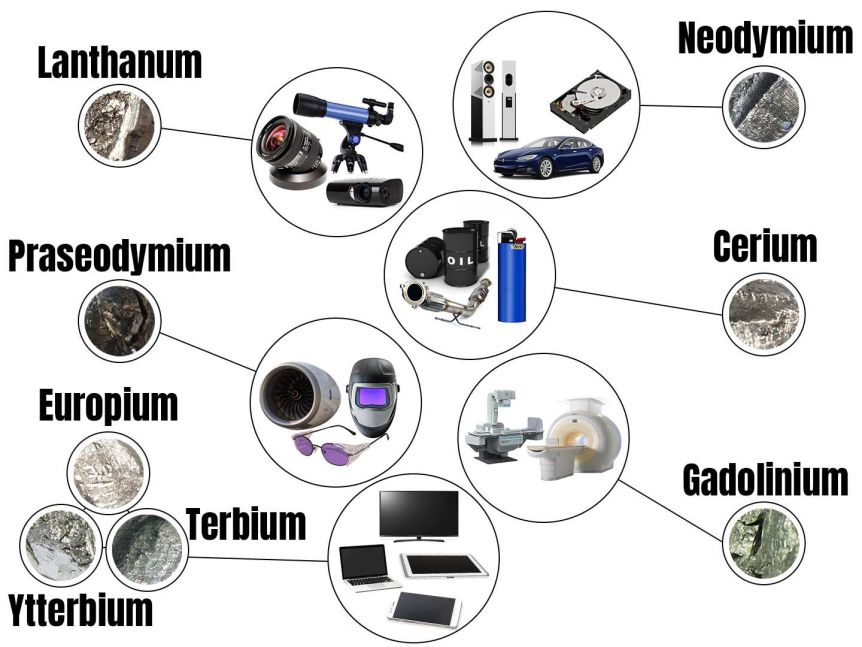
Lynas Corporation produces rare earth minerals, which are essential for technological devices such as smartphones, wind turbines and defence weapons systems. The company mines rare earths at Mount Weld in WA’s northern Goldfields and ships them to Malaysia for processing. The cracking and leaching part of the process creates low-level radioactive waste, a subject of controversy and protests in the Asian nation. In February, the Malaysian Government renewed Lynas’s operating licence with some key conditions, including that it must build a cracking and leaching plant elsewhere by mid-2023. Lynas would then be banned from importing materials containing naturally occurring radioactive material; the company still plans to use Malaysia for later stages of its processing. Race is on to build Kalgoorlie plantWhen the City of Kalgoorlie-Boulder heard Lynas was looking for a new site, it pursued the company and convinced it to move to the region. City chief executive John Walker said the plant would be a “game changer” for Kalgoorlie and help diversify the local economy, which was reliant on gold mining. Lynas has committed to using a residential workforce instead of fly-in fly-out workers, creating about 500 jobs in the construction phase and about 100 permanent roles.
|
Australia must learn to mine rare earths responsibly
 we don’t seem to notice the problems with renewable energy.
We must jump on to the circular economy. If the world could RECYCLE rare earths elements – there’d be so much less need for mining and processing of rare earths, with its problematic creation of radioactive wastes.
What is needed is DESIGN – clever design of all devices that use rare earths, so that these elements can be easily retrieved, to use again in new devices.
While renewable energy technologies are used in the same old way – dig it up, throw away the wastes, we are locked in the 20th Century thinking – that also includes the aim of endless energy use, endless growth.
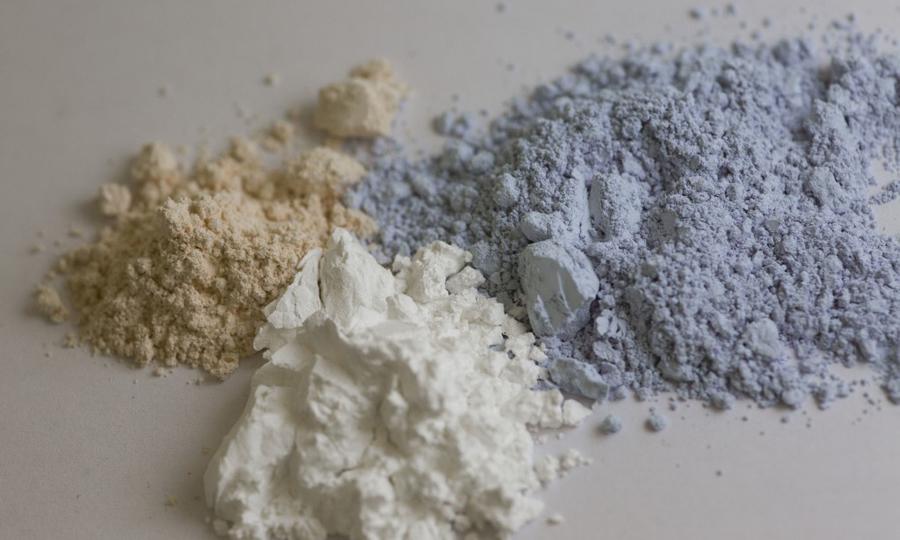 Critical minerals are vital for renewable energy. We must learn to mine them responsibly Bénédicte Cenki-Tok, Associate professor at Montpellier University, EU H2020 MSCA visiting researcher, University of Sydney
This includes common industrial metals such as steel and copper, but also less familiar minerals such as the lithium used in rechargeable batteries and the rare earth elements used in the powerful magnets required by wind turbines and electric cars. Production of many of these critical minerals has grown enormously over the past decade with no sign of slowing down.
Australia is well placed to take advantage of this growth – some claim we are on the cusp of a rare earths boom – but unless we learn how to do it in a responsible manner, we will only create a new environmental crisis.
One consequence of a massive transition to renewables will be a drastic increase not only in the consumption of raw materials (including concrete, steel, aluminium, copper and glass) but also in the diversity of materials used.
Three centuries ago, the technologies used by humanity required half a dozen metals. Today we use more than 50, spanning almost the entire periodic table. However, like fossil fuels, minerals are finite.
Can we ‘unlearn’ renewables to make them sustainable?
If we take a traditional approach to mining critical minerals, in a few decades they will run out – and we will face a new environmental crisis. At the same time, it is still unclear how we will secure supply of these minerals as demand surges.
This is further complicated by geopolitics. China is a major producer, accounting for more than 60% of rare earth elements, and significant amounts of tungsten, bismuth and germanium.
This makes other countries, including Australia, dependent on China, and also means the environmental pollution due to mining occurs in China.
The opportunity for Australia is to produce its own minerals, and to do so in a way that minimises environmental harm and is sustainable.
Where to mine?
Australia has well established resources in base metals (such as gold, iron, copper, zinc and lead) and presents an outstanding potential in critical minerals. Australia already produces almost half of lithium worldwide, for example…….
Fuelling the transition
For most western economies, rare earth elements are the most vital. These have electromagnetic properties that make them essential for permanent magnets, rechargeable batteries, catalytic converters, LCD screens and more. Australia shows a great potential in various deposit types across all states.
The Northern Territory is leading with the Nolans Bore mine already in early-stage operations. But many other minerals are vital to economies like ours.
Cobalt and lithium are essential to ion batteries. Gallium is used in photodetectors and photovoltaics systems. Indium is used for its conductive properties in screens.
Critical minerals mining is seen now as an unprecedented economic opportunity for exploration, extraction and exportation.
Recent agreements to secure supply to the US opens new avenues for the Australian mining industry.
How can we make it sustainable?
Beyond the economic opportunity, this is also an environmental one. Australia has the chance to set an example to the world of how to make the supply of critical minerals sustainable. The question is: are we willing to?
Many of the techniques for creating sustainable minerals supply still need to be invented. We must invest in geosciences, create new tools for exploration, extraction, beneficiation and recovery, treat the leftover material from mining as a resource instead of waste, develop urban mining and find substitutes and effective recycling procedures.
In short, we must develop an integrated approach to the circular economy of critical minerals. One potential example to follow here is the European EURARE project initiated a decade ago to secure a future supply of rare earth elements.
More than ever, we need to bridge the gap between disciplines and create new synergies to make a sustainable future. It is essential to act now for a better planet.
As Morrison and Australia’s richest suck up to Trump, plan for rare earths business
 Morrison and Trump open new front in China trade war with rare earth ‘action plan’, SMH, By Matthew Knott and David Crowe, September 21, 2019 Prime Minister Scott Morrison will throw Australian support behind US President Donald Trump in a bid to counter China’s dominance in vital raw materials as part of a historic state visit to the US capital.
The “action plan” will open a new front against China in a widening technology and trade war by exploiting Australian reserves of the rare earths and other materials that are essential for products ranging from iPhones to batteries and hybrid cars.
Mr Morrison arrived in Washington DC with a message for Mr Trump that positioned Australia as an ideal friend that would back its longstanding ally on Israel, Iran and wider defence policy……
Mr Morrison wants Mr Trump and his colleagues to see Australia as their strongest military ally over the past century and is using the visit to pledge the same close alliance for the century ahead.
Mr Trump’s officials believe the joint plan with Australia will improve the security of supply of materials in critical shortage, saying this will ensure economic security for both partners…….
US officials also praised Australia as a “tremendous partner” in opposing Iran’s nuclear program and interference in shipping, while Mr Morrison made it clear he backed the US in its support for Israel – a totemic issue for Mr Trump.
“Under my government we have taken an even stronger stand against the biased and unfair targeting of Israel in the UN General Assembly,” Mr Morrison says in the draft of his speech to the State Department………
The menu served to guests including golfer Greg Norman, businesswoman Gina Rinehart and media mogul Rupert Murdoch will include sunchoke ravioli, Dover sole and lady apple tart with ice cream for dessert.
Following his visit to Washington, Mr Morrison will travel to Chicago to meet the governor of Illinois, then Ohio to visit a new recycling plant owned by Australian billionaire Richard Pratt and on to New York for the United Nations General Assembly. https://www.smh.com.au/politics/federal/morrison-and-trump-open-new-front-in-china-trade-war-with-rare-earth-action-plan-20190920-p52tco.html
Lynas’ radioactive waste – still a toxic issue in Malaysia
Australian mining company Lynas gets permission to dispose of radioactive waste in Malaysia, dividing locals ABC
Key points:
- Malaysia has renewed the rare earth plant licence of Australian company Lynas
- Green groups say Lynas’ activities pose a threat to the local environment
- Lynas says it will meet the licence obligations set by Malaysia’s Government
Outside of China, the Australian firm, Lynas, is the world’s only major producer of rare earth minerals, which are crucial in the production of high-tech gear including smartphones, laser-guided missiles and electric car batteries.
The ore is dug up at Mount Weld in Western Australia and then shipped to Malaysia, where the cost of processing is significantly lower.
The low-level radioactive waste is a by-product of the enrichment process and Malaysian activists are convinced it poses a threat to local communities.
At a recent protest in Kuantan, several hundred people rallied against the Australian firm and Malaysian Prime Minister Mahathir Mohamad’s decision to extend its licence to operate.
“[The radioactivity] will be passed through our children and our children’s children,” said Moses Lim, a chemical engineer turned activist.
“We may be gone, but our grandchildren will curse us.”
Mr Lim claimed the issue had the potential to “tarnish the good name of Australia” in the minds of millions of Malaysians. But the Prime Minister, 94-year-old Dr Mahathir, dismissed criticism of Lynas’ operations in Malaysia.
“It’s not Chernobyl. This isn’t going to be dangerous,” he said.
‘We just have to accept this fate’
The issue has split the local community, which relies on the hundreds of high-paying jobs that the processing facility provides.
At a local fish market in Kuantan, a mother who declined to offer her name told the ABC she feared radioactive contamination from the facility would make its way into her food.
“I am scared, but I have no choice but to buy the fresh fish from here. We just have to accept this fate,” she said.
“I think Lynas should be shut down for the sake of the surrounding environment.”
But other locals said there was nothing to worry about, blaming politicians for trying to capitalise on the issue by whipping up fear in the community.
Raja Harris bin Raja Salleh, the chief fisher in Balok village, said the residents are “not at all scared”.
“Lynas is the same as other agencies and factories that produce chemicals. The accusations against Lynas are political,” he said.
Toxic waste becomes a toxic issue
The issue of Lynas’ radioactive waste has become politically toxic for the Mahathir-led coalition, which promised in opposition to close the Australian plant.
Now in government after last year’s shock election result, there has been a major backing down.
Lynas is allowed to keep operating its plant and has been given six months to find a suitable site within Malaysia to permanently dispose of 580,000 tonnes of low-level radioactive waste currently stockpiled at the Kuantan facility.
The company has also been given four years to relocate its cracking and leaching processing operation — which creates the radioactive waste — to Western Australia.
Wong Tak, a Malaysian Government MP who attended the Kuantan protest, said the cabinet decision to extend the licence was a “great disappointment”.
The long time anti-Lynas campaigner claimed the issue was serious enough to fracture the Mahathir-led Pakatan Harapan, or Alliance of Hope, Coalition.
“I know the majority of backbenchers are with us, and I will even say the majority of the cabinet are with the people.”
Dr Mahathir has taken a pragmatic approach to the issue, saying the decision to extend the licence was based on expert advice, not the “popular view”.
“Either we get rid of the industry and lose credibility in terms of foreign direct investment, or we can take care of the problem,” he said……
The fate of Lynas in Malaysia is being keenly watched around the world amid concerns rare earth materials could become a bargaining chip in the ongoing US-China trade war.
In 2010, the Chinese supply of rare earths to Japan suddenly stopped for two months following a territorial dispute over Japan’s claim to the Senkaku Islands, which angered China.
The construction of the Lynas plant in Malaysia was largely funded in 2011 by Japan, which needed a reliable supply of rare earths.
China currently holds a near-monopoly on the production of rare earth minerals, with Lynas producing about 13 per cent of global supply.https://www.abc.net.au/news/2019-08-22/malaysians-divided-on-radioactive-waste-from-aussie-miner-lynas/11434122
Looks as if Malaysia will let Lynas keep its radioactive wastes there, after all
Malaysian minister capitulates on Lynas waste export condition, The Age, By Colin Kruger, August 4, 2019 One of Lynas Corp’s fiercest critics in Malaysia has confirmed the country’s government will drop a requirement for the rare earths miner to export its radioactive waste from the country.
The confirmation, from Malaysian environment minister Yeo Bee Yin, all but secures Lynas licence to operate in the country beyond September 2 and could reignite a $1.5 billion bid for the business from Perth based conglomerate Wesfarmers.
Ms Yeo said the decision made by Cabinet to allow Lynas to setting up a permanent disposal facility (PDF) in Malaysia was a better outcome than earlier proposals, according to local press reports at the weekend.
A final decision from cabinet is expected later this month.
Ms Yeo had planned to visit Australia last month to discuss exporting the waste back to Australia, but the trip was cancelled after the West Australian and federal government rejected the proposal.
Lynas’ share price plunged in December when her ministry imposed a new condition on the extension of the company’s licence to operate in Malaysia beyond September this year. This included the removal of more than 450,000 of low level radioactive waste.
On Friday Lynas told the ASX it is scouting locations for a permanent disposal facility in Malaysia the day after Malaysian Prime Minister Mahathir Mohamad suggested this is the compromise that will secure its licence.
In May, the company said it would spend $500 million by 2025 on value added processing in the US and Malaysia as well as setting up a processing plant in Western Australia, near its Mt Weld mine, to extract radioactive waste from its rare earths before it is shipped to Malaysia.
On Saturday, Lynas managing director, Datuk Mashal Ahmad, issued a statement to the local media that the company is looking at disused mines as potential sites.
“There are a number of disused mines in the state of Pahang that require rehabilitation and a PDF can be designed such that it assists in the rehabilitation of this land, providing environmental benefits in a sustainable way,” he said in a statement……https://www.theage.com.au/business/companies/malaysian-minister-capitulates-on-lynas-waste-export-condition-20190804-p52dnl.html
1 This month
To see nuclear-related stories in greater depth and intensity
– go to https://nuclearinformation.wordpress.com/


 Antinuclear