REHABILITATION: The only future for Ranger uranium mine
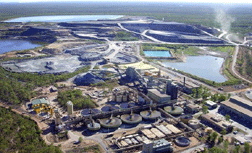 9 April 13, Kakadu uranium miner Energy Resources of Australia’s (ERA) is expected to announce a financial loss at its Annual General Meeting in Darwin tomorrow.
The AGM comes only months after open cut mining ended at the troubled Ranger site and only a month after the end of plans for uranium mining at the nearby Koongarra region.
“Now is the time to draw a line for uranium mining in Kakadu and to end plans for a new underground mine at Ranger – called the Ranger 3 Deeps project,” said Environment Centre NT spokeswoman Cat Beaton.
“The Ranger and Jabiluka leases need to go the way of Koongarra and the chapter closed on uranium mining in the Kakadu National Park region”.
The federal government has determined that ERA’s proposed 3 Deeps underground uranium mine plan requires a full Environmental Impact Statement and there is much scepticism about whether any underground mine could meet the mine lease closure date of 2021.
“Both the profitability and social license for uranium mining in Kakadu have faded and we are urging ERA to now clean up, rehabilitate and exit the Ranger lease.
There is no economic or environmental rationale for taking the Ranger operation underground and any move to do so will be actively contested,” concluded Ms Beaton.
Australia’s uranium industry seeks to weaken safeguards about radioactivity
 The group wants the commission to explicitly recommend the EPBC Act be amended to remove uranium mining and milling from the
  definition of “nuclear actions”……
uranium prices have fallen since Japan’s Fukushima disaster led many nations to rethink nuclear power programs.
Miners seek radioactive rethink, BY:ANNABEL HEPWORTH The Australian , April 08, 2013 URANIUM miners have demanded changes to laws so that the “mild” radioactivity that is unique to the sector is no longer a trigger for federal environmental assessments.
The Australian Uranium Association — whose members include BHP Billiton and the operator of the Ranger mine at Jabiluka in the Northern Territory, ERA — says that uranium mining and the milling that makes yellowcake should no longer be defined as a “nuclear action” under the federal law known as the Environment Protection and Biodiversity Conservation Act. Continue reading
Toro Energy faces a struggle to make Wiluna uranium project economic
 Raising the $A269 million to build Wiluna is the obvious challenge at a time of an ultra-cautious stock market and with banking conditions as tight as anyone has seen in decades.
the question of the real cost of uranium at Wiluna because if you add 10% for other charges the $37/lb becomes $40.70/lb and an extra 20% lifts the full cost to $44.40/lb.
Equity investors and the providers of debt finance to the Wiluna project will want to see something far more concrete than investment bank estimates before they provide the capital to develop Wiluna.
Dryblower on the obstacles awaiting Wiluna http://www.miningnews.net/StoryView.asp?StoryID=798350828, 8 April 2013 DIRECTORS and staff at Toro Energy had every reason to pop the corks on a few bottles of champagne last Tuesday when the Australian government provided environmental approval for its Wiluna uranium project in Western Australia, though Dryblower hopes it was just Jacob’s Creek and not Moet.
Keeping the good stuff on ice for a little longer is probably a good idea because even though one hurdle has been cleared Wiluna and Toro have a few more to clear before the serious celebrating can start. Continue reading
Western Australia’s asbestos town – a prelude to uranium towns?
WA GOVERNMENT TO MOVE LAST RESIDENTS FROM ASBESTOS TOWN ABC Radio National 3 April 2013 By:Catherine Van Extel The West Australian Government is looking to move a group of residents who continue to live in the deadly asbestos mining town of Wittenoom, in the Pilbara region of Western Australia. But while there are moves to finally clean up the toxic site, many continue to face the legacy of their time spent growing up in or visiting the notorious town.

The 1990 Midnight Oil song ‘Blue Sky Mine’ was inspired by Wittenoom and its deadly mining industry. It’s estimated that more than 20,000 people lived at Wittenoom before the mine closed in 1966.
Asbestos-related diseases have killed more than 2000 former workers and family members of Wittenoom, a death toll that continues to rise.
In 2007, the state government withdrew Wittenoom’s town status—disconnecting services like water and electricity—but a small group of residents stayed. Now the government wants them out in order to remediate the contaminated site. Continue reading
An Indian’s message to South Australia – leave uranium in the ground!
 “Please leave the uranium underground” , Roxby Downs Sun April 4, 2013, Indian national Bhargavi Dilipkumar has a message for BHP Billiton; to leave uranium underground for it has done more than enough damage to the environment.
Bhargavi visited Roxby Downs this week with Friends of the Earth Australia to receive a first hand experience of what uranium mining was all about and be the voice of India protesting the uranium trade between the two countries.
She said she had been part of the people’s movement that is strongly opposing the building of an atomic power plant to be built at the southern part of India.
Bhargavi is an anti nuclear activitist from India who strongly believes that BHP Billiton should shelve its uranium export program and be responsible for the safety of the environment and million of lives back home.
She visited the Olympic Dam mine and tried to persuade BHP Billiton management to have a heart for the people of India who will suffer long term consequences if the atomic power plant was allowed to go ahead.
“Please leave the uranium underground,” she said.
“Don’t mine it because its destroying lives.”
Similar sentiments were expressed by German nationals Danda Petter and Miriam Ribbeck who had been part of a nation-wide protest to stop the construction of a nuclear plant at Freiburg.
Vietnamese national Hai Levan said having seen the damage caused in Japan he would “fight to the death” to stop the building of a nuclear energy plant in South Central Vietnam.
“We can’t continue chopping down trees because it will cause flooding and harm our environment,” he said .http://www.roxbydownssun.com.au/story/1408776/please-leave-the-uranium-underground/?cs=1503
Discontent in Malawi over Australian uranium company Paladin’s mining deal
There is growing belief among some sections of the society that Malawi is losing out on the Kayerekera mining and have since called on the government to renegotiate the deal.
Leader of Malawi’s opposition People’s Transformation Party (Petra) Kamuzu Chibambo — who is also a prominent lawyer— said unless the deal were renegotiated, Malawi would continue to lose out in the mining sector and called upon all Malawians to galvanise their voices to press government to enter into negotiation with the miners.
Paladin has MK3.9bn environmental bond for Malawi uranium mine -Walker, Nyasa Times, 3 April 13, Australian Miner Paladin Energy Limited, operators of the Kayerekera Uranium Mine in Karonga district have a US$10 million Environmental Performance Bond with two commercial banks in Malawi to among other things cater for rehabilitation costs for signs of default during and after mine life.
“Paladin has a MWK 3.9 Billion (US$10 Million) Performance Bond in place to satisfy the environmental obligations of Clause 18.14(a). This comprises a US$ 5 Million Performance Bond with Standard Bank Limited and US$ 5 Million Performance Bond with Nedbank Malawi Limited,” Paladin General Manager for International Affairs Greg Walker toldNyasa Times in an email response.
The bond, in the form of irrevocable letters of credit, will deal with issues like water and environment contamination and the eventual clean up.
A letter of credit is a letter from a bank guaranteeing that a buyer’s payment to a seller will be received on time and for the correct amount. In the event that the buyer is unable to make payment on the purchase, the bank will be required to cover the full or remaining amount of the purchase.
The bond further obliges the company to sensitize people on the potential dangers associated with radioactive substances and prevention procedures. Continue reading
Western uranium mining companies not liked by some Malawians
 Paladin has MK3.9bn environmental bond for Malawi uranium mine -Walker Nyasa Times
April 3, 2013 “…... Nach Sale Says: Ngoma, you cannot take away the fact that western investors are highly exploitative and their governments hypocritical. They talk about the the mathematics and accounts of investment but at the end of the day they benefit more and their governments take that same money and give us as aid.
Impossible job of Western Australian uranium mine – given to Vanessa Guthrie?
Women call shots at U-miner Nick Butterly Canberra, The West Australian April 3, 2013,
Dr Guthrie is managing director of Toro and Dr Smyth is its non-executive chairman.
Dr Guthrie acknowledged it was unusual for a miner to have both a female chief executive and a chairman…..
Dr Smyth said the fact a mining company headed by two women was succeeding showed how the resources industry was changing and stereotypes were being broken down. http://au.news.yahoo.com/thewest/a/-/wa/16515070/women-call-shots-at-u-miner/
Christina’s comment – “Oh yeah! – more like the stereotype of giving the impossible jobs to women!”
Wiluna uranium scheme means high risk, no reward for Western Australia
 Burke’s blunder on Wiluna uranium scheme 2 April 2013. The Australian Greens strongly condemned today’s decision of Federal Environment Minister Tony Burke to allow the mining of uranium in Wiluna, Western Australia.
The Greens nuclear policy spokesperson, Senator for Western Australia Scott Ludlam, (left) said the approval showed Labor could not be trusted to protect the environment or public health.
“Today marks the beginning of the campaign to stop Toro, and the Greens will remain a strong voice to prevent the expansion of uranium mining around Australia. With the government’s abandonment of environmental protection, the Greens will target the investment community to ensure that investors continue to shun this unwanted industry.
“While the Minister has placed 36 conditions on the approval, there is simply no safe way to mine uranium on a lake bed that floods. This is a rookie company with no operating mines. The WA Government got it badly wrong and the Federal Government just blew its chance to fix this mess.
“Under new mine closure guidelines, Toro has to find 100% of the mine closure cost, around $150 million, before it has raised the $300 million to open it. With uranium prices plummeting by more than two thirds since its peak in 2007, it is highly unlikely that Toro can open, maintain and close a mine abiding by the necessary conditions and environmental standards.
“150 nuclear power plants are scheduled for closure without replacement in Europe alone. Toro’s business case is based on wildly unrealistic assumptions, including the projection that the US dollar will suddenly strengthen against the Australian dollar. Tony Burke is placing our environment and public health at huge risk for precious little prospective reward.
“Australian uranium was in the four reactors of Fukushima Daiichi nuclear plant in Japan. After more than two years, large areas of Japan are toxic and 160,000 people remain evacuated from their homes. It is time Australians got out of this industry.”
Very little economic benefit to Queensland, in uranium mining
 NGOs release alternative report to Uranium Implementation Committee
Queensland Nuclear Free Alliance March 18, 2013
High Risk – Low Returns: the case against uranium mining in Queensland is the NGO and civil society response to the LNPs undemocratic decision to go ahead with uranium mining in our state.
Read the report http://qnfa.files.wordpress.com/2013/03/180313highcost-lowreturn-uinqld.pdf
In October 2012 the LNP government broke its clear commitment not to allow uranium mining in Queensland. This commitment was the position of the LNP at the March 2012 state election and was reaffirmed after they took office. In the absence of open, inclusive and evidence based policy making the Newman LNP government has set up the Uranium Implementation Committee. The Committee has not sought broad community input and has not been asked to assess the arguments for and against uranium mining in Queensland. The Committee’s mandate is the far narrower task of recommending how uranium mining should be managed, not whether it should occur.
Why should Queensland forego the economic benefits of uranium mining when some other states permit uranium mines? In a nutshell, it is because the economic benefits are grossly overstated and are outweighed by the wide-ranging environmental, public health and weapons proliferation problems and risks.
Uranium accounted for 0.19 per cent of Australia’s export revenue in 2011/12 (the last available figures). By the most generous estimate, uranium accounts for 0.015% of all jobs in Australia. For Queensland, there is the additional limitation that the state has around just 2% of Australia’s uranium resources. Clearly, the industry has no capacity to deliver significant economic or employment benefits.
Instead of acknowledging the extremely limited economic potential of uranium mining in Queensland the LNP state government, the Australian Uranium Association and the Queensland Resources Council have continued a pattern of extravagant and unsubstantiated claims regarding jobs, revenue and royalties. Enthusiasm is no substitute for evidence and limited sectoral self-interest is not the same as the public interest. Continue reading
30 years after closing, Queensland’s Mary Kathleen uranium mine still leaks radioactive water
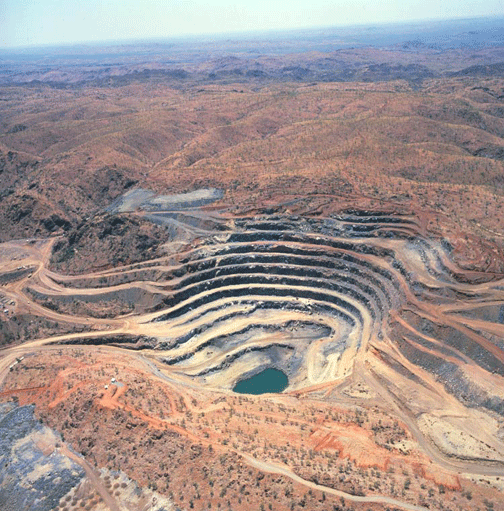 Queensland’s last uranium mine still leaking radioactive water 30 years after production stopped John McCarthy The Courier-Mail March 21, 2013 THE state’s last uranium mine at Mary Kathleen – in the Selwyn Range between Mount Isa and Cloncurry – is still leaking radioactive water from the site 30 years after production stopped. But, according to a committee report handed to the State Government this week, the return of uranium mining to Queensland is “risky but manageable”.
“The uranium mining industry has a number of inherent environmental risks,” the report said….. The report says the Mary Kathleen mine’s pit is still full of highly contaminated water to a depth of about 50m, and since the mine closed in 1982, several other studies have found “ongoing environmental legacy issues”.
Those include the seepage of acidic, metal-rich, radioactive waters from the base of the tailings dam into the former evaporation ponds and local drainage system.
Australian Conservation Foundation spokesman Dave Sweeney said there was no evidence that uranium mining was safe because not one former mine had been rehabilitated properly.
“In the Northern Territory there is a range of old mines, maybe a dozen or more, that are still being cleaned up 50 years after the event,” Mr Sweeney said…… http://www.couriermail.com.au/news/queensland/queenslands-last-uranium-mine-still-leaking-radioactive-water-30-years-after-production-stopped/story-e6freoof-1226601866129
Queensland Government apparently willing to export uranium through Great Barrier Reef
Uranium export through Reef not ruled out 9 News, March 18, 2013 The Queensland government won’t rule out exporting uranium through the Great Barrier Reef, after receiving a report advocating a return to mining the radioactive material.Natural Resources and Mines Minister Andrew Cripps made the concession on Monday after receiving 40 recommendations from a committee tasked with examining the resurrection of the uranium mining industry.
Uranium mining was banned in Queensland in 1989 and the material hasn’t actually been mined since 1982. The Uranium Mining Implementation Committee’s report has recommended uranium be exported from ports in Adelaide and Darwin, given they already have the appropriate environmental licences.
However, committee chairman Paul Bell says the option is open for a port to be opened up in Queensland if demand warrants it. Talks have already been held with the Port of Townsville, he says.
Mr Cripps has not ruled out shipping uranium through the reef…. green groups remain unimpressed and have hit out at the government for lifting the ban despite saying before the election that it had no plans to do so.
An anti-uranium mining alliance of key environmental groups produced its own report on Monday, labelling the industry “high risk, low return”. “Premier (Campbell) Newman was elected with a no-mines position and then broke this commitment without evidence, independent assessment or consultation,” alliance spokeswoman Robin Taubenfield said in a statement.
Northern Territory’s uranium industry in the doldrums
 Time the NT got resourceful, ABC Rural By Caddie Brain , 19 March 2013 “……..Uranium exploration projects seem to be struggling to raise capital more than any other resource, with investment down by 70 per cent.Oil, gas and petroleum on the other hand is booming, with an unprecedented 9 per cent of the Territory now subject to petroleum licences or licence applications…..
the Northern Territory Government says it’s concerned that so few projects have made the transition from exploration to mining over the past decade. The last mine was opened in 2006, and there’s been no major greenfield sites developed in the last 20 years.
In his opening remarks, Mines and Energy Minister Willem Westra Van Holthe said while it will support further minerals and petroleum exploration, it’s likely that major projects will rely on foreign investment to get off the ground….. http://www.abc.net.au/rural/content/2013/s3719273.htm
Ranger and Jabiluka – the continuing fight against uranium mining
 Australia: Koongarra is now permanently protected from uranium companies INTERCONTINENTAL CRY, BY JOHN AHNI SCHERTOW • MAR 18, 2013 “……..Koongarra wasn’t the only area that was excluded from the National Park. The government also left out the “Ranger” and “Jabiluka” sites, both of which are owned by another mining giant, Rio Tinto. Currently, only the Ranger site is being actively exploited.
The Ranger mine is a massive controversy onto itself. Ever since the mining operation began, there have been more than 100 environmental errors and breaches leading to the unintentional release of approximately 12 million liters of contaminated water, as Mirarr Elder Yvonne Margarula explained in a 2011 letter to UN Secretary-General Ban ki-Moon. Despite the concerns, Rio Tinto–through its subsidiary, Energy Resources of Australia (ERA)–wants to expand the Ranger mine.
The Jabiluka site is a very different story. Exploitation of this deposit was halted in 1998, following an eight-month blockade that involved thousands of indigenous and non-indigenous protesters. As a result of that effort, Rio Tinto eventually came to sign the “Jabiluka Long-Term Care and Maintenance Agreement” which guaranteed that the Mirarr would have veto rights over any future ‘development’ at Jabiluka.
However, that’s just not good enough for the Mirarr. Like with the Koongarra site, they want to bring Jabiluka and Ranger into the National Park. Continue reading
Inclusion of Koongarra the first step towards a non uranium mining Kakadu National Park
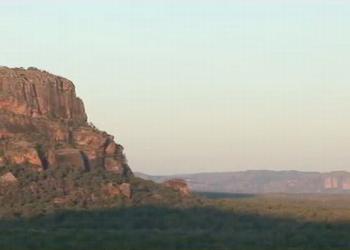 Koongarra’s inclusion welcome, but Kakadu remains incomplete. 14 March, 2013. The Greens today welcomed the inclusion of the Koongarra mineral lease in Kakadu National Park, but said Kakadu would remain incomplete until the Jabiluka and Ranger mineral leases are returned.
Greens Senator Scott Ludlam praised the efforts of Traditional Owner Jeffrey Lee, who had been in the public gallery when the Bill was introduced in early February.
“When Mr Lee came to Canberra a few weeks ago to witness this Bill being introduced, he said ‘Money comes and goes but the land is always here… If we look after it, it will look after us.’ …It’s difficult to comprehend the pressure Mr Lee withstood so we could get to this point, but I want to pay tribute to this fine and courageous man, a softly spoken and gentle man, who stood up to some of the most powerful interests on earth, and won,” Senator Ludlam told the Senate. Continue reading
1 This month

of the week – Australians for War Powers Reform (AWPR)
To see nuclear-related stories in greater depth and intensity
 Antinuclear