Mirarr welcome close scrutiny for Kakadu uranium mine
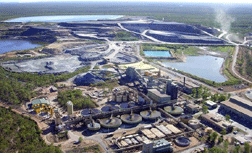
 Gundjeihmi Aboriginal Corporation (GAC) has today welcomed Environment Minister Tony Burke’s announcement that Energy Resources of Australia’s proposal to build an underground uranium mine, the so-called Ranger 3 Deeps, will be subject to a full Federal Environmental Impact Statement (EIS).
GAC – the organisation established and run by the Mirarr Traditional Owners of the Ranger uranium mine site, where the underground operations are planned, as well as much of Kakadu National Park – called for this level of assessment. The proposal affects a number of Matters of National Environmental Significance as it is a Nuclear Action occurring within a World Heritage listed Wetland of National Significance.
Kakadu experiences high rainfall and insufficient research has been done to be to predict the effect that underground operations will have on the surrounding wetlands.
“The Mirarr welcome the Minister’s decision. The Ranger 3 Deeps proposal is an entirely new method of mining within the bounds of Kakadu National Park and must therefore be subject to a high level of scrutiny. Energy Resources of Australia (ERA) has no experience with underground mining and the potential for water management or other environmental issues within the World Heritage area demand close examination,” said Justin O’Brien, Executive Officer of Gundjeihmi Aboriginal Corporation.
ERA currently has approval to mine on the Ranger Project Area until 2021 and has not publicly confirmed if it intends to seek a new mining approval beyond that date.
For further information or comment contact Justin O’Brien: 0427 008 765
Ancient Aboriginal art treasures threatened by uranium mining
After years of drilling, Canadian-based mining company Cameco has reported the find in the Wellington Range, where the thousands of Aboriginal artworks adorning cliffs and caves include a painting of the extinct dog-like creature, the thylacine, made in a style that is at least 15,000 years old.
“The importance of this art site is that it’s like a library,” Ronald Lamilami, a traditional Aboriginal landowner in western Arnhem Land and a custodian for the art, told The Global Mail, which on Friday published a detailed feature and map of the rock-art sites at risk nationwide. Lamilami said he fears if mining goes ahead, the works of his ancestors will be damaged…….
The rainbow serpent, fish, kangaroos and other creatures are painted in traditional “X-ray” style and the world’s only known indigenous rock-art stencils depicting whole birds are silhouetted on a cave wall, ……http://www.guardian.co.uk/environment/2013/mar/08/australian-uranium-discovery-art
Toro Energy’s Wiluna uranium project is looking very vulnerable and unceratin
 WA Should Leave Its Uranium In The GroundNew Matilda By Dave Sweeney, 6 March 13, “…….Toro Energy — a small and unproven uranium company — is seeking to open WA’s first uranium mine near Wiluna in the East Murchison region, around 600 kilometres north of Kalgoorlie. Toro has no proven corporate mining experience, and their costly and controversial project and is facing strong community, political and civil society opposition.
Toro Energy’s major shareholder, OZ Minerals, has described Toro as “a tiny company” and a “non-core asset” and Toro is facing severe financial constraints. The proposed Wiluna uranium mine is on the Lake Way arid zone lake system which includes mulga and acacia shrub land and sand dunes and spinifex plains. It is also home to a number of unique and endemic groundwater dependent plants and animals.
Despite attracting over 2000 formal public objections, state government support has seen the mine fast tracked through the state environmental approval process.
Even so, Toro’s hopes to have the project approved ahead of the state election have now stalled. Federal environment Minister Tony Burke has extended his decision-making time and requested further information on how the mine would impact on precious regional water resources and manage its radioactive mine wastes.
Given the clear policy difference between the two major political parties on whether the uranium trade has any place in the West, this lack of full and final state and federal approval means the Toro project is even more vulnerable and uncertain…… Continue reading
Fall in the value of Queensland’s uranium resources – a non viable industry
 Five sizing up uranium
John McCarthy
Courier Mail 1/3/13
QUEENSLAND’S uranium resource has been estimated at 40,000 tonnes, with five companies expected to vie to be the first to develop it.
AREVA Resources Australia, Paladin Energy and its associate Summit Resources, Laramide Resources and Mega Uranium are in the mix, according to the Australian Uranium Association.
But the resource estimate has led to environmentalists claiming the industry is nowhere near as viable as the Government and the industry had previously claimed.
The Australian Conservation Foundation said that estimate would be worth only $3.36 billion on current spot prices, 75 per cent lower than the industry’s previous estimate of $18 billion.
‘‘In the case of Queensland, claims made about in-situ resources need to factor in the technically difficult – and therefore uncertain and potentially expensive – nature of a number of these deposits,’’ the ACF’s Dave Sweeney said.
‘‘Obviously there is a vast chasm between the two figures of $18 billion figure and $3.36 billion – the October 2012 figure is 5.4 times higher than the February 2013 figure.
‘‘Put another way, the value of Queensland’s uranium resource has fallen by $14.64 billion in the short space of four months.
‘‘If this pattern continues, the value of Queensland’s uranium resource will fall to zero in March 2013.’’
However, only about 10 per cent of the uranium market is on the spot price with the rest negotiated in long-term contracts that differ widely from the current market price.
The ACF is pushing the debate towards a comparison of the industry’s viability against its potential impact and have made a submission to the State Government’s implementation committee headed by Paul Bell which will report in March…
Australian Uranium Association knows that uranium mining for Queensland is not a goer
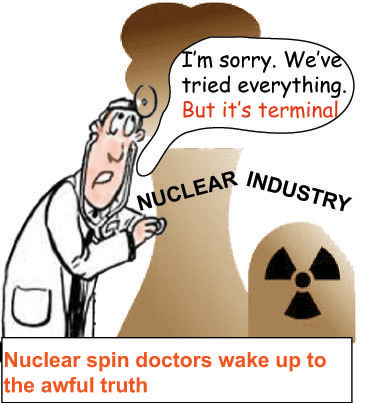 The Australian Uranium Association’s website recently published an article “Uranium Mining – an opportunity for Queensland” talking up, as one would expect, the potential for uranium mining n Queensland.
And yet, and yet –
included in this article –
“The uranium industry in Queensland will likely be a moderately sized industry developed over a lengthy period, with the potential to make a valuable contribution to the diversity and prospects of the Queensland economy and to employment, including regional employment.
Queensland’s uranium endowment is about 2% of Australia’s endowment. Queensland contains upwards of 40,000 tonnes of reasonably assured and inferred resources.”
Jim Green of Friends of the Earth, points out – That amount of uranium would fetch less than $4 billion at the current rate for Oz U sales (around $87,000 / t U3O8), and contrasts sharply with the AUA’s claim last year that the known uranium resource in Queensland, using projected prices and exchange rates, is valued at around $18 billion. The $4 billion figure is of little relevance since the uranium price is too low for any mines to be viable in Queensland
Cameco’s Kintyre uranium project not economically viable
 Cameco shares down following $168M write down on its Kintyre uranium mine The Canadian Press February 11, 2013 SASKATOON – Cameco has confidence in the long-term value of its Kintyre project but it’s not economically viable at current uranium prices and had to be written down by $168 million, CEO Tim Gitzel said Monday.
He said uranium would have to be at least US$67 per pound “to make that project interesting.”….. it is not economical at current market prices and drilling results last year weren’t as encouraging as hoped “so we’ve put it into our bull pen for now.”He said the 2011 Fukushima nuclear crisis has caused “a pause” in demand for uranium.
“There’s been high-profile countries like Germany, who had 17 reactors operating before Fukushima and quickly shut down eight and are just running nine now and plan to phase out (the rest) over time,” said Gitzel….
The Australian uranium industry is in a bad way – with a doubtful future
 recent steps by BHP to cuts of its uranium program — from the delay of the uranium production expansion plan at the Olympic Dam project to the selling of a large Yeelirrie deposit located in Western Australia.
Recent Ranger and Olympic Dam issues along with various problems related to notable Australian uranium projects like Angela/Pamela, Kintyre, Oban, Wiluna and Koongarra, amongst others, have also caused concerns about the future development dynamics of the local uranium industry.
Australia’s uranium industry hits turbulence Mining.com, Vladimir Basov | February 8, 2013 Recent news from Australia raises serious concerns about the future development of its domestic uranium industry. While established players are exiting the market, others are lining up to explore new areas and have made some positive moves.
Open-pit mining operations at Ranger mine were terminated at the end of November 2012. Continue reading
Something Australia can be proud of – beautiful Koongarra preserved from uranium mining
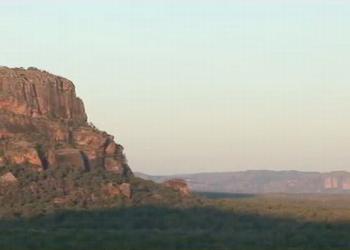 Australia Places Aboriginal Land in Park to Bar Uranium Mining http://ens-newswire.com/2013/02/07/australia-places-aboriginal-land-in-park-to-bar-uranium-mining/ CANBERRA, Australia, February 7, 2013 – After 34 years of campaigning to keep uranium mining out of his ancestral land of Koongarra, Djok Senior Traditional Owner Jeffrey Lee sat in the House of Representatives Wednesday to watch this land be protected forever.
Environment Minister Tony Burke introduced a bill to repeal the Koongarra Project Area Act – a 1979 law excluding Koongarra from the original boundaries of Kakadu National Park because of its potential to be the site for a uranium mine.
“In 2010, the Government promised Mr. Lee that we would incorporate Koongarra into Kakadu National Park, to ensure that the threat of mining was banished forever,” Burke said. Koongarra is an area of native woodland of great environmental and cultural significance, now incorporated within the boundaries of Kakadu National Park. Kakadu is located within the Alligator Rivers Region of the Northern Territory of Australia, 171 kilometers southeast of the territorial capital, Darwin.
The Koongarra uranium deposit is estimated at about 14,000 tonnes. Mining companies, most recently the French company AREVA, have been trying to mine the deposit for decades despite the opposition of traditional owners. Continue reading
Koongarra permanently protected from uranium mining
GUNDJEIHMI ABORIGINAL CORPORATION 7 Feb 13 Mirarr Traditional Aboriginal Owners today welcomed Environment Minister Tony Burke’s introduction of a bill which clears the way for the incorporation of the Koongarra area into Kakadu National Park. This move recognises the long held Aboriginal aspiration to protect this unique area from the threat of uranium mining.
The introduction of the Completion of Kakadu National Park (Koongarra Project Area Repeal) Bill was also welcomed by the Djok Senior Traditional Owner of the Koongarra area, Jeffrey Lee AM. Mr Lee was in the Federal Parliament to witness the introduction of the bill, accompanied by a delegation representing the Mirarr. Jeffrey Lee was awarded the Order of Australia in 2012 in recognition of his work to protect his country and gift it to the nation. He has firmly opposed uranium mining on his country on the grounds of the deep cultural significance of Koongarra to its Traditional Owners and concerns about the dangers of uranium.
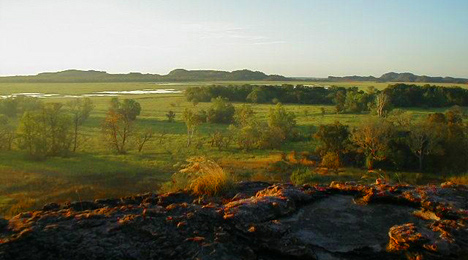
In his long struggle to protect his country Mr Lee has drawn inspiration from Yvonne Margarula, the Senior Traditional Owner of the neighbouring Mirarr people. Since the 1990s Yvonne Margarula has led the Mirarr opposition to the proposed Jabiluka mine, north of Koongarra and the existing Ranger uranium mine also on Mirarr land. Ms Margarula spearheaded the international campaign against mining at Jabiluka. Her resolve and leadership guided the campaign and prompted a special UNESCO mission, resolutions in the European Parliament and US Congress and several Australian parliamentary inquiries. In the late 1990s Ms Margarula won several prestigious international awards in recognition of her work to protect her country.
In 2001, the Rio Tinto majority owned mining company Energy Resources of Australia acknowledged the opposition of the Mirarr traditional owners and agreed to halt work at Jabiluka.
Ms Margarula said, “Traditional Owners must be allowed to make their own decisions about development on their country. Jeffrey has been speaking out to protect his country and we support him. He has always said no to mining at Koongarra and we support him when he says he wants to see that country put into the National Park. We want to see the same protection for Mirarr country.”
The Mirarr people have this month executed a renegotiated agreement for the existing Ranger mine, which was imposed on them in 1978. This agreement, along with provisions of the federal Atomic Energy Act, provides for the Ranger area to also be included into Kakadu National Park as the mine is rehabilitated.
The executive officer of Gundjeihmi Aboriginal Corporation, Justin O’Brien, said, “This action by the government is to be applauded, although the name of the bill incorrectly implies that this completes the national park. There is further work to be done and we still look forward to the day when all of Kakadu is included in the National Park and adequately protected from unwanted industrial development.”
A WRITTEN STATEMENT FROM MR LEE IS ATTACHED TO THIS STATEMENT Continue reading
Paladin and Rio Tinto uranium mining companies – the Ugly Australians in Malawi and Namibia, despite Bob Carr’s praise
 What have interested Australian companies, or the Australian government, done to address these concerns?…….
what should we make of Australian Defence Force chief General David Hurley’s alarming indication that there might be a role for the ADF in protecting “Australian interests” in Africa?
Multinational miners: magnanimous or malevolent? Kellie Tranter – lawyer and Humna Rights Activist, FEBRUARY 1, 2013 BY KELLIE TRANTER “……..Malawi “…….Minister Carr praised the work of Australian mining company Paladin, referring to its strong corporate social responsibility. Paladin operates Malawi’s biggest uranium mine, the Kayelekera.
In June 2008, The Bench Marks Foundation released a report ‘Corporate Social Responsibility and the Mining Sector in Southern Africa’ which suggested that when Paladin struck its deal with the Malawi government to mine uranium, it was agreed that it would get a 100% capital write off, a reduction in corporate tax from 30% to 27.5% and a scrapping of the 10% resource rent tax. Paladin was also to be exempt from the standard 17.5% import VAT or duty and a royalty rate reduced from 5% to 1.5% in the first three years and 3% thereafter.
Now Malawi’s opposition party, the People’s Transformation Movement (PETRA), have given the Malawi Government a 14 day ultimatum to explain why the Kayelekera deal cannot be renegotiated. However, there are reports that the agreement with the previous government (of late President Mutharika, a former World Bank economist) includes a clause that the government will not take any action that will seriously change the financial aspects of the project for the period of 10 years. Residents are also concerned that the Malawi Government retains only a 15% equity in Paladin (Africa) Limited (PAL) a subsidiary of Paladin and has given “breathing space” on taxes for 10 years. Continue reading
In depth look at plan for Ranger 3 Deeps Underground Mine- submission from Environment Centre Northern Territory
 A case in
 Submission to Ranger 3 Deeps Project underground uranium mine referral
Energy Resources of Australia Ltd/Mining/at existing Ranger uranium mine in Alligator
Rivers Region/NT/Ranger 3 Deeps Underground Mine
Reference Number: 2013/6722
31 January 2013
Prepared by
 Stuart Blanch, Director, Environment Centre NT, Darwin, coordinator@ecnt.org / 0448 887 303.
The Environment Centre NT welcomes the opportunity to provide comment on the referral.
We make the following comments:
1. The Ranger 3 Deeps Project is proposed by Energy Resources of Australia (ERA) to be built inside
the World Heritage listed Kakadu National Park and surrounding internationally recognised
Ramsar wetlands of the Alligators Rivers Region. By its very nature is is a highly risky project over
the long term, given the need to manage radioactive contamination for thousands of years. The
Ranger Uranium Mine has already created very substantial long term waste management issues
over the past three decades of operation, and remains a highly controversial project in the eyes
of many Territorians and Australians.
The proposed mine is a nuclear action under the Environment Protection and Biodiversity
Conservation Act (Cth) (EPBCA). However it also poses a risk to various other Matters of National
Environmental Significance including 14 threatened species, 20 migratory species and a National
Heritage Place. ERA’s view that only one MNES, namely nuclear actions, are likely to be impacted
is fanciful and disingenuous (p81). Clearly the existing water management issues caused by three
decades of mining, let alone an even larger process water inventory, pose a significant risk to
downstream Ramsar wetlands and World Heritage values should there be an uncontrolled
discharge into Magela Creek or ongoing lateral spread of the groundwater plume underneath the
tailings dam.
Full EIS’s are regularly conducted under the EPBCA for mines that entail much less risk to species,
places and values which are legally recognised under federal environmental law and attract
protection under international agreements.
2. Underground mining at Ranger has never been subject to an EIS, and was not addressed in the
Australia’s overseas aid used to promote image of Paladin and Bannerman uranium mining companies
 Paladin, which has been the subject of some controversy in Malawi over job cuts, was last year linked to a funding application through its employees’ charity – Friends and Employees of Paladin for African Children.
Paladin’s (African) Ltd general manager, international affairs, Greg Walker, who was invited late last year to be Australia’s honorary consul to Malawi, was involved in the process, according to 2012 correspondence from Australia’s ambassador to Zimbabwe, Matthew Neuhaus, to Mr Walker. The letter obtained under freedom of information confirmed Mr Walker’s successful application for the employees’ charity funding proposal.
The Aidwatch director Thulsi Narayanasamy said it was not the place of the Australian aid program to fund the corporate social responsibility programs of wealthy mining companies.
Firms use tax money for aid projects : http://www.smh.com.au/money/tax/firms-use-tax-money-for-aid-projects-20130129-2ditd.html#ixzz2Jbp0RzOT January 30, 2013 Rory Callinan
WEALTHY resource companies operating overseas are tapping into Australian taxpayer funds to set up aid projects potentially benefiting their corporate social responsibility credentials.
Aid and mining watchdogs have expressed concerns about the practice, arguing the corporations are wealthy enough to bankroll their own aid and that linking donations to controversial mine operations is a conflict of interest.
Nine mining companies all operating in Africa have been linked to the successful applications via the Foreign Affairs Department’s Direct Aid Program – a scheme that allows heads of missions to give up to $30,000 to local causes.
About $215,000 of taxpayers’ money went to the mining company-conceived projects last financial year, including a school for the deaf, providing trade skill training to local workers, establishing women’s groups and digging wells. Two applications involved uranium mining companies, Paladin Energy in Malawi and Bannerman Resources in Namibia. Continue reading
Thorium nuclear reactors – Australia’s nuclear lobby’s latest con job
the mere idea of these lovely little reactors needing plutonium or enriched uranium suggests the wisdom of Australia having uranium enrichment, nuclear power and nuclear reprocessing . And heck, why not a radioactive waste facility – to take in plutonium and other radioactive waste from other countries – as the start of another lucrative industry? Use it to facilitate the thorium reactors that will be dotted around the country. To seriously consider thorium nuclear energy in Australia means a foot in the door for the whole nuclear fuel cycle here.
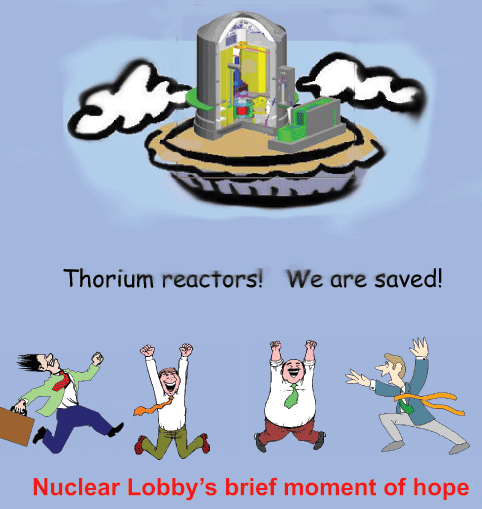
Don’t believe thorium nuclear reactor hype, Independent Austtralia 28 Jan 13, Thorium reactors are the latest big thing in nuclear spin. Noel Wauchope says: don’t believe the hype.
The explanation becomes clearer, when you consider that the nuclear industry has sunk $billions into new (uranium or plutonium fuelled) large nuclear technologies, as well as into lobbying governments and media. Would big corporations like Hitachi, EDF Westinghouse, Toshiba, Areva, Rosatom be willing, or indeed able, to withdraw from the giant international operations that they already have underway? Would they, could they, tolerate a mass uptake of the new thorium nuclear reactors — which is what would be needed, to make the thorium market economical?…. Continue reading
Paladin uranium company’s losses: cuts staff in Malawi, Namibia and Australia
According to KYJD Publicist Stevenson Simusokwe, PAL had promised the
people of Karonga a referral hospital, good road network in the district
and free water.
But from the retrenchment statement, dated January 24 2013, PAL says it
has been operating at a loss and further adds that circumstances beyond
its control have led to the decision to trim down its staff not only at
Kayerekera but also at its Langer Heinrich Mine in Namibia and at the
company’s head office in Australia.
The company has been able to remain in operation only due
to continued financial support provided by the parent company, Paladin
Energy Limited.
Paladin to cut Malawi staff at Kayerekera mine by 18 percent 25
January 2013 The Maravi Post, by PIUS NYONDO
MZUZU–-Paladin Africa Limited (PAL) says it will reduce the number of
employee at its Kayerekera Mine (KM) in Malawi’s border district of
Karonga in response to economic hardships caused by dwindling uranium
prices on the global market, MaraPost has learnt. Continue reading
ERA’s uranium plan: Ranger 3 Deeps deposit beneath Pit 3 – could they diddle the Aborigines?
Christina Macpherson 25 Jan 13, It all looks good, that the Mirrar Aboriginal people people have at last got a fairer deal with ERA concerning their long struggle, first against, uranium mining at the Ranger site, and then to get a better deal.
The senior traditional owner of the Mirarr clan, the very highly respected Ms Yvonne Margarula, has welcomed the agreements.
These agreements do not include ERA’s new project , underground mining at Ranger 3 Deeps deposit beneath Pit 3.
This situation needs careful watching. Is the new agreement part of a softening up process by the uranium mining company, as they plan to get acquiescence from the Aboriginal people for the this next project.
It has been done before – that uranium miners have chosen to mine underground, in order to avoid the responsibility of native title issues on the surface. When they do a big shaft entry, they expand underground without involving the native title holders. a big shaft entry, they expand underground without involving the native title holders. They have been able to convince the Aboriginal owners that “the crown owns the minerals”.
ERA has recently been dealing with 30 years accumulation of radioactive waste water, at Ranger.
ERA could be a bit desperate – as recent economic history has not been kind to them In 2012 “From a share price of $18.22 in May 2009, the stock lost more than 90 per cent of its value to be languishing at $1.15 earlier this year, with the company’s future being seriously questioned. …. The goal of turning ERA into an underground miner won’t come to fruition before late 2015, and there will be myriad environmental, indigenous, government and company approvals to satisfy before then. ” http://www.smh.com.au/business/kakadus-miner-for-all-seasons-20120427-1xqg2.html#ixzz1tNGNVJGh
1 This month

of the week – Australians for War Powers Reform (AWPR)
To see nuclear-related stories in greater depth and intensity
 Antinuclear