New light on WA uranium mine approval sparks call to put environment before economics, WA Today. By Cameron Myles, July 10, 2019 — New light shed on the “clandestine” approval of a uranium mine in Western Australia’s outback has sparked calls to beef up the country’s environmental laws, amid concerns the minister responsible prioritised the economy over the environment.Then-environment minister Melissa Price signed off on Cameco’s Yeelirrie project near Wiluna on April 10 this year, the day before the federal government called the May 18 election.
News of the project’s approval did not emerge until around Anzac Day later that month, with no releases announcing the minister’s decision, prompting Australian Conservation Foundation (ACF) nuclear free campaigner Dave Sweeney’s call that it was a “clandestine approval under the cover of a national election”.
Yeelirrie, which sits within the boundaries of Ms Price’s vast federal electorate of Durack, had a long history of resistance.
It was previously rejected by the WA Environmental Protection Authority which flagged, among others, concerns about the project’s impact on 12 species living underground and in the water table.
Some species were only found in the area covered by the project and there were fears they could go extinct as the miner dug through groundwater to get to the uranium below.
It was later approved at a state level by the then-Barnett government, and several options on how to proceed were presented to Ms Price by the federal Department of the Environment and Energy on April 5 this year.
But the release last week of a statement of reasons from Ms Price – secured by the ACF – has revealed she signed off on the project with a less stringent set of environmental conditions than those recommended by the department, noting that if she attached the more onerous conditions “there is a real chance that the project could not go ahead”.
“I was satisfied that if the project did not go ahead and the social and economic benefits would not be realised, this would have an adverse effect on the region and the State as a whole,” Ms Price wrote.
The Wilderness Society WA state director Kit Sainsbury said the revelation meant the minister put economic and social conditions ahead of what should be her primary consideration – the environment.
“To see both at the state and federal level such contempt for the scientific evidence suggesting that this project is environmentally unsustainable – yet receiving approval – is galling and highly contentious,” he said.
“As the Yeelirrie decision proves, too often decisions affecting the environment are made behind closed doors … a national body with teeth can stand up for the communities which need it and their country they honour.”……….
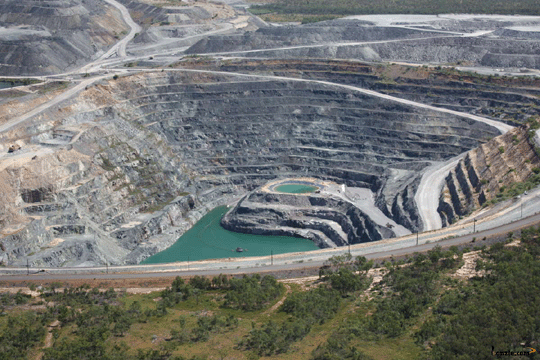
BIRDS VS BHP: Evaporation ponds at BHP’s Olympic Dam mine are killing hundreds of birds
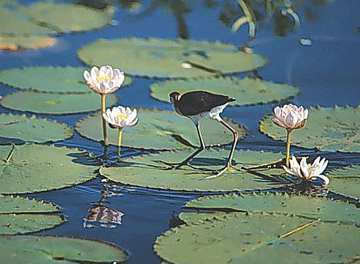
Hundreds of birds are dying each year after mistaking Olympic Dam’s evaporation ponds for wetlands. Environment campaigners want the miner to stop using them. Clare Peddie, Science Reporter, The Advertiser, July 10, 2019
Conservationists want BHP to stop using evaporation ponds at Olympic Dam that kill hundreds of birds, including threatened species.
They want BHP to cancel plans for a new pond and phase out 146ha of existing ponds, which are used for the disposal of acidic waste water………
Scientist and environment campaigner David Noonan says it’s shocking that birds are drowned, choked or scalded by BHP’s highly acidic, toxic wastewater.
“They see this as a wetland in an arid region as they’re travelling through,” he said. “They’re typically poisoned by contact, they die on site or they’re poisoned and die later.”
BHP found 224 dead birds during weekly monitoring in the 2017-18 financial year and that included 39 banded stilts, a vulnerable species in SA. The number of dead birds found annually has hardly changed since 2011-12, when the banded stilt, red-necked avocet, whiskered tern, grey teal, black swan, hoary-headed grebe, …..
Plans for a huge open cut mine that were shelved in 2012 would have required a phase-out of evaporation ponds, but BHP says that condition is no longer relevant or applicable to current growth and expansion of the underground mine.
BHP is preparing to make a submission to both state and federal governments for a sixth evaporation pond.
Uranium among contaminants sparking proposed bore water ban in Thebarton, ABC News By Eugene Boisvert, 5 July 19About 1,500 Adelaide residents and businesses have been told not to use groundwater because of contamination from uranium and degreasing chemicals.
Key points:
A groundwater ban is proposed for most of the Adelaide suburb of Thebarton
The EPA says there are potential health effects from chemicals in the underground water
Uranium has also been detected in the ground from a laboratory
The Environment Protection Authority (EPA) is proposing a permanent groundwater ban for the area, which includes most of Thebarton and a small part of Mile End, just west of Adelaide’s CBD.
The authority has also found contamination from degreasing chemicals tetrachloroethene (PCE) and trichloroethene (TCE) that were used in the area.
The admission is contained in a statement of reasons signed by the minister before she approved the Yeelirrie uranium mine, 500km north of Kalgoorlie, the day before the federal election was called in April.
The document also shows the environment and energy department recommended conditions that would require the developer, Cameco, to ensure the project would not result in the extinction of up to 11 stygofauna, which are tiny groundwater species.
But Price instead adopted a weaker set of conditions aimed at reducing the risk to groundwater species but which the department said contained “significant uncertainties” as to whether or not they would be successful.
Price acknowledged the department had recommended tougher conditions but said in the statement that if they were imposed there was “a real chance that the project would not go ahead”.
“In making this recommendation, the department considered only the environmental outcomes, and did not weigh the environmental risks against the social and economic benefits of the project,” she said.
“Rather, as the department’s briefing noted, this balancing exercise was for me to do”.
Price wrote that she “accepted that there was a risk” that species could be lost but that the department’s advice was this was not “inevitable” if the project went ahead.
The statement of reasons also notes that the project could lead to the wipeout of the entire western population of a species of saltbush, known as the Atriplex yeelirrie.
The saltbush has just two distinct populations, the western and eastern population, both of which are found on Yeelirrie station.
The statement of reasons says the western population occurs entirely within the proposed area for the mine and there is a risk the development would clear all of it.
The Australian Conservation Foundation, which requested Price’s statement of reasons, described the document as “an extraordinary piece of decision making”.
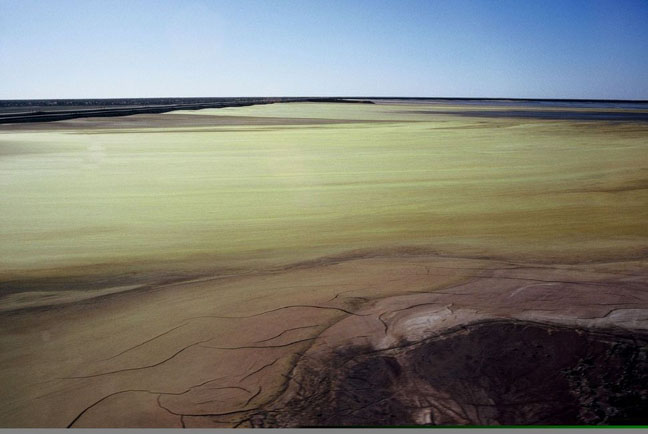
BHP Olympic Dam Tailings dump to be larger than the CBD of Adelaide AND to be up to 30 metres high at the centre of the tailings pile – around the height of a 10 story building.
All BHP Olympic Dam radioactive toxic mine tailings waste must be isolated from the environment for over 10,000 years…
Please consider making a submission to the federal government who are inviting comments on the BHP Olympic Dam Tailings Storage Facility (TSF) 6 project – but only up to cob Friday 28th June, with no extensions (scroll down for info). Tell the fed’s they must not just approve this TSF 6 on the basis of the vested interest BHP Referral documents.
Key Recommendations are provided along with two Briefing papers prepared for Friends of the Earth Australia (FoEA) and available on-line:
“BHP seek a Toxic Tailings Expansion without a full Safety Risk Assessment” (DN, June 2019, 3 pages) https://nuclear.foe.org.au/wp-content/uploads/ODM-Tailings-Briefing-22June2019.pdf
and
“Migratory Birds at Risk of Mortality if BHP continues use of Evaporation Ponds” (DN, June 2019, 3 pages) https://nuclear.foe.org.au/wp-content/uploads/ODM-Migratory-Birds-BHP-Evaporation-Ponds-22June2019.pdf
A set of Key Recommendations on these issues to put to the federal government:
1. The Olympic Dam operation be assessed in its entirety with the full range of project impacts subject to public consultation
Given that uranium mining at Olympic Dam is a controlled “nuclear action” and Matter of National Environmental Significance (NES) under the federal Environment Protection and Biodiversity Conservation Act 1999 (EPBC Act), the integrity of environmental protection requires that the entire Olympic Dam operation be subject to impact assessment so that regulatory conditions can be applied “to consider impacts on the whole environment”. Continue reading →
The movement’s real strength always depended on its grassroots – on the willingness of activists to defy the rightwingers in Labor and the unions, even to the extent of facing arrest.
No doubt many answers will come to to mind. But whatever else unites them, they all support nuclear power.
Jim Green from Friends of the Earth Australia, which compiled the above list, says that nuclear energy now functions more as a culture war troll than a serious policy, not least because the people who want atomic solution to climate change are usually the same people (as the group above illustrates) who don’t believe climate change requires a solution at all.
Despite the best efforts of Queensland conservatives, Australia will not go nuclear. The former chair of Uranium King, Warwick Grigor, says flatly: “No one is going down that path in the foreseeable future.” Even industry boosters see nuclear power stations as feasible only if the government introduces, um, a carbon tax, a proposal to which the culture warriors would react like vampires to garlic.
Nevertheless, progressives should discuss nuclear energy and climate change, if only because the campaign we need against coal can learn from the historic struggle against a different mineral.Continue reading →
it is deeply disturbing that BHP recently confirmed that three of the tailings dams at Olympic Dam are in the “extreme risk” category.
This is the highest risk status according to what is often regarded as the best global industry benchmark – the Canadian Dam Association’s safety standards – and relates less to the likelihood of collapse and more to the severity of the resulting human and environmental impacts if a failure did happen.
By Dave Sweeney 14 June 2019 BHP has applied to expand the Olympic Dam mine in SA, but with the recent failure of tailings dams, caution must be taken, writes Dave Sweeney.
AWAY FROM THE airbrushed corporate head offices, staged media events and slick communications products, the reality of the mining trade is pretty basic and very intrusive.
An orebody is identified, extracted, processed and removed and while the clothing might be high-visibility, many of the industry’s impacts tend to stay pretty low on the wider world’s radar.
This plan deserves serious attention and scrutiny for three key reasons: it involves the long-lived and multi-faceted threat of uranium, it proposes to use massive amounts of finite underground water and the company is in trouble globally over the management of mine wastes and residues currently stored in multiple leaking – and sometimes catastrophically failing – tailings dams.
BHP has recently commissioned a “tailings taskforce” to conduct a high-level review of the management of the company’s tailings dams or tailing storage facilities.
The move comes in the literal wake of the collapse of a tailings dam at the Samarco iron ore operation in Brazil in 2015 that saw 19 deaths along with widespread and continuing environmental damage.
The mine was a joint operation of BHP and Vale, a Brazilian mining multinational that is a major player in global iron and nickel production, promoting its mission as ‘transforming natural resources into prosperity’.
Or maybe not after an estimated 40 million cubic metres of toxic sludge from the collapsed dam poisoned the Doce River and utterly devasted the lives of the local Krenak people.
Nothing quite focuses the corporate mind as a high profile and high cost legal action and in May, BHP was served with a multi-party damages claim for over $7 billion on behalf of around 235,000 claimants.
The memory of Samarco and the dangers of large-scale tailings dam failure were tragically highlighted in January this year when another Vale tailings dam at the Brumadinho mine failed, resulting in terrible loss of life with a death toll of between two and three hundred people and massive environmental impact.
In this context, it is deeply disturbing that BHP recently confirmed that three of the tailings dams at Olympic Dam are in the “extreme risk” category.
This is the highest risk status according to what is often regarded as the best global industry benchmark – the Canadian Dam Association’s safety standards – and relates less to the likelihood of collapse and more to the severity of the resulting human and environmental impacts if a failure did happen.
In preparing to contest the new Olympic Dam expansion, environmental groups have commissioned a detailed analysis that clearly shows the tailings present a significant, near intractable, long-term risk to the environment.
However, there are serious concerns that BHP is seeking this major tailings expansion without a full Safety Risk Assessment — such an approach is inconsistent with modern environmental practice and community expectation.
Olympic Dam tailings contain around 80 per cent of the radioactivity associated with the original ore as well as around one-third of the uranium from the ore.
Since 1988, Olympic Dam has produced around 180 million tonnes (Mt) of radioactive tailings. These are intended to be left in extensive above-ground piles on-site forever.
BHP’s radioactive tailings at Olympic Dam are extensive and cover 960 ha or 9.6 km2, an area one-third larger than Melbourne’s CBD.
They have reached a height of 30 metres, roughly that of a ten-storey building, at the centre of tailings piles where water sprays are used to limit tailings dust release and potent radioactive radon gas is released to the atmosphere.
Critics of the planned expansion are calling for safety to be comprehensively and transparently assessed across all tailings at Olympic Dam, without any restrictions, exemptions or legal privileges to the company, before any decision on new storage facilities or more radioactive tailings production.
In the public interest, a full comprehensive tailings Safety Risk Assessment is required from BHP in the expansion Assessment Guidelines and this must be subject to public scrutiny in the EIS Assessment process.
Environment groups are demanding that the EIS Guidelines adopt the Federal Government’s Olympic Dam Approval Condition 32 Mine Closure (EPBC 2005/2270, Oct 2011) as a requirement on BHP for a full Comprehensive Safety Assessment, covering all radioactive tailings at Olympic Dam including that the tailings plan must:
‘…contain a comprehensive safety assessment to determine the long-term (from closure to in the order of 10,000 years) risk to the public and the environment from the tailings storage facility.’
In recognition that tailings risks are effectively perpetual, Condition 32 on Mine Closure requires environmental outcomes:
‘…that will be achieved indefinitely post mine closure.’
The SA Government’s Guidelines and the full comprehensive tailings Safety Risk Assessment must also incorporate the higher environmental standards set by the Federal Government in 1999 to regulate the Ranger Uranium Mine in Kakadu in the Northern Territory:
‘to ensure that:
The tailings are physically isolated from the environment for at least 10,000 years;
Any contaminants arising from the tailings will not result in any detrimental environmental impact for at least 10,000 years.’
BHP must demonstrate a plausible plan to isolate radioactive tailings mine waste from the environment for at least 10,000 years, in line with the Federal Government’s environmental requirements at the NT’s Ranger uranium mine.
And the South Australian and Federal Governments have a clear duty of care to make sure they do. After Brazil, no one in industry or government can ever say they didn’t know.
Vimy Resources eyes US uranium fix, Stuart McKinnon, The West Australian 1 June 2019Vimy Resources managing director Mike Young refers to himself as a “silver-lining guy” and jokingly admits “you have to be … in uranium”.
The Andrew Forrest-backed Vimy has a completed definitive study for its $493 million Mulga Rock uranium project 200km east of Kalgoorlie, has two granted mining leases and other key approvals in place. It just needs the price of yellowcake to roughly treble so it can push the button.
The spot price of uranium has been in the doldrums since the 2011 Fukushima nuclear disaster in Japan, which prompted a phasing out of nuclear power in western countries, particularly in Europe.
Despite several false dawns, sentiment for the commodity has remained stubbornly low for the past eight years.
But the forthright Mr Young and Vimy’s chief nuclear officer Julian Tapp are hopeful the market might be approaching an inflection point.
They see a looming decision of the US Government as a potential catalyst to move uranium prices higher.
President Donald Trump is expected to decide next month whether to introduce trade restrictions to protect US-based uranium producers……..
If a quota is introduced, the company is hopeful Australia’s close relations with the US could win the country key concessions as it has done with aluminium and steel.
But whatever the outcome, Vimy believes a decision will provide clarity to a market starved of certainty for the past 18 months. US utilities, representing nearly a third of the global uranium demand, have effectively been on a buying strike since the start of last year.
…… “Politically, people are now thinking of nuclear as an avenue to emissions-free, dispatchable power 24/7 in all weather conditions,” Young said. “There’s still an anti-nuclear lobby, but by and large mainstream environmental scientists are getting on board nuclear power.” ….. https://thewest.com.au/business/spinifex/vimy-resources-eyes-us-uranium-fix-ng-b881212458z
Sellers continue to chase down ever more empowered buyers in an ongoing weak uranium market.
-Uranium spot price continues to fall
-Rio Tinto may shut down Rossing
-US production falls dramatically
It was Groundhog Week last week in the uranium market. With utilities largely out of the market pending a section 232 decision, sellers continue to lower prices in order to flush out buying interest.
And the buyers are not making it easy. Having the upper hand, they are not simply insisting on lower prices, industry consultant TradeTech reports, but on specific origins, delivery locations and other restrictive terms and conditions.
Four transactions totalling 500,000lbs U3O8 equivalent were recorded in the spot market last week. TradeTech’s weekly spot price indicator has fallen -US20c to US$24.30/lb.
The spot price has now fallen -16% in 2019, whittling a 12-month gain down to 6%.
There were no transactions reported in uranium term markets. TradeTech’s term price indicators remain at US$28.50/lb (mid) and US$32.00/lb (long).
Supply Response
Australian-listed diversified miner Rio Tinto ((RIO)) has announced it will advance the closure of its 69% owned Rossing uranium mine in Namibia to June 2020 if the Namibian competition regulator blocks the US$104m sale of the mine to China National Uranium Corp.
Rio cannot continue to operate the loss-making business and would rather cease operations ahead of a forecast 2025 mine life if the sale is rejected.
The Namibian government owns a 3% stake in Rossing but 51% of the voting rights. The Iranian Foreign Investment Co holds 15% and the Industrial Development Corp of South Africa owns 10%.
Persistently low uranium prices continue to impact on global supply. Last week the US Energy Information Agency reported US uranium mines produced 700,000lbs U3O8 in 2018, down -37% from 2017.
Total shipment of uranium concentrate from US mills fell -35%. US producers sold 1.5mlbs of concentrate at an average price of US$32.51/lb.
Gal Vanise, March 18, 2018 · PREPARE TO BE ABSOLUTELY SHOCKED ………………….Pilot Plant near Roxby 1996 . This was an elaborate Government and corporate cover up under the Lib Government of the day. If you think the mining companies are doing ALL THE RIGHT THINGS…They are not. You only need to ask anyone who works in a mine how things don’t get reported..Out of sight out of mind.
This site was later ‘repatriated’ but no one can say where the contaminated waste was taken to other than ALLEGEDLY by the truckloads carried on trucks from Roxby Downs to Port Adelaide ….through townships and urban residential areas.. I fully expect I will get in trouble for this even though I haven’t committed any free speech crimes. SHARE TO AS MANY PEOPLE AS POSSIBLE.. NOW I ASK YOU THIS!.. WILL THIS NEW LIB GOV DO THE RIGHT THING IN REGARD TO THE PROPOSED RADIOACTIVE WASTE DUMP IRREGARDLESS OF WHERE IN SA THEY PLACE IT?.. NOT IF THESE VIDEOS ARE ANY INDICATION. THIS IS DYNAMITE… AND I WILL NEED A BLOODY GOOD LAWYER ONCE ITS OUT.
Peter JackI worked at Roxby Downs in 1986. I got to go underground. Back then there was about 60 kilometres of roads down there. As we drove around we were shown these massive caverns some were filled with water possibly direct access to the great artesian basin and others with floor to ceiling blue plastic barrels full of yellow cake.
I assume they were all transported through residential areas.
Brett Burnard StokesThese unsealed radioactive sources are highly dangerous and illegal. The dust is the big issue, along with radon gas which is heavy and collects in cellars etc, What are the longer term health impacts, you might ask. Radon and uranium dust can cause lung cancer and other issues.
These and other radioactive poisons cause genetic damage and more.
Trevor VivianOutta sight, outta mind is the MO of all mining the world over and in Australia the state & Federal govt’s refuse to support whistleblowers. At Mt Todd (NT) photo evidence of unbunded drill pads with waste polluting local creeks caused A Senate review(early 90’s) which shut down this disasterous destruction of Jaywon Sacred sites. The hostility from Mine managers toward bird survey whistleblowers meant never working in Australian mining ever. To me it is a badge of honour to reveal these lying thieving Global Corporate miners outta sight, outta mind operations.
Gal VaniseHERE IS A QUOTE FOR THE DISBELIEVERS.. I WONT REVEAL THE WHO’s OR IDENTIFY THE PARKERS IN THE SIN BIN. I GAVE MY WORD…………………………”I was XXXXXXXXXXXX I know where it is. 198X. I was told to never tell anyone. It’s worried me ever since We dumped the unprocessed concentrate into the main tailings dam. It’s was blowing all over the place as the nylon bags had broken. Took two nights. Myself xxxxxxxxxxxxxxxboss who oversaw the job.
A couple of days later one of those 7:30 type shows questioned the ……….. mining on tv. He denied any waste dumped.
xxxxxxxxxx only had about xxxxxxx working for xxxxxxxxx. But after we did that job he got all the contracts.
Really shonky. Ive never heard what happened toxxxxxxxxxxxxx but one of the older xxxxxxxxx mining blokes had to take samples from the bags.
Mr.xxxxxxxx went off at him because his radiation tag came back high.
He accused him of putting it in the concentrate. I never wore mine. xxxx was also a lazy buggar.
At the same time they had a ball mill break down.
It was going to take forever to screen the steel balls from the mill. xxxxxxxx got us to dump this as well.
We pushed the whole lot into the water and by day light it was covered.
We then went back and covered the pilot plant with fresh crusher dust.
and finished just before the inspector arrived.” MY ONLY HINT TO THIS IS… WHO WAS A PROMINENT COMPANY THEN AND ISNT ANYMORE? THANK YOU ELEMENTARY FOR YOUR STORY… I HOPE YOU CAN BREATHE NOW YOU GOT IT https://www.facebook.com/danlee67/posts/587530574936680
A new report has found Australia’s largest national park is at long-term risk unless the clean-up of the Ranger uranium mine in Kakadu is done comprehensively and effectively.
Unfinished business, co-authored by the Sydney Environment Institute (SEI) at the University of Sydney and the Australian Conservation Foundation (ACF), identifies significant data deficiencies, a lack of clarity around regulatory and governance frameworks and uncertainty over the adequacy of current and future financing – especially in relation to future monitoring and mitigation works for the controversial mine site.
Mine operator Energy Resources of Australia (ERA) and parent company Rio Tinto are required to clean up the site to a standard suitable for inclusion in the surrounding Kakadu National Park, dual-listed on UNESCO’s World Heritage list.
“No mine in the world has ever successfully achieved this standard of clean up,” said report co-author Dr Rebecca Lawrence from SEI.
“Rehabilitating what is essentially a toxic waste dump is no easy task. Rio Tinto faces a complex and costly rehabilitation job.
“The challenge is not to simply scrape rocks into holes and plant trees, it is to make sure mine tailings, radioactive slurry and toxic by-products of mining are isolated from the surrounding environment for 10,000 years.
“To ensure this in a monsoonal environment, such as Kakadu, which is already being impacted by climate change, raises enormous environmental and governance challenges.
“For the rehabilitation process to even have a chance at success, the existing opaque and complex regulatory regime needs an urgent overhaul,” Dr Lawrence said.
Tailings, the waste material remaining after the processing of finely ground ore, are one of the serious environmental risks outlined in the report. The report examines how ERA and Rio Tinto intend to deliver on the federal government’s requirement to protect the Kakadu environment by isolating any tailings and making sure contaminants do not result in any detrimental environmental impacts for at least 10,000 years.
“Long after the miners have gone this waste remains a direct human and environmental challenge,” said report co-author Dave Sweeney from ACF.
“This issue is key to the long-term health of Kakadu but there is insufficient evidence and detail on how this work will be managed and assured in the future. Without this detail there will be a sleeping toxic time bomb deep inside Kakadu.
“At its London AGM last month Rio again committed to make sure ERA has the financial resources to deliver its rehabilitation obligations, however the financial mechanism to do so remains undisclosed.
“The community and environment of Kakadu need certainty and a comprehensive clean up.
“This work is a key test of the commitment and capacity of Northern Territory and Commonwealth regulators as well as the mining companies.”
The report makes recommendations to improve the chances of a successful clean-up at Ranger. It calls for increased transparency, public release of key project documents, a better alignment of research and operations and open review processes for key decision points.
Guardian, Adam Morton@adamlmorton, 27 Apr 2019 Cameco did not have to show if WA mine would lead to extinction of tiny fauna before its approval on 10 April, A multinational uranium miner persuaded the federal government to drop a requirement forcing it to show that a mine in outback Western Australia would not make any species extinct before it could go ahead.
Canadian-based Cameco argued in November 2017 the condition proposed by the government for the Yeelirrie uranium mine, in goldfields north of Kalgoorlie, would be too difficult to meet.
Environmental groups say the approval was politically timed and at odds with a 2016 recommendation by the WA Environmental Protection Authoritythat the mine be blocked due to the risk to about 140 subterranean stygofauna and troglofauna species – tiny animals that live in groundwater and air pockets above the water table.
A Cameco presentation to the department, released to the Greens through Senate estimates, shows the government proposed approving the mine with a condition the company must first demonstrate that no species would be made extinct during the works.
Cameco Australia said this did not recognise “inherent difficulties associated with sampling for and describing species”, including the inadequacy of techniques to sample microscopic species that live underground and challenges in determining whether animals were of the same species. It said the condition was “not realistic and unlikely to be achieved – ever”
The condition did not appear in the final approval signed by the environment minister, Melissa Price, which was made public after being posted on the environment department’s website on 24 April.
Instead, the government said the company should develop a groundwater management program, limit groundwater extraction in some places to 50cm and have evidence from a qualified ecologist that work in part of the area affected by the mine would not lead to extinction. All would need to be submitted to the environment minister for approval.
Mia Pepper, from the Conservation Council of WA, said the change to the conditions showed mining companies had a disproportionate influence in what was a flawed environmental approvals process.
She said a clear condition to stop extinction had been replaced with convoluted requirements that shifted the onus for stopping species loss from the company to the government.
“I think the public and government department should expect [that] companies can provide evidence that species won’t be made extinct,” she said. “The attitude in the mining industry around subterranean fauna has been pretty poor. Whether they are tiny species or cute and cuddly species, they should all be protected. Who are we to decide?”
Pepper said Yeelirrie had been subject to probably the most extensive subterranean fauna survey at an Australian mine site when it was owned by BHP Billiton. “The chances that these species exist elsewhere is almost zero to none. That is backed up by the BHP survey and the EPA,” she said……
Labor has called on Price to explain why the mine was approved in the shadow of an election campaign.
They will ship uranium across the Nullarbor through Pt Adelaide. I understand that Pt Adelaide and Darwin are the only ports they can ship out of, as Fremantle refuses. That extremely long journey will put up the cost of the uranium which as I understand is still very low.
Uranium produced from a controversial West Australian mine approved a day before the federal election was called will be exported from Port Adelaide……. (subscribers only)
The Conservation Council of WA (CCWA) has condemned the federal approval of the Yeelirrie uranium project as secretive and driven by politics rather than due process.Environment Minister Melissa Price, the member for Durack, signed off on the contested mine proposal the day before the federal election was called. This was despite a commitment made by the Minister in October last year to wait for the outcome of legal proceedings currently before the WA Supreme Court.
The initial application for the Yeelirrie mine was rejected by the WA Environmental Protection Agency due to a direct extinction threat to multiple subterranean species. Former WA Environment Minister Albert Jacobs ignored this advice and gave the project state approval shortly before the Barnett government lost office. The decision which was inconsistent with the EPA findings and the outcome of an earlier appealprocess is actively being contested in the WA Supreme Court by CCWA and senior Tjiwarl Native Title holders.
Tjiwarl Traditional Owner Vicky Abdullah said “Our community has been fighting against uranium mining at Yeelirrie for over 40 years. We’ve been disappointed by companies and governments but we will continue to fight against the mine because for us there is a lot at stake, our culture and our country. The cost of going to court has been big on our time and has been so stressful, the Minister made a commitment to wait until the court case and then completely disregarded that commitment without talking to us or without any thought for us and that hurts all over again.
“We just wonder when will things change. We’ve done everything in good faith, putting in submissions going to court following the law but the politicians keep changing the rules, they keep moving the goal posts. We will continue to protect our country any way we can.”
CCWA spokesperson Mia Pepper said “Minister Price’s tick of approval is premature and highly political. The WA community and environment has been let down by both state and federal politicians over Yeelirrie. This is a decision that puts the perceived commercial interests of one company ahead of due process, community concern and evidence-baseddecision making.”
“The Minister made a commitment not to approve the project until a verdict was reached on the case through the WA Supreme Court, she has broken that promise under pressure from mining interests ahead of an election. Signing off on extinction is not ok This kind of decision making is dangerous, it kowtows to mining companies rather than protecting the environment.”
Context and comment:
Mia Pepper, CCWA spokesperson 0415 380 808
Vicky Abdullah, Tjiwarl Native Title holder 0459 291 694
Radioactive risks last longer than any politician and deserve real assessment, not backroom fast-tracking.
The Morrison Government’s quiet approval of a controversial uranium mine in Western Australia on the eve of the federal election being called is more evidence our national environment laws are broken, the Australian Conservation Foundation (ACF) says.
Environment Minister Melissa Price approved the Yeelirrie uranium mine on April 10, the day before the Prime Minister headed to Government House to call the 2019 federal poll. Ms Price did not announce the approval via a public release. Instead a notice was later placed on the Environment Department’s website.
The mine had been previously rejected by the WA Environmental Protection Authority (EPA) because it could drive to extinction rare subterranean fauna species and do harm to other wildlife species like the Malleefowl, Princess parrot and Greater bilby.
The Yeelirrie mine, which is in Ms Price’s electorate of Durack, is still being legally challenged on appeal by senior Tjiwarl native title holders and conservationists. Ms Price had previously told media: “My department advised that it was prudent to wait for the result of the WA Supreme Court proceedings before finalising the federal assessment [for Yeelirrie].”
ACF Nuclear Free Campaigner, Dave Sweeney, said Yeelirrie could produce more than 35 million tonnes of radioactive mine waste, use up to 10 billion litres of groundwater, and require 2500 hectares of vegetation to be cleared for its nine-kilometre long open pit.
“The lack of respect for the Australian people and due process demonstrated by this clandestine approval under the cover of a national election is astounding,” Mr Sweeney said.
“The Western Australian EPA explicitly rejected this mine because it threatens rare native fauna with extinction and would harm other species. This prudent recommendation was overruled by the Barnett Government weeks before it lost the 2017 state election.
“Now the Morrison Government has performed the same trick, approving it hours before a federal election was called. This was done without regard for the Tjiwarl Traditional Owners, on whose land the planned mine sits, or the people of Esperance, who could have radioactive material shipped through their port.
“There are many with deep concerns about this project. Any move to mine at Yeelirrie will be actively contested.
We thought the rushed approval of Adani’s plans to guzzle billions of litres of groundwater for its massive coal mine on the eve of the election was a new low. But somehow hours later this low point was dug deeper by Minister Price.
“Radioactive risks last longer than any politician and deserve real assessment, not backroom fast-tracking.
“For too long Australia’s environment laws have been abused and short-changed by politicians cutting deals that put the interests of big companies over nature, Traditional Owners and local communities.
“The assessment of this project has been deficient. This rushed rubber stamp must be reviewed by any future federal government.
“Australia needs new and stronger national environment laws that actually protect nature and take politics and undue influence out of approval decisions for major industrial projects.
“These laws should be overseen by an independent national EPA that is charged with making approval decisions free from the interfering hand of big businesses and their politician mates.”




 Antinuclear