Aboriginal anger over lack of action to stop Scots nuclear waste transfers
Ms McKenzie said: “Australian Aboriginal people live in a land that they are the first people, yet our culture belief, our religion is ignored, our heritage and burial sites desecrated, we have never been acknowledged in the constituion. This act of placing a nuclear waste dump on the Adnyamathana nations country is cultral genocide.
“The United Nations Declaration on the Rights of Indigenous Peoples Article 29.2 says that governments must get consent from traditional owners to place any toxic substances on country, which never happened
“Please dont impact Aboriginal people like Britons did with Maralinga, when they tested the atomic bomb. Don’t destroy culture.
Video: Aborigine anger over lack of action to stop Scots nuclear waste transfers
Martin Williams ,January 2018
http://www.heraldscotland.com/…/15808815.Video__Aborigine_…/
CAMPAIGNERS have accused the Scottish Government of a lack of decisive action following protests over plans to dump nuclear waste from Dounreay at a sacred Aboriginal burial place.
Ministers have come under fire for failing to review proposals for a sacred area of Wallerberdina, 280 miles north of Adelaide, to become a potential location for Australia’s first nuclear dump.
It came despite Aborigine tribes people providing a video appeal to the officials to stop the dumping.
Campaigner Gary Cushway, a dual Australian-British citizen living in Glasgow, pressed the point in a meeting with the Government which was arranged after he wrote to First Minister Nicola Sturgeon over the controversy.
Wallerberdina is said to include Aboriginal burial mounds, fossilised bones and stone tools.
But it has been earmarked as part of a deal that returns spent fuel processed at the nuclear facility currently being decommissioned at the nuclear site in Caithness to its country of origin.
Mr Cushway said he was “disappointed” by the “lack of decisive action” after asking that the Government review the agreement.
Aborigines provided a video appeal to the Scottish Government to stop the dumping in an area identified as a potential location for Australia’s first nuclear waste dump as part of a deal that returns spent fuel processed at the nuclear facility currently being decommissioned in Dounreay, Caithness, to its country of origin.
The video, which came in the form of a documentary, highlighted one Aborigine speaking in the Adnyamanthatha language saying, “the poison, leave it alone” and “we don’t want it”.
The proposed dump site is next to an indigenous protected area where Aborigines are still allowed to hunt, and is part of the traditional home of the Adnyamathanha people, one of several hundred indigenous groups in Australia.
The Dounreay Waste Substitution Policy, agreed in 2012, sees waste from Australia, Belgium, Germany and Italy processed at the Scottish facility to make it safe for storage after being returned to its country of origin. Continue reading
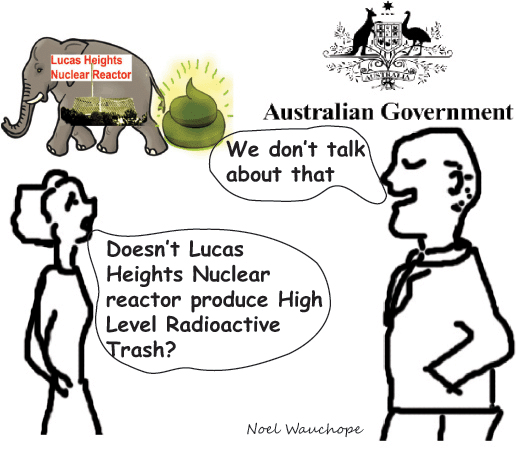
In 1995 the Australian government knew that Sydney’s Lucas Heights high level radioactive trash was a problem
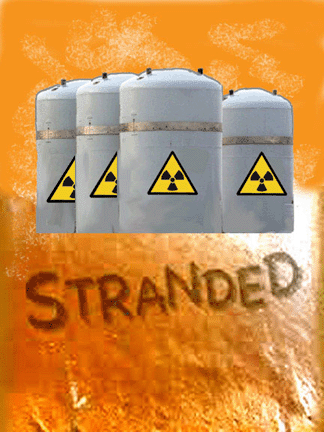 Spent nuclear fuel storage http://www.smh.com.au/nsw/spent-nuclear-
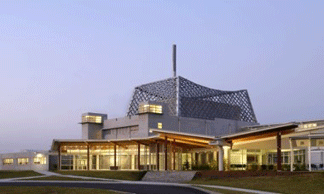 fuel-storage-20171215-h0590r.html Damien Murphy,
Spent nuclear fuel storage at Sydney’s Lucas Heights was destined to be full within three years, cabinet was told in a December 1995 minute.
The cabinet agreed the Australian Nuclear Science and Technology Organisation should cost proposals to have Britain reprocess their spent fuel in Scotland, return all American spent fuel to the United States and not accumulate spent fuel beyond the capacity of existing storage.
Cabinet wanted the information for consideration in the 1996-97 budget.
The minister for primary industries and energy, Bob Collins, and the minister for industry, technology and commerce, Peter Cook, told cabinet that reducing spent research reactor fuel holdings would be welcomed by the community at Lucas Heights although any operations involving radioactive materials were likely to be opposed by groups that object to nuclear activities.
Federal Nuclear Waste Dump: Locals NOT WELCOME to attend the Barndioota Consultative Committee December Meeting
 Tim Bickmore, Fight To Stop Nuclear Waste Dump In Flinders Ranges SA, 14 Dec 17, This week some locals tried to attend the Barndioota Consultative Committee December Meeting – but were not welcome. They were advised that 1] there were no protocols for allowing such, & 2] should the BCC formulate observer
  guidelines then there was a high probability that peeps would need to sign a confidentiality agreement.
This is a joke, right? Isn’t it a foundation purpose of the committee to provide an interface? What business could they have which requires official secrets remain hidden from the rest of us?
http://www.radioactivewaste.gov.au/…/Barndioota%20Consultat…
AUSTRALIA’S RADIOACTIVE WASTE: WHAT TO DO WITH IT? WHERE TO PUT IT? WHERE DOES IT COME FROM? WHY KEEP PRODUCING IT?
by ENuFF(Everyone for a Nuclear Free Future SA) enuff.sa@gmail.com November 2017.In 2015 the SA Weatherill government established the SA NUCLEAR FUEL CYCLE ROYAL 
 COMMISSION (RC). The following year, the government adopted 9 out of 12 of the RC’s recommendations including to expand uranium mining and to collaborate with the federal government on nuclear power developments. A proposal to remove the state’s Nuclear Waste Storage Prohibition Act and, thereby, allow the state to pursue an international highlevel radioactive waste (HLW) dump was not adopted.
Less publicised, the RC’s Report also recommended that the government pursue the disposal of Australia’s own radioactive waste in SA; hardly a novel idea! (Previous attempts have been made, and failed.) And, this recommendation was adopted.
Running in parallel with the RC; confusing many people, the federal government was, again, doing just that: seeking a ‘suitable site’ for shallow burial of decades of Australia’s accumulated low-level waste(LLW) and indefinite storage (co-location) of long-lived and highly hazardous intermediate-level waste (ILW).
A short list of three sites was selected; all in SA: one at Barndioota in the Flinders Ranges – traditional land of the Adnyamathanha people – and two sites at Kimba.
A decision about a final site in SA for the nation’s waste is imminent. State politicians are surprisingly mute about such an important decision. Clearly they do not want this issue raised in the forthcoming (March 2018) state election.
So where has Australia’s radioactive waste come from? Australia has been accumulating nuclear waste since the Cold War era of the late 1940’s. Initially, it is mostly this legacy waste that would be destined for a national waste dump.
During the post-World War 11 and Cold War decades, Australia mined and milled uranium for US and UK bomb projects; provided sites at Monte Bello, Emu Fields and Maralinga for British atomic bomb tests; established a research reactor at Lucas Heights and developed the Woomera Rocket Range. The forerunner to the CSIRO and a number of nuclear physics research laboratories at universities, especially at the ANU, were also conducting nuclear-related research. The facilities mentioned above were developed in close collaboration with the UK’s quest to develop and test atomic weapons, and the means to deploy them. They all produced and/or stored radioactive waste. There was no thought about what to do with the waste.
 Following the dropping of the atomic bombs on Hiroshima and Nagasaki, many in military and government circles considered that the next war would be fought with nuclear weapons.
Some influential Australian politicians and scientists considered that Australia, too, should eventually produce its own bombs and nuclear power reactors. For example secret work on centrifuge uranium enrichment technology, ostensibly, to reduce the ‘lead-time’ required to develop weapons, was being conducted by the Australian Atomic Energy Commission (AAEC) in the 1960s. However, until now, apart from research reactors, such nuclear dreams have not yet come to fruition.
Since the 1970s after much controversy, a new era of uranium mining creating millions of tonnes of radioactive tailings has commenced; the oldest reactor at Lucas Heights(HIFAR) has been de-commissioned, the Moata reactor is due for decommissioning and a third reactor – the OPAL – has been built; all with no long-term plans for the waste.
A group of nuclear enthusiasts, undeterred by the intractable nature of nuclear waste and catastrophic nuclear accidents, is determined to take Australia further down the nuclear road. They wish for Australia to build nuclear power stations and nuclear submarines.
According to ANSTO (formerly AAEC), the organisation responsible for operating the Lucas Height’s OPAL research reactor, the nuclear isotopes currently being produced are for nuclear medicine; engineering; making our food more nutritious and undefined research. No reference is made about defence-related research, from either the past or present (ENuFF considers that at least 50% of Australia’s radioactive waste could have been created by defence activities. However, it is difficult to verify this.)
In spite of a backlog of decades of waste, no federal government has succeeded in persuading any community to willingly host either the LLW or the much more hazardous and long-lived ILW. Yet ANSTO is in the process of significantly expanding OPAL’s production of medical isotopes for export, thereby, increasing future highly hazardous spent fuel and reprocessed spent fuel waste.
Where is Australia’s waste currently located? It is estimated that there are around 100 sites; many of them in hospitals, universities and engineering businesses, generally holding very small amounts. Such wastes are the responsibility of the state in which they were used. But, the majority of the waste, both in terms of its quantity and level of radioactivity, is held at a number of federally controlled sites including Lucas Heights, Woomera, Radium Hill, Maralinga, St Mary’s in suburban Sydney and Amberley Air Force Base. Waste from these sites is a federal responsibility.
Like a dirty old can being kicked down the road, Australia’s radioactive waste has been moved from one temporary site to the next: for example, waste stored at Derrimut near Melbourne was shifted to St Mary’s in suburban Sydney. From St Mary’s it was moved to Woomera. CSIRO waste from Fisherman’s Bend was moved to Lucas Heights and, after three years, moved again to Woomera, where it has been ‘temporarily’ stored for the past 23 years.
And how is the waste being managed? Records for some of it are lost. Aircraft washings, following the atomic bomb tests, ended up in the Pacific Ocean. Waste from the first decade of Lucas Height’s operation was buried on site. Radioactive valves were buried in old paint tins at Derrimut. At Hunters Hill it was simply forgotten, until rediscovered when building work on a new development commenced there. The Fisherman’s Bend waste is currently stored in 10.000 corroding metal drums housed in a tin shed at Woomera, where the Defence Department doesn’t want it, and where it is leaking Radium-226. Uranium tailings exist in massive and growing quantities; they are stored in ‘dams’ which leak into surrounding soils and ground water when wet, or are blown away when dry and powdery. Uranium tailings, like higher levels of waste, remain radioactive for hundreds of thousands of years.
Meanwhile, the English routinely release waste into the Irish Sea and wanted to wash their hands of the Maralinga site. The Americans have polluted many sites: the Colorado River, Hanford, swathes of Nevada and the Marshall Islands to name just a few. The Russians, too, have a long history of radioactive pollution, most infamously the poisoning of Belarus and Ukraine from the Chernobyl disaster, and the Mayak region from their bomb programme. The Japanese do not know what to do with waste from their nuclear reactors, let alone from the Fukushima multiple melt-downs, that is, apart from releasing it into the Pacific Ocean.
Would a permanent dump for Australia’s LLW waste at Barndioota or Kimba be any better managed? Who Knows? But the highly hazardous waste, including reprocessed spent fuel classified by ANSTO as ILW but by France as HLW, would be kicked further down the road and stored ‘temporarily’ at the proposed national dump. There it would remain, until a permanent repository for hundreds of thousands of years is planned and built hundreds of metres below the ground.
The federal government insists that many other countries have successfully resolved their radioactive waste issues. But, they have not. Why else is there ongoing interest in the establishment of an international waste dump in Australia as recommended by the RC? A national radioactive dump could well become an opportunity to leapfrog into just such an international waste project, as proposed by state Liberal Party adviser Richard Yeeles.
STOP PRODUCING THE WASTE, ONLY THEN WILL WE TALK ABOUT WHAT TO DO WITH IT
Call For Senate Inquiry Into South Australia’s Nuclear Dump Sites
Going Ballistic Over “Pathetic” Nuclear Dump response
*Call For Senate Inquiry Into SA’s Nuclear Dump Sites After Minister Squibs on Senate Documents Order
NXT Senator Rex Patrick and SA-Best Leader Nick Xenophon say the only way to get answers for the communities of Kimba and Hawker on the reasons their townships were selected as a potential radioactive waste dump sites is through a Senate inquiry into the consultation and selection process.
 Both Senator Patrick and his SA-Best colleague, Nick Xenophon, are gobsmacked at the totally inadequate response by Senator Matt Canavan, the Minister for
  Resources and Northern Australia, to a Senate order to produce all the documents he used to determine there was ‘broad community support’ to continue exploring Kimba as a site for the low-level waste dump.
On Wednesday Senator Patrick successfully moved the motion for the Minister to make public all the information gathered by Government departments.
Earlier in the year the Minister advised he would need a figure in the range of 65% community support to progress plans in Kimba. Three ballots have been run in Kimba and none have reached 60%.Yet despite not hitting the criteria he set himself, the Minister selected two Kimba sites for further assessment.
Senator Patrick sought the Senate order after the Government refused to provide a local community member with a definition of ‘broad community support’ under freedom of information laws.
“When I asked for all the information used by Minister Canavan on how he came to make his determination to proceed to the next phase of consultation, all I got was a disingenuous response saying that there was no threshold which constituted ‘broad community support,” Senator Patrick said.
Nick Xenophon said: “None of the information used to make the decision was provided. We need to see and share with the community what was put to him to make his decision.”
Senator Patrick will move for the Senate inquiry into the contentious issue when parliament resumes next year.
“If I cannot get satisfactory answers, then there’s no choice but to ask the Senate to look into the process undertaken to date and the Government’s reasoning in moving forward to the next stage of the assessment despite the deep division in the community,” he said.
“I made it very clear to the Government during my first speech in the Senate that I had a strong interest in accountability and transparency.
“I want to work constructively with this Government but my enthusiasm to do so is contingent on them embracing a key principle of responsible government – openness and transparency.
“When it comes to decisions made about the people and supposedly for the people, they must be open about them, particularly when it comes to a nuclear dump site, “ said Senator Patrick. Follow links to the response from Minister Canavan and Senator Patrick’s Senate motion
https://www.pdf.investintech.com/preview/437f7094-dbb4-11e7-9f8d-0cc47a792c0a/index.html
Over 1000 protest in Adelaide against Federal nuclear waste dump plan
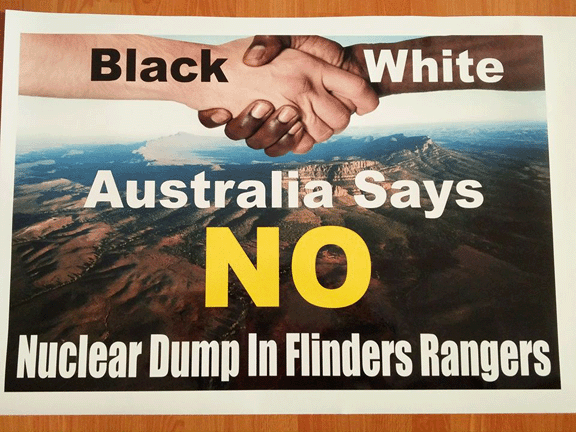
1000+ at an Adelaide rally yesterday to protest Canberra’s plans to dump Sydney’s nuclear waste in SA … People travelled from Hawker and Kimba regions of South Australia today to come and protest about the Federal Government’s plans to dump nuclear waste around their land and farms. All the speakers were very angry and cynical about the way that the Federal Government was behaving towards the people in this State.
Proposed Federal nuclear waste dump threatens South Australia’s environment and economy
Susan Craig Fight To Stop Nuclear Waste Dump In Flinders Ranges SA November 22
• The current uranium waste storage facility is at Lucas Heights, NSW which has the capacity to continue storage for another 30 years. We are asking that this facility continue to be used until we have established a sound and safe resolution for the disposal of this waste and in collaboration with community and all interested parties.
• The waste dump proposed is not for underground storage, but rather a precarious and interim above ground storage site.
• Should the waste dump for Flinders Ranges be achieved, it will open the flood gates for the world to use South Australia as a dumping ground for many years to come, knowing they can dispose of their radioactive waste away from their own countries.
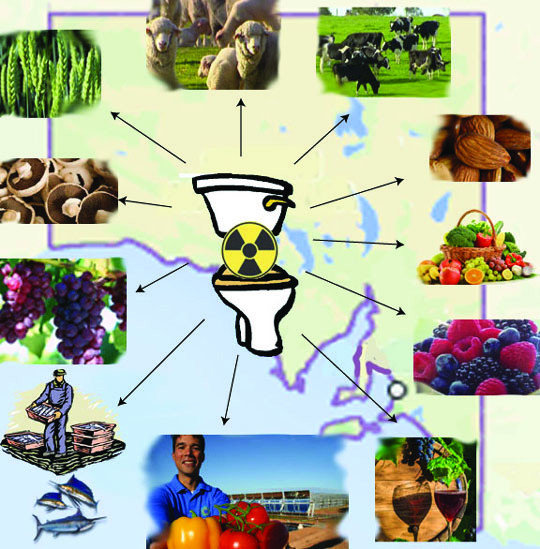
• South Australia has WORLD CLASS agriculture, food, wine, fibre and forestry industries.
• These industries are S.A’s LARGEST EXPORT INDUSTRIES and our products are transported directly to more than 100 countries.
• Our production systems are sustainable and makes use of CLEAN and SAFE environments.
• These industries are well supported and well positioned to meet the GROWING GLOBAL demand for CLEAN and SAFE food and wine.
• The total value of Australia’s farm exports is expected to hit a NEW RECORD OF $48.7 BILLION in 2016-17, $1 billion higher than the previous year.
• The value of Australia’s agricultural sector is tipped to BREAK ANOTHER RECORD this financial year, peaking at $63.8 BILLION
• Gross wine revenue increased by $329 million to $2.11 BILLION
• The value of wine exports increased by $119 million to $1.34 BILLION
• The value of the tourism market in the FLINDERS RANGES is worth $421 MILLION
• FLINDERS RANGES is the SECOND MOST VISITED regional site in South Australia.
• The value of S.A’s tourism market is worth $6.3 BILLION
• These industries show significant growth on previous years and forecast to CONTINUE GROWING, but a radioactive waste facility in our state will threaten all of this.
• Say NO to nuclear waste in South Australia and keep our farming, our tourism, our people and our future safe. https://www.facebook.com/groups/344452605899556/
www.dontdumponsa.net #dontdumponsa #sa2good2waste
Western Australia nuclear waste enthusiast Glenn Baker shows his ignorance of the real purpose of nuclear dump
 Is Mr Baker ignorant, or disingenuous?
In his enthusiasm Mr Baker seems unaware that the processed nuclear waste returning from France is classified there as high level waste. The proposed dump for radioactive wastes in outback Australia is obviously intended to store those long-lasting toxic wastes. Australia’s nuclear reactor in Lucas Heights, Sydney produces these dangerous wastes, just the same as any other nuclear reactor.
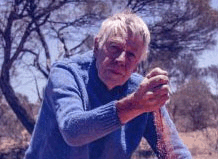 The Leonora man behind plan for a radioactive waste dump in outback WA, ABC Goldfields ,By Jarrod Lucas, 23 Nov 17, A mining entrepreneur who came to WA’s northern Goldfields during the 1960s nickel boom is behind a new bid to develop an outback repository to store the nation’s radioactive waste.
The Shire of Leonora this week voted 5-2 in favour of joining forces with a private company, headed by former councillor Glenn Baker, to make a bid for Commonwealth funding to fast-track the project.
The council sought legal advice and waited until after last month’s local government elections before voting on the proposal to store medical, industrial and scientific waste underground.
The proposed site is on Clover Downs pastoral station, about 20 kilometres north-west of Leonora……..
Conflict of interest was a deal breaker for council
Mr Baker is a director of Azark Project Proprietary Limited alongside his business partner, Perth-based corporate lawyer and mining executive Peter Remta, with whom he has developed several gold mining projects since the 1980s.
The 79-year-old was behind a previous proposal for a waste storage site that failed to progress in 2015, and he quit the council last month after more than 30 years because of the conflict of interest.
“Now there is no conflict of interest, but it did come up a few times and I left the meetings on those occasions,” he said………
Residents could be offered shares in waste company
Mr Baker flagged the possibility of Leonora residents eventually being given the opportunity to invest in the company.
He described as “mind-boggling” the funds being dangled by the Federal Government, which has been searching for a site to establish a national radioactive waste management facility for more than a decade……
Sites in South Australia and the Northern Territory have been considered, but lengthy environmental assessments and community consultation mean a final decision is not expected until next year…….
Sites in South Australia and the Northern Territory have been considered, but lengthy environmental assessments and community consultation mean a final decision is not expected until next year……..
Traditional landowner Vicky Abdullah said she had previously organised a petition with 500 signatures opposing the project.
“From my point of view, they can do it somewhere else, not in Leonora,” she said.
Ms Abdullah said the local Indigenous community was yet to be effectively consulted about the revived proposal.
Environmentalists opposed to facility in outback WA
Australian Conservation Foundation nuclear campaigner Dave Sweeney said it was a long way from a “bad council decision” to a national radioactive waste dump in outback WA.
“It is pretty much radioactive groundhog day,” he said.
“It’s come up before in Leonora, and there was a strong and negative response from many there in the community.
“I’m obviously disappointed Leonora has put itself back in this frame, because it’s a divisive place to be.”
Mr Sweeney suggested it would not just be for low-level radioactive material.
“This has nothing to do with nuclear medicine, and everything to do with the operations of the Lucas Heights reactor,” he said.
Mr Baker disputed that point, saying it was one of the misconceptions about what was being proposed.
“People are confused when we talk about radiation … this is not a nuclear waste disposal facility,” he said.
“Australia does not have a nuclear industry, so has no nuclear waste to bury. That’s uranium 235 which is used in atomic bombs, powerhouses etc.
“This is another isotope of uranium and has a much shorter decay life, some of it only a matter of months, and it’s not to be confused with nuclear-powered radiation like Chernobyl and Fukushima.” http://www.abc.net.au/news/2017-11-23/leonora-man-behind-plan-for-radioactive-waste-dump-in-outback-wa/9184020?pfmredir=sm&%3Bsf174104777=1
Australia’s govt and nuclear lobby soften up South Australians for nuclear waste dumping
 National Radioactive Waste Management Facility:21 November 2017
Industry has one week left to tender for Site Characterisation Works
Industry is invited to get involved in the process to build a National Radioactive Waste Management Facility, with tenders now open for Site Characterisation works.
The tender is to deliver a range of technical assessments that will form part of Phase Two of the process in relation to the proposed National Radioactive Waste Management Facility, including:
- Assessing flora and fauna, geology, seismic activity, risks, the surrounding environment, transportation and other infrastructure.
- Inputting into the Detailed Business Case, with reference to the site specific design and cost estimates that arise from site characterisation.
- An additional option, following site characterisation, for the preparation and development of submissions for licensing and approvals process…….
Bruce McCleary, General Manager of the National Radioactive Waste Management Facility Taskforce said that site characterisation is an important activity in the next part of the project.
“Three sites, two in Kimba and one at Wallerberdina Station were voluntarily nominated by their landowners and moved to Phase Two assessment after the community supported continuing the discussion,” McCleary said.
“Phase Two involves building a detailed understanding of the nominated sites, through in depth community consultation and technical assessments.
“Community consultation is now well underway, including appointment of locally engaged officers and establishment of site offices at both sites, creation of committees and working groups, and regular visits from members of the project team and experts to provide information on the project.
Lucas Heights is the obvious place for a National Radioactive Waste Management Facility
Gary See Fight To Stop Nuclear Waste Dump In Flinders Ranges SA, November 15
ANSTO at Lucas Heights are supposedly short of space to keep radioactive waste, but they are literally next door to a landfill site that is near to being closed. Anyone know if they’ve ever considered building a National Radioactive Waste Management Facility there?
It would seem a logical place for it. https://www.facebook.com/groups/344452605899556/

 Ed. note The Australian Government has made sure to get this sewn up. The Australian Radiation Protection and Nuclear Safety Agency (ARPANSA) has licensed the Lucas heights campus of ANSTO to store nuclear wastes only on a TEMPORARY basis, and on condition that a plan is developed for “a final pathway” for its disposal.
High level nuclear wastes, planned for South Australia dumping, but not mentioned by Australian Government
 Tim Bickmore Fight To Stop Nuclear Waste Dump In Flinders Ranges SA https://www.facebook.com/groups/344452605899556/ November 15
What the Barndioota Consultative Committee was presented in August 2017 regarding the nature of material storage in the proposed suppository. The guidelines (Waste Acceptance Criteria = WAC) are yet to be formalised, so we are expected to accept the unknown.
No reference to the decommissioned HIFAR & MOATA Reactors demolition waste – hunks of steel & concrete of unknown volume – & no mention of returned processed fuel.
http://www.radioactivewaste.gov.au/…/4.%20WAC%20presentatio…
Federal radioactive waste in South Australia : three sites, two years, one message
This week marks two years since the federal government announced its six shortlisted sites across Australia for the development of a National nuclear waste dump. Three of those sites were in South Australia and today both the Flinders Ranges and the Kimba agricultural region remain under threat.
The planned National Radioactive Waste Management Facility (NRWMF) project has been met with contest and concern from community members and state and national environment groups.
The waste issue is also set to be highlighted in the March state election with all SA politicians and hopefuls facing calls to explicitly back existing state legislation that makes any such dump illegal. Conservation SA was pleased to see an article in yesterday’s Australian newspaper disclosing Premier Jay Weatherill’s support for the Flinders Ranges community in their campaign against a radioactive waste dump in a letter to Prime Minister Turnbull urging him to respect Aboriginal opposition to the planned dump.
Regina McKenzie, Adnyamathanha Traditional Owner who lives next door to the Barndioota site and is a member of the Flinders Local Action Group (FLAG) said “The Liberal government’s plan is impacting the mental health and well being of the people in the Flinders Ranges and Kimba communities. We are happy that Premier Weatherill has opened his ears to us and is urging Malcolm Turnbull to do the same. For two years we have said no and we continue to say no.”
Kimba farmer Peter Woolford, chair of No Radioactive Waste on Agricultural Land In Kimba or SA, a group that formed around the issue, said “Two years on and the Commonwealth government continues to apply pressure to our small vulnerable community. The uncertainty, stress and toll this has taken on people within Kimba is immeasurable.
“Ministers and the Department of Industry, Innovation & Science state broad community support is critical for the facility, yet Kimba has continually been contested with strong opposition being maintained. The recent poll was clear that nearly half the community are opposed to siting a nuclear waste dump on farming land even with “disruption” money offered to communities to stay in the process.
“Current legislation in South Australia needs to be upheld and the Commonwealth should not ‘impose’ a national waste facility onto any unwilling community”, he said.
Radioactive waste dumps for non-SA wastes are illegal in SA. In response to earlier federal moves to dump waste in SA, state Parliament passed a law to say No: The Nuclear Waste Facility (Prohibition) Act 2000. This Act is “to protect the health, safety and welfare of the people of South Australia and to protect the environment in which they live by prohibiting the establishment of certain nuclear waste storage facilities in this state.”
The majority of Australia’s radioactive waste is currently securely stored at the Australian Nuclear Science and Technology Organisation’s (ANSTO) site at Lucas Heights, in southern Sydney. ANSTO says it “is capable of handling and storing waste for long periods of time.” ANSTO produced the waste and they are best placed to manage it until a proper disposal approach is agreed. The current substandard plan does not meet world’s best practice and there is no need for short term approaches to this long term issue.
Mara Bonacci, Nuclear Waste Campaigner at Conservation SA said “The current process is flawed and divisive and targets vulnerable remote communities. In the two years since the six shortlisted sites were announced, the government has got no closer to securing a site. In fact, the site nomination process is still open. The government has only succeeded in causing stress and division in the areas it has targeted. It is time to stop the clock and adopt an evidence based approach to waste management.
“The waste can and should remain secured and monitored at Lucas Heights until a dedicated public review of the full range of options for radioactive waste management is carried out. The focus needs to shift from targeting SA to establishing a fair, open and responsible process for the management of Australia’s most hazardous waste”, she concluded.
Australian Aboriginal concerns will now be addressed in Scotland discussions on destination of reprocessed nuclear wastes
 Herald 13th Nov 2017, ABORIGINES challenging proposals to dump nuclear waste from northern Scotland to a sacred Australian site have won a breakthrough meeting with
government officials about their concerns.
Wallerberdina, 280 miles north of Adelaide, has been identified as a potential location for Australia’s
first nuclear waste dump as part of a deal that returns spent fuel processed at the nuclear facility currently being decommissioned in Dounreay, Caithness, to its country of origin.
This is despite claims that it is a priceless heritage site rich in archaeological treasures including
burial mounds, fossilised bones and stone tools. Some have claimed the
impact would be similar to “building a waste dump at the heart of the
Vatican”.
Campaigners who have appealed to the Scottish Government to halt
the plans to ship nuclear waste processed at Dounreay in Caithness to
Australia, have now been told that their concerns should be addressed
before any final decision is taken.
The Dounreay Waste Substitution Policy, agreed in 2012, sees waste from Australia, Belgium, Germany and Italy processed at the Scottish facility to make it safe for storage after being
returned to its country of origin. Campaigners have complained that the
intended South Australian destination forms part of an Aboriginal heritage
site rich in burial mounds, fossilised bones and stone tools.
http://www.heraldscotland.com/news/15655056.Breakthrough_in_Australian_aboriginal_challenge_to_nuclear_waste_transfers_from_Dounreay/
South Australian government: local Aboriginal community has final veto on nuclear waste suppositary
Tim Bickmore shared ENuFF South Australia‘s post. No Nuclear Waste Dump Anywhere in South Australia, 13 Nov 17
Oct 24 letter from SA Premier J to the PM regarding proposed radioactive waste suppository in the Flinders Ranges.
“….. the South Australian government committed to provide a local Aboriginal community with a final veto right over any future facility proposed on their lands.
I recommend the Commonwealth Government now consider adopting a similar policy position ….” https://www.facebook.com/groups/1314655315214929/
Dean Johnson, Kimba mayor, ecstatic about Kimba getting Federal govt bribe for radioactive trash dump search
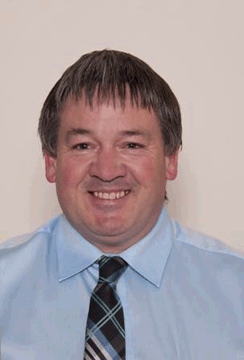 Make the most of the funding for Kimba Eyre Peninsula Tribune http://www.eyretribune.com.au/story/5039693/make-the-most-of-the-funding-for-kimba/ Kathrine Catanzariti , 7 Nov 17
It has been refreshing to have our nearby regional cities in Whyalla and Port Augusta in the news lately, having secured government and private funding for major projects and improvements in or near those cities. However, despite our continued optimism and positive ‘can do’ attitudes, we still find our rural towns and smaller community centres are battling to receive our fair share as we struggle to show population and economic growth that would build the case for increased funding.
With this in mind, the Kimba community is fortunate to benefit from a substantial injection of funds as a result of our continued consultation and engagement in the national radioactive waste management facility search. Continue reading
1 This month
7 April – WEBINAR – Australia and the Doomsday Clock – Preventing nuclear war through NoFirstUse and other policies
Online | Tuesday April 7, 4:00-5:30pm, Australian Eastern Time / 8:00-9:30am Central Europe Time
– Access the registration link
15 April – Zoom –Nuclear Power is Not the Solution
Apr 15, 2026 01:00 AM in Canberra, Melbourne, Sydney

Join the International Physicians for the Prevention of Nuclear War (IPPNW) on Tuesday, April 14th for a timely webinar exploring the risks associated with nuclear power and challenging the myth that it offers a simple, safe, carbon-free solution to the climate crisis

21 April Webinar: No Nuclear Weapons in Australia
Start: 2026-04-21 18:00:00 UTC Canberra, Melbourne, Sydney (GMT+10:00)
End: 2026-04-21 19:30:00 UTC Canberra, Melbourne, Sydney (GMT+10:00)
Event Type: Virtual
A virtual link will be communicated before the event.
Host Contact Info: australia@icanw.org

of the week – Australians for War Powers Reform (AWPR)
To see nuclear-related stories in greater depth and intensity
 Antinuclear